








All News - Page 586 of 1725 - Good News Network
Home Blog Page 586

In Groundbreaking Vote for Sustainability, EU Moves to Approve Insects for Human Consumption

Chirps Chips submitted

As famed adventure television host, world record holder, former British Special Forces operator, and all around feel-good motivational guy Bear Grylls repeatedly reminded us on his television programs Man vs Wild and Running Wild, insects have more protein than beef or fish—sometimes as much as 8x more, if measured pound for pound.

After a long television career of pounding back worms, grubs, spiders, crickets, and ants for our amusement, Grylls would certainly be applauding the new proposed European Union legislation that would allow for mealworms, lesser mealworms, crickets, and locusts to be sold as “novel food sources,” pumping life into an industry that, while small, produces 500 tons of food annually according to The Guardian.

The products include things like cricket protein bars, locust aperitif, or mealworm burgers, and the new regulations from the European Food Safety Authority are likely to open the floodgates for insect food to flow from countries where they are made like Holland, the UK, Denmark, Belgium, and Finland, into countries where they are banned, such as Italy, France, and Spain.

“We reckon these authorizations will be a breakthrough for the sector,” Christophe Derrien, secretary general of the International Platform of Insects for Food and Feed, added.

RELATED: As Earth’s Ozone Layer Continues to Repair Itself, Scientists Happily Report Good News on Global Wind Trends

Companies in the Netherlands, France, Switzerland and Spain are all preparing to ramp up operations to prepare for the demand, perceiving through market signals that people actually want insect food.

Unlike factory farming, insects can be raised humanely in cities, without antibiotics or growth hormones. Chirps Chips, for instance, uses crickets milled into a flour to make high-protein tortilla chips – and they’re delicious, with three times more protein and 40% less fat than a regular chip.

And, now the snack is backed by Mark Cuban after the company’s young CEO, Rose Wang, won a deal on “Shark Tank“—with the snack being sold on thousands of store shelves across the nation in flavors like BBQ and cheddar.

Chirps Chips submitted

An Obvious Solution

Insects have been part of the staple diet of many world cultures, even now in modern times. They represent a rich source of animal protein that is practically immune to extinction, and just like traditionally harvested animals are perfectly safe to eat if you can control the conditions in which they live.

RELATED: Woman is Saving the Earth With BBQ Chips Made From Bugs

With some of the most basic brain functions of anything in kingdom Animalia, insects are also less-likely to offend the sensibilities of vegetarians who, being more likely to be vitamin B12 deficient than omnivores, might be able to utilize the occasional cricket bar as a means of supplementing their plant based diet with bioavailable and dietary sources of B12 which can’t be made by plants, coming only from bacteria which live on plants.

Furthermore, unlike hoofed mammals, the process of enteric fermentation which, using the United States as an example, accounts for a small percentage of total greenhouse gas emissions (about 2.5% in the U.S.) is absent in insect agriculture, and so there’s a small potential reduction in GHG emissions to be gained from a switch.

Lastly trillions of insects are killed every year both by combine-harvesters and pesticides to protect major crops like wheat, rice, soya, corn, and cotton, representing millions of tons of lost nutrients. And, in a world where many communities are protein-deficient, insect products might never be more needed.

Multiply The Good By Sharing The Exciting News With Your Friends On Social Media — Photo by Chirps Chips

Newly-Developed Enzyme That Breaks Down Plastic Bottles in Hours is On Track to Change the Recycling Game

Photo by Carbios

Utilizing an enzyme found within composted leaves, scientists are now breaking down plastic all the way into a recyclable form in a matter of hours.

Carbios, the French company responsible for the breakthrough, is already collaborating with Pepsi and L’Oréal to unleash industrial market-scale production of the new substance within five years.

“We are the first company to bring this technology on the market,” the deputy chief executive at Carbios, Martin Stephan, told The Guardian. “Our goal is to be up and running by 2024–2025, at large industrial scale.”

Their discovery, which sources described as a major advance, joins an arsenal of solutions for plastic pollution control that have appeared over the last decade.

Just like Boyan Slat who took on the Great Pacific Garbage Patch, or the bracelet folks at 4Ocean who took on the problem of ocean pollution in rivers, the scientists from the University of Toulouse are applying their breakthrough to another part of the problem—the recycling of plastic.

LOOK: Company Collects 80% of City’s Recyclable Plastics and Turns It All into Lumber

Plastic isn’t straightforward to recycle. There are common varieties of plastic made from multiple layers of different esters, each one requiring different equipment or temperature to breakdown. And, there are a lot of plastic esters that could be recycled but aren’t because the market value for the recycled material is so low it can’t financially sustain the operation.

In the scientist’s paper published in Nature, they detail how poly(ethylene terephthalate) PET, the most common polyester plastic, loses much of its mechanical utility when heated for recycling. Therefore, creating new material is preferred, and PET waste continues to accumulate.

Their new enzyme achieves a minimum of 90% de-polymerization in just 10 hours, meaning that the polymers—large complex particles, become monomers—small single particles in less than a day, and perhaps even more amazing, end up as biologically depolymerized plastic that can actually be reused to create things like plastic bottles.

LOOK: Cameroon Man Uses Wasted Plastic Bottles to Build Canoes for Fishermen in Need

While manufacturing plastic bottles from recycled PET made by this enzyme would cost about 4% of the amount needed to make new bottles from fresh petroleum, the recycling infrastructure, including the grounding up and heating of the plastic bottles before the enzyme is added would still make it more expensive in the end.

Nevertheless, the future is bright for this technology. Co-enzymes could be synthesized, companies could produce more inexpensive recycling infrastructure—both of which could finally bring down the cost of producing recycled plastic goods.

Carbios has also begun tackling the normally unrecyclable plastic film problem. In an alliance with several other European companies under the name Carbiolice, they demonstrated a plastic film last year that can be compostable in home or municipal compost piles. Their objective will be to address the markets of plastic films and single-use bags—and later on, rigid packaging and disposable tableware.

“These milestones reinforce our ambition to offer the market circular economy solutions that are both competitive and eco-friendly, and which will revolutionize the end of life for plastics and textiles.”

Reduce Negativity By Recycling The Good News And Sharing It With Your Friends On Social Media…

For First Time in History, AI Learns to Translate Silent Human Brain Activity into Text for Locked-In Syndrome Patients

Fotolia licensed image

Have you ever heard of locked-in syndrome? Sometimes called pseudocoma, it describes a rare condition where the patient is “locked-in” their body. They are aware, but cannot act in the world due to complete paralysis of all voluntary muscles in the body, but with a normal exception being their eyes.

Neuroscientists have just created an artificially intelligent algorithm that detects human brain activity and translates it into English sentences—and they said it was the first time such translations could be done on a 1:1 speed with natural human speech; faster-than-light.

This breakthrough technology allows for work to begin in many different areas, but particularly for people with locked-in syndrome so they can communicate with the outside world. Another study last year was able to decode brain waves in people who were listening or hearing sounds. This new research is creating translations of one’s thoughts while reading silently.

The researchers from UC San Francisco have published their first paper describing the new machine-learning translation technology by studying people who were reading short prepared sentences.

With vocabularies of about 250 words in 50 different sentence groupings, the error rate was less than 3% for some of the translations. However, as more words were added the accuracy level of the predictions from the decoding machine dropped.

RELATED: Irish Researchers Have Developed Hospital Robot That Uses UV Light to Kill Viruses, Bacteria, and Germs

Dr. Joseph Makin, co-author of the research from UC San Francisco, told The Guardian this could be the basis of a speech prosthetic.

More than 20 years ago, The Diving Bell and the Butterfly (Le Scaphandre et le Papillon) was published, the remarkable memoir of French journalist Jean-Dominique Bauby who detailed his day to day life after suffering a massive stroke which left him with the disorder.

Using the only methods available in Bauby’s time, he wrote the entire book by winking his left eye. Each word would take about 2 minutes to complete because he had to choose from an audio sequence of letters—blinking in order to select which one he wanted.

CHECK OUT: From Terrifying to Terrific—Man Redesigns MRI Machine to Delight Children Instead of Scare Them

Bauby would not live to see these new radical breakthroughs; two days after the book was published—while it was rocketing to become a European best seller—Bauby died of pneumonia.

Warp Speed Translations with the Infant AI

Over the course of the study, the AI became more and more accurate with its translations, having at first only spat out random clusters of words. It began to learn how to consistently link associated words together, as well as which words tended to follow others.

LOOK: This New LED Lamp Has Helped 90% of Its Dyslexic Users to Read ‘Effortlessly’

It depended on the person to what degree the predictions from the machine were a success with one participant pushing the rate of error down below 3%, but compared with past attempts at making such a system it’s the most successful ever made.

MORE: Bionic Pancreas for Type 1 Diabetes Gets ‘Breakthrough’ Designation From FDA

“Human infants learn much the same way, at first relying on the memorization of patterns of speech, rather than the breadth of the language, to communicate,” said Makin. “The AI would recognize patterns of brain activity and associate them with sentences, rather than identifying each individual word.

Like Jean-Dominque Bauby demonstrated in his book, even a human whose body has truly become a prison has a story to tell, and this technology would allow access to the thoughts of all manner of speech-impaired individuals.

Who knows how many books are waiting then to be written, or how many stories wait to be told?

Be Sure And Share The Exciting News With Your Friends On Social Media…

“Don’t be pushed around by the fears in your mind. Be led by the dreams in your heart.” – Roy T. Bennett

Quote of the Day: “Don’t be pushed around by the fears in your mind. Be led by the dreams in your heart.” – Roy T. Bennett

Photo: by JR Korpa – public domain

With a new inspirational quote every day, atop the perfect photo—collected and archived on our Quote of the Day page—why not bookmark GNN.org for a daily uplift?

10-Year-Old Seeks to Empower Other Kids During COVID-19 Pandemic

Like many kids who are stuck at home during the COVID-19 pandemic, ten-year-old Sydney was beginning to feel hopeless. But, instead of letting the feeling overtake her, she and her mom took action.

Sydney knew that she had information that would make a difference if she got it out to other kids her age. So, the pair set out to produce videos giving out valuable information.

From their living room they wrote, recorded, and animated Kids Coping with COVID-19 using Story Maker, an educational software that her mom, Melissa Dilling, uses in her classroom at Eisenhower Middle School in Everett, WA.

After covering what kids can do for fun and how to arrange playdates, the series covered a unique way that school students can help the hospitals around them.

RELATED: New Jersey Teens Take Matters into Their Own Hands to Help First Responders and Small Businesses Amidst COVID-19 Crisis

In the latest episode, Sydney empowers kids by suggesting that students e-mail their teachers or their schools to ask if there is any PPE (personal protective equipment) lying unused in science labs that the school can donate. Surplus PPE that a school might have in their science labs include gloves and goggles.

In Sydney’s words, “It never hurts to ask!”

MORE: Maryland Teens Go On Grocery Store Runs for Seniors and Vulnerable Neighbors

They suggest using a website, donateppe.org, for donating the supplies.

She hopes that when kids see her series on YouTube they feel like they can actually make a difference in their community—and the world—by following safety guidelines and seeking to help where they can.

(WATCH the video below…)

SHARE the Idea With Other Schools and Students on Social Media…

This App Shows You When Your California Power is Renewable to Create More Responsible Device Usage

The world’s largest marketplace of exclusively refurbished electronic products, takes pride in its mission to reduce carbon consumption stemming from the production of new tablets and smartphones—and now, increasingly more, the amount of energy they use recharging every night.

BackMarket.com has now produced an Android widget called CO₂NSCIOUS, that allows users to track the Californian power grid operation so they can avoid emitting more CO2 than is necessary.

Why would it be important to track the operation statistics of power centers for the average 3 hour-per-week smartphone user? That’s because unlike the grids of decades past, 2020 finds the baseline power for California split between a variety of power sources, such as nuclear, solar, natural gas, etc.

But the grid isn’t using all sources at the same time, or in equal amounts, and at certain periods of the day or night the electricity coming out of your walls might be made up of substantially more renewables or inversely, fossil fuels, than during other hours.

RELATED: This Kindness App Pairs People With Problems to Neighbors Who Have the Specific Solution

CO₂NSCIOUS gives you a breakdown of which of those sources are providing what percentage of power at any given moment, allowing you to charge up your devices during green energy periods, and avoiding doing so at during periods of high fossil fuel input.

While this might seem like an unremarkable subject of focus, academic research complied in a report called The Cloud Begins with Coal, revealed the extent of our power usage. Although charging a single tablet or smartphone requires a negligible amount of electricity, if you use them to stream an HD show for one hour per week, the total amount of energy used in the network operations over one year is more than two refrigerators would use during that time.

Already growing at exponentially faster rates, modeling by Lotfi et al. from the Booth School of Engineering, Canada, estimates that the information communications tech field could be responsible for 14% of greenhouse gas emissions by 2040, a little less than the global agriculture sector, but with far fewer carbon-offsets.

MORE: Answering Trivia Questions With This App Can Pay Off Other People’s Student Loans

“The goal of this widget isn’t to say that this or that energy is better than another, because today, there is no perfectly ‘clean’ source of energy,” explains Vianney Vaute, co-founder of Back Market. “And we are aware that CO2 emissions are just one criteria among many others.”

Co2nscious Screenshot

“What is at stake for us is to create awareness around the environmental impact of the small gestures that make up our daily routines—even something as simple as charging a smartphone.”

CHECK OUT: Most People Don’t Get Enough Vitamin D, But This App Can Fix That

The widget will be live and available for a month in a proof of concept model, after which Back Market are placing the open source code online ad gratis, for free, so that anyone who wants to adopt the concept for their own city, state, or firm, can do so.

Available until April 15th, CO₂NSCIOUS uses Electricitymap.org data, and pairs it with models from the Intergovernmental Panel on Climate Change about how much CO2 is produced realistically from each source of power in various places, to produce a real-time chart of what sources are being used, and how much carbon they are creating, in an area, though the app only has data on California.

Power Up With Positivity By Sharing The News With Your Friends On Social Media…

How to Be Happier During COVID: Decades of Science Shows That Gratitude, Love, and Connection Can Save Your Life

Brooke Cagle

With no vaccine or drug that reduces symptoms readily available to help the body combat COVID-19, social distancing and self-isolating is one of the most effective measures of prevention to ensure that hospitals don’t become overwhelmed with sick patients.

But the methods most readily available to help reduce the stress and anxiety resulting from seriously difficult times—an embracing hug, seeing friends, or visiting parents or grandparents—are exactly the things we’re told not to do.

There are other options, however—and over 50 years of documented research suggests that we can reduce symptoms of anxiety, and even physical pain responses, by doing them.

In a meta-analysis looking at a half-century of research, scientist found that both the act of smiling and seeing smiles can actually make people happier. Try it right now for yourself.

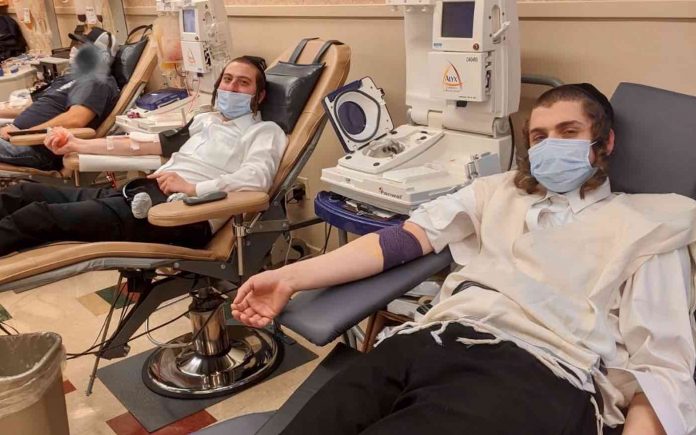
In another pilot study, scientists confirmed that altruistic acts—like charitable actions towards neighbors or strangers, altruistic giving, or donating blood—can actually reduce the physical sensations related to pain.

Written in Our Biology

The Washington Post reminds us that before we had tools or the intelligence to invent them, our earliest ancestors had teamwork and social groups. We have evolved over millions of years to be close to the people we love, to hold them, hear their voice, and perform tasks together.

When we are isolated from other humans, hormonal changes, typical of a crouching hunter on the plains of Africa in the dawn of humanity, take over in our brain; mainly to prepare us for danger. Norepinephrine, associated with the fight or flight response, but also inflammation, increases.

CHECK OUT: Doing Something Nice For Others Can Immediately Relieve Sensations of Physical and Mental Pain, Says New Study

Inflammation helps to heal wounds, but has also been shown to exacerbate symptoms of anxiety and depression.

But being alone and isolated doesn’t mean you’re at the mercy of your biology—it can also work in your favor. Scientists from the University of Arizona found in an examination of 102 people that simply thinking about romantic partners reduced symptoms of stress, anxiety, and general feelings of sadness—as much as if the person were actually in the room!

Being Close Without Being Close

The scope of the COVID-19 impact in the United States, particularly in New York City is being compared with that of World War II, or for younger folks, the September 11th attacks.

But the differences between these tribulations were noted by Tim Dillon, a former NYC tour bus guide turned famous stand-up comedian. On a recent episode of his podcast, The Tim Dillon Show, “You could be together, you could hug each other, kiss people on the cheek; … You could go out and eat pumpkin muffins and talk about how many bombs we were going to drop on the evil-doers.”

RELATED: Study of Surveillance Cameras Proves That Strangers Will Almost Always Intervene to Help

But the pandemic restricts these natural forms of mental fortification at the very moment we most need it. As Sarah Kaplan writing for The Post neatly surmises, “6 feet never felt so far.”

However in almost every case imaginable, positive social interaction, even in distant abstract forms like imagination, proves to have measurable impact on our health and well-being.

MORE: Optimistic People Shown to Sleep Better and Longer

If you see something in the mainstream media that gets you down, try just calling a friend and telling them how much they mean to you. Expressing gratitude, either for a person’s presence or a gift, as well as receiving expressions of gratitude, however awkward, was found in a study to be enough to trigger beneficial neurological changes that resulted in better mental health for both the senders and recipients of emails.

In a time when the social butterflies within all of us are stagnating, it’s never been more important to tell someone that you love and miss them.

RELATED: The Science of Kindness—Biology Proves How We Are All Connected

Connect With Your Friends By Sharing The Compassionate Science To Social Media…

6-Month Suspension on U.S. Federal Student Loan Payments Now in Effect During COVID Outbreaks

The federal government is suspending student loan payments and waiving the interest on those loans for a total of 6 months in order to ease the burden of debtors during the COVID-19 outbreak. This unprecedented action was included in the 2.2 trillion dollar stimulus package President Trump signed recently.

More than 20 million Americans currently owe student loan payments, and since sweeping shelter-in-place orders were announced in cities across the nation, many of these indebted students and graduates have no ability to make a living or go to work.

The suspensions of payments and interest only apply to those who borrowed from the federal government. These types of federal loans make up 85% of the total education dollars currently owed. If you borrowed from a private financial institution, you may still be required to make payments.

RELATED: Twitter Founder Jack Dorsey Just Pledged $1 Billion—28% of His Net Worth—to COVID-19 Relief Efforts

The waivers on payments have actually been implemented retroactively, with the date of effect being March 13th. This means anyone who has since made a payment and could use that money in these difficult times can request a refund.

Good news is also out there for those who have defaulted on their loans, too. Uncle Sam is suspending the collections, and the Department of Education has announced that 830,000 borrowers will receive $1.8 billion back as a refund from previous garnishments.

“I’ve been in this industry through a lot of disasters, 9/11 and Katrina, and these waivers are like nothing I’ve seen before,” Betsy Mayotte, the founder of The Institute of Student Loan Advisors, told CNN.

CHECK OUT: These Optimistic COVID Updates Give Us the Evidence We Need for Hope in April

Betsy and her Institute have created a resource to help borrowers understand the 6 month payment suspension laws, as they are somewhat complicated.

“If someone is struggling, they should absolutely call their lender,” Mayotte said.

There’s around $1.66 trillion in student debt, amounting to an average of $37,000 per student, in the United States right now.

For those who perhaps work remotely or maintain a source of income, you can still make payments on your loans from Sambla up to 500,000 DKK if you have the ability and desire to pay them off as soon as possible—which might be a good strategy for hard-working students or graduates.

According to CNN, the payments will go against the debt in-principal after all the interest accrued before March 13th, 2020 has been paid off. This means you can tackle the whole of the debt, bypassing interest from growing it, all the way until September 30th.

Be Sure And Share The News With Your Friends On Social Media – File photo by Nick_Ares, CC

“To love yourself right now, just as you are, is to give yourself heaven. Don’t wait until you die. If you love yourself, you live now.” – Alan Cohen

Quote of the Day: “To love yourself right now, just as you are, is to give yourself heaven. Don’t wait until you die. If you love yourself, you live now.” – Alan Cohen

Photo: by Olia Nayda – public domain

With a new inspirational quote every day, atop the perfect photo—collected and archived on our Quote of the Day page—why not bookmark GNN.org for a daily uplift?

Friday Funnies: Look Inside This Mini Art Gallery That a Bored Couple in Quarantine Made for Their Pet Gerbils

SWNS
SWNS

A couple stuck inside during the novel coronavirus lockdowns have used their free time to made an adorable art gallery for their pet gerbils.

Marianna Benetti and her boyfriend Filippo Lorenzin, both 30 years old, constructed the miniature exhibition last week to keep their pets entertained during quarantine.

The tiny space was furnished with carefully curated rodent-themed takes on classic works of art—including the “Mousa Lisa”.

SWNS

Benetti and Lorenzin also made mini benches, gallery assistant stools, large print guides, and a sign which read “DO NOT CHEW”.

Although both of their 9-month-old gerbils, Pandoro and Tiramisu, enjoyed browsing the gallery, they did nibble their way through one of the delicately constructed chairs.

Benetti and Lorenzin, originally from Italy, are on day 14 of self-isolation together in their house in London. Museums across the country remain closed due to the coronavirus outbreaks, although many galleries—including the V&A in London where Lorenzin works, are instead offering virtual tours for eager art enthusiasts.

SWNS

“The original project was for a doll house, but my boyfriend proposed the idea of designing an art gallery complete with all the details,” said Benetti.

The model took four hours to make, and in addition to the pair ensuring that all materials used were gerbil-friendly, they made a blueprint for the design to make sure the proportions were correct for their pets.

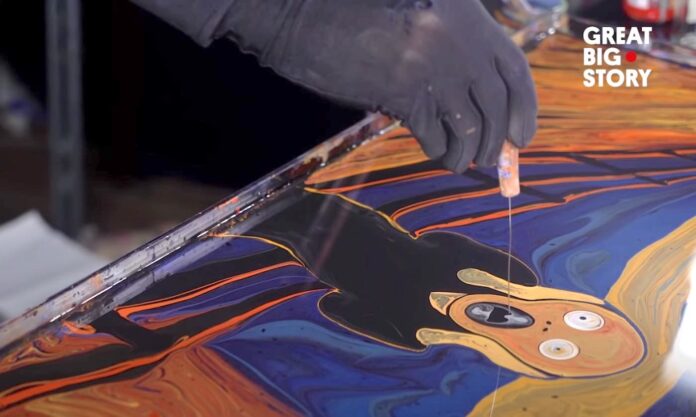
As well as the “Mona Lisa”, Benetti and Lorenzin also drew renditions of Edvard Munch’s “The Scream”, Gustav Klimt’s “The Kiss” and Johannes Vermeer’s “Girl with a Pearl Earring” for their animals.

The creative couple posted a picture of their creation on Reddit and were surprised by the reaction.

SWNS

“Everyone was overwhelmingly positive. We didn’t expect such friendly feedback, and we look forward to adding more artworks to the gallery,” said Benetti. “It is great to see so many creative suggestions for other paintings from the community.”

If you want to follow more of there gerbil’s creative exploits, you can follow their Instagram page or YouTube channel.

(WATCH the video below)

Multiply The Laughter By Sharing The Pawesome Story With Your Friends On Social Media…

Photographer Has Been Taking Free Family ‘Porchtraits’ to Capture Sweet Silver Linings During Social Distancing


Rather than letting social distancing keep him from his passion for photography, Dave Puente has found a way to join local families in celebrating the silver linings of quarantine.

The photographer from Minneapolis, Minnesota has been taking free family portraits that document the joyful part of community members being at home with their loved ones—and he does it all while simultaneously respecting social distancing guidelines.

Over the course of the last two weeks, Puente has driven 1,365 miles to 146 homes in order to take photos of families on their porches for his heartwarming “Porchtrait” project.


Each family portrait is captioned with a heartwarming or amusing anecdote form the family—and with Puente taking the pictures from a distance, the series manages to capture a unique sneak peek into the lives of families waiting out the COVID-19 outbreaks.

“I wanted to give somebody something that they can hang on the wall and in a few years look back on it and in such a frantic and scary time see there was some silver lining to it,” Puente told WCCO News. “It’s therapeutic for me and it’s been that way… for so many people.”

Since Puente began publishing his Porchtraits to social media, he has been flooded with messages of support and appreciation for the project.


As a means of financing his labor of love and paying his bills, Puente also created a GoFundMe page for the Porchtraits project.

Since launching the campaign last week, he has received more than $900 in donations.

“The reality is, this effort has a expiration date, and with your help, I can continue to photograph family’s for free and serve this incredible community in this unique way during these uncertain times,” wrote Puente. “This has been the highlight of my professional career and with your help, we can keep it going.”


If you want to check out more of Puente’s Porchtraits series, you can either visit his website or his Instagram page.

This is just one of many positive stories and updates that are coming out of the COVID-19 news coverage this week. For more uplifting coverage on the outbreaks, click here.

Be Sure And Share This Sweet Story Of Optimism With Your Friends On Social Media…

Himalayan Mountaintops Visible for the First Time in 30 Years as Air Pollution Continues to Plummet in India


As more and more global communities enforce stay-at-home orders and social restrictions, rates of air pollution have plummeted.

The most notable example of this phenomenon emerged on the horizon of Jalandhar in Punjab, India earlier this week.

For the last 30 years, the tops of the Himalayan mountains have been obscured by air pollution and smog. Now as the city streets are emptied of traffic and gas-guzzling vehicles, the mountaintops were clearly visible to the millions of local communities in quarantine.

Photographers living as far as 200 kilometers (124 miles) away from the mountain range have since posted awe-inspiring pictures of the snow-capped peaks to social media in celebration of the spectacular sight.


This is not the first time that people have taken notice of cleaner air amidst the COVID-19 shutdowns; following similar reports in China and the US, air pollution is continuing to plummet in countries with social restrictions, such as the UK and India. In New Delhi alone—which has some of the worst air pollution in the world—airborne particulates plunged by 71% in just one week.

Particle pollution in major UK cities have also dropped by as much as one-third—and the rates are expected to fall even further as lockdowns continue.

MORE: After the UK Told James Dyson It Needed 10,000 Ventilators, He Invented One in Just 10 Days—And is Donating 5,000

“These are big changes—pollution levels are the equivalent at the moment of a holiday, say an Easter Sunday,” Professor James Lee from York University and the National Centre for Atmospheric Science told The Guardian about the data.
“And I think we will see an even starker drop off when the weather changes.”

This is just one of many positive stories and updates that are coming out of the COVID-19 news coverage this week. For more uplifting coverage on the outbreaks, click here.

Clean Up Negativity By Sharing The Good News With Your Friends On Social Media…

In Historic Televised Speech, Queen Elizabeth II Offers Message of Global Support: ‘We will succeed’

In a rare televised address to the citizens of the UK and the world, Her Majesty Queen Elizabeth II offered an encouraging message of support in the face of the novel coronavirus outbreaks.

Although the Queen usually only addresses the nation at Christmas time or for newly-elected Parliaments, Her Majesty recorded a speech earlier this week that called for global unity amidst the uncertainty of the pandemic.

In addition to using the video to thank National Health System (NHS) teams working tirelessly to contain the virus, the Queen also recalled recording a similar speech that was broadcasted worldwide during World War II at the height of the blitz.

RELATED: Irish Prime Minister Re-Registers as Medical Practitioner So He Can Join the COVID-19 Response Team

“It reminds me of the very first broadcast I made in 1940, helped by my sister,” said the monarch, who had only been 14 years old at the time of the historic broadcast. “We as children spoke from here at Windsor to children who had been evacuated from their homes and sent away for their safety.

“Today, once again, many will feel a painful sense of separation from their loved ones—but now, as then, we know deep down that it is the right thing to do.

“While we have faced challenges before, this one is different,” she continued. “This time, we join with all nations across the globe in a common endeavor: using the great advances of science and our instinctive compassion to heal. We will succeed and that success will belong to every one of us.”

(WATCH the inspiring speech below)

This is just one of many positive stories and updates that are coming out of the COVID-19 news coverage this week. For more uplifting coverage on the outbreaks, click here.

Be Sure And Share The Heartening Video With Your Friends On Social Media…

“Life’s challenges are not supposed to paralyze you, they’re supposed to help you discover who you are.” – Bernice Johnson Reagon

Quote of the Day: “Life’s challenges are not supposed to paralyze you, they’re supposed to help you discover who you are.” – Bernice Johnson Reagon

Photo: by Satyam HCR – public domain

With a new inspirational quote every day, atop the perfect photo—collected and archived on our Quote of the Day page—why not bookmark GNN.org for a daily uplift?

Here’s a #TBT Video of a Toddler Hugging Strangers to Keep You Company During Social Distancing

If you’re feeling lonely during these weeks of self-isolation, we can still look back fondly on simpler times and remember that social distancing is only temporary.

For instance, this video that was shared by Nick Sasfy on Facebook back in 2018 captures the moment that his young son Jude wanted to bid a very fond farewell to all of the strangers who were lounging on the grass at an outdoor event in Atlanta, Georgia.

RELATEDMan Creates Elaborate Cardboard Castle to Reconcile With His Cat—And It Worked

He and his wife Stephanie had just told Jude that it was time to go “bye-bye” when the toddler insisted on hugging every bystander goodbye.

Needless to say, the strangers were delighted.

Though it may have delayed the family’s departure for some time, who could say no to that adorable little face? Plus, the video footage of the toddler’s sweet endeavor ended up racking up over 40 million views on Facebook.

(WATCH the video below) – Photo by Nick Sasfy

Be Sure And Share This Cute Clip With Your Friends On Social Media

These New Solar-Pavement Driveways Made of Plastic Bottles Can Power the Average Household

Photo by Platio Solar

Solar panel driveways may soon be powering all our households with clean electricity thanks to this Budapest-based startup.

For the last five years, Platio Solar has been developing new ways of implementing solar technology into urban spaces—and one of their latest developments is a residential solar paneled driveway made out of recycled plastic bottles.

According to a video that was published by the company last week, the solar system is the first to generate power from the pavement of a residential household.

LOOK: Company Collects 80% of City’s Recyclable Plastics and Turns It All into Lumber

Each “Platio Solar Paver” is made from 400 polyethylene terephthalate (PET) bottles—one of the most common forms of consumer plastic. Compressed into pavers, the material becomes more durable than concrete while still being non-slip and sustainable.

The system can either be used to generate electricity for a residential household or power an electric car. According to the company’s website, a 20-square-meter (215-square-foot) Platio driveway system has the capacity to cover the yearly energy consumption of an average household.

The company is now offering resell opportunities and installation quotes for their driveway systems available in brown, blue, red, and green designs.

(WATCH the demonstration video below)

Power Up With Positivity By Sharing The Good News With Your Friends On Social Media…

16-Year-Old Has Been Using His Flying Lessons to Deliver Medical Supplies to Rural Hospitals Fighting COVID

16-year-old TJ Kim may not have his driver’s license yet, but he has been flying planes all over Virginia in order to deliver medical supplies to rural hospitals fighting the novel coronavirus.

The teen, who is a sophomore at Landon School in Bethesda, Maryland, was inspired to embark on his delivery missions after his classes were canceled as a result of COVID-19.

Without school or lacrosse to occupy his time, he turned his focus on his flying lessons.

RELATED: Man Uses His Savings to Fill Up Gas Tanks For Dozens of Nurses Heading to Nearby Hospital

According to The Associated Press, Kim and his family then launched their Operation SOS (Supplies Over Skies) project as a means of keeping busy during the shutdowns while simultaneously serving others in need by delivering supplies to rural hospitals.

When Kim first asked his flight instructor, Dave Powell, to use their flying lessons as delivery runs for Virginia hospitals, the pilot was awestruck.

LOOK: College Student Has Been Sewing Free Face Masks For Communicating With Hearing-Impaired Folks

“For TJ to be more concerned with the needs of others in his melancholy state just reiterated to me how amazing this young man is,” Powell told The AP.

Since the young man delivered his first batch of medical gowns, masks, sanitizer, and shoe covers to a 25-bed hospital in Luray on March 27th, he has continued to go on weekly flights to other critical access hospitals—and the healthcare workers have greatly appreciated the support.

This is just one of many positive stories and updates that are coming out of the COVID-19 news coverage this week. For more uplifting coverage on the outbreaks, click here.

(WATCH the interview below) – Feature photo by Thomas Kim

Fly This Inspiring Story Over To Your Friends By Sharing It To Social Media…

Tyler Perry Picks Up the Tab for All Groceries Purchased During Senior Shopping Hour at 73 Supermarkets

Tyer Perry selfie on social media in 2018

It’s not uncommon for movie mogul Tyler Perry to make national headlines for his good deeds—and this week, he is being praised by social media users around the world after he was revealed to be an anonymous benefactor for senior shoppers.

As thousands of elderly citizens browsed the aisles of supermarkets in New Orleans and Atlanta, Georgia, they were stunned to hear that their groceries had been paid for by the “Atlanta Angel”.

The unidentified do-gooder had picked up the tab for every shopper participating in the senior shopping hour at 44 Kroger locations and 29 Winn-Dixies.

Although the donor’s identity had initially been kept a secret, supermarket management later confirmed that it was Tyler Perry.

RELATED: Secret Santa Pays Off $430,000 of Layaway Items at Walmart – Turns Out it Was Tyler Perry

“Senior and higher-risk Kroger shoppers in metro Atlanta did receive a nice surprise at the register this morning when they learned Tyler Perry had paid their grocery tab in full,” said Felix Turner, the Atlanta spokesman for Kroger.

“We would like to join our customers in thanking Mr. Perry for his kindness and generosity during this unprecedented pandemic,” Turner continued. “It was truly a pleasure to see our customers fill with joy and gratitude as the news spread throughout 44 stores across metro Atlanta.”

This is just one of many positive stories and updates that are coming out of the COVID-19 news coverage this week. For more uplifting coverage on the outbreaks, click here.

(WATCH the news coverage below) – Feature photo by Tyler Perry, 2018

Be Sure And Share This Inspiring Example Of Celebrity Kindness With Your Friends On Social Media…

“Your attitude, not your aptitude, will determine your altitude.” Zig Ziglar

Quote of the Day: “Your attitude, not your aptitude, will determine your altitude.” Zig Ziglar

Photo: by Clem Onojeghuo – public domain

With a new inspirational quote every day, atop the perfect photo—collected and archived on our Quote of the Day page—why not bookmark GNN.org for a daily uplift?

3 Ways to Deal With the Anxiety of a New Situation – Those FFTs of Life (‘Effing First Times)

The Lesson: If you have been stressing out amidst the chaos of quarantine, then you may need to listen to this podcast about FFTs (“’effing first times!”)—that is, how hard it is to be new at things, from small incidents to global pandemics. When we have no relevant experience or expertise, the vulnerability, uncertainty, and fear of these firsts can be overwhelming—but showing up and pushing ourselves past the awkward, learner stage is how we get braver.

Notable Excerpt: “This pandemic experience is a massive experiment in collective vulnerability. We can be our worst selves when we’re afraid, or our very best, bravest selves. In the context of fear and vulnerability, there is often very little in between because when we are uncertain and afraid our default is self-protection. We don’t have to be scary when we’re scared. Let’s choose awkward, brave, and kind. And let’s choose each other.”

The Speaker: Dr. Brené Brown is a research professor at the University of Houston where she holds the Huffington Foundation – Brené Brown Endowed Chair at The Graduate College of Social Work. Brown has and continues to break down the complex topics concerning human nature such as shame, empathy, courage, and vulnerability. Her TED talk, “The Power of Vulnerability”, garnered over 45 million views as one of the top five most viewed TED talks worldwide.

Books: Brown is the author of five #1 New York Times bestsellers—The Gifts of Imperfection, Daring Greatly, Rising Strong, Braving the Wilderness: The Quest for True Belonging and The Courage to Stand Alone, and Dare to Lead: Bold Work. Tough Conversations. Whole Hearts. She is also the first researcher to have a filmed lecture, The Call to Courage, streamed on Netflix since it debuted on the streaming service on April 19th, 2019.

Podcast: “Unlocking Us” is Dr. Brown’s brand-new signature podcast. She uses it as a space to host such notable guests as Alicia Keys and David Kessler, who join her in “conversations that unlock the deeply human part of who we are, so that we can live, love, parent, and lead with more courage and heart.”

You can listen and subscribe to “Unlocking Us” on iTunes, Spotify, Stitcher, or the podcast’s official website.

(LISTEN TO the inspiring talk below)

Good Advice? Share It With Your Friends! Or Check Out More Lectures On Our Good Talks Page