













In Singapore, a pair of self-described “tinkerers” have made headlines around the world for their simple educational toy set to help low-income families introduce their children to robotics.
More than just robotics, the stick-in-socket building set encourages kids to manifest the wonders they create in their minds, so long as they can be made with chopsticks.
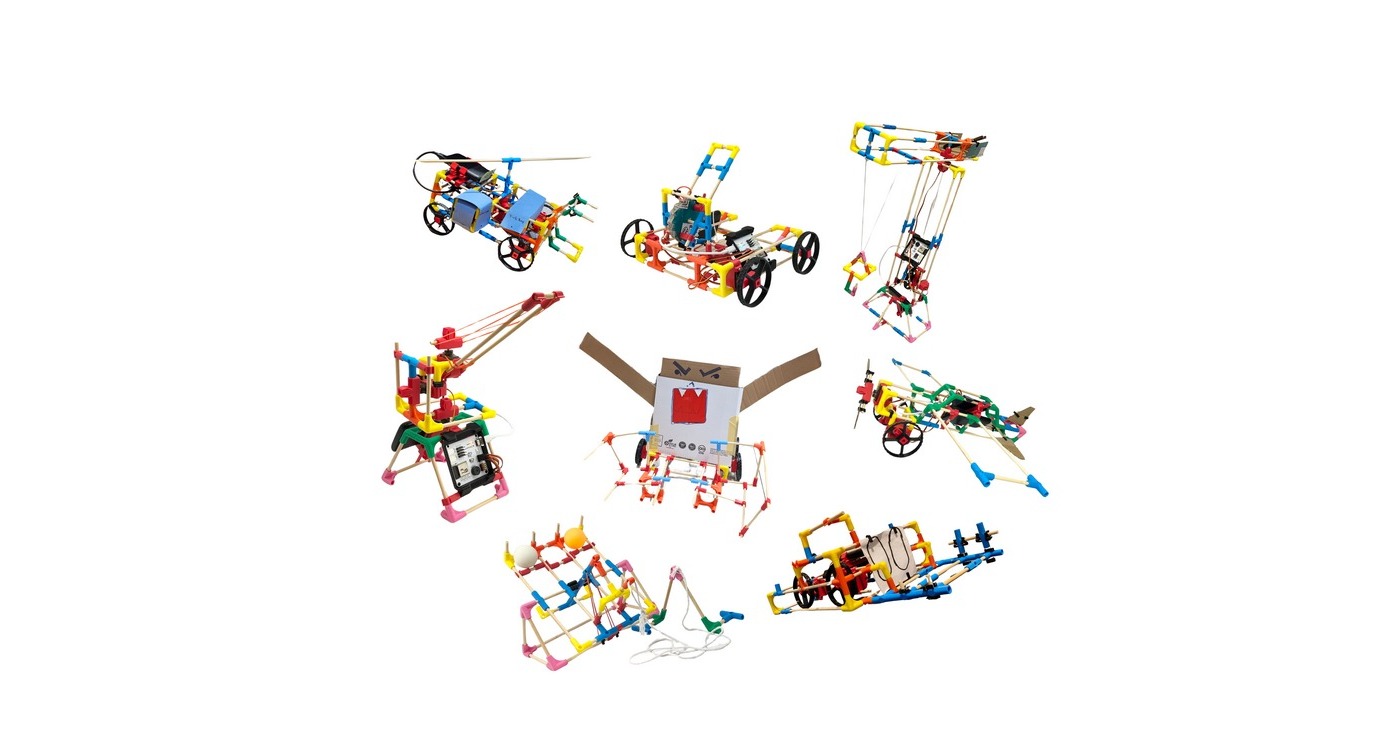
Called Stick ‘Em, the wildly-successful child STEAM playset consists of geometric connectors, chopsticks, and simple electronics that can be controlled by any phones, tablets or even the ancient computers that some schools might have.
“We started Stick ‘Em because we saw that traditional STEAM education wasn’t developing true problem-solvers and was inaccessible to many students worldwide,” the founders, named Adam Huh Dam and Chong Ing Kai explained in a press release.
“As builders and tinkerers growing up in Singapore, we had access to great resources, but realized that most schools, especially in underserved regions, lacked affordable, hands-on learning tools. With backgrounds in robotics and STEAM education, we created Stick ‘Em to provide a simple, low-cost solution that empowers students to learn through play and creativity, regardless of their background.”
For Kai and Dam, the mission wasn’t just to train the next generation of robotics engineers and coders, but to train the next generation of problem solvers. Witnessing the pace of technological advancement, they couldn’t say for sure what jobs will be needed in 20 years, but whatever they are, the ability to think creatively, to problem-solve, and to be adaptable in the face of change and limitation—these are evergreen skillsets that Stick ‘Em helps cultivate.
Seeking to offer something that anyone could afford, Kai, who came up with the original kit design, needed the cheapest, most logical components possible. Milling over the question of what materials could be used, Kai walked into his kitchen, opened a drawer, and found a pile of unused takeaway chopsticks—cue the eureka moment.
“What if we use chopsticks to build robots? These are everywhere, and they’re strong, and easy to cut and shape,” Kai told the Straits Times.
It was the images of the chopstick robots on social media that Adam Dam saw when he decided, immediately, that he wanted to be involved.
The start-up grew from a two-man job in 2020 to a 14-member strong venture, including employees, with offices at the Singapore University of Technology and Design (SUTD) and the National University of Singapore.
Stick ‘Em kits have become part of classroom STEAM activities in 90 schools across 11 countries, reaching an estimated 12,000 kids across mostly Southeast Asia, but also in Africa.
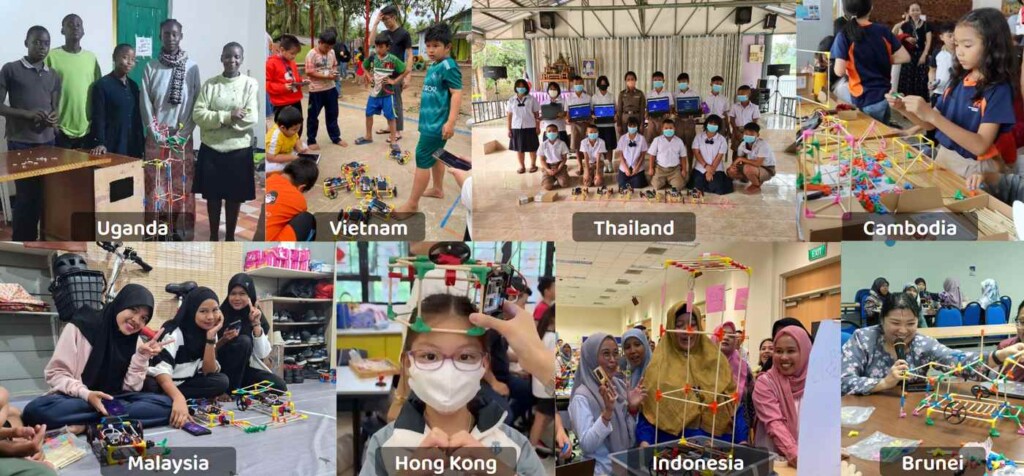
They’ve been used as educational and enrichment tools in floating schools for stateless children in Sabah, a village 240 miles away from Uganda’s capital, military-run Thailand-Myanmar border schools, and a series of orphanage schools in Cambodia.
EDUCATIONAL STORIES: Walmart Heiress Opens Medical School with a Focus on Preventative Medicine
This year, Stick ‘Em won the prestigious Hult Prize for educational innovation, which Kai and Dam claimed over and above 15,000 other presenters and ideas.
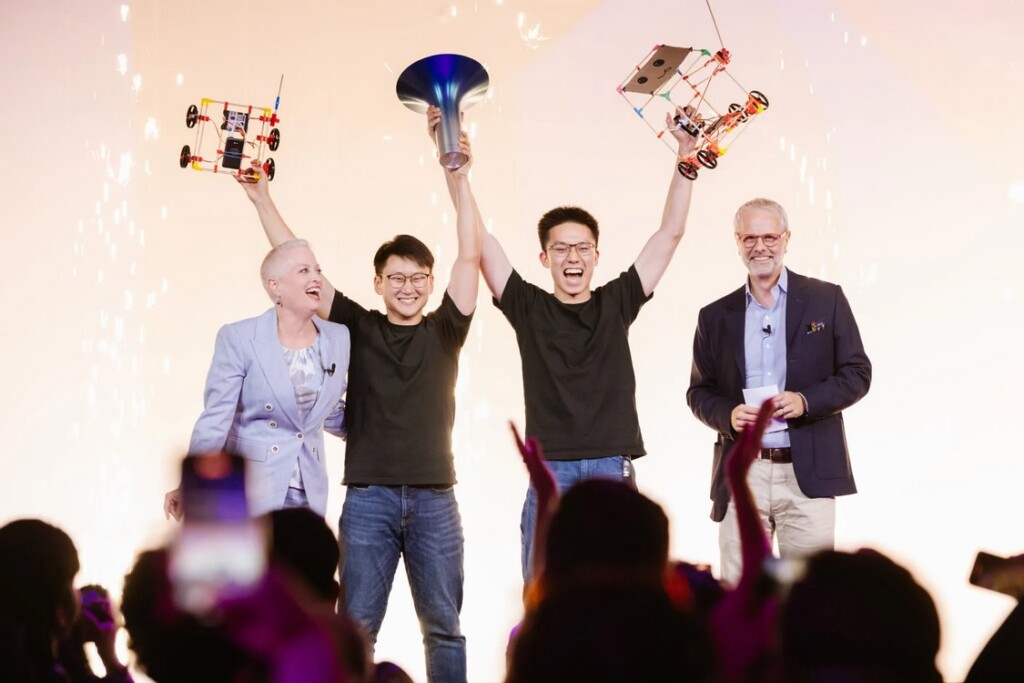
“When our name was announced, we were in shock, but we immediately thought about how this prize could help us reach more schools, empower more teachers, and provide STEAM education to more children worldwide,” they wrote in the release.
MORE SINGAPORE STORIES: Resourceful Singapore Finds Perfect Place for 86 MW Solar Farm–its Biggest Reservoir
“This win is just the beginning, and with the $1 million prize, we’re excited to scale our impact, increase awareness, and build sustainable teacher communities.”
Visit the Stick ‘Em store here, and consider joining the movement.
WATCH the story below from The Straits Times
SHARE This Story