














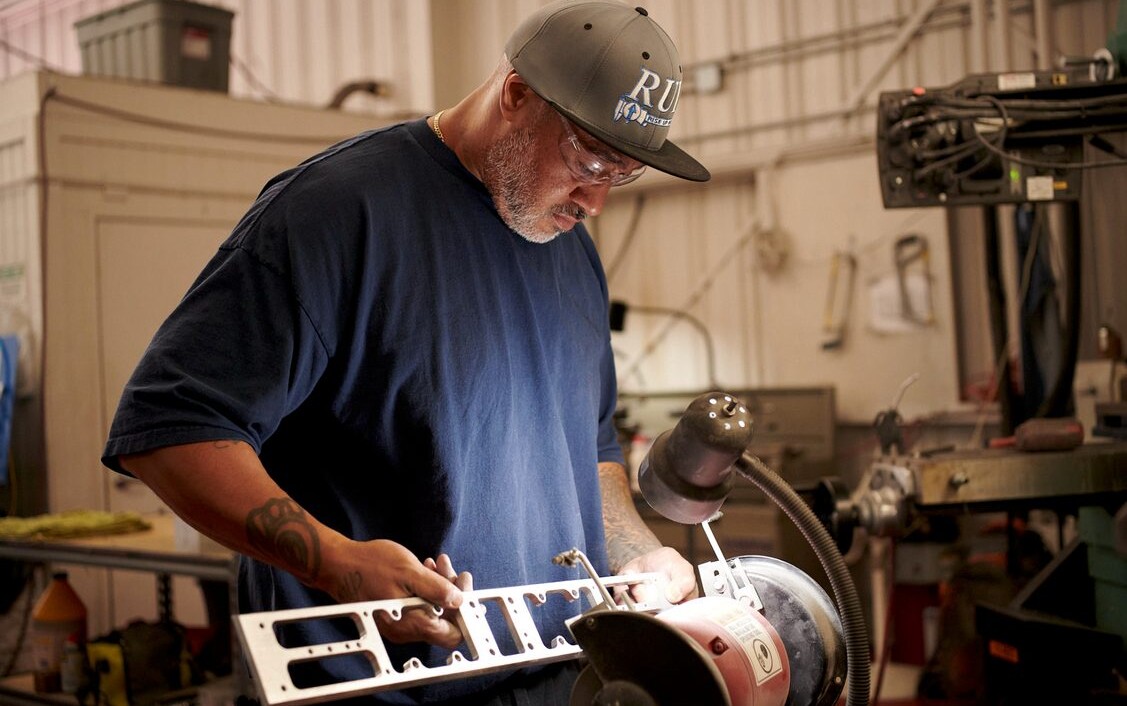
In a converted machine shop in southeastern San Diego, men who spent decades in prison are learning critical trade skills just weeks out of incarceration thanks to an inspirational nonprofit.
Rise Up Industries has spent over a decade helping men metaphorically exchange their felony records into machinist certifications, joining a paid apprenticeship program with therapy and case management built in.
But the work itself is anything but metaphor: the machine shop fills contracts for aerospace and medical device parts, automotive components, camera and faucet hardware, BMX parts, and fishing lures.
This dose of reality was tailor-made to suit America’s reality, where the nation infamously tops the Developed World for incarcerated people per capita, yet where a felony conviction makes it extremely difficult to find work.
Rise Up’s own tracking shows only 3% of program graduates re-offend compared to a national rate is roughly 66% over a 3-year horizon, according to the Bureau of Justice Statistics.
Komisi Savaiinaea served more than 2 decades of prison time, but graduated from the apprenticeship program and has found a sense of responsibility that has clearly enriched his life.
“I was very intimidated and skeptical about the whole thing,” he admitted to GNN in an interview. “I’d never had any experience with machining, it had been many years since I went to school, I’m not too savvy with technology, so I was a bit fearful of the whole thing.”
“But after touring through the shop and speaking with the members who were on the machines, it really helped put it into perspective—they had no prior machining experience either.”
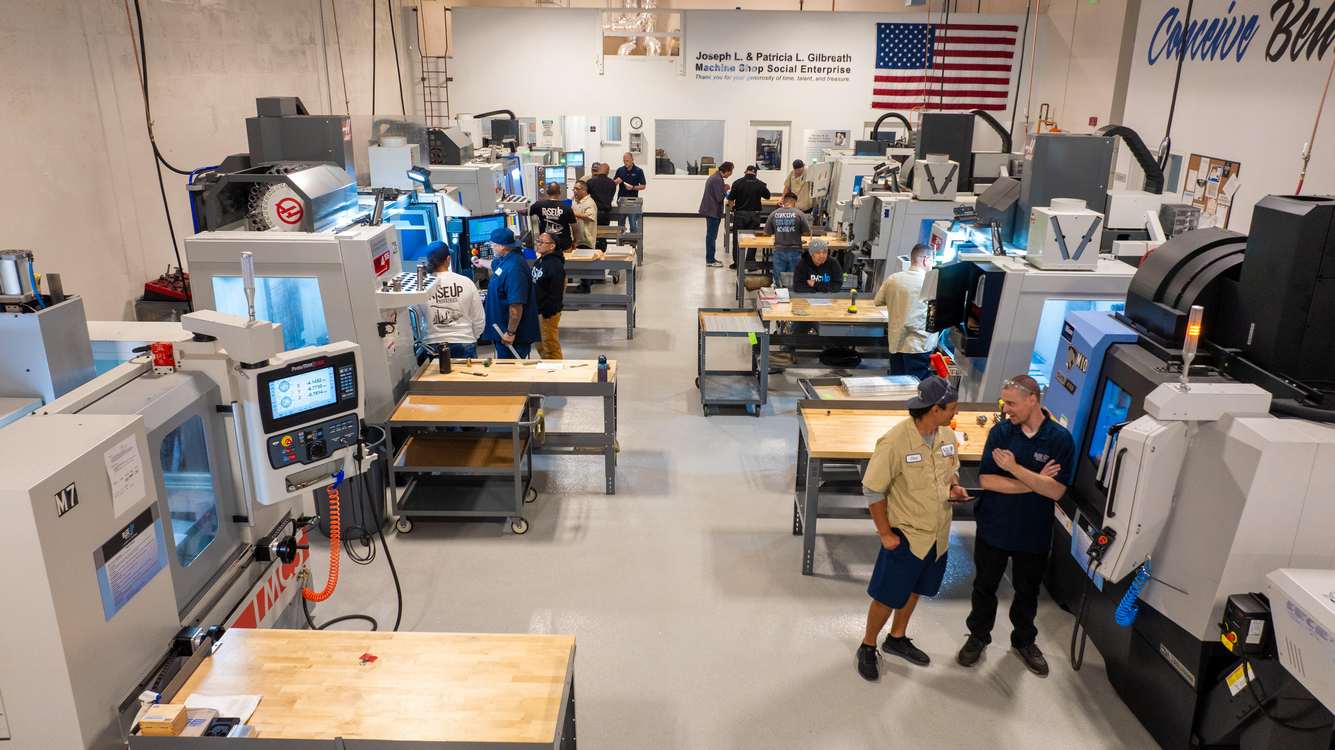
There wasn’t much to it—just a crash course in trigonometry courtesy of tutors there on the machining floor—”if these gentlemen on the floor can get it, you know, I believe in myself, I think I can get it as well,” Komisi said.
What did he have to lose, he opined looking backward: he knew the only other opportunity would be working at construction sites, paycheck to paycheck, and how long could that last?
Giving back
Most participants are formerly gang-involved, like current apprentice Anthony Walkens. In 1998, Walkens was found guilty of gang-related homicide charges and sentenced to 55 years to life. He did 27 years of time in correctional institutes throughout California.
Speaking with GNN, Walkens said that in what would become his last 10 years, a change came about him and his personality, and he became eligible for parole in 2025. His experience entering the Rise Up Industries machining apprenticeship program was remarkably similar to Komisi—how could it be otherwise after half-a-human-life beyond bars.
“When I first came through the door, I was overwhelmed, I thought I had bit off more than I could chew. But the welcome I got here from people like Komisi, it reassured me that I would be able to do this,” says Walkens. “When Komisi first started, he had this same experience, and coming from the same scenario as I, it started being more comfortable.”
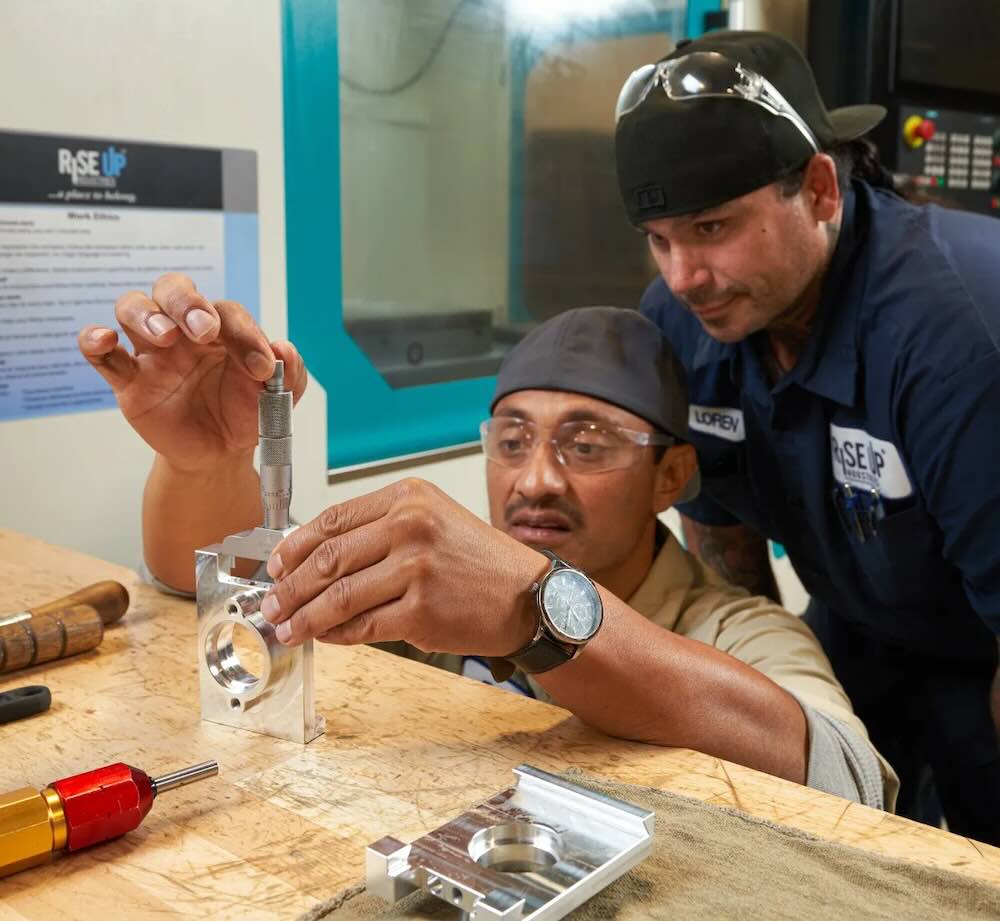
Komisi recently took a position as a supervisor in the machine shop, where he was described to GNN as “a consistent source of encouragement and guidance for current participants.”
“It’s more gentle, they can relate to it better,” he says of welcoming fellow ex-cons. “So it allows me to continue my learning and be of service to others.”
LIFE AFTER PRISON: Formerly-Incarcerated Artisans Craft Tables Designed by Women in Prison, to Benefit Them When They Get Out
“San Diego has a strong advanced manufacturing sector and a significant need for skilled workers, so CNC machining became the central employment pathway in our program,” said Executive Director Jonathan Yackley in a written statement.
In addition to the training, tutoring, and case management, Rise Up Industries made sure that therapy and clinical help was available. Komisi himself is a cancer survivor—necessitating a pause in his work between ’23 and ’24, but he’s also availed himself of therapy to support his role as a husband of more than 30 years.
“I’ve been with her through dysfunction, addiction, and it looks different coming home in a responsible state of mind in a pro-social setting,” he says.
HOPE BEHIND BARS: Daddy-Daughter Dance in Notorious Prison Turns ‘Worst of the Worst’ into Loving Fathers Again
“Over the years, we have learned that technical training alone is not enough,” says Yackley. “Someone can leave incarceration with a certificate and still face the same isolation, trauma, instability and lack of opportunity that contributed to incarceration in the first place.”
“Sustainable change happens when demanding career training is combined with behavioral health care, case management, education and a community in which people know they belong—Komisi is a powerful example. The leadership skills he once used in prison now help him supervise a manufacturing team, encourage new participants and serve his community.”
“It’s really a beautiful place,” said Walkens, “kind of like a family setting.”
SHARE This Beautiful, Transformational Opportunity Reforming California One Machinist At A Time…