











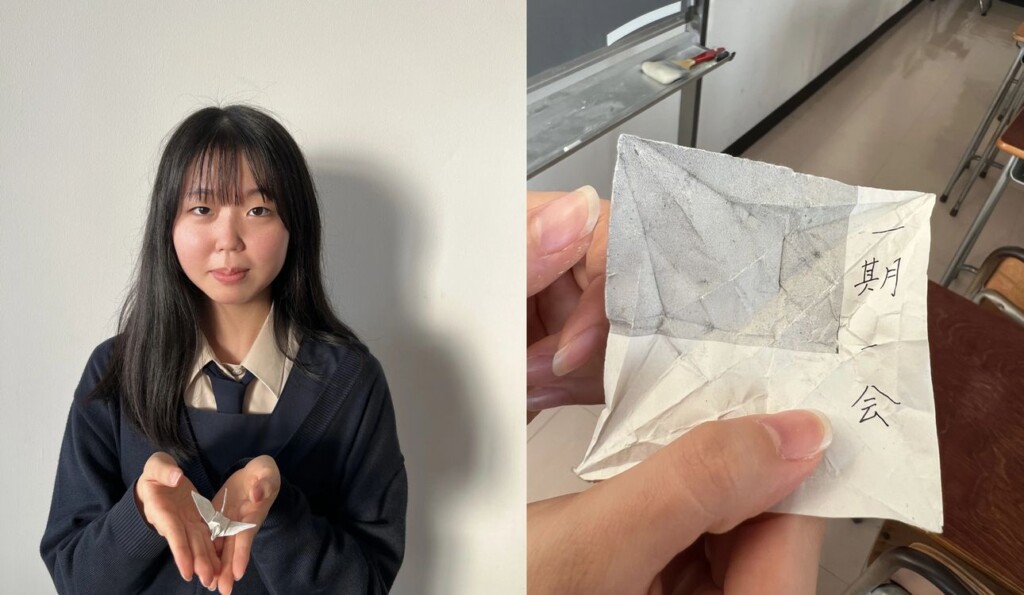
From Seattle’s chapter of National Public Radio comes the remarkable story of the kindness of strangers immortalized in an origami crane.
Published through KUOW’s “My Unsung Hero” series, the story begins with a 7-year-old in Japan who had just gotten a new bike.
Young Rika Matsuda was at first very excited because the bike was fast, much faster than her old one. Riding at the park, she was heading straight for the wall when she learned the new bicycle’s brakes didn’t work.
Into the wall she went, falling down and hurting her foot which began to turn purple before long. Seeing the incident, a man, whom Matsuda described as tall, strong, and wearing a suit, approached her. She was nervous and didn’t know if she could trust the stranger, who gave off the air of importance.
“But when he said, ‘Are you OK?’ I knew from his kind and gentle voice that he was a very nice man,” Matsuda recalled in her native Japanese to a translator, who relayed it to KUOW.
The man helped the young girl to her feet, took her to a water fountain where they washed the cut on her foot, and lent her his phone so she could call her grandfather. As they waited for the caretaker to arrive, the man took out a white piece of paper and, like a scene out of Japanese cinema, showed her how to fold an origami crane.
“He was really good at folding origami, and he taught me the right way to make a clean and beautiful crane,” she said. “Maybe he wanted me to think about the paper instead of my foot.”
When Matsuda’s grandfather arrived, the man helped get the bike and its rattled young owner back home. When parting came, the stranger handed the girl the origami crane without saying a word, before disappearing back into anonymity, and eventually, memory.
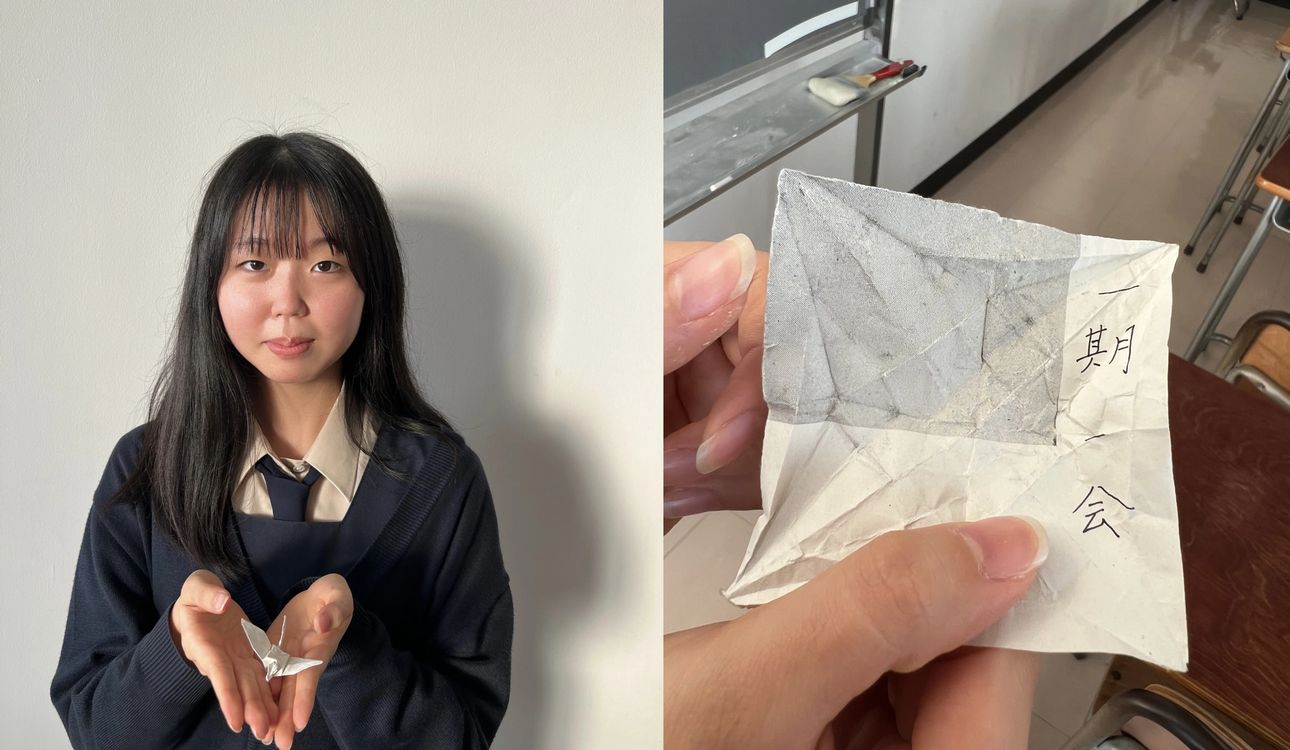
The memory lived on, though, through the white paper crane which she always kept on her desk, remembering his kindness whenever she looked at it.
A full decade later, and Matsuda was sitting in her high school English class, and the teacher, Benjamin Johnson, used NPR’s “My Unsung Hero” as a teaching workshop, asking each student to write details about an encounter with a Good Samaritan. That’s when Matsuda remembered the crane.
STRAIGHT OUTTA’ TOKYO: Stray Cat Nursed Back to Health by Train Staff, Climbs the Ranks to Become Stationmaster
10 years of time had muddied the recollection, but she remembered the man and the crane, and his kindness above all. At that moment, Matsuda was seized by the urge to unfold the origami work and see if the man had written anything on the paper.
The trip home from school was done at some pace, and upon entering her room she carefully unfolded the crane to find—just as her premonition had held—a secret message.
Two characters, containing well-known Japanese idiom.
MORE UNSUNG HEROES: Over 600 North Korean Refugees Can Tell Their Stories After Public Speaking Classes from US Charity
“We should treasure each time we cross paths with someone because it might never happen again,” Matsuda said, translating. More simply, she said it reminds the reader to “cherish the moment.”
“Then I realized even more how kind and how nice of a man he was,” Matsuda said—a true unsung hero.
SHARE This Incredible Japania Story With Your Friends On Social Media…