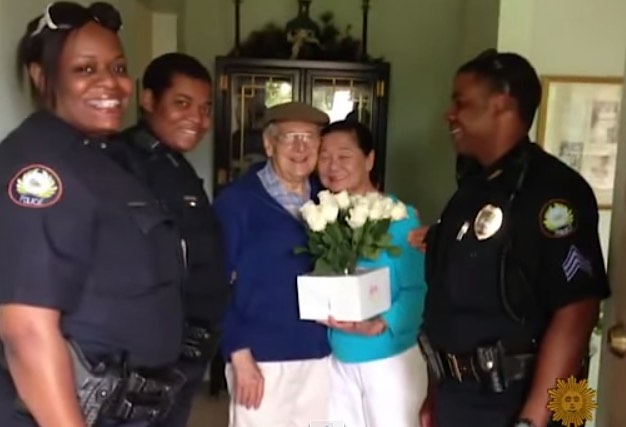
Boynton Beach, Florida Police Officers Barry Ward & Terrence Paramore responded to a local apartment Saturday following a 911 hangup by a two-year-old who was playing with the phone.
The little girl and her sister were sad because they weren’t going to have a Christmas tree this year.
Seeing the sparse amount of furniture and talking to their mother outside made the officers realize that the family was struggling.
The officers left and made a plan to go to the store the next day.
“They did what makes them some of our finest,” reported the Boynton Beach Police Department on Facebook. “They surprised (the family) on Sunday by delivering a Christmas tree, stand, lights and ornaments!”
A body camera routinely worn by Officer Ward captured the entire scene, including the elation on the face of the 7-year-old girl who greeted them with a huge “Thank you!”
The two officers, who bought the items with their own money are “reflective of the selfless spirit of service in the hearts of the overwhelming majority of police personnel in this country,” said Boynton Beach Police Chief Katz commenting on the Facebook post. “It’s just rarely reported.”
WATCH the video, and continue reading below…
.
Over three million people have viewed the video on Facebook, and many of them wanted to buy gifts for the girls. But it was lyricist and composer Daniel Herbert who first offered specific support, “Please send me a private message so that we can work together to put some presents from Santa under that tree.” The police department gratefully accepted his help and will coordinate his gift giving.
Amber Adkins of Cortez, Colorado was not surprised by the kindness of these men in blue: “My husband keeps a box of toys and children’s clothes and diapers and formula in the trunk of his patrol car and gives the stuff away when he comes across a family who needs it.”
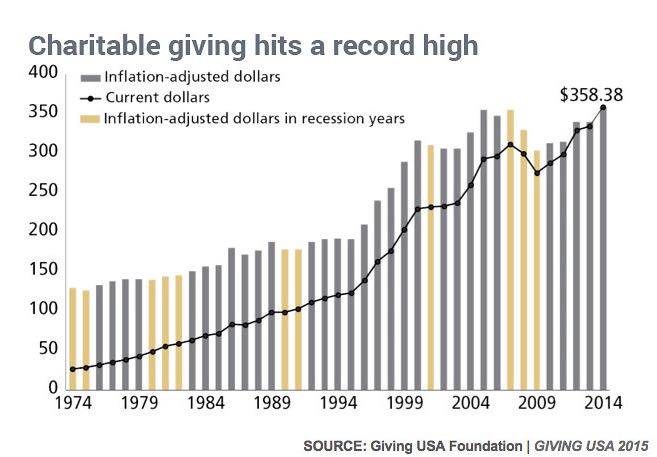
In just its third year, yesterday’s national day of giving — known as #GivingTuesday — inspired gifts to more than 15,000 nonprofits with nearly $40 million raised online in the US.
According to initial estimates tallied by the Indiana University Lilly Family School of Philanthropy, donations via five major donation processing platforms surged. Including offline donations, the tally reached $45.7 million as of noon Wednesday, December 3.
Giving results for #GivingTuesday 2014 are expected to grow substantially as offline donations continue to be processed. Online giving represents an estimated 6–10 percent of total annual giving.
Estimates from the 24-hour period that began at 12:00 a.m. on Tuesday December 2nd were tracked by the major donation processing platforms for nonprofits: Blackbaud, DonorPerfect, GlobalGiving, Network for Good and Razoo.
“Just as Cyber Monday and Black Friday are key indicators of consumer sentiment and economic health, this data can serve as an indicator of the health of our giving economy,” said Jean Case, co-founder and CEO of the Case Foundation, which supports the Indiana School. “We’re excited about what we saw yesterday, as millions of people came together to demonstrate the true spirit of the holidays and proving that, collectively, small gifts can have big results.”
The 2014 initial results indicate that the amount raised during this year’s #GivingTuesday increased by at least 63 percent over the same period in 2013, with the average donation increasing by 6 percent.
“In just three short years, the number of people making contributions and the number and types of nonprofits of all sizes receiving those gifts has increased dramatically.” said Una Osili, director of research for the Lilly Family School of Philanthropy. “As tremendous as that amount is, though, #GivingTuesday is not just about the money that is raised, it is also about people and nonprofits engaging with each other to improve the world.”
#GivingTuesday is largely driven by social media and online giving campaigns, as demonstratied by the more than 698,000 tweets mentioning the hashtag, an increase of 159% percent over 2013.
It is estimated that 63 countries participated globally in the charitable giving this week.
A report released by the US Department of Health and Human Services this week shows an estimated 50,000 fewer patients died in hospitals and approximately $12 billion in health care costs were saved as a result of a reduction in hospital-acquired conditions over three years.
Some of the progress is due to provisions in the Affordable Care Act that offered Medicare payment incentives to improve the quality of care in hospitals. Also, HHS set a goal to improve patient safety in 2011 by launching the Partnership for Patients, which targeted specific conditions that are acquired through stays in hospitals.
Preliminary estimates show that in total, hospital patients experienced 1.3 million fewer hospital-acquired conditions from 2010 to 2013. This translates to a 17 percent decline over the three-year period, with the most significant gains occurring in 2012 and 2013.
“These data represent significant progress in improving the quality of care that patients receive while spending our health care dollars more wisely,” said HHS Secretary Sylvia M. Burwell. “HHS will work with partners across the country to continue to build on this progress.”
According to preliminary estimates, in 2013 alone, almost 35,000 fewer patients died in hospitals, and approximately 800,000 fewer incidents of harm occurred, saving approximately $8 billion.
Avoidable hospital-acquired conditions include adverse drug events, catheter-associated urinary tract infections, central line associated bloodstream infections, pressure ulcers, and surgical site infections, among others. HHS’ Agency for Healthcare Research and Quality has produced a variety of tools and resources to help hospitals and other providers prevent these conditions. To learn more, visit their website.
Photo by sancho panza on Flickr (CC) – Story Tip from Joel Arellano
Saturday night in a tiny town in Central Vermont, hundreds of children and artists of all ages will be aglow in a beautiful December ritual, The River of Light Lantern Parade.
Every year at the beginning of December when the nights begin to darken and the cold sets in, the people of Waterbury, Vermont carry illuminated hand-made lanterns in a magical procession through town.
First organized in 2010 as a small school-wide event at Thatcher Brook Primary School, the free festival is now in its 5th year and includes people of all ages and backgrounds from neighboring communities and towns. It has grown every year, attracting visitors from across New England who want to celebrate the change of seasons with live music, light and a fire.
In the weeks before the parade, artists conduct free community lantern workshops in schools and elsewhere that teach anyone how to make willow and coffee-filter paper lantern structures. There is also a special 2-day intensive Artists’ Lantern Workshop to instruct regional artists how to teach lantern-making in their own communities and make the larger structures, such as full length dragons, to spearhead a procession.
“It is really empowering for children to celebrate alongside elders, artists, college students and community members,” said visual artist and co-organizer Gowri Savoor.
Photo by Gordon Miler
Her co-organizers include another artist, Angelo Arnold, and a school art-teacher, MK Monley. Volunteers help to make the parade a success. Battery operated LED lights are sold in the school gym, if you don’t have your own illumination, and they are giving away free batteries to power older lamps. Students from Norwich University and the Harwood Union High School help the younger children with their lanterns, distribute free hot chocolate, and control the fires during the finale.
“It is an emotional, visceral and totally memorable event, open to all, and a wonderful example of community engagement through the arts,” added Savoor.
The event this year is scheduled for December 6, 2014, with the theme “Our Town: Faces, Places and Buildings from your Home-town.” The parade leaves Thatcher Brook Primary School at 5 pm.
If you have been on social media, or seen any talk about American current events you know there have been protests against the outcome in the Ferguson case, with the jury deciding not to prosecute the policeman who killed a black teen. But did you see the iconic photograph taken by a Portland freelancer that symbolizes everything that is still good in this country? The two people who were captured in that moment (see the photo below) have been showered with well-deserved media attention and praise.
Devonte Hart, an African-American boy who survived an urban childhood that no one should have to bear, was rescued (along with his siblings), adopted and raised by a compassionate caucasian couple who helped him turn his life around. The 12-year-old and his mom on Nov. 25 attended a protest rally in Portland shortly after the verdict was announced. Devonte planned to engage the crowd with favorite pastime, carrying a sign and offering FREE HUGS.
In a Facebook post, Devonte’s parents, Sarah and Jennifer Hart, told the story behind the photo, which is being called “The hug felt ’round the world”.
“We hit the streets (Nov. 25) with the intention of spreading love and kindness, and to remind (ALL) people that they matter in this world. … I noticed Devonte was struggling. Tears. He wouldn’t speak. He was inconsolable. My son has a heart of a gold, compassion beyond anything I’ve ever experienced, yet struggles with living fearlessly when it comes to the police and people that don’t understand the complexity of racism that is prevalent in our society.”
“He trembled holding a Free Hugs sign as he bravely stood alone in front of the police barricade. Tears rushing from his eyes and soaking his sweater, he gazed upon them not knowing how they would react. After a while, one of the officers approached him and extended his hand.”
“There were generic questions about his favorite subject and what he liked to do in the summer, but the one that mattered hit straight to the heart. He asked Devonte why he was crying. His response about his concerns regarding the level of police brutality towards young black kids was met with an unexpected and seemingly authentic (to Devonte), ‘Yes. *sigh* I know. I’m sorry. I’m sorry.'”
The officer, later identified as Sgt. Bret Barnumthen, then pointed to the sign and asked, “Do I get one of those?”
“The media is full of military men and women surprising their families upon their return from deployment, but it is very rare to see a military member get surprised by their loved ones,” wrote Sara Taylor.
Her husband, Gunnery Sgt. Chris Taylor led one of the last groups of US Marines as they arrived home from Afghanistan after a year-long deployment. Because he is stationed in California and his wife and kids live in Maryland, he didn’t expect that anyone would be there for his homecoming.
“But I showed him!” wrote Sarah, describing the YouTube video she posted in November showing their emotional reunion. “I made sure I arrived there in time to see his arrival.”
Two years ago a young Singapore woman started her first Zumba Gold class for seniors who never exercised.
The class was so well received that she expanded the free fitness program and has attracted volunteers to conduct them at senior centers across Singapore.
”We have seen tremendous improvement in the elderly we work with, not just physically and mentally, but socially as well,” wrote Jacqueline Tan, founder of the Get Movin for Charity Zumba movement.
“We show them that they can have fun and joy while keeping fit. And I believe the love, care and concern shown to them has contributed to their self-confidence.”
Last week they celebrated Grandparent’s Day with about 40 elderly folks eager for fun.
The video below was entered into a story competition put on by the Singapore nonprofit, Our Better World.
When an assisted living home for the elderly in California shut down last fall, many of its residents were left behind, with nowhere to go.
Maurice Rowland, the cook, and Miguel Alvarez, the janitor, who were working there, stayed to take care of them. The pair quickly became round-the-clock caretakers.
”I would only go home for one hour, take a shower, get dressed, then be there for 24-hour days,” Alvarez told StoryCorps.
“My parents, when they were younger, they left me abandoned,” he said. “Knowing how they are going to feel, I didn’t want them to go through that.”
Inside the Judson Manor retirement community in Cleveland, Ohio, they have about 100 senior residents.
They also host several college students who live in apartments there. All are studying at the Cleveland Institute of Music, and were offered free rent in exchange for monthly performances.
It seemed like a common sense plan to bring music to the elderly, but it turned out to be much more than that.
Not only did the young people inject life into the community, but they also developed close friendships and discovered that they, themselves, are benefiting most from the innovative exchange program.
(WATCH the video below or READthe story at CBS *NOTE Auto-playing video)
The Harmony Fund gets letters from animal protectors around the world, asking for donations to help keep their rescue operations afloat.
Letters and pleas from rescuers in Serbia, Romania, Bosnia, Africa and the US, for food, medicine and money were answered in November with surprise deliveries containing truckloads of food and support. A video shows the gifts being delivered and the looks of happiness on the rescuers faces.
The Fund, started by American Laura Simpson, offers a lifeline to so called “underdog” animal rescue squads across 16 countries. With its annual rescue of several thousand animals, the Harmony Fund takes “a unique blue sky approach” that allows supporters to enjoy an uplifting experience free of graphic photos and dire forecasts.
(WATCH the video below and LEARN how to donate at harmonyfund.org)
Milwaukee theater professionals have been working with local veterans through intensive weekend workshops that allow emotions to boil from the cauldron of conflict within, using the words Shakespeare.
The Feast of Crispian program, run out of the Milwaukee’s Veterans Affairs hospital, has been such a success that last week it received a $50,000 grant from the Helen Bader Foundation to launch an all-veteran, fully-staged production of Julius Caesar.
In the hospital’s community room, professional actors stand next to the veterans to help them act out the dramatic scenes. They feed them the lines and story plot points, freeing them to concentrate on the emotions without having to memorize or hold a script. The process helps the veterans to strengthen the resources needed to overcome service-related trauma and daily stress.
Further group discussions create a safe space for important stories to be told, giving voice to their human condition.
The program was created in 2012 by the founders of the Milwaukee arts think-tank called the Battery Factory, who were inspired by the Massachusetts “Shakespeare in the Courts” program for juvenile offenders.
The Courts program was designed in 2001 by two Pittsfield artist educators in collaboration with Judge Paul Perachi to give troubled teens a consistent experience of being responsible for their choices without a right/wrong judgment being made. Judge Perachi, a former high school principal, agreed to assign the participants to the program en lieu of community service or, in some cases, lock-up. The therapeutic technique relies on conflict-heavy scenes in Shakespeare’s plays with strong dialogue between two characters, with no long speeches.
“I have witnessed first-hand the extraordinary impact,” said Judge Perachi. “Their self-esteem soared and they seemed to be able to navigate the treacherous waters of their adolescence with greater ease and less anger. Working on this project will decrease the likelihood that they’ll appear before me in the future.”
“The Feast of Crispian bases its techniques on the Shakespeare work in Massachusetts,” said Rebecca Holderness, a stage director, choreographer and theater professor who founded The Battery Factory. “This is an innovative strategy to confront new and old challenges facing our veterans.”
One recent participant, a USAF Veteran, said, “I found an inner reserve of emotions that I now have a way to tap, to access some of the pain and express it in a safe and healthy way.”
Feast of Crispian, named for the rallying cry in Shakespeare’s Henry V, serves veterans of all military branches – active, reserve or guard – and of any discharge status. All veterans are invited to participate; no theater experience is needed and there is no fee. The only requirement is a commitment to working respectfully with each other.
For the full production of Julius Caesar in 2015, The Battery Factory intends to bring together the Milwaukee area theatre community to provide the costumes, make up, scenery, etc. to provide a rich experience for the veterans who have benefitted from any of the nine intensive weekend workshops so far.
Nancy Smith-Watson, an actress who worked with the Feast of Crispian from the beginning, and who facilitates the veterans’ weekends, told the Milwaukee Journal-Sentinel that “most of Shakespeare’s characters say exactly what they mean, something that rarely happens in the real world. And by digging deep into the feelings and motivation of the character they’re portraying, they’re deepening their ability to connect emotionally.”
After the game, Gardner said, “J.T. is a high-character guy, a hard worker who waited for his shot and was doing so well with it. I was sick for him … It’s like having a little brother out there get hurt.”
Many believe the American economy has some inherent advantages over its major competitors – a more flexible structure, stronger entrepreneurial traditions, a more demographically dynamic society.
“Well, along comes a fascinating new book,” writes Farred Zakaria, that points out, “you ain’t seen nothing yet.”
“Peter Zeihan’s The Accidental Superpower begins with geography, pointing out that America is the world’s largest consumer market for a reason – rivers. Transporting goods by water, he points out, is 12 times cheaper than by land, which is why civilizations have always flourished around rivers.”
”And America, Zeihan calculates, has more navigable waterways – 17,600 miles worth – than the rest of the world put together. By comparison, he notes, China and Germany have about 2,000 miles each and ALL of the Arab world has just 120 miles of river.” (The Chesapeake Bay alone “boasts longer stretches of deep-water ports than the entire continental coast of Asia from Vladivostok to Lahore.”)
Code.org, an organization that tries to get girls excited about coding, unveiled this month a new tutorial that uses a couple of Disney’s wildly popular princesses from the movie Frozen.
Disney has given its blessing, and $100,000, for the creation of a 1-hour tutorial that shows kids how to use computer code to get Anna and Elsa to ice skate around their computer screens.
Using an innovative webpage, the kids can use computer code menus to carve snowflakes and patterns in the ice and create their own winter wonderland.
Since 2012, Code.org courses have been used in 62,000 classrooms.
Clara Leigh-Wong, a crisis counselor and flight attendant in Canada, experienced the joy of being the recipient of an honest deed from a kind stranger.
Clara and her neighbor Adam were walking their dogs in the suburban area of New Westminster, British Columbia. Upon returning home, the 31-year-old realized her green wallet was no where in sight.
After scouring the neighborhood, Clara was unable to locate her wallet. Upset, she began the process of replacing the lost contents. However, with the recommendation of her neighbor Adam, Clara makes a call to the neighborhood’s police department to report the missing wallet.
The next day while Clara was teaching a class, she received a phone call from the police stating that her wallet has been returned with all its contents included. When asked who the kind Samaritan was, he said that she preferred to remain anonymous.
Clara was looking forward to thanking the anonymous lady in person. However, if that isn’t possible, she is hoping that this story would be published in hopes that the woman who found and returned the wallet will recognize this story and know that she is being appreciated for her upstanding act.
If you are waiting in an airport, a train, a security line, or awaiting the arrival of a flight home, these five stories are a perfect way to spend your time and make a smile erupt on your face. (Others around you will just have to bask in your glow.)
While in the Albuquerque Airport I heard an announcement: “If anyone in the vicinity of Gate 4-A understands any Arabic, please come to the gate immediately.” When I arrived, an older woman in full traditional dress, just like my grandma wore, was crumpled to the floor, wailing loudly.
A U.S. veteran, quadruple amputee Taylor Morris, was traveling through McCarran Airport in Las Vegas with his wife, when his prosthetic knee suddenly broke down. His tool kit was out of reach, packed in his luggage, but an American Airlines aircraft mechanic came to the rescue.
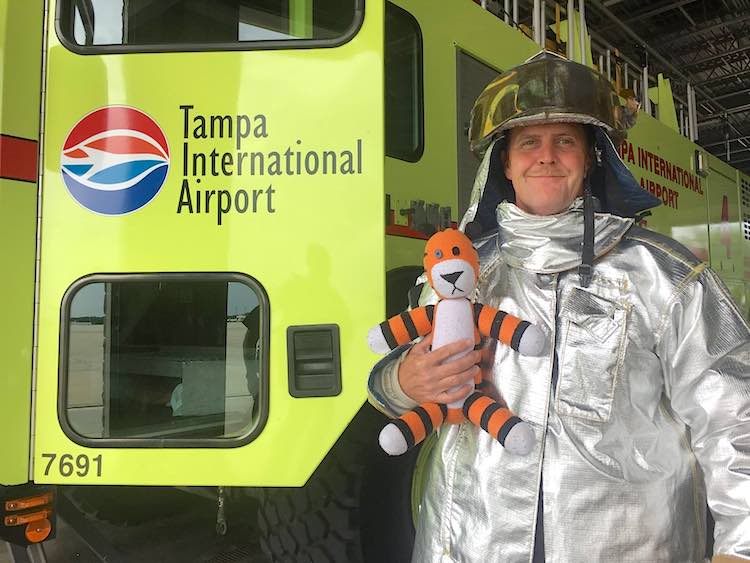
A passenger at the airport in Tampa, Florida was trying to pay for his baggage fee when his credit card was denied. He stepped out of line to check his balance, and when he came back a kind note was waiting for him.
Thanks to a team of merry WestJet employees and the power of technology, airline passengers in Canada were treated to a Christmas miracle. 250 people traveling to Calgary arrived to find wrapped gifts especially suited for each individual. (WATCH the fantastic video)
An 82-year-old veteran from Cary, N.C. traveling through O’hare Airport had no idea he was about to fall, literally, into a life-threatening situation involving his luggage and an escalator. A traveling salesman who happened to be in the right place at the right time potentially saved his life with a briefcase full of product samples.
Have a safe journey home, and SHARE this with fellow travelers!

One of the world’s rarest species, the orange bellied parrot, has bucked its long-term trend of decline and almost doubled its wild population, said an Australian news network.
Last November, fewer than 10 wild breeding pairs returned to Melaleuca, its breeding grounds in Tasmania. Thanks to a recovery program, 34 birds showed up this year.
A businessman has returned to the village where he was born in southern China to repay the kindness of residents who, like him, grew up in poverty there.
Having made a fortune in construction and steel industries, 54-year-old Xiong Shuihua spent more than six million dollars to transform the wooden huts into luxury homes and villas for 90 families.
Elderly residents in Xiongkeng will be also be given free meals, according to the Daily Mail
18 of the families, who were particularly kind to the businessman, were given villas of their own.