All News - Page 136 of 1719 - Good News Network
Home Blog Page 136

How 65% of Americans are Determined to Improve Their Money Habits in 2025

By 金-运
By 金-运

According to a recent survey, a wide majority of Americans want to improve their financial habits in the coming year.

The survey of 2,000 adults found that 65% are hoping to improve their money habits in 2025.

Nearly half (49%) are planning to hibernate in January, to be less active and social, and to spend less money after the holiday season.

Commissioned by global savings platform, Raisin, the poll also found that one in four respondents (26%) would like to improve their financial literacy this year.

This lack of financial literacy shows up, for instance, in 26% of those surveyed who don’t know what interest rate they’re earning from their bank or financial institution.

When quizzed, most (59%) didn’t know what APR (annual percentage rate) meant and 78% were confused by the abbreviation APY (annual percentage yield).

Respondents in the poll, conducted by Talker Research, also weighed in with reflections on 2024, with 89% saying they’d not accomplished everything they set out to in 2024.

The most common resolutions from last year left undone include:

  • Not saving enough money (51%)
  • Not being as fit and active as planned (38%)
  • Not traveling enough (32%)
  • And, not spending money thoughtfully enough (31%)

In fact, 44% said they were challenging themselves in January to only spending money on what’s absolutely necessary.

29% of respondents said they would pause dating or going out to restaurants and estimated they would save over $3,000, on average.

“If you’re not consciously budgeting and spending, the dollars quickly add up,” said Cetin Duransoy, CEO at Raisin.

“It’s so important to have a solid financial plan in place. That way you can be intentional and spend on what brings you joy while working towards financial security.”

“Finance can be an intimidating topic, so ask for help, if needed, from a trusted family member, friend, finance expert, or institution.”

Neighbors Save a Stranger’s Home From Burning Embers Flying Above Hollywood Hills (WATCH)

File photo by Daniel Lincoln

Amid the tragic property loss from Southern California wildfires comes a story of neighbors helping neighbors—and possibly saving Hollywood—by working together.

A new brush fire had started spreading on Wednesday evening near Runyan Canyon and the hills overlooking the densely populated area of Hollywood Boulevard.

Evacuation orders were issued, but luckily, some residents stayed put and were able to stop a possible catastrophe.

Blowing embers from the fire ignited a tall palm tree above a house in a neighborhood where the homeowners had already fled.

A half dozen neighbors jumped into action with a ladder, tossing hoses onto the roof to spray the palm tree, as its embers starting scattering onto the driveway and home below.

A roving ABC-7 news crew was on the scene with reporter Tim Caputo describing the actions of the Good Samaritans:

“The concern is all these ashes are falling on top of this house and the house next door. To this point with this fire, we have not seen any houses go up in flames, but you know how it gets, one turns to two, turns to a dozen really quickly,” said Caputo in a video report posted on Twitter/X. (Watch the dramatic video below…)

Afterward, Caputo talked to Tony, one of the people who helped save the neighborhood.

“The balcony was on fire and I went around back to grab the garden hose and luckily they had a Ring camera as well. They were like, ‘Hello, what are you doing?’ And I’m like, ‘Your house is on fire; I’m trying to save it.’ So, they were grateful.”

After 40 minutes of hosing down the palm tree, the embers finally went out.

“These people are absolute heroes. Probably saved a lot of homes from catching fire,” commented one viewer of the video on X.

RELATED: Malibu Resident Runs Toward Blaze to Wake Family in Unheralded Hero Story

Los Angeles Firefighters gained the upper hand around midnight, over what had been dubbed the Sunset Fire, fully containing the brush fire behind the Hollywood Hills. And the city lifted evacuation orders for the area on Thursday.

SHARE SOME GOOD NEWS – Post This on Social Media…

“Anyone can be successful in life, regardless of natural talent or the environment within which we live.” – Jimmy Carter

Credit: Seb Mooze

Quote of the Day: “Anyone can be successful in life, regardless of natural talent or the environment within which we live.” – Jimmy Carter

Photo: Seb Mooze

With a new inspirational quote every day, atop the perfect photo—collected and archived on our Quote of the Day page—why not bookmark GNN.org for a daily uplift?

A Deep Sleep Clears the Mind at Night Like a Dishwasher Cleaning–But Beware of Sleeping Pills

Credit: Nadia Alzoubi and Natalie Hauglund

A good night’s sleep clears your mind, suggests new research, like turning on a dishwasher before you go to bed and waking up with a clean brain.

The international team of scientists describes the process as washing away waste that builds up in the brain during waking hours.

Their findings also offer insights into how sleeping pills may disrupt the “brainwashing” system, potentially affecting cognitive function in the long term.

Researchers already know that the brain has a built-in waste removal process called the ‘glymphatic system,’ which circulates fluid in the brain and spinal cord to clear it out.

The process helps remove toxic proteins that form sticky plaques linked to neurological disorders, such as Alzheimer’s disease—but what drives the system had remained unclear, until now.

Danish scientists from the University of Copenhagen found that a molecule called norepinephrine plays a key role in brain cleaning in mice.

During deep sleep, the brainstem releases tiny waves of norepinephrine about once every 50 seconds.

The study’s senior author, Professor Maiken Nedergaard of the University of Rochester in New York, explained that norepinephrine triggers blood vessels to contract, generating slow pulsations that create a rhythmic flow in the surrounding fluid to carry waste away.

She said, “It’s like turning on the dishwasher before you go to bed and waking up with a clean brain.

“We’re essentially asking what drives this process and trying to define restorative sleep based on glymphatic clearance.”

To find clues, she and her team looked into what happens in mice when the brain sleeps. They focused on the relationship between norepinephrine and blood flow during periods of deep sleep.

They found that norepinephrine waves correlate to variations in brain blood volume, suggesting norepinephrine triggers a rhythmic pulsation in the blood vessels.

The researchers then compared the changes in blood volume to brain fluid flow, finding that the brain fluid flow fluctuations correspond to blood volume changes. The vessels act as pumps to propel the surrounding brain fluid to flush out waste.

“You can view norepinephrine as this conductor of an orchestra,” explained study lead author Dr. Natalie Hauglund, of the University of Copenhagen and the University of Oxford.

“There’s a harmony in the constriction and dilation of the arteries, which then drives the cerebro-spinal fluid through the brain to remove the waste products.”

Dr. Hauglund then wanted to know if all sleep was created equal.

To find out, the research team gave zolpidem, a common drug to aid sleep, to mice.

They found that the norepinephrine waves during deep sleep were 50% lower in zolpidem-treated mice than in naturally sleeping mice. Although the zolpidem-treated mice fell asleep faster, fluid transport into the brain dropped more than 30%.

SMART SLEEPBrain Matter May Remain Higher In People Who Love Taking a Nap

The researchers say their findings published in the journal Cell show that the sleeping pills likely disrupt the norepinephrine-driven waste clearance during sleep—and the findings probably apply to humans, as well, because also have a glymphatic system.

Scientists have observed similar norepinephrine waves, blood flow patterns, and brain fluid flux in humans.

“More and more people are using sleep medication, and it’s really important to know if that’s healthy sleep,” said Hauglund in a media release. “If people aren’t getting the full benefits of sleep, they should be aware of that, so they can make informed decisions.”

Their findings may also offer insights into how poor sleep may contribute to neurological disorders such as Alzheimer’s.

CHECK OUT: 8 Weeks of Lifestyle Changes Reduced Biological Age by 3 Years In Groundbreaking Proof-of-Concept Study

“Now we know norepinephrine is driving the cleaning of the brain, we may figure out how to get people a long and restorative sleep,” concluded Prof. Nedergaard.

SLEEP-AID ALERT: Share the Latest Data With Friends On Social Media…

She Found Her Dream Wedding Dress for $25 at a Thrift Store–and ‘It Fit Like a Glove’

Julia Webber and Michael Webber at their wedding – SWNS

After she couldn’t find a gown she liked in any bridal shop, a Florida woman bagged her dream wedding dress in a thrift store for just $25.

Julia Webber felt disheartened after trying on dresses at a boutique shop and not finding anything that was right.

“I wanted something simple and elegant… something form-fitting at the top.

So she couldn’t believe it when she found the perfect dress in a local thrift store.

Accompanied by her mom and sisters, the 26-year-old walked into her favorite second-hand store, the Hospice of Palm Beach County Foundation Resale Shop, and immediately spotted the dress.

“It was the first one we went to,” she said. “I zipped it up and it fit like a glove. I knew immediately it was the one.

“Life can be so serendipitous.”

“It was completely meant to be,” said the speech pathologist from West Palm Beach. “Everyone had the same reaction; their jaws were on the floor.”

Julia Webber trying on wedding dress at thrift store – SWNS

Last month she married her school sweetheart, who cried when he saw her walk down the aisle.

Julia has always been passionate about thrifting and grew up hunting through second-hand stores with her mother and two sisters, so looking for a wedding dress was a natural Plan B.

The dress was priced at $50 but that day it was ‘half-off day’ so Julia took it home for just $25.

“I loved the beading,” Julia said. “And it had a brand new tag on it.”

She couldn’t find the Casablanca dress new online but estimates it might have cost up to $3,000.

Julia Webber and Michael Webber at their December wedding – SWNS

The arm straps needed to be shortened, which cost $40, and she paid $75 to have it professionally cleaned.

“At the wedding I started telling people the cost and the live reaction of disbelief was amazing.”

WATCH: Grandma Dances All Night at Granddaughter’s Wedding After Being Told She Wouldn’t Live to See it

Julia shared her thrifting discovery on social media and hopes it has inspired others to go hunting for second-hand pieces—and she plans to pass on the dress to a bride who can’t afford a new one.

INSPIRE A BRIDE-TO-BE By Sharing The Idea On Social Media…

Man Gets Free Life-Changing Surgery to Remove Baseball-sized Tumor from his Jaw

Alex had baseball-sized tumor removed from his jaw – Mercy Ships / SWNS

A man with a huge tumor on his jaw finally got life-changing surgery, after it got so big he almost couldn’t eat or speak.

Alex first noticed a swelling on his jaw as a teenager. It turned out to be a non-cancerous tumor, but it kept getting larger and larger.

By the time Alex was 23, the benign mass had grown to the size of a tennis ball and began to affect his ability to speak, eat, and swallow.

He was warned that it may eventually make it impossible to breathe, but none of the local hospitals around Freetown, Sierra Leone, were able to help—nor did any medications or herbal treatments.

He suffered with infections and tooth loss and, perhaps worst of all, from social isolation as most people shunned him and he was unable to make friends.

“I found it difficult to sit among people because they would laugh at me. I used to run away from them and sit alone in my room.”

Two years ago, he was told that global health charity ‘Mercy Ships’ would be docking one of their hospital ships in Freetown—and it became his last hope.

Once the Christian charity assessed his situation, they agreed to help and Alex had his first surgery aboard the ‘Global Mercy’ which removed his jaw in October 2023. The second surgery was in April 2024 to reconstruct the jaw using a bone from his head.

The surgery changed Alex’s life—and he has since made new friends and got his confidence back.

“After the surgery, I was very happy, especially when people were around me and when they were hugging me.”

“People were afraid to be close to me, but now, everybody wants to be my friend.”

Mercy Ships / SWNS

One of his doctors was Manjit Dhillon, a consultant surgeon in oral and maxillofacial surgery at Aberdeen Royal Infirmary in Scotland.

CHECK OUT: Boy with Rare Skin Condition Can Sleep with Eyes Closed for The First Time in 7 Years

“In the UK, we see benign jaw tumors like Alex’s, but they are most likely picked up very early during a routine dental scan,” explained Dr. Dhillon.

“The patient would have the tumor removed at an early stage and so it would never grow to the size we see in Alex’s case.”

His mother, Zainab, greeted him when he emerged from the ship.

“I shed tears of joy when I first saw him after his surgery. He had been so isolated and shunned from society.

“The place was crowded with people who were surprised and happy for him. It was incredible to watch Alex come alive and be part of his community again.”

LOOK: Schoolgirl With Severely Bowed Legs Gets Life-Changing Surgery to Straighten Them–And is Now 5 Inches Taller

Dr. Manjit said it was “amazing“ to be part of his journey and “to see him embracing a future of hope”.

HAIL THIS HEALTH CARE HERO By Sharing on Social Media…

Your New Weekly Horoscope from ‘Free Will Astrology’ by Rob Brezsny

Our partner Rob Brezsny, who has a new book out, Astrology Is Real: Revelations from My Life as an Oracle, provides his weekly wisdom to enlighten our thinking and motivate our mood. Rob’s Free Will Astrology, is a syndicated weekly column appearing in over a hundred publications. He is also the author of Pronoia Is the Antidote for Paranoia: How All of Creation Is Conspiring To Shower You with Blessings. (A free preview of the book is available here.)

Here is your weekly horoscope…

FREE WILL ASTROLOGY – Week of January 11, 2025
Copyright by Rob Brezsny, FreeWillAstrology.com

CAPRICORN (Dec. 22-Jan. 19):
One of my paramount wishes for you in 2025 is this: You will deepen your devotion to taking good care of yourself. You will study and learn more about the sweet secrets to keeping yourself in prime mental and physical health. I’m not suggesting you have been remiss about this sacred work in the past. But I am saying that this will be a favorable time to boost your knowledge to new heights about what precisely keeps your body and emotions in top shape. The creative repertoire of self-care that you cultivate in the coming months will serve you well for the rest of your long life.

AQUARIUS (Jan. 20-Feb. 18):
To fulfill your life mission, to do what you came here to earth to do, you must carry out many tasks. One of the most important is to offer your love with hearty ingenuity. What are the best ways to do that? Where should you direct your generous care and compassion? And which recipients of your blessings are likely to reciprocate in ways that are meaningful to you? While Jupiter is cruising through Gemini, as it is now and until June 2025, life will send you rich and useful answers to these questions. Be alert!

PISCES (Feb. 19-March 20):
Mysteries of the past will be extra responsive to your investigations in 2025. Persistent riddles from your life’s earlier years may be solvable. I encourage you to be aggressive in collecting previously inaccessible legacies. Track down missing heirlooms and family secrets. Just assume that ancestors and dead relatives have more to offer you than ever before. If you have been curious about your genealogy, the coming months will be a good time to explore it. I wish you happy hunting as you search for the blessings of yesteryear—and figure out how to use them in the present.

ARIES (March 21-April 19):
If you worked eight hours per day, seven days a week, it would take you 300 years to count to the number one billion. I don’t recommend you try that. I also discourage you from pursuing any other trivial tasks that have zero power to advance your long-term dreams. In a similar spirit, I will ask you to phase out minor longings that distract you from your major longings. Please, Aries, I also beg you to shed frivolous obsessions that waste energy you should instead devote to passionate fascinations. The counsel I’m offering here is always applicable, of course, but you especially need to heed it in the coming months.

TAURUS (April 20-May 20):
In 1951, minister and author Norman Vincent Peale was working on a new book. As he wrote, he would regularly read passages to his wife, Ruth. She liked it a lot, but he was far less confident in its worth. After a while, he got so discouraged he threw the manuscript in the trash. Unbeknownst to him, Ruth retrieved it and stealthily showed it to her husband’s publisher, who loved it. The book went on to sell five million copies. Its title? The Power of Positive Thinking. I hope that in 2025, you will benefit from at least one equivalent to Ruth in your life, Taurus. Two or three would be even better. You need big boosters and fervent supporters. If you don’t have any, go round them up.

GEMINI (May 21-June 20):
I love how colorfully the creek next to my house expresses itself. As high tide approaches, it flows south. When low tide is on its way, it flows north. The variety of its colors is infinite, with every shade and blend of green, grey, blue, and brown. It’s never the same shape. Its curves and width are constantly shifting. Among the birds that enhance its beauty are mallards, sandpipers, herons, grebes, egrets, and cormorants. This magnificent body of water has been a fascinating and delightful teacher for me. One of my wishes for you in 2025, Gemini, is that you will commune regularly with equally inspiring phenomena. I also predict you will do just that. Extra beauty should be on your agenda!

CANCER (June 21-July 22):
Are there a few parts of me that get most of the goodies that my life provides, while other parts of me get scant attention and nourishment? The answer is yes. For example, the part of me that loves to be a creative artist receives much of my enthusiasm, while the part of me that enjoys socializing gets little juice. How about you, Cancerian? I suggest you explore this theme in the coming weeks and months. Take steps to achieve greater parity between the parts of you that get all they need and the parts of you that don’t.

LEO (July 23-Aug. 22):
Anthropologist Robin Dunbar theorizes that most of us have limits to our social connections. Typically, our closest circle includes five loved ones. We may also have 15 good friends, 50 fond allies, 150 meaningful contacts, and 1500 people we know. If you are interested in expanding any of these spheres, Leo, the coming months will be an excellent time to do so. In addition—or as an alternative—you might also choose to focus on deepening the relationships you have with existing companions and confederates.

VIRGO (Aug. 23-Sept. 22):
Uncle Tom’s Cabin was the best-selling novel of the 19th century. It was written by Harriet Beecher Stowe. Her story about the enslavement of African Americans in the US was not only popular. It awakened many people to the intimate horrors of the calamity—and ultimately played a key role in energizing the abolitionist movement. I believe you are potentially capable of achieving your own version of that dual success in the coming months. You could generate accomplishments that are personally gratifying even as they perform a good service for the world.

LIBRA (Sept. 23-Oct. 22):
According to my reading of the astrological omens, you will be teased with an abundance of invitations to grow in 2025. You will be encouraged to add to your current skills and expertise. You will be nudged to expand your understanding of what exactly you are doing here on planet Earth. That’s not all, Libra! You will be pushed to dissolve shrunken expectations, transcend limitations, and learn many new lessons. Here’s my question: Will you respond with full heart and open mind to all these possibilities? Or will you sometimes neglect and avoid them? I dare you to embrace every challenge that interests you.

SCORPIO (Oct. 23-Nov. 21):
Scorpio-born Rudolf Karel was a 20th-century Czech composer who created 17 major works, including symphonies and operas. His work was interrupted when Nazi Germany invaded and occupied his homeland. He joined the Czech resistance, but was eventually arrested and confined to Pankrác Prison. There he managed to compose a fairy-tale opera, Three Hairs of the Wise Old Man. No musical instruments were available in jail, of course, so he worked entirely in his imagination and wrote down the score using toilet paper and charcoal. I firmly believe you will not be incarcerated like Karel in the coming months, Scorpio. But you may have to be extra resourceful and resilient as you find ways to carry out your best work. I have faith that you can do it!

SAGITTARIUS (Nov. 22-Dec. 21):
What is the perfect gift I could offer you this holiday season? I have decided on a large square black box with nothing inside. There would be a gold ribbon around it bearing the words, “The Fruitful Treasure of Pregnant Emptiness.” With this mysterious blessing, I would be fondly urging you to purge your soul of expectations and assumptions as you cruise into 2025. I would be giving you the message, “May you nurture a freewheeling voracity for novel adventures and fresh experiences.”

WANT MORE? Listen to Rob’s EXPANDED AUDIO HOROSCOPES, 4-5 minute meditations on the current state of your destiny — or subscribe to his unique daily text message service at: RealAstrology.com

(Zodiac images by Numerologysign.com, CC license)

SHARE The Wisdom With Friends Who Are Stars in Your Life on Social Media…

“The things that matter most are the things that you can’t see—the love you share with others, your inner purpose, your comfort with who you are.” – Jimmy Carter

Quote of the Day: “The things that matter most are the things that you can’t see—the love you share with others, your inner purpose, your comfort with who you are.” – Jimmy Carter

Photo: (White House image) Jimmy Carter with Rosalyn at Kennedy Center

With a new inspirational quote every day, atop the perfect photo—collected and archived on our Quote of the Day page—why not bookmark GNN.org for a daily uplift?

4,100-year-old ‘Stunning’ Tomb of a Conjurer-Dentist Who Treated Pharaohs Discovered in Egypt

- credit Egyptian Ministry of Tourism and Antiquities
– credit Egyptian Ministry of Tourism and Antiquities

In a big week for Egyptian archaeology, the tomb of a “conjurer-doctor” was found in ancient Saqqara.

Dating back 4,100 years, the tomb was heavily decorated with paintings and hieroglyphic inscriptions in vivid colors.

– credit Egyptian Ministry of Tourism and Antiquities

In life, this individual was known as Tetinebefou, “conjurer of the goddess Serket,”  “director of medicinal plants,” and “chief dentist.”

Serket was a goddess associated with scorpions and protection from their stings, while the title director of medicinal plants is known from only one other inscription from ancient Egypt. Any reference to dentistry is rare as well.

“He was certainly the main physician at the royal court, so he would have treated the pharaoh himself,” Philippe Collombert, leader of the Swiss-French team that excavated Tetinebefou’s tomb, said in an email to Live Science.

While the sarcophagus was absent, a stone coffin revealed more hieroglyphic inscriptions bearing the name and titles of Tetinebefou.

GNN has reported before on the medical capabilities of the ancient Egyptians, which included a successful surgery for a brain tumor. One imagines then that the titles this physician earned were likely based on merit.

MORE EGYPTIAN ARCHAEOLOGY: Ancient Egyptian Observatory is Unlocking Celestial Secrets of Their Cosmic Culture

“The tomb is adorned with stunning carvings and vibrant artwork, including a beautifully painted false door and scenes of funerary offerings,” the Egyptian Ministry of Tourism and Antiquities said in a statement, adding that the discovery reveals “new aspects of the culture of daily life in the era of the Old Kingdom through texts and drawings found on the walls.”

– credit Egyptian Ministry of Tourism and Antiquities

The tomb was likely looted in ancient times. Saqqara is a burial site for high-ranking members of the Old Kingdom, and Tetinebefou lived likely during the time of Pepi II of the sixth dynasty. United and still building pyramids, the end of the sixth dynasty is marked by the fracturing of the empire known as the First Intermediate Period.

SHARE These Stunning Pictures From More Than 4,100 Years Ago… 

Asia’s Extraordinary Jumping Bird Now Thriving in Captivity–a Hopeful Halt to Population Slide

Two Bengal Floricans chicks being hand-reared at ACCB - credit: ACCB Maria Blümm Rexach, released via IUCN.
Two Bengal Floricans chicks being hand-reared at ACCB – credit: ACCB Maria Blümm Rexach, released via IUCN.

Reprinted with permission from World at Large News

An endangered bird famous for its elaborate leaping courtship displays is being reared in a special facility where the animals are able to develop their wild instincts.

With less than 600 individuals left in the wilds of Cambodia, conservationists have shown that the Bengal florican can successfully grow up in semi-captivity, raising hope that a safe and stable population can be reintroduced to prevent further declines.

A large facility inside the 144 square miles of forest comprising Phnom Kulen National Park is the world’s first assurance colony of this florican’s Indo-Chinese subspecies. As the name implies, it’s native to Bangladesh and India, where it is also endangered.

Amid waist-high grass, soft mesh netting divides areas for these members of the bustard family to grow up in seclusion. Minimal visual contact with their keepers ensures that these birds have room to practice all the important skills they’ll need for wild living—like foraging, keeping a lookout for predators, but most importantly for a florican, how to find a mate.

All species of floricans look to dazzle prospective mates with a remarkable courtship display. Standing in high grass, they will leap between 6 and 9 feet off the ground whilst striking a heroic pose that involves tucking their legs up and leaning back.

Hardly flightless, their goal isn’t to take to the wing, but to stay airborne enough to attract the attention of a female, before falling back to the ground and disappearing among the grasses.

Unfortunately, these birds need grasslands to live in, but grasslands in their native range are rapidly being turned into agricultural land by a developing South Asian population.

Leaping into action

The Angkor Centre for Conservation of Biodiversity (ACCB) established the captive colony in 2019. Cambodia has a high degree of threatened biodiversity, with over 400 species listed as Endangered or Vulnerable on the IUCN Red List, and 56 considered Critically Endangered.

The Bengal florican is just one of 30 such species held at the ACCB for future protection. The florican has just one remaining wild population of fewer than 600 individuals among the Tonle Sap Floodplains.

Conservationists from the ACCB work mainly to educate community members, especially Buddhist communities and students, about the plight of these ground-nesting birds.

“By engaging with diverse groups, we hope to bridge the conservation gap across generations,” Christel Griffioen, ACCB’s Country Director, told the IUCN.

These connections with the community have proved vital to the ACCB’s work. During the florican breeding season, the ACCB is notified where and when a wild florican nest is located. Depending on the timing in the season and the placement of the nest, ACCB biologists may choose to leave the eggs alone, but if the conditions aren’t optimal for chick mortality, they will safeguard the eggs, hatch them in their facility, and rear the birds in captivity for eventual reintroduction into the wild.

So far, the 11 surviving birds hatched at ACCB from eggs laid in the wild, along with four wild-hatched birds that have been taken in for one reason or another, are living and developing well.

“A full-time team at ACCB is dedicated to hand-rearing newly hatched chicks until they’re old enough to feed alone. They’re then moved into a facility that mimics their habitat where they remain, with limited to no human contact, safely cocooned in taller grass and soft ceilings that allow the males to practice their mating display,” writes the IUCN, noting that Christel and her team are always trying to transfer what they know about these birds in the wild to their conditions at the facility.

The conservationists hope to form a captive breeding program to further stabilize the animal’s numbers. WaL

WATCH their courtship displays…

SHARE This Amazing Bird’s And Their Plght With Your Friends…

Divers Recover Ancient Shipwreck Amazingly Preserved for 2,600 Years Beneath Spanish Waters

The divers mapping the shipwreck - credit: University of Valencia
The divers mapping the shipwreck – credit: University of Valencia

The famous king of Babylon Nebuchadnezzar II was lately enthroned when a group of Phoenician sailors watched their boat sink in shallow water off the coast of Spain.

Now, that very boat is the subject of an underwater archaeology expedition, as experts prepare to extract it for study and eventual museum placement.

The sailors would have been beside themselves watching the boat go down in just 7 feet of water, but before they could recover it and bring it to the shore around 65 yards away, a storm suddenly descended on La Playa de la Isla in the town of Mazarron, southeastern Spain.

The storm buried it in sand and silt, entombing it in a remarkable state of preservation for 2,600 years, and that has now allowed archaeologists and historians at the University of Valencia to get a fantastic insight into the Mediterranean’s first great sailing culture.

“The wreckage can no longer remain where it is because its sand protection is now disappearing,” said Carlos de Juan, an archaeologist at the University of Valencia who led the excavation project, in a July 2024 statement.

“The wreckage has survived for centuries, but now it is time to roll up our sleeves and ensure that we can continue to enjoy this asset of cultural interest.”

Dubbed Mazarron II, she was extracted from the sea in twenty parts and taken to the laboratories of the Cartagena National Museum of Underwater Archaeology for reconstruction

Laden with a cargo of lead ingots, she will not only offer an insight into the shipbuilding techniques of the Phoenicians but also their metallurgical sophistication.

“It will tell us what types of wood were used to build the boat, where it was built, what navigation was like at the time, the degradation processes of the wood, the contamination that may have occurred in shallow waters,” said Agustín Díez, a historian at the University of Valencia who also worked on the project, in the statement.

The first step in preservation will be to extract the corrosive salt, replacing it with a resin that will fill all the hollows and cracks in the wood to ensure it doesn’t immediately rot away.

OTHER SHIPWRECKS: Archaeologists Uncover 900 Ming Dynasty Artifacts From Shipwrecks in South China Sea

The Phoenicians thrived during the Middle and Late Bronze Age. Originating in modern-day Lebanon in early antiquity, the Semitic-speaking sailors hailed from important city-states like Sidon, Tyre, and Byblos in Lebanon, and expanded across the Mediterranean, founding cities like Cadiz in southwestern Spain and Carthage in North Africa.

MORE ANCIENT ARCHAEOLOGY: Greek Archaeologists Use The Iliad as a Map to Find 10 Ancient Shipwrecks

In an era when brutal conquest and depopulation were standard foreign policy methods, the Egyptians, Assyrians, Babylonians, and Persians all treated the Phoenician city-states with surprising gentleness, not wanting to too greatly traumatize what was the ancient world’s equivalent of the goose that laid the golden egg.

The trading connections, knowledge of sailing, and skilled shipwrights protected these progenitors of the Greek alphabet from undue violence for centuries, until their culture vanished under the hegemony of Rome.

WATCH the extraction in action…

SHARE This Aquatic History Lesson With Your Friends Who Love Such Things…

Retired Colonel Heals Thousands of Addicts with Empathy, Yoga, and Service

Addiction center in Punjab – Courtesy of Colonel Dr. Rajinder Singh

From the heartland of Sikhism comes an inspiring story of a former army colonel helping to free his countrymen from addiction through positive reinforcement.

Colonel Dr. Rajinder Singh is the founder and director of the Akal Drug De-Addiction Center in Punjab. His methods have helped over 10,000 patients kick addictions stemming from a variety of underlying causes.

Dr. Rajinder Singh in the 1980s (left)– Courtesy of Colonel Dr. Rajinder Singh

Dr. Singh is 91, but you wouldn’t know it—he works all the time to improve the center, and plans to open a third location are moving right along.

His method is contingent on transformation born from compassion and steady reinforcement.

According to The Better India, Dr. Singh was among the earliest doctored psychiatrists in independent India, but it was his time in the army, fighting in the 1962 Indo-China War, that helped him understand the psyche behind addictions.

“Army personnel are exposed to highly stressful situations. Long periods away from home can affect their mental health. Some even experience post-traumatic stress disorder (PTSD) after combat and war,” Singh said.

At the Akpal Center in Punjab’s Sangrur district, Singh has seen all kinds of addiction, from intravenous drug use to addiction to the fumes of whitener. He even admitted a man who was addicted to the adrenaline shock from snake bites.

In every case, his method is the same: physical exercise, organized sports, yoga, medical treatment if needed, and introducing the concept of service inherent in his Sikh faith without any room for “haranguing or preachiness.”

Dr. Singh believes that the root cause of addictions lies in certain experiences that the person has battled, and that an eventual moral reckoning, either with themselves or with those who have harmed them, is the end goal of the rehabilitation.

ALSO CHECK OUT: Florida Man Deploys ‘Subliminal’ Advertising to Incite Happiness Through Viral Sign-Hanging Campaign

Remembering one patient admitted for injecting a mixture of substances that caused two separate marriages to fail, a mixture of medication, individual and group counseling, and spiritual healing helped him through withdrawal.

Dr. Rajinder Singh giving a talk – Courtesy of Colonel Dr. Rajinder Singh

“His withdrawal symptoms subsided, he gained six kilograms, his sleep and appetite improved, and his mood became cheerful. He was discharged with advice for regular follow-ups,” Singh notes. Today, the former patient works in a factory, is happily married, and has referred over 60 addicts from his area to this center.

MORE STORIES LIKE THIS: CNN’s Hero of the Year Founded a Dog Foster Program For Owners Who are Recovering Addicts Going to Rehab

The Sikhs believe that to be born as a human is a result of first being born as every single other animal on Earth once, and therefore that life is to be cherished and the fruits derived from it to be shared.

It’s a fine starting point for any attitude towards healing addiction in society: that the lives of addicts not only matter but are beautiful and endowed with purpose.

SHARE This Beautiful Holistic Treatment Center In The Punjab…

“Don’t compare your beginning to someone else’s middle.” – Jon Acuff

Quote of the Day: “Don’t compare your beginning to someone else’s middle.” – Jon Acuff

Photo by: Simone Hutsch for Unsplash+

With a new inspirational quote every day, atop the perfect photo—collected and archived on our Quote of the Day page—why not bookmark GNN.org for a daily uplift?

Simone Hutsch / Unsplash+

Harrowing Rescue Saves a Woman Stuck Inside Burning Vehicle–Watch the Heroes

Courtesy: Portland Police Bureau

A Portland woman’s fiery death was avoided thanks to the speed of police, fire, and medical first responders who conducted a harrowing rescue in late December.

Portland Police Bureau Sgt. Sarah Kerwin told local news that the 911 call of a vehicle ablaze near Mt. Scott Boulevard came from the driver herself, trapped inside.

“This was the first time I’ve ever… had anyone call in saying ‘I am trapped,'” said Kerwin. “All of a sudden the person in the car is calling in saying they’re on fire and they can’t get out.”

Those were the stakes when Kerwin and her partner arrived at the scene where the vehicle was tipped on its side and engulfed in flames that were so hot that neither officer could reasonably try and rescue the driver.

With the help of Portland Fire and Rescue, they were able to get the woman out of the car.

The firefighters first contained the fire with their hoses, then approached the car in their protective clothing and shattered the windscreen with a battering ram.

She was not breathing when they stretched her out in the grass at a safe distance. Kerwin immediately started CPR. Oxygen was later administered.

“I felt this was the epitome of the call that you train for, and that Portland Fire was critical in getting her out of the vehicle because I just don’t think we could have safely done it,” Sgt. Kerwin told KOIN 6 News.

The woman was taken to the hospital where she was recovering at the time of reporting.

WATCH the story below from KOIN 6…

SHARE This Daring Rescue With Your Friends On Social Media…

Alien Water Hyacinth is Lethal for Lakes–But it’s Being Turned into Biodegradable Plastic Bags and Pots

Invasive water hyacinth on a lake in LSU - credit: Louisiana Sea Grant.
Invasive water hyacinth on a lake in LSU – credit: Louisiana Sea Grant.

The most invasive species on Earth is not a mouse or boar, but the water hyacinth.

Blooming in an ornamental pond, the water hyacinth seems lovely and harmless, but look at how it can take over freshwater ecosystems like Kenya’s Lake Naivasha, and one can understand why the UN set up a program specifically to combat this aquatic plant.

Connecting environmental work with business, low-income rural villagers with jobs, and incentives with issues, Hyapak Ecotech Limited is turning this plant pest into plastic that biodegrades.

When the water hyacinth spreads across Lake Naivasha, (a phenomenon that can be seen from space) it chokes the life out of many native species. Casting a net or line into the waters beneath is a hopeless exercise for local fishermen who rely on native fish for income. CNN reports that, entering a hyacinth patch, a man became so entangled it took a government helicopter to free him.

As long as the hyacinth is destroying the livelihood of the fishermen, HyaPak offers to pay them for as much hyacinth as they want to collect. It’s then dried, processed, and turned into biodegradable alternatives to single-use disposable plastic products like wrappers, straws, tumblers, and party plates.

Thusly incentivized, locals have so far cleared around 47 acres of water hyacinth from the lake.

HyaPak founder Joseph Nguthiru embarked on his entrepreneurial journey after taking a trip on Lake Naivasha and getting moored in the hyacinth for 5 hours. At the time, the Kenyan economy was adjusting to a government decision to ban single-use plastic items. No domestic supply of alternative products was available, and plastic shopping bags became a common item of choice for smugglers.

MORE GREAT AFRICAN INNOVATIONS: Female Entrepreneur Set to Revolutionize Transportation for All of Africa, After Transforming her Native Ghana

Fishermen on the lake speaking with CNN said they’re pleased to have the opportunity to make the extra income selling hyacinth to Nguthiru.

The opportunities may continue if the upcoming partnership between HyaPak and Kenya’s Forestry and Land Restoration Acceleration program succeeds.

This government initiative to plant 15 billion tree seedlings will need little soil bags for those seedlings to grow in. Nguthiru and his 45-strong team have so far created 30,000 seedling bags out of water hyacinth for the program. Rather than producing emissions and creating trash, the HyaPak bags hold water in the soil where they slowly degrade, releasing nutrients like nitrogen.

ALSO SEE: This Startup Captures CO2 by Injecting it Straight into Volcanic Rock–Plentiful in Barren Part of Kenya

“You offset the carbon emissions that are going to be produced, you’ve used less water, you’ve added more nutrients… it’s a win-win situation for communities, for the planet, and for yourself as a farmer,” Nguthiru told CNN.
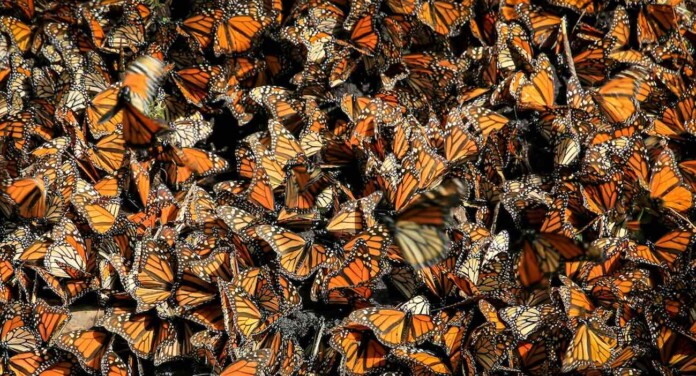
HyaPak is already exporting to the US and Germany, and will soon expand to India and El Salvador: two countries plagued by water hyacinth.

SHARE This Enterprising Man Creating Change For His Community And The World…

Beyond the ‘Dragon Arc’ Astronomers Unveil a Treasure Trove of Hidden Stars

Hubble image of Abell 370, a galaxy cluster located nearly 45 billion light-years away from Earth that features several arcs of light, including the Dragon Arc (lower left of center) - credit: ASU press, via NASA.
Hubble image of Abell 370, a galaxy cluster located nearly 45 billion light-years away from Earth that features several arcs of light, including the Dragon Arc (lower left of center) – credit: ASU press, via NASA.

Observing individual stars halfway across the observable universe has generally been regarded as impossible in astronomy, akin to trying to use binoculars to see individual grains of dust in the Moon’s craters—yet that’s exactly what the James Webb Space Telescope just accomplished.

Leveraging a pair of remarkable cosmic phenomena, an international team of astronomers accomplished this seemingly unattainable goal—now set to change our understanding of the cosmos.

Using JWST data, the astronomers observed a galaxy nearly 6.5 billion light-years from Earth, a time when the universe was half its current age. In this distant galaxy, the team identified many individual stars, which were made visible thanks to an effect known as gravitational lensing and JWST’s high light-collecting power.

The paper describing the discovery has been published in Nature Astronomy, and is led by Yoshinobu Fudamoto, an assistant professor at Chiba University in Japan and a visiting scholar at Univ. of Arizona Steward Observatory.

Recent advances in astronomy have opened new possibilities by leveraging gravitational lensing—a natural magnification effect caused by the strong gravitational fields of massive objects.

As predicted by Albert Einstein, gravitational lenses can amplify the light of distant stars by factors of hundreds or even thousands, making them detectable with sensitive instruments like JWST.

“When we predicted in 2018 that stars in galaxies at cosmological distances might be observed with Webb individually as they go across these nearly infinite magnification lines (the so-called ‘caustics’), I never dreamed of Webb seeing them in such large numbers,” said Rogier Windhorst from ASU.

“And now here we are observing these stars popping in and out of the images taken only a year apart, like fireflies in the night. Webb continues to amaze us all.”

Most galaxies, including the Milky Way, contain tens of billions of stars. Astronomers can observe stars one by one in nearby galaxies such as the Andromeda galaxy. However, in galaxies billions of light-years away, stars appear blended together. This presents a long-standing challenge to scientists studying how galaxies form and evolve.

“It was amazing to see the observations taken over time of the Dragon Arc. Stars would appear and disappear from image to image like a twinkling Christmas tree,” said Nicholas Foo, a graduate research associate at ASU’s School of Earth and Space Exploration, and co-author on the paper.

“These findings have typically been limited to just one or two stars per galaxy,” Fudamoto told ASU press. “To study stellar populations in a statistically meaningful way, we need many more observations of individual stars.”

Study co-author Fengwu Sun was inspecting JWST images of a galaxy known as the Dragon Arc, located along the line of sight from Earth behind a massive cluster of galaxies called Abell 370. Due to its gravitational lensing effect, Abell 370 stretches the Dragon Arc’s signature spiral into an elongated shape—like a hall of mirrors of cosmic proportions.

In December 2022 and 2023, JWST obtained two pictures of the Dragon Arc. Within these images, astronomers counted 44 individual stars whose brightness changed over time due to variations in the gravitational lensing landscape.

“This groundbreaking discovery demonstrates, for the first time, that studying large numbers of individual stars in a distant galaxy is possible,” Sun said, as long as nature is there to lend a helping hand.

However, even powerful gravitational magnification from a galaxy cluster is not sufficient to magnify individual stars in galaxies so far away. In this case, the discovery was made possible by a serendipitous alignment of “lucky stars.”

Illustration courtesy of Yoshinobu Fudamoto

“Inside the galaxy cluster, there are many stars floating around that are not bound by any galaxy,” said co-author Eiichi Egami, a research professor at Steward Observatory. “When one of them happens to pass in front of the background star in the distant galaxy along the line of sight with Earth, it acts as a microlens, in addition to the microlensing effect of the galaxy cluster as a whole.”

MORE WORK FROM JAMES WEBB: Earliest, Most Distant Galaxy Discovered with Webb Telescope Dates to 300Mil Years After Big Bang

While the extra-galactic stars provided a microlensing effect, large clusters of dark matter provided a macrolensing effect, ten times stronger than that provided by the stars.

Over a brief time frame—ranging from a few days to a week—when these two effects perfectly align with distant stars, the magnification and the apparent brightness of the stars increase significantly.

THE BEAUTY OF OUR COSMOS: Once Bright and Lively the Sombrero Galaxy Mellows Out Under James Webb Telescope’s Infrared Light

The combined effects of microlensing dramatically increase the magnification factor, allowing JWST to pick up individual stars that would otherwise be too far and faint to be detected.

By observing the same galaxy multiple times, astronomers can detect stars in distant galaxies as they appear to twinkle due to the varying effective magnifications created by the combined macrolens/microlens effect.

SHARE This Fascinating Stellar Research From ASU With Your Friends…

Consumer Protection Bureau Will Soon Remove Medical Bills from Your Credit Reports

A little-known federal regulatory agency called the Consumer Financial Protection Bureau (CFPB) just finalized a rule that will prevent medical debt from affecting consumer credit scores.

Millions of Americans live in fear of developing too many bad marks on their credit score. This mysterious number shared between financial institutions can govern whether or not an American can receive a loan. Any missed payment or default is likely to show up as a black mark, and may hinder them from receiving a mortgage, car loan, or other kind of liability.

The CFPB’s ruling will remove an estimated $49 billion in medical bills from the credit reports of about 15 million Americans. The CFPB’s action will ban the inclusion of medical bills on credit reports used by lenders and prohibit lenders from using medical information in their lending decisions.

The CFPB has found that medical debts provide little predictive value to lenders about borrowers’ ability to repay other debts, often because large medical expenses are typically incurred involuntarily. They frequently represent absolutely necessary expenses that would be prioritized above most other discretionary spending had they been seen ahead of time.

FICO and VantageScore, two major credit scoring companies, have agreed to reduce the degree to which medical-related costs affect credit scores, while Equifax, Experian, and TransUnion, three national credit reporting conglomerates have agreed to remove $50 billion of medical debt from affecting credit scores.

MORE ON THIS TOPIC:

The CFPB expects the rule will lead to the approval of approximately 22,000 additional, affordable mortgages every year and that Americans with medical debt on their credit reports could see their credit scores rise by an average of 20 points.

“People who get sick shouldn’t have their financial future upended,” said CFPB Director Rohit Chopra. “The CFPB’s final rule will close a special carveout that has allowed debt collectors to abuse the credit reporting system to coerce people into paying medical bills they may not even owe.”

SHARE This Positive Consumer Protection With Your Friends…

“You have to participate relentlessly in the manifestations of your own blessings.” – Elizabeth Gilbert

Quote of the Day: “You have to participate relentlessly in the manifestations of your own blessings.” – Elizabeth Gilbert

Photo by: Marcos Paulo Prado

With a new inspirational quote every day, atop the perfect photo—collected and archived on our Quote of the Day page—why not bookmark GNN.org for a daily uplift?

US Newspapers Are Deleting Old Crime Stories, Offering Subjects the ‘Right to be Forgotten’

- credit: Chris Quinn / Cleveland.com.
– credit: Chris Quinn / Cleveland.com.

An Ohio news outlet is leading a change of tradition in American reporting which their editor-in-chief calls the “right to be forgotten.”

Long considered taboo to retract or erase old stories from newspaper archives, those that feature mug shots and report on residents charged with crimes can, in our search engine-powered world, continue to detract from their professional lives years after they’ve paid their debt to society.

Now, in much the same way that civil rights attorneys fight to get citizens’ criminal and court records sealed, Chris Quinn, editor of Cleveland.com and Plain Dealer newspaper is advocating that newspapers remove old stories regarding crimes or misdemeanors that have been atoned for.

The Guardian reports that the concept has since spread to the Boston Globe, the Atlanta Journal-Constitution, the Bangor Daily News in Maine, the Oregonian, and New Jersey’s NJ.com.

Quinn explained the reasoning behind his efforts in an article on Cleveland.com, which began back in 2018 and had just finished taking 5 names and mug shots out of the archives.

“One was someone who had been in the health field and stole some drugs from her employer. A judge eventually declared that she not only had completed her sentence but had completely rehabilitated herself.”

“She lost her license to work in her healthcare field, but as she sought to begin a new career, any Google search of her name brought up our stories about her crime, along with her mug shot. Another was a man who stole some scrap metal years ago, completed his sentence, and had his record sealed. Yet our story dogged him.”

Quinn was interviewed in the Guardian and said he regularly received phone calls and emails from these people, asking for their stories to be taken down. He was tired of “standing on tradition” instead of just being compassionate.

“I couldn’t take it anymore… I just got tired of telling people no,” he said.

FORGIVING AND FORGETTING: Michigan Clears Criminal Records for Thousands of Low-Level, Nonviolent Offenders–‘Meaningful 2nd Chances’

An ironic ally in the fight to be forgotten came from Google, who in 2022 paid Quinn and his team $200,000 to proactively search their own archives of 1.4 million content pieces and delete stories that may be embarrassing to citizens who have served time and or paid their debt to society, or even just those who committed embarrassing acts.

The Oregonian is also taking action to ease the burden of past misdemeanors on their perpetrators. According to editor Therese Bottomly, each request is taken very seriously and looked at individually. Some are removed, others are deindexed from Google so they don’t appear in a search query but can still be found on the Oregon archives for one reason or another.

OTHER STORIES LIKE THIS: Jobs, Not Jail: A Judge Was Sick of Sending Kids to Prison, So He Found a Better Way

Some, however, are maintained because the subject’s behavior rose to certain levels.

“These folks are going to be our neighbors, our co-workers and hopefully contributing members of society someday,” Bottomly told the Guardian. “So should we figure out ways to at least not be an unnecessary barrier to re-entry for something truly minor and in the past, and for which somebody has paid their debt?”

SHARE These Good Works From The Nation’s Ethical Reporters…

Coffee Drinkers Less at Risk of Head and Neck Cancers, New Research Suggests

- credit: Katelyn Perry, via Unsplash
– credit: Katelyn Perry, via Unsplash

The last 15 years have seen a remarkable change in the clinical considerations of coffee.

Studies examining the caffeinated beverage for its potential effects on more than several different biological systems, from the kidneys to mood, have pinned it as something like a health drink.

Now, research from the University of Utah published in the journal Cancer has shown that people who drink 4 cups of caffeinated coffee per day were at a lower risk of developing head and neck cancer.

The seventh most common form of cancer worldwide, head and neck cancer had an almost 50% mortality rate among 750,000 patients in 2020—the last year worldwide data on head and neck cancer was collected.

The team from Utah examined 14 older studies covering around 9,500 head and neck cancer patients and almost 16,000 cancer-free people to see how the diagnosis rates stacked up when the patients’ coffee consumption was factored in.

People who drank more than 4 cups a day “had 17% lower odds of having head and neck cancer overall, 30% lower odds of having cancer of the oral cavity, and 22% lower odds of having throat cancer.”

A 2016 meta-analysis found that coffee consumption was linked to a reduced risk of oral, pharynx, liver, colon, prostate, endometrial cancer, and melanoma but an increased lung cancer risk, while a separate paper from the same year showed a dose-dependent reduction in risk of colorectal cancer.

COFFEE AS A CURE: 

Speaking in the broadest and least scientific language, plants that contain strongly flavored chemical compounds, such as cinnamon, ginger, garlic, turmeric, clove, or tea, generally prove to be strong promoters of wellness.

Perhaps this trend extends to coffee.

TELL Your Friends About Yet Another Reason To Drink Coffee, SHARE This Story…