Under cover of darkness in the north Italian city of Brescia, a masked man has become famous for performing “acts of urban love.”
Armed with a paint roller and the moniker “Ghost Painter,” this unknown citizen stalks the city streets, painting over graffiti left by vandals.
Like all Italian cities, going back to the days of the Roman republic and likely earlier, Brescia has seen its fair share of graffiti.
It can seem ludicrous that anyone would get the urge to vandalize the stately facades of buildings between 100 and 400 years old.
Nevertheless, it happens, and Ghost Painter ensures it “unhappens.”
Little is known about Ghost Painter, but he has revealed to passersby that he is in fact a painter by trade, who works during the day and emerges at night, hooded and masked.
“Not all heroes wear capes,” one commenter wrote in Italian while sharing the painter’s Tiktok video that had already racked up 4.7 million views.
TikTok page of Ghost Pitùr (@ghostpitur)
Once his work is done, he pastes a flyer on the wall—a calling card—reading “This is an act of urban love.”
WATCH the masked man in action below…
SHARE This Great Anonymous Hero With Your Friends On Social Media…
A pearl-bordered fritillary - credit, Devon Wildlife Trust
A pearl-bordered fritillary – credit, Devon Wildlife Trust
Two years ago, the UK government gave roughly $15 million to its own conservation organ called Natural England for the purpose of preventing species decline.
Now, its report card has arrived, and its A+ work has seen the recovery of 150 struggling or declining species.
Natural England used the money to fund 63 projects involving 78 different partners across the country.
For the nature lover, the list of wild beneficiaries of the work will gladden the heart. Standout achievements include a breakthrough for the iconic lady’s slipper orchid, with the first known case of natural propagation in the wild after over 30 years of dedicated work to collect seeds.
686 acres of vital nesting islands were created or enhanced for seabirds such as common tern, little tern and Sandwich tern. 56,000 plugs of food plants were laid for butterflies, such as marsh violet for the small pearl-bordered fritillary, and devil’s bit scabious for marsh fritillary, at the new sites.
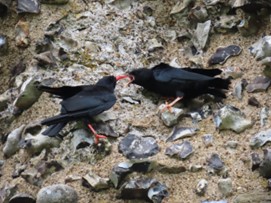
A grant-funded breeding and supervised release program saw the first wild hatching of a red-billed chough in Kent for the first time in over 200 years. 633 new breeding areas (nest boxes and similar structures) were created through the program for otter, dormouse, bats, willow tits, and other birds.
Wetland habitat creation to benefit water vole – credit, Nottinghamshire Wildlife Trust
A huge focus as well fell on habitat creation or restoration, including over 642 acres of flower-rich grassland meadows, 1,000 acres of floodplain grasslands, 874 acres of broadleaf woodland, and 240 acres of marsh.
215 ponds and streams were dug or restored which became the new haunts of water voles and the rare Eurasian bittern.
Volunteers were a huge part of these various grant-funded projects. 100,000 hours of volunteer work were donated by members of the public during the 2 years of operations, a component which Natural England said would form a vital backbone if these achievements are to be sustained and built upon.
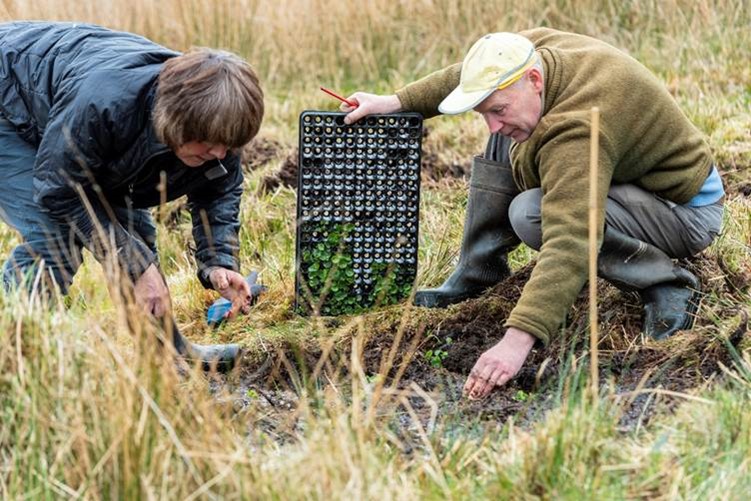
Volunteers planting marsh violet – credit, Neil Harris, National Trust images
“This and a feeling of real engagement with an amazing natural environment has been a huge psychological boost for me,” said Steve, a volunteer with the ‘White Cliffs and White Chalk’ National Trust project.
“This has been, and continues to be, a great way to gain a better understanding of local ecology and to improve my understanding of the protected areas and species at risk.”
Natural England will shortly be making an announcement about future plans.
SHARE This Brilliant Arrest Of Species Decline In England On Social Media…
Quote of the Day: “I know the joy of fishes in the river through my own joy, as I go walking along the same river.” – Zhuangzi
Photo by: Ivan Stepanov @evil_bumblebee
With a new inspirational quote every day, atop the perfect photo—collected and archived on our Quote of the Day page—why not bookmark GNN.org for a daily uplift?
The Alexandria library prostestors led away by the police - public domain (Copy)
86 years ago today, civil rights protestors quietly entered the library in Alexandria, VA to stage a sit-in. One young black man, well-dressed and polite, entered and requested a library card. When he was declined, he picked up a book, sat down, and began to read just 2 minutes before another young African American repeated the same act. This continued until five young men were silently reading at tables, and the flustered library staff called the police. READ all the other details of this lesser-known moment in the Civil Rights Movement… (1939)
In a provincial English city, a man has taken it upon himself to address what he referred to as a “fun deficit” in town.
By placing humorous signs in the style of public notices and road signs around town, he hopes they will disarm people into seeing issues in a new perspective, whether that’s the fun he focuses on, or poorly managed roads.
Chichester is located in West Sussex, and was actually found in one study to be ranked as the best place to live in the historic county. However, the “Chichester Anti-Recreation Partnership” or CARP, as he refers to himself, says there are significant shortfalls in the amount of things that could be construed by any reasonable person as “fun.”
“I absolutely adore Chichester,” CARP told the BBC, explaining his modus operandai. “But it does have some notable gaps—particularly when it comes to fun and things for younger people to do.”
Attempting to brighten up the place, he has for some months been placing trick signs, noting for example that one was entering a “formal attire only zone” or a “coffee control area” monitored between 5:00 a.m. to 10:00 p.m.
“Humor has this unique ability to disarm people—it lowers their defenses and allows them to consider issues from a fresh perspective,” he said. “It reframes problems in a way that’s more approachable and less confrontational, which makes it easier to get your message across and spark discussions.”
– credit CARP, supplied– credit CARP, supplied
BBC spoke with the Chichester City Council, which “doth protest too much,” one might say.
Working hard, they noted, to put on more exciting events for all ages including light shows and concerts after dark, the council said they had been met with appreciation from the citizenry.
They currently run an “after dark” working group to collect views on what young people would like to see in the future. Young people are a very important part of the community, they state, again noting a sum of $1.3 million currently earmarked for play area refurbishment.
CARP, however, isn’t waiting around. His handiwork gains traction on social media, and even though the council takes his signs down very quickly, they can’t stop him from sharing images of them online.
He says he isn’t concerned about what becomes of the signs, so long as they spark a smile, a laugh, a conversation, or, in the best case scenario, action to make Chichester a more fun-focused borough.
SEND Your Friends A Laugh On Social Media With This Funny Story…
The TAR-200 bladder cancer treatment - credit, Johnson & Johnson
The TAR-200 bladder cancer treatment – credit, Johnson & Johnson
Staggering results have been reported from a clinical trial of a new delivery method for chemotherapy drugs used to treat bladder cancer.
Keck Medicine of USC reports that in the majority of cases the cancer disappeared after only three months of treatment, and almost half the patients were cancer-free a year later.
The system is called TAR-200, and is composed of a pretzel-shaped delivery device that’s inserted into the bladder. Its slow release of the drug gemcitabine allows this chemotherapy medicine to stay in the organ for days, compared to mere hours as is the case with the current standard-of-care.
TAR-200 is designed for treating high-risk and treatment-resistant non-muscle-invasive bladder cancer, the most common form.
“Traditionally, these patients have had very limited treatment options. This new therapy is the most effective one reported to date for the most common form of bladder cancer,” said Sia Daneshmand, MD, director of urologic oncology with Keck Medicine of USC and lead author of a study detailing the clinical trial results published in the Journal of Clinical Oncology.
“The findings of the clinical trial are a breakthrough in how certain types of bladder cancer might be treated, leading to improved outcomes and saved lives.”
The trial was a major undertaking—involving 144 locations worldwide and 85 patients who had this kind of bladder cancer, were treated with another immunotherapy drug called Bacillus Calmette-Guérin, and whose cancer returned.
Keck Medicine reports that the TAR-200 was administered every 3 weeks for 6 months, and then 4 times a year for the next 2 years.
In 70 out of 85 patients, the cancer disappeared and for almost half the patients, was still gone a year later. The treatment was well-tolerated, with minimal side effects, the institute concluded.
Daneshmand, who has been researching this method of drug delivery since 2016, said that the trials mark “an exciting moment in history.”
“Our mission is to deliver cancer-fighting medications into the bladder that will offer lasting remission from cancer, and it looks like we are well on our way toward that goal.”
SHARE This Revolution In Bladder Cancer Treatment With Your Friends…
When a precocious 4-year-old called 911 to talk about his favorite sports, the officers ensured he learned a valuable lesson.
From Farmington Hills, Michigan, comes the story of Micah, who dialed emergency services and began chatting about how much he loves soccer and swimming.
The call developed into a friendly chat, but that didn’t stop the station’s dispatchers from sending out Officer Michael El-Hage, to be certain all was well.
It’s actually standard issue to deploy officers in the case of accidental child 911 calls, just in case the child became too shy—or too pressured—to speak about what they had originally called for.
Arriving though, El-Hage found all was well, and was soon chatting away yet again with Micah and his brother Mitch about sports. El-Hage showed the pair the inside of his police cruiser.
“During the visit, we learned Mitch was celebrating his birthday on Sunday—so our day shift team came together to make his special day even more memorable,” the Farmington Hills Police Department wrote in an Instagram post.
Speaking with WDIV, Officer El-Hage explained that he told the boys that he hoped he’d be able to come back Sunday, but truly didn’t know whether it would be possible.
As it happened, he was free, and returned with birthday presents—a new soccer goal and a police cap and badge.
“I just did it for the kids, honestly,” El-Hage said, noting he had a son himself. ”I just see my son there, so being a dad I think every day I can understand that that’s what it’s about for me.”
“While accidental 911 calls do happen, we always want kids to feel safe and comfortable reaching out to us,” the post concluded. “Turning a small mistake into a moment of connection is what community policing is all about.”
On the island of Borneo, forest-dwelling communities have become key to ensuring that orangutans have enough intact forest to survive and thrive down the centuries.
Documented by the Nature Conservancy, which is assisting in establishing and equipping these forest communities for conservation, these communities maintain millions of acres of forests for sustainable economic use and conservation.
This includes logging, but research has shown that when legitimate, transparent logging operations cease, their former land concessions become akin to a no man’s land, and are taken over by illegal logging circuits, poaching, and agriculture.
Instead, by logging small numbers of mature trees one small area at a time over a 30-year time horizon, the forest doesn’t shrink, and the communities can use profits from the hardwoods to sustain their families, and ensure that areas of intact forest remain poacher free.
Areas like the vast Kutai National Park suffer from similar problems as the logging concessions, the Nature Conservancy writes. Their remoteness acts as a curtain to hide illegal activities.
But 80% of orangutans live beyond the borders of protected areas, often very near forest villages. Because of this, an estimated 1.3 million acres of forest habitat is now protected by local forest guardians for the benefit of ecotourism, honey production, scientific research and of course, conservation.
Support from the Indonesian government, which controls the majority of Borneo, the world’s third-largest island, helps the guardians manage their land concessions, while interest from the international community has also led to large-scale donations from companies like Arhaus, a furniture maker.
Matt Miller, the Nature Conservancy’s director of science communications, visited these community concessions, and saw first hand how they view their future as guardians of the forests.
“The communities are the leaders here. They are the key to the conservation of Borneo’s forests and biodiversity,” a local program director told Miller. “We are here to support them. We can provide science and help them shape what they want their future to be. But this is the reflection of their dream.”
SHARE This Encouraging Trend Towards Sustainable Land Management…
Quote of the Day: “The old cathedrals are good, but the great blue dome that hangs over everything is better.” – Thomas Carlyle
Photo by: Gabriel Lamza
With a new inspirational quote every day, atop the perfect photo—collected and archived on our Quote of the Day page—why not bookmark GNN.org for a daily uplift?
Happy 90th birthday to the former Congressman from Texas, Dr. Ron Paul. Before serving three terms as representative of the 22nd and 14th Congressional districts, the country doctor delivered an average of 1 baby per day, amounting to over 4,000 little ones because he was the only OB/GYN in Brazoria County. READ more about America’s most famous Libertarian… (1935)
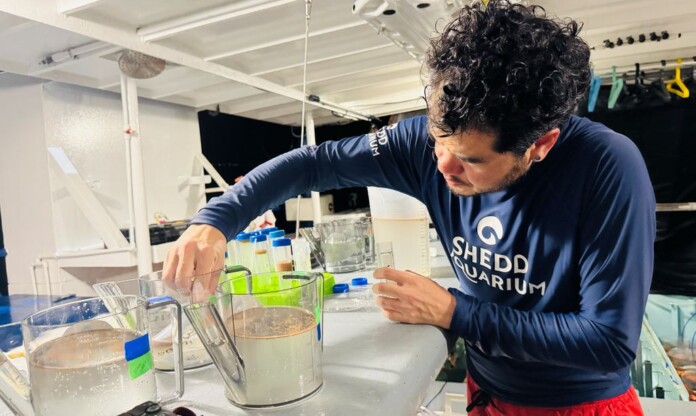
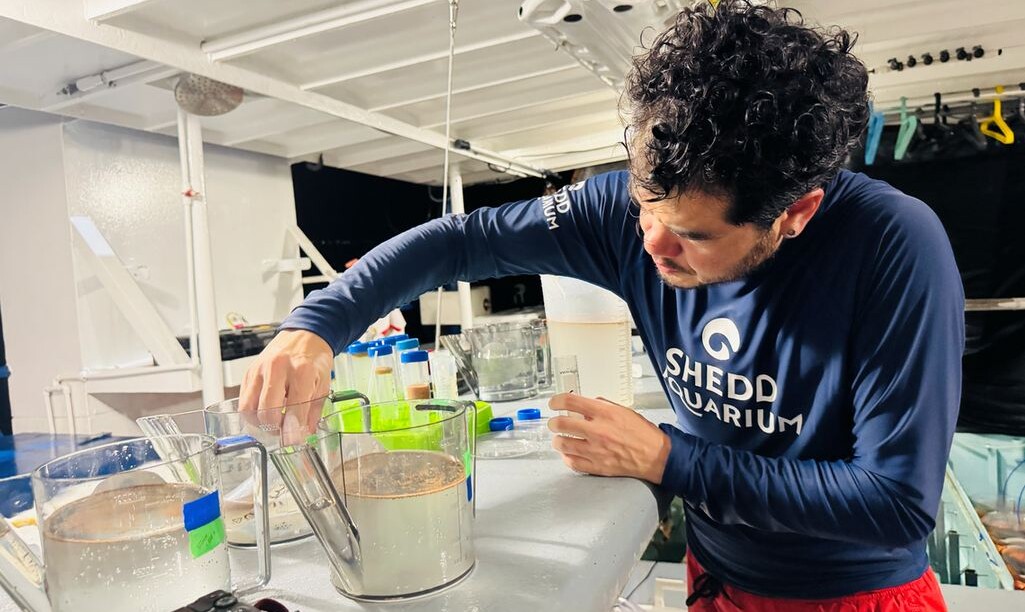
Screengrab via Shayle Matsuda, a scientist aboard Shedd Aquarium’s research vessel - supplied to Miami Herald
Screengrab via Shayle Matsuda, a scientist aboard Shedd Aquarium’s research vessel – supplied to Miami Herald
Beneath the waves of Key Largo, staghorn coral have spawned in mass since a 2023 bleaching event that left marine biologists worried over the reefs’ future.
The once-a-year phenomenon can happen only on a select few days, and lasts only a few minutes. It’s difficult to predict, and relies on a delicate, aphrodisiacal mixture of temperature, tide, and Lunar phase.
But to the relief of the members of the Coral Restoration Foundation working on their staghorn coral nursery, the coral came through, with female members filling the water with eggs, and males with sperm, until the whole of the nursery appeared like a snow globe.
“If we see viable eggs, then it means that all of the other basic life needs of the coral must be being met, Alex Neufeld, Science Program Manager at the Coral Restoration Foundation, told the Miami Herald. “It means our colonies are healthy and that we’re doing something right.”
However, much like the most endangered animal species, the foundation considers the spawning too precious a moment to leave to the mercy of the waves. Recent coral bleaching events have created spaces between reefs, reducing potential for genetic diversity, while a strong gust of wind could send a large cloud of the eggs or sperm veering off course, and the opportunity to reproduce would be lost.
So descending into the water at night, the Miami Herald team watched as marine biologists carefully examined the coral until they were ready to spawn. Kept under nets, they captured the sperm and eggs for cultivation onboard a research vessel operated by Chicago’s Shedd Aquarium, which was involved in the project.
“We have to keep it really even, to give everybody a chance. We’re really just trying to increase our chance of settlers that will be able to actually contribute to this new genetic diversity, which builds more resilience,” said Shayle Matsuda, an ecologist on Shedd’s boat.
By last Tuesday, when the Herald joined the project, the spawning had increased in fecundity. Wednesday was even more prosperous, with dozens of samples taken, and the scientists were even more hopeful about Thursday.
Reef researchers across the world are now experimenting with cross breeding of corals in captivity to try and create more heat-tolerant genotypes. Some reefs, for example one in Honduras, demonstrate remarkable resilience to warming seas.
Some of the staghorn samples collected over Key Largo will be sent to these breeding initiatives, while others will be used to expand the reefs where they were collected.
In even better news, the Coral Restoration Foundation’s staghorn nursery wasn’t the only one that spawned. Another, managed just 200 meters north, also spawned and was also collected by another marine nonprofit, called Renewal USA.
America has long been the global standard for protecting its most beautiful wild places, and while Sequoia and Yosemite National Parks are indeed the envy of the world, the nation and its scientists don’t skimp on our reefs either.
SHARE This Positive Work Going On To Save Florida Corals…
Skull of a female A africanus - credit, Didier Descouens, CC BY-SA 4.0,
Skull of a female A africanus – credit, Didier Descouens, CC BY-SA 4.0,
From Ethiopia comes an incredible discovery—early humans seem to have potentially lived alongside the very apes they evolved from.
The discovery centers around teeth: that of a member of the genus Homo, of which we are a part, found next to the tooth of Australopithecus, the last in a line of apes that became humans.
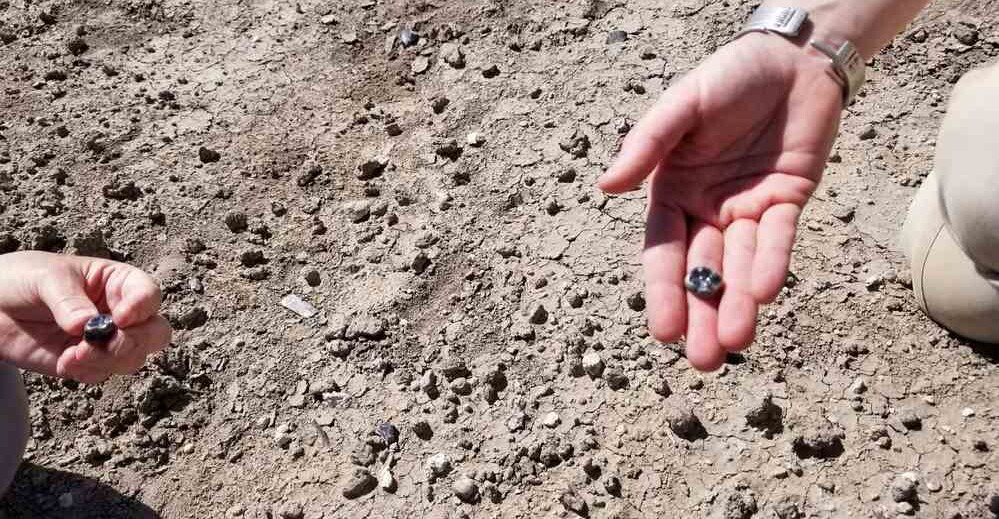
Teeth from ancient human ancestors in Ethiopia’s Afar Region – credit, Amy Rector / Virginia Commonwealth University
The team of paleontologists who found the teeth are following protocol and not inferring anything about how the two species interacted, but the fact is that the Homo tooth was the older of the two, showing that human evolution wasn’t linear.
“This new research shows that the image many of us have in our minds of an ape to a Neanderthal to a modern human is not correct—evolution doesn’t work like that,” Kaye Reed, a research scientist and president’s professor emerita from Arizona State University, told CNN via email. “Here we have two hominin species that are together. And human evolution is not linear, it’s a bushy tree…”
Reed has been working in the Afar region of Ethiopia since 2002. 10 of the teeth were found between 2018 and 2020 and belonged to Australopithecus, while 3 previously found in 2015 belonged to an early Homo species.
Afar is where the famous remains of “Lucy” were found. Belonging to Australopithecus afarensis, she was about 3.3 feet tall, had an ape-like face, but walked upright 3.2 million years ago.
The teeth found by Reed and colleagues came from a later period, and do not correspond to A. afarensis or that of another related species A. aghai. Either there’s something scientists don’t know about these two species, or it’s a third, entirely different species, but the team isn’t claiming either for certain.
In either case, the oldest Homo teeth were hundreds of thousands of years older than the Australopithecus teeth, showing how as many as four Hominid lineages may have coexisted in East Africa at the same time.
“Once we found Homo, I thought that was all we would find, and then one day on survey, we found the Australopithecus teeth,” Reed said, again to CNN. “What is most important, is that it shows again, that human evolution is not linear. There were species that went extinct; some were better adapted than others, and others interbred with us — we know this for Neanderthals for sure.”
How would our ancestors have treated our even earlier ancestors? Did they compete for food? Paleoecology studies show that the Afar region was a relatively wetter area than it is today, suggesting at least intuitively a greater abundance of food. Would we have interbred with our ape cousins, or treated them as hostile competition? How did they treat us?
Reed has been researching our earliest histories in the Afar region since 2002, and hopefully another 20 years may resolve these fascinating questions.
SHARE This Incredible Discovery From Our Early Past With Your Friends…
Their motto reads “Always ready, always there,” and when four national guardsmen from Alabama walked into a Burger King, that’s exactly what they were.
The story comes from Skwierzyna, a town about 80 miles west of the headquarters of the US Army in Poland.
Sgt. 1st Class Alicia Haggins, Staff Sgt. Jacob Roberts, 2nd Lt. Indiana Rhodes, and Sgt. Justin Fagan stopped for lunch on their way to a Polish army training center when they saw that a man outside the restaurant had collapsed.
It was Haggins that first saw the emergency, and alerted her colleagues to come and help. Arriving, they found the man’s breathing was sparse and his pulse faint.
The four soldiers from the 214th Military Police Company initiated lifesaving measures, including CPR. First responders from the Polish ambulance service arrived within minutes, but asked Haggins and her company to continue to perform rotational chest compressions.
“When we started, I would say his pulse was very weak and very shortened,” Sgt. Fagan said told Stars and Stripes. “Once the (first responders) got there, it still continued to be a team-oriented event.”
Before the first responders arrived, Haggins used a translation app to talk with the victim’s wife, gathering medical history in which she confirmed the man had a history of heart problems.
30 minutes of compressions passed before his pulse was somewhat stabilized, at which point a medical helicopter arrived to transport the man to a hospital. Afterwards, hugs were widely shared, especially from the man’s wife who thanked the Alabama guardsmen profusely for their help.
“Because they were there and at that time, (the victim) and his family have hope,” Army spokesman Lt. Col. Cain Claxton said Friday. “It is an example for all of us to emulate in helping people out, especially here being representatives for our country in Poland.”
All four will receive a non-combat commendation for their actions in service of an allied country and its citizens.
CELEBRATE These American Heroes Being Heroes In Poland…
With civil wars in Myanmar and Sudan, climate change manifestations the world over, instability across the Middle East, and geopolitical tensions abounding in East Asia, Europe, and North America, one would imagine the global population to have a pessimistic outlook on things.
But the annual Gallup Life Evaluation Index found that “men and women, young and old,” consider themselves to be thriving in larger numbers than any other time in the past.
Asked to rank their lives on a scale of 0 to 10, with 4 and below classified as suffering, 5 to 6 as struggling, and 7-10 as thriving, a third of the surveyed population spread across 142 nations described themselves as currently thriving.
Additionally, the outlook on the next 5 years is as high as it’s ever been, with an average score of 7.9.
Unlike metrics of GPD, which predominantly measure economic output and, as a result, capture somewhat the standard of living in a country, self-reported metrics of thriving or suffering can give greater clarity as to exactly whether that wealth is leading to a more prosperous society or not.
“Rates of thriving have risen consistently across demographics. Men and women, young and old, all now rate their lives better than they did in the past,” Gallup wrote in their executive summary.
“As thriving has increased, rates of suffering have inched downward. In 2024, a median of 7% globally were classed as suffering in life, matching the lowest point on record going back to 2007, and significantly lower than a decade ago (12% in 2014).”
A population-weighted average showed 28% of respondents thriving, down from 33%, affected by more respondents in countries with larger populations.
Declines in thriving seen in some wealthy countries were offset and overrun by increases in Latin America and the Caribbean (45%), East and South Europe (37%), East (34%) and Southeast Asia (32%) and Post-Soviet Eurasia (33%)—all of which have seen steady increases in thriving over time.
12 countries experienced particularly enormous rises in self-reported thriving of 20% or more over the last decade, including 3 in Asia (Mongolia, Vietnam, and Kazakhstan,) 8 in Europe (Lithuania, Estonia, Kosovo, Armenia, Bosnia Herzegovina, Serbia, Hungary, and Slovenia), and Paraguay.
Many of the increases in self-reported thriving correlate with the increases in Human Development Index metrics such as average years of child schooling and perceived freedoms. The HDI also happened to rise on average around the world since 2008.
“The world is not short of significant challenges, from climate change to conflicts and technological upheaval,” the Gallup authors wrote. “Yet even against this backdrop, more people across more countries say they are living better lives today and are hopeful for tomorrow, and fewer are suffering.”
BRIGHTEN UP Social Media With These Encouraging Global Trends…
Quote of the Day: “Religion and art spring from the same root and are close kin.” – Nathaniel Hawthorne
Photo: The Theotokos of Tikhvin, a Russian icon, ca. 1300 – Public Domain / Wikipedia
With a new inspirational quote every day, atop the perfect photo—collected and archived on our Quote of the Day page—why not bookmark GNN.org for a daily uplift?
61 years ago today, Syncom 3, the first geostationary communication satellite, was launched. Two months later, it would enable live coverage of the 1964 Summer Olympics in Tokyo. It was the third satellite in the Syncom project, which also included the world’s first geosynchronous satellite, Syncom 2. All three are still in orbit. READ more from on this day… (1964)
A Bonelli's eagle feeding its chick - credit, Leonardo Fernández Lázaro CC 4.0. BY-SA
A Bonelli’s eagle feeding its chick – credit, Leonardo Fernández Lázaro CC 4.0. BY-SA
51 breeding pairs of Bonelli’s eagles have been recorded in France’s Mediterranean regions, more than double the number recorded in the early 21st century.
Though considered a species of least concern in the world, Bonelli’s eagle is vulnerable in Europe, and threatened in France, where it nests on cliffs and hunts small mammals.
The survey of mating pairs was published on July 28th by the Roussillon Ornithological Group.
In 1999, around 20 breeding pairs returned from their winter migration, representing a population collapse of over 75% from previous highs. The resulting years saw three successive National Action Plans (NAPs) which employed traditional raptor conservation strategies like habitat protection, outreach to hunters, chick tagging, and satellite tracking to boost those numbers back above 50.
The NAPs were organized by the Ministry of Ecology, Sustainable Development, and Energy and led by a collective of naturalist associations and representatives of the hunting world, along with local authorities.
Bonelli’s eagle is one of the smallest of the ‘true’ eagles, or Aquila genus. Despite this, it’s known as a bold and rapacious predator, yet like many birds of prey, mates for life. Named for the Italian naturalist who would catch the type specimen, they inhabit many countries of the world, including those in North Africa and the Indian subcontinent.
The European population is estimated to be between 1,100 and 1,200 pairs according to a BirdLife International survey in 2015, with Spain hosting more than 700 alone. In France, the recovery of their population has seen them reclaim previously abandoned haunts, like the Alpes-du-Haute.
38 of the bonded pairs laid eggs which hatched into 34 chicks, giving hope that the country may reach its original goal of 60.
SHARE This Encouraging Return To France’s Skies For This Small Eagle…
An Iceland storefront in the UK - credit, Iceland released
An Iceland storefront in the UK – credit, Iceland released
Starting this month, frozen foods chain Iceland will be partnering with grocery apps to alert UK shoppers across the country every time an item gets a yellow sticker price.
As part of a national food waste reduction program, 900 of Iceland’s stores will participate, with shoppers able to receive notifications on the apps Olio and Gander.
The initiative was successfully trialed in both London and Bristol, and will now span the whole United Kingdom.
“Iceland has always been dedicated to tackling food waste head-on, and extending this partnership with Olio and Gander is another step towards making a real difference,” said Iceland’s director of product, process, and sustainability.
“Not only does this help our customers make their money go further, but it makes a positive change for the planet too.”
Since its launch in 2019, the Gander app has reportedly saved over 39 million items from expiration and being sent to landfills. It too alerts users to discounted items soon to expire.
Olio, by contrast, works through a network of volunteers to deliver food and supplies close to the sell-by date to communities in need, and will now expand its services to include these yellow sticker notifications.
“Food waste is one of the biggest sustainability challenges of our time,” said Stacey Williams, Gander’s Business Development Director. “By working together, Gander, Iceland and Olio are showing how technology can help retailers reduce waste and support local shoppers in finding great value at the same time.”
SHARE This Really Cool Chance To Save Money On Frozen Foods And Reduce Waste…
The lotus flowers on Wular lake - courtesy of Umar Dar
The lotus flowers on Wular lake – courtesy of Umar Dar
Lotus flowers are blooming again in Kashmir’s historically largest lake, having been freed from the grasp of underwater silt that strangled them for 3 decades.
The lake had already been shrunk dramatically by the conversion of shoreline and connected marshlands to agricultural areas by 1990. But in 1992, catastrophic flooding dumped thousands of tons of sediment into the lake, burying the lotus plant stems.
These stems formed a major part of the local diet, and at the height of its productivity, the cottage industry of harvesting them sustained 5,000 local workers. The stems were cooked and served in several dishes, but the silt ended all of that.
At the turn of the 20th century, Wural Lake spanned 84 square miles, but by 2007 it had diminished to just one-third of that. Willow cultivation along the banks ensured that over-sedimentation of the lake bottom continued. Parts of it become dumping grounds, and more and more of the lake’s fauna vanished.
By 2020, the local communities had had enough. With the taste of the lotus stems having been reduced to a fragment of a memory for the old, and a solemn children’s story to the young, the Wular Conservation and Management Authority (WUCMA) began a de-silting program.
Fed by the Jhelum River and its tributaries, WUCMA focused on controlling and preventing pollution from entering the lake through its flow, before beginning the long, slow, slimy process of dredging the lake.
5 years on, a mindboggling 8 million cubic meters of silt have been removed. The lotus roots that remained dormant all this time emerged, and for the first time in 33 years, the plants are flowering again.
“This is not just the revival of a plant, it’s the resurrection of a cultural ecosystem,” Meera Sharma, a Delhi-based environmentalist, told the Guardian. “When nature heals, it revives everything it once nurtured—livelihoods, traditions, biodiversity. Seeing these flowers bloom again after decades is like watching history breathe.”
While the lake was an important local tourist destination and cultural connection to the land as Sharma says, many are looking forward again to eating their favorite dish: nadru.
“Lotus stem connects our food to the land … now that it’s back, we’re preparing dishes the way our grandmothers did: slow, simple, and full of memory,” Tavir Ahmad, a chef at a local Kashmiri market, told the Guardian’s Tauseef Ahmad and Sajid Raina.
SHARE This Heartwarming Return Of The Most Beautiful Flower To The People…
A UK startup is designing new versions of established cancer drugs to be used routinely at home, saving the patient time and money, as well as floor space in the hospital’s cancer ward.
The only thing is the startup’s manufacturing plant requires rather unique and limited real estate: the International Space Station.
BioOrbit believes that space is the final frontier of drug manufacturing, because of the unique properties that can be achieved while synthesizing drugs in microgravity.
A key factor of at-home cancer drugs would be turning their compounds into more shelf-stable crystal structures. This would allow the drugs to go from being delivered intravenously with a syringe (IV) to an easier, at-home injection method like an subcutaneous epi-pen or Ozempic.
Put in extreme simplicity, the Earth’s gravity interferes with crystal growth by creating defects in their delicate and complex structures, while in microgravity, those defects don’t occur; the whole crystal structure can form and become rigid.
It takes time to form a crystalize structure though, so much time that no comparative microgravity environment on Earth can be used, for example, those utilized to train astronauts. Space is the only option.
There’s been decades of research into the process of “super crystallization,” however, so the technology is ready to ride up to the ISS next month as a demonstration effort.
The company’s long-term vision (because you have to have one when working in space) is to have its own space station, where these slow crystallization processes would continually be producing drugs for the at-home delivery market.