Quote of the Day: “He who is not courageous enough to take risks will accomplish nothing in life.” – Muhammad Ali (marking the 10th anniversary of his death this week)
Photo by: Painter John Stango – CC BY-SA 3 (cropped)
With a new inspirational quote every day, atop the perfect photo—collected and archived on our Quotes page—why not bookmark GNN.org for a daily uplift?
The Daming Palace Danfeng Gate - credit CC 2.0 Xiquinho Silva
1,363 years ago today, the Daming Palace Complex in the Tang Dynasty capital of Chang’an, modern day Xi’an, was completed. This colossal power center covered more than 4,800 Chinese acres, making it 3.5 times more expansive than the Forbidden City in Beijing, 3 times more than Versailles, and 13 times more than the Louvre. Today, its ruins and reconstructed elements are part of a special UNESCO World Heritage Site documenting the reach of the Chinese portion of the Silk Road, from Xi’an to the Tianshan mountains. READ more about this great site of architecture… (663)
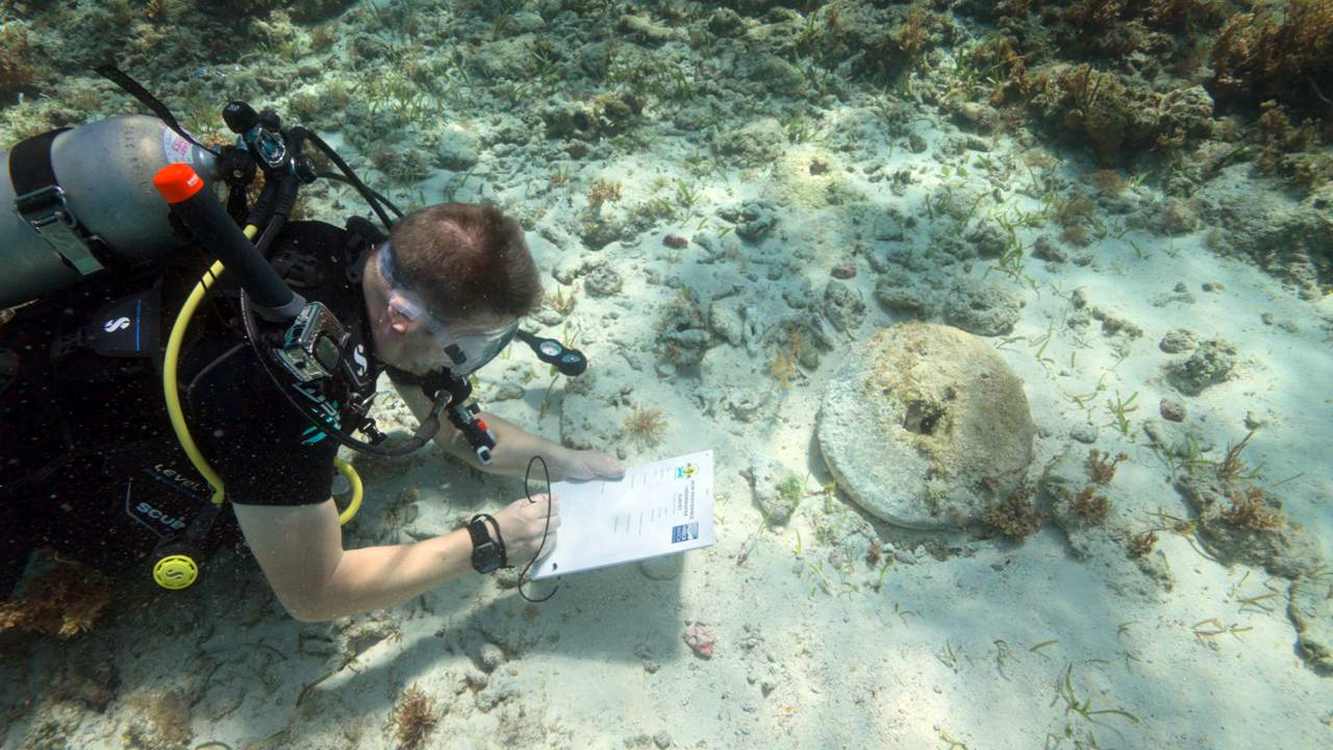
In the real Caribbean, there were once real pirates, and now a team of archaeologists and filmmakers has discovered the first shipwrecks that can help tell the story of the Golden Age of Piracy.
Between the 1690s and 1720s, a cast of pirates including illustrious names as Blackbeard, Benjamin Hornigold, Calico Jack Rackham and Anne Bonny, made Nassau on the island of New Providence their base.
There, plans of attack were hatched, plunder divided and partied away. Rum was presumably drunk, and songs were presumably sung during this golden age.
Now, with the first-ever permission to dive in the closed zone of Nassau harbor, the New Providence Pirates Expedition and Wreckwatch TV have discovered six wrecks, three tied to the iconic Golden Age of Piracy of which these figures were chiefly involved in leading.
“Thanks to Hollywood, everyone loves the legend,” says marine archaeologist and project co-director, Dr. Sean Kingsley. “But beyond the fantasy, nobody knows how these sea dogs really lived, what their ‘Piratetown’ looked like and what happened to the vehicles of their mayhem, wooden ships.”
At the height of the piracy in 1718, Woodes Rogers, Governor of New Providence, spotted 40 wrecks burnt and sunk by pirates on Nassau’s shore. Throughout the Golden Age of Piracy, 1,000 sea dogs settled in the port town. Until now, not one of their ships has ever come to light in their home waters.
“Nassau harbor is huge,” says explorer and project filmmaker Chris Atkins. “Tides flush dangerous currents through its waters twice a day. It’s home to notorious packs of sharks. This was a risky expedition with high chances of finding nothing.”
Through dives in and around Nassau, and thanks to knowledge from local divers, six wrecks were discovered. Iron cannons, a grinding stone for sharpening swords and lead musket balls were found 21 miles east of Nassau.
“The crystal-clear visibility was incredible. The whole wreck was laid out before us,” says project co-director Dr. Michael Pateman. “The ship was heavily armed, especially with swivel guns, the cannon of choice for pirates. Slotted onto deck rails, these anti-personnel weapons raked devastating fire on enemy crews.”
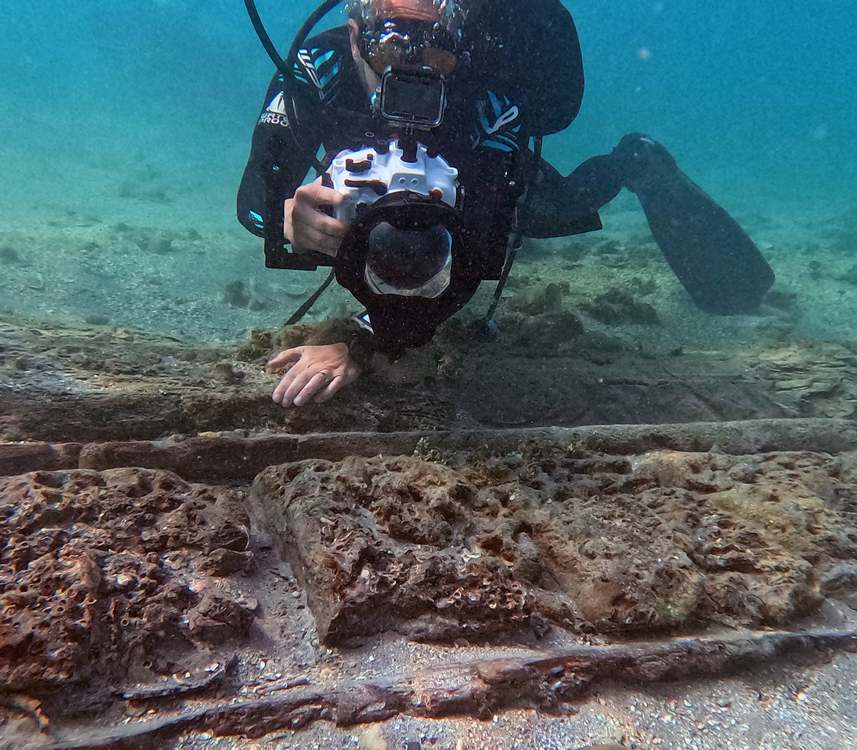
Inside the harbor, the team found a stone ballast pile still pinning down its wooden hull. The ship’s planks and frames were connected by wooden treenails, an 18th-century shipbuilding style. And the hull was charred.
“After seizing a ship and taking its cargo, cannon and fittings, pirates had to get rid of all signs of their crime. Burning ships to the waterline was an infamous tactic to hide felony from authorities. The Nassau hull shows all the signs of pirate mischief,” says Pateman.
Midway through the project, the team got a tip-off about another 18th-century wreck beneath Nassau’s old bridge, guarded by a mean bull shark. The cutting of an underwater pipeline and the construction of a modern marina had supposedly destroyed all the remains.
“Never say never in archaeology,” Kingsley remarks. “We decided to take a look and were shocked to see hull planks, rigging, glass bottles and bricks from the ship’s cooking galley still preserved. Dozens of clay tobacco pipes were sticking out of the sand next to splintered wooden shipping crates.”
The pipes were decorated with a unicorn, horse, crown and the royal crest of England. The cargo was made in London around the 1740s. The ship was likely English and sailed for Nassau just after the pirate menace had been crushed. The survival of the wreck, heavily smashed by urban construction, is a miracle. The trader’s cargo of wine in glass bottles and fancy smoking pipes sheds rare light on Nassau becoming a normal port of trade, bouncing back from the pirate anarchy.
The 1710s were a time of poverty, when the Royal Navy cut its staff by more than half. Piracy offered rebels a chance to escape whipping, poor food and worse on navy warships and to earn up to 1,000% more than sailing on regular merchant vessels. “It might have been a short life, but for a brief period of mayhem, sailors found freedom and wealth unmatched anywhere on earth. That escape was the pirate dream,” says Pateman.
“Nassau’s history is deep and colorful,” says Atkins. “Blue seas, exquisite landscapes and endless visibility for diving make this place incredibly special to film. You can see why the pirates chose to live here. Helping bring The Bahamas’ pirate past back to life has been epic.”
The team’s pirate adventures and discoveries in New Providence are showcased in a documentary series produced by Sean Kingsley and Chris Atkins for Wreckwatch TV, also co-presenters, alongside Michael Pateman. The show, airing from June 4th 2026, also unveils the first historically accurate 3D digital model of what Nassau’s ‘Piratetown’ looked like around the year 1715.
The latest issue of Wreckwatch Magazine, published the same day presents the first results of the New Providence Pirates Expedition.
The New Providence Pirates Expedition was conducted with the kind permission and under agreement with the Antiquities, Monuments & Museum Corporation of The Bahamas.
SHARE This Exciting Archeaological Adventure Beneath The Waves Of Nassau…
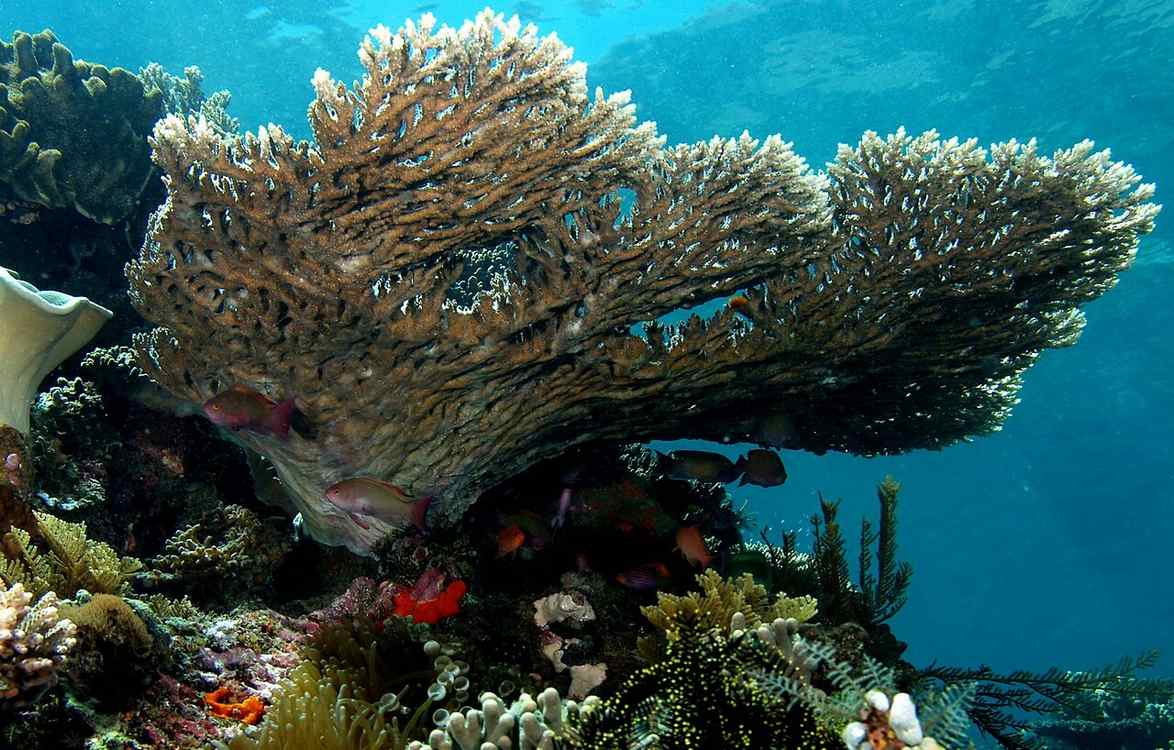
Acropora latistella (Table coral) - credit, Nhobgood Nick Hobgood CC 3.0. SA
Acropora latistella (Table coral) in the Coral Triangle – credit, Nhobgood Nick Hobgood CC 3.0. SA
In the legendary Coral Triangle, where the Pacific and Indian Oceans meet, 200,000 square kilometers of tropical seas will be off limits to fishing thanks to bold conservation action by Papua New Guinea.
The newly-designated Western Manus Marine Protected Area (MPA) will form part of the newly established Melanesian Ocean Corridor of Reserves, a network of national and jointly managed protected areas spanning Fiji, Vanuatu, and Papua New Guinea.
Revealed at the inaugural Melanesian Ocean Summit in Port Moresby in mid-May, the Western Manus ocean region in PNG’s territorial waters is characterized by undersea mountains and volcanoes, ridgelines, and canyons, harboring remarkable biodiversity.
Scientists have called it a “marine highway” connecting shallow corals with deep water zones bursting with pelagic life: orcas that migrate there seasonally, the giant deep-sea fish known as a yokozuna slickhead, Cuvier’s beaked whale, and over a hundred species of coral.
“Papua New Guinea is one of the most biodiverse places on the planet,” said Jelta Wong, minister of the country’s National Fisheries Authority. “Establishing the Western Manus Marine Protected Area will allow us to preserve and protect our ecological legacy and, at the same time, ensure that our ocean continues to provide people with what we need – food and a source of income.”
Located in the north of PNG’s territorial waters, the 77,000 square-mile reserve covers seas which account for 10% of the country’s tuna fisheries, and about 6.7% of all fishing output. However, as Oceanographic Magazine writes, previous research has found that once MPAs have been established, catch rates tend to increase in boundary areas—the result of a spillover effect from a robust and unharmed natural environment.
The decision comes as part of PNG’s commitment to conserve 30% of its territorial waters.
The Western Manus area was included in the survey itinerary of the National Geographic Pristine Sea’s expedition, which sought to document the biodiversity of the Coral Triangle over 2 years.
What they found was one of the world’s healthiest and most diverse coral ecosystems, but with warning signs that not all might be well. Shark populations were low—a clear hint at overfishing for other predatory fish like tuna.
The 200,000 square kilometers that encompass the MPA weren’t selected at random. Instead, key mobile species were tracked to get a sense of the movements of animals between the deep sea and the coral reefs. Grey reef sharks obliged the surveyors, while seabirds capable of foraging 200 miles a day were also consulted.
“Our ancestors have always lived in harmony with the sea, but today, we are writing a new chapter for our children,” stated Powes Parkop, governor of the National Capital District, who grew up in Manus Province.
“To see the waters of Western Manus recognized as the largest marine protected area in Papua New Guinea fills my heart with a profound sense of… pride. We aren’t just protecting fish or coral; we are safeguarding our identity.”
SHARE This Inspiring Act Of Marine Conservation In Papua New Guinea…
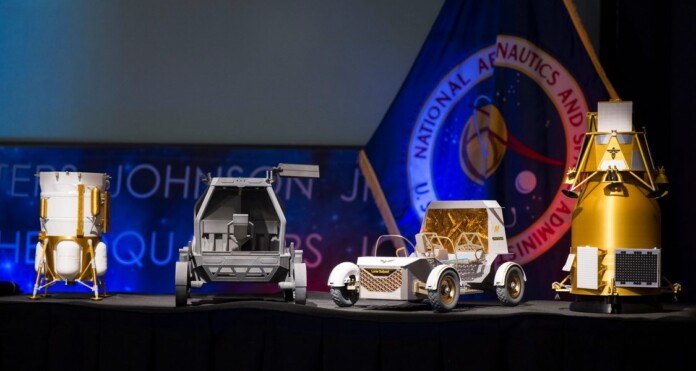
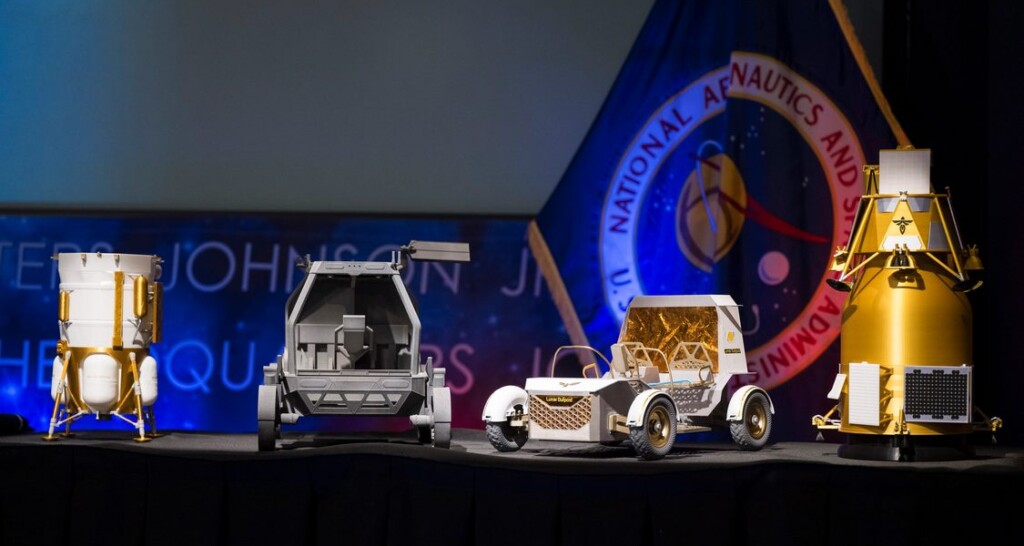
Models of some of the vehicles that will lead the Moon Base mission - credit NASA - Aubrey Gemignani
Models of some of the vehicles that will lead the Moon Base mission – credit NASA – Aubrey Gemignani
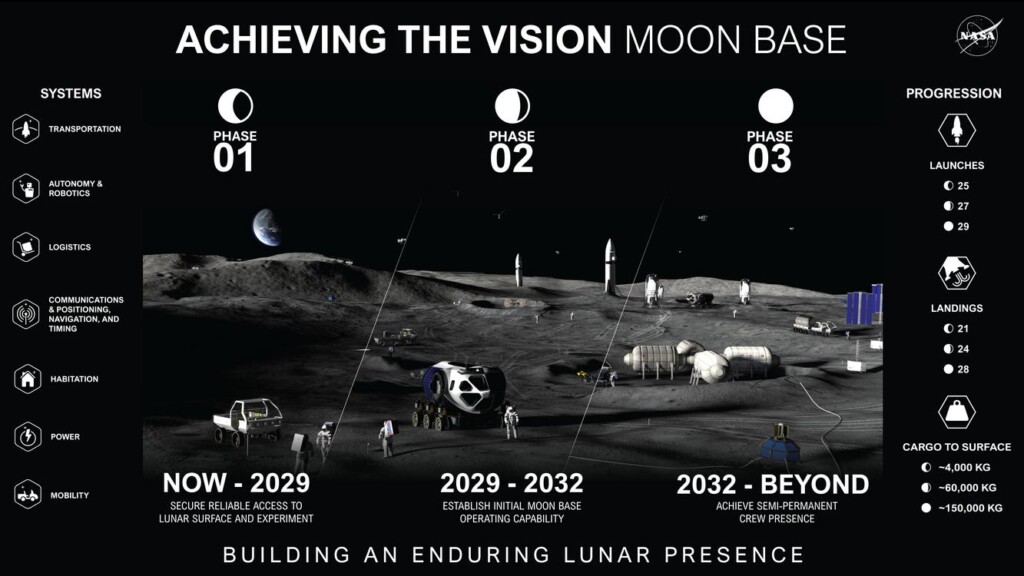
NASA recently announced details of its first three missions of the Moon Base program, a series of landings on the Lunar south pole.
Moon Base is the first stage of establishing a semi-permanent human presence on our satellite, and the data gathered during missions I, II, and III will inform the first visit of humans to the Moon since Apollo 11 in 1969.
Both Moon Base I and II are targeted for 2026. The first mission will utilize Blue Origin’s Mark 1 Endurance lander to drop two critical science instruments on the Moon. The first will gather data on how thrusters impact the regolithic Lunar surface, while the Laser Retroreflective Array will help orbiting spacecraft determine a more precise landing location using reflected laser light.
Moon Base II will see Astrobotic, another commercial spaceflight company, get a crack at the Moon with its Griffin lander. The delivery will include 1,100 pounds of equipment, including Astrolab’s FLIP rover, a “Lunar terrain vehicle” or LTV, that will gather crucial data on how wheels, treads, tires, pitch, yaw, acceleration, braking, etc. changes when done on the surface of the Moon in microgravity.
“The Moon Base will be America’s and humanity’s first outpost on another celestial world,” said NASA Administrator Jared Isaacman at the announcement event on Tuesday.
“Every mission, crewed and uncrewed, will be a learning opportunity as we return to the lunar surface, build the infrastructure to stay, and master the skills required to live and operate in one of the most demanding and dangerous environments imaginable.”
The Moon Base missions are the first of more than a dozen missions that will be announced this year, each designed to generate operational data and reduce risk ahead of crewed Artemis surface activities later this decade.
The Moon Base vision – credit, NASA
Moon Base III will include payloads from the European Space Agency and the Korea Astronomy and Space Science Institute.
The agency also shared new updates on MoonFall, a mission that will send four drones to fly short hops on the lunar surface as they survey potential landing sites for Artemis astronauts.
NASA‘s Jet Propulsion Laboratory in Southern California has been developing the design and testing prototype hardware and has selected Firefly Aerospace to build the spacecraft that will transport the drones from Earth orbit to the Moon. Launch is targeted for 2028.
Trillions of dollars worth of resources are found on the Moon—all contained in an environment that’s devoid of any trees to cut down, rivers to pollute, or animals to drive to extinction.
Particular among the Moon’s riches is helium-3, a light, stable isotope of helium that costs $2,000 per liter, which is needed for cryogenic supercooling and can also can take the place of other fuels in nuclear fusion reactors, powering them at a lower cost.
Just a few tons of helium-3 could power the US over a year in nuclear fusion reactors, though estimates like this vary wildly.
Helium-3 can be used for diagnosis and treatment management of chronic respiratory diseases such as chronic obstructive pulmonary disease (COPD), emphysema, cystic fibrosis, and asthma.
The Moon also contains billions of tons of common metals and the rare earth elements that are so coveted in political economy these days. Some estimates of the Moon’s material wealth expand into the quadrillions of dollars, but that doesn’t discount the fall in current prices for these materials should a supply as large as the Moon come online.
SHARE NASA’s Vision For The Next Chapter Of Human Space Exploration…
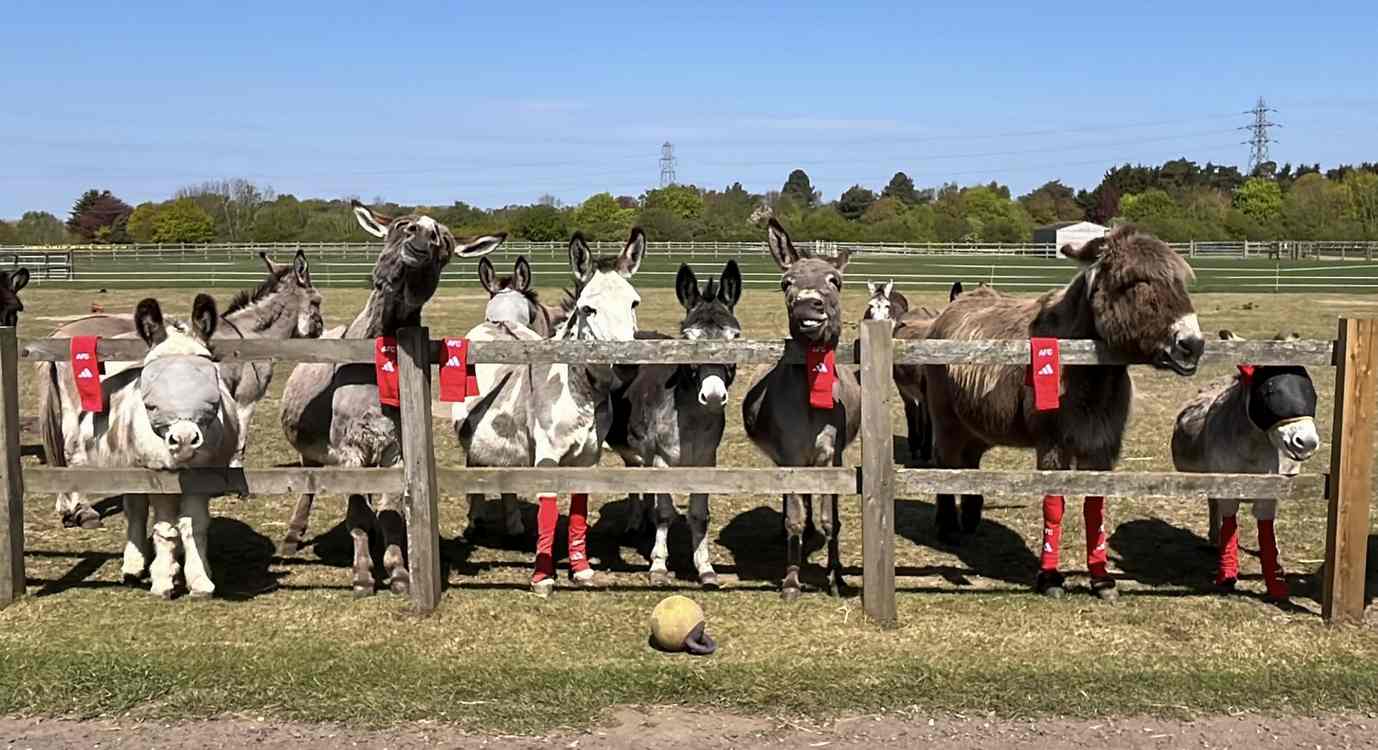
Donkeys with their donated Arsenal socks - credit, Redwings via SWNS
Donkeys with their donated Arsenal socks – credit, Redwings via SWNS
Socks are the pinnacle of lousy gifts—used socks so much the worse—but for these horses and donkeys they’re every child’s dream.
That’s because these fancy red socks were donated by the players of the recently-crowned-title-winners, Arsenal FC.
The footless socks have been used as dressings for horses and donkeys recovering from surgery and to keep insects off any sore legs at their Horse Hospital in Norfolk.
Nicola Knight, from Redwings, said the donation was “one of the more unusual” the organization had received, but would nevertheless be a “game changer.”
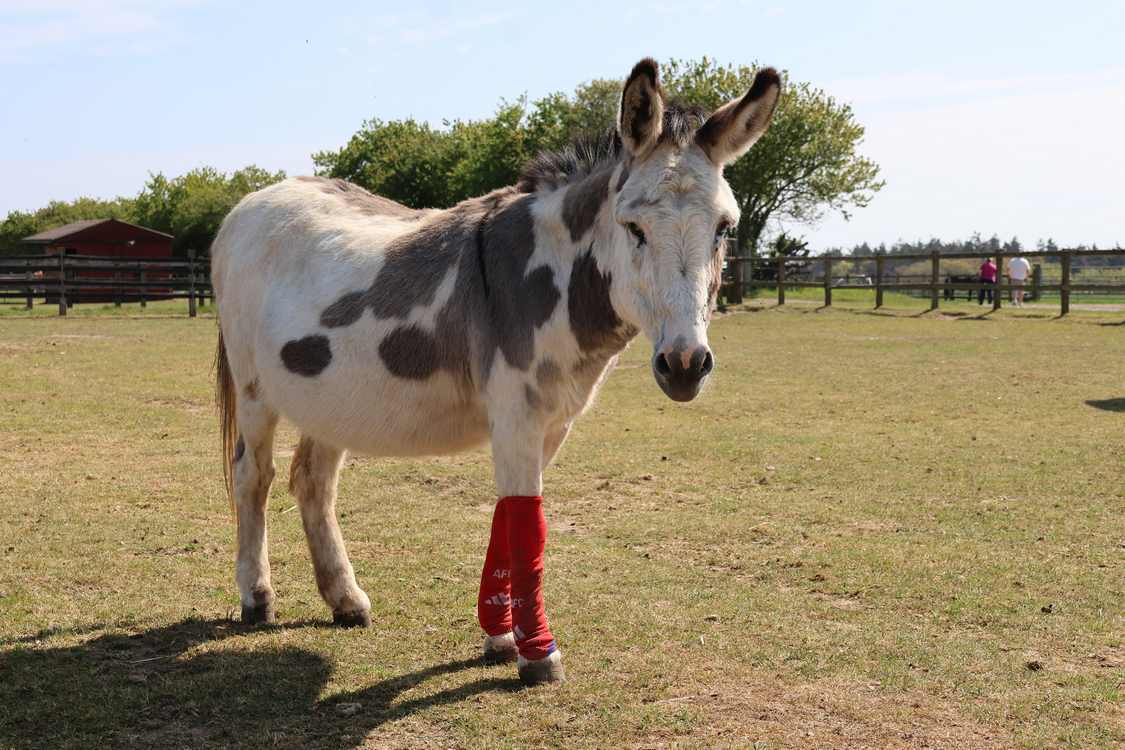
“The socks are being used for anything from protecting our rescued residents’ sensitive legs from flies to holding their vet bandages in place,” Knight told Faye Martin of the Southwest News Service.
A donkey wearing donated Arsenal socks – credit, Redwings via SWNS
“They’re also protecting them from headcollar rubs and even holding back the hair on their legs while they get their feet trimmed. They are a fantastic bit of kit and we’re so pleased that Arsenal reached out to us.”
Contrary to American preconceptions, English football can be a brutal old game, and while a jersey or pair of shorts might survive to be washed and worn again, socks rarely survive the flurry of cleats, kicks, and sliding challenges endured over 90 minutes of the beautiful game.
Michael Lloyd, Arsenal FC’s Operational Sustainability Manager, came up with the idea of donating the players’ unwanted or too-used-to-use socks and contacted Redwings.
“We’re always looking for ways to reduce waste and make a positive impact through the actions we take as a club, and it’s great we can work together to repurpose our old kit towards the care and wellbeing of animals,” said Lloyd.
Arsenal field 11 players every game, and can bring on as many as 5 substitutions. Having just played 63 games across all competitions during a season that saw them lift the Premier League title for the first time in 22 years and reach the UEFA Champions League final, the team may have worn and tossed as many as 1,000 pairs of socks.
But Redwings is responsible for more than 1,500 horses, ponies, donkeys, and mules, with over 1,000 in their daily care.
Additionally, these animals need 2 pairs, not one. Undoubtedly many more bales of socks will be showing up at Horse Hospital, as the team—now back among Europe’s elite—seek to defend their title when football resumes in August.
SHARE These Equine Gooners With Your Friends Who Watch Soccer…
Quote of the Day: “Art does not reproduce what we see; rather, it makes us see.” – Paul Klee
Photo by: Andrej Lišakov for Unsplash+
With a new inspirational quote every day, atop the perfect photo—collected and archived on our Quotes page—why not bookmark GNN.org for a daily uplift?
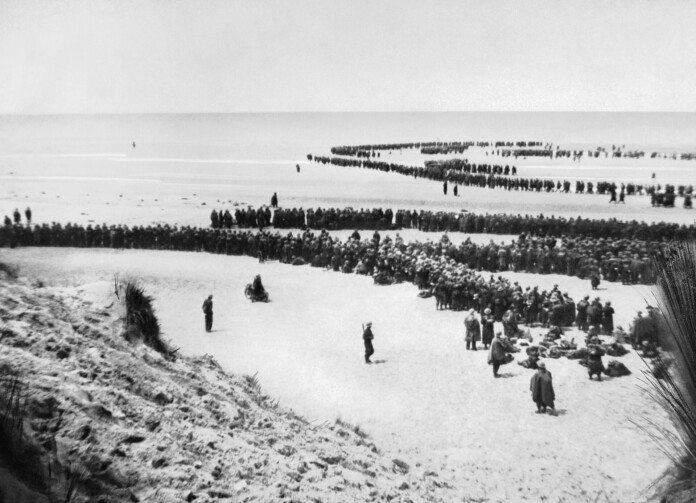
BEF and Allied forces que on the beaches of Dunkirk for evacuation
86 years ago today, the British Army completed the “Miracle of Dunkirk” by evacuating 338,226 Allied troops from France via a flotilla of over 800, mostly civilian vessels, including merchant marine boats, fishing boats, pleasure craft, and lifeboats escorted by Royal Navy destroyers. READ a quick summary of how it happened… (1940)
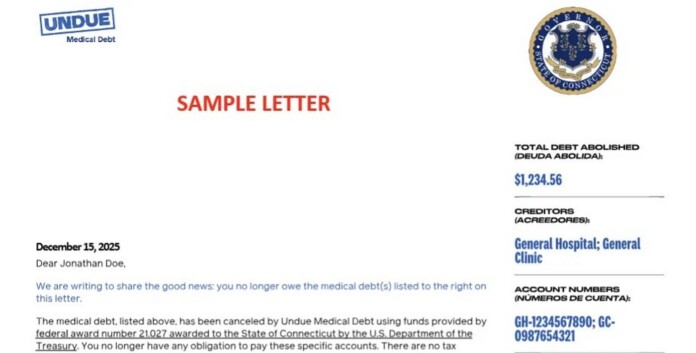
The nation’s largest buyer of overdue medical debts has yet again relieved the burden of past hospital expenses for thousands of Americans.
Having worked with state governments in Arizona and Maine, Undue Medical Debt (UMD) has now eliminated some $6.5 million in unpaid medical bills for 97,000 residents of Connecticut.
It’s thanks to a program set up by the state that paired leftover money from a COVID-19 relief package with money raised by Undue Medical Debt through donations, and is the fourth-such round of this debt relief.
To qualify, Connecticuters must either owe medical debt worth 5% or more of their annual income, or their income must be or below at the federal poverty level.
This is exactly the program that Arizona already ran for its residents with the help of UMD, one which saw 352,000 Arizonans received a letter in the mail explaining how their debts had been paid off for pennies on the dollar—one can only imagine the relief.
No one need apply—or take any action for that matter. As GNN has reported before, UMD has a thoroughly random and indiscriminate way of choosing which debts to erase, ensuring no favoritism.
It’s all down to how the concept of wiping out medical debt came about.
A hospital may have a claim on someone’s money for care already provided, and even if it’s worth $100,000, if the patient can’t pay it back in anything other than tiny installments it suddenly begins to look quite worthless to a hospital administrator.
The hospital could take legal action, but there’s no guarantee they would collect, and it’s expensive to pay the legal fees resulting. So Undue Medical Debt comes into the picture and offers $5,000 in immediate cash payments to take that claim off their hands—essentially buying the debt for pennies on the dollar.
The hospital gets to balance its books, and everyone gets to feel better about themselves.
The program is expected to continue through the end of the year.
“I was happy to have supported the legislation a few years ago,” Rep. Kevin Brown (D), Vernon, told NBC News local affiliate. “I’m glad that the governor is continuing to commit to this. I want to make sure that folks are able to feel comfortable that they can go to the doctor and not have to worry about that medical debt as much as they might have before.”
WATCH the story below…
SHARE This Inspiring Upcoming Relief With Your Friends In CT…
Venus viewed in ultraviolet light - credit JAXA/ISAS/DARTS/Kevin M. Gill CC 2.0. retrieved from Flickr
Venus viewed in ultraviolet light – credit JAXA/ISAS/DARTS/Kevin M. Gill CC 2.0. retrieved from Flickr
Three bright planets will conjoin in the June sky early this month before the Moon jumps in on the 16th.
The conjunction will feature the two brightest planets from our point of view: Venus, blazing hot and near at hand, and Jupiter, far away but orders of magnitude larger.
Arrayed in a line drawn from northwest to southeast across the western sky after sunset, Mercury sits near the horizon to complete the skewer.
The event will begin on the 7th, when for a person looking west-northwest, it will appear that Venus and Jupiter sit beside one another. As the nights go on, Venus will gradually move in a northwesterly direction, and by the 10th will practically touch the light of Jupiter.
She will continually move past the gas giant until the 16th when she will sit along an almost perfect line with Jupiter and Mercury—the same night that a waxing crescent Moon will position herself between the latter two around 35 minutes after sunset.
The following night—the 17th—at around the same time, the Moon will appear just above and to the left of Venus, creating a new arrangement of Moon, Venus, Jupiter, and Mercury in an even closer-to-perfect line.
One cool thing about this conjunction is that in the Southern Hemisphere, almost all the details and timing are the same—only in reverse, with the line being drawn northeast to southwest.
It’s a superb introduction to these solar system neighbors, and a perfect opportunity to get out in the lovely late-spring night air when frogs and crickets are peeping with renewal.
SHARE This Great Stargazing Opportunity With Your Friends…
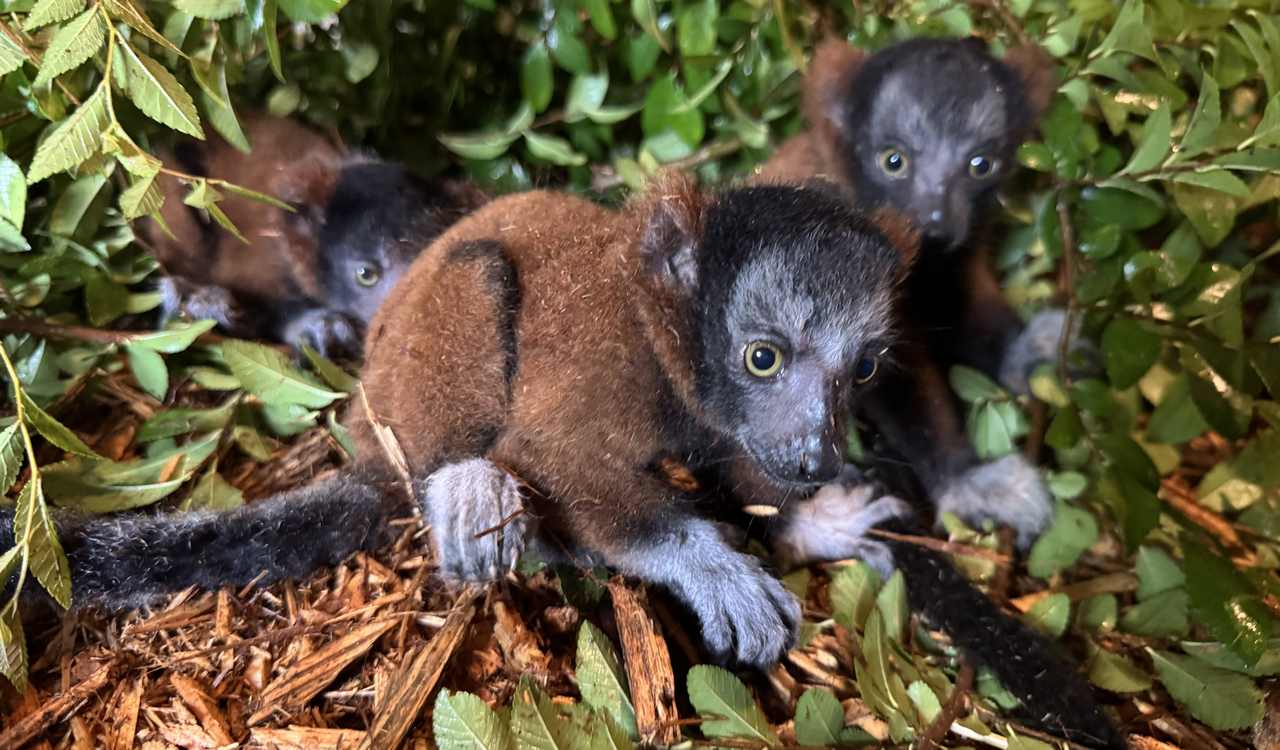
Red Ruffed Lemur Triplets - credit, Wild Adventure Theme Park
Red Ruffed Lemur Triplets – credit, Wild Adventure Theme Park
A Critically-Endangered lemur couple has welcomed triplets into their lives at a zoo and theme park in Valdosta, Georgia.
It’s the third year in a row the resident female has given birth at Wild Adventures Theme Park, showing how productive captive breeding programs can be, and how much hope one should have about the future of this beautiful species.
The red-ruffed lemur is many things, all of them interesting or beautiful. At 9.5 pounds, it’s one of the largest extant lemurs, while this heft also makes it the world’s largest pollinator.
It’s fuzzy nose is just perfect for snagging a flower’s pollen and sharing it with another as the animal feeds on fruit and nectar. They’re also one of the most fecund of lemurs, capable of giving birth to litters of 6 at a time, and are the world’s only diurnal primate to stow their infants in nests while going out to forage.
Most cling to their mama as she clambers about.
On April 25th, Taylor, Red, and Marjorie came into the world at Wild Adventures Theme Park, lending their spirits to the 590 or so red ruffed lemurs that live in captivity worldwide.
Their parents, Val and Doug, have welcomed a litter of babies every year since 2023. Taylor, Red, and Marjorie are getting along very well with their siblings Swiper, Raven, Beans, and Dennis.
The species is listed by the IUCN as Critically-Endangered, with some 10,000 remaining in the very northern tip of Madagascar in forests that are rapidly disappearing. Successful breeding between pairs like Val and Doug at Wild Adventures help ensure that if those forests can be saved, there will likely always be lemurs around to inhabit them.
“Very soon guests will be able to see Taylor, Red, and Marjorie, alongside their parents in their habitat located near the Giraffe Overlook,” said Asher Raymond, a spokesman for the park.
SHARE These Adorable Red Gems Waiting For You At This Georgia Zoo…
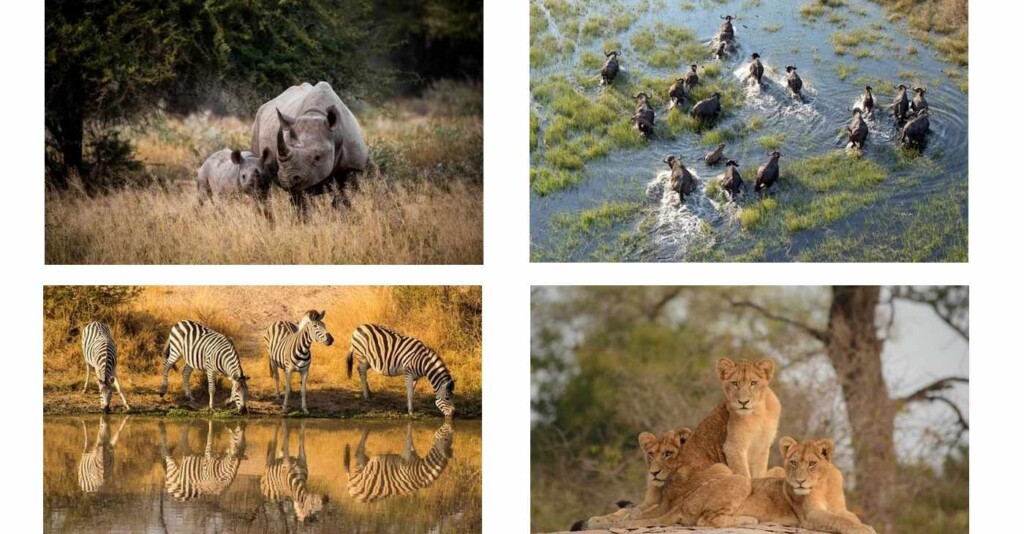
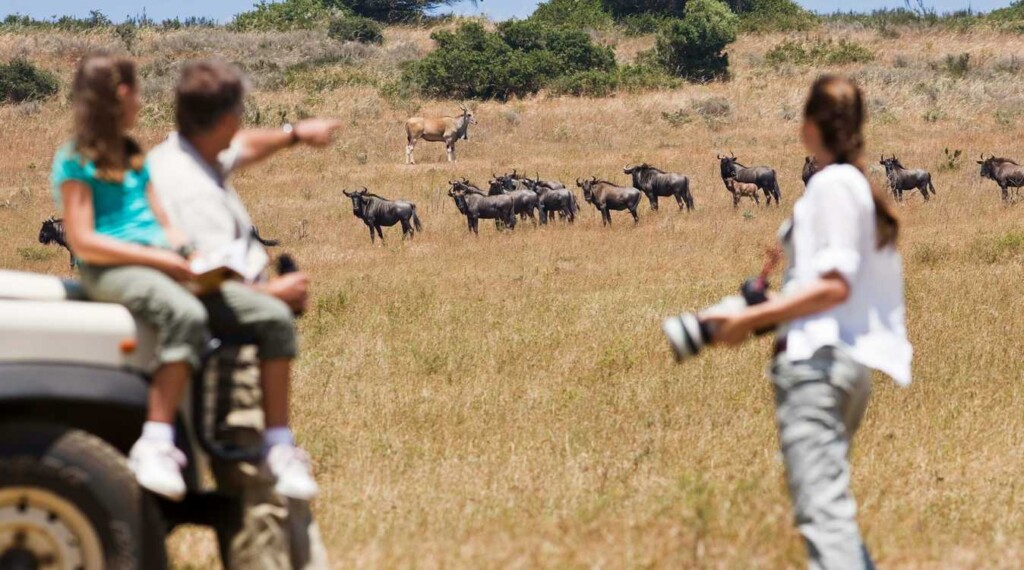
On Sunday, South African authorities and nature lovers alike celebrated the centenary of Kruger National Park—a 7,500-square-mile paradise of African wildlife, and a cornerstone of the nation’s conservation efforts.
Minister of Forestry, Fisheries, and the Environment Willie Aucamp rang in the celebrations at Skukuza Rest Camp inside the massive protected area, saying how “proud” he was to be associated “with those who’ve maintained and managed it so magnificently,” over the last 100 years.
One of the largest and oldest of all national parks in Africa, Kruger was named after the Republic’s first president Paul Kruger, who, inspired by a law organizing the area into private game camps before his term in office, eventually sought to create a large game reserve in the area that is now northern Kruger National Park to protect species of large animal that needed plenty of space to thrive.
Kruger was no longer in office by the time the park was created, but his interest and effort in creating its predecessor, the Sabi Game Reserve, were noted when selecting a name.
Today, Kruger National Park receives 2 million visitors every year, and has become a bastion of biodiversity that spills over into three nations. It is home to more species of large mammal than any other place in Africa, as well as hundreds of bird, reptile, and plant species.
It’s been the testing ground for cutting-edge methods of protecting endangered species and for pioneering wildlife research and animal biology, as well as a role model for balancing wilderness needs, conservation aims, and tourist accessibility, for the continent at large.
“As a united people, we are celebrating this success story, realizing we have the responsibility to take this forward to another 100 years so that our grandchildren and great grandchildren can see what it is like to see when a herd of elephant is walking and hear lions roar in the most pristine natural area in the world,” said Minister Aucamp.
The centenary was not just focused on celebrating the past, but securing the future, as two days before the anniversary, South African National Parks and Aucamp’s Ministry signed the Beneficiation Scheme Framework Agreement with seven communities that live and have lived historically in and around the area of the park.
“This beneficiation agreement represents… shared commitment to transforming natural resources into lasting opportunities for you, the beneficiaries, and your future generations,” said Aucamp at the camp.
SHARE The Celebrations Of This Iconic Patch Of The Colorful Continent With Your Friends…
Quote of the Day: “Always bear in mind that your own resolution to succeed is more important than any other.” – Abraham Lincoln
Photo by: Andrej Lišakov for Unsplash+
With a new inspirational quote every day, atop the perfect photo—collected and archived on our Quotes page—why not bookmark GNN.org for a daily uplift?
245 years ago today, farmer and politician Jack Jouett began his successful midnight ride to warn Thomas Jefferson, the Governor of Virginia of an impending British cavalry raid intended to capture him and his legislature toward the end of the American Revolutionary War. The Virginia patriot—later called the ‘Paul Revere of the South’—rode 40 miles to Charlottesville to warn Jefferson at Monticello, and the others further away, giving them time to head south where they set up a temporary capital in Staunton so they could continue the business of the state. READ more about this little known revolutionary hero… (1781)
Mashup from audience video from concert via YouTube
Mashup from audience video from concert via YouTube
From a beam of limelight in Sydney comes the story of a young man fulfilling something of a dream as he stepped in to perform on stage after a professional pianist felt ill.
La La Land, starring Emma Stone and Ryan Gosling, is an homage to Hollywood and the dream of making it on the Silver Screen, and a live performance of the lauded score was in full swing at the Darling Harbor Theatre in the Australian city.
Among the onlookers were Sterling Nasa and his friend Scarlet, admiring the score played by an orchestra beneath the projection of the film on a large screen. By the interval, it had proven a real treat.
But 20 minutes became 30, which quickly became 40, and the audience was restless. Something wasn’t right, and everybody knew it. Among the panic and cold sweat back stage, calls were going out to colleagues and institutes looking for replacements as the concert pianist felt too sick to go on.
But since the show must, the film’s Oscar-winning composer and conductor, Justin Hurwitz, walked out alone to address the audience.
“I figured nobody’s as close as they say they are…” Hurwitz told the country’s ABC Radio “so I just thought, well, we have 2,500 people in here.”
Hurwitz asked if there were a trained pianist in the audience who was a master sight reader, and with the admitted help of Scarlet, Mr. Nasa eventually raised his hand. Hurwitz realized he had to be deadly serious about the proposal, knowing the score as he did, and asked several follow-up questions.
But to the sound of a applause, Nasa walked down and took his place at an electronic piano in the orchestra, understandably nervous. The bagpipes tutor at his school of Scots College had studied piano and organ, but he had no preparation. The score—featuring John Legend compositions—was intense, and he had never played it despite being a longtime admirer of Hurwitz’s work.
The show restarted with Nasa filling in, until the ultimate test came in the form of a synth solo composed by Legend for a particular part in the film where the notes try to keep pace with Gosling’s frantic on-screen movements.
“I saw it on the score and I thought, oh, I don’t know if I’m going to be able to sight-read that in one go,” Nasa told ABC. Hurwitz had dreaded the moment too, and both men—like the characters in the movie—had to just close their eyes and take a leap of faith.
“I took a little bit of a creative liberty and just decided to improvise, which I think ended up being a good choice,” Nasa admitted. Hurwitz agreed, saying it was an entirely different kind of skill, and an entirely unexpected turn of events that left the 2,500-seat hall enraptured by the hidden talent that had not long earlier sat among them.
Shaking hands backstage after the final bow was full of mutual disbelief, with Hurwitz admitting his head was “spinning.”
“Yes, it was a gamble,” he said, but one which paid off.
WATCH the moment below…
SHARE This Crazy Turn Of Events And A Moment For A Star To Shine…
When a Wisconsin state trooper arrived to help a motorist who had stopped on a ramp up to I-90, he never could have imagined how his life was about to change.
Trooper Brody Schmitz arrived at the driver’s side window, and heard a disturbing story.
“The motorist informed him that she had witnessed someone throw kittens out of a moving vehicle,” the Wisconsin State Patrol wrote in a Facebook post.
“Unfortunately, the offending vehicle was not located, but a kitten was found. Trooper Schmitz took the kitten to a nearby animal shelter to have it cared for while he was at work, but told them he wanted to adopt him.”
Schmitz named the tuxedo kitten Toby, and took him home in his arms and/or hat.
The Milwaukee Journal Sentinel wrote that Wisconsin State Patrol did not immediately respond to a request for details.
“The cat distribution system works in mysterious ways,” one person commented on the Facebook post.
Indeed, the comment section was filled with interesting stories of the same sort.
“I rescued a cat out of a car engine down in Detroit last summer. Called the police and told them why I was breaking into the vehicle. They showed up to help me,” wrote one.
“I found my furbuddy on duty. Dispatched 911 to an aggressive animal. Caller was afraid of cats so i took the young kitten to patrol with me. After climbing on my shoulder i knew he was going home with me,” wrote another.
SHARE This Good-Hearted Trooper And His New Pawtner…
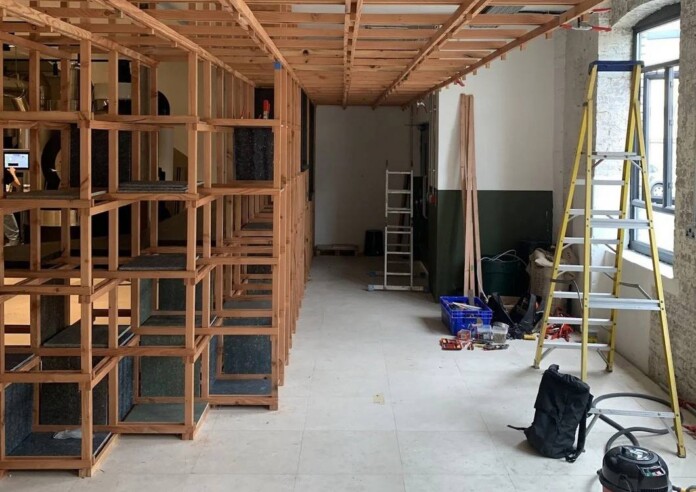
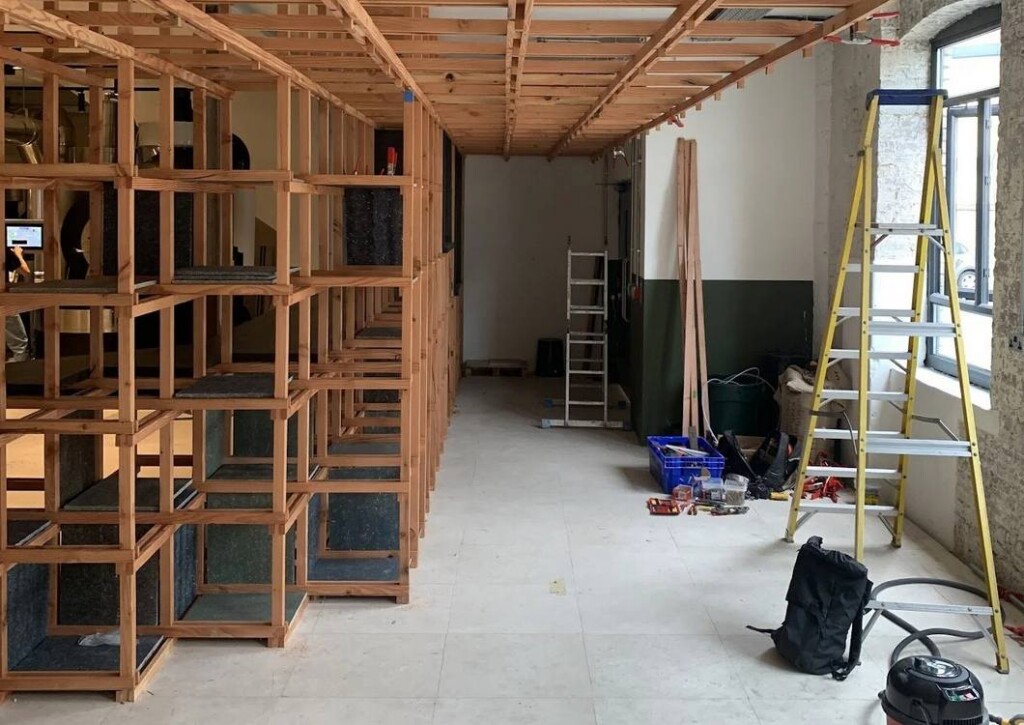
A salvage and reuse operation in London is ensuring that every charming bit of wood, brick, glass, porcelain, and steel that has made the city beautiful can continue to do so with a second life in the circular economy.
Started through an epiphany of “street logic” by a man frustrated by red tape, Yes Make is making things all over London out of what the city might otherwise throw out.
“We’re creating a regenerative supply chain for the city we love,” says Joel De Mowbray, founder of Yes Make, to the Guardian. “Turning things that would otherwise go to waste into objects that have cultural potential.”
Yes Make operates in tandem with Material Cultures, which played an equal part in the endeavor of finding somewhere in the expensive London real estate market to run a salvage yard.
That place is a 5-acre industrial site in the city’s Newham borough called Tipping Point East which promotes circular construction. As well as being the largest site of its kind in London, it’s also the biggest in the whole of the United Kingdom.
The Guardian reports that more than half of the UK’s waste is generated by the construction industry. It recycles some of it, but not nearly enough for De Mowbray’s liking—especially when he looked at what was going to waste: like a 105-year-old sequoia tree from the Linford Arboretum.
Instead, it was brought to Tipping Point East where Yes Make organized an educational workshop run by the National Saw Mills organization on how to use a portable saw mill to turn an old-growth tree into lumber.
There are huge quantities of high-quality, imported, or exotic lumber that have gone into making London, and as the city constantly balances modernization and preservation, some of that wood gets squeezed through the cracks. De Mowbray has ensured he and his outfit are there to pick up all the mahogany, teak, and afromasia that does.
Yes Make’s most recent project was the new HEJ Coffee Roastery on Old Kent Road. De Mowbray’s team arrived with a custom structure made from reclaimed Douglas fir and oak salvaged from the London Docklands.
“Designed to frame the roasting space and invite the public in, this piece holds stories of the tides and the city alike,” they wrote on Instagram.
Beyond lumber, Tipping Point East also refurbishes and certifies construction materials for bulk sale to contractors at sometimes one-tenth the price of new stock.
GNN has previously reported on similar operations: in Savannah, Georgia.
Re:purpose Savannah is a 501(c)3 that takes old, condemned buildings apart for their bricks, timber, door frames, metalwork, and other components and sells them to construction firms building new homes for discerning clients. They’ve taken apart beach houses, dairies, bungalows, cottages, and traditional homes in town.
The non-profit sells all of the salvaged material at its own lumber yard, where old boards, beams, joints, and flooring undergo a light touch of restoration to remove decay or split ends.
SHARE This Admirable Operation In East London Working To Reuse The City’s Heritage…
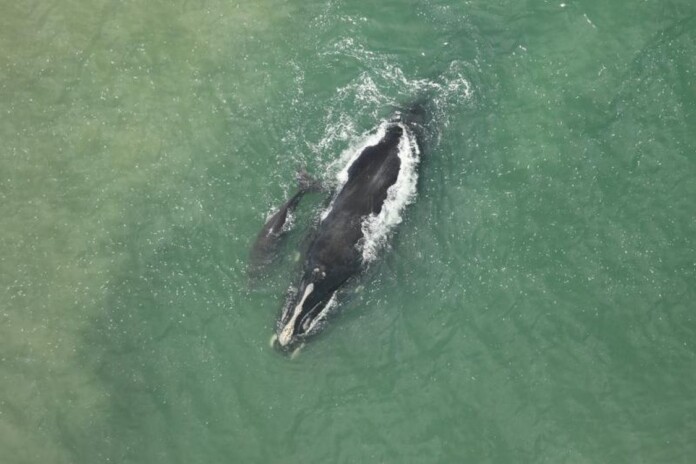
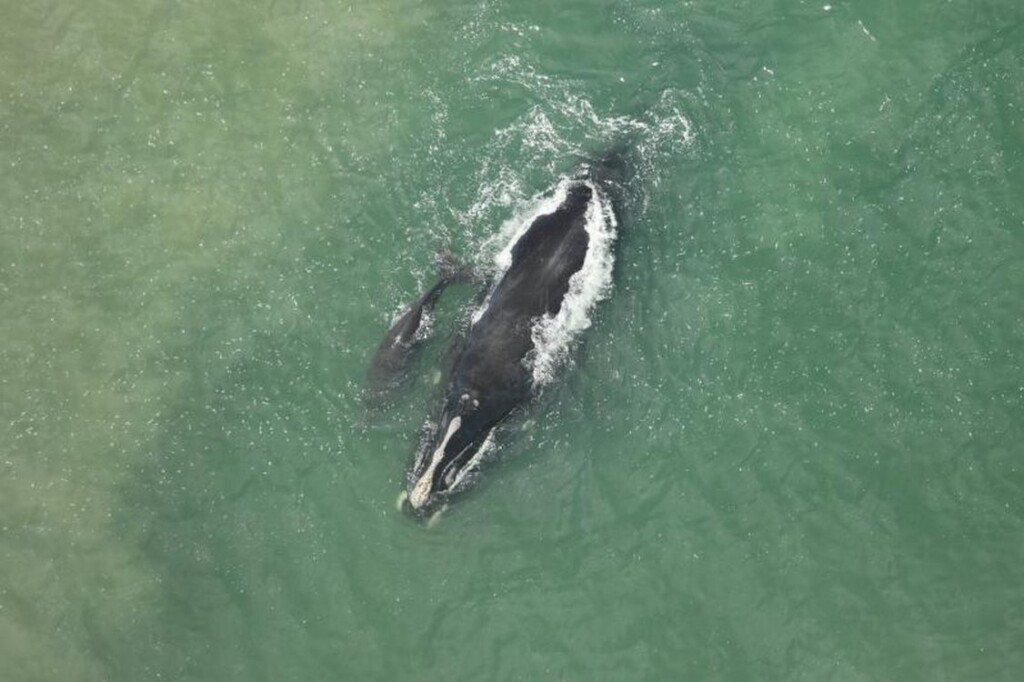
A mother right whale and her first calf - credit, Florida FWS
A mother right whale and her first calf – credit, Florida FWS
This year’s calving season along the southeast coastline of America has documented the most North Atlantic right whale calves since 2009.
Additionally, trends in calf births seem to indicate a normalization of breeding and birthing among the animals that could accelerate population recovery.
GNN has lately devoted many column inches to the North Atlantic right whale, one of the most endangered whales in the world, as well as one of the largest.
Decades of diligent conservation seem to have allowed the whales to really turn a corner in the last 36 months, with milestones like record numbers of sightings, strange vagrancies, and an increasing population being celebrated.
Now, 23 calves were born during the 2026 right whale calving season—the highest number since 2009. Of the 23 mom-calf pairs identified this season, 20 of these were returning moms.
Since that year, the average has been around 15 animals, but some years there have been 7 or fewer.
13 of these returning moms last had calves in the 2021 or 2022 seasons, marking a shorter interval between births than the recent average of 7 to 10 years. This is closer to the normal or healthy interval of 3 to 4 years.
There were 500 sightings of 129 whales migrating southward, a 29% increase compared to last year’s calving season. Many of these sightings were made by citizens aboard civilian boats, which the NOAA encourages us collecting in a safe manner.
“These public reports add to data researchers collect during aerial and vessel surveys which contribute to updated right whale population and calving season numbers,” the NOAA wrote in a report.
BREACH The News On Your Friends Social Media Walls…
Quote of the Day: “Education is what remains after one has forgotten what one learned in school.” – Albert Einstein
Photo by: Vitaly Gariev (cropped)
With a new inspirational quote every day, atop the perfect photo—collected and archived on our Quotes page—why not bookmark GNN.org for a daily uplift?
On this day 80 years ago, the Italian Republic was born out of the monarchy of King Umberto II. The day is celebrated as “Festa della Repubblica” and is one of the biggest holidays on the Italian calendar. It’s celebrated under the late spring sunshine with parades, concerts, and merrymaking of all sorts, with one of several iconic dishes being a spit-roasted maialino or young pig. READ more… (1946)