










Quote of the Day: “All mankind love a lover.” – Ralph Waldo Emerson
Photo by: Timur Shakerzianov
With a new inspirational quote every day, atop the perfect photo—collected and archived on our Quotes page—why not bookmark GNN.org for a daily uplift?




Quote of the Day: “All mankind love a lover.” – Ralph Waldo Emerson
Photo by: Timur Shakerzianov
With a new inspirational quote every day, atop the perfect photo—collected and archived on our Quotes page—why not bookmark GNN.org for a daily uplift?

60 years ago today, the Metropolitan Opera House opened at the Lincoln Center on Broadway and Lincoln Square on the Upper West Side of Manhattan, New York City. Back then, it opened its doors and its curtains for the first time to Franco Zaffirelli’s Antony and Cleopatra. Today it’s one of the most prestigious opera houses in the world, as well as the biggest among those that actively host operas, and remains a constant on touring schedules for the largest productions. READ more… (1966)


The personal passion project of Hollywood A-lister Christian Bale has finally come to fruition, as the Welsh actor cut the ribbon on a children’s foster care village in Palmdale, California.
Called Together California, the facility and the organization which will run it are focused on one key mission Mr. Bale says the state foster system falls short on: keeping siblings together.

“Imagine the absolute pain and the trauma of losing your parents or being torn from your parents, and then losing your brothers and sisters on top of that. That’s no way to treat kids—and so, we will be the hub for that,” Bale told the Hollywood Reporter 2 years ago.
“It’s our job to turn their heartbreak and their pain into love and hope and a sense of future,” Bale said just recently at the opening of Together California’s foster village.
The facility consists of 12 fully-furnished housing units across 11,000 square foot on a 4.67-acre property purchased in 2022. Though the Dark Night star played a big role in the project, he wasn’t the only one to help it over the hurdles it faced. ABC wrote that the Austrian American Council West alone raised over $9 million to see it succeed, while known philanthropist and Oscar winner Leonardo di Caprio donated to it as well.
Bale and his wife Sibi became aware of the challenges facing children in the California foster system, the largest of its kind in the country, after the birth of their first daughter. The thought of what would happen to her if they suddenly passed piqued their curiosity into learning about foster care in the state.
They learned that most siblings entering the system will be separated and grow up apart from each other, a fate Mr. Bale felt he’d like to see avoided for as many children as possible.
FOSTER HEROES:
Its arrival in Palm Dale was also down to the enthusiasm of Kathryn Barger, the Supervisor for Los Angeles County’s 5th District.
“She embraced this project. She said we have to do this in the Antelope Valley. She connected us with Palmdale, and here we are today,” one of Together California’s co-founders, UCLA Professor Eric Esrailian, told ABC.
“With LA County having more kids in foster care than anywhere else in America, it’s time we stand together and take a holistic, loving, and long-term approach to take better care of our children,” Bale said.
WATCH the story from ABC below…
SHARE This Brilliant Philanthropy With Your Friends On Social Media…

When thousands of employees at Station Casinos arrived at one of the company’s resorts to celebrate its 50th anniversary, they hadn’t a clue what was about to happen.
They were going to hit the jackpot.
In a stunning display of profit sharing, business moguls the Fertitta brothers announced that each of Station Casinos’ 10,000 employees were to receive a bonus consisting of $1,000 of company stock for ever year they’ve been on the payroll, totaling $70 million in gifts.

“Our father founded this company on a few simple principles: serve the local community, deliver great value, and most importantly, take care of our team members,” Frank Fertitta III said in a statement.
“This $70 million award is more than a recognition of their contributions, it is an investment in our nearly 10,000 team members, whose dedication and commitment we are deeply thankful for,” added Frank III’s brother, Lorenzo.
Frank and Lorenzo’s father, Frank Jr., founded Station Casino’s flagship asset Bingo Palace in 1976, and several employees who joined shortly after are still with the company. Ida Johnson, who began her career with the company in 1977, received $49,000 worth of stock, which at the current dividend payout would generate an additional $886 every year.
In total, 7 employees have been with the company for 45 years or more. Red Rock Resorts Class A stock currently trades at $54.49 per share.
“Just a complete honor to receive that check,” said Paula Barrett, who has 47 years of service at the company under her belt. Barrett could have worked elsewhere over the years, but she said, “We’re all comfortable. This is home for us. We love it here. We love our management here.”
SHARE This Fantastic Reward For A Clearly Close-Knit Team Out In Vegas…
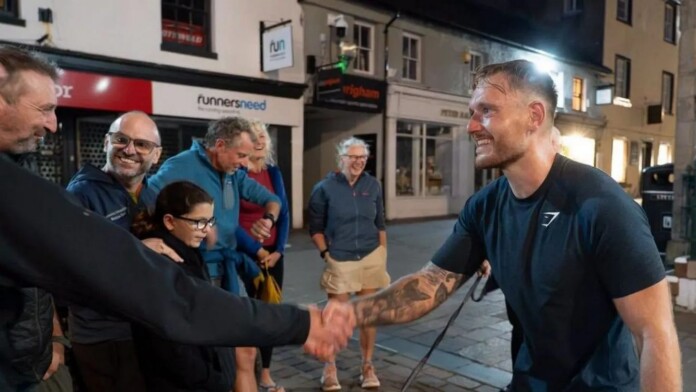
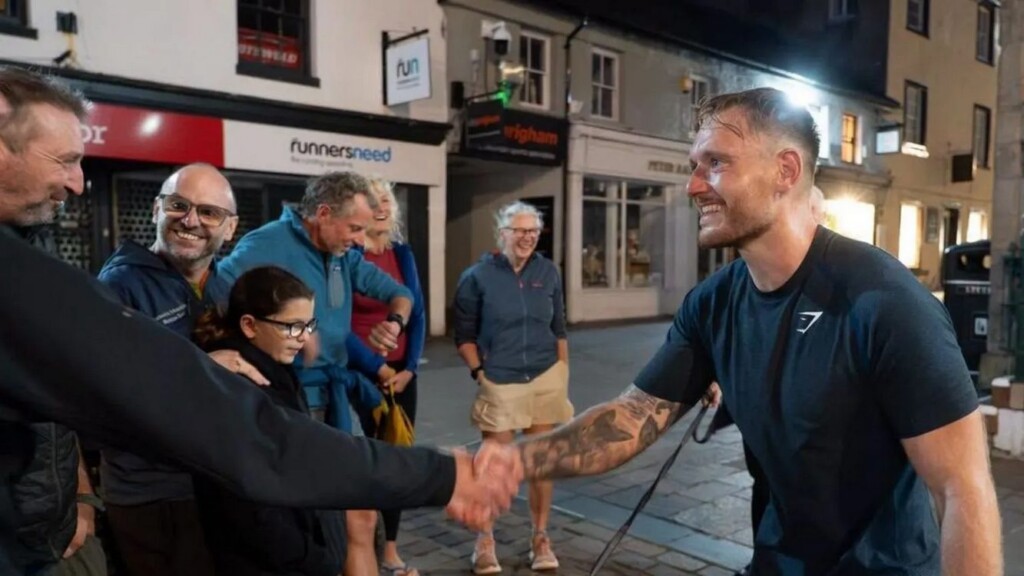
A runner whose improbable resurrection from the frigid fells of north England saw his heart stopped for hours, has returned to conquer the athletic challenge that nearly claimed his life.
Tommy Price suffered cardiac arrest triggered by hypothermia while running the “Bob Graham Round,” a punishing trail run up and down 42 separate hills and small mountains known as “fells” in Britain’s Lake District National Park.
Taking its namesake from the first man who made the run in 1932, the Round is recognized as one of the most Herculean tasks in English trail running and is only considered successful if all 66 miles and 27,000 vertical feet are done in under 24 hours.
In January 2022, Price left the traditional starting point at the old Moot Hall in Keswick to complete the run in January. He succumbed to hypothermia and could no longer walk during the section along Hall’s Fell, just after the third of 42 peaks. Fortunately, he was attempting the Bob Graham with his friend Max, who had gone off to get help from Keswick Mountain Rescue.
Cardiac arrest occurred while Max was away. Rescuers made 3 unsuccessful attempts to restart his heart after finding him face down in the snow before an airlift arrived to take him to Royal Victoria Infirmary (RVI) in Newcastle. His body temperature had fallen by nearly half, to a brisk 64.4°F (18°C).
This probably saved him, one rescuer told the BBC, as the frigid temps prevented his brain and organs from suffering fatal damage while his heart wasn’t beating.
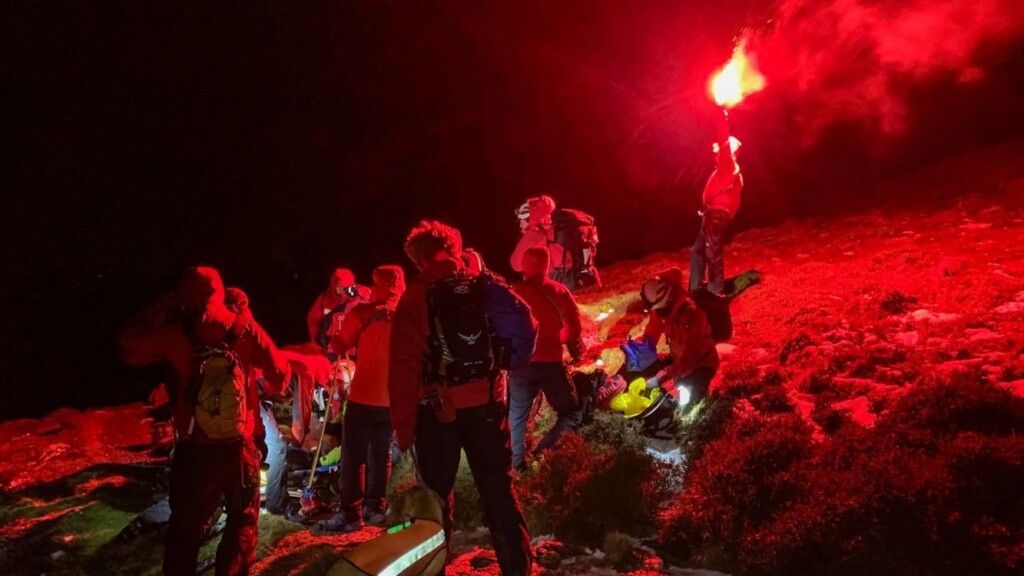
Once doctors brought Price’s body up to normal temperature again they zapped his heart back into operation and put him into an induced coma for 5 days. It took months for him to recover feeling in his hands and feet.
MORE MOUNTAIN RESCUES: Wife Used ‘Find My iPhone’ to Locate Husband Buried in an Avalanche for Over 4 Hours
BBC at the time reported that following his recovery, Price resolved to make his athletic comeback at the London Marathon to raise money for the very organization that saved his life. He competed and completed the marathon in 3 hours and 10 minutes.
Then it was time for the comeback. 5 days ago, BBC Cumbria broke the news that Price had finished the Bob Graham, 4 years after his near-fatal first attempt.
IMOSSIBLE COMEBACKS: 80-yo Retired Teacher Bests Disease and Injury to Become Oldest Female Hiker to Finish Appalachian Trail
“I am very lucky to be alive and even luckier to be able to run still,” he said. “It was unfinished business and I had to do it to finish the story.”
Keswick Mountain Rescue volunteer Jonny Hulme, who was among the first responders that reached Price on that fateful day among the fells, ran with Price along the first leg, while the man who organized his arrival at RVI, Dr. John Ferris, was waiting at Moot Hall—at the finish line—to congratulate his former charge.
SHARE This Man’s Incredible Brush With Death And Determination To Finish What He Started…


In 2006, the largest wind power project in Kansas was turned on among the Flint Hills. Today, the royalties it has generated for rancher Peter Ferrell are allowing him to pass the farm down to his children.
The 50 turbines—which Ferrell barely notices these days—have provided half of his income since then, insulating him and his family from the volatile nature of ranching.
“I am the fourth generation to ranch on this property,” said Ferrell in a statement released by Avangrid to mark the completion of the Elk River Wind Power project 20 years ago.
“My family has been here since 1888 and that weighs heavily on my decision to engage in practices that can be carried on generation after generation without depleting the resources. Both the grass and the wind will be here for generations.”
Ferrell needed some convincing to agree to have the turbines built over his 7,000 acre tallgrass prairie ranch. Pointing out a cultural pressure against them, he remembers there were numerous concerns: they’d ruin the landscape, some said; they’d harm the local prairie chicken population, vulnerable to habitat loss; the royalty money was essentially an honor-less handout.
These concerns jostled around his head until a fellow rancher helped dispel them. After he decided to break rank, the irony was that the original wind project proposal fell through, and Ferrell himself had to go interviewing for a new developer.
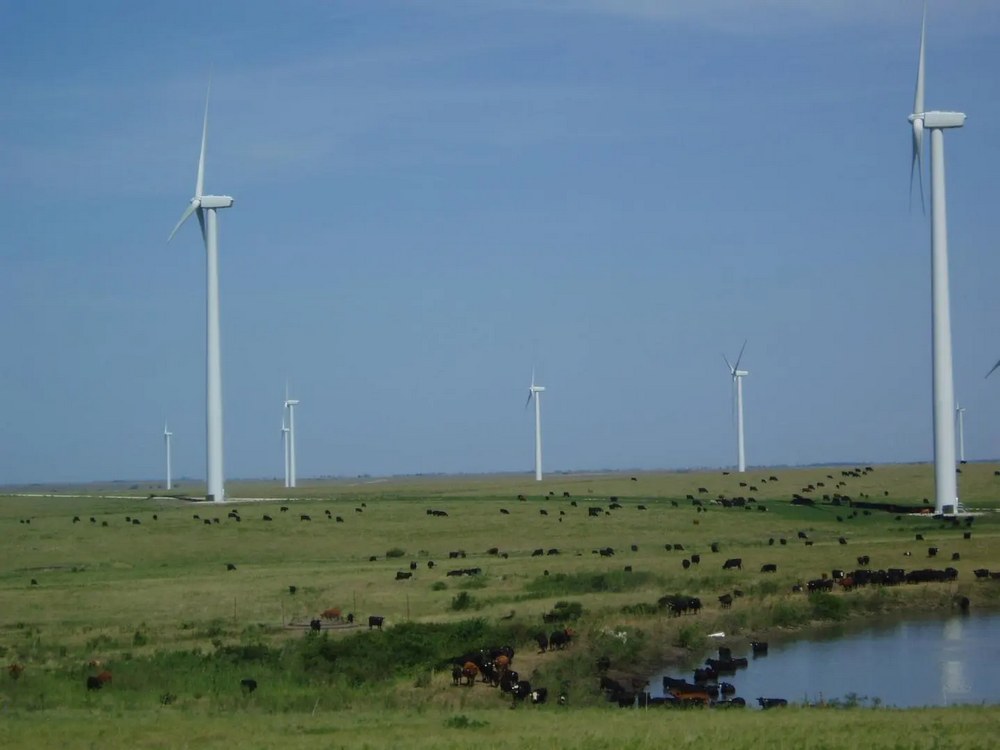
He signed with Greenlight Energy Resources, whose eventual project along Elk River powers 60,000 homes.
Today his cattle still graze as they’ve always done. The turbines still turn on the western-half of his property. The prairie chickens still nest. Very little has changed apart from Ferrell’s financial security.
LANDOWNERS OF AMERICA: Man Gathers Up Family Acres- Home to Moose and Mountain Lion– and Returns Them to Indian Tribe
“I have two grown children and four grandkids, and they love this place,” Ferrell told the Environmental Defense Fund recently. “Because of the wind farm, they’ll be able to perpetuate it without financial burden.”
Without those royalties, he said, it would be difficult to imagine this would be possible. Indeed, it’s nigh impossible to pass the entirety of a farm down to the next generation—as millions of farmers have done before—if the farmer or rancher is carrying debt, which most are.
STORIES ON THE WIND: USA’s Largest Renewable Project Comes Online–With More Power Than the Hoover Dam
Along with tending his cattle, Ferrell also helps other ranchers navigate the fateful choice he made all those years ago.
“After the wind farm was built, my phone rang off the hook. Farmers and ranchers asking, ‘How’d you do it? Could we get one?’”
SHARE This Amazing Up-Close-And-Personal Tale Of A Rancher And His Land…

Quote of the Day: “It is in the character of very few men to honor, without envy, a friend who has prospered.” – Aeschylus
Photo by: Boxed Water Is Better
With a new inspirational quote every day, atop the perfect photo—collected and archived on our Quotes page—why not bookmark GNN.org for a daily uplift?


Many happy returns to a brilliant Brit, Tom Hardy, who turns 49 years old today. The London actor got his start in Ridley Scott’s Black Hawk Down, and preceded along a course of action and adventure films to rival any actor of the 21st century, including Inception, Dark Knight Rises, and Mad Max: Fury Road. The charismatic Londoner won a BAFTA Rising Star award and was nominated for an Oscar for his performance in The Revenant, alongside Leonardo Di Caprio. READ more about this star of stars… (1977)


A former Athens airport site is set to host one of the continent’s most ambitious urban greening projects.
Called the Ellinikon Park, it won’t only add an unforgettable attraction to the birthplace of Democracy, but also a shaded refuge for residents of the continent’s hottest city.
The park will stretch over 400 acres along the sea in a southern suburb of Athens, and as such will be the second-largest city park in Europe. From the first speck of soil, the Ellinikon has been designed to stay moist, green, and cool—come hell or no water.
Planners designed each connecting space in the park to maximize thermoregulation of the air temperature with the goal of keeping it 7.2°F cooler than surrounding asphalt and concrete areas. Simulations on air circulation, average wind direction, evaporation speed, and something called “Computational Fluid Dynamics” provided insight into how every path and plant was placed.
And that’s saying a lot, since the whole of the Ellikon will be covered in 30,000 trees and 3 million smaller plants, with the goal being to include more than 520 species of flora, around three-quarters of which will consist of native or suitably adapted species.
Rest areas are being designed with a shading ratio of more than 60%, while water features like running channels, misting systems, and low-consumption basins will keep the air moist and cool when possible.
If this all seems rather extreme, think again—Athens in the summer is not a nice place.

It was for many years the holder of the World Meteorological Organization record for the highest temperature ever recorded in Europe with 48.0°C (118.4°F). It was the first city in Europe to appoint a “chief heat officer” to deal with severe heat waves.
Athens is home to double the population of the next 9 largest Greek cities combined, and greenery, as well as space to put it, have been severely lacking. GNN has previously reported on attempts to improve this.
MORE FROM GREECE: Vital Island Home for Endangered Monk Seals Gains Marine Protections from Greece
In 2024, under the mayorship of Haris Doukas, the city began planting its first micro-forest, while greening projects totaling 5,000 trees have occurred in 6 neighborhoods as well as on the famous Acropolis.
These scorching temperatures, when combined with low rainfall, can mean death for plants unsuited to this Mediterranean climate. Ellinikon park has been designed with smart irrigation in mind, and will not only include onsite water treatment facilities to supply the park with non-potable water for its plants, but also a giant rainwater catchment system to feed the water features—the misters and the fountains.
GIANT CITY PARKS: California Military Base is Being Transformed Into one of the Largest City Parks in the US
Designers were able to get first pass at all the leftover materials from the airport infrastructure previously demolished, and Euronews reports they were able to make use of hundreds of tons of concrete slabs and rubble. For the finer details, famous Greek stone: Kavala marble, white Dionysos-Penteli marble, Karystos slate, and Mandras sandstone will ensure the ordered features blend in well with the native ones.
The Ellenikon Park will be opened, it’s planned, to the public next year, with future renovations scheduled for 2030.
GREEN Social Media With Stories Of This Incredible Park To-Be…

A feather preserved inside dinosaur dung could help explain why birds survived the mass extinction that wiped out most life on Earth.
Specifically, it could explain whether it prepared a certain lineage of birds to weather the unnatural winter that followed in the wake of the asteroid impact.
Scientists at the Field Museum of Chicago say a dinosaur ate a bird around 66 million years ago, and that its dung preserved the best example of a feather ever found from the dinosaur age.
By studying the feather, American researchers have found clues that help explain why birds are the only group of dinosaurs that survived the mass extinction on Earth 66 million years ago.
“It’s such a beautiful, well-preserved feather, from such an unexpected source, and it’s exciting that it could help us answer this huge question in paleontology,” the study’s lead author Professor Jingmai O’Connor said.
Professor O’Connor has spent years studying fossilized birds to try to find out why only one group of birds called Neornithes survived. It’s a puzzle worth solving, as every living bird today is one of their descendants.
The fossil was discovered in 2016, by study co-author David DeMar, Jr., while conducting fieldwork in Montana.
“I was crawling up a rocky outcrop collecting fish fossils when I came across a dark, reddish-brown nodule about half the size of a golf ball,” he remembers. “I picked it up and scanned its surface through my hand lens, and that’s when I couldn’t believe what I was seeing, a tiny fossil feather.”

Scientists examined the specimen’s mineral composition and took CT scans of it. Not only did it contain multiple feathers, but also tiny fish scales from a gar, and leg bones from a bird called a hesperonithiform.
“Hesperornithiforms were aquatic birds, ecologically similar to loons,” said O’Connor. “Most couldn’t fly, and instead, they used their specialized feet to dive down into the water to hunt for things like fish.”
They are the earliest known avian lineage to lose flight in favor of a specialized foot-propelled diving lifestyle, but unlike the Neornithes, Hesperornithiforms did not survive beyond the Cretaceous era.
The feathers found in the droppings are the first hesperornithiform feathers ever found, and their features seem to represent a middle ground between feathers that existed then and those of our present time. O’Connor believes one of the main reasons Neornithes survived is down to differences in their feathers compared to other birds.
SEE ALSO: Single Fossil Shows a Pterosaur Eaten by an Ichthyosaur Eaten by a Pliosaur: ‘A 3-Way Chompfest’
“Some of these diving birds’ feathers seem to have been modern-looking and water-proof, but they also had some smaller, fuzzy, primitive body feathers that we associate with dinosaurs…” she said.
If the hesperornithiforms’ feathers weren’t as good at keeping their bodies warm as Neornithes’ feathers, O’Connor believes that could have been a major factor in their abilities to survive the impact winter following the asteroid strike.
“The hesperornithiforms retain primitive feather types that may not have been as efficient for insulation as modern plumaceous feathers, and that could explain why they went extinct along with the enantiornithines [another group of birds].”
DINOS OF A FEATHER: Antarctica Yields Intact Skull — An Ancestor of Today’s Waterfowl That Survived Dinosaur Extinction
“We rarely find fossils of birds and even more rarely their feathers, giving us such important insight into the evolution of this key aspect of their biology,” said study co-author Professor Greg Wilson Mantilla, from the University of Washington.
The study was published in the journal Current Biology, and advocates for more CT scanning of existing fossilized dung samples held in collections on the off chance that more feathers could be contained therein.
SHARE This Clue Into The Origin Of Modern Birds With Your Friends…

The World Health Organization (WHO) recently announced it has certified Timor-Leste as having eliminated trachoma as a public health problem.
The leading infectious cause of blindness, the achievement on the island nation now means that the entire Southeast Asian region, as defined by the WHO, is trachoma-free.
It means over 2 billion people now live with minimal risk of contracting trachoma bacteria, and with access to medical services capable of detecting and quickly treating it should it occur.
“The elimination of trachoma from the South-East Asia Region is a significant step towards our global target of eliminating trachoma worldwide by 2030,” said Dr. Tedros Adhanom Ghebreyesus, WHO Director-General. “I congratulate Timor-Leste on this important achievement.”
Caused by the bacteria Chlamydia trachomatis, repeated infections can lead to scarring of the inner eyelid, causing the eyelashes to turn inward (trichiasis), which can ultimately result in blindness.
The disease is strongly associated with poverty and inequities in access to basic resources, including water, sanitation, hygiene products, and medical services.
WHO’s validation follows a rigorous, multi-year process to determine whether trachoma poses a public health problem in the country and to document the medical system’s capacity to detect, investigate, and manage cases that occur in the future.
A series of investigations between 2015 and 2017 saw the examination of children on the country’s Atauro Island, the screening of patients attending eye clinics across the country, and a series of specific house-to-house searches. No trace of trachoma was found.
MEDICAL ADVANCEMENTS: African Continent Gains 10 Years of Life Expectancy Since 2000 Despite Wars, Famine, and Instability
Timor-Leste subsequently generated further evidence through various studies. In a 2025 survey, 4,949 samples from children aged 1–5 years were analyzed covering all 13 municipalities. Testing found no evidence of transmission at a level requiring trachoma-specific public health intervention.
“Timor-Leste has once again demonstrated that strong national leadership, high-quality evidence and integrated health services can deliver lasting public health gains,” said Dr. Nilesh Buddha, Officer-in-Charge at WHO Southeast Asia Regional Office.
SOUTHEAST ASIA: Southeast Asia Nears Malaria Elimination, Down Two-Thirds Since 2010
“The country’s approach also shows the value of integrating surveillance across diseases so that limited resources produce the greatest possible benefit for communities.”
Laos DPR achieved elimination in 2017, followed by Nepal a year later, Myanmar in 2020, and India in 2024. Vietnam, Cambodia, Bangladesh, Sri Lanka, Maldives, Bhutan, and Thailand had all eliminated it as well.
SHARE This True Triumph Of Medical Access And Disease Control With Your Friends…

A conservation charity in the UK has turned what was once a dumping ground for material dug up during canal dredging into a nesting habitat for two-thirds of the UK’s black-necked grebes.
These beautiful waterfowl with thin ochre-golden feathers sashaying away from their ruby-red eyes have a very unusual migratory pattern which in the UK sees them arrive in nesting areas shared by the black-headed seagull.
One place where these 2 species timeshare is Woolston Eyes Nature Reserve. In this nearly 1,000 acre wetland, the Manchester Ship Canal Company organized the dumping of a substantial portion of the 41 million cubic meters of material dug up during the construction of the 36-mile canal which first entered operation in 1894.
In 1979, the company entered into an agreement with the Woolston Eyes Conservation Group to manage the rich and varied wildlife of the area which is still owned by the company.
In 1986, it was declared a site of special scientific interest by the UK government for the wetland ecosystems that had developed over the following 90 years, consisting of “freshwater pools, reedbeds, willow scrub and rough vegetation sandwiched between the River Mersey on its north boundary and the Manchester Ship Canal on its south boundary.”
Since 2021, Woolston Eyes has been extensively improved in a bid to bring more nesting birds like the black-necked grebes and the black-headed gulls. The latter prefer to build their nests on islands in wetland areas, while the former prefer to build their nests next to the gulls for protection.
2023 saw the first arrivals: 4 nesting pairs on some of the new islands produced 15 young.
A NEARBY RIVER RESTORED: Once Biologically Dead, the River Mersey in England is “Best Environmental Story in Europe”
By 2025, 35 pairs of black-necked grebes were recorded, 29 of which nested on the newly restored wetland area, which together make up 64% of all breeding birds in the UK.
“It is fantastic to see black-necked grebe numbers increasing at Woolston Eyes thanks to the hard work of staff, volunteers and partners to create prime habitat for this rare and attractive species,” said Gavin Thomas, an ecologist with the Royal Society for the Protection of Birds.
PROTECTIONS FOR MIGRATORY BIRDS: Bald Ibis ‘the Herald of Spring’ Saved from Extinction in Turkey Thanks to Semi-Wild Breeding
“The rapid growth in numbers shows how effective targeted conservation action can be and is a great example of nature thriving when it is given a chance.”
The Guardian reports that the wetlands have also become home for numerous species of concern in the UK, including the willow tit, grasshopper warbler, and the pochard.
SHARE This Great Landscape Transformation From Dump To Diversity…

Quote of the Day: “When we seek to discover the best in others, we somehow bring out the best in ourselves.” – William Arthur Ward
Photo by: Nathan Anderson
With a new inspirational quote every day, atop the perfect photo—collected and archived on our Quotes page—why not bookmark GNN.org for a daily uplift?

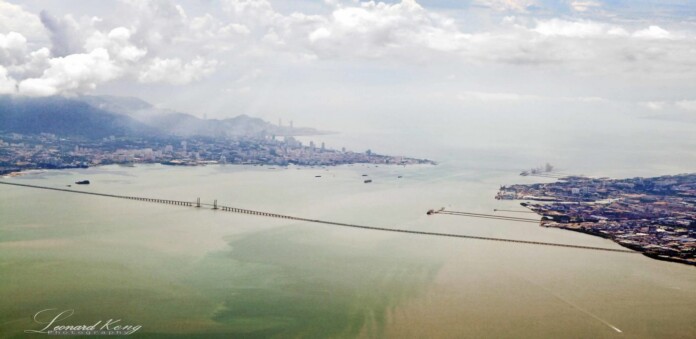
41 years ago today, the Penang Bridge officially opened connecting the Malay Peninsula with the island of Penang. Stretching 5.2 miles across the Penang Strait, it’s the second-longest bridge over water in Malaysia. Architects decided to use a cable-stayed suspension design similar to the Golden Gate Bridge rather than the steel-tied arch style of the Sydney Harbor Bridge. READ a short synopsis of the building challenges… (1985)
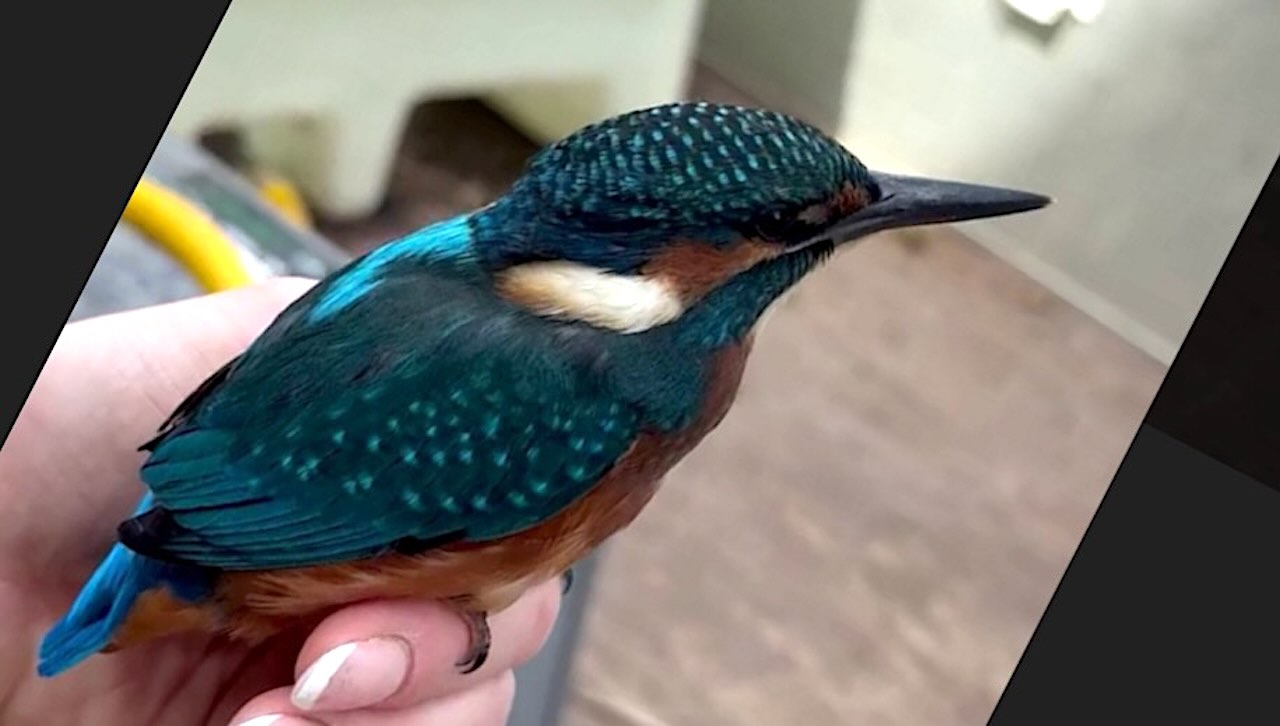
A woman in England had just “asked for a sign” when a kingfisher streaked in, and even landed on her hand—staying there for ten minutes.
“I had just asked for a sign, then just moments later this happened,” Laura O’Brien told SWNS news.
The 24-year-old says she was “amazed” because the Eurasian Kingfisher (also known as the common or river kingfisher) is normally shy and elusive.
The park maintenance ranger was watering flowers in her job for the Frome Town Council in Somerset when the flash of blue whizzed right up to her.
“It was such a magical moment that I will never forget. I felt like Snow White!”
“It was just meters away looking right at me. It was crazy.”
The bird was darting around and Laura was worried it was hurt, so she held out her gloved hand and it immediately hopped on.
Much to her surprise, the beautiful bird proceeded to stay in her hand for 10 minutes.
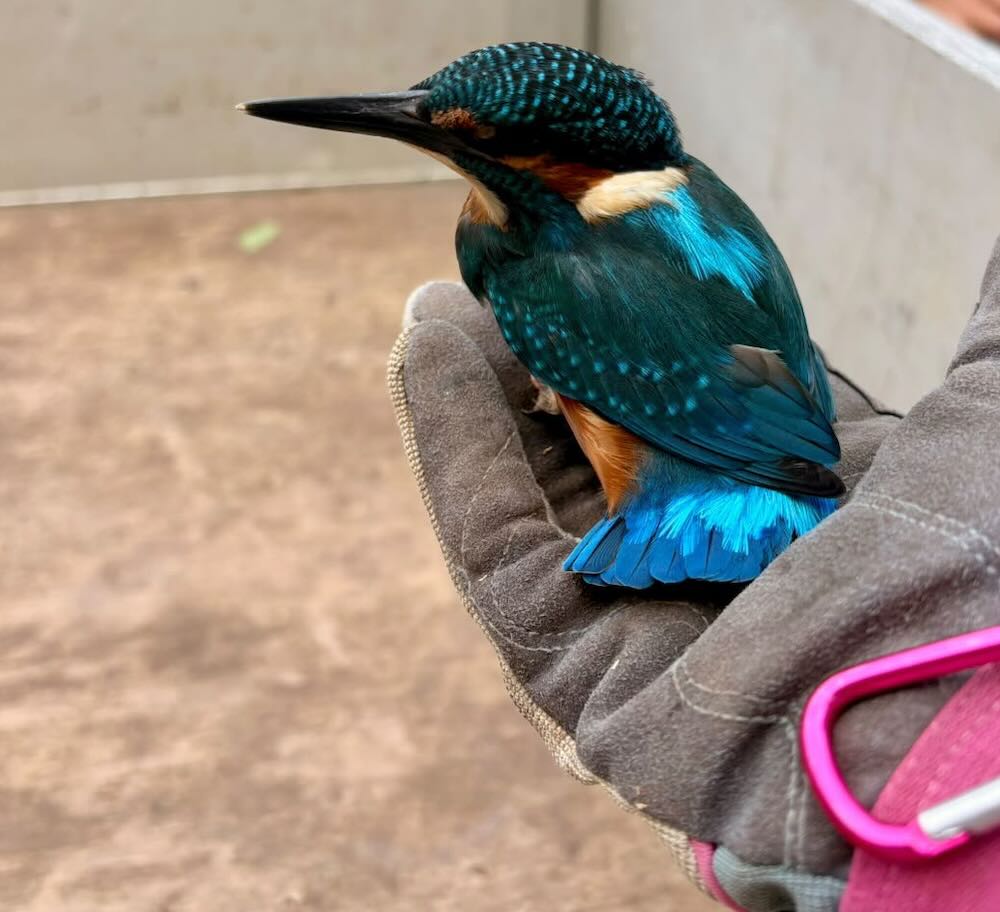
“So I was just watering the flowers with this kingfisher on my finger! (Watch the video she captured below…)
“It was so gorgeous with such a bright orange chest. What a treat to see it up close, normally they are gone with just a flash of blue.
“It felt so special.”
It flew back down to the river where it came from, and when Laura told her fellow rangers about the encounter, they all said they were jealous.
MORE BIRD GOOD NEWS:
• Crow Takes to Teaching a Starving Orphan Bird How to Eat (Watch)
• Woman Who Rescued Injured Crow Keeps Getting ‘Thank-you Gifts’ from Other Birds
“I might head down to the river again and see if it recognizes me.”
SHARE THE AWE-INSPIRING MOMENT On Social Media For People Asking for Signs…


Millions of people playing their daily Wordle games will be eager to hear about this new research.
Using information theory, the team of researchers from Binghamton University and State University of New York has developed a method to solve the game with a 99% success rate.
In the The New York Times online game, players attempt to solve a five-letter word within six guesses. At the start, players are presented with five blank spaces to play any letter of their choosing, with zero hints offered. When a player guesses a word – like ‘BRAVE’ – the game provides feedback in the form of color highlights for each letter guessed.
The research team, led by Assistant Professor Congyu “Peter” Wu, applied Shannon entropy—a mathematical measure of uncertainty—to determine which guesses provide the most information. Rather than focusing solely on guessing the most likely answer from the get-go, their method prioritizes guessing words that provide as much information as possible to reduce the pool of possible words.
“Let’s say you’re at a certain guess. The previous guesses will eliminate a whole bunch of options, and based on the remaining options, guessing some words will send you into a trajectory where information gain is speedier,” said Wu.
“A subtle but important insight from the paper is that a guess doesn’t have to be the most likely answer; it simply has to be informative,” said Donald Stephens, a doctoral student at Binghamton University.
“By applying Shannon entropy, the objective shifts to maximizing the expected reduction in uncertainty rather than the probability of being right. In practice, this approach can lead to solving the puzzle in fewer guesses.”
Their method might seem more “random,” but it is more likely to lead to a successful guess by the end of the game.
SCRABBLE LOVER? Math Teacher Becomes UK Scrabble Champ and Reveals the 2-Letter Words Experts Use to Win
“To use the method in real time, a player would need to run a script/program on the side. The player would enter the color-coded feedback that the game provides, and the program would spit out the next best guess to attempt to provide more information,” said the team.
They tested their strategy against a more traditional approach based on guessing common letters (e.g., “A”, “E”, “R”). In simulations, their approach solved 99% of Wordle puzzles, while the traditional method solved just 90%.
“What is especially creative and valuable about the team’s intellectual contribution,” Wu said, “is that it transformed a static measurement (Shannon entropy) in a scientific domain into a dynamic solution that helps accomplish a popular task better, which showcases the team’s deep understanding of class material and their talent as engineers.”
The published paper describes the math in detail, with charts, in the Northeast Journal of Complex Systems.
5 CHANCES TO SHARE With Wordle Fans on Social Media…
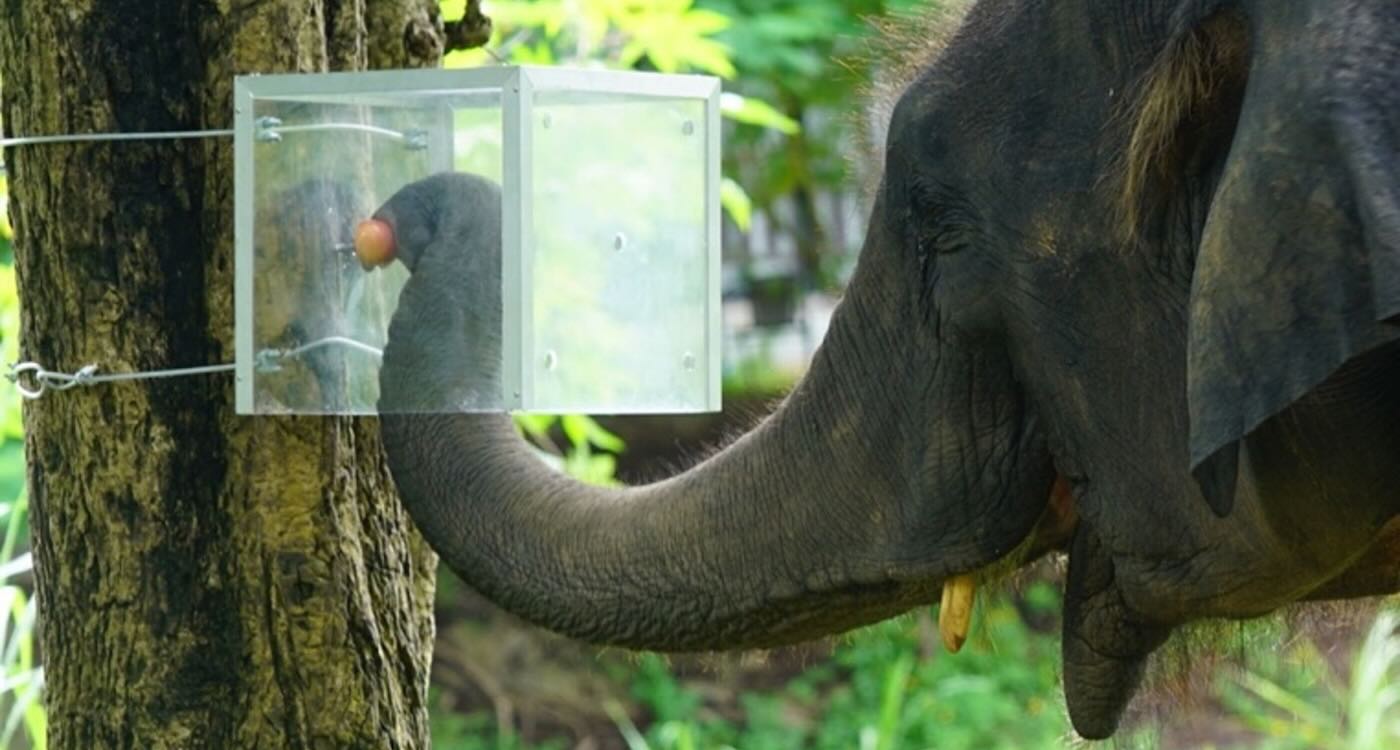
Elephants can think before they act, as well as resist impulsive behavior, reveals new research that adds to growing evidence of elephants possessing sophisticated cognitive skills.
Experiments at the National Elephant Institute in Thailand show Asian pachyderms are able to deny their impulses and choose a more rational course of action, in order to solve problems.
Researchers say the study, published in the journal PLOS One, provides the first evidence of inhibitory control in elephants and offers insights into how they make decisions and adapt to changing environments.
They explained that inhibitory control—the ability to resist an impulse in favor of more effective behavior—is an important part of decision-making and cognitive flexibility in humans and other animals.
The skill has previously been observed in various birds and mammals, often during detour tests in which subjects must ignore an obvious but ineffective path to a treat in favor of an indirect route.
In the new study, the Hunter College research team documented the first such behavior in elephants.
When presented with a transparent box with small holes through which they could see and smell fruit inside, the elephants consistently were able to resist the temptation to try to reach directly for the food and instead chose an opening on the side of the box as they had been taught earlier.
When the box was later rotated, the elephants at first succumbed to the impulse to reach for the previous position of the opening before quickly correcting their behavior.
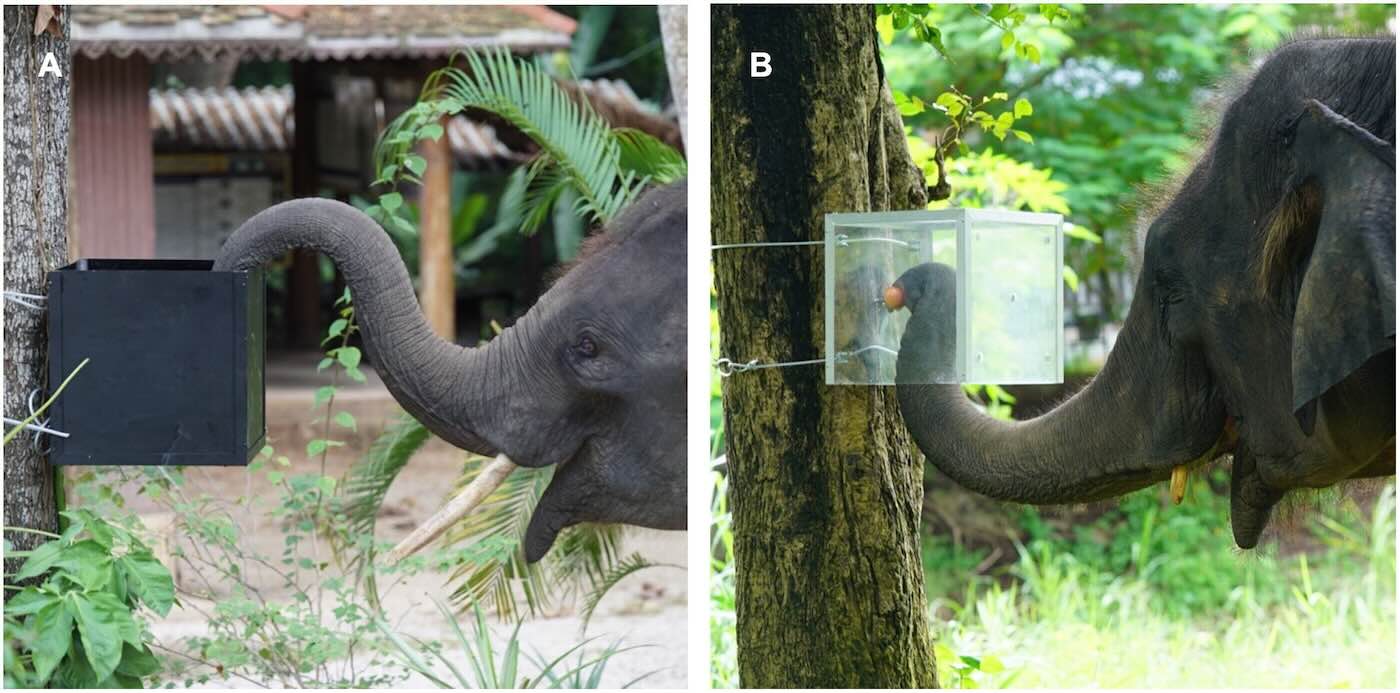
The adjustment was slower in older individuals, with one possible explanation being cognitive decline with age.
Study co-author Professor Joshua Plotnik, from City University of New York (CUNY), has studied elephant intelligence, personality, and social behavior in Thailand for nearly two decades, combining experimental research with conservation efforts.
His work examines not only what elephants can do, but also how their cognitive abilities and behavioral differences may lead to conservation strategies aimed at reducing conflict with humans who share the same landscapes.
Prof. Plotnik’s research has shown that elephants can recognize themselves in mirrors, console distressed companions, coordinate actions with partners, and solve novel problems.
His team has also found that elephants living near human communities tend to be more willing to take risks and explore unfamiliar situations—behaviors that could help explain why some elephants repeatedly enter agricultural areas and come into conflict with people.
“The more we understand about how elephants think, make decisions about risk, and adapt to human-driven environmental change, the better we can predict ‘what they’ll do next’ and the better designed our strategies for human-elephant coexistence can be,” said Prof. Plotnik.
MORE ELEPHANT GOOD NEWS:
• Last Circus Elephant in Portugal Can Now Romp-and-Roll on 1000-Acre Sanctuary After 40 Years of Working
• When Zoo Elephants Are Rewilded in Africa, Here’s How Good Their Coping Skills Are
The researchers say that inhibitory control may be a “key” part of elephants’ famed problem-solving and socializing skills.
“When elephants were faced with a situation in which they needed to suppress an impulsive behavior—either the impulse to reach directly toward a food reward behind a transparent barrier or the impulse to continue using a previously effective technique—they were generally able to suppress the impulse,” said study co-author Dr. Sydney Hope, of New York’s Hunter College.
“This ability may be important for elephants’ problem-solving.”

Quote of the Day: “There is nothing worse than a sharp image of a fuzzy concept.” – Iconic landscape photographer Ansel Adams
Photos by: Zyanya Citlalli for Unsplash+ (below) / Ansel Adams (top)
With a new inspirational quote every day, atop the perfect photo—collected and archived on our Quotes page—why not bookmark GNN.org for a daily uplift?



Happy 75th Birthday to actor-comedian Jean Smart, the brilliant TV star and winner of 7 Emmys, 3 Golden Globes and many other awards for her lovable characters in Designing Women, Frasier, and Hacks. Check out her trophy case and WATCH a recent talk show segment honoring her for the show that has ruled HBO for five seasons… (1951)
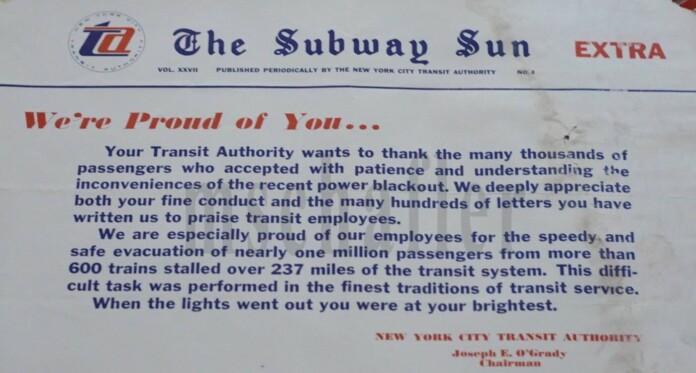
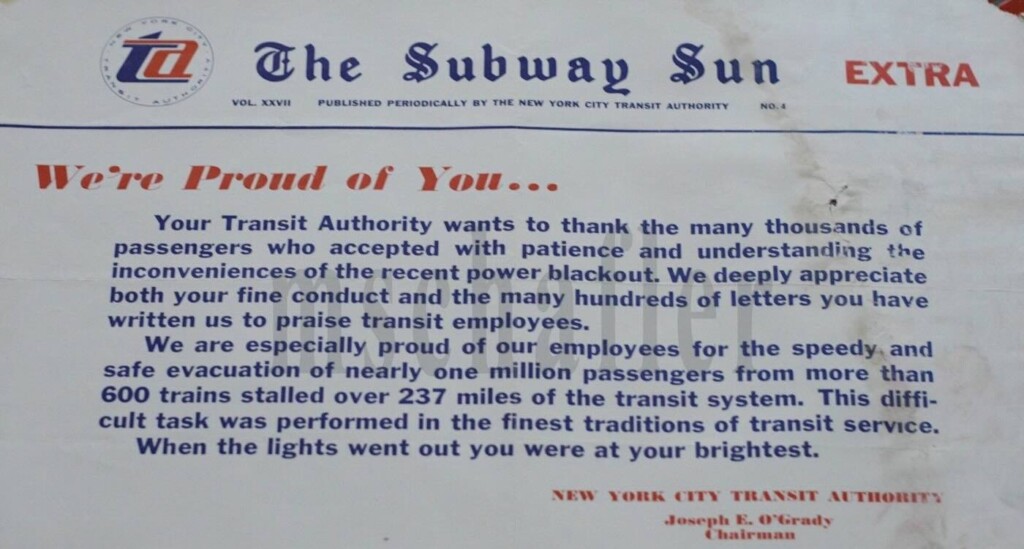
In November of 1965 a great blackout spread across the northeastern United States and parts of Canada. 30 million people were affected and Lynn Lowin was one of them. Now in her senior years, she wanted to finally tell her inspiring tale from 61 years ago, so reached out to Good News Network.
During that power blackout, more than 800,000 riders were trapped in the subway—including Lynn. Here’s her report:
“Traveling by subway from Brooklyn to Manhattan, the train suddenly stopped and all the lights went out. I remember thinking I was going to be late for my orthodontist appointment if they didn’t fix it quickly.
I had no way of knowing that this was no ordinary power outage; it was massive.
There is a ‘third rail’ in a subway system that can be very dangerous if anyone should step on it, so none of us wanted to leave our subway car and take the risk of sudden death. Even if we knew which rail was the third one, we weren’t able to see in the darkness that surrounded us.
As the hours went by, we began to feel almost at home with the people in our subway car.
People began to share whatever food they had. I was given half a doughnut and, in turn, I shared part of the peanut butter sandwich my mother had packed for me that morning.
Of course, there were no cells phone in those days and, stuck as we were in a tunnel in the East River, we had no information. Some people thought there was a bombing in which case being in a tunnel wasn’t so bad. Others were fearful that we would never escape.
But, more and more people began to talk to one another, encourage each other and try and lift the spirits of the strangers who were rapidly becoming their neighbors.
Two nurses and a doctor walked through all the subway cars to see if anyone was hurt or needed help.
Six hours later, we were rescued.
As we followed the firefighters and police officers leading us through the dark tunnels, I was conscious of being thankful not only for our rescue, but for all the people who reached out to one another to keep our spirits up.
I was less scared, because I was not alone.
That is the lesson I learned from that experience and carried with me throughout my life.”
EDITOR’S NOTE: Only five reports of looting in New York City were recorded during the 1965 blackout. It was said to be the lowest amount of crime on any night in the city’s history, since the year records were first kept.
SHARE THE INSPIRING MEMORY With New Yorkers on Social Media…