Scientists have confirmed the discovery of the first adult T. rex trackway, providing new insights into how this emblematic predator moved.
While a myriad of isolated footprints made by adults in the T. rex species have been found, this is the first time scientists can report a sequence of tracks, or a trackway, left by the most famous of dinosaurs.
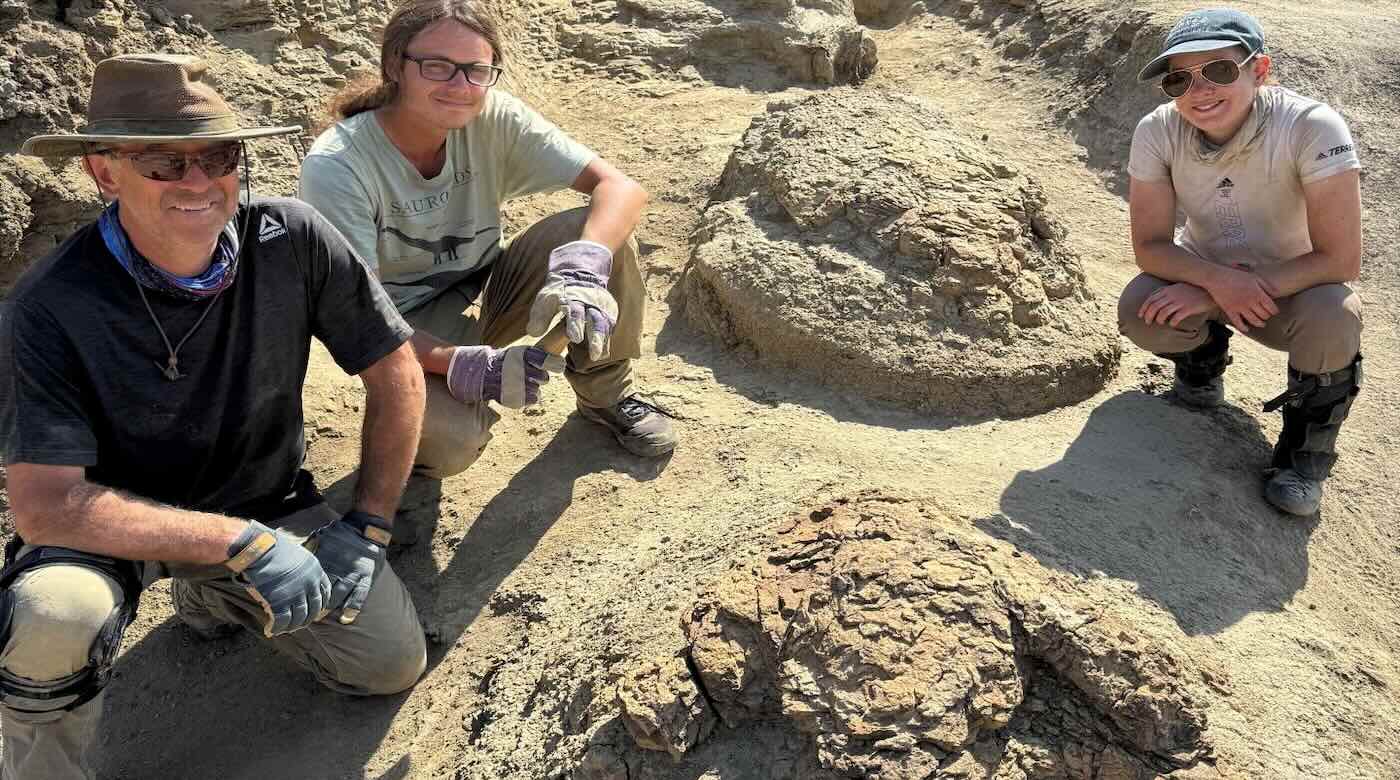
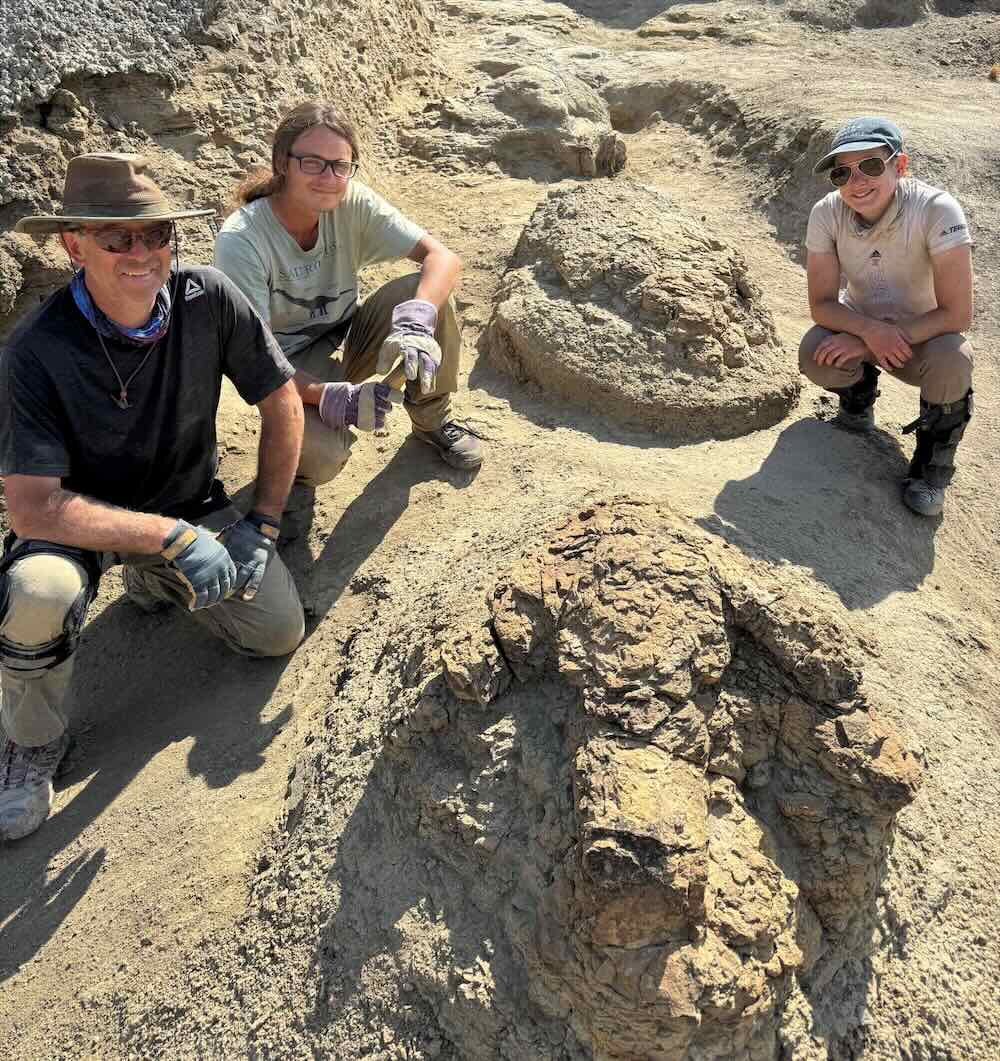
The trackway was found by Kent Hups, a high school science teacher and amateur fossil hunter, on federal land administered by the U.S. Forest Service near Marmarth, North Dakota.
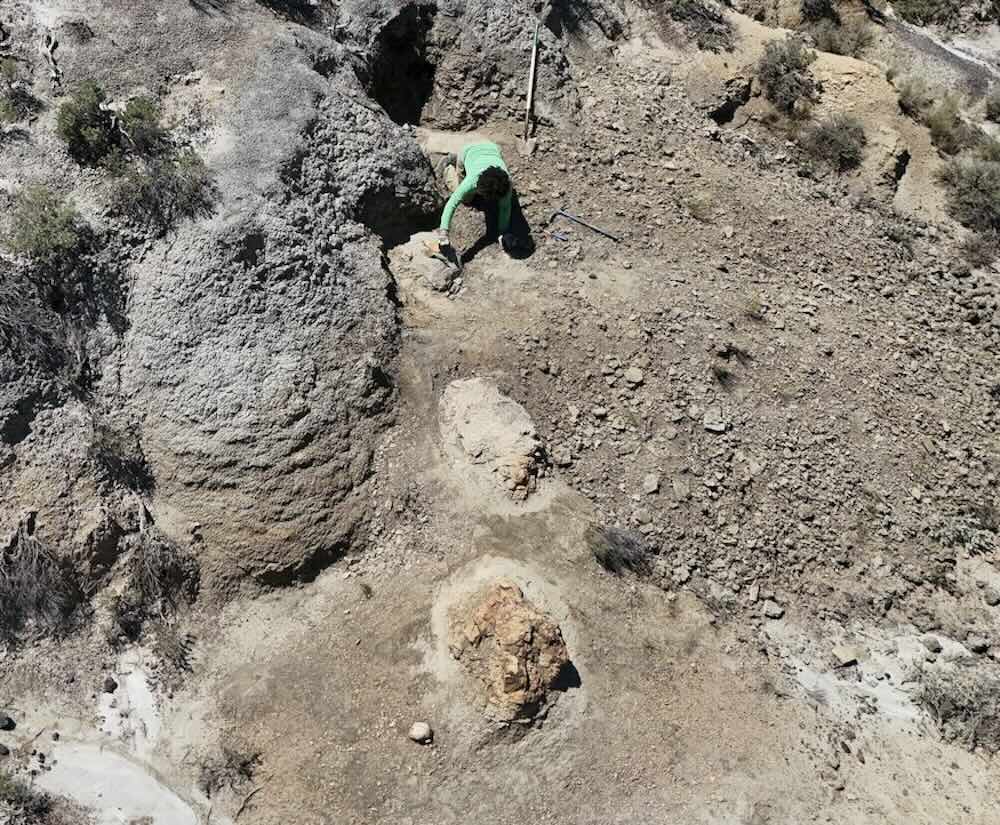
The 23-foot-long trackway consists of four three-toed footprints discovered in the Hell Creek Formation.
Each footprint is roughly 3 feet long, and researchers estimate they were made about 66.5 million years ago.
In findings published this week in the Journal of Vertebrate Paleontology, the team identified T. rex as the likely track-maker based on the footprints’ exceptional size and narrow shape of the toes, along with the abundance of T. rex fossils found in the surrounding area.
“Bones tell us an enormous amount about these animals, but footprints capture a moment of behavior. With a trackway, we can actually follow an animal as it moved across the landscape.”
“That is incredibly rare for T. rex,” explained Tyler Lyson, senior curator of vertebrate paleontology at the Denver Museum of Nature & Science who was leading the dig that Mr. Hups was volunteering on. (Watch the video below…)
T. rex trackway from drone – Credit: Tyler Lyson
The team later used high-resolution 3D surface scanning to document each footprint and the full trackway.
The resulting digital models allow scientists to examine the tracks in detail and create physical 3D reproductions, including dinosaur track expert, Peter Falkingham, a professor of paleobiology at Liverpool John Moores University who was lead author of the study.
“The technology we’re able to apply in the digital age means my colleagues could scan the tracks in the field and then send the 3D information over to me to visualize on my computer and in VR, enabling me to take as close a look as they did in person,” he said.
The trackway records two left and two right footprints, with a stride of approximately 13 feet. Researchers estimate the animal was walking about 3.5 to 4.5 mph, roughly comparable to a brisk human walking pace. Because the tracks are heavily weathered, the speed estimate is approximate.
“As a teacher, I’m always telling my students that science starts with curiosity, passion and careful observation. I never imagined that could lead me to a discovery like this,” said Kent Hups, the teacher at Northglenn High School who found the site and co-authored the paper.
“It’s the closest you get to a time machine,” he told CBS News below…
Three of the footprints are expected to be recovered by helicopter this fall and then transported to the Denver Museum of Nature & Science. The Museum plans to share updates from the recovery with guests this winter.
INSPIRE SCIENCE TEACHERS By Sharing This With Dino-Lovers on Social Media…
Rhys Wynne-Jones, at 32, with piano at Penzance Night Church, in Cornwall.
Rhys Wynne-Jones at the Cornwall Night Church that fateful night – via SWNS
A homeless man who was recorded playing piano in a church on a cold January night says his whole life has turned around, in the two years since his performance went viral.
Rhys Wynne-Jones had been homeless for a decade in England when he sought refuge at St. Mary’s Church in Penzance—one of Britain’s ‘Night Churches’ that remain open to vulnerable populations for all 24 hours.
After entering and speaking with volunteers, the 34-year-old asked if he could use their piano to engage his lifelong coping mechanism—music.
He began playing a rendition of Queen’s Bohemian Rhapsody, while volunteers and visitors gathering to watch.
“There is a lot of noise in my head, but when I play piano my head goes quiet, I feel calm,” he said.
A volunteer posted a video of the performance on Facebook, where it quickly spread, amassing hundreds of comments asking for the identity of this young man known as The Nightchurch Pianist.
After Rhys came forward, he was invited to play the song at a special charity gig where he rubbed shoulders with British stars like Ronnie Wood, the ‘pop prince’ Peter Andre, and the cast of EastEnders.
Best of all, he secured a safe place he can call home, moving into a new Coastline Housing development in west Cornwall (See their video below, of a practice session…)
He has collaborated with Peter Andre on a television pilot and is looking forward to a series of gigs scheduled in a variety of venues including a theatre production in Bristol.
He’s smart, too. As part of his act, he recites all the countries of the world, the elements of the periodic table, and the first 100 digits of the number Pi.
“I don’t see myself as a professional pianist or a celebrity figure. I only need enough money to cover my expenses,” he told SWNS news. “I just love to play the piano to raise money for homeless charities and good causes.”
And, in the 30 months since his night church performance, he’s raised over £40,000 for charity ($54k).
But he says “the pain doesn’t end just because you’ve got a key”. Life in his new home, though—practicing on his Roland keyboard, eating, and sleeping—has been calming.
He now uses any bleak memories from the streets, and his new Instagram friends, to motivate him to help and inspire others.
FREE WILL ASTROLOGY – Week of September 12, 2026
Copyright by Rob Brezsny, FreeWillAstrology.com
VIRGO (Aug. 23-Sept. 22):
Master chefs say that diners first taste food with their eyes. The visual presentation is key to the whole experience. But the beauty must arise from craftsmanship rather than empty decoration. I believe you Virgos are in a phase when this is an important metaphor. Your outer style and inner substance are ready to become better collaborators. Some suggestions: Wear clothes that influence you to feel vividly alive. Relax your face and posture. Beautify your workspace. Polish your presentations. And please make sure the dazzling appearances reflect equally nourishing contents.
LIBRA (Sept. 23-Oct. 22):
I just finished a delicate peace mission to the contested inner landscape where your nightmares have been causing a big ruckus. In response to my diplomacy, they have agreed to drop their weapons and release their captives. In exchange, they are asking you to sit with them for a while as they rant and sob, and maybe offer them a few kisses and affectionate embraces. Drawing on my long years of coaxing unruly spirits back into semi-sanity, I conclude that a key reason they turned so dramatic and extreme was that they have been starving for your attention. I am very sure that with just a little effort, you can tame their reckless restlessness.
SCORPIO (Oct. 23-Nov. 21):
You’re poised at a threshold between what’s comfortably familiar and excitingly possible. A certain reliable part of your life has served you well for a long time but is now ripe for evolution. The paradox is that letting go of a serviceable asset can feel more difficult than shedding what’s obviously harmful. So here’s the riddle I hope you will meditate on: What good old thing could you relinquish so as to attract and make room for a great new thing in your life?
SAGITTARIUS (Nov. 22-Dec. 21):
The Renaissance artist Leonardo da Vinci filled his notebooks with sketches of machines that would not become practical until centuries later. Examples are the parachute, a helicopter‑like “aerial screw,” and an armored tank. Many of his designs were simply too advanced for the materials and engineering of his era. I suspect you may experience comparable moments of visionary thinking in the coming weeks and months, Sagittarius. To some people and even to yourself, your ideas might seem overly ambitious or ahead of their time. But please don’t dismiss them. Write down your inklings and let them cavort around in your imagination.
CAPRICORN (Dec. 22-Jan. 19): Sofia Kovalevskaya was born under the sign of Capricorn in 1850. Early in her life, she displayed mathematical brilliance. She longed to develop her talent, but women weren’t allowed to attend college in her native Russia. So she devised a workaround: a marriage of convenience with a man who helped her leave the country and gain the freedom to study in Germany. There she eventually became the first woman to earn a doctorate. Inspired by her example, I encourage you to consider creative strategies for obstacles that seem immovable. What indirect routes might lead you to your goals better than frontal assaults? Be willing to zigzag toward your destination.
AQUARIUS (Jan. 20-Feb. 18):
Most of us have been cursed by harsh pronouncements about our worth or our future, spoken by people we loved or trusted. For example, when I was 20, my astrology teacher dropped an alarming verdict on me: “You will never be seen and appreciated for who you truly are.” That ugly decree became a jinx I spent years struggling with before I finally banished it. Do you carry a comparable hex, Aquarius? Maybe mommy or daddy proclaimed you would never amount to anything. Maybe an ex declared that you would never again find real love. Whatever it might have been, here’s the good news: You now have the power to at least partially dissolve that old scourge and glide into the future less burdened by it.
PISCES (Feb. 19-March 20):
Ravens often cache shiny objects and interesting novelties that seem to possess no immediate practical value. They apparently delight in collecting intriguing possibilities. I recommend you channel your inner raven in the coming weeks, Pisces. Assemble an array of quirky treasures and raw materials without immediately deciding whether or why they might be useful. Like what? Like fun ideas, memorable quotations, odd facts, provocative images, curious fragments, and fascinating stories. In ways you can’t imagine yet, your playful cluster will inspire imaginative innovations and delightful breakthroughs.
ARIES (March 21-April 19):
Most of us are surprisingly clueless about the inner workings of our own bodies. Do you know where your gallbladder and spleen actually live or what jobs they perform on your behalf? Can you trace the journey your breath takes after it slips into your lungs? Have you ever experimented to discover in detail which foods best suit your one‑of‑a‑kind system? Do you know, from experience rather than guesswork, how much sleep you require to stay vividly awake and emotionally balanced? The current astrological climate favors you becoming a curious apprentice of your body’s gorgeous mysteries.
TAURUS (April 20-May 20):
The English idiom “cut to the chase” comes from the silent films of the early 20th century. When the plot dragged, directors would literally switch to a chase scene to restore audience interest. Other languages have other ways to say “get to the point” or “skip to the crux.” Spanish: ir al grano. French: aller droit au but. Italian: venire al dunque. Japanese: hondai ni hairu. In accordance with astrological omens, Taurus, I suggest you do that in the coming days. Skip the boring parts. Jump to the action scenes. You can return later and fill in the story details, but for now you’re best served by moving toward the exciting essence or the crucial core of things.
GEMINI (May 21-June 20):
This is one of those unusual times when laziness and apathy work in your favor. Life is organizing a relaxing renewal on your behalf, and your main job is to not interfere. So I advise you to skip the hustle and enjoy the thrill of being still. Put a pause on doing and indulge in the fine art of simply being. Please, Gemini? Set aside your ambitions for now. Hide your to-do list. Inform your chattering monkey mind that it’s on temporary leave from its usual jumping and squawking. Feel guilt-free as you immerse yourself in the most relaxed versions of feeling good and welcome whatever fresh vitality wants to flow in.
CANCER (June 21-July 22):
For some people, laughter is like a spiritual practice. A lot of them are Leos, Aquarians, and Sagittarians. They crack up more often and for longer stretches than most, and they tend to howl at ironies everyone else takes too seriously. I bring this to your attention, dear Cancerian, because you’re in a time when you could and should laugh often in wild, liberating ways. I invite you to explore the weirder areas of your sense of humor and work earnestly to expand what you find funny. PS: There’s credible evidence that laughter can reduce stress physiology, ease anxiety, lift mood, strengthen social connection, and even raise pain tolerance.
LEO (July 23-Aug. 22):
The astronomer Johannes Kepler spent years trying to prove that planetary orbits were perfect circles because he believed the universe should behave that way. Once he abandoned his cherished assumption, he discovered the truth: The planets travel in ellipses. That revision transformed astronomy forever. With this in mind, Leo, I will ask you: Is there an elegant belief you have outgrown? A theory that was once fun and interesting but now limits your vision? The coming weeks will favor corrections. Changing your mind will show you that reality is even more interesting than you previously understood.
WANT MORE? Listen to Rob’s EXPANDED AUDIO HOROSCOPES, 4-5 minute meditations on the current state of your destiny — or subscribe to his unique daily text message service at: RealAstrology.com
Quote of the Day: “The supreme art of war is to subdue the enemy without fighting or offense.” – Sun Tzu
Photo by: David Nitschke
With a new inspirational quote every day, atop the perfect photo—collected and archived on our Quotes page—why not bookmark GNN.org for a daily uplift?
Greek troops rushing forward at the Battle of Marathon, Georges Rochegrosse, 1859.
2,516 years ago today was one of two days in the ancient era of world history that, if events had gone a different way, Western Civilization as we know it may never have sprouted. Athenian citizen soldiers, demonstrating superb athleticism and courage, ran a little over a mile in their heavy armor to smash a Persian invading force led by King Darius II which landed on a beach at Marathon. READ more about the battle… (490 BCE)
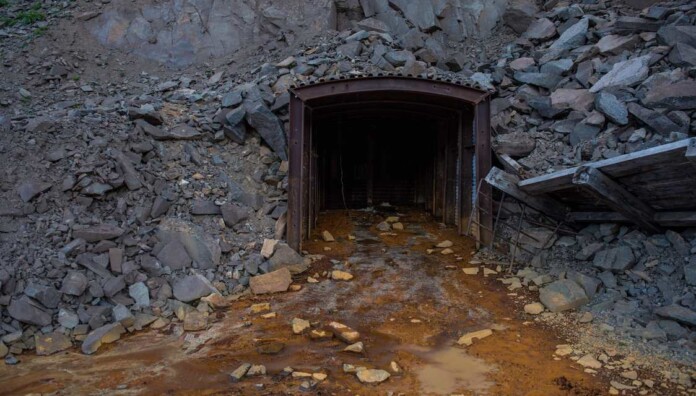
An abanonded mine portal—typical of what the Good Samaritan Law was passed to remediate - credit, Trout Unlimited
An abanonded mine portal—typical of what the Good Samaritan Law was passed to remediate – credit, Trout Unlimited
The US Environmental Protection Agency has approved the first permit under the its new “Good Samaritan” law to remediate abandoned mine workings.
The permit has been issued to Trout Unlimited, a fishing and sportsmen focused nonprofit that engages in riverine conservation all over the West.
The Good Samaritan act passed in 2024 with broad bipartisan support after 20 years of campaigning by groups including Trout Unlimited.
The legislation was championed by US Senators Martin Heinrich (D-NM) and Jim Risch (R-ID) and US House Reps Celeste Maloy (R-UT), Mary Peltola (D-AK), and Susie Lee (D-NV).
It facilitates state agencies and other third parties to clean up abandoned mines more quickly and effectively, tens of thousands of which are known to pollute rivers and streams across the country.
As historic sites often a century old or more whose owners are long gone or deceased, it’s rare that any party can be held responsible for cleaning them up. At the same time, federal laws treat organizations that volunteer to clean up these mines, including state agencies and private groups like Trout Unlimited, as if they are the very polluters who left behind the mine waste.
This complicates permitting and long-term legal and financial liability for any mine pollution remaining after cleanup, disincentivizing the same. The Good Samaritan law created a pilot program to provide limited liability protections for up to 15 low-risk projects conducted by state agencies or other third parties.
“Hardrock abandoned mines are a scourge on the landscape. No one is required to clean them up, so every day they release their toxic brew of zinc, cadmium, lead, and arsenic into our drinking water and trout streams,” said Chris Wood, president and CEO of Trout Unlimited in a statement.
The permit thusly issued to Trout Unlimited will address ongoing contamination of Toroda Creek in Okanogan County, Washington state, about 140 miles northwest of Spokane.
At the site, known as the Bodie Mine, historic mine tailings will be removed and streambanks restored to reduce contamination of the stream by arsenic, cadmium, lead, mercury and other toxins. The project will improve the health of the broader watershed, part of the Columbia River Basin.
“Bully for the EPA [for] authorizing the first abandoned mine cleanup under the Good Samaritan Remediation of Abandoned Hardrock Mines Act of 2024,” Wood added. “May their efforts lead many more states and communities, non-profits, and yes, even mining companies, to lend a hand and make our waters more fishable and swimmable.”
While many Americans have never picked up any mining jargon, it’s likely they’ve seen mine tailings before. If you’ve driven by a mining site and seen the long metal chute depositing gravel and dirt into a large conical pile—those are tailings, and they are either stored in landfill type installations or as a slurry in a pond or dam.
Back in the day, however, they were often just stored on site wherever there was space. Many ore bodies that contain useful and valuable metals like zinc, gold, or silver, may also contain—as Wood mentioned—arsenic, lead, and other toxic heavy metals. The process of grinding and separation that allows for the extraction of the former also liberates the latter. Left in piles of derelict tailings, they present a much greater risk of toxicity than when they were underground.
GNN recently reported on Trout Unlimited’s activities contributing to the truly hair-raising numbers of central California coho salmon running up rivers along the Mendocino coast. The National Oceanic and Atmospheric Administration had been contracting Trout Unlimited to remove barriers in the Navarro, Big, Garcia, and Noyo River watersheds for years leading up to the salmons’ return.
SHARE This Great Start Towards A Cleaner West With This New Law…
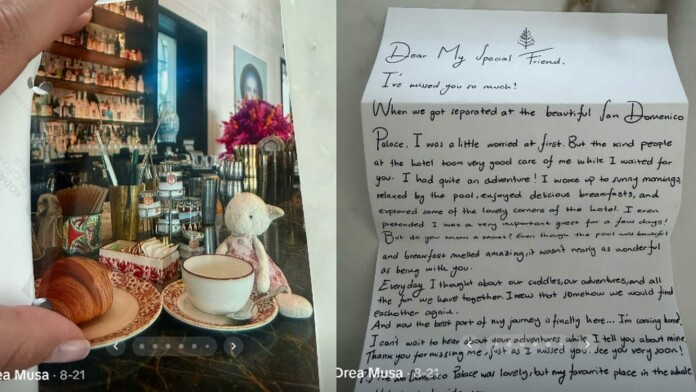
Rosie the bear and a letter written by the hotel - credit, @andreamusa06 via TikTok
Rosie the bear the a letter written by the hotel – credit, @andreamusa06 via TikTok
A Sicilian hotel recently went above and beyond the call of the reception bell in reuniting a young woman with a cherished childhood stuffed animal.
Visiting the Four Seasons in Taormina recently was a mother and her daughter Julia—who as always brings her dear stuffed animal, Rosie, on any trip.
After a lovely stay, Julia suffered a case of out-of-sight out-of-mind after Rosie was swept up with the bedding by the housekeepers and was forgotten.
Sending a message to the hotel, the mother explained the situation and attached a photo of Rosie, after which there was nothing left to do but wait and hope. Would Rosie be able to survive inside an industrial wash/dry cycle? Maybe the staff had just thrown her away.
As it turned out, Rosie just wasn’t ready to end her vacation, photos from the hotel staff showed which Julia’s older sister documented on her TikTok account in a viral post viewed by millions of people.
In all seriousness, the staff not only located Rosie, but spent who-knows-how-much time to create this grand gesture of pretending the stuffed animal had spent her days at the pool, at the bar, and in bed. The hotel even wrote Julia in a letter in Rosie’s words, which they mailed her together with the plushie while covering the shipping costs.
– credit, @andreamusa06 via TikTok– credit, @andreamusa06 via TikTok
“Dear my special friend,” the letter wrote. “When we got separated at the beautiful San Domenico Palace, I was a little worried at first, but the kind people at the hotel took very good care of me while I waited for you.”
“I had quite an adventure! I woke up to sunny mornings, relaxed by the pool, enjoyed delicious breakfasts, and explored some of the lovely corners of the hotel. I even pretended I was a very important guest for a few day!”
“P.S. The San Domenica Palace was lovely, but my favorite place in the whole world is right beside you.”
SHARE This Story Of Truly Exceptional Customer Service With Your Friends…
- courtesy of the Institute of Archaeology, Serbia
– courtesy of the Institute of Archaeology, Serbia
From Serbia comes the story of a technically-impressive and luxurious Roman bath complex discovered for the first time.
Containing three different bathing pools and a sauna, it was designed for Emperor Maximinus Daza, who briefly held the throne before dying in a civil war.
The bath complex, known in Latin as a balneum, was found at the archaeological site of Vrelo-Šarkamen which has been under excavation for decades in Serbia’s far east. In the southwest corner of the property, a monumental stone tower was known to have existed, yet archaeologists were completely unaware that the bottom levels held the balneum.
The suite of rooms exhibit a design which researchers from Serbia’s Institute of Archeology had never seen before in the Roman Empire, as baths across the realm were typically built in lateral layouts to make piping and plumbing more straightforward. Instead, Daza’s balneum at Vrelo-Šarkamen was circular, with a domed ceiling and high windows.
The bottom floor was where the bathing equipment had been installed, including a furnace where the fire to heat the floors would have been kindled, and the setting for a large copper boiler which would have provided hot water for the pools. The boiler itself was absent.
Also present was a sudatorium or sauna, which lent the word for the modern Italian word for “sweated,” sudato.
Galerius Valerius Maximinus, born “Daza” in what is today Serbia, held power as a lesser ruler as part of the Diocletian Tetrarch system of monarchy. The empire was divided between west and east, and each one was ruled by an emperor and a junior ruler.
Daza was appointed as the junior by his uncle, also called Galerius, a controversial choice that launched the civil war which not only collapsed the fledgling system of government, but ended Daza’s life as well after losing a battle to a rival called Licinius.
In a random bit of trivia completely unrelated to the bathing complex, which archaeologists say will continue to be excavated in the hope of unearthing more information about it, Maximinus Daza was the last man in world history to hold the title of Pharaoh of Egypt, as he was a pagan, not a Christian emperor.
SHARE This Impressive Roman Ruin Found So Far From The Eternal City…
In Kenya, an entrepreneur has created a robotic hand that can translate a teacher’s voice into sign language for deaf students.
Some 300,000 children in Kenya are either deaf or hearing impaired, and not only are just a fraction them enrolled in school, but Kenya lacks any standardized signed language, making concepts like math and science difficult to teach.
ZeroBionic was founded by 22-year-old Norah Kimathi to allow these students to be taught by teachers who themselves don’t know sign language, dramatically expanding their educational opportunities.
Each robotic hand is 3D-printed from recycled plastic litter and sold at the cost of $350. They can last 3 years without maintenance, and ZeroBionic has already sold 78 such units.
Kimathi said they boast a 92% speech-to-sign accuracy rating, yet designing the mechanics of the arm was only half the battle. When it came time for the ZeroBionic team to input the translation to signs, they realized that there was no unified Kenyan or African sign language dataset to avail themselves of.
They enlisted the help of deaf teachers and other experienced signers to record the movements and patterns of signed speech using an electrode-lined bodysuit which had to be imported.
“No one else had built this on the continent … We had to start from scratch,” Kimathi told AFP from the company’s tiny lab in Nairobi, who added that all the effort has nevertheless been worth it.
“We know we’re going to put a smile on someone else’s face,” she said.
The mechanical arms are just the first step. Next, they want to expand to Africa One, a robotic upper torso that can substantially increase the accuracy and vocabulary of African sign language.
Watch the story below from Reuters…
SHARE This Amazing Work With Robotics In Kenya With Your Friends…
Quote of the Day: 25 years ago today: “September 11 revealed heroism in ordinary people who might have gone through their entire lives never called upon to demonstrate the extent of their courage.” – Geraldine Brooks
Photo by: Jesse Mills
With a new inspirational quote every day, atop the perfect photo—collected and archived on our Quotes page—why not bookmark GNN.org for a daily uplift?
65 years ago today, the World Wildlife Fund was formed to save diverse species across the planet. With 35 million supporters and offices in nearly 100 countries, WWF has helped establish protected areas like the Galapagos National Park and worked to conserve iconic species including pandas, tigers, rhinos, and elephants—giving these animals and many more a brighter future. SEE the dozens of WWF headlines on GNN… (1961)
On September 3rd, the European Space Agency marked the successful arrival of its BepiColombo mission to Mercury, just the third spacecraft to ever visit our solar system’s innermost planet.
Despite being so close to Earth, it takes roughly as much time to arrive in orbit around Mercury as it would to arrive at Pluto: more than 8 years. Given the intense gravitational pull of the Sun, any attempt at keeping a flat, straightforward course is impossible without substantial propulsion equipment unsuitable for a science probe like BepiColombo.
Instead, the craft had to rely on constant flybys of other planets, whose gravity could help to apply the brakes. 9 were completed in total on route to Mercury, which had to be approached in a Goldilocks velocity; too fast and the probe would fly right past it; too slow and it would drift permanently off course from the gravitational interferences.
Against the odds, ESA successfully navigated 6 billion miles this way, and, at noon local time from mission control in Darmstadt, Germany, the first arrival phase was completed to the cheers of everyone in the room.
“BepiColombo’s Mercury Transfer Module (MTM) successfully separated from the spacecraft stack,” ESA wrote in a statement. “This landmark achievement for the ESA and Japan Aerospace Exploration Agency (JAXA) mission marks the first step of BepiColombo’s long-awaited arrival at Mercury”.
The MTM contained a combination solar and gas propellant propulsion system that helped power it through the constant gravitational interference. Having come within 1.8 million miles of Mercury, its job was done and the module was left to float away in a process which the agency described as “one of the most complex planetary arrival sequences ever attempted by ESA”.
“We heard it loud and clear in the voice loop from Flight Dynamics Manager, Frank Budnik, that they could clearly see from the Doppler data that MTM had separated. After all this waiting and preparation, we all looked at each other and hugged. It was a very powerful moment,” says Emmanuela Bordoni, ESA BepiColombo B-shift Spacecraft Operations Manager.
The results will, however, offer unprecedented opportunities and quality to study Mercury’s surface, interior, magnetic field, and surrounding environment when the two remaining science modules begin primary mission phases in April of 2027.
“Although we already have great science from the cruise phase and nine planet flybys, it’s fantastic that we’ve taken this first important step towards finally being able to use all the powerful instruments on both MPO and Mio to study Mercury,” says ESA BepiColombo Lead Project Scientist, Geraint Jones.
A mosaic, color-enhanced image of Mercury taken by the MESSENGER probe – credit, NASA/Johns Hopkins University Applied Physics Laboratory/Carnegie
No one knows their neighbor anymore
Despite Venus’ reputation as our nearest neighbor, Mercury’s more rapid orbit actually means it spends more of an Earth year closer to us than Venus does. NASA’s Mariner 10 mission flew by Mercury 3 times in the mid-1970s, and NASA’s Messenger mission orbited it from 2011 to 2015.
Mariner 10 performed the first ever gravity assist, using Venus to flyby Mercury, which it visited on 3 occasions taking 2,700 images of the planet. The spacecraft’s magnetometers revealed a weak magnetic field, while radiometer readings suggested nighttime temperatures of minus 297 degrees Fahrenheit (minus 183 degrees Celsius) and maximum daytime temperatures of 369 degrees Fahrenheit (187 degrees Celsius).
NASA’s MESSENGER spacecraft orbited Mercury for more than 4 years. Among its accomplishments, the mission determined Mercury’s surface composition, revealed some of its geological history, discovered details about its internal magnetic field, and verified its polar deposits are dominantly water-ice.
Among its initial discoveries were finding high concentrations of magnesium and calcium on Mercury’s night side, identifying a significant northward offset of Mercury’s magnetic field from the planet’s center, finding large amounts of water in Mercury’s exosphere, and revealing evidence of past volcanic activity on the surface. It would go on to take 200,000 photos of the planet—visually mapping the whole world.
BepiColombo, a name which honors Italian mathematician and engineer Giuseppe “Bepi” Colombo, will hope to discover more about the least understood planet in the inner solar system. Small and lifeless, the mission hopes to learn how a planet can form so close to its host star, about its planetary interior—are there plate tectonics or volcanism—and details about the exterior and interior magnetic fields.
There are outstanding mysteries that data from BepiColombo could reveal, including the origin of “lobate scarps” or ridges, that can extend several hundred, surprisingly-uniform miles and reach as tall as the 1,500 meters at their highest points. Two theories as to their formation have been proposed, including one which states they formed when the mantle and interior cooled after a point when the crust layer had already solidified.
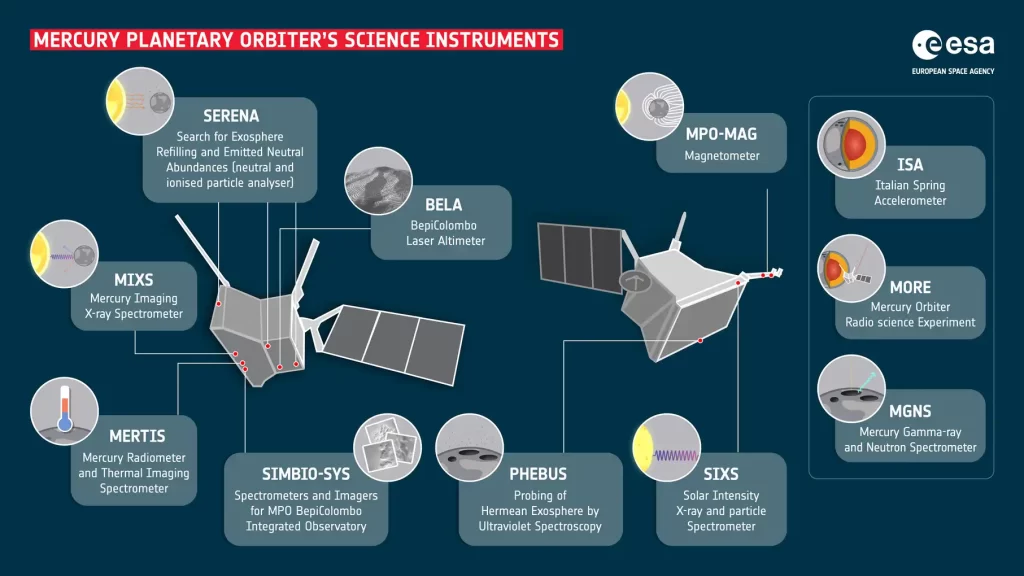
The Mercury Planetary Orbiter’s impressive suite of instruments – credit, ESA Standard License
Another unexplained characteristic of Mercury is why its core has a higher content of iron than any planet in the solar system. Multiple theories have been put forward.
Measurements from both Mariner 10 and MESSENGER have indicated that the strength and shape of Mercury’s global and intact magnetic field are stable, and that around the equator its strength is similar to that of Earth—strong enough to deflect the spaceborne radiation we call the Solar wind, even given its closer proximity to the Sun. MESSENGER did reveal, however, that the field is “leaky” and concluded this by the observation of “magnetic tornadoes”.
These twisted bundles of magnetic fields connecting the planetary magnetic field to interplanetary space were up to 480 miles wide, or a third of the radius of the planet, and presented gaps for the Solar wind to bombard the planet’s surface.
BepiColombo consists of two modules that will study Mercury and hopefully resolve some of these mysteries. Currently still joined together, Mio and MPO will enter polar orbit around the planet on November 26th, before Mio is ejected 2 weeks before Christmas. Designed by JAXA, Mio will study the magnetosphere while the Mercury Planetary Orbiter, carrying an impressive 11 science instruments of every description, will enter final orbit in March. WaL
SHARE This Exciting New Mission To Start Studying Mercury Next Year…
The Grande Conde diamond - credit, Benjamin Chelly, Ecole of Jewelry Arts / press photo
The Grande Conde diamond – credit, Benjamin Chelly, Ecole of Jewelry Arts / press photo
It’s a beautiful stone no, the Grand Condé diamond?
Its presence in the public eye was almost lost 100 years ago, but thanks—of all people—to a hungry cleaning lady, it can still be part of new exhibitions like the one upcoming at the Château de Chantilly near Paris.
But first, some outrageous history.
Suzanne Schiltz was a chambermaid in Paris back in 1926. Cleaning fine hotel rooms was exhausting business in the most-visited city of the age, and perhaps taking her livelihood in her own hands, she gave in to the urge to swipe an apple from the suitcase of one of the gentlemen whose rooms she was cleaning.
Taking a bite, she was shocked when her teeth hit something solid—which nearly shattered them. She stared down in disbelief. Lodged inside the apple was a pink gemstone the size of a lima bean.
Schiltz had inadvertently solved the case of a most high profile heist at the Château de Chantilly, around 30 miles north of Paris. Two months earlier, a couple of amateur thieves purloined the diamond and 74 other pieces of jewelry with nothing more than a ladder. Their unlikely success could not, however, be replicated in their attempts to fence the loot.
Valued at $3 million in 1920s dollars (in other words, the grandest of fortunes) they had only managed to make a tiny fraction of that selling off various pieces. The problem was that no jewelry or pawnbroker would touch many of the items because of their obvious provenance, especially something as famous as the Grand Condé.
According to a newspaper article from the time, after the chambermaid had reported the discovery, one of the thieves was asked by police: “Do you like apples?” The burglar, dumfounded, answered: “Why?” to which the officer responded, “You have one with queer seeds in your case.”
Marking 100 years since this episode, the Musée Condé and the Château de Chantilly have decided to put the jewel on display for the public for the first time in as many years. The diamond first appeared in France around the time of the American Revolution, and transferred from private hands to the king, before being given to the Duke of Condé as a reward for service in the 30 Years’ Sar. It’s believed to be of Indian origin.
The burden of security is heavy—especially in the light of the spate of high-profile museum heists in France lately—but part of the exhibit examines why the thieves couldn’t sell the diamond 100 years ago, while also presenting a new strategy for achieving a similar layer of security today.
Then, the stone was just too famous for anyone to risk buying. Today, many more large pink diamonds—the rarest of their kind—exist. So Mathieu Deldicque, chief heritage curator and director of the Musée Condé invited gemologists from the School of Jewelry Arts of Paris to “conduct extensive studies and scientific analysis on the stone’s chemical composition, rarity, clarity and density,” CNN reports.
In this way a sort of identity card is created, so that even if the stone were stolen, cut in half, or reshaped, its identify card would ensure that any jeweler or black-market auctioneer in the world would know what it was.
Beyond the Condé diamond’s historical significance, Deldicque said that gemstones in general “are works of art, and works of nature.”
“Diamonds are quite particular. You can’t enjoy them through pictures, videos, photographs and so on. Their color, their light, their presence are actually so strong that you have to see them in real life.”
The exhibit, run by the museum and the school, will run from October 17th to January 3rd.
SHARE This Wild History Story And The Opportunity To See This Grand Stone Up Close…
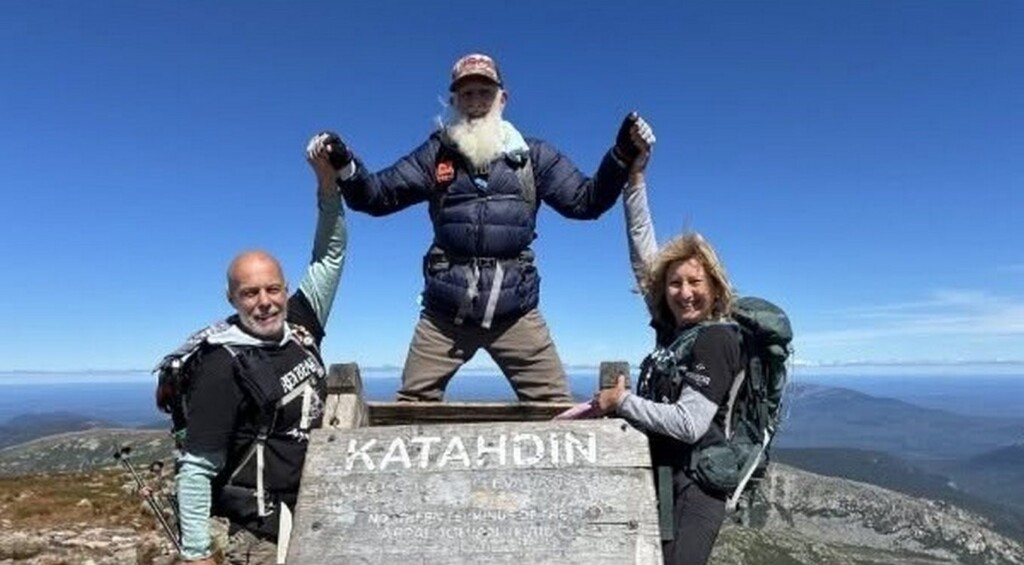
- credit, Grey Beard Team USA Appalachian Trail, retrieved from Facebook
– credit, Grey Beard Team USA Appalachian Trail, retrieved from Facebook
Not long ago on a lonely peak in Maine, a 91-year-old grey-bearded man stood taking in the sights, as he observed the sensation of success that came with being the oldest person to complete a hike along the famous Appalachian Trail.
Born to the Kentucky backwoods in 1935, before the AT route had even been completed, Dale Sanders has lived a life full of adventures and would belong in the American hiking hall of fame, should there exist such a thing.
Having first completed the AT in 2017 at 82 years of age, he resolved when it was all over to do it again. And he has, 359 days, 71 falls, and 1 brief hospitalization later.
Nicknamed “Grey Beard” by his supporters, with his broad sunhat of choice and his trekking poles there is indeed something very “Gandalf” about him. The activity—hiking such long distances—and the order he did it in—completely disjointed—double up this Lord of the Rings reminiscence.
Starting from Harper’s Ferry, Virginia on September 9th last year, his first leg was in one sense backwards, going all the way down to Georgia to reach the trail’s southern terminus to follow “the warmer weather.” Pausing for winter, he then went back to Harper’s Ferry and started towards Katahdin, the mountain in Maine that marks the northern end.
This continuum was interrupted by the cumulative impact of several bad falls which together landed him in a hospital in June with a pinched nerve. He had to return home to Tennessee after his mother in law died at that same time.
However, his wife convinced him to go and finish the task, which he did by yet again backtracking to complete an unhiked stretch in the Great Smokey Mountains, before jumping back to his pause point in the north and continuing on to Maine.
He reached the top on August 31st at 11:40 p.m.
Along the way, he says he met plenty of “trail angels” who offered supplies and sweet treats when it was possible. “When people are taking care of you and bringing you caramel frappes on the trail, the rocks don’t matter,” he tells the AP.
The sweet tooth is characteristic of a man whose advice to whippersnappers, as communicated to the Stein Institute for Research on Aging, is that “it’s OK to eat doughnuts if you also exercise.”
Sanders has hiked all over the country, and recently became the oldest person to complete a rim-to-rim hike in the Grand Canyon. “I love the outdoors. When I’m in the woods and the Sun is shining, I’m in my best mood.”
“I’m not knocking the gym, but you have to get outside,” Sanders told the New York Times, who accompanied him on his route up Mount Lafayette in New Hampshire. Listening to him string his words and thoughts together, you wouldn’t guess he was a day over 65.
The Appalachian Trail Conservancy states that a true “thru-hike” can be done in parts and with any start or stop point, over a single year. Despite his roundabout route, Sanders finished up his thru-run where most do, on that grey mountaintop in Maine, where he raised his hands to the sky to thank the glorious Creator for the strength to finish.
WATCH the Times video below…
SHARE This Inspirational, Grey-Bearded Figure With Your Friends…
It’s so tempting to dismiss social media as all doom scrolling through AI-generated slop and political arguments, but it also just turbo boosted this young comic book author’s career.
@slow_comics has accumulated 40K followers on his TikTok account through his own series of comics, and by his passion of visiting comic book conventions and stopping at booths that no one else is visiting.
It was in this way that he encountered Dare, an American of Nigerian heritage publishing and illustrating an indie comic book based on that heritage, featuring a world where people can talk to their ancestors and ask for advice.
@slow_comics @Oridipe at📍 Anime NYC! He made a Yoruba Nigerian Fantasy Comic! I bought so many books this weekend but I can’t lie, this is the one I am most excited about. The art style, colors, use of African cloth patterns in the backgrounds and textures (even in the trees barks!), the concept of the story with our protagonist going family to family and trying to figure out what is going on with the ancestors! And then Etch being such a dope concept of a comic that can be read in both directions, with an argument that changes your perspective of who is right based on where you team from. How cool is that!? And it features the “trickster” character of the story which is generally my favorite archetype. Orídipé just has such a dope art style and is clearly so creative with his concepts. I am ecstatic about this pickup and cannot wait to dive into this.#CapCut♬ original sound - Slow Comics
Something goes terribly wrong however, and soon the ancestors begin attacking people, with the main characters driven to try and find out why. Called Ori: Holder of the Heads, the sumptuously-illustrated comics burst with influences from Dare’s Yoruba African culture.
Dare also published a side story called Etch, which can be read from left-to-right, or right-to-left, with each way offering a different perspective in an argument between two strange creatures.
The slow_comics host was “ecstatic” and bought both, but the video itself, which was liked by a million people, channeled an additional 25,000 followers to Dare’s creator account who came and sopped up all the outstanding copies of Ori, and also bought out a limited presale. Dare even had to ask his brother Joshua to drive from Pennsylvania to New York with the rest of his physical copies, which were also all bought out.
Dare, @Oridipe, recorded a video thanking the community for the groundswell of support and explained how interested collectors could get in on the next wave of editions.
“I can confirm that Etch and Ori are just as good as you think they’re going to be,” @slow_comics said in a follow-up video. “Due to the virality of the video, he sold out basically overnight.”
Dare, Ori, and Etch, will next be live in Bethesda, Maryland, on September 12-13 at the Small Press Expo, and the Uhuru Book Fair in Clark Park, Philadelphia, over the following weekend.
SHARE This Awesome Use Of Social Media And Even More Awesome Comic Book…
Quote of the Day: “Do not speak of evil, for it creates curiosity in the hearts of the young.” – Lakota (Sioux) proverb
Photo by: Annie Spratt
With a new inspirational quote every day, atop the perfect photo—collected and archived on our Quotes page—why not bookmark GNN.org for a daily uplift?
35 years ago today, Nirvana’s single “Smells Like Teen Spirit” was released in the US. The unexpected success of the Seattle band’s song propelled their second LP Nevermind to the top of the charts—an event often marked as the point where alternative rock entered the mainstream. WATCH the band taunt the audience by opening the song with a similar hit from the band Boston. (1991)
Photographed by Michelle Andonian, from The Henry Ford Collections
Photographed by Michelle Andonian, from The Henry Ford Collections
The year was 1915, and before Henry Ford decided to turn a 2,000 acre stretch of land along the River Rouge into one of America’s largest manufacturing centers, he thought of turning it into a bird sanctuary.
In a strange, roundabout way, that vision was recently achieved at the gargantuan Rogue Factory in Dearborn, Michigan, when the company decided to install a 454,000-square-foot “living roof” on the factory’s final assembly building.
The mixture of drought-resistant sedum and freely-growing wild plants provides amazing benefits to biodiversity and energy bills, with local kildeer waiting just 5 days before building their nests atop the roof where Ford Raptors and F-150s roll off the assembly line beneath.
Installed in 2002, the living roof consists of a layer of porous concrete, earth, and sedum. In addition to keeping the building 10° warmer in winter and 10° cooler in summer, it is designed to act as a sponge that absorbs rainwater into underground chambers, while slowing runoff into the surrounding stormwater system which has suffered from flooding in the past.
It was the largest turf roof in the world at the time of its completion, and completely solved the flooding problem.
Today, the Ford Rouge Center, which has been producing for American consumers for over 100 years, is still the largest plant in the Ford inventory. The 600 heavily-industrialized acres were cleaned up at the end of the century to the tune of $2 billion—a necessity to remove almost a century’s worth of industrial contaminants from the surrounding environment.
Along with the turf roof, the whole site is a biodiversity hotspot for birds, insects, and butterflies, with some 20,000 honeybees having moved in among the thousands of flowers, shrubs, and trees.
SHARE This Awfully Green Legacy To One Of America’s Biggest Auto Plants…
An arthritis drug of all things was recently found in a study to restore up to 100% of hair in patients with severe alopecia.
Around 2% of the world population live with alopecia areata, an autoimmune disorder where the human immune system mistakes hair follicles for harmful invaders. The condition can be reversed but it’s difficult to prevent this autoimmune response.
In an industry-funded study, scientists tested low-dosage and high-dosage of the anti-inflammatory and arthritis drug upadacitinib against placebo in a randomized clinical trial to see if it could be a potential treatment for alopecia.
1,399 participants took part in total, aged between 12 and 64 and including 118 adolescents, who were missing at least 50% of their scalp hair at the time of the study’s initiation. The parallel phase 3 trials ran for 24 weeks.
Results occurred early in the study, with those on the low and high doses showing notable reductions in hair loss compared with placebo by week 8.
At trial’s end, 44% of participants taking 15 milligrams of upadacitinib had improved their scalp and eyebrow hair coverage to 80%. 55% of those taking 30 milligrams achieved the same, suggesting the higher dose was more efficacious.
A small number of patients suffered serious side effects, including breast cancer in one patient who had concerning mammogram results before the beginning of the trial. 2 other serious side effects that reasonably could be believed to have been caused or aggravated by the drug were reported, though both were in individuals that could be fairly easily described as at very high risk for health complications.
No deaths were reported and none of side effects emerged as novel. In contrast, many scored higher on quality of life measurements by study’s end, including for things like depression. Between 13% and 22.5% of participants on upadacitinib got all their scalp hair back, depending on the dosage.
“In a disease often associated with sizable psychosocial and emotional burden, translation of clinical responses (hair regrowth) into meaningful patient-reported improvements becomes imperative to deem a treatment to be efficacious,” the authors wrote.
Upadacitinib was chosen for the trial because of some similarities with existing alopecia medications, however it must also be stipulated that the trial was funded by a company that produces upadacitinib, and even included that company’s employees.
The study passed independent peer-review, but more research without this shadow of conflicts of interest should certainly be conducted before upadacitinib can became a bonafide alopecia treatment.
With that in mind, however, there are dozens of people who, having previously felt the stigma or loss of confidence from unmitigated hair loss, suddenly have their hair back, and that’s a very nice thing to consider.
SHARE This Encouraging Study Result With Your Friends, Maybe Those Who Suffer From Alopecia…
It wasn’t just the roars of the dinosaurs that made up the soundscape of the animal world during the Jurassic period.
Crickets and grasshoppers communicated through a variety of songs and high-pitched sounds, some of which you can now listen to thanks to Thorin Jonsson from the Institute of Biology at the University of Graz.
Together with his colleagues from the universities of Lincoln, Bristol (UK), Beijing (China), and Tempe (USA) their findings on what are so far the oldest traces of sound on Earth have just been published in the journal PNAS.
Insects from the order Orthoptera, such as crickets and grasshoppers, rub wing structures against one another or against their legs to produce sounds called “stridulations.” Pitch and rhythm depend on the number and spacing of the teeth on the wing’s ridge, as well as the shape and movement of the wings.
Though vocal cords and other biological acoustic organs can’t be fossilized along with the sounds they made, the imprints left by these wings confer very precise information on the animal’s stridulations.
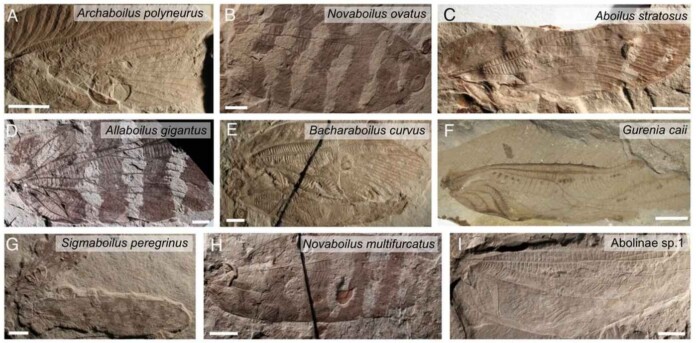
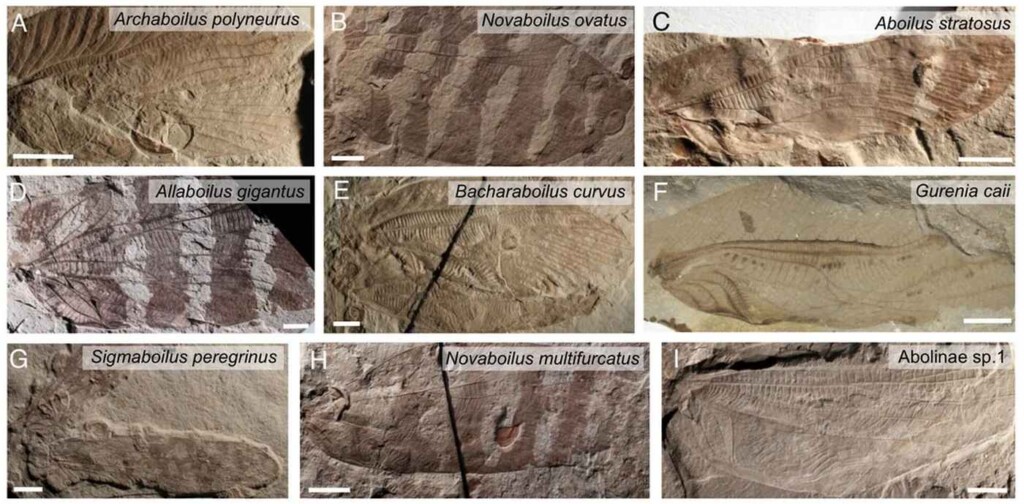
Jonsson’s Chinese research partners have discovered extremely well-preserved fossils of 9 different grasshopper species that lived at the same time in the same region, namely during the Middle Jurassic period in what is now Inner Mongolia.
The sound-producing structures are so clearly visible on these fossils that the biologists were able to reconstruct the pitches and musical units of the mating calls through various analyses, simulations, and AI-assisted evaluations that even produced the specific number of hertz each insect would sound off at.
“Our findings reveal a wide variety of call frequencies. Several species produced pure, low-pitched sounds like modern crickets, whilst others produced higher frequencies, similar to our native leafhoppers,” reports Jonsson.
The study isn’t just the first to do this with insects. It’s the oldest evidence of sound ever reproduced by anyone. Think of it like the famous Epitaph of Seikilos. This Greek funerary song was inscribed on a gravestone, and is able to be read by musicians several thousand years after it was last played.
Similarly, the physical features on the grasshoppers’ wings act like musical notation, and though scientists can’t reproduce them on a lyre like the Epitaph of Seikilos, AI can simulate them on a computer sound board.
One species among the 9 surprised the researchers. A relative of the katydid called Sigmaboilus peregrinus communicated in the ultrasonic range between 20 and 22 kilohertz—a frequency that’s just above the human range of hearing.
For all the delicious proof of concept novelty the study provided, this discovery carries implications for the evolutionary biology of Orthoptera.
It was previously theorized that stridulatory insects whose stridulations reach into ultrasonic frequencies were pressured to do so by the incredibly precise hearing of bats. However, S. peregrinus lived millions of years before the first known bat existed.
The team took the liberty afforded by their discovery to hypothesize other reasons why an animal would have to vocalize at such high frequencies. While not a bat, it could have been an example of the insect attempting to avoid detection by other predators. Alternatively, it could be a mating strategy by males to allow their calls to rise above the din of the Jurassic jungle night.
“This allowed us to demonstrate that the world during the Jurassic Period was acoustically far richer and more diverse than previously thought,” the biologist summarizes.
SHARE This Brilliant Scientific Exercise With Your Friends…