












All News - Page 44 of 1689 - Good News Network
Home Blog Page 44

Australia’s Revolutionary Hydrogen Powder Is Easier and Cheaper to Use for Clean Energy

Maria Kovalets via Unsplash

Last year, an Australian R&D team proposed a revolutionary new way to create and transport renewable hydrogen energy.

The partnership from Curtin University and Velox Energy Materials devised a circular hydrogen industry consisting of hydrogen generation, the capacity to turn it into a powdered storage form, and the infrastructure to refill the expended powder with new hydrogen.

Now funded by the Australian government, reports suggest this innovation will catapult Australia to the position of world leader in renewable hydrogen exportation, and make hydrogen energy use substantially more viable for countries around the world to use for achieving decarbonization targets.

A mere month of expected output at 2030 production targets would more than satisfy the entire global hydrogen energy demand many times over—one of the greatest revolutions in green energy since the mass production of the photovoltaic cell.

And it all starts with a powder: sodium borohydride, abbreviated (NaBH4)

The journey of NaBH4 from a component in the dyeing and paper-making industries to a surprise role as the lynchpin in a renewable energy revolution began in 2022, when Deakin University scientists in Australia applied the new science of mechanochemical reaction to infuse gas into powders by spinning it at high speeds in chambers filled with metal balls.

Pure hydrogen is thought to be a critical way to decarbonize heavy industry like shipping and aviation, but many problems exist. Pure hydrogen gas is highly flammable, so transportation options are limited for safety reasons. Liquid hydrogen must be cooled to below -250°C, which requires extreme applications of electricity, as does the compression needed to keep hydrogen in a gas form.

“The scientific community has been trying to find a suitable sponge-type material that can store large amounts of hydrogen for at least half a century,” said Professor Ian Chen, a Deakin University nanotechnology scientist and one-half of the team that discovered this mechanochemical reaction.

He told New Atlas in 2022 that in comparison to liquid or gaseous hydrogen, storing it in powder “doesn’t require a lot of energy, and it’s safe; under normal conditions it’s quite stable, and the hydrogen won’t be released unless it’s heated to a couple of hundred degrees.”

RENEWABLE ENERGY: Hydrogen Gas Blend Will Reduce Power Plant’s Emissions by 75%–as it Helps Power 6 States

Some back of the envelope math Chen did on the spot seemed to indicate that creating the mechanochemical reaction would cost around one-fourth the energy expenditure of gas compression.

Fast forward to 2024, and Craig Buckley, head of Curtin University’s Hydrogen Storage Research Group, proposed the mass-production of sodium borohydride as a storage form of renewable “green” hydrogen produced by Australia’s ample solar and wind resources.

His project proposal, sent to the Australian Renewable Energy Agency (ARENA), outlined that on a specialized tanker ship, liquid H20 costs around $10.1 per kilogram to ship, while if stored in an ammonia form, it falls to $7.9 per kilo, but becomes toxic.

GOOD EARTH STORIES: Green Startup Boston Metal Now Has All the Ingredients Needed to Make Steel Without Emitting Too Much CO2

In complete contrast, hydrogen stored as sodium borohydride costs 15% less than ammonia form, and can be shipped in much greater quantities aboard regular container ships.

The proposal was a hit, because ARENA funded the project with AUD$5 million. It solved the major problem with using NaBH4 for storage previously. After the hydrogen is removed from the NaBH4, the client is left with a byproduct called sodium borate which is costly to recycle, but Buckley and his teams found a way to reinfuse it with hydrogen creating a circular economy.

“Our aim is to provide a circular hydrogen export value chain,” Buckley said in a media statement. “The initial research component of the project will feed into the commercial stage, where a pilot facility will be designed and built in Perth to evaluate the technology for large-scale production directly from renewable electricity.”

MORE HYDROGEN NEWS: Sunlight-Powered Catalyst Supercharges Green Hydrogen Production by 800%

Sustainability Times reports that ARENA, Curtin, and other corporate partners are so confidant this method will lead to an energy revolution, their production target is for 330,000 tons of sodium borohydride powder by 2030, and 550,000 tons by 2040. Each ton of NaBH4 produces around 211 kilograms of hydrogen for use as energy.

“The lower costs attached to this method’s production and transport could make it potentially the cheapest means of exporting hydrogen from Australia,” Buckley said. “This method could play a part in meeting the rapidly rising global demand for Australian hydrogen.”

SHARE This Revolutionary Energy Breakthrough With Your Friends… 

See Saturn Stage a Show in the Night Sky 15-Years in the Making This Month

Photo of planet Saturn taken in Straßwalchen (Austria) - credit, CC 0.0 Rochus Hess
Photo of planet Saturn taken in Straßwalchen (Austria) – credit, CC 0.0 Rochus Hess

Our solar system’s resident ring-bearer Saturn will be visible with its iconic rings on August 11th-12th.

It’s the first time in 15 years that the southern face of Saturn’s rings will reach a tilt of 3″. It will be visible from Earth through a basic telescope, and the perfect opportunity for introducing newbies or children to the majesty of Saturn.

That’s just one of three spectacles Saturn will stage in the night sky this month. Next week it will pass in conjunction with distant Neptune, and later in August, for those dedicated stargazers, the second-largest planet will darken under a shadow cast by its large moon Titan.

Here’s how to partake in the Saturn spectacular.

On August 3rd at 2:04 a.m. US Eastern Time, Titan’s shadow will darken Saturn’s disk, taking about 17 minutes to become visibile. By about 4:30 a.m. EDT, the shadow sits midway across the disk.

On August 6th, Neptune and Saturn undergo the second of three conjunctions this year. Both objects rise together for a period towards the beginning of the month, and can be found low in the eastern sky in the western part of the constellation Pisces.

Neptune is easily seen through a telescope hovering due north of Saturn, but will even be visible with binoculars. Viewing both planets together is rare, according to Astronomy.com, but during this conjunction they will fit within a single lens view.

Neptune is 1.9 billion miles away from Saturn, and the diameter of Saturn’s rings will be more than 5-times larger than Neptune. Fun fact: Neptune also has rings—they’re piercing blue like the planet itself.

On the night of August 11th into early morning of August 12th, Saturn’s rings will tilt 3 degrees, allowing stargazers to see the flat undersurface rather than just the band.

For those on Pacific or Mountain Time in the US, consider turning up for the second Titan shadow event on August 18th, 10:26 p.m. PDT / 11:26 p.m. Mountain. Two and a half hours later local time, the shadow will sit in the middle of the disk.

SHARE August’s Stargazing Offerings With Your Friends Who Enjoy The Stars…

Hefty Aspen Saplings Not Seen in Yellowstone for 80 Years Attributed to Wolves’ Welcome into Park

Kimberly Earp, via Unsplash

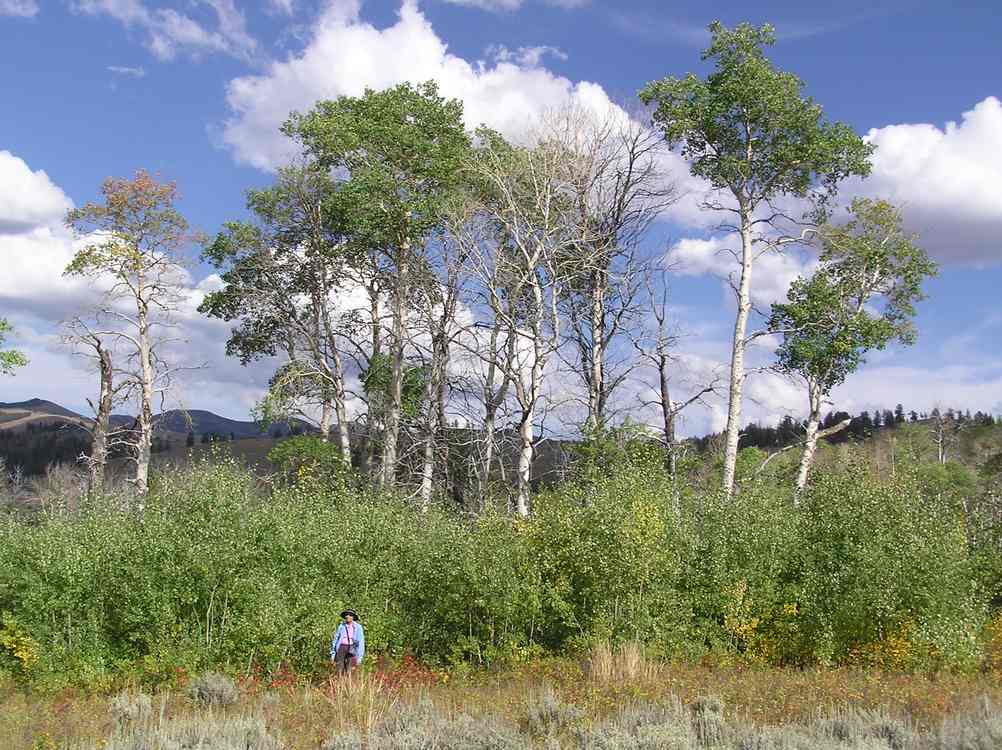
For the first time in over 80 years, young quaking aspens are growing tall and broad in the northern reaches of Yellowstone National Park.

The unexpected return of this iconic tree of the West is now being attributed to the return of another Western icon: the gray wolf.

What exactly do aspen trees and gray wolves have in common? Aside from the color of their fur and bark, it’s the two species’ relationship with another of Yellowstone’s famous residents: the elk.

In a paper published in the journal Forest Ecology and Management, scientists at Oregon State University have determined that it’s the wolves hunting of the elk which has allowed these tree saplings to grow up, and here’s how they know.

Gray wolves were once abundant in the park, but were extirpated from the area in the 1930s. Without these apex predators, elk populations ballooned, reaching 17,000 in the park by 1995.

The elk eat emerging aspen sprouts, especially in late winter, preventing any new growth from replenishing aspen groves.

“[The aspens] would grow new sprouts, but then the sprouts couldn’t get any larger [because of the elk],” the study’s lead author Luke Painter, an ecologist at Oregon State University, told Oregon on the Record. “The stands basically had older trees … and those were dying out, and then there wasn’t any new growth underneath, of young aspens, to replace those older trees.”

WHOLE-OF-ECOSYSTEM STORIES: ‘Change Has Been Amazing’ For Depleted Mountain: with New Vegetation Comes Deer, Pumas, Andean Bears

In 1995, gray wolves were reintroduced to Yellowstone for the exact hope that they would thin out the numbers of grazers, which they did.

A study scientist standing in front of new aspen stand growth – credit, Luke Painter, OSU.

Painter and his team examined 87 aspen stands in the northern areas of the park in 2012. They then returned in 2020 and found that 43% of the sample sites had new, young trees with trunks that were at least two inches in diameter at chest height—something researchers hadn’t seen since the 1940s.

WOLVES: Birth For World’s Critically Endangered Red Wolf Brings Rising Population to Nearly 250

Aside from height and girth, there was also a 152-fold increase in the number of aspen saplings between the year of the wolves’ return and 2020. The return of these beautiful trees will likely be good news for a variety of smaller critters, like woodpeckers and wrens that make their homes in hollowed-out cavities in aspen trunks, as well as beavers which have a preference for the aspens when making dams.

It’s what’s known in ecology as a “trophic cascade”—the knock-on effects across the food web when keystone species, in this case the wolf, are removed.

“The reintroduction of large carnivores has initiated a recovery process that had been shut down for decades,” says Painter in a statement. “This is a remarkable case of ecological restoration… Wolf reintroduction is yielding long-term ecological changes contributing to increased biodiversity and habitat diversity.”

SHARE These Long-Term Changes From Wolves’ Famous Reintroduction To Yellowstone…

In 10 Minutes, UN’s Tsunami Warning System Notified Millions in East Asia Following Russian Earthquake

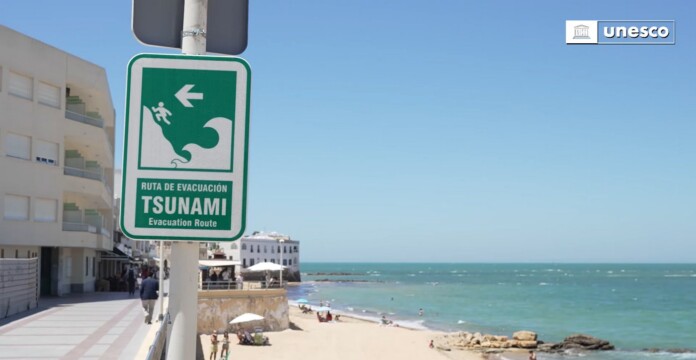
An evacuation route marker in a country participating in UNESCOs tsunami preparedness drills - credit, UNESCO, screengrab, UN license
An evacuation route marker in a country participating in UNESCOs tsunami preparedness drills – credit, UNESCO, screengrab, UN license

Following the powerful earthquake originating off the coast of Russia, a UN organization’s early warning systems triggered a tsunami alert within just 10 minutes.

Thanks to this global monitoring system, which has been deployed for more than 20 years, millions of people were warned ahead of the coming danger, and if a tsunami had been on its way, they’d have been given precious time to evacuate.

The United Nations Educational, Scientific, and Cultural Organization (UNESCO) is mostly known for promoting heritage tourism through its famous ‘World Heritage Site’ designations.

But on the night of July 29th-30th, an 8.8-magnitude undersea earthquake struck off the coast of the Kamchatka Peninsula in Russia. This exceptionally powerful earthquake was the strongest recorded since the Tōhoku earthquake in Japan in 2011, and one of the ten strongest since 1900.

Just 10 minutes after the earthquake, the Pacific Tsunami Warning System, coordinated by UNESCO, issued an initial warning covering the areas most at risk, particularly the Russian and Japanese coasts. This warning was then relayed by national centers and enabled the immediate implementation of evacuation plans in several countries.

Within 20 minutes of the earthquake, this system provided detailed forecasts of expected flood heights, and the alert was then extended to other countries bordering the Pacific Ocean. Many of these countries, including China, Indonesia, Mexico, the Philippines, Peru, the United States and New Zealand, then issued national alerts or carried out preventive evacuations.

“This timely alert once again demonstrates the crucial role of international scientific cooperation in the face of natural hazards. UNESCO oversees the global tsunami warning system, puts ocean science to work to protect millions of lives, and helps communities prepare for this risk,” said Audrey Azoulay, Director-General of UNESCO.

It’s proof that the ‘S’ in UNESCO is just as important, if not more so, than any other letter in its beloved acronym.

Established after the 2004 Indian Ocean tsunami which claimed more than 220,000 lives, the global tsunami warning system coordinated by UNESCO relies on a dense network of sensors, tide gauges, and regional warning centers. This system is based on an alert chain combining scientific expertise, international coordination, and the rapid response capacity of local authorities.

First, seismographs in place for earthquake detection and preparedness relay information on the severity of the quake to regional warning stations, wherein scientists and operators plot the course of a hypothetical tsunami from the quake’s epicenter, and leverage the readings of 1,400 sea level monitors contributed by UNESCO member states. Little more than buoys, these measure changes in the water level that indicate a large wave may have passed by.

THE SAME BUT FOR VOLCANOES: Trees Can Warn Us When Volcanos Are Ready to Erupt–and NASA Satellites Can Read Their Signals

“That information can tell you when, where, and how big the tsunami will be” said UNESCO’s Head of Tsunami Resilience Section, Bernardo Aliaga.

20 years ago, Aliaga said that it might take hours to generate and gather this amount of data, which is now all done in 10 minutes. This system now covers the Pacific, Indian, Caribbean, Northeast Atlantic, and Mediterranean ocean basins.

Beyond alerting communities when tsunamis occur, UNESCO is working to strengthen the resilience of coastal populations through several key initiatives. UNESCO’s Tsunami Ready program, implemented in 43 countries, trains coastal communities in tsunami risk prevention through evacuation plans, information campaigns, and local warning systems. Full-scale evacuation drills are regularly organized to test the effectiveness of warning systems and raise awareness among populations.

UNESCO’s VARIED WORK: UNESCO Honors ‘World Treasures’ of Culture–Unique Ways Countries Brew, Build, Bake and Boogie

In response to the potential damage caused by the tsunami, Director-General Azoulay has pledged UNESCO’s support to coastal communities, particularly in preserving and restoring their natural and cultural heritage.

UNESCO also actively supports scientific research in this field to better understand how tsunamis occur, move and impact coastal areas.

SHARE This Great Uplifting Response To The Earthquake With Your Friends… 

“Nothing great in the world has ever been accomplished without passion.” – Georg Wilhelm Friedrich Hegel

By Gift Habeshaw

Quote of the Day: “Nothing great in the world has ever been accomplished without passion.” – Georg Wilhelm Friedrich Hegel

Photo by: Nathan Dumlao

With a new inspirational quote every day, atop the perfect photo—collected and archived on our Quote of the Day page—why not bookmark GNN.org for a daily uplift?

By Gift Habeshaw

Good News in History, August 1

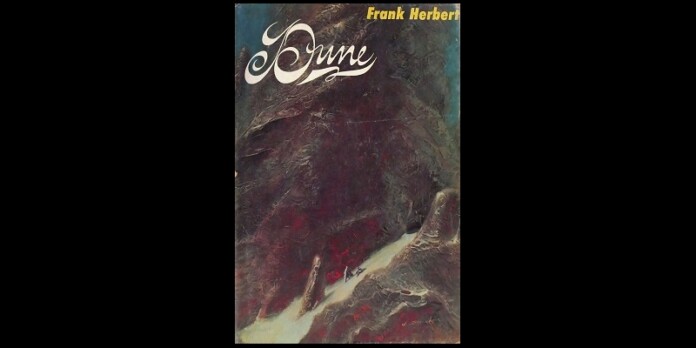
Dune first edition cover (Copy)

60 years ago today, Frank Herbert’s epic science-fiction novel Dune was published. Set in the distant future amidst a feudal interstellar society in which various noble houses control planetary fiefdoms, it tells the story of young Paul Atreides, whose family accepts the stewardship of the planet Arrakis. While the planet is an inhospitable and sparsely populated desert wasteland, it is the only source of melange, or “spice”, a drug that extends life and enhances mental abilities. Dune is a landmark in science fiction; a Hugo Award winner that has sold 20 million copies in dozens of languages. And was recently made into two incredible films. READ more… (1965)

Pair of Ancient Megalithic Tombs Identified That Date Back to ‘Polish Pyramid’ Builders

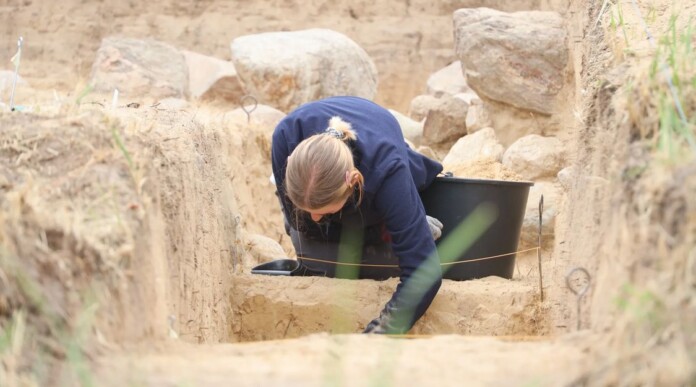
Photo courtesy the Complex of Landscape Parks of the Wielkopolska Voivodeship.

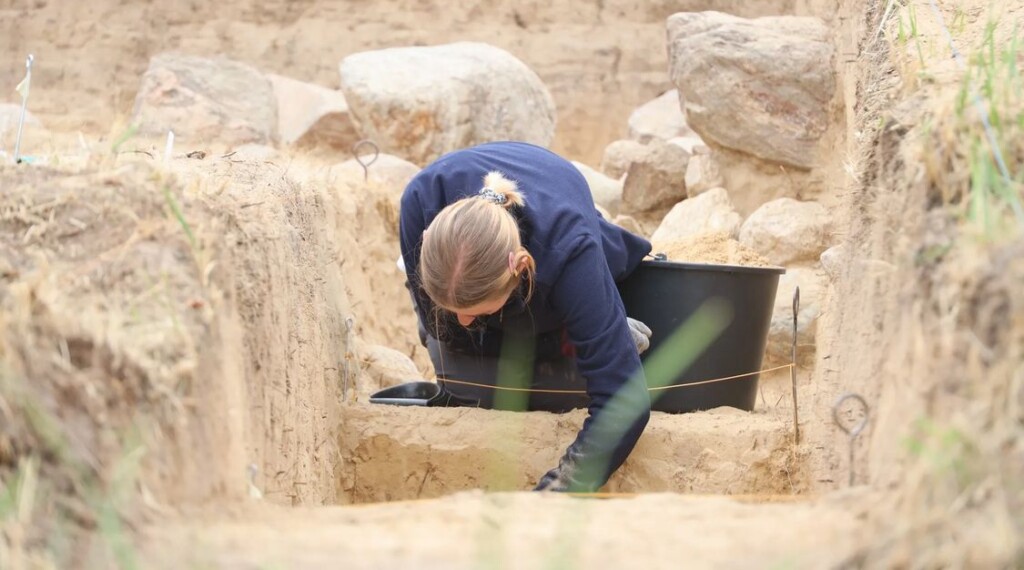
A pair of ancient tombs have been found in Poland that point to a distinctive Stone Age culture famous for earthen mounds.

Discovered through remote sensing technology during routine fieldwork in the Dezydery Chłapowski Landscape Park, they seem similar to a famous group of tombs which came to be known as “Polish Pyramids.”

Attributed to a Neolithic culture known as the Funnel Breakers, the pyramids were constructed of megalithic stones in elongated triangular shapes and often covered with dirt. A group of particularly noteworthy tombs were found in the historic region of Kuyavia, between the towns of Izbica and Wietrzychowice.

These examples, which also contributed the monikers “giants beds” and “Kuyawy mounds,” were likely built around 4,000 BCE. They stretch around 360 feet in length and form a triangle, the base of which containing the door to the tomb held up by stones weighing over 3 tons.

These two new graves are not quite as old, dating to perhaps 3,500 BCE. They consist of earthen mounds in a trapezoidal shape, some stretching 656 feet in length. Archetypically, one individual would be buried inside in a sitting position at the end of a long hallway surrounded by grave goods.

One of the so-called Polish Pyramids at Wietrzychowice – credit, MOs810, CC BY-SA 4.0.

No human remains were found in the either tomb, but it’s hoped that some items may be found during planned excavations—perhaps a double-headed stone axe or characteristic ceramics, both typical of the Funnel Breakers.

BEST OF POLISH ARCHAEOLOGY:

The team, led by archaeologist Dr. Danuta Żurkiewicz and Dr. Iwona Sobkowiak-Tabaka from Adam Mickiewicz University, identified that the opening of the tomb was east-facing, a commonality in megalithic architecture around Europe.

Unlike the giants beds, the pair of tombs had lost their large megalithic gate stones. When translated, a report from the Polish Press Agency says that people have always needed stone throughout the ages, and the large pieces at the front of the tomb would have been quarried down to build houses and enclosures.

SHARE This Exciting Addition To The “Polish Pyramids”… 

Grammy Winner Ciara Accepts Offer for Benin Citizenship, a New Way to Reckon with its Slave Trade

Ciara gains Benin citizenship Credit: @Ciara Instagram

American R&B singer Ciara has been awarded citizenship to the African country of Benin as part of a new law that aims to attract the African diaspora.

Like similar initiatives in neighboring Ghana, the law is seen as a way of bringing tourism and investment, but unlike its neighbors, Benin believes it’s reckoning and atoning for its own role in the Trans-Atlantic Slave Trade, a step too far for most other West African nations.

Approximately 1.5 million Africans were captured, enslaved, and deported to the New World and Europe by the Bight Benin, a distributed state that included modern-day Benin, Togo, and parts of Nigeria.

The powerful kings of the day captured and sold slaves to the Portuguese, English, and French, transporting 1 million through the coastal city of Ouidah alone. When slavery ended, those kingdoms ended the practice, but they still exist today as tribal networks, as to the victims relatives.

It was even alleged that the current Beninese president and author of the citizenship law Patrice Talon is descended from these native slavers.

Whatever the case may be, Benin will grant citizenship to anyone over the age of 18 who can use DNA evidence, family records, or sworn testimony to prove their ancestors came from sub-Saharan Africa.

Many have taken Benin up on the offer, though it requires one to hold a provisional certificate of nationality valid for three years, during which time they have to live in the country for at least part of that.

“By legally recognizing these children of Africa, Benin is healing a historical wound. It is an act of justice, but also one of belonging and hope,” Justice Minister Yvon Détchénou said at the ceremony when Ciara received her citizenship.

Famous for chart-toppers like “Goodies,” and “Level-Up,” but also her philanthropic work, Ciara said that she “experienced a profound return to what truly matters,” following a visit to Benin where she experienced some of the “memorial tourism” Benin has attempted to develop.

OUT ANCESTORS LIVE WITH US: Lost Faces Found: New Tech Reveals Hidden Images in Earliest Photographs

This includes sites like Ouidah’s “Door of No Return,” a gate through which slaves were loaded onto the ships, and which can also be found at Ghana’s cape coast castle.

The citizenship law is not the first time Benin has acknowledged its role in the slave trade, something which few others admit to, AP reports. In 1990, the country hosted a conference sponsored by UNESCO that explored the avenues and methods by which the slave trade was developed and carried out in the country.

In 1999, on a visit to Baltimore, Beninese president Mathieu Kérékou fell to his knees in a church and begged forgiveness for his native land’s involvement.

YOU MAY ALSO LIKE: California Returns Prime Beachfront to Black Heirs After Land Was Taken in 1924 From L.A. Couple

But the law isn’t only for African Americans seeking to connect with their lost heritage. AP spoke with one woman from Martinique in the Caribbean who settled in Benin and opened a travel agency with her new citizenship in July.

“A lot of the people reminded me of my grandparents, the way they wore their headscarves, their mannerisms, their mentality,” she said.

SHARE This Story Of Repatriation With Your African-American Friends… 

Editor’s Note: A previous version of this story incorrectly referred to an island called “Saint Martinique,” which has now been corrected. 

Fearless Hero Sprints in Front of Train to Rescue Man Collapsed on Track – (WATCH)

Mike Enerio - via Unsplash
Mike Enerio – via Unsplash

An absolutely staggering rescue story comes now from Russia where a Good Samaritan tugged an unconscious man clear of an oncoming train with less than a second before it passed over him.

In a video obtained by the Sun, security camera footage shows a tall man stumbling towards train tracks while what are clearly the headlights of an oncoming train illuminate the gloom under an overpass.

Whether he was intoxicated, suicidal, or suffering from a medical emergency is not known, nor is the identity of his savior.

What is known, however, is that the stumbling man pauses at the verge of the first track before collapsing face first onto it.

From an area of concrete and buildings just beyond, two men see what happened. One of them sprints 20 yards, leaps the tracks, and with what GNN can only assume to have been an almighty hoist, pulls the prone body off the track just as the train passes by.

Komsomolskaya Pravda newspaper have put out a notice saying, that the hero is being sought so that he can be honored by the community.

WATCH the video for yourself… 

CELEBRATE A Life Saved, A Man Who Will Go Home To A Loved One—On Social Media…

Update: Shelter Dog Who Recognized Man’s Oncoming Seizure Finds Forever Home

Sienna the rescue dog - credit, Credit : Friends of Campbell County Animal Control, retrieved from Facebook
Sienna the rescue dog – credit, Credit : Friends of Campbell County Animal Control, retrieved from Facebook

A shelter dog who detected a man’s oncoming seizure, having never been trained to do so, has found a forever home after applications flooded in.

Sweet Sienna, the pit bull-lab mix made headlines around the country in June for her medical instincts, on display all-unexpectedly at an adoption event in Rustburg, Virginia.

On that fateful day, Sienna broke away from the crowd of dogs, appreciative attendees, and familiar caretakers—walking right up to a man at a slight distance from center of the event.

She sat down, looked at him in the eye, put her paw on his leg, and refused to leave his side.

“She sat quietly at his feet, refused to budge, and softly placed her paw on his leg,” Sienna’s shelter, called Friends of Campbell County Animal Control of Virginia, said in a Facebook post at the time. “It wasn’t a trick. It wasn’t prompted. It was pure intuition.”

She then started pawing at his leg. Despite never receiving training on how to detect medical emergencies, Sienna knew something was wrong.

The man, Josh Davis had forgotten to take his epilepsy medication that morning, and it seemed Sienna knew before anyone else did.

“It looked like something you’d see in the movies,” Kristen Davis, Josh’s husband, told ABC News. “She kept putting her paw up on his leg, and like, ‘Hey, are you paying attention to me? I’m trying to talk to you.’ We were all kind of standing around, like, ‘Did that just happen?'”

SHELTER DOG STORIES: PE Coach Pairs Unmotivated Students to Run with Shelter Dogs–Adoptions Soar

After the shelter announced what happened on Facebook, the story was featured on news networks nationwide, and applications for adoption came in by the dozens.

However good Sienna’s intuitions were about Davis, they were at most as good as Sharon Sweeney’s intuition about Sienna. The Virginia resident had an outstanding adoption request before Sienna became dog of the day, and she took the 60-pound-pooch home this week.

SHELTER DOG STORIES: After Spending 7 Years in Hawaii Shelter, Dog Finally Adopted By Couple Visiting From Michigan

Jackie Poppe, a volunteer at Friends of Campbell County, was walking Sienna around on the day of her heroics, and she says it’s a reminder of the unique powers that shelter dogs have.

“Don’t overlook the stray dog that’s in your local shelter,” said Poppe. “All of them have amazing traits about them.”

WATCH the story below from ABC News… 

SHARE This Heroic Pooch With Your Friends On Social Media… 

“The more sand that has escaped from the hourglass of our life, the clearer we should see through it.” – Jean Paul

Nathan Dumlao

Quote of the Day: “The more sand that has escaped from the hourglass of our life, the clearer we should see through it.” – Jean Paul

Photo by: Nathan Dumlao

With a new inspirational quote every day, atop the perfect photo—collected and archived on our Quote of the Day page—why not bookmark GNN.org for a daily uplift?

Nathan Dumlao

Good News in History, July 31

2010 Photo by Daniel Ogren, CC license

Happy 60th Birthday to J.K. Rowling, the author and humanitarian who, before writing the first of seven books in the Harry Potter series, was a single mom supported by welfare—but she transformed herself into the world’s first female billionaire novelist. Her artful wizarding fantasies became the best-selling book series in history, translated into 73 languages, but she’s not on the Forbes’ Billionaires list anymore because she gives so much to charity—particularly to multiple sclerosis, illiteracy, and child welfare charities—but also to the ‘tax man’, as a form of patriotism. READ more… (1965)

Potato Blight Warning App to Help Farmers Beat a Billion Dollar Pest

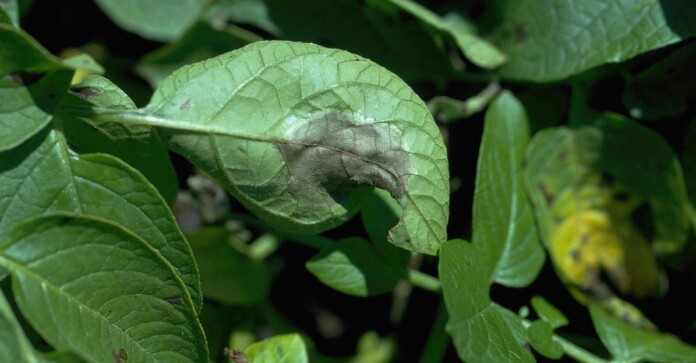
Late blight symptoms on a potato leaf - credit, Howard F. Schwartz, Insect Images - CC 3.0. BY-SA
Late blight symptoms on a potato leaf – credit, Howard F. Schwartz, Insect Images – CC 3.0. BY-SA

A team of Welsh scientists are developing an early-warning system for late potato blight, a water mold that causes nearly $4 billion in agricultural losses every year.

Powered by AI, the smartphone-based application can detect signs of late plight on potato leaves before any manifestation detectable by the human eye appears.

It’s hoped that early warnings like this can help to better secure farmers’ fortunes, as well as the global food supply, as late blight was responsible for three major potato collapses in Europe during the 19th century.

20% of global losses in potatoes are blamed on late blight, which as the name suggests can strike late in the season. Prevention is key, but expensive, and chemical fungicide spraying costs millions, and may be responsible for human health complications and ecosystem biodiversity loss.

The DeepDetect project from Aberystwyth University will work alongside farmers to develop a prototype using image datasets of healthy and diseased potato leaves. The BBC reports that a finished product could be implemented as a national early-warning system beyond Wales, where potatoes are grown across 35,000 acres.

AI IN AG: Vertical Strawberry Farm in Virginia Uses AI to Create Maximum Berries With Peak-Season Flavor Year-Round

“Potatoes are the fourth most important staple crop globally, and optimal production is essential for a growing global population,” Aiswarya Girija from the Institute of Biological, Environmental and Rural Sciences at Aberystwyth told the BBC.

“Potato blight is therefore not just a farming issue—it’s a food security issue.”

SHARE This Positive Use of AI In Ag With Your Friends… 
First Mexican Taco Stand Ever to Win a Michelin Star Proves Sometimes Less is Mas

Taquería El Califa in the León neighborhood, Mexico City - credit kaart_2 @ Mapillary
Taquería El Califa de León, Mexico City – credit kaart_2 @ Mapillary

In cooking, less is often more, and no instance of such a maxim could better prove its veracity than a tiny Mexican taco stand being awarded a coveted Michelin Star.

With just 4 items on the menu, and room inside for just 11 people to eat shoulder-to-shoulder, Taquería El Califa de Leon in the Colonia San Rafael neighborhood of Mexico City has thousands of competitor across the city.

But in the first Michelin guide of Mexico ever published, Chef Arturo Rivera Martínez proved that quality surpasses quantity, and becomes the first taco stand owner to receive the Michelin Star, which indicates “high quality, worth a stop.”

“The secret is the simplicity of our taco,” Rivera Martínez told the Associated Press. “It has only a tortilla, red or green sauce, and that’s it. That, and the quality of the meat.”

Much like pizza and its dough, the quality of a taco starts with the quality of the tortilla, which the Michelin guide claims to be “excellent… elemental, and pure.”

“This taqueria may be bare bones with just enough room for a handful of diners to stand at the counter but its creation, the Gaonera taco, is exceptional,” reads a statement on the Michelin Guide website.

The taco is supposedly named after a famous Mexican bullfighter, Rodolfo Gaonera.

Beyond the tortilla and the thinly sliced meat, seasoned only with salt and lime, the two home-made sauces were described by the Michelin guide as “almost unnecessary” in comparison to the flavor of the other two components.

Mexico has firmly established itself among the pantheon of great food nations. Possessing a variety of traditional and immigrant cultures, often happily blended, and a variety of biomes that permit the cultivation of a wide-variety of produce, it has all the elements needed to create gastro-gold.

SIMILAR STORIES: Playful Competition Brings Together Muslims and Non-Muslims Over Street Vendor’s Ramadan Snack

“What a joy it is to honor the uniqueness of the Mexican gastronomic landscape in Mexico City,” Gwendal Poullennec, International Director of the Michelin Guides, said in a statement.

MEXICO IS AWESOME: No Alcohol, No Cover, No Judging: Inside Mexico City’s Free Dance Parties

“The first and very promising selection is an an illustration of how the country is showcasing its regions, with their cultures and traditions that are as distinctive as they are distinguishable.”

SHARE This Heartwarming, Tummy-Rumbling News With Your Friends… 
Painting Bought at Estate Sale Turns Out to Be a Salvador Dalí Valued at $25,000

Vecchio Sultano by Salvador Dalí Credit: Cheffins in Cambridge
Vecchio Sultano by Salvador Dalí Credit Cheffins in Cambridge

A frequenter of analog auctions, clever and confidant in his ability to spot forgeries and potential fortunes, recently snapped up a lost, original Salvador Dalí for just £150.

Amounting to $180 or thereabouts, it’s certainly a bargain considering its being re-sold by Cambridge for as much as 200-times that much.

Vecchio Sultano, or Old Sultan, was painted by Dalí in 1966. The mixed-media artwork was one in a whopping commission the great Surrealist painter received for 500 illustrations inspired by The Arabian Nights.

According to the Guardian, Giuseppe and Mara Albaretto were an Italian couple who commissioned the illustrations from Dalí, while Rizzoli, an Italian publishing house, was planning to publish them. However, Dalí abandoned the project with just 100 of the 500 illustrations finished.

Half were retained by the Albarettos, and the other half went unpublished and are presumed lost.

“Dalí was quite obsessed with Moorish culture and believed himself to be from a Moorish line,” Gabrielle Downie, a fine art specialist at Cheffins in Cambridge, told the Guardian.

An antiquities dealer speaking to the Guardian under the auction name John Russel said that he encountered the painting at a purely in-person auction that was clearing out the effects of a London apartment.

In these cases, Russell says, one just shows up and discovers treasures, or trash as the case may be, but you know that no one beyond the room can see what’s being bid on.

“Most of the time, I buy stuff that I like. On this occasion, I was really taking a bit of a punt, because I wasn’t sure I’d have it on the wall, to be honest … I do like some unusual art, but you’d have to love it, wouldn’t you?” said Russell.

MORE ART AUCTION GEMS: Painting Found in Italian Villa Basement Turns Out to Be Original Picasso

On Russell’s point, it is quite a striking departure from Dalí’s associated style and iconography. Despite being listed as an original Dalí, the auction hall was silent apart from Russell and one other bidder who tapped out after the price reached £150.

But priding himself on being able to spot a forgery from years of watching the British television show Fake or Fortune, and a closer examination revealing stickers on the back of the frame that indicated it had been sold at Sotheby’s, confirmed to Russell that it must be an original.

MORE STORIES LIKE THIS: 17th-Century Dutch Painting Rescued from a Dusty Attic in Connecticut Sells for $7 Million

That turned out to be the case—after he went home and bought the Sotheby’s auction catalogue in which Vecchio Sultano had been sold and found that on the occasion of that previous sale, it had been verified as original by a renowned Dalí scholar.

It’s now going up for sale at Cheffins Fine Art and is expected to fetch between $25,000 and $37,000.

SHARE This Lost Dalí Seeing The Light Of Day Again… 

Unconditional Ceasefire Holds Between Cambodia and Thailand, in Conflict Over Disputed Border

- credit Office of the Royal Thai Government's Prime Minister
Cambodian Prime Minister Hun Manet (left) Malaysian PM Anwar Ibrahim (center) and Thai Acting Prime Minister Phumtham Wechayachai – credit Office of the Royal Thai Government’s Prime Minister

Cambodia and Thailand have signed an immediate and unconditional ceasefire on July 28th following an eruption in military skirmishes along a disputed border.

Though tensions remain high and Thai authorities accused Cambodian forces of violating the ceasefire within hours of its initiation, the frontline remains quiet as July comes to an end.

With three major regional wars already stretching across multiple years without obvious conclusions to be seen in any case, it was vital that a prolonged conflict in Southeast Asia did not break out.

Cambodian Prime Minister Hun Manet and Thai Acting Prime Minister Phumtham Wechayachai met in Malaysia to organize a halt to the fighting, with a Malaysian foreign policy team acting as mediators of the deal. The agreement took effect at midnight  and was announced by Malaysian PM Anwar Ibrahim.

Manet said it was an opportunity for a sustained peace, and that it was “time to start rebuilding trust, confidence and cooperation going forward between Thailand and Cambodia.”

Artillery fire broke out between the two nations after a landmine explosion injured 5 Thai soldiers along the disputed border in north-northwest Thailand, and southern Cambodia. The International Court of Justice has ruled in favor of Cambodia’s claim to several units across the largely-rural area, but Thailand continues to argue that the claim is based on French colonial maps that have no basis being referred to in a post-colonial world.

Dozens of mostly military personnel on both sides were killed, but AP reports that the Trump Administration, which had been undergoing trade negotiations on both sides in regards to the new US tariff policy, warned that Washington would back out of any talks if a ceasefire was not agreed to.

Thailand and Cambodia, at the moment, stand to receive large tariff rates on exports to the US if no agreement can be reached, and the threat gave both nations a face-saving motif for abandoning the warpath.

Secretary of State Marco Rubio, who was involved in arranging the meeting, applauded the ceasefire declaration while adding he expects the governments of Cambodia and Thailand “to fully honor their commitments to end this conflict.”

ANOTHER RECENT CONFLICT ENDED: The Last Contested Border in Central Asia Celebrates Peace After Years-Long Conflict

The rapid ceasefire agreement, reached without demands or concessions, embodies the principles espoused by the Association of Southeast Asian Nations (ASEAN), a 10-member international bloc which both belligerents belong to. The economic, security, and development partnership prides itself on cooperation and non-aggression.

Many of the 300,000 estimated civilians displaced during the fighting, who had taken up refuge in schools, temples, makeshift encampments, and other public areas, have begun to return to their homes.

CELEBRATE The Triumph Of Peace And Reason Over Bitterness And Conflict…

“The splendor of Yosemite burst upon us, one wonder after another, and it was glorious. A new era began for me.” – Ansel Adams 

By Jeff Krause Photography on Flickr – CC BY-NC-ND 2.0

Quote of the Day: “The splendor of Yosemite burst upon us, one wonder after another, and it was glorious. A new era began for me.” – Ansel Adams (1916, age 14)

Ansel was given a Kodak Brownie camera by his parents during this trip, which sparked his lifelong passion for photography and his deep connection with Yosemite. 

Photo by: Jeff Krause Photography on Flickr – CC BY-NC-ND 2.0

With a new inspirational quote every day, atop the perfect photo—collected and archived on our Quote of the Day page—why not bookmark GNN.org for a daily uplift?

The Yosemite Valley by Jeff Krause Photography on Flickr – CC BY-NC-ND 2.0

Good News in History, July 30

Photo by Nate Mandos, CC

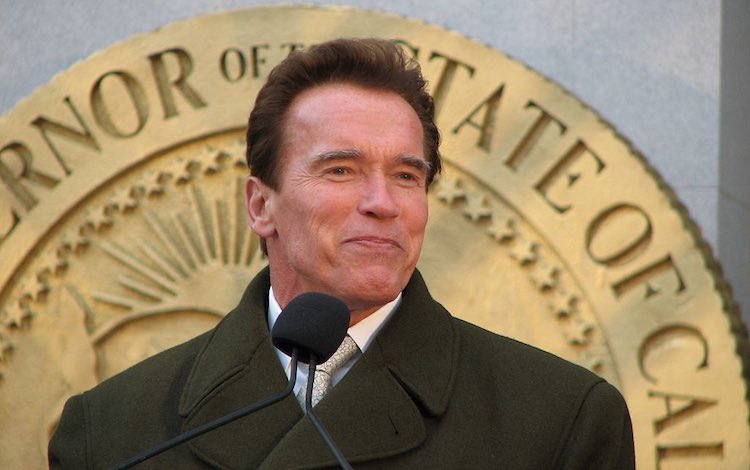
Happy 78th Birthday to Arnold Schwarzenegger, the actor, bodybuilder, and former 2-term governor of California who is now fighting to bring redistricting reform to the American political system. “Born in Austria and Made in America”, the ‘Governator’  became the youngest man ever to win the Mr. Universe contest at age 20, then pursued a film career, starring in in Conan the Barbarian, Predator, the Terminator series, and Total RecallREAD about his other initiatives… (1947)

Dream of a Carousel Helped A Marine Survive Vietnam, Then He Built One to Survive PTSD, Delighting Millions

Men of the 9th Marines take cover at Con Thien, public domain

In the trenches of Con Thien, Vietnam, a Marine Corps corporal used to quietly sit and dream about a carousel in a mountain meadow.

His logic was simple: find the complete opposite of his surroundings of death, screaming hot shrapnel, and chaos. Sitting there holding a music box given to him by his sister as a gift, the war—for a sweet, fleeting moment—fell away.

Fast forward almost forty years, and the Carousel of Happiness nonprofit allows thousands of Coloradoans and out-of-state visitors to experience their own little escape on board the ride’s animals that Cpl. Scott Harrison (Ret.) hand-carved in a picturesque valley in Nederland, Colorado.

“I started out just trying to treat myself, but then it just changed into something I could do for others,” Harrison told CBS News’ On the Road with Steve Hartman.

A post at Con Thien, Harrison explains, was as good as a death sentence for a young marine such as himself.

The violence he saw there stayed with him, and despite an alcohol addiction and a houseboat in the middle of the ocean, he couldn’t escape the clinical PTSD that came back with him from Southeast Asian jungles.

There may have been far worse than sleepless nights in store for the former corporal, until he circled back around to those quiet moments with his music box and his mental mountain meadow.

VETERANS’ GREAT IDEAS: ‘A Blessing’ For Wounded Soldiers Who Help Scientists Save Coral Reefs

“I thought that if I could actually start making that vision come true, it would keep me on an even keel and make me happier,” Harrison said.

So in 1986, 18 years after he was deployed, he bought a broken-down Looff carousel manufactured just after the turn of the century and began to hand-carve all-new animals in the course of repairing it. In 2010, the carousel opened in a valley in Nederland, Colorado, where today over one million people have ridden on this simple, essential carnival ride.

MORE STORIES LIKE THIS: Tennessee Veterans Find Healing Working with Horses That are ‘Bio-feedback Machines’

And though Harrison’s may not be simple—hand-carving and painting is skilled, technical work—it’s absolutely essential.

He was featured in an award-winning documentary Carving Joy, and the Carousel of Happiness podcast features guests and nonprofit staff ruminating on joy, happiness, contentment, positivity, and wellbeing in days when such things seem in short supply.

WATCH the story below from On the Road… 

SHARE This Story From The Brilliant Steve Hartman With Your Friends… 

Wheat Grown with This Fungus Increased its Essential Mineral Content–a Breakthrough Preparation


Scientists have discovered that pairing wheat with a special soil fungus can significantly enhance its nutritional value.

This partnership leads to bigger grains that are richer in zinc and phosphorus without increasing anti-nutrients that block absorption.

As a result, the wheat becomes a healthier option for human diets. Researchers believe this fungal strategy could offer a natural, sustainable way to fortify global crops with essential nutrients.

Humans have been fortifying crops for around 100 years, attempting to address deficiencies in key nutrients by putting synthetic versions inside staple foods like flour.

A major criticism of fortification is that nutrients added to foods may not have any bioavailability at all. Skim milk fortified with vitamin A and D doesn’t have the bioavailability of whole milk because vitamin A and D are fat-soluble.

When investigators grew different types of wheat with and without the tree-hugging mycorrhizal fungus Rhizophagus irregularis, they observed that those grown with fungi developed larger grains with greater amounts of the essential minerals phosphorus and zinc.

Concurrently, there was no parallel increase in phytate (a compound that can hinder absorption of zinc and iron), resulting in bread with a higher overall bioavailability of zinc and iron compared with wheat grown in the absence of fungi. There isn’t much iron at all in whole wheat bread to begin with, but this method maximizes what little there is.

“Beneficial soil fungi could be used as a sustainable option to exploit soil-derived plant nutrients. In this case, we found potential to biofortify wheat with important human micronutrients by inoculating the plants with mycorrhizal fungi,” said corresponding author Stephanie J. Watts-Williams, Ph.D., of the University of Adelaide, in Australia.

MAXIMIZING YOUR FOOD: These Superfoods Can Provide Important Nutrients With a Single Bite

Rhizophagus irregularis is a species of arbuscular mycorrhizal fungus that forms beneficial relationships with the roots of many types of plants. It helps plants take in more nutrients—especially phosphorus and micronutrients—by extending its thin, root-like structures deep into the soil.

This fungus is one of the most widely studied and used in agriculture and ecology because of its broad compatibility with crops and its ability to improve plant growth, health, and soil quality. By boosting nutrient uptake naturally, R. irregularis supports more resilient plants and reduces the need for chemical fertilizers, making it a valuable tool in sustainable farming and reforestation efforts.

OTHER FOOD FOCUSED STORIES: Cruelty-free Way of Making Duck Foie Gras Devised by Scientist: ‘It was always a dream’

Perhaps a better way to think of adding R. irregularis to wheat is as a method of preparation rather than fortification, reminiscent to the ages-old methods of preparing grains and legumes for optimal human consumption like sprouting or fermentation.

The study was published in the journal Plants, People, Planet.

SPROUT Some Positivity On Your Friends’ Social Media Feeds With This Story…