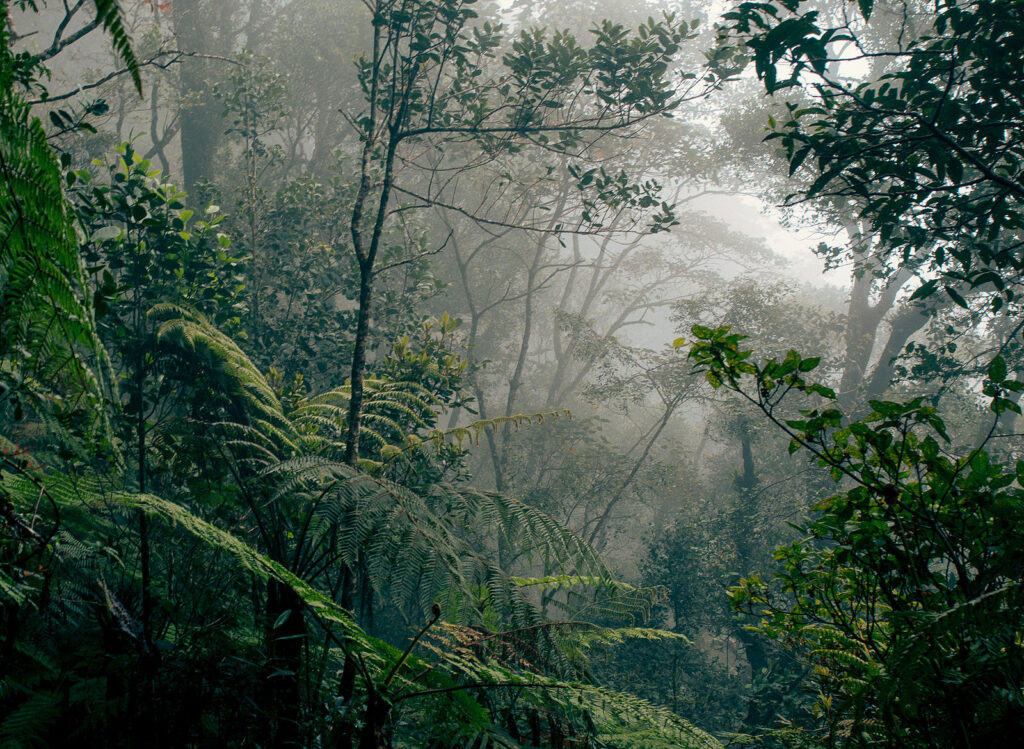
Indonesia holds one-third of the world’s tropical rainforests, which are home to people and birds, leopards, rhinos, tigers, and gibbons playing among the lush canopies—and recent protections are helping these vital places thrive.
Dukeabruzzi, CC license
Indigenous tribes, orangutans, and so many more now have a seat at the table under the stewardship of Indonesian President Joko Widodo, elected in 2014.
The Widodo administration’s shepherding of land-use reforms and a reestablishing of a logging moratorium have achieved four consecutive years of declines in deforestation.
This steady work culminated in 2020 when the country achieved its lowest forest-loss rates since monitoring began, totaling a 75% drop year-over-year.
The country, which has been the largest producer of palm oil—had for years been open for business to anyone looking to open a plantation.
But a moratorium on new permits for plantations made permanent in 2019 under Widodo has combined with record-low prices for the commodity to slow its once-relentless advance.
Half of the square-mileage of Indonesia’s 17,500 islands is currently covered in forests, peatlands, swamps, or mangroves. Within those locations are some truly wonderful and iconic animals that depend upon forests to survive. These include the orangutan on Sumatra, the Komodo dragon on Komodo, the rhinos on Java, the starlings on Bali, the dwarf buffalo on Sulawesi, and the Sunda clouded leopard on Kalimantan.
Policies like a return of 30 million acres (12M hectares) to Indigenous governance, forest fire mitigation strategies, increased penalties and enforcement of environmental laws, and other efforts, have provided hope that the nation can protect its habitat, restore its remaining forests, and reduce emissions in line with her agreements to the Paris Accord.
“This [drop in deforestation] shows that various efforts done by the Ministry Environment and Forestry lately have produced significant results,” Ruandha Agung Suhardiman, director general of planning at the ministry, told Mongabay. “Their impact on reducing deforestation is tremendous.”
This positive change in forestation practices hasn’t just been noticed by locals, but also the Norwegian government. Almost a decade after signing an agreement that would compensate government agencies if they could reduce forest loss, the first installment of a €1 billion reward arrived in Indonesia.
“It is a big deal because it reflects the fact that Indonesia has turned (a corner), and that is great news for all of us,” Oyvind Eggen, a director at Rainforest Foundation Norway, told Reuters.
GROW This Good News—Share This Story With Friends on Social Media…
It’s time to wake up and smell the plasma, as thermonuclear fusion energy inches closer and closer to reality.
In its quest to develop unlimited green energy, the EAST Fusion Facility in Heifei, China recently created a plasma gas that was heated to 120° million Celsius—that’s three-times hotter than the sun—and kept it there for 101 seconds before it dissipated, setting a new world record both for heat and duration.
“The breakthrough is significant progress, and the ultimate goal should be keeping the temperature at a stable level for a long time,” said Li Mao, director of physics at Southern University of Sci-Tech in Shenzhen.
The previous record was 50° million Celsius, held by the scientists working at the fusion reactor in South Korea.
Flying cars, jetpacks, bullet trains—there are a lot of classic Sci-fi tech landmarks that we’ve reached, but a nuclear fusion reactor, essentially an artificial sun, is currently just considered plausible.
Borrowing the physics from reactions in the center of the sun, a thermonuclear fusion reactor squeezes hydrogen into helium, creating a dream of unlimited green energy, as the amount of deuterium, a version of hydrogen, found in 1 liter of seawater could produce as much energy as 300 liters of gasoline.
The reason this puzzle of all puzzles is only plausible is that the sun gets to rely on its massive gravitational forces to smush atoms together, whereas down on Earth we have to use temperatures like the one EAST has reached.
The challenge that comes along with this necessity: How can you build a machine that can heat and contain matter in such extremes which doesn’t just use more energy than it generates?
The device these fusion reactors center around is called a tokamak, which is a donut-shaped tube coated in super magnets.
Many tokamaks exist on Earth, and different governments and scientific institutes are all grappling with how to actually sustain a plasma for days rather than seconds, and to somehow use very little energy to heat a machine to 120 million Celsius.
The flagship project is ITER, a collaboration between the EU, Russia, Japan, South Korea, India, and the U.S. Their tokamak is the size of a building, and contains 3,000 tons of magnets, 141 kilometers of cabling, and the world’s most sophisticated refrigeration system.
Other efforts include smaller fusion reactors from private firms in the U.S., at MIT, and the UK’s Commonwealth Fusion Systems and Tokamak Energy. These two have created ingenious superconducting tape to coil around powerful magnets, which create immense pressure in addition to heat, allowing for “portable” fusion reactors—ones that cost an iota of the ITER’s €20 billion upfront price tag.
The benefit to getting this problem solved is that essentially, the question of energy is solved. Oil, coal, and gas can stay in the ground, there would be no danger of another Fukushima or Chernobyl, and all the myriad of problems, inefficiencies, and costs currently inherent in common green energy forms could be forgotten.
The Experimental Advanced Superconducting Tokamak (EAST) in Heifei’s Chinese Academy of Sciences is proving that it’s possible to extend and intensify the effect, and that as long as the record for heat and duration can be continually surpassed, the dream of unlimited clean energy will survive.
PASS ON the Innovation—Share This Story With Friends…
Overall cancer death rates continue to decline in men and women for all racial and ethnic groups in the United States, according to the latest Annual Report to the Nation.
National Cancer Institute
During 2001 to 2018, declines death rates for lung cancer and melanoma declined considerably, with a substantial increase in survival rates for metastatic melanoma.
The report, appearing in JNCI: The Journal of the National Cancer Institute, covers the period before the COVID-19 pandemic, and reflects good news for 11 of the 19 most common cancers among men, and for 14 of the 20 most common cancers among women.
“The declines in lung cancer and melanoma death rates are the result of progress across the entire cancer continuum — from reduced smoking rates to prevent cancer to discoveries such as targeted drug therapies and immune checkpoint inhibitors,” said Karen E. Knudsen, M.B.A., Ph.D., CEO of American Cancer Society, who celebrated the progress.
An analysis of long-term trends in cancer death rates in this year’s report also shows that death rates improved in both males and females from 2001 to 2018. In males, a decline of 1.8% per year in 2001-2015 improved to 2.3% annually during 2015-2018. In females, cancer rates were declining 1.4% per year from 2001-2015 and were dropping even more in 2015-2018 at a rate of 2.1%. The report found that overall cancer death rates also decreased in every racial and ethnic group during 2014-2018.
“The continued decline in cancer death rates should be gratifying to the cancer research community, as evidence that scientific advances over several decades are making a real difference in outcomes at the population level,” said Norman Sharpless, M.D., director of the National Cancer Institute, part of the National Institutes of Health.
The authors also reported that cancer death rates continued to decrease among children under 15 years and also in young adults 15-39 years, despite an increase in incidence rates from 2001 to 2017.
Another positive finding was found among incidence rates for liver cancer, which were previously increasing, but have stabilized among both men and women.
“I believe we could achieve even further improvements if we address obesity, which has the potential to overtake tobacco use to become the leading modifiable factor associated with cancer,” added Sharpless.
The annual report is a collaborative effort among the American Cancer Society (ACS); the Centers for Disease Control and Prevention (CDC); the National Cancer Institute (NCI), part of the National Institutes of Health; and the North American Association of Central Cancer Registries (NAACCR).
SHARE This Outstanding Good News With Friends on Social Media…
Quote of the Day: “One must still have chaos in oneself to be able to give birth to a dancing star.” – Friedrich Nietzsche
Photo: by Raphael Renter
With a new inspirational quote every day, atop the perfect photo—collected and archived on our Quote of the Day page—why not bookmark GNN.org for a daily uplift?
When the thing you’re best known for is having great big hair, chopping it off might be considered the ultimate sacrifice, but one generous young man recently turned lopping off his legendary locks into an opportunity to better the lives of others.
Kieran Moïse’s impressive Afro, which he’d been growing and nurturing since childhood, surrounded his head like a halo. At 17, he was set to enroll at the United States Air Force Academy—and that of course, would mean a haircut.
Rather than lament the loss, Kieran decided to turn the rite of passage into a charity event benefitting two causes to which he feels a deep connection: St. Jude’s Children’s Research Hospital and Michigan-based Children With Hair Loss, a nonprofit that provides human hair wigs free of charge to kids and young adults suffering from medically related hair loss.
“I have been growing my hair out for many years with the goal of donating it to charity. Now that it is time to shave it, I would like to raise $1,000 per inch for St. Jude’s Hospital,” he explained on his fundraising page, which launched on May 29.
“My hair is 19 inches long and that $19,000 will do so much good to help families dealing with cancer. One of my good friends in middle school died from cancer and I know St. Jude’s really helped his family. This is just one way that I feel like I can give back. It will also help make some really good wigs for kids! Please donate and help me reach my goal!”
Kieran’s parents Patrick and Kelly Moïse have chronicled the growth their son’s amazing ’do over the course of his life and understand just how much cutting it off meant to him.
“My son has always had a huge heart. He was determined that if he was going to have to get a haircut anyway, then he should pay it forward in a way that would help as many people as possible,” Kelly told the Washington Post.
During an event held at a local Huntsville, Alabama, brewery Kieran submitted to being shorn in front of a crowd of nearly 100 enthusiastic supporters. His lengthy tresses were forwarded to the Michigan charity and to date, he’s raised more than $39,000 in support of cancer research at St. Jude.
It’s an impressive sum to be sure, but more than anything, Kieran hopes his “shaving grace” will encourage others to find ways to offer help and hope to those in need.
“[Kieran] wants people to know that if he can donate his hair, then anyone can,” Kelly told WaPo. “He’s hoping that everyone will be encouraged to go out there and commit their own small act of kindness.”
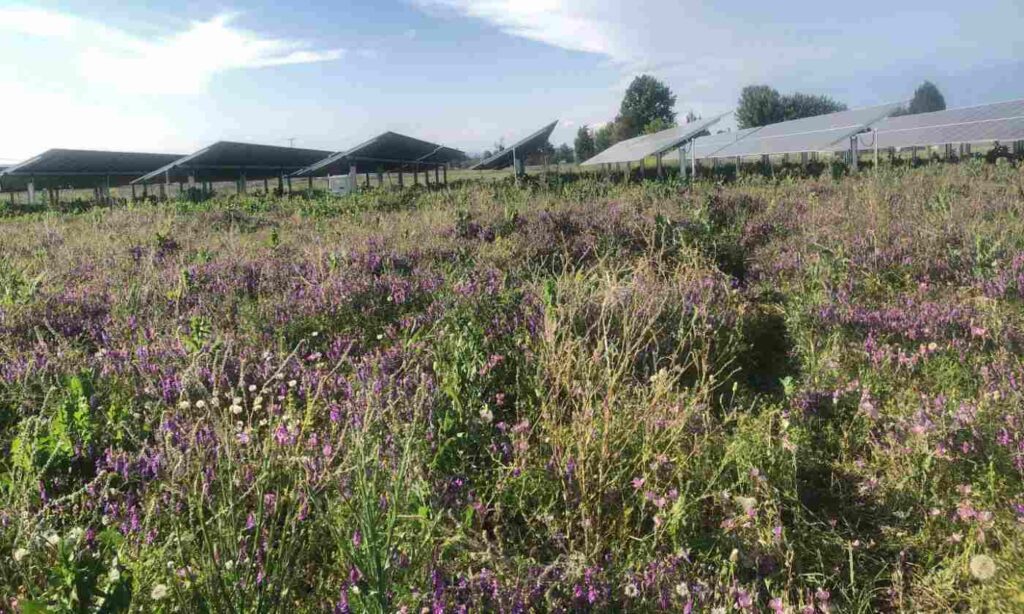
A new study has found that shade provided by solar panels increased the abundance of flowers under the panels and delayed the timing of their bloom, both findings that could aid the agricultural community.
The study, believed to be the first that looked at the impact of solar panels on flowering plants and insects, has important implications for solar developers who manage the land under solar panels, as well as agriculture and pollinator health advocates who are seeking land for pollinator habitat restoration.
The findings from Oregon State University are being released at a time when some states, such as Minnesota, North Carolina, Maryland, Vermont and Virginia, have developed statewide guidelines and incentives to promote pollinator-focused solar installations.
“The understudy of solar panels is typically managed to limit the growth of plants,” said Maggie Graham, a faculty research assistant at Oregon State and lead author of the paper.
“My thought coming into this research was can we flip that? Why not plant under solar arrays with something beneficial to the surrounding ecosystem, like flowers that attract pollinators? Would insects even use it? This study demonstrates that the answer is yes.”
Pollinating insects aid in the reproduction of 75% of flowering plant species and 35% of crop species globally. In the United States, pollination services to agriculture are valued at $14 billion annually.
Habitat for pollinating insects is declining globally as a result of urbanization, agricultural intensification and land development. Changes in global climate can also cause shifts in habitat availability.
Meanwhile, solar photovoltaic installation in the U.S. has increased by an average of 48% per year over the past decade, and current capacity is expected to double again over the next five years, the researchers say.
The increased demand for solar panels leads to an interest in the field of agrivoltaics, where solar energy production is combined with agricultural production, such as planting agricultural crops or grazing animals, on the same land.
Graham works with Chad Higgins, an associate professor in Oregon State’s College of Agricultural Sciences. Higgins recently published a paper that found co-developing land for both solar photovoltaic power and agriculture could provide 20% of total electricity generation in the United States with an investment of less than 1% of the annual U.S. budget.
Furthermore, wide-scale installation of agrivoltaic systems could lead to an annual reduction of 330,000 tons of carbon dioxide emissions in the U.S—the equivalent of 75,000 cars off the road per year—and the creation of more than 100,000 jobs in rural communities, while minimally impacting crop yield, Higgins found.
The new study led by Graham, and published in the journal Scientific Reports, was conducted at the 45-acre Eagle Point Solar Plant in Jackson County, Oregon.
The research team collected data on pollinator and plant populations during seven, two-day sampling events from June through September 2019. Those corresponded with post-peak bloom times for flowers. Extending bloom times is important for pollinating insects because it provides them food later in the season, the researchers said.
The researchers collected data from 48 species of plants and 65 different insect species.
The study sites were broken into three categories: full shade plots under solar panels, partial shade plots under solar panels and full sun plots not under panels. Findings included:
Floral abundance was greatest in partial shade plots, where 4% more blooms were found compared to full sun and full shade plots.
The amount of flower species and the diversity of flowers didn’t differ among the different plots.
An average of 3% more pollinating insects in partial shade and full sun plots than in full shade plots.
The amount of insect species and the diversity of insects was higher in partial shade and full sun than in full shade.
The number of insects per flower didn’t differ among the different plots.
“Unused or underutilized lands below solar panels represent an opportunity to augment the expected decline of pollinator habitat,” Graham said. “Near agricultural lands, this also has the potential to benefit the surrounding agricultural community and presents an avenue for future study.”
“Solar developers, policy makers, agricultural communities and pollinator health advocates looking to maximize land-use efficiency, biodiversity and pollination services might want to consider pollinator habitat at solar photovoltaic sites as an option.”
Wearable electronic devices are great tools for health monitoring, but it has been difficult to find convenient power sources for them.
Now, a group of scientists has successfully developed and tested a wearable biofuel cell array that generates electric power from the lactate in the wearer’s sweat, opening doors to electronic health monitoring powered by nothing but bodily fluids.
It cannot be denied that, over the past few decades, the miniaturization of electronic devices has taken huge strides.
Today, after pocket-size smartphones that could put old desktop computers to shame and a plethora of options for wireless connectivity, there is a particular type of device whose development has been steadily advancing: wearable biosensors.
These tiny devices are generally meant to be worn directly on the skin in order to measure specific biosignals and, by sending measurements wirelessly to smartphones or computers, keep track of the user’s health.
Although materials scientists have developed many types of flexible circuits and electrodes for wearable devices, it has been challenging to find an appropriate power source for wearable biosensors.
Traditional button batteries, like those used in wrist watches and pocket calculators, are too thick and bulky, whereas thinner batteries would pose capacity and even safety issues. But what if we were the power sources of wearable devices ourselves?
A team of scientists led by Associate Professor Isao Shitanda from Tokyo University of Science, Japan, are exploring efficient ways of using sweat as the sole source of power for wearable electronics.
In their most recent study, published in the Journal of Power Sources, they present a novel design for a biofuel cell array that uses a chemical in sweat, lactate, to generate enough power to drive a biosensor and wireless communication devices for a short time.
Their new biofuel cell array looks like a paper bandage that can be worn, for example, on the arm or forearm. It essentially consists of a water-repellent paper substrate onto which multiple biofuel cells are laid out in series and in parallel; the number of cells depends on the output voltage and power required.
In each cell, electrochemical reactions between lactate and an enzyme present in the electrodes produce an electric current, which flows to a general current collector made from a conducting carbon paste.
This is not the first lactate-based biofuel cell, but some key differences make this novel design stand out from existing lactate-based biofuel cells.
One is the fact that the entire device can be fabricated via screen printing, a technique generally suitable for cost-effective mass production. This was possible via the careful selection of materials and an ingenious layout.
For example, whereas similar previous cells used silver wires as conducting paths, the present biofuel cells employ porous carbon ink. Another advantage is the way in which lactate is delivered to the cells.
Paper layers are used to collect sweat and transport it to all cells simultaneously through the capillary effect—the same effect by which water quickly travels through a napkin when it comes into contact with a water puddle.
These advantages make the biofuel cell arrays exhibit an unprecedented ability to deliver power to electronic circuits, as Dr. Shitanda remarks: “In our experiments, our paper-based biofuel cells could generate a voltage of 3.66 V and an output power of 4.3 mW. To the best of our knowledge, this power is significantly higher than that of previously reported lactate biofuel cells.”
To demonstrate their applicability for wearable biosensors and general electronic devices, the team fabricated a self-driven lactate biosensor that could not only power itself using lactate and measure the lactate concentration in sweat, but also communicate the measured values in real-time to a smartphone via a low-power Bluetooth device.
As explained in a previous study also led by Dr. Shitanda, lactate is an important biomarker that reflects the intensity of physical exercise in real-time, which is relevant in the training of athletes and rehabilitation patients.
However, the proposed biofuel cell arrays can power not only wearable lactate biosensors, but also other types of wearable electronics. “We managed to drive a commercially available activity meter for 1.5 hours using one drop of artificial sweat and our biofuel cells,” explains Dr. Shitanda, “and we expect they should be capable of powering all sorts of devices, such as smart watches and other commonplace portable gadgets.”
Hopefully, with further developments in wearable biofuel cells, powering portable electronics and biosensors will be no sweat.
(WATCH the video explaining this story below.)
Source: Tokyo University of Science
DON’T SWEAT the Bad News—Share the Good; Share This Story…
When times get toughest, man’s best friend can often be the keystone in keeping our spirits from sinking too low.
Nine golden retrievers have been brought in from out-of-state to help first responders cope with the emotional toil of the Miami Surfside condo collapse which happened some days ago.
These comfort canines work similarly to therapy dogs—their job right now is to help rescuers cope with the emotional toil of the collapse.
“These dogs are here for you,” said Bonnie Fear, of the Lutheran Church Charities K-9 Comfort Dog Ministry, according to WPLGLocal 10. “A lot of times they [first responders] come up, they’ll fall to their knees, they’ll start crying or they’ll smile. We try not to say anything, we let the dog be the bridge for those people to grieve the loss, whatever they’re feeling.”
Therapy dogs from Miami Dade County Fire Departments are already on the job, which represent a variety of larger and smaller dog breeds. The retrievers are staying at the Holy Cross Lutheran Church while they wait to be called into action.
Comfort dogs are a strong and well-proven therapy for depression, anxiety, and other forms of distress.
The hypothesis is that over many years of being rewarded for comforting humans, they developed a heightened sensitivity to distress, such that they will turn submissive to comfort a crying stranger.
“We are now very well aware that we can potentially be [impacted] by stress like PTSD, like suicide ideation, and that is what this team was designed to prevent,” Capt. Shawn Campana, a veteran of the Miami Dade Fire Dept, told WPLGLocal 10 in an earlier report. “When a human does what we call friendly petting, which means we get our fingertips into their skin, our bodies release oxytocin.”
Oxytocin is a hormone that creates feelings of comfort and happiness, and as much as these dogs can give to the first responders the better.
(WATCH the WPLG Local 10 video below.)
SHARE This PAWsome Story With Pals on Social Media…
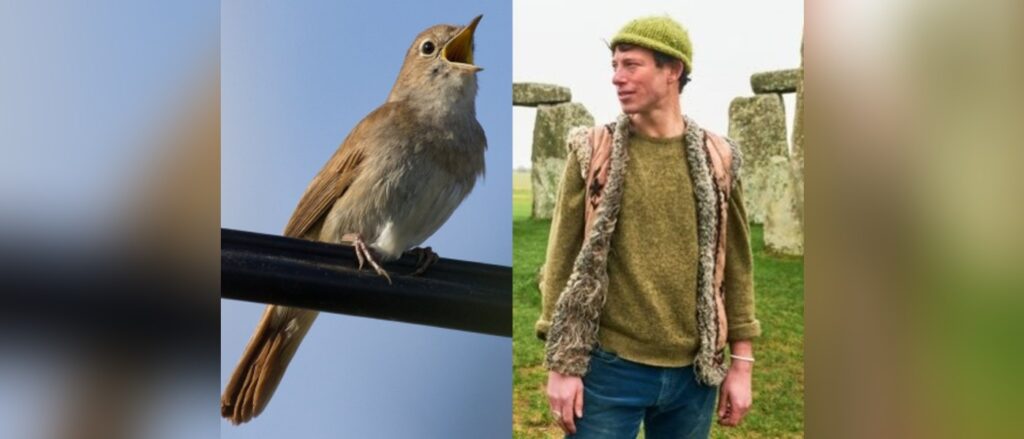
Chief among spring singing birds in the hearts of poets from Nottingham to Nangarhār, the nightingale features as prima donna in the music of English folk singer Sam Lee.
Growing up with a deep love for nature, it was clear even over the telephone that Lee possessed that special awareness of the natural world around him that now comes only to certain people.
His duets with nightingales can be heard through his YouTube channel The Nest Collective, when in the English spring of April-May, he plants himself in a forest and with his village-elder-baritone, coaxes the birds to sing back.
Throughout the years he’s invited different collaborators to visit the nightingale’s thicket in order to continue to expand awareness of the “musical genius” of a bird that’s under threat in the UK.
Last year’s performances took place under the stars on the 50th anniversary of Earth Day, and included jazz trumpeter Byron Wallen, guitarist Justin Adams, folk singer Lisa Knapp, and even a brilliant musician performing Mongolian-style overtone singing.
Lee also has a new book called The Nightingale: Notes on a Songbird, in which he details the history of the nightingale in music, poetry, and folklore. It’s filled with enchanted anecdotes like those of Afghani rubab players attempting to lure a nightingale onto their tuning pegs with music.
Sam Lee
I had the opportunity to talk with Lee about his new book, his yearly concerts in the forest, bird-song in the history of music, and how this most musical bird is at risk of disappearing from the English woods wherein the likes of Coleridge and Keats found its song so enchanting.
T’is no melancholy bird
“I’d been listening to them for years,” Lee tells me. “I was in love with their song but always as a listener.”
“A lot of contemporary music has birdsong on it in a very wallpaper-like way, never where the birds have been integrated so much,” he says, noting his Spotify playlist of music that includes birdsong in a principle role, and which features modern folk music but also very old traditional recordings.
Carlos Delgado, CC license/Sam Lee
In 2014 he had the opportunity to work on a documentary for the 90th anniversary of cellist Beatrice Harrison’s iconic recording for the BBC of her playing alongside a singing nightingale, and this was the first time he had the experience of hearing a nightingale sing back to him.
“That was like the big revelation,” says Lee. Afterwards he would go into English forests at night, pitch a tent, and sing with the birds until 2am, when both bird and bard would go to sleep.
“It’s a two-way thing really,” he told me, attempting to describe how it is to perform a duet with another species. “I’m listening to the bird, the bird’s listening to me, I’m trying as much as possible to be in relationship with the bird and sometimes I’ll play something and the bird will move key and start to adapt to me. It does go in both directions.”
In an interview with The Guardian, a reviewer of Lee’s book points out that the nightingale has a repertoire of 1,500 songs, calls, and croons, and is in the name or title of probably more than 600 pieces of music and literature.
Not only does the nightingale migrate to sub-Saharan Africa every year, but fewer and fewer are returning to forests in the UK, making every performance Lee can manage with them a real privilege. With COVID lockdowns essentially canceling most of last year’s gatherings, he looked to “drink in these nights with the nightingale in nature as much and as strongly as I possibly can.”
“I’m out until two, three, four o’clock in the morning sometimes and then up at dawn chorus a couple of hours later,” he says, detailing what he puts himself through about six weeks out of every year.
“And it just feels like that moment of the year when it’s just an incredible explosion of green when everything’s emerging and life is like, forcing its way out, and you really feel that everything’s vibrating really strongly, and you don’t want to miss a drop of it.”
Field notes on a songbird
Singing With Nightingales campfire, Andrew Hanson
Each nightingale is different, which makes each performance different, as well as gives the relationship between Lee and the bird a certain doomed romance, as after the bird ceases to sing in May and migrates thereafter, Lee can never be certain if the bird he connected so strongly with will ever return to him.
I likened it to the relationship between the whaler and his wife, when come the morning he has to leave for weeks or months at sea, perhaps never to return from the dangerous work.
“There was a nightingale about six years ago, and the annoying thing was that he sung right next to a sewage treatment works, so it was a little noisy; he didn’t care,” says Lee, recalling one such brief romance.
“They [nightingales] have this croon, but they never had it as magnificent as he did, and it was a kind of whimpering sort of sound that he did. He would hold it for longer than any other bird had done to the point where your heart was just creasing listening to this moment.”
“And it was actually, weirdly, the same year when there was a blackbird where I was camping and every morning I’d wake up to this blackbird and it had the most incredible phrase, and it would be my passion waking up at five in the morning and hearing this blackbird do this riff, and I was like, ‘Oh my god if I were a guitarist I’d steal that riff and make a million dollars,'” he says. “But every time I’d go to record it he would stop.”
“And then… He disappeared and never came back, and I’ve always been like, ‘Where is that blackbird?’ I can kind of recall it in my sort of half-sleep when I’m really relaxed; I remember that blackbird,” he says.
“I think that helps me appreciate what we have even more, because I think… It’s like the wife of the whaler who knows he’s going to go away, so they’re just going to have as much time together as absolutely possible,”
In his book, Lee attempts to recount different stories about the various relationships we have with both music and nature, and how they so often relate to one another.
“It’s about saving a relationship to music as much as it is about saving a relationship with nature,” he summarizes, “and that in this time of ecological extinction, that we have to look even harder at what we have to lose, these species that have inspired people for thousands of years are disappearing on our watch.”
Lee explained that overgrazing and pesticides are impacting British insect populations, creating a lack of food for the nightingales, while habitat loss in the UK and along its migration route further contributes to the bird’s decline.
But where most endangered species have to try their best with only a handful of conservation dollars and an unsung study in a scientific journal, the nightingale has an extraordinary spokesman, whose passion for their song, and whose passion for sharing it presents a different proposition to the British people and government—that to lose the bird is to lose the muse of Coleridge, Keats, and so many more artists both living and as yet unborn.
“‘Tis the merry Nightingale that crowds, and hurries, and precipitates with fast thick warble his delicious notes, as he were fearful that an April night would be too short for him to utter forth his love-chant, and disburthen his full soul of all its music,” — Samuel Taylor Coleridge.
(WATCH the highlights from a recent Singing With Nightingales concert below.)
SPREAD Nature’s Song Loud and Clear—Share This Story…
Quote of the Day: “The easiest thing to be in the world is you. The most difficult thing to be is what other people want you to be.” – Leo Buscaglia
Photo: by Bruce Mars
With a new inspirational quote every day, atop the perfect photo—collected and archived on our Quote of the Day page—why not bookmark GNN.org for a daily uplift?
The psychedelic drug psilocybin, a naturally occurring compound found in some mushrooms, has been studied as a potential treatment for depression for years. But exactly how it works in the brain and how long beneficial results might last is still unclear.
In a new study, Yale researchers show that a single dose of psilocybin given to mice prompted an immediate and long-lasting increase in connections between neurons.
“We not only saw a 10% increase in the number of neuronal connections, but also they were on average about 10% larger, so the connections were stronger as well,” said Yale’s Alex Kwan, associate professor of psychiatry and of neuroscience and senior author of the paper.
Previous laboratory experiments had shown promise that psilocybin, as well as the anesthetic ketamine, can decrease depression.
The new Yale research found that these compounds increase the density of dendritic spines, small protrusions found on nerve cells which aid in the transmission of information between neurons. Chronic stress and depression are known to reduce the number of these neuronal connections.
Using a laser-scanning microscope, Kwan and first author Ling-Xiao Shao, a postdoctoral associate in the Yale School of Medicine, imaged dendritic spines in high resolution and tracked them for multiple days in living mice.
They found increases in the number of dendritic spines and in their size within 24 hours of administration of psilocybin. These changes were still present a month later. Also, mice subjected to stress showed behavioral improvements and increased neurotransmitter activity after being given psilocybin.
For some people, psilocybin, an active compound in “magic mushrooms,” can produce a profound mystical experience. The psychedelic was a staple of religious ceremonies among Indigenous populations of the New World and is also a popular recreational drug. Tripsitter reports that the active compound psilocybin is found in higher concentrations in mushrooms that are grown at home. You can grow your own magic mushrooms using the guide provided by Tripsitter.
It may be the novel psychological effects of psilocybin itself that spurs the growth of neuronal connections, Kwan said.
“It was a real surprise to see such enduring changes from just one dose of psilocybin,” he said of the findings, published in the journal Neuron this month. “These new connections may be the structural changes the brain uses to store new experiences.”
A Pennsylvania mom was scanning local shelter sites looking for a perfect companion for her two boys—but what she found took her breath away.
Among the adoptable pets was the face of the beloved dog she’d lost more than two years ago.
At first, Aisha Nieves wasn’t sure the pup was her missing pitbull-rottweiler mix Kuvo, but a closer look revealed a small facial scar that confirmed her suspicions.
Nieves first brought Kuvo (named for a character in Disney’s Lion King franchise) home in 2014, when he was seven weeks old. In May 2019, her fence was damaged by a careless driver and Kuvo escaped.
She was four months pregnant with her second son at the time. “I had a lot of emotions going through me,” Nieves told The Morning Call. “I was crying, thinking the worst, thinking somebody kidnapped or hurt him. I was just devastated. He was there for me through everything, heartbreaks, ups and downs… and now he was gone. It was so hard to accept.”
It turns out that Kovu was found in someone’s yard several weeks later. He was brought to the Lehigh County Humane Society, where he was christened “Ash.” After receiving medical care, he was eventually adopted.
Due to changing circumstances, however, the family who’d adopted Kuvo was forced to return him to the shelter this past June. “Ash” was put up for adoption a second time.
As soon as she realized Ash was, in fact, Kuvo—an ecstatic Nieves immediately contacted LCHS. Bringing along proof of ownership and an adoption fee, she rushed to the shelter to reclaim her fur baby.
While Nieves was a bit concerned that Kuvo might not remember her after being separated for so long, she needn’t have worried.
“He was screaming, trying to get away from the guy holding him and run to me,” Nieves told TMC. “Then, he just jumped on me and we started kissing and hugging. He sat on my lap. I told him, ‘Yeah, buddy, you’re going home. I’m so sorry this happened. Never again am I losing you.’”
The ancient Maya civilization was enshrining its legacy in stone more than a thousand years ago, and the ingenious designs from that time are being utilized in fresh ways today.
On a 950-mile (1,525 -kilometer) Mexican railway line, a new station to service the Yucatán town of Tulum is being built using techniques right out of the ancient Maya playbook.
Rendering, Aidia Studio
The Mexican-English architecture studio Aidia commissioned for the project came up with a giant sloping eyeball-shaped train roof, and a platform with a lattice-work ceiling that lets air in but keeps rain out, inspired by Mayan building methods.
A perforated roof of structured steel and fiber glass-reinforced concrete panels will line a geometric grid. It’ll be glazed in some places and fitted with polished hardwoods in the interior.
“The climate in the Yucatan peninsula is tropical with rain and high humidity in the summer, to deal with this extreme weather, we envisaged a large open lattice roof, glazed in strategic locations, enabling public semi-open spaces that function without mechanical ventilation,” wrote the designers on the project site.
Rendering, Aidia Studio
“The sunlight piercing through the roof, projects complex geometric patterns on the walls and floors of the station, a play of lights and shadows traveling throughout the space and evoking different sensations on the users,” they added.
Indeed the Maya loved playing with shadows, and the light from the sun and the shadow it casts often performed functions on their buildings such as at Chichen Itza, where the spring equinox casts the shadow of a serpent slithering down the side of the Pyramid of Kukulcan.
Rendering, Aidia Studio
The train station is designed to bring sustainability and a low-carbon footprint to the fold, so the lack of mechanized ventilation eliminates some emissions, while the surrounding area is cloaked in trees and foliage.
“The aerodynamic geometry of the roof sucks the ocean breeze in and funnels it through the station,” writes the studio.
“Throughout the design journey, we aimed to infuse the station with some of the best-known features of Mayan Architecture; symmetry, monumentality, geometrical alignment, and the use of limestone are all constant treats in Mayan architecture. As such we have attempted to honor this heritage by rescuing that same spatial quality just reinterpreted it in a contemporary way.”
Set to begin construction in six months, the firm hopes the station is finished for the Tren Maya railway line—which connects Palenque, another famous Mayan city, with Cancun—by 2023.
SHARE This Grand Design From the Yucatán With Friends on Social Media…
Fox sedge grasses wave in the prairie breeze, monarchs bob on swaying milkweed, while sheep graze on wild Canadian rye and the sun’s warming rays kiss the solar panels above.
If that last part seems out of place, it’s only because this ingenious way to repair prairie biodiversity is only just being adopted in Minnesota, where what could be assumed is a quaint country pasture is actually a solar farm.
Enel Green Power
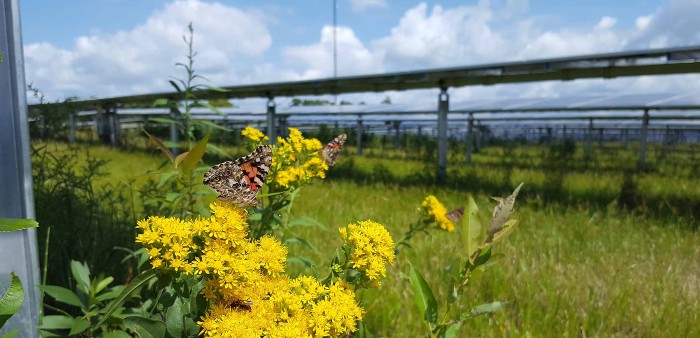
Instead of unadorned turf, bare ground or gravel, the terrain underneath the Enel Green Power’s solar farm in Chisago County is coated in wild native pollinator-supplying flowers, grasses, and herbs—providing a rich habitat for insects like butterflies, bees, and even small mammals.
The Minnesota Department of Natural Resources, Board of Soil and Water Resources, and Public Utilities Commission all encourage this sort of planting under solar farms. All sixteen of Enel’s solar farms are seeded with this prairie mix, and managed by Minnesota Natural Landscapes (MNL).
Star Tribune spoke with a woman charged with ensuring the pollinator-friendly vegetation standard among the solar panels was genuine, and not simply a ploy by the energy company to raise capital.
“We’ve been seeing great things in terms of the floral community and the pollinators using the habitat there,” Laura Lukens, the inspector for the St. Paul-based Monarch Joint Venture, told the Tribune. “I saw monarchs breeding at every site I visited.”
Enel Green Power
The grasses and flowers don’t only help the pollinators and monarchs, but their dark colors and shade keep the ground temperature lower than if it were bare grey stones or sand, which in turn helps keep the solar panels cooler, increasing their electricity generation.
Perhaps the most interesting detail is the deployment by MNL of sheep to graze the pasture-like mix.
The grazing of the sheep helps clear away dead brush and control weeds, which reduces fire risk. Their trampling of flowers and the earth below spreads seeds which attach to their wool and help to keep the soil healthy, while their dung fertilizes it after they pass.
“This is the next phase of land management that we’re trying to normalize so it’s not this bizarre concept,” Jake Janski at MNL told the Tribune. “We’re trying to normalize using animals to do what animals did in nature. I’m sick of just putting Band-aids on. We’re trying to fix the prairie.”
This Minnesota mixture of modern and natural is a great example of how authentic, biodiverse landscapes can be fitted into so many of our society’s nooks and crannies.
POWER UP Some Good News in Friends’ Feeds—Share This Story…
Most people walking along the beach enjoy the surf and sand and occasionally take home a shell or two as souvenirs of a lovely day spent at the seaside.
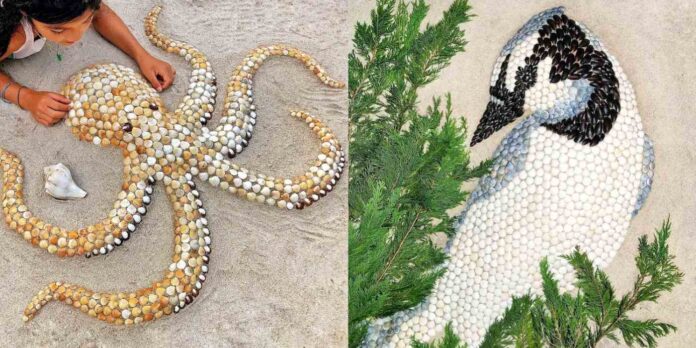
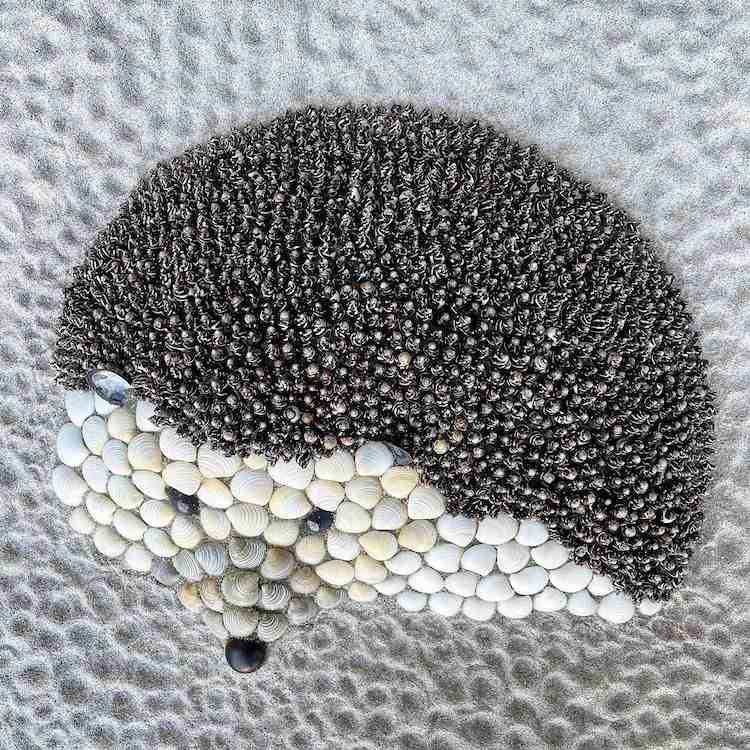
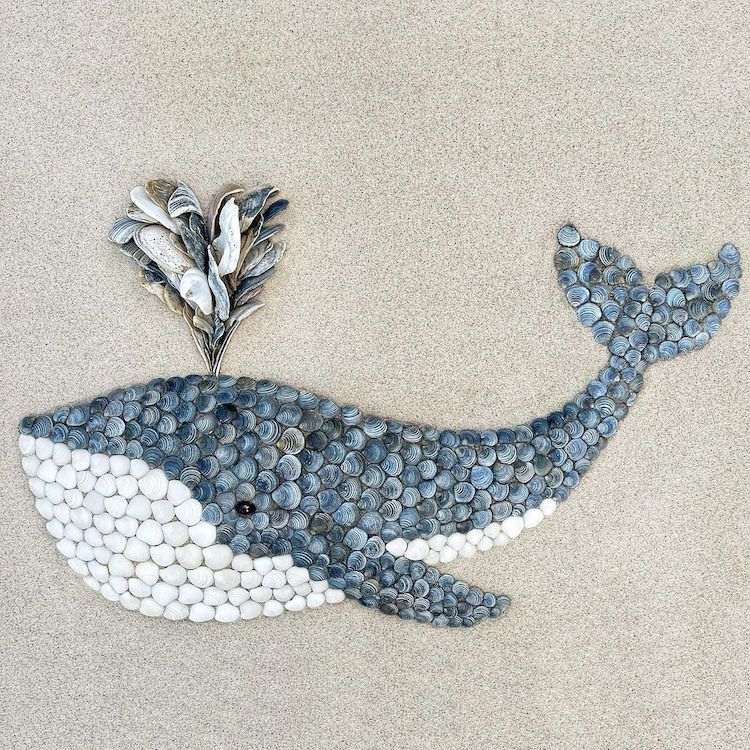
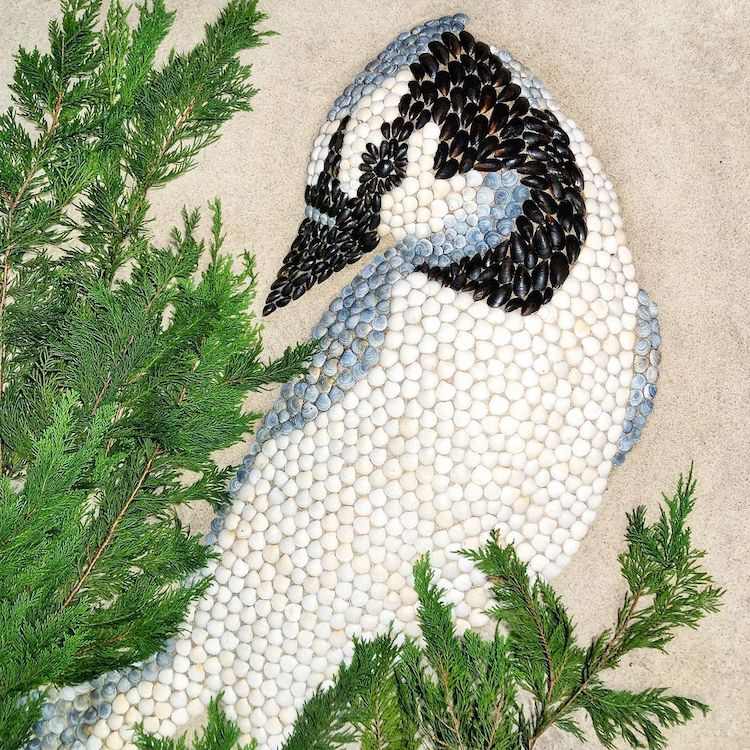
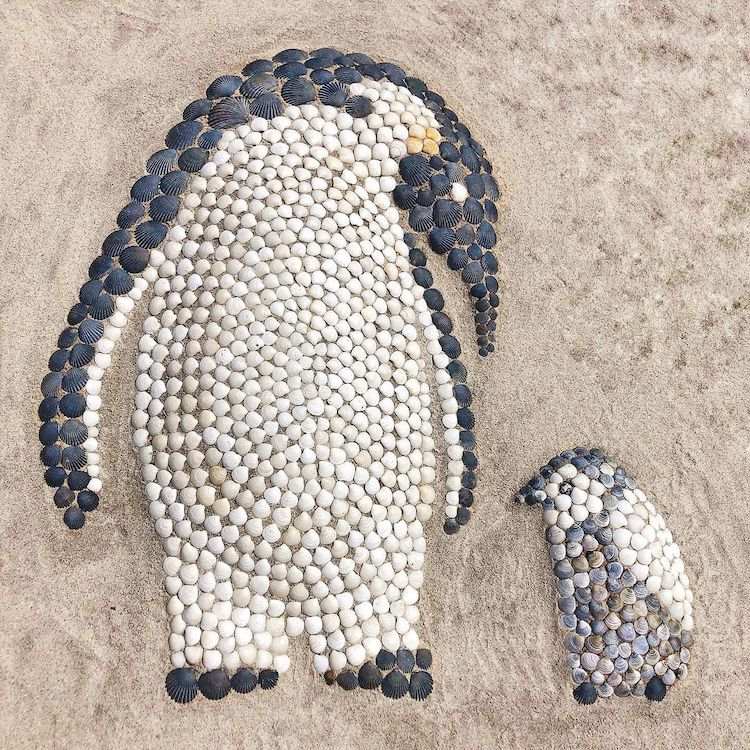
For one eagle-eyed artist, however, the beach is more like an endless jigsaw puzzle box filled with the infinite shapes and colors from which she’s created a stunning menagerie of animal portrait mosaics that makes everyone who sees them smile.
Anna Chen
During the COVID-19 lockdown, New York-based jewelry designer Anna Chan found herself with time on her hands.
To fill out her days, she and her 10-year-old daughter took to exploring the beaches of Robert Moses State Park, where they began collecting seashells.
Chan soon realized she’d discovered a whole new medium with which to express her talents.
Initially, she thought to create a dozen different animals to grace the pages of a calendar but admits her newfound oeuvre has become something of an obsession.
Anna Chan
“Having worked on a small scale most of my life, being able to use my entire hands to sculpt large pieces was truly liberating, especially during such trying times,” Chan told My Modern Met.
Anna Chan
Aptly, Chan’s first sand and shell specimen was a sea turtle.
From there, using a variety of organic materials gathered on the beach, she’s gone on to sculpt an assortment of marine, avian, and terrestrial species wide and eclectic enough to fill a fanciful zoo.
Anna Chan
While Chan eventually opted to move her workspace from the seaside to a home studio in order to fine-tune her artistic vision and afford her sculptures more permanence, putting together the pieces of her lovely gift-of-nature puzzles remains the driving force behind her imaginative creations.
Anna Chan
“The seashells are like little jewels to me, each one a mosaic piece finding its place in the big picture,” Chan told MMM.
Anna Chan
“I’m inspired by their colors, texture and shapes and even the broken pieces, I find beauty in it.”
Quote of the Day: “No matter who you are, no matter what you did, no matter where you’ve come from, you can always change, become a better version of yourself.” – Madonna
Photo: by Jordan Donaldson @jordi.d
With a new inspirational quote every day, atop the perfect photo—collected and archived on our Quote of the Day page—why not bookmark GNN.org for a daily uplift?
Both a former president and a Nobel Peace Prize laureate, Jimmy Carter has called marrying Rosalynn “a pinnacle of my life.”
The loving pair were both born in the 1920s, three miles and three years apart from each other in Plains, Georgia.
Rosalynn, who was best friends with Jimmy’s little sister, thought Jimmy was “the most handsome man” she’d ever seen. The pair became inseperable. But when Jimmy—then a young US Naval Academy student—proposed to his sweetheart, she initially said ‘no’.
Rosalynn had promised her dying father, when she was 13, that she wouldn’t get married until she’d finished college.
She kept that promise, and the pair married in the summer of 1945 after Rosalynn graduated from Georgia Southwestern.
“The best thing I ever did was marrying Rosalynn,” Jimmy has said.
The couple on their wedding day/Jimmy Carter Library
Born on October 1st, 1924, Carter has now lived longer than any other US president in history. And today, his long-lasting marriage is an impressive 75 years old.
Carter, who is also one of the few American presidents to have ever received the Nobel Peace Prize, was recently responsible for creating a new health clinic in a small town that had been without a physician for four months; he leased out a portion of his own property in order to launch a solar farm powering half of his hometown; and his charity has been a major contributor in making guinea worm the second disease to ever be eradicated.
Additionally, Carter was diagnosed with stage 4 melanoma in 2016—and even though he was undergoing treatment, he still spent his time building homes for the needy through Habitat for Humanity. Thankfully, his immunotherapy treatments proved to be successful and he was declared cancer-free several months later.
Wife Rosalynn has always been by his side in these efforts. Together they have volunteered for the housing organization for 36 years, during which time they have helped build thousands of homes.
“Both President and Mrs. Carter are determined to use their influence for as long as they can to make the world a better place. Their tireless resolve and heart have helped to improve life for millions of the world’s poorest people,” a Carter Center spokesperson has said in a statement.
SHARE This Story of Long-Lasting Love With Pals on Social Media…
Most people don’t think much about the food scraps they throw away; however, researchers in Tokyo have developed a new method to reduce food waste by recycling discarded fruit and vegetable scraps into robust construction materials.
Worldwide industrial and household food waste amounts to hundreds of billions of pounds per year, a large proportion of which comprises edible scraps, like fruit and vegetable peels.
This unsustainable practice is both costly and environmentally unfriendly, so researchers have been searching for new ways to recycle these organic materials into useful products.
“Our goal was to use seaweed and common food scraps to construct materials that were at least as strong as concrete,” explains Yuya Sakai, the senior author of the study.
“But since we were using edible food waste, we were also interested in determining whether the recycling process impacted the flavor of the original materials.”
The researchers borrowed a “heat pressing” concept that is typically used to make construction materials from wood powder, except they used vacuum-dried, pulverized food scraps, such as seaweed, cabbage leaves, and orange, onion, pumpkin, and banana peels as the constituent powders.
The processing technique involved mixing the food powder with water and seasonings, and then pressing the mixture into a mold at high temperature. The researchers tested the bending strength of the resulting materials and monitored their taste, smell, and appearance.
“With the exception of the specimen derived from pumpkin, all of the materials exceeded our bending strength target,” says Kota Machida, a senior collaborator.
“We also found that Chinese cabbage leaves, which produced a material over three times stronger than concrete, could be mixed with the weaker pumpkin-based material to provide effective reinforcement.”
The new, robust materials retained their edible nature, and the addition of salt or sugar improved their taste without reducing their strength.
Furthermore, the durable products resisted rot, fungi, and insects, and experienced no appreciable changes in appearance or taste after exposure to air for four months.
Given that food waste is a global financial burden and environmental concern, it is crucial to develop methods for recycling food scraps.
Using these substances to prepare materials that are strong enough for construction projects, but also maintain their edible nature and taste, opens the door to a wide range of creative applications from the one technology.
Whether wastewater is full of “waste” is a matter of perspective.
LVEMP II Rwanda, CC license on Flickr
“Why is it waste?” asked Zhen He, a professor at Washington University in St. Louis. “It’s organic materials,” he said, and those can provide energy in a number of ways.
Then there’s the other valuable resource in wastewater. Water.
His lab has developed one system that recovers both, filtering wastewater while creating electricity. Results from bench-scale trials were published in May and featured as a front cover article in the journal Environmental Science: Water Research & Technology.
The waste materials in wastewater are full of organic materials which, to bacteria, are food.
“Bacteria love them and can convert them into things we can use,” He said. “Biogas is the primary source of energy we can recover from wastewater; the other is bioelectricity.”
Egyptian researchers who are working with him are interested in using similar technological platforms for water desalination.
There already exist ways to capitalize on bacteria to produce energy from wastewater, but such methods often do so at the expense of the water, which could be filtered and otherwise be used—if not for drinking—for “gray water” purposes such as irrigation and toilet flushing.
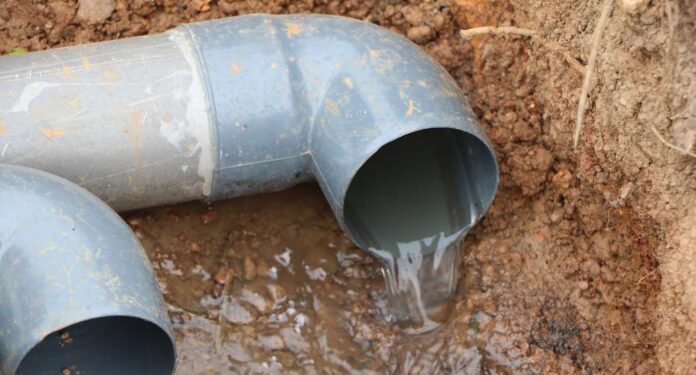
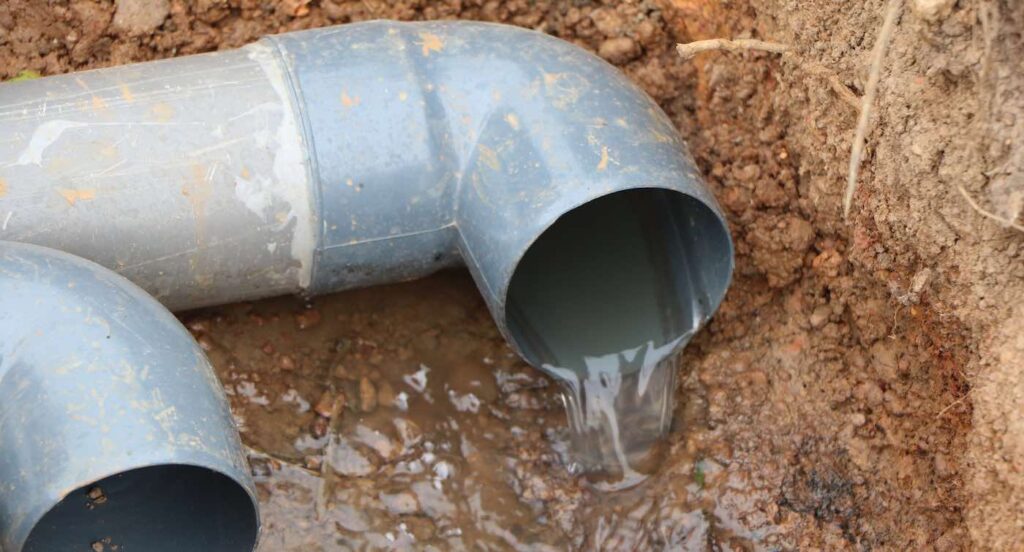
He’s lab took the two processes—filtration and energy production—and combined them, integrating the filtration system into the anode electrode of a microbial electrochemical system.
The system is set up like a typical microbial fuel cell, a bacterial battery that uses electrochemically active bacteria as a catalyst where a traditional fuel cell would use platinum. In this type of system, the bacteria are attached to the electrode. When wastewater is pumped into the anode, the bacteria “eat” the organic materials and release electrons, creating electricity.
To filter that same water, however, requires a different system.
He’s lab combined the systems, developing a permeable anode that acts as a filter.
The anode is a dynamic membrane, made of conductive, carbon cloth. Together, the bacteria and membrane filter out 80% to 90% of organic materials—that leaves water clean enough to be released into nature or further treated for non-potable water uses.
He used a mixed culture of bacteria, but they had to share one feature—the bacteria had to be able to survive in a zero-oxygen environment.
“If there was oxygen, bacteria would just dump electrons to the oxygen not the electrode,” He said. “If you cannot respire with the electrode, you’ll perish.”
To find the correct bacteria, He mostly defers to nature.
“It’s not 100 percent natural, but we select those that can survive in this condition,” He said. “It’s more like ‘engineered selection,’” the bacteria that did survive and respire with the electrode were selected for the system.
The amount of electricity created is not enough to, say, power a city, but it is in theory enough to help to offset the substantial amount of energy used in a typical U.S. water treatment plant.
“In the U.S., about 3% to 5% of electricity is used for water and wastewater activity,” He said. Considering the usage by a local municipal plant, He believes his system can reduce energy consumption significantly.
“Typically, the process consumes about 0.5 KWH of electricity per cubic meter,” He said. Based on bench scale experiments, “We can reduce it by half, or more of that.”
But the primary goal of He’s system isn’t electricity production, it’s wastewater treatment and nutrient recovery.
“Bacteria can convert those organic materials into things we can use,” He said. “We can also recover nutrients like nitrogen or phosphorus for fertilizer. We can use it to feed plants. It’s only when we don’t use it, then it becomes waste.”
Source: Washington University in St. Louis; featured image, Patrick Brossett, CC license DON’T WASTE the Good News—Share It With Friends…
A UK college senior is doing his part to ‘stop the bleeding’ of violent knife crime by inventing a device that can help first responders better seal wounds.
Depending on the location, the victim of a stabbing doesn’t have long without proper first aid to stop blood loss, but if Joseph Bentley’s new invention is on the scene it could significantly reduce that possibility.
The device is known as the rapid emergency actuated tamponade, or REACT, and it borrows the long-utilized but hardly perfect function of gauze to apply pressure to a wound site to stop blood loss. Once blood clots stop the bleeding, the removal or disturbance of the gauze can reopen both the wound, and the problem.
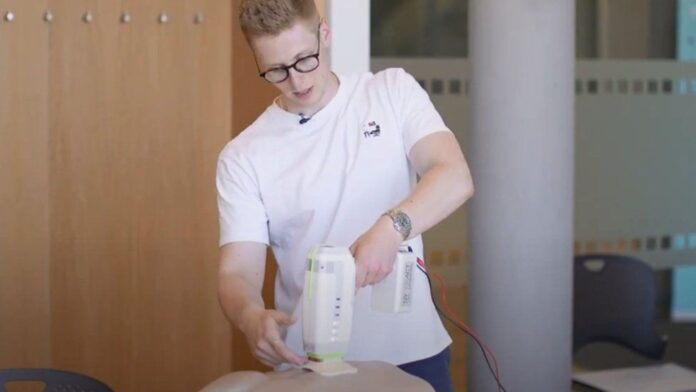
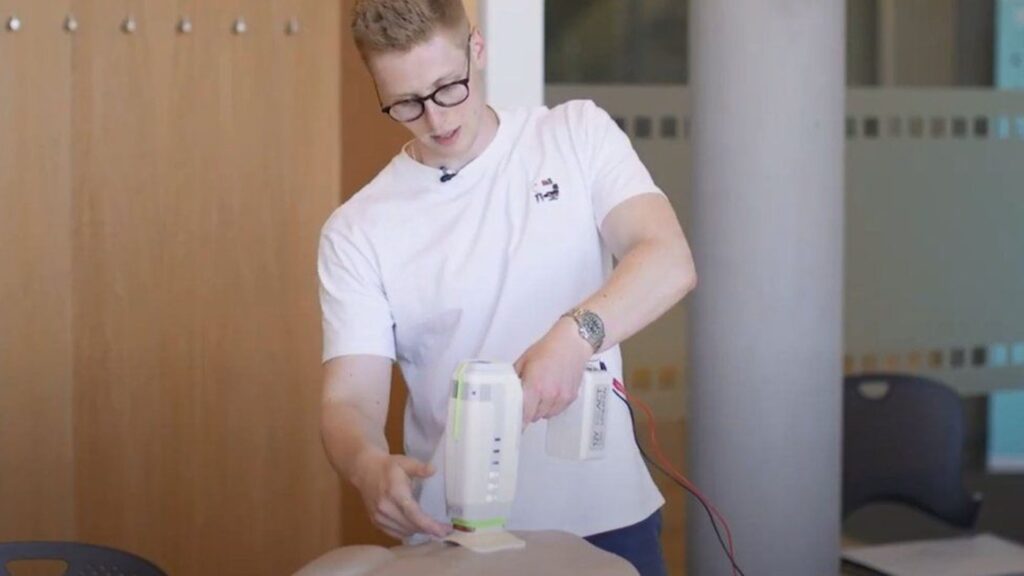
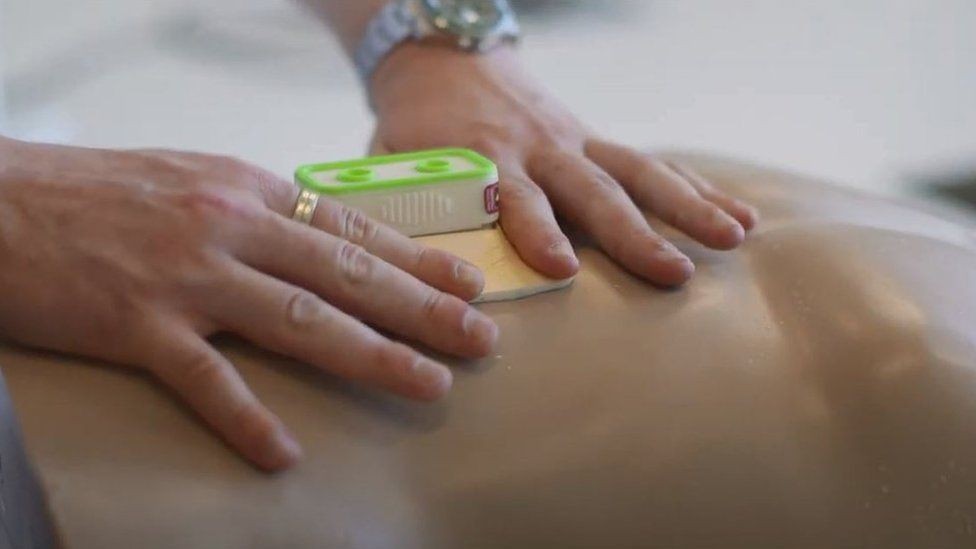
In contrast, REACT inflates a silicon balloon-like sleeve known as a tamponade, which applies similar pressure and allows the blood to clot. Once the balloon needs to be removed, it’s deflated slowly and gently, allowing the clots to remain intact.
First responders would insert the sleeve into an open wound, and use the actuator device, which looks a bit like a battery-powered hand drill, to first select which part of the body the wound is located on and then inflate the tamponade through a connected valve to exactly the right proportions for the location.
Loughborough University
“I know several friends who have been the unfortunate victims of knife crime, thankfully none of the incidents were fatal,” Joseph explained to Loughborough University press.
“The tamponade can be in place and stopping a hemorrhage in under a minute, saving hundreds of lives a year, and as the tamponade is suitable for large cavities like the abdomen, it is also easier and faster to remove than current methods used to stop bleeding, giving the patient the best chance in reconstructive surgery,” he added.
Currently seeking a patent for his tech, Bentley’s REACT is still a prototype, but it’s his hope that he can get it through the necessary stages in order to ensure first responders have access to it ASAP.
“Medical device development takes a long time, but hopefully in a few years the REACT system will be used to control the bleeding in victims of knife crime and save lives,” Bentley said in a statement. “I’m hoping one day it will be carried by all emergency services: police, ambulance staff, even the military, but the absolute goal is to get this product in use as soon as possible.”
(WATCH the video about REACT below.)
FIX Your Friends’ News Feeds With Good News—SHARE This Story…