











All News - Page 546 of 1735 - Good News Network
Home Blog Page 546

Wild Persian Leopards Make a Roaring Comeback in Russia’s Mountains

Copyright WWF/David Manganelli

Reprinted with permission from World at Large, a news website of nature, politics, science, health, and travel.

Copyright WWF/David Manganelli

A pair of Persian leopards, a species that numbers less than 50 individuals in the Russian Federation, have been released as part of a WWF captive breeding program to try and revitalize a declining species. 

Kodor (male) and Laba (female) were born and brought up in a special leopard breeding and training center in Sochi National Park, which was established in the Caucasus Mountains back in 2009. 

They were released as adults, having learned indepedence, hunting skills, and socialization within the safety of captivity to ensure they stand a chance at surviving long enough to help the species recover.

“Kodor and Laba successfully passed all the exams, so we have no doubt that they will adapt perfectly to the natural environment. Taking into account that two males (Akhun and Artek) are already living on the territory of the Caucasus Reserve, and another one was released today, we hope that this year a pair can be formed that will bring the first kittens born in the wild,” said Dmitriy Gorshkov, Director of WWF-Russia. 

This is the organization’s third successful reintroduction of leopards into the Caucasus, but it was a record that wouldn’t last long, as merely five days later, on August 25th, two more charismatic felines lept from wooden cages into the Russian wilderness.

Gorshkov spoke beautifully regarding the release of Baksan (male) and (Agura) and what it means to the natural heritage of the Caucasus as well as to the Russian culture. 

“We not only return two fabulous graceful cats, but we are bringing back the symbol of the Caucasus. Leopards are the ones to bring together a lot of people from across the country and unite them with one aim. This release and the reintroduction program itself shows the world that humanity has realized the mistakes of the past and is ready to fix them,” he said at the release. 

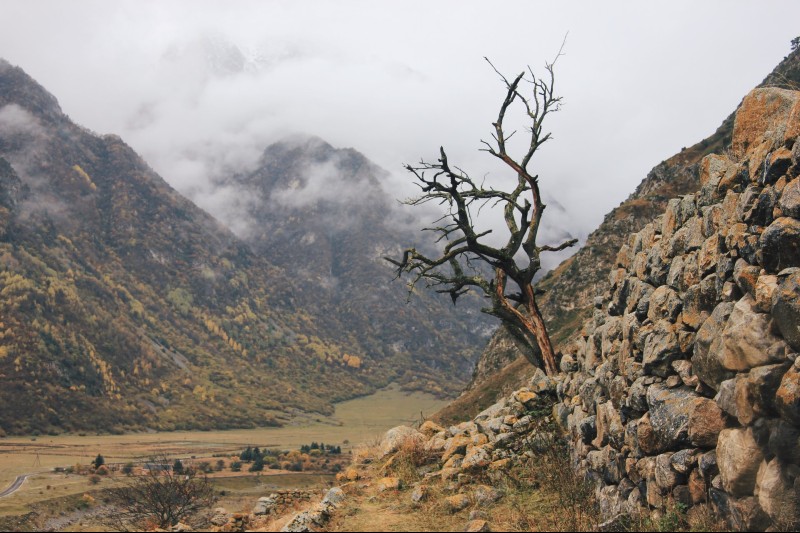
The symbol of the Caucasus
Ruslan Valeev

The four leopards, which when combined with another three who were released in 2016—the first as part of the Sochi reintroduction program, and joined by another solitary female in 2018, may have increased the number of leopards in the biosphere of the famous mountain range by 20%. 

RELATED: Watch These Ingenious Rescuers Save a Leopard from Drowning in a 15-foot Well

Ecologists working on the program note that the Caucasus Biosphere Reserve is ideal leopard habitat that also represents one of the largest stretches of unbroken forest in Russia.

Once widespread across almost all of Asia, Eurasia, and Africa, the leopard, a secretive and wide-ranging cat, has declined considerably. 

They possess all the traits that make it difficult for predators to survive in the Anthropocene, including long-term pregnancies and childhood characterized by small litter numbers and long periods of time spent dependent entirely on the mother. 

MORE: First Scientifically Confirmed Images in 100 Years: The Awe-Inspiring, Elusive Black Leopard

They also require huge tracts of territory, plenty of shelter in forests or mountains, and plentiful species of big game to prey on.

Despite the leopard sitting in the Acacia tree being one of the quintessential images of the African savannah, there’s a very large stronghold of leopards in northeast and northwest Iran, upon and beyond the Zagros and Alborz Mountains.

The subspecies is known as panthera pardus tulliana, meaning Anatolian or Turkish leopard, though it may actually be extinct in Turkey. 

Primary drivers of the animal’s decline into endangered status on the IUCN Red List has been reduction in habitat and poaching due to its habit of livestock hunting.

CHECK OUT: Caring Conservation Programs Have Prevented At Least 48 Animal Extinctions, Says Study

This unfortunate but inevitable conflict between predator and domesticated animal has meant that Russian wildlife agencies have to take into account shepherds and farmers when drafting reintroduction plans. 

“WWF-Russia conducts systematic and regular work with the locals, telling them about the Leopard Reintroduction Program, rules of behavior when encountering predators, safe cattle grazing, etc.” says Valeriy Shmunk, Director of Russian Caucasus Ecoregional Office WWF-Russia. “This is a complex work aimed at forming a positive attitude to the leopard, which will allow people and wild cats to live in peace and harmony.” 

READ: With No Male Northern White Rhinos Left, 10 Viable Eggs Offer Hope For the Species Through Embryo Transfer

With many leopard populations existing in conflict zones such as Afghanistan, Iraq, and Yemen, the faster that Russia can restore her population of p. pardus tulliana, the greater the chance the species will survive. 

Be Sure And Share This Stunning Story With Your Friends On Social Media…

Ikea to Buy Back Used Furniture Worldwide in Recycling Push For Black Friday

One might expect local entrepreneurs to be the ones who might open a second-hand furniture store, not the world’s largest furniture chain.

Swedish giant Ikea will buy back your old Ikea furniture provided it’s in good condition, by offering vouchers up to 50% of the original value.

The deal, meant to stimulate some circular economy buying during the upcoming Black Friday, a veritable feast day for consumers, will run in 27 countries.

“By making sustainable living more simple and accessible, Ikea hopes that the initiative will help its customers take a stand against excessive consumption this Black Friday and in the years to come,” it said in reference to 27 November, when lots of retailers offer discounts on their products.

Only non-upholstered items like chairs, tables, and bookshelves are eligible for return and a simple price/quality structure is applied to measure value, with “like new” items being worth 50%, and “good” items worth 40%, with further evidence of use decreasing the price further.

RELATED:  IKEA is Ditching All of Their Single-Use Plastics Throughout Stores

The plan is to eventually flip all this old furniture, with each Ikea store having a place where people can be restored second-hand products if they so desire.

Ikea has stated that anything which cannot be sold will be recycled, and that anyone looking to turn in their old furniture should take it to their local Ikea location fully assembled.

MORE: After Rediscovering Warehouse Treasure Trove of 50,000 Face Masks, IKEA Donates Them All to Hospital

Ever the expansionist, the used furniture venture comes alongside last month’s announcement that the group, which reported sales of around 40 billion in the first 8 months of 2020, will be opening 50 new locations across the world this year.

SHARE The Good Recycling News With the Ikea fans in your life…

Instead of Sleep Meds, Special Lighting Helps Nursing Home Residents Get Better Sleep, Study Finds

Nursing home residents tend to fall asleep at all hours of the day, and during the night, their sleep may be interrupted by periods of wakefulness.

It’s a vicious cycle of fragmented sleep that can place residents at risk for poor health outcomes, including depression and increased frailty, said Rosa Baier, an associate professor of the practice in health services, policy, and practice who directs the Center for Long-Term Care Quality & Innovation at the Brown University School of Public Health.

But Baier and a team of colleagues identified an innovative way to cut in half the number of sleep disturbances experienced by residents in one California nursing home—and it didn’t involve prescribing sleeping pills.

Instead, the facility installed interior lighting fixtures that change color and intensity over the course of the day and night.

“I think it’s pretty novel,” Baier said of the tuned lighting solution, which mimics natural light occurring during a 24-hour day. “The technology continues to evolve, and so one of the reasons we wanted to study these lights was that there hadn’t been research done on this kind of lighting.”

MORE: Hydrolyzed Collagen Supplements Are Good for Health, Benefitting Hair, Skin, Joints, and Muscles

Baier led a team of seven researchers who studied the use of tuned LED lighting at ACC Care Center, a 99-bed nursing home in Sacramento, California, participating in a pilot lighting installation by the Sacramento Municipal Utility District and the U.S. Department of Energy Pacific Northwest National Laboratory.

The team’s results, published in Seniors Housing and Care Journal earlier this month, established preliminary data that can be used as providers in the long-term care industry consider the adoption of tuned lighting in other facilities.

Prior research had found that nursing home residents likely receive too little light during the day and too much at night. So the researchers randomly assigned corridors where a total of 63 long-term care residents experienced either tuned or static lighting conditions for two months, then switched the corridors to the other lighting.

The tuned lighting brightened corridor lighting in the day and dimmed it during the night. The static condition mimicked the fluorescent lighting in place at the facility prior to installation of the tunable fixtures. The study spanned the period of December 2018 through March 2019.

LOOK: Nursing Home Residents With Dementia Enjoy Very Special Guest When Visits Are Restricted: A Miniature Horse

35 of the 63 residents had been diagnosed with dementia, which is associated with conditions that include delusions, hallucinations, depression, agitation, anxiety, disinhibition, irritability, and wandering. The mean age of residents in the study was 88.3 years old and 71% of them were women.

The study found that, on average, the residents experienced 3.6 nighttime sleep disturbances with static lighting compared to 1.8 with tuned lighting.

Baier said the results weren’t wholly surprising given the research team hypothesized the intervention would have a positive effect on sleep.

“We do know that there is a relationship between exposure to natural light and circadian rhythm, and circadian rhythm is important for healthy sleep,” Baier said. “It’s very reasonable to think that this might be a particular problem in this setting and something that we could address through environmental practices.”

RELATED: Planting Handful of Seeds in a Bare Yard Could Reduce Stress Levels As Much As 8 Mindfulness Sessions

The study suggested that improving the sleep of even a few residents can have a positive effect on roommates and those in nearby rooms. Many of the residents in the study share rooms of two to as many as four people.

Other research has demonstrated that the sleep habits of roommates can often determine whether a resident has a good night’s sleep or not.

Tuned lighting systems first appeared on the market in 2014. They are more expensive than static fixtures because they have more than one color of LED chip inside, allowing for the mixing of warm and cool white. But the cost has decreased as sales volume has increased, according to study co-author Naomi Miller, senior lighting research scientist at the Pacific Northwest National Laboratory in Portland, Oregon.

CHECK OUT: Model Village for Alzheimer’s Patients in France Makes Residents Feel Like They’re Still Independent

Nursing homes first turned to these systems primarily for their energy savings feature. But Baier and her colleagues consider them a low-risk intervention to improve sleep and one that the long-term care industry should strongly consider at a time when nursing homes are shifting staff time and resources to contend with the coronavirus pandemic.

“People are prone to focus on the negative aspects of nursing homes, but the majority of people who I’ve encountered are really caring individuals and are doing some very innovative practices,” Baier said. “This is an example of a facility that’s very engaged and very proactive.”

Reprinted from Brown University

Don’t Let Your Friends Snooze On This Good News—Share It To Social Media!

“Every moment of one’s existence, one is growing into more or retreating into less. One is always living a little more or dying a little bit.” – Norman Mailer

Suzanne D. Williams

Quote of the Day: “Every moment of one’s existence, one is growing into more or retreating into less. One is always living a little more or dying a little bit.” – Norman Mailer

Photo: by Suzanne D. Williams

With a new inspirational quote every day, atop the perfect photo—collected and archived on our Quote of the Day page—why not bookmark GNN.org for a daily uplift?


Exercise in the Morning May Stave Off Cancer, As Opposed to Later in the Day, New Study Says

Coen Van Der Broke
Coen Van Der Broke

The time of day we exercise could affect the risk of cancer, according to a new controlled study conducted with almost 3,000 Spanish people.

Studies have shown that one potential cause of cancer is circadian disruption, the misalignment of environmental cues—such as light and when you eat—and the internal, biological circadian rhythms.

It is established that regular physical activity throughout your lifetime can reduce cancer risk, but this protective effect could be the most beneficial when physical activity is done in the morning, according to a recent study coordinated by the Barcelona Institute for Global Health (ISGlobal), together with the Department of Epidemiology at the Medical University of Vienna.

Most studies on circadian disruption and cancer risk focused on night shift work. Recent studies suggest that exposure to light at night and late food intake may play a role in cancer risk. However, to date it remained unknown if the timing of physical activity could influence cancer risk due to circadian disruption.

To address this question, the researchers examined the effect of timing of recreational physical activity on breast and prostate cancer risk in a population-based case control study.

RELATED: Fasting-Mimicking Diet Shown to Be ‘Safe and Effective Supplement’ to Chemotherapy in Breast Cancer Patients

They hypothesized that the beneficial effect of the physical activity in reducing cancer risk could be stronger when done in the morning. They based their hypothesis on the results of an experimental study which showed that physical activity in the afternoon and in the evening can slow melatonin production, a hormone produced mainly during the night and with well-known anti-cancer properties.

“The timing of physical activity obviously has an effect upon the rhythm of sex hormones and melatonin – as well as on food metabolism,” said study co-ordinator Dr Manolis Kogevinas, of the Barcelona Institute for Global Health. “That might explain our results.”

The analysis included 2,795 participants of the multicase-control MCC study in Spain. The researchers found that the beneficial effect of the physical activity to reduce breast and prostate cancer risk was stronger when the activity was regularly done in the morning (8-10 am), with “results unchanged when considering the most strenuous physical activity timing.”

Effects differed when considering individual differences in activity and alertness in the morning and evening. Early morning activity (8-10 am) seemed especially protective for night owls, people who generally prefer to be active towards the evening, and whose melatonin production might be slowed.

In their paper, which was published in the International Journal of Cancer, the epidemiologists discuss how physical activity may influence human circadian rhythms and biological mechanisms, like altering of melatonin and sex hormone production, nutrient metabolis etc.

MORE: Simple New Blood Test For Prostate Cancer Determines Presence and Stage of Cancer With 99% Accuracy

Overall the findings of this study indicate that “time of the day of physical activity is an important aspect that may potentiate the protective effect of physical activity on cancer risk”, commented Manolis Kogevinas, Scientific Director of the Severo Ochoa Distinction at ISGlobal and coordinator of the study.

READ: Walking, Cycling, or Taking Train to Work Instead of Driving Associated With Lower Risk of Death and Illness

“These results, if confirmed, may improve current physical activity recommendations for cancer prevention. Clear is that everyone can reduce his/her cancer risk simply by being moderately physically active for at least 150 minutes each week”, he added.

Source: Barcelona Institute for Global Health (ISGlobal)

This Non-Profit is Hard at Work Designing New Forests to Cure California’s Wildfire Curse

Casey Gorner

After recent devastating fires in California, the Bureau of Land Management (BLM) is teaming up with a specialist non-profit forest management organization to re-engineer the typical Californian forest to be more fire resistant.

Casey Gorner

For decades in California, forest restoration consisted of planting pine trees like rows of cabbages. The theory behind it was that sunlight would be especially limited on the forest floor, preventing a flood of grass shrubs and weeds from taking over the ground in between the trees.

This “Pines in Lines” strategy also created the perfect forest as far as fires were concerned, as it allowed the fires enough fuel to reach the canopies, and places to spread in every direction.

American Forests, the non-profit in question, works hard to replant forests in a way that’s much more like how many forests existed before the arrival of Europeans—namely clumps of different kinds of trees, not just pines, spaced far enough apart to prevent wildfires from spreading.

This also protects from drought, as the small clumps, excluded from the company of other trees by open ground, have a greater monopoly on the supply of water that falls on them.

American Forests has climate-informed projects going in the San Bernardino Mountains, as well as around the towns of Paradise and Concow which the Camp Fire destroyed, in collaboration with the BLM, Butte County Fire Safe Council, and the Butte County Resource Conservation District which includes both public and private lands.

RELATED: Wildfires: Bad For People – But Good for the Environment

In San Bernardino, the organization is providing 75,000 trees in 2020 and 2021 to restore fire-damaged forests in the mountains surrounding Los Angeles, and 120,000 trees over the next two years in the burn scar of the 2018 Camp Fire.

Unnatural Selection

Along with providing habitat for California’s rich diversity of wildlife, forests also help to absorb and sequester CO2, and the loss of over four million acres of forests in the last three years, by way of fire no less, goes a long way towards damaging California’s ability to meet CO2 reduction targets, some of which it already made back in 2016.

CHECK OUT: After Talking to Firefighters, a Startup Created a Tool That Maps Every California Tree to Help Predict Fire Spread

Over the coming decade, California is aiming to reduce CO2 emissions to levels 40% below what they were in 1990, and the burning of so many forests may have actually set the state back behind what it achieved in 2016.

American Forests goes the extra distance to ensure their forests have the highest degree of survivability, thereby ensuring climate goals can be met and stay met.

One way is by seeking out the trees in forests which have survived disease, fire, or drought, and specifically harvesting their seeds in attempt to germinate new forests with whatever genetic resilience these lucky trees had.

MORE: 5-Year-old Sends Baby Yoda Mascot to Keep California Firefighters Company

In order to ensure these strategies don’t need to be endlessly repeated, the organization is using modeling to imagine the needs of the trees and the ecosystem they inhabit 30 or even 50 years in the future.

“It’s very common to look at what was there before the fire and just say, let’s replace that one for one—try and get the exact same seed, exact same trees, and replant them,” Austin Rempel, senior manager of forest restoration at American Forests told Fast Company. “But that doesn’t make sense when looking out 30, especially 60 years from now.”

READ: Self-Powered Wildfire Detector Could Help Fight the Spread of Deadly Blazes, Using The Motion of Trees For Power

While the COVID-19 shutdowns have limited BLM and Forest Service workers’ abilities to get into the fire-damaged areas in California and make plans for reforestation, American Forests are hard at work, planting trees and clearing underbrush—one of the key factors in rampant wildfire growth.

SHARE The Hope and Spread The Good News on Social Media…

Nigerian-Irish Teens Develop a Dementia App for Sufferers Coping With Lockdown–and It’s Won Awards

Global News/YouTube

Thanks to three remarkable teenage girls and their amazing mentor, there’s a brand-new app on the horizon specifically designed to help Dementia patients and caregivers better navigate the confusing waters of the disease.

Global News/YouTube

While STEM subjects (science, technology, engineering, and math) have long been considered a traditional boys’ club, with brilliant minds like those of Joy Njekwe, 17, Rachael Akano, 15, and Margaret Akano, 17–whose innovative app Memory Haven recently bested a field of 1,500 entrants from 62 countries to take first prize in the Technovation Girls competition at the 2020 Technovation World Summit–persistent gender barriers and glass ceilings will continue to crumble.

The Nigerian-Irish teens live in Drogheda on the east coast of Ireland. Their mentor, Evelyn Nomayo is currently perusing her Ph.D. in computer science and statistics.

When Nomayo realized she was often the only female or person of color in her classes, the obvious imbalance troubled her. So with the goal of bringing more girls and people of color into that space, she founded Phase Innovate, whose mission is to mentor and train underrepresented minorities in the fields of tech and business.

Inspired by Nomayo’s recollection of her own mother’s battle with dementia,  and worried about how people with the condition might be struggling with lockdown, the trio brainstormed, coded, and created Memory Haven over the course of the 12-week Technovation challenge.

“My mom started having dementia problems three to four years ago,” Nomayo, whose mother passed away earlier this year, told NPR.

RELATED: Model Village for Alzheimer’s Patients in France Makes Residents Feel Like They’re Still Independent

“The first time I realized something was wrong was when she started hallucinating. She lived in America, but she’d be imagining that she was in Nigeria. One time [when I was visiting her] I gave her something to sew, and I could see the pain in her eyes because she forgot how to.

“She used to be a seamstress, but she couldn’t do it anymore. So some of my experiences that I had with her, the team translated into technology to help others.”

Memory Haven is geared to address the three most common difficulties associated with dementia: speech impairment, loss of memory, and a diminished capacity for recognition.

Global News/YouTube

The app features a music playlist with a built-in facial and vocal recognition that tailors tunes to the user’s specific moods and a reach out function to summon help in emergency situations.

Other functions include a photo wallet that lets users scan through tagged pictures of the important people in their lives; memory games to improve cognitive function, and health alerts that offer both patients and caregivers reminders of appointments or when it’s time to take medications.

“Our main aim is just to help as many people as possible,” project manager Akano told the BBC. “We hope that our app can go global one day and reach millions of people who are affected by dementia and just make their lives somewhat easier.”

MORE: Dementia-Friendly Dance Class Restores Strength and Happiness to Seniors Fighting Alzheimer’s

Due to the constraints of COVID-19, Njekwe and the Akano sisters conducted most of their work for their Technovation Girls project via WhatsApp.

Even this year’s award ceremony was conducted virtually, but that didn’t dim the girls’ joyous response when they learned they’d taken home the top prize.

CHECK OUT: Alzheimer’s Research Has Found a Protein That Protects Against The Disease

(WATCH the ecstatic reaction to their winning moment in the Global News video below.)

SHARE the Hope and Pass On The Good News via Social Media…

Dog Groomers Treat Plush Toy to ‘Relaxing Spa Day’ Before Reuniting it With Little Boy

Lavish Dog Day Spa

When a little boy in Maine was reunited with his lost plush toy last week, he couldn’t have imagined the adventures his puppy had seen.

All because the groomers at the Lavish Dog Day Spa, after discovering the lost toy, decided to give it some pampering while they searched for the stuffed dog’s owner.

A bubble bath, shampoo, a good combing, and a shiny blue bow were all part of the toy’s big day.

And, they documented it all in photos.

Lavish Dog Day Spa – Facebook

They wanted to put a smile on the boy’s face, and let him know his toy wasn’t alone.

A new bow – Lavish Dog Day Spa

By Sunday morning, the pampered pup was back in its owner’s arms.

“Thank you so much for looking out for my son’s puppy,” the boy’s mother wrote on Facebook. “He was so happy to be reunited with him.”

LOOK: Airport Not Only Returns Lost Toy, It Makes Picture Book of Tiger’s Travels

The unnamed pup was a lucky dog because this dog day spa outside Portland was the finest place to be left behind.

FIND A Soft Spot For This Story—Share With Your Fun Friends on Social Media…

‘Dramatic’ Plunge in London Air Pollution Since 2016, When Mayor Cracked Down

Benjamin Davies

Since Sadiq Khan was elected as Mayor of London in 2016, the famous city on the Thames has seen a dramatic fall in its levels of primary and particulate air pollution.

Benjamin Davies

In a peer-reviewed study that looks at the last fouur years of London air policy, researchers from King’s College found that between 2016 and 2019, the number of Londoners living in polluted areas fell from 2 million to 115,000.

The World Health Organization (WHO) estimates that air pollution is one of the most significant environmental health risk factors, and that it represents the fifth leading risk factor for death in our society.

As such, British law has folded WHO health guidelines for air pollution into their environmental law governing air pollution levels, and in doing so placed two million Londoners in areas where air pollution then exceeded the legal limits of 40 micrograms per square meter of air.

29,000 UK citizens are reckoned to die prematurely due to effects from air pollution in the form of gas and particulate matter every year, and so the need to act was dire.

Khan began placing charges on dirty vehicles, especially older diesel taxis, because one of the greatest contaminants in modern cities is nitrogen oxide (NO2) which is produced inside combustion engines.

CHECK OUT: As Coal Usage Declines, New Study Finds Dramatic Decrease in Asthma Symptoms and Hospitalizations

Khan also moved cleaner buses to the busier bus routes and relegate the less-clean buses to outer London where fuel efficiency was better.

With authority over transportation representing Khan’s most effective tool for trying to reduce the pollution levels over London, he also created an ultra-low emissions zone (an ULEZ), and more specific routes for bicycles.

Khan breathes easier

The move towards more efficient and cleaner transportation methods paid off, and Khan was able to drop most metrics of both air pollution and population risk by more than 90%.

In October 2017, the “T-charge” was implemented in a traffic zone of London which already featured a congestion charge, meaning that any vehicle lacking EU emissions standards level 4—usually cars produced or registered from 2006 and before—had to pay a £10 fee to enter the zone.

The ULEZ, enacted in April 2019, featured the most stringent emission restrictions of any city on the planet, which charged any combustion vehicle without a minimum of a 20-mile zero-emission capable range, (EU 6 standard) which exists only in the cleanest of vehicles.

Furthermore, a massive £300 million investment to transform the Transportation for London (TFL) bus fleet, the largest in the world, is paying off.

RELATED: Air Pollution in Major World Cities Has Dropped By as Much as 60% During COVID Shutdowns, Says New Report

“All buses in central London now meet or exceed the cleanest Euro 6 standards,” read a report from the Mayor’s office. “TFL is on track to meet its target of all buses Londonwide meeting or exceeding the cleanest standard by October 2020, reducing emissions from the TFL bus fleet by 80 per cent compared to 2016 levels.”

These changes taken together have reduced the number of schools sitting in illegal air quality zones from 455 in 2016 to just 14 by February 2020, while total hours on London roadways spent above legal limits dropped from 4,000 to just 100.

99% of London is still under levels considered legal by the EU, but unhealthy by the WHO, and so London, which British comedian Eddie Izzard referred to as “the biggest city in the Greater London Area,” and the Mayor, still has work to do.

MORE: What Was Once One of the Most Polluted Landscapes on Earth Now Has Some of the Cleanest Air in the Region

“Today’s report confirms the transformative impact that my policies have had on our toxic air crisis,” said Khan of the same report. “I’m pleased that Londoners are breathing cleaner air and that we’re saving the NHS billions of pounds.”

SHARE This Breath of Fresh Air With Friends on Social Media… 

“It is better to believe than to disbelieve; in so doing you bring everything to the realm of possibility.” – Albert Einstein

Quote of the Day: “It is better to believe than to disbelieve; in so doing you bring everything to the realm of possibility.” – Albert Einstein

Photo: by Lukas Leitner

With a new inspirational quote every day, atop the perfect photo—collected and archived on our Quote of the Day page—why not bookmark GNN.org for a daily uplift?


Monster Pumpkin Weighing 2,350 Pounds is Crowned Largest Grown in North America

A Minnesota grower drove his gigantic gourd all the way to California to capture first prize at the World Championship Pumpkin Weigh-Off with a whopping beauty weighing 2,350-pounds.

Safeway World Championship Pumpkin Weigh-Off

And it’s so befitting that Travis Gienger hails from Anoka, a town that has for years dubbed itself the Halloween Capital of the World.

Gienger, a horticulture teacher at the Anoka Technical College, won the grand prize of the Safeway-sponsored annual event which pays $7 for every pound, taking home $16,450.

Seeds from a giant pumpkin are the size of a peach pit and after being planted in April, giant pumpkins can gain as much as 50 pounds a day, on their best day. Gienger has been growing pumpkins in his backyard for 20 years and, according to the Star-Tribune, recently perfected soil conditions for the Atlantic Giant seed variety and at its peak his champion gourd was growing 53 pounds per day in the sandy soil of Anoka.

RELATED: We Tried 5 Pumpkin Preservation Hacks To See Which One Keeps Jack-O’-Lanterns Fresh Longest

The pumpkin was a mere 274 pounds shy of smashing the world record of 2,624 pounds, set in 2016 by Mathias Willemijns of Belgium at the Giant Pumpkin European Championship in Ludwigsburg, Germany.

Keys to growing giant pumpkins include superior seed lineage, treating with fertilizer every other day, constant moisture, and burying the vine in the soil to promote rooting.

The Star-Tribune reports that a single crack in the pumpkin during the cross-country drive would have disqualified him from the contest, but “Gienger fitted a trailer with a pallet, tarps and soil to keep Tiger King from bouncing around, and he watered it every time they stopped for gas.”

LOOK: 1300-Pound Pumpkin Dropped From Crane to Smash Car in the Name of Charity

Safeway World Championship Pumpkin Weigh-Off

Due to the COVID pandemic, the event was live-streamed, and normally the winning pumpkin is sent to a botanical garden. That, too, was cancelled, but in a happy coincidence for the Minnesota winner, this year happens to be the 100th anniversary of Anoka’s Halloween celebration, so it will make a perfect celebrity as the legitimate Great Pumpkin.

The first championship weigh-off in Half Moon Bay was held in 1974 when the mayor challenged the citizens in Circleville, Ohio, to a competition because they proclaimed themselves the “Pumpkin Capital of the World”, a title they lost that year.

WATCH: Racers Carve Out Giant Pumpkins for Annual Boating Regatta

The Northern California town grows about 3,500 tons of pumpkins annually with its dozen commercial growers shipping the golden gourds all across the United States.

SHARE The Record-Setting Feat With Gardening Friends on Social Media…

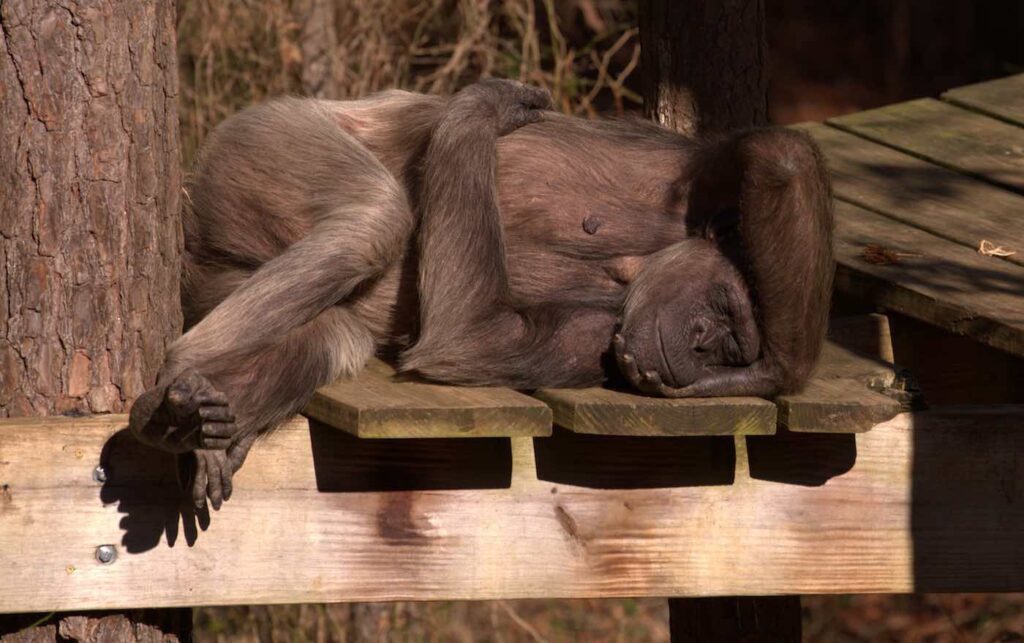
Nat Geo Series Follows Rescued Chimpanzees in Sanctuary Where High Jinx is Job One

Ever wonder how the chimpanzees are doing, after hundreds were rescued from biomedical research facilities and moved to a sanctuary home? A new National Geographic reality show has your answers.

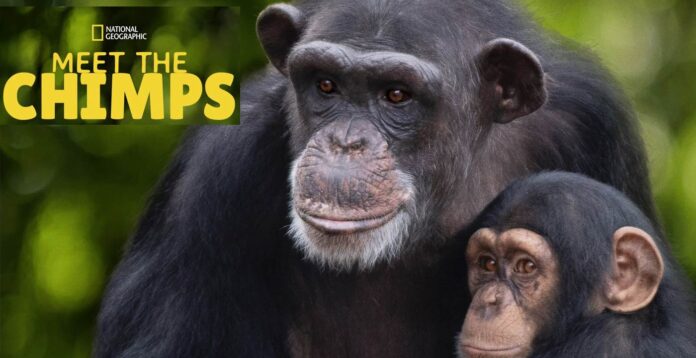
Meet the Chimps tracks the ups and downs of an extraordinary group of chimps who have been given a second chance at life at a unique wildlife sanctuary in Shreveport, Louisiana.

Through a blend of natural history and observational-documentary filmmaking, the streaming series takes viewers behind the scenes at Chimp Haven—the 200-acre refuge tucked deep in the forest, which is home to more than 300 chimpanzees.

Emmy Award-winning actress Jane Lynch narrates the season, which is described by Nat Geo as “a real-life drama with a full emotional range” that gives unparalleled access to the animals and their “food squabbles, alliances, romances, ‘bromances’, tears, tantrums, high jinxes and heartbreaks.”

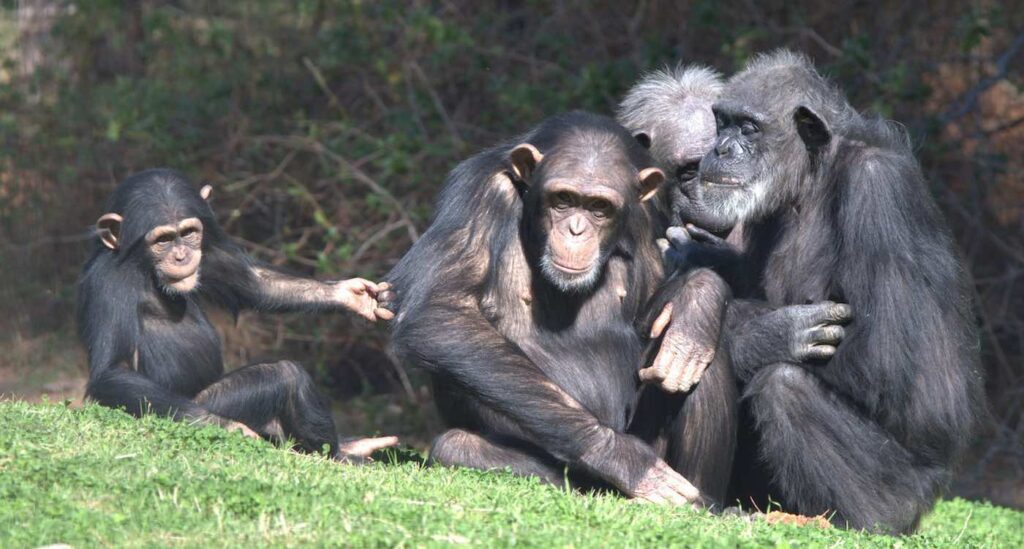
Most of the chimps were freed from research facilities by the US and now get to experience what they would have enjoyed in the wild: climbing trees, living in large, bonded social groups, eating their favorite fruits, running, playing, exploring, and—best of all—choosing how they spend their days.

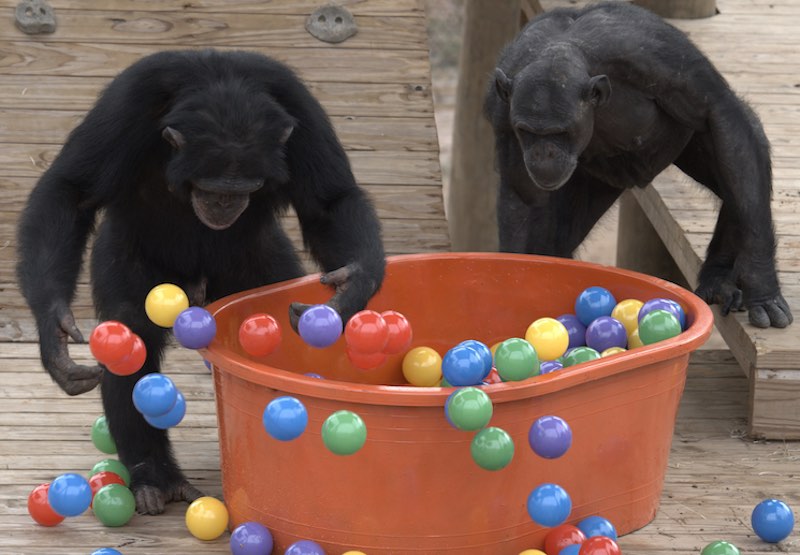
There’s even some man-made fun like a mini ball-pit to entertain the youngest primates.

Meet The Chimps – Nat Geo

During the six-part series that streams on Disney+ (watch a sneak peek below), viewers are also introduced to a staff whose “dedication, compassion and commitment knows no bounds”.

WATCH: Chimps Show Researchers They’d Cook if Given the Chance

But the chimps are always front and center—and also whirling about in the background, hither and yon.

Narrator Jane Lynch says, “Meet the Chimps gives viewers the rare opportunity to experience family and community living from a chimp’s perspective.”

Meet The Chimps – Nat Geo“Nobody knows drama until you’ve experienced the day-to-day high jinxes and antics at the Chimp Haven sanctuary.”

“I was overjoyed to be a part of this hilarious and heartwarming series, which I promise will be a source of entertainment for the whole family,” she added.

Meet The Chimps – Nat Geo

Below, watch the trailer and also a GNN sneak peek exclusive from the episode where the baby Carlee has her eye on one thing—her good friend Valentina Rose’s blanket.

The series began streaming on October 16, but viewers will need a paid subscription to Disney+.

DON’T Monkey Around—Share This Sneak Peek With Your Tribe on Social Media…

CHECK OUT: Listen To The Sassy Singing Parrot That Thinks It’s Beyoncé

First Firefighting Robot in America Just Helped to Put Out a Blaze in Downtown Los Angeles

Photo by Gary Apodaca / LAFD, CC

Earlier this week, the Los Angeles Fire Department became the first city in the country to add a firefighting robot to their ranks—and it has already proven its metal on the frontlines.

Weighing about 3,500 pounds, the Thermite Robotic Systems 3 firefighting vehicle—or RS3 for short—is capable of deploying about 2,500 gallons of water per minute. The vehicle, which can be controlled by a handheld remote from a safe distance, is also equipped with a high-definition video stream so that the operator can easily maneuver the robot through difficult conditions in the field.

Although The Los Angeles Times reports that the RS3 is about the same size as a Smart car, it is small enough to fit through a set of double doors while also being strong enough to plow its way through a wall should the need arise.

LOOK: This Inexpensive New Smart Mask Can Amplify the Speaker’s Voice and Translate Speech into 8 Languages

“We can fight the fire from inside,” LAFD Chief Ralph Terrazas told the news outlet, adding that the robot was a “game-changer” for his team.

Prior to the RS3 being unveiled to the public at a press conference earlier this week, it had been deployed alongside 130 human firefighters to help extinguish a “major emergency” commercial fire in downtown Los Angeles.

Despite how the severity of the blaze forced firefighters to withdraw from the two buildings and use their hoses from the outside, the RS3 was able to continue onwards and unleash its water cannon from the inside.

Photo by Gary Apodaca / LAFD, CC

The LAFD Foundation was able to purchase the military-grade robot for the department thanks to a “sizable donation” during one of their fundraisers.

The RS3 will now be assigned to Firehouse 3, which is reportedly the busiest fire station in the city.

After the robot’s successful deployment this week, officials hope that the robot will continue to help protect the Los Angeles community and its firefighters.

Be Sure And Share This Historic News With Your Friends On Social Media…

Kidnapped Lemur is Rescued and Returned to Safety Thanks to Eagle-Eyed Young Boy

An elderly ring-tailed lemur has been returned safely to his home at the San Francisco Zoo thanks to the quick actions of an eagle-eyed young boy.

Maki the lemur was believed to have been stolen out of his enclosure earlier this week after police discovered signs of forced entry following his disappearance.

Zookeepers were particularly worried about the endangered critter not only because he requires specialized care, but also because the average life expectancy of lemurs is 16 years. Maki, who is an impressive 21 years old, is considered a senior resident of the zoo.

After staffers alerted city police forces to the break-in, the zoo’s Twitter page offered a $2,100 reward—$100 for each year of Maki’s life—for any information leading to his recovery.

LOOK: Protest Sign Made by Third Grader Inspires the Nation When it Mysteriously Travels to Protests

Luckily, the lemur was spotted by a 5-year-old boy named James Trinh just two days after his kidnapping.

James, who is a student at the Hope Lutheran Church Day School, had been waiting outside for his mother when he saw Maki playing on the church’s playground equipment. When his mother finally arrived, he immediately told her to “Call the zookeeper!”

Although it took some wrangling for animal control and Daly City Police officers to safely remove Maki from his hiding place inside the plastic playhouse, the senior lemur was returned to the zoo and found to be in good health.


Police have not yet been able to identify the lemur’s kidnappers—but in a show of gratitude for Maki’s return, his relieved caretakers made a donation to the Hope Lutheran Church Day School and rewarded James with a lifetime membership to the zoo.

“Following the abduction of our beloved senior ring-tailed lemur, Maki, we received an outpouring of concern, which led to his return late Thursday evening!” wrote the zoo’s Twitter page. “Somewhat anxious and hungry, Maki appears to be in good health!”

“We appreciate and thank SFPD and [Daly City Police] for their diligence and especially thank the Hope Lutheran Church for the information that led to his safe reunion. The San Francisco Zoological Society will be making a donation to the church in Maki’s honor. Thank you, all!”

Quit Monkeying Around With Negative News—Share This Sweet Story With Your Friends On Social Media…

“If you believe there is an unknown everywhere, in your own body, in your relationships with other people, in political institutions, in the universe, then you have maximum freedom.” – John C. Lilly

Quote of the Day: “If you believe there is an unknown everywhere, in your own body, in your relationships with other people, in political institutions, in the universe, then you have maximum freedom.” – John C. Lilly

Photo: by jurien huggins

With a new inspirational quote every day, atop the perfect photo—collected and archived on our Quote of the Day page—why not bookmark GNN.org for a daily uplift?


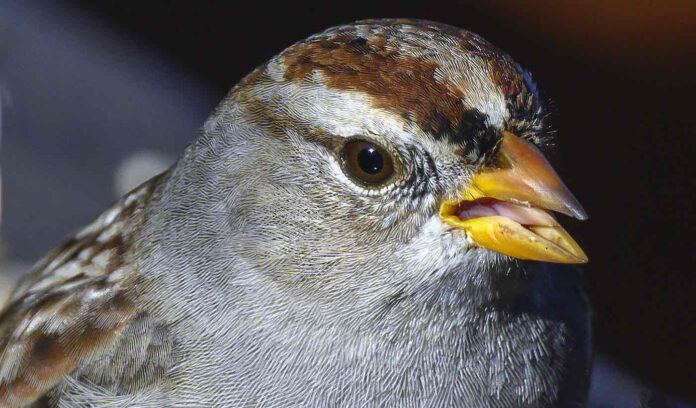
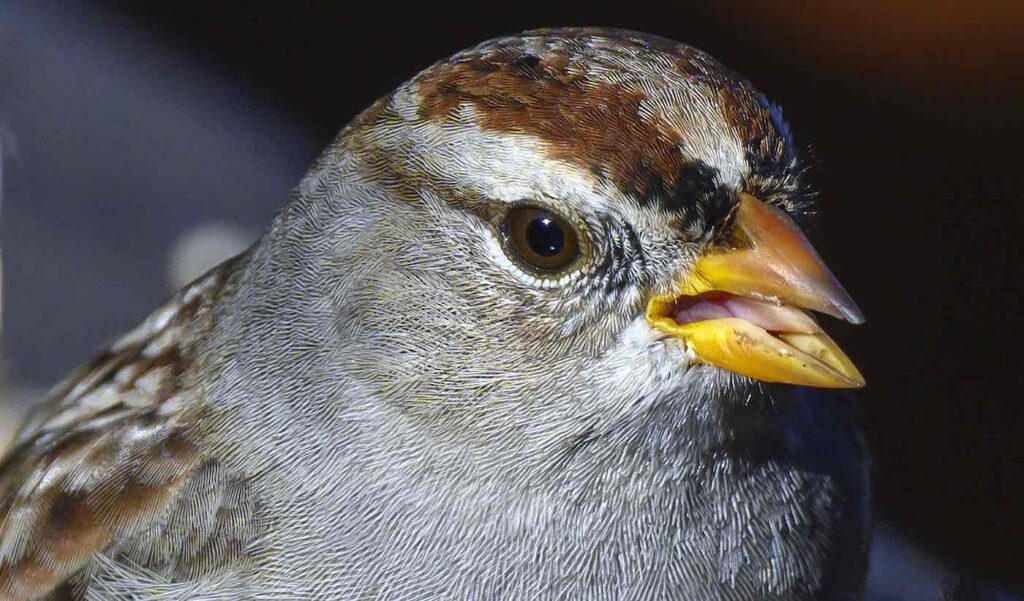
Birds in San Francisco Started Singing Differently in the Silence of the Pandemic Shutdown

Doug Greenberg, CC license

When the roads emptied of traffic in March and April because of the COVID-19 pandemic, Bay Area residents reported hearing more birds—and they were halfway right.

Jennifer Phillips, a researcher at Cal Poly, and Elizabeth Derryberry, a professor at the University of Tennessee in Knoxville, collaborated to evaluate whether and how songbirds responded to the quieter environment with much less traffic.

They compared the soundscapes and songs of the white-crowned sparrow recorded across the San Francisco area prior to and during the statewide shutdown.

“When I saw photos of an empty Golden Gate Bridge, it struck me just how little traffic there was,” said Derryberry, lead author of the study. “I realized we were in a unique position to look at how changes in human behavior might affect wildlife and what the noise reduction might mean for the songbird we study.”

The researchers found that the birds responded by producing softer songs that could travel over a larger distance, unimpeded by noise. The urban songs also became “sexier” in terms of vocal performance—meaning birds sang a wider range of notes in their song, in a wider bandwidth, during the shutdown.

RELATED: New Bird Song That ‘Went Viral’ Across This Species of Sparrow Was Tracked by Scientists For the First Time

White-crowned sparrow singing, Doug Greenberg – CC license

As a graduate student from 2013-2017, Phillips studied the song of the white-crowned sparrow in the Bay Area. Now a postdoctoral researcher at Cal Poly, she returned to her former study sites in April and May 2020 to record noise and song samples from urban and rural sites surrounding San Francisco and Richmond, California. She measured how loud the sparrows were singing and how far away from her they were.

The team then compared those samples to the ones collected from 2012-2020 by Phillips, Derryberry and David Luther, a biologist at George Mason University. During the statewide shutdown, the team observed lower noise levels in the city, as a result of less traffic. In fact, traffic on the Golden Gate Bridge returned to levels not seen since 1954.

The dramatic reduction of vehicular traffic had erased a half-century of urban noise pollution.

“The rush hour roar was more like a gentle, sporadic purr,” Phillips said. “Usually, the Presidio is full of visiting tourists coming to see the Golden Gate Bridge, often in large groups. This season, only a few local individuals or couples were out for morning walks or bike rides. It was quite peaceful.”

POPULAR: After Years of Helping Crow Family, Man Was Left ‘Mind-Blown’ Over Their Homemade Gifts in Return

According to Phillips, prior to the shutdown, bird territories in San Francisco had nearly three times more human noise than in rural western Marin County—but during the shutdown, people could hear effectively four times more birds than usual.

“When the birds don’t have to compete with loud background noise, they can essentially sing more quietly but still communicate over greater distances — approximately twice as far,” Phillips said.

This helps explain media reports suggesting that bird songs sounded louder during the shutdown and that people were more aware of the birds around them. Birds were actually singing more softly, but it was so quiet, they sounded louder.

LOOK: Pigeon That Can’t Fly Forms Inseparable Bond With Adorable Chihuahua That Can’t Walk

“Our findings illustrate that behavioral traits can change rapidly in response to newly favorable conditions, indicating an inherent resilience to long-standing anthropogenic pressures like noise pollution,” said Derryberry.

The study published in Science also found that during the shutdown male sparrows’ songs covered a wider range of pitches and so might convey more information for females to use in selecting an effective mate and for males to assess a competitor.

TWEET This Fascinating Story to Your Flock on Social Media…

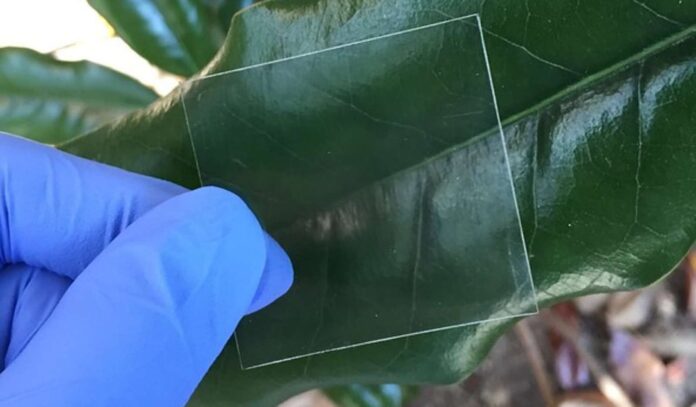
Scientists Create Transparent Wood Nearly as Clear as Glass to Make Stronger, Better Insulating Windows

USDA Forest Service

3.5 percent of the energy used in the United States goes right out the window—wasted because of inefficient glass panes in winter and summer. Now scientists have given us a way to utilize sustainable tree products as a replacement for the costly glass.

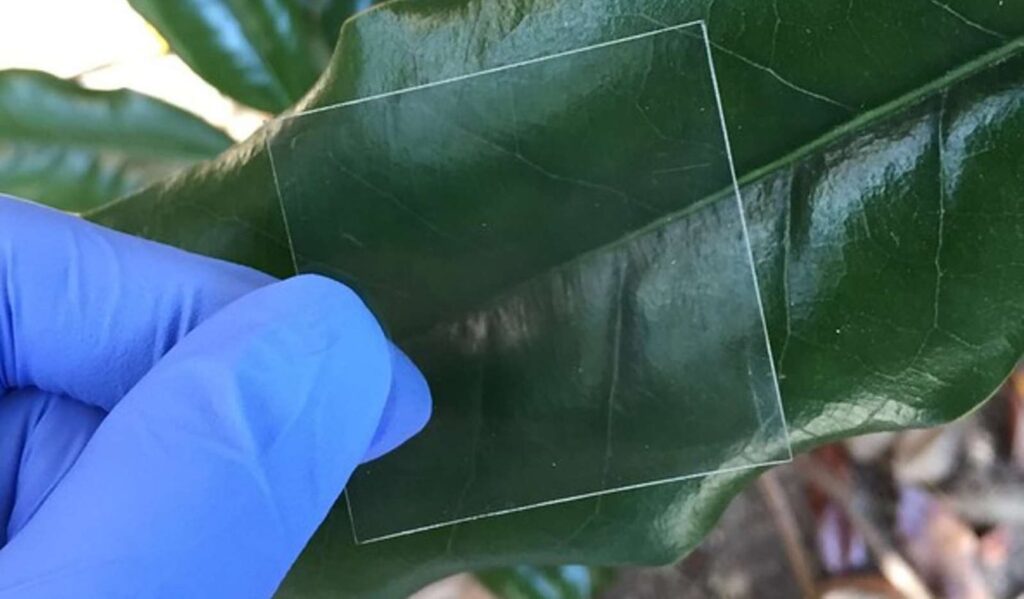
A researcher at the USDA Forest Products Laboratory, Junyong Zhu, has collaborated with colleagues from the University of Maryland and University of Colorado to develop a transparent wood material that looks clearly like the window of tomorrow.

They have demonstrated that transparent wood has the potential to outperform glass windows in nearly every way, making it one of the most promising materials of the future.

While glass is the most common material used in window construction it comes with a costly economic and ecological price.

Heat easily transfers through it, especially single pane, and leads to higher energy bills when it escapes during cold weather and pours in when it’s warm. Transparent wood is approximately five times more thermally efficient than glass, substantially cutting energy costs.

POPULAR: Breakthrough For Spinal Cord Injuries and Dementia as Protein Builds ‘Striking’ Repairs

Glass production used for construction also comes with a heavy carbon footprint. Manufacturing emissions alone are around 25,000 metric tons per year, without considering the heavy footprint of also transporting the glass.

USDA Forest Service

The scientists used wood from the fast-growing, low-density balsa tree. It is treated to a room temperature, oxidizing bath that bleaches it of nearly all visibility. The wood is then penetrated with a synthetic polymer called polyvinyl alcohol (PVA), creating a product that is nearly transparent.

Their findings were published in the Journal of Advanced Functional Materials in a paper entitled, A Clear, Strong, and Thermally Insulated Transparent Wood for Energy Efficient Windows.

The natural cellulose in its wood structure and energy-absorbing polymer filler means that it is 3 orders of magnitude more durable than glass—and much lighter in weight, too. It can withstand much stronger impacts and, unlike glass, it bends or splinters instead of shattering.

CHECK OUT: Map Lets You See How Your Hometown has Moved Across 750 Million Years of Continental Drift

Additionally, the transparent wood is a sustainable material, with low carbon emissions and an ability to biodegrade much faster than plastic.

It is made from a renewable resource that is also compatible with existing industrial processing equipment, making the transition to manufacturing an easy prospect.

With all of these potential benefits for consumers, manufacturing, and the environment, the case for transparent wood couldn’t be…clearer.

RELATED: Giant Fusion Reactor Hotter than the Sun to Provide Unlimited Clean Energy Without Waste Marks Milestone

WATCH the video from the University of Maryland…

SHINE Some Light On Your Friends By Sharing This on Social Media…

Customers Jump Up to Help Run Restaurant When Chef is Left Alone After Staff Emergency: ‘Beautiful to witness’

Emily Puhi - Facebook

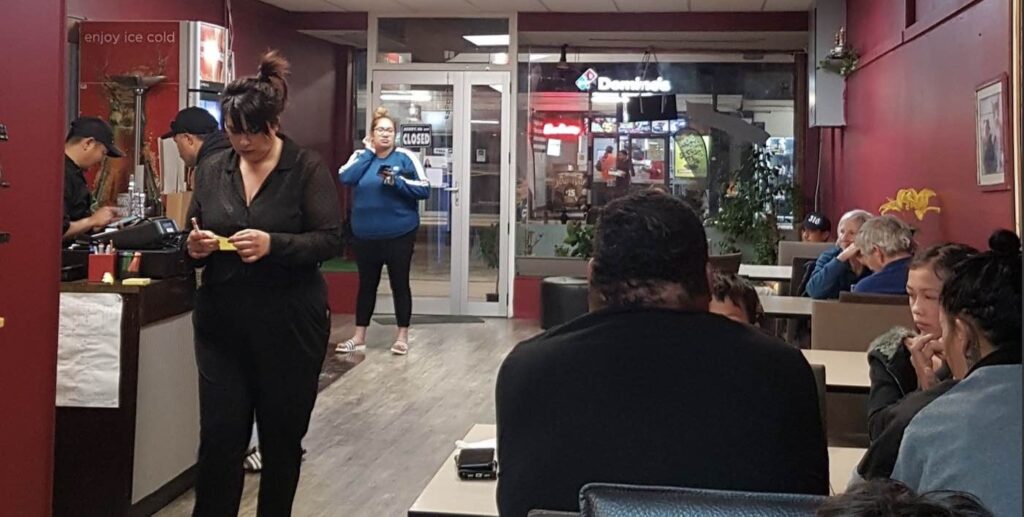
It’s a popular restaurant in Huntly, New Zealand, and it was packed with customers last Friday night when suddenly a staff family emergency resulted in the chef being the only one left to serve hungry patrons.

When Emily Puhi arrived at Thai Food Huntly, she saw the tables were filled and people were lined up waiting to pay or pick up their take-out food.

She realized the cook was alone, and because he was busy cooking, he couldn’t take orders or collect money.

Suddenly, a lady who was waiting to pay grabbed some paper and started waiting tables for him.

One customer then jumped in to do the dishes.

Luckily, someone in the neighboring shop offered their help, too.

POPULARMom Overwhelmed With Gratitude When Hotel Manager Befriends Autistic Boy Wanting to Show Off His Card Tricks

“With the permission of the chef, the worker from next door ran the tills to make sure everyone paid,” Emily told the New Zealand Herald. “It was such a beautiful feeling.”

Emily Puhi – Facebook

The term ‘customer service’ took on a whole new meaning—an example of humanity at its finest.

RELATED: ‘Unbelievable Act of Kindness’: Customer Left $2,500 Tip for Restaurant Staffers Before They Closed Up Shop

Emily wrote on Facebook, “We could easily feel the sense of community all around the place.”

“Frowns turned to smiles and grumpy waiting turned to patiently waiting. What an awesome place to live in.”

RESTORE Your Friends’ Faith in Humanity By Sharing The Sweet Moment on Social Media…

 

Singapore’s Plan to Plant 1 Million Native Trees Will Protect Species and Put a Park 10 Minutes From Every Citizen

Mandai Mangrove and Mudflat –Singapore National Parks Board

In an effort to restore Singapore’s once-rich mangrove forest ecosystems, the nation is embarking on a 1 million tree planting spree in hopes that they can save numerous bird, reptile, and tree species from extinction, and provide a ton of valuable ecosystem services.

The development of the small island into a world economic juggernaut which has brought billions in foreign investment currency to impoverished East Asian and Indo-Pacific communities has also replaced many of the island’s original mangrove forests with urban infrastructure.

However like most nations, the city-state of Singapore also has a national parks agency, and they have some plans in mind to help “green” the cities, and restore bird and tree populations in mangrove forests, as well as ensure that every Singaporean is “10 minutes from a park.”

The government is also sponsoring the creation of rooftop gardens, curbside foliage, and other green city projects like therapy garden parks, which will be designed to meet the physical, psychological and social needs of park-goers. Visitors will be able to experience a range of health benefits such as the relief of mental fatigue, reduced stress, and improved emotional well-being.

Trees play an important role in creating a livable environment, National Parks Conservation Group director Adrian Loo tells Mongabay. “They serve as natural air filters, they reflect radiant heat, and cool surfaces… and help to mitigate climate change.”

RELATED: How Costa Rica Slowed, Stopped, Then Reversed Deforestation in Their Rainforests

The planting of one million trees was assigned a target date intelligently set to conclude by 2030, as tree-planting operations tend to suffer from unrealistic deadlines.

Mandai Mangrove and Mudflat –Singapore National Parks Board

Mangrove and Mudflat Magic

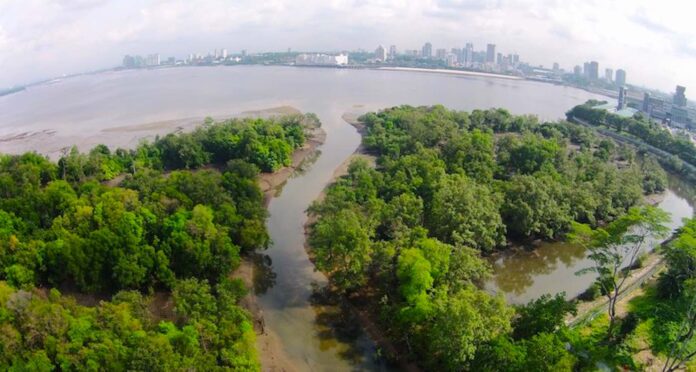
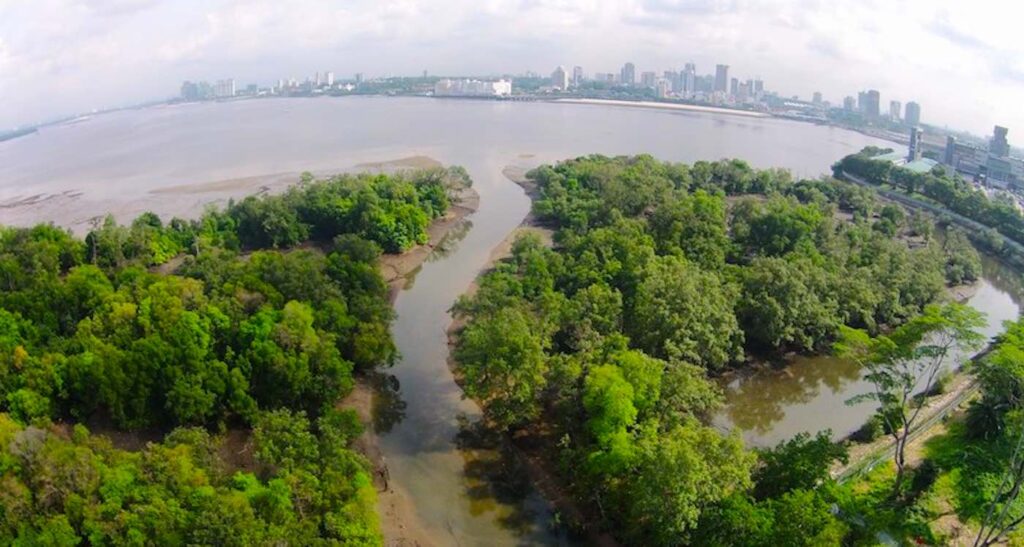
In August, park authorities announced the creation of the Sungei Buloh Park Network, a 990 acre (400 hectare) park of wetlands and mangroves in the northern part of the island. Sungei Buloh encompasses several different existing wetland habitats, including mangroves and mudflats, and plays host to 279 different species of migratory birds.

POPULAR: The Search Engine That Plants Trees With Every Search Has Just Planted its 100-Millionth Tree

Despite the relative size disparity between Singapore and its neighbor Malaysia, Sungei Buloh Wetland Reserve is an important stop on the migration routes of dozens of species that travel every year from Australia and Russia to New Zealand and Alaska.

Also found in Sungei Buloh are large monitor lizards, saltwater crocodiles, and smooth-coated otters, presumed extinct up until the 1990s—and 20 new species discovered for the first time.

“Singapore’s mangroves punch way above their weight [in biodiversity,” Geography professor Dan Friess from the National University of Singapore told Mongabay. “We only have a small area of mangroves, but within that we have huge biodiversity. For instance, in the U.S. they only have three species of mangrove plant species, while in Singapore you can find 35 different species of plant species in its mangroves.”

Some of these mangroves are critically endangered, and tree nurseries on the island have so far produced 51,819 trees which have been transferred to its shoreline. Furthermore, to help speed the process up, Singapore’s government is hiring tree re-location services to move adult trees from areas that are up for development to mangrove and other reserve sites.

CHECK OUT: Tiny Forests Are Springing Up All Around Europe, Inspired By Japan, to Help Restore Biodiversity

Mangroves are the ultimate custodians, and as GNN has detailed before, they provide as many benefits for civilization as any wild feature. They protect against soil erosion, which can deplete farmland and strangle coastal reefs, trap more CO2 than any other tree, and can house dozens of species in every order in Animalia.

They are also the first line of defense for coastal property insurers during storms. For instance, in the U.S. where mangrove ecosystems have declined over the last hundred years, they prevent $100 million in property damage from floods every storm season due to their ability to dissipate the kinetic energy of waves by up to 66%.

GROW Your Support For Trees and Good News By Sharing on Social Media…
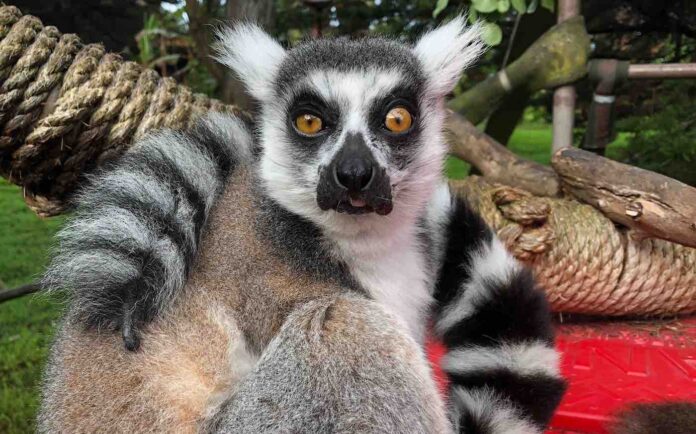
“Here is a new spiritual practice: Don’t take your thoughts too seriously.” – Eckhart Tolle

Quote of the Day: “Here is a new spiritual practice: Don’t take your thoughts too seriously.” – Eckhart Tolle

Photo: by Pablo Merchán Montes

With a new inspirational quote every day, atop the perfect photo—collected and archived on our Quote of the Day page—why not bookmark GNN.org for a daily uplift?