All News - Page 553 of 1734 - Good News Network
Home Blog Page 553

First Ever Perfectly-Preserved Extinct Ice Age Cave Bear Discovered by Reindeer Herders in the Russian Arctic

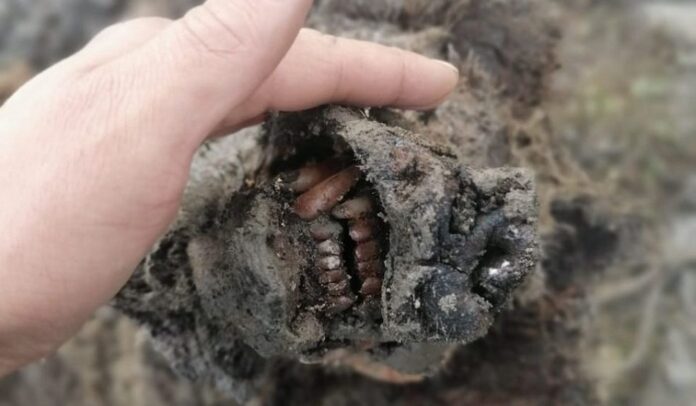
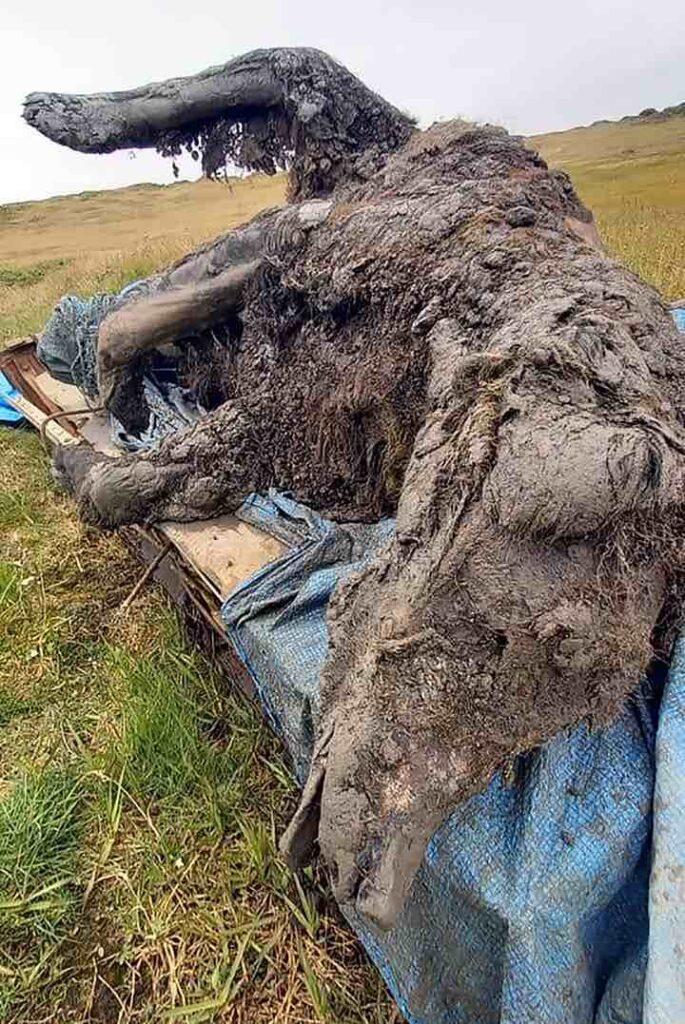
In a first-of-its-kind discovery, reindeer herders in the frozen tundra of the Russian Arctic find the “mummified” remains of an Ice Age cave bear.

Discovered on Bolshoy Lyakhovsky island in the Siberian Republic of Sakha, the bear was found encased in ice so that all its organs—even its nose—were still intact, allowing scientists the rare opportunity to study the extinct animal in exquisite detail.

Radiocarbon dating to discover the age of the remains has not been completed, but early suggestions seem to suggest they are around 39,000 years old.

Scientists at the North-Eastern Federal University in Yakutsk, Russia, who are giddy over the discovery, said that, until now, only skulls and bones of the cave bear—a slightly-larger predecessor to the modern brown bear—have been found.

“Today this is the first and only find of its kind—a whole bear carcass with soft tissues. This find is of great importance for the whole world,” said the university’s Lena Grigorieva, one of Russia’s leading experts in Ice Age species.

Another scientist, Maxim Cheprasov from the Mammoth Museum laboratory in Yakutsk, told the Siberian Times that “a scientific program for its comprehensive study will be prepared,” so that more is known about how the animal lived.

LOOK: Teen Discovered New Planet 6.9 Times Bigger Than Earth Just Days into NASA Internship

NEFU RIAEN

“We will have to study the carcass of a bear using all modern scientific research methods—molecular genetic, cellular, microbiological and others.”

Coincidentally, a well-preserved cave bear cub of the same species (Ursus spelaeus) was recently found separately.

One of the classic examples, like the woolly mammoth, from the Late Pleistocene era’s megafauna, the cave bear originally got its name because most of its bones were found in caves.

POPULAR: Newly-Discovered Canadian Cave Big Enough to Fit the Statue of Liberty Proves the World is Still a Wondrous Place

Having no natural predators, scientists have long hypothesized that death during hibernation, a period which during the last Ice Age would have been long indeed, was the most common cause of mortality.

Climate change, and human-caused extinction have both been suggested as the major cause of the animals disappearance as recently as 15,000 years ago.

Permafrost melts in Siberia, according to the Times, have revealed major discoveries in the field of paleontology, such as the preserved carcasses of mammoths, woolly rhinos, Ice Age foals, and cave lions.

CHECK Out: Rare Archeological Treasures Discovered Beneath Attic Floorboards of English Tudor Mansion

UNEARTH This Awesome Discovery For Your Friends On Social Media…

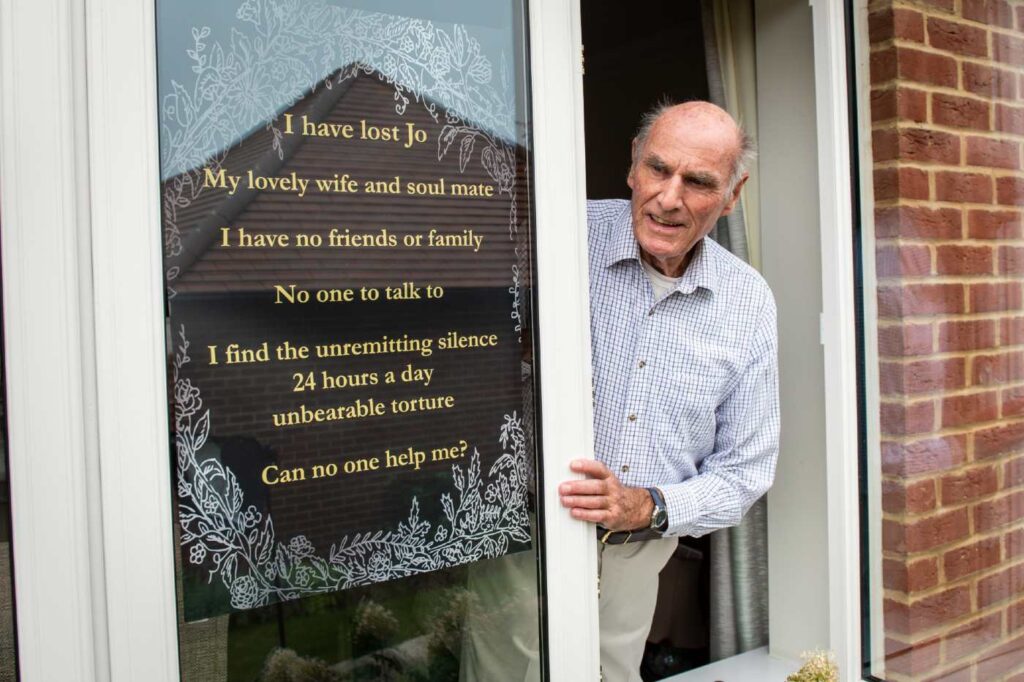
Lonely Widower Puts Up a Poster Asking For Friends—And is Flooded With Messages From New Pals

SWNS

A lonely pensioner who put up a poster asking for friends after his wife died has been inundated with thousands of calls and emails from people who want to be his pal.

SWNS

Tony Williams received so many emails they crashed his inbox. He’s also had hundreds of phone calls from new friends around the world.

People from America, Germany, Holland, Australia, Egypt, India, and Japan have been in touch inviting him on road trips to the U.S. or for an afternoon drinking gin and tonics.

Others have offered Tony, a retired 75-year-old physicist, lunches, phone calls, and for their kids to adopt him as a grandfather.

Tony, from Alton in England’s East Hampshire, said, “The love and compassion people have shown has actually brought tears to my eyes. People have sent me the most delightful emails.

CHECK OUT: College Student Uses Stickie Notes to Befriend Elderly Couple in Quarantine Across the Street

“They’ve sent me pictures of their kids, their pets, told me about their aspirations and telling me they are thinking of me.

“I got an email from a local teacher asking if children in her class could write me letters. I got in touch with her straight away and said it would be delightful. I would love that.

“People have been phone from Canada and the States. One lady phoned up and said if I get on a plane sometime she would pick me up and show me her area of Florida… It’s just been gorgeous.

“When I started responding they were coming in thick and fast. I would say about four or five a minute.

“The thing is, I can’t respond now, as my email account seems to have crashed. A red message came up saying there was some sort of error and it needs to be reset.”

RELATED: Belgian Man Strikes Up Friendship With Owl Family After They Discover Mutual Love of Television

Tony and late wife Jo moved to Alton last year so Jo could be closer to her sister, Beryl.

SWNS

But he said he was left without anyone to speak to after his wife Jo, 75, passed away in May, just nine days after she was diagnosed with pancreatic cancer.

They were unable to have children and he said he often sat at home willing the phone to ring—”but it never does.” Tony has spoken of feeling “cursed” by loneliness.

Without any family nearby, Tony put two adverts in his local newspaper looking for a friend to chat to, but didn’t get any replies.

In a bid to find a pal to listen to music with, or just chat in the garden, Tony had business cards made to hand out when he went to the supermarket or out for a walk.

He handed out dozens without receiving a call back, so he decided to put a poster up in his window asking for pals.

SWNS

Now, after spending a summer “waiting for the phone to ring,” Tony has been swamped by the responses.

He is enjoying chatting on the phone to strangers—now friends—from around the world, and plans to meet up with his new pals once Covid restrictions allow.

MORE: Man is Honoring Handshake From 28 Years Ago, Splitting Lottery Jackpot With a Friend After Winnings Millions

“I’ve just been completely overwhelmed and am so thankful for it all,” he said.

SHARE This Story Of Friendship and Kindness With Your Pals On Social Media…

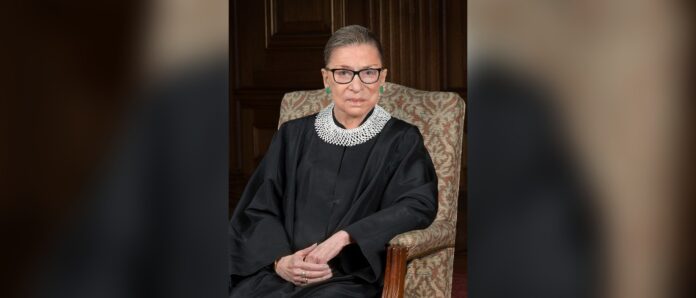
“Fight for the things that you care about, but do it in a way that will lead others to join you.” – Ruth Bader Ginsburg (1933-2020)

Quote of the Day: “Fight for the things that you care about, but do it in a way that will lead others to join you.” – Ruth Bader Ginsburg (1933-2020)

Photo: by Saad Chaudhry

With a new inspirational quote every day, atop the perfect photo—collected and archived on our Quote of the Day page—why not bookmark GNN.org for a daily uplift?


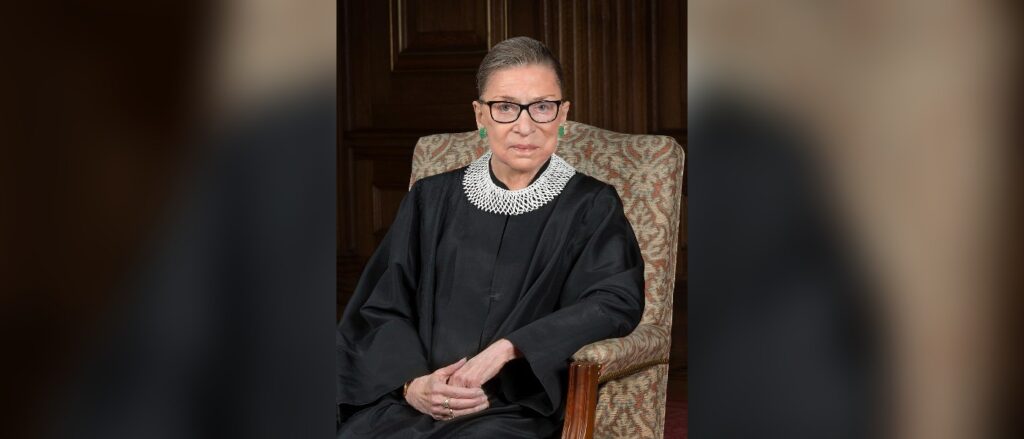
5 Great Things We Should Never Forget About Ruth Bader Ginsburg (1933-2020)

A Supreme Court hero, and all-round wise woman, Ruth Bader Ginsburg died on Friday at the age of 87 surrounded by family at her home in Washington, D.C.

She was the second woman justice to serve on the highest court in the land—a pioneer in her field, when there were few females in the halls of legal offices or law schools. But there were other reasons we will always remember her. 

1) She proved that mothers get things done—and then some. 

RBG showed that being a mother can prove an advantage and not an impediment to a woman’s professional life. 

In a 2016 essay for the New York Times, she wrote that she believed her success at Harvard and Columbia Law School—where she graduated joint first in her class in 1959—was actually down to having an infant to care for.  

“My success in law school, I have no doubt, was in large measure because of baby Jane. I attended classes and studied diligently until 4 in the afternoon; the next hours were Jane’s time, spent at the park, playing silly games or singing funny songs, reading picture books and A. A. Milne poems, and bathing and feeding her.

“After Jane’s bedtime, I returned to the law books with renewed will. Each part of my life provided respite from the other and gave me a sense of proportion that classmates trained only on law studies lacked.”

CHECK OUT: Tips for Becoming an Outstanding Leader

2) She wasn’t afraid to speak her mind.

Despite coming out of law school with top grades, no law firm in New York City would hire Ginsburg, who was, by then, a mother of two.

She began teaching at Rutgers and Columbia. Those positions gave RBG the opportunity to advocate for women’s rights. She forged a name for herself that led to her 1980 appointment to the U.S. Court of Appeals in Washington D.C. Thirteen years later, President Clinton nominated her for the Supreme Court. 

As one of nine, Ginsburg was known as the “Great Dissenter.” She had special neckwear that she donned, even calling one her Dissent Collar

The cases on which Justice Ginsburg dissented weren’t trivial: She spoke up on matters of affirmative action, employment discrimination, access to abortion, and controlling political campaign spending. 

She demonstrated how, when you believe something’s wrong, to use your voice.

3. She showed there’s value in stoicism. 

In an interview with legal academic Jeffrey Rosen, published in the Atlantic, she spoke of ignoring ‘useless emotions’.

“My mother’s advice was, don’t lose time on useless emotions like anger, resentment, remorse, envy. Those, she said, will just sap time; they don’t get you where you want to be.”

“One way I coped with times I was angry: I would sit down and practice the piano. I wasn’t very good at it, but it did distract me from whatever useless emotion I was feeling at the moment. Later, I did the same with the cello. I would be absorbed in the music, and the useless emotion faded away.”

Perhaps that’s why RBC loved listening to classical music all her life—even during her famous workouts.

RELATED: 9 Leaders Reveal What Their Biggest Doubters Told Them — and We’re Glad They Ignored it

4. She lived by her morals.

The late justice was never interested in being the loudest, showiest person in the room.

In fact, those who knew her described her as a quiet, “almost retreating” woman with a soft voice.

So what drove her? Her advice to others gives a clue. “Fight for the things that you care about, but do it in a way that will lead others to join you.” 

5. She had hope for the future. 

Speaking with Rosen in late 2019, she said, “Our country has gone through some very bumpy periods. But, I’ll tell you the principal reason why I’m optimistic: It’s the young people I see. 

“My lawyer granddaughter, my law clerks, are determined to contribute to the good of society. And to work together. So the young people make me hopeful. 

“They want to take part in creating a better world. Think of Malala. Think of Greta Thunberg in Sweden. What is she, 15, 16? Yes, I’m putting my faith in the coming generations.”

MORE: Watch Teen’s Graduation Advice For The Class of 2020 That Won 1st Prize in Global Competition: ‘We got this!’

SHARE These Words Of Wisdom With Your Friends On Social Media…

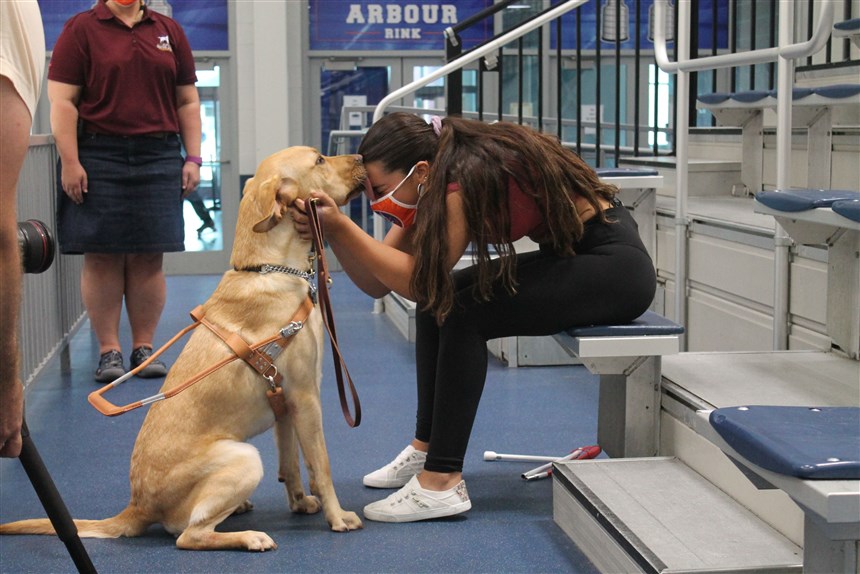
Blind Teen Swims For Gold With a Guide Dog Helping Her Prepare for Tokyo Paralympic Games

Guide Dog Foundation

Paralympian Anastasia Pagonis’ remarkable success story began when she lost her vision at age 14. Granted, it’s a tough age for any teen, but dealing with a life-changing disability made things even more challenging.

Guide Dog Foundation

“It took me about eight months to kind of regroup myself,” she told TODAY, “and then I got it in my head, ‘Okay, I’m blind. Now what am I going to do with my life?’”

A Long Island native, Pagonis practically grew up in the water. She’d taken up competitive freestyle swimming just a few months prior to going totally blind. While she excelled at the sport even with limited vision, an “abusive team” atmosphere prompted her to quit competition.

RELATED: 15-Year-old Girl Hailed as ‘Lionhearted‘ Hero for Cycling 750 Miles With Injured Father on the Bike

Losing her sight so close on the heels of giving up the pastime she loved took a heavy emotional toll. After months of therapy, the tenacious teen was ready to get back in the swim—only swimming wasn’t enough for Pagonis. She wanted to compete.

Guide Dog Foundation

Now she was faced with another dilemma. “Nobody wanted to train the blind girl,” she recalled in an interview with TEAM USA. “I ended up after about eight months finding an amazing coach who was willing to train me and actually put on blackout goggles to try to figure out a way for me to swim.”

By the age of 16, Pagonis was earning a reputation as a fierce competitor, taking two gold medals at the World Para Swimming World Series in Australia. Even with her newfound sense of accomplishment, Pagonis was reticent at first to tap into social media.

When Pagonis realized her experiences and positive outlook might be a boon to others, however, she eagerly donned the mantle of role model. “I want to help people the way that I needed help,” Pagonis told TEAM USA. “I started doing Instagram and social media and was soon getting a bunch of (direct messages) and replies saying, ‘Wow you really helped me get through little things,’ or, ‘I was getting bullied in school and you helped me get through that,’ or, ‘You let me know how much I was worth.’”

Back in the water, Pagonis was truly in her element. “It’s my happy place,” she told TODAY. “It’s the place where I feel like I don’t have a disability and I feel like that’s the only place where I feel free. When I dive in the water, it’s just me in the pool and I feel such a connection with it.”

MORE: Teen Athlete Gives Up Race Hopes to Escort Injured Runner Across the Finish Line in Epic Display of Sportsmanship

While she didn’t know it yet, earlier this year, her happy place was about to get a whole lot happier thanks to some other New York athletes.

The New York Islander’s Puppies With Purpose Program (founded in conjunction with the nonprofit Guide Dog Foundation) was about to have its first graduate, an adorable Labrador retriever named Radar. And who better to team the pup up with than fellow Long Islander Pagonis?

Due to the pandemic, Pagonis and Radar began their initial training at her home. On August 19, they were ready to take on the world together. “I’m so lucky to have Radar,” Pagonis told GNN. “He has given me my independence back and is my partner in crime!”

That independence has allowed Pagonis to take her place as a resident athlete at Colorado’s Olympic Paralympic Training Center with a goal of competing in the Tokyo 2021 games. “This was a huge and scary decision for me,” Pagonis tweeted. “But sometimes you need to take a leap of faith because if you don’t try, you don’t know. Always follow your dreams.”

CHECK OUT: Bored in Quarantine, 15-Year-old Transforms Her Bedroom Wall into 8-Foot Climbing Structure

With “dog as her copilot,” we’re guessing Pagonis’ dreams just might have an excellent chance of coming true.

SHARE This Pawsome Story With Your Friends On Social Media…

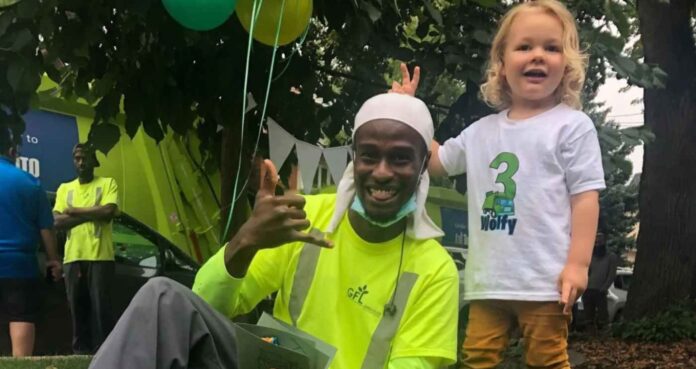
Toddler Gets His Own Real-Life Garbage Truck Parade From Local Trash Company And It’s The Best Birthday Ever–WATCH

Ask little kids what they want to be when they grow up and chances are you’re in for some high-flying answers like astronaut, helicopter pilot, or maybe even paratrooper.

Julia Wehkamp

Ask 3-year-old Wolfgang Reader (“Wolfy” to his friends and family) about his future plans, and you’ll quickly discover this tyke’s aspirations are a lot more down to earth.

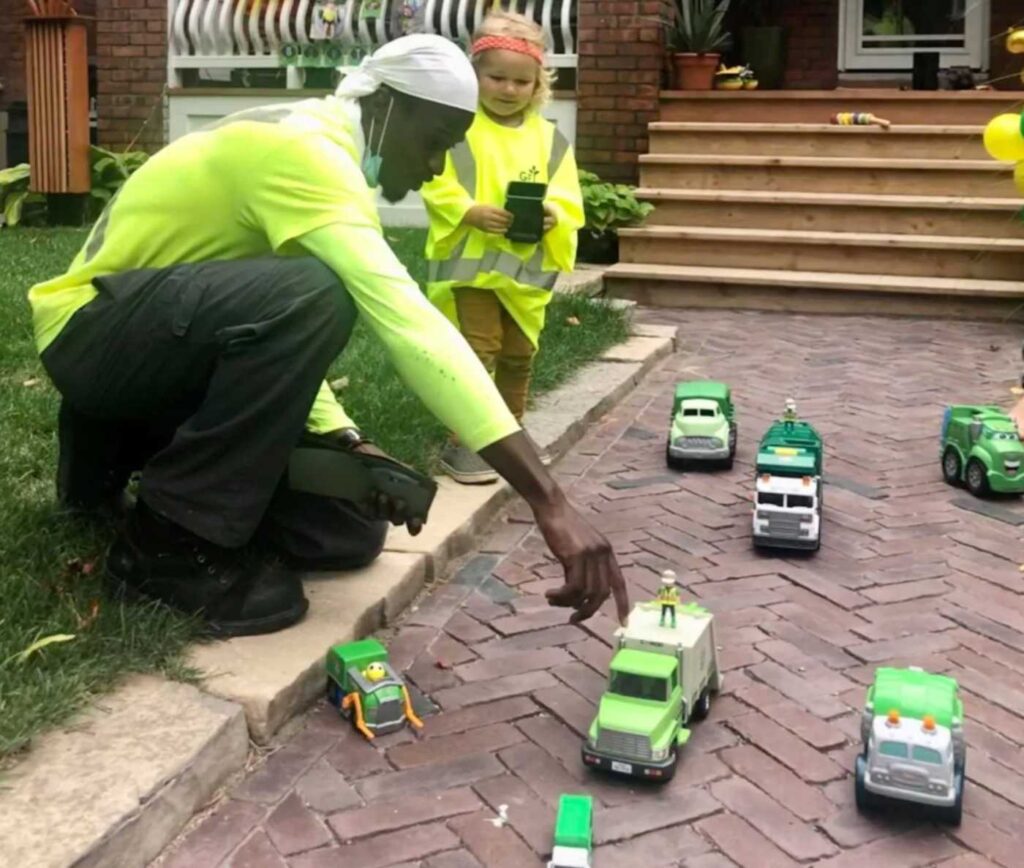
His obsession? Garbage trucks and the men who drive and load them. In fact, the precocious preschooler has his own fleet of toy garbage trucks to play with.

Up until recently, due to the pandemic, Wolfy was spending most days at home rather than with his classmates. His favorite day of the week was Friday—trash collection day, of course.

Friday mornings, Wolfy eagerly waited for his beloved garbage trucks to make their run up his street. Under his parents’ supervision, according to CBC, Wolfy became something of a mascot to the trash collectors.

RELATED: Boy Created a Word Puzzle to Help Entertain the Queen in Lockdown—And Was Thrilled to Get a Letter Back

To Wolfy, these men are superheroes. Two of them, D.J. and Drew, became his particular pals, earning him and his trash posse the nickname of the “Wolfpack.”

Julia Wehkamp

With family in COVID-19 lockdown, Wolfgang’s parents knew they weren’t going to be able to throw him a big birthday party. Instead, they told him he could invite a couple of friends over for cake.

Wolfy’s ideal guest list was obvious. “Drew and D.J.!” he decreed.

Since her son’s birthday fell on a Wednesday rather than a Friday trash collection day, his mom Julia Wehkamp doubted the Wolfpack would RSVP with a yes. However, with a little help from Wolfie’s grandmother, who’d sent a letter to the City of Toronto detailing the little boy’s devotion to his garbage truck buddies. Unbeknownst to the family, Wolfy’s birthday wishes were about to come true in spectacular style.

On the morning of September 9, four bright green garbage trucks, horns honking, rolled their way up the street to the delight of the ecstatic birthday boy and his stunned family.

“The boys came bearing gifts, howling out their windows and took time to play with Wolfie,” Wehkamp posted to her Facebook page. “He even got to honk the horn! Does it get any better!?”

MORE: Inspired by Captain Tom, 5-Year-old Walks On New Prosthetic Limbs Raising $1Million for Hospital That Saved Him

D.J. was unfortunately out of town, but Drew and several other trash collectors climbed down from their rigs to help Wolfy celebrate. After showering the little boy with trash-related gifts, sharing cake, and playing with toy trucks for close to an hour, Wolfy’s garbage collecting heroes drove off to their other appointed rounds.

Wolfy’s mom, more than a little impressed, summed up her feelings, saying, “These are really kind gentle souls who are full of positive, good energy. These men are ideal role models.”

While it’s clear the friendship means the world to Wolfy, the bond he shares with his Wolfpack holds a special significance to them as well. “It means a lot because, it’s the children you know,” Drew told CBC News.

CHECK OUT: Adorable Artwork From These Small Kids Shows Up On Times Square Billboard to Thank Essential Workers

“They’re the next generation to come, so seeing them enthusiastic about something even as simple as what we do in our everyday lives brings meaning; shows the importance of what everyone does in society. It just makes me feel good.”

(WATCH the CBC video of Wolfy and the pack below.)

HOWL Your Approval For This Sweet Story and Share It With Your Friends…

Rare Pink Dolphins Returning to Hong Kong as Coronavirus Halts Ferry Traffic, Giving Scientists a Closer Look

Dolphin by John Georgiou, CC license / Hong Kong by Bady Abbas

Another animal is being seen in a dense metropolitan area—this time in Hong Kong, as the Chinese white dolphin, or the Indo-Pacific humpback dolphin, has been seen in the normally dense waterways around the city.

Dolphin by John Georgiou, CC license / Hong Kong by Bady Abbas

The lack of ferry traffic resulting from the coronavirus shutdowns have allowed the animals to make their dramatic re-appearance in the Pearl River Delta that connects busy Macau with even-busier Hong Kong.

Sightings have increased 30% since March from last year when only 52 of the estimated 2,000 dolphins entered the waters around the cities, allowing scientists like Lindsay Porter, a marine biologist at the University of St. Andrews, a rare opportunity to study the charismatic aquatic mammal.

Dropping microphones into the water, she and her team have discovered the dolphins have adapted far more rapidly than might be expected to the dip in delta traffic.

Porter explained to Reuters that local governments haven’t yet made a very serious effort to protect the dolphins, largely relying on marine parks where boat traffic is limited but not banned.

RELATED: Do Animals Have Compassion? These Five Certainly Seem to…

However, Porter has hope that the speed of recovery of the population in just this brief reprieve since COVID-19 would mean that any serious conservation strategy would turn the decline into a comeback.

Cities across the world have been noticing the presence of more wild animals in their streets and canals since the COVID-19 shutdowns have come into effect, from dingoes in Australian cities to fish in the Venice canals.

CHECK OUT: London’s Thames is Coming Back to Life With Whales, Dolphins, and Seals

This has many biologists speculating over just how much is actually required to give some wildlife a chance to recover.

SEND This Positive Story Downstream To Your Friends To Share…

“The automatic things you do are basically those things that keep you from doing the better things you need to do.” – Bill Murray (turns 70 today)

Quote of the Day: “The automatic things you do are basically those things that keep you from doing the better things you need to do.” – Bill Murray (turns 70 today)

Photo: by Morteza Yousefi

With a new inspirational quote every day, atop the perfect photo—collected and archived on our Quote of the Day page—why not bookmark GNN.org for a daily uplift?


Fires Have Helped These Endangered Woodpeckers Make a Comeback, and It’s a Reminder of Nature’s Resiliency

US Fish and Wildlife Service, CC license

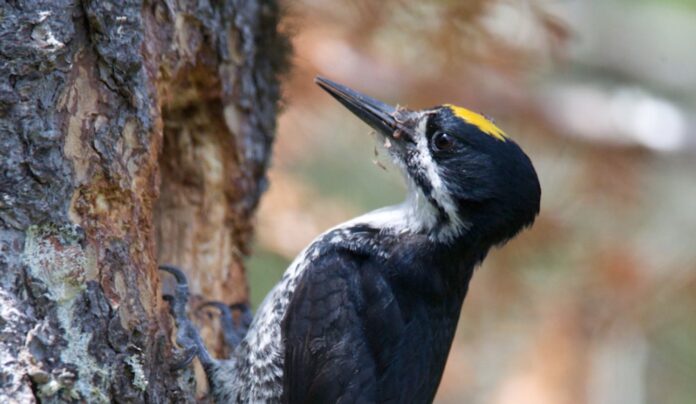
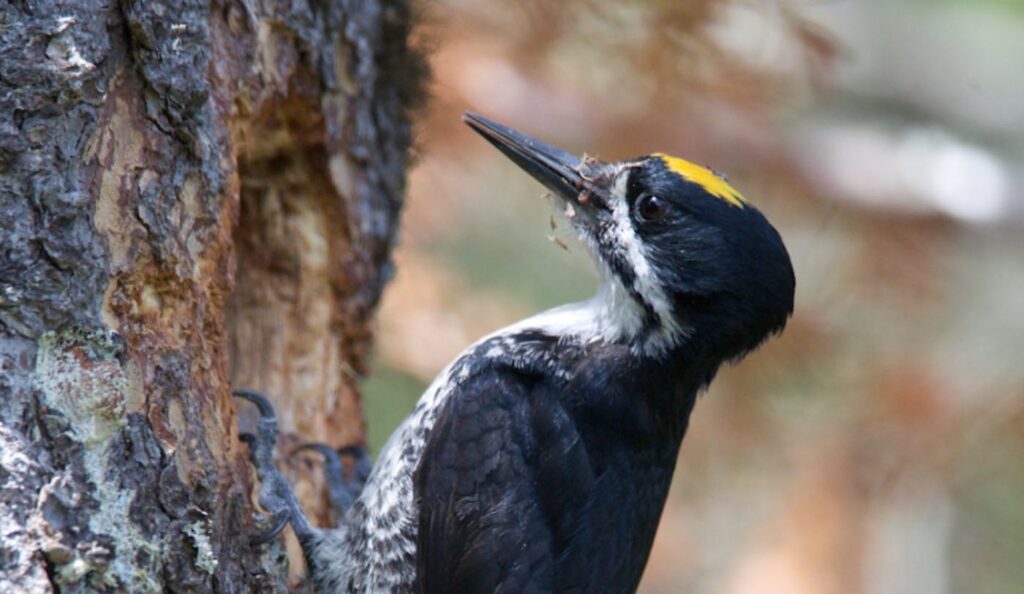
It’s hard to imagine that the infernos burning in the Sierra Nevada and Cascade mountain ranges in California and Oregon would be good for anything—but for the native black-backed woodpecker it’s the best of times, and necessary for them to continue their transformative practices on the forest.

US Fish and Wildlife Service, CC license

Relentlessly drilling holes in the sides of fire-hardened trees in pursuit of insects, they create ready-made shelters for dozens of different animal species, who eat fire-retardant plants seeds and distribute them hither and yon in their droppings; thus allowing the forest to regenerate.

This amazing avian is just one of an entire web of plant and animal species who have evolved around the necessity of seasonal fires. The woodpecker deliberately seeks fire-damaged forests out in search of their favorite food: the larvae of the black fire beetle, which have evolved heat-sensing organs to find which trees are still warm from fires to lay their eggs in.

Indeed both of these species have evolved to interact with the pine forests of the Northwestern United States, where the trees have thick coatings of resin-soaked bark that protect them from high-intensity blazes.

“Woodpeckers are ecosystem engineers,” Teresa Lorenz tells National Geographic. A wildlife biologist with the U.S. Forest Service’s Pacific Northwest Research Station in Olympia, Washington, she has tracked black-backed woodpeckers in the forests of the Cascade Range, where this year’s fires have burned catastrophically.

“Many small animals, from chipmunks to flying squirrels to mountain bluebirds and wood ducks, compete for the woodpeckers’ vacated nests because they are so protected from the elements and other predators. We wouldn’t have swallows, swifts, or bats without woodpeckers.”

RELATED: Self-Powered Wildfire Detector Could Help Fight the Spread of Deadly Blazes, Using The Motion of Trees For Power

Another fire-pecker

Out of 180 species of woodpecker on earth, the black-backed is not the only one who has adapted to thrive in fiery forests.

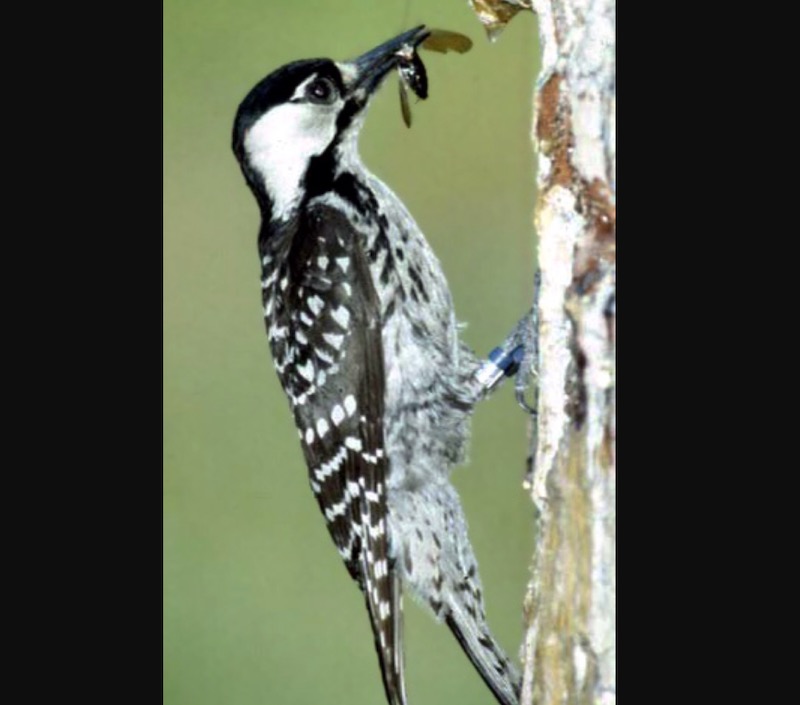
The red-cockaded woodpecker is a fire specialist living in the opposite corner of the US from the black-backed, and relies on low-intensity burns through the undergrowth of the longleaf pine forests of the southeast and mid-Atlantic.

This fire-loving woodpecker almost disappeared after clear-cut logging reduced its home range—from Texas in the west, to Florida in the south, to New Jersey in the north—to just 3% of its original forest cover.

But like a phoenix bird rises from the ashes, its listing as one of the first additions to the Endangered Species Act saw the red-cockaded come back from a population collapse that most scientists concurred would have led to its extinction.

39 separate recovery populations have increased their numbers by 40%, and an updated recovery plan is being formulated with the aim of a potential removal from the list.

A housing-sector collapse

Like the black-backed woodpecker, the red-cockaded population creates thousands of nesting cavities in trees, which all manner of animals compete to occupy after the bird abandons them.

To date, 27 species of vertebrates as well as many invertebrates, have been found living in the small hollows. With the collapse of the red-cockaded population, the longleaf pine forests experienced a real estate crisis.

LOOK: Belgian Man Strikes Up Friendship With Owl Family After They Discover Mutual Love of Television

This is compounded by the fact that this particular woodpecker creates their hollows in living, not dead, trees a task that requires immense time and labor such that the bird will leave the nest to its descendants much the way humans do with their houses, and therefore don’t produce more than a few in their lifetime.

This arduous task requires a particular tree, and males and their offspring have been known to continuously inhabit the same tree hollow for 30 years. The typical tree is a pine of 75-years or older — large enough to contain a hollow for several birds.

These kinds of trees grow in forests created by low-intensity fires—the kind that were deliberately set by Native Americans hundreds of years ago, and the kind which forest managers today have had to set as part of the red-cockaded’s recovery plan, which also included drilling artificial nesting holes which they would almost always occupy.

WATCH: This Hummingbird Mama With Her Newborns is Just What We Needed

This discovery, made in the 80s by scientists at Virginia Polytechnic Institute, would become an invaluable strategy after Hurricane Hugo obliterated 90% of the longleaf pine forests in South Carolina’s Francis Marion National Forest.

Like a woodpecker version of Katrina, 475 breeding woodpecker couples lost their homes. To give them a helping wing, the Forest Service drilled 2,800 holes in remaining trees.

“South Carolina now has over 1,400 clusters of woodpeckers,” reads a report on Hugo and the woodpecker effort from the FWS. “Where there were 1,900 cavity trees prior to Hugo, there are 5,800 today. Areas of the state that haven’t seen birds in over four decades now have them moving in.”

POPULAR: New Bird Song That ‘Went Viral’ Across This Species of Sparrow Was Tracked by Scientists For the First Time

They will always need prescribed burns and artificial nesting holes, but the red-cockaded woodpecker, like the black-backed, are examples of how resilient nature is, and that even a blazing forest inferno is used by species to flourish, whether for food or shelter.

SHARE This Natural Wonder to Educate Your Friends On Social Media… 

Love in the Time of Corona: An American Traveler Survives Italian Lockdown, and Finds True Love

In November 2019, I saw my immediate future as I had known it for several years: after working for 10 months, stashing away some money, it was time to travel the world.
But the times were changing, and as it was with Bilbo Baggins, warning his nephew in Lord of the Rings, so it was with me: “You step out onto the road, and if you don’t keep your feet, there’s no telling where you’ll be swept off to.”

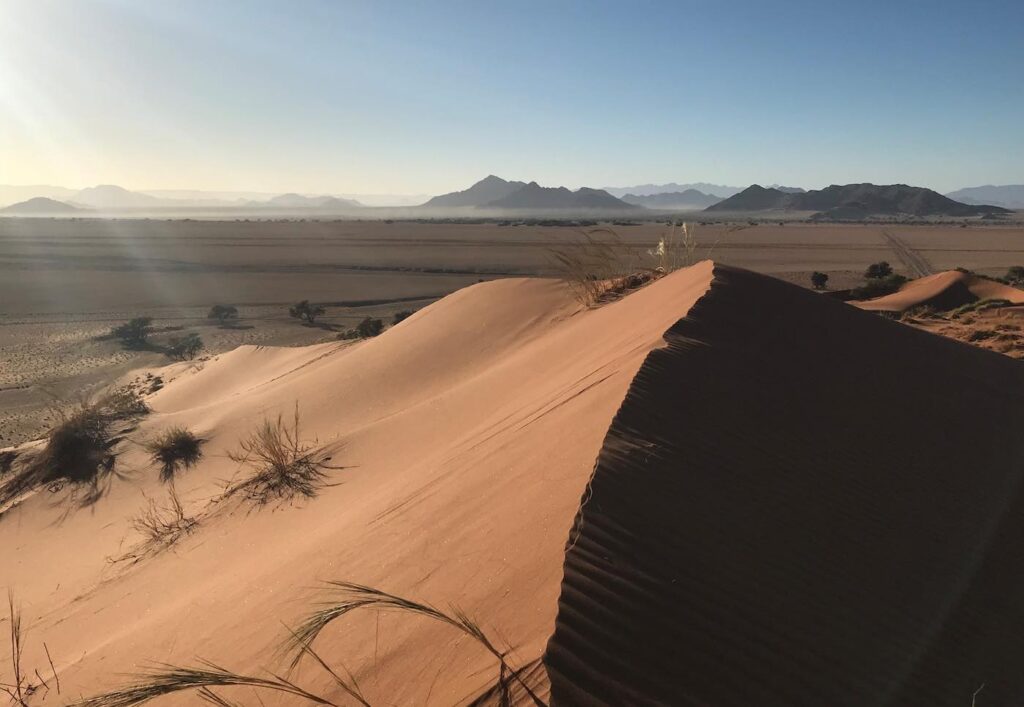
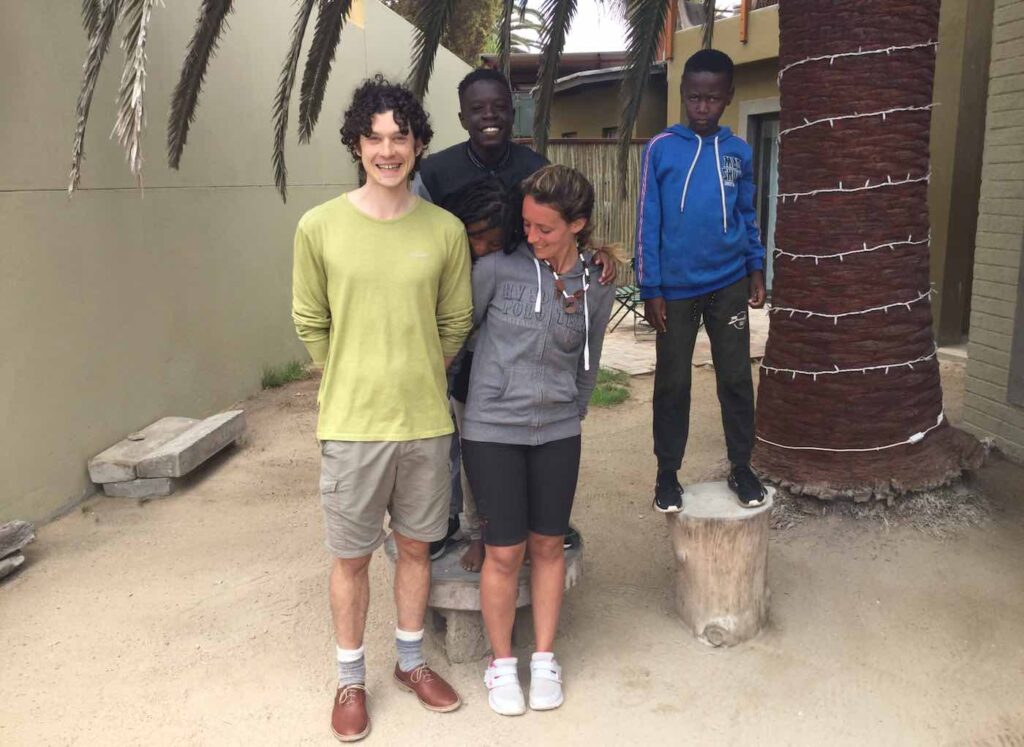
Arriving in Namibia in December to trek among sand dunes, I met an intriguing Italian woman always with three young children flitting about her. It was for their diversion that one morning on the beaches of the city of Swakopmund, she asked if I would have dinner with the four of them. This dinner consisted of a bizarre cast of characters, and led to a strange enough little game of flirtation between she and I which prompted me to follow the four of them back to the capital of Windhoek.

The woman, Mara, began visiting Namibia after she became a sponsor, contributing money for school and living expenses, through a remote adoption program 4 years prior. She had been making annual visits there to visit the kids, Barack, Augusto, and Otilie.

There was a strength in the way she cared for those children—who were not hers and whom she saw so irregularly. It drew me to her, such that when she invited me to visit her in Italy she had only to wait 37 hours before a picture of my flight receipt arrived in our WhatsApp chat.
Northern Italy – and a rumor from China

The story of Mara and I will always remain indelibly linked to the now-infamous virus for several important reasons, but when I arrived in the Milan airport on January the 15th, the rumor of a new SARS epidemic in China could not have been less interesting to me.

More interesting was the fact that Mara, a disciplined Italian lawyer, welcomed a vagabonding American writer wearing jungle clothes, whose boots hung by their laces from his rucksack, where he stowed souvenirs from Ghana (and unbeknownst to him at the time, an overly-ripe, exploded mango).

This recipe for relationship disaster took a turn for the even less advisable when we immediately moved in together in a studio apartment in a small village around 45 minutes from Milan.

RELATED: Texas Couple Married for 46 Years Beats COVID-Cancer-Chemo Crisis And Returns Home with Clean Bills of Health

Things progressed tentatively until we planned a spontaneous trip to Venice, arriving on the 28th of February—the opening day of Carnival, the theme of which was “Love, Games, and Folly,” strangely enough.

As colored barges floated fire and acrobats down the canals, I felt like 2020 would be a really amazing year. And then COVID-19 hit…

A group of tourists had just arrived from China in the famous city carrying SARS-CoV-2 which torched a devastating pandemic that spread throughout Italy’s elderly like a California wildfire.

My friends, neighbors, and Mara’s family, all went through several stages of denial, noting that most of those dead were very old people or those with cancer — my neighbor Carlo added that the average age of patients who died from COVID-19 was higher than the average age of death among Italians.

But, it became worse and worse, and slowly the reality sunk in that this was not something the old, dysfunctional, indebted Italian bureaucracy was capable of containing. And so some of the strictest quarantine measures on Earth came down upon us, right as my tourist visa was expiring.

Too unnerved by tales of a 3.4% mortality rate to buy a plane ticket home, I remained in Italy until it got so bad that, even in the countryside, we were prohibited from going 200 meters beyond our front door — Bilbo would be appalled — while masks were required at all times, even in the middle of an open field.

The best worst year ever

Our proximity forced us to learn to understand one another. But, I remember one monumental fight where I was certain that it was over, only to open my laptop and discover I could not continue my travels — I could go nowhere, since nowhere was operating flights to and from Italy.

The storm would eventually pass, but, meanwhile, Mara and I, unlike many of her civil clients who had sought divorce during the lockdowns, had grown closer. What was required when trapped all day at home during a quarantine isn’t so different from what is required to forge a healthy marriage, I reckon.

COVID-19 created and enforced the conditions for our love to grow into a partnership that is now pending international recognition.

WATCH: Caring Hospital Staff Help COVID-Stricken Groom Say ‘I do!’ in Heartwarming Bedside Wedding Ceremony

At the time of this writing, an uptick in summer holidaying across the country, specifically the reopening of nightclubs, brought about a small outbreak in Sardinia of around 270 cases which swelled the national number of new cases to around 1,500 per day, but little else in the country of 60 million. The once-empty streets of places like Verona, Naples, and Milan, are bustling with shoppers, diners, and travelers from all across Europe. Life has returned to normal.

Mara and I got married in her hometown on the August 31st and—with airline tickets ready to visit my Virginia home for my brother’s wedding in October, and again at Christmas—2020 will be, for me personally, a year that will be very hard to beat.

READ more travel articles from Andy Corbley at his website World At Large...

SHARE The Story of Love In The Time of Corona With Friends Longing For Connection…

In Rare Bipartisan Agreement on Climate, U.S. Senators Forge Plan to Phase Out Use of a Potent Greenhouse Gas

Photo by CIRES

A group of U.S. Senate Republicans have authored an amendment to an energy and manufacturing bill that would launch a transition away from hydrofluorocarbons, (HFCs) a class of chemical refrigerant that is considered a potent greenhouse gas.

Introduced by Senate Environment and Public Works Committee Chairman climaR-WY, Ranking Democrat Tom Carper D-DE, and Senator John Kennedy R-LA, the language amends the American Innovation and Manufacturing Act of 2019 to require the reduction of production and consumption of HFCs by 30% every four years until 2036.

Used in home and office air conditioners across the country, HFCs produce a greenhouse gas effect many hundreds of times stronger than CO2. While they were originally created to replace another chemical coolant that was found to deplete the ozone layer, they’ve now been singled out as a powerful driver of the climate crisis.

“This amendment brings us one step closer to implementing an HFC phase down and reaping the substantial economic benefits associated with this transition to new refrigerant technologies,” said President and CEO of the Air Conditioning Heating and Refrigeration Institute Stephen Yurek in a statement.

RELATED: Unanimous Senate Votes to Protect Sea Turtles and Dolphins from Driftnets in the Last Spot That Allows Them

According to an article in the Washington Post, the AHRI is just one of a handful of think tanks, like the National Association of Manufacturers, and corporations like Honeywell, that believe the transition from HFCs would not only help the environment, but also allow a new dimension of market innovation and competition to spur growth in a sector that Congress describes as contributing almost $200 billion annually to the economy through the employment of almost 800,000 people.

All 197 member states of the UN already ratified the 1987 Montreal Protocol on ozone-depleting substances, and 102 have signed on to the 2016 Kigali Amendment that added HFCs to the list of controlled-substances after they were found to have a very high global-warming potential.

CHECK Out: Bipartisan Senate Passes Great American Outdoors Act to Finally Fund Maintenance Backlog in National Parks

There’s a sense that if the U.S. aligns its policy with the Kigali Amendment, it will make the economy more competitive abroad, since the removal of HFCs from American-made goods would allow more products to be exported to countries already in line with Kigali.

The Montreal Protocol is one of the United Nations’ true success stories, with the world having phased out 98% of all ozone-depleting substances—to repair the ozone hole that restored the earth’s UV sun shield, essential to our health.

The ozone layer restoration has prevented an estimated 2 million deaths a year from skin cancers like melanoma, and 135 million gigatons of CO2 and equivalents from entering the atmosphere.

MORE: After Spectacular Unanimous Approval in Congress, Extreme Animal Cruelty is Now Officially a US Felony

The bill is still in committee, but with Republican support, it stands a decent chance of passing the Republican-controlled Senate when it comes up for a vote later this year, with GOP author John Barrasso hoping to pass it quickly to the President’s desk before Congress adjourns in January.

“This amendment would spur billions of dollars of economic growth in domestic manufacturing and create tens of thousands of new jobs, all while helping our planet avoid half a degree Celsius in global warming,” Sen. Tom Carper said in a statement. “At a time when we could all use some good news, this is great news for our economy and our planet. Let’s get it done.”

SHARE This Rare Bipartisan Effort With Your Friends on Social Media…
“When I let go of what I am, I become what I might be.” – Lao Tzu

Quote of the Day: “When I let go of what I am, I become what I might be.” – Lao Tzu

Photo: by Rayyu Maldives photographer, cropped

With a new inspirational quote every day, atop the perfect photo—collected and archived on our Quote of the Day page—why not bookmark GNN.org for a daily uplift?


Australia Declares its Largest Feral Predator-Free Safe Haven – in Massive Mallee Cliffs National Park

Mallee Cliffs National Park- Australian Wildlife Conservancy

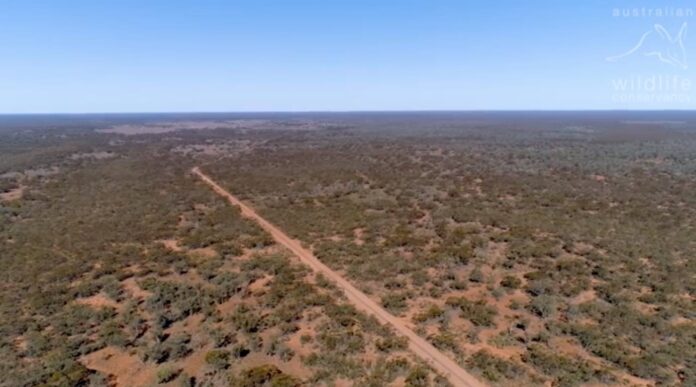
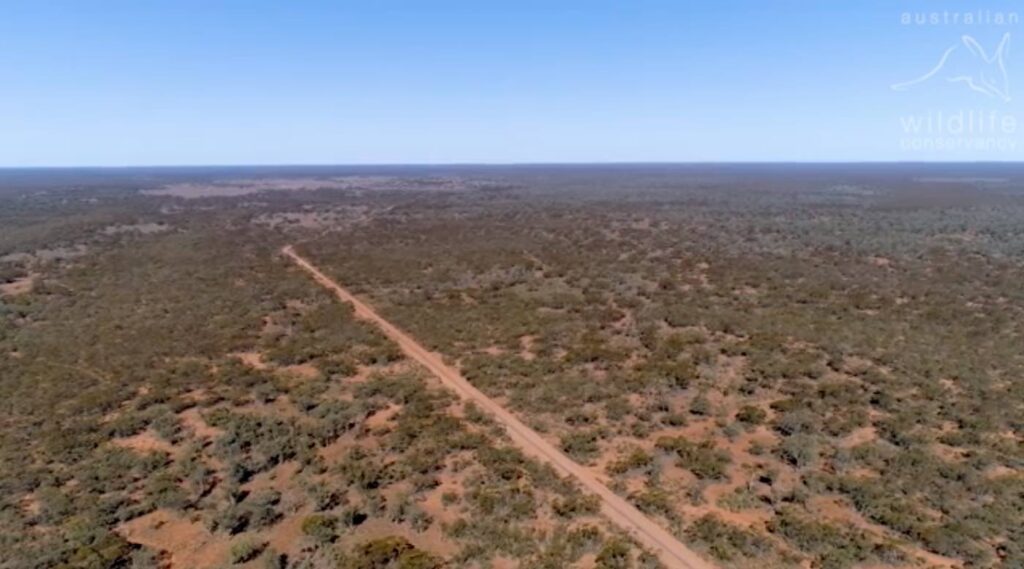
Just in time for September and Biodiversity Month, conservationists in Australia announced they have eradicated all feral cats and foxes from a vast 9,570-hectare area, creating the largest feral predator-free safe haven on the country’s mainland.

Mallee Cliffs National Park- Australian Wildlife Conservancy

This, in turn, paves the way for the largest re-wilding project ever to be undertaken in the state of New South Wales.

Ten native mammal species that became extinct in the state are set to be restored to the massive Mallee Cliffs National Park, a major milestone for the Australian Wildlife Conservancy in partnership with the NSW National Parks and Wildlife Service.

Feral cats and foxes are the primary reason why Australia has the worst mammal extinction rate in the world.

Establishing the feral-free area over a 40-square-mile area at Mallee Cliffs has been a major undertaking, involving construction of a fence 37 kilometers-long, consisting of 8,400 posts, more than half a million clips, and 378 km of wire. (See the video below.)

RELATED: Tiny Forests Are Springing Up All Around Europe, Inspired By Japan, to Help Restore Biodiversity

Although this is one of the State’s longest feral predator-proof fences, AWC completed construction in just 12 weeks. This was followed by a prolonged period of intensive feral predator eradication—with one sly interloper outfoxing AWC’s animal control officers for six months.

“We began the eradication program in August last year, but didn’t trap that last fox until February,” said Bruce Summerfield, AWC’s Operations Manager at the park.

Although the last fox was finally trapped, to ensure the area was indeed feral predator-free, months of intensive monitoring was undertaken, using motion camera and searching for footprints.

“Even though this project is still in its infancy, it’s already delivering a positive ecological ‘return’ for the people of New South Wales” Tim Allard, AWC’s Chief Executive said.

LOOK: Dozens of Creatures Thought to Be Extinct Found Alive in ‘Lost City’ in the Jungle

In October 2019, Bilbies were released inside a specially designed 480-hectare breeding area, and today they are in good condition and already increasing in numbers. The reintroduced Bilbies will soon be released into the neighboring 9,570 hectare safe-haven.

The Bilbies will also be joined by Greater Stick-nest Rats, and in coming years by Western Quoll, Red-tailed Phascogale, Numbat, Western Barred Bandicoot, Bridled Nailtail Wallaby, Burrowing Bettong, Brush-tailed Bettong and Mitchell’s Hopping-mouse. Most of these species have been absent from NSW national parks for almost a century – and nearly all are threatened with extinction across their entire range.

“Through projects like this one at Mallee Cliffs, AWC is demonstrating that the eradication of foxes and cats is a critical part of mammal conservation,” said AWC scientist Dr. John Kanowski.

CHECK Out: There’s an Elephant Baby Boom in Kenya: Thanks to Rainfall, a Record Number Born Including Rare Twins

“By putting Australia’s digging animals back into the landscape, we’re not only halting the decline of Australia’s wildlife, we’re restoring important ecosystem processes as well.”

Bilbies are prodigious diggers, with each individual turning around 20 tons of soil per annum. By burrowing and turning the soil, they help to retain moisture and nutrients and disperse seeds and spores.

“Conservation is getting these animals back in the landscape because they all contribute. They’ve been part of this country for millions and millions of years and they’ve only been gone for a century.”

WATCH the video below…

Make Your Social Media Pages a Safe Haven For Good News – SHARE the Story…

Miller Beer is Giving Away a Dive Bar For Your Backyard

Large backyard of hose

Thousands of people, along with me, are surely missing the local neighborhood dive bar.

The ‘come as you are’, no-judgement pub covered with beer insignias is a vibe that you just can’t get anywhere else.

But, if you’ve ever wanted to recreate that feeling at home, now is your chance.

Miller High Life is giving away a backyard dive bar valued at $10,000 to one lucky fan.

But the contest closes soon.

ALSO: World’s First Beer Taproom That Also Houses Foster Dogs Rescued From Kill Shelters

The glorified shed, where you’ll always be “a regular”, comes with:

  • Sticky floors, duh
  • An actual bar with Miller High Life tap handles
  • Quirky bar stools
  • A popcorn machine
  • A spot for a bouncer if your neighbors try to crash your bar
  • All the wood paneling you could ever want

  • The dimmest of lighting
  • Quirky beer artwork
  • Doors that open completely to allow for patio season
  • Enough beer to live the high life from your own yard for the rest of the year

“All of this from the comfort of your own yard!” touts Miller in a press release.

To enter the Backyard Dive Bar giveaway, you have to be 21+ years old. Just text “DIVEBAR” to 90464 to receive a link for the simple entry form. Or, you can enter by visiting www.HighLifeDiveBar.com.

Nothing but your basic contact info is required.

RELATED: Unsold Beer From Australia‘s Lockdown Is Making Renewable Energy – And in Record Amounts

The contest closes on September 22nd and winners will be announced shortly thereafter.

SHARE The Opportunity With Your Dive Bar Buddies on Social Media…

Girl Scout Takes A Stand Against Stress

Even before the pandemic, Girl Scout Lucy Stimson knew there was a growing problem in her community. Stress was a huge part of her life—and many of the people in her community felt the same way.

That’s why Lucy chose to take a stand in Lincoln, Rhode Island, and help others while earning her Girl Scout Gold Award.

The Gold Award is the highest award a Girl Scout can earn, and requires 80 hours of volunteering to create a sustainable difference in the community.

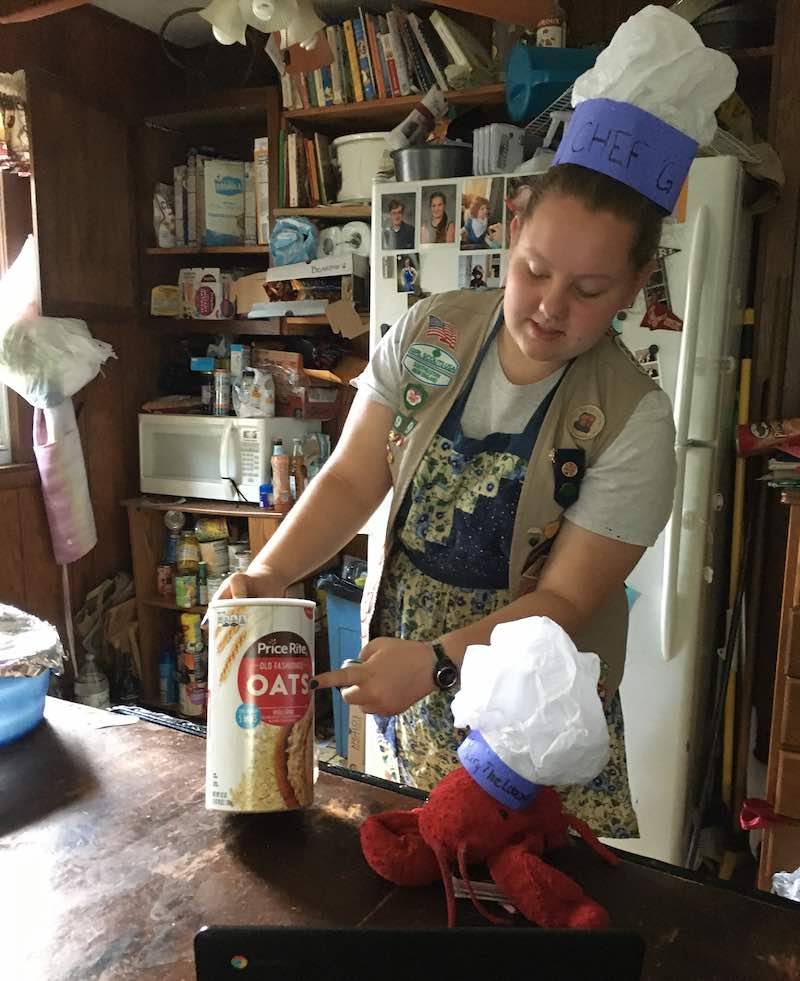
She started a Facebook Page, Making a Stress-Free Breakthrough, and has been regularly posting tips since April. The page features different ways to reduce stress, with topics ranging from meditation and mindfulness to pep talks and fun videos. She has recently included a Stress Workshop Guidebook containing a variety activities, like how to make a stress ball.

RELATED: Stressed? This Study Says You Simply Need a 20-Minute ‘Nature Pill’

She also posted a homemade coloring book for getting into the zen of artwork at home, and an excellent animal crossword puzzle that you can download.

Lucy making a video

When asked how the project has effected her life and community, Lucy told GNN, “The project has helped me by opening up to my family about mental health. I found it in myself to tell my parents about my stress and anxiety.”

“I have been using some of the techniques to calm myself when I get overly stressed. This helped me to put what I have been feeling into perspective, and to ask for help.”

She also created her own stress-busting website that has all the tips and tricks neatly arranged on the homepage.

MORE: Research Says That Art Therapy Reduces Stress-Related Headaches By Up to 40% for Teenage Girls

“Sometimes stress is so overwhelming and it seems to consume you, but that doesn’t mean that you have to settle for that. I have done my project because I have been there. I know how it feels, it’s hard. If I can help even one person, it will all be worth it,” Stimson added.

“I think we all need a little help sometimes,” said Lucy. “Especially now.”

RELATED: 14-year-old Receives Girl Scout Medal of Honor for Saving the Life of a Drowning Boy

Give this Girl Scout a round of applause by following her FB page and leaving a comment.

Reduce the Stress on Social Media By Sharing Lucy’s Good News…

Date Seeds Unearthed From the Time of Jesus Are Revived, Adding Fruit to Jewish, Arab Unity

Seeds from the time of Jesus and the Maccabees are being renewed—and grown amid the fruits of Jewish-Arab unity.

We all know the resurrection story from 2,000 years ago described in the pages of the Christian bible. Recently, a restoration of life, in a sense, took place in the Holy Land—but with 2,000-year-old dry date seeds from the same region where the religious legends began.

In the 1960s, when archaeologist Yigal Yadin dug at Masada, an ancient fort that is one of Israel’s most popular tourist attractions, he found a catchment of Judean date seeds.

Through radiocarbon analysis, the seeds of the species Phoenix dactylifera were shown to be around 1,990 years old, or from 35 BCE to 65 CE, when the Roman philosophers Strabo and Pliny were writing about the Judean date’s medicinal qualities.

15 years ago, Dr. Elaine Soloway of the Arava Institute for Environmental Studies, along with Dr. Sarah Salon of Hadassah Medical Center, were able to miraculously germinate one of the seeds.

In honor of its longevity, it was named Methuselah, after the longest-living human being in the Bible (Genesis 5: 21-27). Methuselah, however, being a male tree, would not be able to produce a date without a female partner. So in 2014, six seeds were germinated from 32 that were unearthed in archaeological digs in the Judean Desert and near the Dead Sea, from a similar age.

They were also given Biblical names, but only one female—Hannah—flowered.

RELATED: Muslim Cleric Who Hid 262 Christians During Attacks is Honored by the U.S.

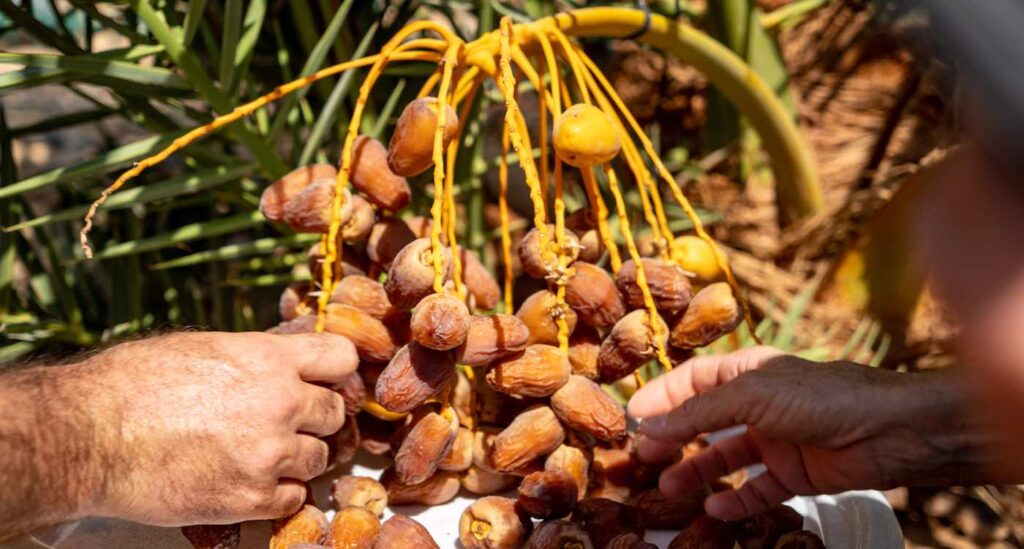
In the spring of this year, she was pollinated using the powdery grains from Methuselah. And soon, Hannah produced 111 dates that were recently harvested..

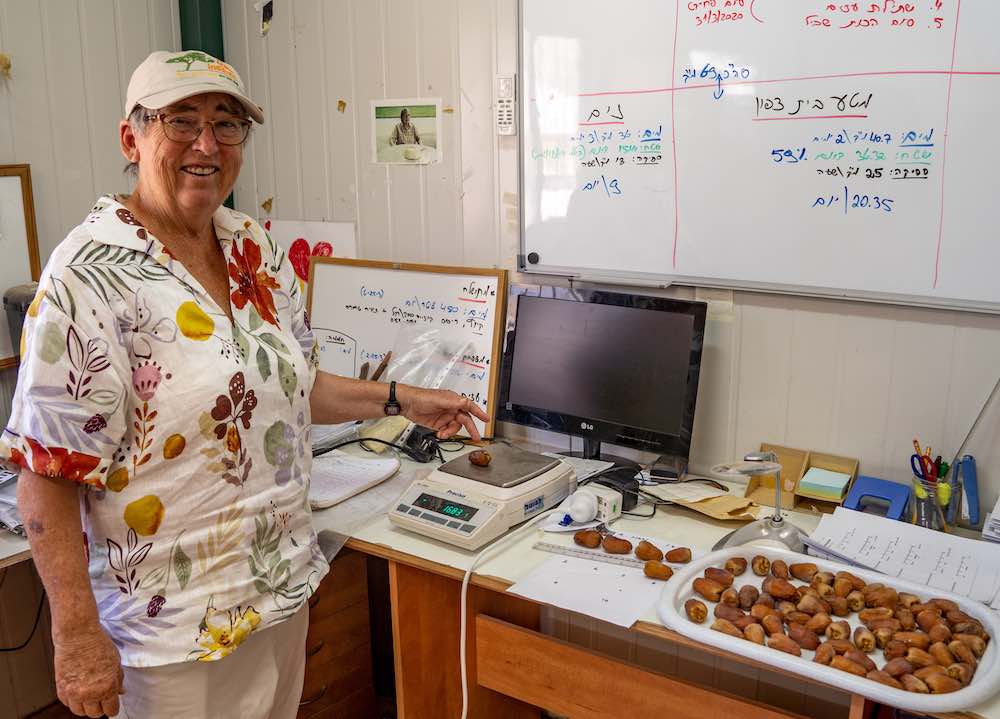
Most of the semi-dry dates with reddish-blonde color will be used for research, but the masterminds behind the project got to taste a few, with Dr. Soloway enjoying the “honey or caramel aftertaste.”

Researchers Dr. Elaine Soloway of the Arava Institute for Environmental Studies (left) with Dr. Sarah Salon of Hadassah Medical Center, moments after picking the dates – MARCOS SCHONHOLZ

The home of these extraordinary trees is the Kibbutz Ketura campus of the Arava Institute located on the Israeli-Jordanian border in the dramatic Arava Valley—with the steep, mile-high, red mountains of southern Jordan – biblical Edom – on one side and the whitish limestone from ancient ocean floors on the Israeli side, in a section of the Great Rift Valley between Syria and Africa.

Photo by MARCOS SCHONHOLZ, Arava Institute

There is something else remarkable about the home of these dates. Since 1996, the Arava Institute has brought together Israeli, Palestinian, and Jordanian college students to learn how to cooperatively solve the regional and global challenges of our time.

Foster cross-border environmental cooperation through discourse at a time when it is so needed, the leaders here engage civic organizations and individuals representing Jews and Arabs with both state and private interests to discuss, develop, and negotiate formal and informal environmental agreements.

CHECK Out: Jewish People Who Have Recovered From COVID Have Donated Half of All the Plasma Used in US Treatments

The Arava Institute reminds participants that the conflict between Israelis and Palestinians is about land—more precisely, the borders that nations draw on the land. When the land is looked upon solely as a geopolitical instrument, it is viewed as one of the major stumbling blocks to any reconciliation or just settlement of the conflict. However, when the land is approached, as it is at Arava, from an environmental perspective—which knows no political borders, walls and fences—new frameworks open up, including in the political sphere: New dynamics are created.

The student body of the Arava Institute is made up mostly of Jews, Christians, and Muslims—and in those three religions, born in the deserts of the region, dates and date trees have always played an important role, according to Rabbi Michael M. Cohen, who teaches at the Arava Institute and also at Vermont’s Bennington College.

“Following the example of Muhammad, Muslims traditionally break their daily fast during Ramadan with a date. In the Jewish Torah, dates are considered one of the seven most important species of the Land of Israel. And Jesus was reportedly welcomed into Jerusalem with his supporters waving date palm branches.”

RELATED: Israeli and Palestinian Farmers Find Peace Through Olive Oil

Grown on this campus steeped in faith, the dates of Methuselah and Hannah, like all the great redemption stories, remind us that what today appears to be dead or beyond reach can in fact be revived to help create a better, more just, and redeemed tomorrow.

SHARE The Fruits of History and Peace With Friends On Social Media…

“Love is all around, no need to waste it; you can never tell, why don’t you take it. You’re gonna make it after all.” – Mary Tyler Moore theme (debuted 50 years ago)

Steven Aguilar

Quote of the Day: “Love is all around, no need to waste it; you can never tell, why don’t you take it. You’re gonna make it after all.” – Mary Tyler Moore theme (debuted 50 years ago)

Photo: by Steven Aguilar

With a new inspirational quote every day, atop the perfect photo—collected and archived on our Quote of the Day page—why not bookmark GNN.org for a daily uplift?


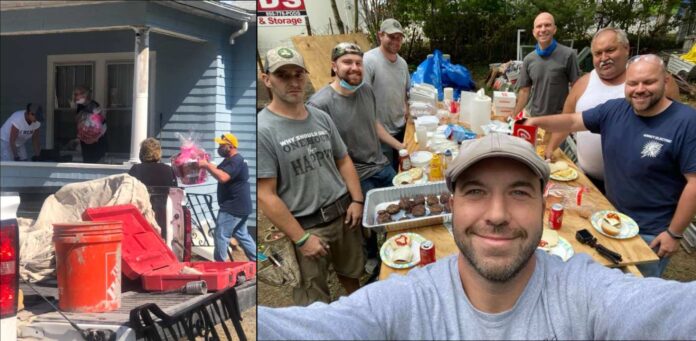
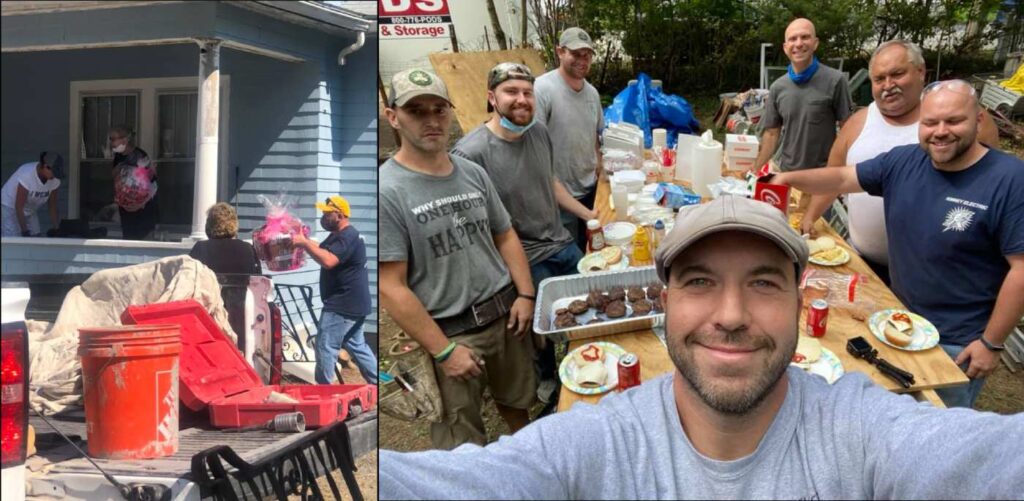
Electrician Comes To Repair Lights For 72-Year-old, Then Enlists Entire Community To Fix Her Crumbling House—For Free

Gloria's Gladiators/Facebook

Like many elderly Americans, Gloria Scott lives on a limited income. Sometimes, that means making hard choices. If money’s tight, home repair and maintenance are often the first things to fall by the wayside.

Gloria’s Gladiators/Facebook

When Scott’s overhead light fixture went out, however, she decided living in the dark wouldn’t do. Though she knew her budget would take a hit, she called in electrician John Kinney to make the necessary repairs.

Little did the 72-year-old know, she wasn’t just getting an electrician, she was getting a knight in shining armor as well.

Deeply troubled by the extreme state of disrepair he found Scott’s house in, Kinney couldn’t get the woman’s desperate situation out of his head. “No lights, running water… I [saw] her on a Friday and it stuck with me over the weekend… I said, ‘I got to go back there,’” Kinney told CBS.

Rather than walk away, Kinney went back to Scott’s place and started working on some other much-needed repairs—free of charge. But he didn’t stop there.

RELATED: Landscaping Pros Have Been Giving Free Lawn Care Services to Healthcare Workers, Relieving Their Stress

Kinney set up a “Nice old lady needs help” Facebook page to solicit other local tradespeople to lend a hand as well. The enthusiastic response was pretty amazing.

With an impressive chunk of the Woburn, Massachusetts community rallying to the call, so far, Scott’s home has gotten new electricical and plumbing systems, new windows, and extensive repairs to the crumbling walls, ceilings, front steps, and porch.

MORE: First Grader Turns Her Dream of Feeding Homeless People Into Reality –By Launching Her Own Foundation

Meanwhile outside, as neighbors toiled on landscape cleanup and new planting projects, a steady flow of food donations streamed in to feed the volunteers.

To say Scott was blown away by the outpouring of generosity is an understatement. “Look at these people!” she exclaimed. “…[You] can’t even comprehend the gratitude that I have.”

The project was such a success, Kinney decided to take it to the next level. Naming the initiative Gloria’s Gladiators, he hopes to inspire a legion of like-minded knights in shining armor—electric or otherwise—to help needy seniors in their own communities.

CHECK OUT: These ‘Detroit Mower Gang’ Volunteers Have Been Competing to Maintain City’s Old Parks

That sounds like a pretty bright idea to us.

PASS On The Good Deeds And Share This Story With Your Friends On Social Media…

After Cancer She Started Driving Uber, Using Tips to Make Sandwiches For the Homeless–Now a 24-yo Rider is Her BFF

Channel 5 News

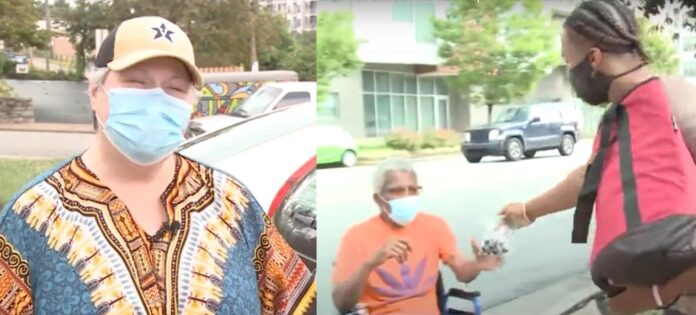
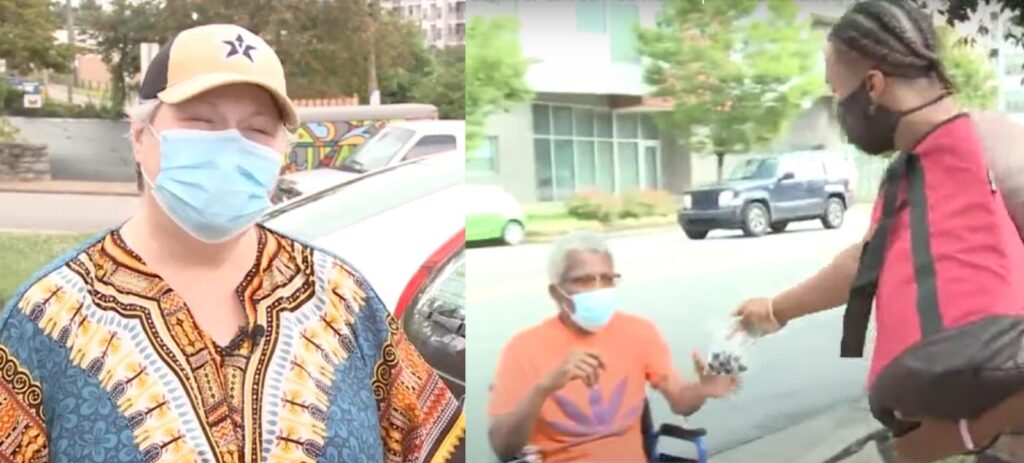
Not only does Kerry Wiles hold down a full-time job as a scientist; on weekends, she works as a ride-share driver who uses her fares and tips to make meals for Tennessee’s homeless community.

Channel 5 News

Kerry began her side gig with Lyft and Uber after being diagnosed with breast cancer in 2018. She loves people, and thought the job could be a great way to know the stories of others.

Along the way, she began using her ride-share earnings to make lunches for the city’s large and growing homeless population.

As she drives people around the city, on Saturdays and Sundays she’s able to drop off homemade PB&Js to around 100 homeless people.

CHECK OUT: Bride and Groom Didn’t Just Donate Wedding Food To Homeless, They Dished it Up On Their Big Day

These days, this is no one-woman sandwich delivery operation. Early on in her side gig as a driver, Kerry—who works Mondays to Fridays as a scientist at the Cooperative Human Tissue Network at Vanderbilt University Medical Center—gave a lift to a 24-year-old local named Ryan Caldwell.

“Without sounding too ‘quirky’, he just has an amazing ‘aura’,” Kerry tells GNN. “When you meet him, his kindness and charisma immediately puts you at ease.  When he said he wanted to help deliver lunches with me, I knew he was sincere.”

Caldwell felt just the same way. “She’s been my best friend since we started,” he told News Channel 5.

Now the friendly pair go out delivering turkey rolls together.

“If anyone out there needs a young man to be a role model, he is it,” says Kerry.
The world definitely needs more ‘Ryans!'”

The two-person team are currently putting together a list of shoe sizes for the local homeless community so they can get them boots for winter.

To learn more about the initiatives the kind pair have taken on, head to Nashville Homeless Helpers.

RELATED: Anonymous Group of Adults Secretly Watches Over Struggling Youth of Their Town

This isn’t the first time Kerry has gone out of her way to help others. We wrote about the ‘secret society’ initiative she founded to help struggling kids back in 2017.

For Kerry, helping others is no struggle. She says, “Small steps in a larger problem can make a beautiful impression on your heart and soul.”

(WATCH the video featuring Kerry and Ryan’s story below at News Channel 5.

SHARE The Love And Send This Story To Your Friends On Social Media…

After Talking to Firefighters, a Startup Created a Tool That Maps Every California Tree to Help Predict Fire Spread

Dominik Lange

A new state of the art satellite imaging program will allow California fire authorities to map every individual tree in the state as a means to better plan and monitor for fires.

Dominik Lange

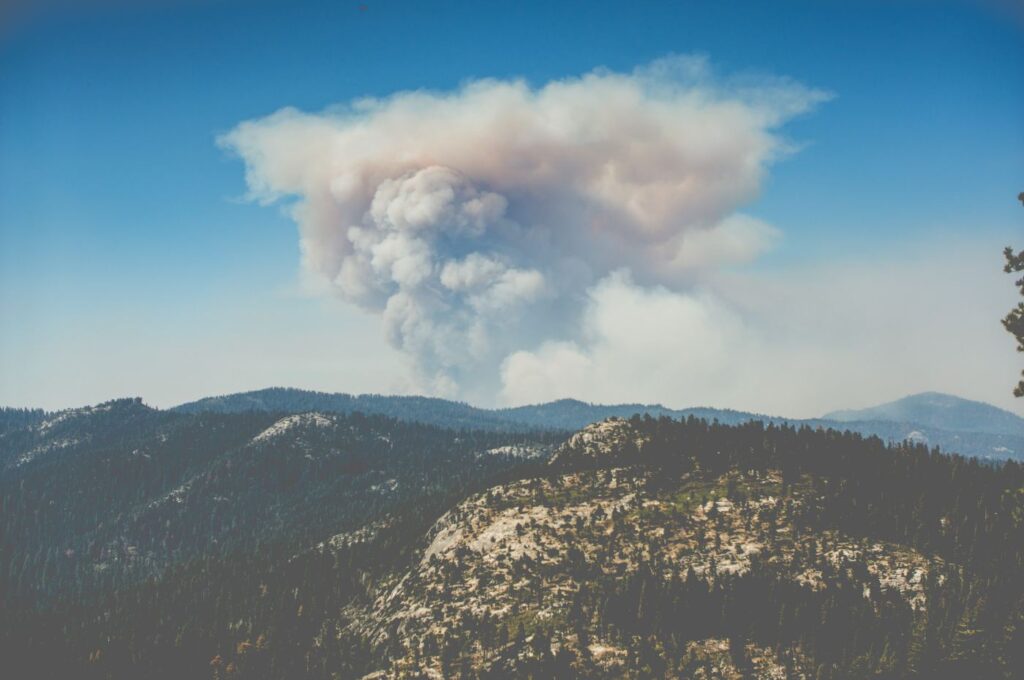
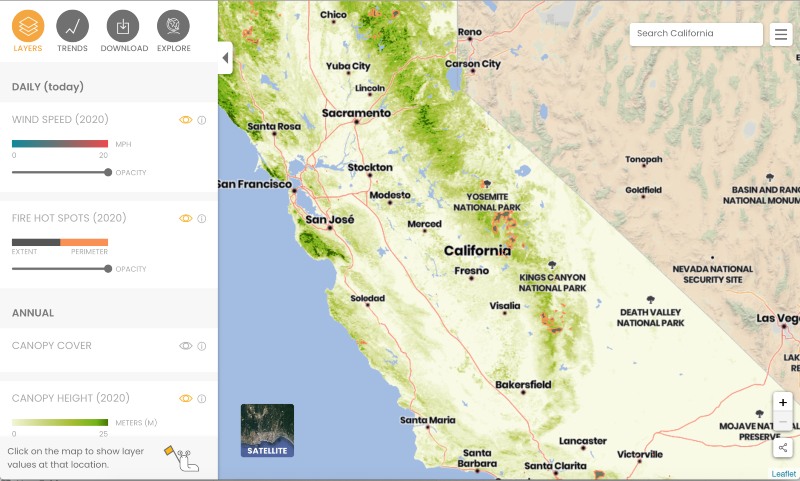
The catastrophic fires typifying the last few fire seasons in California’s forests have had scientists brainstorming new and better ways to combat them, and one effort from the startup Salo Sciences, called the California Forest Observatory (CFO), uses satellites and AI to create a map covered in small green points.

Each of these points represents a real tree, which together represents one of the most ultra-detailed satellite pictures of the earth’s surface available. This will allow wildfire authorities to predict and plan where fires are starting, where they might be headed, and how damaging they might become using information like wind speed and direction, canopy height, and ground vegetation cover.

The CFO creates these pictures from a string of 100 bread-loaf-sized satellite cameras managed by a private company formed by NASA scientists called Planet.

RELATED: Researchers Use Fire Blankets to Protect Buildings From Wildfires; And It Could Save Homes in the Future

Spinning in a line around the earth, they act in unison like a barcode scanner of our planet’s surface, taking images at about three meters per pixel, an order of magnitude higher than those taken from larger, older satellites.

The satellites are then aided by lidar, a laser technology that gathers information, mounted on a plane, before both streams of data are fed into a deep-learning algorithm which determines things like tree height.

David Marvin, co-founder and CEO of Salo Sciences notes there is nothing on Earth like it, and traditional use of lidar—mounted on a low-flying aircraft, is a very slow and expensive process.

MORE: Self-Powered Wildfire Detector Could Help Fight the Spread of Deadly Blazes, Using The Motion of Trees For Power

Burning to protect

California Forest Observatory

A trip to Sequoia National Park teaches you that California’s forests evolved to regularly catch fire, and that some trees—like the sequoia—actually need fire to remain healthy.

The reality is that the California fire authorities became so good at quickly extinguishing brush fires that over time, the smaller vegetation growing between the trees that would normally burn fast and at low temperatures, began to grow larger and live on.

As climate change has made California summers hotter and drier, the fires that now race through these masses of small vegetation can damage even the trees that have evolved to protect themselves from fire.

“If these fires didn’t have continuously dense fuels to burn, it would be much more difficult for them to get out of control,” says David Martin to Fast Company.

“So this is what we first saw was a major problem. What we wanted to tackle was, how do we get at identifying the areas to begin treating and removing these overgrown forests?”

CHECK OUT: Goats: The Surprising Solution to Saving a Country From Wildfires

With the CFO being updated at the end of every fire season, sometimes even more often, these little tinderboxes will be found much sooner, preventing a simple brushfire from turning into a raging inferno.

SPREAD This Innovation Like Wildfire By Sharing on Social Media…