











All News - Page 560 of 1738 - Good News Network
Home Blog Page 560

Positive COVID-19 Trends Emerge in August Across Much of the US, and Elsewhere

Much of the media coverage of the COVID-19 pandemic in the United States has served media companies very well by creating a lot of fear in the viewers—some of it warranted.

They often focus on single anecdotal stories about young people dying, which is still rare overall, or about “milestone” numbers of cases nationwide, which sounds scary, but doesn’t reflect the whole truth.

National Geographic is one company that is doing a better job reflecting both the positive and the negative. Otherwise, it is difficult to find reporting about where coronavirus suffering is becoming uncommon, such as in most every New England state.

Arizona is continuing its vast improvement, bringing down death rates and number of cases—and the same is true for some states in the South and Midwest, as seen in the charts below.

Even Florida, which most people assume to be doing poorly, is seeing its hospitalization totals and new cases drop pretty continuously, according to a new article based on reports from the Florida Department of Health and the Orlando Sentinel.

GNN wanted to look at the trend lines to identify the positive news, especially from the US, but also from England and Italy—and, it turns out, there is a lot of good news that you and I rarely see in the mainstream media.

Share this news to help get the word out, so more people have hope.

Number of New Cases in the US is Declining

The United States Centers for Disease Control reported on September 4 that new COVID-19 cases, overall, have been declining since mid-July. Nationally, the average number of new cases has been declining for over a month and a half.

“Indicators that track influenza-like illness and COVID-19-like illness continued to decrease or remain stable nationally and in all ten regions.”

Remember, there are still some states where the numbers may be going up. The above quote refers to regions, and numbers nationally across the USA.

Hospitalization Rates in the US Are Declining

Hospitalization rates and mortality attributed to COVID-19 also declined during week 35, which ending August 29. And, hospitalizations have continuously declined since peaking at 58,000 in July.

Death Rates Are Going Down

In a broader sense, taking into account other illnesses in the US, based on death certificate data, the percentage of deaths attributed to pneumonia, influenza, or COVID-19 for week 35 dropped more than 4 percent from the previous week— from 10.7% down to 6.6%.

Hospitalizations, Death Rates in UK Have Plummeted

In the UK, the number of people in hospital with Covid-19 has plummeted by 96% since the peak of the pandemic, according to The Times in the UK.

RELATED: Britain to Roll Out Five Million Coronavirus Tests That Get Results in 90 Minutes

In fact, the overall death rate in England and Wales was lower in 2020 than it was in 2019 for July, according to the Office for National Statistics.

Bright Spots: New York and the Northeast

New York has reported its lowest COVID-19 infection rate since the start of the pandemic and almost the entire Northeast region of the US has tackled the coronavirus problem very well throughout the summer.

Bright Spots in the Last 7 Days Across US

Realistically, statistics for COVID cases and deaths in the US can be tricky, but given all the trouble getting these right, trend lines are a fantastic window into progress.

Here are some of the states with the biggest decreases in the past 7 days. The top image shows number of cases dropping, bottom image shows deaths declining.
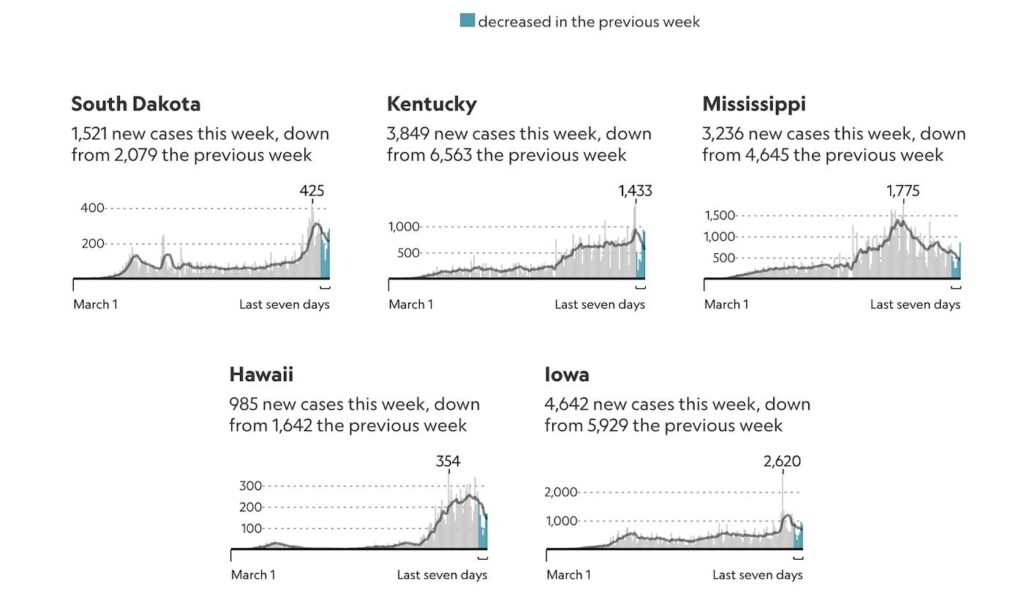
National Geographic researchers collected the data using both local and national sources.

A decrease suggests the virus is being controlled.
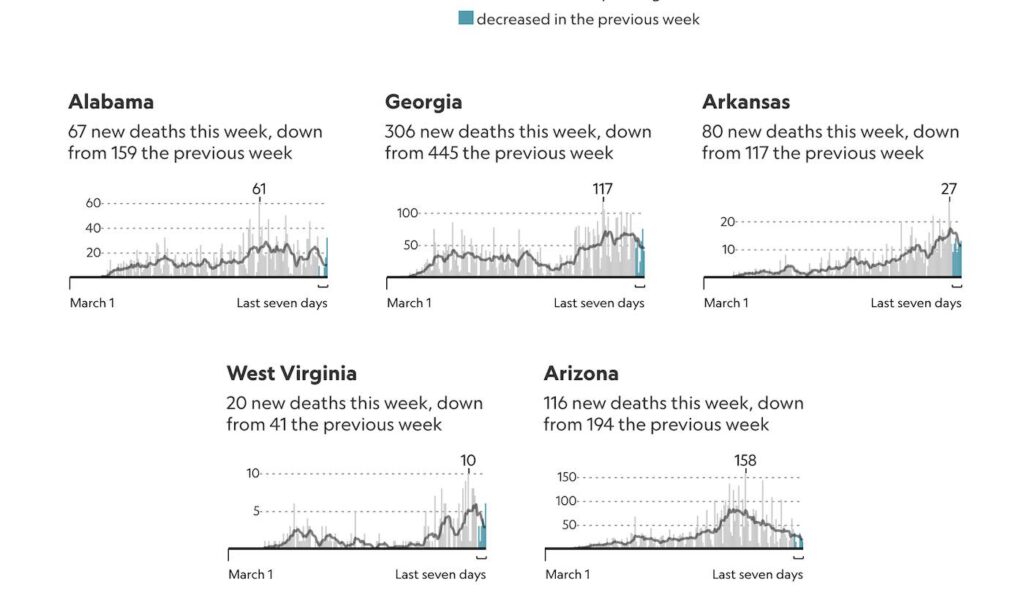
National Geographic researchers collected the data using both local and national sources.

Treatment is a Lot Better Than it Was Early in 2020

Science and medicine are ‘getting smarter’, even as the virus changes its characteristics.

RELATED: ‘Breakthrough’ Coronavirus Treatment With Natural Protein Cuts Risk of Death and Serious Symptoms by 79%

The likelihood of someone dying after being admitted to intensive care with COVID-19 has pretty much halved since the early days of the pandemic, thanks to better understanding of how to treat the disease in the emergency room.

Italy, Once Battered, is Back to Beautiful!

Our Editor-in-Chief just returned from Italy, which was devastated by the virus in early spring. Most things have returned to normal in the northern part of the country, which was the region most heavily hit.

People wear masks and use hand sanitizer as a habit whenever entering grocery stores or restaurants—but, in the case of restaurants or bars, as soon as they get to their table the masks come off.
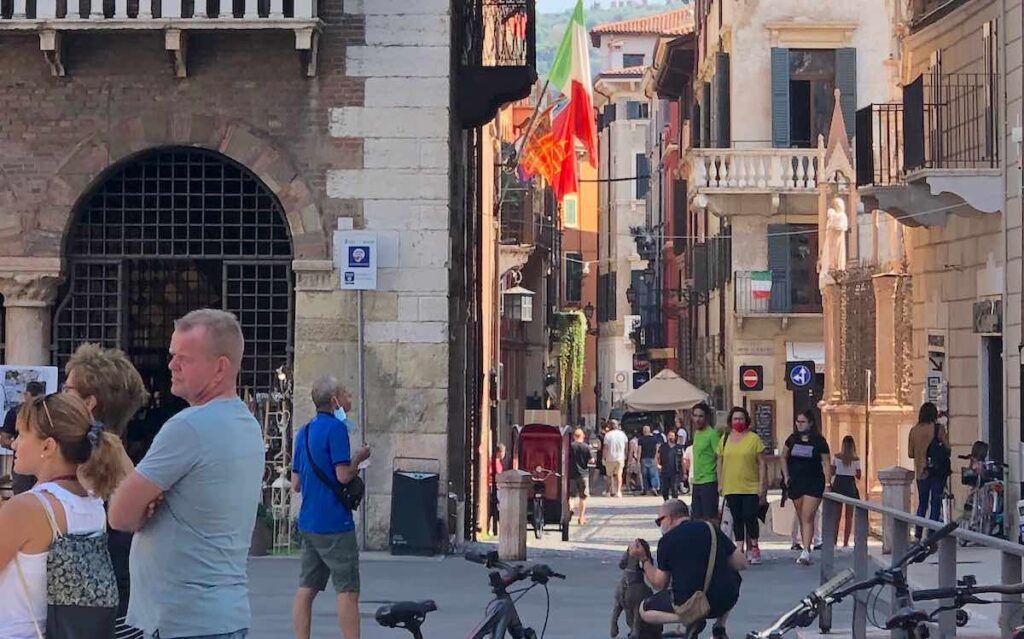
Verona, September 4

A minority of the population, 10-15% it looked like, seemed to be wearing masks outdoors on sidewalks. Yet, they are only recording about 10 deaths per day in a country of 60 million people.
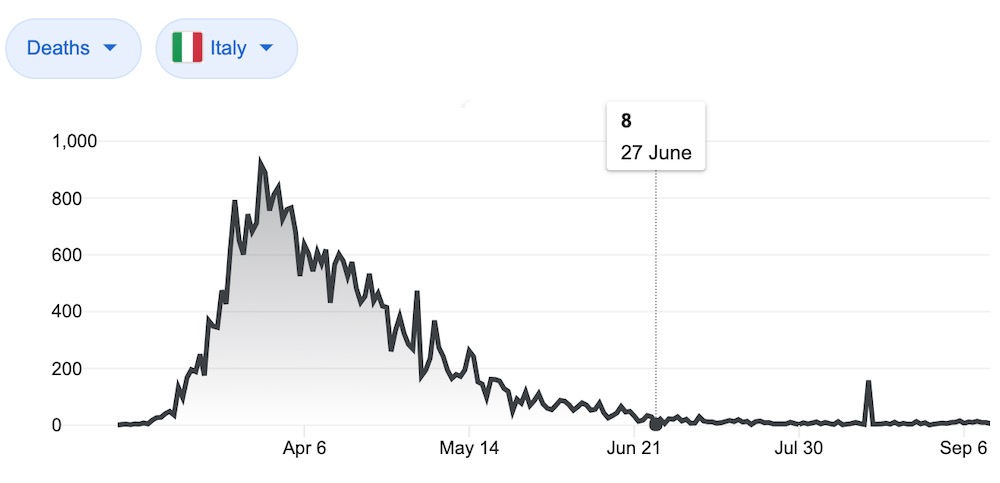
The Italians I saw in many cities and towns have a casual, but cautious, attitude that embraces life as it comes along. They enjoy everything in the moment believing in a live-and-let-live approach that many Americans could benefit from.

Need more positive stories and updates coming out of the COVID-19 challenge? For more uplifting coverage, click here

SHARE The Positive Trends With Friends Who NEED Some Hope on Social Media…

Two-thirds of Americans Believe They Have Become a Better Person This Year

By Seven Shooter

Two-thirds of Americans said quarantine has made them a better person, according to a new survey.

By Seven Shooter

The poll of 2,000 Americans over age 21 looked at the positives changes to come from this challenging time—and the ways in which respondents are re-prioritizing what they value.

Results revealed 55% of respondents were a bit embarrassed by some of the things they valued pre-quarantine, and the many months spent at home gave 70% a chance to learn more about themselves.

Commissioned by Coravin and conducted by OnePoll, the survey found that the quarantine has, understandably, changed Americans’ outlook on life.

Some respondents gained the time and flexibility to delve into new hobbies and discover new passions— shortages of baking products in the grocery store was proof of this. And, 35% said they want to continue those hobbies once quarantine is over.

RELATED: Americans Say They Are Thankful For ‘Little Joys’ More Than Ever These Days – Their Top 10 Favorites

This opportunity to explore personal interests beyond work has led 27% of respondents to indicate they are hoping to achieve a better work/life balance coming out of quarantine.

Being close to the people we care about was a major theme for respondents, as 46% want to spend more quality time with friends and family, and 38% plan to create more meaningful relationships with those around them.

CHECK Out: 64% of Americans Have Experienced Transformative ‘Eco Wake-Up Calls’ During COVID Crisis

TOP THINGS PEOPLE NO LONGER TAKE FOR GRANTED:
Spending quality time in person with family or friends 52.28%
Hugs 41.23%
Traveling to new destinations 32.53%
A relaxing walk in the park 31.99%
Shopping in a store 31.73%
A date night at a restaurant 31.39%
Extended family gatherings 30.86%
Attending events in person 28.92%
Stopping for a cup of coffee on my way to work 25.90%
Meeting new people 25.70%
Weekly coffee dates with friends 24.36
Post-work happy hour 23.69%
Chatting with co-workers during lunch 23.56%
Having a quiet weekend at home be out of the ordinary 22.96%
An afternoon at the beach 22.36%
Sending my children off to school in the morning 21.49%
Attending sporting events 21.22%
Wandering through a bookstore 20.68%
Watching my kids’ sporting events 18.14%
Hitting the gym 17.54%
Dropping my kids off at playdates 16.06%

THINGS PEOPLE WANT TO DO AFTER LOCKDOWN SELF-REFLECTION:
Spend more quality time with friends and family 45.60%
Work to create more meaningful relationships with loved ones 37.70%
Continue new hobbies I started during quarantine 34.80%
Attend in-person events after attending their virtual counterparts during quarantine 29.40%
Move to be closer to loved ones 27.90%
Focus on achieving better work/life balance 26.60%
Change careers in order to have more meaningful work 21.80%

CHIME In On Social Media: Share What Have You Gotten Better At…

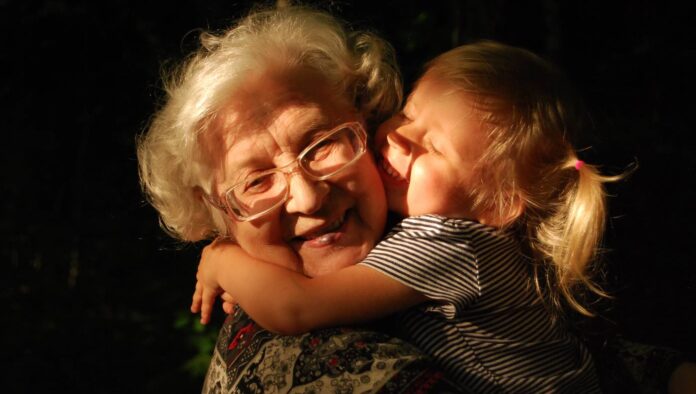
“Nobody can do what grandparents do. Grandparents sort of sprinkle stardust over the lives of little children.” – Alex Haley (Today is Grandparents Day)

Photo by Ekaterina Shakharova

Quote of the Day: “Nobody can do what grandparents do. Grandparents sort of sprinkle stardust over the lives of little children.” – Alex Haley (Today is Grandparents Day in the U.S.)

Photo: by Ekaterina Shakharova

With a new inspirational quote every day, atop the perfect photo—collected and archived on our Quote of the Day page—why not bookmark GNN.org for a daily uplift?


Landscaping Pros Have Been Giving Free Lawn Care Services to Healthcare Workers, Relieving Their Stress

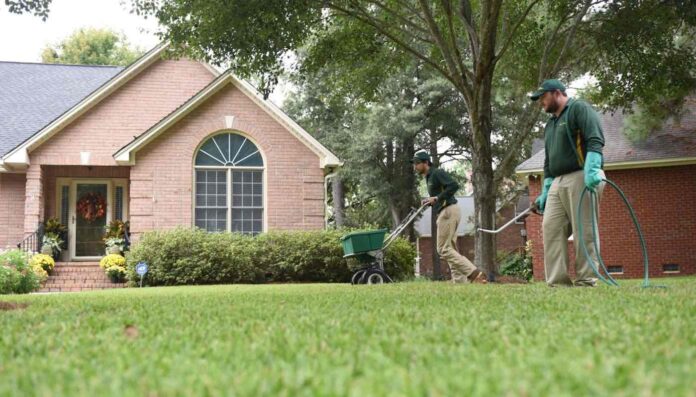
Project Evergreen has been mowing lawns for frontline workers taking some of the stress out of their lives while beautifying the environment for when they return home.

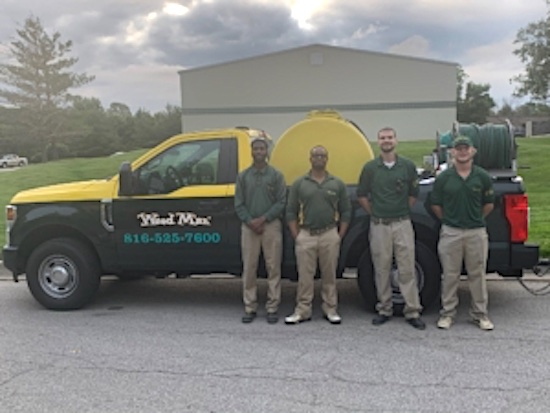
Lee’s Summit, Missouri Weed Man workers volunteering

During the pandemic, households with a first responder or healthcare worker do not need to be thinking about getting their yard work done. That’s why the national non-profit, which is fueled by volunteers from landscaping companies like Weed Man, show up at the homes of essential workers like Logan Gillen, an ER nurse, who can then spend hours with his family when he’s not at work.

The project pairs Weed Man franchisees with local heroes near them, providing free services to help 38 healthcare workers. So far, the project has delivered manicured lawns to front line heroes in six states. Other volunteers, like church groups, have been paired with heroes as well.

“The Green Care Program for front line workers has given us at Weed Man Fresno an opportunity to show our appreciation and help those who dedicate their lives to helping others,” said owner Jeff Kollenkark.

POPULAR: Washington Man Rescues 2.4 Million Pounds of Farmers’ Crops Going to Waste, Gets Them to Food Banks Across State

“We have a total of nine customers in the program and are blessed to be able to give back to the hard working front line workers who put their lives at risk every day.”

Cindy Code of Project Evergreen said volunteers at nine locations in seven states have been servicing military families through the GreenCare for Troops program since 2006.

Military families face many challenges when their love one is deployed, and taking lawn care off their to-do list has been a big help—and in 2020 they expanded the initiative when they saw the hospital workers feeling the same stress.

RELATED: These ‘Detroit Mower Gang’ Volunteers Have Been Competing to Maintain City’s Old Parks

Trimming some of their workload by trimming their grass has proven to be a great way to show our heroes some ‘corona kindness’.

SHARE This Green Goodness on Social Media, and Multiply the Opportunity…

Kites of Renewable Energy Generate Wind Power by Flying Through the Air

A German startup is bringing the lightness of kites to green energy production by building small flying wind turbines that use 10 times less material at half the cost of traditional options.

In June, KiteKRAFT hit a major milestone with a 7-foot kite prototype, completing its first figure-8 flight, the motion that will provide the system’s wind power.

The kite has small onboard spinning wind turbines, which are essentially act like regular blade tips. It does not need a tower made of hundreds of tons of concrete and steel or a foundation to hold those blade tips in the air, but instead uses smart algorithms to find the best location in mid-air.

RELATED: Wind Power is Now So Cheap, It Could Start Paying Money Back to UK Consumers

Logistics, installation, and inspections are much simpler and the kite can easily reach stronger winds at higher altitudes. “Cost savings of over 50% compared to other sources are possible,” says the company on their blog.

Another advantage is that a kiteKRAFT system is hardly visible (no towers and no huge blades), which often elicit public misgivings about such structures in their landscape.

KiteKRAFT – small flying wind turbines

“We are proud that we came to this point in just over one year after company foundation,” says the co-founder & CTO Florian Bauer.

CHECK Out: After Decade of Historic Growth, Wind Power is Now the Most-Used Renewable Energy Source in US

He told GNN that their kite system is probably similar to large wind turbines when it comes to interfering with birds. “That’s why we will likely implement an anti-bird-protection system relatively early on. This means, that kite simply goes to hovering (automatically) if there is a flock of birds passing, and continues production right after.”

But competition with massive wind farms is not their goal. Their mission is to provide small energy networks, which are normally powered by diesel generators and/or solar energy.

KiteKRAFT co-founders testing in Munich, 2019

Every kiteKRAFT system has a number of sensors. The kite computer executes software algorithms and uses the sensor data for autonomous flight and to generate power from the wind efficiently. kiteKRAFT system owners and inspection personnel can access the kite remotely with an app and view the current states or live video stream from the onboard cameras. The app also allows certain commands, e.g. to land the kite for inspection.

LOOK: Tiny Wind Turbine That Generates Power From Your Apartment Balcony Wins Dyson Award

At all times, the kite logs important flight and performance data and sends those to kiteKRAFT servers for analysis by company engineers, which enhances future reliability.

As the kite is essentially “a computer with wings”, its performance and reliability is likely to improve exponentially over the years, and we look forward to seeing the company take off to great heights.

WATCH the test flight below…

RAISE Some Praise on Social Media By Flying This Story to Your Friends…

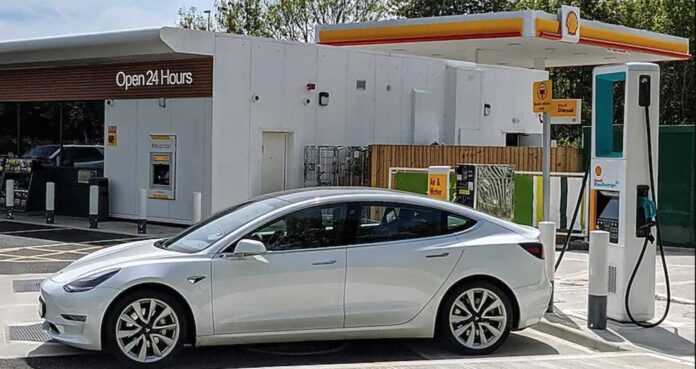
These Giant Oil Companies Are Providing EV Chargers Next to Their Gas Pumps

Shell UK

While it may go against the business model of an oil company to promote a competing technology (like electric vehicles), many of the big players have all seen the writing on the wall as demand for electric vehicles (EVs) surges.

Shell UK

Shell, BP, Chevron and others are starting to embrace the notion of offering customers other options besides gasoline fill-ups in an attempt to keep access to wallets and loyalty, regardless of which type of drivetrain rolls in.

Royal Dutch Shell started to go big in EV charging in 2017 with the acquisition of NewMotion, Europe’s largest EV charging network with more than 30,000 nodes and a customer base topping 80,000 EV drivers.

Subsequently, Shell inked a partnership with Ionity, the EV charging technology/network created in partnership with BMW, Mercedes, Ford and Volkswagen to provide seamless EV-charging across Europe. Shell also rolled out its first few EV recharging nodes at existing refueling stations in the UK and Netherlands to test market demand, and a strong response has caused Shell to expand the program, calling it Recharge.

In 2019, Shell started implementing EV charging in the U.S. with the acquisition of Greenlots, a California-based provider of EV charging and energy management software and the installation of its first U.S.-based EV charging station at Logan Airport in Boston, Massachusetts.

RELATED: Tesla Becomes World’s First EV Company to Assemble 1 Million Cars

And just this past summer, Shell launched its RechargePlus program in California with plans to deploy EV charging infrastructure at commercial, retail, public and government locations as well as at multi-unit residential dwellings across the state. EV enthusiasts are optimistic that Shell continues to develop its EV charging infrastructure given the company’s huge retail reach of 25,000 filling stations globally.

Not one to be left behind, rival UK-based oil giant BP got serious about EV charging in 2018 with the acquisition of Chargemaster, the UK’s largest EV charging network, and major investments in U.S.-based FreeWire Technologies, which develops EV fast chargers, and Israeli EV-battery developer StoreDot. Within a year, BP opened the first BP-branded charging station in the UK, and the company plans to roll out dozens more in the next few years.

RELATED: UK Supermarket Chain Provides Free Car Charging Network to EV Owners While They Shop

U.S.-based Chevron is also getting in on things. Last year Chevron installed EV charging nodes at five of its retail gas stations in California in partnership with EVgo, an EV charging network already spanning 34 U.S. states. As demand for EVs surge, expect Chevron to incorporate EVgo charging systems in many more of its stations in and around major metropolitan areas where people tend to have electric cars.

For its part, ExxonMobil, America’s largest oil company, doesn’t seem particularly interested in EVs or EV charging. This past Fall its CEO Darren Woods was quoted as saying he “doesn’t get the point” about EVs when they “end up being charged by power generated from coal.”

MORE: New Lithium Ion Battery Design Allows Electric Vehicles to Be Charged in Just 10 Minutes

The point is that EV drivers can always look to Shell, which says its EV pumps are powered from 100% renewable energy.

EarthTalk® is produced by Roddy Scheer & Doug Moss for the 501(c)3 nonprofit EarthTalk. To donate, visit their website – or send questions to: [email protected].

“All great beginnings start in the dark.” – Shannon L. Alder

Quote of the Day: “All great beginnings start in the dark.” – Shannon L. Alder

Photo: by Noah Silliman

With a new inspirational quote every day, atop the perfect photo—collected and archived on our Quote of the Day page—why not bookmark GNN.org for a daily uplift?


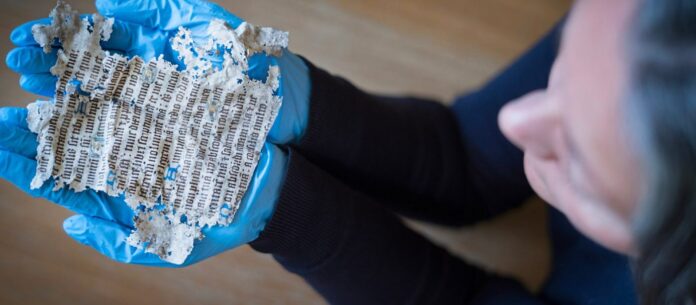
Rare Archeological Treasures Discovered Beneath Attic Floorboards of English Tudor Mansion

National Trust

Picture yourself in the dusty attic of a moated Tudor manor house built sometime in the late 1500s. For the first time in hundreds of years, the floorboards are lifted. What lies beneath? Buried treasure, of course.

National Trust

Sounds like something straight out of Hollywood, right?

Nope. It’s actually something that took place in Norfolk, England during the pandemic. While the adventure might have lacked the special effects of an Indiana Jones blockbuster, this recent case of ‘real-life imitates cinematic art’ still turned up some pretty amazing finds.

The story begins with the $7.8 million-dollar roof restoration project of Oxburgh Hall, a National Trust site. Archaeologist Matt Champion, working on his own during the lockdown, was conducting a fingertip search of the rafters when he unearthed a stash of more than 2,000 archaeological specimens, some dating back as far as the 15th century.

According to National Trust curator Anna Forrest, who oversees the project, “When the boards came up, we could see a wave pattern in the debris which showed it had been undisturbed for centuries.”

RELATED: The First Time a 10-Year-old Boy Uses His Birthday Metal Detector, He Unearths a Centuries-Old Sword

The dust, sometimes inches deep, was covering a layer of lime plaster. As unpalatable as that might sound, to paraphrase Martha Stewart, it turned out to be a good thing. “[The lime plaster] drew out the moisture from the debris and resulted in much of it being perfectly preserved over the centuries,” Forrest said.

Several of the items recovered were recent artifacts likely dating to the WWII era, notably some empty Woodbine cigarette packs and a vintage box of Terry’s chocolates, minus the chocolates.

But among the most exciting discoveries was a cache of high-quality Elizabethan and Georgian textiles and embroidery scraps. Ironically, many of the most exciting finds were woven into a pair of long-deserted, ossified rat’s nests. (At least it wasn’t snakes, Indy.)

Love them or hate them, the vermin were also responsible for preserving fragments of some 450-year-old handwritten music as well as a page from 1568 copy of John Fisher’s The Kynge’s Psalmes.

In non-rodent-related news, a construction worker later found the rest of the book, nearly intact, stashed away in a cubbyhole in the attic, while another worker discovered a 600-year-old parchment fragment containing part of the Latin Vulgate Psalm 39 decorated in gold leaf and illuminated in bright blue ink.

CHECK OUT: When 8-Year-old ‘Queen’ Finds Authentic Ancient Sword in a Lake, Her Fans Rally to Forge Her a Replica

Forrest noted the page likely came from a daily prayer book known as a book of hours. “The use of blue and gold for the minor initials, rather than the more standard blue and red, shows this would have been quite an expensive book to produce,” she said in an interview with The Guardian.

“It is just the most exquisite thing and to have found it literally in a pile of rubble is probably… well, it’s unheard of for the National Trust, that’s for sure.”

“We had hoped to learn more of the history of the house during the re-roofing work… but these finds are far beyond anything we expected to see,” Russell Clement, General Manager at Oxburgh Hall told the National Trust. “This is a building which is giving up its secrets slowly. We don’t know what else we might come across—or what might remain hidden for future generations to reveal.”

MORE: Lucky Dented Penny That Saved Soldier’s Life During WWI Comes to Light 100 Years Later

Who knows? Maybe if they channel Professor Jones for a little more judicious digging, they might just turn up the holy grail after all.

PASS The Treasure On And Share The Story With Your Friends On Social Media… 

Woman Wanders Airports Giving Away Homemade Cards Of Kindness And They Really Brighten People’s Days–WATCH

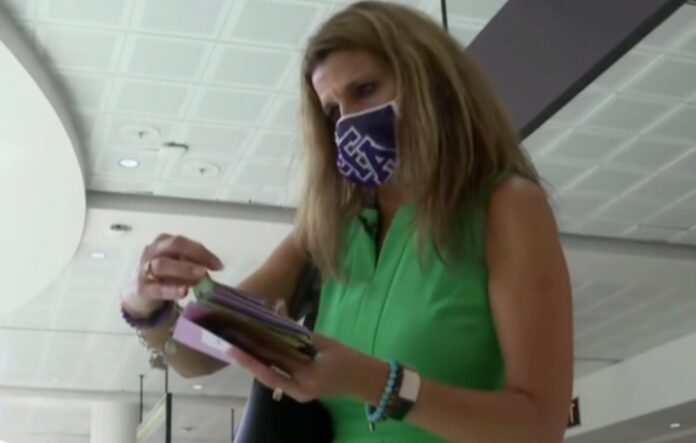
While traveling for work, a local woman has been giving homemade cards to strangers who might need a pick-me-up at the Houston airport.

“I just want somebody’s day to be better,” Catharine Knight told CBS News. “I really just want to make the world a better place.”

Flyer Heidi Botkin was flying solo with her three kids when Knight approached her. “I was super stressed,” she said. “So, yeah, that [card] was a nice little pick-me-up.”

While travelers are being uplifted by these friendly cards more than ever during the pandemic, spreading random acts of kindness isn’t a new thing for Knight.

MORE: Boy Created a Word Puzzle to Help Entertain the Queen in Lockdown—And Was Thrilled to Get a Letter Back

She and her son Parker have been writing messages for strangers for three years now.

To date they’ve written 25,000 notes to uplift others.

(WATCH the inspiring video below… EDITOR’S NOTE: Overseas viewers can see it at CBS News.)

PASS On The Act of Kindness And Share This Article With Your Friends…

Cancer Survivor Becomes First Woman To Complete Grueling Triathlon Covering 330 Miles in 5 Days

SWNS

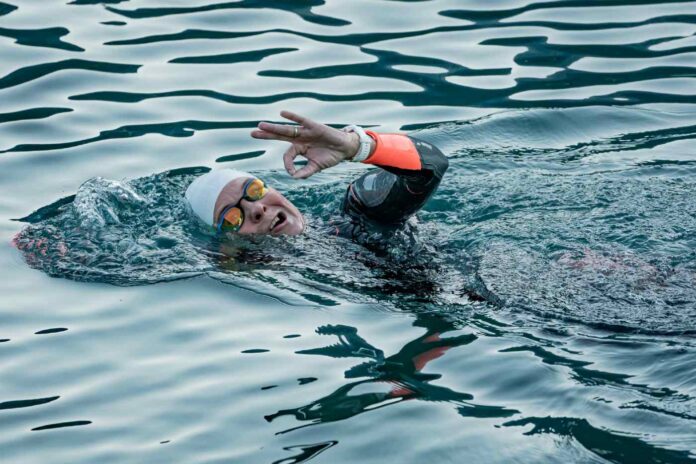
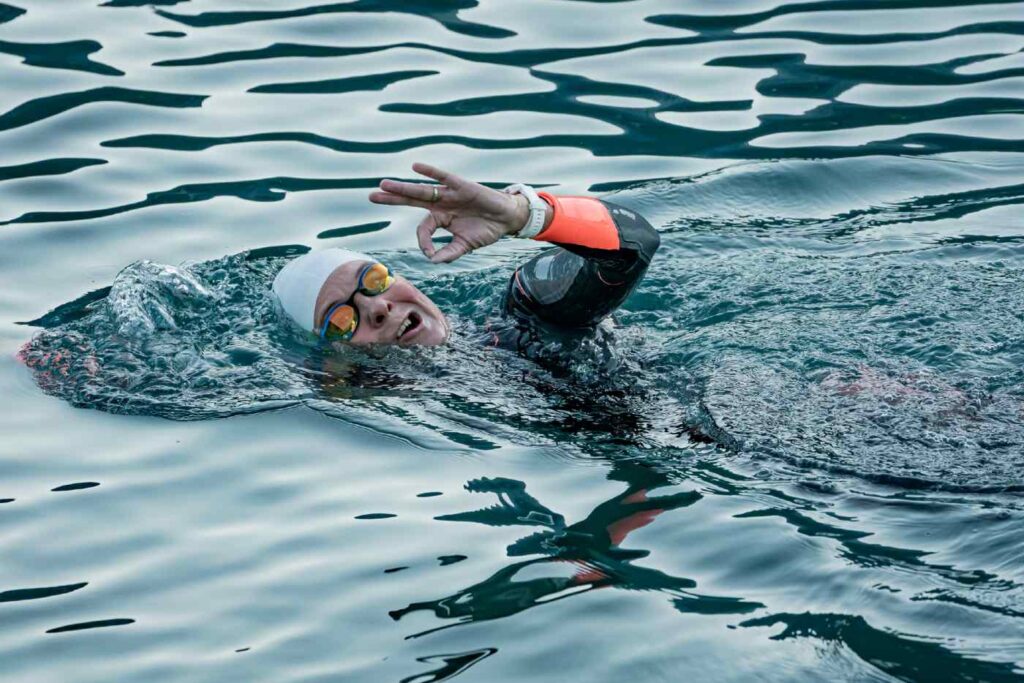
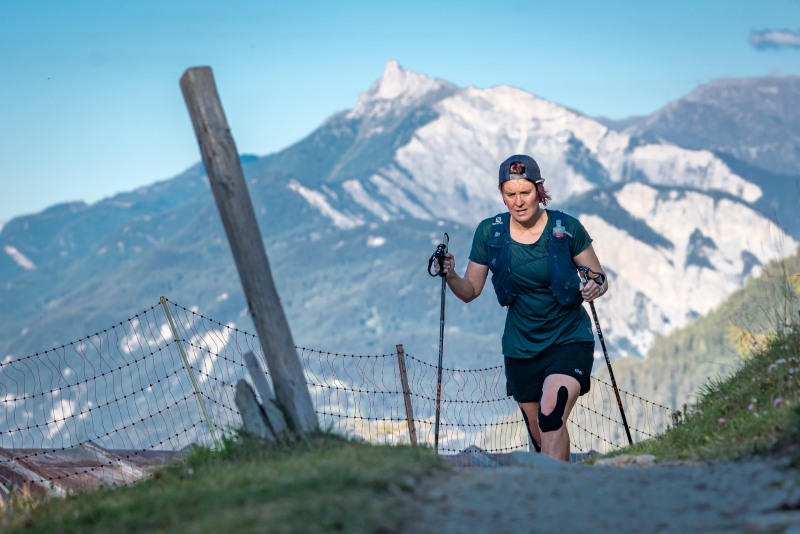
A cancer survivor has become the first woman to complete a grueling ‘Sea to Summit’ triathlon which saw her swim, cycle, and run over 330 miles in just five days.

SWNS

Andrea Mason didn’t sleep and barely ate during the duration of the “insane” challenge, but she was ecstatic when she crossed the finish line early Wednesday morning.

The race, set in the French Alps, involved swimming around the circumference of Lake Annecy, then cycling and running up Mont Blanc—at 15,774 ft, it’s the second highest peak in Europe.

Setting off at 6:15am on Friday, 39-year-old Mason battled through severe pain, cramping, and hallucinations, but she pushed on—managing to complete the race in an impressive four days, 23 hours, and 41 minutes.

Andrea had been diagnosed with severe endometriosis and cervical cancer in 2017 and needed life-saving surgery.

Following a successful operation, she is now hoping to raise awareness of women’s reproductive health, and of endometriosis in particular, which is a debilitating condition that causes painful or heavy periods.

In the past year, Andrea’s set up her own charity, Lady Talk Matters, in a bid to normalize the conversation surrounding female reproductive matters.

Andrea, from Blackpool in Lancashire, England, said, “I feel happy, exhausted, and relieved.

RELATED: Seniors Celebrate Grandson’s Birthday By Dressing as His Favorite Movie Characters—and the Results Are Adorable

“I am so happy all went to plan as there were so many things that could have gone wrong. I wanted to do it in five days, and I did, but it was tough, really tough.

“I had some low moments, particularly when I couldn’t sleep in my limited rest periods, and when I couldn’t keep any food down as I was running.

SWNS

“For sure I had some doubts along the way. I was venturing into the unknown with such a huge run, particularly as large parts of it were in the dark.

MORE: Boy Was Inspired to Become Youngest Yogi in US After Seeing How Yoga Healed His Mom After Chemo

“It was bigger than I imagined, the impact on my body was huge, but every time I felt like stopping and considered giving up, I kept remembering why I was doing it.

“I thought about all the women out there in pain or who still hadn’t been diagnosed. That is why I put myself through this.”

Andrea had to swim 23 miles around the circumference of Lake Annecy, cycle 205 miles with 30,000 feet of vertical climbing around Mont Blanc, and run 105 miles with 4,000 feet of vertical climbing around the Ultra-Trail du Mont Blanc.

CHECK OUT: When 16-Year-old Missed Jonas Brothers Concert for Chemo, They Surprise Her at the Hospital

A prolific swimmer, you could say Andrea’s actually spent a lifetime training for an event like this. She completed her first three-mile race “powered by Mars bars” when she was just four.

Share This Adventurous Feat With Your Friends On Social Media…

McDonald’s Breaks New Ground With Returnable, Reusable Coffee Cups

McDonald's

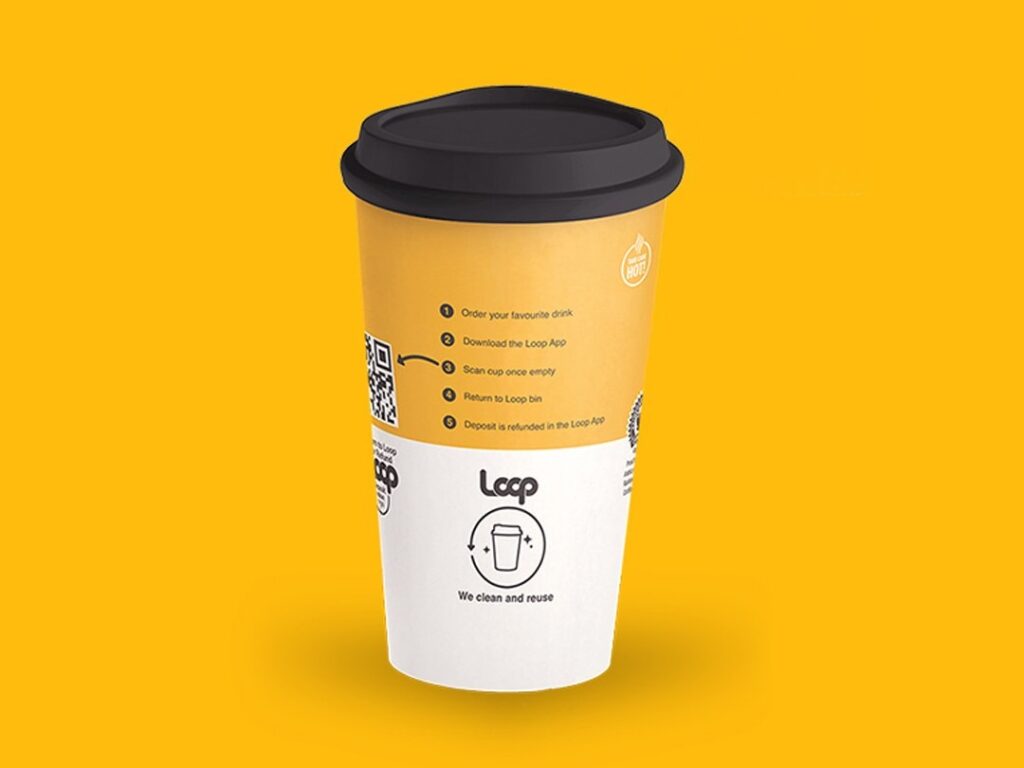
McDonald’s UK will begin testing a new system of reusable, returnable cups to cut back on the demand for hot beverage to-go containers now that 600 billion of them are produced each year around the world.

Instead of relying merely on biodegradable or recyclable cups, McDonald’s vice president of global sustainability, Jenny McColloch, is opting for a reusable system of drink cups made by a company called Loop.

This initiative aims to give consumers a greater sense of responsibility towards the cup, and waste in general.

McDonald’s

In their system, a small deposit will be paid on each cup which will be returned to the buyer upon its deposit into a special in-store bin, or at collection points in other participating stores across the country, like Tesco, where they can be rounded up and brought to a facility to be sterilized and sent back to the restaurants to be used again.

“You can now leave the restaurant with it and deposit it anywhere,” says Tom Szaky, CEO of Loop. “So you get that sort of to-go experience fulfilled, and you don’t have to deal with anything other than depositing it back in the Loop ecosystem.”

RELATED: Starbucks and McDonald’s Aim to Replace 250 Billion Paper Coffee Cups with Recyclable Alternatives

German McDonald’s, as well as American companies like Starbucks and Peet’s Coffee, offer small discounts for customers who bring in their own cup, but—in part because of the inconvenience of bringing a tumbler everywhere—relatively few java drinkers take advantage of the deal.

Loop and McDonald’s are taking inspiration from Germany’s ReCup, one of the finalists of the NextGen Cup Challenge, a contest sponsored by McDonald’s and Closed Loop Partners, that was launched last year to try and find the best solutions for to-go cup sustainability problems.

ReCup works much the same as Loop—it’s a sort of “bike-sharing but for cups,” and McColloch hopes to ascertain how the system will work at an organization like McDonald’s.

In the UK, many franchises and small cafes are using recyclable hot beverage cups, which require the inner-lining to be removed before the outer cardboard-like material can be recycled. However, even these cups have a lifecycle before the molecular structure of the material breaks down, and they are not reusable.

MORE: They Recycle Electronics – And People’s Lives – By Giving Ex-Felons Good Jobs to Imagine a Better World

Loop is hoping for 100 deployments from each cup, a marked increase over traditional ones, while McDonald’s and McColloch hope that the more restaurants implement these sorts of measures, the greater the infrastructure for broad circular economic activity will grow to be, allowing more and more companies to join in eco-friendly practices.

Thanks A Latté For Sharing The Good News With Your Friends On Social Media…
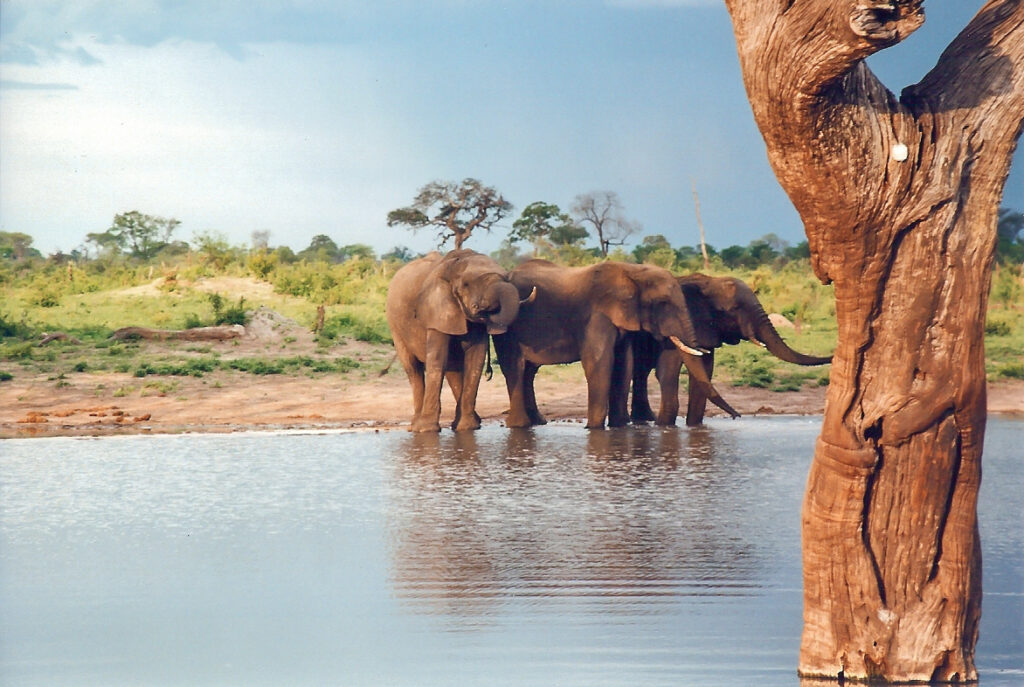
Zimbabwe Protects Its Iconic Wildlife And Bans Coal Mining in All National Parks

JackyR

Zimbabwe has banned exploratory coal mining operations and many small gold mining contracts in all 11 national parks, heralding a massive victory for Zimbabwean wildlife.

JackyR

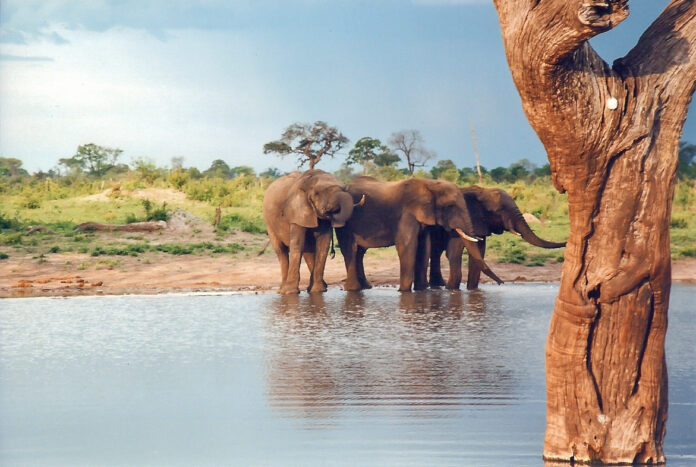
This is a reverse from an earlier decision to allow two firms belonging to Zimbabwe’s Chinese allies to drill and survey for coal in the world-renowned Hwange National Park, home to more than 40,000 elephants and a population of endangered black rhino, as well as leopard and painted dog conservation programs.

RELATED: Abandoned Coal Mines May Soon Be Transformed into Perfectly Efficient Indoor Farms

Concern was raised by environmentalists of “ecological degradation” and a marathon five-year legal effort was mobilized against the government by the Zimbabwe Environmental Lawyers Association (ZELA) to block the mining rights which had originally been granted in 2015.

According to coverage from the BBC, Zimbabwean Information Minister Monica Mutsvangwa announced that “steps are being undertaken to immediately cancel all mining titles held in national parks,” while adding that it was not only coal but gold mining, which was already being carried out along several small rivers, that would also be banned.

Laura (cardamom)

Zimbabwe and China maintain close national ties, and the decision is not expected to cause deterioration of relations as both governments understood the sensitivity of the mining operations.

A truly momentous victory for conservationists, Zimbabwe has struggled for decades with severe inflation—a figure that stands currently at around 737%, and any Chinese currency received from the mining operations in Hwange would have been extremely useful to the government.

MORE: Rats Are Saving Elephants From Hidden Landmines on Their Migration Routes

However it was nature that triumphed, and as tourism revenues begin to increase following COVID-19 lockdowns, the value of a pristine national parks system will hopefully prove the more sustainable and profitable investment.

SHARE The Hopeful Conservation News With Your Friends On Social Media… 
“Death leaves a heartache no one can heal. Love leaves a memory no one can steal.” – Irish headstone

Quote of the Day: “Death leaves a heartache no one can heal. Love leaves a memory no one can steal.” – Irish headstone

Photo: Dan Meyers

With a new inspirational quote every day, atop the perfect photo—collected and archived on our Quote of the Day page—why not bookmark GNN.org for a daily uplift?


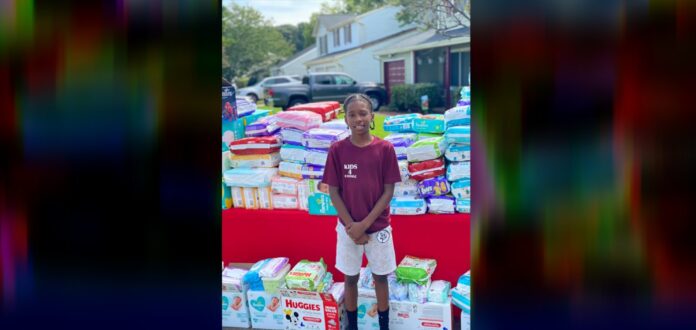
Boy Donates 22,000 Diapers to Single Moms Using Funds From His Lemonade Stand

Lots of kids set up lemonade stands in the summer. For many, it’s a rite of passage; a first step toward learning what it means to earn your own money. For 11-year-old Cartier Carey, it was a chance to do a lot more.

That’s because Carey isn’t using his profits to open a first savings account or saving up to buy himself a special treat. Instead, he’s investing it back into his Hampton, Virginia community.

His goal? Helping single mothers in need. With all the stress and financial uncertainty brought on by the pandemic, Carey decided to focus on the basics: diapers and wipes.

“He doesn’t want to spend any of the money on himself,” his mom Brittany Stewart told CNN. “He just wants to continue to keep buying diapers and giving each day.”

The impetus for the project took root while Carey was visiting his grandmother who lives in one of the area’s more economically depressed neighborhoods.

MORE: Brazilian High Schooler Hands Out Hygiene Kits to Poor Neighbors Who Can’t Afford Hand Sanitizer

Cary, who is keenly observant for his age, was taken aback by how many women he saw raising children on their own. His instinct was to find a way to help.

“As he’s getting older, he kind of understands,” Stewart told the Virginia-Pilot. “He just came up and said, ‘Hey can we help some of the moms?’ and we were kind of like, ‘What do you want to buy?’ That’s kind of how it came [about].”

By the end of July, Carey had raised close to $5,000 via the lemonade stand and from donations, and distributed close to 6,500 diapers. As of September, at 22,000 diapers, he’s close to achieving his total goal of 25,000.

But the generous 11-year-old is no stranger to worthy causes. Before becoming a “lemonade mogul,” Carey launched another community initiative dubbed “Carti packs”—care packages for the homeless that contained such essentials as deodorant, soap, tissue, and even hand-warmers for when the weather got cold.

Last year, Carey founded his own non-profit organization, Kids 4 Change 757 “to help the community and make the community better.”

Carey says his greatest joy comes from knowing he’s made a difference and seeing how much his efforts have meant to the people he strives to serve. When one mom who’d been the beneficiary of his good deeds broke down in grateful tears and gave him a big hug, he was truly moved.

RELATED: Teens Transform Liquor Store into a Needed Food Market, Choosing The Best Way To Serve Chicago

“It was heart touching. I almost cried myself when she gave me a hug and started crying. That made want to just keep doing it,” he told ABC News. “Others can make a difference just like I’m doing right now. They can save lives and be heroes. [You’re] never too young.”

(Watch Carey’s uplifting story below on ABC News.)

Multiply The Sweetness And Share The Story On Social Media…
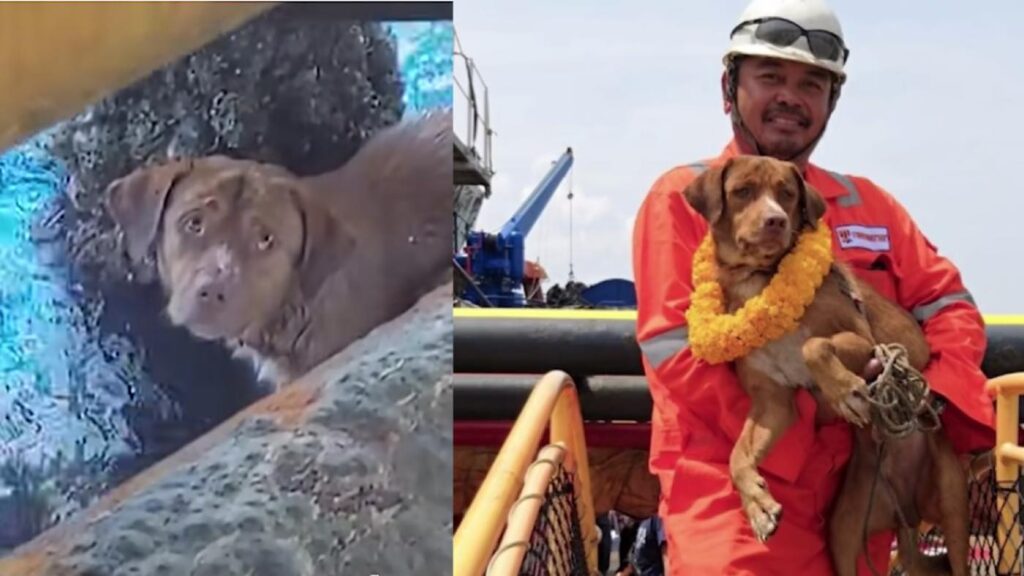
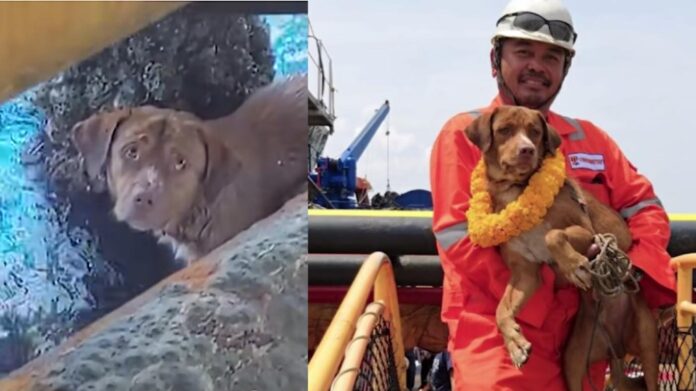
Lucky Dog Gets Adopted By Oil Rig Worker Who Found Him Swimming 135 Miles From Thai Coast

When you’re working on an oil rig in the middle of the ocean, you expect to see the occasional whale or dolphin swimming by, but a stray dog? Not so much.

That’s exactly what members of a Chevron crew spied struggling in the waters of the Gulf of Thailand 135 miles from coastal Songkhla.

The fuzzy brown pup, first spotted by offshore planner Vitisak Payalaw, was clearly in distress. “I thought that if we didn’t move quickly, I would not be able to help him,” Payalaw told CNN.

As the rescue efforts continued, the water was becoming increasingly choppy. Several attempts to reel in the dog failed.

The crew feared he’d be swept back out to sea, but the pooch managed to keep his tenuous hold on the platform.

RELATED: Hero Park Ranger Carries Dehydrated Dog To Safety Down a Treacherous Mountain Trail

“His eyes were so sad,” Payalaw said. “He just kept looking up just like he wanted to say, ‘please help me.’”

Finally, the workers were able to secure the dog with a rope harness and pull him to safety. By then, he was understandably shaking and exhausted.

After cleaning him up and giving him fresh water and food, the crew named him Boonrod, which means “he has done good karma and that helps him to survive,” Payalaw told NPR.

Boonrod was identified as an aspin, a breed native to the Philippines. No one knows exactly how he came to be in the waters so far offshore, although the Bangkok Post speculated he’d most likely fallen from a fishing trawler.

On April 15, after two days’ recuperation, Boonrod was sent by boat to the mainland where he received veterinary care before being transferred to an animal shelter.

“A vessel transporting the dog arrived onshore at around 10 a.m.,” Payalaw posted to his Facebook page. “His overall condition has improved. He is getting stronger and can smile.’’

But the plucky pup’s good luck didn’t stop there. Payalaw had become so attached to Boonrod, he vowed that if no one claimed ownership, he’d adopt the dog himself.

Because he was on duty, Payalaw had to wait 10 days before being reunited with his new best friend. Since no owner had come forward, Boonrod was made an official member of Payalaw’s family on the spot—much to their mutual delight.

“I’m very very, happy with my new dog,” Payalaw said in an interview with The Dodo. “He’s a good dog for me and a good dog for my family, too.” Payalaw says while he’s not married, Boorod has become “like a son” to him.

MORE: Two Surfers Save a ‘Starving, Cold’ Dog From Sea Cave After It Had Been Missing For 3 Months

There’s a saying that goes, “Dogs have a way of finding the people that need them.” Boonrod may have had more obstacles to overcome than most canines when it came to finding that special person to call his own, but he proved that even an ocean wasn’t enough to keep him and his beloved Payalaw apart.

(WATCH the video of the incredible rescue below on The Dodo… )

WOOF Your Praise For This Amazing Pair On Social Media…

Real-Life Willy Wonka Gives Away Candy Factory In Giant Treasure Hunt

David Klein

This is not a drill: Golden Tickets really are being hidden for you to find.

The founder of Jelly Belly is getting ready to retire, and he’s decided to leave the candy industry with a bang (and a fizz and a pop) by placing Willy Wonka-style golden tickets out into the world for people to hunt for.

David Klein—aka The Candy Man—has started going across the USA hiding golden tickets attached to necklace chains in places where he comes across an interesting story. Described as a “boots on the ground treasure hunt”, they plan to release a riddle to help you find these golden tickets in each of the 50 states.

“With The Gold Ticket Treasure hunt, our goal is to get people out and about with their families. Grandma and Grandpa can even join with the kids and grandkids,” said David.

You can sign up for one of their treasure hunts at thegoldticket.com website, and each of the 50 golden tickets is redeemable for $5,000 cash. Some of the states have already sold out.

There is a cost of $49.99 to enter, but all it takes is one entry to be included in the grandest hunt of all—and this is where it gets very Wonka-licious.

Anyone who joins at least one treasure hunt will be eligible to search for The Ultimate Treasure—the ownership deed to a candy factory in Florida and an all-expenses paid trip to be educated in candy-making at the University of Wisconsin-Madison.

RELATED: Artist Creates Amazing Portrait Using Thousands Of Jelly Beans

The big event begins after all the states have had a chance to play. UPDATE – 9/14/20: Get more info from this ABC news interview.

We are wondering if there are any Oompa Loompas waiting at the end of this contest.

MORE: $1 Million in Gold Coins Rain Down on Workers From French Rafters

Share This Sweet Adventure Story With Your Friends On Social Media…

Sudan Separates Church And State After 30 Years Of Religious Rule

The Sudanese government has made formal agreements to separate religion from the state, ending three decades of Islamic rule in the North African nation.

Sudan’s Prime Minister Abdalla Hamdok, and Abdel-Aziz al-Hilu, a leader of the Sudan People’s Liberation Movement-North rebel group, signed a declaration on September 3 in the Ethiopian capital of Addis Ababa that adopts the principle of secularism.

The document states that, “For Sudan to become a democratic country where the rights of all citizens are enshrined, the constitution should be based on the principle of ‘separation of religion and state,’ in the absence of which the right to self-determination must be respected.”

In the accord, it is also expressed that, “Sudan is a multi-racial, multi-ethnic, multi-religious and multi-cultural society. Full recognition and accommodation of these diversities must be affirmed.”

MORE: Hundreds of Volunteers Have Prevented Violence By Helping 350,000 People in Sudan and Congo Make Personal Peace

This declaration ends the strict Islamic law that began in the country in 1989, and comes in the same week that the transitional government began a peace deal with rebel forces—a development that has raised hopes for an end to the fighting in the Sudanese capital of Khartoum and elsewhere.

SHARE The Hope And Pass The Story On To Friends On Social Media… 
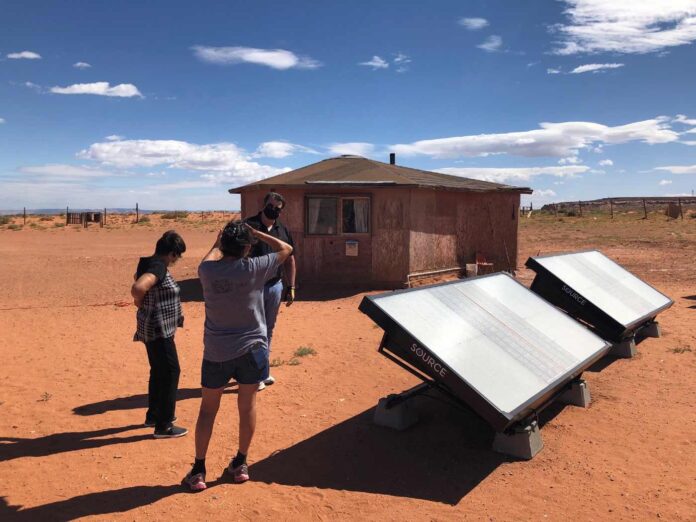
Solar-Powered Panels Pull Water Out of the Air For Navajo Families Who Have None

Credit: Navajo Power

What if there was a way of pulling vapor from the atmosphere and bringing it through faucets as clean, drinkable water?

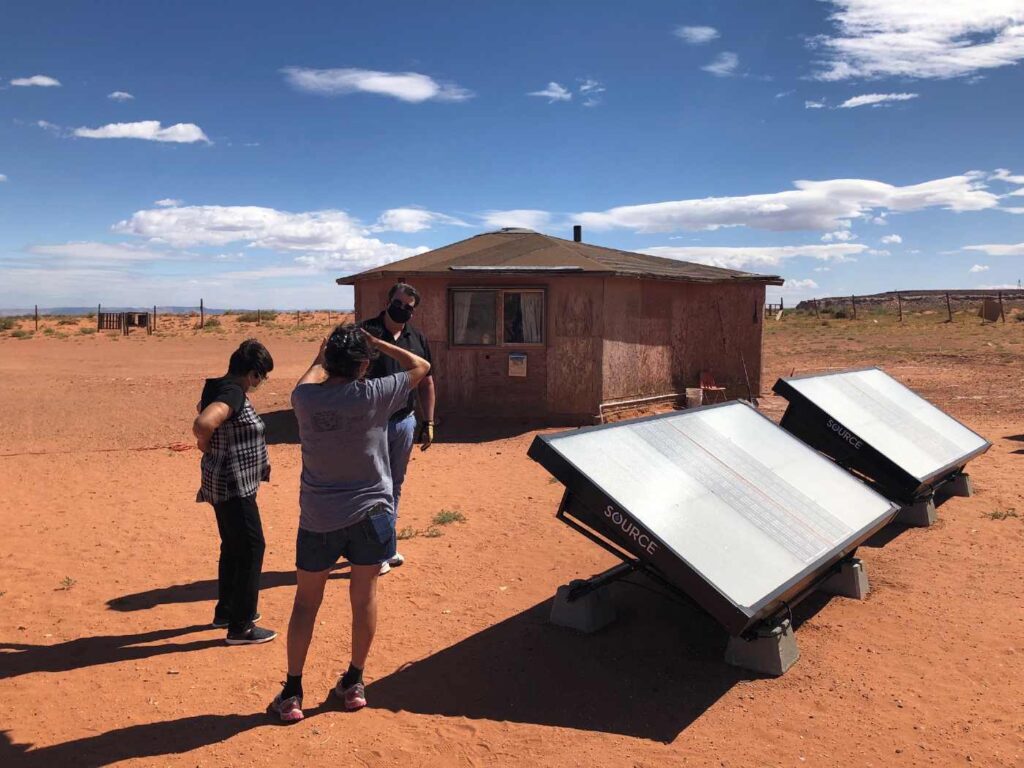
Harnessing the power of the sun, Zero Mass Water’s Source hydropanels do just that.

Navajo Power

Through a grant provided by the Unreasonable Group and Barclays Bank, an initial demonstration project is bringing this pioneering air-to-water technology to 15 Navajo households.

This project is being managed by Navajo Power, Public Benefit Corporation, and Arizona-based Zero Mass Water.

Already, the demonstration project is proving to be a hit. “We are so happy to see these systems come to our communities who have not had basic access to water for all of these years,” said Mae Franklin of the Cameron and Coalmine communities.

RELATED: First Hybrid Floating Ocean Platform Can Generate Power From Waves, Wind, And Solar

But how exactly does this unique technology work?

While some of that answer is shrouded by proprietary trade secrecy and multiple patented inventions, we do know the hydropanels—powered by off-grid solar energy—have fans that draw air in the atmosphere and push it through what’s called a hygroscopic. From there, the trapped water vapor is extracted and gets condensed into liquid that’s collected in the reservoir of the hydropanel.

So that it has the ideal taste and composition, that collected water is then mineralized. Now it can be run through the faucet and is ready to drink.

The state-of-the-art technology doesn’t end there. Each Hydropanel connects to a cloud-based network and is monitored for performance and quality that way.

Source hydropanels are already well-established globally, with the technology currently supplying clean drinking water to tens of thousands of people in 45 countries through partnerships with governments, corporations, and development organizations.

MORE: This New German Car is Covered With Solar Panels and Charges As It Drives

There’s potential for this technology to go bigger still: Similar to cellular telephones and renewable energy technologies, the scalability of Source enables hydropanels to be deployed at small residential homes, roof-mounted on schools or community halls, and even in “water farms” adjacent to entire communities.

“A standard, two-panel array, produces 4-10 liters of water each day, and has 60 liters of storage capacity,” said Cody Frisen, CEO of Zero Mass Water. In addition, each panel ”lasts for 15 years and utilizes solar power and a small battery to enable water production.”

As for the quality of the water? It ”exceeds the standards of every country where the systems have been deployed.”

“We are excited to help shine a light on the potential of Hydropanels to help solve the clean water access challenge our communities have been facing for decades,” said Clara Pratte, President of Navajo Power.

CHECK OUT: Used Electric Car Batteries Could Be Recycled into New Life as Energy Storage for Solar Farms, Says New Study

“There are thousands of homes without water and this is a more cost-effective approach to getting clean water to these families. While our focus as a company is the development of large clean energy projects, our commitment to the well-being of Navajo communities is our north star, and we want to do everything we can to help the Nation mitigate the threats brought by the pandemic.”

SHARE This Exciting Technology With Your Friends On Social Media… 
Inside every atom of our bodies is 99.9% empty space. “If the nucleus was the size of a football, the nearest electron would be half a mile (0.8km) away.” That’s how much space there is. – Paul Sen

By Raphaël Biscaldi

Quote of the Day: Inside every atom of our bodies is 99.9% empty space. “If the nucleus was the size of a football, the nearest electron would be half a mile (0.8km) away.” That’s how much space there is. – Paul Sen

Photo: Raphaël Biscaldi

With a new inspirational quote every day, atop the perfect photo—collected and archived on our Quote of the Day page—why not bookmark GNN.org for a daily uplift?


He Designed a Mountain Bike to Bring Adventure Back to People With Disabilities – Like Himself

When a snowboarding accident resulting in a spinal injury sidelined him from his beloved outdoor pursuits, Christian Bagg was determined to climb back up the mountain.

“I just wanted to go outside with my friends and not have them worry or wait for me,” Bagg says. “I just wanted to have fun with them, I just wanted to blend [in].”

Bagg started out by designing wheelchairs that offered greater versatility than traditional models. He then turned his attentions to creating a line of purpose-built bikes for people with physical limitations.

RELATED: After Being Told He Would Never Recover From Injury, Man is Now Traveling 2,300 Miles in a Wheelchair

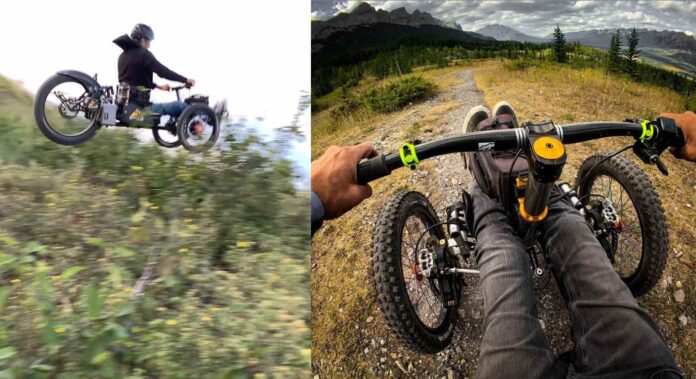
The learning curve eventually brought him to the bike’s current incarnation, the Bowhead Reach. With its main wheel located in the rear, heavy-tread tires, and a powerful electric motor, the souped-up reverse tricycle can go pretty much anywhere.

The all-terrain recumbent bike comes in three models: a recreational model for everyday adventuring; a performance model for true adrenaline junkies, and the explorer mode, a push variation that allows for partnered assistance as needed.

MORE: Cyclists Volunteer to Give Nature Rides to Wheelchair-Bound

There’s even a special package to adapt the bikes for use by quadriplegics.

One of Bagg’s first customers was J.P. Middleton, a volunteer firefighter and primary care paramedic who, like Bagg, had suffered a life-altering spinal cord injury while skiing in 2018. 
 

One day, as he was visiting with his dad outside the rehab hospital, someone on an outlandish bike shot by them. “It was this Mad Max looking vehicle,” Middleton said to Global News. “When I saw this bike, I was like, ‘I gotta get myself one of these things…’ It was a ray of hope for me.”

Middleton credits the bike with giving him a big chunk of his life back. He also gets a kick out of the awestruck looks he gets from passersby. “This [bike] will turn more heads than a Lamborghini,” he joked.

Middleton isn’t the only more-than-satisfied customer to make great strides on a Bowhead. In 2019, Janne Kouri, also paralyzed after suffering a spinal cord injury, set out on his bike for a 2,900-mile cross-country trek that took him from Los Angeles to Washington D.C. raising money and awareness for paralyzed U.S. veterans.

Bagg and his team initially built 50 bikes in his basement workshop, but business was so brisk, Bowhead—named for the site at the headwaters of the Bow River where his crash happened—has relocated to a large retail space across from Canada Olympic Park.

With 200 orders in the coming year, he envisions a bright future and continued expansion. Channeling his passion has also let him reap the rewards of making a real difference for others who’ve been where he’s been. “That’s what’s fun to watch the work you do impact people’s lives.”

(WATCH the bikes in action, and get to know more of Christian’s story, below on PBS.)

Share This Awesome Invention With Your Mountain-Loving Friends On Social Media…