Quote of the Day: “When you have exhausted all possibilities, remember this: you haven’t.” – Thomas Edison
Photo: by Zoltan Tasi
With a new inspirational quote every day, atop the perfect photo—collected and archived on our Quote of the Day page—why not bookmark GNN.org for a daily uplift?
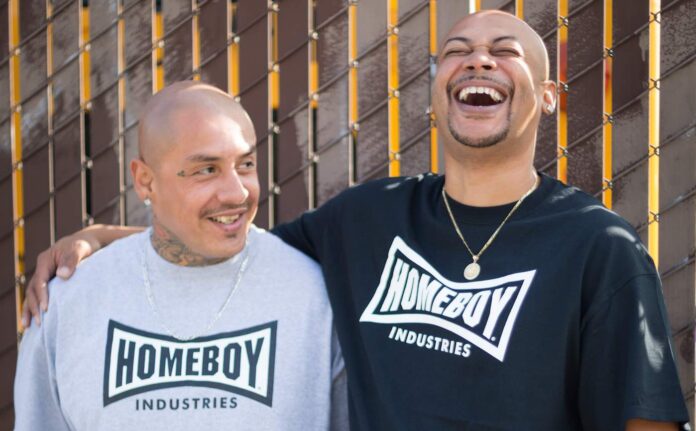
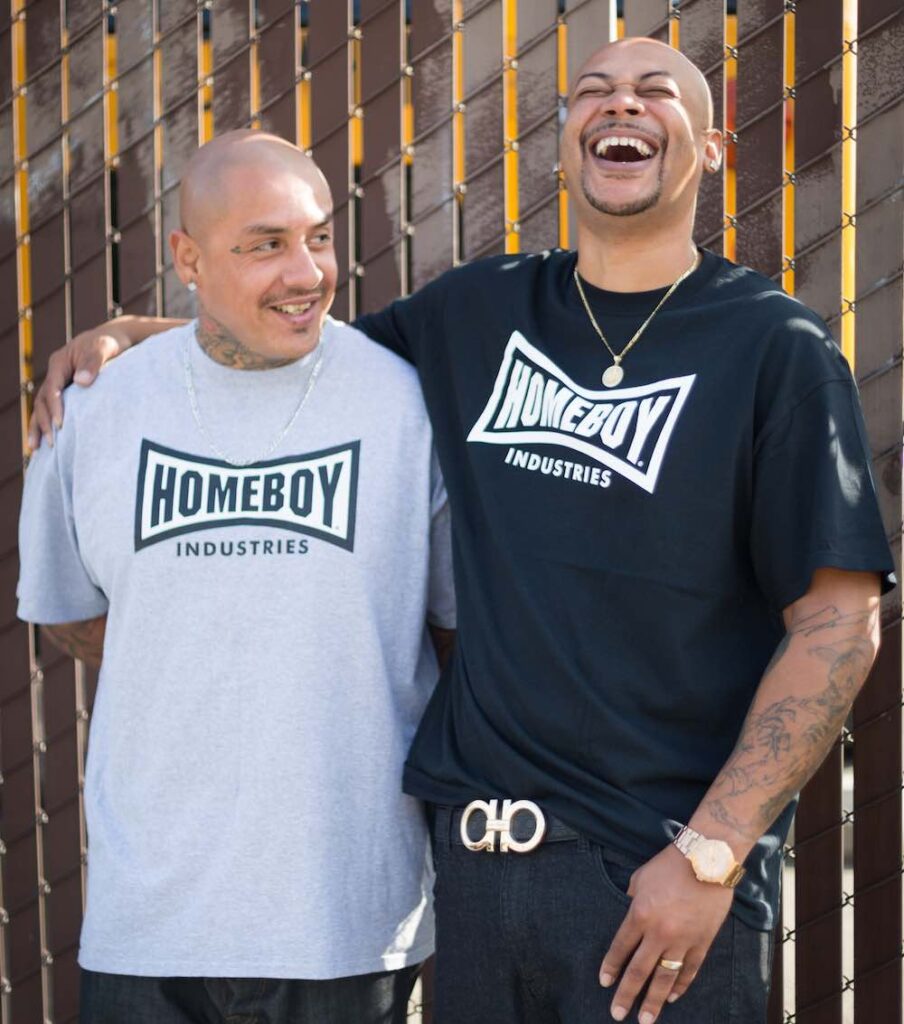
The gang-intervention heroes at Homeboy Industries have just been chosen as winners of the 2020 Humanitarian Prize from the Hilton Foundation, and will receive $2.5 million in unrestricted funding.
As the world’s largest annual humanitarian award, the Prize is presented to a nonprofit organization judged to have made extraordinary contributions toward alleviating human suffering.
Homeboy Industries is a unique place where former gang members are able to experience healing from their violent pasts within the context of kinship. It is a place of hope where work therapy, mentorship, education, tattoo removal and many other vital re-entry services are offered so people can have a second chance at life.
“We used to be worst enemies on the streets and now we’re family at Homeboys,” said one Homeboy trainee.
Founded in 1988 by Father Gregory Boyle, Homeboy was formed with the goal of improving the lives of former gang members in East Los Angeles. At that time, Fr. Boyle was a pastor of the Dolores Mission Church, the most impoverished Catholic parish in the city, alongside, two of the largest public housing projects in the country. They also had the highest concentration of gang activity in the country.
While law enforcement tactics of suppression and criminal justice policies of mass incarceration were the prevailing means to deal with gang violence, Fr. Boyle saw young people who deserved a chance and worked to change the way the world views them.
Today, Homeboy Industries has evolved into the world’s largest gang intervention, rehab and re-entry program, and is dedicated to providing hope, training and support to individuals, which in turn makes a positive impact in those individuals’ families and communities. Their re-entry program focuses on helping participants heal from complex trauma through the delivery of wraparound social services rooted in a culture of kinship and tenderness.
Importantly, the program builds work readiness skills for participants through employment opportunities in nine social enterprises which it owns and operates, including a bakery, tailor services, and print shop.
“All of us at Homeboy Industries are profoundly humbled by the Hilton Foundation’s recognition,” Homeboy Industries Founder Fr. Gregory Boyle, S.J. said. “Their validation of our work of 32 years strengthens our resolve… (and) helps us all to move past ‘survival of the fittest’ and allow the thriving of the nurtured.”
The invaluable support that Homeboy Industries has received from both Los Angeles and California State government officials has been instrumental to the success and survival of Homeboy Industries and its community.
“Homeboy Industries is in the business of second chances, helping thousands of Angelenos—including survivors of mass incarceration and systemic racism—find meaningful healing, job training, and community,” said Mayor Eric Garcetti.
The president and CEO of the Hilton Foundation, Peter Laugharn, says, “With the intention of ending the socio-economic inequities that impact communities, (this is) a tremendous example of ground-breaking humanitarian work right here in Los Angeles. Its community-led approach has spawned and supported a global network of over 300 organizations.”
To date, the Hilton Foundation has awarded $36.5 million to recipients of the Prize. Homeboy Industries joins the roster of 24 Prize Laureates, including METAdrasi, SHOFCO, icddr,b and The Task Force for Global Health.
A notable characteristic of several well-known neurodegenerative diseases—such as Alzheimer’s and Parkinson’s—is the formation of harmful plaques that contain aggregates of amyloid proteins, also known as fibrils. Unfortunately, even after decades of research, getting rid of these plaques has remained a herculean challenge, so treatments for these patients have not been very effective.
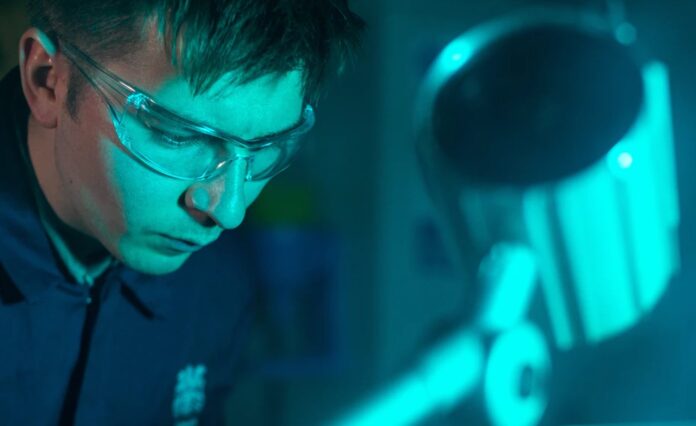
Now, scientists are revealing the results from experiments that show how resonance with an infrared laser, when it is tuned to a specific frequency, actually causes amyloid fibrils to disintegrate from the inside out.
Their findings open doors to new therapeutic possibilities for amyloid plaque-related brain diseases that have thus far been incurable.
In recent years, instead of going down the chemical route using drugs, some scientists have turned to alternative approaches, such as ultrasound, to destroy amyloid fibrils and halt the progression of Alzheimer’s disease.
Now, a research team led by Dr Takayasu Kawasaki (IR-FEL Research Center, Tokyo University of Science, Japan) and Dr Phuong H. Nguyen (Centre National de la Recherche Scientifique, France), including other researchers from the Aichi Synchrotron Radiation Center and the Synchrotron Radiation Research Center, Nagoya University, Japan, has used novel methods to show how infrared-laser irradiation can destroy amyloid fibrils.
In their study, published in Journal of Physical Chemistry B, the scientists present the results of laser experiments and molecular dynamics simulations. This two-pronged attack on the problem was necessary because of the inherent limitations of each approach, as Dr Kawasaki explains:
“While laser experiments coupled with various microscopy methods can provide information about the morphology and structural evolution of amyloid fibrils after laser irradiation, these experiments have limited spatial and temporal resolutions, thus preventing a full understanding of the underlying molecular mechanisms. On the other hand, though this information can be obtained from molecular simulations, the laser intensity and irradiation time used in simulations are very different from those used in actual experiments. It is therefore important to determine whether the process of laser-induced fibril dissociation obtained through experiments and simulations is similar.”
The scientists used a portion of a yeast protein that is known to form amyloid fibrils on its own. In their laser experiments, they tuned the frequency of an infrared laser beam to that of the “amide I band” of the fibril, creating resonance. Scanning electron microscopy images confirmed that the amyloid fibrils disassembled upon laser irradiation at the resonance frequency, and a combination of spectroscopy techniques revealed details about the final structure after fibril dissociation.
For the simulations, the researchers employed a technique that a few members of the current team had previously developed, called “nonequilibrium molecular dynamics (NEMD) simulations.” Its results corroborated those of the experiment and additionally clarified the entire amyloid dissociation process down to very specific details. Through the simulations, the scientists observed that the process begins at the core of the fibril where the resonance breaks intermolecular hydrogen bonds and thus separates the proteins in the aggregate. The disruption to this structure then spreads outward to the extremities of the fibril.
Together, the experiment and simulation make a good case for a novel treatment possibility for neurodegenerative disorders. Dr Kawasaki remarks, “In view of the inability of existing drugs to slow or reverse the cognitive impairment in Alzheimer’s disease, developing non-pharmaceutical approaches is very desirable. The ability to use infrared lasers to dissociate amyloid fibrils opens up a promising approach.”
The team’s long-term goal is to establish a framework combining laser experiments with NEMD simulations to study the process of fibril dissociation in even more detail, and new works are already underway.
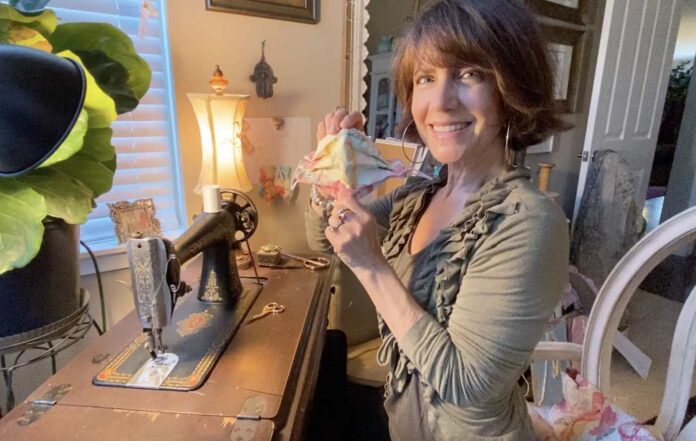
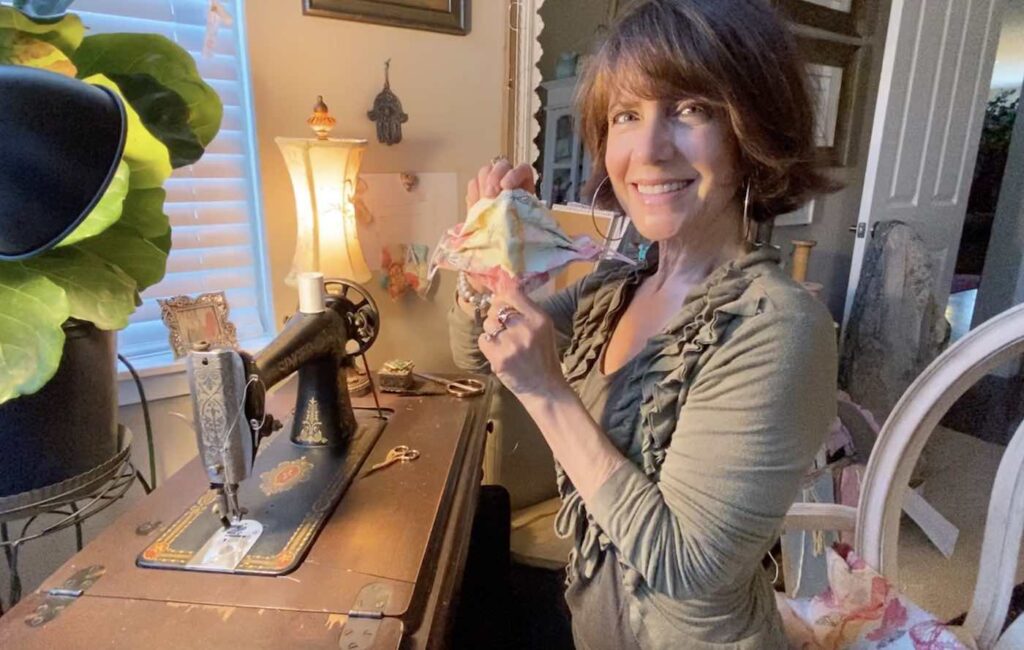
Giselle Williams didn’t know how to sew. But she did have a family heirloom sitting around the house—her great-great-grandmother’s Singer sewing machine—and wondered if it could be put to use to help others during the pandemic.
It all began when the COVID-19 pandemic brought Giselle’s Colorado hairstyling business to a halt in Arvada. She noticed the growing army of sequestered mask-makers and decided to put her free time to good use—but she never learned how to sew and thought she didn’t have a sewing machine.
That’s when she remembered the 100-year-old treadle machine. It is so old that it doesn’t even use electricity. Instead, the 1922 Singer Model 66 “Red Eye” is powered mechanically by a foot pedal pushed up and down by the operator’s foot. It was being used as a piece of decorative furniture in her guest room.
After decades spent idle, it definitely needed some work, so Giselle’s husband Darin set his mind to restoring it. After many YouTube videos, a good cleaning, fresh lubrication, and a new leather drive belt, the couple had a functioning sewing machine. Then Darin got to work teaching Giselle to sew.
As young boy, Darin spent summers with his grandmother who was a seamstress and learned to sew by sewing hand puppets with her fabric scraps. He used his skills and taught Giselle how to thread the machine, wind the bobbin, and sew a straight stitch.
“I haven’t used a sewing machine since my grandmother taught me back in the 1970s,” Darin said. “I looked at this old thing and thought, ‘Well, it’s fundamentally probably the same.’”
Indeed it was. (See the video below…)
Together, the couple found a face mask pattern and purchased fabric to begin prototyping. They also received donated fabric from friends, family and neighbors to support the effort. After a few days practicing, the team officially began their mask-making operation. Their first requests came from local healthcare providers and a distillery that was producing hand sanitizer for first responders.
Since those first weeks, the team has ramped up production and has provided more than 450 masks to churches, restaurants and businesses across Colorado. They have received requests from frontline workers as far away as Japan and Thailand. Currently, the team is at work producing another 50-75 masks to be sold at-cost at the Fetch Markets at Stanley Marketplace in Aurora, Colorado.
Since hearing about the couple, the Veterans of Foreign Wars (VFW) has recognized the service of Darin Williams, a U.S. Air Force veteran, and chose him to serve as a spokesperson for the VFW’s #StillServing campaign, which is asking America’s veterans and their friends to share ways in which the vets are still serving their communities even after leaving active duty.
We know Giselle’s great-great-grandmother would be proud—and an active-duty member of their team devoted making masks for frontline medical workers and essential employees around the world.
Need more positive stories and updates coming out of the COVID-19 challenge? For more uplifting coverage, click here.
SHARE The Oldest Story in the Book—Being Kind—With Friends On Social Medai…
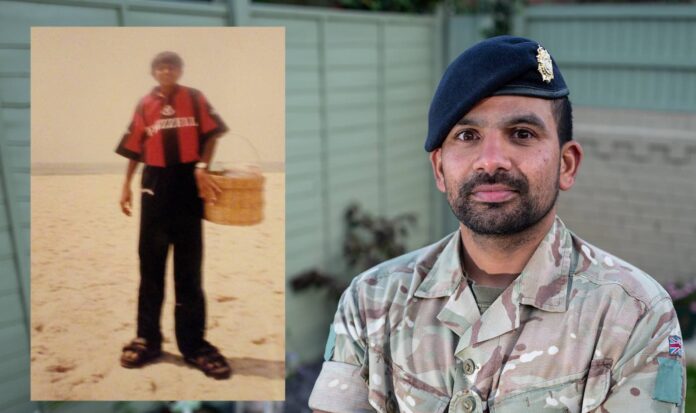
Gopal selling peanuts, and as Lance Corporal - SWNS
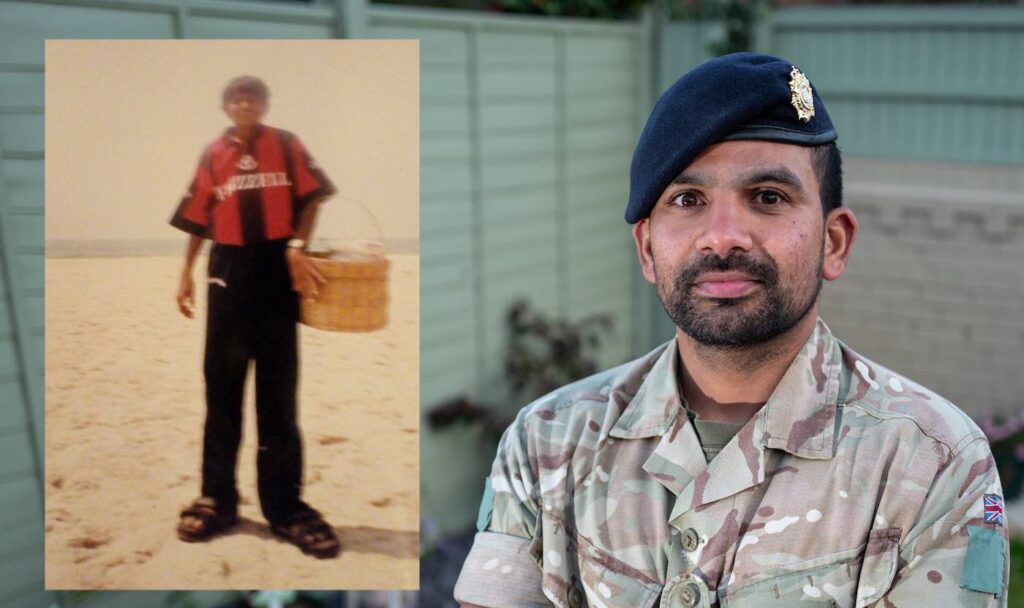
Gopal selling peanuts, and as Lance Corporal – SWNS
A man joined the British Army to “repay his debt” to the English family who saved him from a life of selling peanuts for £1 a day.
Gopal Vaakode was 12 when he met the Hanson family who were holidaying in Goa, where he was walking 10 miles a day selling peanuts to tourists on the southwest coast of India.
Sometimes he’d sleep on the beach, and other nights in a tent on the side of the road, providing for his three younger siblings and mother.
He asked the tourist couple, Carol Thomas and Colin Hanson, and the sister-in-law Linda Hanson, if they’d like to buy some peanuts. They did much more than that, taking him shopping for clothes and food for his family of five.
They promised the teen they’d see him when they returned next year—and by pure chance the couple in their 50s bumped into him on the beach, 12 months later.
It ignited a lifelong bond, and within days the family persuaded Gopal and his mother Peckrrva, to let them help further.
SWNS
They sent money from the UK for food and supplies and paid for the family to live in a rented home in Goa every monsoon season, coming to visit them for months at a time.
It was a stark improvement for his mother who would scavenge for plastic bags to sell for rupees—and it allowed the kids to go back to school.
SWNS
Then, at age 19, Gopal began visiting his ‘foster family’ in the UK for months at a time, and on one trip he joined with the local cricket team for a match at the Allscott army barracks.
It was there that a brigadier asked him if he’d consider joining the British Army—and Gopal leapt at the chance to repay the people and country who had saved him.
Ten years on, now 35, he lives in Mansfield, Nottinghamshire, with his wife Jasmine, and their seven year old daughter—and feels like the “luckiest kid in the world”.
Gopal with his new family – SWNS
“The main reason I wanted to join was to make my family proud and say thanks to Linda, Colin, and Carol for everything they did for me,” he said.
“I will forever be in debt to them, but joining the army was my way of repaying them by doing something important in this world.
“There was a day when I had no food, nowhere to sleep and nothing to look forward to in life. Now I have a loving family with an incredible wife and an amazing daughter. I really could not ask for more.”
The Hansons could not be more happy. “He has made us all extremely proud with what he is achieving in the army, and now he has a wonderful family too,” said Colin, a businessman. “It was an amazing journey, and we’re overjoyed to have met him.”
SWNS
Gopal said, “Our life never seemed like it was going to get any better.” On a “good day” they’d earn 70–100 rupees, only about a dollar, enough to buy food. But, every Saturday a new flight would arrive from the UK, which is how he met the English family.
“Instead of buying peanuts they bought me lunch. They took me shopping, bought me some new clothes and supplies to take back to my family.
“I couldn’t express the feelings of happiness I experienced that day. I was so sad to see them go but they promised me they’d come back next year, and they did.
“One year on, I saw them walking across the beach whilst I was working my usual day. I couldn’t believe my eyes! I ran over to them and gave them a massive hug.”
He learned they wanted to help him long term, and added: “I was 13 at the time and felt like the luckiest kid in the world.”
Six years later he came to stay with the family in Teleford. Gopal continued to visit England for holidays, and in 2009 met the army brigadier, who asked if he would want to sign up. As a commonwealth citizen, he was allowed to join, and got a permanent visa after basic training—and after six years of service, a British passport making him a British citizen.
Gopal’s mom died in 2016, but his three sisters Jaya, Knencha and Renuka still live in India, helped financially by their devoted brother.
Colin recalls with fondness the year they met, saying, “He was the most charming little boy.
“We felt a connection with him, despite him virtually speaking no English at the time, he said. “It felt natural, and the more time we spent with him the closer we became.”
SHARE This Great Story of Cross-Culture Kindness With Friends on Social Media…
Quote of the Day: “Oh yes, the past can hurt. But you can either run from it, or learn from it.” – Rafiki, The Lion King
Photo: by Zac Ong
With a new inspirational quote every day, atop the perfect photo—collected and archived on our Quote of the Day page—why not bookmark GNN.org for a daily uplift?
This is one of 50 finalists in the Reader’s Digest “50 Nicest Places in America” contest for 2020. A crowd-sourced effort to uncover places in all 50 states where kindness and generosity are reigning supreme amidst a climate of coronavirus and cultural upheaval, you can now vote for your favorite ‘Nicest Place’ by visiting the Reader’s Digest website.
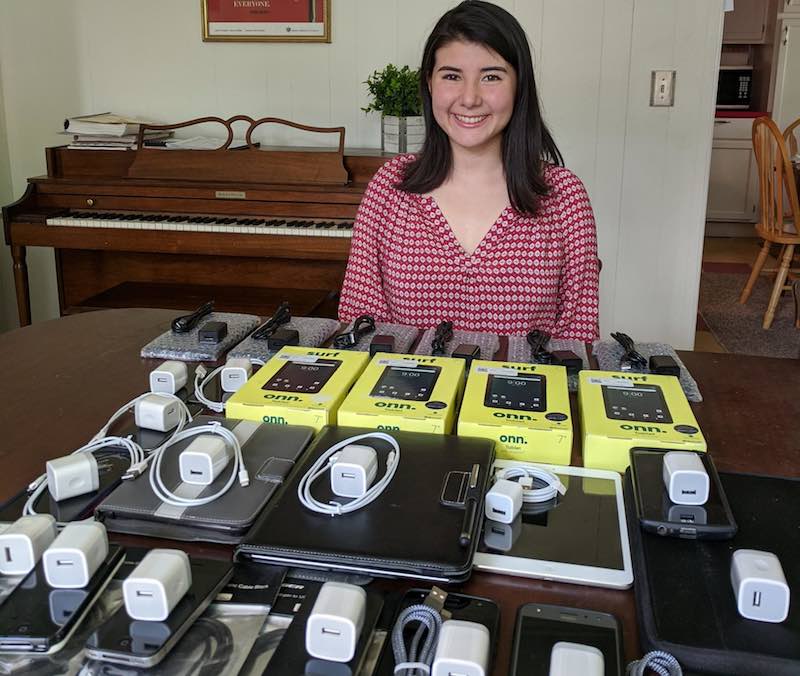
A cancelled internship turned into a big opportunity for one young woman to help her whole state.
Just a few months ago, the Emory University student, like the rest of us, was gearing up for the summer when COVID-19 ruined her plans.
“After receiving countless emails about canceled internships, I had just about concluded that I would be spending my summer twiddling my thumbs,” said Lia Rubel from her home in Barre, Vermont, a blue-collar town of about 10,000.
That’s when she got a call from a friend about a new initiative organized by some Yale University students who saw a great need—a need that escalated to urgent in the era of coronavirus. People were still in need of medical care but couldn’t leave their homes for fear of spreading or contracting the virus, especially seniors, who are more vulnerable.
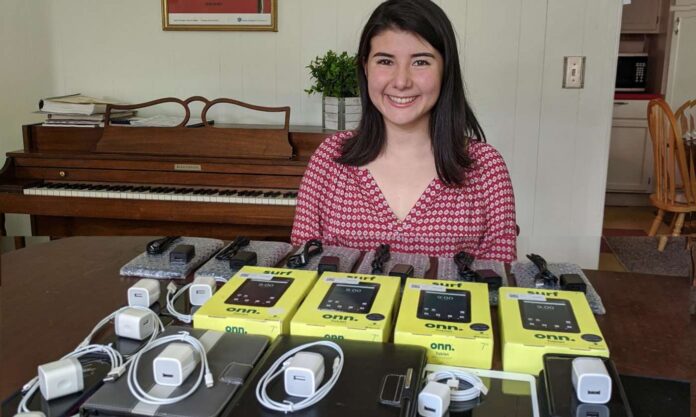
That’s why, in March, Telehealth Access for Seniors was born: to get communications technology, such as a smartphone or tablet computer, to elderly patients who lack and very much need it.
“It’s more than just a device. It’s a vital connectivity tool and it could save someone’s life,” says Rubel, 18, who joined the initiative in March as the lead for Vermont. “It just hurt my heart that they don’t have that privilege and they can’t connect to friends and families. They can’t even connect to their doctors.”
Born in the 1960s as part of NASA’s mission to put men on the moon (they might need medical care up there too), telehealth options have experienced a renaissance in the era of high-speed connectivity and ubiquitous devices with screens. In 2002, a former NASA surgeon and engineer founded Teledoc, which became the first nationwide telehealth company in 2005; in 2015, the first medical facility totally dedicated to telehealth opened in Chesterfield, Missouri, Mercy Virtual.
But many people don’t have access to these services for lack of technology, and the problem is worse in Vermont, where about 19 percent of the population is over 65 (versus 15 percent for the rest of the US) and where 10 percent of residents don’t have access to broadband but they do have access to cellular service.
LIA RUBEL
Since March, Telehealth Access for Seniors has expanded to over 50 volunteers in 26 states and they’ve raised an estimated $38,000 and donated 825 devices, Rubel says. In Vermont alone, Rubel has helped collect about 50 devices and $800.
“If they’re still self-quarantining, it’s really important for mental health,” says Rubel. “We include with the devices some suggestions to download wellness apps. And they [patients] use the devices to FaceTime family to stay connected.”
Just providing a way for an elderly person to have a “face-to-face” conversation with a loved one in an era of social distancing can be lifesaving. Feeling lonely leads to a 26 percent increase in mortality rate, according to a recent meta-study of 3.4 million people.
Telehealth Access for Seniors offers a free remote phone and email tech support team so that help is always available. The organization also provides instructions on how to set up devices.
“The pandemic has opened our eyes to how important it is to have digital tools and the importance of equipping our seniors with these devices,” says Rubel.
SHARE the Program On Social Media So Others Can Benefit…
A ten-year-old ‘mini Monet’ in England paints stunning floral landscape paintings that can sell for up to £10,000.
Daisy Watt only started painting four years ago when two of her grandparents were diagnosed with cancer and she painted a picture to cheer them up.
Her mom, Karen, spotted the youngster’s talent, and asked if she’d like to paint a canvas to be displayed at a local gallery and auctioned for cancer charities.
Bidders from all over the world fought to buy the work featuring forget-me-nots for those who had died and bright flowers for those who survived. The large painting varied in color tone, going from dark to light, to represent the battle with cancer.
It sold for £9,500 and was so popular 100 special edition prints were commissioned and snapped up by buyers from the likes of Canada and Hong Kong.
Beginning with that moment in 2017, she has earned £50,000 through her artwork—and donated it all to charity.
All photos – SWNS
Daisy’s paintings always feature flowers and she loves nothing more than heading out of her studio and into the garden with her paints, which in the beginning were tester pots from the local DIY shop.
“I’m just so proud of her,” said Karen, the mother-of-three from Misson, South Yorkshire. “Although she’s always been really creative, ever since she could hold a paintbrush, it wasn’t until she created that painting for her grandparents that we realized she had something special.”
SWNS
“I’ve always let her paint and be messy ever since she was small.
Karen is a primary school teacher with a degree in art but says, “She is better than me.”
SWNS
“One time we were sitting down painting tulips and I turned to her and said ‘right how are we going to figure out the shape here?’ I was trying to work it out and in that time she was dipping her paintbrush in different paints.
“Then with three different colors on the brush she started to paint. It was just the perfect tulip!”
SWNS
“She doesn’t have to draw an outline and will splat the paint in just the right place. It just comes so naturally to her.”
Daisy now spends most days painting. She’s auctioned dozens of works—around 25—for charity, and has sold one-off originals, and prints which go for £100 a piece.
Cancer Research feature one of her works on their ‘thank you’ cards to families whose loves ones make legacy donations.
SWNS
Last November Daisy won the Yorkshire Young Achiever for Arts award and has won The Don Valley Festival for the past four years.
During lockdown she painted a rainbow of miniature daisies, as a tribute to frontline workers, and raised £1,700 for the NHS with magnets and cards of the design.
SWNS
Karen, 50, and Daisy’s project-manager dad Charlie, said their humble daughter gets embarrassed by praise, and doesn’t realize her own talent.
“The thing is she is really shy and humble about her work. She cringes at the attention and doesn’t see what all the fuss is about.”
In several articles this year, Good News Network has reported on the precipitous decline of coal production—and rise in renewables, as market forces along with the decisions of individuals and investors create a pandemic of pressure.
Now in the twilight of the European COVID-19 wave, early signs suggest there is not going to be much in the way of a recovery for coal—or natural gas—which are becoming COVID-casualties, as they lose ground to renewable energy as each fiscal quarter passes.
“What’s front and center has been the extreme volatility and carnage that’s occurred in the energy sector. These companies are now in survivor mode,” said Jennifer Rowland, Senior Analyst, at Edward Jones, according to Future Crunch.
Natural gas gains might be wiped out
With a summer that was one of the warmest on record in many parts of the world, an oversupply of natural gas has caused the sharpest ever fall in demand for the commodity. The fall is expected to reach double that of the 2008 financial crisis, around a 5% drop.
“Natural gas has so far experienced a less severe impact than oil and coal, but it is far from immune from the current crisis,” said executive director of the International Energy Agency, Dr. Fatih Birol. “The record decline this year represents a dramatic change of circumstances for an industry that had become used to strong increases in demand.”
The energy watchdog speculates that demand will continue to contract until 2025, eliminating the last few years of growth in the gas sector. Furthermore, those last few years have seen $65 billion of investments in liquified natural gas assets, which are now coming online in this unstable economy. The result is a serious risk of global oversupply, compromising the structure of the gas market, and reducing the chance that any investors will find sense in backing this expansion any further.
Coal abandonment
The strong increases in demand which Dr. Birol is referring to is often a result of gas as a natural replacement to coal. Without perfect solutions for the storage of energy generated by renewables, gas has often taken the place of coal, which has fallen significantly even as governments continue to invest hundreds of billions in coal projects, many of which are now at risk of being so expensive to operate they may become stranded assets—projects incapable of providing a return on investment.
The United Kingdom didn’t even power up a coal-fired plant for a period of two months. From April 10th to June 17th, with wind energy alone supplying almost as much electricity as natural gas did in the first quarter.
University of Sussex
After 52-days of zero coal-generated power in Portugal, the utilities company EDP announced the closure of the last plant two years ahead of schedule. They are the fourth European country to completely phase-out coal behind Austria, Sweden, and Belgium.
Renewables surge in the U.S.
In the USA, renewables will account for over a fifth of electricity generation this year, having at one point surpassed coal usage every day for a month, which hasn’t happened for 150 years (since the Statue of Liberty first arrived in New York and Karl Benz patented the world’s first automobile).
Larry Fink, CEO of BlackRock, the world’s largest asset management company, wrote a letter earlier this year to the executives that rely on Fink for money management services, in which he stated that his number-one prerogative for investing would be how companies are planning to combat climate change.
“We will be increasingly disposed to vote against management and board directors when companies are not making sufficient progress on sustainability-related disclosures and the business practices and plans underlying them,” wrote Fink.
Many other brokerage firms rely on BlackRock for advice and guidance, and Fink’s decision could move mountains in the financial sectors.
With all these triumphs, it’s important to point out that many governments are reluctant to put down coal. It’s still easier to store than renewables, in many cases because the infrastructure is already there. Furthermore, existing plants and companies that rely on coal spend a lot of money lobbying governments to keep their industry alive.
Germany, cmophoto.net
But despite countries still clinging to coal, like Germany—which just opened a new coal plant—and others nations across Asia, market forces are far more powerful than the actions of government. Energy firms require billions in investment capital from people like Larry Fink in order to fund coal projects, and people like Larry Fink aren’t interested in coal and natural gas any longer.
SHARE The Green Trend With Friends On Social Media…
Single-use plastic bag sales in England have fallen dramatically since a 5 pence charge on each bag was instituted in October of 2015 in supermarkets and department stores.
Overall, plastic shopping bag use has fallen by 95% in England’s main supermarkets.
Statistics from the Department of Environment, Food, and Rural Affairs (DEFRA) determined that plastic bag use shot up in 2014, as consumers used an average of 140 per year, accounting for 61,000 thousand metric tons of plastic. After taking action to curb the rise by charging 5 cents, widespread use has plummeted—just 4 bags per consumer in the recent fiscal year.
Marks and Spencer, Tesco, Asda, Morrisons, Sainsbury’s, the Co-operative Group, and Waitrose, who together distributed 40% of all plastic bags in the country, have collectively sold 325 million fewer bags than over a period of 2018-19, and remarkably, 1.17 billion fewer than the same period of 2016-17.
“It is encouraging to see in such a short space of time the huge difference our plastic carrier bag charge has had in reducing the amount of plastic we use in our everyday lives,” said the DEFRA secretary, MP George Eustice.
“We have all seen first hand the devastating impact that plastic bags have on the environment, littering our beautiful countryside and threatening the world’s marine life. I am committed to driving this progress further and I hope this continues to inspire similar action across the globe.”
Consumers throwing bags away isn’t the only part of the plastic-bag problem that requires addressing to stop them ending up in landfills or the oceans. Manufacturing, i.e. supply-side forces, play just as large a role as consumers, i.e. demand-side forces.
The 5 pence tax applies to unused and unsold plastic bags as well, making retailers pay closer attention to how many they order, which in turn leads to less manufacturing and less waste in the supply side in addition to the demand side.
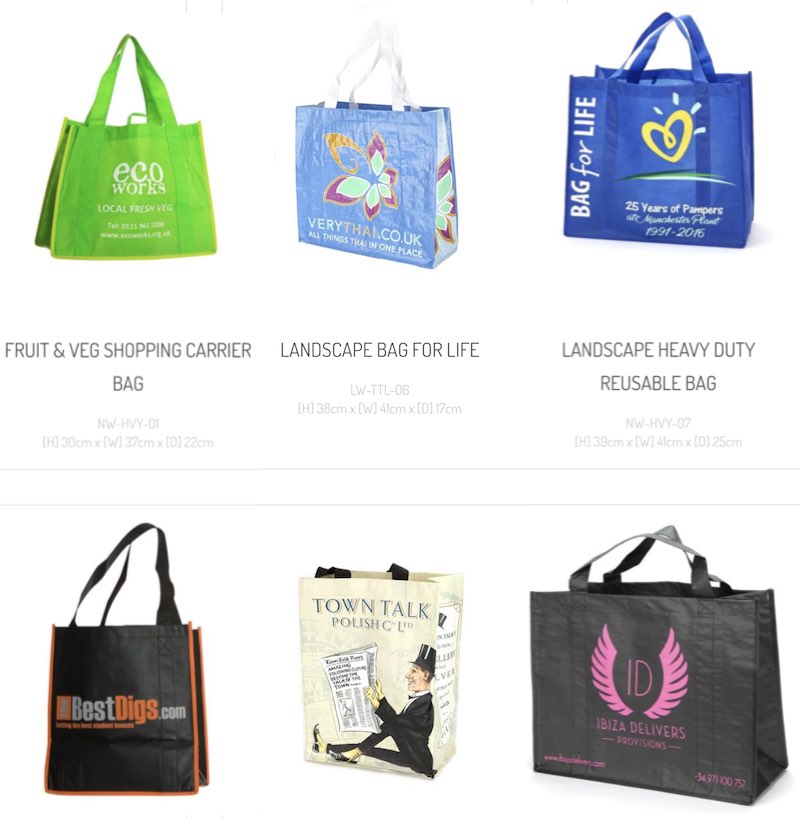
Meanwhile, an innovative project to offer consumers a ‘bag for life’ (pictured below) promises to be the last one you ever purchase—and sales have skyrocketed to 1.5 billion in 2018.
Bag For Life offers dozens of choices
Produced by smartbag.uk, the Bag for Life is not only a durable bag made from recycled plastic that’s perfect for bulky groceries, it can also be mailed back to receive a replacement if it tears or becomes too damaged, where it will be recycled again and made into a new bag.
INSPIRE More Action By Sharing These Positive Results on Social Media…
Quote of the Day: “Vitality shows not only in the ability to persist, but in the ability to start over.” – F. Scott Fitzgerald
Photo: by Steven Lelham
With a new inspirational quote every day, atop the perfect photo—collected and archived on our Quote of the Day page—why not bookmark GNN.org for a daily uplift?
Three in five Americans are boosting their moods after so much time at home with indoor dance parties and karaoke sessions, according to a new poll.
The study of 2,000 Americans examined the important role music has played in light of current events, and found that 38% have thrown a dance party with friends via video chat.
When asked what songs respondents have put on their social-distancing dance playlist, current hits fared well, but were often mixed in with classics like “September” from Earth Wind and Fire and “Uptown Funk” by Bruno Mars.
And when asked to name the best dance songs of all time, Whitney Houston’s “I Wanna Dance with Somebody” came out on top.
“Billie Jean” by Michael Jackson and “Stayin’ Alive” from The Bee Gees also made it into the top three.
Four in five (79%) cited music as a way to help them stay connected with others while social distancing.
The survey conducted by OnePoll on behalf of Ultimate Ears found that when it comes to their taste in music, many think of themselves as tastemakers.
Three in five Americans think “good taste” in music is a talent they’re born with. Music preferences can even have an impact on the dating game with two-thirds saying bad taste in music is a romantic buzzkill.
Photo credit: Andre Hunter
One in two have even been embarrassed by their own music taste. With some respondents even hiding their guilty pleasure preferences from a date: Three in ten confessed to lying to a partner about their love for a song or artist.
Half of the respondents like “everything” when it comes to music while 15% classify their tastes as “eclectic.”
Of those who create their own playlists, seven in ten have separate playlists for private listening versus parties, with 50% overall admitting they would feel embarrassed if a song from their personal collection found its way onto a party mix by mistake.
A third of respondents have had that exact cringe-worthy scenario happen to them. One hilariously recalled a time in which the “Batman” theme song, leftover from a child’s party, played during a get-together of adults.
Music definitely plays a vital role in the success of a party since four in five think it can “make or break” the event. Music came only second to drinks on a list of elements for a successful event, with food rounding out the top three.
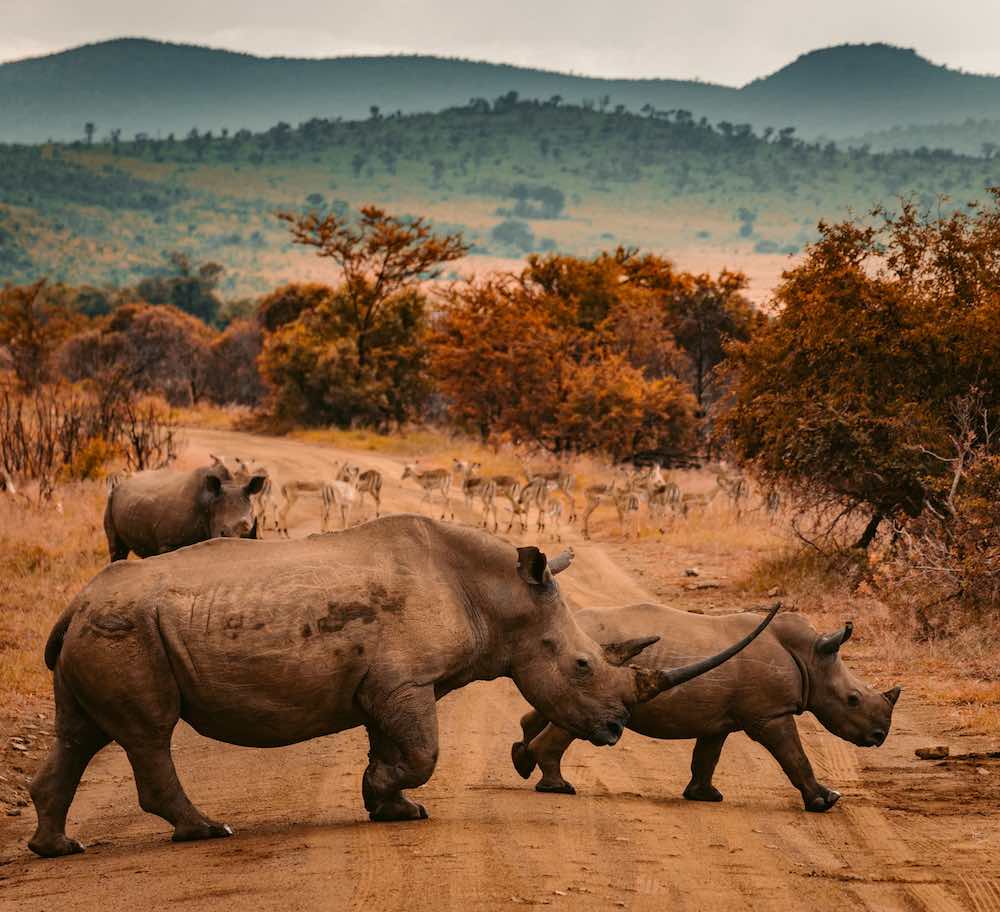
Rhino poaching in South Africa has decreased by almost 53% in the first six months of 2020, which continued a dramatic downward trend over the last five years.
“After a decade of implementing various strategies… efforts are paying off,” said the Minister of Environment, Forestry and Fisheries, Ms Barbara Creecy this week. “We have been able to arrest the escalation of rhino losses.”
The Minister said the nationwide Covid-19 associated law enforcement measures to restrict movement has powered the ongoing decline in rhino poaching compared to the same period last year, calling it ‘striking’.
An astonishing reprieve was celebrated in the Kruger National Park where, during April, no rhinos were killed in the Intensive Protection Zone for the first time in almost ten years.
Between January and June, 38 suspected rhino poachers have been arrested in the KNP and 23 firearms confiscated, while 57 suspects have been arrested during joint SANParks ECI /SAPS operations outside of the KNP.
The Ministry also reported that, from January to June 2020, the National Prosecuting Authority managed to not only obtain convictions in 15 cases but maintain a remarkable conviction rate of 100%. In addition to these high conviction rates, lengthy sentences were also imposed by the courts.
In February, the Ministry reported a 23% decline in the number of rhinos lost to poaching in 2019, as well as a 43% decline in elephant poaching.
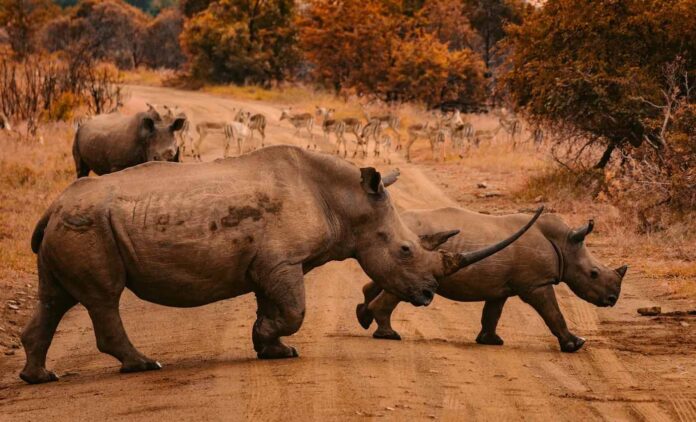
Rhino family in South Africa – by redcharlie
“A decline in poaching for five consecutive years is a reflection of the diligent work of the men and women who put their lives on the line daily to combat rhino poaching, often coming into direct contact with ruthless poachers,” said the Minister last year.
In celebration of World Ranger Day today, the Minister paid tribute to the men and women whose commitment to protecting the country’s natural heritage, sometimes at the expense of their own safety.
“Our rangers have remained at the forefront of the battle against poaching, despite the National Lockdown, contributing to the decrease in poaching. In this time, rangers have had to face not only the threats posed by poachers, but they, and their families, have also had to deal with the danger of contracting Covid-19,” said the Minister.
Their work further strengthens the essential collaboration with the South African Police Service, the Directorate for Priority Crime Investigation (HAWKS), the Department of Justice, and other sectors of the security forces to gather, analyze and share intelligence on wildlife trafficking so that the international syndicate-related crimes can be effectively dealt with.
Visitors to the treasured American National Park that features the geyser ‘Old Faithful’ may never see the kind of extinction-level volcanic eruptions that were depicted in the disaster film 2012.
A recent geological analysis conducted surrounding the super-volcano’s past eruptions demonstrate a slowing down and a weakening of the volcanic force that draws millions of tourists to Yellowstone National Park every year.
The analysis was described as “exhaustive,” by Dr. Trevor Nace who holds a Ph.D. in geology and climate from Duke University, who traveled thousands of miles conducting isotope dating and collecting magnetic data and chemical sampling on the states surrounding this Yellowstone hotspot.
The data showed that the two most significant eruption events occurred around 9 million and 8.7 million years ago—a short amount of time between each other geologically-speaking. The earliest is considered one of the 5 largest volcanic eruptions in earth’s history, and “sterilized” much of Idaho, Nevada, Wyoming, Colorado, and Montana with white-hot volcanic glass before spreading to affect more than 9,000 square miles (23,000 square kilometers) of the United States.
300,000 years later, another eruption — albeit smaller, battered the midwest once again, after which the giant boiler room of the North American continent began to fall to a simmer, erupting only twice in the last 3 million years, and increasing by three-fold, the time span between regular eruption events.
Thomas Knott, lead author of the paper described it as “a very significant decline,” in the volcano’s ability to produce volcanic events.
Old Faithful, copyright GNN
Learning from the past
Since Yellowstone’s events were first recorded by science, volcanologists have been keen on studying it, reasoning that it might pay to be aware ahead of time, should the giant volcano begin to stir again.
Past eruptions have been 100-times more dramatic than the 1883 eruption of Krakatoa in Indonesia, which was so loud it could be heard from 3,000 miles away.
It spewed so much ash into the atmosphere that it took years for the sky to return to normal, and everywhere on earth was treated with brilliant red and orange sunsets of such luminescence that fire departments were called to extinguish apparently-raging but non-existent fires.
With effects like these from an explosion 100-times smaller than what has been feared from a Yellowstone blast, it’s enough to make someone’s day to know that we are unlikely to see an eruption as powerful as those blasts which scientists have an opportunity to study today.
Reducing carbon emissions while increasing gross domestic product is not only possible, but is already happening in almost every state in America, according to a new report.
Things like market investment in renewable energy companies or projects, and the development of storage technology, have helped propel this transition in 41 U.S. states and DC.
All major regions in the U.S. from 2005 to 2017 were found to have increased real GDP, a common marker for economic productivity, while simultaneously cutting the growth of, or reversing, greenhouse gas emissions.
The nonprofit World Resources Institute (WRI) also credits “improvements in vehicle emissions standards, increases in lighting and appliance efficiency, a shift from coal to natural gas in the power sector, [and] the rapid deployment of wind and solar power.”
The five that cut their local carbon emissions the most, despite federal policy, while still growing their economies were Maryland (38%), New Hampshire (37%), the District of Columbia (33%), Maine (33%), and Alaska (29%).
Massachusetts and New York businesses and homes cut their emissions by 25% while simultaneously growing their GDP by 26% and 21% respectively, proving that being green doesn’t always cost you green.
The nine states that did not reduce emissions while growing GDP were Louisiana, Texas, Washington, Arkansas, Mississippi, South Dakota, North Dakota, Idaho, and Nebraska.
The renewable energy industry in America generated, according to WRI “$238 billion in revenues in 2018, and the sector’s 11% growth in 2018 was almost four times the growth of the U.S. economy overall.”
Furthermore, the United States “is second only to China in total clean energy investments.” Investors across the world have been breaking records, but particularly in the United States, where a green domestic record of $78.3 billion was tallied last year.
Even though Americans’ wallets are squeezed this year and the nation is a consumer driven economy, the long-term drivers for financial sector investment in clean energy remain strong, and could likely persevere through the COVID-19 economic downturn. It’s simply too expensive in most countries to try and finance, produce, or run a coal plant, due to the rapid increase in renewables technology and replacement of coal plants by natural gas plants.
“It is encouraging that 41 U.S. states and the District of Colombia reduced their energy-related CO2 emissions while increasing real GDP in recent years. The decoupling trend shows that a huge swath of the nation is creeping in the right direction.”
MULTIPLY The Hope by Sharing This Good News on Social Media… (Photo credit, Martin Adams)
Quote of the Day: “One ought, every day at least, to hear a little song, read a good poem, see a fine picture, and, if it were possible, to speak a few reasonable words.” – Johann Wolfgang von Goethe
Photo: by Taylor Wright
With a new inspirational quote every day, atop the perfect photo—collected and archived on our Quote of the Day page—why not bookmark GNN.org for a daily uplift?
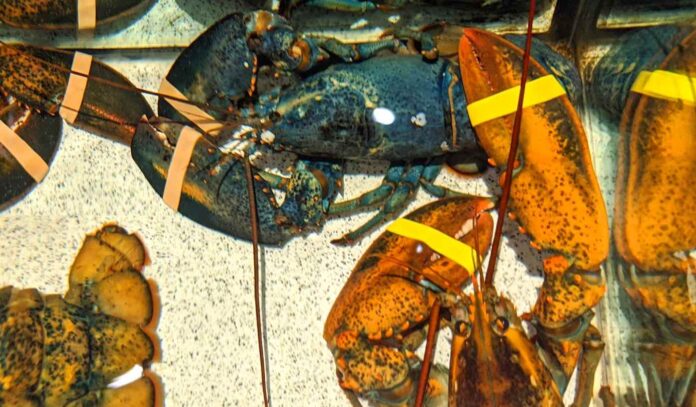
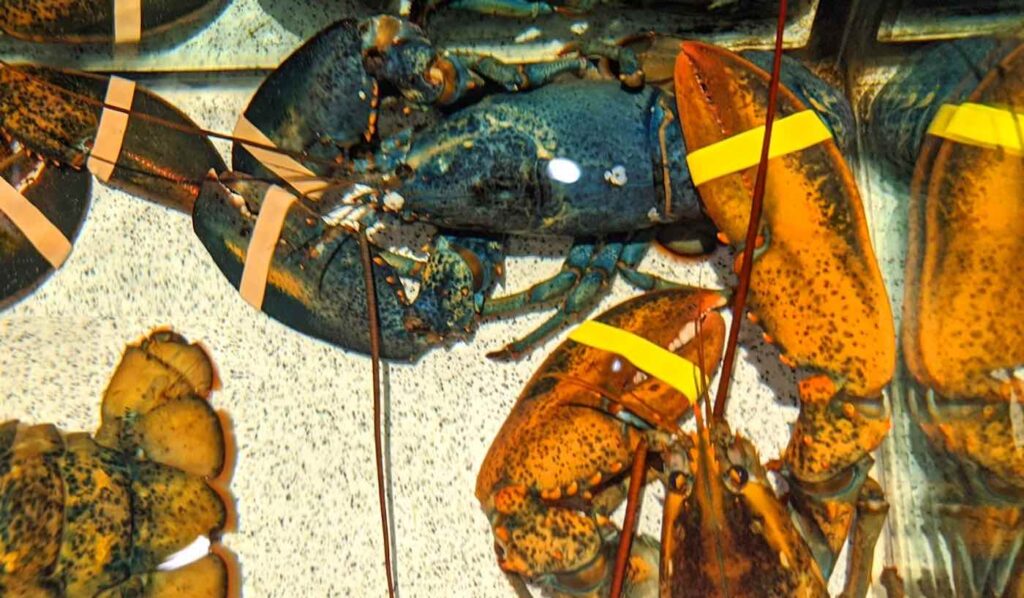
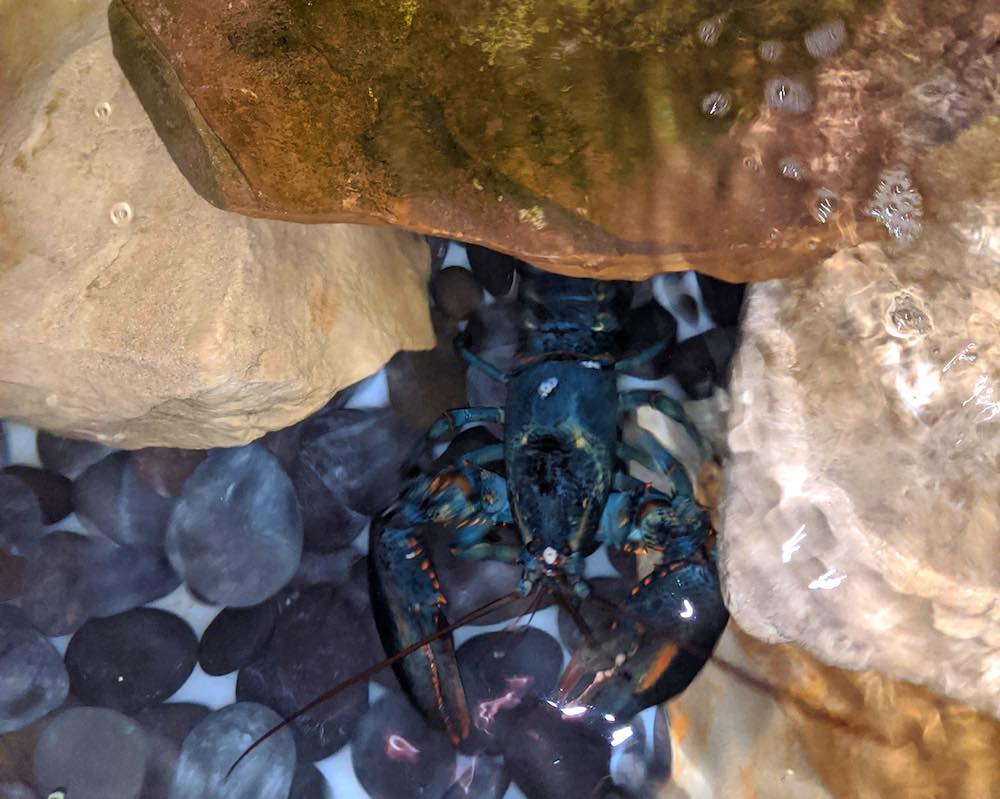
A rare blue lobster will live out its life at an aquarium rather than ending up on a dinner plate, thanks to restaurant workers in Cuyahoga Falls, Ohio.
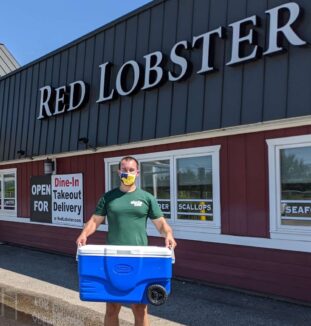
While getting ready for their shift, Red Lobster employees recognized the rarity of the blue shell on one of the lobsters.
Only one in every 2 million animals has the blue coloration, which is the result of a genetic anomaly.
After discovering the rare crustacean, they named it Clawde, after the restaurant chain’s mascot, and contacted the Monterey Bay Aquarium, who then reached out to the Akron Zoo.
Both the Akron Zoo and Red Lobster belong to a conservation partnership called Seafood Watch. The program, run by the Monterey Bay Aquarium in California, strives to help consumers and businesses choose seafood that is farmed sustainably and fished in ways to support a healthy ocean.
Upon receiving the news, staff at the Ohio zoo sprang into action to prepare a new home for him.
Akron Zoo on Facebook
“Clawde is acclimating to his new home at the Akron Zoo, in a special tank that has been dubbed ‘Clawde’s Man Cave’ by his care team,” reported the animal care staff on the zoo’s Facebook page.
“Blue lobsters are very rare,” they added.
Two days later, on July 28, they posted an amusing update, after the lobster was examined by a vet: “It’s a girl! Clawde is now Clawdia, and the proclaimed ‘man cave’ is now a ‘she-shed!’”
The next few months are critical for Clawdia as she prepares for her annual molt—a time that is very vulnerable for lobsters of any color.
A five-month-old pup wasn’t savvy enough to find its way back way home, but the dog is certainly clever because it found the vet’s office.
It showed up wanting some help.
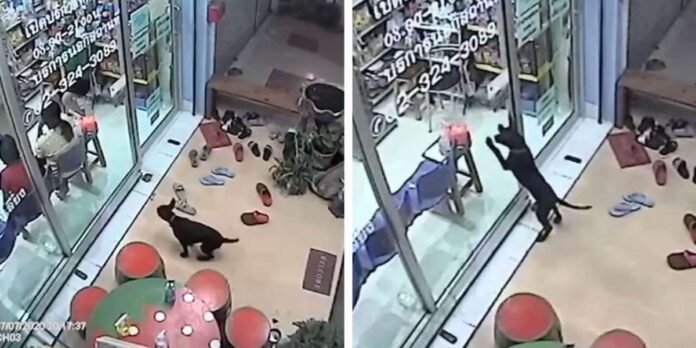
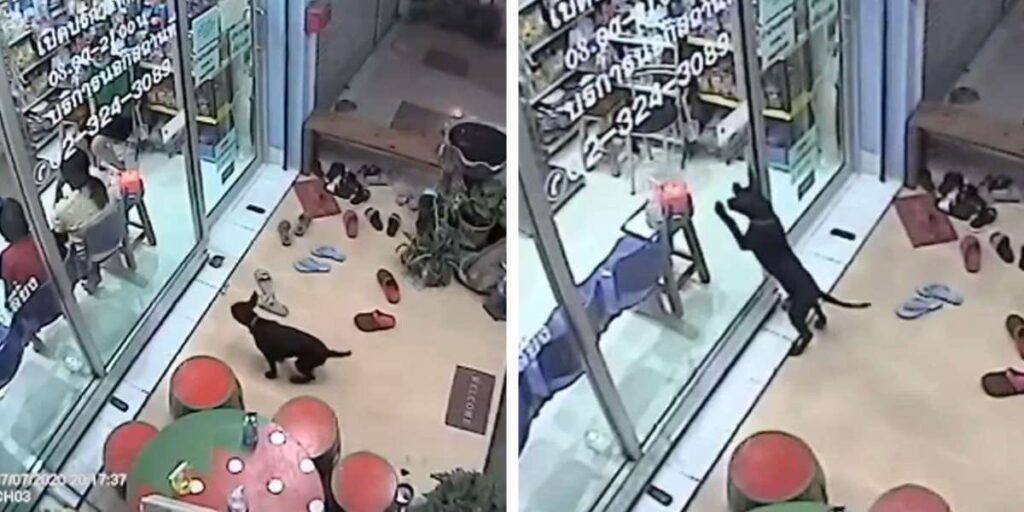
The Putahracsa Veterinary Clinic in Bang Pu, Thailand posted surveillance video of the little dog showing up at their doorstep, where it waited until someone let it inside.
The black puppy was barking at the very door of the office where it had been receiving monthly vaccinations since it was one-month-old, according to the Bangkok area vet who shared the video on Facebook.
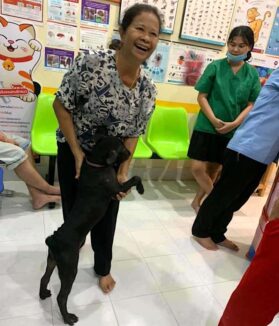
Luckily, the vet office recognized their patient and reunited the pet with its owner.
Separated for 15 hours, the owner and dog were “very happy to see each other,” read the post.
Putahracsa Veterinary Clinic
“Cute and very smart,” was their clinical assessment of the pooch.
HELP This Post Find Its Way to Social Media — SHARE With Dog-lovers Everywhere…
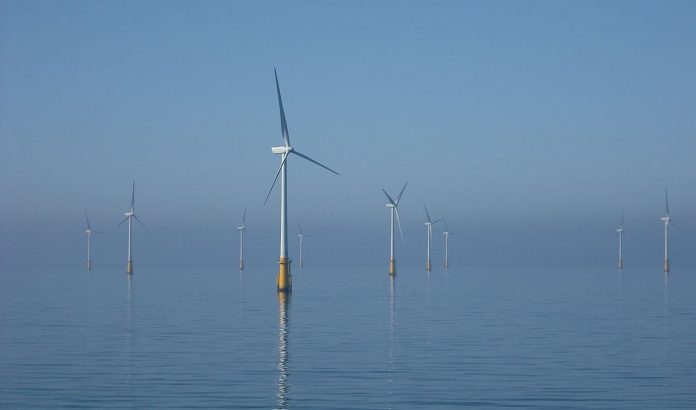
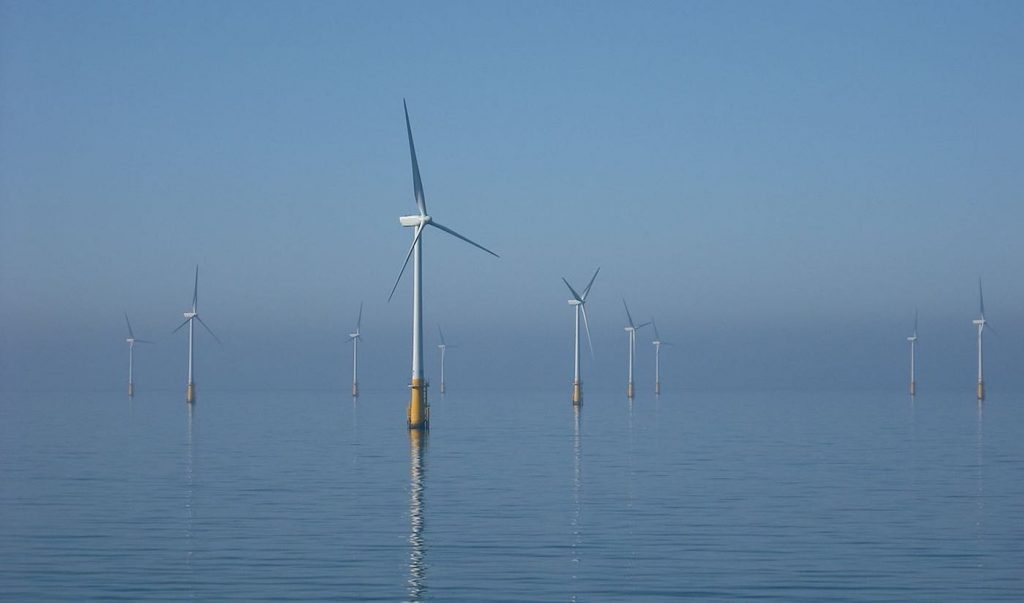
Wind energy is now so cheap in the United Kingdom that offshore wind farms could start bringing down household electricity bills, according to a new study.
Renewable energy projects, including onshore and offshore wind and solar farms, have so far been subsidized by government support schemes, which has raised some complaints about clean energy pushing up electricity bills.
However, the most recently approved offshore wind projects will most likely operate with “negative subsidies”—paying money back to the government. The money will go towards reducing household energy bills as the offshore wind farms start producing power in the mid-2020s.
This is the conclusion of an analysis by an international team led by Imperial College London researchers published last week in Nature Energy.
“Offshore wind power will soon be so cheap to produce that it will undercut fossil-fuelled power stations and may be the cheapest form of energy for the UK,” said lead researcher Dr. Malte Jansen, from the Centre for Environmental Policy at Imperial. “Energy subsidies used to push up energy bills, but within a few years cheap renewable energy will see them brought down for the first time. This is an astonishing development.”
Negative subsidies
The analysis for five countries in Europe, including the UK, focused on a series of government auctions for offshore wind farms between February 2015 and September 2019. Companies that want to build wind farms bid in the auctions by stating the price at which they will sell the energy they produce to the government.
These are known as “contracts for difference”—or CfDs. If a company’s bid is higher than the wholesale electricity price on the UK market once the wind farm is up and running, then the company will receive a subsidy from the government to top up the price.
However, if the stated price is less than the wholesale price, then the company will pay the government back the difference. This payback is then passed through to consumer’s energy bills, reducing the amount that homes and businesses will pay for electricity.
The UK’s September 2019 auction made the headlines as winning companies said they could build new offshore wind farms for around £40 per megawatt hour (MWh) of power. This was a new record set by these wind farms with bids 30% lower than just two years earlier.
While this was an impressive reduction, researchers could only speculate whether this meant offshore wind had become subsidy free or even subsidy negative, because that depends on how future wholesale electricity prices evolve.
The team analyzed likely future electricity price trends and found that contracted price is very likely to be below the UK wholesale price over the lifetime that these wind farms would produce electricity, from the mid-2020s onwards.
The team say that these wind farms are likely to be built and run with these costs, since financing is now accessible at lower costs for such projects, owing to trust in the now mature technology.
A cheap tool for decarbonization
The researchers analyzed similar offshore wind auctions held by governments of five European countries. They found that Germany and the Netherlands have seen some zero-subsidy offshore wind farms winning auctions, but that the UK projects are likely to be the world’s first negative-subsidy offshore wind farms.
“The price of offshore wind power has plummeted in only a matter of a decade, surprising many in the field,” said Dr. Iain Staffell, from the Centre for Environmental Policy at Imperial. “The UK auctions in September 2019 gave prices that were around one-third lower than those of the last round in 2017, and two-thirds lower than we saw in 2015.
“This amazing progress has been made possible by new technology, economies of scale and efficient supply chains around the North Sea, but also by a decade of concerted policymaking designed to reduce the risk for investing in offshore wind, which has made financing these huge billion-pound projects much cheaper.
“These new wind farms set the stage for the rapid expansion needed to meet the government’s target of producing 30% of the UK’s energy needs from offshore wind by 2030. Offshore wind will be pivotal in helping the UK, and more broadly the world, to reach net-zero carbon emissions with the added bonus of reducing consumers’ energy bills.”
Mega turbines and hydrogen fuels
One reason the price of offshore wind has fallen so rapidly is technology development, in particular the ability to build larger wind turbines further out at sea. Larger turbines can harness more wind energy and have access to more consistent wind speeds at higher altitudes.
The biggest wind turbines under construction have rotor diameters of 220 meters—twice the diameter of the London Eye. At the same time, wind farms are getting larger; the newest wind farm at Dogger Bank has the same installed capacity as Hinkley Point C and is expected to produce about two-thirds of its annual electricity.
The success of UK offshore wind farms, which are now primarily built in the Dogger Bank region of the North Sea, also means the UK has considerable skills and expertise than can be exported around the world.
The researchers also say this success means even more ambitious projects may now be attempted at offshore wind farms, such as producing hydrogen fuels using the wind power on site, out at sea. Hydrogen fuels could be another key technology in helping decarbonize the UK, by replacing petrol used in transportation and natural gas used for heating homes.
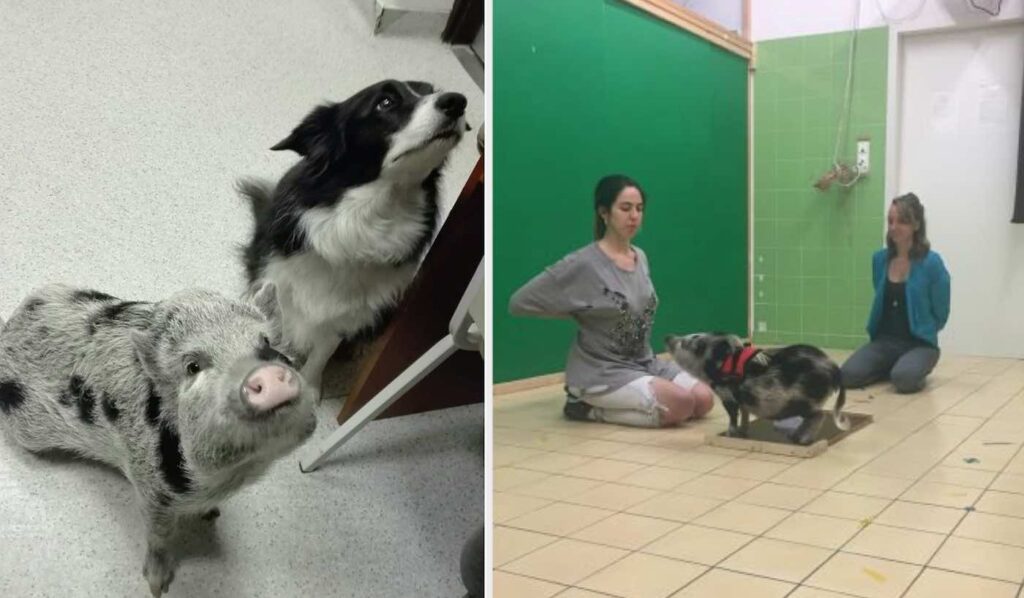
Dogs may be considered man’s best friend, but new research says that pigs actually rival other pets in their adoration of human companionship.
Photo by Eotvos Lorand University / Paula Perez
Miniature pigs became popularized as pets when the public began seeing them living in homes with celebrities, such as Miley Cyrus, David Beckham, Paris Hilton, and George Clooney—whose pet pig Max lived for 18 years.
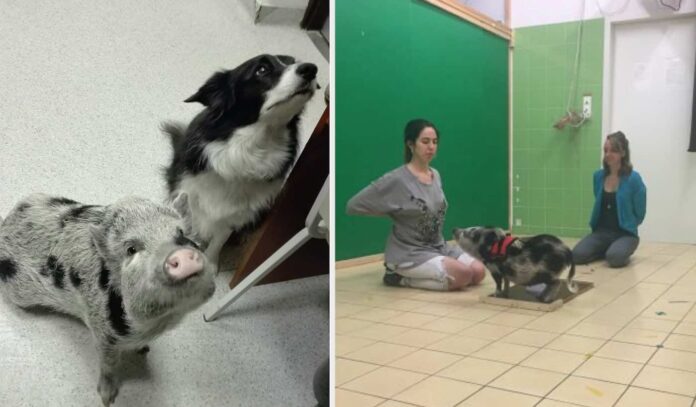
According to Hungarian researchers from Eotvos Lorand University in Budapest, pigs are as trainable as dogs, and—unless they have a problem to solve—turn to us for support in the same way that canine companions do.
“The similarities we found between the two species point to their similar capacities for engaging in communicative interactions with humans,” said animal behavior expert Paula Perez Fraga who worked on the studies.
The Family Pig Project was launched in 2017 at the Department of Ethology in Budapest. The animals were raised in a similar environment as family dogs from as early as 6-8 weeks of age, which provides the basis for unique comparative investigations between these two species.
“Dogs, already as puppies, are known to be uniquely skillful in communicating with us, even without any specific training,” added the study’s lead author Dr. Linda Gerencser. “We were curious whether family pigs also exhibit similar communicative signals as dogs, and whether they spontaneously rely on human cues.”
The animals were observed behaving with an experimenter without the presence of food and also after they had been fed. Perez Fraga, a PhD student, explained: “In the presence of food, both pigs and dogs oriented more towards the experimenter—they touched her more often and looked at her face more frequently.
“As an interesting difference, though, only dogs looked up at the human face when they did not expect to receive any food.”
In a second test, the animals were allowed to choose between two hiding locations several different times. The experimenter always pointed at the one that contained the hidden piece of food.
“Without having been trained for this, only dogs followed the pointing, pigs did not,” said Perez Fraga. “Pigs did not choose randomly either, but they rather followed a side-preference strategy, going to the same hiding location over and over again.”
She said dogs are known to look at humans in a problem-solving context to establish joint attention and initiate communicative interactions from an early age.
Perez Fraga and colleagues wanted to find out if this is their speciality or whether other companion animals do the same.
“Similarly socialized wolves and cats communicate less with humans than dogs in the same problem-solving context, but maybe it is because wolves are not domesticated, and cats are not a social species,” said Perez Fraga. “So we designed a study to compare dogs’ behavior with that of another domestic and social species: the pig.”
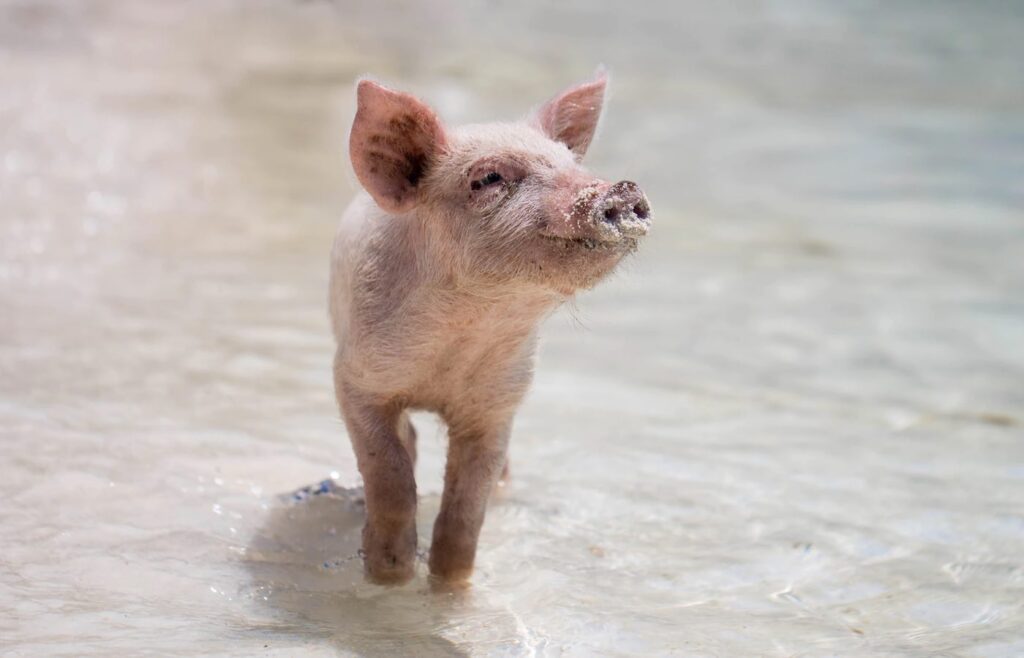
Pigs, which are renowned for their intelligence and cleanliness, can live up to 20 years. They can also quickly become loving companions and get along with cats. Some fans of these porcine friends have even claimed they are more suited to being kept as domestic animals than dogs.
Forest Simon
Perez Fraga said “species-specific predispositions” might be responsible for the found differences. “Dogs are naturally more dependent on and co-operative with humans. This explains their unique success in interacting with us,” she added.
The study, which was published in Animal Cognition earlier this month, is the first to analyze similarities and differences in family dogs’ and pigs’ interactions with humans.
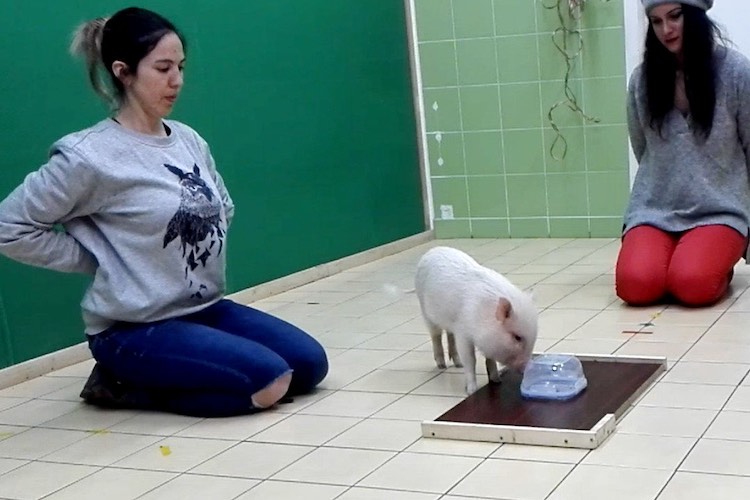
“We used the so called ‘Unsolvable task paradigm’ where the animal first faces a problem that he can solve, in our case an easy-to-open box with food inside,” said Perez Fraga. “After some trials, the problem becomes unsolvable because the box is securely closed.”
“When the box was first in the room without food in it, pigs and dogs performed similar human-oriented behaviors,” said Dr. Gerencser. “The differences appeared when we put food in the box and opening it became an exciting challenge.
“Pigs were faster than dogs already in solving the task and getting the reward, perhaps due to their better manipulative capacities. Then, when the task became unsolvable, dogs turned to the humans more than before.
“In contrast, pigs performed less human-oriented behaviors, but they were more persistent than dogs in trying to solve the task, which may reflect their predisposition to solving problems independently.”
Dr. Gerencser said the extent of the behavioral similarities—which are the result of environmental effects such as learning by experience—still needs further investigations.
“We think the primary difference between pigs and dogs lies in the fact the natural salience of the human as a social stimulus for dogs can facilitate learning about communicative cues even without specific training.
“Furthermore, our results are also informative with regard to the potentials of involving miniature pigs in comparative ethological research.”
That’s Some Fine Pig! Be Sure And Share The Sweet Scientific Story With Your Friends On Social Media…














 Giselle Williams didn’t know how to sew. But she did have a family heirloom sitting around the house—her great-great-grandmother’s Singer sewing machine—and wondered if it could be put to use to help others during the pandemic.






 A ten-year-old ‘mini Monet’ in England paints stunning floral landscape paintings that can sell for up to £10,000.