All News - Page 579 of 1736 - Good News Network
Home Blog Page 579

“I love how summer just wraps its arms around you like a warm blanket.” – Kellie Elmore (Happy Solstice!)

Quote of the Day: “I love how summer just wraps its arms around you like a warm blanket.” – Kellie Elmore, Magic in the Backyard (Happy Solstice!)

Photo: by Anna Demianenko, public domain

With a new inspirational quote every day, atop the perfect photo—collected and archived on our Quote of the Day page—why not bookmark GNN.org for a daily uplift?


White Officer Takes to Social Media to Thank Black Women for Their Random Act of Kindness: ‘BLM, but so does yours!’

A white Tennessee police deputy was left awestruck earlier this week when he was surprised with an anonymous gesture of kindness from two black women.

Deputy Jody McDowell of the Sumner County Sheriff’s Department had stopped at a Cracker Barrel for breakfast when the good deed took place.

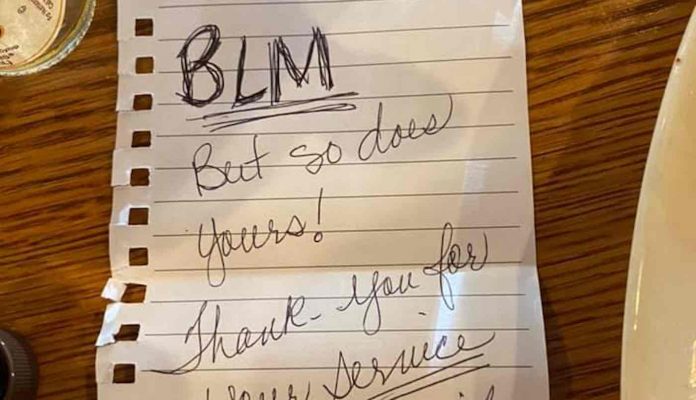
When it was time to pay for his meal, he discovered that the women had already taken care of the bill—and they left him a message that read: “BLM [Black Lives Matter], but so does yours! Thank you for your service. Breakfast paid.”

McDowell later published a photo of the note to Facebook hoping it would reach the women. “I want to thank the two sweet black ladies who paid for my breakfast this morning,” he wrote.

RELATED: When Black Man Was Afraid to Walk in His Upscale Community, 75 Neighbors Walked With Him

Although the women left before anyone had a chance to get their names, they were reportedly waiting to board a flight home to Baltimore, Maryland from the nearby airport.

Since McDowell posted the photo to social media, thousands of people have expressed their appreciation over the sweet message.

“This post made me feel that there is hope for our country after all,” read one of the comments.

Pass On The Positivity By Sharing This Sweet Story Of Kindness With Your Friends On Social Media…

Tiny Forests Are Springing Up All Around Europe, Inspired By Japan, to Help Restore Biodiversity

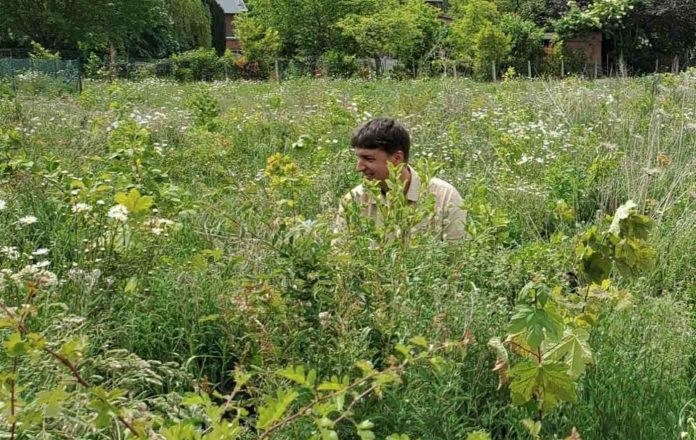
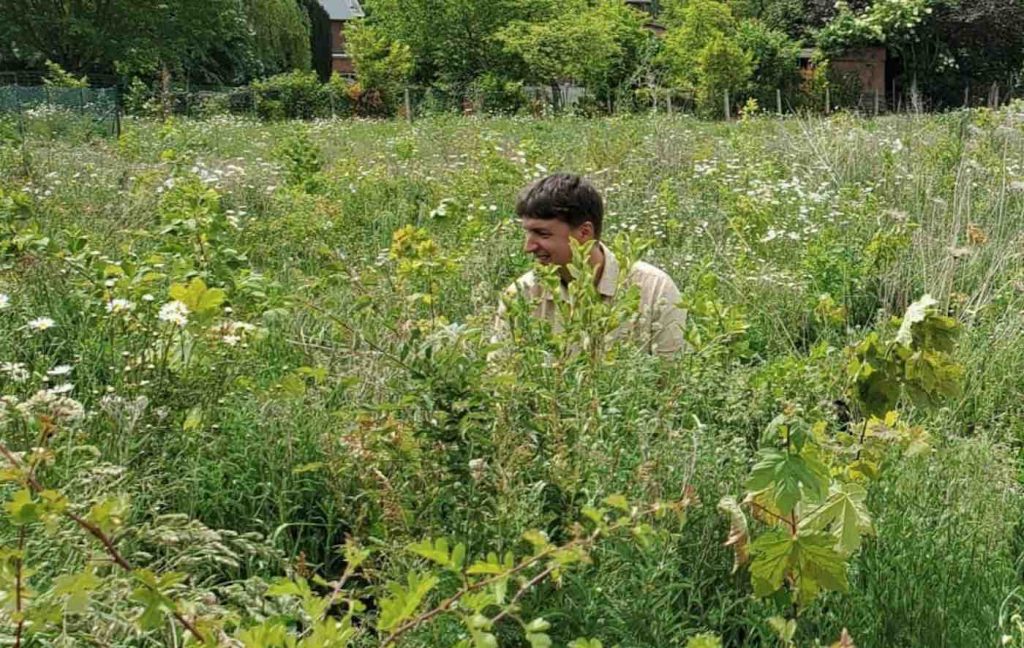
Urban Forest in Belgium – Instagram @urbanforestsbelgium

Using the methods of Japan’s most famous botanist, European countries are beginning to dot their urban landscapes with tiny forests, as productive and biodiverse as any in wilderness areas, yet sometimes only as big as a tennis court.

The idea is that volunteers can plant densely-packed clusters of seedlings from indigenous plants to create a small functional ecosystem that can restore soil, protect resources like water and air quality, and act as a biodiversity hotspot that can have a measurable effect on both the local and regional environment.

Akira Miyawaki was the botanist who in 1970 observed that trees around Japan’s Shinto and Buddhist shrines tended to be native species, well-adapted to the soil and climate of the islands of Japan.

RELATED: Pakistan Hires Thousands of Newly-Unemployed Laborers for Ambitious 10 Billion Tree-Planting Initiative

He later found that only 0.06% of contemporary Japanese forests were indigenous forests, with the sizable remainder populated by non-native tree species, or planted in unnatural ways.

He pioneered a method of restoring indigenous forests on degraded or deforested land which had been devoid of humus. It came to be known as the Miyawaki method. Using this formula he created over 1,700 forests throughout Asia, 96.7% of which developed into a resilient ecosystem within ten years.

Miyawaki in Europe

Growing more than 10x faster, and possessing up to 20x more biodiversity potential than contemporary forests, the Miyawaki method is perfect for organizations like Urban Forests in France and Belgium, and the Tiny Forest initiative in Holland, with their strong desire to prevent the worst of climate change upon their nations’ relatively small landmass.

Urban Forest in Belgium – Instagram @urbanforestsbelgium

On March 2nd Urban Forests finished a 22-species, 1,200-tree Miyawaki forest in Toulouse, France, planted on 400 square meters—the first such forest in Toulouse.

CHECK OUT: Scientists Use Recycled Sewage Water to Grow 500-Acre Forest in the Middle of Egyptian Desert

“The plantations are made in a very dense way, in order to favor the cooperation between the species,” Audrey, one of Urban Forests’ volunteers explained to Actu Toulouse. “It captures more CO2 and trees grow up to ten times faster than in a conventional forest.”

It’s just one of many Urban Forests’ projects, and the fifth that the nonprofit has completed this year. In total their Miyawaki forests across Belgium and France consist of 21,000 trees over 7,000 square meters.

The Tiny Forest Initiative started in 2015 in the Dutch city of Zaandam by the Institute for Nature Education and Sustainability (IVN), has created 100 Miyawaki forests across the country, and had planned an additional 30 for the first three months of 2020.

MORE: First Drone Project of Its Kind in Canada is Aiming to Plant 1 Billion Trees by 2028

In 2017, ecologists at Wageningen University in Holland examined the newly planted mini-forests and concluded that tiny forests “increase the biodiversity compared to the nearby forest. Both the number of species groups and the number of individuals is generally higher than in the reference forests.”

They also found that biodiversity was improved because sunlight was able to reach more species of local plants known to local pollinators. The forests also provided “more variety in food and shelter for a higher diversity of animals like insects, snails, butterflies, amphibians, bugs, grasshoppers.”

“This is a great thing to do,” said wildlife researcher Eric Dinerstein in a recent scientific publication. “So this could be another aspect for suburban and urban areas, to create wildlife corridors through contiguous ribbons of mini-forest.”

Plant Some Positivity Amongst Your Friends By Sharing This Cool Story To Social Media…

This Opera House is Reopening With a Concert Performed Exclusively for 2,200 Potted Plants –With a Special Donation

Photo by Liceu Barcelona

As an intriguing statement on the relationship between man and nature, a Spanish opera hall will conduct a performance of Puccini’s flowery concerto Chrisantemi—or Chrysanthemums in English—to a packed house of 2,292 potted plants.

As government-mandated shelter-in-place and quarantine orders saw society recede into the walls of their homes, nature has silently crept into many of the places—in the cities and in the margins—which we vacated.

Pondering on this, the concert organizers at Barcelona’s Liceu opera house decided that as the country begins to reopen and the people reclaim the spaces they lost, it should be plants that receive the honor of the first performance within the grand Catalan concert hall.

No social distancing or masks will be required for the Concert for Biocene, which is designed as a reflection on the strangeness of the current human condition—that like the opera hall, our circumstances have forced us to abstain from many of the things that make us feel most alive, the most human, leaving them instead to be occupied by nature.

WATCH: Quarantine Reunites 160 Former Disneyland Cast Members to Recreate the Iconic Parade At Home–And it’s Joyous!

In the same way the absence of humans has allowed plants to spring up from the ground and enjoy the sunlight on the streets and squares of mankind’s great cities, the Concert for Biocene will allow them a more generous taste of humanity. Non-vegetable Puccini enthusiasts can watch the concert streamed for free on their website at 5PM next Monday.

“At a time when an important part of humankind has shut itself up in enclosed spaces and been obliged to relinquish movement, nature has crept forward to occupy the spaces we have ceded,” said Eugenio Ampudia, a conceptual artist, and one of the brains behind the strange idea.

RELATED: Beekeeper Makes Electronic Music Recorded From His Hives to Inspire Love For Pollinator Populations

“And it has done so at its own rhythm, according to its patient biological cycle. Can we broaden our empathy and bring it to bear on other species? Let’s start by using art and music and inviting nature into a great concert hall.”

Photo by Liceu Barcelona

When the string quartet of two violins, a viola and cello finish their performance, palms will certainly be pressed together in appreciation, after which each and every plant will be donated to a health worker as a small token of appreciation.

Plant Some Positivity Amongst Your Friends By Sharing This Lovely Story To Social Media…

“Adversity: Every defeat, every heartbreak, every loss, contains its own seed, its own lesson on how to improve your performance next time.” – Malcolm X

Quote of the Day: “There is no better than adversity: Every defeat, every heartbreak, every loss, contains its own seed, its own lesson on how to improve your performance next time.” – Malcolm X

Photo: by Hasan Almasi, public domain

With a new inspirational quote every day, atop the perfect photo—collected and archived on our Quote of the Day page—why not bookmark GNN.org for a daily uplift?


Color-Changing Inks Can Be Printed onto Clothing to Warn the Wearer About Potential Health Issues

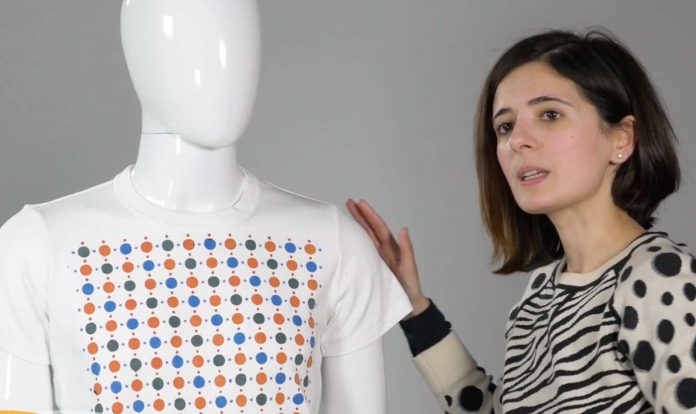
Thanks to a recent development from Tufts University’s School of Engineering, we may soon be able to wear clothing that can change color in response to chemicals released from our bodies or detected in the air.

The biomaterial-based inks can be screen-printed onto textiles such as clothes, shoes, or even face masks in complex patterns and at high resolution, providing a detailed map of human response or exposure.

The advance in wearable sensing, reported in Advanced Materials, could simultaneously detect and quantify a wide range of biological conditions, molecules and, possibly, pathogens over the surface of the body using conventional garments and uniforms.

“The use of novel bioactive inks with the very common method of screen printing opens up promising opportunities for the mass-production of soft, wearable fabrics with large numbers of sensors that could be applied to detect a range of conditions,” said Professor Fiorenzo Omenetto, corresponding author of the study. “The fabrics can end up in uniforms for the workplace, sports clothing, or even on furniture and architectural structures.”

RELATED: Drones Will Drop Library Books So Kids in Virginia Can Keep Reading, Thanks to Librarian’s Bright Idea

Wearable sensing devices have attracted considerable interest in monitoring human performance and health. Many such devices have been invented incorporating electronics in wearable patches, wristbands, and other configurations that monitor either localized or overall physiological information such as heart rate or blood glucose.

The research presented by the Tufts team takes a different, complementary approach—non-electronic, colorimetric detection of a theoretically very large number of analytes using sensing garments that can be distributed to cover very large areas: anything from a patch to the entire body, and beyond.

The components that make the sensing garments possible are biologically activated silk-based inks. The soluble silk substrate in these ink formulations can be modified by embedding various “reporter” molecules—such as pH sensitive indicators, or enzymes like lactate oxidase to indicate levels of lactate in sweat. The former could be an indicator of skin health or dehydration, while the latter could indicate levels of fatigue of the wearer.

CHECK OUT: Not Only Does New Solar Chimney Design Cut Energy Costs By 50%, It Can Also Save Lives During a Fire

Many other derivatives of the inks can be created due to the versatility of the silk protein by modifying it with active molecules such as chemically sensitive dyes, enzymes, antibodies and more. While the reporter molecules could be unstable on their own, they can become shelf-stable when embedded within the silk fibroin in the ink formulation.

The inks are formulated for screen printing applications by combining with a thickener (sodium alginate) and a plasticizer (glycerol). The screen printable bio-inks can be used like any ink developed for screen printing, and so can be applied not just to clothing but also to various surfaces such as wood, plastics and paper to generate patterns ranging from hundreds of microns to tens of meters.

The technology builds upon earlier work by the same researchers developing bioactive silk inks formulated for inkjet-printing to create petri dishes, paper sensors, and laboratory gloves that can indicate bacterial contamination by changing colors.

LOOK: These New Solar-Pavement Driveways Made of Plastic Bottles Can Power the Average Household

“The screen printing approach provides the equivalent of having a large, multiplexed arrangement of sensors covering extensive areas of the body, if worn as a garment, or even on large surfaces such as room interiors,” said Giusy Matzeu, research assistant professor of biomedical engineering at the school and first author of the paper. “Coupled with image analysis, we can obtain a high resolution map of color reactions over a large area and gain more insight on overall physiological or environmental state. In theory, we could extend this method to track air quality, or support environmental monitoring for epidemiology.”

The fact that the method uses common printing techniques also opens up avenues in creative applications—something explored by Laia Mogas-Soldevila, architect and recent PhD graduate at Tufts in Omenetto’s SilkLab.

WATCH: This Hacker Built a Vending Machine for Crows as an Ingenious Response to a Cocktail Party Argument

Mogas-Soldevila has helped to create beautiful tapestries, displaying them in museums across the United States and Europe. The displays are interactive, allowing visitors to spray different, non-toxic chemicals onto the fabric and watch the patterns transform.

“This is really a great example of how art and engineering can gain from and inspire each other,” said Mogas-Soldevila. “The engineered inks open up a new dimension in responsive, interactive tapestries and surfaces, while the 1,000-year old art of screen printing has provided a foundation well suited to the need for a modern high resolution, wearable sensing surface.”

Reprinted from Tufts University

(WATCH the explanatory video from Tufts university below)

Color Your News Feed With Positivity By Sharing This Cool Research With Your Friends On Social Media…


Charity Dishes Out $1,000 Checks to Hundreds of Teens So They Can Uplift Anyone They Want to Support

This charitable foundation is helping to inspire the next generation of humanitarians by giving away $1,000 dollar checks to teenagers.

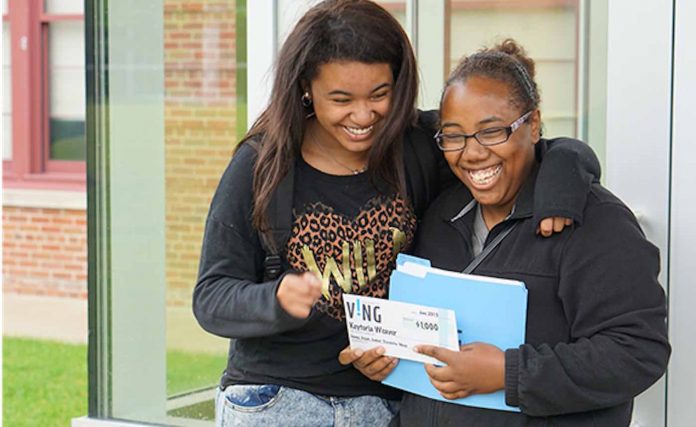
The money is not for the kids to keep, however—it’s for them to give away to a friend, loved one, neighbor, or role model.

Over the course of the last six years, the VING Project has given away gobs of money to teenagers who have wanted to do something kind for a deserving person outside of their family.

RELATED: ‘Wear the Cap, Donate the Gown’: Student Helps Donate Thousands of Graduation Gowns to Hospitals in Need

To receive money from the foundation, the youngsters are asked to submit a 2-minute video to the foundation explaining why they want to give money to their nominee. If the videos are accepted by the charity, then the $1,000 check is sent directly to the teen so they can present it to their nominee.

In the month of April alone, the VING Project—which was named after the latter part of the word “giving”—gave away more than $250,000 in checks to teens.

The project was founded by Liz Lefkofsky, the wife of Groupon co-founder Eric Lefkofsky. She told WGN-TV in a recent interview that she launched the charity with the hopes of giving teens their own special philanthropic experience which they will never forget.

LOOK: 10-Year-old Gives the Gift of Art to More Than 1,500 Kids in Shelters and Foster Care During Quarantine

“Those kids ten, fifteen years from now, they will remember that they got to do something powerful and impactful in a crazy difficult time,” she told the news outlet.

US-based teenagers between the ages of 14 and 18 are encouraged to submit their nominations to the VING Project website.

(WATCH the news coverage below)

Pay The Good News Forward To Your Friends By Sharing It To Social Media…

California Organ Donation Charity Still On Track for Record-Setting Year Despite COVID-19 Upheavals

File photo by Lovestruck, CC

A leading California-based charity announced last week that it is on pace for a 15% increase in organ donations over last year’s record-setting numbers, despite the upheaval that COVID-19 has caused to the nation’s healthcare system.

The OneLegacy organization is the not-for-profit organ, eye, and tissue agency that serves the greater Southern California region, the largest independent donation region in the world.

In March, the Centers for Medicare & Medicaid Services issued guidelines that identified transplantation as a “Tier 3, High Acuity Surgery, Do Not Postpone” procedure. Since that time, OneLegacy has been working with its partner hospitals and transplant centers to assure the safety of donors and the many recipients waiting to receive their gift of life.

“Even during this unprecedented crisis, the lifesaving and essential purpose of organ and tissue donation and transplantation has gone on,” said OneLegacy CEO Tom Mone. “To donor hospitals and staff, donors and their families, recipients, and transplant colleagues, we owe a world of gratitude for their continued caring about our community and our world. Americans rally together in times of crisis, and the same generosity and caring that we see from organ donors will help us successfully confront the challenges posed by COVID-19.”

MORE: Countries Hit Hardest By COVID-19 Are Starting to Lift Social Restrictions After Encouraging New Recovery Rates

In 2019, OneLegacy recovered a record number of 557 organ donors that resulted in the transplant of 1,619 organs. Overall, OneLegacy’s track record and growth in lifesaving organ donation has resulted in its deceased donor transplant rate currently being higher than any country in the world outside the United States. These numbers are achieved despite OneLegacy serving a very young and healthy community whose donor potential, as measured by community death rates, is only 75% of the U.S. average.

Nationwide, last year the United States was once again the world leader in deceased organ transplants (at 109 deceased donor transplants per million population), with 11,870 deceased donors accounting for nearly 36,000 transplants. This reflected a 10.7% increase in deceased donation over 2018, the ninth consecutive year of growth, and a 49% increase since 2010.

CHECK OUT: Breakthrough For Kenyan Scientists Who Discover Natural Microbe That Completely Stops Malaria in Mosquitoes

Today, some 70% of people in the United States who can donate do so. Still, the need for transplants is growing far faster than potential donors. Currently more than 111,000 Americans are waiting to receive a lifesaving heart, liver, lung, kidney and/or pancreas.

While OneLegacy is seeing a record number of donations during the current pandemic, the achievement of these numbers has not been without challenge. Central among those has been the needs of transplant centers and donor hospitals to free up ICU beds, ventilators and staff for COVID-19 patients, all of which normally support organ donors. As such, OneLegacy made arrangements to transport organ donors to its Redlands Recovery Center, transfer donors to less-impacted facilities, and/or work with hospitals to recover organs more rapidly than usual in order to help free up ICU beds needed to care for COVID-19 patients.

A remaining challenge in increasing donation rates lies in the acceptance practices of transplant surgeons who Mone says have been shown to turn down as many as 3,500 kidneys per year. OneLegacy is currently working with the French surgeons who identified this opportunity and have pinpointed more than 200 kidneys that U.S. programs have declined and wasted while they wait for the “perfect” kidney.

RELATED: For the First Time in the US, Surgeons Pump New Life into Dead Donor Heart for Life-Saving Transplant

“OneLegacy doesn’t transplant organs, so we can’t solve this problem alone,” says Mone, “but with help from the French teams and our local transplant centers and teams, we hope to save hundreds more lives each year.”

Mone encourages every Southern Californian to choose to register to be an organ donor at the DMV and at the Donate Life California website and to explore the option to be a living donor for a friend or family member.

Representative feature photo by Lovestruck, CC

Multiply The Good News By Sharing It With Your Friends On Social Media…

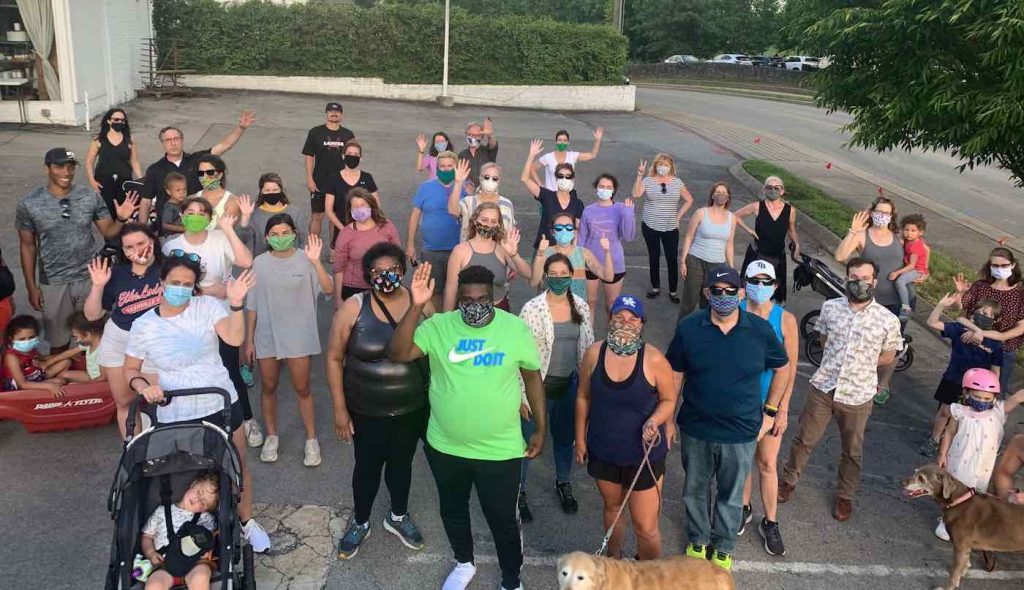
When Black Man Was Afraid to Walk in His Upscale Community, 75 Neighbors Walked With Him

Photo credit: Shawn Dromgoole, center

He grew up in a gentrified neighborhood with only a few African-American residents, but after confessing that he’s always felt uneasy walking alone on its streets, his faith in humanity was restored by dozens of neighbors who walked with him in solidarity.

The 29-year-old has lived in the 12 South neighborhood of Nashville his whole life, after his family moved there 54 years ago. But over the course of his life, Shawn Dromgoole has seen the neighborhood change dramatically.

Rising home values priced out many of the black families who lived there. As they moved out to find more affordable housing, new families moved in, most of them white and more financially well-off—leaving Shawn feeling out of place in his hometown.

“Growing up in my neighborhood, I could always feel the eyes, the looks and the cars slowing down as they passed by me,” Shawn told the Washington Post.

Along with a barrage of news reports of looting, and protests raging over George Floyd’s death, came Facebook posts warning neighbors to watch out for “suspicious black men,” which added a new layer of fear to Shawn’s discomfort.

So, three weeks ago, he took to Facebook and the online community bulletin board, NextDoor, to express his fear of walking alone in his own neighborhood.

Shawn expected little beyond a few words of encouragement from friends, but what happened next was much more than he anticipated. Messages began pouring in from friends and strangers alike, saying that they would like to walk with him.

RELATED: Black Protestor is a Hero After Carrying Injured White Counter-Protestor to Safety: ‘It’s not black vs white’

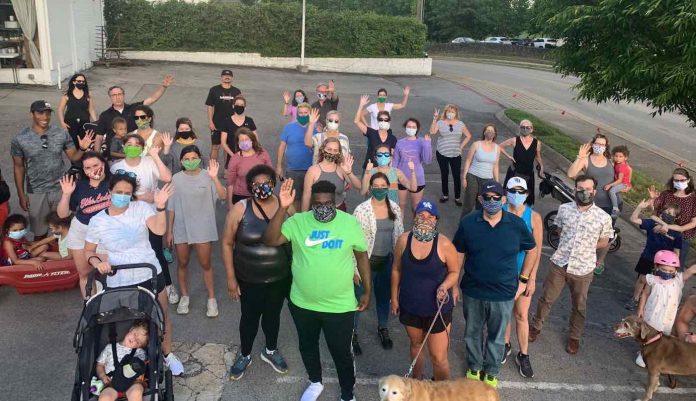
So he posted a time and place letting everyone know, in case they wanted to join him on his next walk. When he arrived, 75 people were waiting there to join him.

Photo credit: Shawn Dromgoole, center

“I was so overwhelmed, I still can’t find the words. I never wrote that post thinking people would want to walk with me,” Shawn said.

He was especially awed at how the whole thing seemed to transcend racial barriers. “Everyone was in masks, so you just saw a sea of people, and you couldn’t even tell what color skin they had.”

RELATED: Chattanooga Police Updates Policy to Require Officers to Intervene in Cases of Brutality and Report It

The uplifting spotlight on their common humanity soon received local media coverage, and Shawn decided to organize a second walk in the Nashville area, and to push for similar walks in cities around the country.

Last week ‘Walk with Shawn’ drew crowds of nearly 300 people, as word spread about the neighbors getting to know one another, according to WTVF News. And Shawn received messages from neighborhoods in Georgia, Minneapolis, Denver and Philadelphia, that they started copying his idea.

With his new GoFundMe campaign raising $7,000, he booked his first flight—to Philadelphia for a walk on July 4. His hope is to eventually organize a walk in a different city, every week. He is taking email requests at: wewalkwithshawn@gmail.com.

He also envisions honoring the memories of Ahmaud Arbery, Trayvon Martin, and Tamir Rice with walks in their hometowns: Brunswick, Georgia; Miami Gardens, Florida; and Cleveland, Ohio. Eventually, his dream is to walk across the whole country giving hope to all those who are scared to walk alone.

WATCH the inspiring local news coverage…

You can support Shawn’s dream by sharing this post with the hashtag #WalkWithShawn.

WALK This Story Over to Inspire Your Own Community on Social Media…

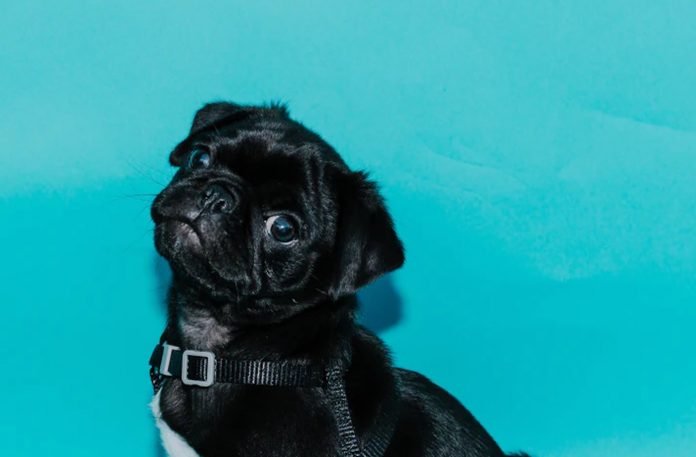
“Be the person your dog thinks you are.” – C.J. Frick

Priscilla Du Perez

Quote of the Day: “Be the person your dog thinks you are.” – C.J. Frick

Photo: by Priscilla Du Preez, public domain

With a new inspirational quote every day, atop the perfect photo—collected and archived on our Quote of the Day page—why not bookmark GNN.org for a daily uplift?


Target Makes Coronavirus Pay Raise Permanent, Setting Hourly Minimum Wage to $15 – With Extra Bonuses

Target stores announced yesterday that it will permanently raise its starting wage for U.S. team members to $15 per hour. Additionally, the company will give a one-time recognition bonus of $200.00 to its frontline store and distribution center hourly workers for their efforts during the coronavirus pandemic.

Additionally, starting this week, Target is also offering a new healthcare benefit that provides access to free virtual healthcare visits through the end of the year, regardless of whether team members are on a Target health insurance plan. The company also announced additional extensions of a 30-day paid leave for vulnerable team members, as well as free backup care for family members.

“In the best of times, our team brings incredible energy and empathy to our work, and in harder times they bring those qualities plus extraordinary resilience and agility to keep,” said Target CEO Brian Cornell in a statement. “Everything we aspire to do and be as a company builds on the central role our team members play.”

RELATED: Boy in Wheelchair Left Awestruck After Seeing Target Store Ad Featuring Boy ‘Like Him’

The new minimum wage for U.S. hourly full-time and part-time team members at stores, distribution centers, and the firm’s headquarters, is up from $11 in 2017, and $13 set in June 2019.

Target was one of the first in the retail industry to offer a temporary wage increase of $2 and kept the increase in place two months longer than originally announced.

The one-time $200 recognition bonus will be distributed at the end of July to eligible full-time and part-time hourly team members at both stores and distribution centers. This is on top of bonuses of $250-$1,500 paid out in April to 20,000 hourly store team leads who oversee individual departments in Target stores.

RELATED: Boss Welcomes Back 14 Employees With Surprise $1,000 Bonuses For Spending on Local Businesses

To fund the changes, Target will invest nearly $1 billion more this year in the well-being and health of workers than they did in 2019, which includes increased wages, paid leaves, bonus payouts, and personal protective equipment.

The new health benefit for 2020 is through the CirrusMD app, which offers virtual health care visits through text, sharing images, and video chats with a doctor. The platform will be available 24 hours a day, 7 days a week at no extra cost to U.S.-based team members until the end of December 2020, so they can conveniently and safely seek medical advice at a time of heightened focus on health and well-being.

Target will continue to waive its absenteeism policy and offer paid leave options for team members who are symptomatic, have a confirmed case of coronavirus, or have been quarantined due to exposure.

MORE: Chef Andrés’ Charity is Injecting $50 Million into Restaurants By Paying Them to Feed the Hungry

And, with the strains both of COVID-19 and social unrest, Target will continue to support team members’ mental health by offering free counseling sessions, along with new anxiety and sleep resources that have been made available to all team members.

“I have tremendous gratitude for the way our team members show up with such purpose and pride,” said Melissa Kremer, Target’s Chief Human Resources Officer. “These investments help ensure that they can take care of themselves and their families.”

SHARE The GOOD News With Fellow Shoppers on Social Media…

Uber Driver Rewarded with New Car By Jada Pinkett Smith After She Delivers Thousands of Meals to Hospital Workers

Facebook

A single mom and Uber driver in Memphis just wanted to do her part to help others during the COVID-19 pandemic—and now, thanks to a famous celebrity, she’s been rewarded handsomely for her generosity.

When Tammy Smith gave an exhausted a nurse a ride home a couple months ago, she felt inspired to show her gratitude. So she started buying and delivering meals to frontline workers.

Over the past two months, she has delivered thousands of lunches and dinners to exhausted doctors and nurses at her local hospital—up to 60 meals on some days. She started raising money so she could deliver even more, which resulted in tens of thousands of dollars contributed and 3,500 meals dropped off every day for nearly three months.

A local news station praised her efforts, and the story spread even further, with the New York Post and London’s Daily Mail recognizing her selfless work. Tammy was thrilled, because more publicity meant more donations, which meant she could do more for the hospital workers.

RELATED: Dogs Trained to Sniff Out COVID-19 Score Near-Perfect in Diagnosis of Human Sweat Samples

On Mother’s Day, the mom of two, was invited to be featured on Jada Pinkett Smith’s web show, Red Table Talk. She was happy to be getting more attention for her cause, but what happened next was more than she could have dreamed of.

Facebook

The actress and wife of Will Smith wanted to give her a special donation: “We want to purchase for you an eco-friendly car. A brand new one…for Mother’s Day,” Smith said.

“I have never known such generosity in my entire life,” Tammy told WMC News 5.

In March, when the stay-at-home orders began in Tennessee, Tammy’s ride share business took a significant hit. Her car troubles made things even more uncertain.

POPULAR: Millions of COVID Cases and Deaths Averted Thanks to Lockdowns: ‘One of Humanity’s Greatest Achievements’

“Kind of like a box of chocolates I never knew what I was going to get when I started the car,” Tammy said, adding that she expects the better fuel economy of the new car, purchased by the Smith Family Foundation, will help her get back on her feet more quickly.

Meanwhile, Tammy is still putting others first, making deliveries every night.

If you would like to support her generous work, please visit her GoFundMe campaign here. She is also accepting donations via Venmo (@Tara-Rivera-26) and PayPal ([email protected]).

MORE: Since Pandemic Closed His Business, New Jersey Man Has Made Over 500 Shopping Trips For Seniors

Need more positive stories and updates coming out of the COVID-19 challenge? For more uplifting coverage, click here.

WATCH a video at WMC News 5And Don’t Forget to SHARE Her Inspiring Story to Multiply the GOOD!

In Show of Solidarity, Morocco Sends 8 Million Masks to 15 African Nations

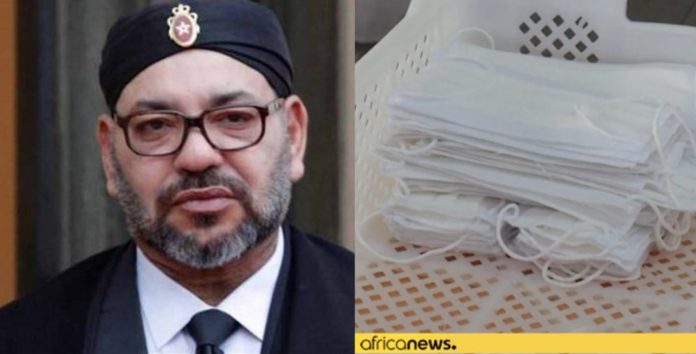
King Mohammed VI of Morocco has sent 8 million masks and millions of other pieces of personal protective equipment (PPE) to 15 different African nations.

Including almost one million facial visors, 600,000 plastic hair caps, and 60,000 gowns, the aid will be distributed between Burkina Faso, Cameroon, Comoros, Congo, Eswatini, Guinea, Guinea-Bissau, Malawi, Mauritania, Niger, the Democratic Republic of Congo, Senegal, Tanzania, Chad and Zambia, according to a statement by the Ministry of Foreign Affairs.

COVID-19 has been slow to arrive in Africa, but as many European and Asian countries are beginning to reopen, the pandemic is on the move in many countries on the continent.

RELATED: Startup in Uganda Recycles Plastic Bottles into PPE Face Shields For Hospitals

Having seen successful examples of beating COVID-19 in countries like South Korea, Germany, and New Zealand, Morocco and other African nations already have case examples and best-practices to base defense strategies on—and it’s this that Morocco hopes to encourage and support in other nations.

It also came just days after Morocco showed its desire to construct the headquarters of the African Center for Disease Control and Prevention in the country under the auspices of the African Union.

MOREGhanaian Man Invents Solar-Powered Hand-washing Basin During Lockdown to Encourage Sanitary Habits

Registering its first case on March 2nd, Morocco has seen only 200 deaths and around 9,000 infections.

Along with making masks compulsory in public, Morocco has painted masks onto the fronts of their train cars and buses as a cute way to raise awareness.

WATCH the video from Africa News… (King of Morocco photo by MehdiBitw98, CC license)

POPULAR: South Korea Sends 10K Masks to Navajo Nation to Honor Their Service as ‘Code Talkers’ During Korean War

Need more positive stories and updates coming out of the COVID-19 challenge? For more uplifting coverage, click here.

Show Your Gratitude by Sharing on Social Media…

“What is one to say about June, the time of perfect young summer, the fulfillment of the promise of earlier months.” – Gertrude Jekyll

Quote of the Day: “What is one to say about June, the time of perfect young summer, the fulfillment of the promise of earlier months.” – Gertrude Jekyll

Photo: by takahiro taguchi, public domain

With a new inspirational quote every day, atop the perfect photo—collected and archived on our Quote of the Day page—why not bookmark GNN.org for a daily uplift?


Johns Hopkins is Offering Free Online Course in Psychological First Aid

As the world becomes more and more attentive to the importance of mental health, researchers are offering up an invaluable resource on how to give “psychological first aid” to a distressed person—and it is available for free.

Johns Hopkins University is responsible for publishing a free online college course for conducting “Psychological First Aid” on people with depression, anxiety, or emotional distress. Since it was released to the public on Coursera, thousands of people from around the world have completed the course with more than 200,000 students currently enrolled. Not only that, it has become one of the most popular classes offered on Coursera.

The class is taught by pioneering psychological expert Dr. George S. Everly, co-author of the book The John Hopkins Guide to Psychological First Aid and co-founder of the International Critical Incident Stress Foundation.

RELATED: Yale is Letting Anyone Take Its Most Popular Class Ever for Free

The class, which is divided into a number of 30-minute and 2-hour lessons over the course of 5 weeks, covers everything from reflective listening to prioritizing and responding to life-threatening mental health situations.

More specifically, the course covers Dr. Everly’s RAPID psychological response model, which stands for “Reflective Listening”, “Assessment of Needs, “Prioritization”, “Intervention”, and “Disposition”.

“This specialized course provides perspectives on injuries and trauma that are beyond those physical in nature,” reads the course description. “The RAPID model is readily applicable to public health settings, the workplace, the military, faith-based organizations, mass disaster venues, and even the demands of more commonplace critical events, e.g., dealing with the psychological aftermath of accidents, robberies, suicide, homicide, or community violence. In addition, the RAPID model has been found effective in promoting personal and community resilience.”

Be Sure And Share The Good News With Your Friends On Social Media…

Black Protestor is a Hero After Carrying Injured White Counter-Protestor to Safety: ‘It’s not black vs white’


A Black Lives Matter protestor is being hailed as a hero after he came to the rescue of a counter-protestor who was injured at an anti-racism rally in London.

Patrick Hutchinson’s face has been featured on news outlets around the world since he was photographed carrying the far-right demonstrator to safety during the protest near Waterloo Bridge this weekend.

Hutchinson says that it had been the first anti-racism gathering that he had attended since the movement gained worldwide traction following the death of George Floyd. Although the event was meant to be a peaceful protest for police reform, fights broke out in London after counter-protestors gathered in opposition to the rally.

LOOK: In Dozens of American Cities, Officers and Protestors Embrace During Rallies Against Bad Policing

“It was pretty hectic,” Hutchinson told Bloomberg QuickTake in the interview below. “It was almost like a stampede. It was lots of people.”

After Hutchinson and his friends joined the rally, he witnessed the white demonstrator fall to the ground following a violent altercation between the protestors and counter-protestors. Since the man was surrounded by people, he was unable to get up from a fetal position.

“His life was under threat,” Hutchinson recalled. “I sort of just thought, ‘well, if he stays here, he’s not gonna make it.’”


As Hutchinson’s friends formed a protective ring around the injured man, Hutchinson hoisted him onto his shoulders and carried him away from the crowd.

Hutchinson then passed the injured man off to nearby police officers who thanked him for his courageous actions.

CHECK OUT: Politician Helps Pay Off Medical Debt for Man Who Sent Him Racist Tweets—And They’re Now Friends

Since Hutchinson’s gesture was also captured by Reuters photographer Dylan Martinez, social media users and government figures from across the political spectrum have hailed him as a hero—but Hutchinson says he simply wanted to do the right thing.

“I want to see equality for everybody. I am a father, a grandfather and I would love to see my young children, my young grandchildren, my nieces, my nephews have a better world than I have lived in,” Hutchinson told CNN. “The world I live in has been better than my grandparents and my parents and hopefully we can continue until we have total equality for everyone.”

(WATCH the news coverage below)

Be Sure And Share This Heartening Example Of Heroism With Your Friends On Social Media…

This Orchestra Performs ‘Symphonies’ Using Typewriter Sounds—Listen to Their Catchy New Song


Some orchestras have string sections; others have brass—but this particular orchestra is famous for only using typewriters.

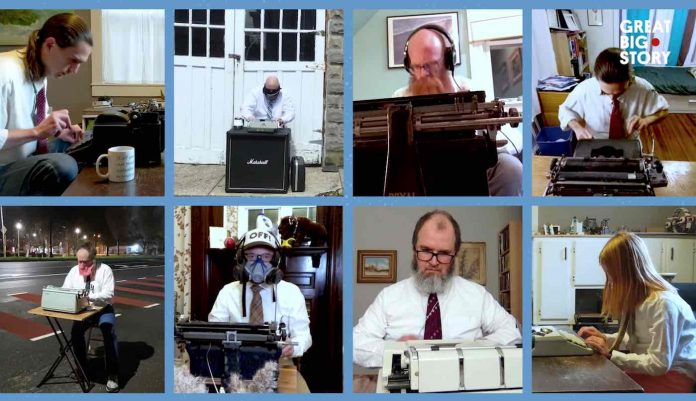
For the last 16 years, the Boston Typewriter Orchestra has been delighting audiences across New England by performing original songs and covers composed exclusively for the mechanical clicks, kerchunks, and dings of typewriters.

Although a few of the members have musical backgrounds, many of them have only ever performed with their trusty typewriters.

WATCH: Quarantine Reunites 160 Former Disneyland Cast Members to Recreate the Iconic Parade At Home–And It’s Joyous!

Since the COVID-19 outbreaks have canceled the world’s concerts until further notice, the Boston Typewriter Orchestra has not been able to play for the public for several months.

However, the orchestra recently reunited over a video call so they could perform a new song called “Unprisoning Your Think R.H.I.N.O.” from the safety of self-isolation.

(WATCH the orchestra perform their new song in the Great Big Story video below)

You Don’t Have To Type Up The Good News To Share It With Your Friends On Social Media…

Startup in Uganda Recycles Plastic Bottles into PPE Face Shields For Hospitals

Killing two birds with one stone, two Ugandan entrepreneurs working to up-cycle plastic waste into building materials have altered their production to tackle the shortages of personal protective medical equipment (PPE) in hospitals dealing with the country’s COVID-19 patients.

After the government ordered all non-essential businesses closed, Peter Okwoko and his colleague Paige Balcom, co-founders of Takataka Plastics, continued working in their plastics processing facility.

But, instead of things like roof tiles, they began recycling plastic waste into face shields for medical workers.

After posting an image of their prototype on social media, the pair got a surprising call from a regional hospital asking for 10 face shields because they didn’t have enough.

Using locally-sourced moulds for molten plastic, the two finished the order and delivered them, before getting a call later in the afternoon from the very same hospital asking for more because “the first ones worked out so well for them,” Okwoko, 29, told Reuters.

POPULAR: Dogs Trained to Sniff Out COVID-19 Score Near-Perfect in Diagnosis of Human Sweat Samples

PPE and Plastic Recycling

PPE shortages have occurred world-wide, and Ugandan hospitals are are no exception, but Takataka Plastics has, so far, made 1,200 face shields. Even more inspiring, the company’s staff of 14, includes six employees who were homeless, jobless youth.

Around 500 of the shields have been sold to NGOs and privately-managed health facilities at a low cost and the other 700 were donated to public hospitals.

RELATED: South Korea Sends 10K Masks to Navajo Nation to Honor Their Service as ‘Code Talkers’ During Korean War

Takataka hopes to build upon the success of the face shields and expand its operations into a more appropriate plastic processing and recycling facility. Currently their location can reduce around 132 pounds (60 kgs) of plastic per-day, but they are aiming to establish a monthly capacity of 9 metric tons.

Uganda sees hundreds of tons of plastic thrown away annually, and their innovative solution to the PPE crisis has pushed these entrepreneurs to dream bigger.

Need more positive stories and updates coming out of the COVID-19 challenge? For more uplifting coverage, click here.

SHARE the Innovation and Generosity With Friend on Social Media…  (File photo from CDC)
“When you become immobilized by what anybody else thinks of you, what you’re saying is: ‘Your opinion of me is more important than my own opinion of myself.’” – Wayne Dyer

Quote of the Day: “When you become immobilized by what anybody else thinks of you, what you’re saying is: ‘Your opinion of me is more important than my own opinion of myself.’” – Wayne Dyer

Photo: by Dan Boțan, public domain

With a new inspirational quote every day, atop the perfect photo—collected and archived on our Quote of the Day page—why not bookmark GNN.org for a daily uplift?


Kentucky Tattoo Parlor is Creatively Covering Up Hate Tattoos For Free

Tattoos can be a beautiful avenue of self expression, but for some who were involved in gangs or hate groups in the past, they can be a very visible reminder of a mistake. Since tattoo removal is such a painful and expensive process, it remains out of reach for many, leading to social and career consequences. But a tattoo parlor in Kentucky has come up with a creative solution, continuing the good work of others in recent years.

The Gallery X Art Collective in Murray posted an offer on Facebook last week to cover up any racist, hateful, or gang-related tattoos free of charge—and in the first week, they received 30 requests. Owners Jeremiah Swift and Ryun King say they were inspired by the Black Lives Matter movement to do their part to end discrimination and support those who have had the courage to leave their hateful past behind.

“A lot of people when they were younger just didn’t know any better and were left with mistakes on their bodies. We just want to make sure everybody has a chance to change,” Jeremiah told CNN.

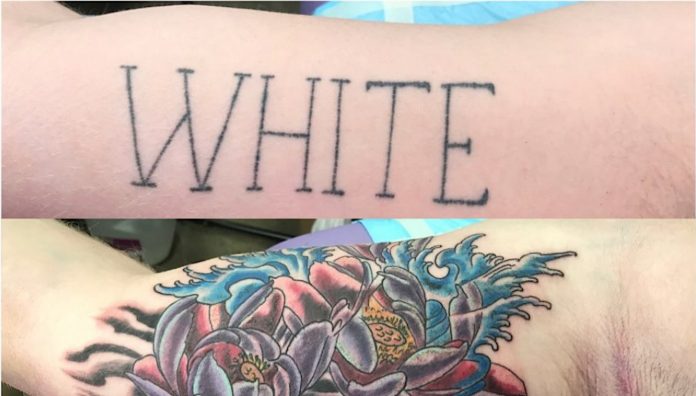
So far, their friendly tattoo artists have covered up a large swastika on a man’s chest—which embarrassed him so much he never took his shirt off around his children—and they’ve reinvented the arms of a man which had been completely covered in hate symbols.

RELATEDPeople Are No Longer Discriminating Against Tattoos in the Workplace, New Study Says

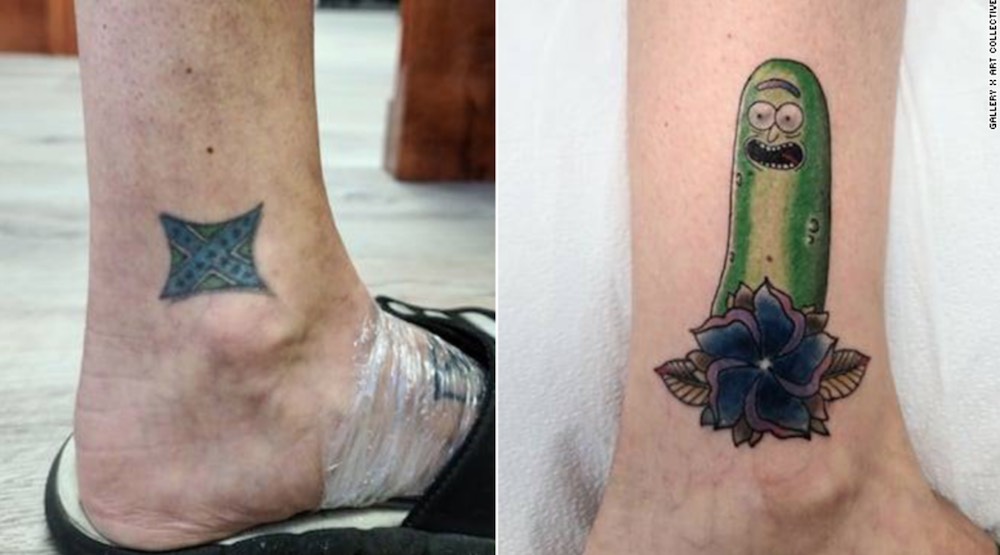
Their first pro bono client was a woman named Jennifer Tucker. Now a mother of two, she regretted the confederate flag tattoo she got at 18. She credits the youthful mistake to having grown up in an all-white neighborhood where the flag was frequently flown with pride. It wasn’t until she moved away from her hometown and got involved in peace movements to end racial injustice that her mind was opened.

“Every time I attend a group meeting or protest, I make a new friend,” she told CNN. “And I don’t want to be standing next to them with a confederate flag on my leg.”

Thanks to Jeremiah’s creativity, what was once an emblem of hate has been converted into a humorous conversation starter: a cartoon character called ‘Pickle Rick’ from Ricky and Morty.

RELATED: Unlikely Friendship Spurs Former Neo-Nazi to Remove Swastika Tattoos

Jeremiah and Ryun’s good work derives from a similar spirit shown by a tattoo parlor that made the same offer to people in Maryland. In 2017, Southside Tattoo became booked solid for 6 months taking care of people wanting similar tattoos covered up. This inspired the owners, Elizabeth and David Cutlip, to start the Random Acts of Tattoo foundation to create and fund a network of artists around the world willing to help folks get a fresh start. If you would like to support their work, click on their GoFundMe page.

(Featured photo by Southside Tattoo)

MULTIPLY the Good by Sharing the Idea With Other Businesses on Social Media…