We know renewable energy technology can produce electricity from the sun’s rays, the force of the wind, and the power of the waves—which makes one wonder why this new 3-in-1 offshore platform wasn’t made 20 years ago.
The maritime energy generator developed by German company Sinn Power goes where the power of these three forces of nature are often strongest—the ocean. With its onboard equipment, it can generate power from the force of the water underneath as well as the wind and sun above.
“The modular design has been a key element since we started developing maritime technologies that allow flexibility and a wide variety of applications” Dr Philipp Sinn, CEO Sinn Power told Forbes. “The floating platform can supply renewable energy to islands across the world, for example, and contribute to the worldwide implementation of offshore wind farms.”
The prototype, which started as a patent application merely 2 years ago, is now stationed off the coast of Greece. It’s being offered to solar energy companies as a golden opportunity to test and demonstrate photovoltaic arrays to be stationed on a fleet of future platforms.
As is so often the case with new energy solutions, the design is lightweight, scalable, durable, and easy to repair—but the platform raises or lowers itself, depending on the height of the waves around it.
When fully outfitted with solar panels and windmills, the platform can generate 26 kilowatts of renewable energy. Far more reliable than wind and solar, most of the energy generated by the platform would come from waves—synced as they are with the tides and uninterrupted by clouds or darkness.
Many island communities across the world rely on portable energy sources like diesel generators or cheap coal power plants—like on the island of Siberut in Indonesia, where locals have been forced to develop bamboo-powered bioelectric power stations to get energy to small hamlets. Offshore sources like Sinn Power’s flotilla could offer another way to get electricity to island communities.
“We are now preparing the floating platform to be used as a showcase, to enable wider access for potential customers. Politicians and representatives from other European nations have already visited. The next goal is in the autumn, when hopefully we’ll be able to start marketing our unique electronics set,” Sinn said.
Power Up With Positivity By Sharing The Good News With Your Friends On Social Media…
Dozens of lab rats have been given happy retirements thanks to a professor of physiology and biology in Wisconsin.
Dr. Richard Hein of the University of Wisconsin-Green Bay has been helping his lab rats find forever homes after his first and second-year students complete their introduction to anatomy courses.
Throughout the courses, students examine how things like exercise, music, and temperature affect the anatomy of the animals—and Hein told Wisconsin Public Radio that many students actually form bonds with their rats.
“That’s actually one of the things that I really think is a great outcome of using research animals,” Hein said. “The students that normally wouldn’t get exposure to care for animals really take on that responsibility.”
In fact, Hein says that more than half of the students in his class wind up adopting their rats every year—animals which Hein say are very intelligent and intuitive of human emotions.
Biology major Stevie VanderBloomen, adopted three of the classroom rats after finishing her second year course with Professor Hein, saying that now his pet rats can do tricks, respond to their names, and actually clean themselves more than cats do.
“They’re very into human interaction and being able to have fun with you,” she told WPR.
The rats in the class of 2020 all arrived with white fur covered in black blotches like Holstein cows, and were a particularly friendly bunch. Amazingly, residents of Manitowoc, where the school campus is located, adopted every single one of the Holstein rats once school ended after the university publicized Prof. Hein’s adopt-a-rat program in their newsletter.
“It is that time of year again where I am running the adopt-a-rat program,” wrote Hein in the newsletter. “The Anatomy and Physiology students have been working with laboratory rats over the year, and we have 11 females up for adoption that have been raised since they were a few weeks old. This year they are a particularly friendly and fun bunch.”
Ethical codes for use of rats and mice in laboratory experiments for the sake of science normally call for the animals to be treated humanely, but not for their adoption post-study.
“I think people in general really do care for animals and appreciate the fact that they do get adopted out,” Hein said.
Be Sure And Share This Sweet Story Of Kindness With Your Friends On Social Media…
Quote of the Day: “Giving birth and nourishing, having without possessing, acting with no expectation, leading and not trying to control: this is the supreme virtue.” – Tao Te Ching, translated by Stephen Mitchell
Photo: by Matthew T Rader, public domain
With a new inspirational quote every day, atop the perfect photo—collected and archived on our Quote of the Day page—why not bookmark GNN.org for a daily uplift?
Almost as sensitive as real human eyes, a recent paper in Nature published the trials of a bionic eye developed by a team of robotics engineers that could restore sight to an estimated 285 million blind people.
Hypothesized to be available in 5 years the EC-EYE—short for ElectroChemical EYE—is inspired by the human retina, which is one of the most sensitive tissues we possess, providing up to 80% of all information about our surroundings. If you have been noticing any issues with you eye health, like dry eyes, then consider making an appointment for dry eye treatment as soon as possible. For those who stare at a computer screen for too long, consider trying out these Felix Gray glasses so you can have better eye care throughout the day.
The visual prosthetic developed by engineers from Hong Kong and the U.S. offers hope to the hundreds of millions of people around the world that have lost their ability to see due to things like age-related macular degeneration and BB gun accidents.
The bionic eye mimics the domed-shape of the human retina which sharpens the focus and reduces the spread of light as it passes through ten million photoreceptive cells per square centimeter.
These natural characteristics have so far been impossible to replicate with artificial materials. Paper author and engineer Zhiyong Fan of Hong Kong University of Science and Technology and his colleagues developed a high-density array of photoreceptors placed inside pores of aluminium oxide, a mineral almost as hard as diamonds that would work to mimic the retina.
Again, imitating biology, nerve-like electrical wires formed from liquid metal are sealed inside rubber tubes which run to the external circuitry for processing the image.
The eyeball itself is made of silicon into which the retina technology is placed, the space in between is taken up by ionic liquid that simulates the biological gel that forms a buffer between the lens and the retina behind it.
A Better Mouse Trap
Professor Fan and his colleagues predict the technology will become practical to manufacture and implant within 5 years—and, amazingly, the EC-EYE could surpass the ability of the normal human eye by simply increasing the density of light-detecting sensors.
“We hope to further improve our device in terms of bio-compatibility, stability, and performance,” said Professor Fan.
Earlier this month, an injured migrant laborer named Mohan Paswan was forced to hobble home to his 15-year-old daughter and tell her he had been badly hurt, he had lost his job, and there was no way for them to get home to their faraway village in India.
Most people would regard their predicament as a horrible—even hopeless—situation; but now, the world is celebrating the incredible story that followed.
Paswan and his teen daughter Jyoti Kumari recently completed the 750-mile journey from their former apartment on the outskirts of New Dehli all the way to their home village. What’s remarkable is that they rode the entire distance on a bicycle they purchased with their last $20, with Jyoti pedaling as her father rode on the seat with his heavy bag.
The story of their grit and determination has inspired millions of migrant workers across the country, where the novel coronavirus lockdowns has resulted in severe work shortages. Many of these laborers have needed to take similar journeys from major cities back to their home villages where they can be supported by their extended family—but financial and logistical problems have left many of them stranded and wondering what’s next.
Things had not been going well for Paswan, even before the pandemic. In January, he was involved in a traffic accident while working as a rickshaw driver. His daughter, who had dropped out of school a year earlier because of the family’s financial troubles, decided to make the trip to Dehli to care for her injured father. When the lockdown hit and Paswan was unable to earn a living, their landlord cut off their electricity and threatened to kick them out of their apartment. It was then that Jyoti suggested that they head home to their village in Bihar.
At first, Paswan was aghast over his daughter’s suggestion that she take him home. “I said, ‘Look, daughter, it’s not four or five kilometers that you will drag me from here. It’s 12-, 13-hundred kilometers. How will we go?” he said in a video broadcast by the BBC’s Hindi service.
Jyoti had cycled a lot in their village, and they had just enough money to purchase a bicycle. She insisted that she would get her dad home safely.
That being said, it was not a glamorous journey for Jyoti and Paswan—they often found themselves without enough to eat; they slept at gas stations, and often relied on the generosity of strangers.
The pair traveled nearly 100 miles per day. On borrowed cell phones, Jyoti would reassure her worried mother: “Don’t worry, I’ll get Papa home good.”
True to her word, Jyoti and her father made it home. Additionally, since the Indian media has dubbed her “Jyoti the lionhearted”, the teenage girl has been contacted by Onkar Singh, the chairmain of the Cycling Federation of India, urging her to try out for the national team.
Singh says that the Cycling Federation is planning on bringing Jyoti back to New Dehli in “something comfortable, like an [air conditioned] train.” Expressing his admiration that she could travel so far with a heavy man “and his luggage,” Singh added with conviction: “She has guts.”
(WATCH the news coverage below)
Pedal This Amazing Story Over To Your Friends By Sharing This To Social Media…
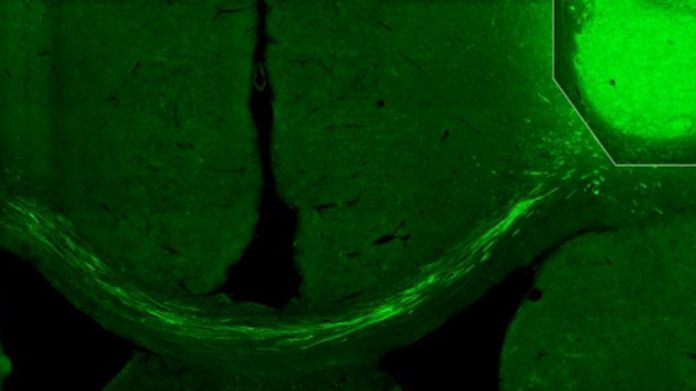
Transplanted nerve cells (transplant up to the right), which were produced from human skin cells, send their nerve fibers to the cerebral cortex on the opposite side of the brain in a stroke-afflicted rat.
Photo by Lund University.
Researchers at Lund University in Sweden have succeeded in restoring mobility and sensation of touch in stroke-afflicted rats by reprogramming human skin cells and transplanting them into the brain.
“Six months after the transplantation, we could see how the new cells had repaired the damage that a stroke had caused in the rats’ brains,” says Professor Zaal Kokaia, one of the researchers behind the study.
Several previous studies from the Lund team and others have shown that it is possible to transplant nerve cells derived from human stem cells or from reprogrammed cells into brains of rats afflicted by stroke. However, it was not known whether the transplanted cells can form connections correctly in the rat brain in a way that restores normal movement and feeling.
“We have used tracking techniques, electron microscopy and other methods, such as light to switch off activity in the transplanted cells, as a way to show that they really have connected correctly in the damaged nerve circuits. We have been able to see that the fibers from the transplanted cells have grown to the other side of the brain, the side where we did not transplant any cells, and created connections. No previous study has shown this,” says Kokaia, who—even though he and colleague senior professor Olle Lindvall have studied the brain for several decades—was surprised by the results.
“It is remarkable to find that it is actually possible to repair a stroke-damaged brain and recreate nerve connections that have been lost,” says Lindvall. “The study kindles hope that in the future it could be possible to replace dead nerve cells with new healthy nerve cells also in stroke patients.”
The researchers have used human skin cells that have been reprogrammed in the laboratory to become nerve cells. They were then transplanted into the cerebral cortex of rats, in the part of the brain that is most often damaged after a stroke. Now the researchers will undertake further studies.
“We want to know more about how the transplanted cells affect the opposite hemisphere of the brain. We also want to take a closer look at how a transplant affects intellectual functions such as memory. In addition, we will study possible side effects,” says Kokaia. “Safety is, of course, extremely important for cell transplantation if it is going to be used clinically in the future.”
Transplanted nerve cells (transplant up to the right), which were produced from human skin cells, send their nerve fibers to the cerebral cortex on the opposite side of the brain in a stroke-afflicted rat. Photo by Lund University.
Treat Your Friends To The Exciting News By Sharing It To Social Media…
This 7-year-old boy from Raleigh, North Carolina may not be old enough to attend high school, but he has proven himself to be quite a prom king since he came to the rescue of his heartbroken nanny.
17-year-old Rachel Chapman had been babysitting young Curtis Rogers for almost a year prior to the novel coronavirus outbreaks. Between picking up Curtis from school, taking him to piano lessons, and helping him with his homework, Rachel had become a beloved part of the Rogers family.
After the COVID-19 lockdowns shuttered their schools and forced them into quarantine, however, Rachel and Curtis were not able to see each other for two months.
In addition to missing the Rogers family, Rachel—who is a senior student at Sanderson High School—was particularly saddened by the cancellation of her senior prom and commencement ceremony.
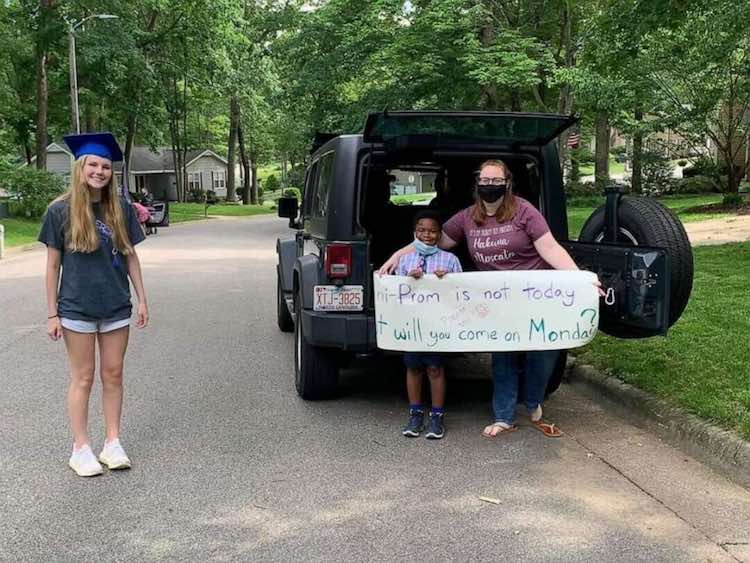
When Curtis heard about Rachel’s prom, he insisted on throwing a socially distanced “mini-prom” for his beloved nanny in their backyard.
The youngster pulled out all the stops for the celebration, too—he even used a giant “promposal” sign to invite Rachel to the event.
Photo by Elissa Rogers/Becky Chapman
On the day of the mini-prom, Curtis donned a purple suit to match Rachel’s prom dress; he set out a fancy dinner table in the back yard with all of their favorite foods from Chick-Fil-A; and after raising a glass of juice to toast his babysitter, they danced six feet across from each other in order to maintain social distancing.
“I was so surprised,” Rachel told Good Morning America. “I had no idea he was going to go all out. It was very thoughtful and sweet.”
“I planned it out because Rachel probably just wanted to see me a lot and she also is one of the best people I’ve known,” Curtis told WTVD. “Rachel is one of our favorite people and Rachel’s like the best nanny ever.”
Need more positive stories and updates coming out of the COVID-19 challenge? For more uplifting coverage, click here.
(WATCH the news coverage below)
Multiply The Good News By Sharing This Sweet Story With Your Friends On Social Media…
An MIT study shows that electrical vehicle batteries could have a useful and profitable second life as backup storage for grid-scale solar photovoltaic installations, where they could perform for more than a decade in this less demanding role. This image shows a ‘cut-away’ view of a lithium-ion battery over a background of cars and solar panels. Photo by MIT News.
Solar energy farms could offer second life for electric vehicle batteries Modeling study shows battery reuse systems could be profitable for both electric vehicle companies and grid-scale solar operations.
Written by David L. Chandler MIT News
As electric vehicles rapidly grow in popularity worldwide, there will soon be a wave of used batteries whose performance is no longer sufficient for vehicles that need reliable acceleration and range.
But this new study shows that these batteries could still have a useful and profitable second life as backup storage for grid-scale solar photovoltaic installations, where they could perform for more than a decade in this less demanding role.
The study, published in the journal Applied Energy, was carried out by six current and former MIT researchers, including postdoc Ian Mathews and professor of mechanical engineering Tonio Buonassisi, who is head of the Photovoltaics Research Laboratory.
As a test case, the researchers examined in detail a hypothetical grid-scale solar farm in California. They studied the economics of several scenarios: building a 2.5-megawatt solar farm alone; building the same array along with a new lithium-ion battery storage system; and building it with a battery array made of repurposed EV batteries that had declined to 80 percent of their original capacity, the point at which they would be considered too weak for continued vehicle use.
They found that the new battery installation would not provide a reasonable net return on investment, but that a properly managed system of used EV batteries could be a good, profitable investment as long as the batteries cost less than 60 percent of their original price.
The process might sound straightforward, and it has occasionally been implemented in smaller-scale projects, but expanding that to grid scale is not simple, Mathews explains. “There are many issues on a technical level. How do you screen batteries when you take them out of the car to make sure they’re good enough to reuse? How do you pack together batteries from different cars in a way that you know that they’ll work well together, and you won’t have one battery that’s much poorer than the others and will drag the performance of the system down?”
On the economic side, he says, there are also questions: “Are we sure that there’s enough value left in these batteries to justify the cost of taking them from cars, collecting them, checking them over, and repackaging them into a new application?” For the modeled case under California’s local conditions, the answer seems to be a solid yes, the team found.
The study used a semiempirical model of battery degradation, trained using measured data, to predict capacity fade in these lithium-ion batteries under different operating conditions, and found that the batteries could achieve maximum lifetimes and value by operating under relatively gentle charging and discharging cycles — never going above 65 percent of full charge or below 15 percent. This finding challenges some earlier assumptions that running the batteries at maximum capacity initially would provide the most value.
“I’ve talked to people who’ve said the best thing to do is just work your battery really hard, and front load all your revenue,” Mathews says. “When we looked at that, it just didn’t make sense at all.” It was clear from the analysis that maximizing the lifetime of the batteries would provide the best returns.
An MIT study shows that electrical vehicle batteries could have a useful and profitable second life as backup storage for grid-scale solar photovoltaic installations, where they could perform for more than a decade in this less demanding role. This image shows a ‘cut-away’ view of a lithium-ion battery over a background of cars and solar panels. Photo by MIT News.
How long will they last?
One unknown factor is just how long the batteries can continue to operate usefully in this second application. The study made a conservative assumption, that the batteries would be retired from their solar-farm backup service after they had declined down to 70% of their rated capacity, from their initial 80% (the point when they were retired from EV use). But it may well be, Mathews says, that continuing to operate down to 60% of capacity or even lower might prove to be safe and worthwhile. Longer-term pilot studies will be required to determine that, he says. Many electric vehicle manufacturers are already beginning to do such pilot studies.
“That’s a whole area of research in itself,” he says, “because the typical battery has multiple degradation pathways. Trying to figure out what happens when you move into this more rapid degradation phase, it’s an active area of research.” In part, the degradation is determined by the way the batteries are controlled. “So, you might actually adapt your control algorithms over the lifetime of the project, to just really push that out as far as possible,” he says.
“A lot of states are really starting to see the benefit that storage can provide,” Mathews says. “And this just shows that they should have an allowance that somehow incorporates second-life batteries in those regulations. That could be favorable for them.”
A recent report from McKinsey Corp. shows that as demand for backup storage for renewable energy projects grows between now and 2030, second-use EV batteries could potentially meet half of that demand, Mathews says. Some EV companies, he says, including Rivian, founded by an MIT alumnus, are already designing their battery packs specifically to make this end-of-life repurposing as easy as possible.
Mathews says that “the point that I made in the paper was that technically, economically, … this could work.” For the next step, he says, “There’s a lot of stakeholders who would need to be involved in this: You need to have your EV manufacturer, your lithium ion battery manufacturer, your solar project developer, the power electronics guys.” The intent, he says, “was to say, ‘Hey, you guys should actually sit down and really look at this, because we think it could really work.’”
This 103-year-old woman was given a slim chance of survival after she was hospitalized with a case of the novel coronavirus earlier this month.
Jennie Stejna, a “feisty Polish grandmother” from Easton, Massachusetts, was the first resident of her nursing home to be diagnosed with the virus after she contracted a low-grade fever. Despite being moved to a quarantined ward, her condition worsened.
Nursing home staffers eventually called Stejna’s granddaughter, Shelley Gunn, and advised her to say her final goodbyes before it was too late. According to the Easton Wicked Local, Gunn’s husband asked Stejna if she was ready to go to heaven—and Stejna reportedly responded with a resounding “hell yes”.
To everyone’s shock, however, Stejna made a full recovery from the virus.
As a means of celebrating her recovery, nursing home staffers gave her a bottle of Bud Light—a drink which Stejna loves, but has not gotten to enjoy in a long time.
Since Stejna’s story has been shared across international news outlets, social media users have hailed the grandma for her strength—and for her good taste.
Need more positive stories and updates coming out of the COVID-19 challenge? For more uplifting coverage, click here.
(WATCH the video below)
Share A Toast To The Good News By Sharing This Story With Your Friends On Social Media…
Quote of the Day: “That best portion of a man’s life, his little, nameless, unremembered acts of kindness and love.” – William Wordsworth
Photo: by Brigitte Tohm, public domain
With a new inspirational quote every day, atop the perfect photo—collected and archived on our Quote of the Day page—why not bookmark GNN.org for a daily uplift?
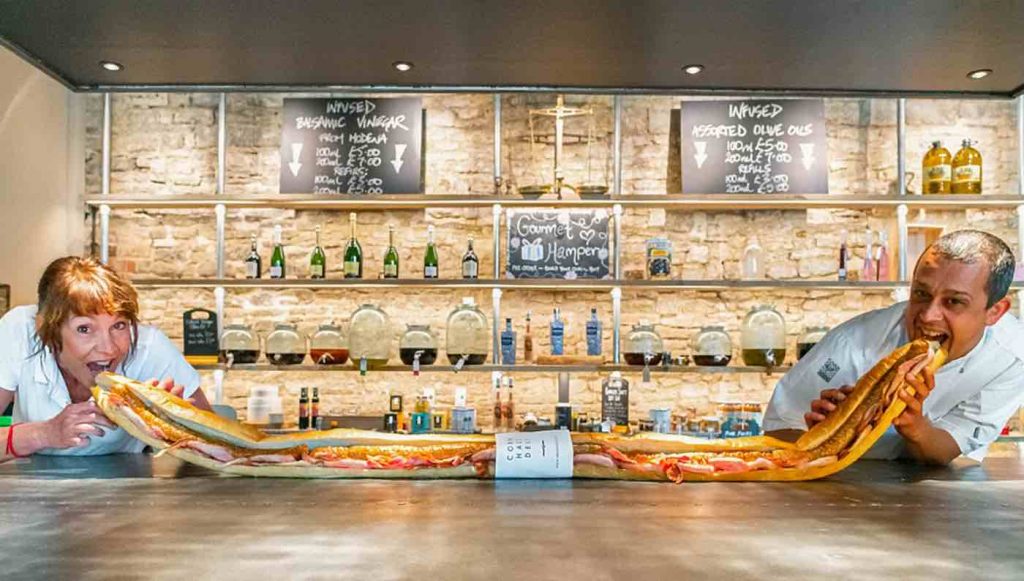
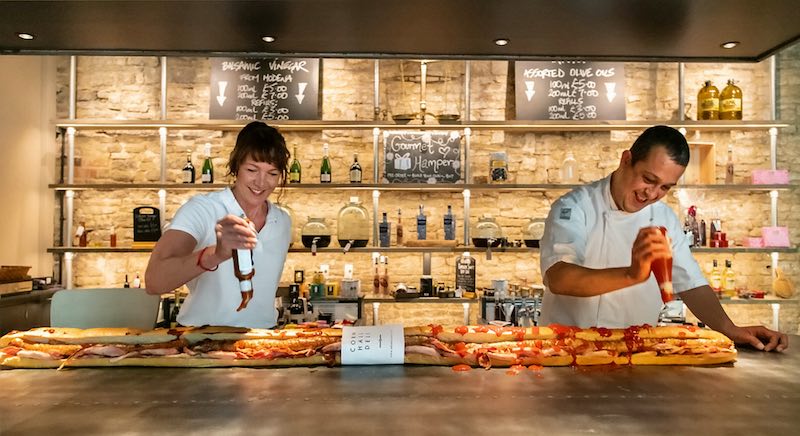
This savvy English chef has come up with a unique lunch special for people who may be reluctant about returning to work: a ginormous socially-distanced sandwich.
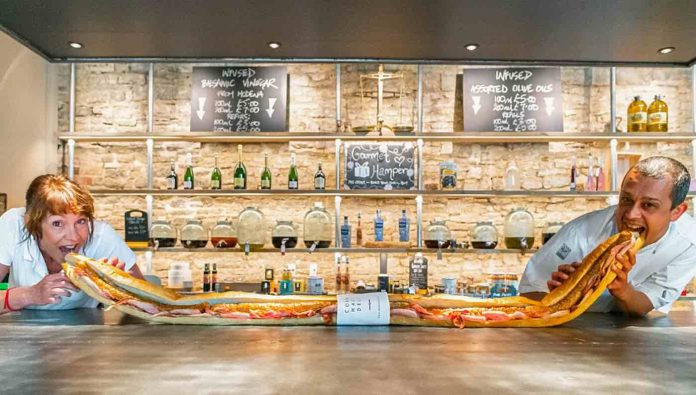
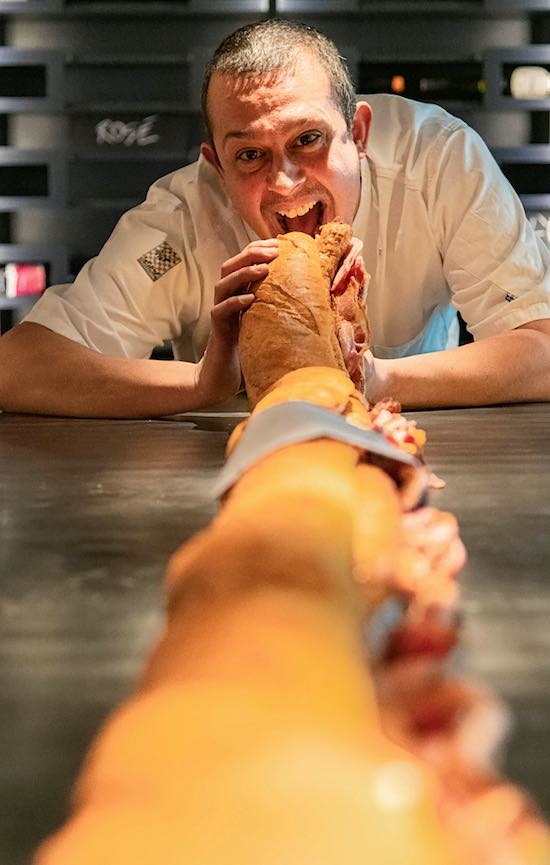
Measuring in at 6.5 feet (2 meters) long, the massive bacon and sausage baguette is now being sold for £20 since it was dreamt into existence by chef Ethan Rodgers earlier this week.
The “Back to Work Baguette” sandwich was created with the help of a butcher, bakery, deli, and restaurant in Cirencester, Gloucestershire.
The sarnie is meant for two people who want to share lunch while still following social distancing guidelines.
Staff at Corn Hall Deli with the massive sandwich — SWNS
“We have been asked a lot since measures started to ease about sandwiches and take away and we were able to do take away coffees,” said Rodgers. “[But] this is a fun example of what we are doing here.
“The hospitality industry will be the last to reopen, with talk of July, so we have had to diversify,” he added. “We are doing a grocery delivery service for the remote villages, my chef team are making ready meals and pastries that are available from the restaurant and deli every day.”
Until the social restrictions are actually lifted, Rodgers has been happy to share the “Back to Work Baguette” sandwich with the staffers at Cam Butchers, Halls Bakery, Corn Hall Deli, and MBB Brasserie who made it happen.
Regardless of whether the restaurant’s patrons will actually order the monster sandwich in the future, we’re simply happy to applaud the chef for his creativity.
Need more positive stories and updates coming out of the COVID-19 challenge? For more uplifting coverage, click here.
Staff at Corn Hall Deli with the massive sandwich — SWNS
Serve Up Some Positivity To Your Friends By Sharing This Amusing Story To Social Media…
Earlier today, the world’s largest all-electric commercial aircraft successfully completed its first test flight—and it is being hailed as a significant milestone in disrupting the transportation industry and accelerating the electric aviation revolution.
The all-electric Cessna Grand Caravan 208B was designed by electric aviation company magniX in partnership with AeroTEC, a leading independent company focused on aerospace testing, engineering and certification.
The successful flight of the 9-passenger eCaravan, magnified by a 750-horsepower (560 kW) magni500 propulsion system, took place at the AeroTEC Flight Test Center at the Grant County International Airport (KMWH) in Moses Lake, Washington this morning.
“The iconic Caravan has been a workhorse of industry moving people and transporting goods on short routes for decades,” said magnix CEO Roei Ganzarski. “This first flight of the eCaravan is yet another step on the road to operating these middle-mile aircraft at a fraction of the cost, with zero emissions, from and to smaller airports. These electric commercial aircraft will enable the offering of flying services of people and packages in a way previously not possible.”
Although the eCaravan is being hailed as the largest all-electric commercial aircraft, magniX was also responsible for launching the world’s first all-electric commercial aircraft back in December 2019.
Now, the flying of the eCaravan serves as another critical step in the certification and approval process of the magni500 propulsion system, enabling future conversions of additional aircraft to magniX’s all-electric propulsion technology.
Photo by magniX
“I’m proud of the pioneering work performed by our engineers, technicians and flight test team,” said Lee Human, President and CEO of AeroTEC. “There’s no roadmap for testing and certifying electric aircraft—this is a new frontier and AeroTEC is on the front lines developing the processes and best practices that will pave the way for electric aviation.”
The historic flight was captured via livestream and watched by social media users around the world.
(WATCH the livestreamed flight footage below)
Fly This Exciting News Over To Your Friends By Sharing It To Social Media…
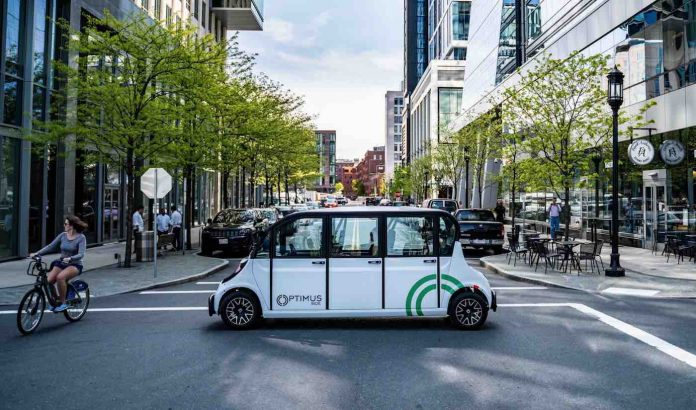
In what is being hailed “the ultimate form of social distancing”, a trio of autonomous cars are set to begin delivering thousands of meals to families suffering from food insecurity in Washington DC.
Optimus Ride, a startup that specializes in developing driverless vehicles for urban transportation, has announced that they will be deploying three of their cars for contactless grocery deliveries to low-income households in Southeast DC.
The initiative, which is being spearheaded by real estate company Brookfield Properties, is expected to deliver 5,000 meals every week. The meals are being doled out in the form of “One-Week Boxes” containing enough nutritious ready-made meals and ingredients to feed an adult three times a day for seven days at a time.
According to Venture Beat, the meals are being sent to at-risk recipients identified by homelessness nonprofit Pathways to Housing and to the local Van Ness Elementary School.
Although the cars will require disinfection in between each use, the project is expected to decrease the risk of COVID-19 transmission.
Prior to the onset of the pandemic, Optimus Ride had been developing their autonomous vehicle operations in The Yards neighborhood of DC with the aim of one day offering transportation services to the residents—but until the outbreaks subside, the startup has been using their driverless cars to deliver essential items to communities with high risk of infection.
“Our strategy has proven to be highly tractable, as Optimus Ride is one of the first commercially operational self-driving technology companies in the world, with deployments in Maryland, California, Virginia, and New York,” reads an Optimus Ride blog post. “While our initial focus has been on moving passengers, we also developed an initial pilot for self-driving delivery of pharmaceuticals. Our goal at the time was to identify efficiency opportunities during off-peak hours, but in doing so we found a strong and positive response, particularly from our senior community members.
“Along with many other companies and institutions, we have been closely monitoring the pandemic from its early days through its global spread. In keeping with guidance from health and state officials, we transitioned the company from optional work-from-home to mandatory. On Monday, March 15th, we mutually decided with our partners to pause passenger operations in all of our sites … It was the responsible thing to do considering the situation.
“After pausing operations at … [a California nursing home], we received an urgent request from their management to assist with evening meal delivery as residents were no longer allowed to congregate in the dining hall. Our team sprang into action, and after some rapid planning, preparation and taking all possible precautions, we adapted our services for meal delivery. On that evening we delivered 46 meals, and since then have continued delivering 50-80 meals per day.
“It is responses like these that have made our team feel our work is more meaningful than ever, and we will continue with our meal deliveries for [the nursing home] while the situation is still ongoing.”
Need more positive stories and updates coming out of the COVID-19 challenge? For more uplifting coverage, click here.
Drive Your Friends To The Good News By Sharing This Exciting Story To Social Media…
This 6-year-old pup has proven that anything is possible if you put your mind to it—or in this case, your mouth.
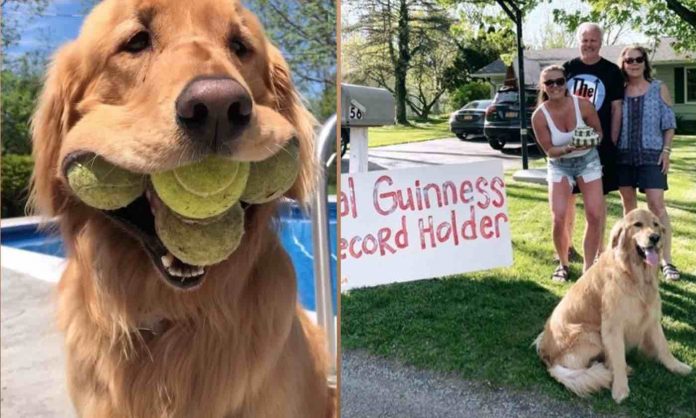
Earlier this week, Finley the Golden Retriever broke the Guinness World Record for the most tennis balls held in a dog’s mouth at one time.
According to his human companion Erin Molloy, Finley has been picking up tennis balls since he was just 2 years old—and after honing his craft for much of his young canine life, he eventually succeeded in working his way up to carrying six tennis balls at a time.
Back in 2018, Molloy created an Instagram account to share her pup’s talent with the world. In addition to racking up more than 36,000 followers, Molloy discovered that the Guinness World Record for dogs carrying tennis balls in their mouthes was held by a canine who was recorded holding just five tennis balls.
Determined to solidify her dog’s place in history, Molloy spent months gathering together the necessary evidence to prove that Finley broke the record. She told the Democrat and Chronicle that she had even gone to far to measure the size of each tennis ball and collect witness statements from her neighbors in Canandaigua, New York.
After a year of hard work, Finley was finally confirmed as the world record holder this week—and social media users have hailed the accomplishment as a welcomed break from the torrential stream of pandemic news updates.
“It’s lifting people’s spirits more than we had ever expected or hoped for, which is really fulfilling,” Molloy told the news outlet. “And it’s really rewarding knowing that something as simple as a good boy is making people smile all over the world.”
Local Muslims asked if they can use the car park for prayers in order to maintain distancing per regulations. And Ikea said yes pic.twitter.com/6EDLmjkY9I
An IKEA outlet in Germany is being praised for opening up its parking lot to local Islamic communities so they could celebrate the end of Ramadan while still respecting social distancing guidelines.
Although the nation suspended religious services back in March as a means of curbing the COVID-19 outbreaks, they recently started allowing worshippers to gather in groups of up to 50 people at a time.
These restrictions have prevented many Muslim communities from attending prayer services during the holy month of Ramadan. This weekend in particular was Eid al-Fitr, the holiday marking the end of the month of fasting.
So as a means of bringing his community together for the traditional Eid prayers and celebration, Kadir Terzi—who is the chairman of the Ditib Wetzlar mosque near Frankfurt—approached the management of a local IKEA and asked if they could host their service in the parking lot.
Although Terzi told BBC that he had not been anticipating much success with the proposition, “the store manager didn’t hesitate for a second and said ‘yes, you can pray’.”
“I was surprised and happy at the same time,” Terzi concluded.
Terzi then posted an open invitation to the service on social media and reminded attendees to wear face masks, leave their children at home, and maintain at least six feet of social distance.
More than 800 Muslims ended up attending the prayers—and the photos of the event are breathtaking.
“It was a completely different Ramadan month, without contacts, without visits and without breaking the fast together,” Terzi told the news outlet. “[So] the closing prayer with all Muslims in Wetzlar was like a reward for us.”
Need more positive stories and updates coming out of the COVID-19 challenge? For more uplifting coverage, click here.
(WATCH the video below)
Multiply The Good News By Sharing It With Your Friends On Social Media…
Quote of the Day: “If you are distressed by anything external, the pain is not due to the thing itself but to your own estimate of it; and this you have the power to revoke at any moment.” – Marcus Aurelius
Photo: copyright MCC
With a new inspirational quote every day, atop the perfect photo—collected and archived on our Quote of the Day page—why not bookmark GNN.org for a daily uplift?
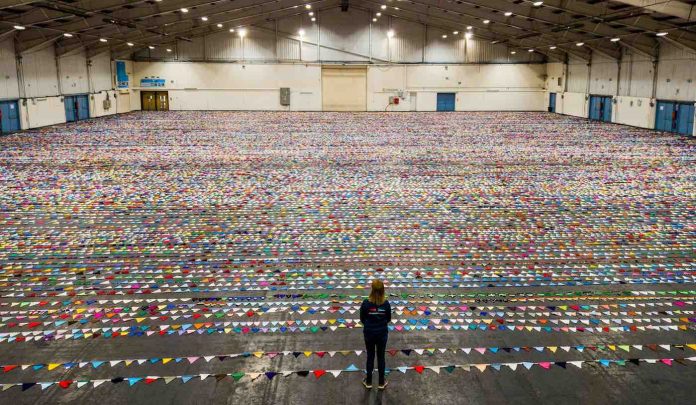
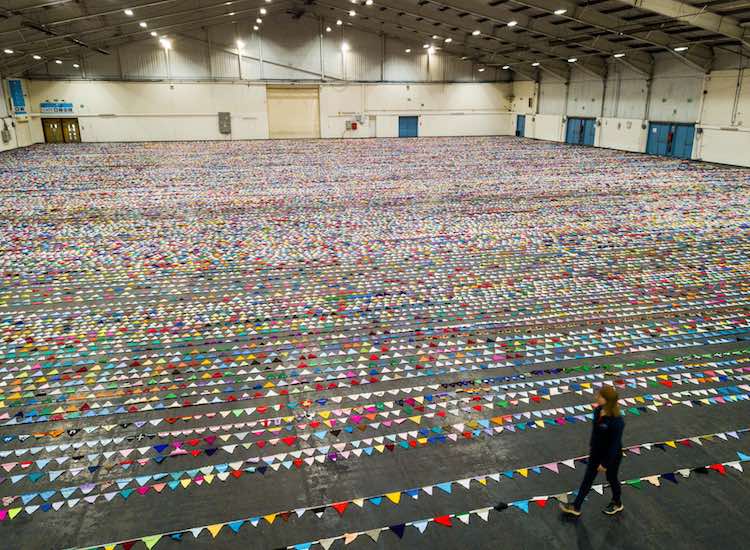
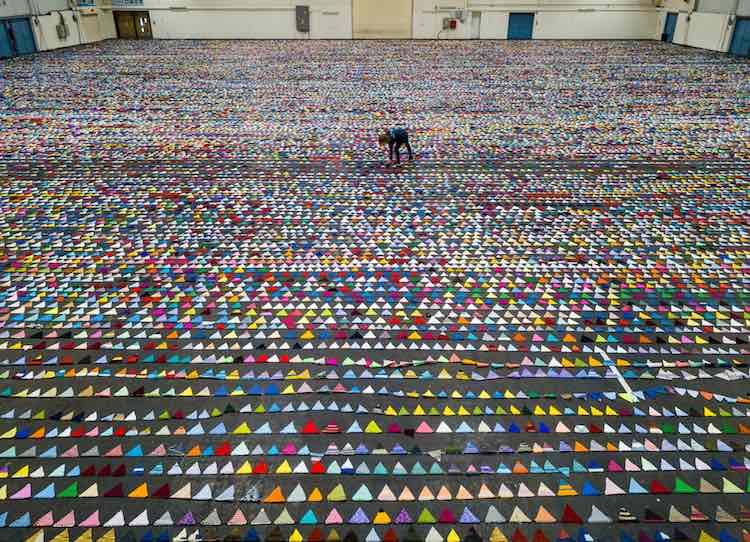
Needleworkers and craft enthusiasts from all over the world have used their time in quarantine to help break the world record for the longest “bunting”—a form of decorative stringed flags popular in the UK.
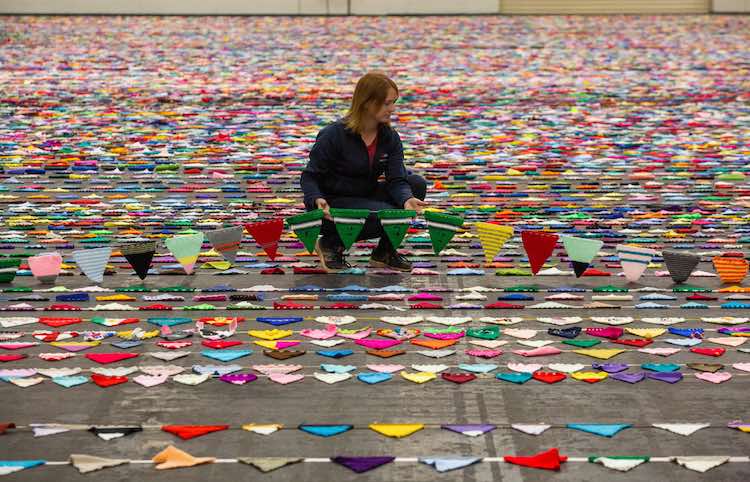
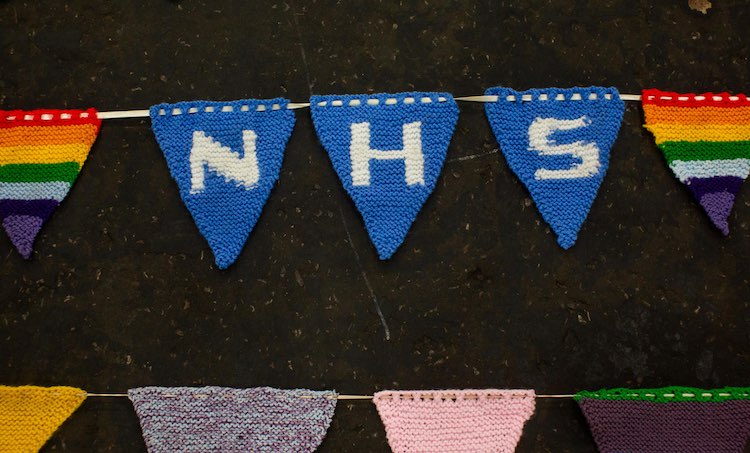
The record-breaking swath of bunting—which is depicted in these stunning aerial drone photos—is made of 79,001 flags stretching 9 miles long (14.27 kilometers). All of the knitted flags were submitted to the project by contributors from around the globe.
The bunting measures almost double the existing Guinness World Record, which was held by Upton House with 31,119 flags at 4.6 miles (7.5 kilometers) in length.
SWNS
The flags were brought together by staff at the Devon County Show, which was due to be held this week, but was cancelled due to the novel coronavirus outbreaks. The continuous line of bunting was laid out over two days with each pennant no more than two inches apart, covering the 4,590-square-meter floor space of Westpoint Area in Exeter, Devon.
Deborah Custance Baker, who is chief steward for crafts and gardens at the Devon County Show, came up with the idea and lodged the attempt with Guinness World Records.
“The crafts and garden marquee is one of the most popular sections at Devon County Show and all of our stewards and visitors are really hands-on,” said Baker. “Every challenge we’ve set them so far they’ve not only succeeded in achieving, but have blown our expectations out of the water. The bunting is no exception.”
SWNS
While some of the fancier flags were decorated with flowers and patterns, many of the little triangles depict encouraging messages for the NHS.
“We do know that this is partly to do with lockdown,” says Baker. “Many of our contributors have commented on how knitting has really helped them through this difficult period of self-isolation by giving them a sense of purpose.
“Several who had committed to making just a few suddenly found they had both the time and inclination to double, even triple their original pledges.
“We cannot believe people’s dedication and commitment to the task. We thought we might just beat the existing record but doubling it is a truly astonishing feat.”
SWNS
“We originally wanted to do the stringing and measuring at Exeter Cathedral with as many contributors who wanted to help as possible,” she continued. “As it was, we weren’t able to do this. I’ve had to have all the bunting delivered to me at home, and I’ve literally been drowning in it, and done all the stringing myself.
“Westpoint seemed like a great alternative to measure the record. It’s an enormous, covered event venue, which due to the pandemic, is currently not in use and has enabled us to lay out the bunting, which has taken a full two days, whilst remaining compliant with social distancing regulations.”
SWNS
Now that the bunting has been measured, all the documentation will be submitted to Guinness World Records and verified before the record can be made official.
“The local community will be invited to see the record-breaking bunting in its full glory on designated evenings throughout the summer.
“They will be offered the opportunity to purchase sections of the bunting to help raise funds for the Devon County Show’s charity of the year, farming charity The Addington Fund. The bunting will also be donated to local causes.”
SWNS
Festoon Your News Feed With This Fantastic Achievement By Sharing It With Your Friends On Social Media…
While many seniors have been forced to wait out the COVID-19 outbreaks in isolation, these retirees have managed to find connection and comfort through the airwaves.
Radio Recliner is an online pirate radio station that is hosted exclusively by elderly DJs from assisted living communities across the United States.
The project was launched by marketing firm Luckie back in April as a means of keeping lonely seniors entertained and optimistic during the pandemic.
The company only planned on airing new 60-minute shows every day for one month—but since the station has garnered more and more listeners, Radio Recliner has also attracted a team of 18 senior DJs to continue recording new segments.
In addition to new shows being aired every day at noon, the station now streams a continuous loop of old content to keep its fanbase entertained. On the Radio Recliner website, listeners can also submit song requests and ask the hosts to broadcast audio messages and shoutouts to friends and family members.
“For this generation, radio was the original social media,” Luckie chief creative officer Mitch Bennett told The Tennessean. “Dedicating a song to someone you love, and having them hear it along with everyone else, is a special way of connecting. It’s a great time to bring that feeling back.”
Need more positive stories and updates coming out of the COVID-19 challenge? For more uplifting coverage, click here.
(WATCH the news coverage below)
Help Your Friends Hear About The Good News By Sharing This Awesome Story To Social Media…
Scientists have finally succeeded in recording the various calls, buzzes, clicks, and whistles of the creature affectionately dubbed the “unicorn of the ocean”: narwhals.
The recordings help scientists better understand the soundscape of Arctic glacial fjords and provide valuable insight into the behavior of these shy and mysterious creatures, according to the researchers.
Narwhals are difficult to study because they are notoriously shy and skittish and spend most of their time deep in the freezing Arctic Ocean. They tend to summer in glacial fjords around Greenland and Canada, but scientists often have trouble getting close enough to study them. Glacier fronts can be dangerous and hard to access, and the animals tend to swim off when approached by motorized boats.
Luckily for the researchers, Inuit hunters familiar with the mysterious cetaceans are capable of getting close to the animals without disturbing them.
In July 2019, researchers accompanied several Inuit whale hunting expeditions in Northwest Greenland to study the narwhals that summer there in more detail. Using underwater microphones attached to small boats, the researchers captured narwhal social calls and foraging sounds, getting as close as 25 meters (82 feet) to the elusive cetaceans.
The recordings help the researchers provide a baseline of the kinds of sounds that permeate the narwhals’ pristine habitat. In combination with sightings, they also show narwhals get closer to glacier ice than previously thought for this area and the animals do forage for food in summer, contrary to some previous findings. The researchers’ findings were published this week in AGU’s Journal of Geophysical Research: Oceans.
“Their world is the soundscape of this glacial fjord,” said Evgeny Podolskiy, a geophysicist at Hokkaido University in Japan and lead author of the new study. “There are many questions we can answer by listening to glacier fjords in general.”
Researchers and Inuit hunters approach Bowdoin Glacier in northwest Greenland. Photo by Evgeny Podolskiy.
Getting close
Podolskiy and his colleagues had been working in Greenland fjords for several years, studying the sounds made by melting glaciers. Coincidentally, a population of narwhals summers in the fjords they were studying, and Podolskiy saw an opportunity to study the wily creatures.
“I realized working in the area and not paying attention to the elephant in the room—the key endemic legendary Arctic unicorn just flowing around our glacier—was a big mistake,” he said.
The researchers tagged along on several Inuit hunting expeditions departing from the village of Qaanaaq, placing microphones underwater and recording the baseline sounds of the fjord.
They captured several types of sounds made by narwhals, including social calls—or whistles—and clicks used for echolocation, the biological sonar used by dolphins, bats, some whales and other animals to navigate and find food.
The closer narwhals get to their food, the faster they click, until the noise becomes a buzz not unlike that of a chainsaw. This terminal buzz helps the narwhals pinpoint the location of their prey.
“If you approach and target these fast fish, you better know precisely where they are; you need to gather this information more frequently,” Podolskiy said.
Few studies have documented narwhals feeding in the summertime. Because the microphones picked up terminal buzz, a sound associated with finding food, the new study provides further evidence that narwhals do forage in summer.
Surprisingly, the researchers found narwhals come roughly within 1 kilometer (half a mile) of a glacier calving front, despite the fact that these areas are some of the noisiest places in the ocean and calving icebergs can be dangerous.
“There is so much cracking due to ice fracturing and bubbles melting out… it’s like a fizzy drink underwater,” Podolskiy said. “It seems we are dealing with animals living in one of the most noisy environments without having much trouble with that.”
In a historic milestone for the LGBTQ community, Costa Rica just hosted the first legally recognized same-sex wedding ceremony in Central America.
Alexandra Quiros and Dunia Araya were the first couple to tie the knot after their wedding was officiated just as Costa Rica’s legislation for allowing same-sex marriage passed into effect at the stroke of midnight.
According to BBC, the ceremony was aired on national television following a 3-hour broadcast on the importance of marriage equality.
The nation’s constitutional court first ordered parliament to strike down their laws against same-sex marriage back in August 2018 after ruling that the ban was unconstitutional.
Thanks to the newly-passed legislation, Costa Rica has joined the ranks of other South American countries—such as Argentina, Brazil, Colombia, Ecuador, and Uruguay—which have granted equal marriage rights to LGBTQ couples.
“Costa Rica officially recognizes equal marriage,” tweeted Costa Rican President Carlos Alvarado. “Today we celebrate freedom, equality and democratic institutions. May empathy and love be the compass that allows us to get ahead and build a country where all people fit.”
(WATCH the news coverage below) – Feature photo by AFP
Multiply The Love By Sharing This Historic News With Your Friends On Social Media…