









Quote of the Day: “The summer night is like a perfection of thought.” – Wallace Stevens
Photo by: benjamin lehman
With a new inspirational quote every day, atop the perfect photo—collected and archived on our Quote of the Day page—why not bookmark GNN.org for a daily uplift?
Happy 50th Birthday to the “coolest, weirdest, and savviest rock stars of our time,” Jack White. Born in Detroit, his run of work with the White Stripes, Raconteurs, Dead Weather, and through to his solo work catapulted him to superstardom in the hearts of angsty teens and aging rockers alike. Much the way his fan base spanned generations, White created much of his brilliant music by connecting aspects and flavors of many great American genres from blues and Americana to punk rock. He did it with soul, and without irony; without a hint of throwback Thursday to any of it, and with complete authenticity. READ a bit more… (1975)
The hedgehogs and the tube that rescued them - credit SWNS
The hedgehogs and the tube that rescued them – credit SWNS
Using a vacuum and some plastic tubing, rescuers MacGyvered a device to rescue two baby hedgehogs who had tumbled down a storm drain.
While the vacuum didn’t work, the tube did, and can perhaps become a standard-issue rescue device for these little critters who “love enclosed spaces.”
The story comes from the English county of Warwickshire, where a homeowner called the local hedgehog rescue charity after hearing cries of distress coming from a drain in her garden.
Arriving, rescuers discovered a baby hedgehog had tumbled 4 feet down into the drain and was trapped in a narrow underground pipe.
Firefighters were also called and tried to use a vacuum cleaner to try and suck the critter out of the drain. When that failed, the charity workers pushed an old plastic tube which had once contained a curtain into the drain.
After several minutes the stranded hedgehog crawled into the tube and rescuers were able to pull it up from the drain.
“The storm drain had been covered with chicken wire but the gaps were bigger than the hedgehog which had fallen down inside,” said Sally Ellis, a spokesperson for the charity Warwickshire Hedgehog Rescue.
“We alerted the fire service who tried to suck the hedgehog up with a hoover but that didn’t work. Eventually the woman’s son pushed a plastic curtain blind tube into the drain and the hedgehog was curious enough to get inside.”
It’s reminiscent of a recent story from Kansas, where a varmint-sized boy fell down a large PVC drain pipe buried in the earth, and had to be rescued by first responders who improvised a varmint-catching pole to haul him out of there.
The lesson: don’t leave drain pipes unattended or open, whether varmint-sized, or varmint-sized-boy-sized.
SHARE These Baby Hedgehogs Living To See Another Day On Social Media…
(left) an undated photo of Scott Ruskan (right) flooding in central Texas - credit, US Coast Guard
(left) an undated photo of Scott Ruskan (right) flooding in central Texas – credit, US Coast Guard
A little-known Coast Guard officer has been hailed as a hero after rescuing 165 people from the Texas hill country floods.
Petty Officer and rescue swimmer Scott Ruskan, a native of New Jersey, was on the scene when the Guadalupe River rose dramatically, causing flooding after 5–11 inches of rain fell in a short amount of time.
It was his first rescue mission, but he must have remained calm and reactive as he responded to search and rescue calls at Camp Mystic, a girl’s summer camp right in the path of the flooding.
Flying to the camp in a helicopter, Ruskan said he “saw a huge crowd of about 200 kids at a campsite.”
“We were like, ‘Cool, that’s where we’re going to go and get out as many people out as we can,'” Ruskan told Fox.
Later interviewed by CNN, Ruskan said the conditions for flying produced by Tropical Storm Barry were some of the worst he’s ever seen, and the pilot needed four attempts before he could land the helicopter.
Despite not knowing what was going on around him. He remained focused and led 165 people, mostly children, in groups of 10 to 15 to army helicopters which could airlift them to high ground.
Department of Homeland Security Secretary Kristi Noem called him “an American hero” in a post on X, though like all good heroes, Ruskan said he was just doing his job, one that “anyone” could have done.
CELEBRATE This Man’s On-Scene Heroics In An Otherwise Deadly Situation…
There are so many other ways it could have happened: they could have thrown away the sticky note containing Wayne Corprew’s phone number; they could have tilled the ground three inches to the left, they could have taken the ring they found to a pawnshop.
But because they didn’t, a story comes now from Virginia about a man’s wedding ring returned after he lost it chopping a Christmas tree down 15 years ago.
This remarkable “needle in a haystack” event was made possible by a bizarre level of neighborly diligence by Darren Gilreath and his wife Samantha.
The pair purchased Joe’s Trees Christmas tree farm from Darren’s aunt in 2018, and while taking over management, kept hold of every note the establishment ever received about someone losing something on the farm.
“She kept notes of anything that was lost, and we always put them on the bulletin board for a couple of years. As the years went on, we’d gather them and put them in a stack, just hoping one day that we’d find a needle in a haystack,” said Gilreath.
This random act of dedication set the stage for a remarkable reunion 15 years in the making.
In 2010, Wayne Corprew from Roanoke arrived at Joe’s Trees to pick out a tree for himself and his family. After cutting one down he removed his gloves and realized he lost his wedding band—a beautiful piece of golden waves bound by two smaller mill-marked, ringlets.
Corprew came back the next day with a metal detector, but after searching all day, the ring was still missing. He decided, after a return trip during the summer turned up nothing, to leave a note with management.
“Lost Ring Band
2010-2013
Don’t Throw Out Expensive”
As it happened, Sue, the previous owner, didn’t throw out the note, and when Samantha and Darren were hand-planting corn around their pumpkin patch, they found the ring just a few inches from the edge of where they were tilling.
They got back to the shop and saw a chance to comb through their stacks of notes.
“I called my aunt and told her about finding the wedding band,” said WDBJ 7. “She was just so tickled to know that we had found the ring after 15 years because she had told us when we bought the farm that that ring had been lost 15 years ago. She said, ‘Don’t get rid of this note, because if you ever find the ring, this guy came back looking for it, and he would love to have it back.’ So we just wanted to make sure it got back into the right hands.”
Darren called Corprew, who didn’t suspect anything after hearing it was Joe’s Trees on the line. Then he told him about the ring and he confirmed it was there that he had lost it.
“This is a great bunch of people up here. We love coming up here and getting a tree. I’m just thankful for them that they kept that note for 15 years and that they thought to call me,” said Corprew. “It goes to show that there are good people out there, and this is a great place. If anybody needs a Christmas tree or a family outing, this is the place to come. These are great people.”
WATCH the story below from WDBJ…
SHARE This Needle In A Haystack Story With Your Friends On Social Media…
A study examining mercury concentrations in the leaves of alpine plants has revealed that humanity has reduced worldwide exposure to this most toxic of heavy metals substantially.
Controlled via a UN treaty called the Minamata Convention on Mercury Emissions, mercury (Hg) enters the atmosphere through a variety of natural and anthropogenic avenues.
Artisanal and small-scale gold mining, coal burning, and cement and nonferrous metals production all release several thousands tons of mercury into the atmosphere every year.
Much like carbon dioxide, the oceans also emit mercury—between 400-1,300 metric tons per year. Terrestrial sources include volcanic eruptions and other geothermal features, the weathering of mercury-containing rocks, soil erosion, and wildfires, and contribute around the same amount as the oceans.
Anthropogenic sources, however, contribute as much as the land and oceans together; or at least they once did.
A team of Chinese scientists from schools in Tianjin, Beijing, Tibet, and Nanjing has found that Hg concentrations in the atmosphere reduced by 70% since a peak in the year 2000. For the next 20 years, the levels continually dropped, corresponding with a reduced reliance on coal for power and the implementation of the Minamata Convention in 2013.
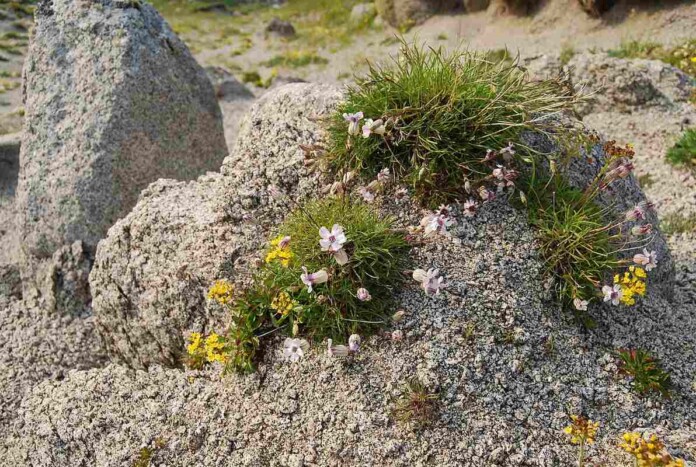
The scientists were able to calculate the past atmospheric Hg concentrations using the leaves of the flowering plant Androsace tapete on the slopes Mt. Everest atop the Tibetan Plateau. Here, exposure to atmospheric deposition is far greater than at sea level, and the plateau is a popular place for making such measurements.
Their study shows that today, there is less mercury emitted into the atmosphere by humans than by the Earth itself.
There is no safe level of mercury exposure in humans, and children are at particularly high risks.
While living around coal-burning power plants is a large risk factor for mercury exposure, small-scale or artisanal gold mining operations contribue by the most mercury into the atmosphere.
SHARE This Brilliant Down Trend With Your Friends…
Painting by Gustav Klimt - The Kiss (zoomed in and cropped)
Quote of the Day: “They do not love that do not show their love.” – William Shakespeare
Image: The Kiss by Gustav Klimt – (zoomed in and cropped)
With a new inspirational quote every day, atop the perfect photo—collected and archived on our Quote of the Day page—why not bookmark GNN.org for a daily uplift?
Painting by Gustav Klimt – The Kiss (zoomed in and cropped)
446 years ago today, the holy icon Our Lady of Kazan was found miraculously by a child under a burned house in Kazan. This palladium, this holiest of Orthodox artifacts, depicts the Virgin Mary with her son in glittering gold, and was originally acquired from Constantinople in the 13th century. But records report it being lost in 1438 after the establishment of the Khanate of Kazan. 140 years later, the icon’s location was revealed to a ten-year-old girl named Matrona by Mother Mary herself in a dream. READ more about the provenance of this holy artifact… (1579)
Out of a recent UN conference on the protection of the sea comes the news that Portugal has announced the creation of a new 38,000 square-mile marine protected area.
Established around the Gorringe seamount, technically Portugal’s tallest mountain, the decision will take the nation’s total protected territorial waters to 27%, making the small Iberian country the continent leader in protected ocean waters.
The announcement was made by the nation’s environment minister Maria da Graca Carvalho at the 3rd UN Oceans Conference in Nice. The conference focuses on implementing strategies and methods to achieve the goals set out in the 2023 High Seas Treaty, which has so far been ratified by 51 nations—9 short of entering legal force.
“In terms of marine protection we are the most advanced country in the world with our characteristics combining continental and insular territory. Certainly the leader in Europe,” Carvalho said.
The Gorringe Ridge is located about 130 miles (210 km) west of Portugal, between the Azores and the Strait of Gibraltar. It is notable for an enormous diversity of sea life, particularly “soft corals,” or gorgonians, and deep-sea sponges, which inhabit some 1,100 reefs along the ridge.
850 species have been recorded living a there by the charity Oceana, which has been lobbying for the site’s protection for years.
In a statement following a 2012 dive mission to the seamount, Oceana called the undersea ecosystem “stunning.”
“The seamounts are visited by great pelagic species, such as whales, dolphins, and swordfish,” the statement read.
“The peaks are covered by algae forests, particularly kelp. Large schools of amberjack, horse mackerel, and barracuda concentrate above the highest peaks, and detritic bottoms, covered in the remains of coral, bryozoans, and mollusks, abound in deeper areas, are inhabited by dragon fish, fan corals, pink frogmouths, and bird’s nest sponges.”
Emanuel Gonçalves, chief scientist at Oceano Azul Foundation, a separate nonprofit that mapped the area with the Portuguese navy, told Reuters that the total protected area would be around 100,000 square kilometers, enough to “connect seamounts, abyssal plains, and open ocean, and create a safe haven to highly mobile and migratory species, and deep sea habitats”.
“It will provide a fertile nursery and feeding ground for turtles, sharks, marine mammals, sea birds and tunas, expand or restore kelp and coral forests and create a sanctuary for the unique breeding aggregation of torpedo rays,” he said.
The decision also follows on from an announcement last year that Portugal intended to protect an area of water around the Azores archipelago the size of Virginia and Georgia combined.
SHARE This Great News From The High Seas With Your Friends…
Unlike its mainland cousin, this subspecies may number less than 100, and is at serious risk of being inbred out of existence. It lives high in the mountains and developed adaptations that have allowed it to do so—separating it ever-so-slightly with the lowland population.
Because it is a reclusive and small animal that lives above 6,000 feet above sea level, camera traps would be a key tool for Robbins to spot it. Where to put them, however, would be the challenge, and it required him to delve into whatever literature exists on the animal’s behavior.
“We’re a couple generations away from these foxes dying out due to inbreeding and that kind of thing, because their populations are so small,” Robbins told Fox Weather. “So I think telling their story and getting the word out is important just to sort of motivate people because people care—people want them to be saved.”
Last winter, he set one of his cameras out on a ledge in Lassen Volcano National Park—one of the animal’s last strongholds. A line of rocks jutted up on the other side of a ravine which Robbins knew the animals preferred to walk on when there is snow on the ground.
Knowing his camera would be buried by snow over the long winter at an altitude of 8,500 feet, he picked a high point, pressed record, walked back down the mountain, and waited until June when the snows melted enough for him to find his camera.
In the footage, his quarry walks into frame, sniffs the ground, walks to the edge of the ravine and looks out across a vast snow-covered landscape, sniffs the air, sits in the sun, and eventually disappears.
“It was really amazing,” Robbins said. “Normally, what you get is a quick glimpse, like you see a fox running across the screen. This was three minutes of just behavior—it was lounging in the sun and just, you know, being a fox.”
WATCH the video from Randy Robbins’ YouTube below…
SHARE Randy’s Incredible Footage And Achievement With Your Friends…
Though Afghanistan is rarely in the headlines anymore, that doesn’t mean the country has stopped making news.
From Kabul comes the story of an Indian charity that gave out prosthetic feet and lower limbs to 75 amputees free of charge thanks to help from generous Indian donors and support from the national government.
Held between June 19th and 24th at a government hospital in central Kabul, the Jaipur Foot Camp was organized by the charity called Bhagwan Mahaveer Viklang Sahayata Samiti (BMVSS) in collaboration with the Indian consulate in Kabul.
This is the 155th time the charity has organized one of these prosthesis drives in a far away country, the organization’s founder and chief patron, D. R. Mehta, told GNN.
“Irrespective of where the amputee is from, if the amputees visit us at our Jaipur Foot Center, they would be provided with an artificial limb totally free of charge and without any discrimination on the ground of religion,” said Mr. Mehta.
Jaipur Foot centers have been established across the Global South, in countries like Mauritius, Congo, Philippines, and Tanzania.
They not only offer the prosthetic free of charge, but a raft of support measures like physical training and rehabilitation to get the patients used to walking with it, as well as emotional support for wounds that can’t be bandaged.
In Kabul, BMVSS also organized training for local hospital staff in the procedure for measuring, creating, and fitting a prosthetic, while the Indian volunteers provided the hospital with the machines and materials needed to create the simple, effective prosthetics.
The initiative is part of a larger framework of humanitarian aid to Afghanistan, which includes food, medicines, scholarships, and capacity-building programs, Times of India reports.
SHARE This Heartwarming Effort To Help The War’s Forgotten Victims…
Harold Davisson created ‘world's largest’ time capsule in Seward, Nebraska -1975 photo courtesy of Nebraska State Historical Society
Harold Davisson created ‘world’s largest’ time capsule in Seward, Nebraska -1975 photo courtesy of Nebraska State Historical Society
50 years ago, a man invited the nation to deposit whatever they liked into a large concrete tomb for what he called the creation of the “World’s largest time capsule.”
50 years later, as heirs, descendants, and children all grown up watched the large concrete vault crack open last week, they realized what a brilliant idea it was.
The items went on display last Friday in Seward, Nebraska, where Harold Davisson lived and created the time capsule. His daughter, Trish Davisson Johnson, was there as the master of ceremonies, carrying out her father’s vision for the grand opening.
Inside was a bewildering, yet understandable collection of objects. Stacks of letters and boxes, casette tapes made with personal recordings, pet rocks (which were all the rage back then), a groovy, teal, patterned suit, and even an entire yellow Chevy Vega wrapped in a plastic tarp.
People came from all around the country to collect or search for personal items left to them by themselves or their parents, from Virginia to Colorado.
“This is the culmination of 50 years of planning on the part of my father,” Johnson said. “There were packages from, I’m going to say, 3,000 people, letters and packages, letters to themselves, letters to the grandchildren, letters to their heirs.”
NBC News’ Maya Eaglin was there reporting on the opening, when a large concrete pyramid, sealing over the capsule as if it were the sarcophagus of a pharaoh, was removed with a crane. The pyramid was added later when the world record agency informed Davisson the Seward time capsule was no longer the world’s largest.
“My parents didn’t think that they would be here 50 years later to retrieve it with us,” said Stephanie Fisher, who travelled from Colorado to retrieve a casette tape with a message from her mother.
“So it’s pretty special to know that their voices [are] in there that I haven’t heard in a long time.”
Davisson executed the project well; building a ventilation system to prevent mold growth which went a long way towards preserving some items. His daughter suggests that probably 80% of everything put inside was retrievable and intact.
Chris Galen, arriving from Virginia in a Johnny Quest t-shirt, recognized his mother’s handwriting, and opened a letter that wished him a happy education, career, and life.
“It’s not about what’s inside of it. It’s about what’s inside of us and who we were back in ’75 and who we are today,” he said
WATCH the story from NBC News…
OPEN Up Your Day By Sharing This Incredible Story On Social Media…
Quote of the Day: “I feel… the negative part of you is like a battery: you’ve got to have the negative and the positive in order to be a complete person.” – Dolly Parton
Photo by: Dimmis Vart
With a new inspirational quote every day, atop the perfect photo—collected and archived on our Quote of the Day page—why not bookmark GNN.org for a daily uplift?
The Three Tenors in Concert, Decca Classics, fair use
35 years ago today, The Three Tenors performed live for the first time at the Baths of Caracalla in Rome. The recording made from the show became the best-selling classical album of all time, while an astonishing 800 million people around the world watched the live broadcast. It was on the eve of the 1990 FIFA World Cup Final, and Luciano Pavarotti, Placido Domingo, and Jose Carreras gave voice to the orchestra of the Rome Opera House for the performance of multiple lifetimes. READ what happened next… (1990)
Groundbreaking research by the University of Sydney has identified a new brain protein involved in the development of Parkinson’s disease and a way to modify it, paving the way for future treatments for the disease.
With the aim of finding new treatments to slow or stop its progression, the research team has spent more than a decade studying the biological mechanisms underpinning the condition—which is the second most common neurological condition after dementia.
In 2017, they identified for the first time the presence of an abnormal form of a protein—called SOD1—in the brains of patients diagnosed with Parkinson’s disease.
Normally, the SOD1 protein provides protective benefits to the brain, but in Parkinson’s patients it becomes faulty, causing the protein to clump and damage brain cells.
The newest study by the same team, led by Professor Kay Double from the Brain and Mind Centre, was just published in Acta Neuropathologica Communications. It found that targeting the faulty SOD1 protein with a drug treatment using copper improved the motor function in mice.
“We hoped that by treating this malfunctioning protein, we might be able to improve the Parkinson-like symptoms in the mice we were treating – but even we were astonished by the success of the intervention,” said Professor Double in a media release.
“All the mice we treated saw a dramatic improvement in their motor skills, which is a really promising sign that it could be effective in treating people who have Parkinson disease too.
The study involved two groups of mice with Parkinson-like symptoms. One group was treated with a special copper supplement for three months, while the other received a placebo.
Throughout the study (which was partly funded by the Michael J. Fox Foundation), the mice receiving only the placebo saw a decline in their motor symptoms. The mice receiving the special copper supplement, however, did not develop movement problems.
“The results were beyond our expectations,” said Prof. Double. “They suggest, once further studies are carried out, this treatment approach could slow the progression of Parkinson’s disease in humans.”
At present there is no known cure and only limited treatments for Parkinson’s disease, which is a degenerative disorder in which dopamine-producing cells in the brain die, leading to a range of symptoms including tremors, muscle stiffness, slow movement and impaired balance.
But researchers hope understanding the causes of the disease will lead to improved treatments.
“As our understanding of Parkinson’s disease grows, we are finding that there are many factors contributing to its development and progression in humans – and faulty forms of the SOD1 protein is likely one of them.
“Just as researchers found with HIV, Parkinson’s disease is a complex condition that likely requires multiple interventions. A single treatment may have a small effect when used alone but, when combined with other interventions, contributes to a significant overall improvement in health.”
The researchers’ next step is to identify the best approach to targeting the faulty SOD1 protein in a clinical trial, which could be the start of a new therapy to slow the development of Parkinson’s disease.
CELEBRATE THE BREAKTHROUGH By Sharing on Social Media…
Baby hare survives thanks to farmer’s pocket knife – SWNS /
Baby hare survives thanks to farmer’s pocket knife – SWNS / Scottish SPCA
A newborn baby hare survived after a farmer performed an emergency Caesarean section, using his pocket knife.
Robert Craig had been collecting his forage crops to turn them into livestock feed when he accidentally struck a hare with his machinery in a Scottish field near Dumfriesshire. He jumped down to inspect the animal and says he sadly found it was killed.
“But then I saw her stomach move and knew instantly she was pregnant, and I had to act quickly to give the babies a chance at life,” Mr. Craig told SWNS news agency.
He then delivered two tiny babies by the side of the road.
“I carefully cut it open and saw the babies. I gave them a gentle swing to clear out any mucus, just like you would with newborn lambs,” explained the farmer.
“Then I started rubbing their bodies to try and get them breathing, and sure enough, they gasped and came around. So, I stopped working, got them warmed up, and called the Scottish SPCA.”
One of the newborn leverets survived and was named Bruno by the Scottish SPCA staff for “his fighting spirit”. He’s now making a remarkable recovery at the charity’s National Wildlife Rescue Centre.
Animal Rescue Officer Emma Totney, who attended the scene, said: “When I arrived, I was surprised by how alert and energetic the baby was. It was a huge relief. He soon was feeding well and already showing signs of real fight.”
Bruno was immediately transferred to Fishcross, where the Scottish SPCA’s wildlife team provides round-the-clock care for orphaned and injured animals.
“We stopped a couple of times on the journey for feeding, and each time he did brilliantly.
Bruno the baby hare – SWNS / Scottish SPCA
“He was smaller than we’d expect for a newborn, but he’s a little miracle.
“It’s heartwarming to know that thanks to a kind-hearted farmer, this little miracle will get the chance to return to the wild and live a full life.”
Bruno weighed just 80g – well below the typical 100-130g birth weight for a newborn hare.
Wildlife assistant Shauni Stoddart, who has been caring for Bruno, said he is gaining strength.
“Due to his unique circumstances, he was hand-reared at home for the first five days to minimize stress,” explained Shauni, who said he now weighs more than nine times his birth weight—and has begun eating independently.
Bruno after weeks of care –SWNS / Scottish SPCA
The team is optimistic that Bruno will be ready for release in the coming weeks, provided his progress continues.
“It’s been an emotional journey for everyone involved but seeing him grow stronger every day is so rewarding.”
The most quintessential sensations of summer are smelling a grill, relaxing at the beach, and diving into a swimming pool, according to a new survey.
The nationally representative poll of 2,000 American grill owners found that time near the water (68%) and pool hangs (68%) top the list of iconic summer ‘feels’—with the scent of cooking over the grill (87%) coming in at number one.
So it’s not surprising that the things they’ve been anticipating the most are soaking in as much time outside as possible and hosting backyard parties and cookouts—with Gen Z being particularly stoked about backyard cookouts (59%) compared to the average of every generation (46%).
Not heating up the house during the hottest months and enjoying time spent outdoors means that almost two-thirds of respondents (61%) plan to grill meals at least once a week during the summer—and 69% said they’re motivated to cook outside because they simply enjoy all the smells wafting off the grill.
Conducted by Talker Research on behalf of Tyson Foods, the poll found that more than half (53%) are working on leveling up their grill-master skills this summer.
Grillers reported they’ve already spent three hours in the last month consuming grilling content in hopes of improving their skills—and said they are hoping to perfect their ribs (28%), grilled chicken (27%) and brisket (25%) recipes this summer.
Asking what they’ve been cooking so far this summer, classics like hamburgers (82%) and hotdogs (73%) are prevalent, but also fancy fare like steaks (74%) and seafood (36%).
One- third of respondents said they’re likely to toss literally anything that’s “grillable” on the grill.
The Fourth of July was the biggest grilling event of the year for 60% of those polled. Independence Day menus were planned to feature the classics—along with side dishes that included potato salad (56%), chips (51%) and baked beans (50%) as the favorites.
Half of those polled said they would be “let down” if their Fourth of July gatherings were missing the burgers, dogs, or wings—but, we hope the grillers threw on a couple veggie patties if they weren’t sure about the tastes of all their guests.
The smell of a grill (87%)
Spending time at the beach or lake (68%)
Swimming in a pool (68%)
Driving with the windows open or the top down on a car (58%)
Going to fairs or festivals (52%)
Staying up late at night (49%)
The smell of sunscreen (45%)
Chasing fireflies (24%)
Quote of the Day: “I never knew whether to pity or congratulate a man on coming to his senses.” – William Makepeace Thackeray
Photo by: Austin Distel
With a new inspirational quote every day, atop the perfect photo—collected and archived on our Quote of the Day page—why not bookmark GNN.org for a daily uplift?
Happy 90th birthday to His Holiness the Dalai Lama. Born in Taktser, China, and named at a young age to be the 14th Dalai Lama of Tibet, he also became a spiritual guide for non-Buddhists—especially as the author of several best-selling books on happiness. He is also the subject of a 2020 film, The Dalai Lama – Scientist, an award-winning documentary about the little-known side of him that is always in pursuit of science, which is available for rent or purchase. WATCHa 2020 BBC interview… (1935)

Josh Duff escorted to prom by 1500 bikers in England – SWNS
More than a thousand motorcycle riders answered the call to escort a bullied teenager to his prom, forming a spectacular convoy.
As a result, Josh Duff made an incredible entrance arriving to his prom last week.
According to SWNS news agency, the 16-year-old from Swindon, England had been struggling at school after not fitting in due to learning difficulties.
So his motorcycle-loving dad, Craig, sought support from a local biker group to cheer up his son.
The family was overwhelmed—and Josh was “over the moon”—when around 1,500 compassionate bikers showed up.
Wearing a one-of-a-kind black suit made by his mom, Josh said, “I never in my wildest dreams imagined this many bikers would be in one place for one person.
“It’s insane, I’m still in shock. I used to say I felt alone, but I don’t feel that way anymore.”
The family expected around 50 bikers to show up on Friday but were overwhelmed by the response.
Josh Duff escorted to prom by 1500 bikers in England-SWNS
The bikers then lined up to take photos, shake Josh’s hand, and pass on some kind words. Others brought birthday cards for the lad who turned 16 the next day.
“The last three years were very difficult for Josh, but he kept going, did his exams, and now he’s all done,” said his mother, Frances. “We can’t thank Swindon enough, I’m so emotional.
“As I turned the corner and saw everyone—and I heard ‘this is for your boy’—I was speechless.”
Onlookers eagerly snapped photos of the enormous crowd of leather-clad bikers gathering.
“I know bikers are family, but this is extraordinary; we’ve had messages from all corners of the globe.
“Bullying is prevalent in all schools, but SEN children (Special Educational Needs) have the worst experiences because there’s not enough understanding (of their situations). I hope this changes things.”
Josh has epilepsy and autism, but wants to become a pediatric therapist so he can help other kids like him. After the strong showing of support last week, the parents set up a modest GoFundMe page to help fund his future, with 1,500 raised so far.
“The love and support from this community [and] the stories we have heard from people reaching out to us because they—or their children—were bullied as well, it’s overwhelming,” said his proud father.