Two South Florida teens with a penchant for volunteering have used their IT skills to build an app that facilitates the donation of pizzas from local restaurants to local charities.
It streamlines the donation process, allowing anyone to send fresh pizzas from any nearby restaurant to any nearby charity of their choice.
Designed 2 years ago by 8th grader Aashrita Kaza and her brother Anish, the Pizza for a purpose app has led to the donations of 25,000 slices of pizza to food insecure families in places like Broward County.
“The reaction really warms our hearts, their faces just light up the second they get the pizza,” Aashrita told CBS News for the ‘Miami Proud’ segment. “It’s very rewarding because it makes everything we do worth it.”
The idea first came to the siblings when volunteering at local charities. They had some understanding that there are adults who can’t always afford fresh pizza, but what really drove them on was seeing food insecure children as well, something they admitted they didn’t know existed in 21st century America.
Pizza for a Purpose is available on the Apple App Store.
WATCH the story below from Miami Proud…
SHARE These Two Teens Brilliantly Tackling Food Insecurity In Florida…
9 months ahead of schedule, and surviving attempts in both Trump Administrations to cut its budget in half, the Nancy Grace Roman Space Telescope soared into space on Sunday afternoon aboard a SpaceX Falcon Heavy rocket launched from Cape Canaveral.
Designed to compliment NASA’s existing James Webb and Hubble space telescopes by acting as a wide angle field of view, it will have a mission life of between 5 and 10 years depending on its fuel.
“I have no doubt that Roman will become a household name alongside those great instruments of discovery,” NASA Administrator Jared Isaacman told reporters after the launch, referring to Webb and Hubble.
“It feels like I’m on the edge of a precipice, and we’re just about to set a foot off into the unknown,” Julie McEnery, Roman telescope senior project scientist, told reporters at a post-launch news conference.
Named after American astronomy pioneer Nancy Grace Roman, this new first-rate observatory has a different set of tools for a different sort of job.
Rather than using infrared vision to pinpoint moments or objects from the earliest periods of the universe, or dazzling the public with images of nebulae, the NGR will look to another secretive aspect of space: dark matter and dark energy, strange material that makes up about 95% of all the matter in the universe. And while Webb can show us the atmospheres of exoplanets in extreme detail, Roman will be the master of finding them, thanks to the inclusion of a first-of-its-kind “active coronagraph” instrument.
“The combination of sensitivity, angular resolution, and speed, those are the key things that differentiate Roman from all the other observatories that NASA currently and in the future would have,” says Dominic Benford, Program Scientist for NGRST and who oversees the entire Roman project from science, through to materials and collaborations.
“The unique capabilities that Roman will bring to bear are a combination of being able to cover a relatively wide field of view, at a very high angular resolution, with the kind of sensitivity that telescopes in space are able to provide, and be able to do this relatively quickly,” he told WaL in an exclusive interview.
It could survey the entire Milky Way galaxy in about a month, compared to a century needed by Hubble.
The interview with Benford occurred in 2022, and is reproduced below.
Why are the galaxies pictured here in JWST’s deep field view positioned where they are? It could be because the mysterious forces of dark matter and dark energy are pushing and pulling them around. To get a better understanding, Roman will produce images like this in a fraction of the time, to allow astronomers to map the progressive movements of galaxies, and better discover dark matter and dark energy’s effects – credit, NASA/JPL Caltech
The dark side of the forces
The NGR arose from NASA’s 2010 “decadal survey” which is a questionnaire conducted with astronomers and physicists every 10 years that seeks to organize the space agency’s goals around what the scientific community is most interested in studying.
In 2010 that was, and today remains, and will continue to be, the desire to study dark energy and dark matter, two unique and polarized forces in the universe that cannot be seen.
“Dark matter is roughly a quarter of the universe, and it acts like regular matter gravitationally in that it pulls things together, it helps build structures,” explains Benford, who holds a PhD in infrared instrumentation and building space telescopes to observe stars and galaxies.
“It helps coalesce galaxies, bringing dwarf galaxies that then merge to form larger and larger galaxies. So you see the effects of dark matter by how quickly over cosmic time all these galaxies pull together to form the very largest structures in the universe”.
“Dark energy is if anything a little bit harder to figure out,” he adds. “It acts as a repulsive force. It pushes things apart. To some extent it counteracts the activity of dark matter. Major surveys necessary for dark matter and dark energy measurements require a variety of different techniques, but all require large datasets taken uniformly over much more sky and much more time than has been possible for any other space telescope”.
One way in which to study how these two forces act in the universe is to measure the positions of galaxies now, and compare them to where they were 1 billion years ago, and then maybe 3 billion years ago. Measuring the characteristics of the galaxies’ movements allows scientists to draw hypothetical dark matter/energy structures in a game of connect the dots in which the lines connecting them are invisible, and the placement of the dots is merely inferred.
The gradual slowing of the expansion of the universe after the Big Bang is thought to have been a result of dark matter’s gravitational pull gathering much of the visible matter together again, but the increase in the expansion rate is thought to be a result of dark energy pushing it away again.
“One of the long-term questions Roman is supposed to address is what the influence of dark energy has been across cosmic time,” says Dr. Benford. “So we can look forward and extrapolate which of these two is really going to dominate in the universe: does dark energy essentially win out and push the universe apart faster and faster, or does dark matter perhaps win and cause the universe to slow down, or is it in perfect balance?
It’s a big question, and Roman is the first real tool that will be able to come close to answering it.
#Findyourplanet
The other capability unique to Roman comes from the observatory’s namesake.
“In 1959, Nancy Grace Roman, the woman, wrote a paper predicting that it would be possible to make direct measurements of the reflected light from planets around other stars by using what she thought was a razor’s edge to block the light of the star and let the light of the planet pass by,” says Benford.
When the NGR goes up, this “razor’s edge” will take the form of a “coronagraph,” similar to a tool of the same name that has allowed ground-based telescopes to capture information about our Sun’s corona. A system of masks, prisms, detectors, and even self-flexing mirrors make up the tool that will allow Roman to create an image that places an artificial eclipse around a distant star to reveal the planets in orbit around it, just as Roman the woman predicted.
“This hasn’t been done before. And we have an excellent design and it has been working very well in a lab, but because we’re doing this for the first time in space in an observatory that has real moving parts, we don’t know exactly how well it’s going to work,” Benford admits.
This was made by “passive” coronagraphs, on earth, which Benford explains can manage to detect the subtle light signatures of orbiting exoplanets to the degree of around 1 part per million. But they have a flaw.
“They don’t compensate for all the distortions and motions of the telescope,” he said. “With a space-based telescope, using an active coronagraph, we can get to the [1] part per billion level”.
At this extreme sensitivity, we should be able to see Jupiter-size planets around other stars. If the technology is successful, Whenever Roman’s successor goes up into space, it should have a next-generation coronagraph that could detect the light signatures from Earth or Mars-sized planets.
The coronagraph is equipped with a spectroscopy instrument as well, allowing us to not only see exo-Jupiters, but detect the molecular makeup of their atmospheres.
Hubble’s ultra-deep field is the small square in the middle of an area capable of being surveyed with the same definition by Roman – credit, NASA’s Goddard Spaceflight Center
The total toolkit
It bears asking, between Hubble, Webb, and the SphereX surveyor that maps the entire universe every 6 months, why is another space telescope being built. What can it do that the others can’t? Well as Phil Korngut, Instrument Scientist at the California Technical Institute team that built SphereX told WaL, and to which Benford agreed, these are extremely complimentary beasts.
SphereX takes a picture of the entire sky over 6 months, while JWST can take extremely high-resolution images in infrared of individual objects.
One might say that Roman sits in a “Goldilocks zone” of wide yet detailed view, in infrared, that compliments both.
“So with something like JWST which is very good at focusing on a single object or a small number of objects and studying them in great detail, Roman will be a way that you can find those most distant galaxies, or the clusters of galaxies that need great study,” reasons Benford.
“For something like SphereX which is a survey mode instrument that occurs at much longer wavelengths, it has a relatively wide field of view, but it’s a shallower image, and it’s not as sharp, so the interesting areas you might see in a SphereX survey can be seen in great detail in the Roman survey of the same area”.
“If you want to do something like the Hubble Deep Field, Roman can do this hundreds of times, to a thousand of times faster. So you can contemplate doing in a month what would have taken Hubble a century”.
It remains flexible. A quarter of total use time will be set aside to help answer questions that arise from the astrophysics community after NGR comes into operation. An example could be star formation in our own galaxy.
With infrared, and the wide field of vision, NGR offers a unique opportunity to look at massive stars on the other side of the Milky Way, without all the gas, dust, and light that can get in the way.
NGR will need 90 days to perform pre-operation checks and tests before the public will be able to get a sample of what will no doubt be its incredible capabilities.
ROCKET This News Over To Your Friends On Social Media…
Quote of the Day: “Don’t go through life, grow through life.” – Eric Butterworth
Photo by: By Joshua Earle for Unsplash+
With a new inspirational quote every day, atop the perfect photo—collected and archived on our Quotes page—why not bookmark GNN.org for a daily uplift?
And, on this day 29 years ago, the Good News Network made positive news available on the web for the first time. Geri Weis-Corbley, the founder, worked in TV news, freelancing for CNN and other media companies, until the advent of the internet when she created what is now the #1 source for inspiring news. After learning how to code in html, Geri designed and built the site—and launched it with a click of a button—delivering good news to anyone in the world. READ more… (1997)
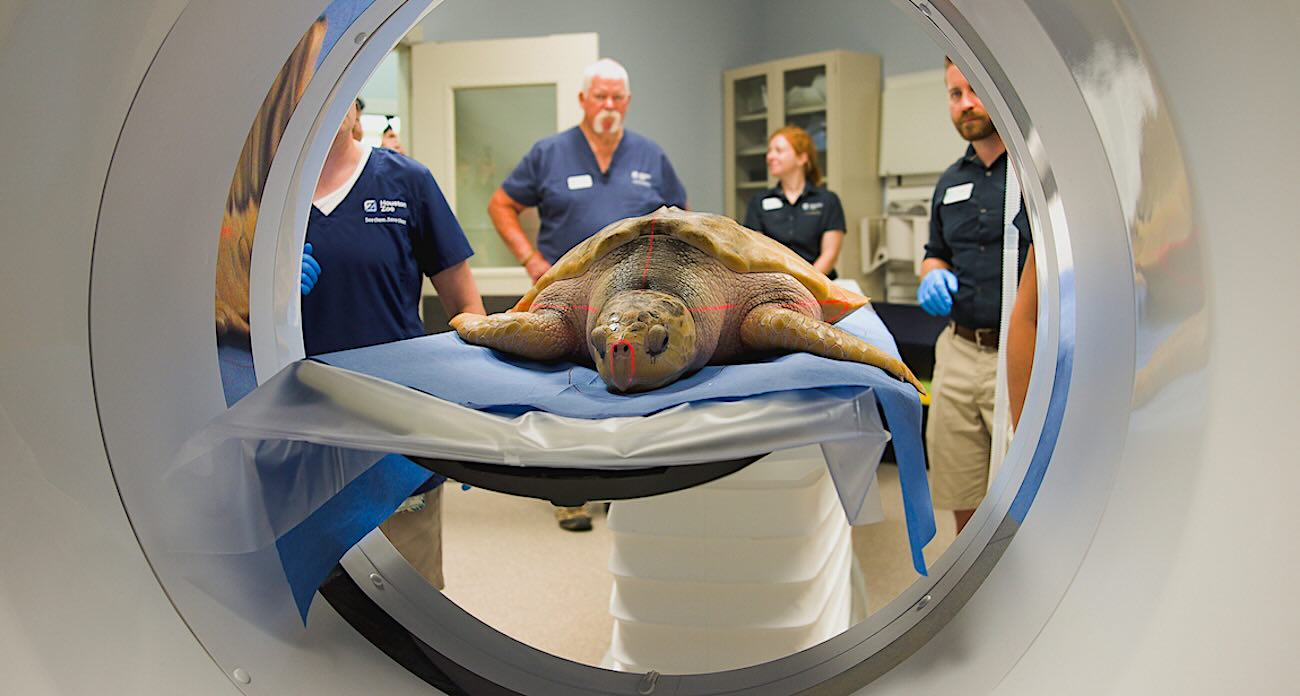
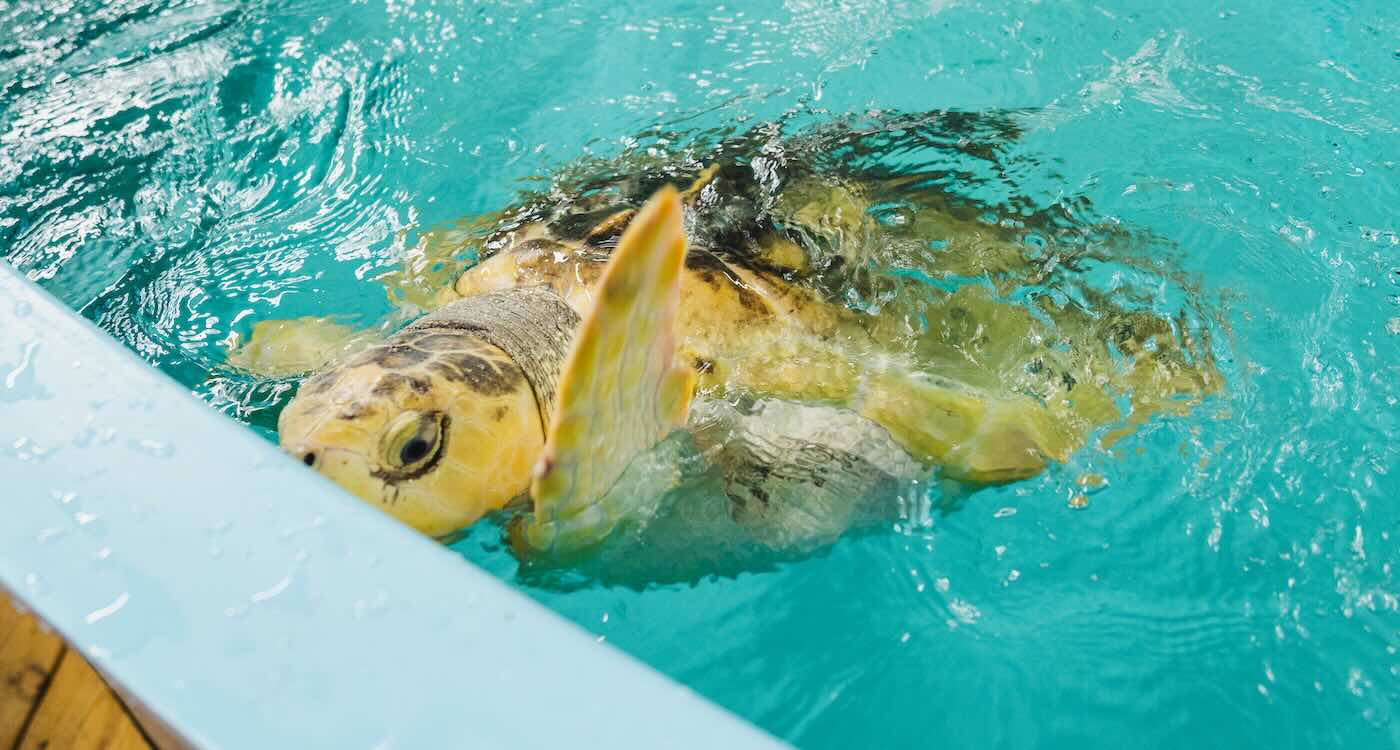
Kemp’s ridley sea turtle named Rhossi that was rescued in Wales gets treatment at Houston Zoo (Courtesy photo)
Kemp’s ridley sea turtle named Rhossi that was rescued in Wales gets treatment at Houston Zoo (Credit: Barbara Alicea-Aponte/Houston Zoo)
It’s a tale two years in the making, including a helicopter ride from Wales to London and a transatlantic flight to Houston for a long-awaited homecoming for a Kemp’s ridley sea turtle—one of the most endangered species in the world.
After making the 5,000-mile journey to Texas, Rhossi is settling into his new surroundings while Houston Zoo’s veterinary team takes a closer look at his overall health before determining whether he’s ready to return to the warm waters of the nearby Gulf of Mexico.
Renowned senior veterinarian Dr. Joe Flanagan even briefly came out of retirement to treat the turtle.
He got a check of all his organs, eyes, mouth, shell, and flippers, along with x-rays and a CT scan to take a closer look at his lungs, where lingering pneumonia was detected.
Overall, Rhossi does appear healthy, active, and vigorous, according to the zoo’s team who will continue treating him until they can “ensure the best possible chance of a successful return to the wild”.
Rhossi’s survival story started on a Welsh Beach in December 2023 when a local dog discovered a tiny injured 2-pound turtle 5,000 miles away from home.
Kemp’s ridley sea turtle, Rhossi in rehab – Courtesy of Houston Zoo / Barbara Alicea-Aponte
Cold-stunned from the dangerously frigid north Atlantic waters, Rhossi was rescued and sent to rehab at Anglesey Sea Zoo, which stepped in and spent two years nursing him back to health. In that time, he’s grown stronger and more than tripled his weight—tipping the scale at 46 pounds.
Kemp’s ridley sea turtles are native to the Gulf of Mexico, but can occasionally be swept into powerful ocean currents and carried thousands of miles across the Atlantic.
After years of care in Wales, Rhossi finally made his way home to Texas on August 10, marking the beginning of a new chapter.
Rhossi’s incredible journey required coordination between so many people and groups—the U.S. Fish & Wildlife, NOAA, Anglesey Sea Zoo, the Texas State Aquarium and Welsh helicopter pilot Darren Briggs—together, giving Rhossi an extraordinary lift spanning two continents.
While his return to the Gulf of Mexico will take a little longer than expected, Rhossi’s story is a testament to the power of collaboration and compassion in wildlife conservation. For now, the focus remains on getting this resilient sea turtle healthy and ready for his long-awaited return to the wild.
A portion of each admission ticket to Houston Zoo goes toward supporting their sea turtle rescue and rehabilitation program.
CONTINUE RHOSSI’S JOURNEY – By Sharing His Story on Social Media…
1930s Patek Philippe - Courtesy of Hansons Auctioneers / SWNS
1930s Patek Philippe – Courtesy of Hansons Auctioneers / SWNS
A rare vintage Swiss watch discovered hidden away in a late mother’s jewelry box while the family was cleaning out her home has sold for £59,000 at a British auction—$80,000 in US dollars.
The 1930s Patek Philippe wristwatch smashed expectations after experts originally valued it at just £5,000.
The owner’s daughter remembers her mom once telling her she possessed an expensive watch, but no one expected the stainless steel timepiece to be worth almost 12 times its estimate.
“When I finally had the watch in my hands and was able to examine it properly, I knew we had something extremely rare,” said Darren Ashley, senior valuer at Hansons Cornwall, who held the public auction in Penzance on Tuesday.
He explained that Patek Philippe produced very few stainless steel watches during the period, and that rarity makes surviving examples incredibly desirable to collectors—along with its “mechanical perfection”.
“This was a watch dating back around 90 years, which had spent decades within the same Cornish family and—when it was placed in my hands—it was still finely ticking away.”
1930s Patek Philippe – Courtesy of Hansons Auctioneers / SWNS
The rare Patek Philippe & Co Calatrava Reference 448 belonged to the seller’s grandfather who passed it to his daughter. It’s believed that their grandmother had a love for designer clothes and luxury items, and bought it as a gift for her husband decades ago.
“The pre-sale interest was phenomenal, from serious collectors across the world, but nothing quite prepares you for watching that level of bidding unfold in the room.”
“Having three members of the family there made it even more special. They were absolutely thrilled, while other members of their family were following the auction live from work on their laptops and phones and couldn’t believe what they were seeing.
“The final battle between (bidders in) Japan and China was incredibly exciting. To see the hammer finally fall at £59,000 was a fantastic moment for the family.
“It is one of those results that reminds you why this business is so exciting.
“Something extraordinary can still be sitting quietly in a jewelry box just a few miles away.”
“What a wonderful result,” added Charles Hanson, owner of Hansons Auctioneers. “Never overlook what is tucked away at home.”
“This little watch had passed quietly through generations of a Cornish family, its late owner knowing she had something valuable, but perhaps never imagining quite how sought-after it would become.
“To see bidders in America, Japan and China competing for something discovered in a Cornish family home is the magic of auction.
“When rarity, quality and provenance come together, the results can be spectacular.”
The watch will now begin a new chapter thousands of miles away in Hong Kong.
TELL FRIENDS TO CLEAN OUT THEIR JEWELRY BOXES–Share This on Social Media…
A million-dollar fund has been launched to provide dental treatment to the most vulnerable members of Britain.
The mydentist Foundation announced it is supporting charitable organizations assisting underserved communities, including those recovering from addiction or suffering extreme poverty.
Its first initiative will be the launch of an eco-conscious mobile dental unit which will deliver care directly to people at homeless shelters and women’s shelters. It will also visit hostels, community centers, family hubs, and soup kitchens.
Procedures including fillings, extractions, scaling and polishing, fluoride varnish applications, X-rays, and oral cancer screenings will all be available within the vehicle, nicknamed Freja, which is set to hit the road in October.
In the first year, after Freja joins the fleet of 12 mobile dental units, more than 850 of the hardest-to-reach members of communities across the country will be seen onboard by volunteer dentists and dental nurses.
The initiative was launched with £1 million ($1.3 million) in a partnership between the Foundation for mydentist, the UK’s largest dental operator, and Dentaid The Dental Charity, which has been outfitting and operating the mobile dental units since 2017.
Dentaid’s fleet of mobile dental units – Courtesy of Dentaid The Dental Charity
“It’s encouraging to see such strong support for improving access to dental care for those who need it most,” said Nilesh Pandya, CEO of mydentist, an “affordable dental care provider”.
“Through our new foundation and partnership with Dentaid, we’re committed to helping vulnerable and underserved communities access the treatment they need and deserve.”
Quote of the Day: “It’s not what you look at that matters, it’s what you see.” – Henry David Thoreau
Photo by: Alexei Maridashvili
With a new inspirational quote every day, atop the perfect photo—collected and archived on our Quotes page—why not bookmark GNN.org for a daily uplift?
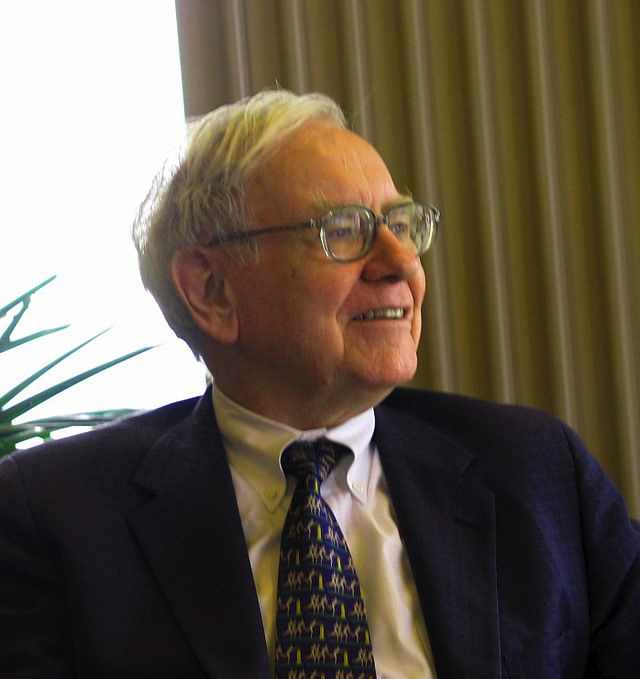
Happy 96th Birthday to Warren Buffett, the “Oracle of Omaha.” He rose from working in his father’s store and delivering newspapers to becoming a multi-billionaire and the most successful American investor of the 20th century, whose company Berkshire Hathaway is one of the few in the world valued at over $1 trillion. He only recently (and finally) retired, leaving behind the most successful track record of any money manager in US history. READ about his philanthropy… (1930)
Simon Bogg with his wood stag and elephant sculpture – SWNS
Simon Bogg with his wood stag and elephant sculpture – SWNS
An artist is carving out a living by making amazingly-realistic wooden sculptures—after teaching himself how to use a chainsaw.
The 53-year-old started carving with chainsaws 30 years ago and now makes thousands, selling his unique commission pieces across the UK.
Simon Bogg usuallly spends up to three days working eight hour shifts to craft his most intricate pieces—including horses, birds, rhinos, badgers, and elephants.
The father-of-two freestyles each piece without any planning or mapping beyond simply using a source photo as a model for the more complex sculptures.
His most popular creations are the carved owls, which can fetch anywhere upwards of $150, depending on the level of detail.
Simon’s biggest carving measures 22-ft tall (6.7m), and some of his pieces fetch between $6,800-$9,500 (£5,000-£7,000) each.
He admits it’s a risky job, “Everything we do with a chainsaw you shouldn’t do with a chainsaw.”
Chainsaw art by Simon Bogg / SWNS
The fully self-taught artist from Louth, Lincolnshire, originally was in the building trades. Then his mother asked if he could make a mushroom.
“I had never done anything with a chainsaw before. I used hers and spent a Sunday afternoon doing it.”
“A week later she rang and said I’ve got five orders for you.
“I did the five mushrooms, then I did a bear, and then I worked a country show and sold everything I made. They loved it.
“Now I’ve been doing it nearly 30 years—15 years full-time.
Simon tends to make three carvings per week, on average, with varying complexity.
Each one is either made from imported Cedar Wood from the Pyrenees Mountains or timber from local gardens.
Chainsaw artist Simon Bogg with tree sculptures (owl, top, and rabbit) and log stash – SWNS
“I just get a lump of wood—and get on with it. Chop away what you don’t need and then start shaping up.”
Some of Simon’s best works include a giant carved stag, an amazing rearing horse, and an elephant—his most recent—which he says could be worth around $6,800 (£5,000).
Hoisting a chainsaw for multiple hours can lead to sore backs, aching wrists, and pains.”
Not to mention the risk of deafness and lingering vibrations.
“People say, ‘When am I getting a proper job’.”
“But I love it.”
Simon Bogg with his wooden owls carved by chainsaws – SWNS
SWNS news agency asked him which animals were his favorite to sculpt.
“I really like the big ones, that are in your face…
“The things that people say are impossible.”
INSPIRE A FUTURE WOOD-CARVER By Sharing This on Social Media…
Poor sleep quality has been linked to cognitive decline, neuro-degeneration and Alzheimer’s disease in seniors—but it may be possible to counteract certain risks.
A new study shows that specific sleep brain waves provide protection against the harmful effects of a brain chemical associated with wakefulness, sleep transition, and narcolepsy.
Concordia University-led researchers examined levels of the neurotransmitter orexin in the cerebral spinal fluid of 60 adults with mild to moderate Alzheimer’s Disease over a three-year period.
They found that individuals with elevated levels of orexin, which is vital to sleep and appetite regulation, were more likely to exhibit symptoms of cognitive decline, including poorer memory and thinking, more severe behavioral and psychiatric symptoms and had higher levels of biological markers associated with neurodegenerative disease and inflammation.
However, that relationship was found to be mitigated by specific brainwaves during sleep. Individuals who produced stronger sleep spindles and sleep oscillations — types of brainwaves associated with memory support and preservation — during non-rapid eye movement (NREM) sleep had less cognitive decline over time than those with weaker ones.
This sleep activity appears to provide neural resilience against the negative effects of higher levels of orexin on their cognition and mental health.
“This study shows that there is a direct association between orexin levels in the brain and biomarkers of Alzheimer’s disease,” says study co-author Thanh Dang-vu, a neurologist and professor in the Department of Health, Kinesiology and Applied Physiology.
Clear pathways to treatment
The study’s data, published in the journal Neurology, was collected by researchers at Lleida University in Catalonia, Spain. The 60 participants spent a night in a sleep laboratory where researchers recorded their brain activity using overnight poly-somnography. The following morning, cerebrospinal fluid samples were collected to measure orexin and other established Alzheimer’s biomarkers.
Participants also completed a series of cognitive and neuropsychiatric assessments at regular intervals over the next three years, allowing researchers to examine how sleep, brain chemistry and cognitive decline changed together over time.
“Having this longitudinal data is important, because Alzheimer’s disease is a moving target,” says the study’s co-first author Arsenio Paez, a neuroscience lecturer in the Sleep, Cognition and Neuroimaging Lab.
“With this data, we can see how the course of people’s Alzheimer’s disease changes over time. Alzheimer’s is a very long process, so this gives us a better picture of how conditions can change over time and we might intervene at different stages of the disorder.”
The researchers note that orexin-blocking drugs are already being used to treat insomnia and narcolepsy, and are being explored as possible therapies for Alzheimer’s disease.
This study suggests that monitoring sleep spindles, slow oscillations and orexin levels could help measure disease progression and to identify which patients would benefit from specialized treatment.
“This study shows us that there are new ways to potentially act on sleep to slow the progression of Alzheimer’s disease, and opens the door for further studies moving forward,” says Dang-vu.
REMIND YOUR FRIENDS To Fix Their Sleep By Sharing This…
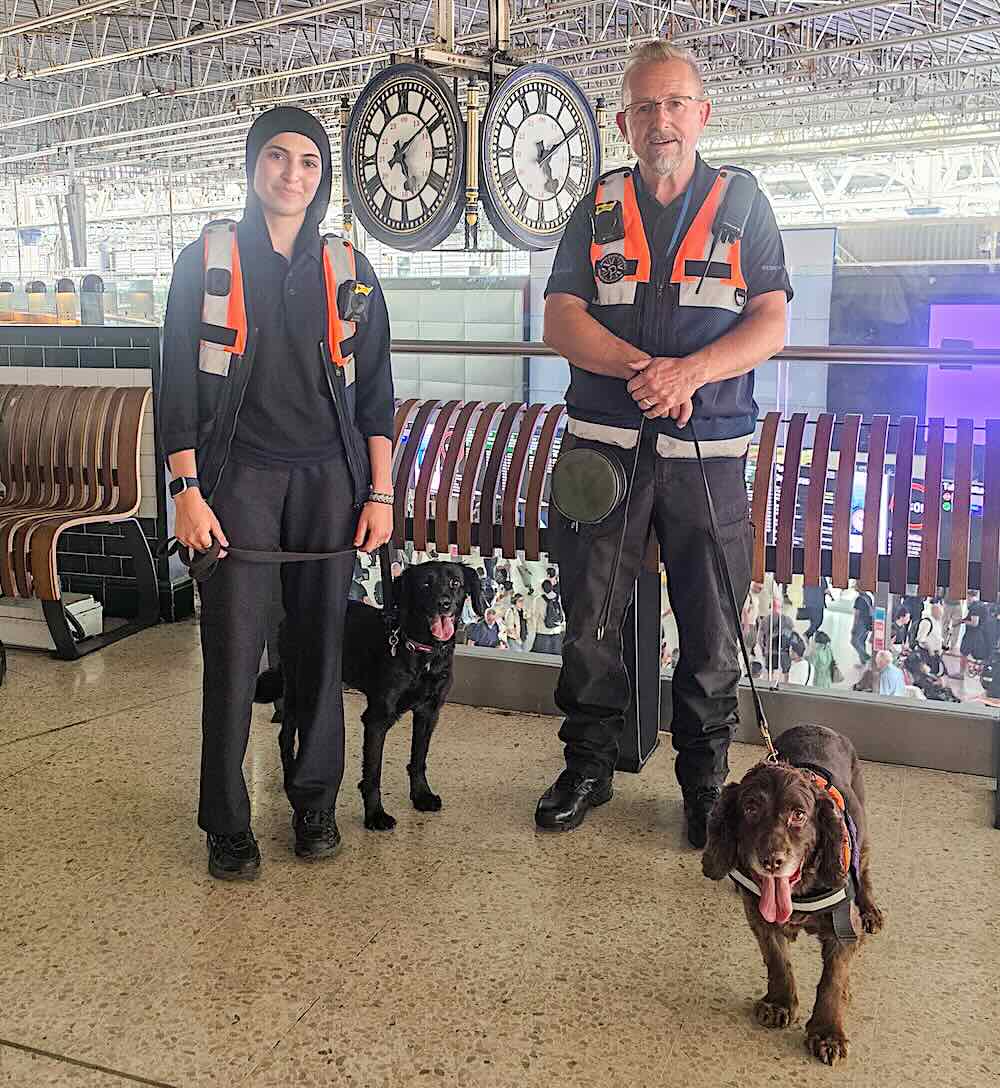
(L-R) Riley, Buster and Flo in London's Waterloo station – SWNS
(L-R) Riley, Buster and Flo in London’s Waterloo station – SWR / NR Wessex / SWNS
London’s Waterloo station has become the first major train hub in Britain to employ dogs on regular patrols.
Canine caretakers Riley, Buster and Flo are providing “additional reassurance” to passengers as part of a three-month trial.
The pups, two cocker spaniels and a Labrador, were deployed by South Western Railway (SWR) and NR Wessex, partnering with Alpha Canine Specialists.
The adorable dogs are aged 9, 10, and 11—and this London train hub gig will be their final deployment before retirement.
Regarding security, the dogs are intended to act as a visual deterrent, and are “part of a wider program designed to keep customers and colleagues safe”, SWR said.
“Deploying these dogs is not linked to any increased threat. It’s simply part of providing more visual deterrence and offering our customers some additional reassurance.”
Chris Bond and Sakinah with Riley and Buster in front of Waterloo clock – SWR / NR Wessex via SWNS
“Security needs constant innovation and we’re taking positive steps to reassure our customers that we take their safety very seriously,” said Dan Harrison, station manager for SWR and NR Wessex.
Other recent measures include launching a better CCTV system, and investing in an outreach worker who engages with vulnerable young people.
“In the same way, we recently equipped all our colleagues with new high-visibility tabards (to wear in the station) to make them more easily identifiable to customers who might need their help.”
PLAN A TRIP With Friends to Waterloo…or Just Share This to Social Media…
FREE WILL ASTROLOGY – Week of August 29, 2026
Copyright by Rob Brezsny, FreeWillAstrology.com
VIRGO (Aug. 23-Sept. 22):
The coming months could be a legendary turning point you will celebrate in the future: a pivotal time when you finally outsmart an old adversary and untangle a knotted inheritance, clearing the way to pursue your true calling with undiluted devotion. Or, on the other hand, the days ahead could be another round in the long saga of “almost”: a decisive phase when you avoid a challenge that has been begging for your full brilliance, leaving your future without shining clues for how to further decode the ancient riddle. Which destiny will you accomplish, dear Virgo? Will you answer the call to adventure? Or ignore it until it fades away?
LIBRA (Sept. 23-Oct. 22):
Some of my most useful revelations arrive in the dark. Once, while hiking in a wooded canyon at dusk, I lost the trail and had to feel my way forward by the sound of the creek. In that blind descent, an insight about a personal riddle I’d been pondering for months appeared unbidden, as if it had been waiting in the shadows for me. As I followed the stream bank to safety, I celebrated by singing Leonard Cohen’s song “Hallelujah.” The moral of the story is that some lessons can be best learned by going down: into the body, into confusing feelings, into the rich compost of mysteries we may be hesitant to explore. How about you, Libra? In my professional opinion, your next pivotal breakthroughs are lurking in the fertile darkness rather than the brilliant heights. I hope you’re brave enough to descend. The treasure is buried, as treasure often is.
SCORPIO (Oct. 23-Nov. 21):
Scorpio meteorologist Alfred Wegener proposed the theory of continental drift. It’s the idea that Earth’s continents were once joined in a single supercontinent and have gradually drifted apart to their present positions over millions of years. Most scientists initially rejected his hypothesis because he couldn’t explain how the movement occurred. He didn’t live long enough to receive vindication, but decades later, his novel hypothesis was fully accepted. I’m pleased to report that your wait will be far shorter, Scorpio. Please keep your faith in the novel ideas and perceptions that others don’t understand yet. The world’s almost ready for your innovations.
SAGITTARIUS (Nov. 22-Dec. 21):
There is a kind of lightning called a “sprite.” It’s a ghostly red discharge that blossoms high above thunderstorms. I suspect you may soon experience your own personal versions of this wonder. Fleeting insights may appear in unexpected places. Emotionally rich revelations could arrive out of nowhere. Because the moments could pass quickly, it will be crucial to notice them when they arrive. They could stimulate major shifts in your understanding. Keep your perceptive powers highly attuned.
CAPRICORN (Dec. 22-Jan. 19):
Fertility clinics store frozen human embryos. Numbering in the hundreds of thousands, they are suspended in a long, chilly pause, awaiting instructions from the people who created them. This accumulation of potential life on hold makes me think of you. If you would thaw and reclaim the neglected, untouched regions of your own imagination, you would become an even more formidable generator of focused creative power. The encouraging news is that the coming weeks will be an unusually favorable phase to expedite this process.
AQUARIUS (Jan. 20-Feb. 18):
Some earthquakes unleash energy in violent bursts, but others are incremental commotions that unfold gradually over days or even weeks. The way they reorganize the Earth’s crust is kinder and gentler. Let’s regard these slow quakes as an apt metaphor for the initially disruptive but ultimately constructive transformations underway in your beautiful life, Aquarius. You may not see spectacular evidence that change is percolating, but I guarantee that it is. Old structures are in a transitional phase of subtle disarray, creating conditions for new dispensations you can’t imagine yet. My prediction: The rearrangement of your landscape will be healing.
PISCES (Feb. 19-March 20): The Sargasso Sea is the only sea on Earth without a land boundary. It’s defined entirely by four strong Atlantic Ocean currents that circle it. Its edges aren’t solid walls but slowly shifting rivers of water. I think this anomalous body of water is always a vivid symbol of your world, Pisces, and even more so these days. Your boundaries are currents, not coastlines. You hold your shape through movement, not through rigid definition. This is more challenging to maintain than solid borders, but it’s also a great potential strength. Use it with aplomb!
ARIES (March 21-April 19):
On the sci‑fi TV show Stargate SG‑1, benevolent aliens known as the Asgard visit Earth to seek assistance from a secret US government team. The ultra-advanced, hyper-intelligent Asgard have been unable to defeat their great nemesis, another alien species called the Replicators. Their hope is that their primitive partners, the humans, might stumble onto some basic, straightforward answer that their own sophisticated minds can’t see. The gamble pays off. One of Earth’s leading physicists, who’s a naive amateur by Asgard standards, devises a rough, unsophisticated strategy that works wonderfully. Treat this as your parable, Aries: Put your faith in simple, uncluttered approaches, and don’t underestimate “beginner-level” fixes.
TAURUS (April 20-May 20):
During one of my visits to the annual Burning Man festival in the Nevada desert, I encountered a prankster named Mother Very Superior. This nonbinary performer was dressed like a nun and wore a prominent chastity belt. Wielding a toy whip, they gently lashed me on my shoulders and prayed over me, saying, “I absolve you of all your sins. Therefore, you are now free to commit a raucous slew of new sins.” I hope you get a similar dispensation, Taurus. To be fully available for the rollicking delights you’re eligible for, it would be wise to reduce your karmic debt.
GEMINI (May 21-June 20):
Archaeologists studying ancient Roman shipwrecks found that sailors deliberately made their vessels heavier by stowing rocks in the hull. This reduced the profitability of their voyages, since it reduced their cargo capacity. On the other hand, it meant they wouldn’t capsize during storms. An excellent trade-off! Let’s use this scenario as a metaphor for your life right now, Gemini. I’m going to suggest that you will benefit from adding more ballast. Seemingly burdensome elements could keep you steady if conditions become unruly. Consider this: Not everything heavy is holding you back. Some of it’s keeping you strong and stable.
CANCER (June 21-July 22):
During the Baroque era, Cancerian artist Artemisia Gentileschi painted powerful biblical and historical women who killed tyrants and delivered their people from violent domination. By channeling her creative passion into figures of righteous fury, she transformed her personal trauma into psychological power. I invite you to be inspired by Gentileschi as you reconfigure your own story in the coming weeks, Cancerian. Wouldn’t it be fun and potent to transform the way you imagine both the past and future plot threads of your destiny?
LEO (July 23-Aug. 22):
In traditional sourdough baking, a small portion of fermented dough called a starter is saved and refreshed regularly. Some bakeries maintain the same lineage for years. The starter is a living culture of wild yeasts and lactic acid bacteria that feed on flour and water, producing acids and gases that leaven the dough and create bread with complex flavor, aroma, and texture. Let’s use this as a metaphor for your life, Leo. What long-running resource can you use to help create situations that will empower you to thrive in interesting ways during the coming months?
WANT MORE? Listen to Rob’s EXPANDED AUDIO HOROSCOPES, 4-5 minute meditations on the current state of your destiny — or subscribe to his unique daily text message service at: RealAstrology.com
Quote of the Day: “A journey is like marriage. The way to be wrong is to think you control it.” – John Steinbeck
Photo by: Marc Groth
With a new inspirational quote every day, atop the perfect photo—collected and archived on our Quotes page—why not bookmark GNN.org for a daily uplift?
Dr. Ambedkar on a 2015 Indian postage stamp - credit Ministry of Communications GODL India
On this day, 79 years ago, Dr. Bhimrao R. Ambedkar was appointed to chair the Indian constitutional drafting committee. This national hero is responsible for the constitution being one that is largely considered one of the most robust and progressive in all world law, as it guaranteed equal treatment under the law for all members of India’s many castes, something not even Mahatma Gandhi envisioned for a post-Independence India. READ more about his work on the constitution… (1947)
The world’s oldest person as acknowledged by the Guinness World Records turned 117 last Friday
Ethel Caterham was born in the United Kingdom on August 21st, 1909, when the great-great grandfather of the current king was sitting on the nation’s throne.
Meeting King Charles III in September 2025 – Courtesy of Ethel Caterham Family
She was the 7th of 8 children, and told ABC News in an emailed statement that she attributes her longevity to a “nonconfrontational” attitude in life; never arguing, while rarely compromising.
“Thank you for all of the kind birthday wishes,” said told the American network. “Even at 117, I’ve had many firsts this year, from stroking a llama to holding hands with the King! I’ve had a lovely day celebrating with my family and friends, and I look forward to seeing what next year brings!”
She has outlived her husband by 50 years, as well as her two daughters, and today enjoys the care and company of 3 grandchildren and 5 great-grandchildren.
In her youth she loved travel, and worked as a nanny for a British family living in India. The work allowed her 3 years to explore the subcontinent where she met her husband Norman, a major in the British Army.
She becomes the oldest person alive after a Brazilian nun, Inah Canabarro Lucas, passed away at 116.
CELEBRATE Ethel’s Birthday By Sharing Her Simple Life Lesson With Your Friends…
An American bullfrog, which is the largest frog species in North America Carl D. Howe via Wikimedia Commons under CC BY-SA 2.5
An American bullfrog, which is the largest frog species in North America Carl D. Howe via Wikimedia Commons under CC BY-SA 2.5
He’s no poison-arrow frog, but that doesn’t mean the American bullfrog doesn’t understand poison—far from it, according to scientists.
Hidden within the humble bullfrog’s genetics is the equipment to produce an antidote to a deadly shellfish toxin that afflicts thousands of people every year.
It’s sometimes thought that a phenomenon of blooming marine microorganisms known as “red tide” is why shellfish is not kosher. These algal blooms produce saxitoxin, or STX, which accumulates in shellfish and causes paralytic shellfish poisoning (PSP) when consumed.
STX is considered a chemical weapon under international law, was stockpiled by the US during the Cold War, and featured in the famous case of American Air Force pilot Gary Powers, whose U-2 spy aircraft was shot down over the Soviet Unio. The CIA had issued Powers a suicide pin containing STX to use should he face capture.
Powers declined to take the suicide route, which interestingly enough is believed to have won him sympathizers among the judges at his trial for espionage in Moscow as it underlined, as they saw it, the cruelty of their opponents—that they would instruct their patriotic sons to commit suicide; at least according to Jan Morris’ coverage of the trial for the Manchester Guardian. That’s enough history for now though.
Paralytic shellfish poisoning affects some 2,000 people worldwide officially, although the vast majority of cases go unreported, according to experts.
There is no antidote for STX, but a new UC San Francisco study is likely to change that.
In research published July 16th in Nature Communications, a team led by Daniel Minor, PhD, and professor in UCSF’s Cardiovascular Research Institute, found that a protein called saxiphilin can neutralize saxitoxin in mice, preventing and even reversing otherwise lethal poisoning.
The protein, which occurs naturally in bullfrogs and other frogs around the world, acts like a molecular sponge. It binds tightly to saxitoxin in the bloodstream before the toxin can reach the nerve and muscle cells it normally attacks.
Earlier efforts to find an antidote against the toxin focused on interrupting the complex biological processes it uses to disable nerve cells—or trying to trigger immune responses against it. Those approaches were largely unsuccessful.
“It turns out that one naturally occurring protein is all that’s required to take this toxin out of commission,” Minor said.
The discovery could have important public health implications, helping to protect recreational harvesters worldwide, as well as coastal indigenous communities in the US and Canada who face the highest exposure to red tide through traditional subsistence harvesting, often far from emergency medical care.
The current study builds on 2021 research in which Minor and colleagues showed that saxiphilin binds strongly to saxitoxin, essentially soaking it up like a sponge and blocking its toxic properties. But whether that interaction would work inside a living organism remained uncertain.
To find out, Minor and postdoctoral PhD scholars Samantha Nixon and Sandra Zakrzewska tested saxiphilin in mice exposed to lethal doses of STX. When saxiphilin was given before or along with STX, the protein prevented poisoning. It also cured nearly all mice who got the protein after they were exposed to STX, a scenario that most closely resembles what would occur when someone unknowingly eats poisoned shellfish.
Minor said this latter scenario was particularly encouraging, given the size of the antidote molecule, which the researchers thought might slow down its action.
“We had this really big protein that needed to catch up with a tiny toxin molecule that has a running start on it,” Minor said. “We really weren’t sure this was going to work.”
The protein not only improved survival but also reduced symptoms associated with severe poisoning, with no harmful side effects.
The team also discovered that saxiphilin spread throughout the body, reaching the brain, heart, and muscles, allowing it to intercept the toxin wherever it traveled.
STX is not a single toxin but a family of over 50 variants with closely related structures. In two studies, published in 2025 and 2026, Minor showed that saxiphilin can bind a wide range of these variants, making it a good candidate for an antidote.
His next goal is to determine whether smaller, engineered versions of saxiphilin could provide the same, or maybe even better, protection against an array of STX variants. More broadly, he believes the work offers a blueprint for finding antidotes to many other natural toxins that currently have none.
“Nature has had to solve this problem multiple times,” he said. “So, there is resilience to toxins all over the biological world.”
SHARE This Brilliant Science Revealing A Potential Antitoxin On Social Media…
An Arab entrepreneur has turned her country’s national crop into creative new ice cream recipes.
It needed several years of experimentation, and she broke several ice cream machines before perfecting her soft-serve blends, but the result is a truly one-of-a-kind ice cream parlor.
Amira Al Dosari is the founder and pioneer behind date-based soft serve ice cream. For this native of Abu Dhabi, the date is an icon of her nation’s economy, history, agriculture, and culture of hospitality.
Though heavy in sugars, dates also contain fiber such that dates have been found to lower circulating blood sugar levels. This is because the fruit’s fibrous matrix slows the release and absorption of sugar contained within.
Al Dosari never imagined using dates to make ice cream, but at age 53 she took an ice cream making class and was disturbed by quantity of ice cream made with pre-prepared mixes, artificial colorants, and refined sugar.
“I was thinking about what the future could be for (children) who eat a lot of sugar when they are that young. How would that affect their body?” she told CNN’s Youmna Sukkar in a brilliant featured story.
Date connoisseurs will know that there are many date varieties with varying textures and flavors. Al Dosari thought to take one of the softest and sweetest varieties known as a kholas date, and see if it were possible to make ice cream without any added sugar.
She told Sukkar that sugar in soft-serve ice cream doesn’t only make it sweet, but also consistently soft and creamy. It took a long time, and was a big challenge to find a way to render the kholas dates down into a product that could give soft serve ice cream these properties. But that’s exactly what she did.
Now she’s working on her 448th flavor of date ice cream from her shop called Ice Station near Abu Dhabi’s Zayed Port. The date is the star of the show there, as it not only contributes to the sugar in the ice cream but to multiple flavors.
The pits are roasted and ground into a coffee-like substance that’s poured over ice cream to mimic the Italian affogato, while the date palm fronds contribute the bitterness, antioxidant content, and vivid green of the “matcha” flavor.
“We know that the entire plant is quite safe for consumption, so it was just more about how we could present this in a way that is enjoyable for everyone?” said Al Dosari’s daughter, Ghalia Al Mazrouei, who works as a sustainability consultant and helped her mother find new ways to utilize the date palm.
SHARE This Brilliant Businesswoman’s Idea For Healthier Soft Serve…
Landlords get a bad rap, often unfairly, but now from Melbourne comes the story of one who gave a long-term tenant the home she was renting.
The magnanimous gesture is typical, 9 News reports, of the late self-made millionaire, who fancied himself a philanthropist in the waning years of his life.
It was 23 years ago that Jane Sayner went house hunting in Melbourne and found a 2 bedroom unit with a garden in St. Albans—a northwest suburb of the city.
She liked the garden the most, but she liked the area too—and also the landlord.
John Perrett, she described, was the definition of generosity. Having amassed a multi-million dollar fortune by himself, he was also a pharmacist, community man, soccer lover, and a property investor.
“I got a phone call from him one day and he said, ‘I want you to talk to my solicitor, he is here at the moment and can you give him your full name because I’m leaving you the unit,'” Sayner told 9 News, remembering that fateful phone call.
She said she pinches herself to this day, more than 6 years later.
Mr. Perrett died in 2020 in his mid-eighties due to complications from Parkinson’s disease. The house he gave to Sayner, while his fortune he donated to the Royal Melbourne Hospital, at which he received a kidney transplant that lasted him 30 years.
“We are extremely grateful as a department of the hospital at the Royal Melbourne Hospital for such a bequest. It’s just amazing,” said Professor Nigel Toussiant from the hospital, who added that it would support patients and operations for decades to come.
Sayner retired at 74 and still lives in the home her late landlord gave her, thanking the man under her breath every few days.
SHARE This Generous Man Quietly Making A Difference In The World While He Was In It…
Quote of the Day: “Don’t wait. The time will never be just right.” – Napoleon Hill
Photo by: Marc Groth
With a new inspirational quote every day, atop the perfect photo—collected and archived on our Quotes page—why not bookmark GNN.org for a daily uplift?