Marilyn Meyers was put up for adoption right after she was born. During high school, her adoptive mother told her that her birth mom’s last name was Osborn and she spent decades searching for her biological family, but to no avail.
Meyers eventually started a family of her own and by the time she was in her 70s she had moved into Oaks of Rockford: a retirement community in Michigan.
In 2017, Meyers heard that the house behind hers had been sold to a new owner who had moved to Michigan from Florida.
When she heard that the name of this new neighbor was Phillip Osborne, she joked with a friend about the possibility of him being her long-lost brother.
It was certainly unlikely; the neighbor had lived his whole life without knowing of a sibling who’d been adopted at birth.
As fate would have it, however, Osborne had indeed become the neighbor to his long lost biological sister.
CLICK to watch the heartwarming interview with the reunited siblings – and don’t forget to SHARE with your own friends and family…
“Love believes the best about someone else. When you’re inclined to mistrust and suspect, look for the positive intention instead. Seek the good and you will find it.” –Rev. Mary Manin Morrissey
A new inspiring quote every day, juxtaposed over the perfect photo, and collected and archived on our Quote of the Day page—why not bookmark GNN.org for a daily uplift.
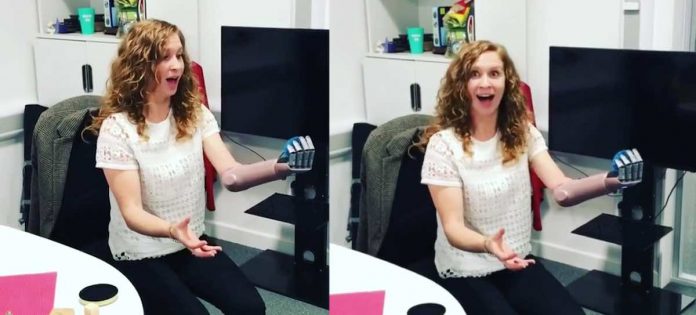
While some people might think that catching a ball isn’t a very big deal, it certainly was for Kate Grey.
In a heartwarming video published by Open Bionics, a groundbreaking startup dedicated to creating affordable and efficient bionic limbs for amputees, the Paralympic swimmer can be seen testing out a new 3D-printed bionic arm that she had put on only moments before.
According to a new study, the number one New Year’s resolution for women in 2018 is to improve their finances. Unfortunately, New Year’s resolutions can be hard to keep.
That’s why Business Student put together an easy-to-read infographic on the habits and life advice of the world’s most successful and influential women.
J.K. Rowling and Lucille Ball both credit their success towards their ability to overcome adversity and undergo constant failures. Simone Biles and Dolly Parton say that they are better at pursuing their goals down when they write them down in a journal.
Arianna Huffington, on the other hand, says that she always makes sure to sleep for 8 hours every night and meditate for 20 minutes every morning.
(CHECK OUT the infographic below for more inspiring wisdom)
Click To Share The Advice With Your Own Female Entrepreneurial Friends – Feature photo by Fernando Frazão/Agência Brasil, CC and Ronpaulrevolt2008, CC
An 8-year old in Hillsboro, Virginia asked me a question in 1999. I had facilitated a painting with 350 students in her school. Meredith Miller realized that just looking at the mural made people happy. Then she asked, ”What if the whole world made a painting together?”
Meredith’s profound question resonated with my deepest longing for humanity. Instead of fighting and squabbling and killing, what if we created, built and cooperated? I had no idea how to make a painting with the whole world, but I knew that children would be my partners.
Kate Seredy’s book, the Singing Tree, provided the vision I was looking for. In it, she relayed a story told to her by her Hungarian soldier father: “One night during World War I, we soldiers crawled on our bellies all night long to escape the enemy. We came across no living thing. Everything had been destroyed by war. When the dawn came, one tree was still alive. Birds from hundreds of miles away who don’t normally come together, were in the tree, singing a song that had never been heard before.”
All the things that divide us are not as important as the fact that there may be no life for billions of miles around us. We can chose to destroy each other and the earth, or we can create something beautiful together, like the birds in the Singing Tree.
I found the key for inviting the world to create together by looking to nature’s cooperative model. All the leaves of the tree work for the whole tree, and all the trees in a forest contribute to the well-being of the entire forest. If the whole world already does work together in nature, why can’t we?
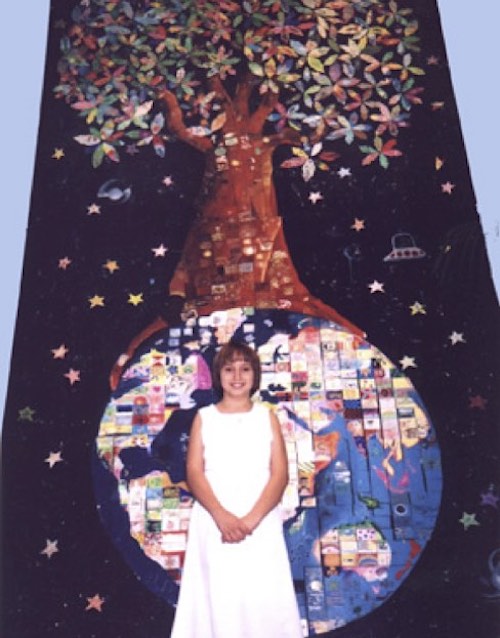
The first Singing Tree mural was made by 1000 children from both public and private schools and homeschoolers in Rappahannock County, Virginia.
Meredith Miller in front of the first mural, The Elm Singing Tree of Appreciation
Like the growth of an acorn into a 40-foot tall oak, in the time since Meredith asked her question, 49 “Singing Tree Murals” have been created by over 18,000 people from 50 countries.
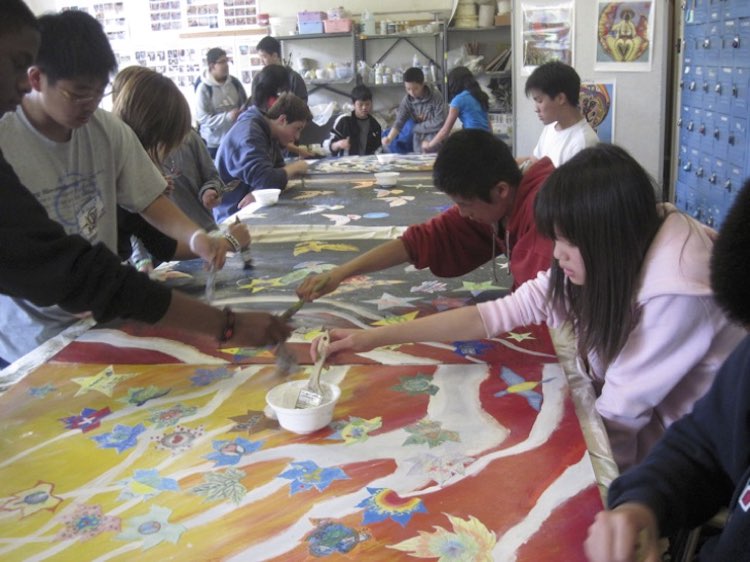
A.P. Giannini Middle School Students in San Francisco create The Sycamore Singing Tree of Possibility
Each project envisioned success around a local solution for a community challenge. Led by neighborhood youth or intergenerational design teams, some of the issues addressed include homelessness, freedom from addiction, autism, religious conflict, biodiversity, poverty, environmental degradation, water and child abuse.
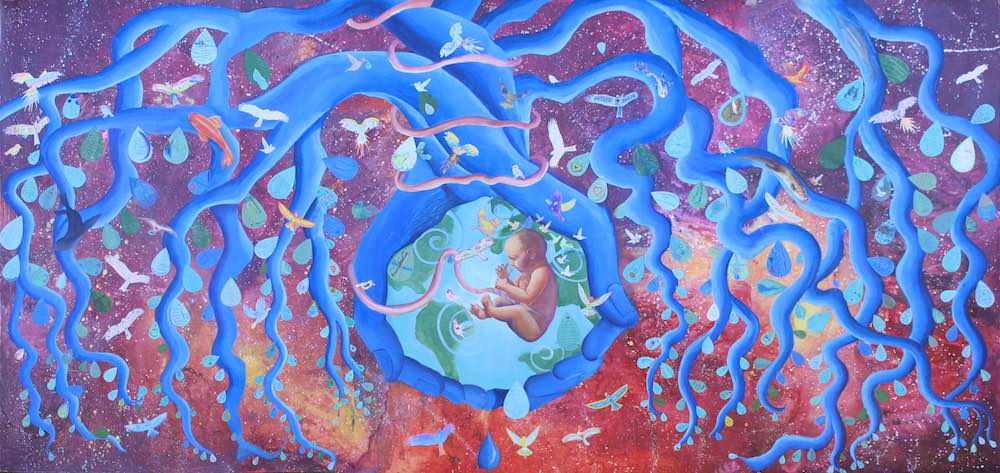
Water Willow Singing Tree, Marin School of the Arts, 2016
The youngest design leaders have been 5th graders at Helen Faison Elementary School in Pittsburgh, PA, where one of the key sponsors of the Singing Tree Project, Unity Through Creativity, is located.
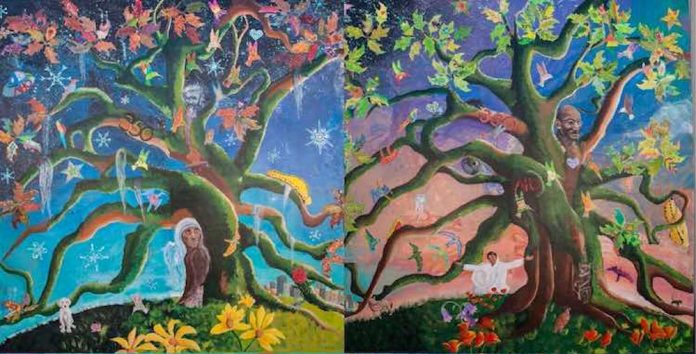
Homeless and formerly homeless youth in Marin County, California created this Seasons of Hope Singing Tree, with support from another sponsor, the Create Peace Project, an international Peace-Building-Through-Art non-profit in San Francisco.
The murals illustrate The Winter of Wellness, The Spring of Sustainability, the Summer of Serenity and the Autumn of Abundance.
Healing old wounds in Sarajevo, young people of Croatian, Serbian and Muslim backgrounds co-created the Sarajevo Singing Tree of Renewed Togetherness.
The Sarajevo Singing Tree of Renewed Togetherness where 500 people at the Children’s Festival added their voices and visions.
The young people, sponsored by Art Grupa, chose to portray the earth without continents, but with musical notes instead, which transcends boundaries.
Beyond art and community, this project builds leadership skills in youth by helping them gain mastery, autonomy, purpose and connection. The murals demonstrate the beauty of democracy where every voice matters as we create together. For more information, email Laurie Marshall or call 415-612-0401.
A new inspiring quote every day, juxtaposed over the perfect photo, and collected and archived on our Quote of the Day page—why not bookmark GNN.org for a daily uplift.
When a company in Brazil was keen on solving some issues with cleaning the office workspace, the manager asked the janitors how much time they were spending in each room – and this simple question changed their lives.
Nataly Bonato, who is one of the managers at the Sao Paulo branch of the WeWork company, requested a daily report from the custodians with some very simple information. All she wanted to know was the name of the janitor, which room they cleaned, why a particular room wasn’t cleaned (if any), and how much time was spent in each room.
When the first report took a week to be turned in and the answers weren’t even accurate, Bonato confronted the janitors.
“I requested a meeting and to my surprise the reason was because over 50% of the cleaning team was illiterate,” Bonato said in a Facebook post.
Instead of requesting new staff to get the job done, however, Bonato decided to help them out.
“We have a school that uses our workspace, so we challenged them to help the staff with the problem, and they got organized to make it happen,” says Bonato.
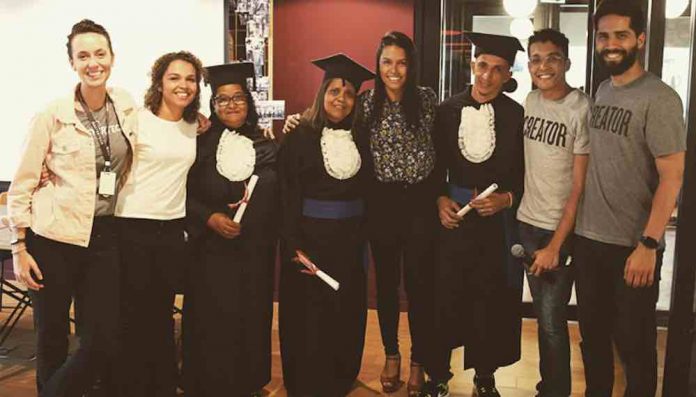
Every Tuesday and Thursday, the janitorial team would have a longer lunch break so they could take literacy lessons. Five months later, the best students were already writing letters and every custodian could read simple texts.
To celebrate the accomplishments, WeWork had a graduation party with the full outfit that the occasion requires.
Give Your Friends A Good Read: Click to Share The Sweet Story (Photo by WeWork)
Sometimes all it takes is a little reality check to put things in perspective.
Back in March, home nurse Amanda Perez published a Facebook post about how the misfortunes of one of her clients made her appreciate how lucky she was to have food on the table.
“Lately I have been so upset because I wanted the materials in life,” wrote Perez. “New car, house, more clothes, shoes, etc.”
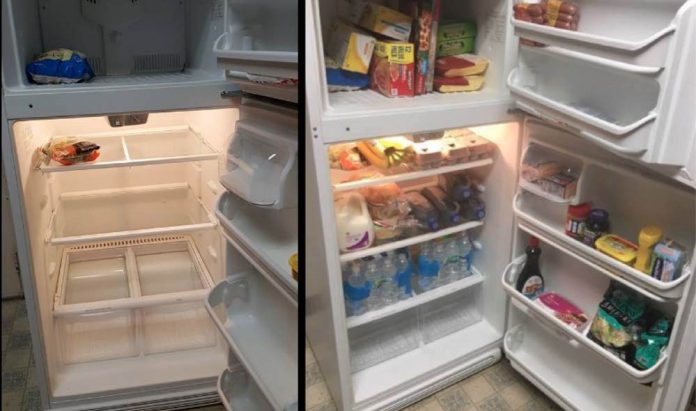
While she was working at the home of one of her male patients, the man asked if Perez could clean his fridge. She was shocked to open the door and see nothing inside.
Upon asking him where his food was, he “looked down as if he was ashamed” and said that he bought groceries whenever he had money to do so.
“I have never seen a fridge so empty in my life,” said the home nurse. “All of a sudden, I realized how my needs are wants and his wants are needs.”
Despite not having a lot of income of her own, Perez drove to the grocery store and used her income tax money to buy a cart full of food and stock her client’s fridge.
“This isn’t a post to be noticed, this is a post to show you that there are so many people out there that have it worse than we do. I opened my eyes and realized I need to stop being so mad about what I don’t have and start appreciating what I do have.”
Click To Share The Compassionate Story With Your Friends (Photos by Amanda Perez)
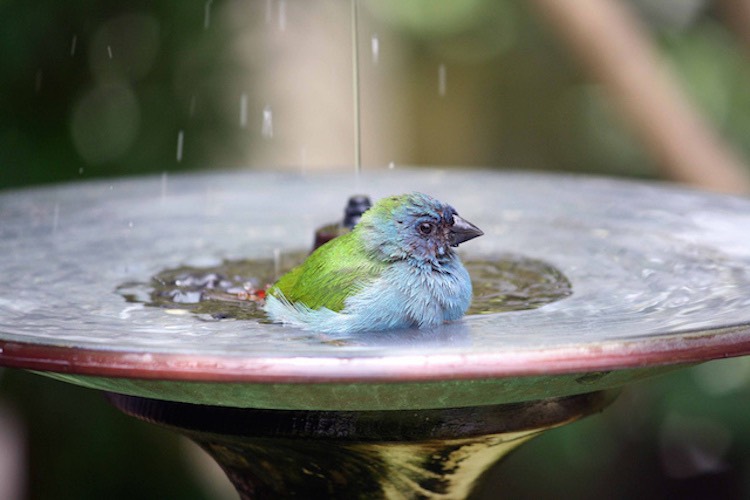
According to this study, people living in neighborhoods with more birds, shrubs, and trees are less likely to suffer from depression, anxiety and stress.
The study conducted at the University of Exeter, involving hundreds of people, found benefits for mental health of being able to see birds, shrubs and trees around the home, whether people lived in urban or more leafy suburban neighborhoods.
The study, which surveyed mental health in over 270 people from different ages, incomes and ethnicities, also found that those who spent less time out of doors than usual in the previous week were more likely to report they were anxious or depressed.
After conducting extensive surveys of the number of birds in the morning and afternoon in Milton Keynes, Bedford, and Luton, the study found that lower levels of depression, anxiety and stress were associated with the number of birds people could see in the afternoon. The academics studied afternoon bird numbers – which tend to be lower than birds generally seen in the morning – because are more in keeping with the number of birds that people are likely to see in their neighborhood on a daily basis.
In the study, common types of birds including blackbirds, robins, blue tits and crows were seen. But the study did not find a relationship between the species of birds and mental health, but rather the number of birds they could see from their windows, in the garden or in their neighborhood.
Previous studies have found that the ability of most people to identify different species is low, suggesting that for most people it is interacting with birds, not just specific birds, that provides well-being.
University of Exeter research fellow Dr. Daniel Cox, who led the study, said: “This study starts to unpick the role that some key components of nature play for our mental well-being.
“Birds around the home, and nature in general, show great promise in preventative health care, making cities healthier, happier places to live.”
The positive association between birds, shrubs and trees and better mental health applied, even after controlling for variation in neighborhood deprivation, household income, age and a wide range of other socio-demographic factors.
“The key to life is accepting challenges. Once someone stops doing this, he’s dead.” – Bette Davis
A new inspiring quote every day, juxtaposed over the perfect photo, and collected and archived on our Quote of the Day page—so, why not bookmark GNN.org for a daily uplift.
The Lesson: While it may seem like a surprisingly simple trick to improve your behaviors and habits, counting to 5 has a variety of benefits; the most important of which is closing the knowledge-action gap that keeps so many people from achieving their goals.
Notable Excerpt: “When you’re checked out and you’re on autopilot, any behavioral pattern that you repeat can take over. And guess what are the behavioral patterns that we repeat? Self-doubt; worry; procrastination; over-thinking; analysis paralysis; and fear. Those are all thinking patterns that become habits.”
The Guest: Mel Robbins is an American author, life coach, inspirational speaker, and CNN commentator who has specialized in motivating the masses with her 5-second rule. In addition to being the most booked female speaker in the world with appearances on Good Morning America, Dr. Phil, Dr. Oz, Oprah, The Today Show and Fox News, she is also renowned for delivering the wildly popular TEDX Talk “How to Stop Screwing Yourself Over”.
The Host: After spending years of his young life and athletic career struggling with his own emotional wellbeing, a crippling injury left Lewis Howes without an identity and without any work. Instead of wallowing in self-pity, however, Howes recreated himself as a multi-million dollar media producer, motivational speaker, bestselling author, and podcast host. The ex-football player now spends his days chatting with the most inspirational icons of this generation on his School of Greatness podcast.
Podcast: The School of Greatness podcast is available for download on Soundcloud and iTunes. You can also watch footage of the interviews on Howes’s YouTube channel.
Books: Howes is the author of the New York Times bestselling book “The School of Greatness”: an in-depth collection of lessons and wisdom that he has gathered from interviewing hundreds of the world’s greatest role models and thinkers. Howes’s latest book, “The Mask of Masculinity”, is based on his experience with the dangerous stereotypes and expectations that are placed on men in modern society.
(LISTEN to the inspiring talk below)
Good Advice? SHARE It – Or Check OutMoreOn Our Good Talks Page…
A chemistry professor in Florida has just found a way to trigger the process of photosynthesis in a synthetic material, turning greenhouse gases into clean air and producing energy all at the same time.
The process has great potential for creating a technology that could significantly reduce greenhouse gases linked to climate change, while also creating a clean way to produce energy.
“This work is a breakthrough,” said UCF Assistant Professor Fernando Uribe-Romo. “Tailoring materials that will absorb a specific color of light is very difficult from the scientific point of view, but from the societal point of view we are contributing to the development of a technology that can help reduce greenhouse gases.”
Uribe-Romo and his team of students created a way to trigger a chemical reaction in a synthetic material called metal-organic frameworks (MOF) that breaks down carbon dioxide into harmless organic materials. Think of it as an artificial photosynthesis process similar to the way plants convert carbon dioxide (CO2) and sunlight into food. But instead of producing food, Uribe-Romo’s method produces solar fuel.
It’s something scientists around the world have been pursuing for years, but the challenge has been to find a way for visible light to trigger the chemical transformation. Ultraviolet rays have enough energy to allow the reaction in common materials such as titanium dioxide, but UVs make up only about 4% of the light Earth receives from the sun. The visible range – the violet to red wavelengths – represent the majority of the sun’s rays, but there are few materials that pick up these light colors to create the chemical reaction that transforms CO2 into fuel.
Researchers have tried it with a variety of materials, but the ones that can absorb visible light tend to be rare and expensive materials such as platinum, rhenium and iridium that make the process cost-prohibitive.
Uribe-Romo used titanium, a common nontoxic metal, and added organic molecules that act as light-harvesting antennae to see if that configuration would work. The light harvesting antenna molecules, called N-alkyl-2-aminoterephthalates, can be designed to absorb specific colors of light when incorporated in the MOF. In this case he synchronized it for the color blue.
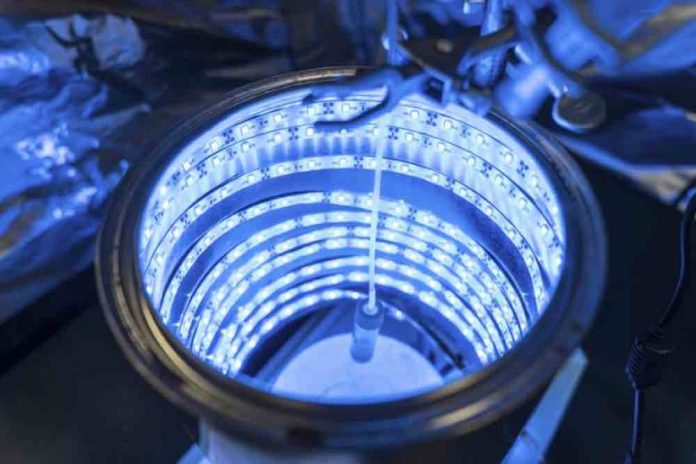
His team assembled a blue LED photoreactor to test out the hypothesis. Measured amounts of carbon dioxide were slowly fed into the photoreactor – a glowing blue cylinder that looks like a tanning bed – to see if the reaction would occur. The glowing blue light came from strips of LED lights inside the chamber of the cylinder and mimic the sun’s blue wavelength.
It worked and the chemical reaction transformed the CO2 into two reduced forms of carbon, formate and formamides (two kinds of solar fuel) – all while cleaning the air.
“The goal is to continue to fine-tune the approach so we can create greater amounts of reduced carbon so it is more efficient,” Uribe-Romo said.
He wants to see if the other wavelengths of visible light may also trigger the reaction with adjustments to the synthetic material. If it works, the process could be a significant way to help reduce greenhouse gases.
“The idea would be to set up stations that capture large amounts of CO2, like next to a power plant. The gas would be sucked into the station, go through the process and recycle the greenhouse gases while producing energy that would be put back into the power plant.”
Perhaps someday homeowners could purchase rooftop shingles made of the material, which would clean the air in their neighborhood while producing energy that could be used to power their homes.
“That would take new technology and infrastructure to happen,” Uribe-Romo said. “But it may be possible.”
A 37-year-old artist in Germany was disgusted by the growing number of swastikas he saw spray-painted around his community.
So, instead of allowing the hateful signs to remain visible, Ibo Omari recruited a team of young street artists to cover them up with friendly illustrations.
Using color and form, the Berlin team takes a positive stance against hatred in their city.
Omari, who runs a graffiti shop and youth club in Berlin, launched the Paint Back initiative to encourage everyone to take action against ugly vandalism.
Since he first created the campaign, his team has transformed 25 swastikas into works of art—all of which were done with permission from the property owner.
“It was important to spur young people into action and to encourage them to take responsibility so they don’t just ignorantly walk past such symbols of hatred,” Omari told Reuters.
“It offends the whole neighborhood if someone in our midst paints swastikas in a children’s playground and I take it personally.”
Omari’s team aren’t the only ones fighting anti-Semitism in Berlin, either – 70-year-old Irmela Schramm made headlines last year for constantly painting hearts over swastikas that she saw in public.
(WATCH the artists in action below)
Pass On The Positivity: Click To Share With Your Friends
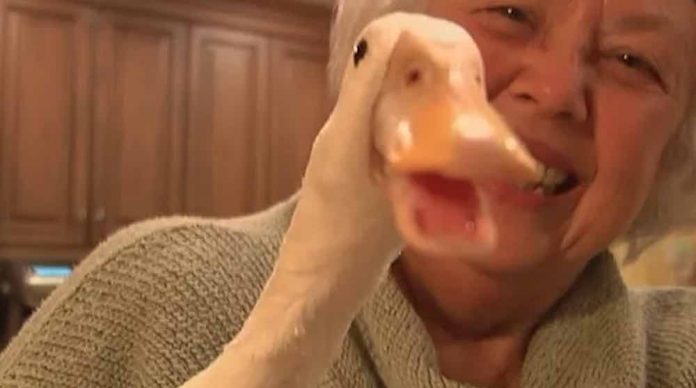
When Patsy Smith first found Peg the duck without his leg, she feared that he would never walk again.
Thanks to the ingenuity of a few eighth graders, however, the fowl is waddling better than ever.
Smith of Meredith, Arkansas discovered the 8-month-old Indian runner duck after a turtle had apparently bitten off his foot. As Peg grew older, his leg became more and more irritated from the injury.
That’s when Matthew Cook, Darshan Patel, and Abby Simmons of Armorel High School heard about Peg’s dilemma and volunteered to help.
Using a 3D printer at the school’s environmental and spatial technology lab, the eighth graders got to work making a replacement appendage for the unfortunate bird.
Though it took 30 different attempts, the students finally printed the perfect “Peg Leg”.
(WATCH Peg’s leg in action below)
Birds Of A Feather Flock Together: Click To Share With Your Own Friends
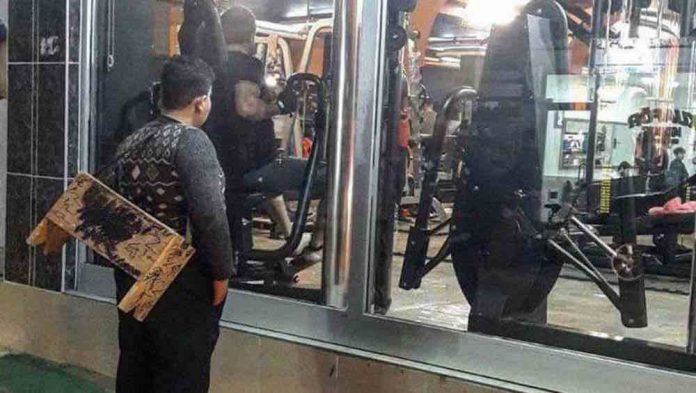
A 12-year-old Syrian refugee who used to stare longingly through the window of a Turkish gym has just been given a free lifetime membership at the facility.
Muhammet Halit first fled the Syrian war four years ago with his father. He now works as a shoeshiner in Turkey’s southeastern province of Adıyaman while his father makes money by collecting recyclable waste.
Then, earlier this week, a photo of Muhammet gazing wistfully through the window of the gym went viral on social media. Despite the chilly winter weather, the boy can be seen wearing sandals with his shoe shining supplies in hand.
The owner of the fitness center was so moved by the boy’s picture, he tracked Muhammet down and offered him a free lifetime pass to the fitness gym.
“He found me and helped me,” the teenager told the Doğan News Agency. “I had always dreamed of losing weight and now I believe I can do that by working out.”
“Trust yourself. Have confidence that you can draw the best, not the worst, to yourself.” – Norman Vincent Peale
A new inspiring quote every day, juxtaposed over the perfect photo, and collected and archived on our Quote of the Day page—so, why not bookmark GNN.org for a daily uplift.
The Lesson: It can be difficult to turn down the noise of the electronic, hyper-connected world that we live in – but when we do, it doesn’t just pave the way for true happiness; it also helps to increase the levels of happiness for others in our lives.
Notable Excerpt: “Happiness is a choice. We can be more than just our genes in this current world, but we can actually choose to become a different person. Happiness is the joy we feel striving towards our potential.”
The Guest: Shawn Achor is a New York Timesbestselling author and Harvard-educated expert on the psychology of happiness. The American motivational speaker has spent much of his life researching the science of happiness and publishing his findings for the masses. Achor also founded GoodThink Inc., an organization dedicated to giving lectures on science-backed methods of pursuing happiness.
The Host: Oprah Winfrey is an American talk show host, actress, producer, author, philanthropist, and media tycoon. In addition to being the richest African-American person in history, she also hosted the highest-rated television show of its kind and has been called the most influential woman in the world.
When a city bus suddenly caught on fire last Wednesday, nearby pedestrians wasted no time in rushing to the rescue of those caught on board.
The Yibing City bus, which was in the Sichuan Province, suddenly caught fire and trapped an elderly passenger inside.
Onlookers immediately broke the windows and started attacking the blaze with water and fire extinguishers. One local shop owner was seen on CCTV footage rushing onto the bus and pulling the passenger to safety outside the bus.
Within two minutes, the crowd had extinguished the fire.
Thanks to the quick actions of the spectators, there were no casualties from the blaze.
“Everyone would do the same as what I did under such circumstances. If I were trapped on the bus, other people will do the same thing to save me. It’s normal,” said heroic shop owner Pan Haifeng, according to CCTV Plus.
In what looks like a revival of South Korea’s “Sunshine Policy” of the late 1990s, North Korea has joined talks that could lead to peaceful relations between the two familial foes.
Delegates from North and South Korea announced in a joint statement that they had met for peace talks, for the first time in two years, in order “to relieve military tensions” between the two countries.
Meeting in the Demilitarized Zone just north of the de facto border between North and South Korea, the delegates reportedly discussed the northern nation’s participation in the Winter Olympic Games, which are to be held in Pyeongchang come February.
North Korea will be sending “as many athletes as possible” to attend the games, as well as a high-level group of delegates, members of the press, cheerleaders, and artists.
The peace talks went so well in the Panmunjoma village, the nations even discussed temporarily lifting their travel bans for the Lunar New Year so families who are separated by the tense border can temporarily reunite for the holiday. The sanctions would also be lifted in order to allow North Korean citizens to attend the Olympics.
While Southern delegates mentioned their intention to discuss denuclearization of the North, the other side said such discussions would only dampen progress. But most agree the talks were positive “baby steps” toward the two nations’ meeting further on serious issues in the future.
The UK government has just joined the ranks of countries and organizations that have banned the use of plastic microbeads from being used in cosmetics.
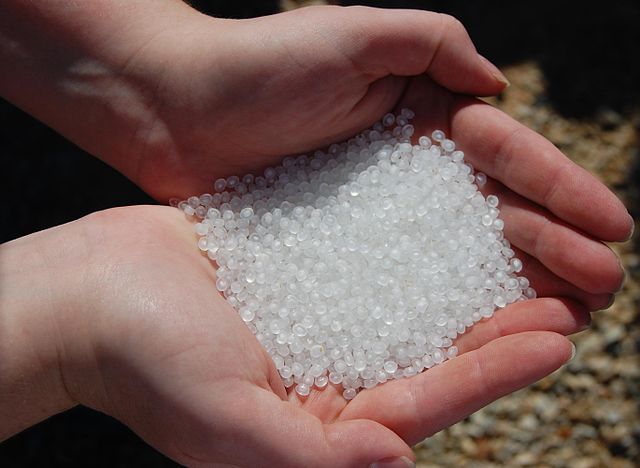
Microbeads, which are made from ground plastic pellets like those above, are used in products ranging from facial scrubs to toothpaste. They don’t break down in water treatment plants and, though they’re not toxic, harmful chemicals can stick to the microbeads and can be eaten by marine life. The contamination is then passed up the food chain — even to humans who eat seafood.
In addition to dozens of cosmetic companies pledging to ban the use of microbeads from their products, the USA passed legislation that prohibited the manufacturing and sale of microbead products in 2015.
The UK’s ban, which was originally passed in 2016, will initially prohibit the manufacturing of microbead products, while a ban on product sales will go into full effect in July.
“The world’s oceans are some of our most valuable natural assets and I am determined we act now to tackle the plastic that devastates our precious marine life,” said the UK’s environmental minister Thérèse Coffey, according to the Guardian. “Now we have reached this important milestone, we will explore how we can build on our world-leading ban and tackle other forms of plastic waste.”
Click To Share The News With Your Friends(Photo by gentlemanrook, CC)















 Marilyn Meyers was put up for adoption right after she was born. During high school, her adoptive mother told her that her birth mom’s last name was Osborn and she spent decades searching for her biological family, but to no avail.



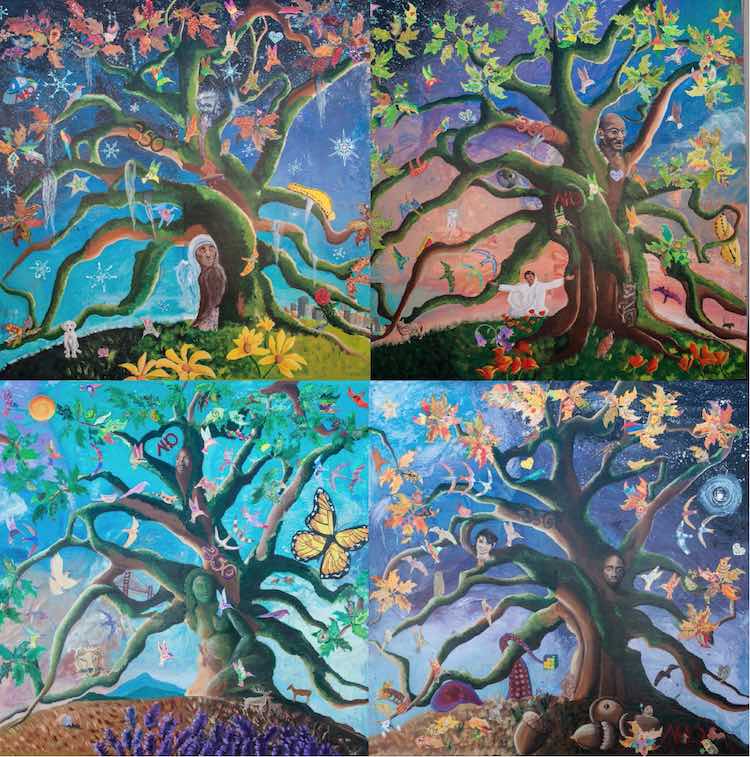 The murals illustrate The Winter of Wellness, The Spring of Sustainability, the Summer of Serenity and the Autumn of Abundance.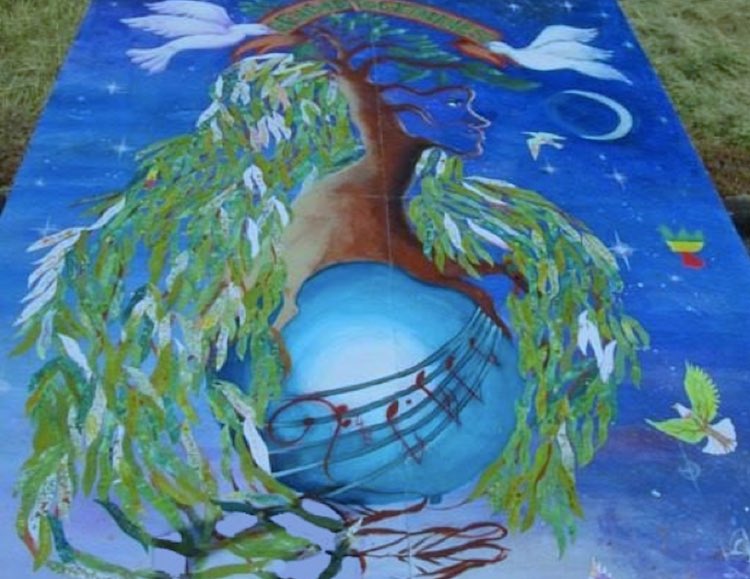



 Title: The 5-Second Rule to Change Your Life