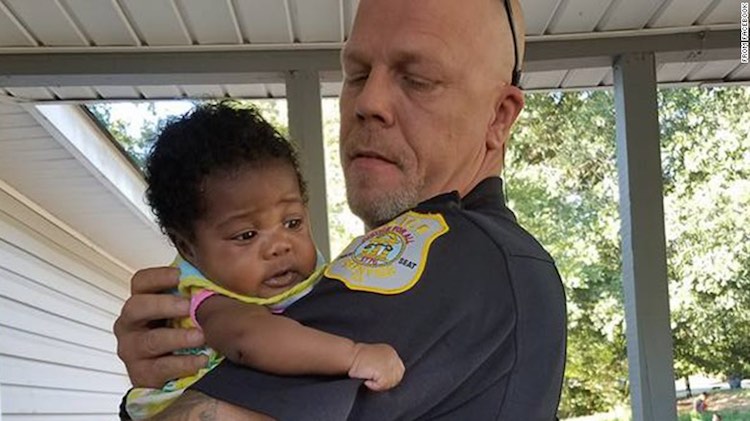
“She smiled at me for a second and then starting crying, which was music to my ears,” Knox wrote on Facebook. “Out of my 25 years being a cop, this is my greatest and most profound accomplishment and it made every second of those 25 years worth it all. I am forever humbled and changed by this.”
Ma’Yavi’s parents were so grateful, they asked if they would be her godfather, which Knox joyously accepted.
“Ma’Yavi Parham, my precious angel… I swear I will forever be your guardian and love you with all my heart. I will be there for your first day, when you graduate school AND COLLEGE, and even what ever you want”
Click To Share This Sweet Story With Your Friends – Photo by Kenneth Knox
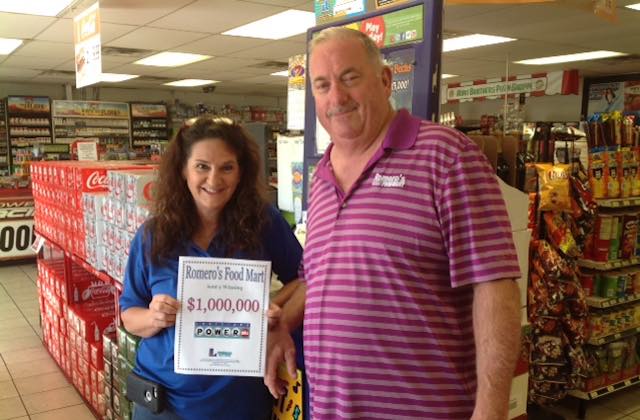
James Lapeze was just one of 40,000 home owners who suffered damages after Hurricane Matthew tore through the Eastern seaboard – but on October 1st, his luck was about to change.
James won $1 million from the Louisiana Powerball Lottery after he scored the five out of six numbers necessary to win.
“I checked my numbers over and over again,” said Lapeze when he realized he possessed a winning ticket. “I even had my wife check them because I really couldn’t believe that I won!”
Romero’s Food Mart, a small corner store in Central, Louisiana, even got to share in the good fortune by receiving a 1% cut of the prize equal to $10,000
The 72-year-old reportedly plans on using the $700,000 after taxes to pay off his home and retire.
Click To Share The Good News With Your Friends – Photo by Romero’s Food Mart
Every day 353,000 children are born around the world, a majority of them in developing countries where there is a lack of proper record keeping, resulting in a lack of proper health care. By the age of five, more than 5 million children per year lose their lives to vaccine-preventable diseases.
How can these young lives be saved? By their thumbprint, says Michigan State University professor Anil Jain.
Jain and his team of biometrics researchers demonstrated in a first-of-its-kind study that digital scans of a young child’s fingerprint can be correctly recognized one year later. In particular, the team showed they can correctly identify children 6 months old over 99 percent of the time based on their two thumbprints. A child could then be identified at each medical visit by a simple fingerprint scan, allowing them to get proper medical care such as life-saving immunizations or food supplements.
“Despite efforts of international health organizations and NGOs, children are still dying because it’s been believed that it wasn’t possible to use body traits such as fingerprints to identify children. We’ve just proven it is possible,” said Jain, a University Distinguished Professor of computer science and engineering.
“As the technology further evolves, there are many social good applications for this new technique with far-reaching impacts on a global scale,” said Jain. “At a touch of a finger, health care workers could have access to a child’s medical history. Whether in a developing nation, refugee camp, homeless shelter or, heaven forbid, a kidnapping situation, a child’s identity could be verified if they had their fingerprint scanned at birth and included in a registry.”
One such application is saving lives by tracking vaccination records. Vaccination records are traditionally kept on paper charts, but paper is easily lost or destroyed. Fingerprints are forever, and, once captured in a database, could be accessed by medical professionals to reliably record immunization schedules and other medical information.
In additional to medical histories, capturing a child’s fingerprint has the following uses:
National Identification – Many countries have some form of national identification system, such as the Unique Identification Authority of India, which enrolls any resident over 5 years old using biometric identifiers. With approximately 25 million births each year, India would like to lower the enrollment age. Capturing a baby’s fingerprints at age 6 months or older would assist them in this process and ensure proper identification from an early age.
Lifetime Identities – A digital fingerprint identity system will give children an identity for a lifetime to help combat children and at-risk adults from human trafficking, refugee crisis situations, kidnappings or lack of basic services.
Improving nutrition – In the least-developed countries, where 14 percent suffer from undernutrition, tracking children can help aid initiatives for providing and improving nutrition services and food.
“The impact of child fingerprinting will be enormous in improving lives of the disadvantaged,” said Sandeep Ahuja, CEO of Operation ASHA, an NGO dedicated to bringing tuberculosis treatment and health services to India. “It could save 5 million lives just by ensuring implementation of well-known measures immediately after birth, like breast feeding, by tracking interaction of health workers and newborns in underdeveloped countries.”
The study by Jain and his team was conducted at Saran Ashram hospital in Dayalbagh, India, where fingerprints of 309 children between the age of 0-5 years were collected over the course of one year. The fingerprint data was processed to show that state-of-the-art fingerprint capture and recognition technology offers a viable solution for recognizing children enrolled at age 6 months or older.
“Given these encouraging results, we plan to continue the longitudinal study by capturing fingerprints of the same subjects annually for four more years,” said Jain. “This will allow us to better evaluate the use of fingerprints for providing lifelong identity.”
The neighbors will surely die of fright when they see this toothy monster peering out from next door.
Amanda Destro Pierson is an body painter from Cleveland, Ohio who didn’t just dress up for Halloween – she dressed up her garage door to look like a creature chomping its teeth whenever it door opens or closes.
Since her Facebook video debuted, millions of people have commented and shared, as well as signed up on her website to get their own “Monster House” kits in time for the 31st.
“I can’t believe MILLIONS OF PEOPLE have watched my garage door go up and down!” Amanda exclaimed on her Facebook. “I can’t even keep up with the number! I’m so glad you all like my monster house! I am seriously blown away by the love here.”
(WATCH the video below)
Share The Spookiness: Click To Share With Your Ghoul Friends – Photo by Amanda Destro Pierson
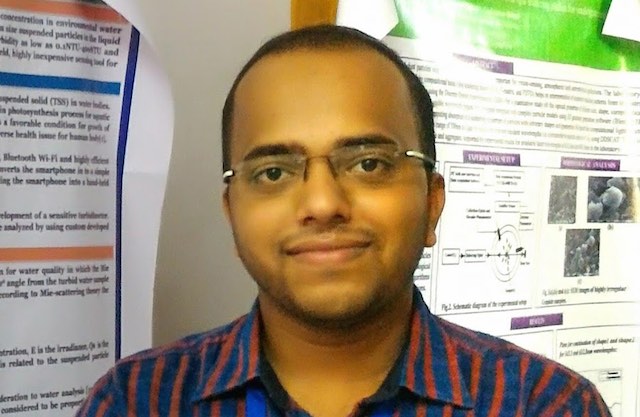
The app can already detect and report specific levels of fluoride, turbidity, and salinity, but the project needs more funding if it is to test for arsenic and iron as well.
His crowdfunding campaign page states that they have already applied for a project grant from DST India which will be pending until further notice.
It doesn’t matter how old you are – anyone can get down with a bit of Queen Bey.
When there was a lull at a North Stafford High School pep rally, the students were shocked – and delighted – to see one of the police officers dashing onto the court during Beyoncé’s “Formation”.
The officer, Lietenant Deuntay Diggs, flawlessly copied every cheerleading move the squad could dish out.
When he ended in a splits, the crowd went wild and charged onto the court.
Diggs was already locally famous for dancing to Beyoncé at a police charity event – so when the school teachers asked them to do it for the pep rally, he figured it would be a good way to have some fun with the kids.
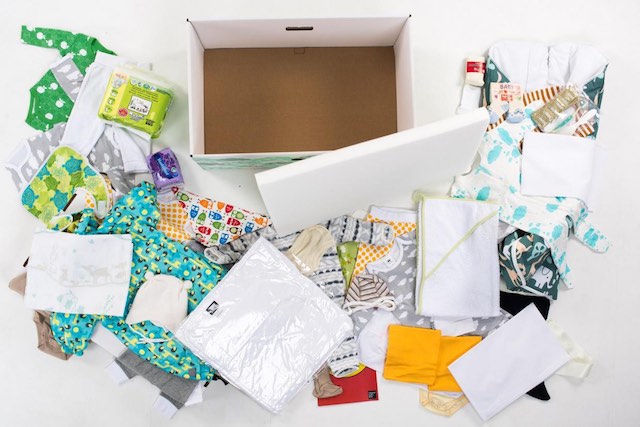
Starting on January 1st, 2017, the Scottish government will start giving expectant mothers ‘baby boxes’ – packages of useful items that will encourage a child’s healthy upbringing.
The boxes will contain such necessities as clothing for all seasons, picture books, teething toys, blankets, and medicinal supplies. Since the box is based off of a Nordic policy, it will also mostly likely be lined with a mattress that will double as the baby’s first crib.
Baby boxes have been an essential practice of Finland for the last 75 years. This tradition is suspected to contribute to the nation having one of the lowest child mortality rates in the world.
The policy was originally promised by Nicola Sturgeon when she was running for her third term as Scotland’s First Minister.
“The baby box is a powerful symbol of our belief that all children should start life on a level playing field,” Nicola Sturgeon told the Scottish National Party this week after her electoral victory. “That’s what inclusion means in practice.”
There will be a competition for the box’s design next month in partnership with the V&A in Dundee.
Don’t Be A Baby: Click To Share This Sweet Story With Your Friends
That’s why Mocha and Beanut – two local rescue pups – were able to tag along for the furry, fun-filled afternoon so they could remind passengers that adoption not only saves pets from pounds and shelters, but also gives you a loving companion for life
(WATCH the video below)
Click To Share This Pawesome Story With Your Friends
On Saturday, representatives from 170 different countries celebrated an ambitious global pact to pare down on environmentally harmful chemicals known as HFCs.
HFCs – also known as hydrofluorocarbons – is a powerful kind of greenhouse emission found in air conditioning units and refrigerators that trap 1,000 times more heat than carbon dioxide. If left unchecked, global HFC emissions could grow to be equivalent to 19 percent of total carbon dioxide emissions in 2050.
The deal that was solidified between the USA, China, India, Argentina, Chile, Colombia and all 28 countries in the European Union this week in Kigali, Rwanda, however, has initiated concrete deadlines and goals for the coming decades that will ensure swift and sure action against the climate changing refrigerants.
Though the Paris deal is considered the most comprehensive agreement against global warming, the outlines are less structured than those of the Kigali accord. As an amendment to the Montreal Protocol several years in the making, the deal could prevent up to 0.5°C of warming by the end of the century, making a major contribution to the Paris Agreement goal to limit global temperature rise to well below 2°C.
The pact also includes 500 international companies and sub-national governments that have pledged to eliminate HFCs as well.
In tandem with the declaration for an ambitious amendment, a group of donor countries and philanthropists announced their intent to provide $80 million in assistance to Article 5 countries to implement an amendment and improve energy efficiency.
A group of 16 donor countries – consisting of the United States, Japan, Germany, France, the United Kingdom, Italy, Canada, Australia, the Netherlands, Switzerland, Sweden, Norway, Denmark, Finland, Ireland, and New Zealand – announced their intent to provide $27 million in 2017 to the Montreal Protocol Multilateral Fund to provide fast-start support for implementation if an ambitious amendment with a sufficient early freeze date is adopted this year. Such funding is one-time in nature and will not displace donor contributions going forward.
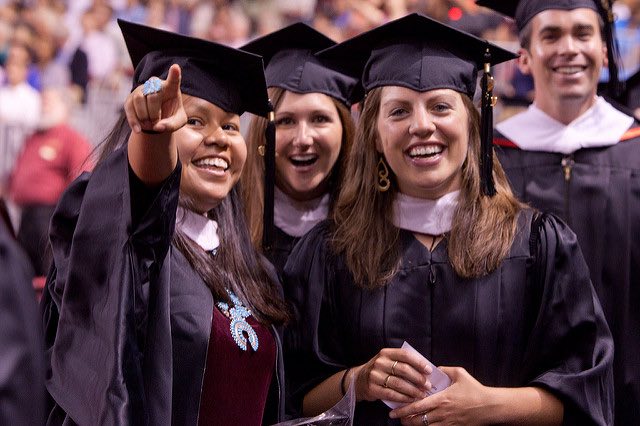
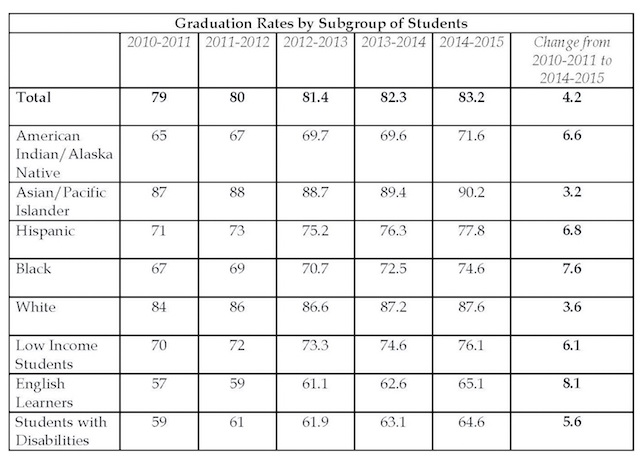
During the 2014-2015 year, more American high school graduates are punctually getting their diplomas than ever more.
Black, Hispanic, Asian, Native American, low-income, disabled, and English-learning students have all showed promising gain, creating a whopping 83.2% graduation rate for the whole nation.
The District of Colombia showed the greatest improvement with a seven percent increase from 61.4% to 68.5% – this is a widely celebrated fact considering the urban environment of the District.
The state with the highest graduation rate is Iowa at 90.8% followed closely by New Jersey at 89.7%, and Texas at 89%.
The exciting numbers are largely in part to the last eight years of dedication that the Obama Administration has shown towards improving education and academic legislation.
In 2013, President Obama put forth his bold Preschool for All proposal to establish a federal-state partnership that would provide high-quality preschool for all four-year-olds from low- and moderate-income families. After the President’s call, many states took action and today, 46 states and the District of Columbia invest in preschool programs.
The Obama Administration’s Race to the Top program also spurred systemic reforms, incentivizing states to adopt college and career-ready standards for teaching and learning and to undertake meaningful change across their public education systems. The $4 billion competitive grant program served 22 million students in 18 states and Washington D.C. — nearly half of all students in the country.
The Department of Education recently announced this year’s Free Application for Federal Student Aid (FAFSA)— available October 1 for the first time, three months earlier than the traditional January 1 date—so that more students can access the historic investment in financial aid and better information when they need it. About one million students submitted their FAFSA applications within the first ten days since the launch of the application, outpacing recent years.
School’s Out: Click To Share With Your Friends – Photo by University of Denver, CC
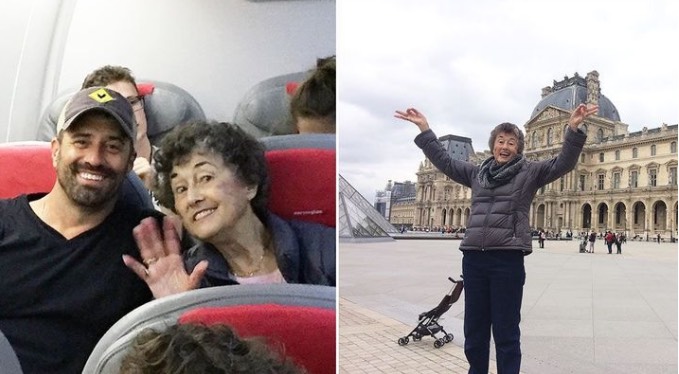
For 20 long years, Carla Brooks was always there to care for her husband Karl following his stroke.
Then after two decades of devotion, Karl passed away last year leaving his wife heartbroken and lost.
“My mother’s entire life has been about other people…but especially since my dad’s stroke,” Barton tells PEOPLE. “She was stuck as a caregiver who had lost her meaning, because her meaning was my dad.”
So as a way of healing his mother’s pain, Barton Brooks and his partner Gregg Goodbrod are taking her for 20 different European adventures – one for each of the years that she spent caring for his father.
This won’t be the first time that Carla has traveled for therapeutic reasons either – she had been engaged to another fiancé before Karl, but then just before the wedding, she discovered that he had been unfaithful to her. The young woman took all the money meant for the marriage and backpacked Europe for a solo months-long adventure.
The trio’s travel blog, The Little Girl From Kansas, is open to suggestions for their grand tour and will be posting weekly updates documenting their 20 adventures.
America’s success has largely depended on its ability to farm and provide food for its people. Now this agricultural heritage is solidly rooted in the South Lawn of the White House.
In 2009, First Lady Michelle Obama first embraced a vision for change—and took steps toward reversing the increase of childhood obesity and high rates of lifestyle-related diseases.
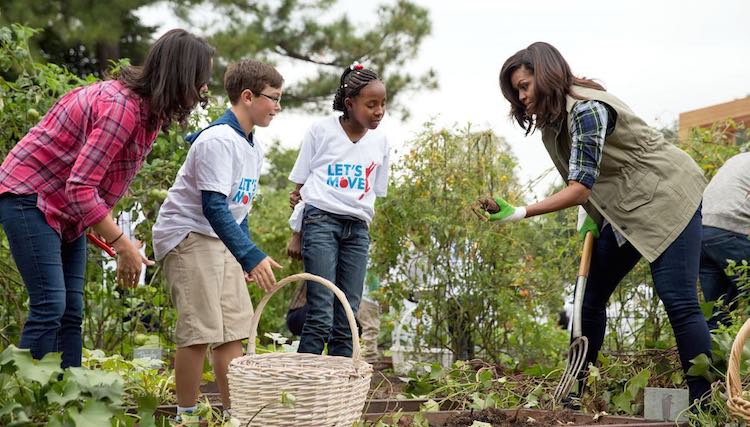
As part of her plan to inspire kids to eat more veggies and fruit, she helped dig—and plant— a White House Kitchen Garden which has been a lush treasure of food and education for the nation’s capital since its debut 8 years ago.
The planting of this garden coincided with the creation of her “Let’s Move!” program in 2010, dedicated to helping kids and families find healthier lifestyles. The produce grown here doesn’t just benefit the presidential family, either. Surplus produce from the garden is donated to Miriam’s Kitchen, an organization that feeds Washington D.C.’s homeless population.
In early October, children from more than a dozen schools across the nation joined the First Lady for her final harvest. The occupants of the White House will be different come January 2017, but thanks to recent donation from a horticulturally-based company, not only will the beds of the garden remain; they will be expanded and maintained.
“The South Lawn vegetables, fruits, and herbs inspire people across the country to eat locally, mindfully, and healthfully,” said George Ball, chairman and CEO of the donor company, W. Atlee Burpee. “Burpee is proud to continue our long history of inspiring gardeners by supporting the White House Kitchen Garden in one of America’s treasured national parks.”
Following the lead of the First Lady, more and more community gardens have been popping up every year. The communities that gather and plant healthy gardens find the gardens yield more than crops—they create healthy communities.
In this season of political change, it’s nice to know that one constant will remain: a presidential garden will continue to symbolize the importance of community, and the benefits of nutritious food, and honest efforts applied.
Grow Some Positivity: Click To Share With Your Friends (Photo by White House)
Conventional medical wisdom has long held that placebo effects depend upon a patient’s belief that they are getting ‘the real deal’. A paper published today in the journal Pain is the first to demonstrate that patients who knowingly took a placebo in conjunction with traditional treatment for lower back pain saw more improvement than those given traditional treatment alone.
”These findings turn our understanding of the placebo effect on its head,” said joint senior author Ted Kaptchuk, director of the Program for Placebo Studies at Beth Israel Deaconess Medical Center and an associate professor at Harvard Medical School. “This new research demonstrates that the placebo effect is not necessarily elicited by patients’ conscious expectation that they are getting an active medicine. Taking a pill in the context of a patient-clinician relationship – even if you know it’s a placebo – is a ritual that changes symptoms and probably activates regions of the brain that modulate symptoms.”
Kaptchuk, with colleagues at Instituto Superior de Psicologia Aplicada (ISPA) in Lisbon, Portugal, studied 97 patients with chronic lower back pain, which causes more disability than any other medical condition worldwide. After all participants were screened and examined by a registered nurse practitioner and board certified pain specialist, the researchers gave all patients a 15-minute explanation of the placebo effect. Only then was the group randomized into one of two groups; the treatment-as-usual (TAU) group or the open-label placebo (OLP) group.
The vast majority of participants in both groups (between 85 and 88 percent) were already taking medications – mostly non-steroidal anti-inflammatories for their pain, and none were on opioid medications. Participants in both groups were allowed to continue taking these drugs, but were required not to change dosages or make any other major lifestyle changes, such as starting an exercise plan or new medication, which could impact their pain.
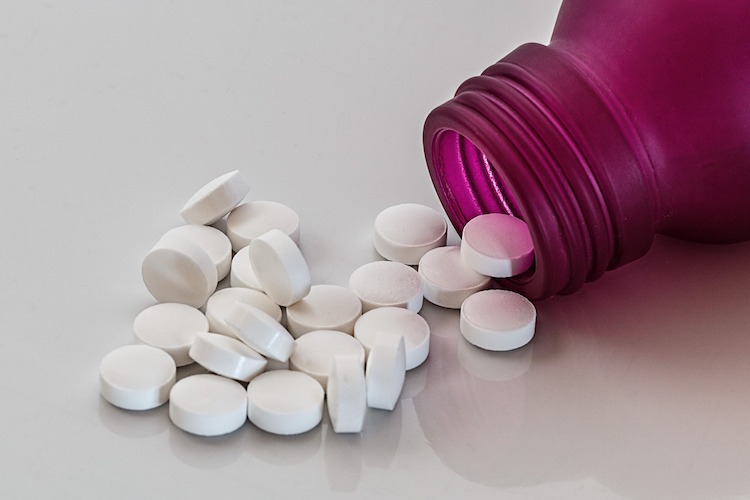
In addition, patients in the OLP group were given a medicine bottle labeled “placebo pills” with directions to take two capsules containing only microcrystalline cellulose and no active medication twice daily.
At the end of their three-week course of pills, the OLP group overall reported 30 percent reductions in both usual pain and maximum pain, compared to 9 percent and 16 percent reductions, respectively, for the TAU group. The group taking placebo pills also saw a 29 percent drop in pain-related disability. Those receiving treatment as usual saw almost no improvement by that measure.
“It’s the benefit of being immersed in treatment: interacting with a physician or nurse, taking pills, all the rituals and symbols of our healthcare system,” Kaptchuk said. “The body responds to that.”
”Our findings demonstrate the placebo effect can be elicited without deception,” said lead author, Claudia Carvalho, PhD, of ISPA. “Patients were interested in what would happen and enjoyed this novel approach to their pain. They felt empowered.”
Kaptchuk speculates that other conditions with symptoms and complaints that are based on self-observation (like other kinds of pain, fatigue, depression, common digestive or urinary symptoms) may also be modulated by open-label treatment.
“You’re never going to shrink a tumor or unclog an artery with placebo intervention,” he said. “It’s not a cure-all, but it makes people feel better, for sure. Our lab is saying you can’t throw the placebo into the trash can. It has clinical meaning, it’s statically significant, and it relieves patients, which is essential to what medicine means.”
“Taking placebo pills to relieve symptoms without a warm and empathic relationship with a health-care provider relationship probably would not work,” added Carvalho.
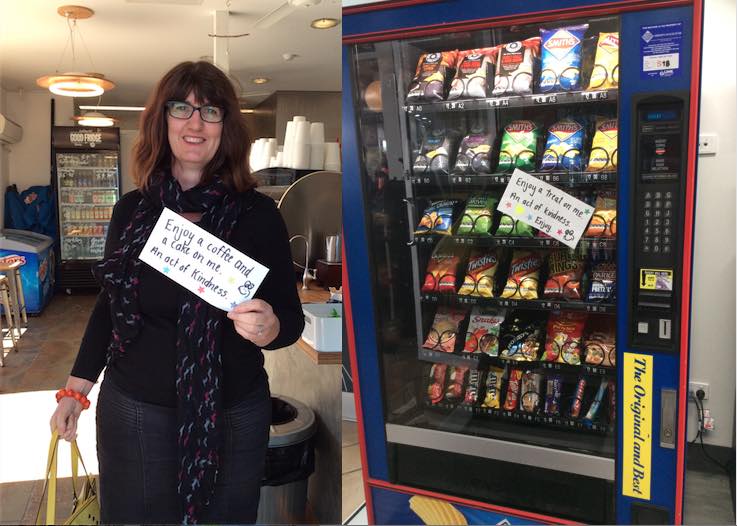
We’ve seen examples of kind pedestrians paying good deeds forward, but Cate Cook is trying to inspire an entire community to follow in her footsteps.
Cate has been the secret orchestrator of hundreds of secret sweet gestures all over Adelaide, South Australia since January. Her Yours Kindly Facebook page documents all of her anonymous gifts – from leaving bubble wands on park benches, to leaving change taped to parking meters, to leaving flower bouquets in public spaces.
The page has over 2,800 self-identified ‘Kindness Warriors’ who have been inspired by Cook’s gestures and imitated the generosity in their own communities.
“We are a kindness community and people are often sharing kind deeds that they have done – leaving chocolates, opening doors, buying care packs for homeless people, writing inspirational notes, paying for someone’s coffee, etc.,” Cate told the Good News Network. “Recently after a TV interview, the cameraman and sound technician both said that what I am doing is inspiring and such a great thing that they were going to go and do acts of kindness too. It truly is a ripple effect.”
As further evidence of her compassionate nature, Cate celebrated her 62nd birthday in August with 62 different acts of kindness around the city.
The mission supposedly took seven and a half hours to complete, but she says it was well worth it.
“It was a long, but incredible day. The smiles and genuine appreciation on the faces of people were so uplifting. It truly was a magical day, and I would say the best way to spread happy cheer and enjoy my birthday.”
Kham Lha the baby elephant loves her human trainer so much, she isn’t afraid of putting herself in danger to rescue him – even if the danger is imaginary.
As Derrick was lazily floating down a river, Kham Lha believed him to be drowning, so the young pachyderm wasted no time. It plunged into the stream pushing through until she could nudge him out with love and concern.
Kham Lha is the youngest elephant at the Elephant National Park in Thailand. Their bond with Derrick was solidified when he became her tender caregiver following her rescue from captivity in the tourism industry last year.
The duo has become best of friends—on land or water.
(WATCH the video below)
Rescue Your Friends From Their Newsfeed: Click To Share
New research, published online in The FASEB Journal, suggests that activation of a chemical in the body through an estrogen receptor reduces obesity and metabolic diseases in mice by converting bad fat (white fat) to good fat (brown fat), which increases metabolism and may facilitate weight loss.
“Obesity is the underlying cause for several diseases that could result in mortality,” said Ramesh Narayanan, Ph.D., a researcher involved in the work at the University of Tennessee Health Science Center. “Safe and effective treatment for obesity is highly needed, and (this type of) targeting might be one of the strategies to safely combat obesity.”
To make their discovery, Narayanan and colleagues used three groups of mice. One group was fed with normal rodent diet, while two groups were fed with a high-fat diet (HFD) to make them obese. One of the obese groups was treated with the chemical, beta-LGND2, which made them significantly leaner than the other mice fed a HFD. The beta-LGND2-treated mice had higher body temperature and oxygen consumption, indicating higher metabolism rate.
“As both the pre-diabetes condition of metabolic syndrome as well as obesity itself continue to threaten the health of millions of people in many parts of the world, we need all the new findings dedicated researchers can give us,” said Thoru Pederson, Ph.D., Editor-in-Chief of The FASEB Journal. “The notion that the fat in our bodies comes in two physiological forms has long been known, but here we have the intriguing prospect of a beneficial pharmacological switch.”
Especially since most hunger-reducing therapies, despite their modest efficacy, have safety concerns that underscore the need for effective peripherally-acting drugs, if mortality is to be reduced.
Even though Gabi Shull lost one of the most important tools necessary for dancing, she overcame her deficit to continue doing what she loves.
Gabi goes to Warrensburg High School in Kansas City, Missouri. She attends regular classes, participates in extracurricular activities, and has hobbies no different than her peers – but this 15-year-old is different than most teens.
7 years ago, she injured her knee while ice skating. When the pain persisted for several weeks longer than doctors had predicted, she underwent an MRI scan which exposed an abnormal growth in Gabi’s knee. She and her mother Debbie were then given the diagnosis that would change their lives forever—a cancerous tumor was growing, caused by osteosarcoma.
“When we were told this news,” Debbie wrote in an article, “it was shocking, heartbreaking, scary, unnerving, and so many other emotions—all at the same time.”
After several rounds of unsuccessful chemotherapy, there were no options left except for amputation.
In June, 2011, Gabi Shull went in for surgery, hoping she could turn it into a new beginning.
The road to recovery was swift, because her progress was fueled by passion. Merely 9 months after her operation, she began to walk again. Then, she started dancing.
“Dancing means a lot to me,” explains Gabi in a Truth 365 video. “I think it’s the main thing that motivated me to keep going and to learn to walk again, because I really just wanted to get back on the stage again.”
From jazz to hip hop, ballet to contemporary, Gabi expresses herself through movement – and Keith Andrews, her prosthetist, makes sure she has the equipment to do so.
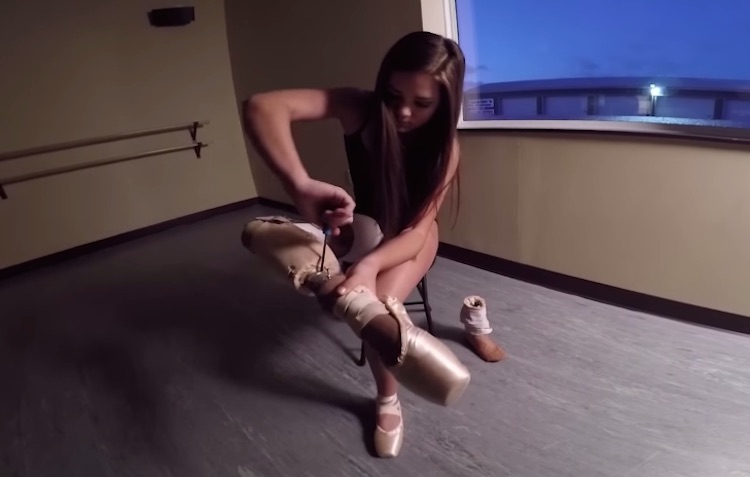
In order to cater to Gabi’s dancing needs, Andrews designed and manufactured a cone shaped prosthetic foot meant to mimic the “pointe” stance of a ballet dancer.
“They took out my knee area, which is the portion the cancer was in,” says Gabi. “They took my lower leg and foot, twisted it 180 degrees backwards, and attached it to my thigh. Whenever I point my foot, it straightens the prosthesis, and whenever I flex my foot, it bends the prosthesis.”
Gabi is not only an inspiration, but also an example – an example showing us that the beauty of dance comes not from an able body, but rather from the passionate heart that beats within.
(WATCH the video below)
Pointe Your Friends Over To Some Good News: Click To Share
Are you thinking of removing a tree that grew to block your sunny office window? If so, keep in mind that you may be able to do it without causing the tree’s certain death. With a new machine, it can be sent to a new home.
The Dutchman Curved Loader Mount Tree Spade is a machine designed to relocate trees instead of destroying them.
The blades of the machine dig into the ground around the roots, and hoist the load directly onto a truck, where it can be transported to greener pastures.
When Addie Rodiguez broke down into tears during a cheerleading routine, it only took a little boost to lift her spirits once more.
The 9-year-old was performing with her Central Catholic High School cheerleading team at a football game in San Antonio, Texas. During a special portion of the routine, the fathers of the cheerleaders are supposed to come in from the stands and hoist their respective daughters onto their shoulders.
Addie’s father, however, could not be there.
25-year-old Abel Rodriguez was at a military base in California for Air Force training.
When the the little girl started crying at the thought of her missing dad, an ROTC senior high schooler named Matthew Garcia dashed down through the bleachers so he could lift her into the air himself.
“(Addie) was kind of shocked and scared at first, but then when he knelt down to tell her, ‘I’m going to pick you up, too,’ she was really happy and thankful,” Addi’s mom Alexis Perry-Rodriguez told TODAY. “She said, ‘He saved my life, mom!’ He made her feel so good about herself.”
Lift Up The Good News: Click To Share – Photo by Alexis Perry-Rodriquez