













Scents from the past are being recreated using state of the art technology to give museum visitors a whiff of history.
Bio-molecular archaeology can bring ancient odors to life and allow people to breathe in the past.
Advances in the field have shown that ancient objects can retain the “molecular fingerprints” of past aromatic practices—and scientists say those molecules provide “unprecedented” insight into ancient perfumery, medicine, ritual, and daily life.
In a new study, published this week in the journal Frontiers in Environmental Archaeology, researchers showed how museums can use molecular evidence to engage audiences with the sensory worlds of the past.
The team, led by archeo-chemist Dr Barbara Huber, combined their expertise to create a new way of converting bio-molecular data into accessible, visitor-ready olfactory recreations.
“This research represents a significant shift in how scientific results can be shared,” said Dr. Huber this week, from the Max Planck Institute of Geo-anthropology and the University of Tübingen, Germany.
Dr. Huber collaborated with scent-based consultant Sofia Collette Ehrich to breathe life into scientific data with perfumery practices.
Building on that foundation, perfumer Carole Calvez developed a series of formulations that translated ancient chemical signatures into a scent suitable for museum environments.
“Bio-molecular data provide essential clues, but the perfumer must translate chemical information into a complete and coherent olfactory experience that evokes the complexity of the original material, rather than just its individual components,” she said.
“The real challenge lies in imagining the scent as a whole,” she said.
The team developed two ways for presenting ancient odors in public settings.
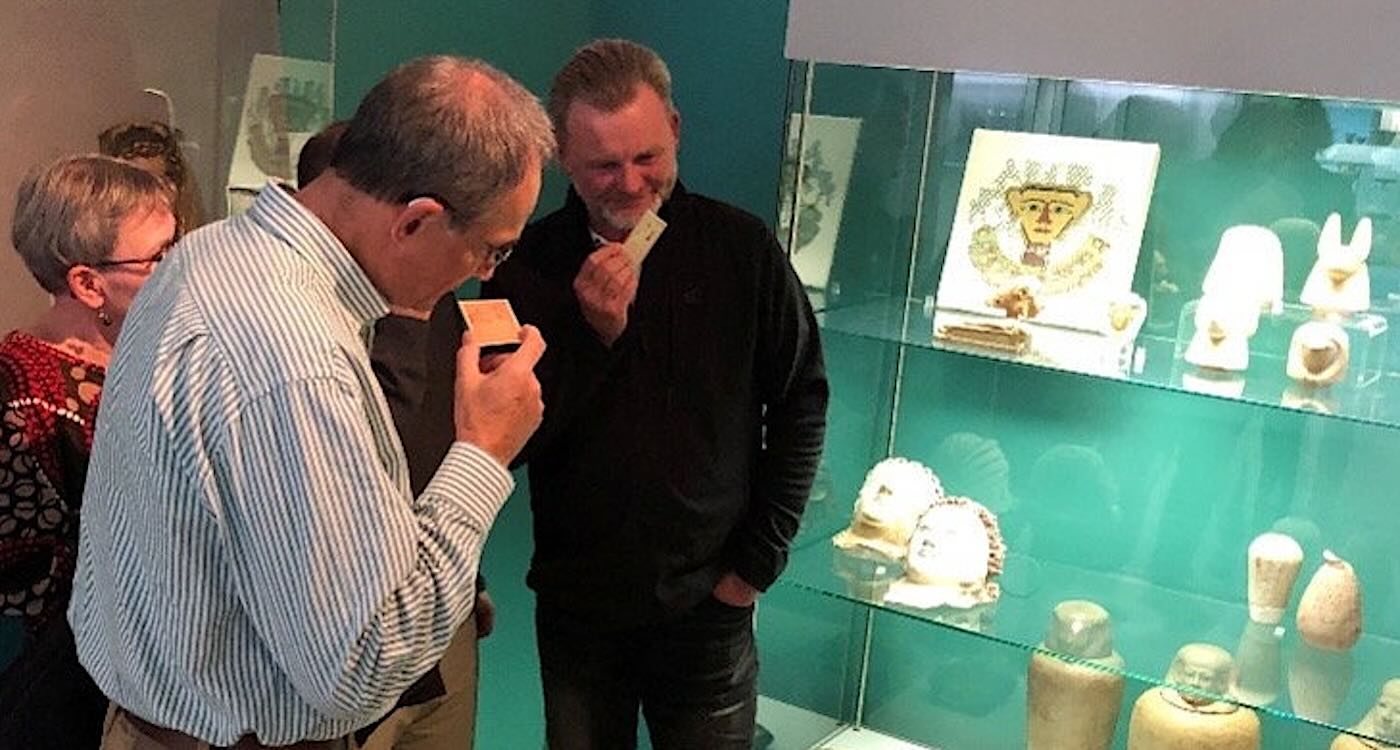
Most recently, they created a scented card, which quickly became an integral part of guided tours at the Museum August Kestner in Hanover, Germany. The paper holds the essence of the reproduced scent after it is inserted onto the card via scent printing.
ALSO SEE: Priestess Statue Found Preserved in Walls of Pompeii, Set to Star in New Exhibit on Roman Women
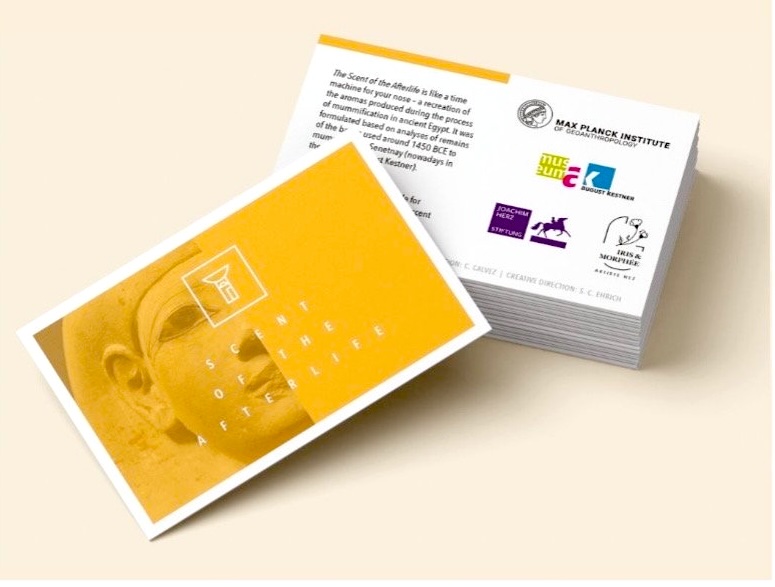
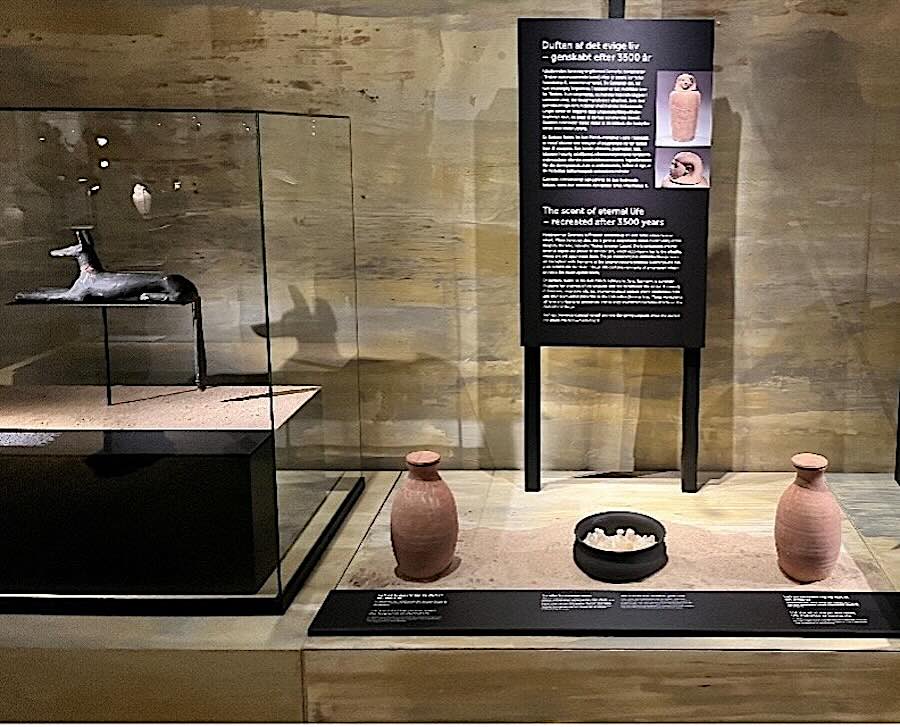
They also erected a fixed scent diffusion station (pictured above the card) that was integrated into an exhibition two years ago called, The Scent of the Afterlife, to provide a recreation of the aromas that accompanied the ancient Egyptian mummification process.
The team’s aroma analysis centered on the mummification substances used to embalm the noble lady Senetnay in the 18th dynasty, circa 1450 BCE.
“We analyzed balm residues found in two canopic jars from the mummification equipment,” said Dr. Huber. The team found that the balms contained a blend of beeswax, plant oil, fats, bitumen, Pinaceae resins (most likely larch resin), a balsamic substance, and dammar or Pistacia tree resin.
“These complex and diverse ingredients, unique to this early time period, offer a novel understanding of the sophisticated mummification practices and Egypt’s far-reaching trade-routes,” says Christian E. Loeben, Egyptologist and curator at the Museum August Kestner.
“The ingredients in the balm make it clear that the ancient Egyptians were sourcing materials from beyond their realm from an early date,” says Prof. Nicole Boivin, senior researcher on the project. “The number of imported ingredients in her balm also highlights Senetnay’s importance as a key member of the pharaoh’s inner circle.”
ART MYSTERY SOLVED: Mysterious Tunnels Sketched by Da Vinci Confirmed After 500 Years to be Hidden Under a Castle
The scent of a mummy
“Scent provides a new approach to mummification, moving away from the scare factor and horror movie clichés towards an appreciation of the motivations behind the actions, and the desired results.”
The fixed scent station was installed in the Moesgaard Museum in Aarhus, Denmark, to accompany the exhibition Ancient Egypt – Obsessed with Life.
“The scent station transformed how visitors understood embalming,” said curator Dr. Steffen Terp Laursen.
“Smell added an emotional and sensory depth that text labels alone could never provide.”
This work demonstrates how molecular traces of the past can be transformed into meaningful cultural experiences.
Ms. Ehrich says they can offer museums compelling new tools for bringing visitors closer to past environments and their peoples through engaging the senses.