








All News - Good News Network
Home Blog

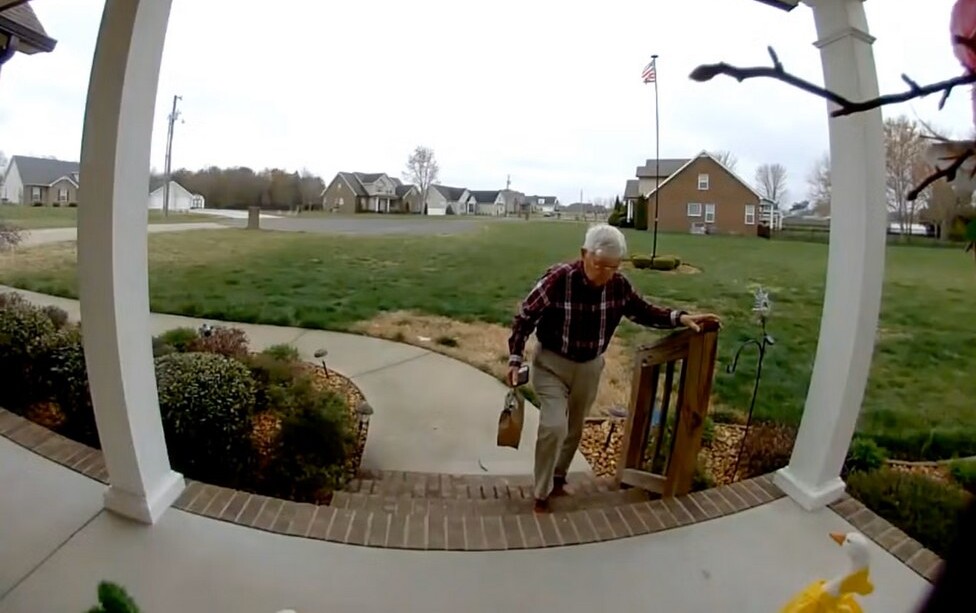
Blind BBQ Master in Dallas Blows Away Guests with Brisket Cooked by Touch and Smell

credit - Blindfolded Barbeque
credit – Blindfolded Barbeque

When clients ask Christopher Jones how he cooks the delicious barbequed meat at his restaurant, he answers, “‘Just like you, except I have to concentrate a little harder.'”

The extra concentration, for a blind man, is a necessity not an option. But as is so often the case, this became the mother of Jones’ invention.

Blindfolded Barbeque is located at 598 E Wheatland Road in Duncanville, a city of 40,000 in southwestern Dallas County, Texas. It features a simple yet delicious menu all prepared by Jones, a former tow-truck driver who 5 years ago was diagnosed with diabetic retinopathy.

In other words, his diabetes robbed him of his sight, but it couldn’t take his inspiration. No: this father of 7 not only had mouths to feed, but realized he could feed the whole neighborhood.

“It’s a conversation starter, and that’s what I want to do is just bring awareness to it,” Jones said.

Using his grandfather’s recipes, he acquired a simple restaurant space, set up a BBQ menu, and taught himself how to cook without sight: using touch, sound, taste, but particularly smell.

“I have to rely on a lot of smell because I can measure, but if I know it’s too much, then I’ll fix it,” he said.

BLIND INSPIRATION: This College Student Sportscaster May Be Blind, But He Sees Every Play (LISTEN)

You think about how closely guarded are the secrets of BBQ sauce and spice mixtures; of how precise some of them must be to win awards and create one of the most beloved of American cuisines.

And then, when you consider that Jones makes his without being able to see how much of any ingredient he’s adding, the sandwich or pork ribs between your fingers seems suddenly so much more delicious.

WATCH the story below from CBS News… 

SHARE This Great BBQ Spot With Your Texan Friends, And Give This Incredible Pitmaster Some Love… 

Cheese May Help Stave Off Dementia Suggests Study of 27k People Followed Over 25 Years

Coyau, CC license
Coyau, CC license

Researchers in Sweden found a link between eating more high-fat cream and high-fat cheeses and a lower risk of developing dementia.

People who consumed 20 grams or more of high-fat cream daily had a 16% lower risk of dementia than those who consumed none.

People who ate 50 grams or more of high-fat cheese—containing more than 20% fat—had a 13% lower risk of dementia than those eating less than 15 grams daily, according to the study.

No association was found for low-fat dairy products, butter, milk or fermented milk, which includes yoghurt, kefir and buttermilk.

The researchers emphasized that the study, published in the journal Neurology, does not prove that eating high-fat cheese and high-fat cream lowers the risk of dementia, it only shows an association.

“For decades, the debate over high-fat versus low-fat diets has shaped health advice, sometimes even categorizing cheese as an unhealthy food to limit,” said Professor Emily Sonestedt, of Lund University.

“Our study found that some high-fat dairy products may actually lower the risk of dementia, challenging some long-held assumptions about fat and brain health.”

Researchers analysed data from 27,670 people in Sweden with an average age of 58 at the start of the study. They were followed for an average of 25 years. A total of 3,208 participants developed dementia during the study.

The participants kept track of what they ate for a week and answered questions about how often they ate certain foods during recent years. They also talked with researchers about how they prepared their food.

A typical serving of cheese is one ounce. Of those who ate more high-fat cheese, 10% developed dementia by the end of the study. Of those who ate less, 13% developed dementia.

After adjusting for age, sex, education and overall diet quality, the research team found that people who ate more high-fat cheese had a 13% lower risk of developing dementia compared to those who ate less.

When looking at specific types of dementia, they found people who ate more high-fat cheese had a 29% lower risk of vascular dementia.

Researchers also found a lower risk of Alzheimer’s disease among those who ate more high-fat cheese, but only among those not carrying the APOE e4 gene variant, a genetic risk factor for Alzheimer’s disease.

The team also compared people who consumed 20 grams or more of high-fat cream daily to people who consumed none. After similar adjustments, researchers found that those who consumed high-fat cream daily had a 16% lower risk of dementia compared to those who consumed none.

Typically, observational studies that show links and associations are not considered useful unless the association reaches above 60%. In that sense, the value of the findings is questionable.

PRO CHEESE: 26 Years of Research Shows Cardiovascular Health in Dairy Lovers is Not Aversely Affected by Choosing Cheese

The healthy user bias is a feature of observational studies that can affect the outcome. It describes a phenomenon whereby people who are willing to make one choice regarding their health are more likely to make others, and that as their potential effects become difficult to separate out of the data.

Intuitively, one would guess a study influenced by healthy user bias would find a negative association with cheese and cream, since those who eat no cheese or cream will usually be making that choice in conjunction with several others to try and improve health, such as exercise or a higher quantity of vegetables at meals.

ALSO CHECK OUT: Trendy Type of Norwegian Cheese May Stave Off Bone Thinning, Shows New Study

People who don’t focus on health in their lifestyle and diet choices won’t exclude cheese cream—an inference because they won’t make any other choices. The results, being counter-intuitive, make the study results compelling even if the association with dementia was small

The fermented foods like yogurt and kefir, generally eaten for health reasons, showing no association only adds to the curious direction the data took.

The team says further research is needed to explore whether consuming certain high-fat dairy offers some level of protection for the brain.

MORE CHEESE NEWS: First Ever Cheese Museum Opens in Paris: ‘It’s Gouda Brie a Delicious Visit’

“These findings suggest that when it comes to brain health not all dairy is equal,” said Professor Sonestedt. “More research is needed to confirm our study results and further explore whether consuming certain high-fat dairy truly offers some level of protection for the brain.”

Sonestedt noted that in Sweden, cheese is often eaten uncooked, while in the United States, cheese is often heated or eaten with meat. She says it is important that studies also be conducted in the United States.

SHARE This With Your Cheese Lovers, And Plan A Fondue Night Maybe… 

Stunning Crocheted Christmas Tree Helped Knit Together a Community of Extraordinary Women – LOOK

Courtesy of The Crochet Collective

This incredible Christmas tree was designed and manufactured by incredible women in India’s state of Goa who felt another fake plastic Christmas tree was something the world didn’t need.

Made entirely of crocheted yarn, the community tree was designed to help revive a fading craft, feature women’s labor, and offer a sustainable alternative to plastic-heavy festive décor.

Located inside the Museum of Goa, the tree features more than a thousand individually crocheted squares made by 25 talented women of the Crochet Collective, an inter-generational, inter-continental collaboration that wields this introduced form of craft to help knit a community together.

Brilliantly told by Leila Badyari at The Better India, the story of this Collective effort begins in August, at the group’s first meeting over Zoom. Apart from the three organizers, Sheena Pereira, Sharmila Majumdar, and Sophy Sivaraman, none of the 25 crochet artists had met each other before.

The whole reason for their meeting was a dream that Pereira had about making a crocheted Christmas tree. If the surname here sounds distinctly un-Indian, that’s because Goa was a Portuguese colony, and crochet a direct, 15th century Portuguese import. Another of the 25 women is named Jennifer Fernandes, for example.

The crochet group began online during COVID, but Pereira wanted to take it offline with in-person meetups, and it was the connection with Sivaraman that gave her the impetus. At the Zoom meeting, no one could give an estimate on how big the tree would be, how it would be shaped, or how long it would take to finish.

“We decided to begin anyway,” Majumdar told the Better India. “We felt the place would come.”

And so the 50 skilled hands began their needlework, and as the weeks turned to months, the tree began to take shape. The Collective would meet at Majumdar’s home in Goa. There would be tea, coffee, music, and conversations of days gone by; of family, of childhoods.

Things really accelerated when a local civil engineer quickly welded a conical tree frame out of metal and donated it, along with the transportation, to the Collective without charging a rupee.

CRAFTS FOR GOOD: Terracotta Is a 3,000-Year-Old Solution to Fighting Extreme Heat

Suddenly, there was something on which to tie the 800 hand-crafted squares, and once they had the tree frame, the Museum of Goa opened its doors to feature the tree squarely in its “We Gather” collaboration.

The Crochet Collective
A civil engineer donated the metal tree frame – Courtesy of The Crochet Collective
Courtesy of The Crochet Collective

“It wasn’t supposed to be this big,” Sivaraman admitted, laughing. “But then again, none of us knew how big it would become.”

MORE STORIES FROM INDIAN CRAFTS: Textile Waste and Forgeries Cut from Indian Supply Chains with Brilliant Desk-Top Spectroscope

The question of size, during the monsoon season, quickly became a problem of size: the squares they had been weaving were too small, but they had used up almost all their yarn and couldn’t start over. So they began using their own yarn collections, or unraveling old pieces they didn’t care for anymore. The result was beautiful, unpredictable, originality.

“That’s why you see unexpected shades,” Sivaraman says. “Pink. Orange. Everything. There’s no factory-made decorations. Just what we already had.”

SHARE This Truly Unique And Irreplicable Christmas Tree With Your Friends… 

Lost Dog Found Chained to Pole 2,000 Miles Away Reunited with Family in Time for Christmas

Choco, the lost dog – Courtesy Helping Paws and Claws on Facebook

A sweet little lost pooch has come home in time for Christmas—to a bigger family than the one he left.

That’s because little Choco was gone for 5 years. But his hominid mama Patricia never gave up hope of finding him again.

It was 2022 when Choco disappeared from his Antelope, California home, and though the family sought help from neighbors and searched as far afield as felt reasonable, they couldn’t find him.

Then in November, Choco was identified by his microchip after being found chained to a fence in Detroit, more than 2,000 miles away. No one knows how he got there, but Helping Paws and Claws, a volunteer animal rescue charity, took responsibility for getting Choco home after he was taken in by the Lincoln Park Animal Shelter.

There must have been a fair few eyebrows raised at the shelter when the microchip turned up a dog registered to California, but Paws and Claws didn’t hesitate to reach out and even arrange air transit to get Choco back to his owners.

“Shocked,” Patricia described herself as being when she listened to the message on her answering machine. “I called the number, ‘You’re talking about Lincoln, California, right? No, Lincoln, Michigan.'”

Then, if the story needed anymore sweetness, a stranger named Pamela donated her SkyMiles to Penny, a volunteer with Paws and Claws, in order to fly Choco home to California.

MORE STORIES LIKE THIS: Dog ‘Remarkably Unscathed’ After Plunging 100ft Down Cliff Face After a Team Rescue

It had been 5 years since Choco was amongst his people, and over the years his family had grown. It hadn’t outgrown him, however, and his place on the couch was restored amid tears and laughter.

“Microchip your dogs,” Patricia said. “With the holidays and the extreme cold, a story like mine can be your story next.”

WATCH the story from CBS News… 

SHARE This Sweet Story Of A Long-Awaited Homecoming On Social Media… 

“Courage is found in unlikely places.” – J. R. R. Tolkien

Credit: Resource Database for Unsplash+

Quote of the Day: “Courage is found in unlikely places.” – J. R. R. Tolkien

Image by: Resource Database for Unsplash+

With a new inspirational quote every day, atop the perfect photo—collected and archived on our Quote of the Day page—why not bookmark GNN.org for a daily uplift?

Credit: Resource Database for Unsplash+

Good News in History, December 19

249 years ago today, Thomas Paine published his first essay under the pseudonym, Common Sense, to inspire American colonists in a language that the common man could understand. Paine knew that the Colonists weren’t going to support the American Revolutionary War without proper reason to do so, so he set out to persuade them. First entitled The American Crisis, it had its intended effect. READ the famous opening lines… (1776)

Cancer-Fighting Cells Engineered Inside Patients’ Bodies Rather Than Laboratory for the First Time

Histopathological image of multiple myoloma - credit, CC 3.0. via Wikimedia Commons
Histopathological image of multiple myoloma – credit, CC 3.0. via Wikimedia Commons

In a pair of groundbreaking studies, scientists replicated a time-consuming, laboratory-based, cancer therapy within myeloma patients’ own bodies.

If standardized, such an advancement would allow for one of the most successful non-chemo cancer treatments to be done both faster and cheaper.

CAR T-cell therapy involves retrieving a patient’s immune system component called a T-cell and using a virus to genetically add the CAR, or chimeric antigen receptor, to it. This process is done in a lab—typically outside the hospital where the patient is being treated—before the cells are shipped back for transplant.

The alteration allows T-cells to home in on cancer cells directly by penetrating the biological stealth capabilities tumors have, but is also expensive and laborious. If, scientists have considered in the last decade, the process could be done inside the body, it would save lives that are sometimes lost waiting out the month-or-so-long process it takes to alter the T-cells in the lab.

That’s exactly what’s been established in a pair of recent trials, the results of which were just presented at the American Society of Hematology’s (ASH) annual meeting.

In the team’s first trial in July, 4 patients with multiple myeloma, a kind of blood cancer, had their T-cells engineered in vivo with the CAR gene. They produced the altered cells, which successfully attacked the tumors in their bone marrow.

2 of the patients seemed to be cured, with the cancer cells no longer detectable in their bone marrow, and a tell-tale circulating blood protein also absent from their bodies. 2 others didn’t benefit to that extent, but appeared to be in remission after 5 months.

“The question is no longer can you really do this,” Yvonne Chen, a cancer immunotherapy researcher at UCLA, told Science News. “The question now is can you reach the level of efficacy that’s expected and will the safety profile meet the target.”

On the question of safety, the patients suffered from significant side effects, likely due to the effects of the deactivated virus used to reprogram their T-cells, which has been known to trigger flu-like symptoms that have even been fatal on occasion with the lab-based CAR T-cell method.

Interestingly, the flu-like inflammation was very mild in all 4 patients, who instead suffered from drops in blood pressure, lack of oxygen, and mental confusion. All recovered following the treatment process.

CAR T-CELL THERAPY AT WORK: Christmas ‘Miracle’ for 6-Year-Old with Leukemia Who’s Now Thriving After T-cell Therapy Instead of Chemo

In the second trial, another 4 patients with previously untreatable multiple myeloma had no detectable cancer cells in their bone marrow 1 month after treatment, a status maintained in one patient 5-months post-treatment. The side effects were less substantive for unknown reasons.

“I think it gives us a glimpse into the future,” said hematologist Joy Ho of the Royal Prince Alfred Hospital. “In vivo CAR-T for multiple myeloma is here and hopefully it will stay.”

CANCER IMPROVEMENTS: Oncologists Treat Patient’s Rare Cancer with Isolated Chemotherapy Delivery, Preventing Side-Effects

CAR T-cell therapy is also being looked at as a treatment for non-cancer diseases like autoimmune disorders. The lab-based process not only takes a month, but costs hundreds of thousands of dollars, and requires a particularly aggressive chemotherapy session to wipe out the existing T-cells before receiving the new, altered ones.

If the in vivo process can be rendered safer, it would allow hundreds more patients to access it, and save hundreds of lives.

Cancer Research Gets Better And Better: LET YOUR FRIENDS KNOW…

Polar Bear Adopts a Cub That Isn’t her Own – Extraordinary Behavior Caught on Camera

Polar bear with adopted cub – Credit: Dave Sandford / Discover Churchill / Polar Bears International

A wild female polar bear was recently filmed with a cub that’s not her own: a notably rare behavior that’s been determined to be an adoption.

It was filmed during the annual polar bear migration along Canada’s Western Hudson Bay in Manitoba.

There’s a reason why “red in tooth and claw” has been used to describe the natural world ever since society began attempting to establish laws as a means to separate ourselves from it: that’s because it’s true.

There are fewer places where this maxim clearer than in the world of bears, which engage in both infanticide and cannibalism. But a softer side, reinforcing the strength of the animal’s maternal instincts, was recently filmed and confirmed by scientists.

“Throughout over 45 years of tracking more than 4,600 individual polar bears in this Western Hudson Bay subpopulation, this is the 13th known case of adoption,” said Dr. Evan Richardson, a polar bear research scientist for the group Environment and Climate Change Canada.

“The mother, known as bear X33991, was encountered by researchers in the spring of 2025 as she came out of her maternity den, and she only had one cub, which was tagged. When she was seen again in the fall, she had two cubs, one with a tag and one without. Genetic samples were taken from the adopted cub and are being analyzed to try to identify its biological mother.”

OTHER ODD ADOPTIONS: 

There is more than one reason for polar bears to adopt other cubs, Richardson said in an email statement. In some previous adoption cases, he explained, biological mothers were known to still be alive, suggesting the cub wasn’t an orphan, but rather the subject of “switching litters.”

While the survival rate for any polar bear cub to adulthood is about 50%, having a mother provides a much better chance for the adopted cub. In the Western Hudson Bay population, 3 out of 13 adoption cases have survived to adulthood.

WATCH the footage below… 

SEND This News Over To Your Friend’s Social Media…

Colossal Statues of Ancient Pharoah Stand Again in Luxor After 30 Years of Work

- credit, Egyptian Ministry of Tourism and Antiquities
– credit, Egyptian Ministry of Tourism and Antiquities

On Sunday, Egyptian authorities unveiled the completed restoration works on two colossal alabaster statues of a notable Egyptian king.

Located in Luxor, and standing over 30 feet tall, the two statues were destroyed in an earthquake 1,200 years ago, making their reconstitution an awfully long time coming.

– credit, Egyptian Ministry of Tourism and Antiquities

King Amenhotep III (spellings may vary) ruled between as early as 1,388 BCE to as late as 1349, and presided over one of several zeniths in ancient Egyptian society. The 9th Pharoah of the Eighteenth Dynasty, he was worshipped as a deity during his lifetime.

His impressive mortuary temple on the Western bank of the Nile was guarded over by two enormous depictions, called the Colossi of Memnon. They were hewn out of Egyptian alabaster from the quarries of Hatnub, in Middle Egypt, and depict Amenhotep looking to the east and wearing a royal/godlike crown called the nemes headdress.

In the late 1990s, reports Africa News, an Egyptian-German mission chaired by German Egyptologist Hourig Sourouzian was working on the temple site and began to investigate the potential for reassembling the alabaster rubble into its original forms.

The works resulted in the discovery, restoration, documentation, reinstallation and lifting of many statues that existed in the temple, as well as some of its architectural elements—apart from the Colossi.

MORE EGYPTIAN MONUMENTS: 

The right-side statue’s torso and head are more complete than the left-hand side statue, which in turn has both of the legs the right-side statue is missing. The right side has an almost complete face, and even the serpent which crowned the nemes headdress over the forehead has survived through the ages.

The Secretary General of the Supreme Archaeological Council emphasized in a statement that all statue works were done according to the latest scientific methods and international standards approved in the field of archaeological restoration and the use of materials consistent with the nature of the archaeological stone, both ensuring their long-term sustainability and historical integrity.

SHARE This Brilliant Reason To Go To Luxor With Your Friends…

Ambitious Rewilding Project for Koala and Platypus Undertaken by Sydney’s Taronga Zoo

Supplied - Taronga Conservation Society
Supplied – Taronga Conservation Society

An Australian zoo credited with saving 7 native species from extinction aims to continue its vital work by rewilding a 3,050-acre tract of farmland.

The aim of planting a Box-Gum tree fores across the cleared land that would act as a corridor to help connect existing wildlife habitats.

The Taronga Zoo Conservation Society (TZCS) then plans to release platypus, koalas, spotted quols, and the Endangered regent honeyeater bird.

The farmland can be found on the Nandewar Range, part of the Australian continent’s Great Dividing Range, in New South Wales. It’s about 100-times bigger than the zoo the society maintains in the Sydney Harbor.

The TZCS estimates that around 1 million seedlings will be needed to return native tree cover, after which they suspect some species will come back quickly.

CEO Cameron Kerr told ABC News AU that experts would then monitor the manner in which these native species recolonize the area, and decide how to manage the species that would be expected to need a decade or more to fully reclaim their ancestral territory.

“What we are going to do is first of all establish the habitat and get the ecosystem looking after itself so that pest management and weed management will decline over time as the habitat becomes healthy,” Mr. Kerr said.

A regent honeyeater – supplied, Taronga Conservation Society
The landscape, in the Nandewar Range – supplied, Taronga Conservation Society

“At the right time we will assess what wildlife is coming in from outside and what wildlife we need to re-introduce.”

TZCS has a large body of experience in reintroducing native species. ABC claims that 60,000 animals, from tadpoles to larger mammals like koalas, have been bred, reared, and released through the society’s 16 targeted breeding programs.

AUSSIE LAND CONSERVATION: 

At the same time, rewilding landscapes will be a first for the zoo, and the Nandewar Rangeland is the only such project since it transformed 300 acres into the Western Plains Zoo in Dubbo.

Directors of the program are aware that the landscape isn’t free of invasive predatory animals like foxes and pigs, so feral animal control will have to be incorporated into plans. Kerr said that Australia can no longer rely on the forest landscapes it has left to protect native, threatened wildlife.

The nation has to actively start to restore native forests if citizens want the continent’s panoply of curious, native animals to survive long into the future.

SHARE This Important Project In New South Wales With Your Friends… 

“No man was ever wise by chance.” – Lucius Annaeus Seneca

Credit: Petr Slováček for Unsplash+

Quote of the Day: “No man was ever wise by chance.” – Lucius Annaeus Seneca (Roman philosopher, statesman, dramatist)

Image by: Petr Slováček for Unsplash+

With a new inspirational quote every day, atop the perfect photo—collected and archived on our Quote of the Day page—why not bookmark GNN.org for a daily uplift?

Credit: Petr Slováček for Unsplash+

Good News in History, December 18

30 years ago today, the Chauvet-Pont-d’Arc Caves were discovered in southern France containing remarkable cave paintings that are roughly 32,000 years old, the earliest-known and best-preserved cave art and engravings in the world. The site, located on a limestone cliff above the former bed of the Ardèche River, was first explored a few months after an opening in the Chauvet Cave was discovered. In addition to the paintings of lions, deer, horses, and rhinoceros, other human evidence was discovered from the Paleolithic era, including fossilized remains, footprints, and markings from a variety of animals, some of which are now extinct. READ About the paintings and their discovery… (1995)

A Volunteer Team of Grandmas Dispense Street-side Wisdom to Those Who Need a Considerate Ear

The Grandma Stand - credit, Graham Meyers for the City of McKinney
The Grandma Stand – credit, Graham Meyers for the City of McKinney

From Canada’s “As it Happens” comes a story by way of Texas of a “Grandma Stand” where volunteer elders offer to lend an ear to anyone beset by troubles.

Anyone can walk by the purple lemonade stand and sit down across from a real grandmother to chit-chat, ask advice, or just vent a little to someone who’s seen it all.

The idea was dreamt up by the New York City reporter Mike Matthews, who recommended a female coworker call his grandmother for a talk. The coworker, whom he described as a guarded Brooklyn hipster, admitted it was the “weirdest thing that anyone’s ever said,” to her.

Nevertheless, she called Matthews’ grandmother—95-year-old Eileen Wilkinson, and was so impacted by the connection after separating with her boyfriend of 5 years, that the two had chats every week for years.

The difference that Wilkinson’s empathy and years of wisdom made for Matthews’ coworker gave him the idea of opening a “Grandma Stand” on the streets of Brooklyn. His nan lived in Washington, so he left a cheap laptop with a video chat open and wrote a sign on the box that anyone who needed a bit of company could sit down and talk.

“I have no idea how many people she talked to through those years, but at least a thousand,” Matthews said. “She had never had any hesitancy caring and just being present with whoever sat down on that chair.”

Wilkinson passed away at the age of 102, but her legacy at that booth took on a life of its own.

Eileen Wilkinson and her grandson Mike Matthews – credit, Mike Matthews, submitted to CBC

Now in McKinney, Texas, a team of volunteer grandmas rotate counselor roles behind the same style of purple lemonade stand that Matthews first used with his grandmother and laptop.

“I’m officially old now,” 71-year-old volunteer grandma Nancy McClendon told “As It Happens” host Nil Köksal. “What’s the use of being old if you can’t share from your life experiences?”

The Grandma Stand is not Matthews’ exclusive copyright, and instead is replicated by others around the US, and may soon jump north to Canada. This spot in McKinney is a holiday-time pop-up, and McClendon was recruited through a local senior center.

WISDOM OF OUR ELDERS: The World’s Oldest Human Gives Us the Best Advice, Before She Dies at 117 Years

On her first 150-minute shift, she spoke with a father of three who wanted parenting advice, a young married woman with a fear about losing connection with her husband over the long term, and a couple struggling with fertility issues.

She admits she didn’t have answers for everyone, but it felt good to listen, and felt good for the speaker to know there was someone listening—even if she was a stranger they’d never see again.

MORE STORIES LIKE THIS: Japanese ‘Rental Grandmother’ Service Provides Much-Needed and Much-Loved Purpose for Older Women

Western society has done a very effective job at cocooning individuals into little pods, enlivened through digital connection. A general understanding is emerging that this is no way for our species to live, social primates that we are.

“We kind of know in our gut that we’ve lost a lot of connection, and true face-to-face connection,” McClendon said. “Which I think is what people find so refreshing [about] the novelty of sitting down in that setting.”

SHARE This Story With Your Friends Who Love Their Grandmas… 

‘Trashed Panda’ Story Raises $180,000 for Animal Shelter That Discovered it Drunk in the Bathroom

The now-viral and infamous 'trashed panda' - Courtesy of Hanover County Animal Protection and Shelter
The now-viral and infamous ‘trashed panda’ – Courtesy of Hanover County Animal Protection and Shelter

In early December, US social media airwaves got drunk off the hilarity of a Virginia raccoon that was discovered unconscious in a bathroom after breaking into a Richmond liquor store on what can only be described as a class A bender.

Hanover County Animal Protection revealed the story on Facebook after one of their officers was called to the scene to escort the raccoon off the premises.

One of the Hanover shelter’s merch options – Courtesy of Anja Tvrtkovic at Bonfire

Now, a fundraiser in honor of the event has raised over $180,000 for the shelter.

Known somewhat affectionately as “trash pandas” after their penchant for dumpster diving, it didn’t take George Carlin to reason that the raccoon caught in a drunk stupor was a “trashed panda.”

“On Saturday morning, Officer Martin responded to an unusual call at the Ashland ABC Store. Upon arrival, she discovered the ‘suspect’ had broken in, ransacked several shelves, and then… passed out in the bathroom,” Hanover County Animal Protection first wrote on Facebook on December 2nd.

“Officer Martin safely secured our masked bandit and transported him back to the shelter to sober up before questioning. After a few hours of sleep and zero signs of injury (other than maybe a hangover and poor life choices), he was safely released back to the wild, hopefully having learned that breaking and entering is not the answer.”

Two days later, Bonfire, a company that allows clients to upload their designs onto simple merchandise options like hoodies and tumblers, was offering a line of “trashed panda” merch, with all proceeds going towards the animal shelter in Hanover.

By December 5th, $100,000 had been raised.

Each shirt, hoodie, or coffee mug had a slightly artistic depiction of the collapsed raccoon in the photo taken by Officer Martin, next to an open liquor bottle and a hashtag for the animal shelter.

$100,000 eventually became $180,000, all of which will go to support the animals in their shelter and train their officers to respond to the next trashed panda, or any other animal in need of help or a counselor in the Lovers’ State.

SHARE This Ridiculous Raccoon And An Animal Shelter’s Fundraising Success…

Bostonians Wanted More Bike Lanes: Now They Have Them, and Traffic Is Down

A bike lane in Cambridge, Boston - credit, Photo by Adam Coppola taken under contract for PeopleForBikes
A bike lane in Cambridge, Boston – credit, Photo by Adam Coppola taken under contract for PeopleForBikes

The Better Bike Lanes project in the metropolitan area of Boston has led to a substantial increase in bicycle trips and a modest decrease in the number of motor vehicles on the roads at any given time.

Taking place between 2023 and 2024, the changes were revealed in a report from the City of Boston.

It was part of the election platform of Mayor Michelle Wu to install protected bike lanes around the city to satisfy a perceived demand for better cycling infrastructure.

By the autumn of 2024, much of the infrastructure had been installed, including bike lanes, bikeways, and new road crossings. The city then conducted a study to see whether that demand was genuine.

In some areas the change was more modest, such as South Street in Brighton, which saw an increase of about 16 bikes per day—a 22% rise from before the bike lanes. In other places, the results have been dramatic.

On Bolyston Street in the Back Bay neighborhood, there has been an 83% rise in the number of observed bike trips per day, from 615 before the addition of the bike lanes to 1,127 after. Bolyston’s bike lane is blocked from inconsiderate motorists looking for parking spots with metal bollards.

Down town, on Milk Street, almost 200 more bikes were recorded on its new single-direction bike lane than before its construction, when bikes had to use the automobile lanes.

Western Avenue, at locations along its length both in Allston and Brighton, saw over 200 more bikes—an increase of 51% in average per-day bike traffic.

US TRANSPORTATION OPTIONS: 

But how many of these cyclists were opting to leave their car in the garage and how many didn’t have a car to begin with? The data recorded a modest, 9% drop in the average traffic flows between September 2022 and September 2024 near Fairfield Street, and a 14% drop near Arlington Street.

Tiffany Cogell, executive director of the Boston Cyclist’s Union, told Mass Street Blog that the new bike lanes are “reducing crashes, improving predictability, and expanding mobility options without increasing congestion.”

“Protected bike infrastructure works,” she said. “This is exactly the kind of evidence-based policymaking our city needs.”

SHARE This Story With Your Friends Who Prefer 2 Wheels To 4… 

Their Husbands Were Killed by Tigers. Now These Women Are Restoring the Big Cat’s Threatened Habitat

Mangrove planting in the Sundarbans - credit, I-Behind-the-Ink, supplied to CNN
Mangrove planting in the Sundarbans – credit, I-Behind-the-Ink, supplied to CNN

They are called “swami khejos,” translated to “Husband Eaters.”

In reality, it’s just a superstition, as it was the tigers of the Sundarbans forest that ate these husbands, not the women.

This unique region of eastern India/western Bangladesh contains the world’s largest mangrove forest, and the 200 or so Bengal tigers that live there inhabit a watery world that they thrive in, consuming a diet of fish and crabs while swimming several miles at a time in search of prey.

The translation above was provided to CNN by the environmentalist and editor Arun Krishnamurthy, who reported on the extraordinary story of how these “tiger widows” have teamed up with young conservationists to help protect and restore the mangrove swamps, and, inadvertently, the tigers who widowed them.

“The women are working towards a cause that has disrupted their own life,” Saurav Malhotra, a project leader at international nonprofit Conservation International, told CNN. “It’s about restoring dignity and building resilience for these women and for the broader community.”

It’s not known how many tiger widows there are in the Sundarbans region, where villagers make much of their subsistence livelihoods through fishing the deep mangroves. But what is known is that this massive ecosystem enshrined as a UNESCO Natural Heritage Site is in danger.

Mangrove forests play crucial roles in the stability of coastal ecosystems. Their network of aerial roots help dampen storm surges, and they take up salt in their tissues that allow for a brackish water quality that’s permissible to both freshwater and saltwater fish.

Deforestation, however, has the effect of taking bricks out of a wall: it’s compromising this great swampy wall’s integrity. Fewer trees means increasing salinity, which means fewer fish. It also means the strength of monsoon winds and waves is absorbed by smaller root systems, increasing the potential for flooded cropland and destroyed villages.

MORE MANGROVE NEWS: The Largest Landfill in Latin America has Been Turned into a Mangrove Forest

Restoring the mangroves allow the villagers of the region and the tigers to thrive. The social organization and youth rewilding movement I-Behind-the-Ink is working with these tiger widows in the Jharkhali region of the Sundarbans, along the Matla River to restore 240 acres of mangrove forests.

It’s no mean feat, and will require hundreds of thousands of trees, but villages in the area like Laskarpur and Vivekananda Palli are no longer protected by mangrove swamps. A single man-made embankment prevents floods from the ocean from destroying their homes. Time is, quite straightforwardly, of the essence.

CONSERVATION INDIAN-STYLE: 12-Year-old Girl Plants 150,000 Trees in India, Becoming a Reforestation Leader

Saplings tended lovingly by the villagers for the last six months are now being planted in front of the embankment in a location that was previously cleared for easier fishing. The idea is that with time, and with every hectare restored, salinity and storms will ease, fish populations will increase, and there will be more food both for humans and tigers.

That latter aspect should result in less human-tiger conflict, and fewer tiger widows.

SHARE This Extraordinary Tale Of Coexistence And Recovery In The Face Of Tragedy… 

“Happiness is like a kiss. You must share it to enjoy it.” – Bernard Meltzer

Getty Images for Unsplash+

Quote of the Day: “Happiness is like a kiss. You must share it to enjoy it.” – Bernard Meltzer

Image by: Getty Images for Unsplash+

With a new inspirational quote every day, atop the perfect photo—collected and archived on our Quote of the Day page—why not bookmark GNN.org for a daily uplift?

Getty Images for Unsplash+


Good News in History, December 17

The first NFL Championship game program - public domain

92 years ago today, the first American football championship game was played—on the diamond at Wrigley Field—between the Chicago Bears and the New York Giants. Called the Championship, it was nevertheless to be the precursor to the Super Bowl of the modern era. Home field advantage went to the Bears after registering a better record of 10-2-1 to the Giants’ 11-3, and it was the home team that eventually won with a score of 23 to 21. READ more about the game that became the Super Bowl… (1933)

Footage of River Otter Scurrying Through Lincoln–a Delightful Reward for Decades of Conservation Work

credit - Lincoln Council, screengrab
credit – Lincoln Council, screengrab

In the dreamy old city center of Lincoln, where Tudor and Victorian buildings stand bedecked in Christmas gaiety, CCTV footage revealed a wild sight one evening in November.

A red fox and a river otter were galivanting through the town—as near to a scene in a children’s books or a Disney film as could be imagined.

No one knows, writes Patrick Greenfield for the Guardian, how many river otters exist in England, but the unlikely security camera footage reveals that unlike 20 years ago, these charming riverine mammals are no longer rare.

The Nottinghamshire Wildlife Trust described their rapid return to the waterways of Britain as “remarkable.”

“Twenty years ago, they were almost nonexistent,” said the Trust’s head of nature recovery, Janice Bradley. “Then we saw them coming up the River Trent from other areas. Now, we’ve got records of otters in virtually every river and watercourse in the county. It’s remarkable.”

100 years on from the collapse of animal populations across the Industrialized world, the stories of decline often repeat themselves. For the river otter, it was two of the most familiar—the pollution of rivers from industrial dumping, and overhunting for their furs.

But with both practices largely gone, and thanks to a targeted reintroduction campaign in the eastern areas of Britain, there may be as many as 11,000 river otters in the country.

Scientists admit that’s speculation, but it’s difficult to monitor their numbers reliably.

While outright dumping is much less common than it was in the first-half of the 20th century, the otters face other risks of water contamination. PFAS, the so-called forever chemicals, and microplastics accumulate in the water, which accumulate in fish, and therefore accumulate in the otters.

GREAT OTTER STORIES: 

Because of this, and because of their return, conservationists say that the otter can act as a powerful and charismatic national symbol for river health and water quality control.

It’s nothing personal, but the face of a fish is just not as moving to people as that of an otter, and something like the video from Lincoln offers better PR for environmental protection measures than even the largest, most glittering game fish caught by an angler.

WATCH the galivanting below…
SHARE This Delightful Story And Hilarious Footage With Your Friends… 

Antarctic Research Station Receives its Mail in a Shiny New Box–a Christmas Gift from King Charles

- credit, BAS / Jake Martin
– credit, BAS / Jake Martin

Imagine the charm of sifting through bills and junk mail in your mailbox and seeing the quirky script and colors of a handwritten Christmas card—now imagine you’re pulling it out from a box at one of the farthest point on Earth from any human civilization.

At the personal request of King Charles III, the Royal Mail has installed a traditional post box at the British Antarctic Survey’s (BAS) Rothera station, situated 1,155 miles south of the Falkland Islands.

Kirsten Shaw and Aurelia Reichardt, station leader at Rothera, are pictured with the new mailbox – credit, BAS / Jake Martin

Here, members of the BAS live and work for months on end in cold and isolation, and as winter comes to an end in the Southern Hemisphere, King Charles asked that a mailbox be brought to the station along with the usual supplies.

It was delivered by the UK’s polar research vessel RRS Sir David Attenborough, and arrived in time for Christmas.

Though letter-writing has become rare in the digital age, there’s one time of the year where it hasn’t fallen out of fashion—Christmas—and that fact isn’t lost on those frigid scientists who work at Rothera, mostly on climate research.

“If you’re doing fieldwork for many months, the feeling of receiving a letter—an actual tangible, piece of paper with handwriting from friends and family—is such a lift,” said Kirsten Shaw, a station support assistant who runs the British Antarctic Territory Post Office.

“It’s a wonderful way to connect people that goes beyond what an email or text message can do.”

The box, featuring the King Charles III cypher, is one terminal node in a series of three jumps that see the mail get to and from this remote territory.

MORE LETTER-WRITING STORIES: 

With the other terminal in Oxford, mail is shunted back and forth with a polar vessel like the Attenborough, and with a BAS plane which lands in the Falkland island of Stanley.

Ms. Shaw then sees the mail distributed to various science bases and camps in British Antarctic territories.

A commonwealth mail box in the Maldives – credit, Andrew Corbley

It could be said that the Royal Mail ranks among the most romantic of all British institutions. Red mailboxes maintained—sometimes infrequently—by the Royal Mail can be found all over the former Commonwealth, and a letter posed therein will be taken anywhere in the Commonwealth.

SHARE This Lovely Uplifting Story With Your Friends Who Love A Good Letter…