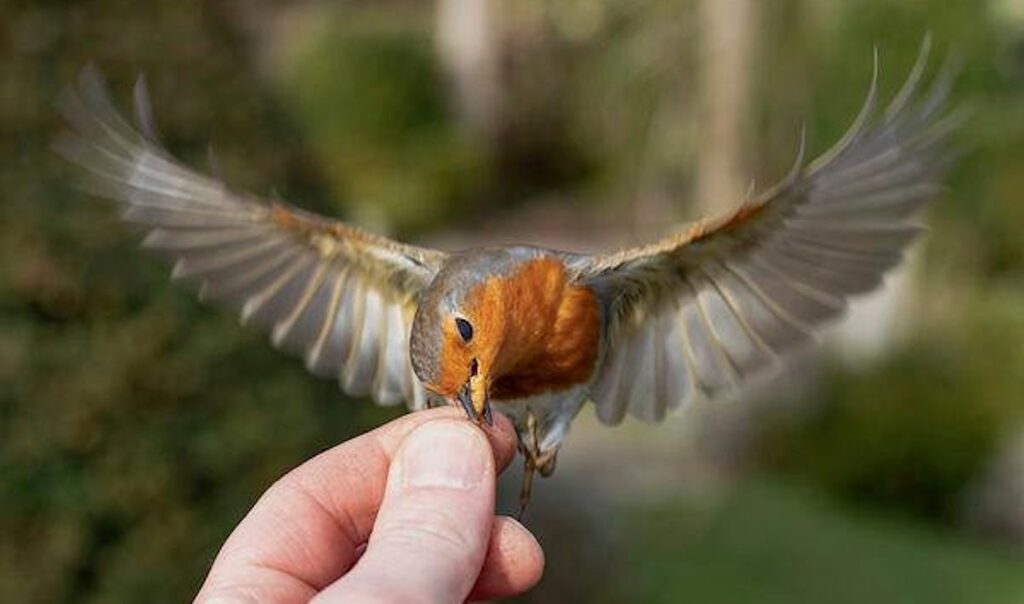
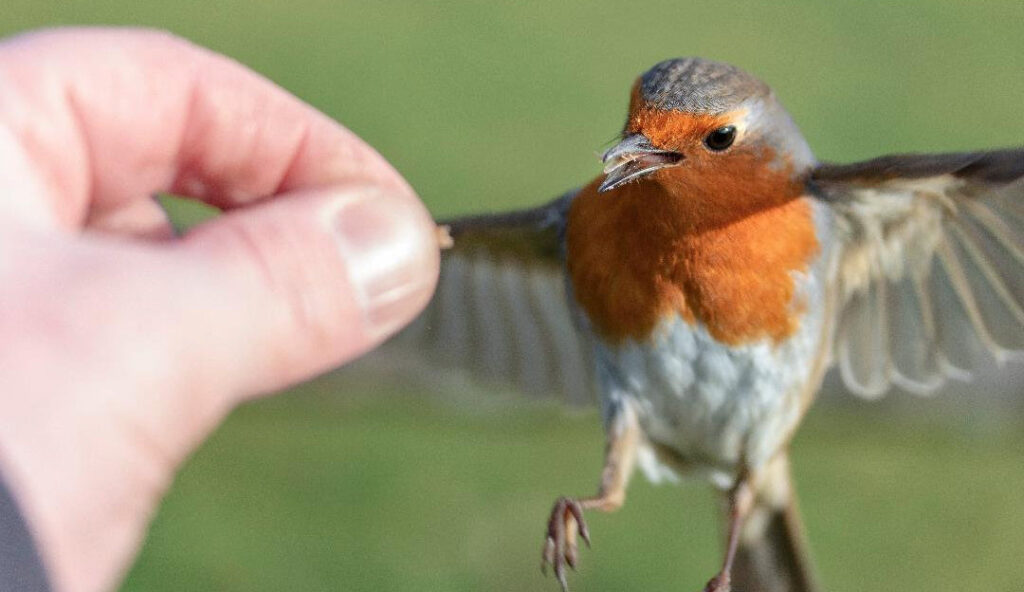
An English gardener became best friends with a European robin that comes flying whenever he hears the sound of the van turning up the driveway.
A couple years ago Tony Putman named the bird ‘Bob’, and began taking pictures of him in a garden where he worked twice a week.
Thanks to Bob, the landscaper has turned into an aspiring wildlife photographer, taking pictures of the friendly robin and the honeybees that collect nectar from the flowers.
Bob regularly collects meals directly from Tony’s hand every time he visits the garden.
”Bob is a bold, confident little robin,” said the 38-year-old who lives in Crowborough, East Sussex. “I’m basically a walking bird feeder and he knows it… although, I can also call him.”
Bob’s friendship couldn’t have come at a better time. Tony was going through a rough time when two dear friends became very ill.
“The saying is, ‘When a robin appears, a loved one is near,'” said Tony, who is often returning the favor.
When an annual music and arts festival held in the middle of an English national forest had to be canceled because of COVID-19, the organizers saw an opportunity to connect people, art, and nature all over the world—not only in Britain.
With normal levels of noise pollution disappearing during the coronavirus pandemic, they decided to create a free audio-library called ‘Sounds of the Forest,’ while inviting anyone who was interested in collaborating to publish some sound clips to help expand it.
Featuring a map of the world, forest-goers can record the sounds of their local woodland and upload it via Soundcloud to appear as a dot on the map where anyone can click and listen to it. Some contributors are knowledgeable enough to add in field notes to help listeners understand what they are hearing.
For instance, in Tamin Negara National Park, Malaysia, one recordist notes the sounds of magpies and robins in the late-morning hours.
Since social distancing meant, in some cases, governments cutting off access to parks, and in other cases making nature the only viable place to go in order to get out of the house, it was the most logical way to bring the spirit of the Timber Festival into people’s lives.
Appropriately named Sarah Bird, the director of the festival’s partner Wild Rumpus, talked about the impact in an email with Tree Hugger.
“It was after we launched the project that we realized just how mindful the process of recording would be and how it makes you stop and listen to the harmonies of the natural world.”
Wild Rumpus, the “social enterprise” that aims to create public arts and culture events in natural spaces, helps to organize the Timber Festival every year at Feanedock in the English National Forest where musicians, artists, crafters, writers, speakers, and other presenters spend three days creating, sharing, and camping out under the trees.
“We’re thrilled with how many recordings have been contributed from forests and woodlands all over the world for our digital forest soundmap,” says Bird.
For the entire map, head over to Timber Festival’s website and click Sounds of the Forest where you can listen to forests across the world.
There are currently only a couple dozen audio files uploaded from North America so, if you live there, why not take some time to upload your own woodland wind chimes.
SHARE The Sounds of The Forest With Your Friends on Social Media…
All newborn babies are fragile, but none more so than those whose first days are spent in neonatal intensive care.
When the category-4 Hurricane Laura threatened the city of Lake Charles in Louisiana, a mandatory evacuation was ordered, but for 19 of its newest residents, leaving was pretty much impossible.
Staff members at Lake Charles Memorial Hospital were adamant: If the babies couldn’t be evacuated safely, they’d remain behind with them until the danger passed.
With wind gusts of up to 135 miles per hour hammering the town, neonatologist Dr. Juan Bossano along with a team of 14 nurses, two neonatal nurse practitioners, and three respiratory therapists stayed behind in the NICU, caring for their tiny charges in shifts as the storm raged through the night.
Earlier in the day, the babies had been ferried from the single-story Lake Charles Memorial Hospital for Women to the hospital’s sturdier 10-floor main building. Some of the infants were on respirators or ventilators; some were born premature—as early as 23 weeks
Matt Felder, director of communications for Lake Charles Memorial Health system told CNN, “We transferred 19 NICU babies from that facility to our main campus…in record time—19 babies across the city in under two hours.”
Doctors, hospital residents, members of the sheriff’s department, and a host of others all pitched in to make sure the babies and everything necessary for their care—including respirators and incubators—safely made the trip.
ICYMI: Winds howled, water leaked through windows and the generators kicked on at Lake Charles Memorial Hospital. Despite it all, the NICU staff kept all 19 of its babies safe through the Category 4 storm. (via CNN) https://t.co/Milx67xDHw
By the time the worst of the storm hit, the staff and the babies were hunkered down in the hallways, as far away from the howling winds and whipping rain as they could get.
“It’s important to know the dedication of all the nurses and the respiratory therapists to keep taking care of the babies when they don’t even know the condition of their homes,” Dr. Bossano told CNN. “In a small town like this, people have to pull together. I’m proud of them.”
During the night, the air conditioning was knocked out and the hospital lost water service. Throughout the ordeal, Dr. Bossano kept anxious parents and relatives updated via frequent posts to his Facebook page.
With the storm over, and all of the little patients faring well, the babies were set to be transferred to other area NICUs where vital services hadn’t been interrupted by the hurricane. “This morning because the babies were stable, I got a couple of hours of sleep—we are still in the hospital,” Bossano said.
The old lullaby warns, ‘When the wind blows, the cradles will rock,’ but for the heroic staffers at this hospital, letting them fall simply wasn’t an option.
PASS The Kindness On And Share The Story With Your Friends…
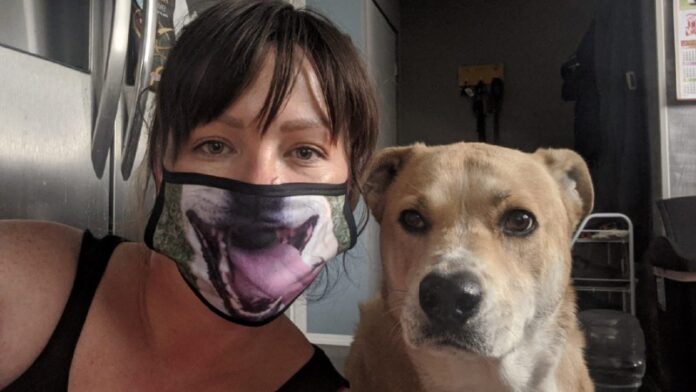
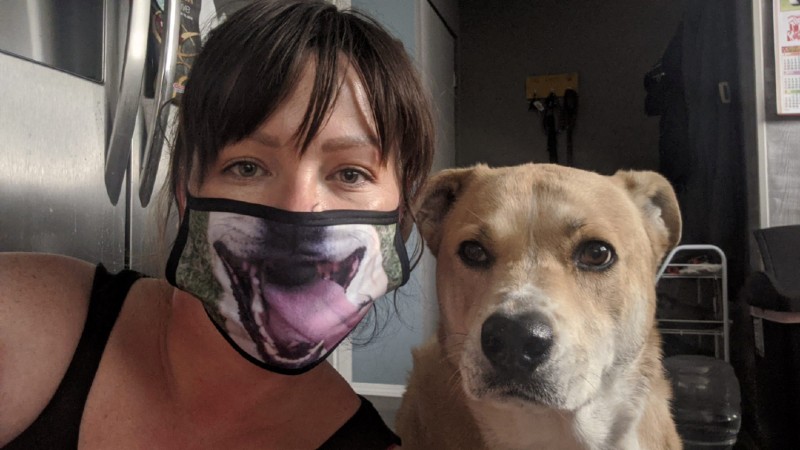
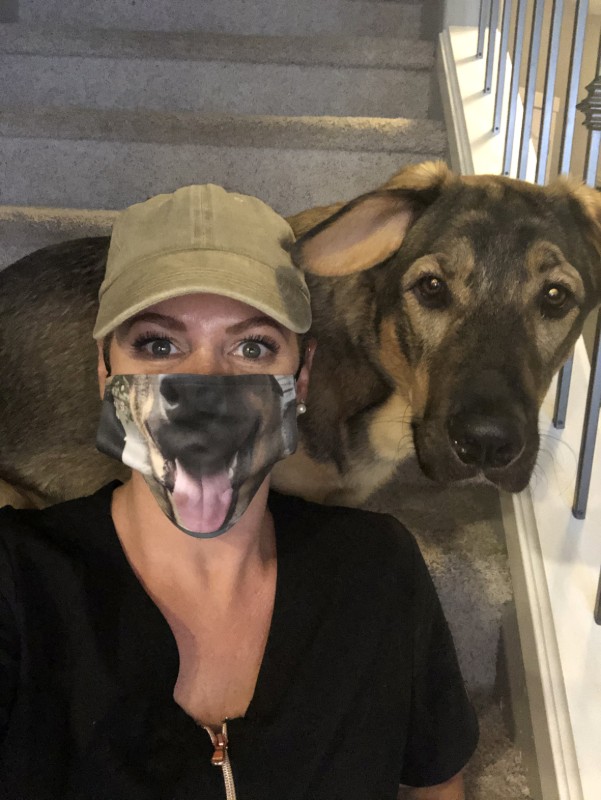
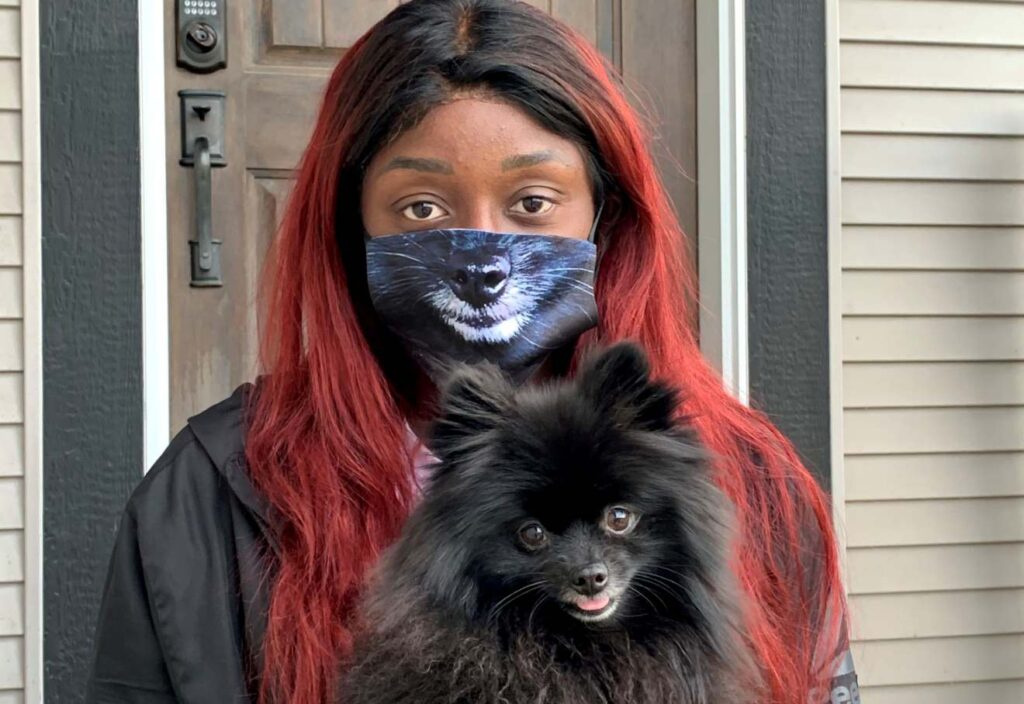
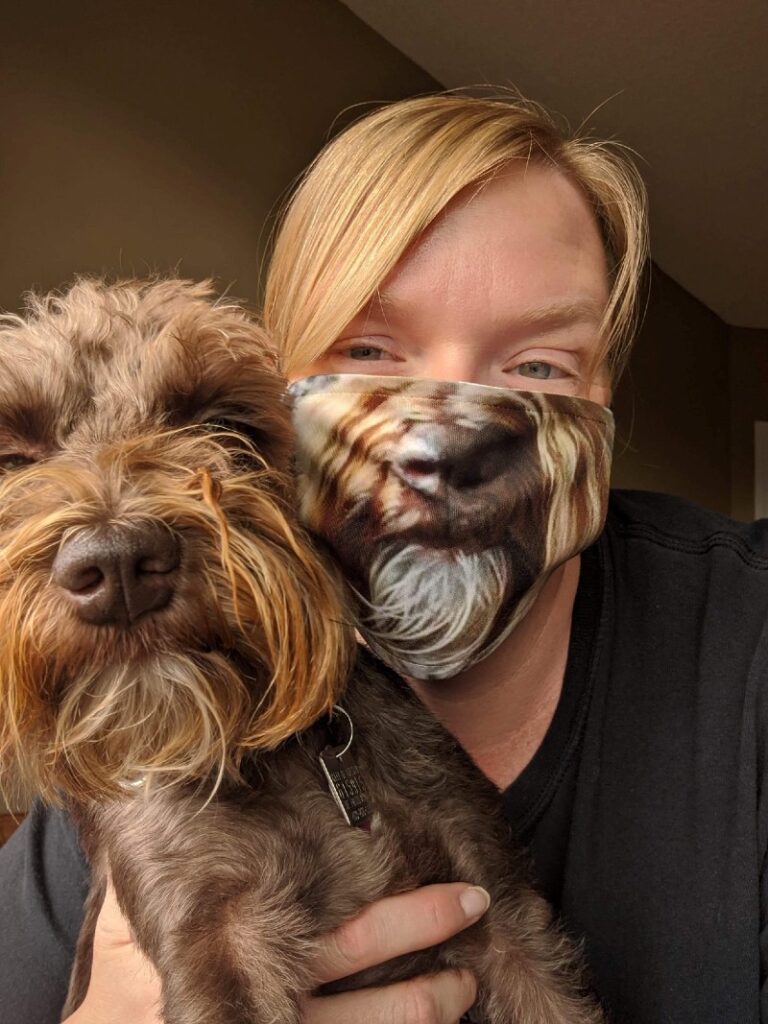
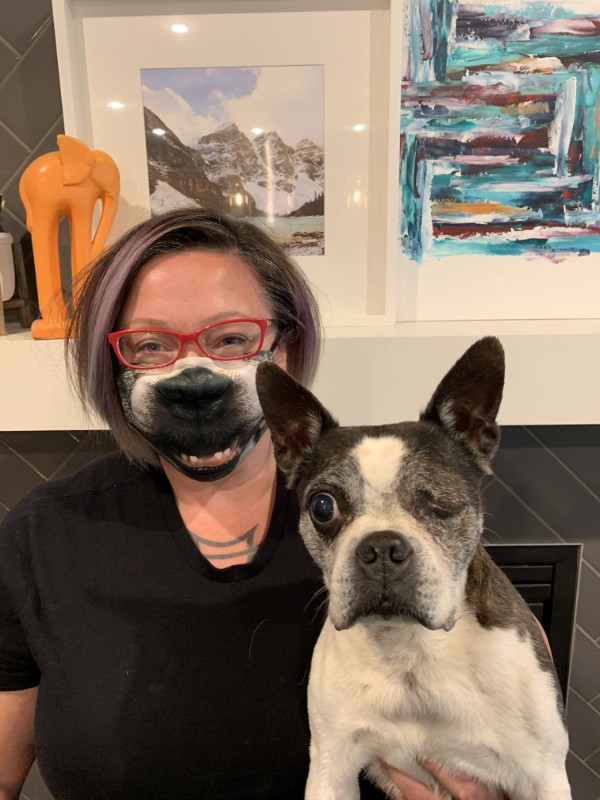
Animal owners can now wear face masks adorned with their pets’ mouths. And the results? They’re fun, sweet, and often hilarious.
Credit: SWNS
Dogs And Dorks, an Etsy shop, will print a mask with the snout of your beloved dog or cat and has already sold 100 of the personalized items in just three weeks.
Danielle Schule, who owns the shop with her friend Denise Smandych, said she was inspired by her dog Ragley’s crooked teeth.
The operations manager from Calgary, Canada, said, “I was staring at my computer and my Boston terrier smiled at me.
“I snapped a picture of him, his teeth are so gross and funny and I decided to put them on a mask.”
The fun face coverings have proved popular and orders have flooded in.
Delighted customers even send Danielle pictures of them wearing the masks beside their bemused pets.
“They make people laugh,” Danielle said. “I have received a lot of requests because it makes it more fun for the kids to wear masks.”
And it’s not just cute pups and sweet kittens being printed onto masks. One snake owner even asked for a mask printed with the fangs of his pet reptile.
“He sent us a fantastic picture and we did it and he was ecstatic.”
The masks cost $15 [$20CAD] and owners supply their favorite picture of their pet for Danielle to use.
She added that she hoped the amusing masks will make more people inclined to wear them.
Quote of the Day: “In proportion as anger comes, sense departs.” – Turkish proverb
Photo: by cyrus gomez
With a new inspirational quote every day, atop the perfect photo—collected and archived on our Quote of the Day page—why not bookmark GNN.org for a daily uplift?
A dedicated wildlife photographer has spent three years amassing a stunning collection of images of the UK’s most beautiful butterfly species—some of which he took right from his backyard during lockdown.
Credit: SWNS
Andrew Fusek Peters has captured the series of colorful shots after studying the behavior of butterflies in the British countryside since 2017.
Incredible photographs show 17 different species of the winged insects in full flight or taking off from flowers across Worcestershire and Shropshire.
Andrew says he took over 150,000 frames to achieve his unique collection of images and believes he is the first person to shoot such a variety of butterfly species.
His photos include everything from the painted lady, green hairstreak, marbled white, silver studded bleu, and red admiral, to the dark green fritiallary and Essex skipper butterflies.
The 54-year-old from Lydbury North said, “I’ve spent three years studying the behavior of UK butterflies and working to capture them in motion. It was worth the effort to show their incredible delicacy and beauty in flight… quite a lot during lockdown were in my garden.
“I’m using a very high speed camera to shoot the butterfly in flight and it also requires understanding and knowledge of when the butterfly is going to take off.
“There are very few shots like these in the world because there are very few people who can capture a butterfly in focus as it takes off from a flower.
“I shoot at 50 frames per second and I haven’t got them in a studio. I’m out in the wild and I’m able to get up close and personal.
“My favourite is the Brimstone because of its beautiful, buttery colour. They say the word butterfly from Old English comes from the color of the Brimstone.
In my image, “you can actually see the shadow of the proboscis, which it uses to drink nectar from a flower. It is extraordinarily clear.
Credit: SWNS
“The wood white is quite rare and an extraordinary color and beautiful in flight.
“The clouded yellow is fairly rare and flies over from Europe, but what’s super rare is to get them all in flight.
“My next big project will be to take flight shots of every single one of the UK’s butterfly species. I’ve set myself a mad challenge as there’s been 71 recorded in Britain.
“I think that will take another five years and require a lot more travel across the entire country.”
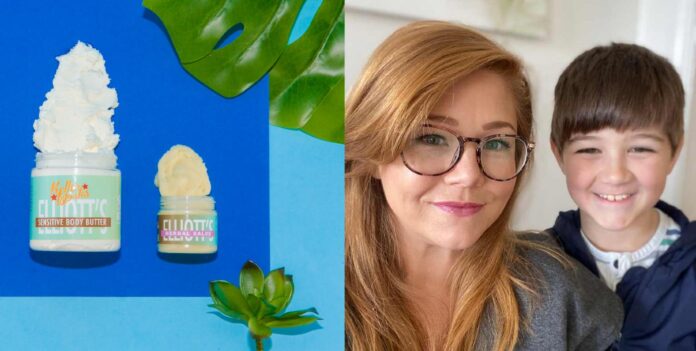
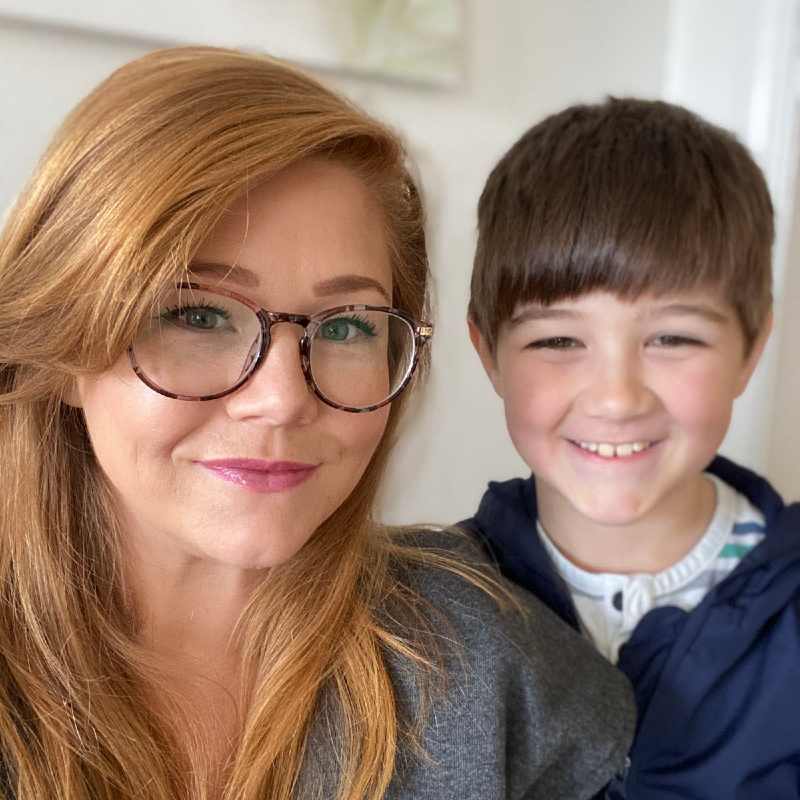
Determined to create a natural cleanser to help her infant son’s eczema and allergies, this Alabama mom learned how to create an allergen-free soap with the help of YouTube tutorials.
Credit: YouTube
Krystn Keller tells GNN, “I started Googling how to make soap, and then it took me to YouTube. After months of trial and error and watching endless amounts of tutorials, I finally perfected a recipe that worked for Elliott.”
She didn’t stop there. Krystn really wanted to share her natural, hypoallergenic recipe and help others who might be struggling with eczema and other issues, so she created her own soap line. Now Keller Works is a nationally sold brand.
“From what started as a small business in my backyard has now turned into a full skincare brand, with customers based all over the country,” she said proudly. “We’re able to provide jobs to our local community in Mobile, all while making a positive impact and helping other families in need.”
These days, Krystn is still exploring new soap recipes on YouTube—all while providing millions of people with all-natural soaps that are gentle on sensitive skin.
(WATCH her inspiring tale below.)
SHARE This Soapy Story of Hope With Your Friends On Social Media…
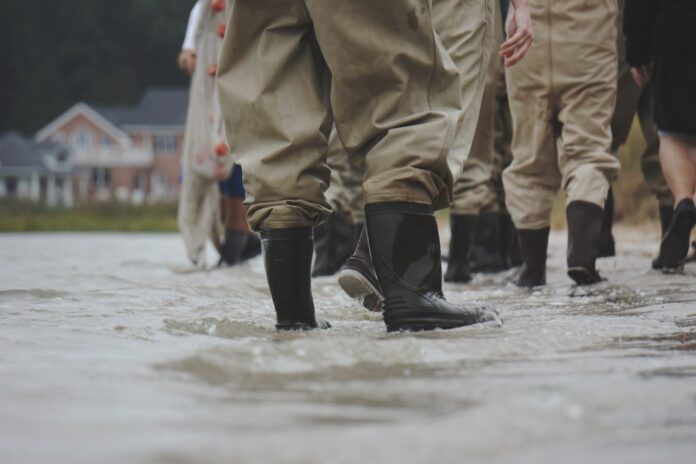
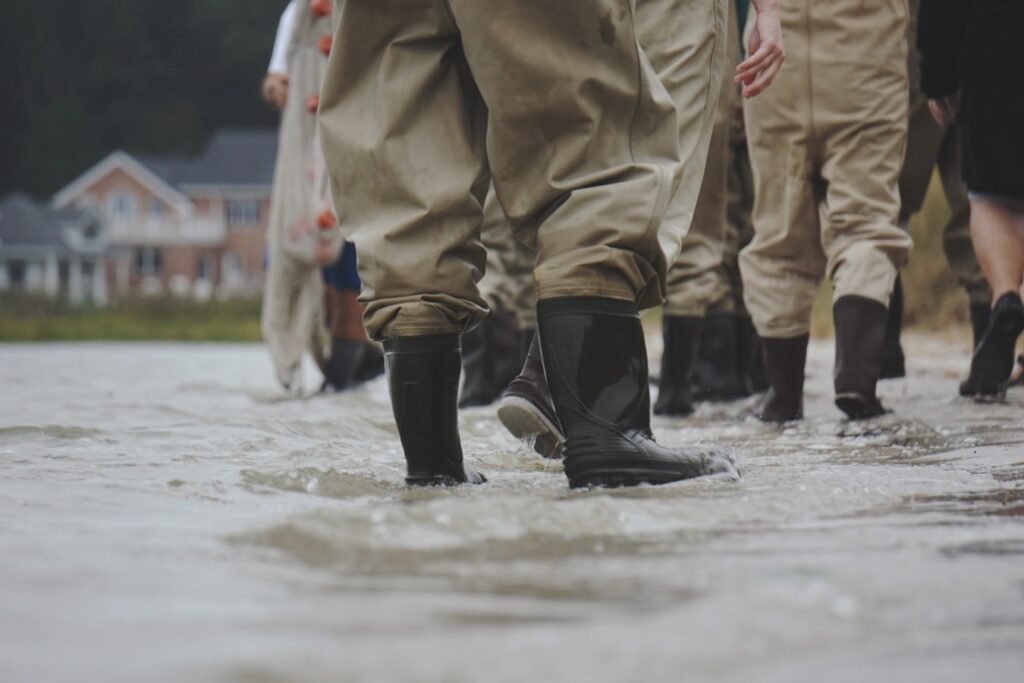
Since buying a home will be the most significant financial decision of most people’s lives, prospective buyers deserve to understand the full cost of their investment. That’s why a nonprofit, First Street Foundation, is compiling an updated list of the flood-insurance risks for millions more properties nationwide and publishing their findings online for all to see.
Credit: TBEP/Unsplash
As changing climatic conditions have resulted in storms of greater strength and in greater numbers, the nonprofit group is filling in the massive gaps in the Federal Emergency Management Agency (FEMA) flood zone designations.
“Unfortunately, inaccurate FEMA flood maps and nonexistent or weak real estate disclosure laws make it extremely difficult for home buyers to learn of a property’s flood risk or even its flood history,” Joel Scata who studies flood risk at the Natural Resources Defense Council, told NPR.
FEMA has around nine million properties in flooding zones, wherein homeowners would be required or advised to buy flood insurance, however First Street Foundation’s clever combination of data has produced a more accurate flood risk map that takes into account climate change, sea level rise, and altered rainfall patterns and storm paths, and that will continue to update faster and more efficiently than FEMA’s flooding maps.
Through the unprecedented partnership of more than 80 world-renowned scientists, technologists, and analysts working together, First Street was able to identify an additional 14.5 million homes that are in potential flood areas.
Their tool, Flood Factor, allows you to enter a zip code and bring up anything that’s available on homes in that area.
Realtor.com
However, the effort has been looked at glumly by major real estate companies and homeowners alike who are worried that flood risk designations would diminish the property value of their homes.
But Realtor.com agrees that buyers deserve to know everything, risks included, about a home before making a purchase, and now all 110 million listed properties on their website contain either publicly or privately assembled flooding data.
“They can elevate their home on stilts. They can add a sump pump into the basement. They can install a rain garden outside,” Realtor.com executive Leslie Jordan told NPR. “But they must know their risk first.”
HELP Your Friends Prepare And Share The News On Social Media…
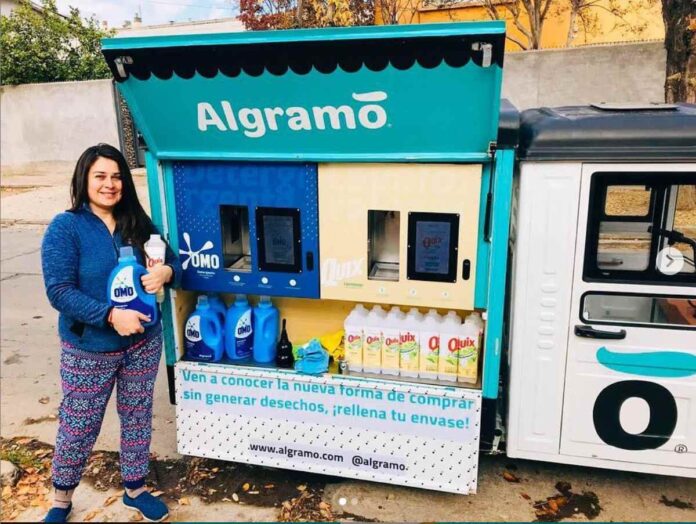
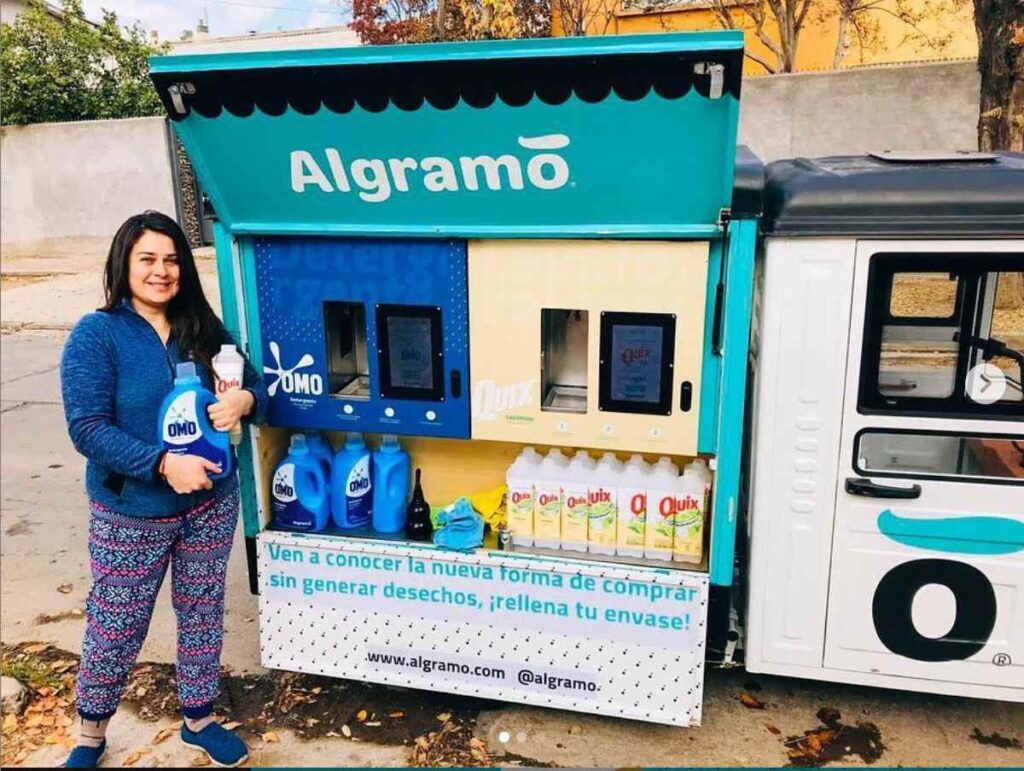
A Chilean startup is bringing their successful model of cleaning product vending machines to New York City, helping residents save money and avoid single-use plastics.
Credit: Algramo/Instagram
Buying by weight at a fixed price, can help low-income consumers avoid the higher averaged costs of buying smaller versions of products, when they have limited dollars.
Back in Santiago, Algramo operates electric-tricycles with the vending machines mounted on the back, while in Brooklyn, the idea is to leave them at commonly visited shopping locations such as laundromats.
At the machine, customers can use the Algramno app and digital wallet.
They use reusable bottles with RFID codes to buy as much of the product as they need while receiving a discount if they use the same bottle code again.
The initiative is funded by a grant from Closed Loop Ventures, a New York-based venture capital firm that funnels investment money to startups that contribute to their vision of the circular economy: a strategy in which all waste products are used in other production systems.
Algramo’s founder Jose Manuel Moller launched the product in low-income grocery stores selling staples like rice instead of cleaning supplies. Here he recognized one of Algramo’s true advantages—the ability to allow consumers cheaper ways to buy in bulk, which can allow Chileans to save 140% on groceries bought in small amounts over a certain period.
This kind of poverty tax is something which low-income earners understand all too well.
“When you buy in small formats, you pay from 30% to 50% more for the product, depending on what the product is,” Brian Bauer, who works on the circular economy and strategic alliances at Algramo, told Fast Company.
“And then in doing that, you also produce a lot of packaging waste. That’s typically the type of packaging waste that’s most likely to escape into the environment because it’s smaller format, and it’s also in low-resource areas where there aren’t very good waste management systems in place. So there’s a lot of that packaging that ends up in the environment, ultimately, in oceans or other places it shouldn’t be.”
Slated for its Big Apple debut later this year, the rollout of the Algramo machines has been accelerated due to the COVID-19 pandemic, with some partners like Clorox and Colgate-Palmolive already on board.
Algramo is also in talks with different apartment complexes about providing Algramo hand-sanitizer refill stations in shared areas like laundry rooms. They may not delight the appetite in the same way a slurpee machine might, but these vending machines are helping the planet and helping wallets. That’s enough.
INFLUENCE Your Friends to Think ‘Beyond Plastic’ – SHARE On Social Media…
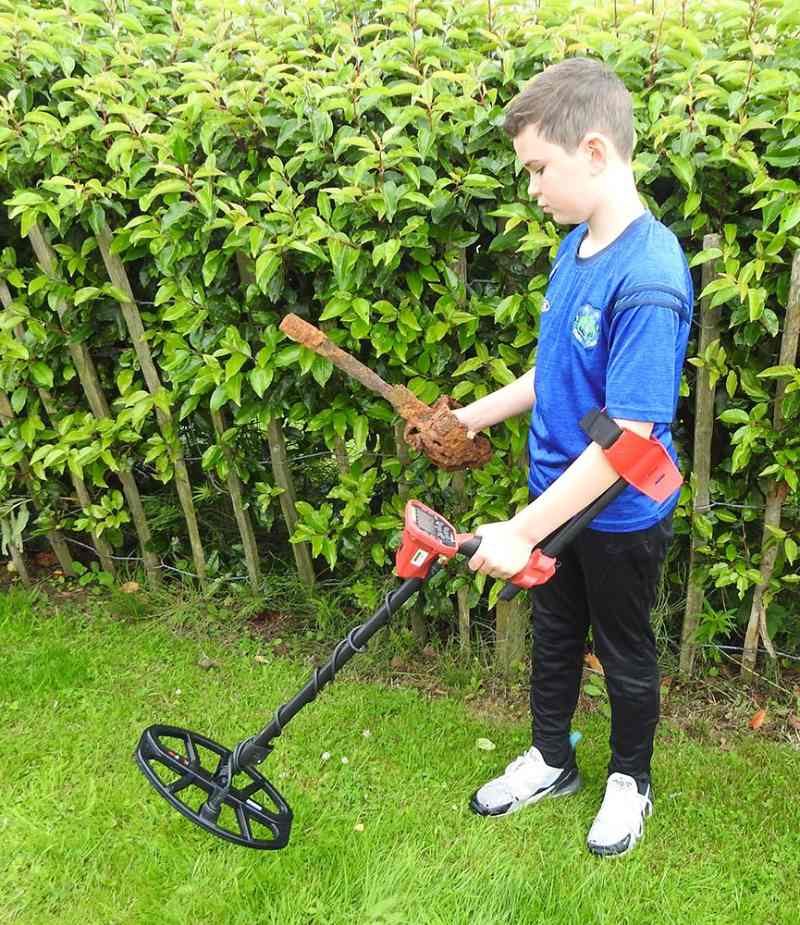
Once upon a time in a green and pleasant land lived a boy who dreamed of buried treasure. Armed with a brand-new magic wand, he set out one day to see what he could find. He’d scarcely waved the wand once when, lo and behold, an ancient sword was revealed to him.
Credit: Clonoe Gallery/Facebook
Only this wasn’t a fairy tale. It was real life. (Okay, so the magic wand was a metal detector.)
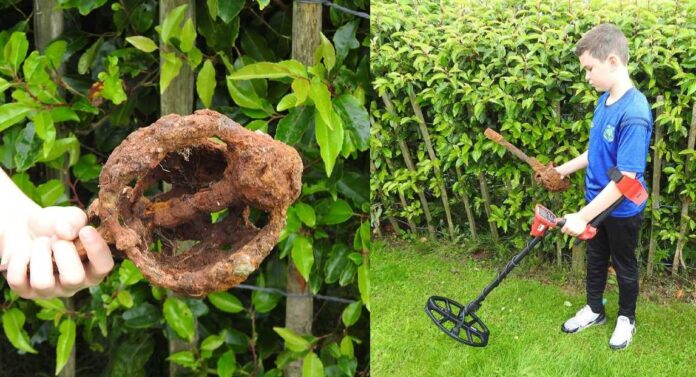
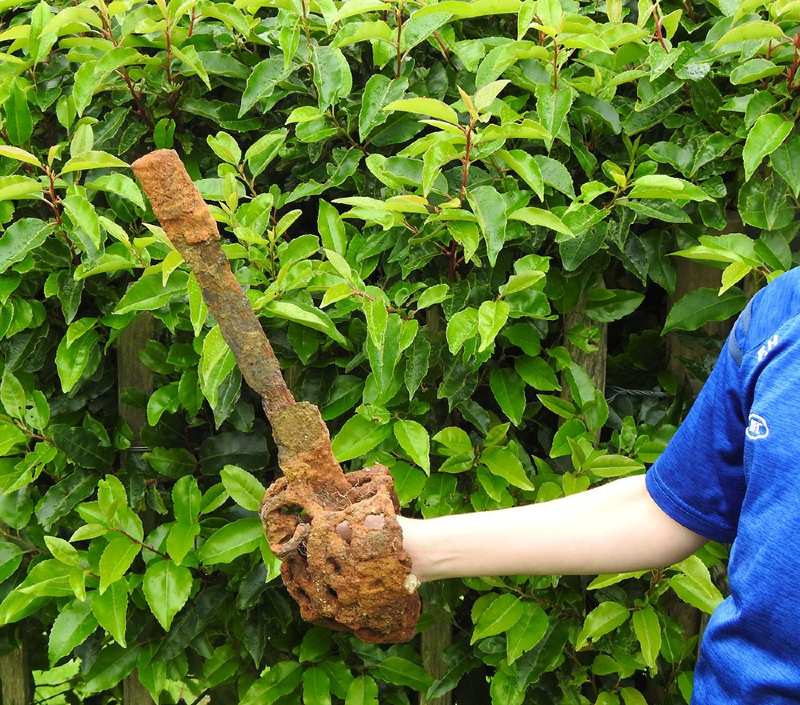
When 10-year-old Fionntan Hughes of Northern Ireland got a metal detector for his birthday in July, he was eager to try it—and the first time he did, he found a buried treasure—or more accurately, the remains of a 300-year-old sword buried on the banks of the River Blackwater near his family home.
“I felt excited… it was a sword and it was just here… I didn’t really expect anything too big,” Fionntan told BBC Newsline.
The metal detector’s first two pings turned up nothing significant, but the third ping turned out to be the charm.
Fionntan was with his father, Paul Hughes, and a cousin, when he made the discovery in Derrylaughan in County Tyrone.
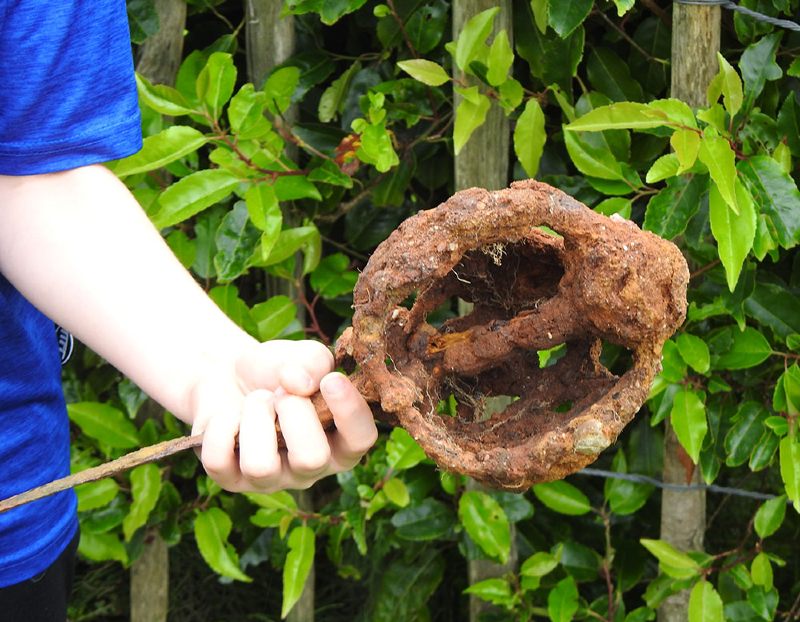
The trio had no idea what the mud-covered object they dug up might be until they brought it home and cleaned it up—it was a centuries-old sword.
Philip Spooner, an antique arms dealer with 30 years’ experience, told the BBC he believes the sword’s ornate design and “plum pudding” pommel points to it most likely having belonged to an English officer.
“[It’s] a basket hilt-type sword as used by English officers and dragoons from about 1720 to 1780, or it could be a Scottish basket hilt of about 1700 to 1850.”
Once the Hughes family realized what they found, they reached out to the National Museum’s Northern Ireland archaeology curator Greer Ramsey to better identify the sword. “The last thing I want is for it to be left rusting away in my garage, deteriorating by the day,” the elder Hughes said.
Credit: Clonoe Gallery/Facebook
For the moment, the fate of the sword remains up in the air. Where it ultimately ends up will be determined by the authorities per the U.K.’s Treasure Act of 1996.
Where once in a myth, a boy named Arthur pulled the enchanted sword Excalibur from a stone to become the rightful king of Britain, Fiontann Hughes won’t soon be inheriting England’s throne—but, at the end of the day, being able to find and hold a piece of living history in his hand might just prove magic enough.
Be Sure And Share The Incredible Story Of Luck With Your Friends On Social Media…
Quote of the Day: “At the touch of a lover, everyone becomes a poet.” – Plato
Photo: by Davids Kokainis
With a new inspirational quote every day, atop the perfect photo—collected and archived on our Quote of the Day page—why not bookmark GNN.org for a daily uplift?
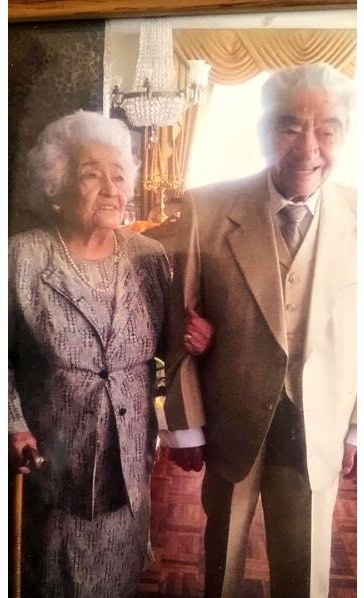
This sweet Ecuadorian pair had their wedding nearly eight decades ago. Now, 79 years after tying the knot, they’ve been officially named the world’s oldest married couple.
Courtesy: Guinness World Records
110 year-old Julio Cesar Mora Tapia and 104-year-old Waldramina Maclovia Quinteros have an aggregate age of 214 years and 358 days.
Born in Ecuador before the invention of television, they met when Waldramina went to see her sister during school vacation. Julio Cesar lived in her sister’s apartment building. The pair met and became fast friends.
Julio Cesar fell in love with Waldramina’s beauty, her conversation, and her big heart. Waldramina found in Julio Cesar a poet with a young spirit.
Seven years later, the captivated pair said ‘I do’ on February 7, 1941 at the oldest church in Quito: La Iglesia de El Belén.
Since then, they’ve had five children, 11 grandchildren, 21 great-grandchildren, and nine great-great-grandchildren.
Their advice for a long-lasting marriage? “The secret formula = love + maturity + mutual respect,” the couple told Guinness World Records.
“It is true that at this time it is difficult because we are overwhelmed by the pandemic that affects the world and we still do not have a solution. However, the first step for us to follow the rules with respect and love the life.”
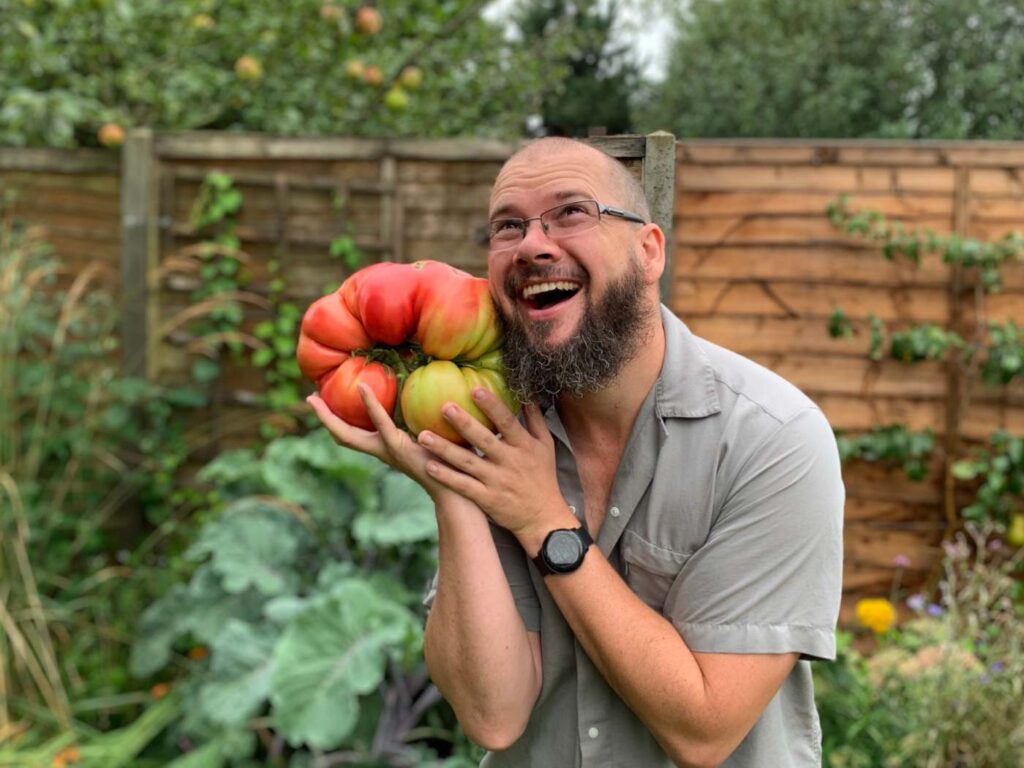
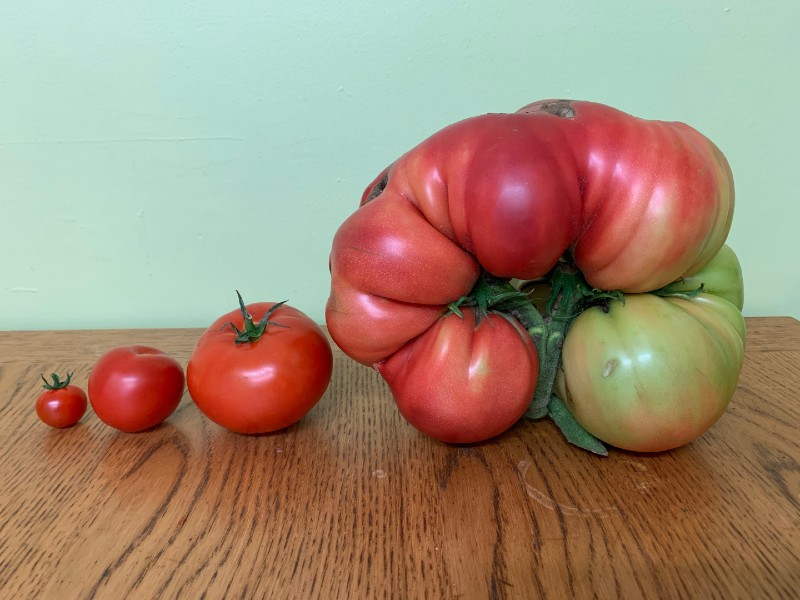
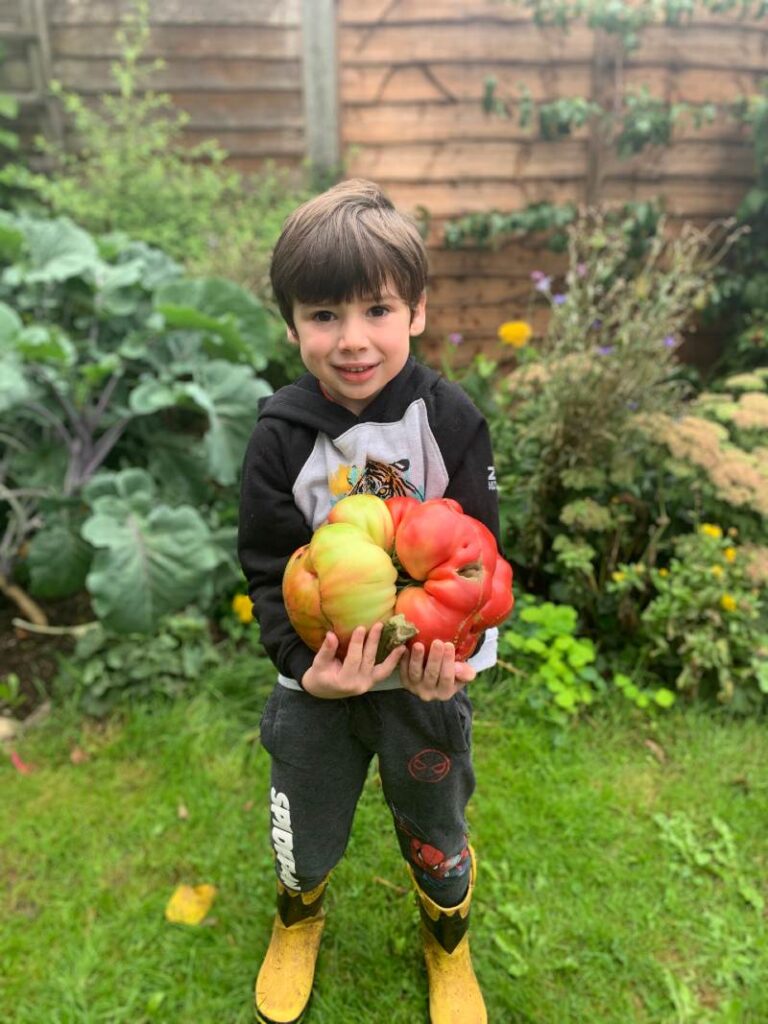
A green-fingered father has broken the record for growing Britain’s largest tomato… with the help of some sheer pantyhose.
Credit: SWNS
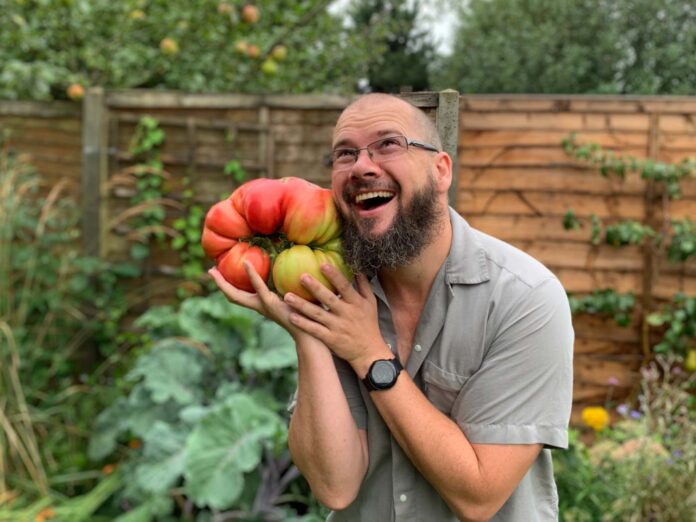
Hertfordshire’s Douglas Smith spent around two months carefully growing the giant tomato, which is, in fact, six regular beef steak tomatoes fused into one.
The huge fruit, which had to be suspended using a pair of tights so it did not fall off the stem, weighed in at a whopping 3.106kg, and measured 27.5 inches in circumference.
It was grown from seed from a variety known as Big Zac.
Douglas’s giant fruit has edged him ahead of the previous UK record-holder, Peter Glazebrook, whose record-winning tomato last year weighed 2.9kg.
Douglas said, “Giant tomatoes have been my main focus in terms of competitive vegetable growing… my attempts have been just shy of [Glazebrook’s] each time. But this time, I’ve finally edged it.”
Credit: SWNS
So how did the 42-year-old do it? Methodically. He got seeds from US tomato grower Larry Hill, from Minnesota, USA—who yielded the seeds from his own, 3.47kg tomato plant. He cut back any other flowers on the plant to maximize all the growth into the one ‘megashoot’. He watered his tomato plant at least once every day for over two months, using water with a bit of liquid seaweed mix. He also gave the plant a ‘weekly compost tea feed’.
“You’ve also got to keep the tomato shaded” explains Douglas. “Covering it with a dishcloth will do—as this keeps the skin more supple so it can grow.”
Credit: SWNS
Douglas will now keep the seeds from his huge tomato to continue growing more of the fruit.
And how about that big tomato? Will it end up in a beautiful Greek salad, or perhaps as part of one giant bruschetta? No. It’s due to be sent to butchers’ shop Churchgate Sausages in Harlow, Essex, to be made into tomato and basil sausages.
PASS On The Fun And Share With Your Gardening Friends on Social Media…
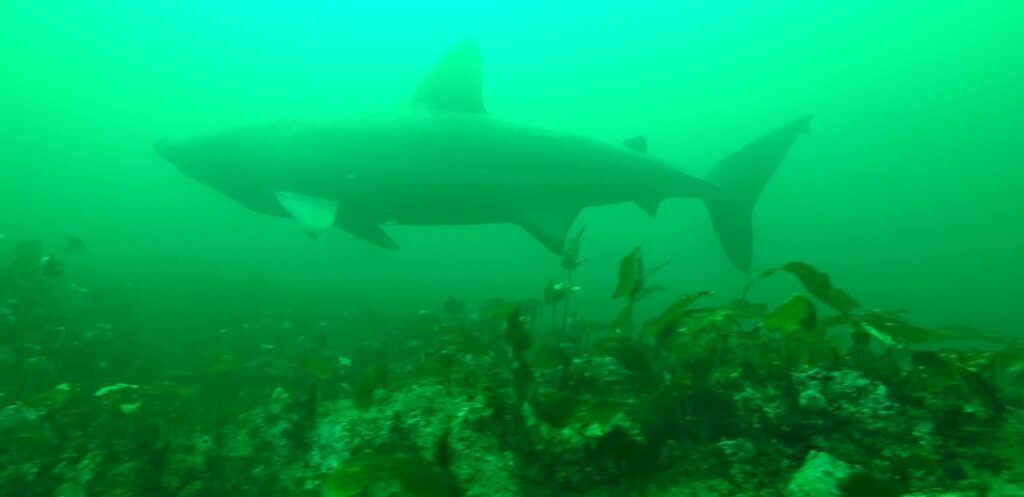
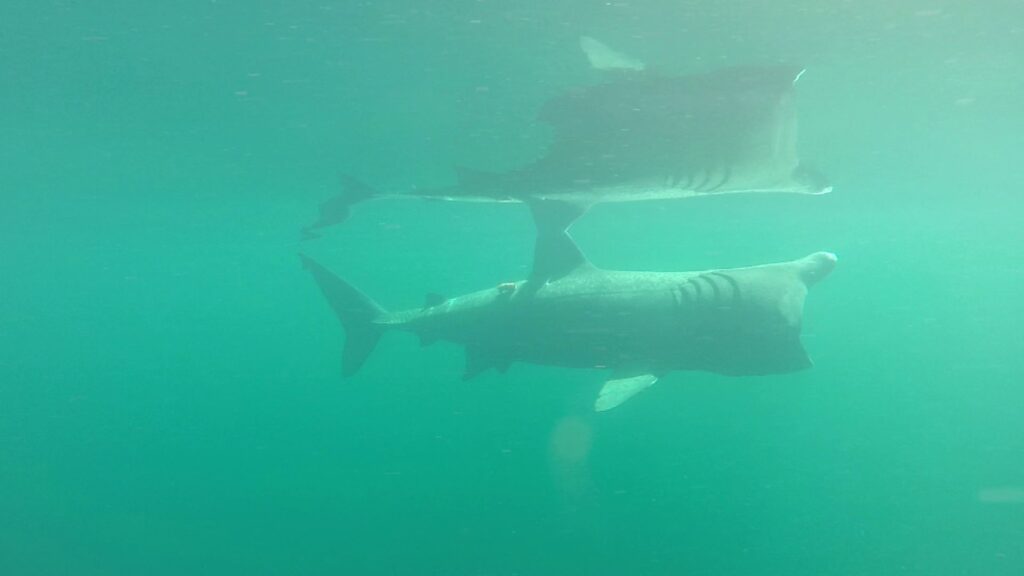
The first successful tracking of basking sharks has taken place—with a robotic underwater camera.
Credit: SWNS
A ‘SharkCam’ underwater vehicle (AUV) is one of the world’s ‘most advanced’ pieces of animal tracking technology. It was used in the Hebrides off Scotland’s west coast for the time last summer to observe and gather footage of basking sharks, the world’s second-largest fish after the whale shark.
Little is known about the underwater traits of the globally endangered species—filter feeders that eat plankton and grow to around eight metres in length—despite
basking sharks being prevalent in Scottish waters.
So the SharkCam recorded the behavior of three such sharks from a distance as they swam off the coast of Coll and Tiree.
Analysis of the footage revealed the sharks spending an unexpected amount of time swimming near the seabed, a behavior which has not often been reported.
Notably, the sharks were not seen to be feeding, which researchers believe adds weight to the theory that the species visits Scottish waters not to feed but to breed.
Credit: SWNS
Dr. Suzanne Henderson, NatureScot Marine Ecosystems manager, said, “While we weren’t lucky enough to capture courtship or mating behavior on camera this time, this innovative study has shed more light on the lives of these spectacular giant fish.
“The fact that the sharks spent much more time swimming just above the seabed than we previously thought, and with their mouths closed, is really interesting, particularly as the species is often seen as a pelagic or near-surface filter-feeding shark.
“It suggests we may have to rethink not only how many basking sharks are in Scottish waters, but why they are here, as it’s likely not only the plankton they come for.”
Dr Lyndsey Dodds, head of Marine Policy at WWF UK, which helped support the AUV study, said, “These missions have given us a wonderful new window into the mysterious underwater world of this huge fish, highlighting previously unseen behavior, close to the seabed.
“And the more we know about basking sharks, the better we can protect them.”
Amy Kukulya, WHOI research engineer and SharkCam principal investigator, noted, “Every time we deploy our tags and SharkCam, not only do we observe something unexpected, but we collect valuable insights that enable us to keep improving this revolutionary technology.
One Finnish town is literally helping green-minded citizens eat cake as they reward eco-friendly behavior with various rewards: including free public transport tickets, swims, and yes, cake.
A little north of Helsinki, the city of Lahti has developed an app tracking the carbon emissions of local residents based on whether they get around by car, public transport, bicycle, or on foot.
Residents who volunteer their information in the CitiCAP app get a carbon quota for the week.
If they have some of their allowance leftover, they get ‘virtual euros’ to spend on things like bus tickets, bike lights, access to public pools, or coffee and cake at a local cafe.
In a city of 120,000, so far 2,000 residents have downloaded the app.
The project’s research manager, Ville Uusitalo, told Euronews, “You can earn up to two euros (per week) if your travel emissions are really low, but this autumn, we intend to increase the price tenfold.”
Currently, about 44% of trips in Lahti are considered sustainable. The city, which is the EU’s 2021 Green Capital, plans to lessen its environmental impact even more over the next decade, so that by 2025 the city is carbon neutral. By 2030, the aim is that at least half of the journeys taken are done so by sustainable means rather than by car.
Changing Perspectives
City council worker Mirkka Ruohonen, told AFP that the app has helped changed her perspective in the seven months she’s been using it.
“I went for a hiking weekend and we did 15km of hiking, but I had to travel 100km by car,” she said. “After that I checked the app and I was like, ‘Was that a good thing?’ Maybe for me but not for the environment!”
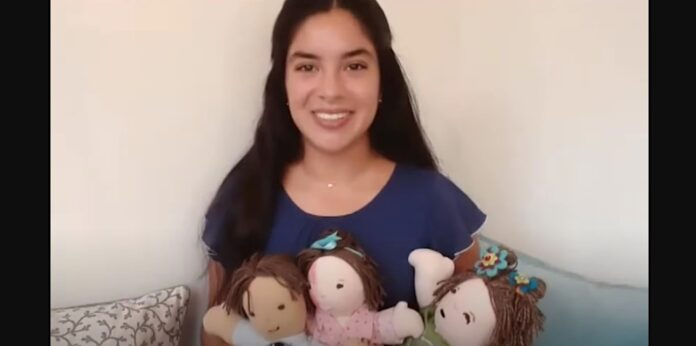
Most little girls love dolls. When 17-year-old Ariella Pacheco was growing up, she was no exception. Since kids tend to bond best with dolls that resemble them, the American Girl doll Pacheco chose for herself looked like it could have been her sister.
Credit: YouTube/CBS
“She looked like me and I felt there was a piece of me in her,” Pacheco, now a senior at Cathedral Catholic High School, told The San Diego Union-Tribune. “You see yourself in a doll and it’s really special to have that connection.”
Children find comfort and connection interacting with dolls that reflect their own physical image as well as their racial and cultural heritage, but until recently, finding diversity when shopping for them has been difficult.
While mass-market selections have become increasingly inclusive in recent years, some segments of the population continue to be excluded. Children whose rare medical conditions render their appearances different from the norm have little to no hope of finding their likeness at a toy store or even online.
Knowing just how important making that very personal connection could be for a child gave Pacheco an idea.
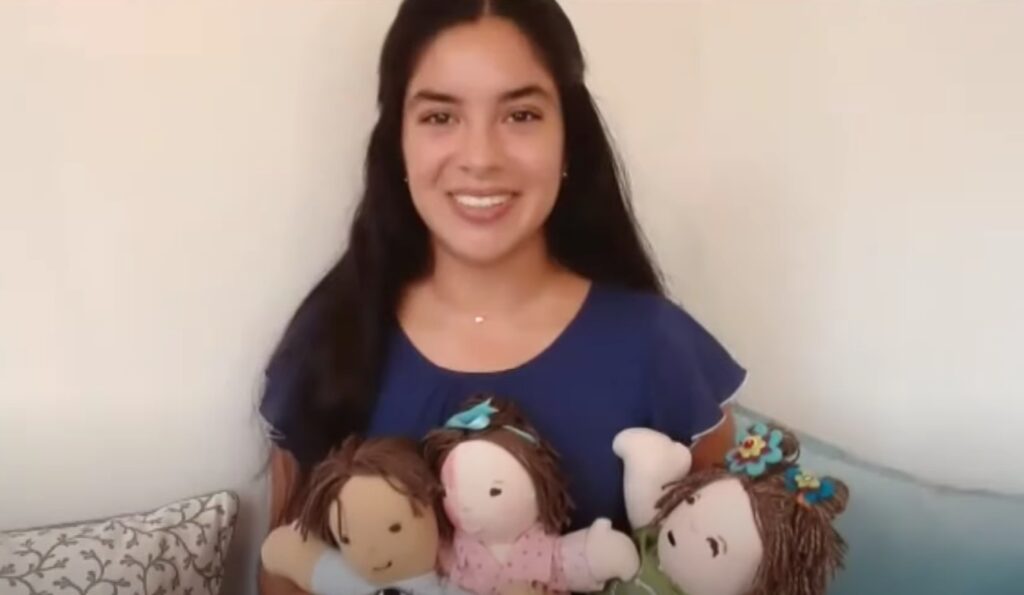
Inspired by Milwaukee doll designer Amy Jandrisevits, whose “A Doll Like Me” project makes custom-designed dolls for children with disabilities, Pacheco decided that for her annual service project for her school’s National Honor Society chapter, she’d design and sew unique dolls to donate to children with rare medical conditions.
To find the kids she hoped to create unique dolls for, Pacheco partnered with Fresh Start Surgical Gifts in Carlsbad, California, a charitable organization that provides surgical and medical treatment free of charge to children who need it.
Pacheco was sent pictures and profiles for a number of potential doll subjects from the ranks of Fresh Start’s clients. She eventually narrowed the field to four.
The dolls she designed feature one with a port-wine birthmark, another with surgical scars, one with jaw alignment issues, and one with facial and cranial anomalies.
Michelle Pius, Fresh Start’s chief development officer was “blown away” by the final product. “It was a very kind and big-hearted gesture on her part to make dolls that will help a child feel like they’re not alone,” she said.
Before getting started, Pacheco scoured YouTube for sewing and pattern-making tutorials, and read up on her subjects’ favorite pastimes and preferred color palettes. Her goal was to ensure the kids could see themselves in her creations, but she didn’t want the things that set them apart from their peers to be the dolls’ most obvious feature.
“The whole time I was trying to put as much love into it as I could and hoped they represented each child faithfully,” Pacheco said. “I really value the beauty in the little things. Each of these kids [is] so unique, so special… I hope through these dolls they can see themselves in a new light and really embrace their beauty.”
(WATCH the CBS video below… )
SHARE The Story Of One Teen’s Kindness With Your Friends on Social Media…
Quote of the Day: “Let there be spaces in your togetherness. Love one another but make not a bond of love: Let it be rather a moving sea between the shores of your souls.” – Kahlil Gibran
Photo: by Jeremy Wong Weddings
With a new inspirational quote every day, atop the perfect photo—collected and archived on our Quote of the Day page—why not bookmark GNN.org for a daily uplift?
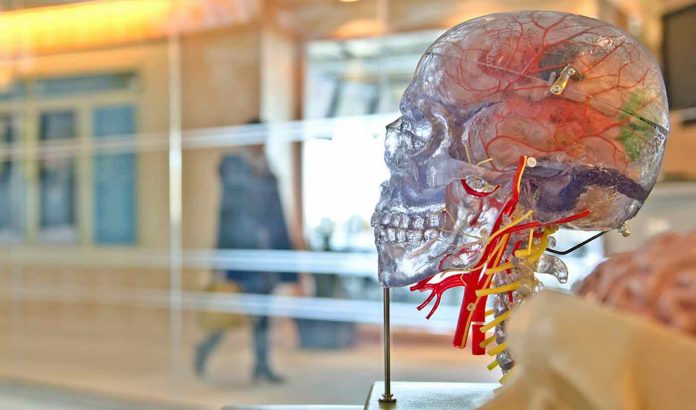
A drug that repairs damage to the brain and spinal cord has been created by British scientists offering hope for new therapies that address a range of devastating conditions—from Alzheimer’s to epilepsy to paralysis.
It restores lost connections between nerves—improving memory, coordination and movement. Results in mice and cells grown in the lab were described as “striking”.
The synthetic protein acts as a “molecular bridge”, re-establishing neuronal links destroyed by accident or illness. It worked in all animals models, including dementia.
The greatest impact was seen in spinal cord injury where motor function returned for at least seven to eight weeks. This was after just a single injection into the site.
Lead author Dr Radu Aricescu, a neuroscientist at the MRC Laboratory of Molecular Biology, Cambridge, said, “Damage in the brain or spinal cord often involves loss of neuronal connections in the first instance, which eventually leads to the death of neuronal cells.
“Prior to neuronal death, there is a window of opportunity when this process could be reversed in principle.
“We created a molecule that we believed would help repair or replace neuronal connections in a simple and efficient way.”
He added, “We were very much encouraged by how well it worked in cells and we started to look at mouse models of disease or injury where we see a loss of synapses and neuronal degeneration.”
In the early stages of Alzheimer’s, and other neuro-degenerative disorders, synapses—or brain connections—are lost. This eventually causes neurons to die.
The same happens with spinal cord damage, which interrupts the constant stream of electrical signals from the brain to the body. It can lead to paralysis below an injury.
The compound called CPTX mimics a natural protein known as Cerebellin-1 that links neurons that send signals with those that receive them.
These ‘transmitters’ and ‘receivers’ are found at special points of contact—the synapses. Cerebellin-1 and related proteins are known as ‘synaptic organizers.’ They are essential to help establish the vast communication network that underlies all nervous system functions.
Working with colleagues in Germany and Japan, Dr Aricescu’s team developed an artificial version described in Science.
Co author Professor Alexander Dityatev, of the German Center for Neurodegenerative Diseases, Bonn, who has been investigating synaptic proteins for years, said, “In our lab we studied the effect of CPTX on mice that exhibited certain symptoms of Alzheimer’s disease and found it improved the mice’s memory performance.”
The researchers also found CPTX increased the ability of synapses to change, vital to memory formation, which is lost in Alzheimer’s.
What is more, the protein acted specifically on synapses that promoted activity of the contacted cell. It also increased the density of ‘dendritic spines’, tiny bulges in the cell’s membrane that are essential for establishing synaptic connections.
The researchers likened the production of CPTX to ‘cutting and pasting’ information from the internet. In effect, they took structural elements from different ‘organizer molecules’ and this generated new ones with different binding properties.
Experiments found it had a remarkable ability to organize neuronal connections in cell cultures.
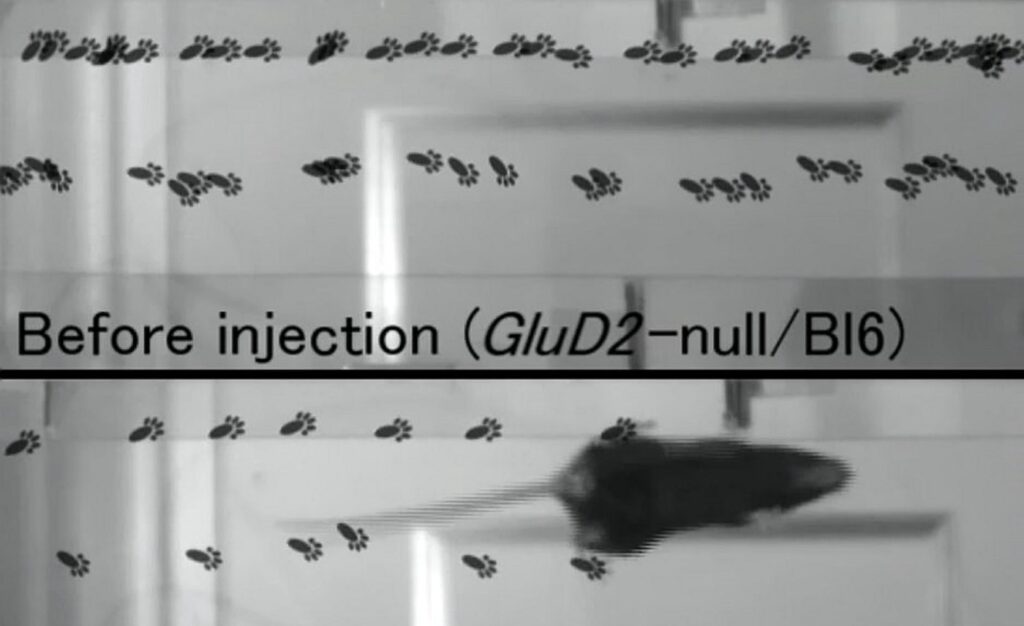
The researchers then tested its effect in mice genetically engineered to have poor muscle coordination, or cerebellar ataxia. It can occur in many diseases. Patients have problems with balance, gait and eye movements.
SWNS
They watched the lab rodents’ neuronal tissue repair itself after the molecule was injected into their brains. It also boosted motor performance.
Encouraged by the success, they then tried the treatment on other mouse models of neuronal loss and degeneration—including Alzheimer’s disease and spinal cord injury.
New and more stable versions of CPTX are now being made so it has a longer lasting effect. Its positive effects was observed for shorter periods in the other conditions – down to about a week for ataxia. The researchers are confident they can rectify this.
A lot more work is needed to find out if the ‘proof of principle’ findings are applicable to humans.
Dr Aricescu said: “There are many unknowns as to how synaptic organizers work in the brain and spinal cord, so we were very pleased with the results we saw.
“We demonstrate we can restore neural connections that send and receive messages, but the same principle could be used to remove connections.”
This would benefit patients with epilepsy, for instance. The chemical could serve as a prototype for a novel class of drugs to treat neurological damage.
Dr Aricescu added, “The work opens the way to many applications in neuronal repair and remodeling. It is only imagination that limits the potential for these tools.”
He said: “Our study suggests CPTX can even do better than some of its natural analogs in building and strengthening nerve connections. Thus, CPTX could be the prototype for a new class of drugs with clinical potential.
“Our approach could possibly lead to treatments that actually regenerate neurological functions
MOVE This Good News To Your Social Media Feeds to Inspire Hope… Featured photo by Jesse Orrico
This may look like just an ordinary stretch of newly-paved road, but it’s actually being hailed as the first mile of recycled plastic highway on a state road anywhere in the U.S.
Using more than 150,000 single-use plastic bottles, sustainable landscaping company TechniSoil partnered with state transit officials to repave the one-mile stretch of three-lane road in July.
According to CalTrans (California Department of Transportation), which already has slated the material for use throughout the state, the eco-friendly road formula has been shown to be 2-3 times more durable than traditional asphalt pavement.
Not only is the formula more durable, Technisoil officials say the procedure generates 90% less greenhouse gas emissions than the process currently used by Caltrans.
Typically, the department repaves state highways by tearing up the topmost 3 to 6 inches of asphalt so it can be ground up and mixed with bitumen—a sludge-like binding agent generated by oil refineries. Since this material can only be used as a base for the roadway, however, Caltrans is still forced to import roughly 42 truckloads of hot asphalt in order to finish the road.
By replacing the bitumen with a polymer-based binding agent made from melted plastic bottles, Technisoil’s procedure eliminates the need for imported asphalt and guarantees that the road is made out of 100% recycled plastic in a liquid polymer.
Following the historic completion of the pilot project in Butte County, Technisoil told Fast Company that they have already begun working on launching additional plastic road projects across California.
“We’re excited about introducing a new sustainable technology and helping pave the way for utilization of recycled plastics throughout the state,” said Caltrans District 3 Director Amarjeet S. Benipal.
“This process is better for the environment because it keeps plastic bottles out of landfills and helps reduce greenhouse gas emissions and reliance on fossil fuels.”
Motorists will be traveling later today on a section of Highway 162 that has been repaved using recycled asphalt pavement and liquid plastic made with plastic bottles. Read more at https://t.co/NswIs8f65x@CaltransHQpic.twitter.com/EasMSu5qcJ
— Caltrans District 3 (@CaltransDist3) July 30, 2020
Local efforts
Elsewhere in the country, Dow Chemical used plastic to pave two stretches of local roads in Freeport, Texas last year, using 1,686 pounds of recycled low-density polyethylene plastic. The company had been testing the plastic roads in Asia, but wants to do more in the US.
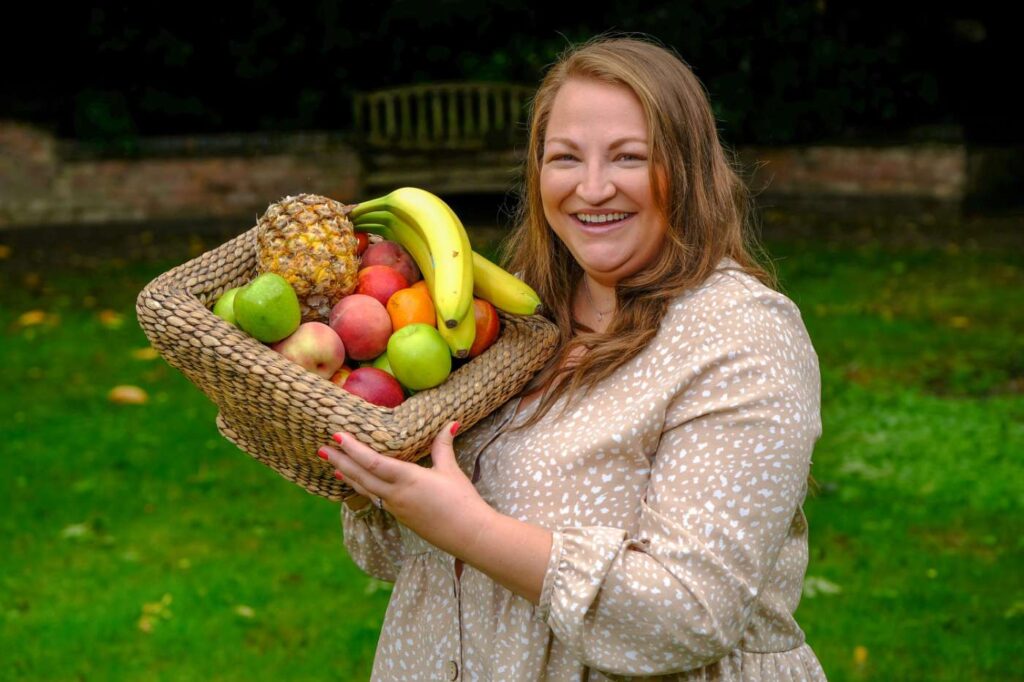
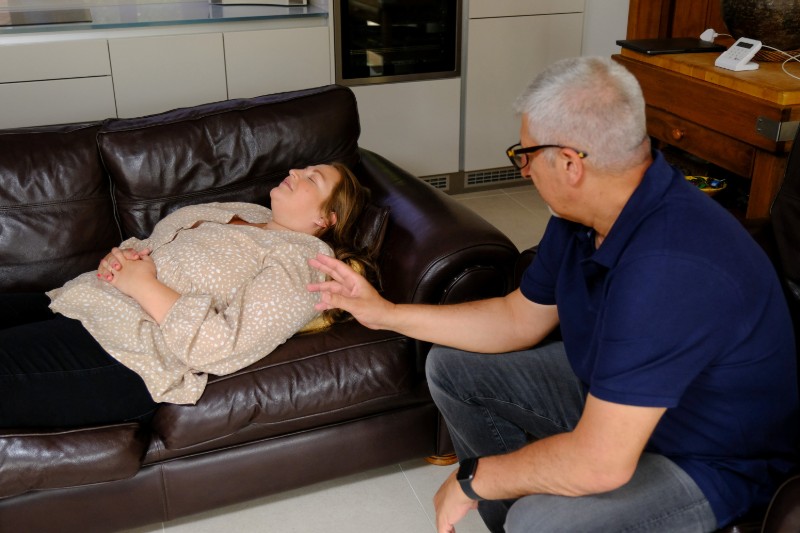
A British woman who has eaten only cheese, fries, and pasta for more than 20 years after developing a fear of fruit and vegetables has been largely cured by hypnotherapy.
Credit: SWNS
Before her treatment, Jenny Edgar would gag if she tried anything other than dry cereal, cheese, and biscuits, or her typical dinner of pasta or chips.
Even her Christmas dinner was mac and cheese washed down with a glass of water.
The 32-year-old health center receptionist, from Coventry in England, avoided eating out as any fruit, vegetables, or fish would leave her feeling ill.
After getting engaged, she decided to face her lifelong fear of nutritious food to lose weight before getting married next March.
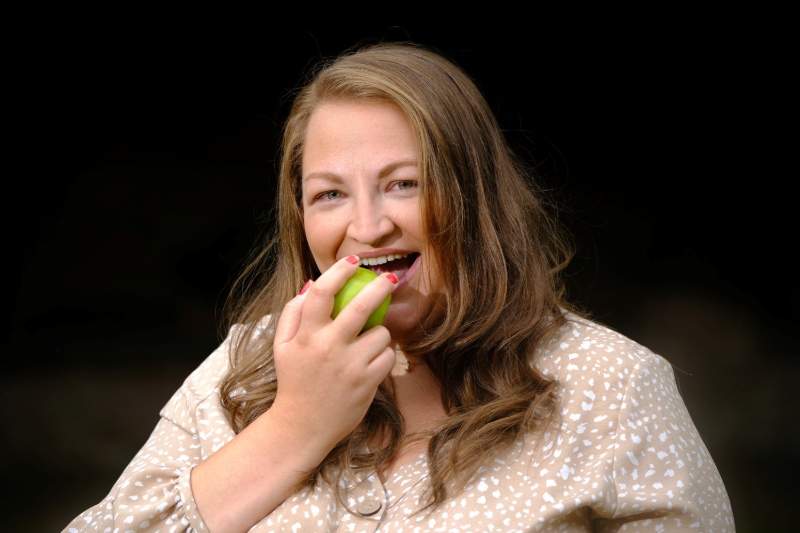
Incredibly, after six hypnotherapy sessions, Jenny can now dig into some of her most feared foods.
She said, “When I was a child I would eat raisins and grapes but hated vegetables.
“I really hated the texture on some fruits, like the fuzz on peaches or the juiciness of tomatoes, so just didn’t eat them.
“When I was in my teens, it wasn’t really a problem because I was quite slim but after going to college and having my son I really noticed the weight going on.
“One Sunday I went for dinner at my fiancé’s house and I had to take my own ready-meal of macaroni and cheese.
“It was very embarrassing and it was getting me down. I just thought to myself that if I don’t sort it out now then I never will.”
“After a few more sessions, Russell cooked up fresh fish and vegetables which tasted great.
“I was worried to try them at first but then after a few nibbles I was hooked.”
Credit: SWNS
Now Jenny is looking forward to expanding her cooking skills and is even planning on growing her own veg at home.
Hemmings explains that “food aversion can grow very strong, and can also unfortunately last a lifetime. Usually food textures have been limited or not experienced whilst growing up as the fussy eater limits their choice foods so a fresh tomato for instance can be overwhelming. Trying to cope with the seeds, flesh, juice and skin can be simply too much for a fussy eater to handle.
“By using a three-pronged approach of coaching, hypnotherapy cognitive behavioural therapy (CBT), I was able to re-wire Jenny’s responses so she no longer feared certain foods.
“She has made incredible progress and she motivated to enjoy a healthier, more balanced and exciting diet which will improve her and her family’s lifestyle.”
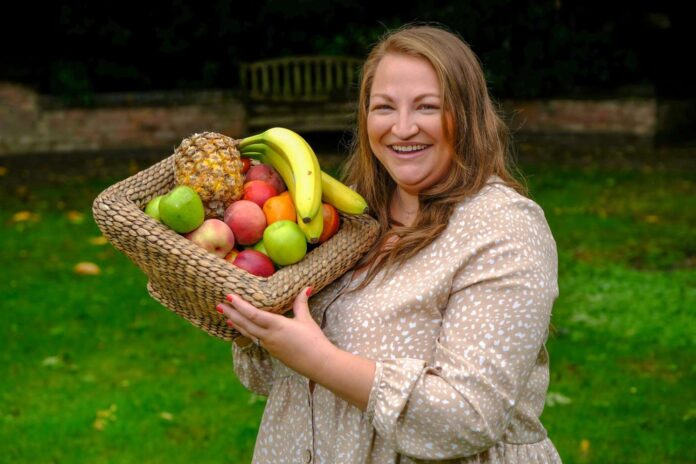
SHARE With Friends Who Need A Little Encouragement To Get Their 5 A Day…