










All News - Page 574 of 1725 - Good News Network
Home Blog Page 574

White Storks Have Hatched The First Wild Chicks Born in England in 600 Years

Photo Credit Brad Albrecht

The babies brought by these storks weren’t delivered in blankets.

The White Stork Project was delighted to announce last week that wild storks in West Sussex have hatched their very own babies—and it is believed to be the first time in England since the 1400s.

On a private estate used for stork conservation called the Knepp site, five eggs appeared in a nest high up in an oak tree. After 33 days of incubation, and much tending by the pair of storks, the first chick hatched on May 6.

White Stork Project Officer Lucy Groves watched as eggshell was removed from the nest and the parents were seen regurgitating food for the new chicks to eat.

This is the same pair that attempted to breed at Knepp last year without success. The female is a ringed bird from the project, which came to Knepp in 2016 from Poland. The male, however, has no identifying ring, so this is likely to be one of the twenty or so vagrant storks which visit the UK each year.

RELATED: Humpback Whale Population Bounces Back From Near-Extinction—From Just 450, to Over 25,000

“The parents have been working hard and are doing a fantastic job, especially after their failed attempt last year,” said Groves excitedly. “It is incredible to have the first white stork chicks hatch in the wild for hundreds of years here at Knepp.”

There are two other breeding pairs on the property with six eggs having hatched in two of the nests.

“These are early days for the chicks, and we will be monitoring them closely, but we have great hopes for them.”

Photo Credit Brad Albrecht / White Stork Project

A total of three private estates have constructed 6-acre predator-proof pens where storks have been introduced.

166 rehabilitated wild-fledged white storks from Poland, as well as a small number of others from northern France, have been released into these pens over the course of the last three years, in order to establish local breeding populations, based on the successful approach used to restore white stork populations in Europe over the last 50 years.

WATCH: Videos Show Penguins Going On Adorable ‘Field Trip’ Around Their Aquarium During Shutdowns

The co-owner of the Knepp estate, Isabella Tree, said that when she hears the clattering sound coming from the tops of their oak trees “it feels like a sound from the Middle Ages has come back to life.”

By Lukáš Kadava

“We watch them walking through the long grass on their long legs, kicking up insects and deftly catching them in their long beaks as they go – there’s no other bird that does that in the UK.”

Lucy says, especially now, the birth brings hope: “This stunning species has really captured people’s imagination during the period of lockdown and it’s been great hearing about the joy and hope they have brought to people.”

It is an exciting first step toward reestablishing 20 wild pairs of these majestic birds at each of the three locations—bringing them back into the south of England once again.

WATCH a new video from the project…

SHARE This Amazing Birth News With Nature Loving Friends on Social Media…

Research Says That the Simple Act of Planning a Trip Can Help Boost Your Mental Health

By Hernán Piñera, CC license

Studies from Cornwall University have found that people who plan a trip in advance experience better feelings about their social situation, economic means, their state of health, and life in general.

It goes without saying that planning a trip in this moment would surely be difficult. There’s a strong chance no one but Italians will be under the Tuscan sun this spring or summer, according to the Italian Minister for Culture and Tourism.

However, that’s no reason to put off your vacation planning this year, as it could likely give you a significant mental boost during these turbulent times. Back in 2014, University of Cornwall researchers Amit Kumar and Matthew Killingsworth published a paper on how experiences provide more satisfaction than material goods.

The paper focused on an often overlooked aspect of an otherwise commonly researched field—experiential versus material consumption and the psychological effects of both before the consumption takes place.

LOOK: Rather Than Slip into Depression, Man Quits Job, Sells Possessions, and Travels the World With a Ferret

The study found that delayed gratitude, especially as it relates to travel, was more pleasurable than both immediate consumption and delayed consumption of material goods and services. Another 2002 paper reinforced this idea when it found that UK citizens were happier when they had a holiday trip planned.

“It appears that those who are waiting to go on a holiday are much happier with their life as a whole, experience less negative or unpleasant feelings and thus enjoy an overall net positive effect from pleasant feelings. The holiday-taking group is also happier with their family, economic situation, and health domains compared to the non-holiday-taking group,” reads the study’s abstract.

The Journey Begins with You

“Our future-mindedness can be a source of joy if we know good things are coming, and travel is an especially good thing to have to look forward to,” Killingsworth told Nat Geo.

Planning a trip can be especially exciting because we often know just enough about where we’re going and what we’re going to do to begin imagining specific pleasurable details of the places—like the sensation of the sun or the smell of campfire smoke in the forest—but there are also enough absent details to leave us wondering about the novelty of different moments.

WATCH: Video Takes You On a Tour of Some of the Most Magnificent Libraries in the World

“In a sense, we start to ‘consume’ a trip as soon as we start thinking about it,” Killingsworth says. “When we imagine eating gelato in a piazza in Rome or going water skiing with friends we don’t see as much as we’d like, we get to experience a version of those events in our mind.”

By Hernán Piñera, CC license

Travel Planning Therapy

If you’re the kind of person who likes to plan a trip, there are a lot of reasons why starting right now could be very rewarding beyond the above mentioned improvements in mental health.

  1. While COVID-19 presents a challenge both in terms of the danger it poses to health and the restrictions to travelers in popular tourist countries like Germany, Greece, France, Italy, Brazil, Japan and more, it provides an opportunity to visit a farther flung destination such as Bora Bora, Nepal, Sri Lanka, Oman, or the beaches of Argentina.
  2. For those looking to spend their holiday in nature, there’s added incentive as one will be away from COVID-19 danger and able to enjoy the outdoors, which many citizens in places like the UK, Italy, and the U.S. have been unable to do because of the lockdowns.
  3. Being stuck in our houses and neighborhoods for weeks without end, planning a trip can simply give us something else to talk about!
  4. Many countries in more exotic and unstable regions of the world rely heavily on the money from tourism to sustain communities. Traveling just after this pandemic and spending money will help local markets recover from the economic destitution forecast by the UN.

I have traveled to 14 countries as diverse as Nicaragua, China, and Namibia, and am currently living abroad in Italy as a contributing writer for GNN, and I can pass on some suggestions for planning a trip.

I heard once that when an Australian Aborigine takes a “walkabout” it’s as much about experiencing the land as it is about finding the sense of one’s self, and that the two are inextricably linked in some way.

Andy Corbley, World At Large

LOOK: When Grandma Confesses She Has Never Seen the Ocean, Grandson Takes Her On Epic Cross-Country Trip

I like to keep in mind the towns and parks I would pass by on a journey whenever I plan a trip, picking destinations that connect over land, because I genuinely believe that the places in between is where magical things happen.

Once I have the principle destinations and activities in mind, I pull out my trusty world atlas and look at what kind of climate and terrain exists in the spaces between. After I experience the joy of feeling the pages of an atlas or a map and moving my fingers along the routes and places I want to go—which helps me feel closer to the destinations—I open Google Maps, zoom in until I can see the names of individual businesses, and I do a ‘walkabout’ along the route I’ve chosen, taking notes of all the little interesting things I see along the way.

If it begins to get stressful, file the idea away on a word document for later. You might plan an itinerary and be really excited about it without embarking for years. I planned a trip to Ecuador, Peru, and Chile for the summer of 2017, and I’m still excited about one day using it.

Start Planning A Trip With Your Friends By Showing This Encouraging Study To Social Media…

Indigenous Group in Brazil Wins Decades-Long Battle Against Illegal Loggers in the Amazon

A victory in a decades-long court battle provided relief for a special part of the Amazon rainforest and for the Ashaninka indigenous people who live there, as their 1990s lawsuit against illegal logging interests finally ended with a public statement of apology and a $3 million award for compensation.

Forestry companies and their legal teams acknowledged the “enormous importance of the Ashaninka people as guardians of the forest, zealous in the preservation of the environment,” in their official apology which claimed regret “for all the ills caused.”

Francisco Piyãko, part of Ashaninka leadership said, “These resources come to enhance existing actions, to generate sustainability for our people, our land, so that it helps to strengthen us to continue the broader project of environmental protection and maintenance of our ways of life.”

Yale’s School of Forestry & Environmental Studies suggested that the Attorney General, Augusto Aras, believes this case could be a turning point in environmental and indigenous peoples lawsuits.

RELATED: Orange is the New Green For Thriving Costa Rican Forests, Thanks to Orange Peels

“What we did here was to comply with the Constitution, understanding that the indigenous people have sacred rights guaranteed by the Magna Carta,” Aras said in a statement. “You have the right to have a decent life, materially speaking, to choose your own destiny, to take part in political decisions, with respect to isolated communities.”

Beginning in 1980, forestry firms started harvesting mature cedar and mahogany trees for the European furniture trade in the Kampa do Rio Amônia Indigenous Reserve. The money awarded in the settlement will be paid over 5 years, and will be put mainly towards reforestation projects.

“The case will define hundreds of thousands of cases on massive environmental crimes in Brazil,” Antonio Rodrigo, the attorney for Ashaninka, said according to Latin Post.

(File photo by Nishaan ahmed)

Plant Some Positivity By Sharing The Exciting News With Your Friends On Social Media…

These ‘Detroit Mower Gang’ Volunteers Have Been Competing to Maintain City’s Old Parks

Detroit Mower Gang –Facebook

If someone approached you with a giant wrestling-style leather and gold belt slung over their shoulder that said “Grand Champion – Motown Mowdown” you’d be forgiven for mistaking them for some sort of amateur prize fighter or professional wrestler.

This Grand Champion belt is awarded to whichever volunteer mows the most grass on Detroit’s public playgrounds and parks in a 12-hour competition called the Motown Mowdown.

The Detroit Mower Gang—a group of volunteer grass cutters and playground repairmen—began their annual mow-a-thon on May 16th at the Hammerberg Playfield, an abandoned collection of sports fields, swing sets, and meadows on the city’s west side.

LOOK: Photos of 75-Year-Old Volunteer Napping With Cats Hauls in Funds to Run Sanctuary for a Year

“No one owns this particular park, it just fell through the cracks,” Tom Nardone of Birmingham told Detroit News.

50-year old Nardone, who started the Detroit Mower Gang in 2009, added: “We just try to keep it alive … Without a group, you couldn’t mow this park with a mower in (fewer than) a couple of days.”

A Man and his Mower

A decade ago the city was close to filing for bankruptcy, and city hall announced that, of the 300 parks in Detroit, they only had funding to care for 72 of them. That year, Nardone purchased a lawn tractor on Craigslist and took it to a park on 8-Mile road. He started a Facebook Group to see if any neighbors would volunteer their time to help mow with him—and the rest is heartwarming history.

At Hammerberg Playfield last Saturday, gang members repaired broken swing sets and mowed the derelict fields before splitting up to tackle 10 other abandoned playgrounds and parks.

Detroit Mower Gang –Facebook

RELATED: When School Places Ad For Male Mentors, They’re Overwhelmed by ‘Volunteer Dad’ Responses

28-year-old Hannah VanEckoute, the reigning, defending, undisputed Motown Mowdown Champion of the World, arrived with her Dixie Chopper with her husband Gage for their fourth year with the gang.

“The reaction from people when they see what we’ve done is always so special,” said VanEckoute. “Sometimes the grass is so tall kids can’t even get into it and then the smile on their faces as we leave is such a great accomplishment.”

The work of the Detroit Mower Gang has allowed the city to slowly catch up to its park workload. Last year they formed a nonprofit called Enemies of Debris and hosted a “trash fishing” event where volunteers pulled trash out of the Detroit River with their fishing rods. As hard as he works, it’s Nardone’s hope that city hall will one day put him and his gang out of business.

“We could start a bowling league or something,” he joked.

Clean Up Negativity By Sharing This Inspiring Story With Your Friends On Social Media…

“There are some natures too noble to curb and too lofty to bend.” – Louisa May Alcott’s mother, Abba

Credit: Shane Stagner

Quote of the Day: “There are some natures too noble to curb—and too lofty to bend.” –Louisa May Alcott’s mother, Abba Alcott 

Photo: by Shane Stagner, public domain

With a new inspirational quote every day, atop the perfect photo—collected and archived on our Quote of the Day page—why not bookmark GNN.org for a daily uplift?


‘Wear the Cap, Donate the Gown’: Student Helps Donate Thousands of Graduation Gowns to Hospitals in Need

Photo by Gowns 4 Good

As graduation day came for Nathaniel Moore, a physician’s assistant at the University of Vermont, Burlington, he wondered why his graduation gown couldn’t be repurposed as a piece of personal protective equipment for his colleagues at the hospital where he worked.

“The image of my colleagues on the front line and at other medical facilities that lack the appropriate PPE and wearing trash bags with no sleeves and no protection under the waist, that just struck me,” 30-year-old Moore told Reuters.

Attempting to help other frontline health workers, Moore started Gowns 4 Good, a charity which has been donating gowns to hospital facilities that lack the necessary PPE to safely operate during the coronavirus outbreaks.

RELATED: Canadian Government Buys Hotels to House Homeless People—And Also Rehire Workers

The slogan “Wear the Cap, Donate the Gown” has since been used to decorate many virtual graduation caps across the country to raise awareness for Gowns 4 Good.

With millions of young American students graduating from university every year, the ingenious donation scheme could potentially end the PPE demand for gowns in just a few days.

“Graduation gowns are more effective than other PPE alternatives given their length, sleeves, and easy zippered access,” reads the organization’s website. “To carry out this mission of protecting healthcare workers by upcycling graduation gowns, the Gowns4Good initiative was formed in April 2020.”

LOOK: People Are Installing Portable Hand-Washing Sinks for the Homeless in Cities Across the US

Medical facilities across the country have already submitted thousands of gown requests from the charity. Thus far, Moore has managed to collect 7,000 from private donors and another 2,700 from corporate partners Graduation Source and Cooper Cap and Gown.

Need more positive stories and updates coming out of the COVID-19 challenge? For more uplifting coverage, click here.

Photo by Gowns 4 Good

Protect Your Friends From Negativity By Sharing This Ingenious Story To Social Media…

More and More Farmers Are Using Garlicky Supplements to Curb Major Environmental Enemy: Cow Gas

Dave, CC license

While passing gas is usually considered a simple social passé for humans, cow burps are notorious for producing much more than a foul smell—they produce a gas that is terrible for the environment.

Thankfully, a new garlic-based dietary supplement given to cows has been shown in two different studies to reduce the methane content in cow belches by 30%–38%, which could help reduce the 2.6% of American greenhouse gas volume produced from cattle ranching.

Methane is a potent greenhouse gas (GHG) that traps heat in the atmosphere 25 times more effectively than CO2, according to the EPA and the IPCC.

Unlike CO2, which represents more than 80% of America’s GHGs, methane only stays in the atmosphere for 12 years, which means the supplements would take only a few years to begin having a measurable effect.

RELATED: Air Pollution in Major World Cities Has Dropped By as Much as 60% During COVID Shutdowns, Says New Report

Mootral, the Switzerland-based company, will likely be celebrating their supplement’s success as they are set to be the first company on earth to be awarded carbon credits for methane reduction in cows. Both studies of the supplement have shown no adverse effects, both in the health of the animal and the flavor of the milk and meat.

The start-up came as a result of examining garlic’s antimicrobial effect on the human diet, and discovered they benefit cows. Cows produce methane when food in their chambered stomachs is broken down by microbes. The garlic supplement mixed with citrus “pellets” reduces the amount of microbes present, thereby making the belching less potent.

Chipping Away

According to the Environmental Protection Agency’s (EPA) executive summary of America’s GHG inventory from 1990 to 2016, agriculture as a whole accounted for 10% of America’s emissions, with 2.52% coming from enteric fermentation—the fermentation of feed in the stomachs of cows.

If every cow in America (a little over 100 million animals) and all 30 million horses for that matter, were in theory given the Mootral supplement and it corresponded with the previously-observed decrease of 30% in the animal’s methane emissions, merely 1.66% of GHGs in America could be attributed to animal agriculture.

CHECK OUT: Kroger Buys and Redirects Dairy Farmers’ Excess Milk, Sending 50,000 Gallons Per Month to Food Banks

Such a drop would see enteric fermentation fall from the largest source of methane emissions in the US to around the levels produced by landfills.

Mootral CEO Thomas Hafner has a realistic view of how reducing these small amounts of methane from cows and other livestock through cultural changes will be almost impossible.

“…even though we see a move towards non-dairy alternatives, and people going to non-animal protein sources, populations in other parts of the world are progressing from a cereal-based diet into an animal protein-rich diet. Whatever we lose on one side, we’re going to gain on the other, if not more. What we provide is a solution to reduce the impact of that down the line.”

Multiply The Good News By Sharing It With Your Friends On Social MediaRepresentative feature photo by Dave_A, CC

Church Opens Up Its Doors to Muslim Worshippers So They Can Have a Place to Pray During Quarantine

In a heartening display of inter-faith compassion, a German church has opened its doors to Muslims with no place to attend Friday prayers during Ramadan.

Although the nation suspended religious services back in March as a means of curbing the COVID-19 outbreaks, they recently started allowing worshippers to gather in groups of up to 50 people at a time.

The Dar Assalam mosque in the Neukölln district of Berlin typically hosts up to 1,000 worshippers at a time during the month of fasting, but due to the new social restrictions, hundreds of German Muslims have been struggling to find a place of prayer.

RELATED: Politician Helps Pay Off Medical Debt for Man Who Sent Him Racist Tweets—And They’re Now Friends

Thankfully, the nearby Martha evangelical church—located just one mile away from the mosque—offered to open its doors to host the Friday prayers.

The church has now reportedly been offering two different prayer services for the Islamic worshippers, one in German and one in Arabic. Worshippers have also been required to wear masks and maintain six feet of distance during the prayers.

Representatives of Dar Assalam say that the events have helped them to double the amount of people attending their services while simultaneously raising valuable funds to support the mosque during the lockdowns.

WATCH: These Israelis Are Forging Peace on the Beach, Bringing Palestinians to the Ocean for Their Very First Visits

“It is a great sign of solidarity,” mosque spokesperson Juanita Villamor told Newsweek. “We are just thankful, this is a good chance of inter-religious dialog and it is wonderful that the church is doing this.”

Need more positive stories and updates coming out of the COVID-19 challenge? For more uplifting coverage, click here.

Be Sure And Share This Inspiring Story Of Inter-Faith Compassion With Your Friends On Social Media…

These Specially-Trained Dogs Have Saved 45 Rhinos From Poachers in South Africa—And Counting

Photo by South African Wildlife College

Everybody knows that dogs are man’s best friend—but these trusty canines in South Africa have also proven themselves to be the best friends of endangered wildlife as well.

The pack of beagles, bloodhoods, and more, has saved the lives of 45 rhinos threatened by poachers since 2018. Now, in the midst of the coronavirus lockdown, they and their human friends at the Southern African Wildlife College continue to provide their essential services in the country’s national parks.

Trained to protect wildlife since birth, these hounds began their important work at the age of 18 months. Their efforts have helped law enforcement in the region of Kruger National Park catch an “unprecedented 145 poachers and confiscate 53 guns,” according to National Geographic.

But what is now a well-oiled wildlife protection operation did not start out that way; the story began in 2017, when Theresa Sowry, CEO of the Southern Africa Wildlife College, visited a man named Joe Braman at his rural ranch in Southern Texas.

RELATED: Humpback Whale Population Bounces Back From Near-Extinction—From Just 450, to Over 25,000

Braman was a part-time police officer, businessman, and cowboy with no knowledge of the poaching crisis happening half a world a way—but Sowry had heard through the grapevine that Braman trained a special bloodline of dogs that had found great success in helping Texas law enforcement catch escaping prison inmates. She wanted to see for herself whether the pooches could be of help at the southern tip of her continent.

“Just think about it,” Braman mused to NatGeo. “If you spun a globe and threw a dart and it stuck, what’s the odds you’ll find a low-key guy in southern Texas’s coastal bend gettin’ picked to stop the extinction of a species?”

South African National Parks had previously employed anti-poaching teams using individual dogs, but their success was limited. “Kruger was very keen to test free-running dogs,” Sowry explained to the news outlet. “Building a pack dog team is a massive undertaking. You need the right genetics, the right training, and, most importantly, the right mind-set to bring it all together.”

LOOK: Dozens of Creatures Thought to Be Extinct Found Alive in ‘Lost City’ in the Jungle

Braman grew up raising just these types of dogs with his dad; the father and son team would train groups of 15 or so dogs to follow the scent of animals.

When Braman arrived in South Africa, the plan was simply to asses Kruger National Park’s K9 unit and to train a handful of dogs—but the project quickly expanded to reach a scale that nobody anticipated. After finding that training practices in the country were much different that what he did on his ranch back home, he returned to Texas to train a group of dogs which he could later bring back to Kruger.

CHECK OUT: India Gets Its First Ever Hospital for Abused Elephants – and They’ve Already Treated Dozens

Upon returning with his dogs, Braman didn’t know what to expect—but almost immediately after arriving at the park, the canines managed to catch a group of poachers who had killed a rhino. Since then, there has been a ten-fold increase in successful apprehensions of poachers thanks to the work of the K9 program.

In the midst of the COVID-19 pandemic, the work of the K9 team continues in earnest. On May 7th, the Southern African Wildlife College celebrated the first birthday of the black and tan hound puppies, born from the original dogs that came from Texas—and in six short months, they’ll be joining the veterans out in the field to continue protecting and serving endangered wildlife.

Multiply The Good News By Sharing It With Your Friends On Social Media…

World’s Largest Open-Air Gallery Was Painted By People With Learning Disabilities—And It’s Breathtaking

A team of artists has transformed a series of drab cement silos into the world’s largest “open-air museum”—and they did it with inclusivity at the forefront of their mission.

Spanish artist Okuda San Miguel first started painting murals on the structures as a means of beautifying the region of Ciudad Real.

As Miguel continued to ramp up his artistic mission, he partnered with an organization that provides work to local people with learning disabilities and special needs.

LOOK: Britain’s Best Gardening Couple Outdo Themselves With Spring Spectacular After Spending Lockdown Tending Their Oasis

Since collaborating with the group, Miguel has helped to paint 10 different silos across the region with breathtaking works of art.

His team is now working on transforming the interiors of the silos into a “kind of universal church for everyone: all religions, all genders, and all races.”

(WATCH the Great Big Story video below)

Color Your News Feed With Positivity By Sharing This With Your Friends On Social Media…

“The thing always happens that you really believe in; and the belief in a thing makes it happen.” – Frank Lloyd Wright

Quote of the Day: “The thing always happens that you really believe in; and the belief in a thing makes it happen.” – Frank Lloyd Wright

Photo: by Ben White, public domain

With a new inspirational quote every day, atop the perfect photo—collected and archived on our Quote of the Day page—why not bookmark GNN.org for a daily uplift?


Family Praised for Their Honesty After Finding and Returning Bags Containing $1Million in Cash

A Virginia family is being praised for their extraordinary honesty after they found—and returned—one million dollars in cash.

Earlier this week, schoolteacher Emily Schantz and her family had been out on a weekend drive through Caroline County when they saw the car ahead of them swerve to avoid hitting a large bag in the road.

Although the Schantzes were unable to swerve around the object in time, they did pull over to the side of the road so they could move it out of the way. Assuming it was trash, they grabbed abandoned two bags off of the pavement and threw them into the trunk.

It was only later that the Schantzes opened up the sacks and found dozens of plastic packages filled with stacks of cash.

LOOK: Teen Praised for His Honesty After Heartfelt Apology (and Cookies) For Stranger Following Icy Road Accident

Rather than keep the money for themselves, however, Emily and her husband turned it all into the police with the hopes of teaching their sons a valuable lesson in honesty.

Police investigators believe that the postal service had been delivering the bags to a local bank, but it is still a mystery as to how they ended up in the middle of the road—all they know is that the Schantzes deserved praise for their good deed.

“For someone so honest and willing to give that almost a million dollars back—it’s exceptional on their part,” Caroline County Police Major Scott Moser told WTVR. “Their two sons were there, so I put the lights on for them, but we are proud that they represented this county well by being so honest.”

(WATCH the news coverage below)

Be Sure And Share This Inspiring Story Of Kindness With Your Friends On Social Media…

Compassionate Texting System Allows You to Send Kind Messages to Frontline Heroes—and Get Them in Return

Photo by Text for Humanity

As millions of courageous healthcare workers continue their work to combat the COVID-19 crisis, this ingenious new service allows you to send unconditional messages of love and support to a frontline hero—and get one in return.

The Text For Humanity switchboard, created by Sinch in partnership with Mental Health America (MHA), originally launched in January to combat online negativity and promote the sharing of positive messages between strangers.

To date, more than 83,000 messages of positivity have been exchanged across 85 countries.

As the world moves into the next phase of the crisis, #TextForHumanity now enables people choosing to participate to identify themselves as either a frontline worker, or someone living in isolation. In turn, senders can choose the group they would like to send a personalized message of thanks and support. Frontline workers include anyone from nurses and doctors to delivery drivers and grocery store staffers—people performing the vital jobs that are keeping society going.

LOOK: People Are Installing Portable Hand-Washing Sinks for the Homeless in Cities Across the US

There is no charge for the service; neither Sinch nor MHA profit from Text For Humanity.

However, MHA’s screening numbers have been growing since the start of the pandemic. MHA has seen a 70% increase in the number of people taking an anxiety (GAD-7) screen and a 64% increase in the number of people taking a depression (PHQ-9) screen between January and April.

According to the UK’s Office of National Statistics, nearly half (46.9%) of adults have reported high levels of anxiety through this period, with 51% saying the crisis was affecting their wellbeing.

RELATED: Watch Illuminated Drones Create Beating Heart to Honor Healthcare Workers in Rotterdam Sky

“These are worrying times for many people and psychological wellbeing is severely impacted,” said Paul Gionfriddo, president and CEO of Mental Health America. “Prolonged isolation can increase incidences of poor mental health, particularly for the most vulnerable in society. And then there’s the incredible burden placed on brave frontline workers. People putting their own lives at risk while saving others, and keeping society safe and functioning. We see Text For Humanity as an important route to engage them.”

Text For Humanity is now enabled by WhatsApp, Facebook Messenger, and regular text messaging so it’s easy for anyone with even the most basic phone to join. This is particularly important for the elderly who are among the least likely to own a smartphone.

To join the service, text JOIN to 37352 (U.S. only) or +1 833-421-4726 (additional international number options and links to WhatsApp and Facebook Messenger are available through the platform’s website). The service will ask for a couple of simple details including whether you are a frontline worker or living in isolation. As before, all data is stored securely, and no personal or identifying details will be known or shared.

WATCH: Quarantine Reunites 160 Former Disneyland Cast Members to Recreate the Iconic Parade At Home–And it’s Joyous!

You can then write a short message that gives a frontline worker or someone in isolation a smile (if you need some tips to help get started, you can visit the Text For Humanity website).

Once you’ve sent the message, Text For Humanity will share it with a fellow human somewhere in the world. Not only that, you will then receive a positive message from a stranger on your own phone. Messages you receive can also be transformed into vibrant and personalized artwork that can be easily shared from a smartphone on social media.

The service is currently run in English language only. You can opt out at any time by simply replying STOP to the service.

MORE: Tina Fey Brought to Tears After Reading Total Amount Raised in Star-Studded Telethon for Struggling New Yorkers

“MHA and similar organizations will play a vital role in supporting society through this challenging period,” said Oscar Werner, Chief Executive Officer at Sinch. “Knowing the impact Text For Humanity achieved in a small space of time, we felt the switchboard could do more to aid the global COVID-19 effort.

“It was originally designed to send positivity to any stranger. After witnessing coordinated acts of thanks, hope and unity between frontline workers and those in isolation, we were inspired to create something that helps amplify this energy.”

Need more positive stories and updates coming out of the COVID-19 challenge? For more uplifting coverage, click here.

Photo by Text for Humanity

Recruit Your Friends For This Awesome Initiative By Sharing It To Social Media…

10-Year-old Gives the Gift of Art to More Than 1,500 Kids in Shelters and Foster Care During Quarantine

This 10-year-old girl has singlehandedly managed to give the gift of art and joy to more than 1,500 kids in foster care and homeless shelters during the COVID-19 shutdowns.

Chelsea Phaire is the mastermind behind Chelsea’s Charity—a nonprofit that she started with her parents back in August 2019 as a means of donating art kits to at-risk children.

“Since she was seven, she was begging me and her dad to start a charity,” Chelsea’s mom Candace Phaire told CNN. “She was so persistent, every couple of months she would ask, ‘Are we starting Chelsea’s Charity yet?’ When she was turning 10, she asked us again, and we decided it was time to go for it.”

WATCH: Instead of Selling Lemonade, Boy Sets Up ‘Drive-By Joke Stand’ to Spread Laughter During Quarantine

As a means of inaugurating the charity on her birthday, Chelsea asked people to give her art supplies instead of birthday gifts. After that initial batch of donations helped to supply several dozen art kits for children in need, Chelsea continued her efforts by collecting supplies for the kits through her charity’s Amazon wishlist.

The tenacious sixth grader from Danbury, Connecticut has since donated donated hundreds upon hundreds of art kits to homeless shelters, women’s shelters, and schools impacted by gun violence in 12 US states.

Each of the kits are filled with crayons, gel pens, coloring books, paper, and colored pencils. Although the COVID-19 shutdowns prevented the youngster from handing out the kits in person, she has still managed to give away an additional 1,500 art kits since quarantine began.

RELATED: 17-Year-Old ‘Angel’ Cashier Picks Up $173 Grocery Bill for Senior Shopper Who Found Himself Short on Cash

Chelsea told CNN that she hops her kits can offer children the same sense of therapy and comfort that they brought to her when she was grieving the death of a family friend as an 8-year-old.

“I feel good inside knowing how happy they are when they get their art kits,” she told the news outlet. “I have definitely grown as a person because of this. Now my dream is to meet every kid in the entire world and give them art. Who knows, maybe if we do that and then our kids do that, we’ll have world peace!”

Color Your News Feed With Good News By Sharing This Sweet Story With Your Friends On Social Media…

Walking, Cycling, or Taking Train to Work Instead of Driving Associated With Lower Risk of Death and Illness

A study of over 300,000 commuters in England and Wales has found that those who walk, cycle, and travel by train to work are at reduced risk of early death or illness compared to those who commute by car.

The researchers from Imperial College London and the University of Cambridge say the findings suggest increased walking and cycling post-lockdown may reduce deaths from heart disease and cancer.

The study used data from the UK Office for National Statistics Longitudinal Study of England and Wales—a dataset that links data from several sources including the Census of England and Wales, and registrations of death and cancer diagnoses—to track the same people for up to 25 years, between 1991-2016.

The data, published in Lancet Planetary Health, revealed overall that 66% of people drove to work, 19% used public transport, 12% walked, and 3% cycled. Men were more likely than women to drive or cycle to work, but were less likely to use public transport or walk.

RELATED: Survey Finds Working From Home Has So Many Benefits, 48% of Workers Would Take Pay Cut to Continue

The researchers found that, compared with those who drove, those who cycled to work had a 20% reduced rate of early death, 24% reduced rate of death from cardiovascular disease (which includes heart attack and stroke) during the study period, a 16% reduced rate of death from cancer, and an 11% reduced rate of a cancer diagnosis.

Walking to work was associated with a 7% reduced rate in cancer diagnosis, compared to driving. The team explain that associations between walking and other outcomes, such as rates of death from cancer and heart disease, were less certain. One potential reason for this is people who walk to work are, on average, in less affluent occupations than people who drive to work, and more likely to have underlying health conditions which could not be fully accounted for.

The paper also revealed that compared with those who drove to work, rail commuters had a 10% reduced rate of early death, a 20% reduced rate of death from cardiovascular disease, and a 12% reduced rate of cancer diagnosis. This is likely due to them walking or cycling to transit points, although rail commuters also tend to be more affluent and less likely to have other underlying conditions, say the team.

LOOK: Training for Your First Marathon ‘Reverses’ Aging of Major Blood Vessels on Par With Medication

“As large numbers of people begin to return to work as the COVID-19 lockdown eases, it is a good time for everyone to rethink their transport choices,” said Dr. Richard Patterson from the MRC Epidemiology Unit at the University of Cambridge, who led the research. “With severe and prolonged limits in public transport capacity likely, switching to private car use would be disastrous for our health and the environment. Encouraging more people to walk and cycle will help limit the longer-term consequences of the pandemic.”

The study also assessed whether the benefits of each mode of travel differed between occupational groups and found that potential health benefits were similar across these groups.

Dr. Anthony Laverty, senior author from the School of Public Health at Imperial College London explained: “It’s great to see that the government is providing additional investment to encourage more walking and cycling during the post-lockdown period.

CHECK OUT: These are the 3 Most Promising Longevity Supplements From Scientific Research So Far

“While not everyone is able to walk or cycle to work, the government can support people to ensure that beneficial shifts in travel behavior are sustained in the longer term,” he added. “Additional benefits include better air quality which has improved during lockdown and reduced carbon emissions which is crucial to address the climate emergency.”

The team add that the benefits of cycling and walking are well-documented, but use of Census data in this new study allowed large numbers of people to be followed up for a longer time. They explain that these analyses were unable to account for differences in participants’ dietary intakes, smoking, other physical activity or underlying health conditions. However, they add these findings are compatible with evidence from other studies.

Reprinted from University of Cambridge

Pedal The Good News Over To Your Friends By Sharing This To Social Media…

Dad Drives 1,100 Miles Just to Surprise Daughter With 30-Minute Socially Distant Birthday Lunch

SWNS
SWNS

This devoted dad drove more than 1,000 miles round trip just so he could spend half an hour with his daughter and wish her a happy birthday during lockdown.

53-year-old Julio Cesar Segura spent 17 hours on the road driving across Texas from El Paso to Austin and back so he could join his daughter, Diana Segura Lerma, for a socially distant lunch on her 19th birthday.

The realtor drove 8 and a half hours each way for a total of 1,152 miles on May 8th.

WATCH: Dad Builds Adapted Nintendo Controller for Disabled Daughter—And Her Reaction is Adorable

Segura called his daughter to wish her a happy birthday and pretended he was simply out ordering her favorite takeaway lunch—a chicken sandwich from fast food chain Chick-fil-A.

“He told me that since he couldn’t do much he wanted to know what I’d like for lunch and he would send an Uber Eats order,” said Lerma. “So I texted him what I wanted—the chicken fillet sandwich with pepperjack cheese, buffalo sauce and mayonnaise.
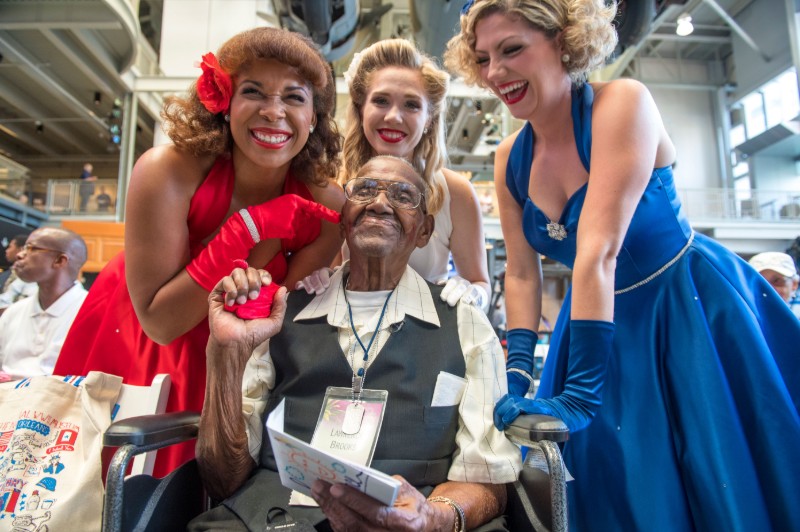
“He brings me that sandwich for lunch on my birthday every year—so far, he hasn’t missed a year,” she added.

SWNS

What Lerma didn’t know was that her dad had actually woken up at 3:30am to get on the road in time to surprise her with the same birthday lunch she has every year.

“I left my house at 4:15am. I was missing her and I wanted to give her a surprise,” said Segura. “I decided to go the day before. I love her and I wanted to make sure she had a good birthday.”
After placing the sandwich order with her father, Lerma opened the door to her apartment building expecting to find a delivery driver—instead, she was amazed to find her dad standing outside with balloons and a happy birthday sign in hand.

LOOK: Devoted Dad Surprises Graduating Daughter With Front Yard Ceremony After Hers Was Canceled

“He showed up with the food and a poster board and balloons,” recalled Lerma. “I was so excited. I haven’t seen him in months, since winter break. I didn’t think that I would see him again until August.

“He has always been someone who loves gestures, but I never imagined he would do this in a pandemic.”

Segura and Lerma then enjoyed their meal outside, all while respecting social distancing guidelines and sitting six feet away from each other.

WATCH: ‘Cheer Dad of the Year’ Goes Viral After He Nails His Daughter’s Cheerleading Routine From the Stands

“We went to a little terrace and there were chairs that were really spread out,” said Lerma. “We ate several feet apart.”

After just half an hour with his daughter, Segura hopped back into his car and drove the 576 miles back home.

“I was the driving the whole day but I was so happy on the way back,” said Segura. “She deserved a good birthday.”

SWNS

Be Sure And Share This Sweet Story Of Fatherly Love With Your Friends On Social Media…

“Never tell me the odds.” – Han Solo, The Empire Strikes Back (premiered 40 years ago today)

Quote of the Day: “Never tell me the odds.” – Han Solo, in The Empire Strikes Back (premiered 40 years ago today)

Photo: by Rupert Britton, public domain

With a new inspirational quote every day, atop the perfect photo—collected and archived on our Quote of the Day page—why not bookmark GNN.org for a daily uplift?


When Collapsed Tourist Trade Leaves Elephants Hungry, Woman Devises Win-Win Solution With Local Farmers

Photo by Elephant Aid International

In Asia, elephants working in the tourist trade have been idled by the COVID-19 worldwide shutdowns. It’s not cheap to feed elephants, especially when they’re not bringing in income for their owners to feed properly.

Thankfully, Carol Buckley and her organization Elephant Aid International (EAI) have created a win-win-win solution for tourist trade elephants and farmers in Nepal.

Over the course of the last decade, EAI has been striving to improve the treatment of elephants in captivity by working directly with elephant owners, government officials, charities, tourist facilities, and elephant welfare groups. The organization is also in the midst of launching a new elephant sanctuary in North America so pachyderms being released from captivity can finally have a place to retire.

More recently, the group has been working in the Nepali province of Sauraha, which is known as the gateway to Chitwan National Park—the nation’s first national park famous for its majestic wildlife, including tigers, rhinos, and elephants. Since thousands of tourists visit the park each year, the region maintains a healthy tourist trade.

RELATED: India Gets Its First Ever Hospital for Abused Elephants – and They’ve Already Treated Dozens

Now that there are no tourists amidst the novel coronavirus outbreaks, however, elephant owners were quoted in the Kathmandu Post saying that they have been having difficulty finding food for their elephants, which could have disastrous short- and long-term consequences for the pachyderms.

Ordinarily, privately-owned elephants are prohibited from entering the park—but after Buckley alerted the Nepali government to the predicament, the ban was lifted so the elephants could graze during the day.

The elephants are still prohibited from being in the park at night—and since elephants normally spend about 20 hours a day eating, their owners were left with the challenge of finding enough food for them to eat at night.

LOOK: People Are Installing Portable Hand-Washing Sinks for the Homeless in Cities Across the US

Buckley then assembled a team of Nepalis and together they came up with a simple, but elegant solution.

Because of the COVID-19 lockdown, local farmers have had no one to harvest the produce growing in their fields. Rather than being forced to let the food rot, Buckley and her team found farmers who were willing to sell their produce, arranged for workers to harvest the food, and then delivered it to the delighted elephants and their owners.

Now that the elephants are fed and the local farmers are generating income, Buckley plans on continuing the initiative for as long as necessary.

WATCH: Orphaned Elephant Returns to Human Rescuers So She Can Introduce Them to Her Newborn Calf

“I have provided assistance to the elephants of Sauraha for 10 years. Seeing them enjoy the delicious produce is heartwarming,” Buckley told Good News Network in an email.

“Working together with the farmers, locals, and mahouts has improved the lives of these hard working elephants,” she added. “It is a joy to know that our efforts are pleasing to the elephants and their mahouts.”

To learn more about EAI, you can visit the organization’s Facebook page or website.

Need more positive stories and updates coming out of the COVID-19 challenge? For more uplifting coverage, click here.

Photo by Elephant Aid International

Be Sure And Share The Good News With Your Friends On Social Media…

Chef Andrés’ Charity is Injecting $50 Million into Restaurants By Paying Them to Feed the Hungry

Although many restaurants have struggled to stay afloat during the coronavirus pandemic, many of them have also found innovative ways to stay in business while serving their communities—in California alone, the state is now paying restaurants to deliver food to seniors in need.

Now, chefs around the country are seizing the moment by keeping restaurants open while simultaneously delivering food to those who need it most.

The newly-launched “Restaurants for the People” initiative was launched by World Central Kitchen (WCK): a Washington DC-based charity whose “Food First Responders” program has already served millions of meals to people in dire circumstances around the world.

Internationally-recognized Chef José Andrés founded the organization after visiting post-earthquake Haiti in 2010. Over the course of the last WCK has made headlines for feeding furloughed workers during the US government shutdown, first responders fighting the California wildfires, hurricane-ravaged communities, and—more recently—people struggling amidst the COVID-19 crisis.

WATCH: Tina Fey Brought to Tears After Reading Total Amount Raised in Star-Studded Telethon for Struggling New Yorkers

WCK is now promising to cover the costs of one million meals prepared by more than 400 restaurants across the United States. Since the nonprofit will reimburse restauranteurs at a rate of about $10 per meal, the businesses will able to rehire staff members in order to help prepare the meals while WCK handles the delivery logistics.

Among the restaurants involved is Reem’s California, a famous Oakland-based Middle Eastern bakery owned by Reem Assil, who told The Washington Post that her kitchen is “serving anywhere from 200 to 500 meals a day, and growing, to vulnerable populations and first responders.”

A tiny West African eatery in Washington DC called District Chop Bar, which has only had three full-time employees in its two years of existence, has even been able to hire more part-time staff as a result of its partnership with WCK.

LOOK: People Are Installing Portable Hand-Washing Sinks for the Homeless in Cities Across the US

So far, WCK’s various #ChefsForAmerica programs have worked with a total of 1,500 restaurants across the U.S. and injected $18 million into the beleaguered industry. The charity has committed $50 million to its COVID relief programs, and is hoping that its programs will serve as a model to governments.

“Our hope is that we can show that this works and get the powers that be, in our state governments and our federal governments, to recognize that this is a solution,” WCK chief executive Nate Mook told The Post. “We have people we need to feed. We have restaurants that we need to put back to work, and we’re showing that this is doable, that it’s scalable.”

RELATED: Know a Healthcare or Frontline Worker? These Companies Are Offering Wonderful Free Stuff to Say Thanks

In the meantime, WCK’s relief team launched operations on the Navajo Nation this week. The indigenous reservation has been hit particularly hard hit by the pandemic, and Jose Andreas himself is on the ground, helping his organization get meals to people in hard to reach communities.

Need more positive stories and updates coming out of the COVID-19 challenge? For more uplifting coverage, click here.

(WATCH the video below)

Multiply The Good News By Sharing It With Your Friends On Social Media…

Sir Captain Tom Moore is ‘Over-Awed’ After Being Officially Knighted for His $40M Fundraiser

Captain Thomas Moore—the WWII veteran who captured hearts around the world after successfully raising millions of dollars for healthcare workers fighting the novel coronavirus—has been officially knighted by the Queen of England in honor of his incredible campaign.

Moore originally started walking around the his back garden on April 6th with the intention of raising just £1,000 solely by doing 100 laps before his 100th birthday on April 30th.

Over the course of just one month, however, Moore’s fundraiser topped a whopping £32 million ($40 million) for NHS Charities Together—a new Guinness World Record for money raised on behalf of the healthcare system.

WATCH: Tina Fey Brought to Tears After Reading Total Amount Raised in Star-Studded Telethon for Struggling New Yorkers

In recognition of his awe-inspiring achievement on his 100th birthday, the war veteran was officially promoted from the rank of captain to honorary colonel in a letter presented by Lt. Col Thomas Miller and approved by Her Majesty the Queen.

More than 1 million people from around the world also signed a petition to have him knighted—but despite all the appreciation and praise, Moore remained humble during his birthday celebration with the press and requested that they end the event with a round of applause for healthcare workers.

Thanks to a special nomination from Prime Minister Boris Johnson which was approved by Queen Elizabeth II this week, however, the veteran’s official new title is Captain Sir Thomas Moore.

Since the news was officially declared on social media, millions of people have been using the hashtag #SirCaptainTomMoore to celebrate his achievement.

“On behalf of everyone who has been moved by his incredible story, I want to say a huge thank you. He’s a true national treasure,” said Prime Minister Johnson.

Need more positive stories and updates coming out of the COVID-19 challenge? For more uplifting coverage, click here.

(WATCH the captain’s heartwarming response the news below)

Don’t Let Your Friends Miss Out On This Sweet Story—Share It To Social Media…