









All News - Page 23 of 1755 - Good News Network
Home Blog Page 23

Canada Successfully Exploring for ‘White’ Hydrogen Gas, a Clean Power Source Beneath Existing Mines

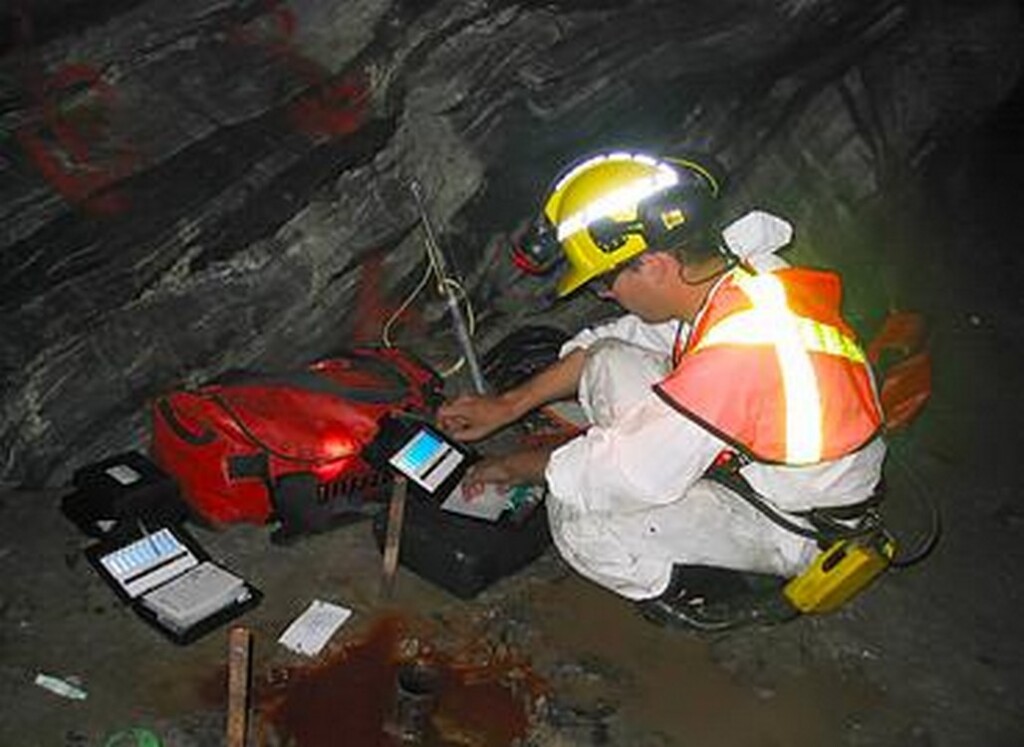
A mine worker measuring hydrogen - credit, Sherwood Lollar, released by Univ. of Toronto
A mine worker measuring hydrogen – credit, Sherwood Lollar, released by Univ. of Toronto

Reprinted with permission from World at Large 

Scientists in Canada have discovered that ancient underground rocks are naturally producing hydrogen gas—and lots of it, and it may be everywhere—and it may be cheap.

The rocks could offer another source of clean energy known for emissions accounting purposes as “white hydrogen,” a largely unexplored and hidden underworld resource with the potential to help power industries and remote communities while reducing dependence on fossil fuels.

How underexplored is white hydrogen? Well extractive industry news outlet Autonocion points out that every hydrogen well currently known was found by accident—by geologists looking for something else.

While researchers at the Univ. of Toronto were gathering data from an active mine near the legendary Timmins gold mining camp in Ontario, a micro-cap exploration company MAX Power became the first geologists to break that trend—they went looking for a big hydrogen discovery, and they found it.

About 87 miles (140 km) south of Saskatoon, Saskatchewan, the explorers drilled down 1.2 miles through the prairie sediment and bedrock of their Lawson target before punching out an 8 meter chunk of “Precambrian basement” rock which they found rich in signs of naturally-flowing hydrogen from a gas well deep underground.

The sample returned 28% hydrogen concentration, which itself contained a 90% hydrogen-nitrogen mix and none of the poisonous/flammable hydrogen sulphide. It also contained between 8.7% and 4.4% helium, a valuable gas that has been in the news of late because of the disruptions in supply due to the Strait of Hormuz closure.

“After perforation, the well quickly achieved free gas flow to surface, delivering strong initial rates and pressures before being overtaken by a powerful influx of formation brine,” a statement from the company’s January 16th press release on the occasion read.

“We have confirmed the existence of a natural hydrogen system in the subsurface from the first well ever drilled in this country specifically targeting this new primary energy source,” said President and CEO of MAX Power, Mr. Ran Narayanasamy. “Lawson is no longer a concept – it’s a discovered geological system with gas flow, pressure, and the key ingredients required for future commercial natural hydrogen development”.

The Lawson discovery core samples – credit, Max Power, released

A remote power source

At Timmins, the researchers found that boreholes drilled into the rock by miners looking for gold release an 8 kilograms of hydrogen gas each year. According to the study, the gas can continue flowing for at least a decade.

When expanded across the site’s nearly 15,000 boreholes, the estimated hydrogen output exceeds 140 metric tonnes annually. The team calculated that this amount could generate approximately 4.7 million kilowatts of energy per year from just one location, enough to meet the yearly energy demands of more than 400 homes.

“The data from this study suggests there are critical untapped opportunities to access a domestic source of cost-effective energy produced from the rocks beneath our feet,” says Professor Barbara Sherwood Lollar in the Department of Earth Sciences at the University of Toronto, the lead author of the study.

“What’s more, this provides a ‘made in Canada’ resource that might be able to support local and regional industry hubs and reduce their dependence on importing hydrocarbon-based fuels”.

Hydrogen already plays a major role in the global economy, which one market analysis firm valued at over $200 billion worldwide. It is widely used in fertilizer manufacturing, which is essential for agriculture and global food production. Hydrogen is also important in methanol production and steelmaking.

Today, most hydrogen is produced through industrial methods that rely on fossil fuels such as petroleum, natural gas, and coal—so-called “grey” hydrogen. These processes require large amounts of energy and release carbon monoxide and CO2. Even “green” hydrogen, which is generated using renewable energy, remains expensive and energy intensive while also requiring transportation and storage infrastructure.

Natural hydrogen, the “white” kind, has received far less attention in comparison. Until recently, most research focused on its role in underground microbial ecosystems and its potential importance for astrobiology and space exploration. Estimates of its energy potential were largely theoretical because scientists lacked direct long-term measurements from real-world sites.

The two most significant real-world sites in operation are in Lorraine, eastern France, and in Mali, where it has been quietly powering a town for a decade. In 1987, a driller boring a water well was left burned and bewildered when seemingly out of nowhere, the air in the well exploded as he leaned over it with a lit cigarette. The outrushing air sparkled ocean blue in the daytime, and gold at night, and the villagers cemented the well in confusion. Eventually in 2012, a local entrepreneur brought oil and gas geologists in to have a look, and the Bourakébougou hydrogen pilot plant was built.

“Natural hydrogen is produced over time through underground chemical reactions between rocks and the groundwaters in those rocks,” says Lollar. “Canada is blessed that vast amounts of its territories, especially on the Canadian Shield, contain the right rocks and minerals to create this natural hydrogen”.

MORE HYDROGEN GAS NEWS: Hydrogen Gas Blend Will Reduce Power Plant’s Emissions by 75%–as it Helps Power 6 States

Lollar and her team say that Canada may have a unique opportunity to produce cleaner and potentially cheaper hydrogen without depending on hydrocarbons. They also note that similar hydrogen-producing rocks exist in many other countries, suggesting the approach could eventually be used worldwide. The largest concentrations of natural hydrogen appear in geological regions already associated with Canadian mining activity. These include Northern Ontario, Quebec, Nunavut, and the Northwest Territories.

“The common link is the rock,” says study co-author Oliver Warr, an assistant professor in the Department of Earth and Environmental Sciences at University of Ottawa. “Natural hydrogen is produced in the same rocks where Canada’s nickel, copper, and diamond deposits are found, and that are currently under exploration for critical minerals such as lithium, helium, chromium, and cobalt. The co-location of mining resources and hydrogen production and use mitigates the need for long transportation routes to market, for hydrogen storage and major hydrogen infrastructure development”.

The study’s authors believe natural hydrogen could help reduce both costs and carbon emissions for Canada’s gargantuan mining sector. Hydrogen generated close to mining operations could provide a local energy source without requiring major new transportation systems. If exploitation infrastructure becomes available and affordable for white hydrogen, it could also save junior mining companies starting up in established mining areas like Timmins, Val d’Or, or BC’s Golden Triangle, from incorporating power access or diesel generators into their mining and exploration plans.

RESOURCE DEVELOPMENT: Massive ‘Shovel-Ready’ Critical Minerals Deposit Found in Utah–Largest Potentially in North America

The researchers also suggest that northern communities, which often face high fuel transportation costs, could benefit from nearby hydrogen resources. Using locally sourced hydrogen may lower energy expenses while reducing reliance on imported fuels.

“There is a global race to increase hydrogen availability in order to decarbonize and reduce the costs of the existing hydrogen economy,” says Lollar. “We now have a better understanding of the economic viability of this resource that can be mapped to hydrogen deposits around the world that are both already known and yet to be discovered”. WaL

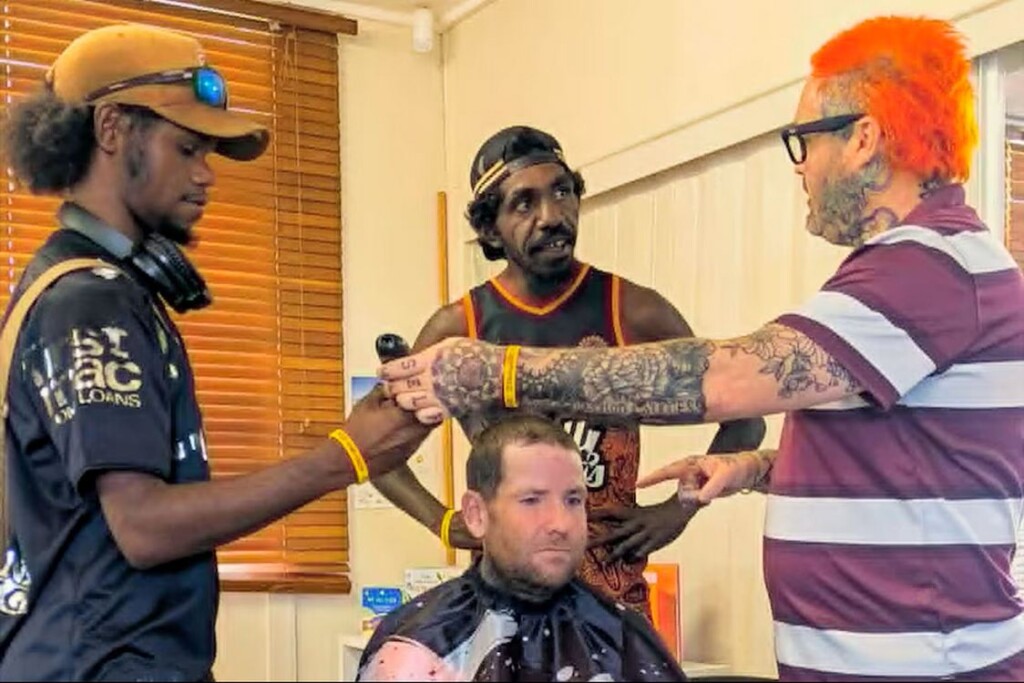
This ‘Outback Barber’ Brings Hair-Cutting Workshops to Remote Islands, Leaving Dignity and Doos in His Wake

Jon James the barber - credit, supplied North West Remote Health (2)
Jon James the barber – credit, supplied North West Remote Health (2)

There’s an old saying: cut a man’s hair, and he’s fresh for a month. Teach a man to cut hair, and he’s fresh for a lifetime.

Er, wait—wasn’t it something about fish?

For Queensland barber Jon James, stepping off a small plane onto Mornington Island off the northern coast of Australia, he found a community that knew how to fish, but if he wanted to find the red and white barber’s pole, he’d need to wait for his flight home.

For that reason too, there was a hoard of people waiting for him as he disembarked hoping for a trim, a cut, or a fade.

James was on the island as part of the Fade Wellbeing Barbering Program run by Australia’s North West Remote Health. He was there to run barber workshops among a resilient and deeply rooted community that nevertheless struggles with listlessness and unemployment, and had recently endured the loss of several men by suicide.

James had spent the previous 6 months volunteering at haircutting workshops across Queensland, and despite the remoteness, he told ABC News down under that the locals were naturals.

– credit, supplied by Jon James to ABC News AU

It wasn’t long before the que of people in need of a barber was quickly diverted from the 42-year-old barber, slightly famous on social media for his tattoos and orange hair, to his various new students.

“I couldn’t believe how quickly they picked up barbering,” James said. “They’re like, ‘Let’s go further.’ And then they were doing skin fades straight up, and then they were doing them on their own.”

NWRH had sent James to Mornington Island with 20 professional barber kits to give out to workshop participants when it was finished, but that was after he got approached by a local with a special request.

– credit, supplied North West Remote Health

BARBERING FOR THE BETTER: CNN Hero: Man Helps Barbers Fill Their Shops with Books to Help Kids Find Excitement in Reading

Someone asked him if he were willing to straighten up the doos for a bride and a groom on their wedding day. James needed a hand from his students, who took care of the wedding guests, while he handled the wedding party who then invited him to attend.

“To be part of that emotionally, and be asked to attend the wedding after, it was incredibly humbling. I’m so grateful that I had that opportunity.”

ALSO CHECK OUT: They Disguised Themselves As Boys in Order to Pay the Bills, Now ‘Barbershop Girls’ of India Given Scholarships

It was a powerful experience, he explained, before saying he’d love to come back and see what becomes of the new barber boom—perhaps a few new salons.

“They’re so remote and not many outsiders come in there, and they’re just so welcoming. That really means the world.”

SHARE This All-Smiles Story From Behind The Barber’s Chair On Social Media…

11-year-old ‘Wasn’t Going to Let a Man Die’ When He Alone Dove in to Rescue Drowning Man

An 11-year old in Kentucky is credited with saving a man who fell unconscious in an apartment swimming pool last week.

Seeing that nobody was doing anything about the situation, Avory Woolery took the burden of action upon his shoulders—broad in spirit, if not in size.

“No one was doing anything, so I put on my goggles. I went underwater,” Avory told local news.

“I grabbed him up and I just felt really bad because there was no way that I was going to let another man die today. He’s a human being. He should be treated as such.”

Once Avory had gotten him onto solid ground, a friend, or so Avory supposed, came over and began performing CPR until first responders arrived at someone’s calling.

The man was taken to a local hospital, where WKYT reported he remained in critical condition.

Avory’s father said he was so proud of his son for acting so decisively.

“I’m proud of him. Somebody, when I was walking up here, somebody said, ‘Thank you, you taught him how to swim,’” Mr. Woolery said.

WATCH the story below… 

SHARE This Young Man’s Initiative And Maturity With Your Friends… 

A Streetside Painting Salvaged for its Frame Returned After Honest Man Realized its Enormous Value

A man from Murcia in Spain couldn’t believe his luck when a gallery told him the painting he found propped up against a wall in Sevilla was an original by 19th century Spanish painter Joaquin Sorolla.

Yet as soon as he saw a police notice about the painting being “stolen,” Andrés Hurtado didn’t waste any time doing the right thing—”fulfilling his obligation” as he would later describe it.

Hurtado was visiting Sevilla with his family when he saw a rather small and nondescript painting of a beachscape leaning up against the garden wall of a house. Assuming it was left for the garbage man, Hurtado took an instant fancy for the beautiful golden frame, and decided to spare it from the landfill.

The painting’s true owners left it against the wall in what is fair to describe as probably a lapse of concentration familiar to many who have tried to pack for a long trip in a hurry.

The family were bringing the painting to a beach house, a little family tradition, but while they were loading their car they were apparently also blocking traffic, and amid a flurry of honking horns, they rushed and left it behind.

“We picked it up because of the frame, not because of the painting,” Murtado, who passed by the house, told Radio Sevilla on Wednesday.

With the help of a little AI magic, Hurtado discovered that the painting he took for the frame was actually an original Sorolla, worth as much as €150,000. Hurtado couldn’t believe it, so he called an auction house in Madrid, which confirmed both the painting and the value.

Meanwhile, the family who lost it was frantically looking for it, not realizing it had been taken over 300 miles back to Murcia. They put up flyers around the neighborhood asking for information about a painting “of great sentimental value,” while discreetly reporting the work as having been stolen to the police.

SIMILAR ACTS OF HONESTY: Florida Man Spends Days Searching for Owner of Lost $30,000 He Found: ‘it wasn’t mine to take’

Hurtado was perhaps getting ready to celebrate, but later the same evening, news reached him that a painting had been stolen from Sevilla, and the picture was of the very thing he’d assumed was garbage.

“‘But it’s the one I have!'” Murtado told El Mundo. “I immediately called the police and told them that the news was not true, that the painting had not been stolen, that I had it and that it was lying in the street.”

ARTWORKS RETURNED: €12 Million Portrait of Picasso’s ‘Golden Muse’ Recovered from Thieves After Paris Theft

To the credit of the police, they told Murtado not to worry about anything, and said to sit tight while they organized for the artwork’s return: he wouldn’t have to do anything.

Overjoyed to be reunited with their painting, the family have since told reporters that they’ve prepared a reward for Murtado.

SHARE The Story Of This Man’s Honesty And Just Reward With Your Friends…

“What we observe is not nature itself, but nature exposed to our method of questioning.” – Werner Heisenberg

Credit: Curated Lifestyle for Unsplash+

Quote of the Day: “What we observe is not nature itself, but nature exposed to our method of questioning.” – Werner Heisenberg

Photo by: Curated Lifestyle for Unsplash+

With a new inspirational quote every day, atop the perfect photo—collected and archived on our Quotes page—why not bookmark GNN.org for a daily uplift?

Credit: Curated Lifestyle for Unsplash+


Good News in History, July 8

liberty_bell

250 years ago, the Liberty Bell was rung in Philadelphia to call citizens to hear the newly-signed Declaration of Independence, or at least that’s what is said to have happened. No contemporary account of the ringing is known to exist, but there is historical documentation that when the Declaration was read publicly in Philadelphia, bells around the city were rung in commemoration. What we call the Liberty Bell had been specially commissioned years earlier to ring out across a much larger breadth of the city’s territory, and it would seem the least likely scenario that for some reason, it’s E-flat was silent on this most momentous occasion. READ more from On This Day… (1776)

Quirky Campaign Leaves Nice Surprises on Cars of Anyone Who Took Cabs Home from the Bar

- credit, @the_barfairies
– credit, @the_barfairies

It’s an early-summer’s night and you left your truck at the bar because you chose not to drive drunk—well someone’s noticed.

That someone is the Montana Barfairies, a volunteer effort that is going viral for tucking $5 gift cards under the windshield wipers of that truck and others like it—a reward for making the right choice and not driving drunk.

By the time you came to collect your vehicle, you see there’s something tucked under the wipers—oh no. But it’s not a ticket, it’s the cost of a coffee or latte to help with that hangover.

“What started as a small act of kindness—leaving coffee gift cards on cars left overnight at Flathead Valley, Montana bars—has grown into a nationwide movement advocating for stronger DUI laws and supporting families affected by drunk driving tragedies,” the nonprofit wrote on their website.

Like most volunteering, it requires a bit of sacrifice. Who wants to get up at 5:00 am on a Saturday morning in Montana in February just to go give their money away to strangers?

Jesse, Beverly, Grace, and Kate—that’s who. These four Bar Fairies racked up 142,000 views on a TikTok video of them rewarding bar patrons who took cabs home from the Whitefish Winter Carnival.

ANOTHER STORY LIKE THIS: Trending Moms are Leaving Gift Cards in Store Diaper Aisles–For Postpartum Peer Relief

Tim and Kelly left gift cards at 8 vehicles in Polson—”a reward” for their owners being “the smart ones.” They were in turn rewarded with 2.5 million views, as commenters praised their effort, generosity and the brilliance of the idea.

@the_barfairies Tim & Kelly in Polson are the BEST! ❤️ They found 8 cars in Polson, Montana this weekend! Thanks for getting up so early to do this, and thank you to everybody who left their car instead of driving home. ❤️ #dontdrinkanddrive #drunkdriving #thebarfairies #montanabarfairies #polsonmontana ♬ original sound - the_barfairies

In Kalispell, it was Shannon and Brittainy’s turn. The pair left 20 gift cards on a cold Montana morning, totaling $100 worth of complimentary coffees for community members that cared enough not to take a potentially life-shattering risk.

@the_barfairies Volunteers Shannon & Brittainy found a ton of cars in Kalispell and were able to leave all 20 gift cards on vehicles left overnight at the bar!! The best girls ever 🥰 @Brittainy Howk758 #montanabarfaires #bobbyslaw #dontdrinkanddrive #drunkdrivingawareness #montanastatelegislature #montana ♬ original sound - SpongeBob background music

SHARE This Brilliant Nonprofit And Volunteer Work With Your Friends…

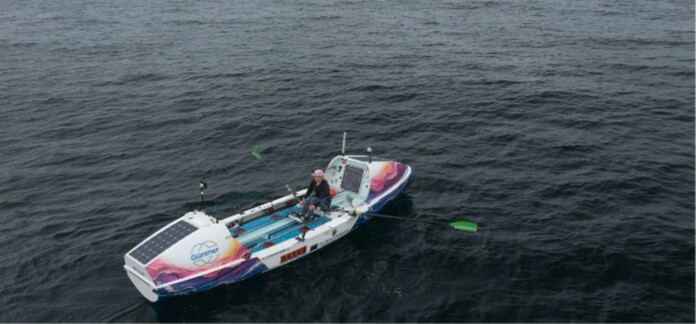
Woman Rower Breaks Men’s Record for Fastest Solo Voyage from California to Hawaii

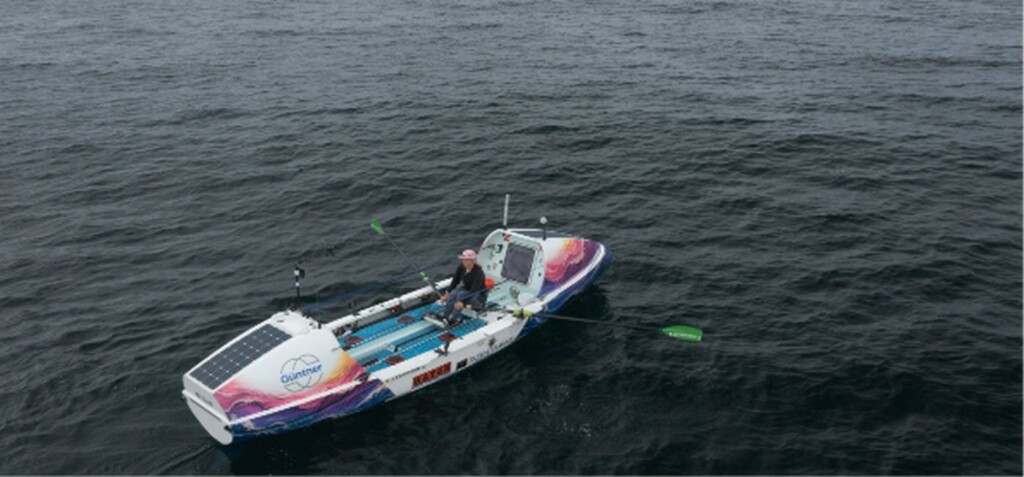
Kelsey Pflendler in her rowboat named Lily - credit, @yourowkelsey on IG
Kelsey Pflendler in her rowboat named Lily – credit, @yourowkelsey on IG

As America celebrated its 250th Birthday, Kelsey Pflendler celebrated her own significant milestone—becoming the first American woman to row a boat from California to Hawaii alone.

As she pulled into Ala Wai Boat Harbor in Honolulu, she also set records for being the fastest to complete to solo row among either sex, and the youngest woman to do so.

“If any part of this made at least one person feel a little bit more powerful in their own skin, I couldn’t ask for anything else and I’m happy,” she said in a social media vlog entry dated day 43 of her marathon, 2,400-mile voyage.

An 8-year Grand Canyon rafting guide and leader of a 4-member female rowing team that made the Monterey-Hawaii trip in 2024, Kelsey Pflendler was alone in the eastern Pacific for over a month—something she admitted she “loves.” She spent some of day 37 “grieving for the loss of this row,” having then arrived within 500 miles of Oahu.

Those vlog entries on her Instagram detailed her challenges throughout the marathon row, included harrowing ones like dealing with rough seas and recalcitrant currents, as well as the mundane ones of keeping away sunburn and cooking food.

Pflendler shattered the previous women’s record of 86 days 10 hours and 5 minutes held by Lia Ditton according to the Ocean Rowing Society International, but also broke the men’s record of 52 days.

MORE MARATHON ROWS: Nebraska Woman Learns to Row, Then Becomes First Female to Cross the Atlantic Alone in 3,000 Mile Race

Her 43-day transit also came within 3 days of being faster than her previous rowing crew of 4 in 2024. Talk about upper body strength.

She arrived on Oahu in time to celebrate her birthday, after which it’s expected she will address the media which she did not do after she heaved the 21-foot rowboat Lily into Ala Wai after 9 PM, with a crowd of over 100 people from all over the USA there to greet here.

Her trip also aimed to raise money for a charity that supports the physical and mental care of Colorado River rafting guides. $30,000 was thusly raised.

WATCH her arrival moment below…

SHARE This Young Woman’s Incredible Voyage Alone Across The Vast Pacific… 

Ugandan Coffee Growers Shrug Off Drought Thanks to Regenerative Agriculture

Cover cropping between the coffee plants - credit, KCL officer Aventino Ssentume, provided to the IUCN
Cover cropping between the coffee plants – credit, KCL officer Aventino Ssentume, provided to the IUCN

Among the rolling hills of Uganda’s Masaka region, robusta coffee plants are producing larger, tastier yields thanks to a pilot program utilizing regenerative agriculture to battle droughts or erratic rainfall.

A catch-all term for a variety of growing techniques as simple as mulching to as complex as cover cropping, regenerative agriculture is especially useful in the coffee belts where nutrient-poor tropical soils and heavy rainfall make erosion a real threat to productive crops.

Coffee is central to Uganda’s economy and the social fabric of life in many growing regions like Masaka. Global Environment Facility, (GEF) an international partnership focused on providing financial resources to help countries address global environmental issues, brought together a coalition of groups with the idea of setting up demonstration farms to teach the Ugandan growers in Masaka how to utilize regenerative farming.

Uganda’s oldest and largest licensed coffee exporter contributed their in-country expertise to the coalition, which included Nespresso and the International Union for the Conservation of Nature, and together they established 30 “model farms” where local growers could come and gain hands-on experience in these growing methods.

Cultivation of known varieties proven to be more resilient were done on the farms which could then be transplanted into plantations around the region.

“Too little or untimely rains have become serious threats to coffee production,” Nakalisa Mary Fatuma, a smallholder robusta coffee farmer in Masaka, told the IUCN.

“But since we applied mulches and planted drought resistant seedlings, the coffee farms are reliably resilient. My coffee is stronger and more promising, and so is my family.”

Growing school – credit, KCL officer Aventino Ssentume, provided to the IUCN

IUCN wrote that the benefits are already visible, beyond those observed merely by Fatuma. “Farmers are reporting adaptation of regenerative practices, improved yields and quality, healthier trees, and better income stability.”

While it may sound interchangeable with organic farming, and while organic farmers may utilize regenerative practices, there are differences. Practitioners of regenerative ag not only grow crops, but grow the topsoil through a mixture of mulching and cover cropping, or growing complimentary, non-food plants throughout the field.

This has the effects of helping retain soil from erosion, replacing nitrogen in the soil, and shielding microbes from the heat of the Sun. Shade trees grown throughout the acreage further protect the soil, which is never tilled, while adding more organic material through leaf loss.

GROWING BETTER COFFEE: Growing Coffee in the World’s Densest City: Hong Kong Roastery Hails Beans That Aren’t Imported

Some regenerative farmers will pasture livestock in their field between harvests to simulate natural soil disturbances and grazing activity in nature, enriching the soil yet further through the animals’ droppings.

“We used to think erosion was just something we had to live with,” Munanira Joseph told writers at IUCN. “But when we saw how the soil stayed in place on the demo plot, everyone wanted to try.”

REGENERATIVE AGRICULTURE IN THE TROPICS: This Wonder Tree is a Game-Changer for Rainforest Agriculture in Honduras And Deforested Sites Worldwide

In the last 10 years, the rate of price inflation in coffee has outpaced price inflation on average, with some particularly disruptive years like 2022 seeing double-digit rises in the prices of roasted coffee. Given that billions of people drink coffee almost every day, the first step towards slowing or reversing that trend is making yields more resilient and predictable.

Hopefully, the success of the model farms in Masaka will be grounds for hope.

TOAST These Farmers Helping To Make Better, More Resilient Coffee…

“There’s no better feeling in the world than a warm pizza box on your lap.” – Kevin James

Getty Images for Unsplash+

Quote of the Day: “There’s no better feeling in the world than a warm pizza box on your lap.” – Kevin James

Photo by: Getty Images for Unsplash+

With a new inspirational quote every day, atop the perfect photo—collected and archived on our Quotes page—why not bookmark GNN.org for a daily uplift?

Getty Images for Unsplash+


Good News in History, July 7

The Three Tenors in Concert, Decca Classics, fair use

36 years ago today, The Three Tenors performed live for the first time at the Baths of Caracalla in Rome. The recording made from the show became the best-selling classical album of all time, while an astonishing 800 million people around the world watched the live broadcast. It was on the eve of the 1990 FIFA World Cup Final, and Luciano Pavarotti, Placido Domingo, and Jose Carreras gave voice to the orchestra of the Rome Opera House for the performance of multiple lifetimes. READ what happened next… (1990)

Rooftop Solar Gave Power to Pakistan When Fossil Fuels Failed– it’s Now Called a Boom

A rural home in the Himalayas - credit, Bhupendra Singh Bhandari
A rural home in the Himalayas – credit, Bhupendra Singh Bhandari

Battered by energy shocks, private Pakistani investment in rooftop solar panels has skyrocketed to the point that they now contribute one-fifth of the total national power supply.

The Guardian reviewed data on Pakistan’s energy sector from a variety of research-oriented think tanks, and found that Pakistan’s 150 million-plus population could lean on solar when there were few other shoulders around.

It started in the aftermath of Russia’s invasion of Ukraine, when established natural gas supplies and contracts were upended. Millions in Pakistan were left without power or forced to pay burdensome energy bills.

Yet thanks in no small part to its northeastern neighbor China, the global solar panel industry had been driving costs down for consumers for a decade through to economies of scale, determined long-term investment decisions, and incentivized markets in various parts of the world.

Suddenly, a private Pakistani household could just buy a few solar panels and put them on their roof, and free themselves, at least partially, from higher energy prices and blackouts.

“People who could afford to do it at that time realized that it was much cheaper and cost-effective and better for them in the long run to do a one-time investment in rooftop solar as opposed to keep paying high electricity bills from a grid that is also unreliable,” Nabiya Imran, an associate at Renewables First, a Pakistani thinktank, told the Guardian.

The country reached the point where cargoes owing to a long-term agreement with Qatar to supply liquified natural gas had to be diverted because of a lack of demand. As of February 2026, the country avoided about $12 billion in oil and gas imports by generating electricity from solar panels.

Then, having spent 3 years growing its solar potential, the Pakistani population watched as the US launched an attack on Iran in the Persian Gulf, driving the costs of oil above $100 per barrel, and virtually ending those LNG shipments.

Haneea Isaad, an energy finance specialist at the Institute for Energy Economics and Financial Analysis (IEEFA), said that distributed solar has been “a blessing for Pakistan,” preventing at least any immediate supply crunches in the gas sector.

SOLAR AROUND THE WORLD: The Sunniest, Windiest Country Announces Renewables Project to Power 6 Million Homes

“Pakistan serves as a great case study as to how renewables can provide a hedge against dependence on fossil fuels.”

The country still faced an economic blow from the war due to reductions in oil imports for other purposes than electricity generation.

SOUTH ASIAN STORIES: Record Low Child Mortality Rates Recorded in Both India and China

Imran would later add that to whatever degree solar panel adoption worldwide was driven by concerns about climate change, the unescapable reality now, and especially in a country like Pakistan that spends the equivalent of 10% of its GDP on fossil fuel imports, is that solar power is also a matter of energy security.

Isaad suspected that the conflict in the Gulf would probably convince more people to adopt solar panels, and some of the percentage of current existing utility providers to adopt storage methods as well to reduce the grid impact of peak hours in the evening.

Shell’s New Concept EV Designed to Charge in Under 10 Minutes and Run at 6 miles per kWh

The Triple 10 Concept Car - credit, Shell, released
The Triple 10 Concept Car – credit, Shell, released

Shell have unveiled an all-electric concept car to inspire the next generation of European-made mass-market EVs by focusing on lighter weights and better charging technology.

Known as the “Triple 10 Challenge Car,” its design is centered around a simplified, single-circuit cooling architecture to efficiently manage the thermal load of charging, even with the 175 kilowatt-hour fast chargers installed on the continent today.

Triple 10 refers to a car with a charge time of 10 minutes or less, that drives with a 10 kilometer (6 miles) per kilowatt-hour efficiency, and which generates 10 tons of CO2 across its whole lifecycle.

Ask any motor head (or petrol head, if you’re in the UK) how many concept cars they’ve seen make it no further than a prototype, and you’d do well to find a seat as you listen to all the examples they’re likely to list.

Shell make no bones about the Triple 10 car, which has no estimated list price, being a “proof-of-concept vehicle designed to inspire a new design philosophy for the next generation of battery electric vehicles,” but the accomplishments and technology they were able to pack into a compact-size vehicle are nevertheless impressive.

Europe is facing an unprecedented challenge to its automotive industry as the EVs the continent’s governments have long incentivized and championed—to the point of banning internal combustion engines at future dates—are suddenly coming not from northern Italy or southern Germany, but from China.

With price inflation in the Eurozone for automobiles rising between 20% and 25% between 2020 and 2025, the advent of a sub-20 grand electric vehicle has been a welcome relief for European consumers, who are choosing models like Leapmotor, BYD, and Geely at higher and higher rates than comparable models made by continental badges Volkswagen or Renault.

Shell’s Triple 10 concept closely models these Chinese brands that are rapidly gaining in popularity among the bloc, namely something well-made and compact that charges quickly, in contrast to “the current reliance on ever-larger batteries.”

“With the Triple 10 Challenge concept car, we have unlocked the potential for faster charging, lighter systems and improved lifecycle efficiency by using our advanced thermal fluids,” said Cara Tredget, VP for Mobility & Lubricants Technology at Shell.

“Together with our co-engineering partners, we are proud to develop alternative options for sustainable EV development leveraging technologies that are available today and are scalable to support customers into the future.”

Shell’s concept has been designed to achieve 10 km/kWh in driving economy with a smaller, more efficient battery system, adding over 30% improvement in overall energy efficiency compared to many current-generation EVs.

MORE EV STORIES: EV Popularity in China Accounts for 262,000 Fewer Deaths from Air Pollution

For example, the extended range model of one of the best-selling Chinese EVs in Europe, the BYD Dolphin, comes with a 43 kilowatt battery pack giving it just over 300 kilometers of range, or an efficiency of around 13.3 km/kWh.

The Triple 10 vehicle is also able to charge the battery from 10% to 80% in 9 minutes 54 seconds, without compromise to thermal stability or lifespan. While some EVs in the market today can charge in under 10 minutes, this requires using an ultra-fast charger in excess of 300kW, which is uncommon on the public charging network.

AUTO INNOVATION: Simply Add Water to Diesel Fuel to Cut Engine Pollution by 67%–with No Loss in Efficiency

Triple 10 Challenge vehicle is able to attain this on the existing charging network infrastructure using a standard 175kW charger, adding an equivalent to almost 90% more range added per minute of charge.

The key to these performance metrics is Shell Recharge thermal fluid. Unlike traditional cooling systems that use water-glycol, Shell’s dielectric fluid allows for direct immersion cooling of the battery and indirect cooling of the powertrain components including the motor and power electronics.

WATCH the car in action below… 

SHARE These Impressive Performance And Charging Metrics With You Friends Who Own An EV…

Blind People Offered Hope of Seeing Again After Stem Cell Breakthrough Remakes Retinal Blood Vessels

A mouse’s retina suffering from conditions similar to diabetic retinopathy both before (right) and after (left) being treated with human lab-grown retinal endothelial cells.

Blind people have been offered fresh hope of seeing again after lab-grown cells restored retinal function in mice.

When injected into mice with retinal disease, the special retinal blood cells integrated into the damaged tissue to regenerate blood vessels and restore retinal function—including in a model of the leading cause of vision loss in working-age people.

The experiment was conducted by biomedical engineers at Duke University, North Carolina, and saw the use of induced pluripotent stem cells (iPSCs) to grow specialized blood vessel cells critical to retinal health for the first time.

Shinya Yamanaka won the Nobel Prize in 2012, which he shared with Sir John Gurdon, for discovering the now-termed “Yamanaka factors” that could ‘induce’ a normal adult cell back into a stem cell that could be remade into any cell in the body: hence the name ‘pluripotent’ stem cell.

The Duke research team also demonstrated the iPSCs’ ability to form functional retinal vascular tissue in a lab-grown environment, providing a pathway for future research into various eye diseases.

“Retinal vascular diseases affect millions of people, but our understanding remains limited, hindering our ability to discover and develop new therapeutics,” said Professor Sharon Gerecht, who led the research published in the journal Nature Biomedical Engineering.

“Using human stem cells, we generated the cells found in retinal blood vessels, paving the way for new therapeutic approaches.”

The retina extends directly to the brain, technically making the eyes part of the central nervous system. Also like the brain, the retina has a blood barrier that strictly controls what goes in and out such as oxygen, nutrients, water, and pharmaceuticals.

While the barrier of retinal endothelial cells keeps the retina healthy and relatively protected from disease-causing agents, Gerecht says it also makes treating the retina difficult.

“When this specialized blood vessel tissue begins to break down, it can cause a lot of different diseases that lead to vision loss,” said study first co-author Parker Esswein, a PhD student working in the Gerecht lab. “While there are sources of retinal endothelial cells, being able to grow a continuous supply from scratch could offer many advantages for those working in the field.”

The retinal endothelial cells are currently collected and grown from real patients, making them relatively expensive with a limited supply. To expand access, reduce cost and control variability, the Gerecht lab wanted to see if they could grow them from iPSCs.

EYESIGHT BREAKTHROUGHS: 6 Year Old Saffie Has Her Vision Saved from Rare Form of Blindness Thanks to One-Time Gene Therapy

The research team took commercial iPSCs and used a well-established procedure to get them to grow into common endothelial cells which form the inner layer of most of the body’s blood vessels.

The researchers then used a specialized cocktail of growth factors to coax the cells into becoming the specific type of endothelial cells found in the retina. Once successful, the researchers put their new creations to the test.

In experiments, the team was able to get the cells to form the same networks and structures that they do within the body. Next, the researchers subjected the lab-grown tissues to low oxygen and high glucose levels, which are detrimental conditions often seen in real people with diabetes.

ALSO CHECK OUT: Gene Therapy at Duke Improves NC Dad’s Failing Vision Just in Time for His Baby’s Birth

The team explained that the conditions are “fundamental” triggers of diabetic retinopathy, the leading cause of vision loss in working-age people in the United States, and caused the tissue barrier to break down just like it does in patients.

The researchers then tried their lab-grown cells as a therapy for mouse models. When injected into the mice before any actual vision loss occurred, the cells successfully integrated into the existing tissue and helped develop strong blood vessels with strong barriers.

“The tests showed that these lab-grown cells have promise for preventative treatments, especially since they should be easier and cheaper to obtain using our technique,” said Esswein.

STEM CELLS AND VISION: Sight Restored to People Blinded in Eye Accidents Using New Stem Cell Treatment

“While our benchtop experiments did not attempt to model a wide variety of specific eye diseases in these studies, we’re confident we can create excellent human tissue models in the lab to help better understand these diseases and uncover therapies.”

Now the research team is planning to explore potential uses for their retinal endothelial cells both in their laboratory and through emerging industry partnerships. The group also has a patent pending that covers both the stem cell-based therapeutics and in vitro modelling for drug discovery and testing.

SHARE This Amazing Breakthrough In Future Eye Health With Your Friends…

€12 Million Portrait of Picasso’s ‘Golden Muse’ Recovered from Thieves After Paris Theft

Guests at the Museo Picasso in Malaga - credit, Holger Uwe Schmitt via Wikimedia Commons, CC BY-SA 4.0.
Guests at the Museo Picasso in Malaga – credit, Holger Uwe Schmitt via Wikimedia Commons, CC BY-SA 4.0.

A police raid on suspected drug dealers turned up a stolen painting by Pablo Picasso worth tens of millions of dollars.

That’s because it is reported to depict Picasso’s “golden muse” Marie-Therese Walter, a French model and lover of the famous painter whom he credited with one of the most productive periods in his career.

The raid was carried out in Champigny-sur-Marne, near Paris, at a house belonging to the aunt of the chief suspect. There, police found bundles of cash, cannabis, some $230,000 worth of luxury fashion items, and the painting.

Sonja Anderson at Smithsonian Magazine shares that the series of painting depicting Walter as the model includes some of the highest earning paintings of Picasso’s ever to move at auction; Femme à la montre selling for $139 million, for example.

The four suspects arrested in connection with the bust appeared in court where they confessed to several thefts of material from a storage warehouse in Paris where one of them worked as a security guard.

Art Newspaper, reporting on the subject via a source with the police, said that the theft appeared to be “opportunistic,” as the security guard likely found the Picasso, took it, “and, as it often happens in such cases… had no idea what to do with it.”

STOLEN ARTWORKS RETURNED:

The painting was in the storage warehouse after having been authenticated by Claude Picasso, Pablo’s son and executor of his estate, before it was sold at auction to a buyer in Singapore.

Picasso first met Walter as she was emerging from a Parisian subway station in 1927. She claims that he approached her and said: “You have an interesting face, I’d like to paint a portrait of you. I am Picasso.”

Despite nearly 30 years of age separating them, the modeling role quickly turned into a romantic relationship that lasted 8 years, during which time Walter gave birth to a daughter, Maya.

SHARE The Good News Of The Great Artist’s Painting Returning To Its Rightful Owners…

“Don’t watch the clock; do what it does. Keep going.” – Sam Levenson

Credit: Getty Images for Unsplash+

Quote of the Day: “Don’t watch the clock; do what it does. Keep going.” – Sam Levenson

Photo by: Getty Images for Unsplash+

With a new inspirational quote every day, atop the perfect photo—collected and archived on our Quotes page—why not bookmark GNN.org for a daily uplift?

Credit: Getty Images For Unsplash+


Good News in History, July 6

Happy 91st birthday to His Holiness the Dalai Lama. Born in Taktser, China, and named at a young age to be the 14th Dalai Lama of Tibet, he also became a spiritual guide for non-Buddhists—especially as the author of several best-selling books on happiness. He is also the subject of a 2020 film, The Dalai Lama – Scientist, an award-winning documentary about the little-known side of him that is always in pursuit of science, which is available for rent or purchase. WATCH a 2020 BBC interview… (1935)

Surprise Audio Played at Wedding Shocks Everyone When Bride Accurately Predicts Husband’s Name as a 4-Year-old

Max Creamer’s big surprise – Courtesy of Jordan Rosenberg

The surprise was waiting at the wedding reception.

Max Creamer and Jordan Rosenberg met at a Halloween party about ten years ago when they were in college at San Diego State University. They got engaged on a California beach and were married this past May.

At the reception, Jordan was in the middle of her father-daughter dance, bobbing back and forth to “God Only Knows” by the Beach Boys.

Suddenly, the audio changed. It was time for the surprise.

Weeks earlier, as the big day approached, Jordan’s parents, Lou and Jill Rosenberg, remembered that they had a video recording of Jordan at just four years old, describing all the details of her future wedding. The video was about 25 years old now. It provided a portal into the magic of childhood imagination—and it held a secret inside too. 

Once the Rosenberg parents found it, they knew they had to share it with everyone else, so as father and daughter swayed together on the dance floor, the voice of four-year-old Jordan cut in.

“My wedding is going to have clowns dancing with the children and a moon bounce and face painting,” four-year-old Jordan exclaimed.

Then, the prescient preschooler started talking about her guest list—and it included three of her friends, Gracie, Kylie, and Sarah, all of whom were in attendance as adults.

The biggest surprise came next.

“Who will be your husband?” Lou Rosenberg asked his young daughter. And as the wedding reception videographer turned to the groom, young Jordan delivered his name. “Max!”

Max was overcome with shock, and Jordan broke out in tears.

“No way!” someone yelled in the background.

@jordannrose1 I could not stop crying!! 🥹🤍full backstory: my parents found a video from when I was 4 years old talking shout my future wedding, where I named my childhood friends as my bridesmaids that were in attendance, and said Max would be my husband…. While I didn’t meet Max until college it was kismet!! They edited that clip into our father daughter dance and totally surprised everyone including me!!! ❤️ #fatherdaughterdance #wedding #bride #2026bride #2026wedding @absocialstudio ♬ original sound - jordan

REAL FATE: ‘I Married the Hitchhiker We Picked Up on the Road’ – If Uber Would have Been Cheaper They’d Never Meet

The unexpected recording added a dash of destiny to the wedding festivities—as sounds of surprise echoed throughout the reception room.

It turns out Jordan did have a friend named Max growing up, but she hadn’t thought of him or the recording in ages.

“I was just as surprised as everyone else!” Jordan told PEOPLE. “I was already emotional from the surprise of hearing my tiny 4-year-old voice. I couldn’t believe what was going on! I immediately started crying and laughing at the same time.”

Soon afterward, the reception video was posted to TikTok and went far beyond viral, receiving more than 22 million views and 3.5 million Likes, as hearts were warmed all over the internet.

MEANT TO BE: Couple Who Met as ‘Miracle Babies’ in Hospital Were Meant to Be Together–Now Have a Child of Their Own

“This is the most beautiful invisible string story I’ve ever heard of,” commented one TikTok fan.

TIE THIS INCREDIBLE STORY TO SOMEONE ELSE By Sharing On Social Media Feed…

Neighbors Pull Grandma Out of Burning Home But Looked Like ‘Drunk Thugs’ in Doorbell Camera Alert Sent to Daughter

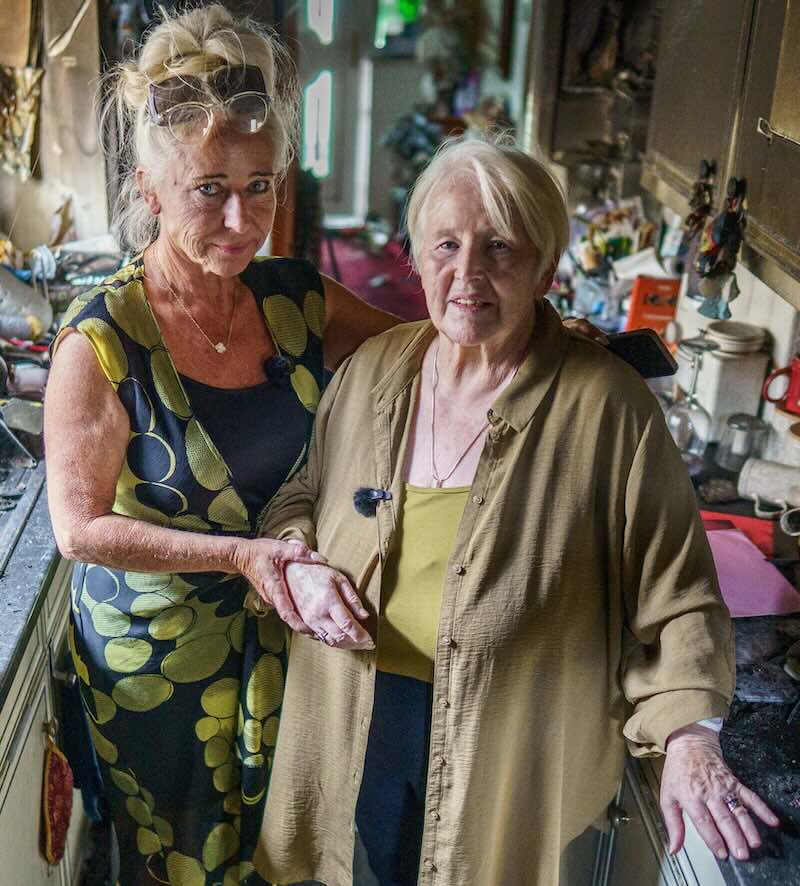
Doorbell camera Suzanne Wright -SWNS
Doorbell camera capture – Suzanne Wright/SWNS

Hero neighbors raced into a burning home to save an 87-year-old grandma after her daughter watched the terrifying fire on a doorbell camera.

Phyllis Day, who has Alzheimer’s, was asleep when a blaze broke out in the utility room of her home in Wigston, Leicestershire in England.

Luckily, neighbors spotted flames and smoke billowing from the property at around 11.30 PM last Thursday night—and charged in to help.

Daughter Suzanne Wright was at home five miles away when she awoke to a doorbell notification alerting her to activity at her mom’s house.

She watched in horror as around eight people tried to smash their way inside and initially thought they were drunken thugs trying to break in.

Using the intercom system on the doorbell, Suzanne realized the people were the neighbors and she guided them to a key box outside.

“It was just pure luck that her neighbors saw the flames and dashed round to help,” Suzanne told SWNS news.

“I could see a couple of men without tops on, hammering on the door. There were then lots of people outside trying to ram their way inside and a man was shouting ‘get out, there’s a fire’.”

“I was able to speak to them on the intercom on the camera and explained I lived elsewhere but my mum was inside.”

Doorbell camera capture shows Suzanne Wright with mother after rescue -SWNS

Suzanne, a full-time caregiver for her mother, quickly dressed, and while her husband drove them to the house, she watched as the neighbors rushed to save her mum.

“At one point I lost visual and could just hear shouting and screaming, it was terrifying. Luckily it came back on and I could see mum being led by the arm outside.”

Suzanne says she believes her mum, who has lived alone since her husband died in 2018, could not hear the smoke alarms because she took out her hearing aids before going to bed.

The neighbors, Pav Sarpal, 28, and Stephan Smart, 44, turned into heroes—running inside the house to rescue Phyllis.

“It’s the worst thing I’ve ever seen in my life,” said Pav. “All I could see were flames and smoke and it was getting worse by the second.

“When the door opened I ran in first, but I couldn’t breathe. I told Stephan to get me a towel so I could go upstairs where Phyllis was asleep.

“I was coughing so much, the smoke was everywhere. It felt like I was being physically choked by the smoke. I had to run downstairs twice to get fresh air before heading up to bring Sue’s mum down.”

MORE EVERY DAY BRAVERY: Heroic Neighbor Uses Sledgehammer to Rescue 85-year-old Woman in Wheelchair from House Fire

Stephan added: “I just saw flames coming straight through the kitchen door.

“I panicked a little to start with, but I knew somebody was upstairs and I had to get up there and get her down as quickly as possible.

“When we found her bedroom we woke Phyllis up but she looked at me like I was going to rob her. I told her there was a fire and she needed to come with us and we gently got her out of bed.”

Stephan and Pav took an arm each as they helped Phyllis down the stairs and out of the front door.

Another neighbor, Dean Archer, 30, also rushed to help when he heard a loud explosion come from inside the house.

“It was a mad panic really. Stephan and Pav got up the stairs and managed to bring her down and luckily we got her out just in time. It felt like it took ages, everything was in slow motion.”

DEATH-DEFYING HEROISM: Courageous Hero Climbs to 6th Floor Ledge to Save Children and Mom Trapped By Flames in Paris (WATCH)

Suzanne Wright and Phyllis Day – SWNS

Phyllis, who has ten grandchildren and three great-grandchildren, will now stay with Suzanne until her home is repaired.

“I cannot thank the neighbors enough,” said the daughter. “They are absolute super heroes.”

A WHALE OF A RESCUE: Woman Rescues Shark Entangled in Fishing Line With Her Bare Hands as Friend Shoots Incredible Video

Afterward, local fire officials urged the public not to enter buildings that are on fire, because “doing so endangers more lives. Smoke inhalation can quickly disorientate, injure and incapacitate.”

But Suzanne has a different message: “I think King Charles should knight them all.”

SHARE THE BRAVERY With Friends on Social Media in Need of a Hero Story…

Crow Takes to Teaching a Starving Orphan Bird How to Eat (Watch)

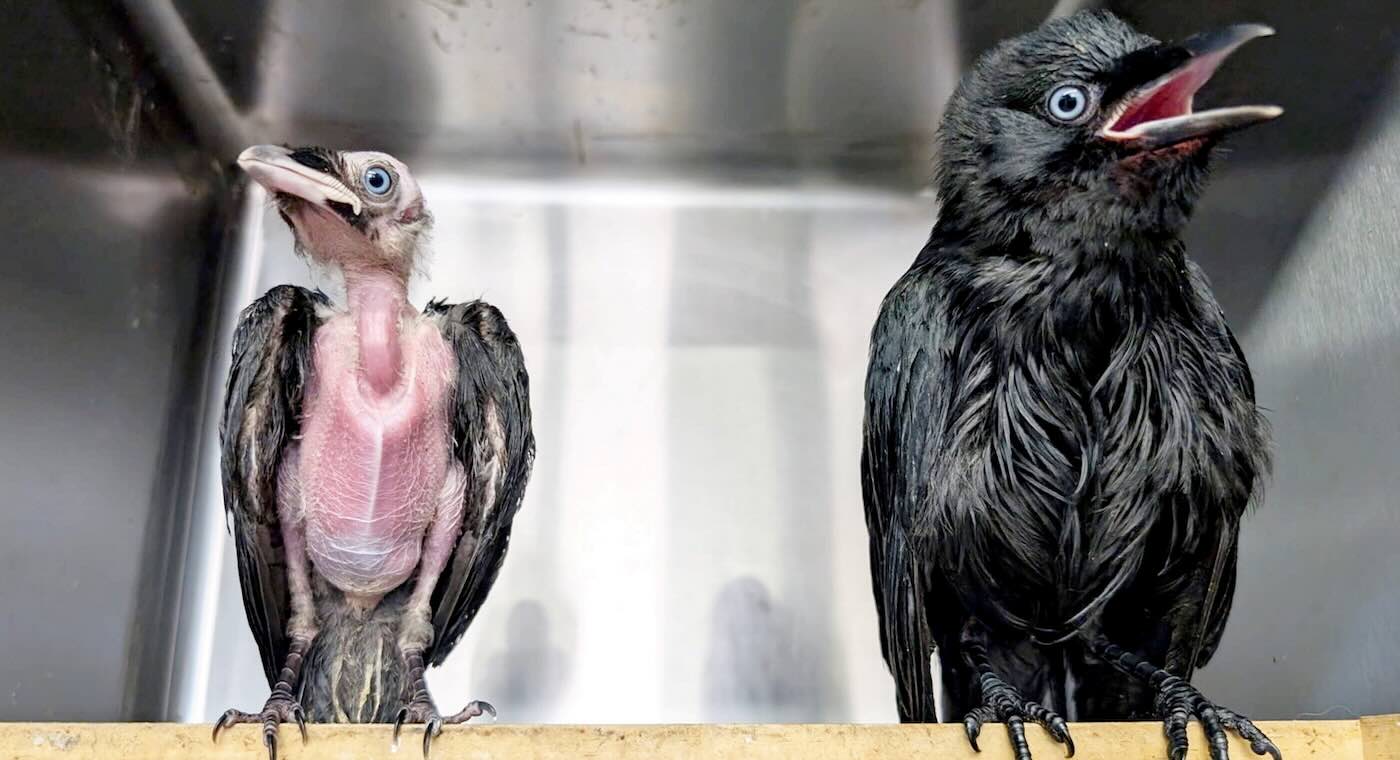
Frank the jackdaw is being nursed back to health by an older crow - SWNS / Brinsley Animal Rescue
Frank the jackdaw is being nursed back to health by an older crow – SWNS / Brinsley Animal Rescue

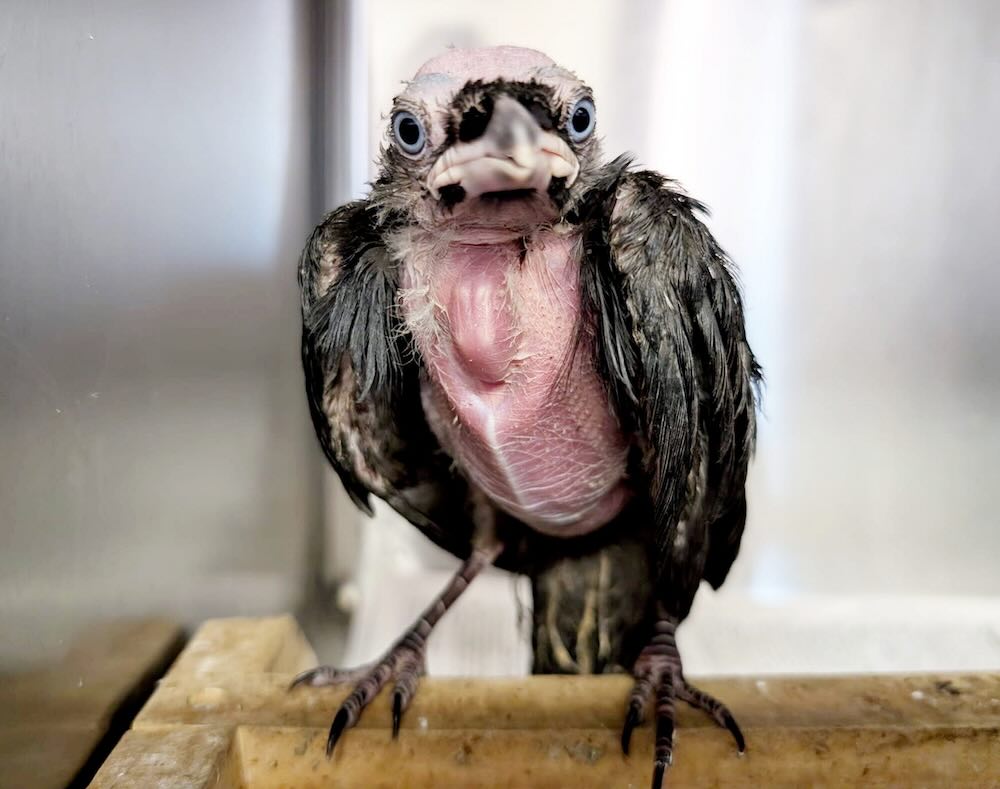
A starving baby crow with barely any feathers is being nursed back to health—and another older bird has taken him under his wing.

The tiny English crow known as the jackdaw was found in a “sorry state” and close to death.

He was spotted in a field in Nottingham, England earlier this month and taken to a rescue centre where volunteers nicknamed him Frank Sinatra because of his piercing blue eyes.

They placed him in a recovery unit with another fledgling crow who was a little older and wiser, and he took on the role of surrogate parent—even feeding little Frank his daily meals.

Adorable videos show the pair perched together as the black jackdaw helps his pupil to swallow worms and seeds.

Jon Beresford, who co-founded Brinsley Animal Rescue, said Frank is around six weeks old but was small due to malnutrition.

“As soon as he arrived with us he stole all our hearts,” he told SWNS news.

Frank the jackdaw fledgling – Brinsley Animal Rescue / SWNS

“It’s not usual that we name the animals that come to us but his piercing eyes led us to call him Frank Sinatra—and it’s stuck ever since.”

While quarantined for treatment, Frank was observed calling out to his new friend. Being placed together is really helping his development.

“At this stage of his growth, Frank would still be reliant on his parents for food.”

But, to the team’s “amazement”, the older fledgling started to feed him—despite the fact he had only just learned to feed itself. (See it in the video below...)

“It’s amazing to watch them interact. Frank watches the older one’s every move and copies him.”

CHECK OUT THESE WILD BIRDS:
Woman Who Rescued Injured Crow Keeps Getting ‘Thank-you Gifts’ from Other Birds
Family That Owned This ‘Wildlife Wonder of the World’ for 300 Years Sells Bass Rock to Protect 100,000 Seabirds

The rescue workers hope Frank will recover sufficiently to be moved into an aviary where it can learn to fly and prepare for eventual re-release into the wild.

WATCH the video below…

SHARE THE STORY WITH YOUR FLOCK On Social Media…