













131 years ago, the architect, visionary, and writer Buckminster Fuller was born. Fuller developed numerous inventions, mainly architectural designs, and popularized the widely known geodesic dome structural shape, which he most famously used to design the Montreal Biosphere. Soaking with honors, awards, and appointments, Fuller published 30 books in his life, invented numerous words, and held 28 US patents. READ some details about the great inventor and watch a video… (1895)
Good News in History, July 12

‘Game-Changing’ Saliva Test Can Diagnose Endometriosis in Days Rather Than Years


Two new rapid tests, EndoSure and Endotest, can drastically reduce the wait time for a proper diagnosis of endometriosis—from an average nine-year wait to just days.
The saliva test just approved for use by the UK’s national health system, NHS, is being called “game-changing” by experts in the field of endometriosis.
Guidance issued this month says doctors can now use two new non-invasive diagnostic tests, which will be funded by the NHS while researchers collect more data on their success rate.
The Endotest analyses a saliva sample for tiny biological markers called microRNAs, which can indicate whether endometriosis is likely present. The 45-minute EndoSure test detects endometriosis by measuring electrical signals in the gut using sensor pads on the abdomen after the patient has fasted.
Endometriosis affects around one in ten women of reproductive age in the UK. It’s a painful condition wherein cells like those in the womb grow in other parts of the body. Perhaps worst of all, the average wait time until a definitive diagnosis is more than nine years.
Until now, it was diagnosed using a laparoscopy procedure carried out under general anesthesia and involves the insertion of a small camera through a tiny cut in the abdomen to look inside the pelvis for signs of the condition.
Announcing the new tests, Dr. Anastasia Chalkidou explained why reducing the wait time is so important.
“That delay means living with chronic pelvic pain… These technologies have the potential to change that by allowing earlier and better treatment quickly.”
Ami Robertson, 23, experienced symptoms of endometriosis at age 16, but was repeatedly told she had irritable bowel syndrome.
She was finally diagnosed using the non-invasive tests, enabling her to access treatment for the first time.
“I spent years being told my pain was something else entirely. I started to doubt myself, wondering if it was all in my head,” said the Pilates instructor from Glasgow, Scotland.
“When I finally had the test, it took less than an hour and gave me something I’d never had before: concrete evidence I could take to my doctor.
“For the first time, I was believed, and I could finally get the help I needed. Today my quality of life is night and day compared to before.”
Simran Chavda, 15 (pictured below with her mom), began experiencing severe pelvic pain at 13, but repeated doctor visits failed to identify the cause. Her mother, a GP, Dr. Sharan Uppal, said having the non-invasive test finally gave them the evidence they needed to push for a referral and, ultimately, a diagnosis of widespread endometriosis.

“Getting my diagnosis honestly felt like the best thing in the world.”
“The test itself was easy, it wasn’t painful at all—just drinking water and being monitored. Really simple. And I’m already starting to feel better after my surgery. I know I’m not going to be in pain all the time, and that means everything.”
Symptoms of endometriosis include heavy menstrual bleeding, fatigue, pain when urinating, pelvic pain, difficulty getting pregnant, and painful bowel movements.
For Ebony Dowdell who had periods that lasted as long as four months, it took eight years for her to get a diagnosis and treatment for her endometriosis.
She had a laparoscopy procedure in July 2024 but was still not officially diagnosed until she saw further professionals.
The 20-year-old from Southampton had robotic-assisted endometriosis excision laparoscopy surgery to remove her endometriosis in April 2025, but believes if she’d had a quicker diagnosis it wouldn’t have gotten to that stage.
“Having a diagnosis makes you feel human, you know it is not in my head and you are not crazy. A quicker diagnosis system would make a huge difference to people, and younger people would be getting diagnosed earlier too.”
The Endotest saliva sample is sent to a laboratory for analysis, but the EndoSure results, derived from electrical signals in the gut, are available as soon as the 45-minute test is complete.
Dr. Gail Busby, a gynecologist at Manchester University NHS Foundation Trust, called the tests “a game-changer”.
“They give us answers much earlier, without the need for invasive surgery, and that means we can start the right treatment sooner. An earlier diagnosis doesn’t just change one person’s life, it frees up appointments and surgical slots for everyone waiting for care.”
SHARE THE AMAZING BREAKTHROUGH With Women On Social Media…
Artist Creates Amazingly Detailed Drawings Using Only Typewriter Keystrokes (LOOK)

A London artist has created a series of amazing artworks—including a scene from Wimbledon’s centre court—using just keystrokes from a vintage typewriter.
From his studio in Canning Town, East London, James Cook says he types over a million letters and symbols onto the piece of paper to create his masterpieces—using only his right index finger.
The 29-year-old has been using typewriters since he was 17 and first worked with one during a school art project.
Today, he also owns around 100 typewriters from across the world, with most of them arriving as donations from fans.
The artist’s work mainly consists of famous cityscapes—like Rome, Paris, and New York—and celebrity portraits, including Shakespeare and Tom Hanks.
His most recent piece, “Wimbledon 2026”, took six weeks to complete, and has been viewed over 8 million times on social media. (Watch his video at the bottom…)

“I fell in love with the typewriter after using it for a school art project,” said James, from Braintree, Essex. “It felt like such a unique way to capture the world.
Most people are shocked that drawings like these are even possible.
“I still can’t believe sometimes that this is my job.
“The Wimbledon piece has taken me to another level, as now I have actual players and legends like Billie Jean King commenting on my work.”

While in high school working on his assignment to ‘create art with technology’, James learned about Paul Smith, the original “Typewriter Artist” who used the machines to overcame severe spastic cerebral palsy.
“I’ll never forget traipsing around the charity shops in my area looking for one. We had no luck until an older couple overheard my dad asking the shopkeeper behind the counter.
“They said I could have their 1950 Oliver Courier model, and I went that same afternoon to pick it up.
James continued producing his typewriter art while studying architecture at University College London—earning a degree that “inspired” a lot of his cityscape work.
When James started posting about his work on social media, it led to him landing some commissions. But his big break came after his work was shown on the BBC News, leading him to be able to become a full-time artist.
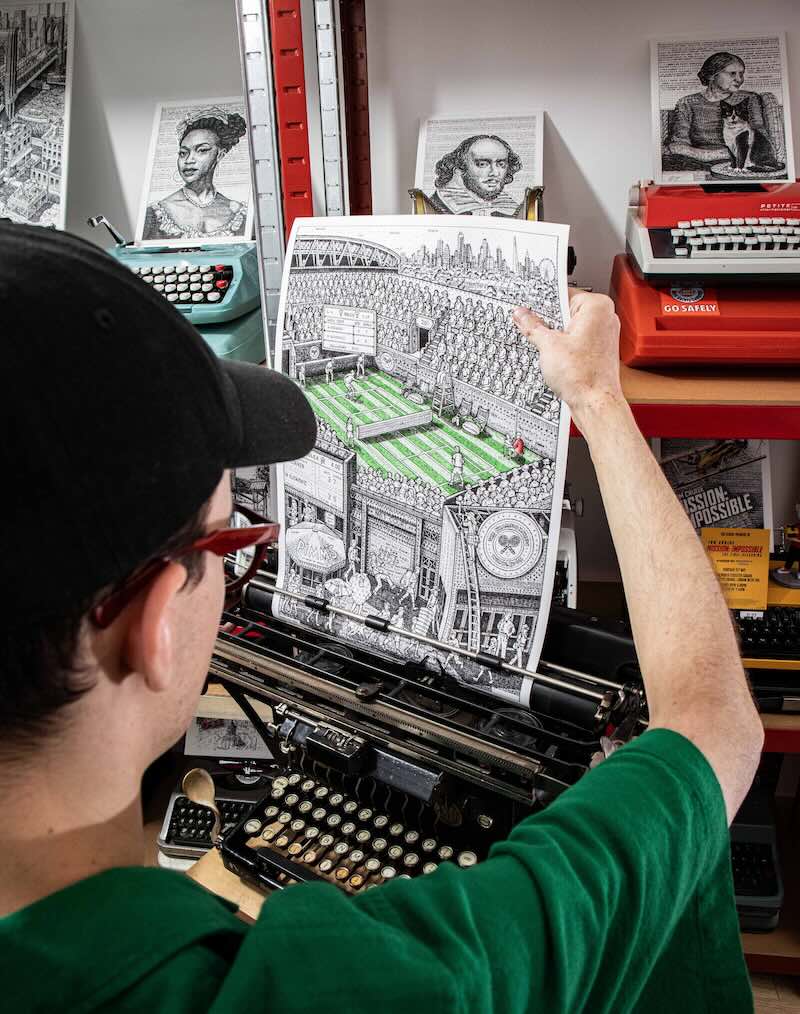
He says small A4–sized artworks can take around five days with larger A3 pieces taking weeks at a time.
Prints cost between $130 – $400 (£96 to £300) depending on the size.
His love of tennis inspired his latest Wimbledon piece, which took him around 378 hours, working 9 hours a day.
He fed the paper through the retro 1932 Smith Premier typewriter dozens of times to produce the extraordinary drawing.
“I have always wanted to go to Wimbledon but have never managed to get tickets. So I decided to capture the competition in my own artistic way.”
The artwork depicts a game on centre court between Novak Djokovic and Roger Federer—but upon closer inspection, whimsey is at play, with fun characters and phrases hidden throughout the piece.
These include a ball boy picking up balls, but his bag is ripped, and a man dressed up as a giant strawberry. Names of players, like Andy Murray and Venus Williams, are sprinkled throughout, along with tennis jargon like “deuce” and “rally”. (Watch the animation below…)
“My favorite is the woman who climbed up a ladder and is trying to sneak a peek of the game because they couldn’t get a ticket.”
The artist said he developed this light-hearted style after being inspired by the ‘Where’s Waldo’ puzzle books as a child.
MORE UNIQUE ARTISTS:
• Britain’s First Furniture Orchard Grows Chairs Right on the Trees (WATCH)
• Artist Uses Cremation Ashes to Create Unique Memorial Paintings With Personal Meanings
The green color of the grass was made using specially-made typewriter ribbons.
“Colored ribbons sold online have allowed me to add color, which has opened up a brand new creative doorway.
Notable symbols include the use of commas and quotation marks to create texture on the grass, and a capital letter ‘G’ is used for people’s hands.
AMAZING: Striking Portraits Made Out of Old Denim Jeans Cut into Tiny Pieces – LOOK
James says this artwork is the “hardest” he’s completed, to date. He also made a working animation to promote the work, which took around two weeks.
“I am immensely proud of it.”
See more of James’s work online at jamescookartwork.com or on Instagram: @jamescookartwork
SHARE THE CREATIVITY With Artists Looking for Inspiration On Social Media…
UK’s First Hospital for Houseplants – Where Plants Are Put on Drips and Quarantined for Bugs

Britain’s most unique hospital is now open—where the “patients” are houseplants.
Some are “put on drips” and some may go into quarantine, but all get the same loving care from Rosanna Costello, who started the business to help customers keep their indoor plants alive.
Found in Edinburgh, Scotland, the Hilda Houseplant Hospital allows horticulturalists, whatever the level of expertise, to drop off their plants for ‘surgery’, which may include repotting, pest removal, or liquid drip.
Rosanna remembers going into plant shops where she could buy compost and repotting accessories for doing it yourself. But even though she knew how to do it, she still wanted advice and someone who knew better, to help avoid pitfalls.
“I’d had this idea from when I first got into houseplants, because that was what I had wanted.”
“The feedback was that people wanted a drop-off – a few people wanted to learn how to do it themselves, which is why we run workshops – but the majority of people wanted it done for them and then aftercare advice.”
Rosanna says customers bring the plant into the shop and describe the issues they’re facing at a consultation, with care prices based on the size of the plant.
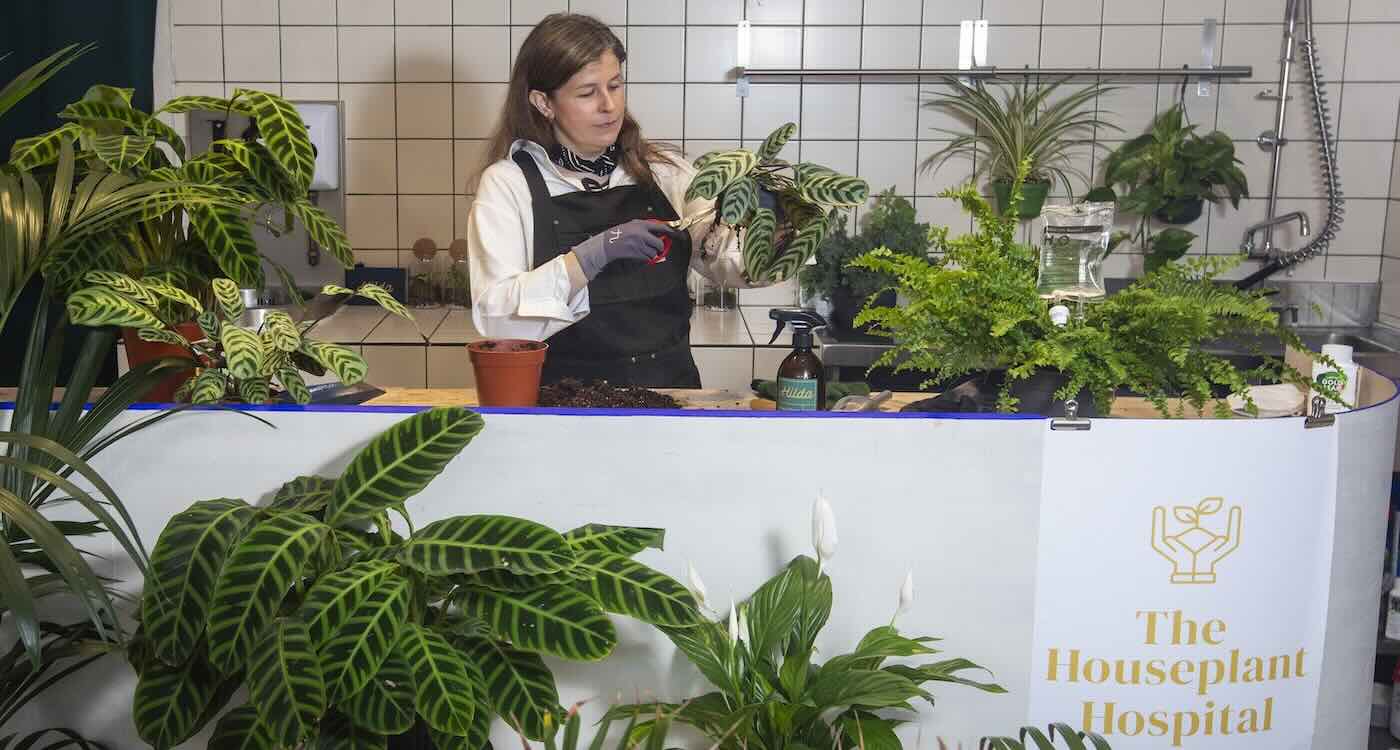
She then quarantines the plant if pests are involved, and repots and trims according to the client’s needs and living space, giving the plant one final clean before contacting the owner to let them know the ‘surgery’ has been a success.
“They bring their plant in and we take a ‘patient history’ – essentially find out how long they’ve had it for, what they think might be wrong, and what they want to happen with it,” said Rosanna.
“I’m a big believer that it’s your houseplant, it lives in your home, it has to work for you.
“So if you want it split into two, if you want to keep it in one pot, if you want it to not grow much bigger – all these considerations.
“A lot of the time, people have pests and either don’t know they’ve got them, or they don’t know how to deal with them, so we’ve created our own unique quarantine and treatment system.
GOOD PLANT NEWS: Hidden Ecosystem Buried for 130 Years Wakes Up After Bulldozer Uncovers Green Shoots in Toronto
“Once they’ve been repotted and trimmed, we feed them, give them a really good cleaning, and let the customer know they’re ready to collect.
“There’s an awful lot of feelings and emotions attached to the houseplants that we see, and when they come to collect and get care information, there’s so much relief and joy.”
TIPS FOR HOUSEPLANTS: Remove the Sickly Houseplants From Your Home or Office – They’re Making You Sad
Rosanna said people should avoid adhering to an arbitrary routine of ‘watering once per week’. They can simply pick up the pot: If it feels light it’s time for some water.
When there’s a heatwave, though, weekly waterings might be okay. Or, just move the plants out of direct sunlight and keep an eye out for drooping or curling leaves, which are signs the plant is dehydrated.
“But we’re not trying to make it overcomplicated or make people feel like they need a whole new degree in science to understand.”

The Hospital’s most commonly treated plant is the monstera—a large, tropical plant which is notoriously tricky for new gardeners to maintain.
“They are such a popular houseplant, but they can very easily go a bit wild if you don’t have them trained up a pole, or give them a good feeding,” she said.
“We put them onto a moss pole to get them trained up—rather than out—so they’re not taking over people’s living rooms. We’re also giving them a really good cleaning, because they’ve got such beautiful big leaves.”
Rosanna believes that houseplants are a key part of experiencing nature while living in cities, and she hopes to eventually open a second branch of Hilda somewhere new, helping more people to have happy plants.
“I always think back to the pandemic, when we realized how important houseplants were, because we were inside all the time. I think city living in flats makes people really need their houseplants to have a healthy home life.
“Then they need help with those houseplants because you don’t want to keep a huge bag of soil under your sink, or be repotting on your dining room table.
AWE-INSPIRING PLANTS:
• Botanic Garden Films Giant Lily Pads Holding Over 180lbs in Annual ‘Water Lily Weigh Off’
• 7.4M Plant and Fungi Samples Digitized to ‘Democratize Knowledge’ and Save Species

Avoid these mistakes:
1. The best way to know when your plants need watering is to pick up your plants and feel how heavy they are. If they feel light, it’s probably time for a water.
2. Don’t use outdoor compost on your houseplants. Outdoor compost is not free-draining enough and will often come with fungus gnats as an unwanted addition.
3. Don’t be afraid to trim off leaves and stems. It’s a perfectly natural part of the growth cycle and has added benefits. Not only do the plants look better, but you take away potential pest hiding places.
4. During a heatwave: Intensity of light is likely to burn and frazzle the leaves, so it may be good to move plants back from the windows, particularly south facing sunny spots, so that they don’t get sunburned.
Also remember that open windows and warm weather may allow uninvited houseplant pests to get to your plants, so watch for any signs of pests.
SHARE THE GREEN IDEA With Entrepreneurs on Social Media…
Your Weekly Horoscope – ‘Free Will Astrology’ by Rob Brezsny

Our partner Rob Brezsny, whose latest book is Astrology Is Real: Revelations from My Life as an Oracle, provides his weekly wisdom to enlighten our thinking and motivate our mood. Rob’s Free Will Astrology, is a syndicated weekly column appearing in over a hundred publications. He is also the author of Pronoia Is the Antidote for Paranoia: How All of Creation Is Conspiring To Shower You with Blessings. (A free preview of the book is available here.)
Here is your weekly horoscope…

FREE WILL ASTROLOGY – Week of July 11, 2026
Copyright by Rob Brezsny, FreeWillAstrology.com

CANCER (June 21-July 22):
Male humpback whales in the Pacific Ocean change their songs over the years. New phrases can spread across thousands of miles as other whales take up and transform them. Researchers don’t know why, but the pattern is clear: The whales value novelty even in their ancient rituals. They create an evolving musical tradition. Consider what this practice might suggest for your own relationship with the past, Cancerian. The memories and patterns you’re carrying don’t have to remain frozen. You can honor your history while remixing it, adding new verses, and changing the key. What needs to be preserved isn’t the exact form but the living spirit.

LEO (July 23-Aug. 22):
Leo-born oceanographer Marie Tharp created the first comprehensive maps of the ocean floor. Her work was pivotal in proving theories about plate tectonics. She did much of this work in the 1950s, when women weren’t even allowed aboard research vessels. She had to rely on data collected by others, never seeing the terrain she mapped. But her limitation became her advantage; distance allowed her to perceive patterns that field researchers missed. I suspect that you, too, are working with incomplete information, Leo. Does this disqualify you from drawing conclusions? No! I believe your inability to access certain details will compel you to see larger patterns. What you’re missing might be precisely what enables you to see what others can’t.

VIRGO (Aug. 23-Sept. 22):
The “problem” confronting you right now is unusual: Your vision is too sharp, your thinking too precise, and your words too unambiguous. This would usually be good news to celebrate, but at the moment it’s blocking you from noticing the subtle openings life is presenting. Those portals may only reveal themselves if you soften your intense scrutiny and call on a creative, blurry logic. It’s like how, at night, you sometimes see more clearly when you peer from the edges of your vision rather than staring straight ahead.

LIBRA (Sept. 23-Oct. 22):
This is a perfect moment to express your own unique power more than ever before. I invite you to act with conviction, assert your influence, and claim what you’ve earned. For best results, clarify your ambitions and assert your authority. Write down a formal vow or two. Don’t wait for approval from anyone higher up, and don’t waste time wondering whether destiny is on your side. The succulent opportunities aren’t somewhere else or someday later. They’re here and now.

SCORPIO (Oct. 23-Nov. 21):
I’m exultant when a vigorous bike ride up the trail of my local mountain leaves me so cleansed and energized that a flash of truth strikes and instantly dissipates the illusions I’ve been clinging to. I get a delightful shock when, while wandering through a city’s maze of asphalt and litter, a sudden breeze carries the earthy aroma of a rebellious garden. I love it when the reckless choices of misguided leaders jolt my community into doubling down on our quest for audacious harmony, inventive affection, and untamed wisdom. How about you, dear Scorpio? Where do you search for your awakenings and salvations? Keep your inner radar tuned; they’re circling close.

SAGITTARIUS (Nov. 22-Dec. 21):
Sagittarian physicist Freeman Dyson (1923–2020) proposed that advanced extraterrestrial civilizations might build megastructures around stars to capture their energy. These “Dyson spheres” would be detectable from Earth as unusual infrared signatures. We haven’t found any yet, but his idea revolutionized how we think about looking for alien intelligence. Moral of the story: Valuable contributions can come from inventing the framework for how to search for unknown things. In the coming weeks, Sagittarius, you might not solve problems, but you could redesign the questions. You may not find the answers, but you could create better tools for exploration.

CAPRICORN (Dec. 22-Jan. 19):
Do you have a muse? If not, please find one. You shouldn’t go another day without a provocative, inspiring presence to stir your imagination and drive you deliciously wild. If you already have a muse and that genius has been faithfully fueling your creative fire, bestow a reward. Give a gift or blessing that provides a muse-like boost to your muse. And if your existing muse has grown quiet lately, go off on an adventure together. Dream up plans to stimulate the bursts of kaleidoscopic energy that you two are capable of generating.

AQUARIUS (Jan. 20-Feb. 18):
In some monastic traditions, practitioners engage in “work prayer.” They transform ordinary labor into spiritual practice not by thinking holy thoughts while working, but by bringing complete presence and fond attention to ordinary labors. Chopping vegetables becomes meditation. Sweeping floors becomes devotion. The sacredness arises from their wholehearted attitude. This would be an excellent experiment for you to try, Aquarius. Divine solace and inspiration will arrive as you perform your daily duties with verve and gratitude. Try this: For a few days or even two weeks, approach routine duties and familiar obligations with a ceremonial reverence. Be joyful for the privilege of being alive in the most ordinary ways.

PISCES (Feb. 19-March 20):
You’ve entered a phase when your magnetism and charisma will expand as you focus on ruminating deeply about what’s most meaningful to you. Seeking out new teachers and fresh lessons will bring lucky breaks and helpful influences into your sphere. Each fresh insight will polish your allure, and every surge of curiosity will add to your glow. Be extra sexy and ultra smart: Cosmic energies will work in your favor as you weave your id and intellect together.

ARIES (March 21-April 19):
There are only two types of humans, right? Some of us serve beauty, truth, and goodness, while the rest pledge their allegiance to illusions, lies, and shadows. Our planet is now caught in a colossal showdown between these two sides. And it’s high time for you to align yourself with one or the other. JUST KIDDING! The truth is far messier and more interesting: Every one of us is a blend of luminosity and ignorance. And now is a perfect moment to study how those two currents move within you. When you clearly see how you contribute to the murky jumble, your commitment to love, harmony, and justice will soar.

TAURUS (April 20-May 20):
You’ll move with style and purpose if you take quick jaunts, dare gentle risks, and make a few nimble leaps of faith. You’ll go awry and astray if you wander too far afield, chase swaggering adventures, or try vaulting across yawning chasms. Keep it light, sharp, and intuitive, Taurus. Refrain from lugging heavy emotional baggage or drifting into daydream limbo. It’ll be wise to trust your sprightly impulses, but foolish to dissect them so ruthlessly that the magic leaks out. The color amber and the number three will be your allies. Somber gray and the number four will not. Align with sly visionaries and soulful realists but sidestep bitter contrarians and nostalgic clingers.

GEMINI (May 21-June 20):
I swear I’m smarter in some places than in others. My intelligence soars in Barcelona, Kyoto, Aix-en-Provence, France, and Florence, Italy. But I seem dull-witted in Munich, Moscow, and Washington, D.C. Even in Northern California, my long-time home, some areas bring out the best in me. I feel mediocre on Valencia Street in San Francisco, for instance, whereas I’m extra wise in downtown Berkeley. Why is this? The branch of astrology known as astrocartography says that my strengths are more likely to shine in certain spots than others. In the coming weeks, Gemini, I urge you to experiment with the possibility that this may be true for you, as well. Wander far and wide. Find out where you feel most aligned with your deep, bright, genuine self.
WANT MORE? Listen to Rob’s EXPANDED AUDIO HOROSCOPES, 4-5 minute meditations on the current state of your destiny — or subscribe to his unique daily text message service at: RealAstrology.com
(Zodiac images by Numerologysign.com, CC license)
SHARE The Wisdom With Friends Who Are Stars in Your Life on Social Media…
“Happiness lives in three places: letting go of what was, enjoying what is, and trusting what will be.” – Chris Bharnes

Quote of the Day: “Happiness lives in three places: letting go of what was, enjoying what is, and trusting what will be.” – Chris Bharnes
Photo by: Dino Reichmuth
With a new inspirational quote every day, atop the perfect photo—collected and archived on our Quotes page—why not bookmark GNN.org for a daily uplift?

Good News in History, July 11

90 years ago today, the RFK Bridge, also known as the Triborough Bridge, opened to traffic in New York City. Together, the series of bridges and viaducts span over 5,000 feet and link the boroughs of Manhattan, Queens, and the Bronx. The first section of the complex passes over the Harlem River, and is the largest vertical-lift bridge in the world, while the second section connects Randalls Island with the Bronx, and the third connects Wards Island to Astoria in Queens over the East River. READ about the various bridges… (1938)
Florida Teen’s ‘Storm Smart’ Program Teaches Hurricane Preparedness to Students – Because the Schools Didn’t

From South Florida comes the story of an intrepid teenager who’s developed a mini curriculum on hurricane preparedness to fit into school lessons.
Having suffered (or perhaps been enriched) from the impact of Hurricane Irma on her community, 16-year-old Elise Raurell created Storm Smart last year as part of her Girl Scout Gold Award.
If it can be believed, Raurell says that South Florida schools don’t teach students anything about what a hurricane can do to a city. Guides on topics like how to prepare emergency kits, or safety information, like not entering standing water if powerlines are down, or keeping away from glass windows—none of it was being, and so Raurell thought she’d do it herself.
Not only that, but the Storm Smart modules allow students to teach other students, and be adopted quickly and effortlessly into any school or classroom.
“Growing up in South Florida, going to public school, I realized that we weren’t really learning anything about hurricane preparation safety, even though it’s super important,” Raurell told CBS News.
Over 500 students have received Storm Smart educational materials so far, some from Raurell herself, but many more from other students stepping up to take on the responsibility of disseminating the information themselves.
“One of the most rewarding parts of this program is seeing students learn the material and then go on to teach their peers about it, and through that learn leadership and teaching skills,” Raurell said.
Storm Smart materials are available through its website and social media platforms.
HEAR Elise explain her project below…
SHARE This Important Resource With Your Friends At Risk Of Hurricanes…
Quebec Firm Pioneers Cyanide-Free Gold Extraction and Arsenic-Capture to Clean up Mining Industry
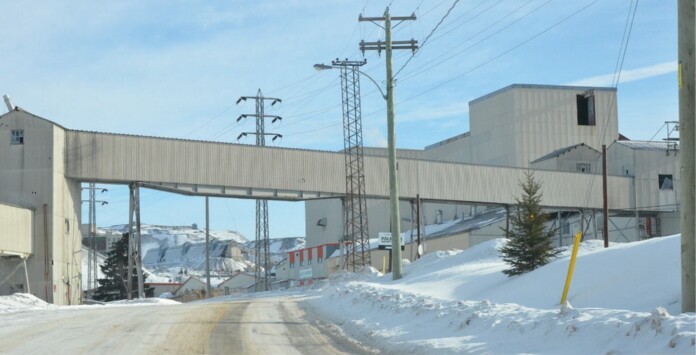
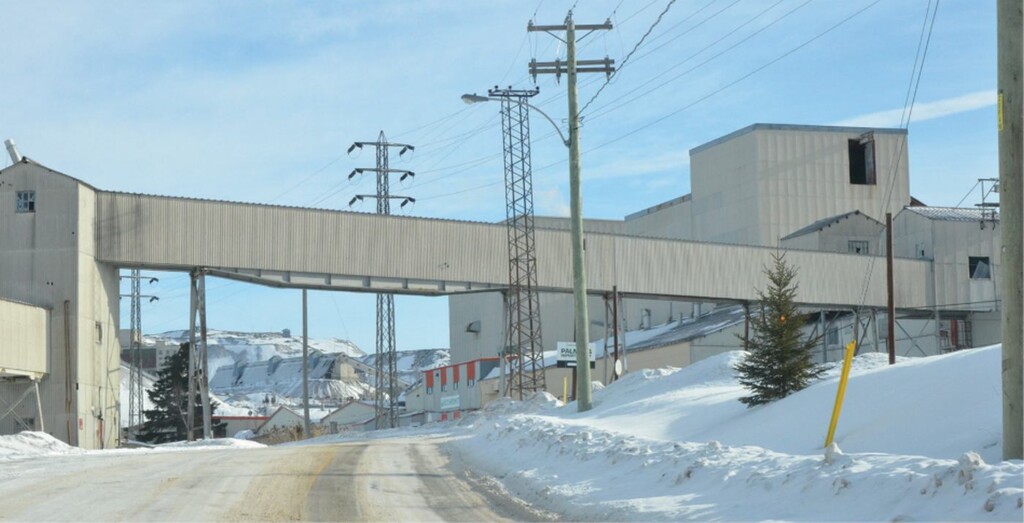
A Quebec chemical firm has developed a cyanide-free, and generally non-toxic method to extract gold from mineral ores—an option that could potentially relieve companies from a significant portion of current environmental compliance.
The firm, Dundee Sustainable Technologies, also offers a patented chemical process called GlassLock, which addresses one of the industry’s most pressing environmental concerns: arsenic.
The technology can replace cyanide leaching during extraction to isolate the arsenic and turn it into an inert glass. Mixed with common components like silica, recycled glass, and hematite, the arsenic is then vitrified into a stable and insoluble glass product that can be removed and processed far more easily.
Mining companies are not the polluting, Gold Rush-era businesses they used to be. Regardless of where Canadians go around the world to mine, they operate fully-ensconced in the ESG framework of private sector accountability for the ecosystems they work in.
Retreatment of mine waste, pollution control, and reclamation of mining land are costs budgeted for and built into the earliest economic viability assessments of any mining project. Environmental permitting times take anywhere from 8 to 20 years in North America on average while government offices asses any potential harm or risk to air quality, watersheds, and wildlife.
These requirements put enormous risk and burden onto companies looking to supply the market with everything a modern civilization needs to build and produce—from the copper that makes the wires which run through our devices, to the zinc that makes the pipes which bring water through our homes.
In this business environment, Dundee Sustainable Technologies has worked for years from Canada’s strong mining jurisdiction of Quebec to develop cleaner ways to process ores that can both protect the natural ecosystem surrounding mining concessions and relieve the often-small management teams behind mining operations of some of the most stringent regulatory burdens.
Dundee’s gold circuit process uses sodium hypochlorite and sodium hypobromite in ambient pressures and room temperature to extract gold from ore at a fraction of the time of the cyanide-in-leach method. Contact time is short, just 2 hours compared to 36 hours, and the process operates in a fully closed loop. All chemicals are recycled within the circuit for reuse.
CLEANER INDUSTRY: Canada Successfully Exploring for ‘White’ Hydrogen Gas, a Clean Power Source Beneath Existing Mines
Without cyanide and other toxic leaching reagents, mining plans can be designed without “tailings ponds“—basically small manmade lakes that hold and slowly treat effluent and mine tailings from the milling and leaching process. These themselves aren’t necessarily bad for the environment, unless any number of weather events should disturb them—heavy rain, flooding, an earthquake, or a landslide to name a few.
Already, mining companies are using some of Dundee’s methods. Freegold Ventures Limited, a company formed to develop the Golden Summit project in Alaska, one of the largest undeveloped gold resources in the Americas, has included GlassLock in a suite of metallurgical test work as it prepares a mine plan for the roughly 30 million ounces of gold on its property.
ALSO CHECK OUT: Ecosystem of Pansies Thrives on Soil Contaminated by Lead Mining–Turning it into Clean Organic Compounds
In tests, Freegold used GlassLock to recover 95% of the gold contained in the ore while isolating 98% of the contained arsenic as inert glass, reducing the toxicity from 7% to 0.17%. It also was able to remove the need for cyanide leaching, and the resulting gold concentrate would be direct-to-smelter quality.
“The results of this program were extremely positive and encouraging for Freegold as it advances the project through Pre-Feasibility,” the company wrote in a press release.
SHARE This Great Use Of Chemistry To Reduce Environmental Risks Of Mining…
New ‘Sagrada Familia’ LEGO Set Marks Basilica’s Completion and 100 Years Since Gaudi’s Death


This year will see the Sagrada Familia basilica finally finished in Barcelona, on the 100th anniversary of the death of its charismatic architect, no less.
It will also mark the release of LEGO’s largest entry in its architecture series: the Sagrada Familia.
From New York City’s skyline to the Eiffel Tower and Rome’s Trevi Fountain, the architecture series was part of a very successful swerve towards addressing adult buyers of LEGO, and now the series will mark 100 years since Antoni Gaudi’s death with a faithful interpretation of the world’s tallest and newest basilica in the famous plastic bricks.
The model stands 24 inches tall, and contains 12,060 pieces. Like all LEGO sets, it carries a hefty price tag—this one reads $800.
“Our goal was to honor Gaudí’s vision with the utmost respect, capturing the rhythm of the basilica’s construction, its extraordinary complexity and ambition, and translating that into an immersive building experience,” Lego’s Design Master, Rok Žgalin Kobe, said in a press statement published Thursday.
The interior atmosphere of the basilica is captured with transparent bricks, allowing light to filter into the LEGO set just like the real thing.

Also like the real thing, enthusiasts will have to wait until November to get their hands on the set, as guests to Barcelona will have to wait until November 10th for the public opening.
Construction began on the Sagrada Familia in 1882 under the direction of Antoni Gaudi, who designed 18 tall spindly towers to rise up higher than any church in Europe. Gaudi’s plans were lost after his death in 1926, and construction had to continue in a makeshift interpretation through the Spanish Civil War.
LEGO REPORTING:
- LEGO Invests to Make Half the Plastic in Its Bricks from Renewable Materials by 2026
- 400,000 Kids Now Have LEGOs to Play with Thanks to Parents Donating 1.2 Mil Pounds of Used Bricks So Far
- How LEGO Is Being Used to Reduce Stress, Combat Childhood Trauma, and Manage PTSD
It was declared a UNESCO World Heritage Site in 1984, despite being more than 40 years from completion. In 2010, Pope Benedict XVI consecrated the building for worship, while building permission for the structure was officially issued in 2016, having been carried out illegally, albeit unknowingly so, for over 100 years.
In February of this year, it was considered complete when the final tower—honoring Jesus Christ with a 4-armed cross, was completed, and the inaugural mass was held.
SHARE This Story With Your Friends Who Love LEGO…
Despite Bankruptcy, the Pittsburgh Post-Gazette Will Endure After Sale to Nonprofit Journalism Institute

There’s been a lot of reminiscing about the founding of the nation this year—a year which also saw the first edition of the Pittsburgh Gazette printed 240 years ago.
Now the Post-Gazette, it was set to become the latest historic newspaper to file for bankruptcy and vanish into the history columns, but a nonprofit founded to protect America’s local papers have saved it.
The Pittsburgh Post-Gazette, which published one of its very first editions with the text of that new Constitution that everybody was talking about in Philly, was sold on May 4th to the Venetoulis Institute for Local Journalism.
The Venetoulis Institute is owned by a hotel magnate named Stewart Bainum Jr., and the PPG is the second paper the Institute has acquired following its purchase of the Baltimore Banner in 2022.
“Local journalism is essential to a strong community, but across the country the business model has been under severe strain,” Bainum said in the press release. “We believe there is a path forward — one that combines great journalism with a diversified business model built on scale and exceptional talent.”
Indeed the PPG was hemorrhaging money. It operated at a loss for 2 decades, losing some $350 million. The Institute will be willing to absorb some of those losses going forward, but a restructuring is likely taking place. CBS reported that all 171 writers were expected to reapply for their jobs.
MORE STORIES FROM PITTSBURGH: Turning a Landfill into a Solar Powerhouse, Pittsburgh Airport is Now Totally Energy-Independent
The Post-Gazette was the first American newspaper west of the Allegheny Mountains, and that is where it is set to stay under the new ownership agreement. Limited print editions, which the paper had been running on Thursday and Sunday, are expected to continue.
The paper has won 3 Pulitzer Prize awards for journalism and photography, with its first in 1938 for an investigation into how a then-recently appointed Supreme Court justice had been a member of the Ku Klux Klan, and most recently in 2019 for its coverage of the Pittsburgh synagogue shooting.
SHARE The News That A Historic Paper Will Continue Reporting After A Magnanimous Purchase…
“Art resides in the quality of doing. Process is not magic.” – Charles Eames

Quote of the Day: “Art resides in the quality of doing. Process is not magic.” – Charles Eames
Photo by: Credit: Jonathan Borba (cropped)
With a new inspirational quote every day, atop the perfect photo—collected and archived on our Quotes page—why not bookmark GNN.org for a daily uplift?

Good News in History, July 10

Happy Birthday to the gospel and blues singer Mavis Staples, who turns 86 years old today. Born in Chicago, she started singing with her family’s band The Staple Singers as a young girl, and her deep-throated voice catapulted the group to the top of the charts eight times between 1971 and 1975, with songs like I’ll Take You There, Let’s Do It Again, and Respect Yourself. WATCH a video about her birthday… (1939)
6 New Electric Buses in Colorado Double as Backup Batteries for Denver Area Power Grid


A Colorado town’s new electric school bus fleet also doubles as a backup battery to help out during peak power demand.
Charging at night, using power to pick up, drop off, and then drop off children again, the buses would normally sit at their charging stations until daybreak calls them out again.
But in Cherry Creek School District, after the last backpack has gone bobbling down the street home, the buses return to their depot to become a supporting cast to the power grid thanks to a clever bi-directional charging system that allows them to use excess energy from their routes to power excess demand from homes.
In most of the world, peak demand will be after work hours when men and women come home, turn on their kitchen appliances, TVs, or air conditioners, and begin to unwind. Being that hundreds of kilowatt hours remain in the school buses’ batteries after taking children home, Highland Electric Fleets has designed them to pay forward their own grid demand by releasing some of those kWh during the late afternoon and early evening.
There are still plenty of hours during the night, when demand is lowest, to recharge before the school day.
“This partnership works to support our environmental goals while delivering long-term operational savings,” Jennifer Perry, Cherry Creek’s interim superintendent, said at the June 3rd groundbreaking for the new bus facility.
The 6 buses and the bus “barn” are being funded by a $2.4 million rebate that Highland Electric Fleets collected from a partnership with the federal government. Cherry Creek wasn’t charged a penny.
MORE ELECTRIFICIATION STORIES:
- All-Electric Truck Completes Milestone Canberra-to-Sydney Haul, Cutting 84% in Fuel Costs
- Sub-Zero Temperatures Didn’t Affect Madison’s Electric Bus Fleet This Year–A Major EV Milestone
- India Approves $7 Billion For 10,000 Electric Buses to Clean Air in 170 Cities
Given that diesel prices remain elevated from the war, and given that maintenance on electric vehicles is so much less than in EVs owing to the 95% reduction in the number of moving parts, Perry said that there’s a competitive cost savings in the long-term.
Indeed Highland Electric Fleets have several of these pilot programs ongoing, which will also support healthy communities through the reduction in diesel tailpipe exhaust, and the general mood from the reduction in noise pollution.
Highland Electric estimates that 2 dozen of these buses could help the grid manage the excesses of 100 homes during peak hours, while a couple hundred could support over a thousand.
SHARE This Great News For Electrification In Colorado, And The Country…
Scientists Identify Gene at the Center of Muscular Aging – And How Exercise Defeats it


Respect cardiologist Dr. Benjamin Levine said last year in an interview that exercise “needs to be part of your personal hygiene, like brushing your teeth or taking a shower.”
That’s because it prevents our muscular repair systems from weakening with age, a new study has shown.
Beginning in middle age, muscle strength and function gradually decline, increasing the risk of falls, fractures, and slower recovery after illness or injury.
The consequences extend beyond individual health. As populations age, muscle loss can increase demands on caregivers and healthcare systems. Preserving muscle function is therefore an important part of maintaining independence and quality of life. By preserving function, and therefore movement, independence is also preserved, and elderly individuals who are independent are more likely to pursue other activities known to support healthy aging like recreational sports.
One of the key regulators of muscle health is a growth pathway called mTORC1, which helps control protein production and muscle maintenance. In aging muscles, this pathway can become excessively active. When that happens, muscles focus more on building new proteins while becoming less efficient at removing damaged ones.
Over time, these damaged proteins accumulate inside muscle cells, placing them under stress and contributing to the gradual loss of strength associated with aging. Until now, scientists did not fully understand what causes this imbalance.
A team of researchers from Singapore General Hospital and Cardiff University identified a gene called DEAF1 as an important factor behind this process.
“Exercise tells muscles to ‘clean up and reset.’ Lowering DEAF1 helps older muscles regain strength and balance, almost like hitting the rewind button,” said Priscillia Choy Sze Mun, a research assistant in the Cancer and Stem Cell Biology Program at Duke-National University of Singapore (NUS) and the study’s first author.
“With millions of older adults at risk of muscle decline, understanding DEAF1 could lead to new ways to protect muscles and improve quality of life.”
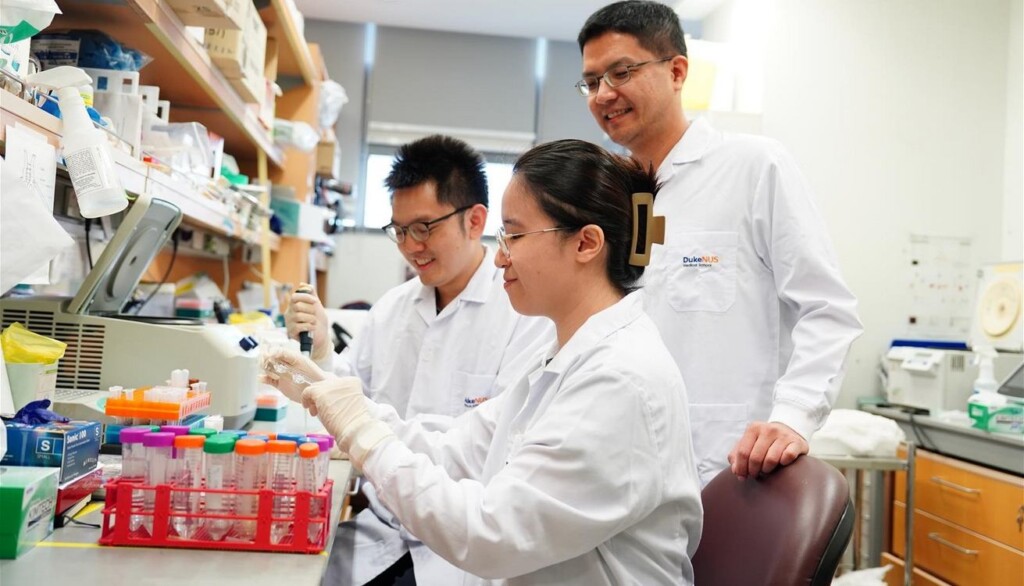
According to the study, DEAF1 levels rise in aging muscles. As DEAF1 increases, it drives mTORC1 activity higher, disrupting the normal balance between protein production and protein removal. This imbalance accelerates muscle deterioration.
Under normal conditions, DEAF1 is regulated by a group of proteins known as FOXOs. However, FOXO activity naturally declines with age. As a result, DEAF1 is no longer kept under tight control, allowing its levels to increase and pushing muscles further away from repair and maintenance.
“Exercise can reverse this process, correcting the imbalance,” said Assistant Professor Tang Hong-Wen from the program at Duke-NUS.
UNDERSTANDING EXERCISE: This Rarely-Trained Muscle Is Recognized Worldwide as a Marker of Human Health–And the Test for Living to 100
“Physical activity activates certain proteins which lower DEAF1 levels, bringing the growth pathway back into balance. This allows aging muscles to clear out damaged proteins, rebuild themselves properly, and help them stay stronger and more resilient.”
To test their findings, the researchers conducted experiments in both fruit flies and older mice.
The results were consistent across both species. Raising DEAF1 levels caused muscles to weaken more rapidly, while lowering DEAF1 restored healthier protein balance and improved muscle strength.
The researchers also found an important limitation. In some older muscles, DEAF1 levels become extremely high or FOXO activity drops significantly. In those cases, exercise alone may not be enough to fully restore the muscle’s repair capacity.
MORE STORIES LIKE THIS: Study Finds Many Older Adults Will Improve Over Time–Depending on Their Mindset
This finding may help explain why some older adults experience greater benefits from exercise than others and highlights the importance of understanding the underlying biology of muscle aging.
The findings could also prove valuable for people recovering from surgery, illness, or chronic diseases such as cancer. Researchers suggest that targeting DEAF1 could potentially reproduce some of the beneficial effects of exercise at the molecular level, helping maintain muscle strength even when physical activity is limited.
SHARE This Important Discovery With Your Friends…
Oregon Records 5 Years of Zero Pesticide-Related Deaths in Bees


According to an inaugural report on the health of bees in Oregon, scientists at Oregon State University have found no incidences of pesticide-related bee deaths since 2021.
This significant achievement underscores the capacity that everyday citizens have to protect pollinators if given correct information, even in a state which hosts one of the most biodiverse and specialized populations of bee species in the country.
Mia Maldonado at the Oregon Capital Chronicle writes that it was down to a pesticide-related mass-mortality event in a parking lot in 2013 that the Oregon state legislature established a Task Force on Pollinator Health to address the causes of the event and others like it linked to pesticide use.
Oregon State was charged with developing a suite of educational materials to help inform private sector businesses and professionals who work with pesticides how to do so in a way that protects bees.
Then in 2018, the issue was expanded with the Oregon Bee Project, an initiative aimed at disseminating those educational materials to as many people as possible. Some 12,000 landscapers and agriculturalists were trained to best understand the risks of pesticides to bees and how to minimize them, while information was also provided to K-12 schools.
Further materials about how to tend a pollinator-friendly garden or landscape were developed in concert with Oregon State, which began working to better understand bee health.
NEW BEE NEWS: A New York Cemetery Was Hiding Over 5 Million Burrowing Bees, One of the World’s Largest Concentrations
The university also compiled the Oregon Bee Atlas, the largest species inventory of bees in any state of the union which coalesced scientific observations and information on all 567 species of bee in the territory.
For gardeners and land managers, the atlas translates bee survey data into practical guidance. It includes top plant picks for every Oregon county and information that can help communities make more precise habitat decisions.
This incredible outreach operation—which extended to the point of commemorative state license plate issuance that raised $800,000 for the Oregon Bee Project—has paid off in spades, with no bees known to have been lethally-affected by pesticides since 2021.
OREGON ON THE UP: Beloved Oregon Waterfall to Become Public Land as State Buys Abiqua Falls Property
“Oregon has built one of the strongest bee survey and education networks in the country,” said Andony Melathopoulos, a pollinator expert at OSU’s Extension Service. “The public value is that we can now give people better information for protecting bees, improving habitat and making informed decisions in every part of the state.”
BUZZ About This Fantastic 5 Year Success With Your Friends…
Hidden Artworks in Gold Surprised Renovators of America’s Oldest Basilica (LOOK)

Renovators recently washing an arch high up on the ceiling of St. Mary’s Basilica in Minneapolis were left stunned when a sheen of gold suddenly began to gleam from beneath a paint layer.
Below the dull, tannish mauve, gold stencil work—hidden perhaps since the previous cleaning in the 1950s—was found to cover the arch and nearby panels, delighting everyone involved in the process, and continuing a famous trend of religious buildings holding hidden secrets.
The oldest basilica in the US, St. Mary’s was finished in 1914. The beautiful cathedral is undergoing its second renovation since then—a $50 million project that has a hard deadline of Easter Sunday next year.
Getting a move on, workers had to erect 15 floors of scaffolding to reach the beautiful ceiling of the nave. In the section just before the altar, while washing a broad arch, workers discovered that the whole archway had been decorated with gold stenciling yet covered up for unknown reasons.
Speaking in an exclusive for the CBS affiliate WCCO, project leader Johan van Parys, the basilica’s managing director of ministries and the director of liturgy and sacred art, said that there was no record of the artwork.
“We don’t know why the stenciling that was originally here was covered over with flat paint. So whether it was an aesthetic choice or financial reason, all the stencil was covered up,” he said. “When we came to this arch we had no idea we’d discover this.”
MORE HIDDEN SURPRISES: Remains of ‘Three Musketeers’ Hero May Have Been Found Under Church Altar – DNA Testing Underway
Medallion panels set in the corners of the ornate ceiling design array contained another secrets, ultramarine blue fields with gold fleur-de-lis designs.
“It was a supremely emotional moment because that which had been hidden for 75 years now could be revealed again,” van Parys said. “The people from 1914 who came here for the first Mass, this is what they saw—and that is what we will see again.”
WATCH the story below from WCCO
SHARE This Amazing Discovery At The Oldest Basilica In The US…
“It is difficult to free fools from the chains they revere.” – Voltaire

Quote of the Day: “It is difficult to free fools from the chains they revere.” – Voltaire
Photo by: Curated Lifestyle for Unsplash+
With a new inspirational quote every day, atop the perfect photo—collected and archived on our Quotes page—why not bookmark GNN.org for a daily uplift?

Good News in History, July 9

Happy 70th Birthday to actor Tom Hanks. Known for both his dramatic and comedic roles (Big, A League of Their Own, Sleepless in Seattle, and You’ve Got Mail), he is one of the most popular film stars in the world—and in 2018 became the highest-grossing actor in the US. Hanks collaborated with director Steven Spielberg on five films, including Saving Private Ryan and The Terminal, and is himself a director, producer, and screenwriter—and, of course, the voice of Sheriff Woody in Toy Story. READ more about Hanks… (1956)
England Fan Who Spent Life Savings on World Cup Trip with Granddad Gets Money Gifted Back

An England fan who used his life savings to take his grandad to the World Cup has been left stunned after a company inspired by their story gifted him the entire $13,000 back.
Jacob Allmendinger sacrificed the cash he had saved up for a house deposit to take Geoff Golliker, 80, on the trip of a lifetime in the USA and Mexico.
21-year-old Allmendinger has been going to matches in his hometown of Hull by his grandfather since he was a little boy, and said he now wants to return the favor.
“We’ve had an amazing trip so far,” Allmendinger told Ed Chatterton writing for England’s Southwest News Service. “We’re still in Mexico at the minute and fly tomorrow to Miami for the quarter final. The Mexico game was a once-in-a-generation game to watch.”
Jacob and Geoff have traveled to New York and Atlanta for the matches with Panama and DR Congo before witnessing the historic 3-2 win at the Azteca Stadium in Mexico City.
They are now on their way to the quarter final against Norway and during their time abroad the pair say they had been stopped in the street by people recognizing them after their heartwarming story went viral through Allmendinger’s social media channels.
Among the viral readers was a US-based online crypto casino called Metawin, which contacted the devoted grandson and vowed to pay back the money if England beat Panama by more than two goals.
An unsolicited social media promise made by a crypto currency casino is not one that any sensible person is likely to take to heart, and Allmendinger was skeptical from the off.
“When we only won 2-0 they said they would still pay £10,000 if we won against DR Congo by any score,” he said. “I didn’t quite believe it, to be honest, until I looked at my bank and it was there. I was just in shock.”
England have the quarter finals against Norway next. The descendants of the Vikings have thoroughly embraced that aspect of their culture as they’ve torn through the competition—including knocking out 5-time winners Brazil—led by the ferocious finishing of Erling Haaland at center forward.
But Allmendinger told the BBC that he’s hopeful, and for good reason.
“The parallels to now and 1966 when we last beat Mexico in the World Cup and then went on to win the whole thing, it kind of gets you giddy for the rest of the trip.”
MORE WORLD CUP STORIES: 30,000 Scottish Descend on Boston for World Cup–And the Amazing Viral Videos Remind Us We’re All Neighbors
Whether or not England break the 60-year wait for World Cup number 2, the trip has already been unforgettable—all the more thanks to Metawin.
“I think I’ll save the money until I get back home. I’ll put it in a savings account for now and see what happens after the next couple of months. I could buy a house, anything is possible,” he said.
The young man said he had been bombarded with positive messages from people since his story made headlines.
ALSO CHECK OUT: Japanese Fans Cleaned the Stadium After World Cup Match While the Players Cleaned Locker Room
“I think it just resonates with people,” he said. “I’ve had people reach out who have lost their grandparents and how they wish they’d done something similar. It just makes us cherish this time more, really.”
“We get on like a house on fire. We’re more best mates than grandad and grandson,” said Allmendinger.
SHARE This Brilliant And Bizarre Turn Of Events For A Grandson-Grandad Duo…