













Happy Birthday to Cher, who turns 80 today. The actress, dancer, and singer has sold over 100 million records. The ‘Goddess of Pop’, with her distinctively resonant contralto voice, reached the top of the charts in 1965 with the Sonny & Cher hit, I Got You Babe, and in her solo career with four No.1 singles, Gypsys, Tramps & Thieves, Half-Breed, Dark Lady, and Believe. WATCH her sing My Way to an elephant… (1946)
Salt Water Restores Native Queensland Ecosystems After Dozens of Tidal Gates Removed
From Queensland, Australia, comes the story of how a little salt can go a long way to restoring an ecosystem.
Near the area of Mackay, tidal gates and embankments built between 50 and 60 years ago to keep out tides of seawater are being removed by the dozen. It’s reestablishing salt marsh and estuarine ecosystems that humans once spent a fortune trying to eliminate.
As knowledge about the importance of these ecosystems has grown, experts on the ground say, it gradually became clear that it was better to return the land back to its natural state.
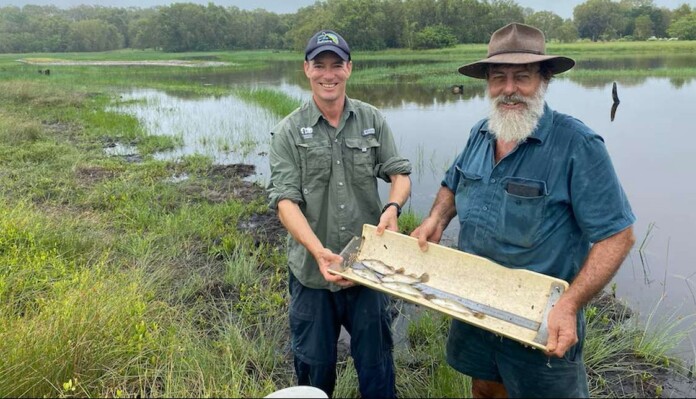
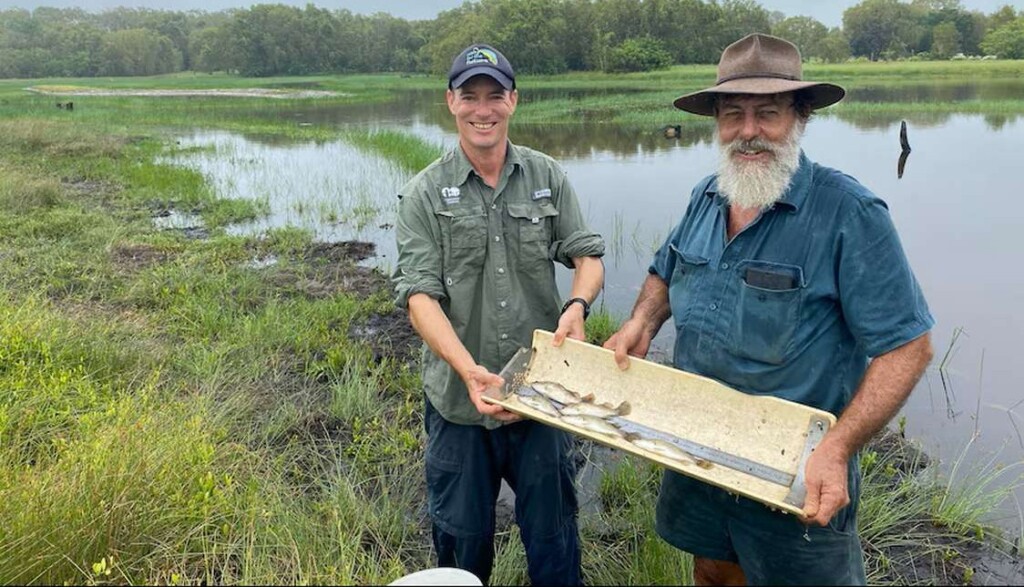
“Mackay’s getting built in and the animals are running out of space,” 60-year-old rancher Christopher Rek told ABC News AU. “I stole from nature by using all my cows and now it’s time to give the land back and let nature do its thing.”
Greening Australia, the Yuwi Indigenous Corporation, the water management company Catchment Solutions, and the state fisheries authority, all took part in helping undo the tidal controls. Catchment Solution contacted Rek to allow them to remove the tidal gates that stopped salt water coming onto his property.
Already, he and fisheries ecologies Matt Moore have recorded juvenile barramundi using the reestablished waterways the tidewater has brought. Before settlement, these brackish waters were key channels that allowed salt-tolerant species to move between the sea and the interior to seek spawning nurseries.
Not only were the habitats important for animals like fish, but for plants like mangroves. Along with the lack of salty water, these globally important trees were outcompeted by an introduced grass species brought to Queensland for use as cattle fodder.
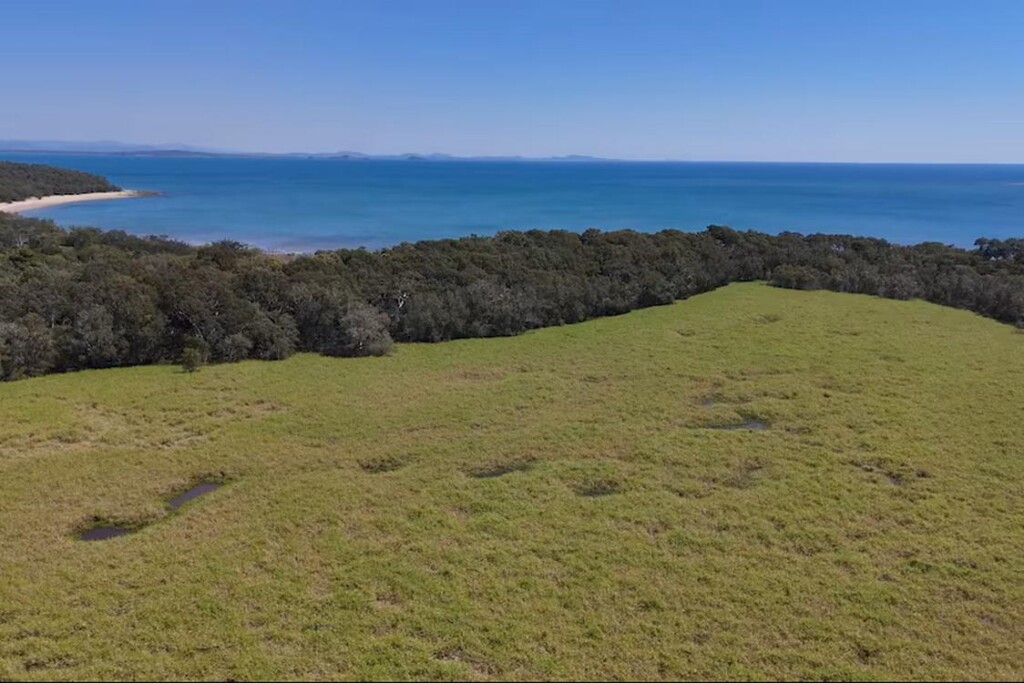
Hymenachne is considered a weed of national significance, but the return of the salt water through a 45-foot-long channel dug through an artificial embankment has already killed off 80% of it in the area around Cape Palmerston National Park.
MORE STORIES LIKE THIS: Over 600 Lakes, Ponds, Reservoirs Restored Across the Whole of India by Divinely-Inspired Nonprofit
At 180-feet in length, the embankment blocked the ocean’s high tide from entering a wide area at the southern boundary of the Yuwi traditional owners native title lands.
Queensland Parks and Wildlife Service and Greening Australia helped the Yuwi dig the channel which restored Neptune’s touch and banished the Hymenachne. Local elders were there to witness the event, which they described as “a very special and spiritual moment.”
QUEENSLAND NEWS: Queensland Declared Drought Free for First Time in Decade: Colors Have Blossomed Out of the Brown
In Mackey alone, there are between 500 and 600 tidal gates, with thousands more located across Queensland, so more work is needed. Inspiring stories like Christopher Rek’s pasture-turned-barramundi-habitat, or the Yuwi reconnecting with their watery world, will hopefully help drive the movement forward.
It’s definitely a worldwide trend: removing dams, restoring natural water movement and displacement. It benefits all manner of ecology and industry alike, and something GNN would expect to continue through the decades to come.
SPLASH This Good Earth Story Over On Your Friends Social Medias…
Prince William is Selling 20% of His Duchy Landholdings to Build Affordable Housing and Restore Nature
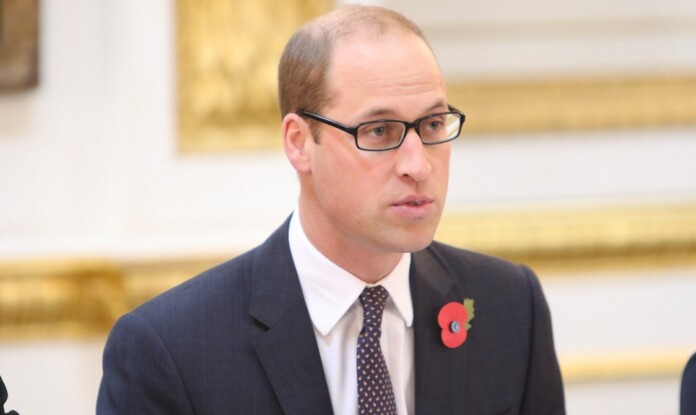
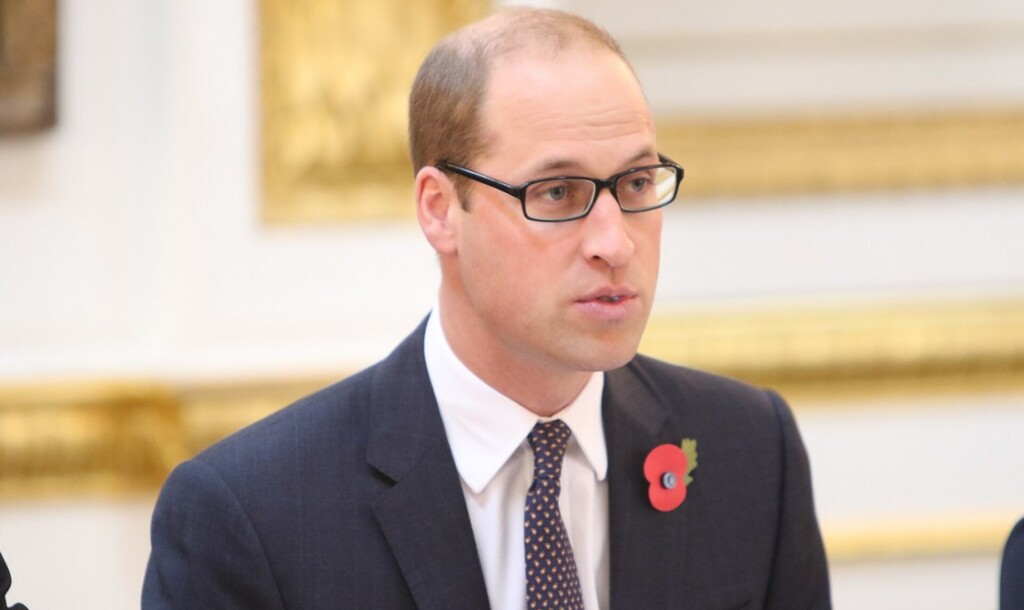
Prince William is selling 20% of the Duchy of Cornwell estate to fund affordable housing and nature projects over the next decade.
Established by King Edward III in 1337, the vast private estate spans 128,000 acres across 19 counties to provide the heir to the British throne with an independent income, which today amounts to some £20 million annually.
The title of Duke of Cornwall and the ownership of the estate automatically pass to the eldest living son of the reigning monarch. The current Duke is Prince William, son of King Charles III, who expects the sale to generate half a billion sterling, or around $669 million, to spend on local communities living around that vast acreage.
“We’re not the traditional landowner… we want to be more than that. There is so much good we can do,” said Prince William to the London Times. “I’m trying to make sure I’m prioritizing stuff that’s going to make people’s lives, living in those areas, better.”
This was echoed by the Duchy’s chief executive Will Baxter, who said the estate “should exist to make a positive impact, particularly in the communities where we can make the biggest difference.”
The Times reported that the offloading seems to be currently planned for Duchy property in Bath, Cornwall, Dartmoor, the Isles of Scilly, and Kennington in south London. Early estimates are that it could lead to 12,000 housing units by 2040, about one-third of which are expected to be affordable for the lowest income brackets.
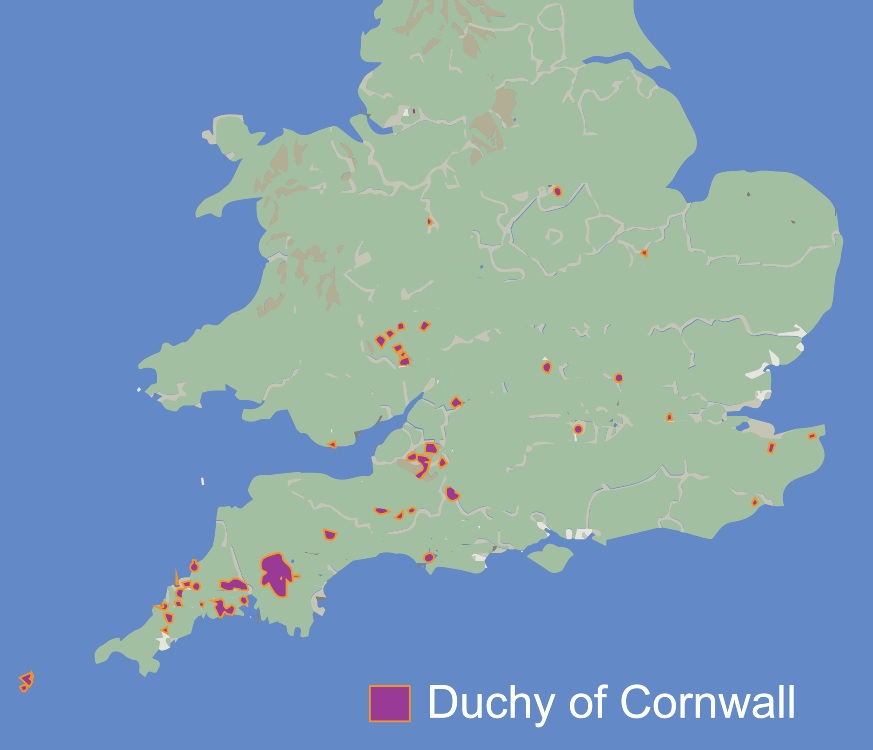
Much of the estate’s lands are in rural areas, so money and attention will be devoted to reviving rural economies and communities, as well as developing environmental value in the form of carbon storage potential in peat bogs, woodland, and wetlands.
ROYALTY TIMES:
- 100-year Dispute Finally Settles Looting of Last German Emperor–by Building New Museum Collection
- Meghan Markle and Prince Harry Come to the Rescue of Texas Women’s Shelter After Winter Storm
- Concealed for 100 Years by Empress Who Defied Hitler, Royal Jewels Thought Lost are Set for Public Exhibit
Both the BBC and the Times noted that criticism of royal finance has increased, particularly since the scandal involving Prince Andrew, and has led to the first review of royal property financing since 2012. It is expected to see a reduction.
Prince William was voted the most popular member of the British monarchy back in 2017 according to a poll by YouGov, and with a magnanimous focus and gestures like this, in contrast to “plaques and patronages” must certainly contribute to that.
SHARE This Story Of A Monarchy Staying Relevant And Useful…
Finance App Analyzes Your Jewelry and Puts it in a Digital Portfolio Where You can Track it Like a Stock


Since 2023, the price of gold has more than doubled, turning people’s spare jewelry or heirlooms into valuable assets—in many cases without them even fully realizing it.
At the current spot price of $4,500 an ounce, anything above 18 karats is suddenly of substantial value. Pieces bought by one’s parents and grandparents in the 60s and 70s when an ounce of gold was worth between $35 and $200 per ounce could be close to ten grand at current prices.
Indian-American entrepreneur Sidhi Singhvi, who’s career has involved working across a variety of financial markets, including investment grade jewelry, recently co-created a unique-in-the-world fintech platform called Unvault that allows people to create a portfolio out of their jewelry that they can track and observe as if they were looking at stocks or bonds.
“Unvault is a way to understand the value of your jewelry that is locked in drawers and completely out of your thoughts,” Singhvi told GNN’s Andy Corbley in a telephone interview.
“It’s your first line of defense to understand a little bit about the asset you own. We put it in a portfolio for you, so think about a Robinhood for your jewelry, where you can see the value of it change with the values on the market.”
Users upload photos of their jewelry to Unvault, which then uses artificial intelligence to inspect the piece and generate a valuation, which will then be plugged into the user’s portfolio, allowing them to see its market value when they want, or just make it easy to include in a household audit.
“I always found it strange that gold, which is a huge asset class and an asset class that’s owned by half the houses in the US, doesn’t benefit from the infrastructure we have for Bitcoin, for example,” she said.

As December 2025 turned into January 2026, the price of gold and particularly silver went “parabolic” as the investment phrase goes, rising almost vertically to $5,600, and picking up considerable public interest along the way which Singhvi noted.
“I believe this is gold’s shining moment, not only with what’s reflected in the pricing but also in the sentiment that we see: that customers are more and more aware of gold pricing, in the daily movements of gold, they’re into tracking, they want to know the value of what they own, and I think that’s a very good moment for us and something like Unvault.”
With 4.9 out of 5 stars on Trust Pilot, including 165 five-star reviews, Unvault is rapidly gaining in popularity. Along with gold, it also offers valuations of silver and gemstones.
Users report receiving substantially higher valuations for their unwanted jewelry than at pawnshops or even neighborhood jewelers that work in the resale market.
Maria from San Francisco wrote that Unvault valued her grandmother’s jewelry at $8,000, and though she didn’t choose to sell, it convinced her to take out an insurance policy on it.
Others love that they can watch the price go up and down based on movements in the market and sell their pieces without taking the risk of negotiating with a dishonest or unscrupulous merchant.
“If you want to sell to us, you can sell to us,” Singhvi said, acknowledging that it’s not a guarantee that local buyers would agree with an Unvault valuation.
“It’s okay if the jewelers or the pawnbrokers don’t want to use it, we didn’t build it for them. We built it for people who have jewelry and who have no idea, and who don’t want to go to a pawnshop or a jeweler and get paid $100 for their piece that could be worth thousands. We built it for them to get some answers quickly, from their home, from their couch even.”
JP Morgan’s price forecast for gold this year is $6,300 per ounce, implying both that there could be another 30% to run, and no better time to look through the jewelry box and revisit old pieces that may have lost their shine.
SHARE This Great Service With Your Friends Who May Have Old Jewelry…
Passionate ‘Tortoise Guardians’ Help Critically-Endangered Giant Tortoise Slowly Return to India
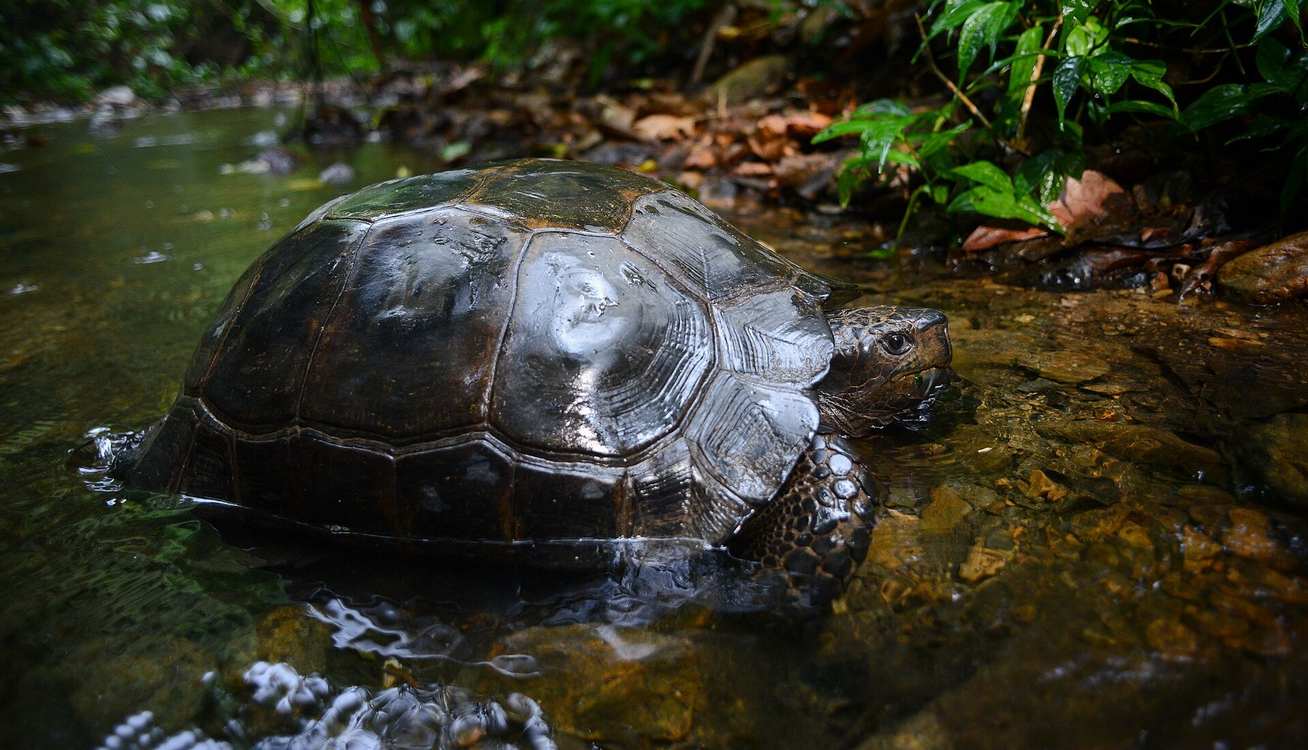
In the far-eastern Indian state of Nagaland, locals are protecting mainland Asia’s largest tortoise species, an animal they used to hunt.
Governments around the world struggle to effectively govern or manage their frontier borderlands, and few borderlands feel as frontier as Nagaland, being more than two-day’s drive from New Delhi on the border with Myanmar and Nepal, and populated by diverse ethnic groups speaking diverse languages.
But this is now proving to be a strength, not an impediment, as local tribal reserves replace government reserves as the reintroduction sites for the tortoise, and local youths replace professional conservationists as the scaly animal’s “guardians.”
The Critically-Endangered Asian giant tortoise was heading towards population collapse and extinction until the Nagaland Zoological Park began a captive breeding program that saved the population.
Shailendra Singh, Director of the Turtle Survival Alliance Foundation India which oversees the animal’s reintroduction along with the Nagaland Forest Department, explains that the program started with 13 turtles, some of which were seized from Nagaland markets where they were destined to be eaten, and others that had been kept as pets.
“The program reached its turning point when some villagers voluntarily donated tortoises they had kept as pets in their homes for captive breeding, and the community that once exploited them was sensitized to restore and nurture the species back in the wild from the brink,” Singh told the Relevator.
From those 13 tortoises, 7 female and 6 male, 114 individuals have been born—half as many as the entire wild population in all of Asia, according to some estimates. Previous reintroduction efforts by the federal government failed both to protect the tortoises or to keep track of them.
By contrast, the over 100 tortoises released into the Nagaland tribal reserves—small but numerous—are closely tracked by young men and women trained in basic conservation strategies.
This almost one-to-one involvement by locals creates a unique attachment to the animal.
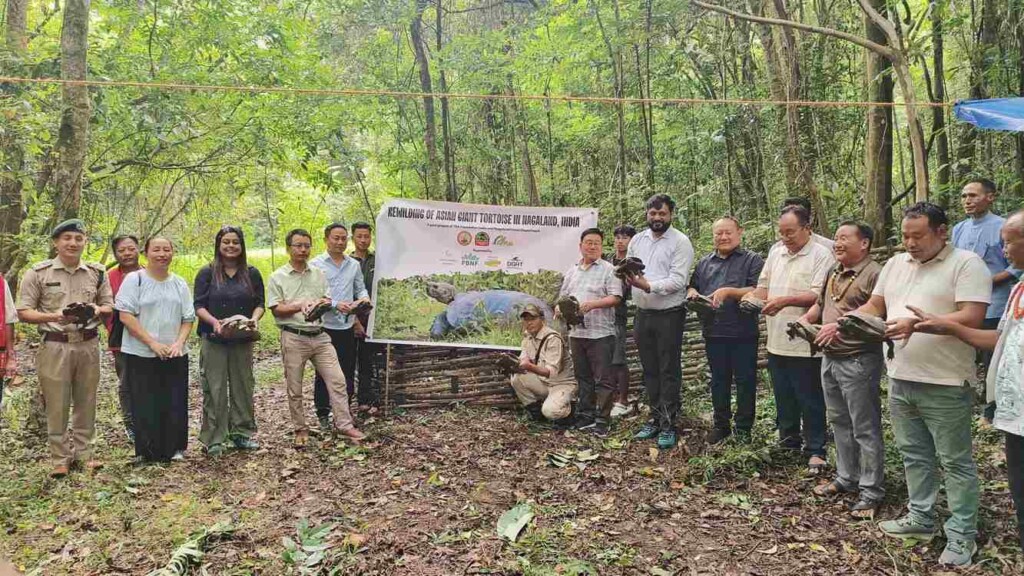
“We started by simply tracking them, but today we realize how important they are in keeping our forest vibrant and alive with their unique ways,” says Iteichube, a 33-year-old resident of the 370-hectare Old Jalukie Conservation Reserve.
LEVERAGING THE LOCALS: Spectacular New Species Found in Cambodia’s Limestone Caves–Asia’s ‘Little Laboratories’
80% of Nagaland territory is made up of these community forest reserves. There are 407 of them, amounting to 50% of all such reserves in India.
Iteichube proudly wears an olive drab t-shirt labeled “Tortoise Guardian” when he leaves home at 8 a.m. every morning to go look for signs of the tortoises’ activity. Nibbled leaves and depressed ground indicate foraging behavior.
The Asian giant tortoise displays a unique-in-the-world nesting strategy by building a mound of leaves between 2 and 7 feet in height in laying its eggs therein.
TORTOISE CONSERVATION: 158 Giant Endangered Tortoises Released on Galápagos Island Where They’d Been Extinct for 180 Years
The success of the Nagaland model is now hopefully going to be replicated in the neighboring state of Manipur, which recently hatched their first clutch of artificially incubated Asian giant tortoises at the Manipur Zoological Gardens.
Local elders told the Revelator stories of whiling away their childhood riding these tortoises along the forest paths, and that these days are long gone. Perhaps they spoke too soon. Thanks to this collaboration between zoo and community, the next generation of these forest dwelling communities may recapture this storybook privilege.
SHARE This Great Conservation Story From Far Eastern India…
“Without tradition, art is a flock of sheep without a shepherd. Without innovation, it is a corpse.” – Winston Churchill

Quote of the Day: “Without tradition, art is a flock of sheep without a shepherd. Without innovation, it is a corpse.” – Winston Churchill
Photo by: Winslow Homer’s 1872 masterpiece, Snap the Whip (cropped)
With a new inspirational quote every day, atop the perfect photo—collected and archived on our Quote of the Day page—why not bookmark GNN.org for a daily uplift?
Good News in History, May 19

115 years ago today, the world’s first national park department, Parks Canada, was established, 5 years before its counterpart in the US Today they manage the country’s 48 National Parks, 3 National Marine Conservation Areas, 172 National Historic Sites, 1 National Urban Park, and 1 National Landmark. Parks Canada is mandated to “protect and present nationally significant examples of Canada’s natural and cultural heritage, and foster public understanding, appreciation, and enjoyment in ways that ensure their ecological and commemorative integrity for present and future generations.” WATCH a video montage of all the land they oversee… (1911)
Ancient Egyptian Crypt of 22 Singing Priests Unsealed for the First Time in Luxor


In Luxor, a large burial chamber has been uncovered in one of the city’s ancient necropolises that has remained undisturbed for at least 2,600 years.
Inside was a depository of 22 coffins and 8 mummies that seemed to belong to a special female temple caste who sang sacred songs at festivals and during religious rites.
The words “Singer of Amun” was found repeatedly on the coffins, and suggests the burial chamber was designed especially for these unique and respected women.
The discovery was made in the southwestern sector of the Asasif necropolis inside a tomb chamber carved directly into bedrock. The coffins were arranged in 10 horizonal rows, where they were found with a variety of other funerary objects.
Most exciting of all were 8 sealed jars arranged within a large ceramic vessel that still had their original clay seals, and which therefore may still contain organic remains, either of funerary substances like oils and resins or even biological material from the mummies.
They were described as an “information goldmine” and are due to undergo state-of-the-art conservation and laboratory analysis.
Dating has been carried out amid the frantic and “urgent” preservation work of protecting the flaking pigments and splintering wood of the coffins, which seems to indicate they spanned 400 years of Egypt’s Third Intermediate Period, roughly between 1070 and 664 BCE.

Amun was a powerful deity worshiped at the ancient temple of Karnak, and these “singers” would undoubtedly enjoyed special religious and social privilege alongside their temple responsibilities. Evidence of how female officials lived and died among Egypt’s religious castes is “rare” said the excavators from the Egyptian Ministry of Tourism and Antiquities and the Zahi Hawas Foundation for Archaeology and Heritage.
MORE ANCIENT EGYPT: 4,500 years ago, Worship of the Sun Took Place in This Recently-Uncovered Temple in Egypt
The careful layout of the tomb, where it was clear the arranging of the coffins was done to conserve space and fit as many deceased inside as possible, indicates the coffins had likely been moved there from their original location. Motives remain unknown
Mr. Sharif Fathi, Minister of Tourism and Archaeology said in a statement that this discovery is a new addition to the record of outstanding archaeological discoveries that Egypt is witnessing and reflects what archaeological research works have received from the full and continuous support of the Egyptian state.
THE LATEST FROM LUXOR: Ancient Tombs More Than 3,000 Years Old Unearthed in Egypt’s Luxor
Luxor is sometimes described as the world’s largest open-air museum, and excavations there turn up new discoveries all the time.
REVEAL This Unopened Tomb And Its Secret Singers With Your Friends…
Village’s Honored Oak with its Own Stone Wall Wins European Tree of the Year
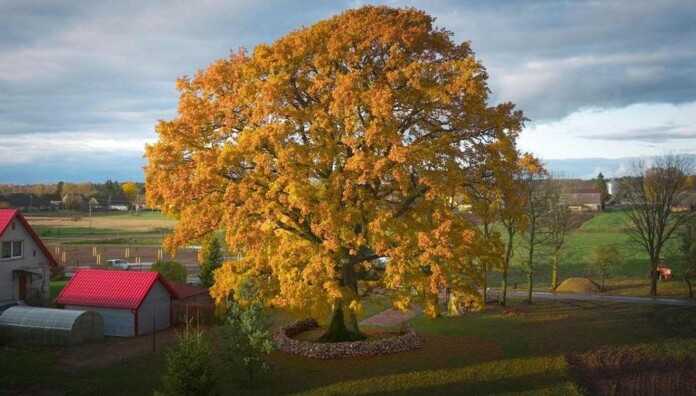
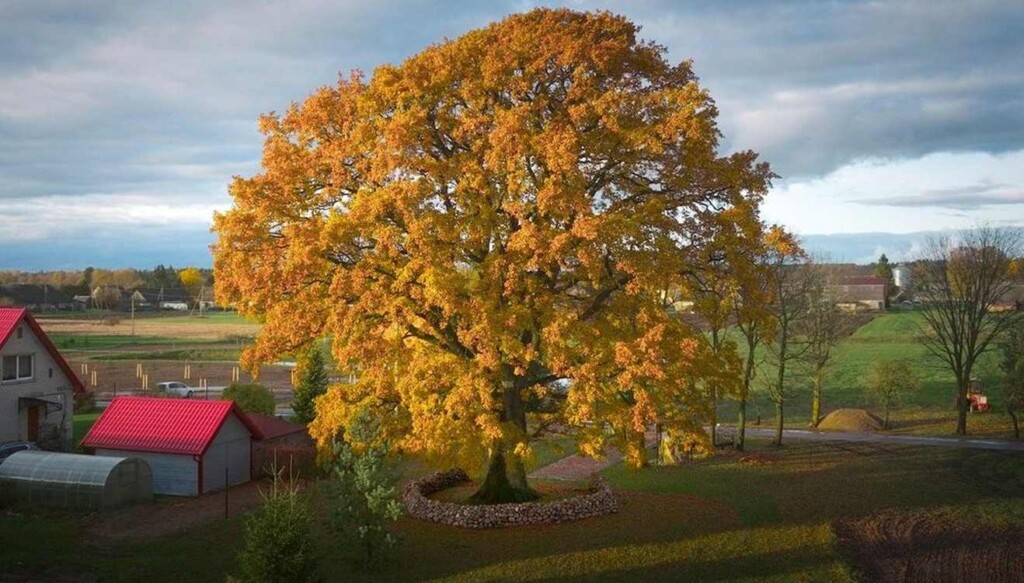
In late March, the European Tree of the Year contest awarded Lithuania’s 400-year-old Laukiai Oak 1st place.
Its incredible canopy, its eye-watering golden colors in autumn, and the manner in which it ties the small farming community together saw it end Poland’s 4-year winning streak in the competition that features nations honoring their most beloved wooden citizens.
The Oak of Laukiai (Quercus robur) once stood almost forgotten, known only to the people of the small Rukai village. A year ago, however, the local community restored the area around the tree and organized a celebration in its honor, bringing people together and reminding them of its quiet strength with music and costume.
Today, the sixth generation of the Laukiai people is growing up alongside this oak.
It won after more than 200,000 votes were cast for special trees in 12 different countries. This included a 150-year-old wild apple tree in Slovakia which took 2nd place, and the inevitable Polish contender: an incredible white elm growing almost horizontally out over a waterway, whose branches have each become trees in themselves.
“The competition was extremely close—the ranking remained uncertain until the very last moment,” said Petr Skrivanek, Coordinator of the European Tree of the Year in a statement.
“This year’s magnificent trees attracted huge attention across Europe. During the voting period, the website recorded around 1.5 million visits, with more than 200,000 unique voters.”
ALSO READ: Cedar Tree Climbed by The Beatles is Finalist in Euro Tree Awards Along with Stunning Violet Beech
Previous editions of the contest were decided by bulk vote. This year it was changed to a “tree point” system that prevented the contest from devolving into a mere question of which nation could get out the vote; which for the last 4 years has been Poland.
Many of the countries have their own tree of year contests, with the winner being nominated for the following year’s continent-wide edition. Competition is fierce, with the UK’s 2025 national winner—the Argyle Street Ash—coming in just 12th place.
WATCH a celebratory video in honor of the oak…
SHARE This Fun Contest And The Beautiful Oak Of Laukiai With Your Friends…
Over 200 Volunteers Lead Largest-Ever Oyster Reef Restoration Off England’s Portsmouth
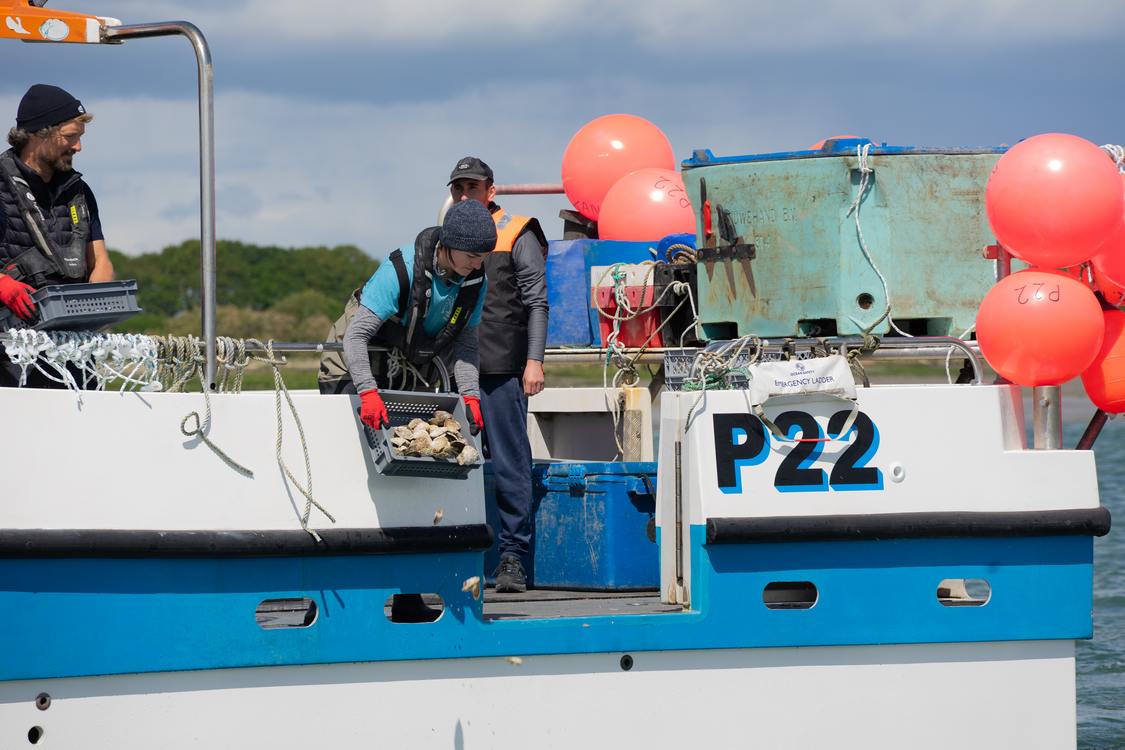
Last week, volunteers dumped 20,000 oysters into English waters to recreate historic, biodiverse oyster reefs.
260 people came down to Chichester Harbor in Portsmouth to take part in what one of the participating organizations called, “the UK’s largest subtidal oyster reef restoration project.”
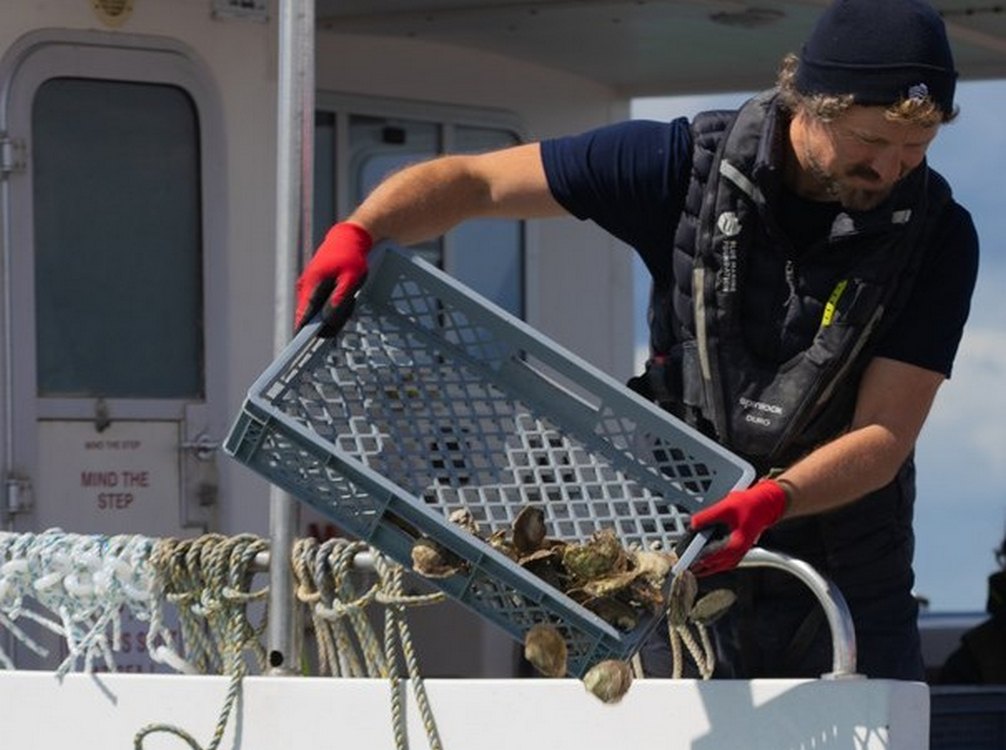
For centuries, native oysters were part of everyday life across an area of the English coast called the Solent. Coastal communities relied on oyster beds for food, trade, and employment, with evidence of oysters being harvested in the harbor dating back to Roman times.
The restoration aims not only to recover a lost species, but to help reconnect the region with an important part of its maritime heritage.
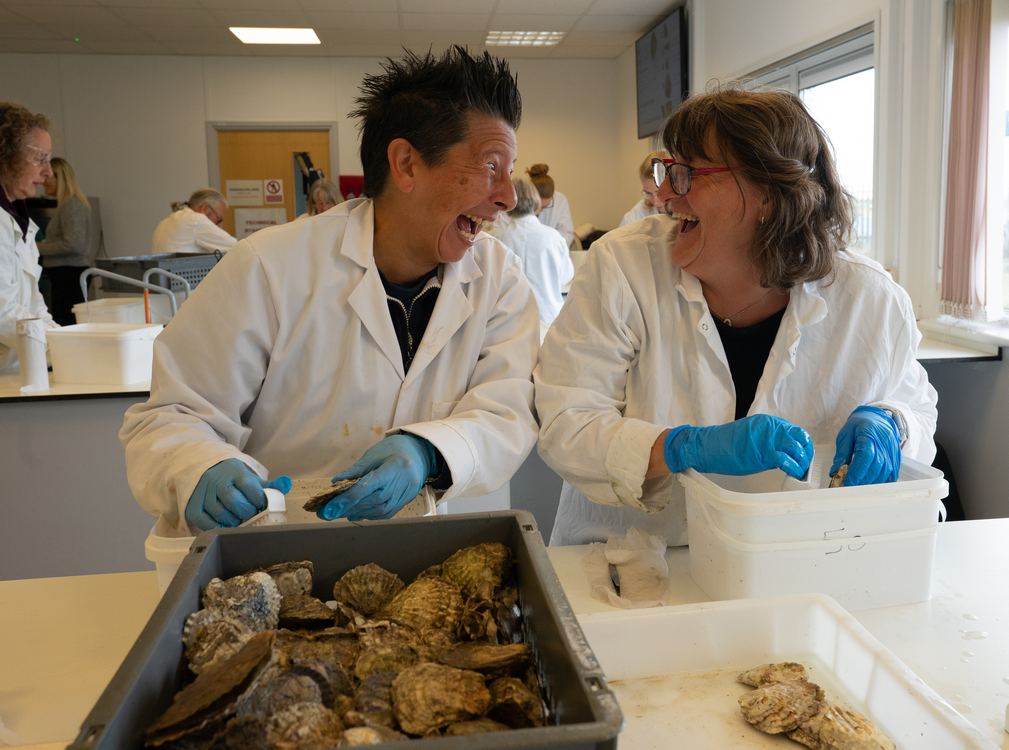
The large-scale effort forms part of the Solent Seascape Project, and is led by ocean conservation charity Blue Marine Foundation alongside Chichester Harbor Conservancy and the University of Portsmouth’s Institute of Marine Sciences—where volunteers arrived to help clean and carefully check the oysters as part of biosecurity procedures organized by the scientists there.
“This is a hugely significant moment for marine restoration in the UK,” said Dr. Luke Helmer, from the Solent Seascape Project.
“Native oysters were once abundant across the Solent, but populations have collapsed over the last century. By restoring oyster reefs at this scale, we’re helping rebuild an ecosystem that supports biodiversity, improves water quality, and benefits coastal communities.”
Despite the decline described by Dr. Helmer, oysters remain one of the marine environment’s most important ecosystem engineers. A single oyster can filter up to 200 liters, or around 44 gallons of water a day.
MAKING WATERS WILDER:
- Mauritius Restores Reefs with Heat-Resistant Coral and Sees 98% Survival Rates
- Locally Extinct for a Century, Bay Scallops Thriving Again on Virginia Shore of Chesapeake Bay
- Smashing 6 Million Sea Urchins with Hammers Saved a California Kelp Paradise Thanks to Volunteer Divers
This improves water quality while the reefs they form create habitats for hundreds of marine species and help protect coastlines from erosion.
“What’s especially exciting is the scale of public support behind this effort. Having hundreds of volunteers directly involved in preparing oysters for deployment shows how strongly people want to be part of restoring our seas.”
This is not the coalition’s first mass-volunteer effort. In 2025, the Solent Seascape Project organized the planting of 120,000 seagrass seeds in and around the mouth of the Hamble river. A few months on, the plants have created a saltmarsh area the size of a soccer field. The local community contributed more than 700 volunteer hours to seagrass seed collection alone.
SHARE This Massive Community Effort With Your Friends Who Love The Sea…
Students Work to Fundraise to Save Habitat Where They Watch Bald Eagle Chicks on Livestream
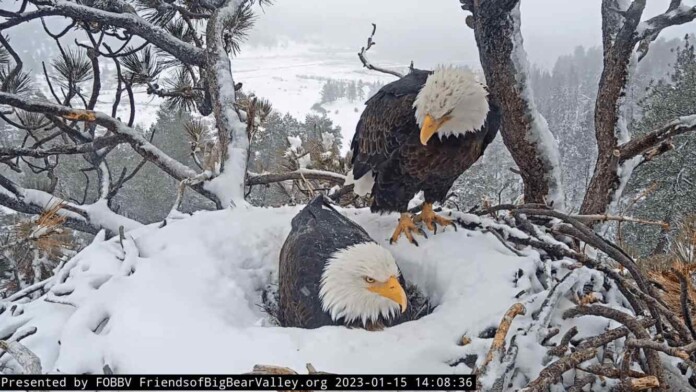
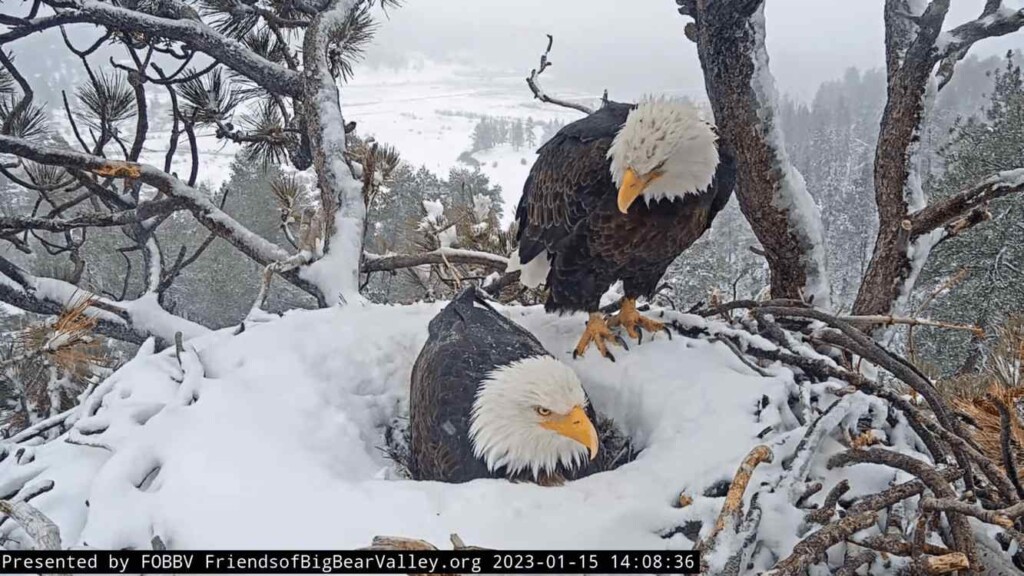
4th grade science teacher Sara Stinson must have known she was doing a great job when her intrepid students began giving themselves extra homework.
It didn’t involve studying for an exam, but raising money to help a local wildlife trust buy a parcel of imperiled land in California’s Big Bear Valley where Jackie and Shadow make their nest.
Jackie and Shadow are a mating pair of bald eagles that Stinson introduced to her class last year. They and their two chicks are monitored by a 24/7 live webcam set up by the Friends of Big Bear Valley (FOBBV) nonprofit.
“We get to see the eagles set up their nest, then we get to see them lay eggs, and then we get to see the eggs hatch and the chicks grow,” Stinson told ABC 7 news, adding that it is the perfect accompaniment to the cycle of life course.
Then a few months ago, Stinson noticed while pulling up the live cam that the area where the eagles hunt—the last undeveloped shoreline of the beautiful Big Bear Lake, was going to be turned into a luxury housing development unless local environmental activists come up with $10 million to purchase it.
“I started sharing the information with them and they felt so passionate about it. They were like, ‘What can we do?'” Stinton said.
What they could do was fundraise and generate awareness—a dual mission they pursued with passion. One student told ABC he set up a lemonade stand, while another said she was posting flyers around local businesses with information about how to donate.
MORE STORIES LIKE THIS: School Kids Help Ensure Mountain Pygmy Possum Population Bounces Back in Australian Alps
“When we first heard about this news, it was very sad for us because we are worried that the thing we have been watching for years can go away,” said 4th grader Evie Cook.
The San Bernardino Mountains Land Trust (SBMLT) entered into a limited Purchase Option Agreement to buy the land, called Moon Camp, as a last resort, with the organization having until the end of July to pay the developer for the biodiverse area that includes not only the hunting ground of Shadow and Jackie, but also the habitat for some endemic plant species like the ash-gray Indian paintbrush.
STUDENT ORGANIZATION: High School Students Repair Cars and Give Them to Single Moms: ‘You’re Really Making a Change in the World’
So far, SBMLT and FOBBV have raised around a quarter of the total, and both admitted that they will eventually attempt to secure a loan to make the purchase if it comes down to it.
Until then, the kids are hard at work with their lemonade stands and their bake sales—determined to give back to the eagles that first enriched their science class all those months ago.
Interested parties can donate to the cause here.
WATCH the story below from ABC News…
SHARE These Students, Their Eagle Friends, And This Noble Fundraising Goal…
“Always remember that you are absolutely unique. Just like everyone else.” – Margaret Mead

Quote of the Day: “Always remember that you are absolutely unique. Just like everyone else.” – Margaret Mead
Photo by: Brandon
With a new inspirational quote every day, atop the perfect photo—collected and archived on our Quote of the Day page—why not bookmark GNN.org for a daily uplift?

Good News in History, May 18

25 years ago today, the computer-animated blockbuster Shrek premiered in the US. In the story, a runaway donkey (voiced by Eddie Murphy) befriends an ogre named Shrek (voiced by Mike Myers) and urges him to go on a quest to rescue Princess Fiona (Cameron Diaz)—who is hiding a secret that will change his life forever. For years, DreamWorks was developing this Scottish-set fairy tale and was rewarded at the box office—it grossed $484 million worldwide, with a production budget of just $60 million. READ more… (2001)
Hero British Cop ‘Saves Life’ of American Officer While on Holiday in Nashville

A British policeman has been hailed as a hero after helping to save the life of an American officer while on holiday in Nashville.
Off duty sergeant Taylor Johanson had just arrived in the Tennessee city when he saw local Officer Peter Kinsey being assaulted by a man on the side of the road.
The officer from Ashford, Kent, was driving down the I-440 exit ramp at around 8pm on May 7 in his rented Jeep Wrangler and immediately stopped to help.
He says that the American officer was being assaulted by a 43-year-old pedestrian, who even managed to grab the officer’s gun and fire a round while it was holstered.
Rushing into action, the Brit tackled the suspect and managed to keep him restrained until Officer Kinsey was able to taser and handcuff him.
“We had been out of the airport for about ten minutes,” said the 34-year-old Englishman. “As I was driving on the exit ramp I saw the police car parked up and could see two people fighting on the floor.”
“I stopped my car to see what was going on. The suspect was on top of the officer and he was head-butting him, punching him, biting him.”
He decided to jump on top of him and was able to pull him off and hold him down, while his girlfriend Emily, who is also a constable in England, called the local police and asked for backup.
“I hadn’t really thought about it to be honest. It was only really afterwards when I realized the gravity of what was going on,” Sgt. Johanson told SWNS news. “Natural instinct kicked in—and that fight or flight.”
Officer Kinsey reported he saw the pedestrian walking along the exit ramp and went to check on him after his commands to stop were ignored. But, as he approached, the stranger started to attack him, pinning the cop face-down for around six minutes in the “traumatic” ordeal.

Bodycam footage shows the tense struggle before Sgt. Johanson, who works in the Community Safety Unit with the Kent Police, runs in, asking ‘Are you okay?’”
And, Kinsey has credited Sgt. Johanson with saving his life.
“It is probably the closest near-death experience I can say I have had, and probably the most traumatic. It’s very scary. I knew he was going for my gun.
“The thoughts going through my head was he’s not getting my gun away from me and I’m just going to have to hang on.”
The English couple were visiting the city on a six-day trip to see Johanson’s sister and some of the local attractions.
“This was supposed to be a relaxing holiday away from my children—but it started off quite the opposite!”
He says that they pulled over for a few minutes shortly before the incident to put some music on, and if this hadn’t happened, he wouldn’t have seen the struggle.
“It is a bit like divine intervention. It was definitely the right place at the right time and I am glad it was me… Everyone was just driving past.
“Six minutes in that situation is horrendous. It is a long time. If I had driven away and the officer had died, I don’t think I would be able to forgive myself.”
He was then invited to the Metropolitan Nashville Police Department station to meet the officers, including Police Chief John Drake and Officer Kinsey and his wife.
The department gifted him challenge coins, a police blanket, and he is being sent an engraved watch—which usually goes to officers who have served 30 years—as a special thank you.
“Our police department is beyond grateful to Sgt. Johanson for stopping to assist Officer Kinsey, and actively engaging to subdue the man who was assaulting him,” said Chief John Drake of the Nashville Police Department.
“The suspect had already managed to get his finger into the trigger guard and fire a round from the officer’s holstered pistol.
“He miraculously appeared when Officer Kinsey needed help. I believe he likely saved our officer’s life.”
The Kent officer of nine years has since returned home a hero and is remaining in touch with some of his new officer pals.
“You are a police officer all the time whether you are on holiday or not.”
“Everybody has been so kind. I was blown away when I went to the police station. They were so lovely. I think I have got a few free dinners in the works next time I go out there!”
SPREAD THE COURAGE By Sharing The Hero Story on Social Media…
College Commencement Speaker Announces He’s Paying Off Final Year of Loans For Graduates, in Honor of Father


Over 170 students set to graduate from North Carolina State University were about to get the surprise of a lifetime when they filed into the arena in their red caps and gowns.
As with all graduation speeches, possibilities seemed palpable; hopes and dreams were waiting on the horizon.
Unbeknownst to the scholars, their commencement speaker, Anil Kochhar, had a lifeline planned that would pay off the final year of student loans for every 2026 graduate in the school’s Wilson College of Textiles.
“It is my privilege to announce today that, in honor of my father Prakash Chand Kochhar, my wife Marilyn and I are providing a graduation gift to cover all the final-year education loans incurred by Wilson College graduates,” Kochhar exclaimed.
The announcement earned raucous cheers and numerous rounds of applause from everyone in attendance. Instantly, 176 students who were receiving bachelor’s degrees and 26 who were receiving master’s degrees had an entire year of college debt wiped away. (Watch the joyful moment below…)
“Marilyn and I hope that all of you leave Reynolds Coliseum today not only with a degree but with greater freedom to pursue your goals, take risks, and build the lives you’ve worked so hard to achieve.”

The man’s father, Prakash Chand Kochhar, emigrated from India to Raleigh, North Carolina, 80 years ago to study textile manufacturing in America. He was believed to be only the second student from India to ever enroll at the university. Kochhar eventually earned his bachelor’s degree in textile manufacturing in 1950 and his master’s degree in the same program in 1952.
His textile engineering skills soon led to success in a career that criss-crossed several states as part of a global textiles company. He passed away in 1985, but his legacy continued with a scholarship that has been in existence for the last 40 years—and it carried on when his son spoke into the microphone on the graduation stage.
“My father could not have imagined this moment. Not just me standing here, but all of you sitting here,” the younger Kochhar said in his speech. “A new generation, shaped by a different world, but connected by the same spirit of possibility that brought him here decades ago. And that’s what today represents.”
MORE EXAMPLES OF COLLEGE JOY:
• Small Town Tradition Sends off its Graduating Class Every Year with a Free Scholarship
• Despite Being Homeless, High School Valedictorian Graduates With Over $3 Million in College Scholarships
• Watch Billionaire Tell College Grads He Will Pay Off All $40 Million of Their Collective Student Loan Debt
Suddenly, a new group of graduates was heading out into the world with an unexpected head start provided by their graduation speaker. And an assist from a former student who chased down the American dream all the way from India.
Alyssa D’Costa, a fashion and textile management major, told the College what the gift meant to her. “As a daughter of immigrants myself, this money helps me and my family a lot, and I’m really fortunate to have an opportunity like this.”
What her generous benefactor remembers most about his father is his spirit: “The look in his eyes told me anything is possible.”
Watch the video from NC State below…
SPREAD THE SPIRIT OF GENEROSITY – Share The Joy On Social Media…
Jogger’s Call for Help Saves Critically-Endangered Penguin Found Face-Down on the Beach
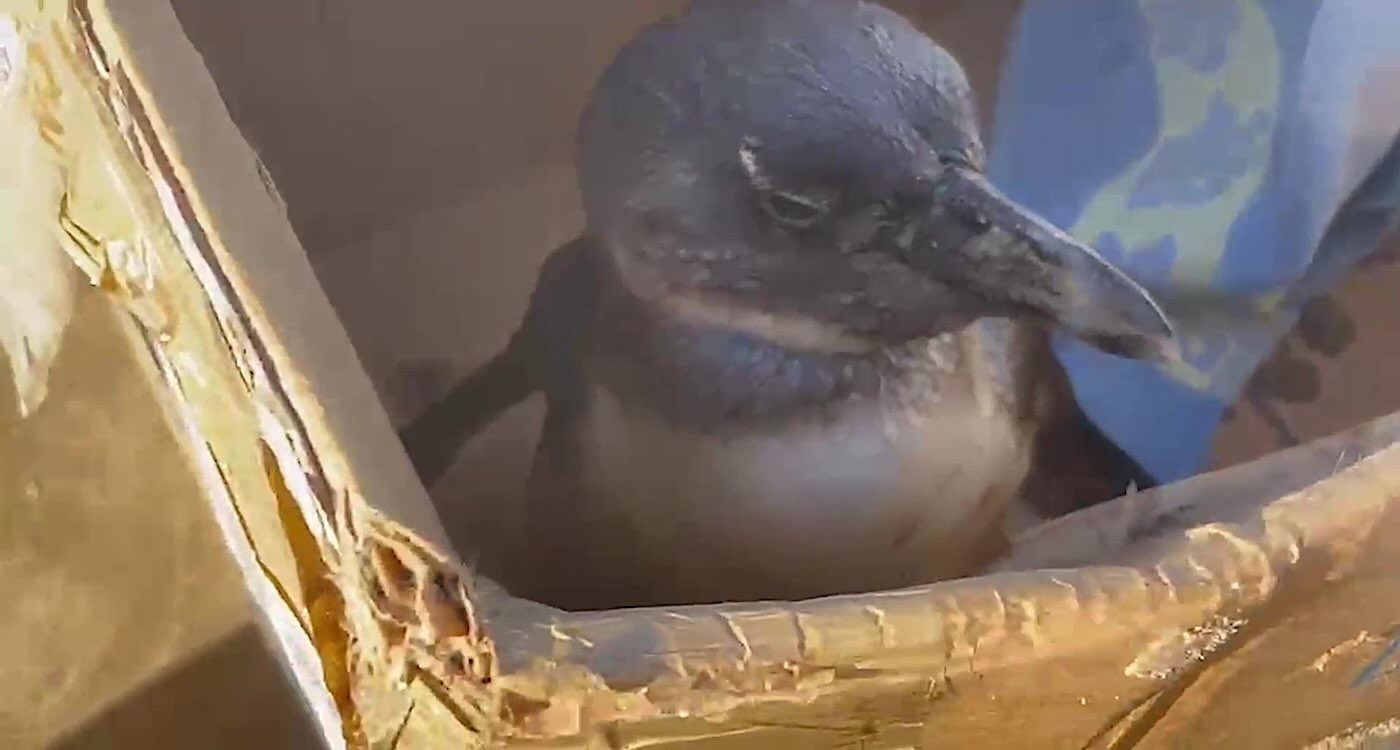
Rescuers raced to save a stranded penguin after a jogger spotted it and called for help.
Two weeks ago, wildlife veterinarian Catherine Hauw was alerted that there was an African penguin lying helplessly on a beach with its head buried in the sand.
The 35-year-old medic rushed to the scene at Brenton-on-Sea in South Africa alongside a medical assistant and discovered the critically endangered bird weak and motionless with its beak in the sand.
Using a towel and a box, the rescuers carefully transported the penguin from to a nearby veterinary clinic for urgent treatment.
Luckily, the penguin had suffered only a small wound to its abdomen, likely caused by a predator attack.
Experts believe the injury slowed the penguin down and caused it to become separated from the rest of its colony.
“We were quite concerned when we first arrived on the scene,” said Ms. Hauw from Paris, France.
“We had no idea how long the penguin had been lying there and we just really wanted to make sure it was alive.
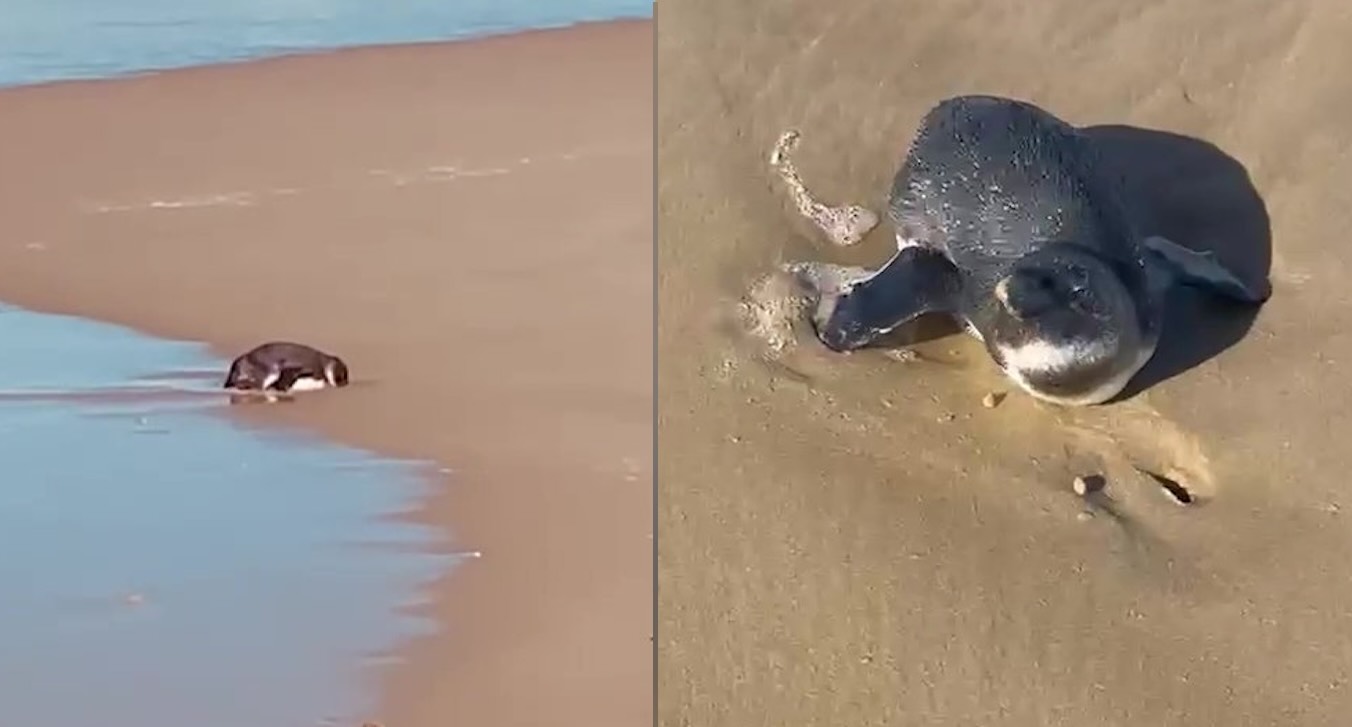
“Once it lifted its head, we knew that was a good sign—but it still needed our help.”
The African penguin (Spheniscus demersus) is the only penguin species native to the African continent. Also known as the ‘jackass penguin’ due to its distinct, donkey-like braying call, it is easily recognized by its ‘tuxedo’ markings and unique chest dot patterns.
Their wild populations have plummeted due to habitat destruction, overfishing, and warming ocean currents that have altered fish migration patterns, forcing penguins to swim longer distances to hunt.
“It’s really important in these situations that if a member of the public discovers the animal that they contact professionals,” stressed Hauw.
“We were able to assess the penguin’s health on the beach and safely take it to a general vets clinic nearby.”
MORE PENGUIN GOOD NEWS:
• Celebrating with a Cake Topped with Fish, World’s Oldest Penguin Turns 38
• Big White Dogs Save the World’s Smallest Penguin in Australia
• Penguin Becomes ‘Guide Bird’ Companion For Zoo Pal Suffering with Cataracts: Waddle I do Without You?
After being treated with electrolytes for dehydration at the clinic, the bird, which was not malnourished, was transported to a specialist sanctuary where it will be rehabilitated before being released back into the wild.
“They also release the penguins back out into the wild as part of a colony, so they’re not left alone.
Upon release, wildlife rescuers are confident the bird can restart its life with a new family.
SHARE SOME GOOD NEWS With Wildlife Lovers On Social Media…
Celebrating 15 Years of Matching Disabled Youth with College Athletes–Over 4,500 Kids Discover the Power of Belonging
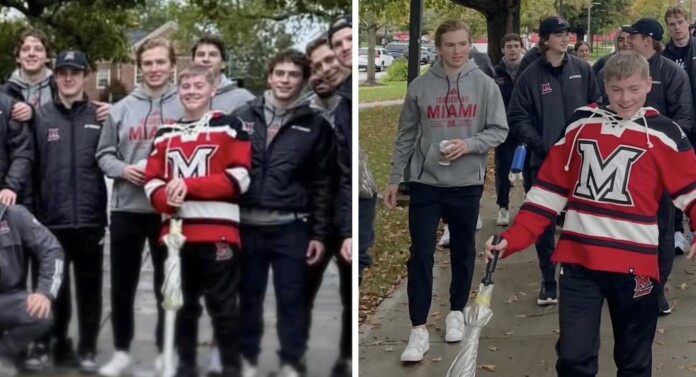
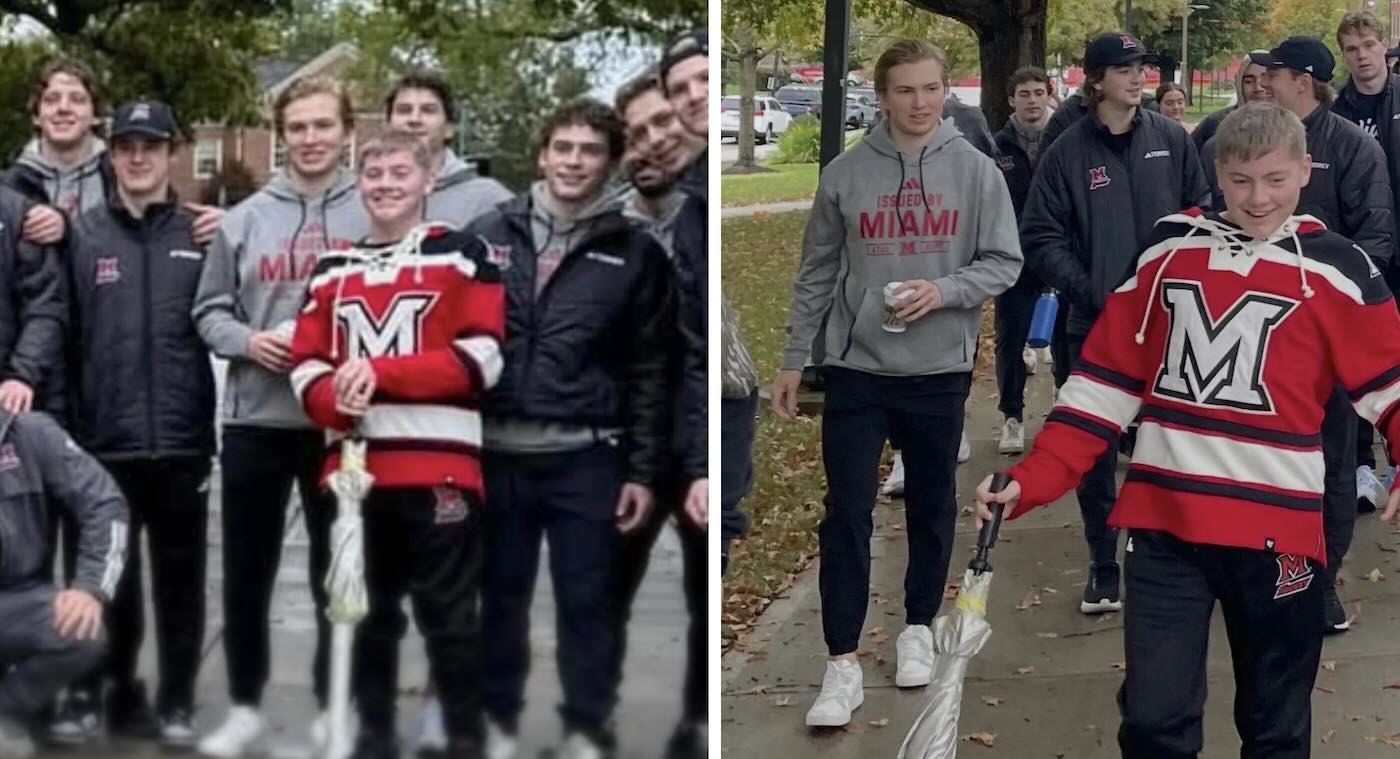
Since 2011, a Boston-based nonprofit Team IMPACT has matched more than 4,500 children facing serious illness and disability with college teams across the U.S.—transforming lives through the power of belonging, empowerment and resilience.
Since pairing its first child with a college hockey team in Massachusetts, Team IMPACT has become a network spanning more than 850 colleges and universities across all 50 states and engaging over 112,500 student-athletes.
“Fifteen years ago, we set out with a simple but powerful belief that no child should ever be sidelined by illness or disability,” said CEO Krissie Kelleher.
Through Team IMPACT’s multiyear clinical program, children become official members of college athletic teams, attending practices, games, team dinners, and campus events, while building meaningful friendships and support systems that extend far beyond sports.
At the same time, student-athletes gain invaluable lessons in empathy, leadership, and perspective that shape them long after graduation.
One of those athletes is Blake Mesenberg, a hockey player at Miami University in Ohio, who found an instant connection with Liam, a 16-year-old with a rare genetic disorder that causes muscle weakness and developmental delays.
As a parent, Melissa has been blown away by the positive changes in her son and the genuine friendship that has developed.
“Liam knows that no matter what, he can always call Blake and talk to him about anything—even if Blake is home for the holidays or on summer break,” she said.
The hockey player takes interest in everything Liam is doing, supports him through his medical journey, cheers him on, and takes time to truly see how Liam is feeling.
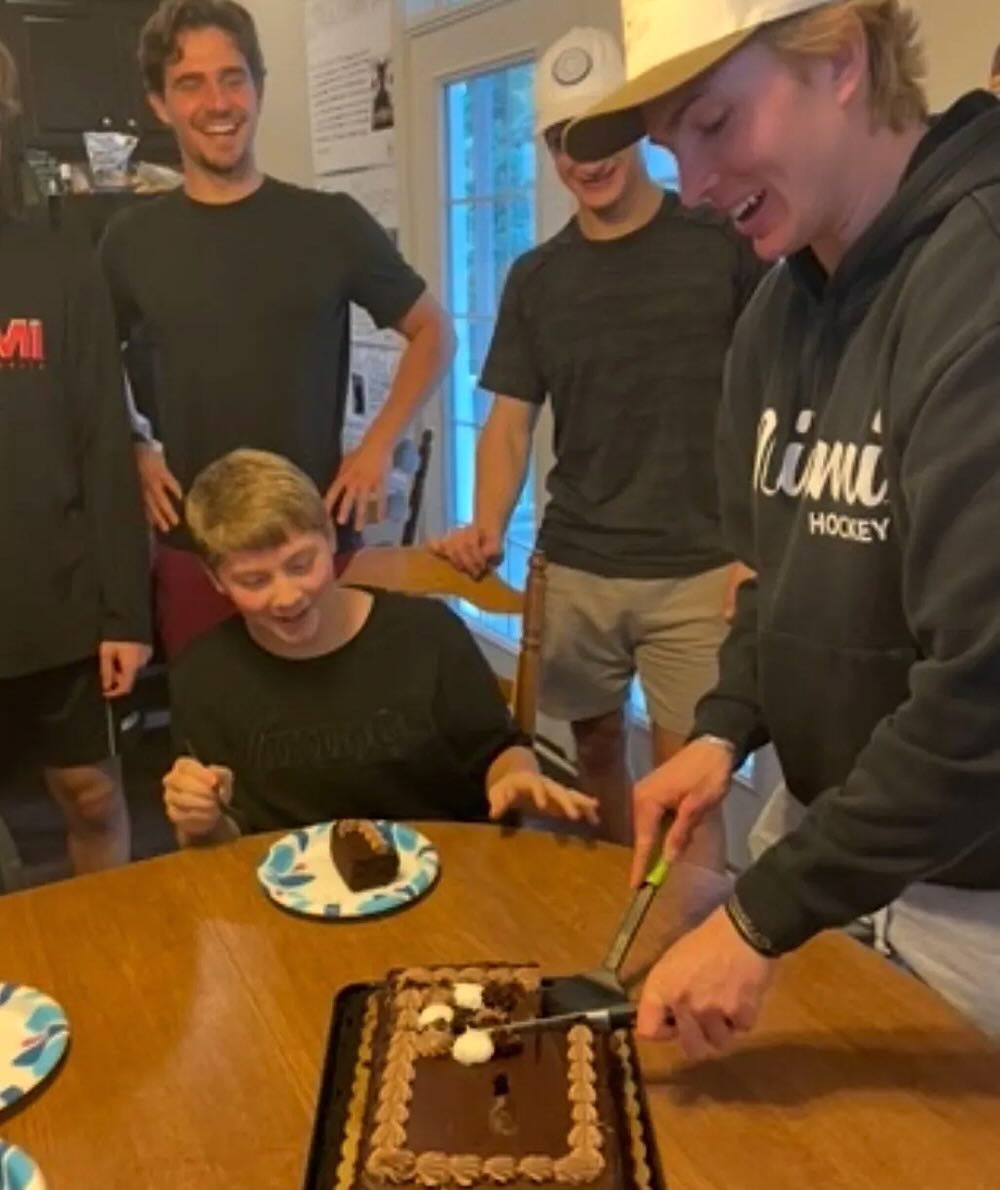
“Liam has never had a group of friends prior to joining the team, making it hard to have a birthday party. Blake made sure Liam’s 16th birthday was memorable, and Liam still talks about that night months later.”
To mark its 15th anniversary, Team IMPACT will roll out a series of national and local activations throughout 2026 to highlight the growing movement behind redefining what inclusion in sports can look like.
“Today, we celebrate the incredible community that has made this mission possible — our families, student-athletes, coaches, donors, healthcare partners, and supporters who continue to show what it means to be all in, all together.”
MORE INSPIRING ATHLETES:
• Team Carries Wheelchair-bound Dad up Snowdon Peak Fulfilling Lifelong Goal–LOOK
• Boy With Rare Bone Disorder Becomes Quarterback for a Day and Scores a Touchdown for the NFL Carolina Panthers
The organization invites supporters, schools, and community partners to help expand its reach so more children can be matched with teams in the years ahead. Learn more on their website, www.teamimpact.org. (Watch the 15-year celebration video below…)
GIVE MORE KIDS AN OPPORTUNITY By Sharing This on Social Media…
“Know thy self, know thy enemy. A thousand battles, a thousand victories.” – Sun Tzu

Quote of the Day: “Know thy self, know thy enemy. A thousand battles, a thousand victories.” – Sun Tzu
Photo by: Getty Images for Unsplash+
With a new inspirational quote every day, atop the perfect photo—collected and archived on our Quote of the Day page—why not bookmark GNN.org for a daily uplift?

Good News in History, May 17

20 years ago, the US Navy created what would become known as “The Great Carrier Reef,” after the USS Oriskany, a long-unused aircraft carrier commissioned after World War II was deliberately sunk to create the world’s largest artificial reef from a single vessel. It’s now ranked by the Times of London as one of the 10 finest wreck diving sites in the world, and can be found the Gulf of Mexico. WATCH a video of drivers exploring the wreck… (2006)
Sampling DNA in Seawater Can Reveal the Health of Dolphin Populations, in First for Conservation
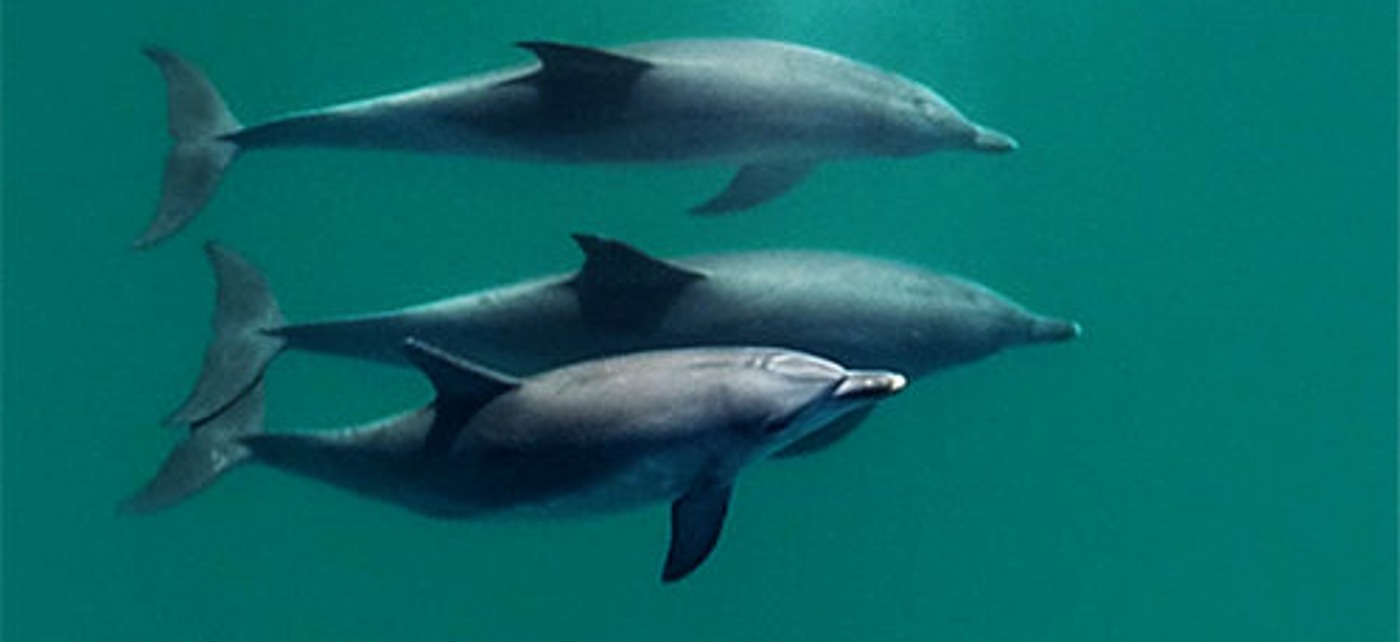
DNA floating in seawater is now enough to let scientists monitor the health of America’s dolphin populations.
Sampling DNA in seawater can show the local presence (or absence) of a species, but until now could give little information about those measures of biodiversity that are the most useful in conservation.
But, scientists in the US have now shown that mitochondrial DNA in water sampled near schools of dolphins contains enough information to measure their local effective population size—and monitor the health of these populations.
DNA is everywhere in the world’s oceans—not only inside cells from skin, scales, mucous, and feces, but also floating freely. Sequencing such ‘environmental DNA’ (eDNA) from open water has long been used as a cost-effective way of gauging the number and identity of species in a region, especially when they are rare and elusive or living at great depths.
But species richness is only the most basic biodiversity measure. Until now, eDNA-based methods could only give limited insight into the variables that are most relevant for conservation: the number of individuals, the evenness of the abundances of co-occurring species, or their within-species genetic diversity.
But that may be about to change, shows a new groundbreaking study in Frontiers in Marine Science.
“Here we show that repeated eDNA sampling can be used to estimate the genetic diversity of dolphins that occur in large schools and have very large populations,” said corresponding author Dr Frederick Archer from the NOAA/NMFS Southwest Fisheries Science Center in La Jolla, California.
MORE DOLPHIN NEWS:
• ‘Superpod’ of More Than 2,000 Dolphins Frolic off California Coast (WATCH)
• World-First Video of Dolphins Stealing From Crab Pots Leaves Scientists Fascinated
“This is important because genetic diversity, its outcome measure, can be used as a measure of population size and how ready a population is to react to changes in its environment.”
Around Santa Catalina Island, located 47 km off Long Beach, California, the researchers followed 15 schools of dolphins with small boats in 2021. They focused on the four most common species locally: long-beaked common dolphins, short-beaked common dolphins, common bottlenose dolphins, and Risso’s dolphins.
Whenever they encountered a school, the researchers collected two-liter samples of seawater from the surface to compare the mitochondrial eDNA with that in public databases.
The scientists found 836 mitochondrial sequence variants in 126 water samples, of which 76% were from cetaceans and 60% from toothed whales. Overall, 29% were from the species of the school, which had been visually identified.
LOOK: Amazing Spectacle as Rare White Risso’s Dolphin Leaps Above the Water For Photographer
Long-beaked common dolphins had the greatest genetic diversity, followed by short-beaked common dolphins, while Risso’s and bottlenose dolphins proved much less diverse around Santa Catalina.
“Our study demonstrates the utility [of eDNA surveys] for efficiently assessing and comparing genetic diversity in social odontocetes,” concluded the authors.
Theory holds water
The authors are eager to put their methods to good use in conservation, now that they have been proven to work.
“It would be good to start eDNA monitoring programs as soon as possible that were not possible before. For example, we will be able to see how species composition in very small areas change over the course of a year – including rarer species that we don’t often detect on visual surveys,” said Archer.
AMAZING!
• Dolphin Moms Use ‘Baby Talk’ with Their Calves, Research Shows
• Friendship Between Species? First-Time Report of Wild Dolphin Changing its Language for Harbor Porpoises
“This can give us a lot of information on habitat use and will also allow us to potentially observe how environmental changes and anthropogenic effects such as pollution or underwater sound affect species distributions.”
SHARE THE BREAKTHROUGH With Dolphin-Lovers on Social Media…