












All News - Page 478 of 1735 - Good News Network
Home Blog Page 478

See the Strange, Beautiful Landscapes Below the Foliage and Buildings Revealed by Lasers

Washington Geological Survey

Staggering images taken from planes using forest-penetrating radar are mapping the geology of Washington state.

Intriguing, artsy, beautiful, and outright bizarre, “The Bare Earth” presentation on the Washington state Department of Natural Resources (DNR) website uses shading and added color to present underlying geological features like lava flows, glacial moraines, drumlins, tsunami inundation, mudslides, eruptions, fault lines, river patterns, and much, much more.

Washington Geological Survey

LIDAR, which stands for Light, Detection and Ranging, is a laser-guided mapping system that fire billions of laser pulses at an object, and like sonar or radar, gathers information about the object as the beams return.

Washington Geological Survey

The information in this case is the time it takes each pulse to arrive back.

MORE: After Decades of Work, Scientists Have Mapped the Entire Surface of the Moon for the First Time

Some of the light is reflected off the tree tops, but enough will reach the ground below to reveal the underlying geography as if the trees simply didn’t exist.

Washington Geological Survey

The light also penetrates the soil strata, meaning that while the first reading of the return pulse indicates the surface topography, the final return pulse is the bare earth below, giving unparalleled pictures of the landscape.
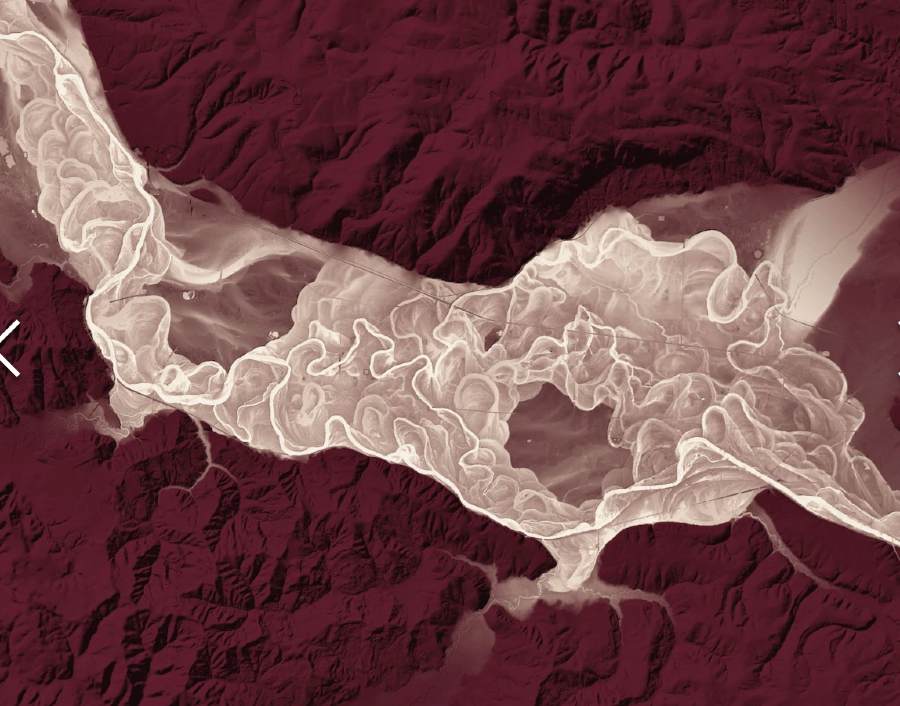
Washington Geological Survey

This technology was used to produce a fascinating series of images by a cartographer at the U.S. Geological Survey of the Mississippi.
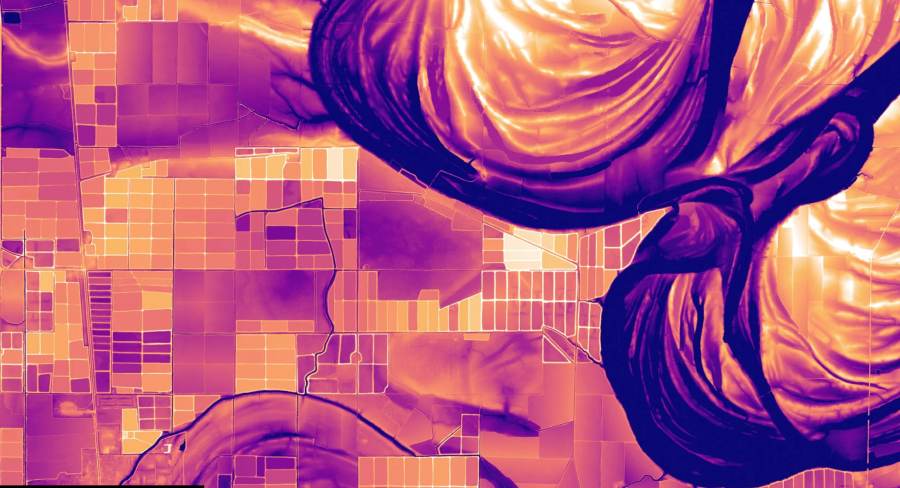
Washington Geological Survey

LIDAR revealed hundreds of years of subtle changes in flow, flooding, and bending of the mighty river.

Washington Geological Survey

Following a deadly landslide in 2014 that destroyed parts of a small town about 50 miles outside of Seattle, the Washington Geological Survey realized it would behoove them to map out potential landslide sites to provide early warning for people living there.

Washington Geological Survey

As it turned out, the same method of discovery geological and climatic hazards using LIDAR can help state authorities plan for all manner of emergencies, such as volcanic eruptions, tsunamis, earthquakes, and more.

RELATED: Map Lets You See How Your Hometown has Moved Across 750 Million Years of Continental Drift

The Bare Earth presentation records all the findings LIDAR has made in a state that has a seriously varied geomorphology—the change and evolution of the surface and underlying geology over time.
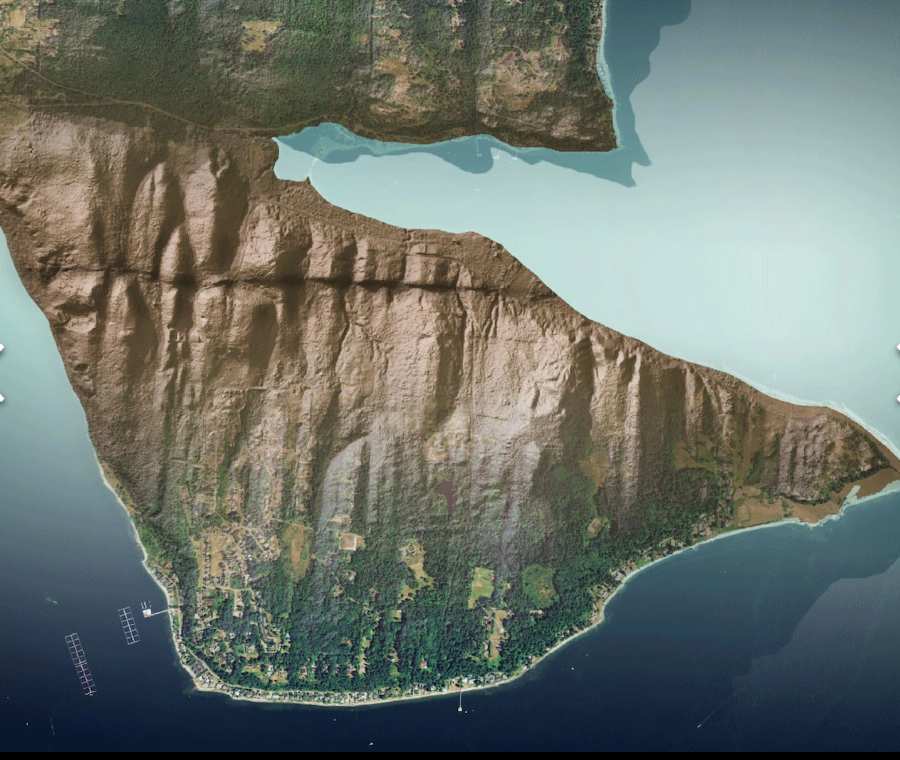
Washington Geological Survey

It records the use of LIDAR to map the state’s landslides, geological curiosities, bedrock, fault lines, tsunami reach and erosion, volcanoes, glaciers, and riverways.

Washington Geological Survey

You’ll definitely want to spend a little time looking over the images.

Washington Geological Survey

SHARE the Stunning Images Online With Friends…

“Why are you trying so hard to fit in, when you’re born to stand out?” – Oliver James

Quote of the Day: “Why are you trying so hard to fit in, when you’re born to stand out?” – Oliver James

Photo: by Darryl W, CC license

With a new inspirational quote every day, atop the perfect photo—collected and archived on our Quote of the Day page—why not bookmark GNN.org for a daily uplift?


Laid Off During COVID, Dad Wants to Work at Costco: ‘I told Twitter about it—cue social media explosion’

Rebecca Mix
Rebecca Mix

The gods of the Twitterverse are mercurial and unpredictable. All hashtags aside, why some tweets trend and others tank is anyone’s guess. So when a doting daughter’s random tweet recently scored a dream job interview for her dad, it came as a huge cosmic surprise to everyone involved.

Like many, Rebecca Mix’s 58-year-old dad, Jeff, was laid off from his last job due to coronavirus-related cutbacks. As an older worker, finding employment was likely going to be tough, but resolute Jeff, not ready to retire, was determined to land a new gig.

His dream job? Something public-facing that would keep him on his feet. For Jeff, who’d done his homework on the company culture, that meant Costco.

Knowing he was likely out of his depth, Jeff turned to Rebecca for guidance in navigating the current job market. After promising to help him update his resumé and gently teasing him that a 21st-century email might be in order, Rebecca posted a few humorous tweets about her dad’s “weirdly particular” job ambitions—and then says she forgot about them.

While the tweets might have slipped Rebecca’s mind, the powers of social media were paying close attention.

Mix’s messages somehow hit the radar of Costco CEO Craig Jelinek, who contacted several store managers close to Jeff’s Michigan home, requesting they bring him in for an interview. One of those managers reached out to Rebecca via Facebook to let her know her serendipitous tweet had hit its mark in a big way.

“I called my dad, who didn’t answer, texted him a screenshot, and called him again. As someone who only FaceTimes by accident, he didn’t really understand why I was freaking out,” Rebecca recalled in a piece for The Guardian. “The sheer ridiculousness of a random tweet making it to the desk of the Costco chief executive mostly escaped him.”

MORE: Judge Gave Drug Dealer a Second Chance. 16 Years Later He Swears Him In As a Lawyer

While Jeff was excited by the prospect of a job interview, he remained cautious about the final outcome. Even after his first meeting—in which the enigmatic topic of Twitter never came up—he still wasn’t sure he was going to be hired.

However, while it took some time for the offer to come through, Jeff nailed his second interview. He texted a photo of his brand-new employee badge to Rebecca with thanks.

After his first shift, Jeff checked in with Rebecca to let her know the job looked to be pretty much everything he’d been hoping for. She couldn’t have been happier.

RELATED: Admirable Bosses Lead to More Productive Employees, Says Survey

“The past year has not been a kind one to my family,” Rebecca wrote. “Like many, we didn’t emerge from the pandemic without the loss of loved ones. It’s a gift to have this odd, wonderful, weird spark of joy amid a time of grief and chaos.”

And on a final positive note, Rebecca reports that when one of her dad’s new co-workers joked, “I wonder when they’re going to hire the Twitter guy?” while the complexities of social media might still escape him, Jeff had the satisfaction of being able to say, “I am the Twitter guy.”

Aw… Isn’t that tweet?

ADD Positive Vibes to Your News Feed by Sharing This Story…

Orchid Thought to Be Extinct in UK Was Discovered Blooming on the Rooftop of London Bank

SWNS
SWNS

An extremely rare colony of orchids previously believed to be extinct in Britain has been discovered growing on a City of London rooftop.

The small-flowered tongue orchid, or serapias parviflora, is normally found in the Mediterranean, and hasn’t been seen in the UK for over a decade.

But 15 plants have been found on the 11th floor garden of the Japanese Investment Bank Nomura in the City.

It is only the second time the rarity has been recorded in Britain, with a previous colony being found more than 200 miles away Rame Head in Cornwall in 1989.

Unfortunately the Cornish colony was destroyed in 2009, and the species was thought to have gone extinct as a wild plant in the UK.

It’s not known for certain how the orchids arrived on the Nomura roof, but Mark Patterson —who manages the roof garden—believes it’s plausible they spontaneously colonized naturally without assistance.

SWNS

He said: “Orchid seeds are incredibly small and can travel great distances by wind. The plants could have originated on the Continent and been brought over the Channel on the southerly winds that frequently bring Saharan dust deposits to the capital.

“Once settled on the Nomura roof the seeds would have formed a symbiosis with a mycorrhizal fungus, enabling them to germinate and grow. While possible, the odds are astronomical.”

Another possible explanation, he said, is that the seeds or young plants could have been brought to the roof in the soil used to create the green roof over a decade ago.

The plants can take many years to mature when growing in dry poor soil conditions, which would explain why we are only now seeing the plants in bloom. However, he explained, this was less likely.

It is not the first time rare orchids have been found on green roofs in the City. Three years ago, Patterson also discovered London’s largest colony of green winged orchids growing on the Nomura roof.

Two other green-winged orchids have been found on a rooftop in Carnaby Street, and another plant appeared on a roof in busy Islington.

Wild orchids as rare as these face many threats to their survival, including poor land management, over-grazing, trampling by walkers, and being uprooted and stolen by illegal plant collectors.

MORE: Orchids Make Fake Pollen to Tempt the Bees – But Scientists Discover it’s as Valuable as the Real Thing

The previous known colony in Cornwall had to be kept top secret to protect the plants.

Growing on the roof of a bank in the center of the City, this newly discovered colony plants should be well protected.

Orchid expert Mike Waller, author of Britain’s Orchids: A Field Guide to the Orchids of Great Britain and Ireland, said: “To find Britain’s second colony of small-flowered tongue orchid is exciting in itself, but to find them on a green roof in the City of London is extraordinary on another level.”

He noted that: “This is clear evidence that with patience and dedication, even the most unlikely places can become havens for some our rarest wildlife.”

RELATED: Bees Actually Bite Plants to Make Them Flower Early – Surprising Scientists

The orchids share the Nomura roof with other rare wildlife including breeding black redstarts—one of the UK’s rarest breeding birds.

In 2019, the bank and its charity partner St. Mary’s Secret Garden, secured a Bees Needs Award from DEFRA for their work improving the roof environment for bees and other wildlife.

The company has also won numerous London in bloom awards for their roof gardens.

GROW the Good News in Friends’ Feeds—Share This Story on Social Media…

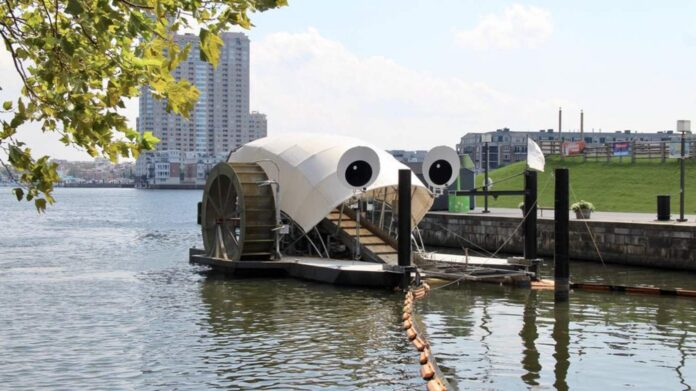
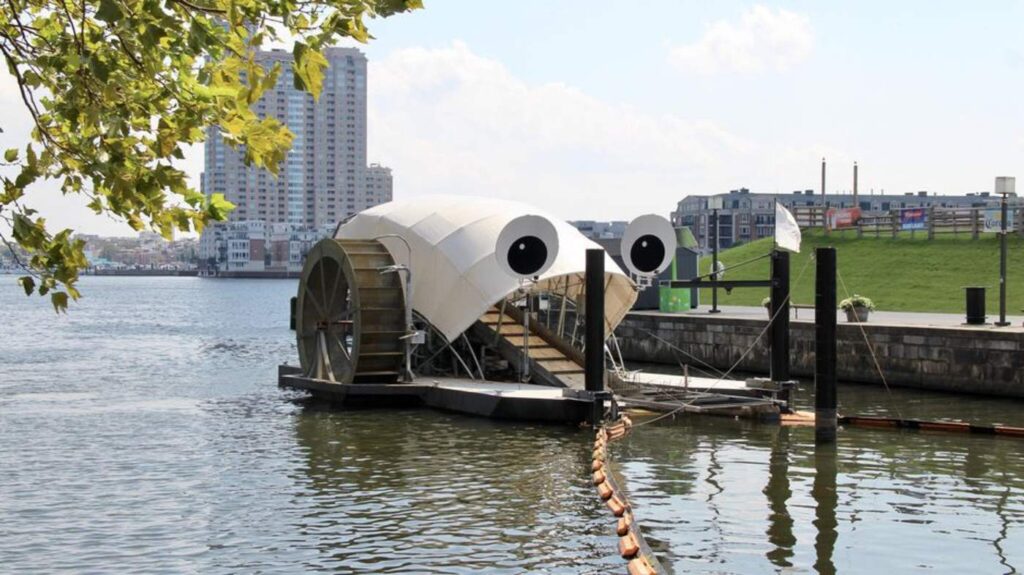
‘Mr. Trash Wheel’ Gobbles Up 15 Tons of Trash Every Day From Harbors – And More Cities Are Adopting

YouTube/CNET
YouTube/CNET

For years, the ambiguous yet contented face of Mr. Trash Wheel has been an icon of Baltimore’s Inner Harbor.

The googly-eyed trash collector has been gobbling up millions of pounds of the city’s river-borne garbage for years, and led to the creation of several water-wheel allies like Capt. Trash Wheel, and Prof. Trash Wheel.

The idea for some sort of garbage collector came from local inventor John Kellet, who would walk across the footbridge spanning the Jones Falls stream that feeds the Baltimore harbor—and be disturbed on seeing the unabated flow of garbage floating towards it.

Kellet looked around to see if there were any potential solutions to the problem, but found none. He would end up not only giving the harbor a more sparkling, trash-free appearance, but one of the city’s biggest celebrities and social media icons—though he admitted it wasn’t his idea to put googly eyes on the barge.

GNN reported in 2017 that Mr. Trash Wheel rotates based on power drawn from the river’s current. If not enough electricity can be generated from the river alone, the wheel uses solar energy instead.

Kellet, who runs Clearwater Mills, also makes specially designed cages to fit into storm drain outfalls—which is the source of most of the garbage pollution into the harbor.

His idea has been so successful that several other organizations are building their own Mr. Trash Wheel. Coming soon to the Gwynns Falls River in Maryland is Gwynda the Good Wheel of the West, while Oakland, California is building one called Trasharella.

MORE: She Spent Her Vacation Picking Up Trash Across the U.S., and Strangers Chipped in With Help and Gas

The first international Mr. Trash Wheel is coming to Panama, with “Mrs. Wheel” or “Doña Rueda.”

“I never envisioned we would have googly-eyes on this machine, with a name for it and a beer [named after it], and the trash wheel t-shirts and a trash wheel fan club and a trash wheel fan fest, it’s kind of beyond my wildest dreams,” said Kellet in the documentary on CNET.

Behind the Mr. Trash Wheel brand is one of the most important concepts of modern pollution theory—that rivers deposit the bulk of the garbage existing in the oceans. Non-profit The Ocean Cleanup, which operates sophisticated green energy river trash interceptors, explains on its website that one thousand of the world’s rivers source 80% of all the trash found in the ocean.

RELATED: The Ever-Growing Pile of Electronic Waste is Now On the Decline, Study Finds

The documentary suggests lobbying your local politicians into installing a Mr. Trash Wheel by sending them some of the facts—such as the technology’s ability to collect 38,000 pounds of trash per day—or even the fact that it has the ability to become a social media influencer for your city.

(WATCH the CNET documentary below.)

DON’T TRASH the Good News—Share It On Social Media…

Scientists Have Figured Out How to Instantly Cure Hiccups

Many of us have some cure for the hiccups, whether that’s drinking water upside-down or holding our breath, but a peculiar type of drinking straw, developed by a peculiar type of scientist, seems to be impressively effective.

Stopping 92% of attacks on the spot, the L-shaped drinking straw requires a suction and swallow motion and is available as a patented product for around fifteen bucks.

Dr Ali Seifi, University of Texas Health Science Center

Singultus, as hiccups are known, are contractions of the diaphragm and the muscles between the floating ribs, known as the intercostals. The sharp intake of air causes the vocal folds to resonate, creating the sound which give singultus their common name.

While often presenting nothing more than a nuisance, one group of scientists mention in a study that hiccups can last in some people for days, even weeks. A terrifying prospect.

MORE: If You’re Anxiously Awaiting News, Do This One Thing to Feel at Ease – Researchers Say

When the straw is placed inside a glass of water, a pressure valve on the bottom of the straw blocks the water from moving upward as fast as the strength of the human-generated suction would normally allow. This causes the phrenic nerve to activate all of the diaphragm’s capacity, while swallowing uses something called the vagus nerve.

These two parts of the nervous system are the cause for the contractions in the first place, and so keeping them busy prevents them from doing so.

Sold as “HicC Away” on Amazon, the straw had a more than 90% success rate, while 93% of people said it was more convenient than home remedies.

CURE Your Friends of Bad News—Share This Story…

Co-Workers Donate Their Kidneys to Save Each Other’s Husbands

Children's Healthcare of Atlanta
Children’s Healthcare of Atlanta

The COVID-19 pandemic has put life as we knew it on hold for more than a year, but as things finally settle back into a new normal, people are returning to the workplace. For two co-workers catching up during a chance encounter, swapping news serendipitously turned into a life-saving exchange.

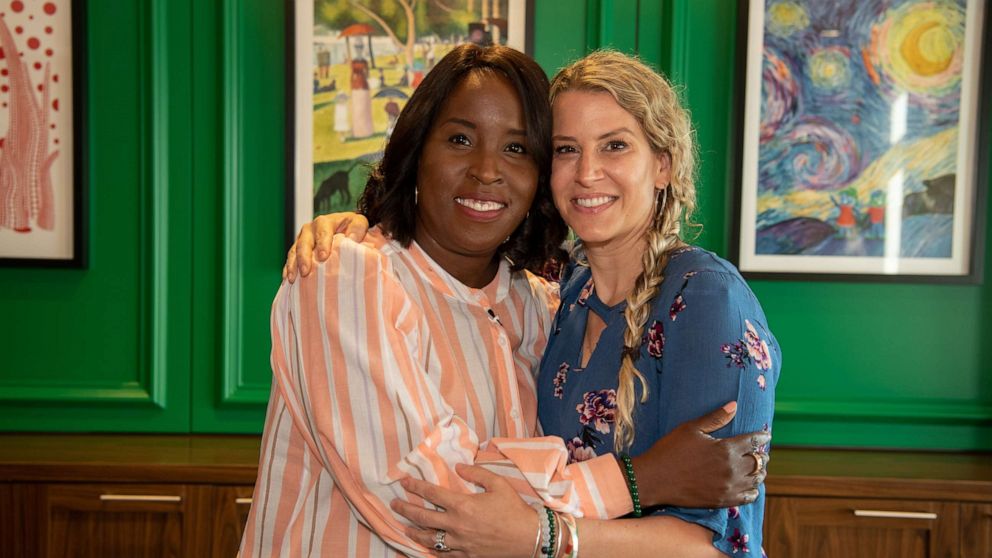
Susan Ellis and Tia Wimbush both work at Children’s Healthcare of Atlanta. Ironically, both Tia’s husband, Rodney, and Susan’s husband, Lance, were on a waiting list for kidney transplants.

As the two compared notes talking over the ups and downs of their husbands’ conditions, the subject of blood types came up. Thanks to a piece of random information, the women suddenly realized they might be potential donor matches for the other’s husband.

“My thought immediately was that we could help each other and stop the suffering of two families,” Tia told Good Morning America. “I called Rodney immediately and he and I were both just committed to moving forward and trying to help two families.”

When the tests were run, it turned out Tia and Susan were indeed matches made in heaven for one another’s husbands. Both wives were granted donor approval last October, but before the December surgeries could be performed, Lance suffered a setback and had to be hospitalized.

Once his condition was stable, the procedures were rescheduled for January. Then Susan tested positive for COVID-19 and was forced into a mandatory quarantine. The procedures were postponed again.

After Susan got the all-clear, the operations were rescheduled, this time for March 19th.

MORE: 2 Days After Her Wedding, Bride Donates Kidney to Groom’s Ex-Wife

As the old saying goes, the third time was the charm, and both transplants were successful. The couples convalesced in close proximity on the same hospital floor, visiting each other as soon as they were able.

While Tia and Susan’s downtime was a little more protracted than they’d originally envisioned, Lance and Rodney’s marked postoperative improvement more than made up for any short-term discomfort they might have felt.

The two thankful husbands, freed from hours of crippling dialysis, are looking forward to spending many happy years of quality times with their loved ones—which now includes their extended “kidney families.”

RELATED: Mother of NHL Hockey Star Donates Kidney to Ice Rink Manager Who Kept Her Kids Out of Trouble

“Our story is a story of kindness. It ended up in a kidney exchange, that was the result of it, but it started with human beings just human beings and checking on each other,” Susan told GMA. “We’re so busy with social media and texting and thinking, that’s not my business that we can self-isolate and we don’t check in on our neighbors.”

In addition to reminding folks to reach out to one another on a human level, both families hope their story will inspire others to think about being living transplant donors. You can learn more about the process at organdonor.gov.

SHARE This Story of True Kindness With Others on Social Media…

“Sometimes it is the people no one can imagine anything of who do the things no one can imagine.” – Alan Turing, father of computer science (born 109 years ago)

Quote of the Day: “Sometimes it is the people no one can imagine anything of who do the things no one can imagine.” – Alan Turing, the father of computer science (born 109 years ago)

Photo: by Eliabe Costa

With a new inspirational quote every day, atop the perfect photo—collected and archived on our Quote of the Day page—why not bookmark GNN.org for a daily uplift?


US Honors 98-yo Irish Woman Whose Storm Forecast Fortuitously Delayed D-Day Landings, Changing Course of WWII

The day was June 3rd, 1944. In County Mayo on the west coast of Ireland, a remote North Atlantic weather station operator noticed that her barometer was dropping fast, indicating a storm was going to pass over the English Channel before long.

Her name was Maureen Flavin Sweeney, and her weather report, which postponed the D-Day landings by 24 hours, saving thousands of lives, recently won her an official honor in the Congressional Record.

Maureen, now 98, received the honor as part of a ceremony in the Tí Arie nursing home where she now lives at the hands of the highest ranking veteran serving in the U.S. Congress, Jack Bergman.

“Her skill and professionalism were crucial in ensuring Allied victory, and her legacy will live on for generations to come,” he wrote, according to the Irish Times

The weather station at the post office at Blacksod Point was recording weather every hour, sending it on to Dublin, and then to the offices of the Allied Expeditionary Force in London. In the early morning on the day Mrs. Sweeney turned 21, an agitated English woman rang her office asking “please check… please repeat.”

MORE: Medals Found in Dumpster Reveal Her Dad Was a WWII Hero But Never Told Anyone—WATCH

However after reading the barometer again with the help of her husband Ted, the result was the same—that a storm which would cause General Eisenhower to postpone the landings by 24 hours, would indeed pass over the English Channel on June 5th. Sweeney did not become aware of her reports significance until a decade after a war.

RELATED: D-Day Hero’s Lost Postcard Finally Delivered to his Family 77 Years After Being Sent

The Allies needed clear skies for air support and calm seas to ensure even and safe landings for the troops. The losses suffered across the five landing beaches were great, but would have been far greater had her report not come in.

Maureen’s son Vincent said he was proud of his mom’s contribution to the war outcome, but admitted he was just happy, “that she got it right.”

(WATCH the RTE video to meet Maureen below.)

SHARE This Remarkable Story With Friends on Social Media…

Magical Firefly Lights May Seem Random But There’s a Different Pattern For Every Species in U.S.

Mike Lewinski, CC license

If every snake has a different pattern on its scales, and every cat has a different pattern on their fur, why wouldn’t fireflies all flash different patterns of light?

As it turns out, they do. And with 2,000 species described, the potential diversification of twinkling is enormous. For example, the Big Dipper Firefly flashes while performing a J-turn, and populates the memories many of us had from childhood, while the sidewinder species flashes for about the same amount of time, but in small horizontal rings in the air.

National Geographic has produced an enjoyable guide to firefly viewing, equipped with clever graphics that play the pattern of various species, and where one would look in the forest to find them.

However there are only 16 species that are known to have the ability to synchronize their flashes with other individuals, and in the Great Smoky Mountains the spectacle of one species in particular attracts thousands of tourists every year.

Firefly tourism is nothing new. People have long been gathering in Asian countries including China, Thailand, Korea, and Japan to watch firefly mating displays whereby the males float to their preferred height and flash their trademark display before welcome females fly up from the ground to meet them.

MORE: 5 Experiments Proving Invertebrates Are Much More Aware than We Think

In Great Smoky Mountains National Park, 20,000 people enter a lottery in late spring to win one of 800 parking passes to the park. Their goal is to be able to be in their lawn chairs by the time dusk gives way to dark, when for a scant few hours the woods come alive with tens of thousands of Photinus carolinus flashing synchronized six-second strobes.

The strobe-like blinking subsides for a similar duration in unison, giving time for the females to fly up and inspect their mates without visual clutter.

One scientist explained to the Guardian that science as a whole doesn’t know why or how they synchronize their flashes, and that every year a sack of researchers arrive there looking to try and gather data on the event.

Onlookers often describe seeing the event as “life changing,” while a park spokesperson has said, “It is one of the most special experiences that you can have in the natural world… to be able to have this dazzling series of lights that then abruptly stop for eight seconds, it puts you in an almost magical type of environment.”

CHECK OUT: Flowers Can Hear Buzzing Bees—And it Makes Their Nectar Sweeter

One 2020 study of the Great Smoky colony of P. carolinus found that there may be different mating strategies; that early flashers flash longer and may be more mobile than later flashers.

Beyond that, however, little more is known. But sometimes the best parts about the natural world is how mysterious they are. And unless the Great Smoky Mountains expand their parking lots, it will likely many years before this mystery is solved.

GIVE Friends’ News Feeds a ‘Glow Up’—Share This Story…

LEGO Lovers Will Swoon Over This New Typewriter Set, With Keys That Actually Move Like the Real Thing

LEGO
LEGO

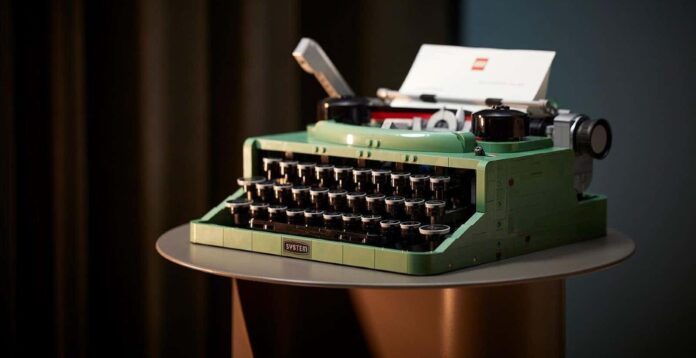
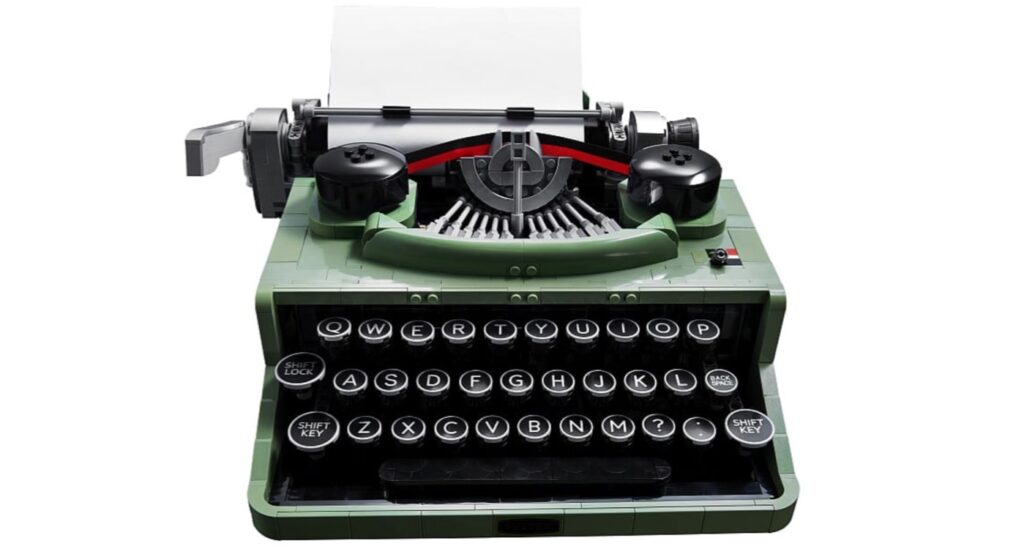
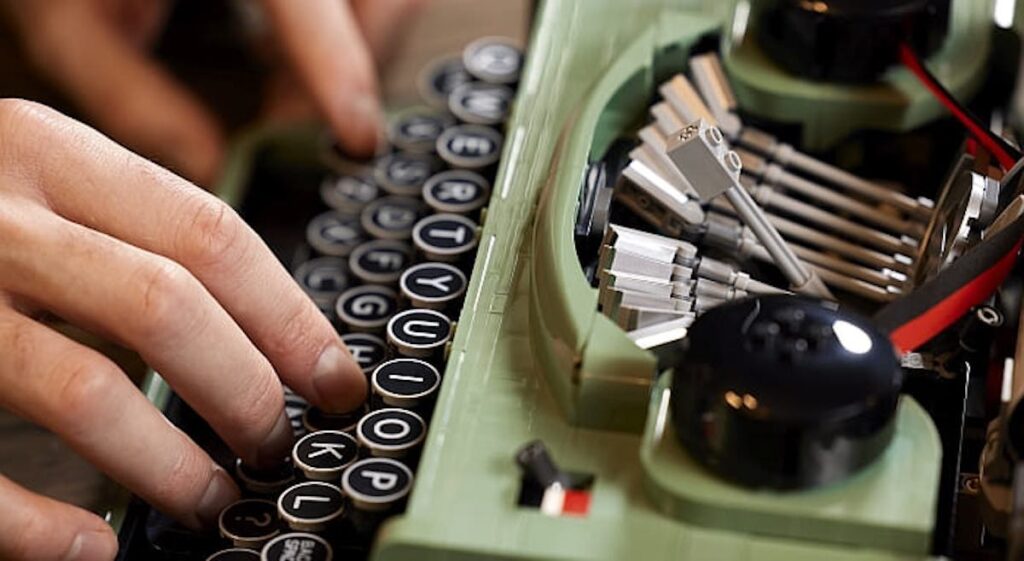
The LEGO Group has revealed the new LEGO Ideas Typewriter set, which is set to delight the most seasoned wordsmiths and fans of all things vintage.

The #21327 LEGO Ideas Typewriter is based on a contemporary typewriter model of a bygone era, including the one used by LEGO Group founder Ole Kirk Christiansen.

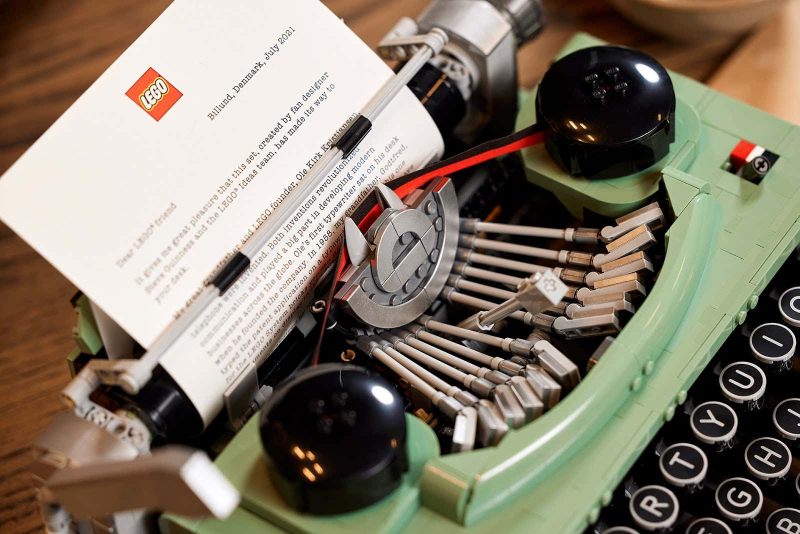
Intricately designed to mirror the function and tactility of a classic typewriter, the typewriter features a center type-bar that rises each time a letter key is pressed, linked to the carriage which moves across as you type, as well as a platen roller that real paper can be fed into.

MORE: He Built His Own Prosthetic Out of LEGOS and Hopes to Provide Cheap Solutions for Others Who Need a Hand

In a fitting nod to the lost art of letter writing, the set also comes with a letter written and signed by Thomas Kirk Kristiansen, chairman of the LEGO Group and a fourth-generation member of the family which still privately owns the business to this day.

LEGO

The original concept for the typewriter came through LEGO fan Steve Guinness’ submission to the LEGO Ideas platform, a LEGO initiative that takes new ideas that have been imagined and voted for by fans and turns them into reality.

Discussing his idea, Steve said:“I wanted to create something totally different from anything that LEGO has ever done before and showcase that you really can make anything out of LEGO. I bought a vintage typewriter for my research and then played around with bricks and the mechanism until I was happy with the design. I hope it will bring nostalgia to adult fans like me, and wonder and curiosity to younger fans who might not have ever seen a real typewriter!”

LEGO

While the concept of the typewriter dates back to the early 18th century, Steve’s design, and the LEGO design team’s development of it, captures the styling cues of the modern 20th century typewriters, which still have a cult following today.

Federico Begher, VP of Global Marketing at LEGO Group commented: “It’s not hard to see why the vintage typewriter has such enduring appeal, and Steve’s incredible replica is a thoroughly worthy LEGO Ideas success story. For many, the escape from the connected world to the simplicity of the typewriter is a similar experience to the mindful process of building with LEGO bricks. Here, we have a LEGO set that combines these two worlds seamlessly and like its real-life counterparts, is something LEGO fans will be proud to display in their homes.”

RELATED: Boy With Autism’s LEGO Replica of the Titanic is So Impressive, it is Now on Display at the Ship’s Museum

In the video below, LEGO designers Wes Talbott and James May talk about the set in detail, including all its cool functions.

The typewriter comes with 2,079 pieces and measures 12cm high, and is out now for $199.99.

Build Some Positivity By Sharing The Story With Your Friends…

If You’re Anxiously Awaiting News, Do This One Thing to Feel at Ease – Researchers Say

Photo by Paul Fundenburg, CC license

An induced feeling of awe, or state of wonder, may be the best strategy yet for alleviating the discomfort that comes from uncertain waiting.

Kate Sweeny’s research explores the most excruciating form of waiting: the period during which one awaits uncertain news, the outcome of which is beyond one’s control. It’s waiting for news from a biopsy, or whether you aced—or tanked—the exam. That’s distinguished from waiting periods such as when looking for a new job, when you have at least some control over the outcome.

Her research has found some clues for alleviating those difficult periods. Meditation helps, as does engaging in “flow” activities—those that require complete focus, such as a video game.

“However, meditation is not for everyone, and it can be difficult to achieve a state of flow when worry is raging out of control,” Sweeny and her team assert in their related research, published in The Journal of Positive Psychology.

Sweeny, a professor of psychology at UC Riverside, has discovered what may be the best strategy yet to alleviate the most uncomfortable purgatory of waiting. That is, awe, defined in the research as a state of wonder, a transportive mindset brought on by beautiful music, or a deeply affecting film.

The research drew from two studies, for a total of 729 participants. In the first test, participants took a faux intelligence assessment. In the second test, participants believed they were awaiting feedback on how other study participants perceived them.

In both cases, they watched one of three movies that inspired varying levels of awe. The first was an “awe induction” video, a high-definition video of a sunrise with instrumental music. The second was a positive control video meant to elicit happy feelings, but not awe. The video was of cute animal couples. The third was a neutral video. In this case, about how padlocks are made.

Researchers found that those exposed to the awe-induction video experienced significantly greater positive emotion and less anxiety during the period waiting for IQ test results and peer assessments.

MORE: Gardening Just Twice a Week Improves Wellbeing and Prunes Your Stress, Says New Study

“Our research shows that watching even a short video that makes you feel awe can make waiting easier, boosting positive emotions that can counteract stress in those moments,” Sweeny said.

Sweeny said the research can be used to devise strategies for maximizing positive emotion and minimizing anxiety during the most taxing periods of waiting. Because the concept of awe has only received recent attention in psychology, the research also is the first to stress its beneficial effects during stressful waiting periods, opening new opportunities for study.

RELATED: Being Around Birds Makes Us Much Happier Says New Science

“Now that we know we can make people feel better through brief awe experiences while they’re waiting in the lab, we can take this knowledge out into the real world to see if people feel less stressed when they watch “Planet Earth” or go to an observatory, for example, while they’re suffering through a difficult waiting period,” Sweeny said.

Source: University of California – RiversideFeatured image: Paul Fundenburg, CC license

SHARE The Awesome News of This Research With Friends…
Coffee is Now Linked to Reduced Risk of Many Ailments, Including Liver Disease, Parkinson’s, Melanoma, Even Suicide

Gaelle Marcel - Unsplash

What beats a cup of joe in the morning? Nothing after you realize the myriad beneficial health outcomes that are now associated with drinking coffee.

For example, a new study from the Universities of Southampton and Edinburgh, published today in BMC Public Health, found that drinking any type of coffee led to a reduced risk of developing and dying from chronic liver disease, with the benefit peaking at three to four cups per day.

Nearly half a million individuals with known coffee consumption levels were examined through data from the UK Biobank. Of all participants included in the study, 78% (384,818) consumed ground or instant caffeinated or decaffeinated coffee, while 22% (109,767) did not drink any type of coffee. During the study period, there were 3,600 cases of chronic liver disease, including 301 deaths.

Compared to non-coffee drinkers, coffee drinkers had a 21% reduced risk of chronic liver disease, a 20% reduced risk of chronic or fatty liver disease, and a 49% reduced risk of death from chronic liver disease. The maximum benefit was seen in the group who drank ground coffee, which contains high levels of the ingredients kahweol and cafestol, which have been shown to be beneficial against chronic liver disease in animals.

Coffee wasn’t always seen as beneficial to humans, and by 1991, coffee, like red meat, had made it on the World Health Organization’s list of possible carcinogens.

RELATED: This Brilliant Low-Income Housing in Colombia is Made From Coffee Waste

It wasn’t until 2016 that WHO finally removed it from the list, while two years later California passed a law requiring coffee producers to place cancer warning labels on their products, absurdly because scientists and producers alike couldn’t disprove a negative.

Yet coffee has been found to actually aid in preventing certain cancers like melanoma and prostate cancer.

CHECK OUT: Coffee Could Be Used to Fight Obesity, Says ‘Pioneering’ New Study

Lord Coffee

In a radio history program from the BBC, historians detail that the first recorded use and consumption of coffee beans came from a part of the world most people don’t associate with the plant—Yemen. According to the historians, a Muslim cleric became suspicious of the beans when he observed his goats eating them and displaying hyperactivity.

The cleric, upon consuming them himself, wrote that they allowed him to stay up all night praying—a finding that many college students might be able to empathize with.

The beans themselves are a mixture of over 1,000 different chemicals, and scientists often struggle to find out which compounds are responsible for the many observed benefits.

Harvard details in its report on coffee that “there is consistent evidence from epidemiologic studies that higher consumption of caffeine is associated with lower risk (24% per 300mgs of caffeine) of developing Parkinson’s Disease.

MORE: A Morning Cup of Coffee Not Only Charges You Up, But the Leftovers Have Reinvigorated Forests

24% was also the average found in a meta-analysis containing more than 330,000 participants of the reduction in risk of developing depression; once again the higher the number of cups consumed the lower the risk, which was the same pattern when another analysis of cohort studies looked at suicide risk—53% for those who drank 4 or more cups, 45% for those who drank 2-3 cups.

Harvard also reported evidence that coffee can help prevent type-2 diabetes, some cancers, Alzheimer’s, and even gallstones.

Jitteriness and abnormal heart rate is sometimes cited as a reason to avoid drinking too much coffee, but despite one chemical raising LDL cholesterol particle count, a variety of meta-analyses consisting of hundreds of thousands of people repeatedly demonstrated lower risks for various heart diseases and events like stroke, generally with a low-end of 11% found with decaffeinated coffee, and 25% for caffeinated.

GNN reported in 2019 that coffee stimulates a type of fat production that counteracts the kind leading to obesity. In vitro cells were found to have immediate stimulation in their production of brown fat, a kind of fat cell used to generate body heat in contrast to white fat, which is for storing calories as energy.

The results, that coffee stimulates brown fat production, was replicated in humans, leading the researchers at the University of Nottingham to conclude coffee had a role in combating the obesity epidemic.

With all these beneficial outcomes, growing in significance with the number of cups consumed, it’s astonishing to think that our culture accidentally and indelibly added one of what appears to be the healthiest beverages on the planet into our society.

SHARE This Morning Cup of Good News With Pals on Social Media…

“You might as well answer the door, my child, the truth is furiously knocking.” – Lucille Clifton

Quote of the Day: “You might as well answer the door, my child, the truth is furiously knocking.” – Lucille Clifton

Photo: by Dale Pike @grogger

With a new inspirational quote every day, atop the perfect photo—collected and archived on our Quote of the Day page—why not bookmark GNN.org for a daily uplift?

This Grandma Turned 90 And Had a Blast at Her Princess-Themed Birthday Party – LOOK

SWNS
SWNS

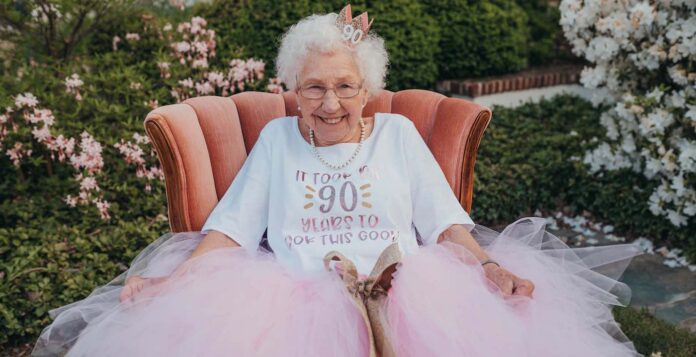
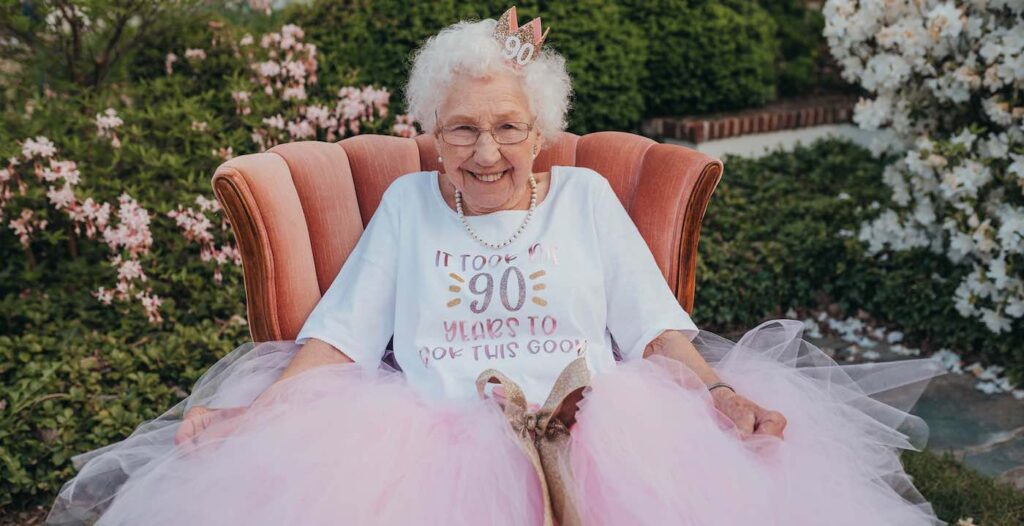
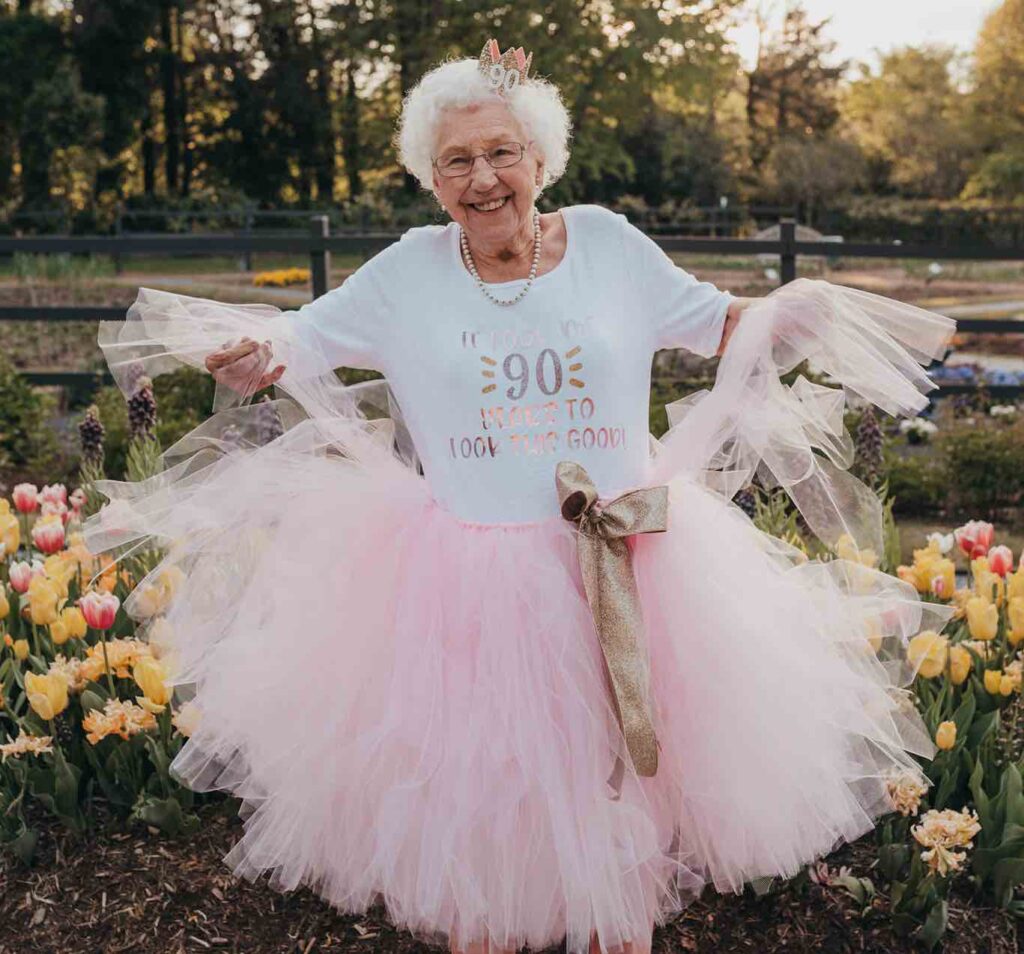
This fun-loving gran had a blast at her 90th birthday, with a princess-themed party.

The cheerful grandmother, known as ‘G-Ma’ to family, looked like a queen as she donned a huge pink tutu, plastic crown, and a beaming smile for the pictures.

G-Ma’s family organized a throne, tutu, cake, balloons, biscuits in the shape of her face, crown, and a custom t-shirt that read ‘It took me 90 years to look this good!’.

It was G-Ma’s granddaughter, Stephanie Perkins, who had the idea for the shoot.

Stephanie said: “My grandma is very special to me and during the pandemic and quarantine, we did not get to see much of her.

“I knew her 90th birthday was coming and we wanted to do something special just for her.

MORE: 95-Year-old Widowers Who Found Love in The Time of COVID Get Married

“I had seen people on the internet do photoshoots for first birthdays, and even 30th birthdays so I thought why not do one for her 90th with the whole tutu and crown outfit?

“She was very happy to pose. She was smiling and laughing the whole time. We all had a lot of fun celebrating G-Ma.”

SWNS

Photographer Melissa Denny, who went to high school with Stephanie, was the talented snapper booked for the celebration in Reynolda Gardens in North Carolina.

She said: “We had the best time, talking, laughing, dancing—G-Ma was a great sport and down for anything.

RELATED: Devoted Son Took His Mom With Alzheimer’s on Incredible Round-the-World Adventure–And She Improved

“What an amazing opportunity to spend time with a sweet, 90-year-old, wonderful lady, making memories, and having fun celebrating her milestone birthday.”

G-Ma was joined by her daughter Debra, her son-in-law, and and her two granddaughters at the shoot.

SWNSAfter the photo session, the celebrations were not over for G-Ma—who had a drive-thru party the next day where her other friends could come and wish her happy birthday safely.

SHARE This Sweet Celebration With Pals on Social Media…

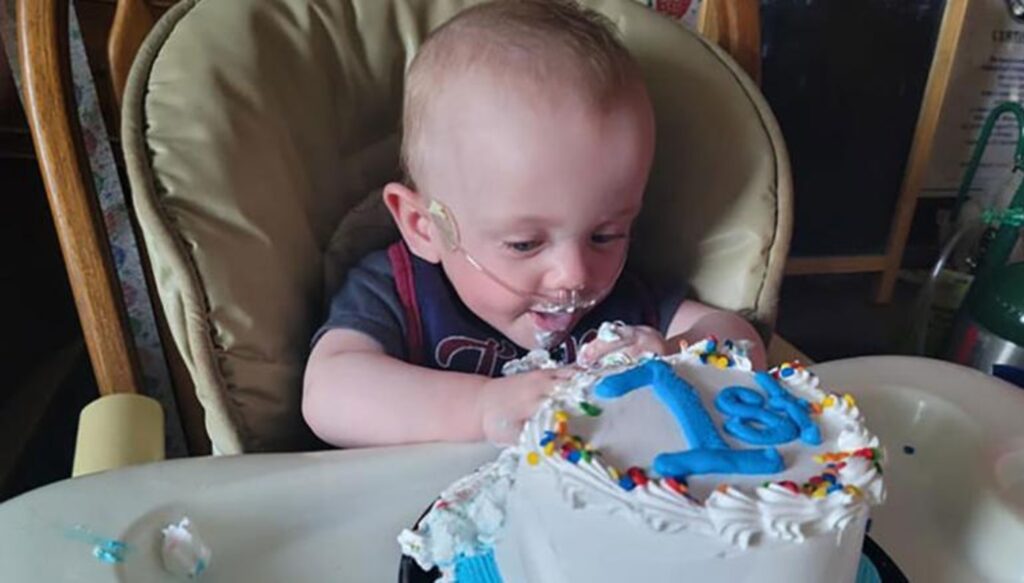
World’s Most Premature Baby Has Celebrated His First Birthday After Beating 0% Odds of Surviving

Guinness World Records

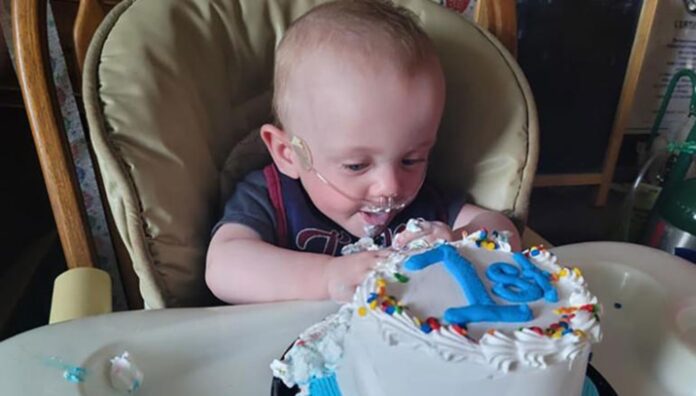
The world loves it when the little guy, pitted against enormous obstacles, beats the odds and comes back to win. So, you might say Richard Scott William Hutchinson, who celebrated his first birthday on June 5th, is the ultimate small but mighty contender.

When Richard’s mom Beth went into premature labor, he wasn’t due for another 131 days. Weighing in at just 11.9 ounces and measuring 10.2” in length, at the time of his birth, Richard’s gestational age clocked in at a scant 21 weeks and two days.

After the tiny infant was sent for care to the Neonatal Intensive Care Unit (NICU) at Children’s Minnesota hospital in Minneapolis, his parents were told he had a 0% chance of survival. But Richard set out to prove the doctors wrong—and that’s exactly what he did.

The icing on this miracle baby’s first birthday cake? Having Guinness World Records (GWR) officially declare him “the most premature baby to survive.”

But the road to Richard’s landmark birthday wasn’t an easy one. Constraints of the coronavirus pandemic prevented his parents from staying at the hospital with him, so each day, Beth and Richard’s dad, Rick, made the commute back and forth from the family’s home in St. Croix County, Wisconsin to Minneapolis to visit their newborn son.

Guinness World Records

“We made sure we were there to give him support,” Rick told Guinness World Records. “I think that helped him get through this because he knew he could count on us.”

“Rick and Beth fought for Richard day after day and never stopped advocating for their baby through it all,” neonatologist Dr. Stacy Kern told GWR. “Their strength and ability to stay positive and hopeful even during the most stressful and difficult times was inspiring.”

RELATED: Hospital Janitor Forges Lasting Friendship Between 2 Boys in Isolation After Noticing a Love of LEGOS

Six months later, Richard was finally ready to go home.

“I couldn’t believe this was the same little boy that once was so sick, that I feared he [might] not survive,” Dr. Kern said.

MORE: Born a Preemie Herself, She Sets Up Mini-Libraries in Neonatal Wards So Parents Can Read to their Premature Babies

“The same little boy that once fit in the palm of my hand, with skin so translucent that I could see every rib and vessel in his tiny body. I couldn’t help but squeeze him and tell him how proud I was of him.”

SHARE This Uplifting Story With Others Who Love Good News…

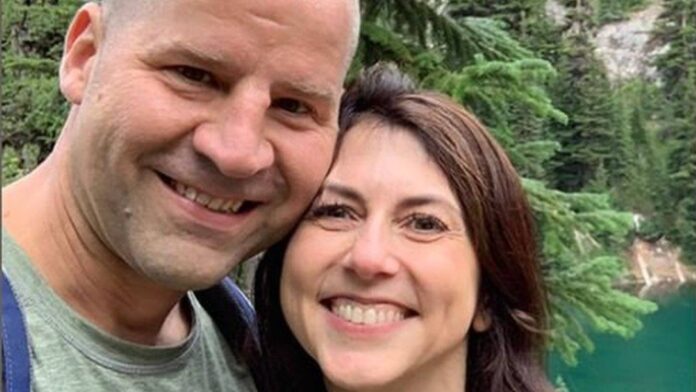
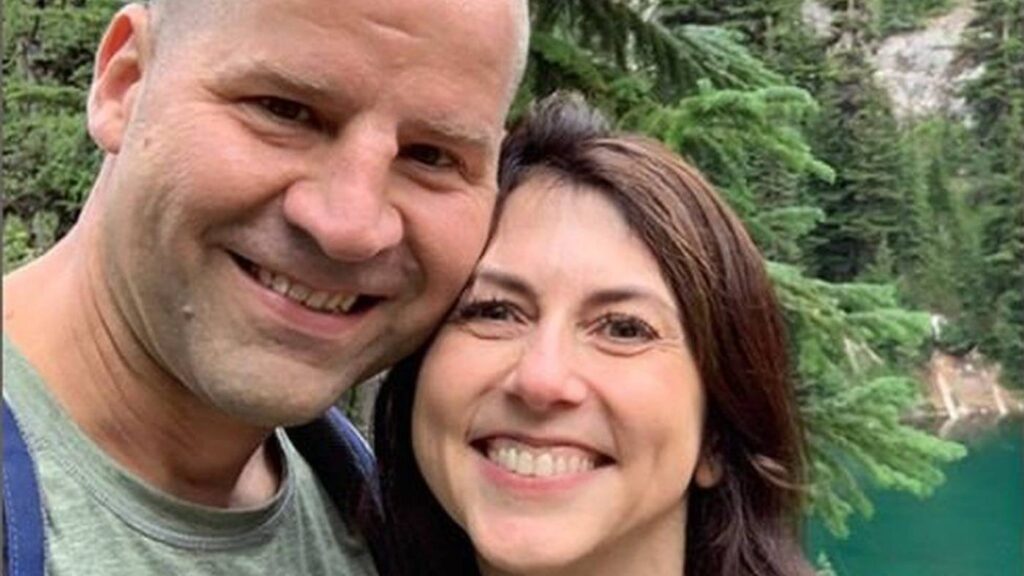
MacKenzie Scott Has Given Away Another $2.7 Billion to 286 Charities

MacKenzie Scott and former husband Dan Jewett, Giving Pledge
MacKenzie Scott and Dan Jewett, Giving Pledge

The world’s 21st wealthiest individual, MacKenzie Scott, has pledged another $2.7 billion to various charities.

In a blog post announcing her latest act of generosity, the billionaire ex-wife of Amazon founder Jeff Bezos explained that she wanted to give to those “that have been historically underfunded and overlooked.”

She chose 286 organizations that focus on racial inequality, as well as arts and culture, and education.

Since her divorce from Bezos in 2019—which saw her receive a 4% stake in Amazon—Scott has become well-known for her charitable donations.

In August 2020, GNN reported that she was giving $1.7 billion to various non-profits. Then in December, GNN revealed that she’d given away a further $4 billion to deserving causes.

For her latest act, she worked with researchers, advisors, and her new husband—Seattle science teacher Dan Jewett—to decide which non-profits to bestow gifts upon.

“In this effort, we are governed by a humbling belief that it would be better if disproportionate wealth were not concentrated in a small number of hands,” she wrote in her blog, “and that the solutions are best designed and implemented by others.”

Scott is not the only billionaire to promise to give away their wealth away. The Giving Pledge—an initiative sparked nearly a decade ago by Bill Gates and Warren Buffett—has been signed by 204 wealthy individuals, including Facebook’s Mark Zuckerberg and Airbnb cofounder Vrian Chesky. Jeff Bezos has not signed the pledge, but Scott and her partner Dan both have—with a promise to give “until the safe is empty.”

Multiply The Good News By Sharing With Your Friends On Social Media…

Delta Pilot’s Pre-Pandemic Message Found Tucked Away On a Plane Coming Out of Storage

Delta/Facebook
Delta/Facebook

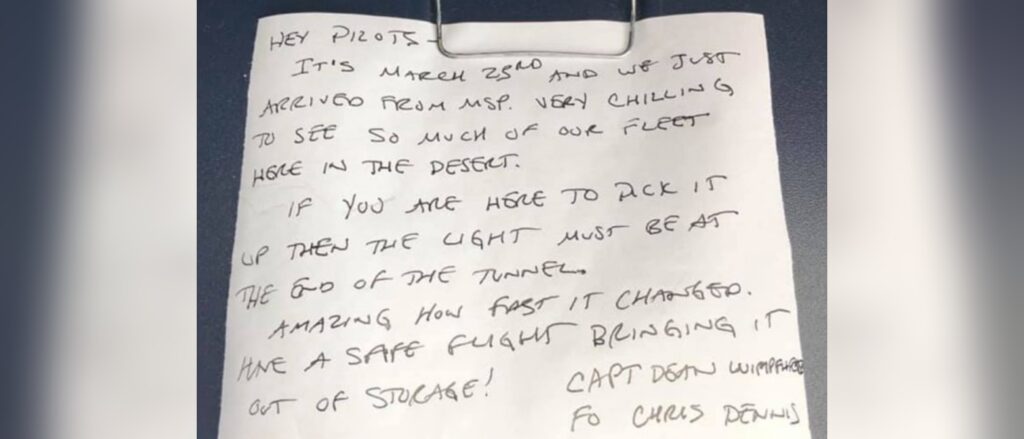
A note left by a pilot on a plane that hasn’t flown since last spring is a poignant look back to the beginning of the pandemic.

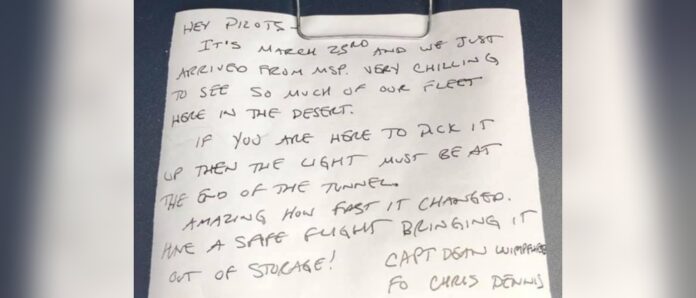
Last March, Captain Chris Dennis parked Delta ship 3009 at Victorville Airport in the California desert. Like many of us, he imagined this would just be a two-week lockdown before the world opened up again. He had no idea that plane wouldn’t take to the air again for another 435 days.

Dennis wrote, “Hey pilots—It’s March 23rd and we just arrived from MSP (Minneapolis-St. Paul). Very chilling to see so much of our fleet here in the desert. If you are here to pick it up then the light must be at the end of the tunnel. Amazing how fast it changed. Have a safe flight bringing it out of storage!”

The pilot assigned to ‘wake up’ the aircraft more than a year later found the note tucked away on a tray table in the flight deck.

MORE: COVID Cases and Hospitalizations Are Plummeting Toward Zero in Most of the U.S.

“Those 57 words, which captured so much of the uncertainty and emotion we all felt in March 2020, underscored the gravity of the trip, and how optimistic he now feels about the direction we’re heading in,” Delta posted in their Facebook post sharing the note. “Ship 3009 is now prepared to take the skies once again.”

“While the world certainly has changed over the past year, one thing is for certain: we won’t be taking that open runway for granted anytime soon.”

FLY the Good News to the Skies—Share This Story…

Yemeni Fishermen Hit Jackpot With $1.5 Million Find in Belly of Floating Sperm Whale Carcass

BBC/YouTube
BBC/YouTube

As described by anyone who experiences an unexplainable stroke of luck, “it was just another day” for a group of poor Yemeni fishermen heading out into the Gulf of Aden to earn their living.

But lady luck delivered a lump of precious ambergris, a unique substance found in the bellies of sperm whales, into their hands when they happened upon a floating whale carcass.

For obvious reasons, the last Good News Network story in which Yemen or the Yemenis were the spotlight was published in 2011. But with this once-in-a-lifetime find for 35 Yemeni fisherman, the poorest country in the Middle East just got a bit richer.

26 kilometers off the coast of the southern port city of Aden, a dead sperm whale was hooked up to some fishing vessels and dragged ashore. An inspection of the whale’s interior revealed a 280-pound lump of “floating gold,” or ambergris, a substance used to stabilize fragrances in perfumes.

Produced in the intestines of sperm whales, ambergris protects the lining of the intestines from the sharp beaks of the squid which make up the majority of their diet.

Over time it’s also been used as a flavoring agent in liquor and coffee, and as an incense in ancient China, Egypt, and elsewhere.

MORE: Diver Emerges Unscathed From the Mouth of Humpback Whale: ‘I was completely inside’

Al-Araby reports that an Emirati businessman bought the ambergris for $1.5 million, an unimaginable sum of money for most fishermen in the world, let alone those in one of the poorest countries in the world.

Furthermore, while one might imagine this story ending in tragedy or corruption considering the desperate state the country is in, the money was shared among the 35 men—who decided to give a portion towards helping their community.

“From one moment to another, our lives changed,” one of the fishermen, named Abdulhakeem, told AFP. “There are those who bought boats, others built or fixed their houses. I built my house; I built my future.”

RELATED: Struggling Thai Fisherman Finds Rare Melo Pearl Worth $320,000 While Walking on Beach

“We are simple people: fishermen looking for our catch every day,” said Salim Sharf, another of the 35 lucky men, to AFP. “If you found your catch for the day you thank God. Suddenly, the Most Merciful gave us this.

Citing an old phrase, Abdulhakeem notes that for most men the sea and its bounty are better neighbors even than a king. For these lucky 35, that’s certainly true.

(WATCH the BBC video below… )

SHARE This Lucky Find With Friends on Social Media…

“If you don’t ask, the answer is always no. If you don’t step forward, you’re always in the same place.” – Nora Roberts

Quote of the Day: “If you don’t ask, the answer is always no. If you don’t step forward, you’re always in the same place.” – Nora Roberts

Photo: by Yukie Emiko

With a new inspirational quote every day, atop the perfect photo—collected and archived on our Quote of the Day page—why not bookmark GNN.org for a daily uplift?