


















70 years ago today, Disneyland was dedicated and opened in Anaheim, California. It is the most visited theme park in world history with 757 million visits since it opened as of December 2021. In 2022, the park had approximately 16.9 million visits, making it the second most visited amusement park in the world that year, behind only Magic Kingdom, the very park it inspired. READ more… (1955)
Phillies Team Makes Hype Video That Wins Their Bat Boy Cancer Survivor a Trip to the All-Star Game (WATCH)

Bat boys often blend into the background, becoming bit players in the operations of a major league baseball game.
But the Philadelphia Phillies recently gave their bat boy, Adam Crognale, the star treatment, creating a hype video that helped get him elected to this year’s All-Star Game ball crew.
Thanks in part to the video that showcased Adam’s skills snagging foul balls and supporting his team, the 26-year-old New Jersey native won the 3-day public voting to serve as the National League’s bat boy in the MLB All-Star Game last night.
Watch the hype film posted on social media by the Phillies…
The best Bat Man in the biz is on the All-Star ballot! Vote and let's send Adam to ATL 🤩
— Philadelphia Phillies (@Phillies) July 6, 2025
VOTE: https://t.co/vtcaziBvLx pic.twitter.com/gJUxOQr26l
“I know I’m living the dream of some 8 or 10-year-old kid in the stands,” Adam told CBS Philadelphia. “It’s a dream come true. I don’t take it for granted…”
The dream holds even more meaning considering what Adam has overcome in his young life—a cancer diagnosis of lymphoma in his knee that temporarily stole his ability to run.
Fortunately, his treatment was successful and he went on to graduate from Temple University and earn his ‘dream job’ as the Phillies’ bat boy.
“There’s nothing better than coming to this ballpark,” Adam told CBS Philadelphia in 2024. “I’ve said that since I was a 5-year-old kid, and I probably will not stop saying that.”
And now, his ball handling skills have made him an all-star.
(Watch this thoughtful young man being interviewed, before he won the vote…)
ANOTHER BASEBALL HOME RUN: Philadelphia Phillies’ New Service Dog is Instant Celebrity – And Will Support a Veteran After Training Camp
ENCOURAGE A YOUNG BASEBALL FAN By Sharing This on Social Media…
Backpacker Found Alive in Australian Bush After 12 Days of Surviving Her Major Mistake


A German backpacker lost for 12 days in the Australian outback has survived and spoken out regarding her traumatic experience.
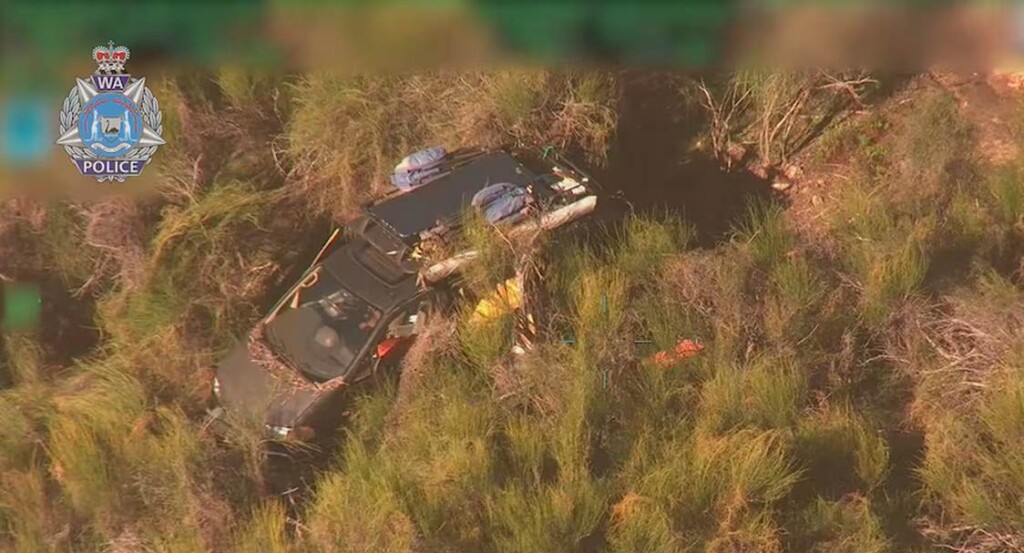
Carolina Wilga’s disappearance gripped the nation after her friends and family lost contact with her in late June and her van was discovered immobilized off a trail in a nature reserve in the state of Western Australia.
The 26-year-old had been found walking along a track on the outskirts of the reserve, having been ravaged by mosquitos and chewed up in the rough terrain.
Inspector Martin Glynn of the Western Australia police said Wilga was found last Friday at 7:30 p.m. local time by a member of the public who took the backpacker to the nearest town, Beacon. It was there that she was airlifted to a hospital in Perth where she released a statement to the press on Monday.
“The thought of all the people who believed in me, searched for me, and kept hoping for me gave me the strength to carry on during my darkest moments. For this, I want to say thank you from the bottom of my heart,” Wilga, who was pictured in the hospital among cards of well-wishes, flowers, and food required to “gain 12 kilos back.”
“Especially to the police investigators, searchers, the German Consulate, the medical staff and the wonderful nurses who took care of me with so much compassion. My deepest thanks also go to every single person who simply thought of me — and of course, to my rescuer and angel, Tania!”
A press conference from the WA Police on Friday revealed that, having been found by Tania Henley, her mental state was “quite… fragile.”
The details of Wilga’s survival ordeal are that her van became immobilized in mud, and that for a reason later revealed in her statement, she left it, became disoriented, and got lost. According to ABC News Australia, she was barefoot, and survived off drinking water from puddles and eating what little food remained in her pockets after she left the van.
“There’s a very hostile environment out there, both from flora and fauna. It’s a really, really challenging environment,” said Glynn.
She wandered around the Karroun Hill Nature Reserve from the point at which her van was stuck, which was 21 miles from any of the reserve’s main trails. At night the temperatures regularly fall to 32°F, and she sought shelter wherever it was available, including a cave.
“You’re always so hopeful with these missing person situations,” Glynn said. “It’s really quite traumatic because you obviously always go out with the best of hope that you will find the person. It’s just a great outcome for everyone involved.”
MISSING IN ACTION: 20-yo Hiker Survives to See Family Again After Incredible 50 Days Lost in the Rockies
In her statement, Wilga said that many people had asked her why she left the van. Her response was that when she careened off the trail, she hit her head significantly, became confused, wandered away, lost sight of it, and was lost, an all-too-common scenario for missing hikers.
Survival experts would agree unanimously: you should almost never leave your vehicle if it breaks down. It’s not only a ready source of shelter from the sun, wind, rain, and cold, but it’s much easier for rescuers to see it from the air. In the case of Wilga, the van was found by an aerial search, but she was long gone by then.
Outback survival experts speaking with ABC say there are two main reasons why people leave their cars. The first one is irrational, and known as an amygdala hijack, where an overcoming sense of panic and denial cause people to make irrational decisions, like believing they can follow a trail back to get help, or climb a hill to see if they can spot civilization in the distance.
The second is more rational, and its the sense of wanting to take action. In reality, sitting down, sipping some water, and having a think about things is a much better course of action that will typically result in the confirmation that waiting by the vehicle is the best option.
MORE SURVIVAL STORIES: Rescuers Relieved to Find Pilot, 2 Children Survived Crash Landing on Frozen Alaskan Lake
Additionally, Wilga’s story is a reminder of how easy it can be to get lost in remote country, even just a few hundred yards from a trail or a car. If wandering off the trail is necessary for any reason, take measures to ensure you know which way you came from, such as making signs on the ground, or bending down branches to mark your way.
Lastly, follow Wilga’s lead and never give up hope, as there will almost always be someone looking for you.
SHARE This Harrowing Story Of Survival With Your Friends…
Largest Black Hole Merger Ever Observed Detected by LIGO–a Universe-Shaking Event


A collaboration between humanity’s three gravitational wave detectors have identified a black hole merger event that created something 225-times the size of our Sun.
It’s the largest such event ever detected in the history of gravitational wave astronomy, and pushed the limits of the discipline and what it can teach us to the highest degrees.
In 2015, history was made when the LIGO observatories in Livingston, Louisiana, and Hanford, Washington, detected a ripple in the fabric of space time cause by a black hole approximately 65-times the mass of the Sun.
Since then, LIGO has teamed up with the gravitational wave detectors Virgo in Pisa, Italy, and KAGRA, in Japan. Together they form the LVK collaboration, and have greatly expanded the capabilities of detecting these phenomena.
Using practically the entire Northern Hemisphere as a capture area, LVK during its most recent observations detected over 200 individual gravitational waves, but one labeled GW231123, named for its detection date on November 2023, blew all the rest away.
At between 2 and 13 billion light years from Earth, it was a literal universe shaking event. GW231123 marked the collision and merger of two rapidly spinning black holes, one measuring 103 solar masses, and the other 137 solar masses. Each was spinning 400,000 times the rotational speed of the Earth.
The high mass and extremely rapid spinning of the black holes push the limits of both gravitational-wave detection technology and current theoretical models.
“The black holes appear to be spinning very rapidly—near the limit allowed by Einstein’s theory of general relativity,” explains Charlie Hoy of the University of Portsmouth and a member of the LVK. “That makes the signal difficult to model and interpret. It’s an excellent case study for pushing forward the development of our theoretical tools.”
OTHER DEEP SPACE BANGS: Researchers Discover a New Type of Fast and Furious Cosmic Explosion–Name it After Liverpool Soccer Team
Scientists speaking with the media said it will take years before the event is fully understood, but the working hypothesis is that the two black holes in this merger may have come to exist through their own mergers of smaller black holes in the more distant past.
“This is the most massive black hole binary we’ve observed through gravitational waves, and it presents a real challenge to our understanding of black hole formation,” says Mark Hannam of Cardiff University and a member of the LVK Collaboration. “Black holes this massive are forbidden through standard stellar evolution models. One possibility is that the two black holes in this binary formed through earlier mergers of smaller black holes.”
MORE STORIES LIKE THIS: NASA Visualizes What it Would Be Like to Plunge into a Black Hole – WATCH
Collaboration researchers are continuing to refine their analysis and improve the models used to interpret such extreme events.
“It will take years for the community to fully unravel this intricate signal pattern and all its implications,” says Gregorio Carullo of the University of Birmingham and a member of the LVK. “Despite the most likely explanation remaining a black hole merger, more complex scenarios could be the key to deciphering its unexpected features. Exciting times ahead!”
SHARE This Big Wave Surfing Through The Universe On Social Media…
10,000 Young Corals Grown in Just Weeks by New Portable Spawning Lab in the Maldives
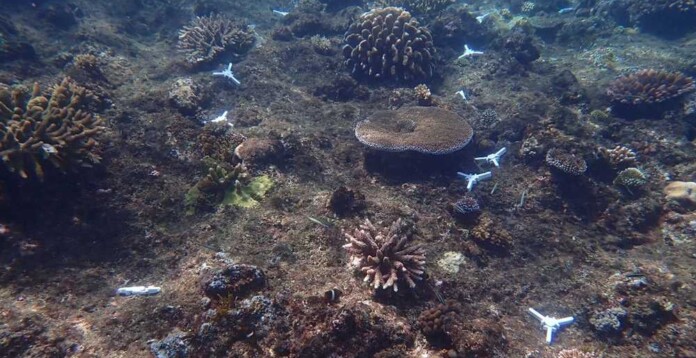
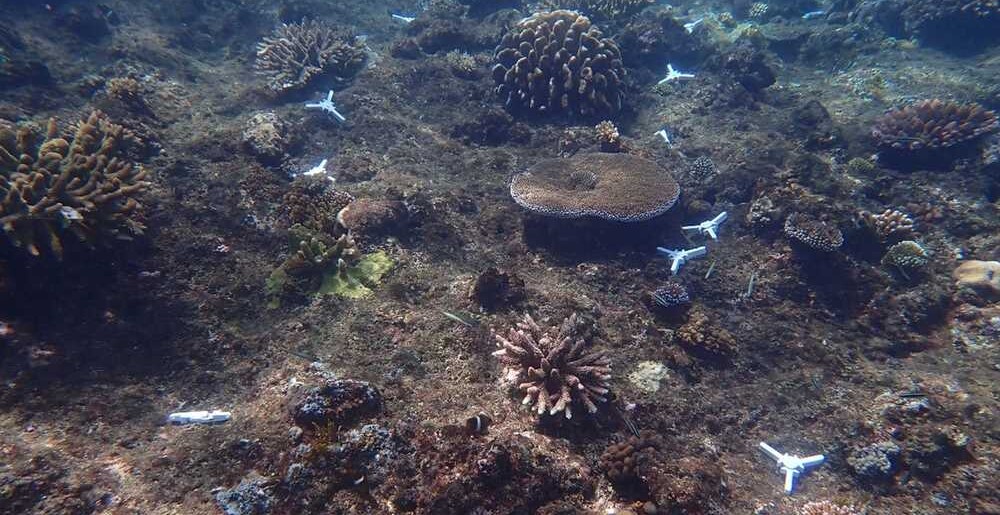
In the Maldives, a mobile coral spawning system has been trialed with scintillating success, as 10,000 juvenile corals were grown by local operators.
It represents not only a major hope that island nations can abate the loss of coral reefs, but also that the spawning system’s $1.5 million grant investment was well-spent, and that an expansion in production of the technology could well be warranted.
Co-developed by the Australian Institute of Marine Science (AIMS) and Maldives Marine Research Institute (MMRI), ReefSeed is a shipping container-sized, portable, seaside spawning laboratory for coral.
Designed to allow local marine scientists anywhere in the world to spawn and grow coral for reef restoration in weeks rather than months, and to operate without external power sources or the need for divers, ReefSeed received $1.5 million from the G20 Coral research and Development Accelerator Program.
It passed its recent acid test with flying colors, as the MMRI were able to use a single containerized ReefSeed unit to spawn 3 million larvae during a single spawning season, which they turned into 10,000 juvenile corals.
These corals were then deployed via 720 seeding devices across 9 different reefs. It was done without any of the AIMS experts present, proving its utility doesn’t require expertise in the system.
The spawning took place on Maniyafushi island in the South Malé Atoll of the Maldives, and AIMS coral reproduction scientist and ReefSeed co-lead, Dr. Muhammad Azmi Abdul Wahab, said the plan was to offer ReefSeed to as many other island communities as possible.
“We have learned much from working with colleagues at MMRI, which will help us make improvements in the training and refinements in the way the system itself can work,” Dr. Wahab told Oceanographic.
MORE REEF SPAWNING RESEARCH:
- New Technology Lights Up Coral Beds to Speed Reef Restoration By Attracting Food
- First-Ever Coral Crossbreeding Hopes to Mimic the Resilience of an ‘Invincible’ Reef in Honduras
- Breeding Corals for the Great Barrier Reef Achieves First Out-of-Season Spawning Event Ever
- First Coral IVF Babies on Great Barrier Reef Have Produced Next Generation
“Coral reefs in the Maldives sustain communities and livelihoods but, like coral reefs globally, they have been impacted by bleaching driven by climate change. Innovations like ReefSeed can play a role in supporting restoration efforts providing hope for these communities.”
MMRI scientists were invited to the Great Barrier Reef to witness, alongside their AIMS colleagues, the autumn spawning season on the world’s largest reef, something which GNN has reported before has to be seen to be believed—like the shaking of a giant snowglobe.
It was there they learned the fundamentals of coral spawning that they would take back to Maniyafushi island and their ReefSeed station.
SHARE This A+ Test Of A Coral-Making Machine That Could Save Reefs…
“Happiness grows at our own firesides, and is not to be picked in strangers’ gardens.” – Douglas William Jerrold

Quote of the Day: “Happiness grows at our own firesides, and is not to be picked in strangers’ gardens.” – Douglas William Jerrold
Photo by: Sergei Solo
With a new inspirational quote every day, atop the perfect photo—collected and archived on our Quote of the Day page—why not bookmark GNN.org for a daily uplift?

Good News in History, July 16

1403 years ago today, the Prophet of Islam, Muhammad, journeyed with his followers from Mecca to Medina. As an event it’s known as the Hijrah, and the start of the Islamic calendar. The whole departure spanned about three months, during which Muhammad remained behind to convince those who were reluctant. The second Rashidun Caliph, Umar ibn Al-Khattab, designated the Muslim year during which the Hegira occurred the first year of the Islamic calendar in 638 or the 17th year of the Hegira. This was later Latinized to Anno Hegirae, the abbreviation of which is still used to denote Hijri dates today. READ more on this day… (622)
‘Love Conquers the Atlantic’–Newfoundland Couple’s Message in a Bottle Found in Ireland 13 Years Later
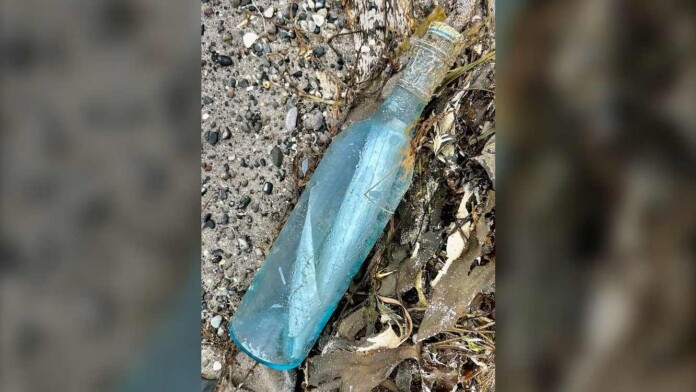
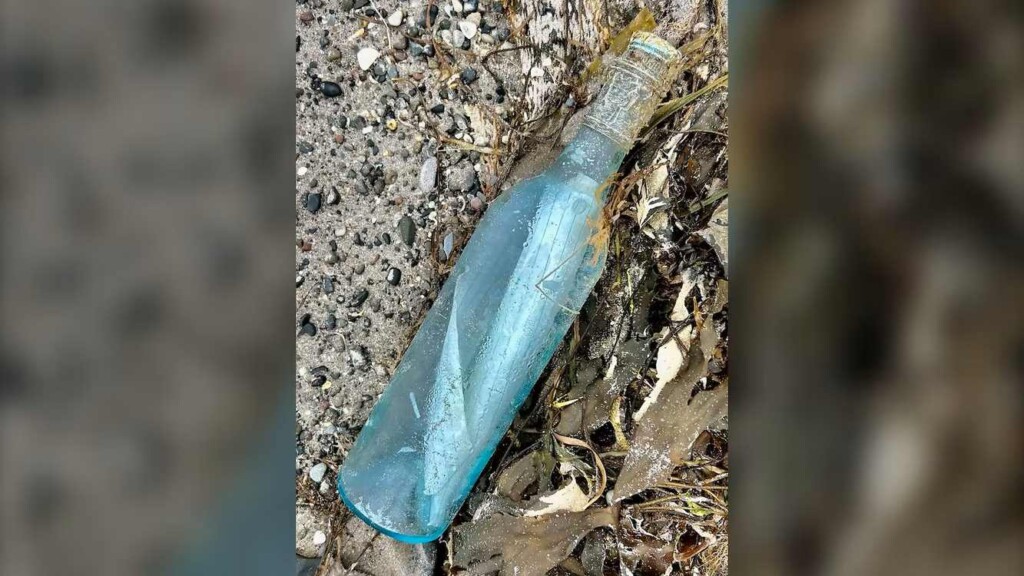
From the shores of Newfoundland to the shores of Ireland comes the story of two young lovers frozen in time within the blue glass of a wine bottle.
Separated by 5 time zones, 1,800 miles, and 13 years, the humble message in a bottle proves once again to have a unique power for connecting human beings.
It was 2012, and Brad and Anita were enjoying a picnic on Bell Island, off the coast of Newfoundland. The long-distance daters then got the idea to write a letter and stuff it in the wine bottle they had just emptied.
“Today we enjoyed dinner, this bottle of wine and each other on the edge of the island,” Anita wrote. Brad, then a greenhorn police officer, stood up and gave it all he had into the waters of Conception Bay, unsure if it cleared the rocks.
On July 7th, according to the Canada Press, the bottle was found by Kate and Jon Gay on the Maharees Peninsula in southwest Ireland, over 1,800 miles away. That night, they broke it open with members of their local conservation society, read the letter out loud, and hurried to get in touch with the authors.
Less than an hour later, a local named Martha Farrell confirmed to the Maharees Conservation Association that, according to the text message she had just received, Brad and Anita were still in love—but now were married with three children.
OTHER MESSAGES IN BOTTLES:
- Four-Year-old is Ecstatic to Receive Reply to His Message in a Bottle–and Wonders if He has to Send Another Bottle Back
- Researchers Discover 200-year-old Message in a Bottle: A ‘Magic Moment’
- Dozens of Messages in Bottles Tossed by a Nantucket Fisherman are Found Around the World
- Family is Reunited by Message in Bottle Written By Their Late Son Decades Ago
“And then I said, ‘Yay, love conquers all—and the Atlantic Ocean!’” Farrell said in an interview.
The Squires were married in 2016, and next year will celebrate their 10th wedding anniversary alongside their two teens and younger child. The Maharees Conservation Association, co-founded by Farrell in 2016, is also celebrating its 10th anniversary next year.
“Anita and I both feel like we have new friends, and we’re all equally amazed,” Brad Squires told Canada Press. “I guess we have some people to visit and a trip to probably plan.”
SHARE This Classic Kind Of Story With Your Friends On Social Media…
“The traveler sees what he sees, the tourist sees what he has come to see.” – G. K. Chesterton

Quote of the Day: “The traveler sees what he sees, the tourist sees what he has come to see.” – G. K. Chesterton
Photo: Dariusz Sankowski
With a new inspirational quote every day, atop the perfect photo—collected and archived on our Quote of the Day page—why not bookmark GNN.org for a daily uplift?

There’s a Salt Marsh on the East Coast Where You Can See More Than 250 Species of Birds
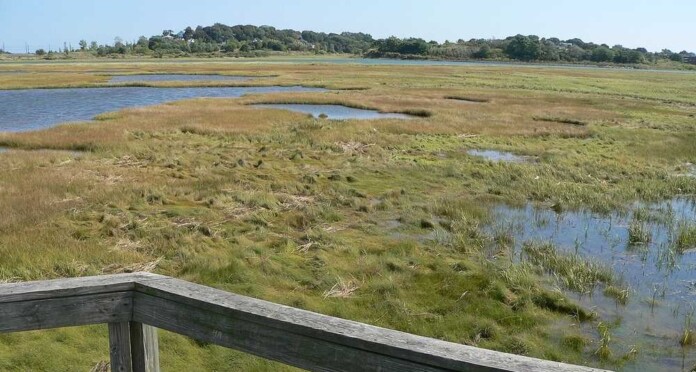
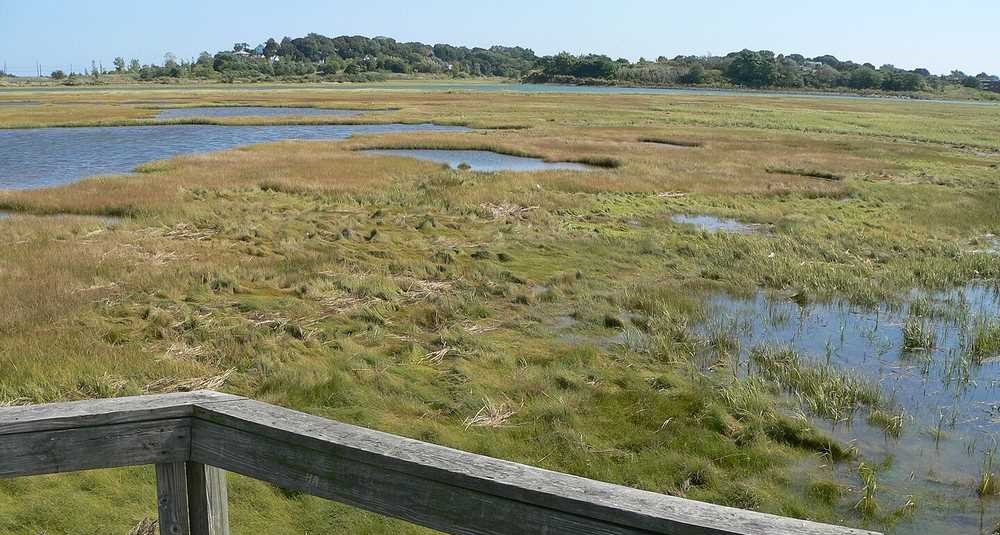
There are roughly 1,000 native bird species in the 50 States, and if you stand long enough on the walkways of Boston’s Belle Isle Marsh Reservation, you could see around one-fourth of them.
This protected Mid-Atlantic salt marsh remnant has recorded an astonishing 271 species of birds. It offers Bostonians a cool, breezy refuge of salty air and bird calls not far from Logan International Airport.
It’s the only remaining salt marsh in city, which was once surrounded by them. It protects neighborhoods from coastal erosion, absorbs storm surges, and delights the community who campaigned to protect it in the 1980s in the early days of the environmentalism movement.
“You can be out there on the main street then you come in here and you’re in a different place in a different time,” Heather Famico of the Department of Conservation and Recreation (DCR) told CBS News Boston.
The 359-acre marsh is nestled between the urbanized cities of Boston and Revere where it serves as a much-needed respite for migrating birds and as a habitat for many species including some on the Endangered Species List, while providing a beautiful and rare open green space to relax in.
That description was made by the Friends of Belle Isle, a grassroots advocacy group that formed in the 1980s when salt marshes, then a more common feature of the greater Boston landscape, were disappearing.
Belle Isle was looked at for development, but the organization prevented that from happening.
MORE BIRDING STORIES:
- Record Number of 736,000 Sandhill Cranes Flock to Nebraska in Spring Migration–with No Bird Flu
- Birdwatchers in 201 Countries Break World Record Documenting 7,800 Species in a Single Big Day
- Birds Sing Anew After Residents of New Orleans Ninth Ward Restore 40-Acre Wetland to Historic Glory
Longtime readers will know that GNN breaks for birders, and here one has a chance of spotting threatened and endangered birds like the least bittern, short-eared owl, and king rail. Other species like the saltmarsh sparrow, Virginia rail, and American oystercatcher, are all considered to have special conservation interest.
“It’s a cool oasis in a hot city. We need this,” said Kannan Thiruvengadam from the Friends of Belle Isle. “We need to be out here, enjoying, appreciating, advocating and learning what it is that we need so we can then protect it.”
WATCH the story below from CBS Boston…
SHARE This Great Opportunity To Get Outdoors With Bostonians You Know…
Archaeologists Unearth Treasure-Filled Tomb of the First Ruler in This Mayan Metropolis


A major breakthrough in Maya archaeology had been made down in Belize, as the royal tomb of a major city’s first-known ruler is discovered by a husband-wife archaeology team.
Buried with elaborate jade, ceramics, and symbolic artifacts, the tomb offers unprecedented insight into early Maya royalty and connections with the non-Mayan Mexican city-state of Teotihuacan.
Caracol was a metropolis of its time in the lower Yucatan Peninsula, and one of the first great Mayan cities of the Classical period.
Its connection with Teotihuacan is key to the story of this discovery and the story of the life of Te K’ab Chaak, a warrior-king whose remains were found by excavations led by Arlen and Diane Chase, archeologists from the University of Houston who have been working at Caracol, among other sites, for 40 years.
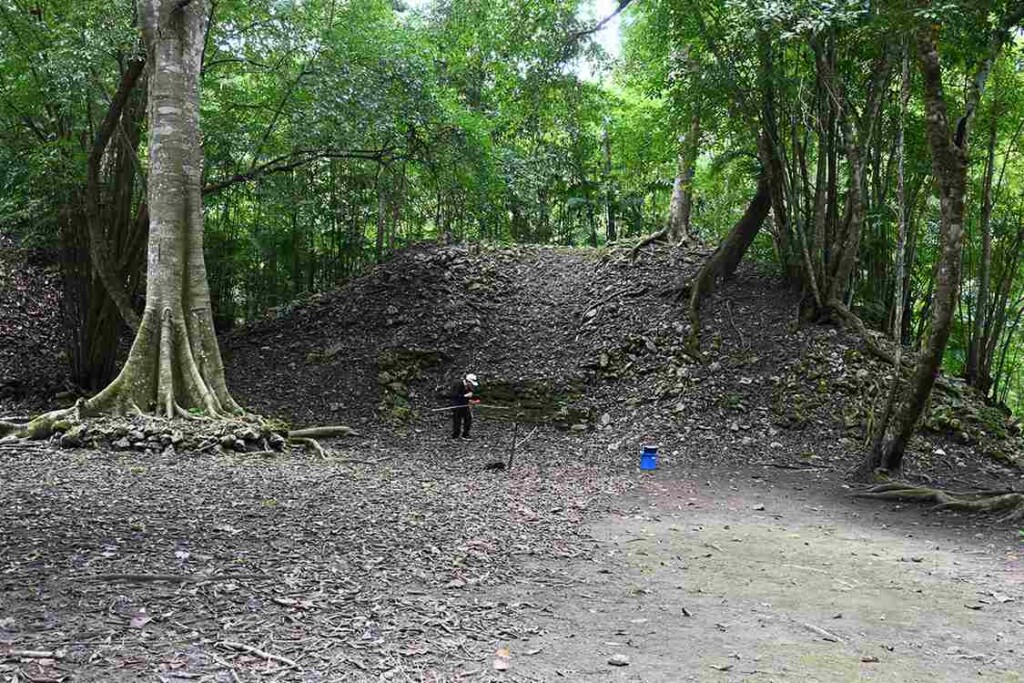
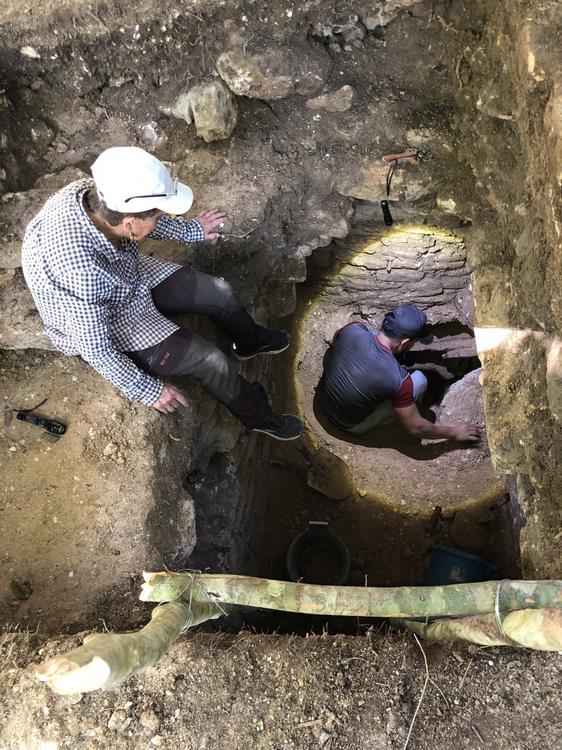
They began excavation season by returning to a site that was first dug in 1993—the northeast acropolis, where burial chambers had been found previously. Striking through the floor of the first burial chamber revealed that it was also the ceiling of deeper, older set of tombs, one of which was filled with grave goods.
11 richly-decorated ceramic vessels along with jade earflares, a mosaic jadeite funerary mask, carved bone items, and loads of red pigment left no shadow of a doubt that Diane and Arlen had turned up a “one-percenter.”
“This guy is a one-percenter and that’s why he has so many vessels and three sets of jade earflares in that chamber,” Arlen, a professor of comparative cultural studies, said in a statement on the discovery released by his university.
“The Early Classic period is the time when the rulers assert the fact that they oversee everything, completely distant from the rest of the population. That changes at the end of the Early Classic period, especially in Caracol, when, after the successful warfare against Tikal, they start to share the wealth with the general population. But not this person.”
The northeast acropolis was still covered in trees and earth and completely invisible in aerial surveys, but standing next to it, the manmade nature of the structure becomes clear.
Diane said in a video interview that across their careers, one set of jade earflares is rare, much less three. When you add in a jadeite death mask, something she and her husband have found only on one other occasion, you suddenly get the sense of the power and influence of this person. Additionally, much of the tomb floor and walls were covered in cinnabar.
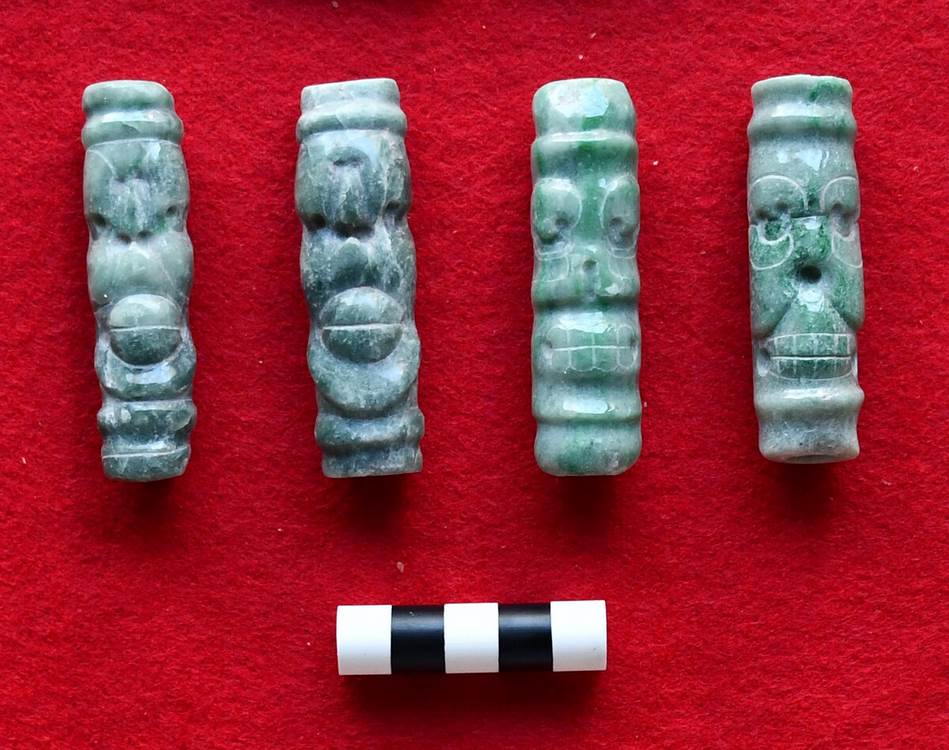
“You’re dealing with some of the highest royalty when the things get covered in cinnabar, which is red,” said Arlen. “So everything is colored red like the rising sun in the east.”
Ascending to the throne in 331 CE, Te K’eb Chaak ruled over a city larger than the metropolitan footprint of the modern-day Belize capital, if such a thing can be believed. He lived a long time, as his skull was void of all teeth. Caracol was a center of trade, and Arlen’s assertion that he commanded and controlled that trade is backed up by iconography found on one of the ceramic vessels.
Atop the lid of one is a depiction of Ek Chuah, the Maya god of traders, surrounded by offerings. Ek Chuah is not seen almost at all in Early Classic Mayan iconography. Yet there he was, Arlen said in the same video, at 350 CE.

A different kind of Mexico
“Maya carved stone monuments, hieroglyphic dates, iconography, and archaeological data all suggest that widespread pan-Mesoamerican connections occurred after an event in 378 CE referred to as ‘entrada,’” said Diane Chase in the statement.
This is the crux of the discovery from the point of view of the archaeologist, who wants to uncover as much information as possible about life in the past. While the public breaks for the jade death mask and colored ceramic vessels, Te K’ab Chaak offers a rare opportunity to explore life in the Mayan political world before this ‘entrada.’
30 years before Te K’ab Chaak took the throne in Caracol, Teotihuacan, some 640 miles northward, was already a massive trading hub that dealt in many products across Mesoamerica.
ELSEWHERE IN SOUTH AMERICA: Study Reveals Vast Aztec Trade Networks Behind Mexico’s Pre-Colombian Obsidian Hoards
In Caracol, two other tombs were found with Te K’ab Chaak in the northeast acropolis, including one which contained cremated remains of several people radiocarbon dated to 350 CE.
Fifteen pristine blades of green obsidian from Pachuca, Mexico, (north of Teotihuacan) several pottery vessels also likely came from central Mexico, and a carved atlatl projectile tip—atypical for the Maya but typical for a Teotihuacan warrior—were included in the cremation.
The cremation itself and its placement in the center of a residential plaza are also more typical practices for a high-status Teotihuacano and do not accord with standard Maya burial practices.
Based on other ceramics in this cremation, the main individual was likely a Caracol royal family member that had adopted central Mexican ritual practices. This individual may even have served as a royal Maya envoy who had lived at Teotihuacan and returned to Caracol.
In other words, relations between these two great population centers, separated by roughly 153 days of travel on foot through the jungle, were already firmly ensconced by the reign of Te K’ab Chaak—a whole generation before such relations and connections are generally thought to have been established.
MORE MAYA ARCHEOLOGY: Newly-Found Metropolis with Pyramids Shows We’re Not Even Close to Discovering Every Mayan City
The royal dynasty founded by Te K’ab Chaak continued at Caracol for over 460 years, and the connections between the two regions were undertaken by the highest levels of society during that time.
It presents the picture of a bustling and interconnected Mexico long before the modern world arrived with its roads, airports, and skyscrapers.
“We need to sort of rethink how we view the past when we get finds like this,” Arlen concludes.
WATCH the video below from the university…
SHARE This Amazing Insight Into Classical Mexico With Your Friends…
Pine Martens Breeding in Southwest England for the First Time in Over 100 Years – LOOK
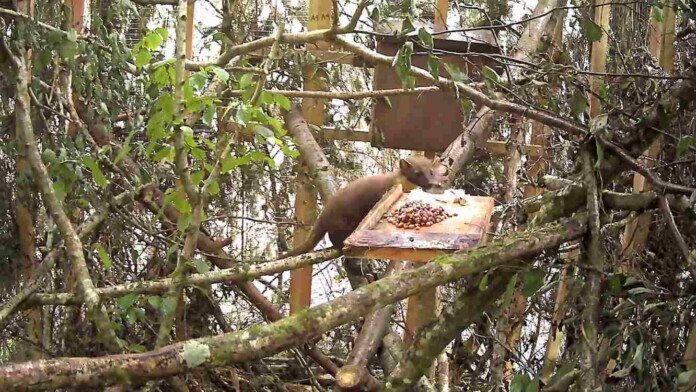
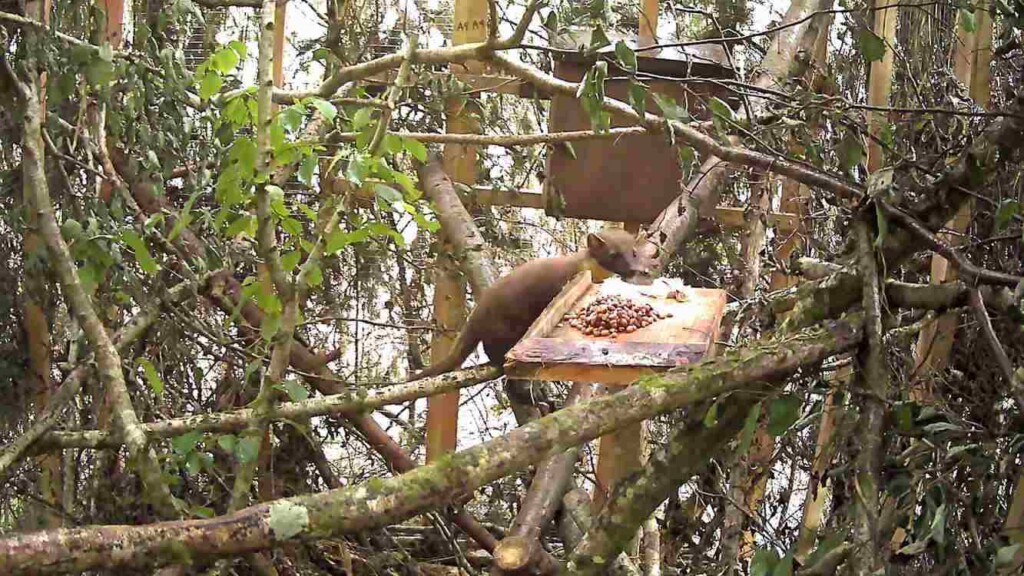
Camera trap footage has conservationists celebrating what are probably the first pine martens born in southwest England in over 100 years.
Their births follow a “pioneering” reintroduction project that sought to rebalance the predator-prey dynamics of a wild England by bringing back these arboreal, small game specialists.
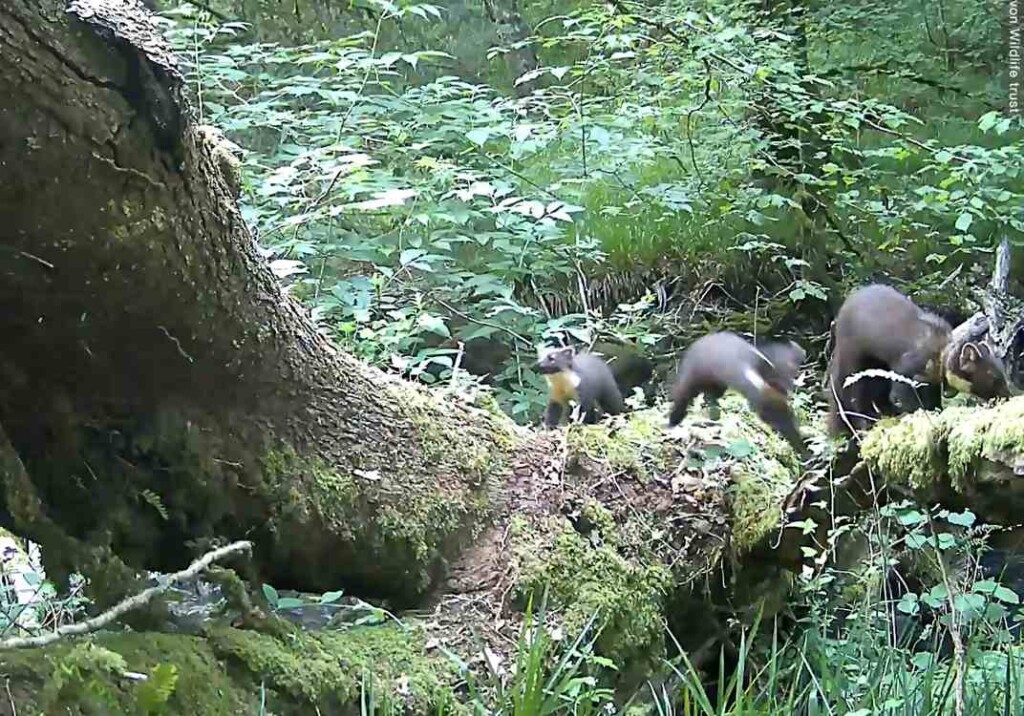
The project saw the release of 15 pine martens, eight females and seven males, at undisclosed locations in England’s southwest back in autumn 2024. Now camera trap footage has revealed the first glimpses of kits, recorded at a secret site in Dartmoor National Park in June this year.
Devon Wildlife Trust’s Tracey Hamston, who leads the Two Moors Pine Marten Project, described the news as a “historic moment” and admitted the team were “ecstatic” when they saw the footage.
“When our volunteers discovered the footage of pine marten kits on one of our trail cameras we were ecstatic,” she said. “This is a historic moment for the return of a native animal and for the future of the southwest’s woodlands.”
“To have breeding pine martens back after a century’s absence signals a positive step in nature’s recovery. It’s also testament to the many hours work undertaken by the project partnership and dozens of local volunteers,” she concluded.
Two videos show the adorable youngsters exploring their new home, and in another, three kits are seen chasing each other through foliage and up a bank in their Dartmoor woodland home, before disappearing from sight.

Another film shows the same mother with two kits as they scamper along a fallen tree close to a fast-running stream.
Part of the Mustelidae family that includes weasels and ferrets, martens were once common in the southwest of England but fell victim to the loss of their favored woodland habitat and the fur trade.
Since the animals’ release in September 2024, the team has spent hundreds of hours tracking the movements of the 15 pine martens, installing den boxes for them, and checking camera traps to learn more about their whereabouts and behavior.
“Staff and volunteers have been checking camera traps for several months and over the past few weeks have been eagerly anticipating seeing kits,” said Jack Hunt, Woodland Trust Assistant Site Manager at Devon said. “This sighting is wonderful news.”
Female pine martens usually give birth to two or three kits in spring, and the youngsters spend their first seven to eight weeks hidden in their dens before emerging in early summer. They then stay with their mothers through autumn and into winter, before becoming fully independent the following spring.
The animals have been brought back to the region thanks to the work of the Two Moors Pine Marten Project: a partnership of seven organizations including among others Dartmoor National Park Authority and Devon Wildlife Trust.
MARTENS BACK IN THE US: American Marten May Be Set for Return to Pennsylvania Forests After 100 Year Absence
Project experts anticipate that the southwest’s population should now grow gradually over coming years. Their nocturnal habits and elusive nature mean sightings are likely to be rare.
The project is now preparing for a further release of animals in autumn 2025. After rigorous health checks by vets, the animals (likely to number around 20 in total) will be released with landowner permissions at secret locations on Exmoor, the other “moor” in the “Two Moors” Pine Marten Project.
MORE REWILDING PROJECTS: ‘Give Nature Space and it Will Come Back’: Rewilding Returns Endangered Species to UK Coast
“Exmoor’s woodlands are well-suited to the animals,” said Hamston. “Their arrival in early autumn will coincide with the local natural harvest of wild berries—food which pine martens love.”
The Two Moors Pine Marten Project is keen to hear from anyone who does come across one of the beautiful animals in Devon; people can get in touch on their website.
SHARE This Cute And Important Animal Returning To England…
Good News in History, July 15
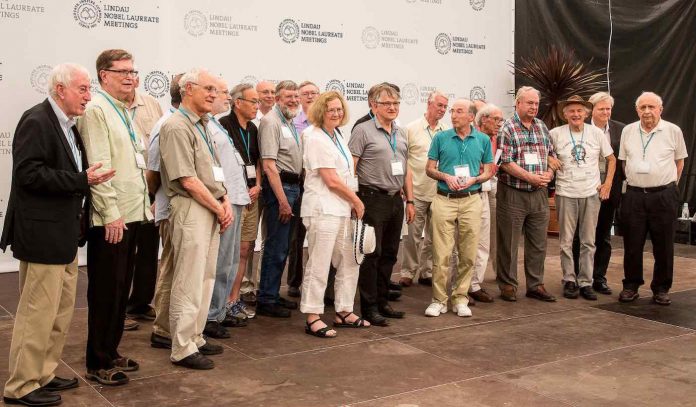
70 years ago today, 18 Nobel laureate scientists signed the Mainau Declaration publicly decrying nuclear weapons. Within one year, 34 others—mostly chemists and physicists—joined the German nuclear scientists Otto Hahn and Max Born in calling for an end to perilous radioactive bombs. READ the text of the Declaration… (1955)
Common Bacteria Can Turn Plastic Bottles into the Painkiller Acetaminophen/Paracetamol
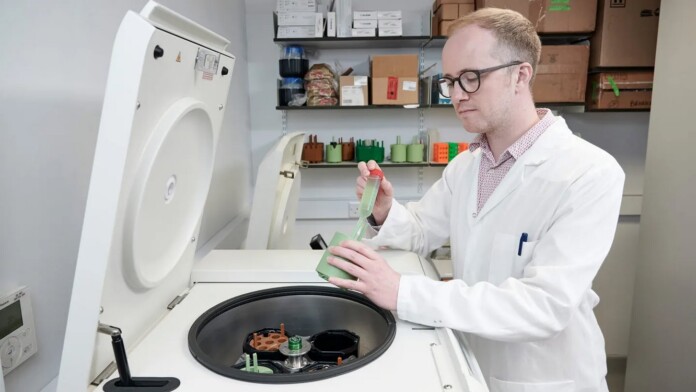
Scientists in Scotland recently engineered bacteria to be able to turn plastic into a precursor to the painkiller acetaminophen, also known as paracetamol.
Though far from scalable at the moment, the reaction nevertheless underpins a potential starting point for greener production and recycling systems, as acetaminophen is produced with fossil fuels, and plastic pollutes the environment.
The precursor compound, known as para-aminobenzoic acid (PABA), can be made endogenously by Escherichia coli bacteria, and so those used in the study had this ability removed through genetic engineering.
In this way, the bacteria needed to perform a Lossen rearrangement—or the process by which a nitrogen bearing molecule from the environment is converted to PABA, which is also the precursor to the vitamin B9, or folic acid.
The molecule selected was polyethylene terephthalate (PET), one of the most common plastic polymers used today. Forming plastic water and beverage bottles, packaging, and other items, 350 million tons of this strong yet lightweight plastic turns into waste and pollution every year.
At room temperature, 92% of the PET was converted over 48 hours by the engineered bacteria into PABA—the active ingredient in acetaminophen/paracetamol, which themselves are the active ingredient in name brand painkillers like Tylenol and Panadol.
MORE STORIES LIKE THIS: Plastic-Recycling Enzyme Discovered in Compost Heap Close to Commercialization Through German Startup
The factories that create these medications are often powered by fossil fuels, but the E. coli performed the rearrangement without any detectable carbon emissions. The PET plastic, meanwhile, was recycled in the solution.
“This work demonstrates that PET plastic isn’t just waste or a material destined to become more plastic, it can be transformed by microorganisms into valuable new products, including those with potential for treating disease,” said Professor Stephen Wallace
UKRI Future Leaders Fellow and Chair of Chemical Biotechnology who participated in the research and co-authored the paper presenting it.
ALSO CHECK OUT: New Species of Bacteria Can Act as Electric Wiring and Aid in Pollution Cleanup – and Much More
“Based on what we’ve seen, it’s highly likely that many—or even most—bacteria can perform these kinds of transmutations,” Wallace said. “This opens up a whole new way of thinking about how we might use microbes as tiny chemical factories.”
SHARE This Bacterial Alchemy With Your Friends On Social Media…
New Bamboo Plantations Are Healing Villages Choked by Toxic Ash from Coal Plants in India
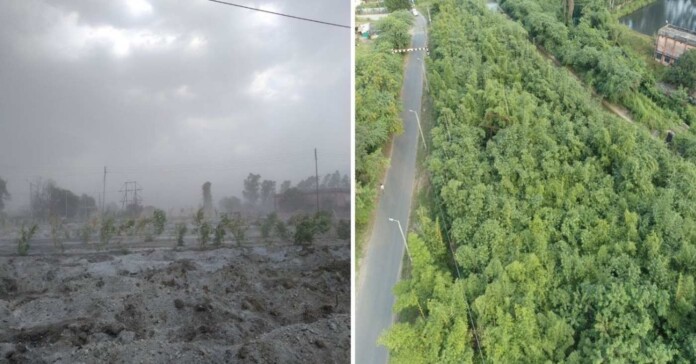
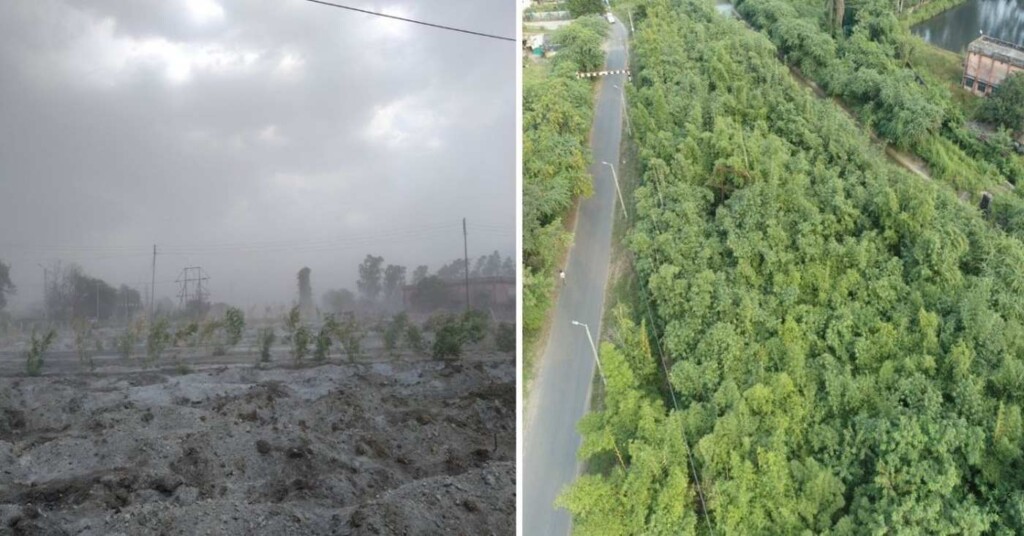
In Western India, bamboo is being used to rejuvenate lands choked with ash from thermal power plants.
One of the largest coal-burning nations owing to its large population and drive for economic development, India has nevertheless likely contaminated thousands of acres of marginal and arable land with “fly ash.”
Fly ash is the heavy particulate matter ejected during coal and wood burning, and in the case of coal, the presence of heavier minerals like silica make farming under its influence all but impossible.
In the Indian state of Maharashtra, Dr. Lal Singh from the National Environmental Engineering Research Institute (CSIR) has spent 12 years pioneering a 5-step program to restoring fly ash-degraded lands using bamboo and soil amendments.
Working in the Vidarbha region, three thermal power plants had significantly polluted the surrounding lands. In villages like Ubagi and Khapari, 24 acres of small-holder farms were covered covered in ash, strangling the livelihoods of any who would otherwise farm there.
“The fly ash has a component called ‘silica’ which usually settles on the crops,” Dr. Singh tells The Better India in an exclusive interview. “This cut down the productivity of the crops. Bamboo is a plant that attracts silica, and this helps in making sure crops are not affected as the bamboo sites attract most of the silica in the air.”
There are over one-thousand species of bamboo, and one that could help one village may not be suitable for another. Dr. Singh has worked long and hard, step by step, tree by tree, to develop a replicable approach.
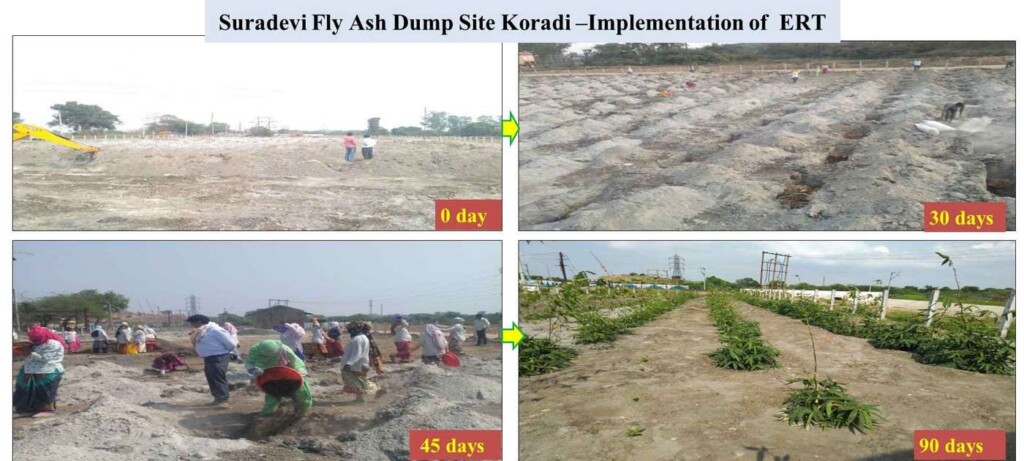
The first is to identify the active contaminant: silica in many cases, but not all. The next is a screening of the potential plants tolerant of the contaminant. Then the excess ash is removed, the soil is amended and inoculated with fungal and microbial strains, before eventually the bamboo is planted.
MORE STORIES LIKE THIS:
- 12-Year-old Girl Plants 150,000 Trees in India, Becoming a Reforestation Leader
- Man Revives Iconic Indian Lake by Converting Lake Weed Infestation into Organic Fertilizer Business
Up until now, Dr. Singh’s work has primarily taken place in Maharashtra. He’s currently expanding his method to sites in UP and Odisha.
“After Odisha, our team will work on lands in Uttar Pradesh’s Anpara, which is under the fly ash threat and is affecting a water reservoir. We plan to develop a green belt around Anpara to protect the reservoir and prevent water pollution,” Dr. Singh said.
SHARE This Great Work In A Polluted Corner Of The World—A Man Making A Difference…
Peru Debuts Discovery of Ancient City Dating Back 3,800 Years Ago and Ready for Visitors

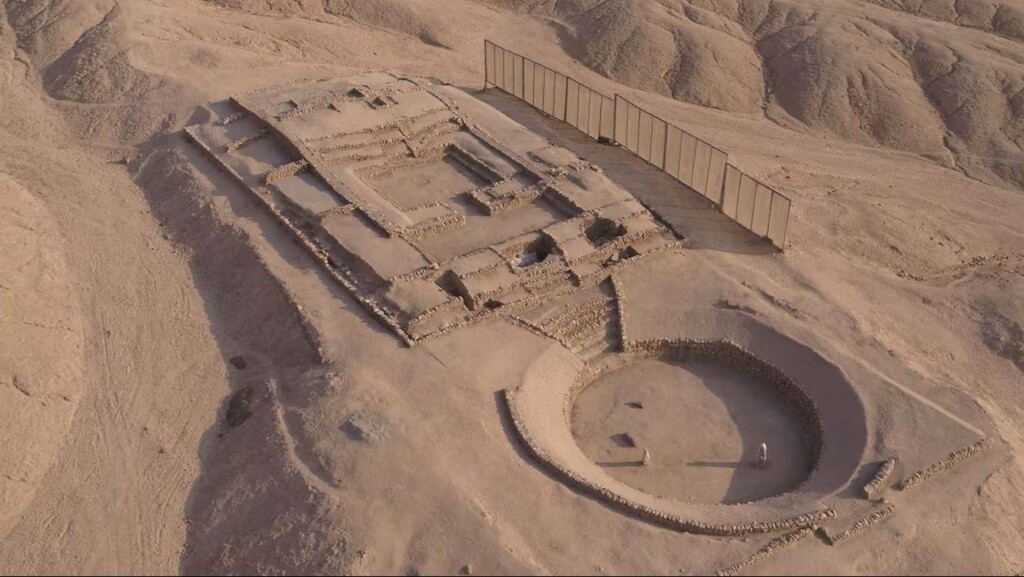
Following eight years of excavations, research, and interpretation, a newly-discovered ancient settlement in Peru has been opened to visitors.
First inhabited some 3,800 years ago north of the modern-day capital Lima, Peñico is believed to have linked remote Andean mountain settlements with the cultural, religious, and economic hubs of Caral by the coastline.
Caral-Supe is one of the oldest civilizations in the world, and oldest-known in the Americas, and Peñico likely inherited that legacy and wealth after Caral declined.
18 buildings have been identified in Peñico, which sits at 1,800 feet above sea level, including one monumental public center where higher order goods such as conch shell instruments and clay figurines were uncovered.
“This urban center developed following the cultural tradition of the Caral,” said Ruth Shady Solis, lead researcher and director of the Caral Archaeological Zone (ZAC), which is attached to Peru’s Ministry of Culture, in a press release.
“Due to its strategic location, it connected coastal and mountain towns of Supe and Huaura, as well as those living in the Andean-Amazonian and the high Andean region”.
Radiocarbon dating has shown that the oldest periods of activity in the settlement seem to correspond with the latest periods of activity in Caral, suggesting perhaps that the latter’s decline was linked to the former’s rise. There would have been some overlap of though, as the statement explains.
“After the loss of prestige of the first and oldest major cities of the Supe Valley, such as the Sacred City of Caral, the inhabitants of Peñico continued to actively participate in the networks of social and economic interaction consolidated in earlier times,” it read.
ANCIENT AMERICAS:
- Hundreds of Newly-Found Structures Reveal True Scope of Hidden Pre-Incan Civilization
- Exceptionally Well-Preserved Remains of a 5,000-Year-Old Woman from Elite Coastal Culture Found in Peru
- Mystery of Nazca Lines Deepens as AI Survey Doubles Number of Geoglyphs and Alters Their Meaning
- Circular Stone Plaza Moves Up Start of Stone Age Construction in the Andes on Par with Stonehenge
A similar passing of traditions occurred in Ancient Mesopotamia, when Eridu the region’s first city and religious center gave way in importance to Uruk.
“It is possible that the prestige achieved by the Peñico society in the valley, added to its function as a node in the exchange network, was linked to the extraction and circulation of hematite. This mineral, used to make a red pigment, had a high symbolic importance within Andean cosmology.”
The site is now open to archaeologically-inclined visitors, and includes trails through the ancient ruins, an interpretation center, and attached museum.
SHARE This Great New Reason To Visit Peru With Your Friends…
All 31 Workers Escape Unharmed from Recent LA Tunnel Collapse


If just a few more feet of loose soil fell from the tunnel ceiling, 27 Los Angeles digging contractors would have been trapped.
As it happened, tragic headlines were denied those last few feet, and with the help of their comrades on the other side, all 27 men escaped from last Thursday’s partial tunnel collapse with their lives.
The contractors were employees of Flatiron Dragados, a firm that’s currently tunneling 450 feet below the city of Los Angeles on a major, half-billion dollar sanitation project dubbed Clearwater. At 18-feet wide and 7-miles long, it’s an immense undertaking to transport treated wastewater from a plant in Carson to the ocean.
Around 8 p.m. local time, the soil in the ceiling portion of the tunnel began collapsing down behind 27 men who had the large tunneling machine in front of them. The collapse occurred 6 miles from the only access point to the tunnel.
Various first response and emergency services rushed to the scene, including all the city’s urban search and rescue teams, but fortunately there was a space of about 3 to 4 feet through which the 27 men crawled to escape, all while 4 of their colleagues on the other side worked to enlarge the gap.
An hour later, all 31 walked out unharmed.
“I just spoke with many of the workers who were trapped,” Mayor Karen Bass wrote in a post to X. “Thank you to all of our brave first responders who acted immediately. You are LA’s true heroes.”
Tim McOsker, the current councilman for Los Angeles City Council District 15 who sits on the sanitation board, said the men, mostly engineers and electricians, were highly-trained by Flatiron Dragados. They recognized the situation and responded orderly and effectively to escape.
LOS ANGELES NEWS: First High-Speed Rail Line in US Breaks Ground: Brightline Vegas to LA at 200 mph to Save Thousands in Emissions
“This is a highly technical, difficult project, and they knew exactly what to do. They knew how to secure themselves,” said McOsker, said at a news conference. “They knew all of the signals as we spoke to them.”
The California Occupational Safety and Health Administration, also known as Cal/OSHA, said it is investigating the collapse. The project will be put on hold until the investigation is concluded.
MORE EMERGENCIES DEFEATED: Final Crew Members Are Pulled From Capsized Cargo Ship After Rescuers Hear Tapping Inside the Engine Room
Tunnels like these are built at the same time they’re being dug, with cement walls and ceilings being laid after the boring machine has passed. Speaking with CNN, Robert Ferrante, chief engineer and general manager of the Los Angeles County Sanitation Districts, said the cause of the incident was “squeezing ground” which occurs when the tunneling and cement laying deforms the structure of the soil considerably.
Assuming no major delays from the incident, the Clearwater Project, meant to replace aging wastewater infrastructure, will be opened by 2028.
WATCH the video on CBS News…
SHARE The Story Of These Relieved Workers And Their Near-Miss Deep Underground…
“Imagination and fiction make up more than three quarters of our real life.” – Simone Weil

Quote of the Day: “Imagination and fiction make up more than three quarters of our real life.” – Simone Weil
Photo by: яғ ★ design – CC license
With a new inspirational quote every day, atop the perfect photo—collected and archived on our Quote of the Day page—why not bookmark GNN.org for a daily uplift?

Good News in History, July 14

10 years ago today, Earth’s scientists completed the first survey of our solar system as the New Horizons spacecraft completed a flyby of distant Pluto. It took ten years for the little space probe to arrive at our most distant neighbor, and is now beginning a long cold journey out into the great beyond, never to return. Along with Pluto, New Horizons also imaged its moons of Nix, Styx, Kerberos, Charon, and Hydra. READ more of what it discovered… (2016)
2 Billion-Year-Old Moon Rock Found in Africa Plugs a Huge Gap in Lunar History

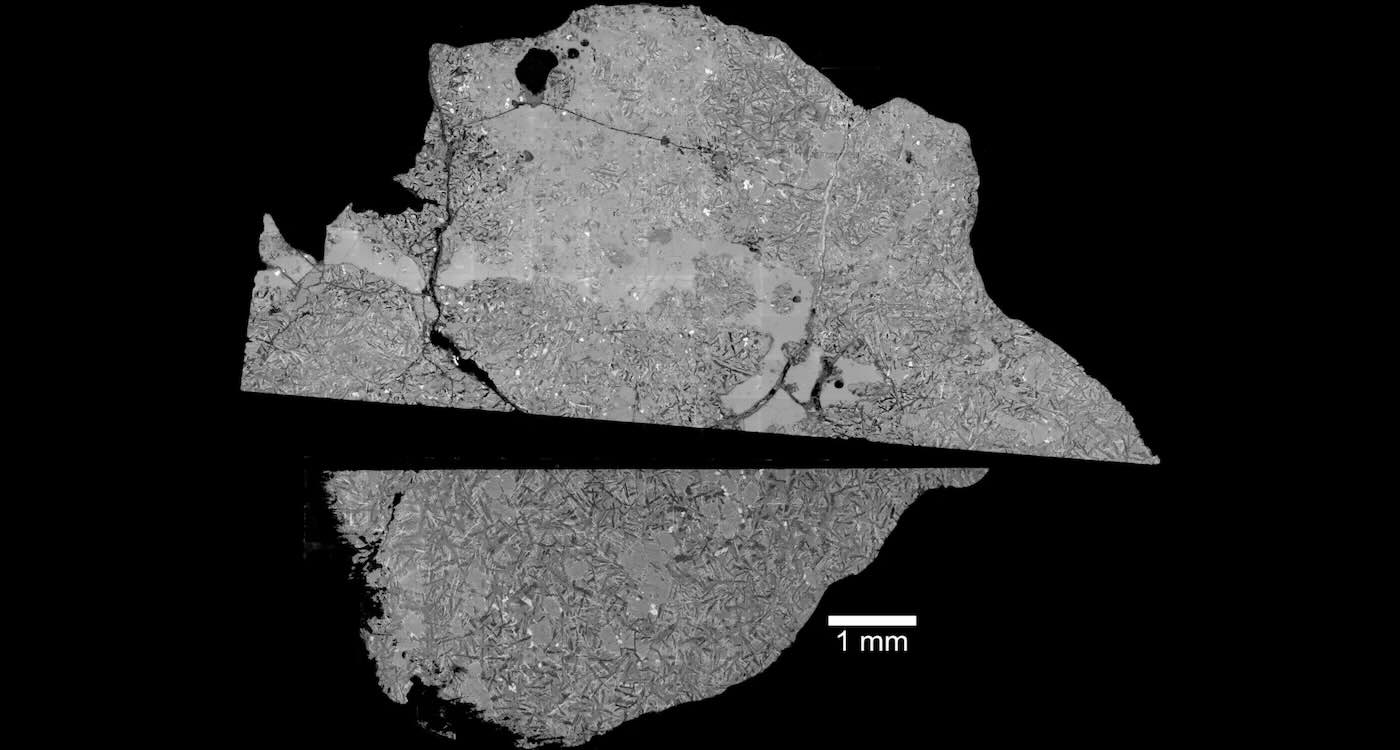
An ancient Moon rock that fell to Earth in Africa is rewriting what we know about lunar volcanoes. The rare meteorite with its unique chemical makeup bridges a billion-year gap in lunar rock samples, and suggests the Moon had internal heat sources that persisted for ages.
The 2.35 billion-year-old meteorite was discovered in Africa in 2023 and reveals that the Moon was volcanically active far longer than previously thought.
The research, presented this week at the world’s foremost geochemistry gathering, the Goldschmidt Conference in Prague, offers fresh insights into how the Moon’s interior evolved.
The analysis from the University of Manchester, UK, dates the rock’s formation to a period from which few lunar samples exist, making it the youngest basaltic lunar meteorite discovered on Earth.
Its rare geochemical profile sets it apart from those returned by previous Moon missions, with chemical evidence indicating it likely formed from a lava flow that solidified after emerging from deep within the Moon.
Dr. Joshua Snape, who presented the research before 4,000 attending delegates called the sample serendipitous.
“It just happened to fall to Earth and reveals secrets about lunar geology without the massive expense of a space mission,” he said in a media release.
“Lunar rocks from sample missions are fantastic in the insights they provide us, but they are limited to the immediate areas surrounding those mission landing sites.”
By contrast, this rock’s melted glassy pockets and veins suggests it was jettisoned to Earth after the impact of a meteorite or asteroid, which could have happened anywhere on the Moon’s surface.
“The age of the sample is especially interesting because it fills an almost billion-year gap in lunar volcanic history,” said Dr Snape. “It’s younger than the basalts collected by the Apollo, Luna and Chang’e 6 missions—but older than the much younger rocks brought back by China’s Chang’e 5 mission.”
LOOK SKYWARD: Two Meteor Showers Will Peak on the Same Night in July and Be Visible in the Southern US
Containing relatively large crystals of the mineral olivine, the rock is a volcanic type called olivine-phyric basalt. It contains moderate levels of titanium and high levels of potassium.
The Pb isotope composition of the rock – a geochemical fingerprint retained from when the rock formed – points to it originating from a source in the Moon’s interior with an unusually high uranium-to-lead ratio. These chemical clues may help identify the mechanisms that have enabled periods of ongoing internal heat generation on the Moon.
“Its age and composition show that volcanic activity continued on the Moon throughout this timespan, and our analysis suggests an ongoing heat generation process within the Moon, potentially from radiogenic elements decaying and producing heat over a long period.
“Moon rocks are rare, so it’s always interesting when we get something that stands out and looks different to everything else.”
DID YOU KNOW? ‘Starquakes’ Inside Universe’s Densest Objects May Have Seeded Earth with Large Amounts of Gold
“This particular rock provides new constraints about when and how volcanic activity occurred on the Moon.
“There is much more yet to learn about the Moon’s geological past, and with further analysis to pinpoint its origin on the surface, this rock will guide where to land future sample return missions.”
HAIL ‘SCIENCE BOY’: When Car’s Windshield is Smashed, Clever Son Spots Nearby Rock and Finds a Meteorite is the Culprit
The 311-gram meteorite (equaling around 11 ounces) is one of 31 lunar basalts officially identified on Earth, according to the researchers who were funded by the Royal Society. The team plans to publish their findings in full in a peer-reviewed journal later this year.
EDUCATE SPACE GEEK PALS By Sharing This on Social Media…