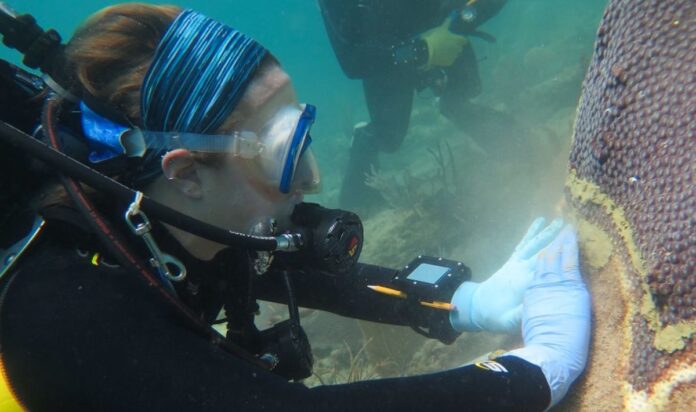
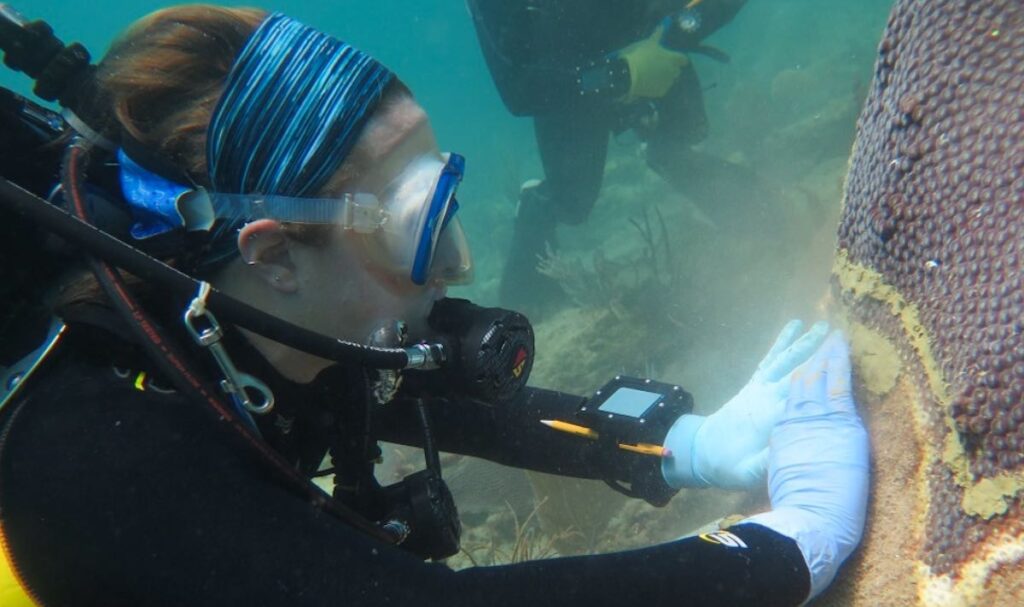
Joshua Voss PhD –FAU Harbor Branch, Coral Reef and Health Ecology Lab
Diseases continue to be a major threat to coral reef health, but a new study by Florida researchers reveals how a common antibiotic used to treat bacterial infections in humans is showing great promise.
Joshua Voss PhD –FAU Harbor Branch, Coral Reef and Health Ecology Lab
A recent outbreak of an infectious disease called stony coral tissue loss has affected 20 different stony coral species. First discovered in 2014 in Miami-Dade County, the disease has spread throughout Florida’s Coral Reef and into parts of the Caribbean.
In treating disease-affected Montastraea cavernosa coral colonies (the Great Star Coral widely found in the Atlantic), the Harbor Branch Oceanographic Institute of Florida Atlantic University found that an amoxicillin treatment had a 95 percent success rate at healing individual disease lesions.
Though, it did not necessarily prevent treated colonies from developing new lesions over time, preserving M. cavernosa colonies is important due to its role as a dominant reef builder in Florida’s Coral Reef.
“There are three possible scenarios that may explain the appearance of new lesions in the amoxicillin treated lesions of the corals that had healed in our study,” said Erin N. Shilling, M.S., the study‘s author.
“It’s possible that the causative agent of stony coral tissue loss disease is still present in the environment and is re-infecting quiesced colonies. It also could be that the duration and dose of this antibiotic intervention was sufficient to arrest stony coral tissue loss, but insufficient at eliminating its pathogens from other areas of the coral colony.”
“Success in treating stony coral tissue loss disease with antibiotics may benefit from using approaches typically successful against bacterial infections in humans—for example using a strong initial dose of antibiotics followed by a regimen of smaller supplementary doses over time,” said Joshua Voss, Ph.D., senior author, an associate research professor at FAU Harbor Branch and executive director of the NOAA Cooperative Institute for Ocean Exploration, Research, and Technology.
“Further efforts are needed to optimize dosing and delivery methods for antibiotic treatments…and scale up intervention treatments effectively.”
The study was conducted approximately 2 kilometers offshore from Lauderdale-by-the-Sea in Broward County. Colonies were monitored periodically over 11 months..
This research is a collaboration that includes the Disease Advisory Committee (DAC) organized by the Florida Department of Environmental Protection and NOAA, of which Voss and Shilling are members.
The study, published in Scientific Reports, was funded by the Florida Department of Environmental Protection, the Environmental Protection Agency, and the Harbor Branch Oceanographic Institute Foundation.
Dive Over to Social Media and Share the Breakthrough…
Quote of the Day: “I’m an optimist because I know how sad, how challenging, how miserable, how unfair, how unkind life can be—and I think a pessimist is somebody who finds this out new every morning.” – Peter Ustinov
Photo: by Emma Simpson
With a new inspirational quote every day, atop the perfect photo—collected and archived on our Quote of the Day page—why not bookmark GNN.org for a daily uplift?
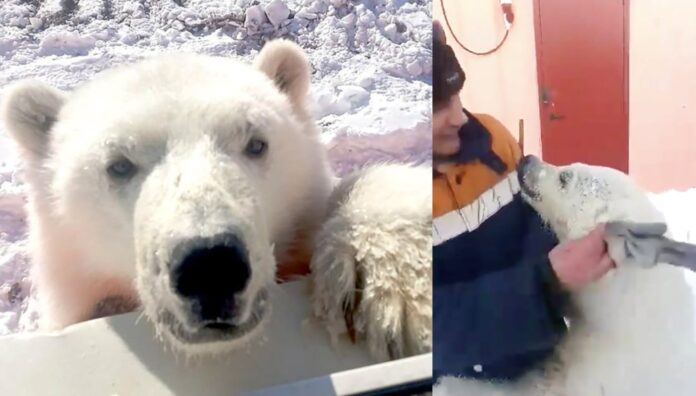
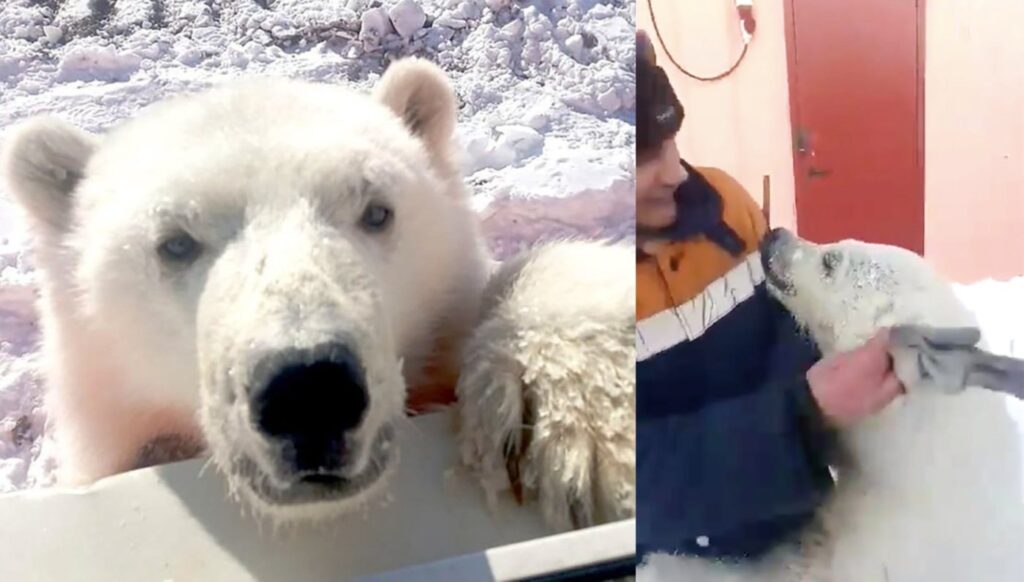
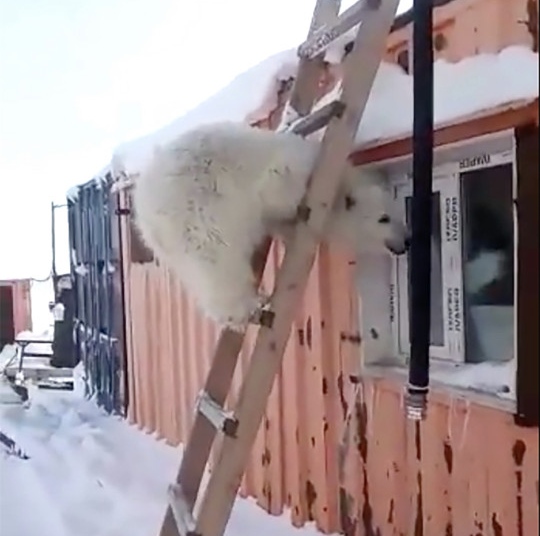
When Arctic gold miners discovered a lost and helpless bear cub whose mother had died, it didn’t take long for her to melt their hearts.
As the orphaned cub grew to trust the men, the furry guest soon felt like a friend to the workers on remote Severnaya Zemlya archipelago. She even loved bear hugs.
Andrey Gorban/Royev Ruchey Zoo
But with the crew scheduled to leave the base when their work contract came to an end, the vulnerable bear would be left to fend for herself. Between the threat from other predators and her lack of adequate hunting skills, she wouldn’t manage to survive without help.
Fearing they’d only delayed the inevitable, the miners hoped the large store of refuse they’d left behind would be enough to sustain their beloved pal until they could organize a rescue mission for her.
Having had no means of outside contact while at the base, the men reached out Moscow Zoo for guidance at their earliest opportunity.
“All we knew was that the cub’s mother died and that it was months ago when it discovered the base attracted by the smell of food,” Andrey Gorban, director of Royev Ruchey Zoo in Krasnoyarsk told the Siberian Times.
Andrey Gorban/Royev Ruchey Zoo
Following protocol, Gorban contacted Russian wildlife authorities to determine a course of action. After deciding the cub was incapable of being on her own, a rescue party was sent to bring her to the zoo.
“For right or wrong, they fed the endangered animal and through that tamed it,” Gorban explained. “The shift workers saved its life, the cub had no chance to survive.”
So, while it was technically against the law for the miners to care for the bear, all things considered, at least this now-not-so-little cub is receiving the help she needs, and is being cared for in the way that suits her circumstances.
(MEET the polar bear cub in the Daily Mail video below.)
SHARE This Polar Bear’s Story With Pals on Social Media…
North Carolina-based writer Judy Cole has a new rom-com murder mystery debuting at Amazon: And Jilly Came Tumbling After (from Red Sky Presents).
The evolving science of wisdom rests on the idea that wisdom’s defined traits correspond to distinct regions of the brain, and that greater wisdom translates into greater happiness and life satisfaction while being less wise results in opposite, negative consequences.
Scientists have found in multiple studies that persons deemed to be wiser are less prone to feel lonely while those who are lonelier also tend to be less wise.
In a new study, researchers at University of California San Diego School of Medicine take the connection between wisdom, loneliness, and biology further, reporting that wisdom and loneliness appear to influence—and/or be influenced by—microbial diversity of the gut.
The human gut microbiota is comprised of trillions of microbes—bacteria, viruses, fungi—that reside within the digestive tract. Researchers have known for a while about the “gut-brain axis,” which is a complex network that links intestinal function to the emotional and cognitive centers of the brain.
This two-way communication system is regulated by neural activity, hormones, and the immune system; alterations can result in disruptions to stress response and behaviors, said the authors, from emotional arousal to higher-order cognitive abilities, such as decision-making.
Past studies have associated gut microbiota with mental health disorders including depression, bipolar disorder, and schizophrenia, as well as personality and psychological traits regarded as key, biologically based components of wisdom.
Recent research has connected the gut microbiome to social behavior, including findings that people with larger social networks tend to have more diverse gut microbiotas.
The new Frontiers in Psychiatrystudy involved 187 participants, ages 28 to 97, who completed validated self-report-based measures of loneliness, wisdom, compassion, social support, and social engagement. The gut microbiota was analyzed using fecal samples.
Microbial gut diversity was measured in two ways: alpha-diversity, referring to the ecological richness of microbial species within each individual and beta-diversity, referring to the differences in the microbial community composition between individuals.
“We found that lower levels of loneliness and higher levels of wisdom, compassion, social support, and engagement were associated with greater phylogenetic richness and diversity of the gut microbiome,” said first author Tanya T. Nguyen, PhD, assistant professor of psychiatry at UC San Diego School of Medicine.
The authors said that the mechanisms that may link loneliness, compassion, and wisdom with gut microbial diversity are not known, but observed that reduced microbial diversity typically represents worse physical and mental health, and is associated with a variety of diseases, including obesity, inflammatory bowel disease, and major depressive disorder.
A more diverse gut microbiota may be less susceptible to invasion by outside pathogens, which could contribute to and help promote better resilience and stability of the community.
“It is possible that loneliness may result in decreased stability of the gut microbiome and, consequently, reduced resistance and resilience to stress-related disruptions, leading to downstream physiological effects, such as systemic inflammation,” the authors wrote.
“Bacterial communities with low alpha-diversity may not manifest overt disease, but they may be less than optimal for preventing disease. Thus, lonely people may be more susceptible to developing different diseases.”
The relationship between loneliness and microbial diversity was particularly strong in older adults, suggesting that older adults may be especially vulnerable to health-related consequences of loneliness, which is consistent with prior research.
Conversely, the researchers said that social support, compassion, and wisdom might confer protection against loneliness-related instability of the gut microbiome. Healthy, diverse gut microflora may buffer the negative effects of chronic stress or help shape social behaviors that promote either wisdom or loneliness. They noted that animal studies suggest that gut microbiota may influence social behaviors and interactions, though the hypothesis has not been tested in humans.
The complexity of the topic and study limitations, such as the absence of data about individuals’ social networks, diet, and degree of objective social isolation versus subjective reports of loneliness, argue for larger, longer studies, wrote the authors.
“Loneliness may lead to changes in the gut microbiome or, reciprocally, alterations of the gut milieu may predispose an individual to become lonely,” said Dilip V. Jeste, MD, Distinguished Professor of Psychiatry and Neurosciences at UC San Diego School of Medicine and senior author of the paper. “We need to investigate much more thoroughly to better understand the phenomenon of the gut-brain axis.”
We’ll be sure to share research updates about the fascinating potential links between what’s going on in the gut and what’s going on in the mind as they come in.
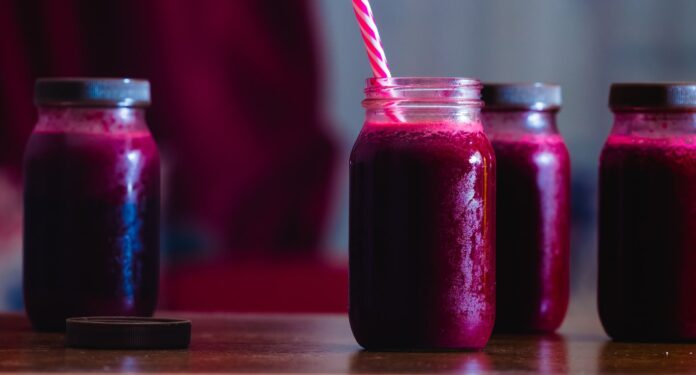
Drinking a certain root vegetable juice promotes a mix of mouth bacteria associated with healthier blood vessels and brain function, according to a new study of people aged 70-80.
Certain foods including lettuce, spinach, and celery are rich in inorganic nitrate, and many oral bacteria play a role in turning nitrate to nitric oxide, which helps to regulate blood vessels and neurotransmission, or chemical messages in the brain.
Older people tend to have lower nitric oxide production, and this is associated with poorer vascular (blood vessel) and cognitive (brain) health.
In a new University of Exeter study, 26 healthy older people took part in two 10-day supplementation periods: one with nitrate-rich beetroot juice and another with nitrate-free placebo juice, which they drank twice a day.
k15
The results, published in Redox Biology, showed higher levels of bacteria associated with good vascular and cognitive health, and lower levels of bacteria linked to disease and inflammation.
Systolic blood pressure dropped on average by five points (mmHg) after drinking the beetroot juice.
“We are really excited about these findings, which have important implications for healthy ageing,” said lead author Professor Anni Vanhatalo, of the University of Exeter.
“Previous studies have compared the oral bacteria of young and older people, and healthy people compared to those with diseases, but ours is the first to test nitrate-rich diet in this way.
“Our findings suggest that adding nitrate-rich foods to the diet—in this case via beetroot juice—for just ten days can substantially alter the oral microbiome (mix of bacteria) for the better.
“Maintaining this healthy oral microbiome in the long term might slow down the negative vascular and cognitive changes associated with ageing.”
“Our participants were healthy, active older people with generally good blood pressure,” Professor Vanhatalo stressed. “Dietary nitrate reduced their blood pressure on average, and we are keen to find out whether the same would happen in other age groups and among people in poorer health.
“We are working with colleagues in the University of Exeter Medical School to investigate interactions between the oral bacteria and cognition to better understand the how diet could be used to delay cognitive decline in older age.”
Much research has been conducted into the benefits of a healthy gut microbiome, but far less is known about the oral microbial community, which plays a crucial role in “activating” the nitrate from a vegetable-rich diet.
It’s all hopeful news, and a good reminder to try and ensure rich and varied diets for ourselves—diet that perhaps includes a little more beetroot juice than we might otherwise think to drink?
Source: University of Exeter
BRIGHTEN Your Friends’ News Feeds With This Fresh Research…
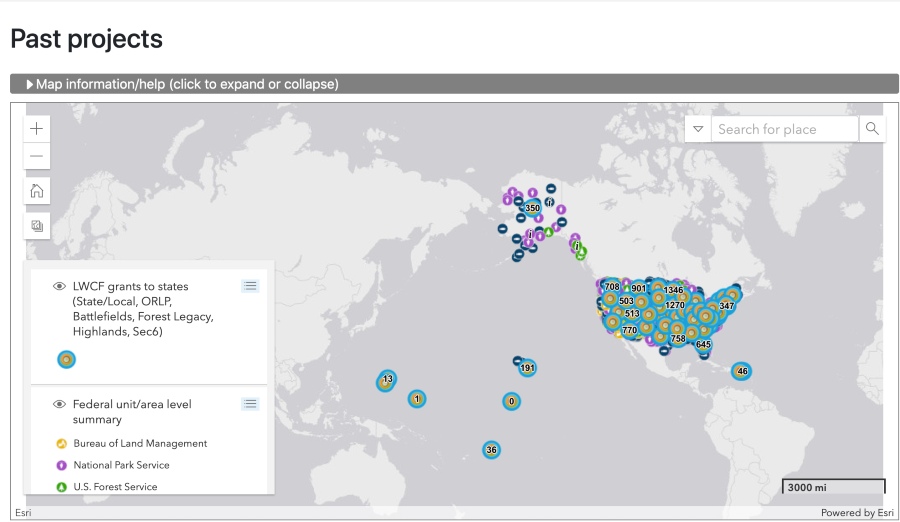
The United States has been at the forefront of land conservation for generations. Now an interactive map has compiled data on all conserved American land near you, from the smallest playground to the largest park, that neatly summarizes that success.
It uses data sets on conservation projects completed using money from the Land and Water Conservation Fund (LWCF), one of the country’s most important pieces of conservation legislation, and by far the most important when it comes to funding.
LWCF
Over the decades, 150,000 grants from the LWCF have been used in every state and almost every county to ensure Americans have access to nature, that our natural resources are protected or sustainably harvested, that our wildlife species have chances to thrive or recover when threatened, and that major cities are not bereft of playgrounds, gardens, and more.
This interactive map, constructed for the LWCF by the non-profit Trust for Public Land, takes the data on all these projects and puts them into one tool for the public to browse.
A report by Fast Company details that the data on all those projects has never been put in one place before, and has remained largely fragmented.
In 2019-20 a series of government measures sought to permanently authorize the LWCF, rather than do so every few years as is normal in funding legislation, a move which passed and was signed into law as part of the Great American Outdoors Act, described at the time as “the most consequential dedicated funding [bill],” in the nation’s conservation history.
The LWCF doesn’t use taxpayer dollars, and instead relies on a percentage of national revenues from offshore oil and natural gas extraction to fund the projects. It’s the largest source of public lands funding, and has played a large role in the creation of the U.S.’s public lands catalogue, totaling one tenth of the world’s protected areas.
SHARE This Great Tool With Others Who Love Public Lands…
A company that uses gravity to create a ‘giant battery’ has just completed a successful test in Scotland, paving the way for its commercial-scale roll out.
The firm is called Gravitricity, and their device, which has a 25-year lifespan, could help prevent the mining of rare earth minerals in the creation of lithium-ion batteries, while providing a cost-effective alternative for renewable storage.
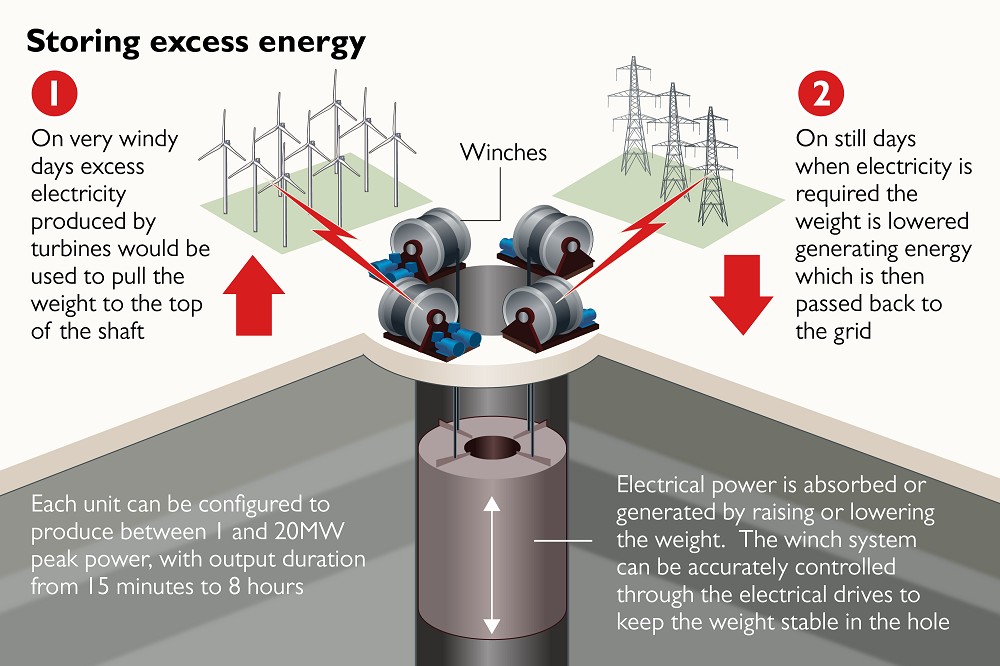
Costing £1 million ($1,385 million) to build a 15-meter (49-foot) tower with a 25-ton weight, Gravitricity say the prototype can generate 250 kilowatt hours, and deliver electricity in less than a second when demand occurs.
The device has been designed to go in old mine shafts rather than up in the air, and “These tests confirm our modeling and show that gravity energy storage is a serious contender in the global energy storage market,” said company managing director Charlie Blair.
The technology relies on sending excess power from renewables, such as wind power, into cable pulleys that slowly hoist a heavy weight up the tower, storing potential gravitational energy that is released back into the system as electricity when the weights are lowered.
Gravitricity
The company is already in “advanced discussions” with mine owners in Britain, Scandinavia, Poland, and the Czech Republic over possible locations for initial European projects.
“If this technology is one that really makes a difference it’s going to make a difference globally, Blair told BBC Scotland. “It’s going to keep the lights on in Africa, as they build the grid, just as much as it will in Europe.”
Global renewable storage markets are huge, being valued by Bloomberg at more than $600 billion. While releasing no emissions, renewable energies can’t store electricity they’ve generated, and ingenious methods for addressing this problem utilize all kinds of materials and strategies.
GNN reported last year on a pair of startups from Britain and Sweden that use the phase change of matter, i.e. going from a solid to a liquid to a gas, to store and then again to release energy, one which stores air in liquid form before converting it back to gas, the other using molten aluminum.
While all these methods seem eclectic and disunified, they are exactly the kind of thing a dynamic and important market like renewables storage should be seeing.
With each firm that succeeds and each firm that fails, the sector learns valuable lessons, speeding the process towards developing a Model-T-like breakthrough.
Quote of the Day: “Life is not a problem to be solved, but a reality to be experienced.” – Soren Kierkegaard
Photo: by Clay Banks
With a new inspirational quote every day, atop the perfect photo—collected and archived on our Quote of the Day page—why not bookmark GNN.org for a daily uplift?
How many sandwiches does it take to make a pyramid? Three. How many sandwiches does it take to bring your mom on a trip to see the pyramids? Considerably more.
Still, that didn’t stop one devoted son from raising enough bread—and cheesesteak—to make it happen.
Gloria Walker always dreamed of traveling to Giza to see the pyramids, but more than that, she wanted to take her family along. Sadly, Walker was diagnosed with terminal cancer last year. Between the cost of travel—an estimated $10,000—and the limitations of her illness, that trip of a lifetime didn’t appear likely in the 56-year-old’s future.
But her son Dustin Vitale was determined to turn his mom’s dream into a reality. He just needed to figure out a way to make it happen.
26-year-old Vitale has three passions—teaching history at First Philadelphia Preparatory Charter School, his family—and cheesesteak. (After all, we’re talking Philly, right?)
Vitale admits to scarfing down the delicacy Philadelphia’s so famously known for at least two or three times a week. So what better way than making and selling his favorite sandwich—using his mom’s recipe, of course—to raise the money?
With sale days starting at 4 a.m. to bake homemade rolls, the entire family has been pitching in: Dustin and his wife Hailey share griddle duty; his stepfather is in charge of prep. Dustin’s dad, stepmom, sister, and brother, along with some steadfast friends, have all been working to meet the goal.
They’ve been at it since February.
Vitale began to chronicle the team efforts for Instagram, soon gathering a growing circle of cheesesteak-loving supporters.
“We didn’t know how long the hype was going to last, so we decided to just keep telling everyone and see how many we get,” Vitale told the Philadelphia Enquirer. “We ended up doing 94 in one day and we were like just blown away.”
Along the way, they made a fan of award-winning Philadelphia chef Michael Solomonov, who gave Vitale and his crew a five-star Instagram thumbs-up both for their heart and for their cooking.
After that, demand exploded. Without a commercial kitchen, however, Vitale was hard-pressed to keep up with it. That’s when a local food truck owner stepped in with an offer to let the cheesesteak fundraisers work out of his mobile cooking facility.
Over the course of six weeks, the group raised $18,000—enough for Vitale to take the family to Egypt with money to spare. They’re set to go Giza gazing later this year.
While the winning grilling gig turned out to be a game-changer for his mom, Vitale has no plans to switch professional hats as a result. “So many people say, ‘Are you going to jump into this and open up a shop?’” Vitale told the Enquirer. “I could never. I love doing this on the side. My heart and passion is teaching and for the students.”
It seems that passion is as intrinsic to Vitale’s character as cheesesteak is to Philly. That’s why as a devoted son whose mom means the world to him, there’s nothing on this earth—or beyond—he wouldn’t do to see her happy.
After saving the life of a little boy who fell on the tracks, an Indian railway employee went viral for his kindness on the Internet.
Now he’s being praised once again—this time for giving the boy’s family money the Ministry of Railways gave him as a reward.
Though he has his own family to take care of, when 30-year-oldMayur Shelke was given ₹50,000 ($660) from the Ministry in a special ceremony, he decided he’d donate a good portion towards the education of the very child he saved.
“I’ll give half of the amount, given to me as token of appreciation, for that child’s welfare & education,” Shelke told Asian News International.
“I came to know that his family isn’t financially strong. So I decided this.”
As news of Shelke’s newest act of selflessness spread, his name once again began trending on social media, with many praising his kindness and good spirit.
Bravo! First the act of endangering his own life to save the child and now this, Mayur Shelke brings tears to my eyes. Humanity is still alive.
Earlier this week, Shelke saw the 6-year-old fall into the path of an oncoming train and instinct took over. “I ran towards the child but also thought that I might be in danger too. Still, I thought I should save him,” Shelke told Asian News International. “The woman (with the child) was visually impaired. She could do nothing.”
A new father himself, Shelke felt impelled to act. “The child who [slipped and fell] is someone’s precious child, too,” he told Times Now News.
“My child is the apple of my eye, so must that boy in peril have been to his parents. I just felt something stir within me and I rushed without thinking twice.”
It’s an old saying, but it feels particularly true when thinking of Shelke and his selfless deeds—true heroes really don’t wear capes.
(WATCH the BBC’s footage of the daring rescue below.)
SHARE This Hero’s Story of Generosity With Friends…
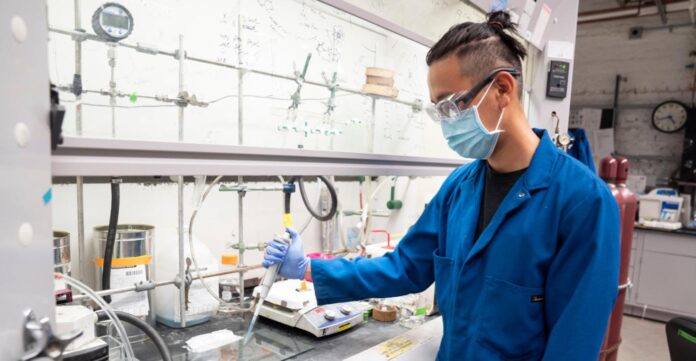
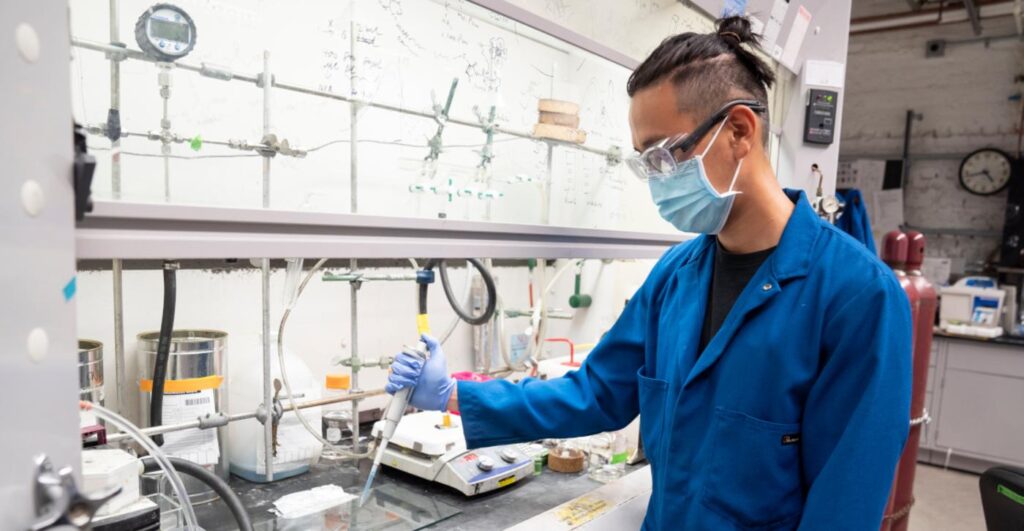
Ivan Jayapurna, a UC Berkeley materials science and engineering graduate student, preparing a sample film of a new biodegradable plastic. (Credit- Adam Lau_UC Berkeley)
Ivan Jayapurna preparing a sample film of a new biodegradable plastic. Adam Lau/UC Berkeley
Despite our efforts to sort and recycle, less than 9% of plastic gets recycled in the U.S., and most ends up in landfill or the environment.
Biodegradable plastic bags and containers could help, but if they’re not properly sorted, they can contaminate otherwise recyclable #1 and #2 plastics. What’s worse, most biodegradable plastics take months to break down, and when they finally do, they form microplastics, tiny bits of plastic that can end up in oceans and animals’ bodies, including our own.
Now, scientists at the the Berkeley Lab and UC Berkeley have designed an enzyme-activated compostable plastic that could diminish microplastics pollution, and holds great promise for plastics upcycling.
The material can be broken down to its building blocks—small individual molecules called monomers—and then reformed into a new compostable plastic product.
“In the wild, enzymes are what nature uses to break things down—and even when we die, enzymes cause our bodies to decompose naturally. So for this study, we asked ourselves, ‘How can enzymes biodegrade plastic so it’s part of nature?” said senior author Ting Xu , who holds titles of faculty senior scientist in Berkeley Lab’s Materials Sciences Division, and professor of chemistry and materials science and engineering at UC Berkeley.
At Berkeley Lab, Xu is leading an interdisciplinary team of scientists and engineers from universities and national labs around the country to tackle the mounting problem of plastic landfill posed by both single-use and so-called biodegradable plastics.
Most biodegradable plastics in use today are usually made of polylactic acid (PLA), a vegetable-based plastic material blended with cornstarch. There is also polycaprolactone (PCL), a biodegradable polyester that is widely used for biomedical applications such as tissue engineering.
But the problem with conventional biodegradable plastic is that they’re indistinguishable from single-use plastics such as plastic film, so a good chunk of these materials ends up in landfills. And even if a biodegradable plastic container gets deposited at an organic waste facility, it can’t break down as fast as the lunch salad it once contained, so it ends up contaminating organic waste, said co-author Corinne Scown at the Berkeley Lab’s Energy Technologies Area.
Another problem with biodegradable plastics is that they aren’t as strong as regular plastic. That’s why you can’t carry heavy items in a standard green compost bag. The tradeoff is that biodegradable plastics can break down over time, but still, Xu said, they only break down into microplastics, which are still plastic, just a lot smaller.
So Xu and her team decided to take a different approach—by “nanoconfining” enzymes into plastics.
Putting enzymes to work
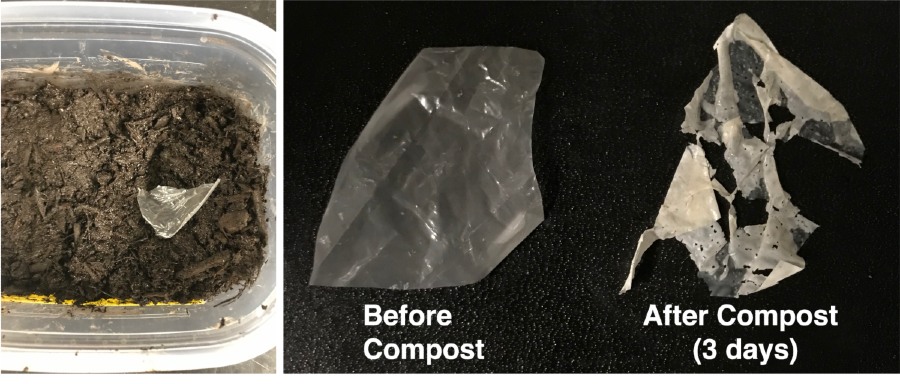
The plastic breaks down after just 3 days (right) in standard compost and entirely after 2 weeks. UC Berkeley
In a series of experiments, reported in the journal Nature, Xu and co-authors embedded trace amounts of commercial enzymes Burkholderia cepacian lipase (BC-lipase) and proteinase K within the PLA and PCL plastic materials. The scientists also added an enzyme protectant called four-monomer random heteropolymer, or RHP, to help disperse the enzymes a few nanometers (billionths of a meter) apart.
In a stunning result, the scientists discovered that ordinary household tap water or standard soil composts converted the enzyme-embedded plastic material into its small-molecule building blocks called monomers, and eliminated microplastics in just a few days or weeks.
They also learned that BC-lipase is something of a finicky “eater.” Before a lipase can convert a polymer chain into monomers, it must first catch the end of a polymer chain. By controlling when the lipase finds the chain end, it is possible to ensure the materials don’t degrade until being triggered by hot water or compost soil, Xu explained.
In addition, they found that this strategy only works when BC-lipase is nanodispersed — in this case, just 0.02 percent by weight in the PCL block, rather than randomly tossed in and blended.
“Nanodispersion puts each enzyme molecule to work—nothing goes to waste,” Xu said.
And that matters when factoring in costs. Industrial enzymes can cost around $10 per kilogram, but this new approach would only add a few cents to the production cost of a kilogram of resin because the amount of enzymes required is so low, and the material has a shelf life of more than 7 months, Scown added.
Looking to the future
Developing a very affordable and easily compostable plastic film could incentivize produce manufacturers to package fresh fruits and vegetables with compostable plastic instead of single-use plastic wrap. And as a result, save organic waste facilities the extra expense of investing in expensive plastic-depackaging machines when they want to accept food waste for anaerobic digestion or composting.
Since their approach could potentially work well with both hard, rigid plastics and soft, flexible plastics, Xu would like to broaden their study to polyolefins, a ubiquitous family of plastics commonly used to manufacture toys and electronic parts.
The team’s truly compostable plastic could be on the shelves soon. They recently filed a patent application through UC Berkeley’s patent office.
“When it comes to solving the plastics problem, it’s our environmental responsibility to take up nature on its path. By prescribing a molecular map with enzymes behind the wheel, our study is a good start,” Xu said.
The growing list of “firsts” for Perseverance, NASA’s newest six-wheeled robot on the Martian surface, now includes converting some of the Red Planet’s thin, carbon dioxide-rich atmosphere into oxygen.
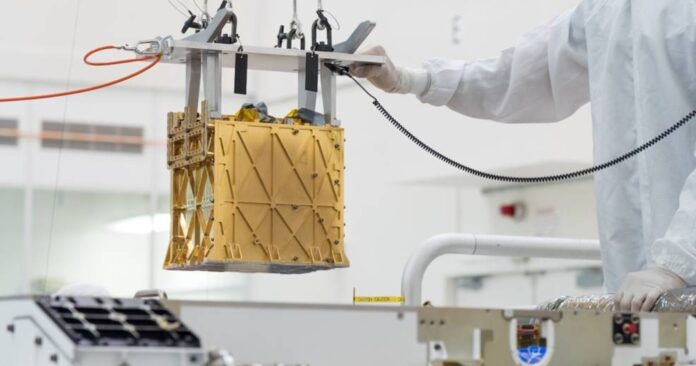
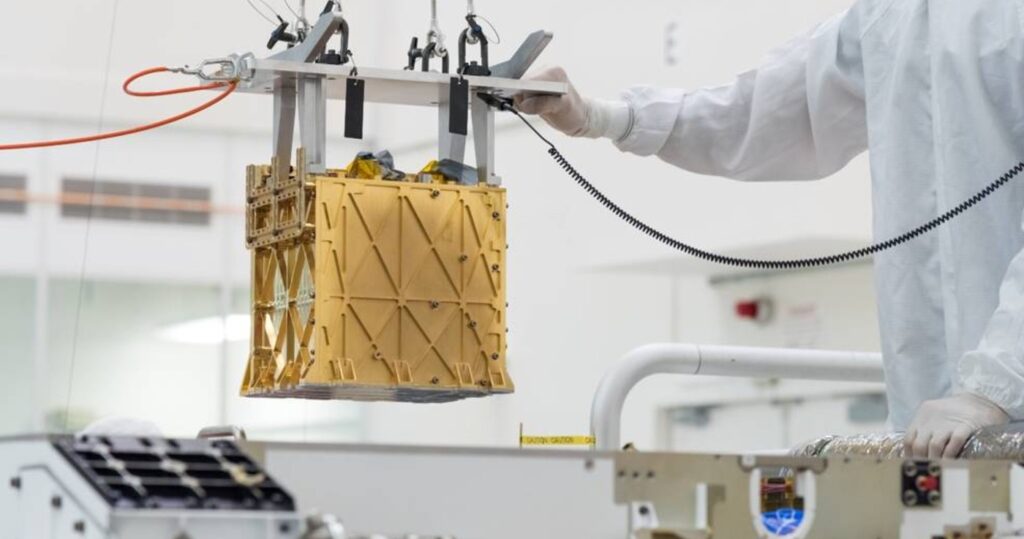
A toaster-size, experimental instrument aboard Perseverance called the Mars Oxygen In-Situ Resource Utilization Experiment (MOXIE) accomplished the task on Tuesday.
While the technology demonstration is just getting started, it could pave the way for science fiction to become science fact—isolating and storing oxygen on Mars to help power rockets that could lift astronauts off the planet’s surface. Such devices also might one day provide breathable air for astronauts themselves.
“This is a critical first step at converting carbon dioxide to oxygen on Mars,” said NASA’s Jim Reuter in a statement. “MOXIE has more work to do, but the results from this technology demonstration are full of promise as we move toward our goal of one day seeing humans on Mars. Oxygen isn’t just the stuff we breathe. Rocket propellant depends on oxygen, and future explorers will depend on producing propellant on Mars to make the trip home.”
To burn its fuel, a rocket must have more oxygen by weight. Getting four astronauts off the Martian surface on a future mission would require approximately 15,000 pounds (7 metric tons) of rocket fuel and 55,000 pounds (25 metric tons) of oxygen.
In contrast, astronauts living and working on Mars would require far less oxygen to breathe. “The astronauts who spend a year on the surface will maybe use one metric ton between them,” Hecht said.
Hauling 25 metric tons of oxygen from Earth to Mars would be an arduous task. Transporting a one-ton oxygen converter—a larger, more powerful descendant of MOXIE that could produce those 25 tons—would be far more economical and practical.
Mars’ atmosphere is 96% carbon dioxide. MOXIE works by separating oxygen atoms from carbon dioxide molecules, which are made up of one carbon atom and two oxygen atoms. A waste product, carbon monoxide, is emitted into the Martian atmosphere.
The conversion process requires high levels of heat to reach a temperature of approximately 1,470 degrees Fahrenheit (800 Celsius). To accommodate this, the MOXIE unit is made with heat-tolerant materials. These include 3D-printed nickel alloy parts, which heat and cool the gases flowing through it, and a lightweight aerogel that helps hold in the heat. A thin gold coating on the outside of MOXIE reflects infrared heat, keeping it from radiating outward and potentially damaging other parts of Perseverance.
In this first operation, MOXIE’s oxygen production was quite modest—about 5 grams, equivalent to about 10 minutes worth of breathable oxygen for an astronaut. MOXIE is designed to generate up to 10 grams of oxygen per hour.
This technology demonstration was designed to ensure the instrument survived the launch from Earth, a nearly seven-month journey through deep space. MOXIE is expected to extract oxygen at least nine more times over the course of a Martian year (nearly two years on Earth).
“MOXIE isn’t just the first instrument to produce oxygen on another world,” said Trudy Kortes of NASA. It’s the first technology of its kind that will help future missions “live off the land,” using elements of another world’s environment, also known as in-situ resource utilization.
“It’s taking regolith, the substance you find on the ground, and putting it through a processing plant, making it into a large structure, or taking carbon dioxide—the bulk of the atmosphere—and converting it into oxygen,” she said. “This process allows us to convert these abundant materials into useable things: propellant, breathable air, or, combined with hydrogen, water.”
SHARE This Far-Out News From NASA on Social Media…
This Earth Day, we’re celebrating nature closer to home. And the US Fish and Wildlife Service (FWS) is giving us great ways to get to know the place we’re in.
To this end, the FWS has launched a group of articles and activities specifically for those stuck in self-isolation. There are recommendations for famous books on nature by American authors like Henry David Thoreau, activities and hobbies for adults and kids, and citizen science practices for people who want to become intimate with their environment.
“We can find inspiration in the night sky, motivation in birds that migrate thousands of miles to nest in our yards, entertainment in a chorus of spring peepers, and reassurance in a cheerful yellow daffodil signaling the return of spring,” writes the FWS.
Wherever you are, there may never be a better time than now to pick up a new hobby characteristic of tree-huggers, star-gazers, and bird-watchers.
Sharpen your Observation Skills
In his classic work on the changing seasons and their character upon his farm in Wisconsin, Aldo Leopold detailed in the Sand County Almanac about how he observed everything; the chorus of bird song every month; including which were the first birds to begin, which were the last ones to join, and which were the last ones to stop; which way the gophers would look upon exiting their burrows; where the wind blew during each month; and when every bird arrived and departed on their migratory routes.
So perhaps now is a good time to go to your favorite local spot—under a tree, on a bench, wherever there is green—take out a pen, and start recording what you see, hear, and smell. Can you smell trees while they are flowering? Which birds can you hear? Are there insects going about on their own diminutive errands?
There may be a lot more going on than you realize, even in your backyard. Biodiversity is an ecosystem’s most important asset. It ensures rich supplies of food all the way up the food chain, and resistance to diseases which can wipe out ecosystems with weak biodiversity.
Get in touch with this critical aspect of the environment by attempting to make a survey of the biodiversity of your garden or lawn. To do this, make a survey plot by sticking 4-5 sticks or pencils in the ground, and establish a perimeter of rope or string around them. Note every different species of grass and forbs. Grasses are easy to spot; the species name is how we refer to them. Forbs are broad leaf plants like flowers. Note every species of insect too.
Try and make several survey plots and measure the biodiversity across your yard.
Take Up Birding
For younger readers, birdwatching—or birding for short—may seem like a boring pastime for stuffy pensioners; but in reality, it can be a tremendously engaging and meditative hobby that connects you with creatures that, while seeming reserved and uninteresting, are much more than they seem.
Birding could even be considered the adult version of Pokémon: you have to go out into the world and explore different habitats as you try and catch ‘em all.
Here’s how to get started. Get yourself a pair of binoculars and a birding app on your phone such as the official Audubon Birding app. It’s free and has tons of resources to help you ID any feathered friends you spot.
Start by learning to recognize the bone and feather structure of different birds. For example, wrens have curled beaks, grosbeaks look like cardinals, nuthatches walk along tree trunks and towhees forage for food on the ground. This will help you narrow down the lists of possible birds. After that, you just have to select the month and region and coloration, and you’ll normally only be left with a few choices of species.
You can also get to know the birds in your area by putting out a bird feeder. Bridget McDonald writing for Fish and Wildlife Service describes how to do so thusly.
“Birds are vulnerable to stealthy predators like hawks and house cats, so before you put up a bird feeder, figure out the safest spot for it, ideally near shelter like a shrub, a tree, or a pile of branches on the ground. Make sure it’s also a location you can observe from inside looking out a window.”
If you don’t feel like turning on the television to watch the exciting new documentary on Jane Goodall, you can always pick up her 1996 bestseller “My Life With the Chimps” about how she became the first woman in the world to study chimps—and how her research ended up transforming the scientific community.
Meanwhile further back in history, no work of 19th century American literature is as widely-distributed across the world as “Walden”, the story of how Henry David Thoreau rejected civilized life for that of the isolated naturalist in a log cabin which he built on Massachusetts’s Walden Pond.
For a more poetic literary escapade, Scottish-American writer John Muir is particularly famous for using his writings to turn the hearts and minds of 19th century America towards their nation’s natural treasures. His magnum opus, “My Summer in the Sierras”—an autobiographical journey across the Sierra Nevadas in California, is built on chapter after chapter of rapturous, nature-inspired poetry.
As mentioned before, Aldo Leopold, the first American conservationist and author of the aforementioned “A Sand County Almanac”, will connect an American with their sense of stewardship of the land, which Thomas Jefferson described as “nature’s nation”.
Researchers have documented for years how exercise or just being in an outdoor space rich in greenery can ease and reduce symptoms of depression or anxiety.
One 2019 study said only 20 minutes in nature was enough to lower levels of hormones related to stress such as cortisol.
“Our study shows that for the greatest payoff, in terms of efficiently lowering levels of the stress hormone cortisol, you should spend 20 to 30 minutes sitting or walking in a place that provides you with a sense of nature,” says Dr. Mary Carol Hunter, an Associate Professor at the University of Michigan and lead author of the research.
Another massive study of 20,000 people from the UK found that two and a half hours a week in nature was crucial for health and well-being.
So rather than dwelling on the stress of being kept indoors, perhaps it may be more beneficial for you to focus your appreciation on the great outdoors. After all, the nation celebrated its first ever Earth Day in 1970 alongside the creation of the Environmental Protection Agency and Congress’s approval of the Clean Water Act, the Endangered Species Act, and the Clear Air Act—and although we may be faced with a different set of environmental dangers in 2021, we can still be spurred to action if we remember that we are all citizens of the same planet Earth.
Quote of the Day: “There is nothing on this earth more to be prized than true friendship.” – Thomas Aquinas
Photo: by Duy Pham
With a new inspirational quote every day, atop the perfect photo—collected and archived on our Quote of the Day page—why not bookmark GNN.org for a daily uplift?
In an effort to curb global warming, Purdue University engineers have created the whitest paint yet. Coating buildings with this paint may one day cool them off enough to reduce the need for air conditioning, the researchers say.
In October, the team created an ultra-white paint that pushed limits on how white paint can be. Now they’ve outdone that. The newer paint not only is whiter but also can keep surfaces cooler than the formulation that the researchers had previously demonstrated.
“If you were to use this paint to cover a roof area of about 1,000 square feet, we estimate that you could get a cooling power of 10 kilowatts. That’s more powerful than the central air conditioners used by most houses,” said Xiulin Ruan, a Purdue professor of mechanical engineering.
The researchers believe that this white may be the closest equivalent of the blackest black, “Vantablack,” which absorbs up to 99.9% of visible light. The new whitest paint formulation reflects up to 98.1% of sunlight—compared with the 95.5% of sunlight reflected by the researchers’ previous ultra-white paint—and sends infrared heat away from a surface at the same time.
Typical commercial white paint gets warmer rather than cooler. Paints on the market that are designed to reject heat reflect only 80%-90% of sunlight and can’t make surfaces cooler than their surroundings.
What makes the whitest paint so white
Two features give the paint its extreme whiteness. One is the paint’s very high concentration of a chemical compound called barium sulfate, which is also used to make photo paper and cosmetics white.
“We looked at various commercial products, basically anything that’s white,” said Xiangyu Li, a postdoctoral researcher at the Massachusetts Institute of Technology, who worked on this project—published in ACS—as a Purdue Ph.D. student in Ruan’s lab. “We found that using barium sulfate, you can theoretically make things really, really reflective, which means that they’re really, really white.”
The second feature is that the barium sulfate particles are all different sizes in the paint. How much each particle scatters light depends on its size, so a wider range of particle sizes allows the paint to scatter more of the light spectrum from the sun.
“A high concentration of particles that are also different sizes gives the paint the broadest spectral scattering, which contributes to the highest reflectance,” said Joseph Peoples, a Purdue Ph.D. student in mechanical engineering.
There is a little bit of room to make the paint whiter, but not much without compromising the paint.
“Although a higher particle concentration is better for making something white, you can’t increase the concentration too much. The higher the concentration, the easier it is for the paint to break or peel off,” Li said.
How the whitest paint is also the coolest
The paint’s whiteness also means that the paint is the coolest on record. Using high-accuracy temperature reading equipment called thermocouples, the researchers demonstrated outdoors that the paint can keep surfaces 19 degrees Fahrenheit cooler than their ambient surroundings at night. It can also cool surfaces 8 degrees Fahrenheit below their surroundings under strong sunlight during noon hours.
The paint’s solar reflectance is so effective, it even worked in the middle of winter. During an outdoor test with an ambient temperature of 43 degrees Fahrenheit, the paint still managed to lower the sample temperature by 18 degrees Fahrenheit.
This white paint is the result of six years of research building on attempts going back to the 1970s to develop radiative cooling paint as a feasible alternative to traditional air conditioners.
Ruan’s lab had considered over 100 different materials, narrowed them down to 10 and tested about 50 different formulations for each material. Their previous ultra-white paint was a formulation made of calcium carbonate, an earth-abundant compound commonly found in rocks and seashells.
The researchers showed in their study that like commercial paint, their barium sulfate-based paint can potentially handle outdoor conditions. The technique that the researchers used to create the paint also is compatible with the commercial paint fabrication process.
A small boy is holding his mother’s hand as they make their way across a railway platform. Weighed down by a heavy burden on her back and hampered by limited vision, she loses her grip. The child tumbles onto the tracks just as an approaching train barrels toward the station.
But in the blink of an eye, a hero swoops in, scoops the child to safety, hoists himself onto the platform a split-second before the locomotive thunders past, and a tragedy is averted.
If you’re thinking the man who saved the day in this scenario might be Clark Kent’s alter-ego, think again because this was a series of events that recently played out in real life at India’s Vangani station about 60 miles out of Mumbai.
When railway worker Mayur Shelke saw the 6-year-old boy fall into the path of the oncoming train, instinct took over. “I ran towards the child but also thought that I might be in danger too. Still, I thought I should save him,” Shelke told Asian News International. “The woman (with the child) was visually impaired. She could do nothing.”
A new father himself, Shelke felt impelled to act. “The child who [slipped and fell] is someone’s precious child, too,” he told Times Now News. “My child is the apple of my eye, so must that boy in peril have been to his parents. I just felt something stir within me and I rushed without thinking twice.”
The entire remarkable incident might have gone unremarked—except that the whole thing was caught on CCTV. (Shelke reports he hadn’t even mentioned it at home fearing he’d be scolded for putting himself in harm’s way.) In a matter of days, the viral video took the Internet by storm.
The railway employee’s quick reflexes and willingness to act in the face of grave personal danger quickly earned him much well-deserved praise. After being feted in a congratulatory ceremony, Shelke was awarded a ₹50,000 ($660) honorarium by the Ministry of Railways.
He was also gifted with a motorbike courtesy of Jawa Motorcycles as a token of their esteem. “Mayur Shelke’s courage has the Jawa Motorcycles family in awe,” tweeted company CEO Anupam Thareja. “Humbled by his act of exemplary bravery, truly the stuff of legends.”
One of the country’s leading industrialists, Anand Mahindra, CEO of the Mumbai-based global conglomerate Mahindra Group was likewise impressed. “Mayur Shelke didn’t have a costume or cape, but he showed more courage than the bravest movie Superhero,” Mahindra tweeted.
“In difficult times, Mayur has shown us that we just have to look around us for everyday people who show us the way to a better world.”
(WATCH the BBC’s footage of the daring rescue below.)
DON’T DALLY—Share This Amazing Rescue Story With Friends on Social Media…
North Carolina-based writer Judy Cole has a new rom-com murder mystery debuting at Amazon: And Jilly Came Tumbling After (from Red Sky Presents).
You’ll want to set aside a little moon-gazing time this Monday evening—as April 26 is set to be the night of the Super Pink Moon.
The best time to see it is as it’s appearing over the eastern horizon. At that point the Moon will appear a deep tangerine, then a steady gold, then pure white as it climbs ever higher in the sky. This is because of Rayleigh scattering—the same phenomenon that causes sunsets to take on reddish tints.
Contrary to its name, this month’s full Moon won’t actually look pink. According to Farmer’s Almanac, it actually gets its name from the North American wildflower Phlox Subulata, also known as creeping phlox or moss phlox, which blooms in spring.
Other traditional names include Sucker Moon, Breaking Ice Moon, Egg Moon, Wildcat Moon, and Budding Moon of Plants and Shrubs.
Supermoons are typically about seven percent bigger and around 15 percent brighter than a regular full Moon. And this month’s is special, being one of only two such supermoons for 2021 (the next is in May).
But is the Moon actually closer to us when it’s on the horizon? Is that why it looks so huge? According to NASA, the answer is no. It’s just an illusion.
If you do to want to try taking one of those spectacular photos where the Moon looks ginormous as it rises up above the mountains, a calm ocean, or a prairie field, here’s a NASA-certified tip: “Photographers can simulate the Moon illusion by taking pictures of the Moon low on the horizon using a long lens, with buildings, mountains or trees in the frame.”
Illusion or not, look out at the rising Pink Moon this Monday and you’re sure to see a beautiful, if fleeting sight.
BRIGHTEN Your Friends’ News Feeds with the Good Lunar News…
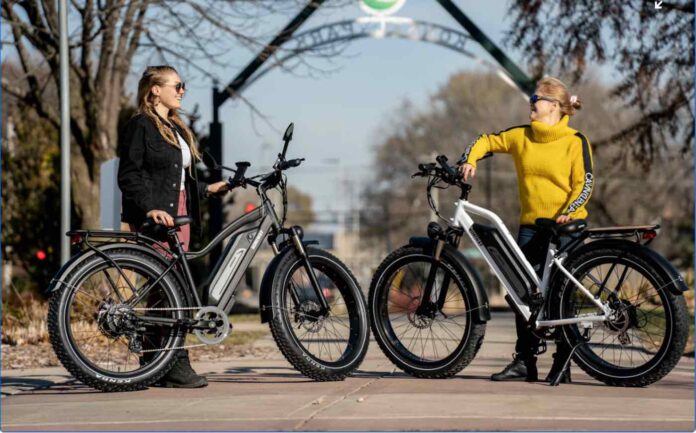
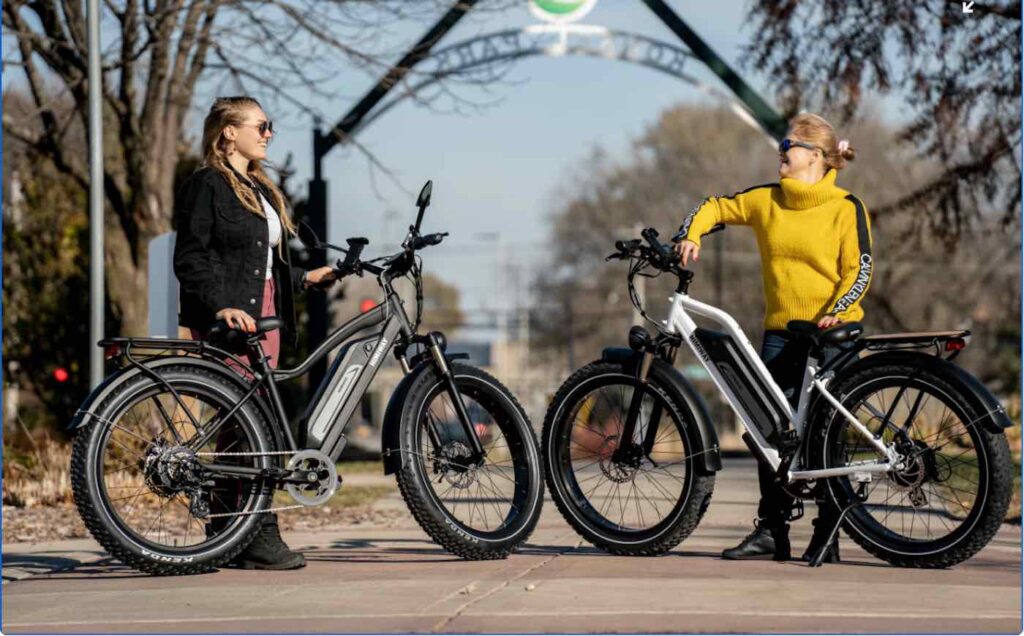
The French government is planning to give citizens who want to trade in their old cars a $3,000 grant (€2,500) towards the purchase of an electric bike.
Himiway Bikes
The notion has been approved by lawmakers at the National Assembly in a preliminary vote and is part of a more ambitious round of emissions cuts planned for 2040, at which point the French government hopes to have reduced them 40% compared with 1990 levels.
The French Federation of Bicycle Users (FUB) told Reuters that, if adopted, France will become the first country to offer such a trade—all in an effort to reduce the number of cars on the road, especially the ones that produce more emissions.
Electric bikes add power to each rotation of the gears, propelling the cyclist further with less effort than a traditional one, but a good e-bike can also achieve speeds of 20 mph without so much as a single pedal turn simply by using the throttle, making them ideal for city commutes.
The decision by France was hailed by green lobbying and cycling groups, who see bikes as a major solution to combat vehicle emissions. Modern EU and UK emissions standards on cars, especially those registered in major cities, are extremely strict, meaning older models carry an emissions burden much larger than their share of the total percentage of vehicles on the road.
Cycling Industries Europe, a trade association, welcomed the move, with their chief executive saying: “We are seeing a welcome increase in stand-alone incentives for bicycle purchases, but the French Assembly has made it clear—e-bikes and cargo bikes are to be supported as vehicle replacements.
Tasked with helping ensure Utrecht’s canals remain full of life, and convincing everyone it wasn’t an April Fools’ Day joke, two ecologists in the Dutch city have invented the world’s first “fish doorbell.”
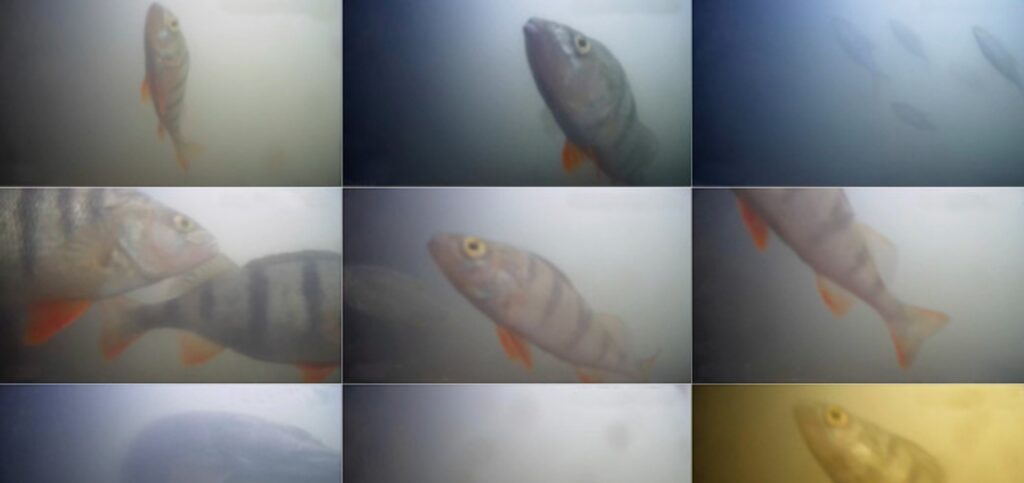
An underwater, live-streaming camera at the “Weerdsluis” lock door allows residents to ring a virtual doorbell heard by the local lock keeper when they see that fish are trying to get through.
A lock is a gate that raises or lowers canal boats into different levels of water separated by two doors, and a sluice is a small fish-sized door that allows water (and fish) to pass between them.
“You have to see the Oudegracht (the canal) as a motorway for fishing. Sometimes you see literally dozens of fish floundering in front of the lock gate, so a fish jam is created,” says underwater nature expert Mark van Heukelum.
“The Weerdsluis is the link between the Vecht and the Kromme Rijn. In winter the fish swim deeper, it is warmer and safer there. In the summer they want to go to shallow water so that they can reproduce,” he adds, according to AD.
Van Heukelum came up with the doorbell idea when—while working with wildlife ecologist Anne Nijs on a project to highlight the biodiversity in Utrecht’s canals—they noticed how lock keeper Patrick opened the sluice to allow a large group of arriving fish to pass through.
Nijs says it’s a great way to connect residents with their aquatic neighbors, and noted that when Mark took the idea to the municipality they were very excited. The only uncertainty was why create a camera and a signal to Patrick when they could just install a motion-activated sensor?
Van Heukelum explains: “Technically that is probably possible, but this is of course much more fun,” he says. “I am already addicted to it myself and watch it every night. You suddenly see a large pike swimming by or a lobster. It would be nice if you could spot a rarer fish such as a bindweed or bleak. Or maybe an eel.”
If you want to get addicted to watching fish swim in a Netherlands canal, you can watch the livestream here.
WATCH a video to see the doorbell in action. (See an English translation below.)
Every spring thousands of fishes swim straight through the city of Utrecht. They go through the Oudegracht in search of a spot to lay eggs. They mainly do this in the dark. Other animals can’t see them at that time of day, so it is safer.
There is just one problem: the Weerdsluis doesn’t open often enough… We have thought of a solution. The fish doorbell!
There is an underwater camera near the Weerdsluis. You can watch the footage live at www.visdeurbel.nl. Do you see fish? Ring the fish doorbell. The lock-keeper gets a sign. If there are many fish lying in wait, he will open the gate.
Will you help fish get through the Oudegracht? Visit visdeurbel.nl (Translated by Lara Dekker)
Quote of the Day: “Give your best. Whether you want to be a chef, doctor, actor, or a mother, be passionate to get the best result.” – Alia Bhatt (Bollywood actress)
Photo: by Hieu Tran
With a new inspirational quote every day, atop the perfect photo—collected and archived on our Quote of the Day page—why not bookmark GNN.org for a daily uplift?