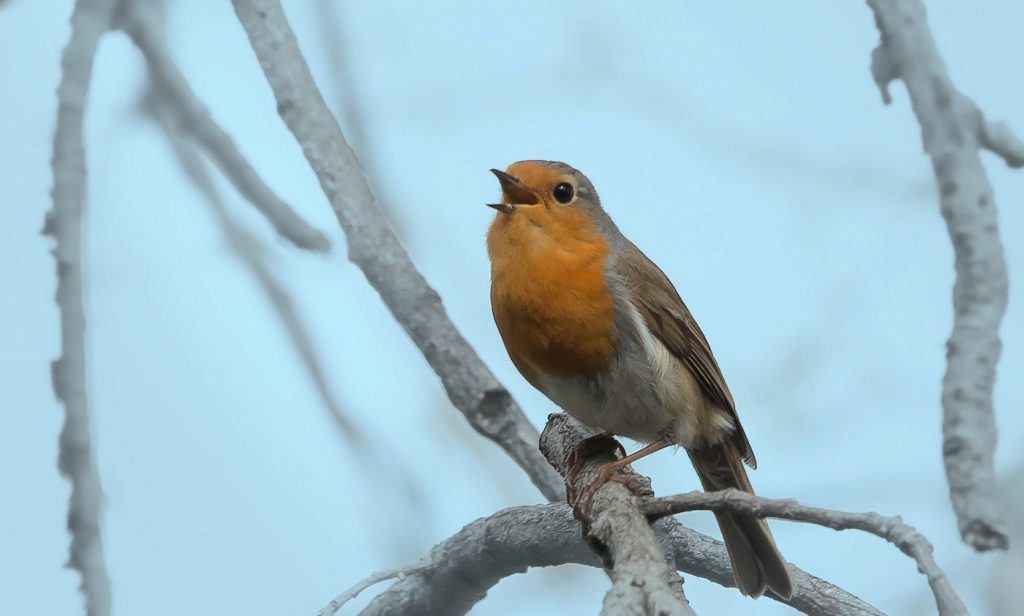
We see them nearly everywhere we go, we hear them every day, they live in every environment, and now, two new studies have shown their mere presence makes us happier.
German research has even found that being surrounding by a wide variety of birds can offer increasing life satisfaction equivalent to $150 per week of added income.
On the surprising benefits of species diversity
Johannes Plenio
The German Centre for Integrative Biodiversity Research took data from the 2012 European quality of Life Survey to measure how species diversity in birds affected 26,000 people in 26 European countries.
“According to our findings, the happiest Europeans are those who can experience numerous different bird species in their daily life, or who live in near-natural surroundings that are home to many species,” explains the study’s lead author, Joel Methorst a professor at Goethe University in Frankfurt, in a press release.
“We also examined the socio-economic data of the people that were surveyed, and, much to our surprise, we found that avian diversity is as important for their life satisfaction as is their income,” explains Prof. Dr. Katrin Böhning-Gaese, also at Goethe University.
On bird song and well-being
Bernd Thaller, CC license
In the second study of note, California Polytechnic University covertly subjected Colorado hikers to a test that measured their sense of well-being by placing speakers that played a variety of bird song along certain sections of a popular hiking trial network—then interviewing the hikers about their experience.
“While the bigger picture of nature’s restorative properties is likely to involve multiple senses, our study is the first to experimentally manipulate a single one (sound) in the field and demonstrate its importance to human experiences in nature,” said Danielle Ferraro, to the university press.
Indeed, hikers on the trials that perceived both more sounds and more varied sounds said they felt better about life, and about their experience hiking, than those who heard both fewer sounds, and less sound altogether.
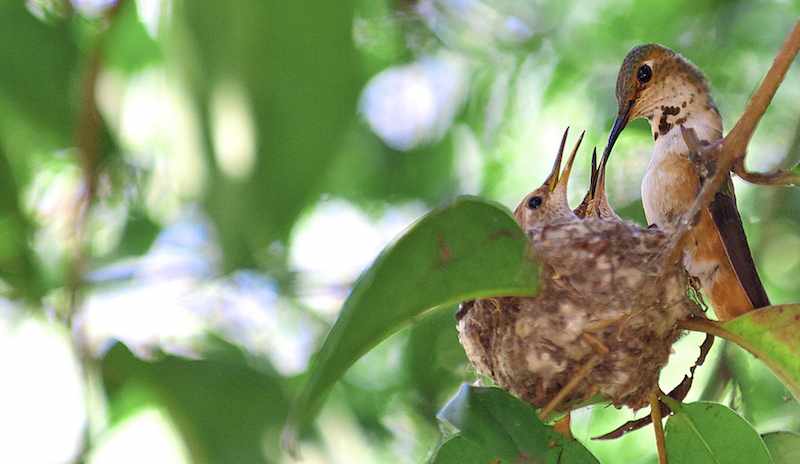
Nesting season
Danny Perez Photography, CC license
The benefits of birding—hearing their song, noticing the species around us—is a good thing too. A recent report from the Audubon Society found that sales of bird feeders, bird food, and birding apps have all increased during the pandemic, while participations in the Cornell Lab of Ornithology’s annual Global Big Day 2020 shattered all previous records.
During the Big Day, participants logged 2.1 million sightings of 6,500 species. An all-time high of 50,000 participants submitted more than 120,000 checklists, shattering the previous single-day checklist total by 30%.
Nesting season is fast approaching, and with lockdowns continuing in many states and countries, there’s never been a better time to take up birdwatching—and, if you can, to make your property a positive habitat for avians.
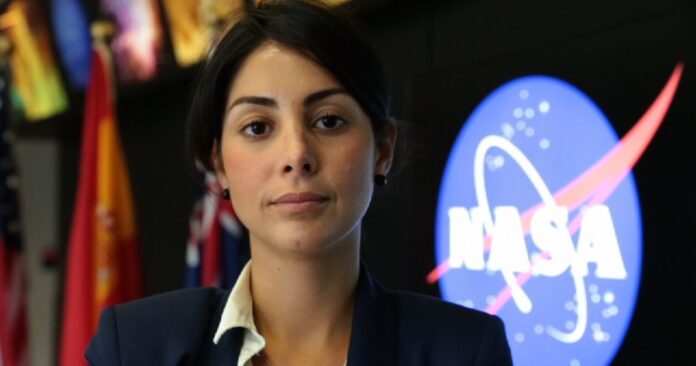
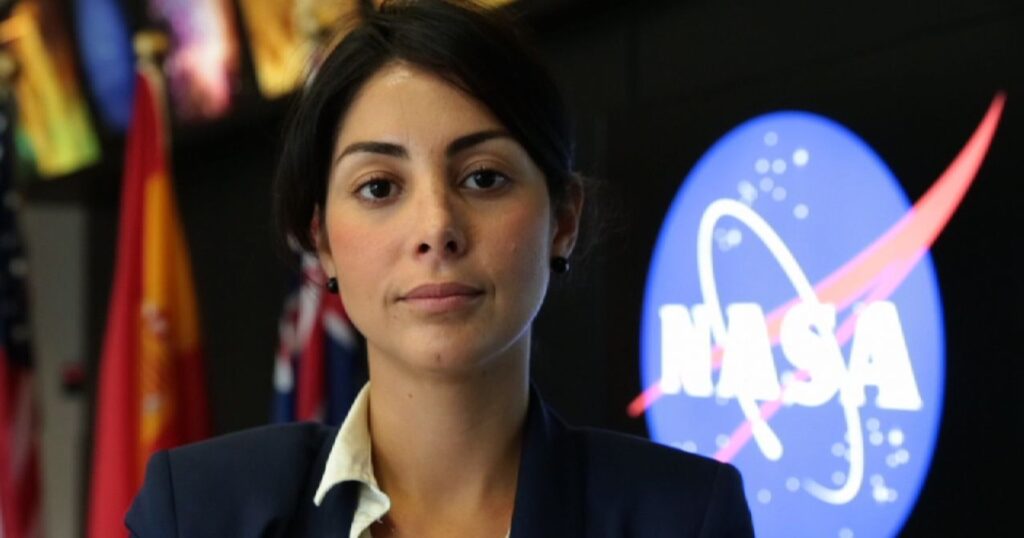
For a little girl growing up in Colombia in the 1980s, a science career with NASA may have seemed about as likely as setting foot on a faraway planet. These days, however, Diana Trujillo is an aerospace engineer.
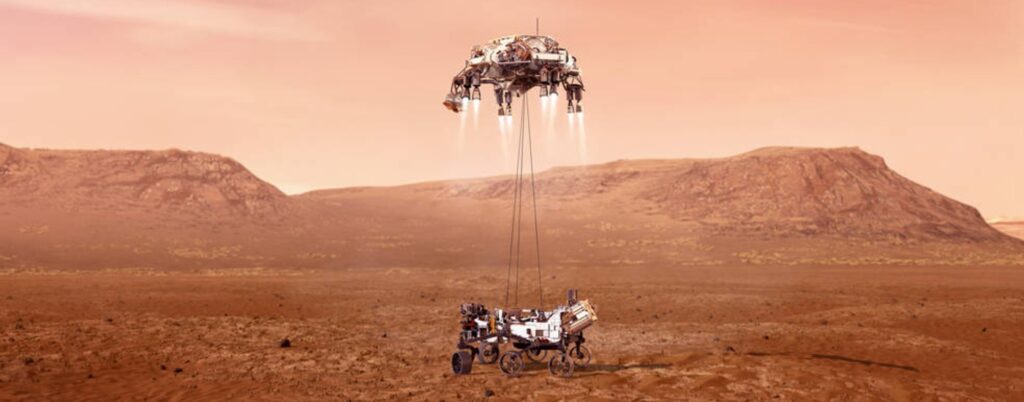
In fact, she leads a 45-person team at the NASA laboratory that’s responsible for the robotic arm of the latest Mars rover.
NASA/JPL-Caltech, illustration of the Perseverance rover landing
How did Diana go from simply dreaming about the cosmos to actually exploring it? That’s a tale of perseverance that was, perhaps, written in the stars.
Born in 1983, even as a young girl Diana was certain of her passion for science. But she doubted how far she’d be able to rise in a male-dominated field. Fate stepped in when her dad—thinking having a second language might expand his daughter’s horizons—offered to send her to live with an aunt in Miami.
Only 17 years old at the time, she took him up on it.
With just $300 to her name, Trujillo took a series of housekeeping jobs to put herself through Miami Dade College. In addition to learning English, she studied aerospace engineering. It wasn’t easy. Sometimes she had to take six buses just to get to class. Other days she was cleaning bathrooms to help pay her way through her studies. But she didn’t complain.
“I saw everything coming my way as an opportunity,” Diana told CBS News. “I didn’t see it as: ‘I can’t believe I’m doing this job at night, or “I can’t believe that I’m cleaning a bathroom right now.’ It was just more like, ‘I’m glad that I have a job and I can buy food and have a house to sleep… ’”
Then came another life-changing moment for Trujillo. One of her professors casually mentioned they were actually acquainted with an astronaut. Realizing she was “just one person away from knowing an astronaut” was all it took to galvanize Diana’s career goals.
Trujillo continued with her studies. Becoming the first Hispanic woman to be admitted to the NASA Academy, she did so well she was one of only two students to receive a job offer from the prestigious institution.
A story of perseverance
While at the NASA Academy, she was introduced to robots expert Brian Roberts. Recognizing her potential, he invited Trujillo to join his NASA space robotics research team at the University of Maryland, where she went on to earn her Bachelor’s degree in Aerospace Engineering in 2007.
Later that year, she became a team member at NASA’s Goddard Space Flight Center. Since then, Trujillo has worn many hats at America’s space agency, including as Mission Lead for the Curiosity Rover in 2014—for which she got the nod as one of the 20 most influential Latinos in the Technology Industry.
A voice for everyone
Diana hasn’t stopped there. This February, when the Perseverance rover landed on the surface of Mars, it was accompanied by commentary from Trujillo in what became NASA’s first-ever Spanish-language transmission.
She followed up that coup by hosting the agency’s first-ever Spanish language broadcast, Juntos perseveramos (Together we Persevere), which has since gone on to rake in more than 2.5 million hits on YouTube.
Perhaps unsurprisingly, Trujillo has won numerous awards in her field, most recently, the Congress of Colombia’s order of merit Policarpa Salavarrieta.
Encouraging others to reach for the stars
Along with her ongoing scientific endeavors, Diana Trujillo continues her mission to lead by example, encouraging women from marginalized backgrounds to pursue careers in STEM fields.
If it takes a rocket to shatter the glass ceiling, so be it. Diana’s own story is proof that just beyond that barrier lies an entire universe of opportunities waiting for anyone willing to work hard enough to reach for the stars.
SHARE This Story of An Extraordinary Life With Friends on Social Media…
The Starry Night by Vincent Van Gogh must be one of the most recognizable paintings in Western art.
The original—a rich and mysterious whirl of oil on canvas—is on display at MoMa in New York City. But the version that lit up the sky in China? Well, it’s like no rendition that’s ever been seen before.
A local drone production company partnered with Tianjin University to create the light show called A Tribute to Van Gogh.
To project the painting onto the night sky, 600 drones were deployed—successfully setting a Guinness World Record for the longest animation performed by unmanned aerial vehicles.
The dazzling show lasted 26 minutes and 19 seconds, with the impressive display requiring high-precision positioning technology that coordinated and synchronized the drones.
Watch the video and you’ll see homages not just to The Starry Night, but also Van Gogh’s life-affirming Sunflowers, The Mulberry Tree in Autumn, and Wheat Field with Cypresses.
(PLAY the Guinness World Records video below.)
PAINT Your Friends’ Social Feeds With Starry News—Share This Story…
Quote of the Day: “The two most important days in your life are the day you are born and the day you find out why.” – Mark Twain
Photo by: Ameen Fahmy
With a new inspirational quote every day, atop the perfect photo—collected and archived on our Quote of the Day page—why not bookmark GNN.org for a daily uplift?
It took decades of cultural change mixed with legislative progress and increasing commercial viability to bring widespread use of cannabis and cannabis derivatives to the U.S. consumer.
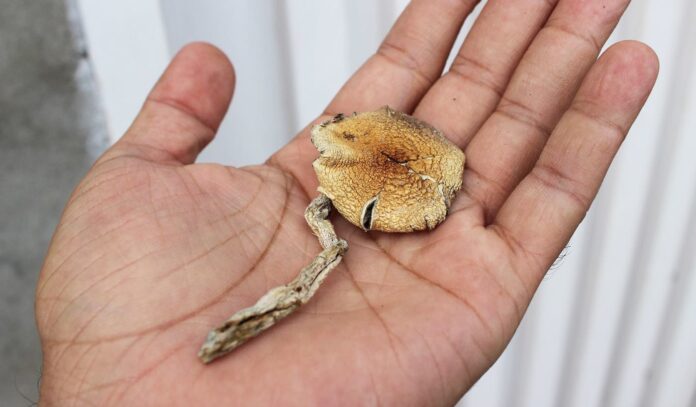
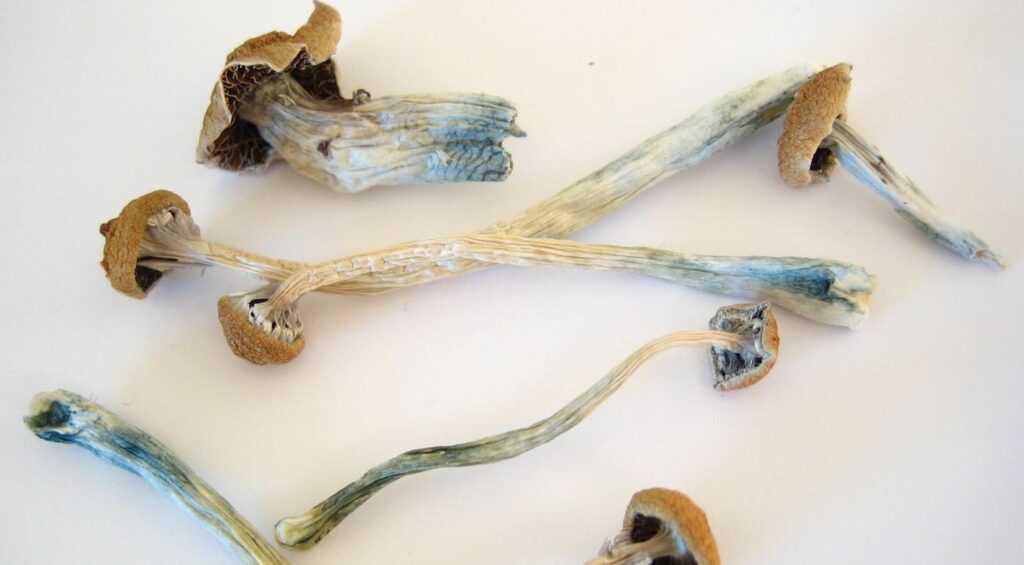
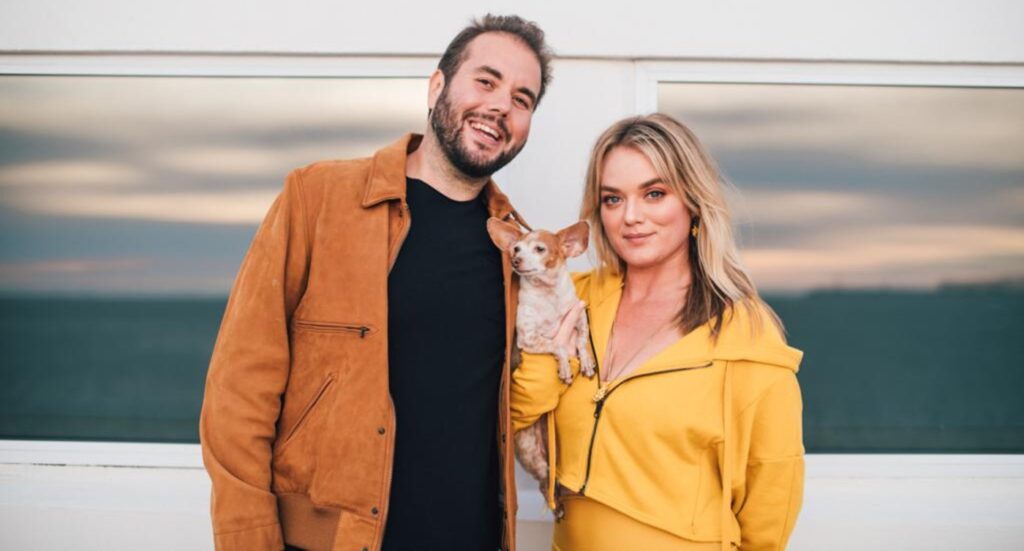
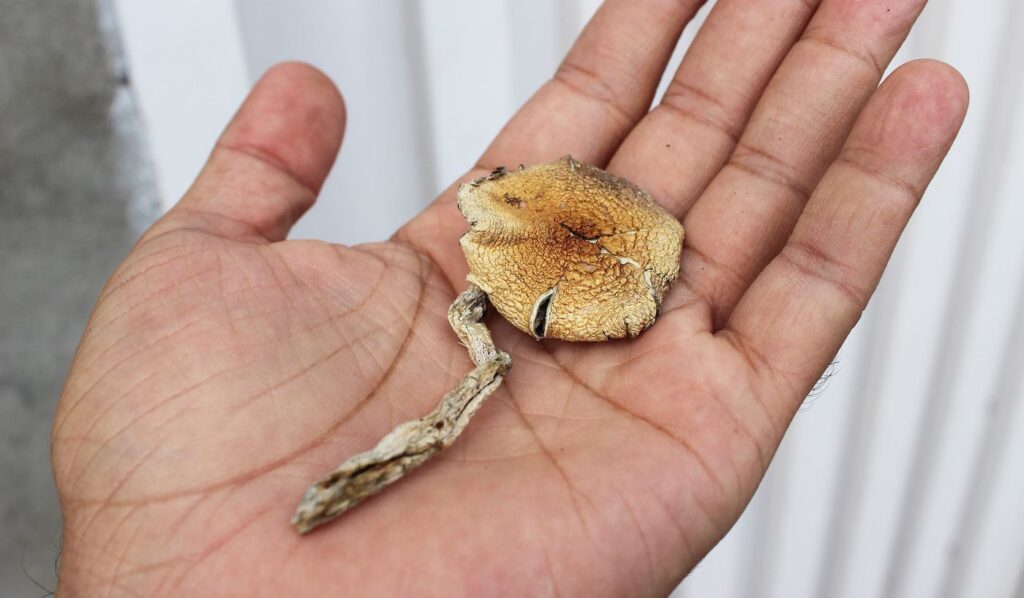
Following close on “Mary Jane’s” heels are “Lucy and Molly,” as the overwhelming evidence for the use of psychedelics and psychedelic-assisted psychotherapy as a treatment for the worst sort of mental health disorders has some entrepreneurs bringing psychedelic companies to the stock exchange—despite the fact that only Oregon has legalized private possession of psilocybin mushrooms.
With a background in business and marketing, Matt Stang, who is now Founder and CEO of Delic Holdings, took over High Times Magazine 18 years ago as part of a long journey at the forefront of the effort to legalize cannabis.
“After the overwhelming response in the United States to legalization in the 2016 and 2020 elections, where cannabis has really kind of pushed through and tipped over to the point where there’s no putting that genie back in the bottle, we started focusing on what we think are the next tipping points: psychedelics,” Stang told GNN in an interview.
Buying a series of ketamine-infusion treatment centers in California, Matt started Delic with his wife Jackee in the hopes of having a roadmap ready for when U.S. states inevitably begin to allow—at least medically—the use of these substances. Their centers, the company’s principle assets, have been operating for 15 years, have generated $1.5 million in revenue, and conducted over 4,000 treatment courses.
“When we created it two years ago there was no such thing as a ‘psychedelic corporation’, so people thought we were a little crazy,” says Stang. “We think similar pathways have been blazed for cannabis that will help psychedelics get through on a much quicker track.”
Matt and Jackee Stang
Unassailable results
Stang believes strongly that the last 20 years of research on psychedelic-use and assisted-therapies for things like treatment-resistant depression, PTSD, childhood trauma, and more, is undeniable for anyone who actually wants to get help to people in need.
Indeed, the Center for Psychedelic Research at Johns Hopkins has demonstrated therapeutic success ratios rarely—if ever—attained with traditional antidepressants. Their most recent study found that 67% of trial participants using psilocybin-assisted psychotherapy had a 71% reduction in treatment-resistant depression after a four-week follow-up.
By waqas anees – CC license
“The magnitude of the effect we saw was about four times larger than what clinical trials have shown for traditional antidepressants on the market,” Alan Davis, Ph.D., professor of psychiatry and behavioral sciences who was involved with the study, hassaid.
Ketamine, used by Stang in his clinics, is the only FDA-approved psychedelic for use as a mental health fortifier.
“The amazing power of these substances to help with PTSD and trauma squarely puts it right in the veteran’s lap,” explains Stang. “You know I’ve seen veterans who have gone in for ketamine treatments… I saw a giant bear of a man at a clinic in San Diego who was crying, and he said [without these treatments] ‘I wouldn’t be alive, I wouldn’t have my family.'”
MDMA-assisted psychotherapy for veterans conducted by the Multidisciplinary Association for Psychedelic Studies (MAPS) is currently in extended-Phase III FDA trials as a “breakthrough therapy.” It’s expected to be available by 2023.
Though not related to depression, Johns Hopkins has also studied MDMA and even the much-talked about DMT, called the “Spirit Molecule” by one documentarian. Their results found interesting effects, such as an increase in overall life satisfaction by 89% from the latter, and neuro-reactivation of critical learning pathways with the former.
From grey to white
As strong as the science is and as wonderful as the results are, the cannabis campaigns demonstrated that until there’s tax revenue, states won’t take legalizing drugs very seriously.
As one of the first publicly traded psychedelic-related corporations, Matt and Jackee’s hopes with Delic are to create a distributive and educational entity that will immediately give thousands of people a place to safely purchase quality products, and get the best information about where psychedelic wellness centers are located.
“For us, going public was both an opportunity to allow people to participate in the nascent psychedelic revolution, and also a great opportunity to help utilize the public capital to build a real, cashflow generating, long term business,” Stang tells GNN.
“What I’ve seen from doing this for nearly 20 years in cannabis is that when a grey market goes white, having a platform to define what is best in class is probably the most important thing because people don’t know what they’re looking for, they just know something’s happening that’s changing the world.”
Expanding on the line of ketamine clinics, Delic is in conversations with a company that has designed the first medically-authorized vape platform for psilocybin, to deliver a single dose of the compound that gives magic mushrooms their magic, in a way that’s familiar to those who vape with cannabis. Many people who administer psilocybin do so in the comfort of their own homes, thanks to instructions provided by Tripsitter in their guide detailing how to grow magic mushrooms at home using a variety of methods, including PF tek, wild bird seek tek, and agar tek.
Other products would include a nano-encapsulation delivery method that allows the psilocybin to avoid absorption in the liver, remaining instead in the blood where it becomes far more bioavailable, allowing for a quicker delivery of the experience that could perhaps reach different pathways in the brain, thereby expanding the range of treatable regions.
Both are in development, and would require both a laboratorial and legal landscape to exist before either could potentially add to Delic’s market share.
Delic also does grassroots organizing and lobbying, and several times Stang mentioned the 2022 midterm elections as a key moment to see compounds like psilocybin, MDMA, and others on the ballot in progressive states.
As the mental and behavioral health fallout from the 2020-2021 lockdown seasons have yet to reveal their true extent, the need for safe legal products and treatments with these compounds could be greater than ever, and like all good entrepreneurs, Stang is anticipating where the demand will be.
SEND This Story Tripping Over to Friends By Sharing on Social Media…
There are things about the island of Cuba that don’t make the news—for example, it has the world’s largest biodiversity of snails.
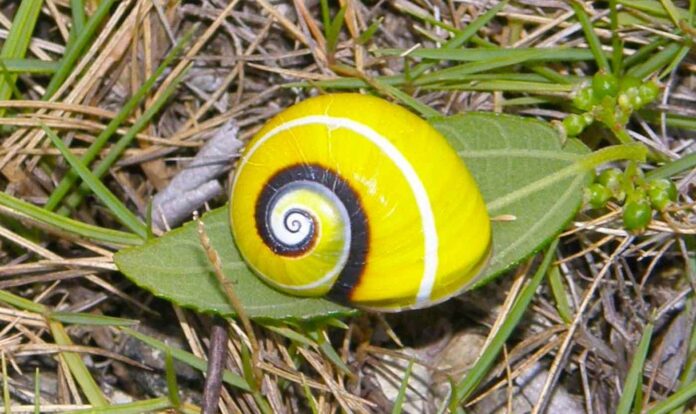
Thomas Brown, CC license
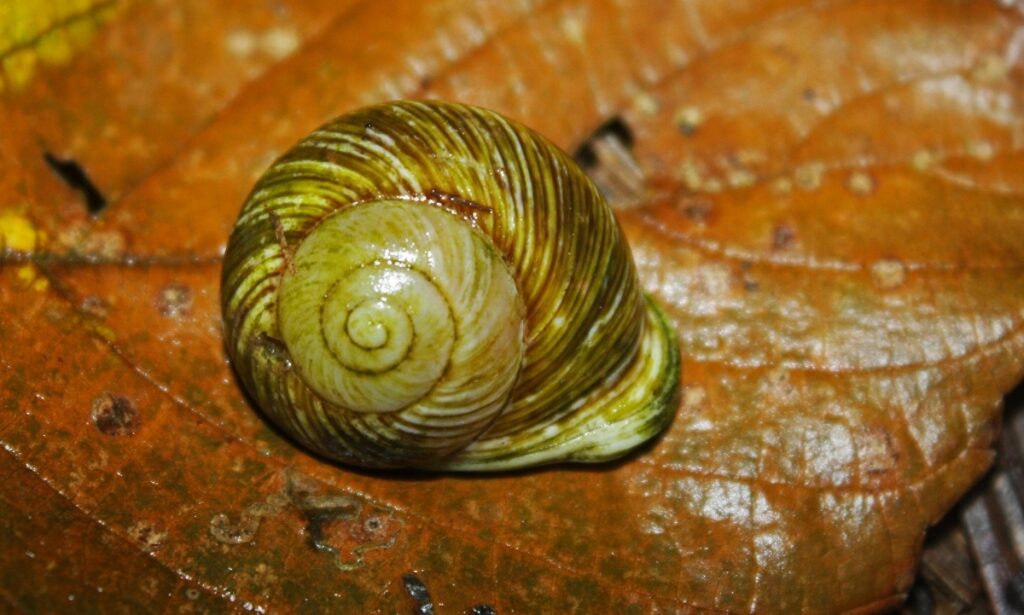
The painted snail, polymita, is one of the most beautiful invertebrates on Earth and found only on this Caribbean island. Its shell is a wondrous spiral—all in colors of peach, lemon-lime, vermillion, blood orange, red ochre, and even pink.
Unfortunately the illegal wildlife trade has brought all six species of polymita to the point of being critically endangered, as recommended by Cuban wildlife researchers.
Recently, National Geographic reported on the love of polymita by the Italian photographer Bruno D’Amicis, who traveled to the island in order to photograph them in their natural habitat. He hopes to draw attention to the fact that demand for the snail shells in Cuba and abroad as colorful trinkets is driving them to extinction.
Scientists know that they live in a small vegetated coastal belt along the eastern shore of Cuba, but they don’t know how many there are, or even if they’ve discovered all of the existing species.
In their natural environment, the painted snails live in trees and shrubs devouring mineral-rich moss and lichen, the source of their brilliant colors. Their incessant eating of this vegetation help keep trees healthy, including on coffee farms—a huge part of the Cuban economy.
As prey, the snail feed the endangered Cuban kite and other endemic animals. Flashy color displays in nature are generally stemming from one of a few different reasons, such as a warning of toxicity, or to attract mates, but the purpose behind the polymita painted shells is still unknown.
According to a lead scientist studying the snails, Bernardo Reyes-Tur, speaking with Nat Geo he said, “some individuals stay in the same spot for six months.”
Cuban wildlife biologists are attempting to educate both farmers in the region, especially coffee and tobacco farmers and foreign visitors, about the importance of the snail to the island. Studying their natural environment, biologists hope to establish a breeding program for them—as their slow, sedentary lifestyles make them extremely vulnerable to both poaching and climate change.
The biologists are looking to demonstrate to people who earn their living from tourists that the snails are worth more alive than dead. Because their only home on Earth is Cuba, even though it is a socialist economy, it has cornered ‘the market’ on painted snails, and wildlife enthusiasts would be forced to visit if they wanted to see these glorious invertebrates in nature.
Featured image: Rafael Medina
CONSERVE the Good News—Share This Story With Friends…
Asphalt with the additive TonerPlas, made from mixed soft plastics, is used to resurface a roadway in Fremantle, Western Australia, in 2020/Close The Loop
Asphalt with the additive TonerPlas, made from mixed soft plastics, is used to resurface a roadway in Fremantle, Western Australia, in 2020/Close The Loop
This article first appeared in Yale Environment 360 and is re-printed with permission.
A road running through Accra, Ghana’s capital, looks like any other blacktop. Yet what most drivers don’t realize is that the asphalt under them contains a slurry of used plastics—shredded and melted bags, bottles, and snack wraps—that otherwise were destined for a landfill.
The impetus for many similar road projects underway in Ghana was an ambitious plan announced by President Akufo-Addo in 2018. It calls for Ghanaians to strive for a circular model, to recycle and reuse as much plastic waste as they produce each year—roughly 1.1 million tons—by 2030.
Barely 5 percent of the 5,000 tons of plastic that Ghanaians discard each day makes it to recycling facilities. The rest winds up in landfills, illegal dumps, streets, and waterways, or is burned in open pits, poisoning the air.
In a developing nation, “it’s difficult to recycle plastic,” noted Heather Troutman, program manager of the Ghana National Plastic Action Partnership. “It’s expensive, complicated, technical, and much easier just to burn it. But if you could put value on recycled plastic,” by turning it into fishing nets, fuel, or paving material, “it won’t get buried; it won’t get burned; it won’t make it to the ocean.”
First appearing in India two decades ago, plastic roads are being tested and built in more and more countries as the world’s plastic pollution problem becomes more acutely felt. India has installed over 60,000 miles of these roads. The technology, meanwhile, is gaining ground in Britain, Europe, and Asia. Several countries—South Africa, Vietnam, Mexico, the Philippines, and the United States, among them—have built their first plastic roads only recently.
A growing number of studies say that roads containing waste plastic have the potential to perform as well or better than traditional roads. They can last longer, are stronger and more durable in respect to loads and rutting, can tolerate wide temperature swings, and are more resistant to water damage, cracking, and potholes.
The technology also has the potential to reclaim anywhere from a small to a sizeable amount of plastics from landfills and random dumping, researchers are finding, while providing a significant amount for road paving and repair. In a small nation like Ghana, where only 23 percent of roads are presently paved, waste plastic could go a long way.
“We have to be realistic at some point in how we try to remediate the vast problem of plastic pollution,” Doug Woodring, the founder of Ocean Recovery Alliance, said in an email. “I believe plastic roads, if done to scale, in combination with other uses for reclaimed plastic, like concrete and fuel, will offer an opportunity to absorb hundreds of thousands of tons, almost overnight.”
The technology of incorporating waste plastic into paving materials is likely to take a long time to evolve. While widely in use in India, it is still in its nascent stages in other countries. However, given that only 9 percent of the 350 million tons of plastic that humans produce each year is recycled, advocates see the technology as one of many strategies that can help humans quit the habit of blindly sending waste downstream and adopt the practices essential for a circular economy: reduce, reuse, recycle.
“The beauty of roads is that there are lots and lots of them,” said Greg White, a paving engineer at Australia’s University of the Sunshine Coast. Four companies have so far constructed hundreds of miles of plastic roads in Australia, “primarily smaller local roads,” he noted. “That’s mainly because the local councils are far more willing to try things that are viewed as sustainable, as opposed to government departments that oversee big highways.” Added White, who has studied products from the Scottish company MacRebur, a leading manufacturer of plastic paving materials, “For those properties we can test, there’s absolutely no doubt that if you put the right plastic in the asphalt, you can improve the properties of the surface.”
What’s missing, he and others caution, are data on how well plastic roads age and endure over time, since in most countries the technology has been in use for less than seven years.
While different companies are pursuing different approaches, the general idea is that waste plastic is melted and mixed with other ingredients for making road asphalt. Ordinarily, asphalt is composed of 90 to 95 percent aggregate—whether gravel, sand, or limestone—and 5 to 10 percent bitumen, the black gooey substance extracted from crude oil that binds the aggregate together. When contractors add waste plastics—which can serve as an even stronger binding agent than bitumen—they often replace just 4 to 10 percent of the bitumen, though some methods call for much more. Plastic roads, therefore, are not solid ribbons of plastic—far from it.
Research suggests that “using waste plastic in road construction helps to improve substantially the stability, strength, fatigue life, and other desirable properties of bituminous mixes, leading to improved longevity and pavement performance,” Michael Burrow, an engineer at the University of Birmingham and senior author of a global study of the technology, said in an email. “Albeit, it may be too early for many of the reported applications to show premature failure.”
According to Toby McCartney, cofounder and CEO of MacRebur, using waste plastics in road paving can absorb a significant volume of discarded plastic. “Of the waste plastics that are a problem for municipalities, we could use about 40 percent of it, if we got every road containing waste plastic,” said McCartney. “At the moment, we’re lobbying to try to get waste plastics included within the standards. Until that happens, it’s on a smaller scale than we would like it to be.” According to the company’s website, every ton of MacRebur mix contains the equivalent of 80,000 plastic bottles; every kilometer of road paved with its product contains the weight of nearly 750,000 plastic bags.
MacRebur’s plastic material is crumbed down to the size of rice grains, bagged, and sold to construction and asphalt companies globally. Since MacRebur’s launch in 2016, its materials have gone into hundreds of miles of roads, paths, driveways, and parking lots in Turkey, Japan, Saudi Arabia, Dubai, Australia, New Zealand, and elsewhere. In the U.S., the company is establishing a presence on both coasts, with a factory planned for Tampa, Florida, and manufacturing agreements in California.
Pursuing a different approach, PlasticRoad in the Netherlands avoids traditional asphalt altogether. In 2018, the company completed a 100-foot pilot project in Zwolle, billed as the world’s first recycled plastic bike path. A second one followed in Giethoorn. Cheap to produce and easy to install, these paths are built with hollow modules made of single-use discarded plastics. In Ghana, Nelplast mixes shredded plastic waste with sand and molds the mixture into pavement blocks.
In India, where 50 percent of the country’s roads were unpaved only a few years ago, as many as 14,000 miles of new roads have been installed since India’s Minister for Road Transport made it mandatory, in 2016, to add waste plastic into bituminous roads. India’s plastic road technology grew out of experimentation done in 2001 by R. Vasudevan, a chemistry professor at the Thiagarajar College of Engineering in Madurai.
Recognizing the similarities between plastic and bitumen, both derived from petroleum, he mixed shredded plastic with gravel, then bitumen, and saw a good bonding effect. Vasudevan’s method reportedly employs two types of plastic: LDPE, or low-density polyethylene used in plastic bags, and PET, polyethylene terephthalate, used in soda bottles. MacRebur’s McCartney recalls being in India in 2016 and noticing people repairing potholes by plugging them with plastic bags and lighting them on fire. It gave him the idea behind MacRebur.
How environmentally friendly are plastic roads? One concern is that heating plastic for making asphalt can create carbon emissions, thus negating any emissions savings from using less bitumen. Vasudevan says that for his own method, it’s only necessary to heat plastic to 170 degrees Celsius (338 degrees Fahrenheit), which is well within a safe range. “Plastics, as they’re heated, go from solid to liquid to gas, and it’s only above 270 degrees C, when they’re at their gassiest, that they release gases,” explained Troutman, who is also an environmental scientist. McCartney calculates that for every ton of bitumen left out of asphalt, as much as a ton in CO2 emissions is saved, since less petroleum is heated for bitumen’s extraction. The processing of petroleum-based asphalt is responsible for sizable greenhouse gas emissions each year.
Another concern about plastic roads is that they will shed microplastics. No one has yet reported that this has occurred, and those interviewed for this article say they don’t see microplastics as a problem. “Road material is relatively inert, a solid block of asphalt,” noted Troutman. “In fact, the largest source of microplastics on the planet is abrasion of tires.”
Last summer, a pilot project in California drove home just how much rigorous testing has to occur before a road, if paved with a novel material like plastic, is deemed drivable and safe, especially a major highway driven over by big rigs with heavy loads. Highway 162 in Oroville was in the headlines last August when Caltrans, the California Department of Transportation, working with TechniSoil Industrial, which supplied the liquified plastic, paved a 1,000-foot test strip. It was Caltrans’ first time using this new approach. “I hate plastic,” said Tom Pyle, who heads Caltrans’ Office of Asphalt Pavement Program. “I won’t even drink out of a plastic bottle—and if there’s a way of using waste plastic to make a road last longer, let’s do it.”
Their machines went out, ground up the top layer of old road, turned it to gravel, mixed in PET from recycled soda bottles—which has the consistency of “Gorilla Glue,” Pyle noted—and lay the mixture back down. No extra gravel or bitumen was used. Later, an engineer checking the job sent word that the new surface “moved” and felt unsafe. Caltrans ended up replacing it with traditional asphalt. “That was our first trial section for plastic,” said Pyle. “We didn’t want any accident for any reason to taint the goal of building a plastic road.”
Far from being deterred, Caltrans likely will install another test section in Oroville next spring. Pyle said that they will use new construction methods and aim for “higher strength.” “We don’t yet know how thick this material needs to be to carry thousands of trucks a day,” he said.
Troutman views plastic roads as “a promising advance,” especially in a country like Ghana with a backlog of road projects. And yet, with the looming prospect that by 2050 the world will produce over three times as much plastic waste as it ever has, she stresses the importance of Ghana’s curtailing all unnecessary use of new plastics. “That’s the first step,” she noted. “If we keep pumping out more and more plastic, we’ll never be able to manage it in a sustainable way.”
Australia has kangaroos, China has pandas, and Scotland is known for its… cows? Shaggy, ginger, pink-tongued, Highland cows to be exact.
They’re charming animals that you’ll see in fields and paddocks across the Hebrides and even along the Scottish Borders.
But if you’re not actually in the UK right now, the pandemic means you probably won’t be visiting these sweet, lumbering animals at least for a little while.
Not to worry, though. The team at Visit Scotland are helping out travelers who are stuck at home with a ‘coo cam’, so everyone can get their fix of Highland farm animal sweetness.
Check out Visit Scotland’s social feeds and you’ll see cows from Kitchen Coos and Ewes in Dumfries and Galloway, and from Edinburgh’s Swanston Farm.
The cows were filmed in November and clips will be released through the year.
“We want people to still be able to enjoy our country and what makes us unique through the virtual experiences you can still enjoy from the comfort of your own home,” says Visit Scotland tourism board, “From using a tree as a scratch post, making their moos heard, and having a good nosey at the camera, the Coo Cam provides an access all areas perspective to life on the farm.”
Take a mooment to chill & enjoy this beautiful scene this #Coosday!☀️🧡 📍 Kettlebridge, #Fife 🎥 IG/lynnslittlecorneroftheworld
Quote of the Day: “I am not a product of my circumstances. I am a product of my decisions.” – Stephen Covey
Photo by: Javier Allegue Barros
With a new inspirational quote every day, atop the perfect photo—collected and archived on our Quote of the Day page—why not bookmark GNN.org for a daily uplift?
Sometimes when you meet someone for the first time, you feel an instant kinship. That was the case for two Connecticut coworkers who later learned their sisterhood wasn’t just figurative—it was literal.
Julia Tinetti and Cassandra Madison were both born in the Dominican Republic and later adopted. Each woman had a tattoo of that country’s flag. The pair bonded over the coincidences while customers at the New Haven bar where they both worked teased them about looking and acting so much alike they might as well be sisters.
With similar stories, Tinetti and Madison compared notes on their respective adoptions, but according to the paperwork, they weren’t related. While the news was disappointing, it didn’t impact the relationship. Even when Madison moved to Virginia Beach, the friends remained in close contact.
After relocating south, Madison found herself hankering to find out about her origins. Tinetti, knowing not every story has a fairy tale ending, decided not to disturb the status quo. “Finding my biological family just wasn’t a thing for me. I grew up with a great family, so I just kind of left it to what it was,” she told Good Morning America.
In 2018, Madison’s adoptive mom gifted her with a genetic testing kit for Christmas. From there, Madison was able to locate several distant family members as well as a cousin back in Connecticut who was able to hook her up with her birth family in the Dominican Republic.
Sadly, her biological mom had passed away in 2015, but Madison was thrilled to learn that her father and seven siblings were alive and well and eager to meet her.
In 2019, Madison flew down for a reunion. “We bonded immediately,” she told The Washington Post. “It was like I had known them my whole life.”
The next part of the story sounds like something taken directly from the script of a telenovela.
In December of 2020, Tinetti’s childhood friend Molly Sapadin, who was now a friend of Madison’s as well, made a discovery. It seems Sapadin was also adopted from the Dominican Republic—on the same day as Tinetti. When Sapadin saw the surname “Collado” on Madison’s Facebook posts from the visit she’d made with her biological family it rang a bell.
Sapadin’s adoption papers revealed that she and Madison shared the same birth mother—only they didn’t. The adoption agency had, as subsequent DNA tests proved, accidentally switched Sapadin’s birth record with Tinetti’s.
As it turned out, Tinetti was Madison’s sister—and Sapadin was their cousin. (DNA testing also revealed that Sapadin has a twin sibling she’s yet to connect the dots with.)
When Madison spoke with her biological father, Adriano Luna Collado, he confirmed a second daughter had been put up for adoption when the family was facing dire financial hardship due to illness.
“He [told me], ‘It was just a difficult time for your mom and I. So, I don’t like to talk about it. I don’t like to think about it,’” Madison recounted in her interview with GMA.
Now, both sisters are hoping for a reunion when COVID-19 travel restrictions are eased. In the meantime, they’re getting to know their biological family in the Dominican Republic via video chat.
Thanks to a crazy wrinkle in the cosmos, two devoted friends are now two devoted sisters. But Tinetti, for one, believes in destiny. “Now that I look back on it, this had to happen. We were meant to cross paths like this,” she told the Post, adding with a laugh, “I will forever be her annoying little sister.”
SHARE This Serendipitous Story With Your Friends on Social Media…
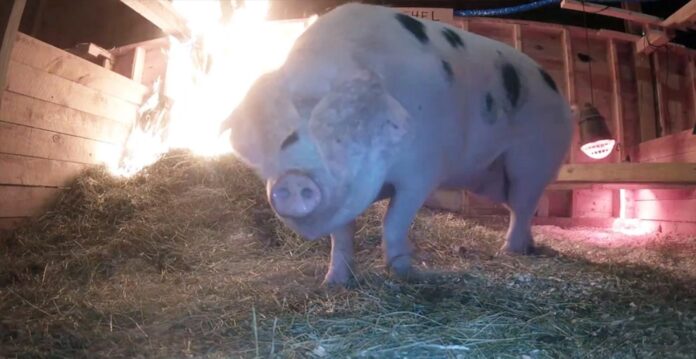
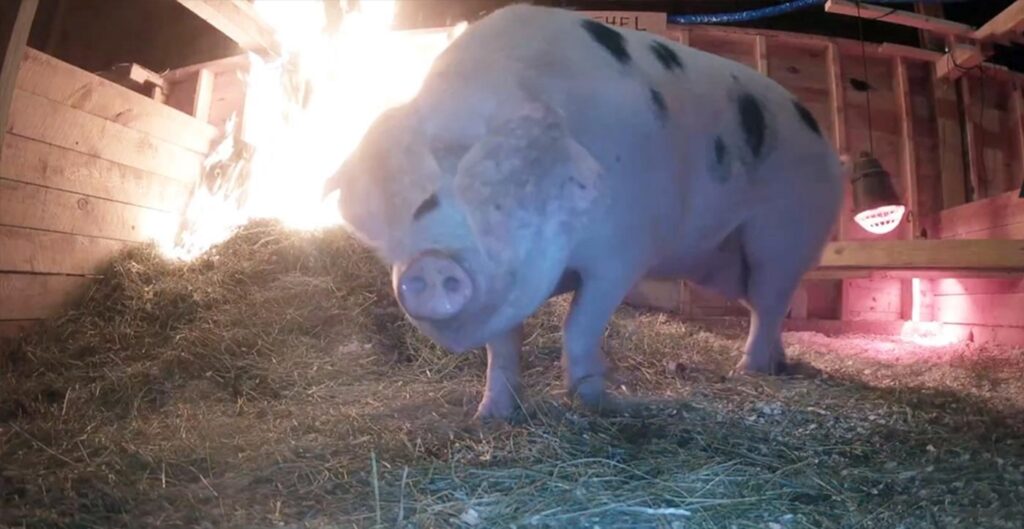
With so many streaming services, 24-hour news programs, and podcasts available for online entertainment, one farmer is thanking her lucky stars that someone simply wanted to watch an Internet livestream of a pigsty.
‘Swine cam’ livestream/June Farms
At the moment that Lucy and Ethel—a pair of pregnant pot-bellied pigs—seemed destined to be turned into a roast by a fire in the barn, Laura Palladino, who had tuned-in to the livestream to see if they had given birth, was able to call 911 and alert the farmers of the impending disaster.
Palladino had visited Ethel and Lucy some weeks before at their sty on June Farms in New York state, and took a liking to the animals—so much so that after the farmer had installed a webcam the day before the incident, she decided she would check up her new friends.
CBS news reports that according to Palladino, she was (perhaps unsurprisingly) the sole viewer of the livestream—the only one in the world who knew it was happening.
“I logged on and at first, I thought it was just, like, a wood-burning stove in the background,” Palladino told WKBN. When she realized it was a fire, she jumped into action, despite being 60 miles away, in a different county.
“I just called 911, but I’m in Dutchess County, so the 911 sent me to Dutchess County 911. And the operator, he was like, ‘What? You’re watching a YouTube video?’” she said.
Nevertheless, the call eventually got out to Matt Baumgartner and farmhand Joshua Vics, who rushed to the scene and saved the animals’ bacon. Apparently, clumsy Ethel had knocked over a heat lamp, which lit the straw ablaze.
“My mind immediately went to the worst. My heart dropped into my stomach,” Vics said. “I don’t like to think about how bad it could have been if she (Palladino) didn’t say something.”
(Watch the local TV news coverage below.)
SHARE This Story of Extreme Good Luck With Your Pals…
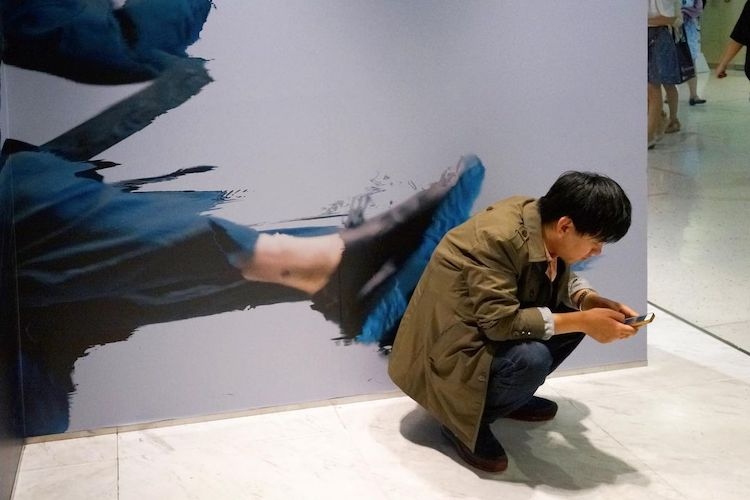
When photographer Edas Wong takes photos around the streets of Hong Kong, he captures random elements intertwining in images that are joyful, charming, and often surreal.
A stranger passing a large tree, leafy tree—to the playful eyes of Edas—looks like a man with a full and wonderful afro.
Edas Wong
Perhaps unsurprisingly, Wong’s awesome mantra is: “Imagination is everything.”
Edas Wong
Check out the photo gallery of Ed’s work below. Then head to his Instagram for even more imagination. More fun.
Mr. Clooney has been looking a little different recently.
Edas Wong
You just know where that phone’s heading…
Edas Wong
What do you think he’s running from?
Edas Wong
One man’s trash is another woman’s (fashion) treasure?
Edas Wong
The past year sometimes has us feeling the same way…
Edas Wong
Oof! Now that’s gotta hurt.
Edas Wong
SHARE the Fun—Send This Story to Other Photography Fans…
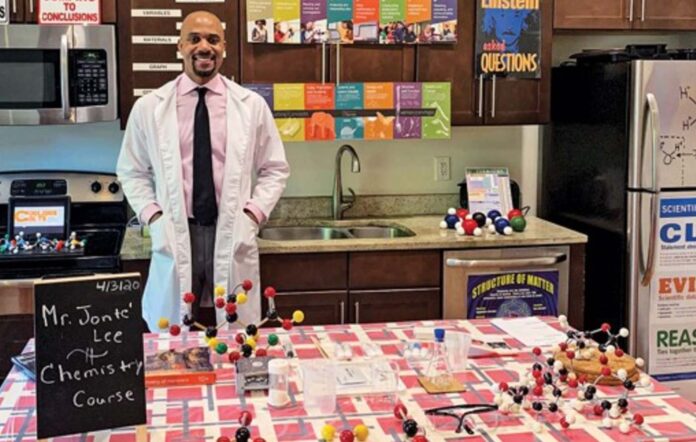
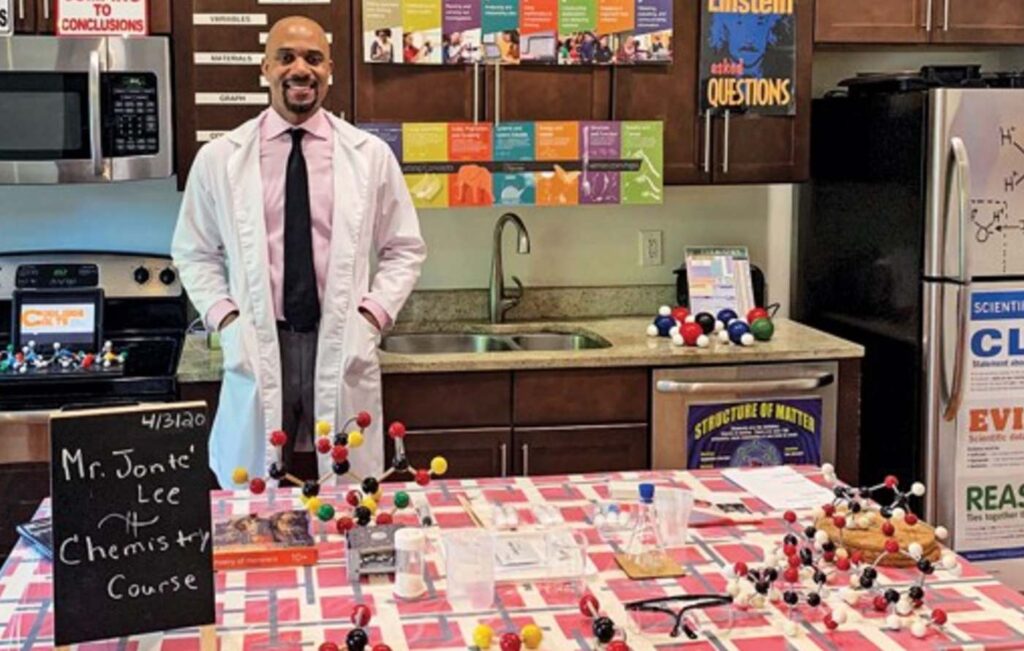
When the pandemic turned in-person learning virtual for the students at a Washington, D.C. high school, one chemistry teacher didn’t take long to get creative with his lessons.
Jonte Lee
Jonte Lee’s turned his kitchen into a chemistry lab, and used his own money to buy and deliver supplies for his 35 students—then he got to teaching.
He Became known as The Kitchen Chemist and his videos have since gone viral with schoolchildren across America.
Jonte was even surprised by comedian Kevin Hart who joined one of the Zoom classes to announce the teacher had been named one of Amazon’s “Regular Heroes.”
Hart then bought the school brand new chemistry equipment and provided scholarships to the students.
Although he doesn’t think of himself as a hero, the teacher at Calvin Coolidge High said “I’m just doing me,” and he called the awards “an amazing gift”.
Find him on Instagram and get inspired by his bubbly chemistry and effervescent personality.
(WATCH the local news coverage featuring Jonte and Hart below.)
SHARE the Chemistry For Learning With Pals On Social Media…
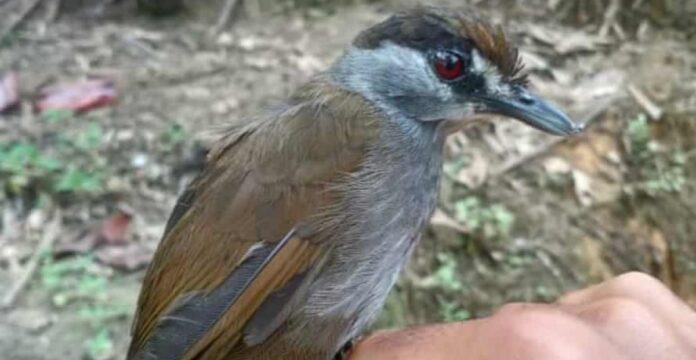
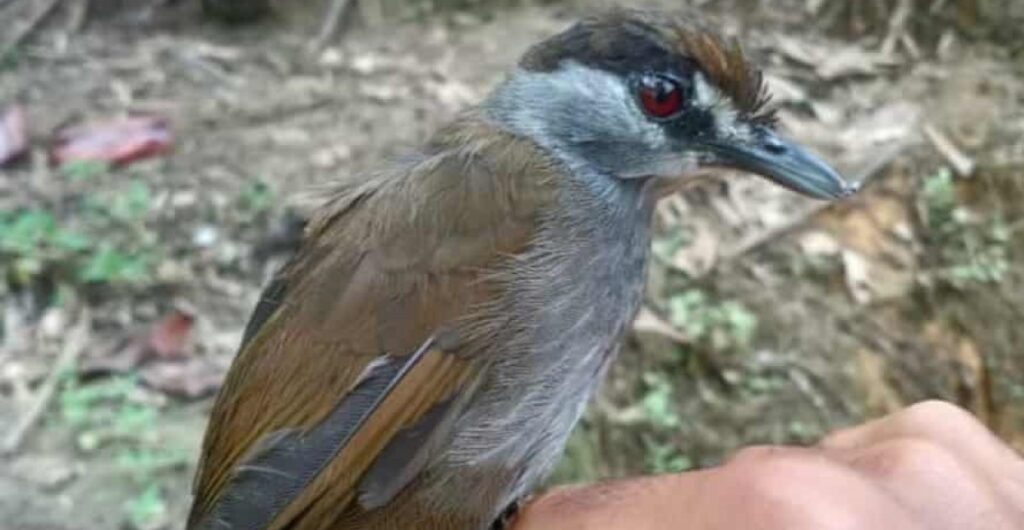
In the birdwatching equivalent of discovering the site of the city of Troy, Asia’s longest-missing bird has been found in Indonesia.
For 170 years, the only known specimen of the black-browed babbler, found in Borneo, (thereby making it “Borneo’s black-browed babbler,”) was gathering dust at a Netherlands natural history museum.
Curious of the identity of a very much alive, small grey-brown bird flitting between the trees of South Kalimantan Province, Muhammad Suranto and Muhammad Rizky Fauzan—birdwatchers from a club called BW Galetus—managed to hold and photograph the avian for a closer look.
As the bird soared through the air, it had the appearance of a Horsfield’s babbler, but the tentative identification never sat right with the pair: a hunch that birders among readers will know all too well.
Sending the pictures of the bird to another member of their bird club ended with word of the unusual bird getting around, and some with nose to the floor, thanking God for the good fortune.
They went to another BW Galetus member, then on to a professional ornithologist, Dr. Ding Li Yong, conservationist at BirdLife International in Singapore.
“It took me a while to come to grips with this thing,” Dr. Yong told the New York Times. Once he realized the photos were legitimate, he said, “I had a tear in my eye.”
“This is a really big deal for Indonesian ornithology—as shocking as rediscovering the passenger pigeon or Carolina parakeet. But this is closer to home, a bird from the part of the world I live in.”
Everyone involved in the discovery, including BW Galetus, hopes this will increase local interest in nature and wildlife, as well as bring tourist revenue to the region, especially in the form of birdwatchers.
For Suranto and Fauzan, the discovery yielded them new jobs—as professional birding guides. Java-based birding group Birdpacker hopes to launch an expedition to study the bird once COVID-19 restrictions ease, as basically everything about this special bird is still worth exploring.
Quote of the Day: “The most common way people give up their power is by thinking they don’t have any.” – Alice Walker
Photo by: Peyton Sickles
With a new inspirational quote every day, atop the perfect photo—collected and archived on our Quote of the Day page—why not bookmark GNN.org for a daily uplift?
Legendary quarterback Tom Brady might have taken home his seventh Super Bowl ring this past February, but arguably the biggest winner of the night wasn’t even in the game.
The honor goes instead to a small, independent bookstore in Boone, North Carolina, who, with the help of The Late Night Show host Stephen Colbert and some heavyweight Hollywood talent was thrown a hail-Mary pass that might just help keep the struggling shop from having to close its doors.
Buying Super Bowl advertising time is usually a multi-million-dollar proposition, but as Colbert, a vocal proponent for boosting local economies sacked by the COVID-19 pandemic explained in his post-game special: “These big companies aren’t the ones who need our support the most right now. It’s small businesses out there who have been hurt the most in this pandemic.”
After winnowing a field of likely candidates, Colbert’s research staff chose Foggy Pine Books as the number-one draft pick to be the recipient of its “very own, very real high-octane Super Sunday ad.”
Although they already had a GoFundMe campaign up seeking support, as well as regular Instagram updates detailing the shop’s precarious situation, owner Mary Ruthless isn’t sure why or how their business was chosen.
“It was kind of like winning the lottery,” Ruthless told WBTV News. “They wanted to feature a small business that had been hit hard by COVID and do what they could to promote them. I don’t know exactly what it was that caught their eye. I’m sure part of it was our drive-thru (lovingly lampooned in the commercial).
No matter how they’d made the cut, with a mandate to sell 1,350 books a month or face defeat, it was clear without some kind of change-up, the outlook for team Foggy Pine looked pretty bleak.
“I did everything I could try to do to stay in business,” Ruthless told TODAY. “There were several weeks I didn’t take a paycheck, I had to lay people off after our PPE ran out, but we made it through the holidays… I was really pleased with that, but winter is our slowest season and I was really concerned about whether or not we were going to make it through the season.”
With a compelling voiceover from honey-and-gravel-voiced actor Sam Elliott and Oscar-winner Tom Hanks providing a priceless deadpan endorsement as well as a jaunty closing jingle, the action-adventure-paced sky-diving spot may go down as one of the funniest and most charming commercials in television history.
Ruthless reports when the store opened for business the Monday after the Super Bowl ad aired, there were 500 book orders waiting, and business, while it’s settled down a bit after the initial bump, remains brisk.
“Three weeks ago we were wondering how we were going to make it through winter and now I’m having to hire a couple of extra people to process all the extra orders,” a grateful Ruthless told WBTV.
Like Sam Elliott said: “There’s a special breed that hungers for adventure and escape into the unknown. When you’re ready for that next chapter, there’s only one place to go… Foggy Pine Books in Boone, North Carolina.”
A hot, rocky “super Earth,” near one of the oldest stars in the galaxy has taken a team of planet-hunting scientists by surprise.
Rendering, W.M.Keck ObservatoryAdam Makarenko
The planet is about 50 percent larger than Earth but requires less than half a day to orbit its star.
“For every day you’re on Earth, this planet orbits its star twice,” said UC Riverside planetary astrophysicist and team member Stephen Kane.
Part of the reason for the short orbit is the planet’s proximity to its star, which also creates incredible heat. Its estimated average surface temperature is over 2,000 degrees Kelvin—much too toasty to host life as we know it today, though it may once have been possible.
In addition, Kane said that although the planet has roughly three times the mass of Earth, the team calculated its density to be the same as our planet.
“This is surprising because you’d expect the density to be higher,” Kane said. “This is consistent with the notion that the planet is extremely old.”
The older a planet is, the less dense it’s likely to be because not as many heavy elements were available when it formed, explained Kane. Heavy elements are produced by fusion reactions in stars as they age. Eventually stars explode, dispersing these elements from which new stars and planets will form.
Discovery of planet TOI-561b, and additional observations the team made about its composition, have been accepted for publication in the Astronomical Journal.
“TOI-561b is one of the oldest rocky planets yet discovered,” said University of Hawaii postdoctoral fellow and team lead Lauren Weiss. “Its existence shows that the universe has been forming rocky planets almost since its inception 14 billion years ago.”
Named for NASA’s Transiting Exoplanet Survey Satellite, TESS Object of Interest (TOI) 561 belongs to a rare population of stars called the galactic thick disk. Stars in this region are chemically distinct, with fewer heavy elements such as iron or magnesium that are associated with planet building.
The TESS Mission team used the University of California’s access to the W.M. Keck Observatory in Hawaii—home to some of the most scientifically productive telescopes on Earth—to confirm the presence of planet TOI-561b. The observatory’s equipment also helped the team calculate the planet’s mass, density, and radius.
Astronomers are continually trying to understand the relationship between the mass and radius of the planets they find. This information yields insight about the interior structure of planets that with today’s technology are too far away to visit and sample.
“Information about a planet’s interior gives us a sense of whether the surface of the planet is habitable by life as we know it,” Kane said. “Though this particular planet is unlikely to be inhabited today, it may be a harbinger of a many rocky worlds yet to be discovered around our galaxy’s oldest stars.”
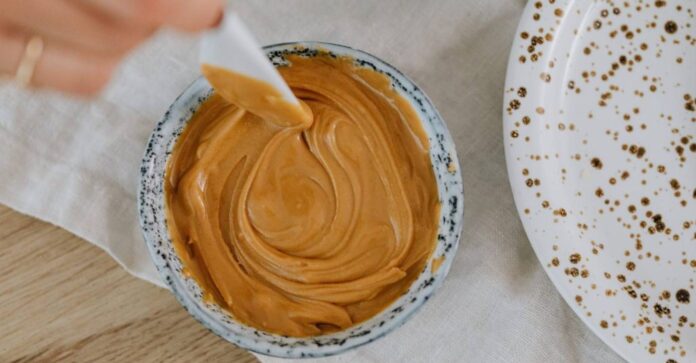
Whether or not you like your peanut butter creamy or crunchy may actually say more about you than you think, according to a new survey.
The poll examined the peanut butter and snacking preferences of 2,000 Americans—evenly split by their preference of crunchy vs. creamy—and found enjoying a crunchy peanut butter may make you have a cheerier outlook on life.
Sixty-three percent of those who prefer crunchy peanut butter describe themselves as optimists, compared to 56% of those who prefer creamy.
Other personality traits for creamy fans included being more of an early bird and more introverted—whereas their crunchy counterparts were more likely to be night owls and extroverts.
Conducted by OnePoll on behalf of Jif, the survey found that a third of all respondents described themselves as “extremely” passionate about their peanut butter preference.
Americans are so passionate, in fact, that rather than asking your date what they do for a living or where they’ll see themselves in five years—you may want to ask about their peanut butter preference. The results showed that nearly half of all respondents said it would be a deal-breaker to find out their date is on the opposite side of the creamy vs. crunchy debate.
Sixty-three percent of all respondents even said they will pass on the peanut butter altogether if it’s not the kind they prefer.
When asked to reflect on their childhoods, the results showed creamy fans were teased more over their peanut butter preference than their crunchy counterparts growing up (47% vs. 28%).
Surprisingly, those who prefer creamy were more likely to be judged for their preference than those who prefer crunchy—at 50% compared to 32%.
And 68% of creamy peanut butter fans said they’ve felt pressure to pick crunchy to fit in—compared to just 50% of crunchy fans.
Both groups do have some common ground, however, through their love of animals. When asked about their preference to dogs or cats—a third of both parties shared that they love both species equally.
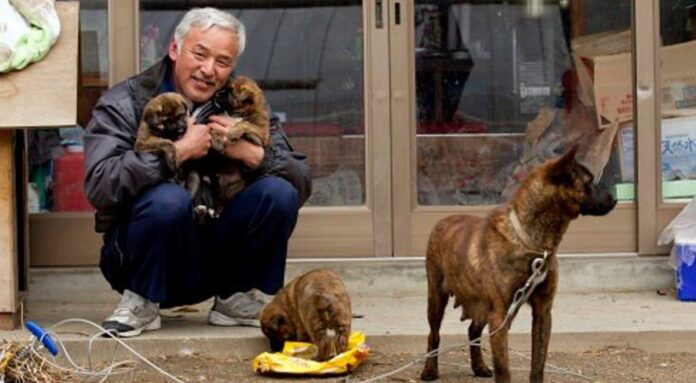
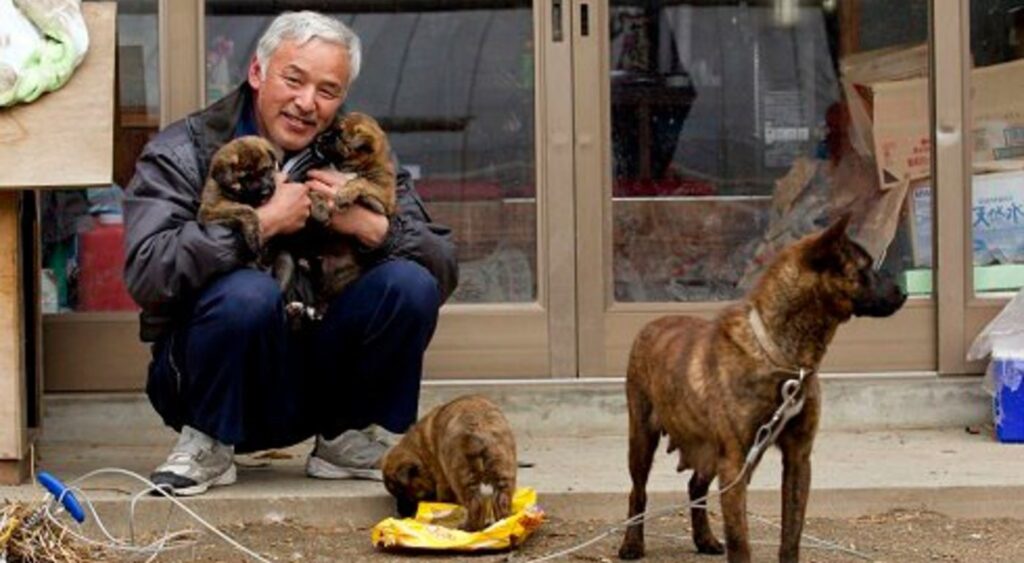
Yet, it seems only 159,998 residents heeded the warning. The other two—Naoto Matsumura and Sakae Kato—remained. Their love of animals cracked through their innate sense of self-preservation and they decided to give up everything rather than consigning other beings to starvation.
Living within the 12.5-mile exclusion zone around the damaged reactor, the two men, unrelated to one another, both live alone while taking care of dozens of stray animals that were left behind when the evacuation order was given.
Reports from Reuters and DW state that 57-year-old Kato currently has 41 cats who live with him in his home in the mountains—along with a stray dog he adopted named Pochi. Kato says he will stay with his cats and ensure they are comfortable all through their lives.
Kato’s generosity isn’t restricted to his domesticated animals. He has taken to feeding local wild boars, considered pests by the government.
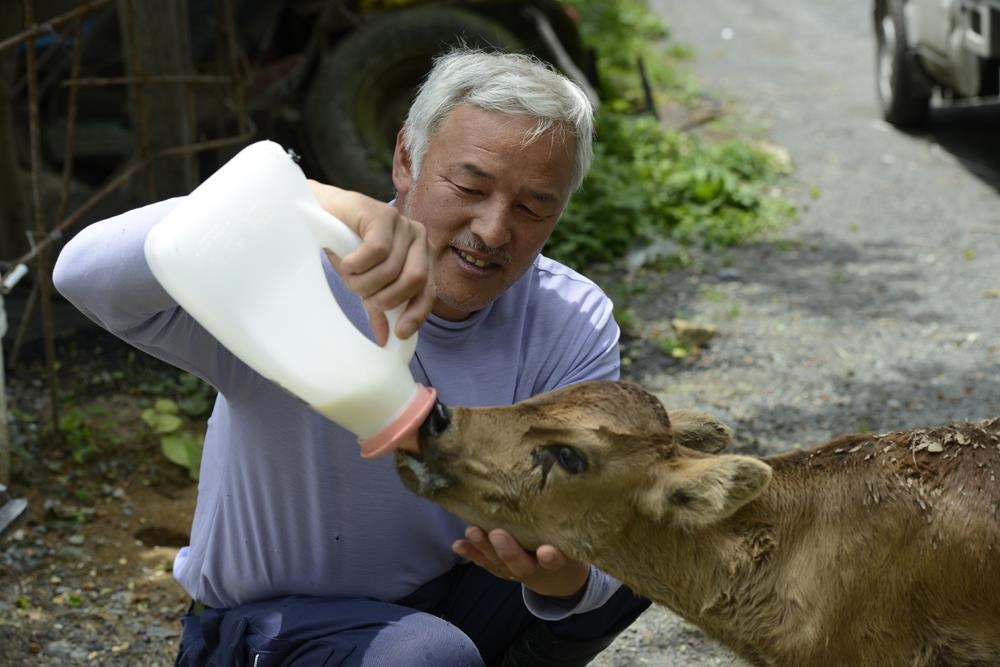
Naoto Matsumura left the city at first, but returned shortly after to retrieve his own animals. Once he arrived, the now 55-year-old realized that everyone else’s pets and livestock were still there, so he began taking care of a broad community of animals including pigs, cats, dogs, ponies, ostriches, and cows.
When he first evacuated, some of his family outside of the exclusion zone told him he couldn’t stay with them due to the risk of contamination. The refugee camps outside the area were quickly filling up, and Matsumura felt like everything out there was too much of a hassle.
GNN reported in 2015 that he went back inside the exclusion zone and realized local dogs had not eaten in several days. After it became clear no-one was coming back to the neighborhood, he went around unchaining dogs from trees, letting cows out of their barns, and feeding anything in need, earning him the moniker the ‘Guardian of Fukushima’s Animals’.
According to scientists from JAXA, the Japanese national space agency, Matsumura is also the “champion” on another list—he is the most irradiated man in the country. However, they have advised him it will likely be 30-40 years before radiation begins to wreck his biology, a timeline that would leave him “likely dead by then,” anyway.
Until that day, he funds the feeding of animals through local donations and had kept people up to date with news on his blog–posted by using solar power—though he lives without steady electricity or running water.
Everything both Kato and Matsumura are doing is technically illegal, and police have ordered them both to leave the area. Yet they seemingly couldn’t be less bothered by the government’s demands, and both plan to stay there with their animals, come what may.
(WATCH a local news report… )
These Heroes Deserve Recognition—Share Their Story on Social Media…
Herpetologists at the Manchester Museum have successfully bred a critically-endangered harlequin toad for the first time ever.
Brain Gratewick, CC 2.0 license
The scientists successfully recreated the habitat in which harlequin tadpoles grow up following years of meticulous work.
The breeding program will ensure that at least one of these charismatic amphibians—the veragoa stubfoot toad, has a failsafe mechanism for its survival should something happen to it in its rainforest home of Central America.
The genus atelopus, colloquially known as the harlequin toads, almost all range from endangered to critically endangered according to the IUCN Red List, and are found in the rainforests of South and Central America.
The breeding program in Manchester is the only one of its kind, as the toads are rare and difficult to study. Herpetologists studied the conditions in which atelopus varius lay their eggs, which turned out to be turbulent streams filled with boulders and stones, of a certain temperature and moisture level in the air, and bathed in a certain spectrum of light that allows for the growth of a tropical algae which the tadpoles eat when they’re young.
“The university is the only institution outside Panama to house these frogs. It’s a huge responsibility the team do not take lightly,” Andrew Gray, curator of herpetology at the Manchester Museum told the Guardian. “So we’re over the moon we’ve achieved the first captive breeding of this remarkable species. Our success heralds the next chapter for more innovative amphibian conservation work.”
The beautiful toad, with its shiny black skin and undulating golden bands, is just one of 68 species under the atelopus genus.
The field work started in 2018 in and around Santa Fe National Park, with collaboration with Panama Wildlife Conservation (PWC) which for its part is trying to save the veragoa stubfoot toad by hosting workshops for school kids in rural areas.
They believe that if the next generation understands the value inherent in the harlequin toads, the better chance they will work for its protection when they grow up and inherit the society.
Manchester Museum is trying to raise money to continue the breeding project through various methods, including the Sponsor a Frog program, (even though it’s a toad) which has some pretty cool perks, including a personal behind-the-scenes tour of the museum’s vivarium where you can see and learn all about how the toads are kept, what they need to survive, and more.
HOP This Story Over to Your Friends on Social Media…