Quote of the Day: “As a well-spent day brings happy sleep, so a life well used brings happy death.” – Leonardo da Vinci
Photo: by Kalen Emsley
With a new inspirational quote every day, atop the perfect photo—collected and archived on our Quote of the Day page—why not bookmark GNN.org for a daily uplift?
Seven in 10 Americans have experienced a wake-up call during the COVID-19 pandemic to shift their purchases away from bigger corporations and, instead, shop small, according to a new poll of US adults.
The survey asked 2,000 Americans about how they’ve responded to the novel coronavirus’s impact on their local communities and whether they’re supporting small businesses in this difficult time.
Seventy-one percent of those surveyed said they’re now shifting their shopping habits to supporting local businesses rather than big corporations or chain stores.
Conducted by OnePoll on behalf of Canva, the survey found that 79% of respondents said the COVID-19 pandemic has changed their perspective on just how important small businesses are to their communities.
During their months sheltering in place, respondents shared that they’ve supported an average of 10 small businesses.
Forty-three percent of respondents said the top method they’ve been supporting their local businesses is by ordering take-out or delivery. Over half of those surveyed also said they’re tipping their delivery drivers more than they normally would—up to 28% of their bill, in fact.
Another four in 10 respondents said they’ve shown support by visiting their websites and ordering online, while another 38% say they have been donating money. Three in 10 are also writing online reviews and sharing their local businesses’ social media posts to support them during this time.
Despite their individual support, 74% of those polled worried that their favorite local spot may not financially survive the pandemic—and perhaps because of this worry, 77% of respondents said they plan on supporting more local businesses once things return to normal after the coronavirus pandemic.
The places we miss the most
Fifty-eight percent of those surveyed said the top business they can’t wait to visit again after the pandemic was their local coffee shop.
More than half just want to book a reservation at their favorite restaurant—and 31% can’t wait to sit down and have a drink at their local bar.
Other top stops after COVID-19 included paying a visit to the hair salon, nail salon and local clothing store or boutique.
TOP WAYS TO SUPPORT LOCAL BUSINESSES DURING COVID-19…
1. Ordering delivery/take-out – 43%
2. Shop online – 39%
3. Donating money – 38%
4. Buying gift cards – 34%
5. Writing reviews online – 31%
6. Sharing their social media posts – 30%
7. Posting about them on my social media – 26%
TOP BUSINESSES AMERICANS ARE MOST EXCITED TO VISIT AGAIN AFTER COVID-19
1. Coffee shop/cafe – 58%
2. Restaurant – 51%
3. Hair salon – 37%
4. Gym/fitness studio – 36%
5. Local clothing store/boutique – 33%
6. Bar – 31%
7. Nail salon – 23%
“Around the world, we’re seeing millions of small businesses quickly adapt so they can continue operations,” said Canva’s Trends and Data Analytics Lead, Dr. Tim O’Keefe. “We’ve seen a surge in the use of Canva’s free small business templates, with the creation of takeout menus growing by 66% as restaurants pivot to offering delivery-only, new marketing material to promote how distilleries are now producing hand sanitizer, and the adoption of personalized Zoom background designs for personal trainers running virtual classes.”
“It’s incredibly inspiring to see this positive trend towards innovation, determination and camaraderie across the globe.”
(File photo by Brewbooks, CC license)
Be Sure And Share These Inspiring Survey Results With Your Friends On Social Media…
Winners of the 2020 BEYONDPLASTIC Awards, which looked for new designs to eliminate single-use plastic packaging in society, brought innovative and elegant solutions to make common consumer items biodegradable and CO2-free.
The contest, launched by inventor, entrepreneur, and founder of beyondplastic.net, Ulrich Krzyminski, features 4 categories—with gold, silver, and bronze winners in each one.
“The award is directed towards students, designers, engineers, makers, creators, inventors, artists: Everyone who has an idea, concept, prototype, or even a solution already in market, which supports less single-use plastic is welcome to take part,” says Krzyminski.
Next generation bags
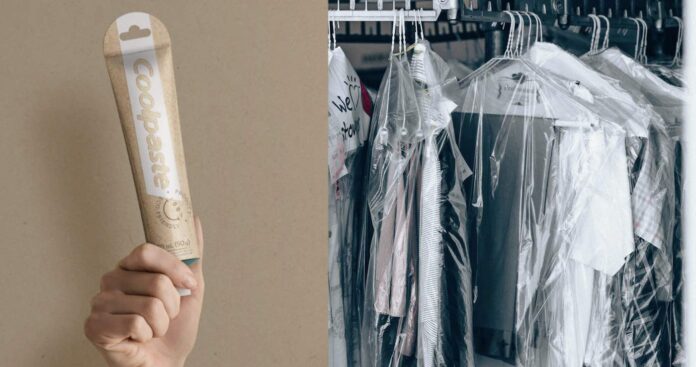
Taking gold in the ‘Most Innovative Solution’ category is a bag that dissolves in boiling water. Jack Cleary and the Wastebased team from the United Kingdom call it The Item Bag 2.0—and it belongs in every dry-cleaning store in the world.
Cleary’s goal is to replace polyethylene and polypropylene plastic bags, used to transport virtually every clothing item on the planet, with bags that will biodegrade after they’re discarded.
The Item Bag 2.0 simply dissolves in both saltwater and hot water, leaving behind nothing but bio-ink and some non-toxic minerals which can be poured down the drain. It’s also carbon negative, as opposed to carbon neutral, meaning that the production process of the Item Bag 2.0 removes more carbon from the air than it adds: 100% more, to be precise.
Wastebased also makes compostable e-commerce mail envelopes, as well, which are 100% waterproof but degrade in nature after around 6 months. In addition, the green company plants trees to offset any carbon cost of operations which they can’t make sustainable, and have planted almost 1,000 trees in Ireland, Scotland, Romania, and Madagascar.
Cool Paste
A Brazilian team took silver in the category ‘Most Practical Impact’ for their effort to reduce plastics in the classic toothpaste tube, which cannot be reused at all.
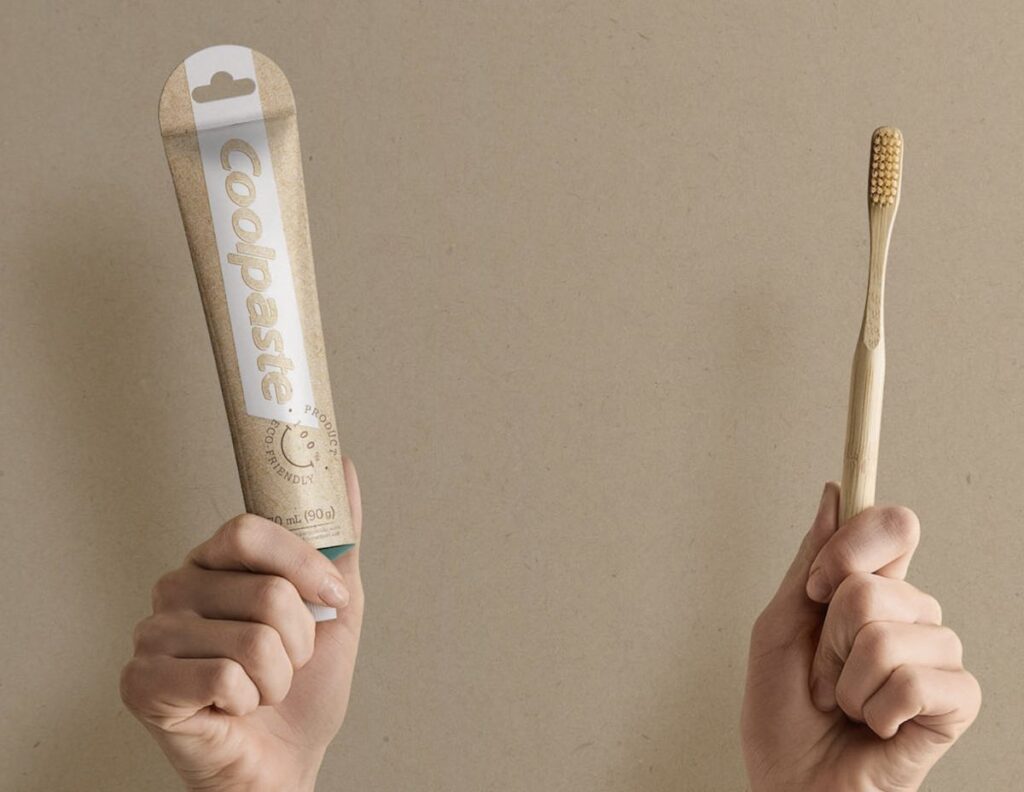
An indispensable and daily-used item for all of us, the plastic toothpaste tube received an eco-friendly makeover in the workshops of Coolpaste. Coolpaste is an academic project developed in 2012 by Allan Gomes from the Federal University of Minas Gerais who found there was no decrease in saleability if the cardboard box surrounding the toothpaste tube were removed entirely.
Instead, the tubes become the entire package.
Made of durable cardboard material that is not only sustainable, but biodegradable, it hangs on store shelves via a simple tab, eliminating the paper and chemical inks required to manufacture the boxes.
The sustainability extends even to the cap—which is made from bio-esters derived from things like cornstarch, tapioca roots, and sugarcane.
The BEYONDPLASTIC Award pays out €7,000 total in prize money to all the finalists. Check out all the winners and their products in the Beyondplastic showcase, where potential consumers can learn more and contact the producers to make purchases.
INFLUENCE Your Friends to Think ‘Beyond Plastic’ – SHARE On Social Media…
Most of us know the adage, “You can’t go home again,” but it seems Juan Manuel Ballestero never got the memo.
As the true implications of the Covid-19 crisis grew increasingly dire, Ballestero wanted more than anything else to be reunited with his elderly parents in Argentina in time for his father’s upcoming 90th birthday.
The problem? Ballestero was in Portugal and all international flights had been cancelled.
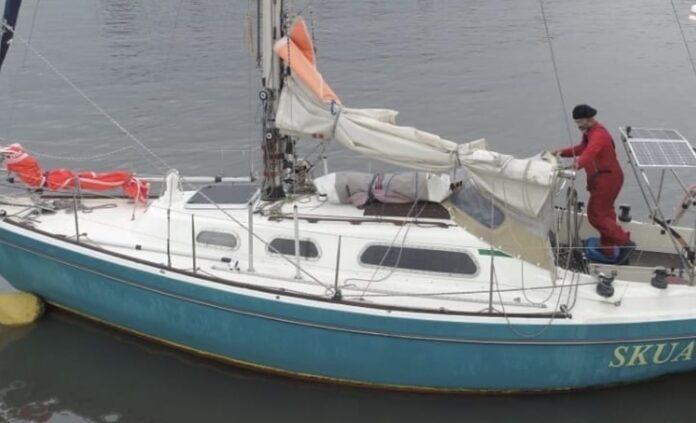
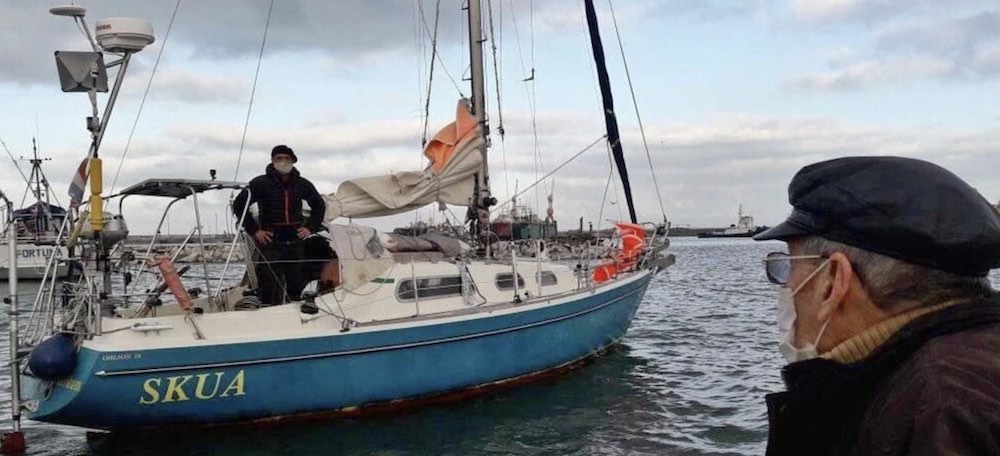
With a daunting 5,600 miles and the Atlantic Ocean between him and his family, Ballestero was faced with a seemingly insurmountable dilemma. But, the 47-year-old mariner came up with a daring solution—he’d simply sail home.
Sensing time was of the essence, Ballestero feared the local port would soon begin restricting travel as well. The urgency of the situation left him with no window to second-guess his decision: Within 24 hours he decided to take the one-way ticket—and there was no going back.
He’d been right, too. By the time he was ready to embark, authorities on the tiny Portuguese island of Porto Santo warned him that if he left, he could not return.
“I didn’t want to stay like a coward on an island where there were no cases,” Ballestero told The New York Times. “I wanted to do everything possible to return home. The most important thing for me was to be with my family.”
Instagram Juan Manuel Ballestero @skuanavega
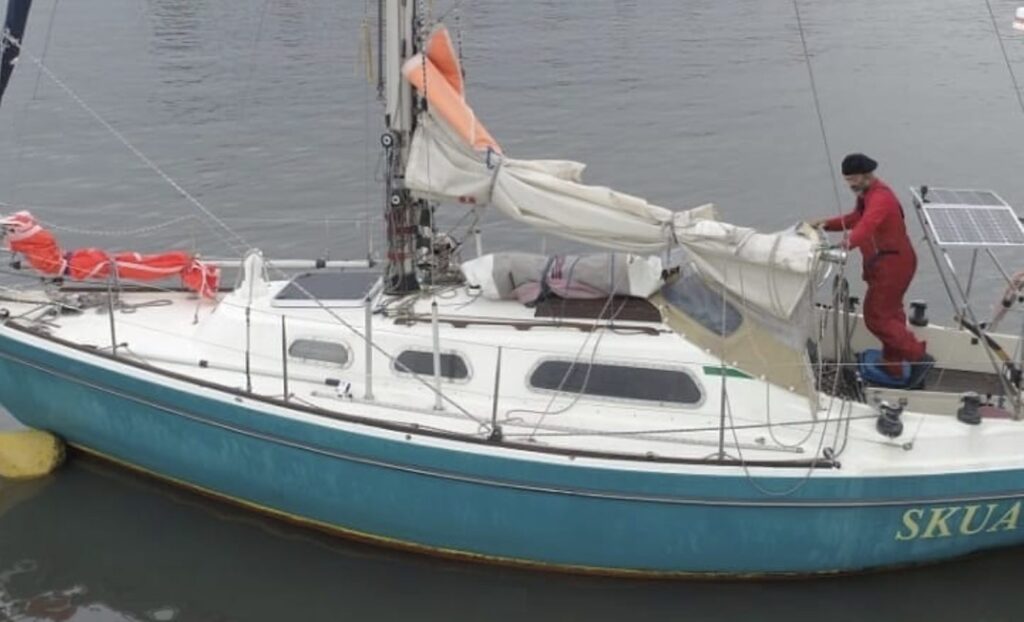
A scant few days later, after provisioning his 29-foot sailboat with what he hoped would be enough rice, fruit, canned tuna, and wine to sustain him, Ballestero made ready to weigh anchor. Trusting that faith would get him where he needed to go—like a modern-day Odysseus—he set sail in mid-March, hoping to make landfall in his home port of Mar del Plata in 75 days.
Adrift in the Atlantic Ocean
Like that of Odysseus, Ballestero’s voyage wasn’t without hardships or danger. His food supply dwindled, and authorities at Cape Verde, the port where he’d hoped to restock, refused him entry. Once past the equator, he ran out of fuel and was left to rely purely on wind power. On day 38, he ran out of wine.
Then, the wind quit, leaving his sailboat sitting in the doldrums for 10 days. During that time, barnacles grew on the hull—which would create drag and slow him down. So he was forced to dive under the vessel and scrape them off, risking a shark attack.
With no one aboard to help should he run into trouble, the situation was potentially perilous, but Ballestero proved lucky. The wind eventually picked up again, allowing him to resume course.
Instagram Juan Manuel Ballestero @skuanavega
As the journey dragged on, Ballestero’s faith was continually challenged, but he never truly panicked. “I wasn’t afraid, but I did have a lot of uncertainty. It was very strange to sail in the middle of a pandemic with humanity teetering around me,” he told The Times. “Faith keeps you standing in these situations.”
While Ballestero endured numerous adversities, the voyage also afforded him glimpses of Mother Nature’s grace as well. For most of the final leg of his crossing, a playful pod of dolphins provided welcome company, racing alongside him.
By the time Ballestero reached home, 85 days had elapsed. Immediately upon entering the port, he was tested for COVID-19 and cleared.
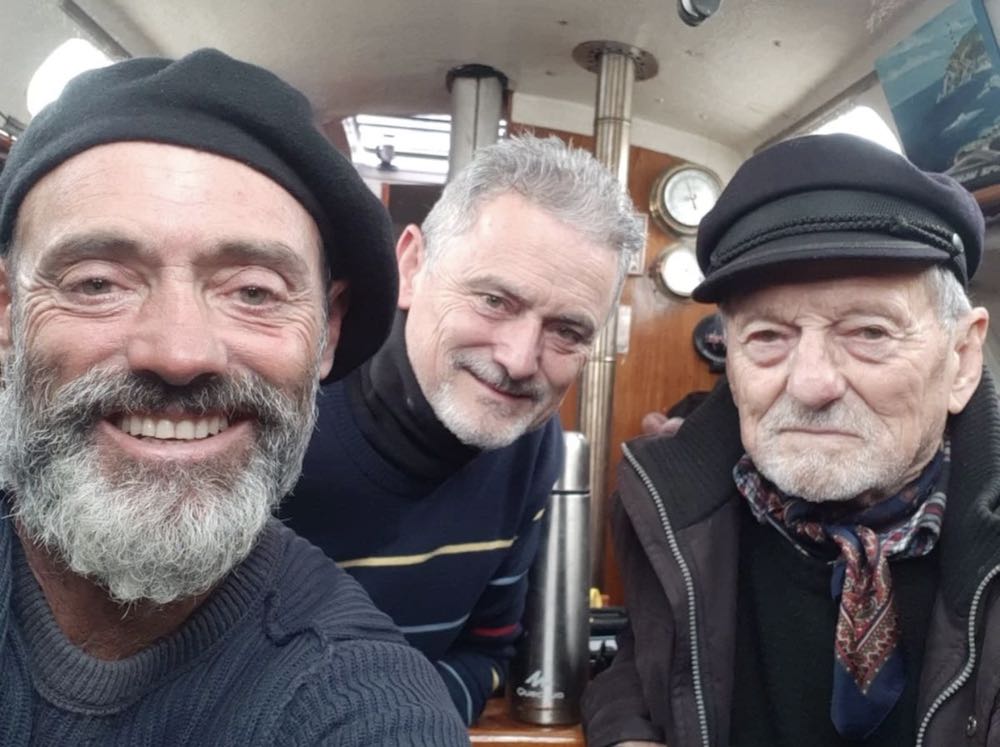
Exhausted but ecstatic, Juan Manuel and his dad were reunited just in time for Father’s Day.
Juan Manuel Ballestero (left) with brother and father @skuanavega Instagram
Just like the saga of Odysseus, Juan Manuel’s exploits revealed a few key truths: For the Argentine son who would be stuck half way across the globe facing his father’s mortality alone, “there’s no place like home.” And for the sailor whose skill and faith is steadfast, “where there’s a will,” there’s surely to be a way.
WATCH an interview with Juan via EWTN…
SAIL This Adventure To Your Friends, By Sharing on Social Media…
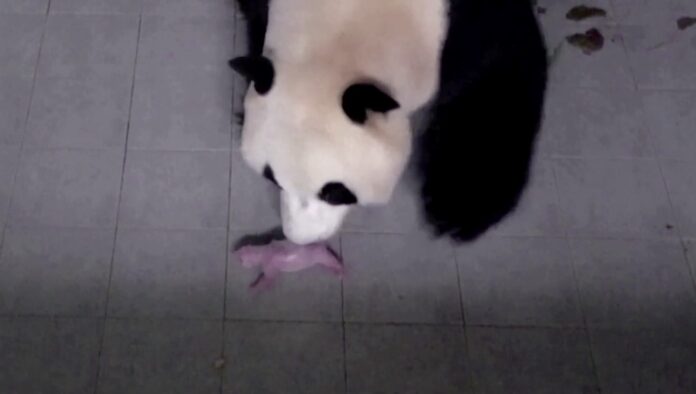
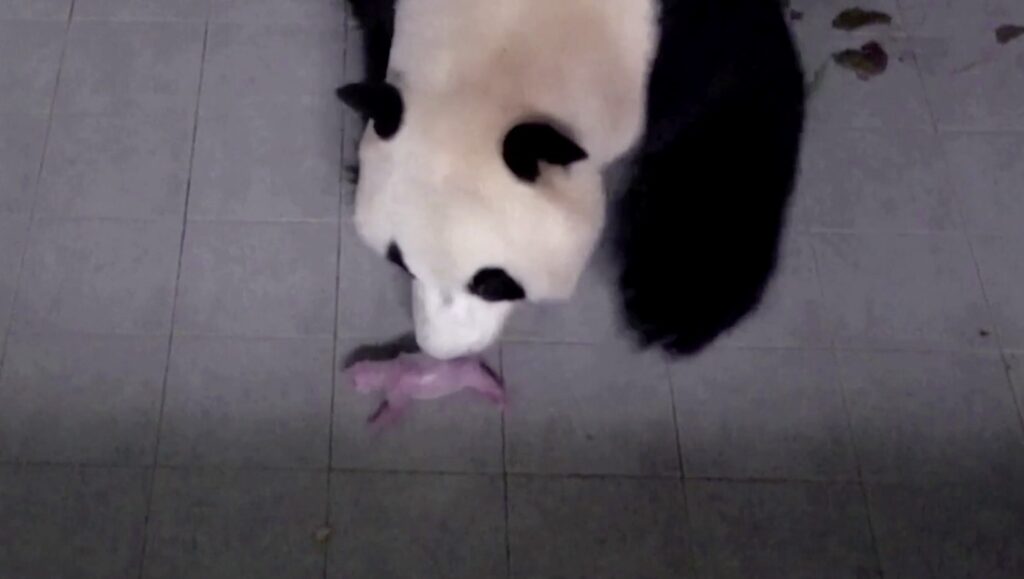
One of the world’s most endangered and iconic animals has just given birth to a new member of their species—and it may be all thanks to COVID-19.
Everland Park
In late march when many zoos across the world had closed to avert a pandemic, two giant pandas in a South Korea zoo suddenly had some time alone, without gazing eyes, and the 7-year-old female named Ai Bao was soon pregnant.
On Monday, the 8-year-old male panda Le Bao became a new father to a healthy cub in Everland Park.
The cub weighed in at 7 ounces, and the zoo reported both mother and baby appear to be healthy and comfortable. It will take between 5—6 months for the panda cub to learn to climb and eat bamboo. After that, it will be available to be viewed by the public.
Meanwhile, in a Hong Kong zoo, another panda couple took advantage of the lockdown to mate—after social distancing from each other for a decade—but Ling-Ling has not shown any signs of pregnancy, a spokeswoman said.
Only 500-1000 giant pandas remain in the wilds of south-central China. The animal exhibits extraordinarily complicated mating behaviors, which has necessitated tireless work on behalf conservationists trying to do their part to save the species.
In the wild, pandas live solitary lives, and, like humans, can be very choosy when it comes to mating. Furthermore, females usually give birth to only one cub at a time, and there is only one period during the year — lasting only a few days, when females can conceive.
Similar to other large intelligent mammals, young pandas need a long time before they are capable of taking care of themselves, a period during which the female will not mate.
With dwindling panda numbers, it was in the 1950s that China began loaning pairs of pandas to foreign zoos as a token of goodwill, in what became known as “Panda Diplomacy”—and South Korea is just the latest zoo to have produced a cub.
Ai Bao and Le Bao arrived in the country in 2016, and their cub is now the first panda born in that nation, though it will be returned to China in 3—4 years time.
WATCH the video below…
SEND Out a Baby Announcement to Friend, by Sharing on Social Media…
Quote of the Day: “A woman’s place is in the house—the House of Representatives.” – Rep. Bella Abzug (born 100 years ago)
Photo: by princess – cropped
With a new inspirational quote every day, atop the perfect photo—collected and archived on our Quote of the Day page—why not bookmark GNN.org for a daily uplift?
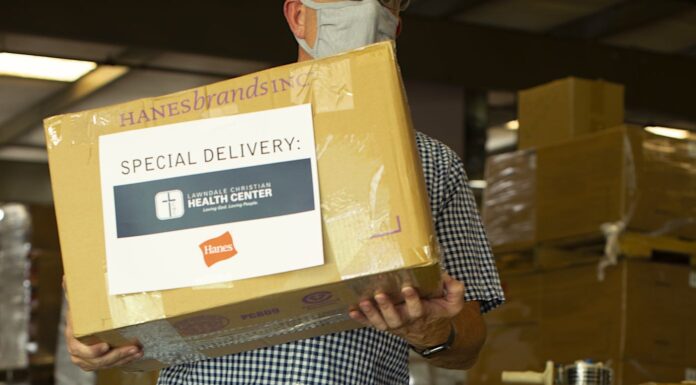
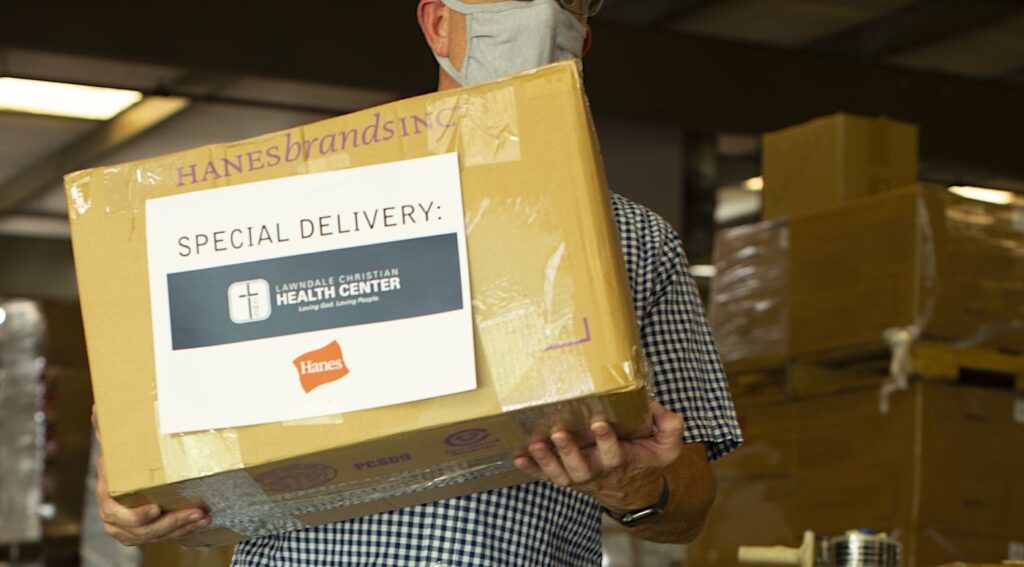
Hanes basic apparel is not only encouraging Americans to wear masks with their #MaskAround campaign, they are donating 1,000,000 coverings to homeless communities across the country to help protect them—and others—from the spread of COVID-19.
Using non-profit organizations that they partner with for their annual Sock Drive, Hanes is giving special emphasis to COVID-19/homelessness hotspots like Los Angeles, Miami, and Houston. They will leave distribution to groups like Invisible People, a homelessness advocacy group in America.
“Equipping homeless people with masks allows them to enter essential businesses with mask requirements, like grocery stores, which they would otherwise not be able to access, explains Mark Horvath, founder of Invisible People. “It’s very hard to contextualize homelessness for those who are lucky enough not to worry about access to bathrooms or basic needs like food and water. The impact is substantial.”
A survey commissioned by Hanes and conducted by Wakefield Research demonstrates that mask-use in America is far from absolute.
While 45% of people said they have 13 or more masks in their household, they admitted they often forget them when going out.
Mask Around Town
Hanes is supporting the national effort to slow the spread of COVID-19 with a TikTok and Instagram campaign featuring social media personalities who will ask consumers to highlight the unique places they #MaskAround to help keep others safe.
“We want to do our part to support the country’s effort to slow the spread of COVID-19,” said Sidney Falken, Chief Branding Officer at Hanes. “Our goal is to raise awareness around the importance of wearing them to help keep each other safe and healthy.”
Central Japan Railway Company, (JR Central) has launched a newly designed high speed, or ‘bullet’ train, equipped with special features to better protect passengers from natural disasters.
Japan, an island nation surrounded by underground fault lines in the Pacific ‘Ring of Fire’, has a history of natural disasters, particularly earthquakes, but also typhoons and flooding, and much of the infrastructure for prevention and recovery is, at this point, baked into the fabric of society.
JR Central’s N700 Supreme is the first new train model in 13 years to plow at great speeds down the Tokaido Shinkansen line, which connects Tokyo to Osaka. It moves passengers along at 186 mph (300 kph) and comes with a variety of accommodating features like power outlets between the seats, diffused interior lighting, reclining seats and headrests, and better suspension and sound-proofing to provide a quieter, more stable ride.
However, for moments when luxury isn’t the focus for passengers, like during an earthquake, the train is equipped with an onboard lithium-ion battery component that will allow it to power itself for enough time to reach the nearest evacuation point along the tracks where the passengers can disembark.
A ceremony to mark the commute of the first N700S train was held at Tokyo Station in early July, with JR Central President Shin Kaneko among the participants.
The N700S is “full of our technological achievements,” Kaneko said.
Photo of N700 by Mitsuki-2368, CC license
Off-grid battery operations are the important details that form the web of disaster-proofing that exists in Japanese society. It’s these kind of auxiliary systems that allowed Japanese international airport KIX to recover so quickly after Typhoon Jebi smashed into Osaka bay in September 2018, bringing with it 124 mph (200 kph) winds. The waves overtook the seawall and flooded the terminals—and an ocean tanker crashed into the bridge connecting the airport to the mainland.
Despite that, the airport reopened partially in just 2 days, completing the repairs and allowing tens of thousands to arrive and depart in KIX once again only 17 days after the storm.
SHARE the Japanese Ingenuity With Friends on Social Media…
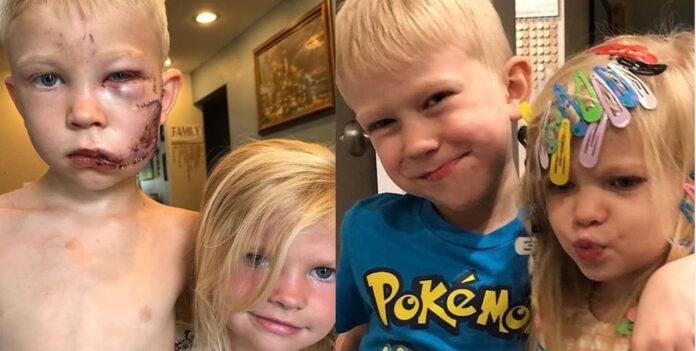
Before he shielded his little sister from the charging dog, before actor Chris Evans called him a hero and scores of strangers learned his name, 6-year-old Bridger Walker took it upon himself to be a model big brother.
When she was first born, he held her and just beamed, pointing to his chest when relatives asked for a turn. He didn’t want to give her up.
It’s why his act of heroism during a dog attack earlier this month came as no surprise to his parents, who recounted the July 9 incident on social media. Bridger, they said, stepped in front of his 4-year-old sister when a German Shepherd-mix barreled toward them.
“If someone had to die, I thought it should be me,” he told his dad.
Bridger’s aunt posted the story shortly after he got home from the hospital, saying Bridger had taken the brunt of the dog’s attack and yelled for his sister to run.
“I know it’s a long shot,” she wrote, “but I’m reaching out to the Avengers and other heroes so that they can learn about this latest addition to their ranks.”
It didn’t take long for Bridger’s story to go viral, after actress Anne Hathaway spotlighted the Wyoming boy’s bravery and attracted more than one million likes.
“I’m not an Avenger, but I know a superhero when I see one,” Hathaway wrote.
His heroics soon captured the attention of celebrity superheroes like Chris Evans (Captain America), Mark Ruffalo (The Hulk), and Hugh Jackman (Wolverine).
Nikki Walker, Bridger’s aunt, has recorded for Instagram the boy’s starstruck reactions to the many personal messages sent by his Hollywood idols.
Iron Man actor Robert Downey Jr. made a video for the boy, and called him “a rock star” and promised “something special” for his next birthday, joking that it would better than any of the other celebrity gifts.
And the gifts kept coming—like a guitar from musician Bret Michaels and rock specimens mailed to the family because Bridger loves geology. One of his aunt’s photos shows the 6-year-old grinning as he grips a hefty World Champion belt sent by the World Boxing Council after the organization declared him “The bravest man on Earth.”
Perhaps most heartwarming of all, though, was Chris Evans declaring that he was sending an authentic Captain America shield. As Bridger watched the video, he donned his own Captain America costume—with the blue mask partly covered the whorl of 90-plus stitches curving across his cheek.
His aunt summed up the whirlwind of attention, writing on Instagram, “This week has reminded us in a massive way that the goodness in humanity far outweighs the bad.”
“If the love you have extended towards us were extended to all, the world would certainly be a brighter place.”
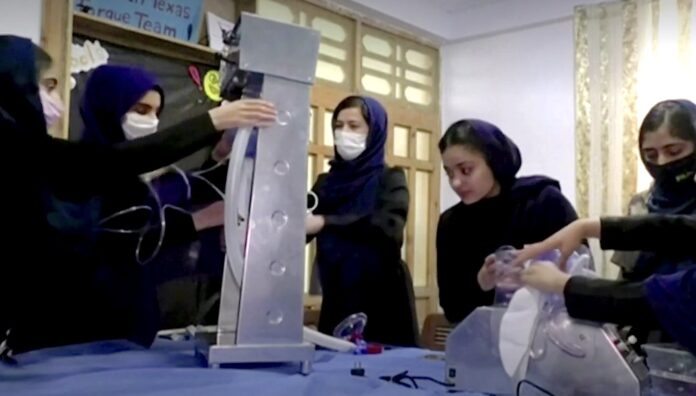
These days not much news comes out of Afghanistan that could be described as positive, but an all-girl high school team of legitimate geniuses, prove the South Asian country is so much more than just a war zone.
Their robotics team invented an inexpensive new ventilator model that will help the thousands of Covid-19 patients in their homeland, where there is a lack of such machines in hospitals.
In the city of Herat, the Afghan Robotics Team of 7 young girls finished the design of an open-source, mobile ventilator that costs as little as $700—compared to the $20,000 needed to purchase a traditional model. The lightweight machine can be powered by batteries that can run for ten hours.
They were among esteemed company, too, as their design was partially based on an MIT blueprint, and they received support and guidance from robotics experts at Harvard.
“We are delighted that we were able to take our first step in the field of medicine and to be able to serve the people in this area as well,” Somaya Faruqi, an 18-year old member of the robotics team, told Reuters. “All members of our team feel happy because after months of hard work, we were able to achieve this result.” (Watch the Reuters video below)
Afghanistan’s Minister of Health applauded the innovation and drive of the young girls, and eagerly awaited the devices’ approval from the World Health Organization.
“We appreciate the initiative and creativity in Afghanistan’s health sector…after they are approved, we will use these ventilators and we are determined to contract with companies so we can also export them,” he said.
A string of achievements
The Afghan Girls Robotics Team amassed international attention when in 2017, they traveled 500 miles from Herat to the capital of Kabul in order to secure visas for the First Global Challenge robotics competition in Washington, only to have them denied for no stated reason.
After public outcry caused the U.S. Department of State to reverse their decision, they claimed silver medals for their achievements in creating a machine that sorted dirty from clean water, even though a shipment of parts for their design was held up while entering the country.
After Washington, the team traveled to Europe and won the Entrepreneur Challenge at the International Robotex competition in Estonia, only months after the father of the team’s captain was killed in a suicide bombing.
— Embassy of the I.R. of Afghanistan in London (@AfghanistanInUK) November 26, 2017
“We are extremely proud of the wonderful accomplishments of the Afghan All-Girl Robotics Team,” Afghanistan’s ambassador to the United Kingdom, Said T. Jawad, said in a statement at the time.
“They are an excellent example for people around the world of what can be accomplished by young Afghans if given the right support and the opportunity to excel in their education.”
WATCH the video from Reuters below… Featured image credit: Reuters video Facebook
Need more positive stories and updates coming out of the COVID-19 challenge? For more uplifting coverage, click here.
SHARE The Mighty Girls of Science on Your Social Media Feeds…
Quote of the Day: “Starting each day with a positive mindset is the most important step of your journey to discovering opportunity.” – Jay Samit
Photo: by Gaelle Marcel
With a new inspirational quote every day, atop the perfect photo—collected and archived on our Quote of the Day page—why not bookmark GNN.org for a daily uplift?
An aerosol-based protein inhalant has been shown in trials to reduce the risk of death from SARS-CoV-2 and reduce the chance of developing serious symptoms by 79% compared to patients given a placebo.
Results also showed that patients were more than twice as likely to make a full recovery from Covid-19, meaning they had no lasting respiratory weakness or other damages.
The new drug called SNG001 is an inhalant of the naturally-occurring protein called interferon beta, and arose out of research conducted at the University of Southampton. The British biotech firm Synairgen, co-founded by three of the university’s professors, tested the treatment on 100 hospitalized COVID-19 patients (and 120 who were at home) in a randomized controlled trial spanning a period from March to May.
When inhaled directly into the lungs, interferon beta activates a powerful immune response. Interferon beta was a prime protein candidate for treatment testing because Covid-19 suppresses the body’s natural production of interferon beta which helps form the inherent protection against the spreading virus in the body.
“We are all delighted with the trial results announced today, which showed that SNG001 greatly reduced the number of hospitalized COVID-19 patients who progressed from ‘requiring oxygen’ to ‘requiring ventilation’,” said Richard Marsden, CEO of Synairgen.
“It also showed that patients who received SNG001 were at least twice as likely to recover to the point where their everyday activities were not compromised through having been infected by SARS-CoV-2. This assessment of SNG001 in COVID-19 patients could signal a major breakthrough in the treatment of hospitalized COVID-19 patients.”
Professor Stephen Holgate, one of Synairgen’s co-founders, described it as having “huge potential” for restoring the natural immune system response in a patient’s lungs.
He added that not only does SNG001 help the lungs combat Covid-19, but it could become a more important treatment than any future vaccines which may have to be re-engineered as the virus mutates in the future.
“Recognizing that SARS-CoV-2 is known to have evolved to evade the initial antiviral response of the lung, our inhaled treatment of giving high local concentrations of interferon beta restores the lungs’ ability to neutralize the virus, or any mutation of the virus or co-infection with another respiratory virus such as influenza or RSV, as could be encountered in the winter if there is a resurgence of COVID-19,” noted Holgate.
The Phase II trial was relatively small, and the results have not been peer reviewed for error or bias. The company would require regulatory approval before SNG001 can be commercially marketed, but if approved the treatment could revolutionize the way viral respiratory infections such as MERS, SARS, and Covid-19 are treated.
“Our efforts are now focused on working with the regulators and other key groups to progress this potential COVID-19 treatment as rapidly as possible,” said Marsden.
Last month, a research team at the University of Oxford announced they had successfully reduced the risk of death among seriously ill patients by administering the commonly available steroid dexamethasone.
Need more positive stories and updates coming out of the COVID-19 challenge? For more uplifting coverage, click here.
SHARE the ‘Breakthrough’ on Social Media to Give Your Friends Some Hope… (File photo by ThisisEngineering RAEng)
When you think of Harvard Law School, a few things probably come to mind—wealth, prestige, distinguished libraries, maybe sweater vests. You likely wouldn’t conjure a picture of a sanitation worker getting up at 4 a.m. to clean dumpsters and sort trash before school.
But, then, you don’t know Rehan Staton.
While getting into Harvard Law School is no easy feat for just about anyone, Rehan, whose single-parent family was poor, truly had his work cut out for him. And he doesn’t take all the credit either—he gives most of it to the people around him.
The 24-year-old college student told Today, “After going through everything that we did as a family, I just felt that we got into Harvard, and like, I just can’t even explain it. It was ‘we.'” The community around him made all the difference, he says.
Rehan admits he was “hungry for more” after living through years of family struggles and poverty. While growing up in Bowie, Maryland, his mother abandoned the family and moved out of the country when he was 8-years-old. However, that was also when he began learning the value of hard work. His father had to labor at multiple jobs to support Rehan and his older brother, Reggie.
Those times tested the family as a whole. As Rehan’s grades slipped, he channeled his energy into sports. He excelled at boxing and martial arts and won national and international competitions which he hoped would become his way out of poverty—but a rotator cuff injury would derail those plans completely.
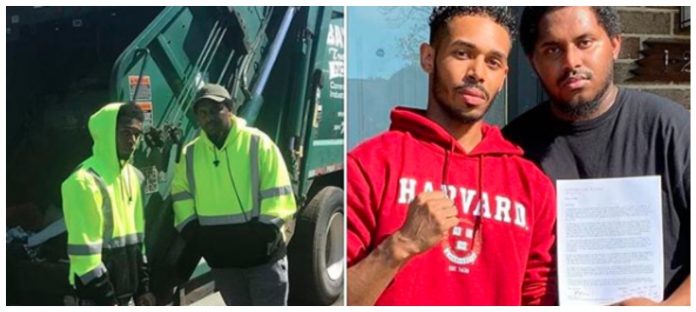
After years of struggling, Rehan’s high school grades were so poor that he was rejected from every college he applied to. So, instead of heading off to college at 18, he took a job at Bates Trucking and Trash. Most of his colleagues there had been formerly incarcerated. For many individuals, taking the job would feel like an utter low point. But for Rehan, it was when his life began to turn around.
Rehan and his brother both worked at the trash company – Photos courtesy of Rehan Staton
“It was the first time in my life a group of individuals that weren’t my father or my brother just came around me and… really just empowered me, uplifted me, told me I was intelligent.”
He believed the hype, when his coworkers urged him to go back to school, and one of the company owners, Brent Bates, helped him enroll in Bowie State University. Rehan earned a 4.0-grade point average and was able to transfer to the University of Maryland.
But Rehan’s struggles still weren’t over. During his junior year at Maryland, his father suffered a stroke, and Rehan had to return to work at Bates in order to save their family home. Many people would’ve given up, but he doubled-down on his schedule. Instead of dropping out of school, he woke each day at 4 a.m. to work his sanitation shift before class.
He graduated in 2018 with accolades, and was chosen to give a student commencement speech. When he took his LSAT test, he scored exceptionally well—in the 80th percentile—and began applying to law schools.
Rehan set his sights high—on Harvard.
Luckily, because that school comes with a hefty price tag, the young man found another supporter. Carmie McCook, a communications coach who calls him her protégé, started a GoFundMe page to help him with the cost. The initial goal was $75,000, but it surged to over $185,000 in donations. Carmie wrote on the page. “I felt incredibly strong empathy and admiration from him. A bond was formed and I told him I’d always be there for him if he needed me for anything. He now calls me ‘Ma’.”
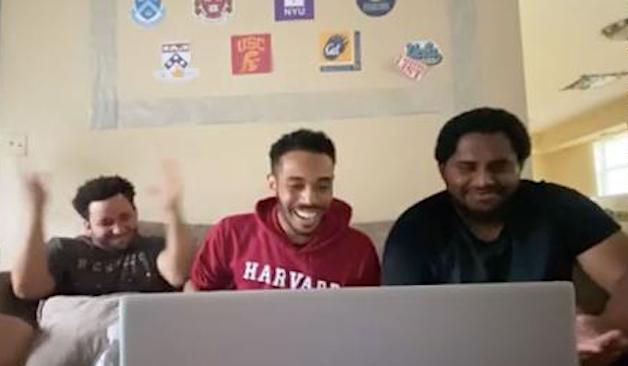
When it came time to finally hear the news whether Harvard had accepted him or not, Rehan recorded the moment on video. With his brother sitting next to him, he opened the notice on his computer—and their reaction was pure joy.
“Yes, Rehan is smart, but what makes his achievement even more admirable is his courageous journey to this moment,” said his mentor.
While most people heading to Harvard Law have the grades, the financial support, and maybe the sweater vests, Rehan just had his own painful story to stand on—the same story that makes him an inspiration.
Inspire Students Everywhere By Sharing This Great Story on Social Media…
An English campaign designed to help and encourage people to quit smoking conducted a survey which has found that more than one million people have quit smoking since the outbreak of COVID-19.
The campaign called Action on Smoking and Health (ASH) reported that of the 41% of people in the UK who stopped smoking cigarettes in 2020 said it was a direct result of the pandemic.
It was not confirmed whether this was due partially or primarily to a lack of access to tobacco products because of the lockdowns, or the implementation of social distancing measures which prevented social cigarette use, or if it was from the links between smoking and the virus’s infection and hospitalization rates.
Strong evidence from several epidemiological studies linked smoking cigarettes and lung health with increased likelihood of developing the more serious panoply of symptoms arising from the novel coronavirus.
Separately, the University College London’s survey on smoking rates found fewer smokers among the 2020 UK population than in any year since they started taking the survey in 2007.
UCL’s annual Smoking Toolkit Study found that the average number of smokers who were quitting the habit in 2020 spiked from the 13-year average of 5.9% to 7.6%.
Around 7 million people were smoking in the UK in 2019. Since 2005, the Northeastern part of the country—with cities such as Newcastle and Sunderland—has seen the largest fall in smoking rates.
Treat Your Friends To The Good News By Sharing This To Social Media…
The set of Jeopardy photographed by Joseph Hunkins, CC license, cropped
Since 1984, when he debuted as the host of Jeopardy, Alex Trebek has been like family to the millions of viewers who joined him on television 5 nights a week.
And, like family, they embraced him with love and support—and an outpouring of letters, guidance, and prayers—after Alex announced last year that he had been diagnosed with stage four pancreatic cancer,
For decades, he put off writing a book about his life—until all that goodwill changed his mind. And the COVID-19 lockdown provided him with all the time he needed.
Today, on his 80th birthday, Trebek says he is “not afraid of dying,” yet he will head back to the show as soon as coronavirus restrictions are lifted.
While hosting his 36th season, he was undergoing rounds of chemo treatments and wore a wig whenever they taped the show because he was losing his hair.
Even though cancer has taken its toll, he says that as soon as he gets onstage, “it all changes suddenly. I’m myself again. I feel good,” he wrote in his new memoir, The Answer Is… Reflections on My Life.
The set of Jeopardy photographed by Joseph Hunkins, CC license, cropped
The book combines personal anecdotes with Trebek’s thoughts on a range of topics, including marriage, parenthood, education, success, spirituality, and philanthropy (his charitable giving has benefitted World Vision, the USO, United Negro College Fund, National Geographic Society, and Hope of the Valley Rescue Mission).
It uses a fun structure inspired by Jeopardy, with each chapter title presented in the form of a question, “What Is…”
Sean Manning, the executive editor at Simon & Schuster which published the book said, “Today, when there is so much uncertainty and turmoil in the world, Alex Trebek is a beacon of stability and positivity.”
The book, which dropped in bookstores yesterday, features dozens of never-before-seen candid photos of Trebek over the years—and the 7-time Emmy winner from Canada also answers the questions Jeopardy fans ask most, such as what prompted him to shave his signature mustache, and his opinion of Will Ferrell’s Saturday Night Live impersonation.
And he provides plenty more answers to questions like What is… ‘How it feels to be 80 and living with cancer.’ He peppers those passages with curse words, because that’s who he is in real life.
“I want people to know a little more about the person they have been cheering on for the past year,” he wrote.
WATCH an exclusive ABC interview from this week…
ALSO check out this funny video showing a day in the life of Alex behind the cameras…
Broadcast Some Happy Birthday Greetings to Alex on Social Media By SHARING…
Quote of the Day: “In times of widespread chaos and confusion, it has been the duty of more advanced human beings—artists, scientists, clowns and philosophers—to create order.” Tom Robbins (turns 88 today)
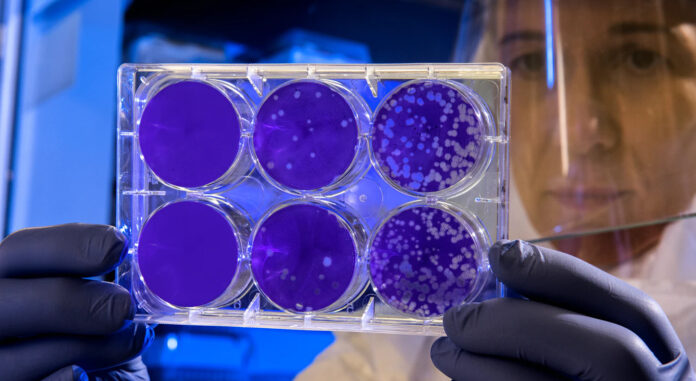
Photo: by CDC (growing flu cells)
With a new inspirational quote every day, atop the perfect photo—collected and archived on our Quote of the Day page—why not bookmark GNN.org for a daily uplift?
In the Indian state of Uttar Pradesh, there is space enough for trees to grow—and space enough for 2 million residents to plant truckloads of trees while social distancing.
Although the virus has spread fast throughout the country, its threat was not enough to dissuade the government of the most-populous Indian state from conducting a mass tree-planting campaign along the banks of the river Ganges as part of its pledge to shade a third of the nation under tree cover by 2030.
The nation’s target acreage of 235 million acres would represent an area the size of Texas and New Mexico combined.
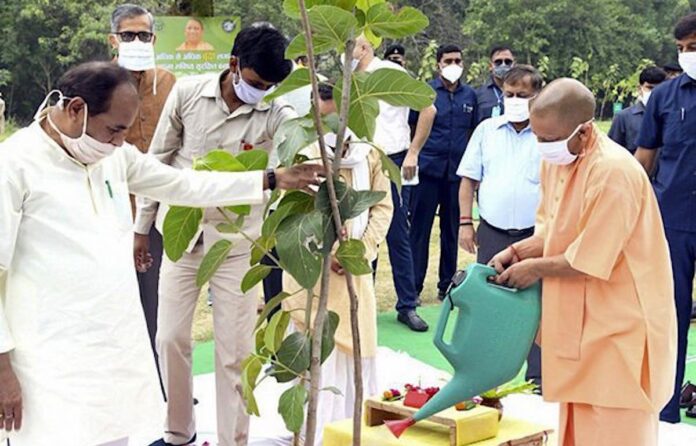
The planting was carried out last week by volunteers, nonprofit employees, government workers, and even lawmakers, all of whom maintained distance from each other and wore face masks to stop the possible spread of coronavirus.
“We are committed to increase the forest cover of Uttar Pradesh to over 15% of the total land area in next five years,” said the state’s chief minister, Yogi Adityanath, pictured above during the campaign’s inauguration ceremony.
“In today’s campaign, over 20 million trees will be planted at the banks of the Ganges river, which will help in keeping this mighty river clean.”
Many nations have targeted 2030 as the deadline for various sustainability-related goals, to coincide with the UN’s 18 Sustainable Development Goals designed to encourage nations to solve the world’s largest problems, such as poverty, hunger, pollution, access to clean water, education access, and more.
Mass tree plantings have been launched as an easy and inexpensive method of drawing carbon from the atmosphere, with hundreds of millions of trees being planted in countries around the world, including China, Pakistan, India, Madagascar, and the nations of the Sahel, especially Ethiopia and Senegal.
The survival of every tree during such mass-planting operations is not guaranteed, of course, but compared to changing energy and transportation infrastructure, tree-planting is easy, inexpensive, and helpful in regenerating previously degraded land back to healthy, functioning ecosystems.
Shaquille O’Neal is no stranger to being featured in national news headlines, but it’s not just because of his legendary sports career—he is also regularly praised for having a heart of gold.
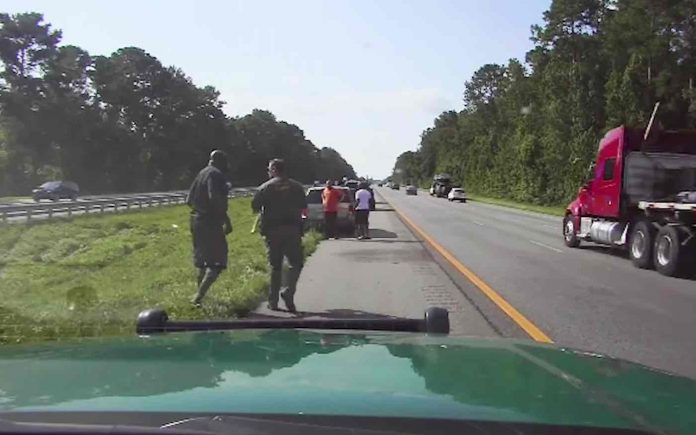
In addition to being hailed for his charity work and random acts of kindness, Shaq was lauded by law enforcement on Facebook after he stopped to help a Florida woman who was in a car accident last week.
According to the Alachua County Sheriff’s Department, Shaq pulled over to the side of I-75 when he saw the woman’s tire blow out. After making sure that she was okay following the collision, he waited with her until law enforcement arrived.
Shaq left the scene shortly afterwards, but not before greeting the surprised officers with a fist bump, as seen on the dash cam footage.
Since the Sheriff’s department posted the video to social media, it has been viewed almost 400,000 times—and while it’s not as if the NBA star was filmed removing a bullet, it is always heartening to see celebrities with kind heart.
(WATCH the video below)
Be Sure And Share This Sweet Story Of Celebrity Kindness With Your Friends On Social Media…
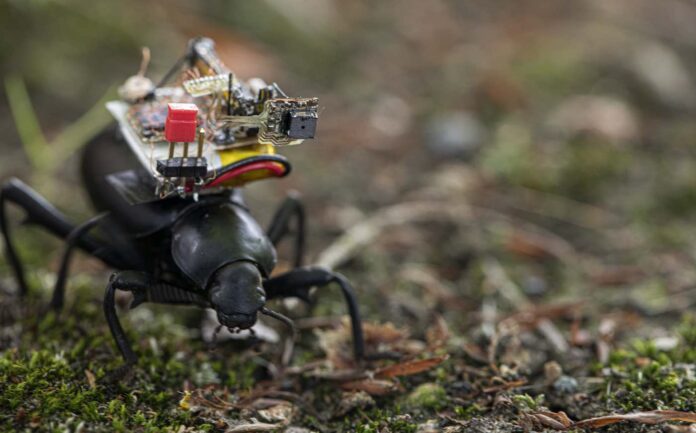
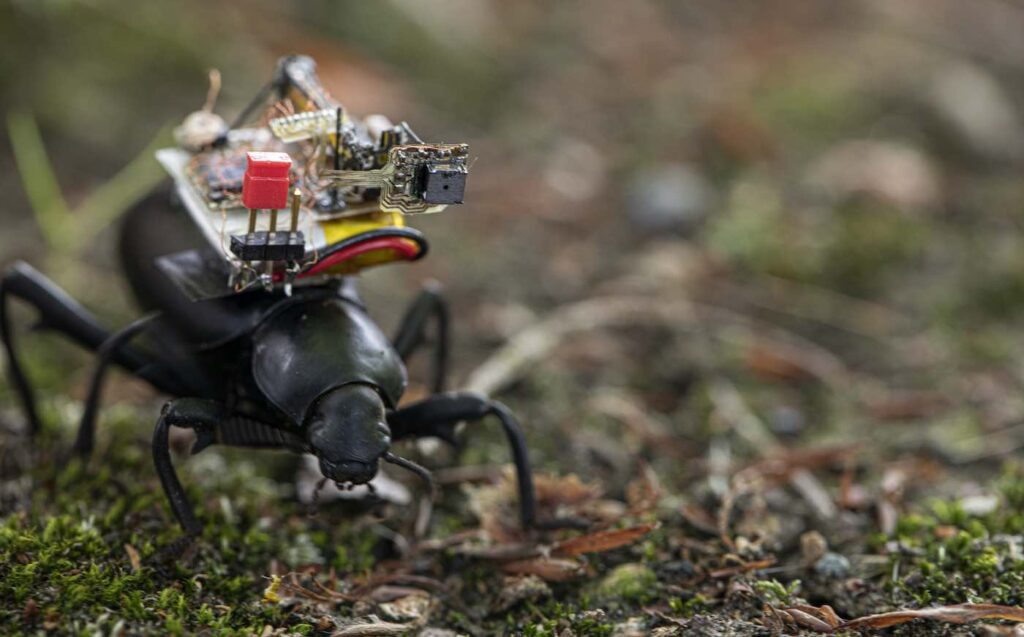
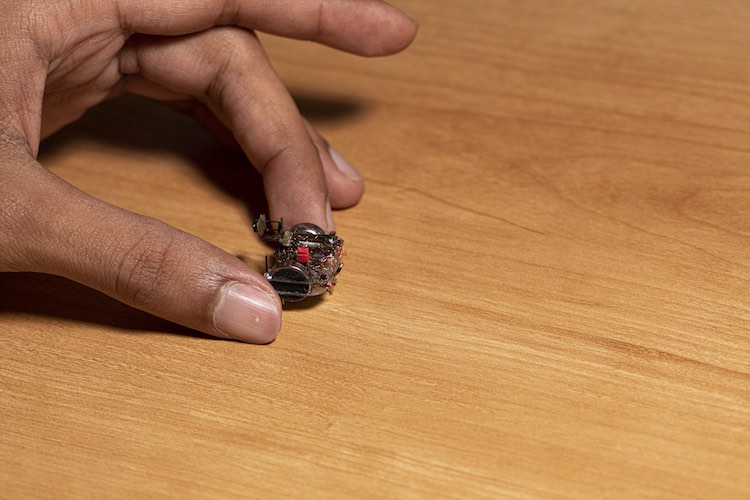
Researchers at the University of Washington have developed a tiny camera that can ride aboard an insect. Here a Pinacate beetle explores the UW campus with the camera on its back. Credit: Mark Stone/University of Washington.
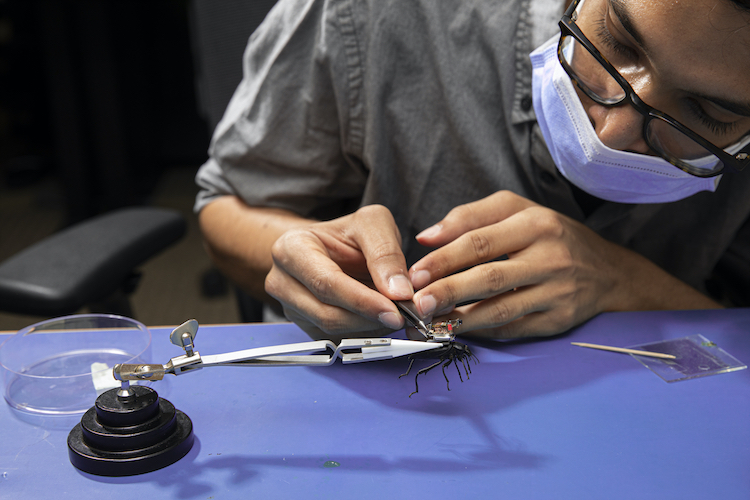
Attaching the camera system to a Pinacate beetle. Credit: Mark Stone/University of Washington.
In the movie Ant-Man, the title character can shrink in size and travel by soaring on the back of an insect. Now researchers at the University of Washington have developed a tiny wireless steerable camera that can also ride aboard an insect, giving everyone a chance to see an Ant-Man view of the world.
The camera, which streams video to a smartphone at 1 to 5 frames per second, sits on a mechanical arm that can pivot 60 degrees. This allows a viewer to capture a high-resolution, panoramic shot or track a moving object while expending a minimal amount of energy. To demonstrate the versatility of this system, which weighs about 250 milligrams—about one-tenth the weight of a playing card—the team mounted it on top of live beetles and insect-sized robots.
“We have created a low-power, low-weight, wireless camera system that can capture a first-person view of what’s happening from an actual live insect or create vision for small robots,” said senior author Shyam Gollakota, a UW associate professor in the Paul G. Allen School of Computer Science & Engineering. “Vision is so important for communication and for navigation, but it’s extremely challenging to do it at such a small scale. As a result, prior to our work, wireless vision has not been possible for small robots or insects.”
Typical small cameras, such as those used in smartphones, use a lot of power to capture wide-angle, high-resolution photos, and that doesn’t work at the insect scale. While the cameras themselves are lightweight, the batteries they need to support them make the overall system too big and heavy for insects—or insect-sized robots—to lug around. So the team took a lesson from biology.
“Similar to cameras, vision in animals requires a lot of power,” said co-author Sawyer Fuller, a UW assistant professor of mechanical engineering. “It’s less of a big deal in larger creatures like humans, but flies are using 10 to 20% of their resting energy just to power their brains, most of which is devoted to visual processing. To help cut the cost, some flies have a small, high-resolution region of their compound eyes. They turn their heads to steer where they want to see with extra clarity, such as for chasing prey or a mate. This saves power over having high resolution over their entire visual field.”
Researchers at the University of Washington have developed a tiny camera that can ride aboard an insect. Here a Pinacate beetle explores the UW campus with the camera on its back. Credit: Mark Stone/University of Washington.
To mimic an animal’s vision, the researchers used a tiny, ultra-low-power black-and-white camera that can sweep across a field of view with the help of a mechanical arm. The arm moves when the team applies a high voltage, which makes the material bend and move the camera to the desired position. Unless the team applies more power, the arm stays at that angle for about a minute before relaxing back to its original position. This is similar to how people can keep their head turned in one direction for only a short period of time before returning to a more neutral position.
“One advantage to being able to move the camera is that you can get a wide-angle view of what’s happening without consuming a huge amount of power,” said co-lead author Vikram Iyer, a UW doctoral student in electrical and computer engineering. “We can track a moving object without having to spend the energy to move a whole robot. These images are also at a higher resolution than if we used a wide-angle lens, which would create an image with the same number of pixels divided up over a much larger area.”
The camera and arm are controlled via Bluetooth from a smartphone from a distance up to 120 meters away, just a little longer than a football field.
The researchers attached their removable system to the backs of two different types of beetles—a death-feigning beetle and a Pinacate beetle. Similar beetles have been known to be able to carry loads heavier than half a gram, the researchers said.
“We made sure the beetles could still move properly when they were carrying our system,” said co-lead author Ali Najafi, a UW doctoral student in electrical and computer engineering. “They were able to navigate freely across gravel, up a slope and even climb trees.”
The beetles also lived for at least a year after the experiment ended.
“We added a small accelerometer to our system to be able to detect when the beetle moves. Then it only captures images during that time,” Iyer said. “If the camera is just continuously streaming without this accelerometer, we could record one to two hours before the battery died. With the accelerometer, we could record for six hours or more, depending on the beetle’s activity level.”
The researchers also used their camera system to design the world’s smallest terrestrial, power-autonomous robot with wireless vision. This insect-sized robot uses vibrations to move and consumes almost the same power as low-power Bluetooth radios need to operate.
The team found, however, that the vibrations shook the camera and produced distorted images. The researchers solved this issue by having the robot stop momentarily, take a picture and then resume its journey. With this strategy, the system was still able to move about 2 to 3 centimeters per second—faster than any other tiny robot that uses vibrations to move—and had a battery life of about 90 minutes.
Researchers at the University of Washington have developed a tiny camera that can ride aboard an insect-sized robot they designed. Credit: Mark Stone/University of Washington.
While the team is excited about the potential for lightweight and low-power mobile cameras, the researchers acknowledge that this technology comes with a new set of privacy risks.
“As researchers, we strongly believe that it’s really important to put things in the public domain so people are aware of the risks and so people can start coming up with solutions to address them,” Gollakota said.
Applications could range from biology to exploring novel environments, the researchers said. The team hopes that future versions of the camera will require even less power and be battery-free—or potentially even solar-powered.
“This is the first time that we’ve had a first-person view from the back of a beetle while it’s walking around. There are so many questions you could explore, such as how does the beetle respond to different stimuli that it sees in the environment?” Iyer said. “But also, insects can traverse rocky environments, which is really challenging for robots to do at this scale. So this system can also help us out by letting us see or collect samples from hard-to-navigate spaces.”
You’ve already seen people paint masterpieces onto canvases, but what about artists who can paint masterpieces onto water? That’s exactly what Garip Ay does in his studio every day.
The Istanbul-based artist specializes in the ancient Turkish art of “ebru”—or “water marbling” in English.
Ay creates each of his designs by distributing colorful dyes onto water that has been treated with wetting agents to make the pigments float. After that, he uses special tools to move the dyes into breathtaking pictures and patterns on the water’s surface.
Although the process is very soothing to watch, Ay says it is not an easy job to do himself—but the end results are magnificent.
(WATCH the video below)
Be Sure And Share This Enchanting Story With Your Friends On Social Media…
























 In the Indian state of Uttar Pradesh, there is space enough for trees to grow—and space enough for 2 million residents to plant truckloads of trees while social distancing.