












All News - Page 592 of 1736 - Good News Network
Home Blog Page 592

For the First Time, Researchers Make Plants That Glow Sustainably—And They Could One Day Light Up Our Homes

Photo by Planta
Photo by Planta

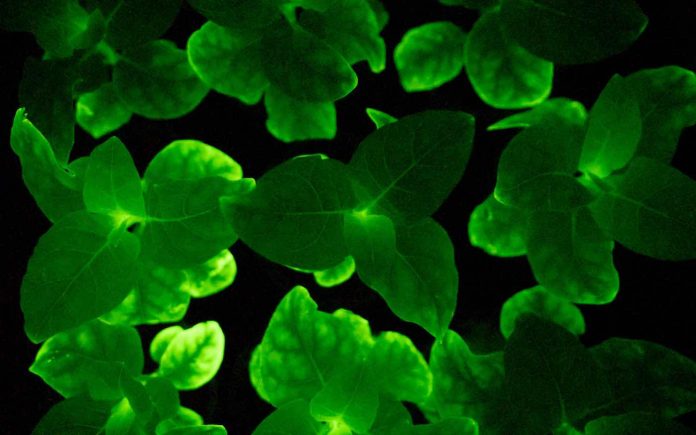
Although glowing plants may seem like a work of science fiction, researchers have succeeded in creating plants that produce their own visible luminescence—and they say the possibilities for how we can use these plants are endless.

This week in Nature Biotechnology, the scientists revealed that bioluminescence found in some mushrooms is metabolically similar to the natural processes common among plants. By inserting DNA obtained from the mushroom, the scientists were able to create plants that glow much brighter than previously possible.

This biological light can be used by scientists for observing the inner workings of plants. In contrast to other commonly used forms of bioluminescence, such as from fireflies, unique chemical reagents are not necessary for sustaining mushroom bioluminescence—in other words, plants containing the mushroom DNA glow continuously throughout their lifecycle, from seedling to maturity.

RELATED: Scientists Discover a Complete Protein Found Nowhere on Earth That Fell From Space, May Hint at Planet’s Origin

The breakthrough is similar to a project launched by MIT scientists in 2017, which used nanoparticle infusions to turn the plant’s stored energy into light, although the glow only lasted for about four hours at a time. The researchers later used their glowing plants for an art exhibit exploring the possibilities of integrating the plants into modern eco-friendly architecture.

“Lighting right now consumes a vast portion of our energy demand, approaching close to 20% of our global energy consumption, generating two gigatons of carbon dioxide per year,” says Michael Strano, the Carbon P. Dubbs Professor of Chemical Engineering at MIT. “Consider that the plants replace more than just the lamp on your desk. There’s an enormous energy footprint that could potentially be replaced by the light-emitting plant.”

The plants described in this week’s discovery can also be used for practical and aesthetic purposes, most notably for creating glowing flowers and other ornamental plants—and while replacing street lights with glowing trees may prove fantastical, the plants produce a pleasant green aura that emanates from their living energy.
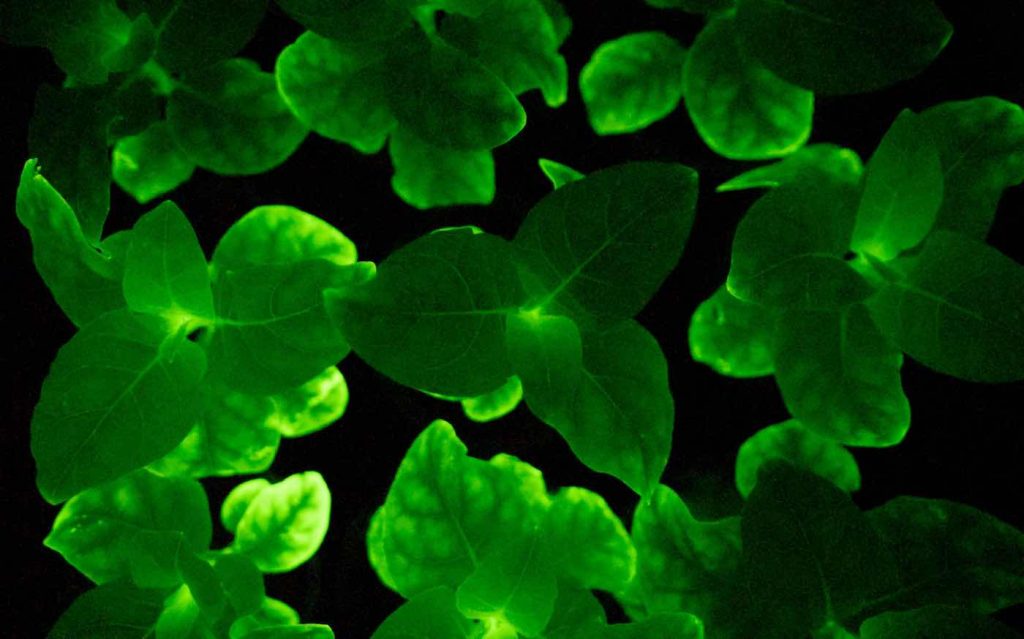
Photo by Planta

According to the authors, the plants can produce over a billion photons per minute.

The report in Nature Biotechnology was authored by 27 scientists, led by Drs. Karen Sarkisyan and Ilia Yampolsky. The research was carried out principally through a collaboration between Planta, a biotech startup in Moscow, the Institute of Bioorganic Chemistry of the Russian Academy of Sciences, MRC London Institute of Medical Sciences, and the Institute of Science and Technology Austria.

Light Bio is a new company that plans to commercialize this novel technology in ornamental house plants in partnership with Planta. Light Bio CEO Dr. Keith Wood stated: “Thirty years ago, I helped to create the first luminescent plant using a gene from fireflies. These new plants can produce a much brighter and more steady glow, which is fully embodied within their genetic code.”

LOOK: Museum of Natural History Unveils New Hall of Gems After Years Of Renovation—And It Looks Incredible

However, designing new biological features is more complex than merely moving genetic parts from one organism to another. Like gears in a watch, the newly-added parts must metabolically integrate within the host. For most organisms, the parts needed for bioluminescence are not all known. Until recently, a complete part list was available only for bacterial bioluminescence—but past attempts to create glowing plants from these parts have not gone well, largely because bacterial parts typically do not work properly in more complex organisms.

Little more than a year ago, scientists uncovered the parts that sustain bioluminescence in mushrooms. For the first time, the living light of an advanced multicellular organism was fully defined.

In the present report, the authors disclose that mushroom bioluminescence works particularly well in plants. This allowed them to make glowing plants that are at least ten-fold brighter. Using ordinary cameras and smartphones, green illumination was recorded coming from leaves, stems, roots, and flowers. Moreover, the sustained light production was achieved without harming the health of the plants.

WATCH: ‘Unprecedented’ New Photos of the Sun’s Surface Are Being Hailed as Landmark Achievement for Science

Although mushrooms are not closely related to plants, their light emission centers on an organic molecule that is also needed in plants for making cell walls. This molecule, called caffeic acid, produces light through a metabolic cycle involving four enzymes. Two enzymes convert the caffeic acid into a luminescent precursor, which is then oxidized by a third enzyme to produce a photon. The last enzyme converts the oxidized molecule back to caffeic acid to start the cycle again.

In plants, caffeic acid is a building block of lignin, which helps provide mechanical strength to the cell walls. It is thus part of the lignocellulose biomass of plants, which is the most abundant renewable resource on Earth.

As a key component of plant metabolism, caffeic acid is also integral to many other essential compounds involved in colors, fragrances, antioxidants, and so forth. Despite their similar sounding names, caffeic acid is not related to caffeine.

MORE: Scientists Use Recycled Sewage Water to Grow 500-Acre Forest in the Middle of Egyptian Desert

By connecting light production to this pivotal molecule, the glow emitted by the plants provides an internal metabolic indicator. It can reveal the physiological status of the plants and their responses to the environment. For instance, the glow increases dramatically when a ripe banana skin is placed nearby (which emits ethylene). Younger parts of the plants tend to glow most brightly and the flowers are particularly luminous. Flickering patterns or waves of light are often visible, revealing active behaviors within the plants that normally would be hidden.

In this published research, the authors relied on tobacco plants because of their simple genetics and rapid growth—but the benefits of mushroom bioluminescence are broadly fitting to plants. Research at Planta, and by Arjun Khakhar and colleagues, have demonstrated feasibility for other glowing plants, including periwinkle, petunia, and rose.

Even brighter plants can be expected with further development. New features may be possible, such as changing brightness or color in response to people and surroundings. Through this living aura, we may even gain a new awareness of our plants that emulate the inspiring allure of Avatar.

Reprinted from MRC London Institute of Medical Sciences

(WATCH the beautiful plant-growth compilation video below)

Plant Some Positivity Amongst Your Friends By Sharing The Cool Story To Social Media…
Countries Hit Hardest By COVID-19 Are Starting to Lift Social Restrictions After Encouraging New Recovery Rates

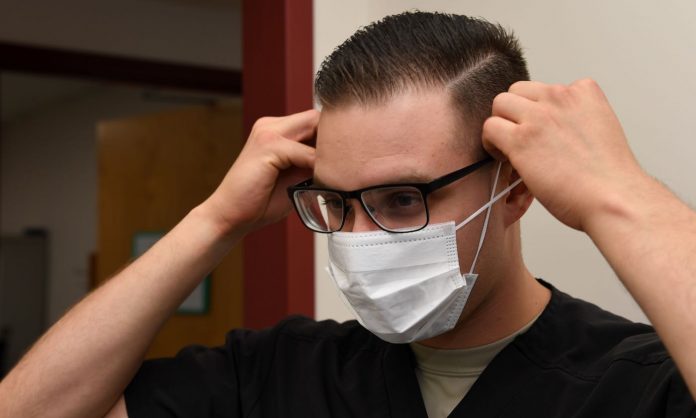
Representative photo by Airman 1st Class Elora J. Martinez

As the world continues its fight to curb the novel coronavirus outbreaks, several countries have announced significant recoveries this week.

France, Italy, and Spain—the countries with the highest numbers of confirmed cases outside of the US—outlined their plans for slowly lifting their various social restrictions as rates of infection and fatality continue to fall.

In light of Italy recording their lowest number of new cases since March 10th, Prime Minister Giuseppe Conte says that the country will begin reopening the economy on May 4th. Although schools will not reopen until September, small businesses and restaurants will soon be allowed to reopen so long as customers are limited to takeout options and social distancing guidelines. Factories will also be reopened for manufacturing and people will be allowed to visit their relatives in small numbers.

LOOK: Swiss Village Has Been Projecting World Flags Onto One of Their Tallest Mountains in Solidarity of Pandemic

Meanwhile, Spain celebrated a significant decline in coronavirus-related deaths, with daily counts falling below 300 for the first time since March 20th. Government officials say that they will be slow to reopen the economy; however, they will start to lift social restrictions by allowing children to play outside for one hour per day—a first for the nation’s youth after spending six weeks in isolation.

Al Jazeera reports that France also hailed their largest single-day drop in COVID-19 deaths after it fell by more than 33% in just 24 hours. The country also recorded their lowest number of in-hospital deaths in 5 weeks.

New Zealand was quick to enact some of the world’s strictest social restrictions after confirming just a few cases of the virus back in March. Now, Prime Minister Jacinda Ardern says that the nation’s pre-emptive shutdowns has succeeded in eliminating community transmission of COVID-19 this week. This means that while there will still most likely be new cases of the virus, healthcare officials will know where it is being transmitted.

CHECK OUT: Air Pollution in Major World Cities Has Dropped By as Much as 60% During COVID Shutdowns, Says New Report

Although New Zealand has had 1,500 confirmed or probable cases of novel coronavirus over the course of the last two months, government officials report that they will still be cautious in gradually lifting social restrictions, starting with some non-essential businesses.

South Australia also announced that they are considering easing travel restrictions after the nation made it 7 days without a new recorded case. This accomplishment is largely credited to the province testing more than 15,000 people within a two-week period. There are now currently only 14 active cases.

RELATED: Beaches See Huge Increase in Leatherback Sea Turtle Nests After Travel Restrictions in Florida and Thailand

Taiwan has been celebrating its own milestone of 17 straight days without any new local cases as well as its first 4-day streak without any new domestic or imported COVID-19 cases.

This is just one of many positive stories and updates that are coming out of the COVID-19 news coverage this week. For more uplifting coverage on the outbreaks, click here.

Representative photo by Airman 1st Class Elora J. Martinez

Be Sure And Share The Encouraging Statistics With Your Friends On Social Media… 

Man Hailed for Devoting His Daily Walks During Lockdown to Cleaning Up Neglected Headstones

Photo by Ryan van Emmenis

An English father and his three kids have been using their daily outings during the COVID-19 shutdowns to clean neglected headstones in local cemeteries.

Every day since the lockdowns were first implemented one month ago, 37-year-old Ryan van Emmenis has been taking walks around his neighborhood in Winsford, Cheshire.

Emmenis was first inspired to launch his labor of love after a friend published a picture of their family member’s headstone to Facebook. Since the grave was noticeably weather-worn and dirty, Emmenis—who runs his own cleaning company—offered to clean up the stone for free.

RELATED: Jewish Brothers Collect Yarmulkes to Make Face Masks For Houston’s Homeless

With his cleaning supplies in hand, Emmenis stopped by the headstone on his daily walk through town and tidied up the grave maker—and he was floored by how much better it looked.

Emmenis then resolved to take 20 minutes out of his daily walks to clean up some of the grave markers around town. With the help of his kids, he has tidied up two dozen headstones in the St. Chad’s and Swanlow Park cemeteries.

Emmenis says that while he has been using industrial cleaning products for some of the older headstones, his kids have been working with soap and water.

Photo by Ryan van Emmenis

“You’ve got to be respectful of the fact that it’s someone’s family member, it’s someone’s memories. You’ve got to make sure you’re using the right products and you’re being careful and delicate with it,” Emmenis told the Press Association News Agency. “Some of these headstones I’m cleaning are over 100 years old—and algae, moss etc. can have a really negative impact on them so you’ve got to be really careful.”

Since Emmenis published a few pictures of his work to social media, he has been flooded with praise from neighbors, strangers, and the family members of the deceased people’s headstones.

“I had some feedback from people saying they were really grateful for what I’d done because it was family members and they hadn’t visited the grave for 20 years, they’d been unable too,” Emmenis told PA. “Someone used the term ‘you’re bringing memories back to people’.

LOOK: Bored in Quarantine, 15-Year-old Transforms Her Bedroom Wall into 8-Foot Climbing Structure

“When a grave is dull and it’s got algae on it and you can’t read it, there’s nobody seems to give it much time if they don’t know the person,” he added. “Once you’ve cleaned up one of these graves, it’s really noticeable, which means people are stopping and taking a moment to read and remember these people.”

Emmenis recently partnered with a church vicar in order to decide which gravestones ought to be cleaned. For social media users who have been inspired by his initiative, Emmenis recommends that anyone without professional cleaning experience stick to using soap and water.

This is just one of many positive stories and updates that are coming out of the COVID-19 news coverage this week. For more uplifting coverage on the outbreaks, click here.

Photo by Ryan van Emmenis

Clean Up Negativity By Sharing This Inspiring Story With Your Friends On Social Media…

“An optimist believes in the optimal usage of all options available, no matter how limited. As such, an optimist always sees the big picture.” – Vera Nazarian

Quote of the Day: “An optimist believes in the optimal usage of all options available, no matter how limited. As such, an optimist always sees the big picture.” – Vera Nazarian

Photo: by Armand Khoury, public domain, cropped

With a new inspirational quote every day, atop the perfect photo—collected and archived on our Quote of the Day page—why not bookmark GNN.org for a daily uplift?

Beekeeper Makes Electronic Music Recorded From His Hives to Inspire Love For Pollinator Populations

Although many young people may be a-buzz about whatever pop musicians are on the weekly top 40 charts, this beekeeper has made a name for himself by using his electronica music to raise awareness about dwindling honeybee populations.

Not only that, all of his electronic music is made using sounds that he has recorded from within his very own hives.

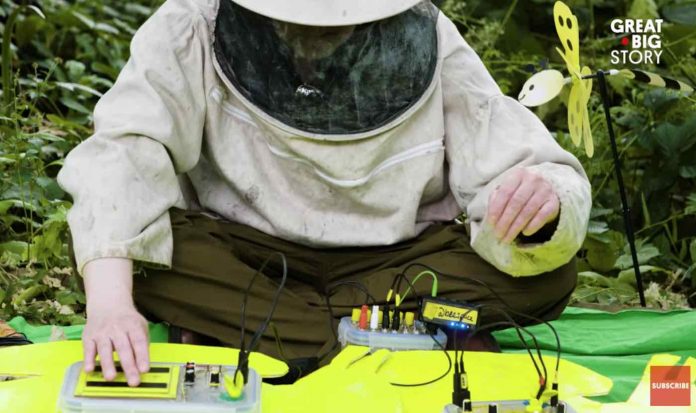
For the last 20 years, mysterious London-based beekeeper and musician Bioni Samp has been using his own equipment to research and record the various sounds of his honeybee hives.

LOOK: Since Father-Son Duo Designed Revolutionary ‘Honey on Tap’ Beehive, There Are 51,000 New Bee Colonies

Bioni then mixes the sounds to make experimental music that is entirely played by his bees.

In addition to only identifying himself by his Bioni alias, he has played shows around the world all while keeping his face hidden by an antique beekeeper’s suit.

Bioni hopes that his music will help young people to think about their impact on struggling pollinator populations—and considering his social media followings on YouTube, Spotify, and Bandcamp, his mission has been fairly successful.

(WATCH the Great Big Story video below)

Bee Sure And Share The Buzzworthy Story With Your Friends On Social Media…

New Contact Lenses May Soon Allow Diabetics to Monitor Glucose Levels With Just the Blinks of Their Eyes

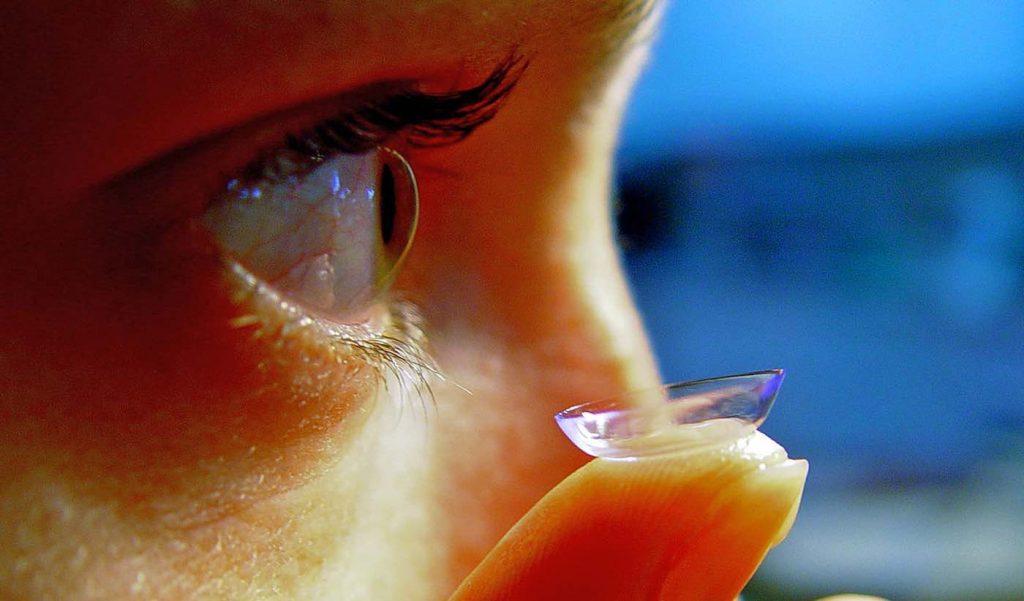
Representative photo by איתן טל, CC

An innovative new smart contact lens is being developed to allow diabetics to monitor glucose levels through liquid in their eyes.

The invention, which is wireless and remotely operated, means glucose levels could soon be monitored in the blink of an eye—and even be treated with medicine dispensed directly into the membrane.

Scientists say that the new tech represents the first potential use of contact lenses to monitor and treat symptoms of diabetes with a remote control drug dispenser.

It comes after Google’s failed attempts to develop the Google Contact Lens for diagnosing diabetic patients, which was discontinued in 2018.

LOOK: This N95 Scarf Filters the Air Around You – With Fashionable Sustainable Solution for Personal Protection

Researchers say the eyewear could provide an alternative to invasive blood tests for diabetics while simultaneously paving the way toward on-demand treatment for certain eye diseases.

The device uses chip technology to monitor sugar levels through the blood vessels behind the eyelids and warn the user of potential health emergencies. It could also dispense medicine through the eye to treat diabetic retinopathy, a diabetes-related condition caused by damage to the ocular blood vessels.

When tested in rabbits, the lens offered noninvasive glucose monitoring and controlled drug delivery for the condition.

“We developed smart contact lenses for both continuous glucose monitoring and treatment of diabetic retinopathy,” said study author Dr. Do Hee Keum from Pohang University of Science and Technology in South Korea. “Our smart contact lens has a unique function of ocular drug delivery.

LOOK: Irish Researchers Have Developed Hospital Robot That Uses UV Light to Kill Viruses, Bacteria, and Germs

“With further development and testing, the smart contact lens could relieve diabetics from relying on invasive blood tests while potentially paving the way toward on-demand treatment of retinopathy and other eye disease.”

Smart electronic contact lens devices have been widely investigated for diagnostic applications, especially for continuous glucose monitoring. In 2014, Google announced a project to develop the Google Contact Lens for helping people with diabetes measure their glucose levels through their tears.

Despite intensive effort for the commercial development of the Google lens, however, the team reported insufficient consistency in their measurements between tear glucose and blood glucose concentrations to support the requirements of a medical device.

LOOK: Bionic Pancreas for Type 1 Diabetes Gets ‘Breakthrough’ Designation From FDA

“The disappointing clinical results might be associated with the challenges of obtaining reliable tear glucose readings in the complex on-eye environment,” said Dr. Keum. “We believe that with proper calibration and baseline monitoring, the changes in glucose concentrations can be measured reliably for each patient using the smart contact lens.”

The team says that they were inspired to develop the lens upon discovering that the surface of the cornea offers a convenient window to monitor physiological changes throughout the body.

“The surface of the cornea uniquely presents a convenient and noninvasive interface to physiological conditions in the human body,” said Dr. Keum. “The eyes are directly connected to the brain, liver, heart, lung, and kidney and can serve as a window to the body.”

CHECK OUT: Eating in Sync With Biological Clock Could Replace Problematic Diabetes Treatment, Says New Study

Since the researchers wanted to design a model that could both perform this function and dispense drugs through the eye, they developed a smart contact lens that includes a real time electrochemical biosensor, an on-demand flexible drug delivery system, a wireless energy transfer system, and a remote radio frequency communication system.

In the study, they inserted lenses into the eyes of live diabetic rabbits and injected two units of insulin 15 minutes later to lower the rabbits’ blood glucose levels.

They then monitored the changes and repeated the test after the lenses were used for 63 days to demonstrate their ability to remain stable over time. Next, the researchers used the lenses to remotely release genistein—a drug used to treat diabetes—into the rabbits’ eyes.

MORE: People With Diabetes May One Day Be Monitoring Glucose With an Earring

Upon measuring the concentration in the cornea one hour later, they found the lens delivered the drug as effectively as an eye injection.

Dr. Keum and her team also used an infrared thermal camera to test the design for safety and found little variation in the lens’ temperature.

However, the scientists say that additional research is required to reveal whether this smart contact lens may serve as a next-generation wearable device to advance diabetes healthcare.

“This smart theranostic contact lens will be investigated further as a next generation wearable device to achieve the real-time biosensing of ocular biomarkers and on-demand medication for ubiquitous health care applications to various ocular and other diseases,” said Dr. Keum.

Representative photo by איתן טל, CC

It’s Not Hard To See That You Should Share This Exciting News With Your Friends On Social Media…

Americans in Stable Financial Positions Answer the Call to Donate Their $1,200 Stimulus Checks

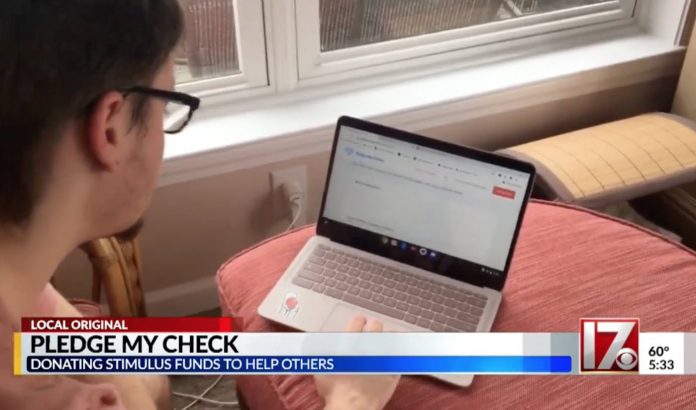
Since the United States government began issuing stimulus checks to Americans this week, a group of volunteers from North Carolina has rallied thousands of people in stable financial positions to donate part of their stimulus checks to help people affected by COVID-19.

Within the first week of the Pledge My Check website being launched, over $18,000 was pledged from 37 people across 11 states.

This number is now up to $70,000 pledged from 129 people across 15 states. Individuals are encouraged to donate directly to the people, causes, or organizations they support because Pledge My Check is not accepting donations directly—so 100% of everyone’s pledges reach their intended recipient.

Similar efforts have launched across the United States supporting a variety of causes. Currently, Pledge My Check reports that the largest sum of their pledges is being directed to local causes, primarily addressing food insecurity through Feeding America’s network of food banks and their affiliated food pantries across the country. However, many people are simply donating directly to waiters, neighbors, and community members.

RELATED: Publix Supermarkets Are Buying Food From Struggling Farmers So They Can Use it to Feed Families in Need

“The idea is to encourage folks to pledge in a way that is life-giving to them and others,” said Jordan Bowman, who leads a local nonprofit organization. “There is complete freedom in how people pledge, but we are encouraging them to consider local causes and to be creative in how they can use this money to support their neighbors, nonprofits, and small businesses.”

One woman named Kirsten who donated $1,200 said: “My husband and I decided to donate 50% of our total checks. We’ve made monthly gifts to several organizations. These are: Heifer International, UNICEF, The Arts and Science Center of South East Arkansas, Doctors Without Borders.”

Other highlighted organizations include: Meals on Wheels, DonorsChoose.org, and GiveDirectly. Organizations can create their own custom pledge pages to encourage their volunteers and donors to pledge their stimulus checks to their organizations for free.

WATCH: Customer Leaves Entire $1,200 Stimulus Check as Generous Tip for Family-Owned Restaurant

This initiative is the work of a growing volunteer team based out of Raleigh-Durham, North Carolina. “This project is all about bringing out the best in our communities,” commented project co-creator, Ryan O’Donnell. “When the stimulus checks were announced, I felt this was a simple way for people to help their neighbors.”

Lead project designer, Bethany Faulkner, added: “I’m fortunate to be in a stable financial situation. I wanted to help, and this stimulus check is an opportunity to redirect that vital financial support to those who need it most in our community.

“We built this tool to enable that and make it a community effort, even as we’re separated in our own homes,” she concluded.

This is just one of many positive stories and updates that are coming out of the COVID-19 news coverage this week. For more uplifting coverage on the outbreaks, click here.

(WATCH the news coverage below OR our international viewers can check it out on the CBS News website)

Multiply The Good By Sharing The Inspiring News With Your Friends On Social Media…

Scuba Diving Group Swamped With Orders for Its Face Masks Made From Recycled Ocean Plastic

Photo by the Professional Association of Diving Instructors

With face masks being in such high demand amongst the novel coronavirus outbreaks, one company has taken a more eco-friendly approach to supplying the public with protective masks.

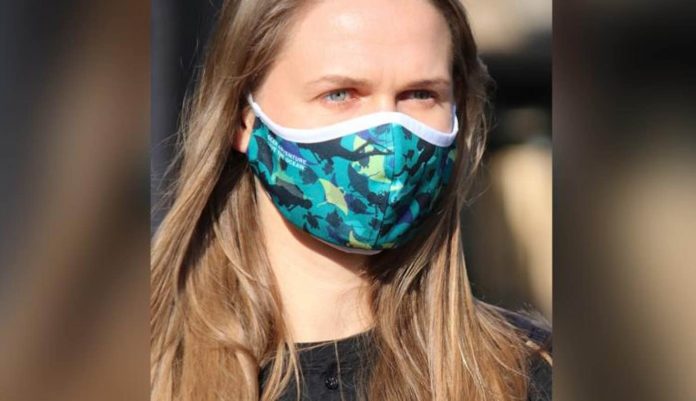
The Professional Association of Diving Instructors (PADI) has partnered with sustainable sportswear company Rash’r to make face masks out of plastic pollution that has been salvaged from the ocean.

Each mask is sold with five replacement filters at the cost of $20.40—which is just enough to cover the costs of manufacturing.

LOOK: Jewish Brothers Collect Yarmulkes to Make Face Masks For Houston’s Homeless

“We are not profiting from this product,” Lisa Nicklin, vice president of consumer marketing at PADI Worldwide told CNN. “We’re very much a heart-and-soul organization. We care about the ocean and our diver community, so we wanted to be able to put our hands on our hearts and say that we’re not profiting off this difficult time.”

Since the CDC now recommends that people wear cloth face masks to prevent the spread of COVID-19 in public places, PADI’s masks offer a sustainable alternative to the limited supplies of N95 respirator masks that are being reserved for healthcare workers on the front lines of the pandemic.

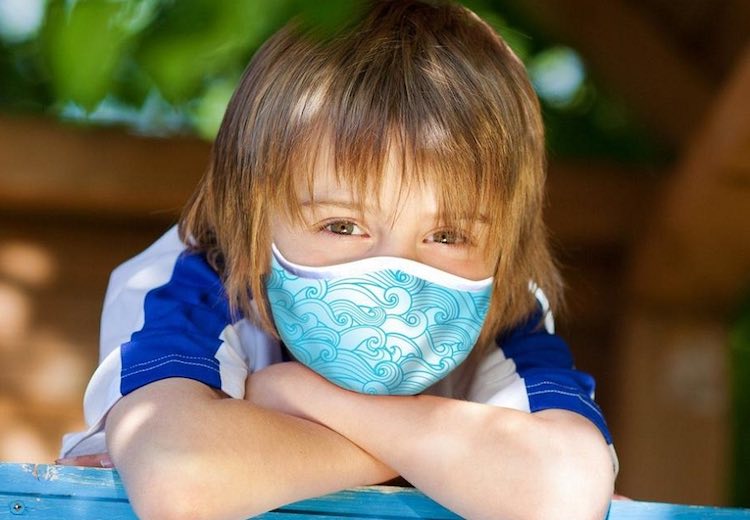
In addition to the masks featuring a number of ocean-themed designs, PADI has even developed a children’s mask for kids aged 4 to 10. All the masks are machine-washable and produced with dual-polyester layers to support the replaceable filters.

RELATED: 3D-Printing Teen Makes Hundreds of Ingenious Devices to Alleviate Ear Pain for Healthcare Workers

Since the company has been inundated with more than 15,000 mask pre-orders in a matter of weeks—which has helped recycle more than 1,300 pounds of ocean pollution—Nicklin told CNN that they are now ramping up their manufacturing to accommodate additional orders.

This is just one of many positive stories and updates that are coming out of the COVID-19 news coverage this week. For more uplifting coverage on the outbreaks, click here.

Protect Your Friends From Negativity By Sharing This Brilliant Initiative To Social Media…

Comedian Jay Leno is Producing Face Shields 24/7 in His Garage to Give to Health Care Workers

Jay Leno devoted his birthday month of April to producing personal protection equipment for first responders and health care workers.

The comedian and former Tonight Show host turns 70 today, and confirmed in a Bill Maher interview last week that he has a couple 3D printers in his garage and has set them to manufacture clear plastic shields around-the-clock.

“We make them and we give them to the fire department and they hand them out to first responders and hospital workers,” he says.

“They run 24 hours a day and keep churning them out,” he told Maher. “At the end of the week we give them away.”

RELATED: Tyler Perry Picks Up the Tab for All Groceries Purchased During Senior Shopping Hour at 73 Supermarkets

“And it’s fun. It’s great to feel like you’re part of something and sort of helping out—not just having food delivered every five minutes.”

Leno also stopped on the side of the road in LA this month to help a stranded motorist named Dwayne Henry (see photo below), who was having brake problems in his 1953 Mercedes Benz.

Leno was driving an electric Tesla when he pulled over to help diagnose the car trouble.

– Dwayne Henry

He appeared in many auto trade publications last week after he unearthed a video for his YouTube channel featuring a youthful Elon Musk persuading him to become a fan of the Tesla EV.

It was a never-before seen video recorded in Leno’s garage, where, since 2014, the Emmy Award-winner has produced and hosted Jay Leno’s Garage, which features his exquisite classic car collection.

CHECK OUT: Twitter Founder Jack Dorsey Just Pledged $1 Billion—28% of His Net Worth—to COVID-19 Relief Efforts

The CEO stopping by the shop with the actual black Tesla Roadster that was the very first customer model ever made, which had a VIN number of 001. Leno and Musk discussed the unique properties of the electric sports car, with a tour and a test drive. (Watch the video on GNN here, of young Musk and Leno.)

Until the COVID-19 pandemic, Leno regularly entertained over 200 audiences every year with his standup routines touring the country. He also has volunteered to perform in USO shows for soldiers and has been known to give away gorgeous cars to veterans.

Watch the fun interview from the TV show Real Time With Bill Maher…

SHARE the Celebrity Good News With Your Friends on Social Media…

“Conquer your mind and conquer the world.” – Guru Nanak

Quote of the Day: “Conquer your mind and conquer the world.” – Guru Nanak

Photo: by Chetan Menaria, public domain, cropped

With a new inspirational quote every day, atop the perfect photo—collected and archived on our Quote of the Day page—why not bookmark GNN.org for a daily uplift?

Instead of Selling Lemonade, Boy Sets Up ‘Drive-By Joke Stand’ to Spread Laughter During Quarantine


6-year-old Callaghan McLaughlin had been looking forward to starting his own lemonade stand once the weather warmed up—but since the novel coronavirus outbreaks has forced the world into quarantine, he had to improvise.

Rather than spend his times indoors, Callaghan decided to spread joy in his community by setting up a “drive-by joke stand” so he could make his neighbors laugh while respecting social distancing guidelines.

Callaghan’s mother Kelsea says that the youngster has been using one-liners from a kid’s joke book that she bought for him six months ago.

LOOK: 3D-Printing Teen Makes Hundreds of Ingenious Devices to Alleviate Ear Pain for Healthcare Workers

Since she and her husband have already been privileged to hear the bulk of Callaghan’s jokes, she felt it was time he share his jokes with a new audience.

The youngster has been setting up shop every morning at the end of his driveway in Saanich, British Columbia for at least one hour before taking a lengthy lunch break and returning in the afternoon for another shift.

Callaghan also told CBC that he has been offering the jokes for free since he wants people to save their money for more important things—like groceries.


Although many passerby have reportedly been happy to humor Callaghan with a smile and a wave, the youngster was delighted to receive praise from Hollywood A-lister Ryan Reynolds after his labor of love was shared across national news outlets.

Despite his popularity, Callaghan says is simply happy to spread some joy during such turbulent times.

“There’s a lot of stress in the world,” he told CBC, “and I kind of want to get some smiles on people’s faces.”

This is just one of many positive stories and updates that are coming out of the COVID-19 news coverage this week. For more uplifting coverage on the outbreaks, click here.

(WATCH the sweet interview below)

Be Sure And Share This Endearing Tale With Your Friends On Social Media…

Lebanon Becomes First Arab Country to Legalize Medical Marijuana

Representative photo by Visible Hands, CC

Following a parliamentary vote last Tuesday, Lebanon has become the first Arab nation to legalize cannabis for medicinal and industrial purposes—and it could bring a much-needed financial windfall to the country’s economy.

The legislation was approved nearly two years after it was recommended by New York-based firm Mckinsey and Co. through a consultation with the Lebanese government about alleviating the country’s economic crisis in 2018.

Since cannabis has long been grown illegally in the nation’s Bekaa Valley—and since Lebanon has been ranked among the top three biggest Middle Eastern cannabis cultivators by the United Nations—economists have estimated that a medical marijuana industry could bring in as much as $1 billion in annual revenue.

RELATED: Bees Are Benefiting From Hemp Pollen as More Legal Cannabis is Grown Since 2018 Farm Bill

Reports say that the legislation will also encourage the crop to be used for new legal industries such as producing textile fibers, developing pharmaceutical goods, and manufacturing consumer products from CBD oil.

“We have moral and social reservations, but today there is the need to help the economy by any means,” said Alain Aoun, a senior MP in the Free Patriotic Movement, as reported by Daily CBD.

Lebanon had already been suffering from dramatic rates of inflation, rising unemployment, and the diminishing value of local currency prior to the novel coronavirus outbreaks. Now, financial and political experts are hoping that the new birth of a booming medical marijuana industry could help resuscitate the nation’s struggling economy in the near future.

Representative photo by Visible Hands, CC

Plant Some Positivity Amongst Your Friends By Sharing The Good News To Social Media…
Exciting New Scavenger Technology Can Generate Energy From the Surface of Metal

When electronics need their own power sources, there are two basic options: batteries and harvesters.

Batteries store energy internally, but are therefore heavy and have a limited supply. Harvesters, such as solar panels, collect energy from their environments. This gets around some of the downsides of batteries but introduces new ones, in that they can only operate in certain conditions and can’t turn that energy into useful power very quickly.

New research from the University of Pennsylvania’s School of Engineering and Applied Science is bridging the gap between these two fundamental technologies for the first time in the form of a “metal-air scavenger” that gets the best of both worlds.

LOOK: These New Solar-Pavement Driveways Made of Plastic Bottles Can Power the Average Household

This metal-air scavenger works like a battery, in that it provides power by repeatedly breaking and forming a series of chemical bonds. But it also works like a harvester, in that power is supplied by energy in its environment: specifically, the chemical bonds in metal and air surrounding the metal-air scavenger.

The result is a power source that has 10 times more power density than the best energy harvesters and 13 times more energy density than lithium-ion batteries.

In the long term, this type of energy source could be the basis for a new paradigm in robotics, where machines keep themselves powered by seeking out and “eating” metal, breaking down its chemical bonds for energy like humans do with food.

In the near term, this technology is already powering a pair of spin-off companies. The winners of Penn’s annual Y-Prize Competition are planning to use metal-air scavengers to power low-cost lights for off-grid homes in the developing world and long-lasting sensors for shipping containers that could alert to theft, damage, or even human trafficking.

The researchers, James Pikul, assistant professor in the Department of Mechanical Engineering and Applied Mechanics, along with Min Wang and Unnati Joshi, members of his lab, published a study demonstrating their scavenger’s capabilities in the journal ACS Energy Letters.

The motivation for developing their metal-air scavenger, or MAS, stemmed from the fact that the technologies that make up robots’ brains and the technologies that power them are fundamentally mismatched when it comes to miniaturization.

RELATED: Irish Researchers Have Developed Hospital Robot That Uses UV Light to Kill Viruses, Bacteria, and Germs

As the size of individual transistors shrink, chips provide more computing power in smaller and lighter packages. But batteries don’t benefit the same way when getting smaller; the density of chemical bonds in a material are fixed, so smaller batteries necessarily mean fewer bonds to break.

“This inverted relationship between computing performance and energy storage makes it very difficult for small-scale devices and robots to operate for long periods of time,” Pikul says. “There are robots the size of insects, but they can only operate for a minute before their battery runs out of energy.”

Worse still, adding a bigger battery won’t allow a robot to last longer; the added mass takes more energy to move, negating the extra energy provided by the bigger battery. The only way to break this frustrating inverted relationship is to forage for chemical bonds, rather than to pack them along.

WATCH: This Hacker Built a Vending Machine for Crows as an Ingenious Response to a Cocktail Party Argument

“Harvesters, like those that collect solar, thermal or vibrational energy, are getting better,” Pikul says. “They’re often used to power sensors and electronics that are off the grid and where you might not have anyone around to swap out batteries. The problem is that they have low power density, meaning they can’t take energy out of the environment as fast as a battery can deliver it.

“Our MAS has a power density that’s ten times better than the best harvesters, to the point that we can compete against batteries,” he says, “It’s using battery chemistry, but doesn’t have the associated weight, because it’s taking those chemicals from the environment.”

Like a traditional battery, the researchers’ MAS starts with a cathode that’s wired to the device it’s powering. Underneath the cathode is a slab of hydrogel, a spongy network of polymer chains that conducts electrons between the metal surface and the cathode via the water molecules it carries. With the hydrogel acting as an electrolyte, any metal surface it touches functions as the anode of a battery, allowing electrons to flow to the cathode and power the connected device.

LOOK: Engineer Makes a DIY Cell Phone With Rotary Dial So She Doesn’t Have to Use a Smartphone

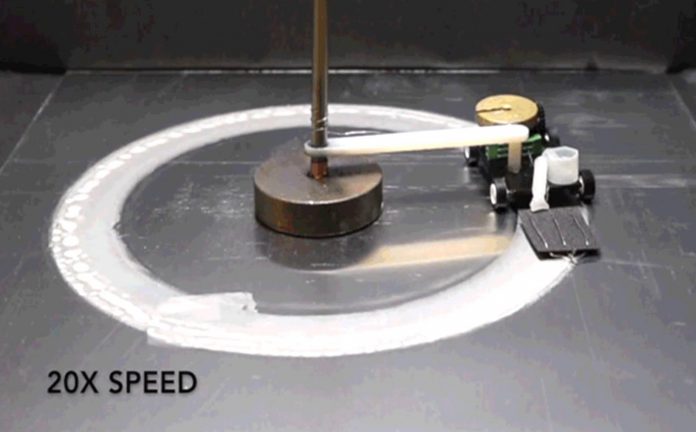
For the purposes of their study, the researchers connected a small motorized vehicle to the MAS. Dragging the hydrogel behind it, the MAS vehicle oxidized metallic surfaces it traveled over, leaving a microscopic layer of rust in its wake.

To demonstrate the efficiency of this approach, the researchers had their MAS vehicle drive in circles on an aluminum surface. The vehicle was outfitted with a small reservoir that continuously wicked water into the hydrogel to prevent it from drying out.

“Energy density is the ratio of available energy to the weight that has to be carried,” Pikul says. “Even factoring in the weight of the extra water, the MAS had 13 times the energy density of a lithium ion battery because the vehicle only has to carry the hydrogel and cathode, and not the metal or oxygen which provide the energy.”

WATCH: Dad Builds Adapted Nintendo Controller for Disabled Daughter—And Her Reaction is Adorable

The researchers also tested the MAS vehicles on zinc and stainless steel. Different metals give the MAS different energy densities, depending on their potential for oxidation.

This oxidation reaction takes place only within 100 microns of the surface, so while the MAS may use up all the readily available bonds with repeated trips, there’s little risk of it doing significant structural damage to the metal it’s scavenging.

With so many possible uses, the researchers’ MAS system was a natural fit for Penn’s annual Y-Prize, a business plan competition that challenges teams to build companies around nascent technologies developed at Penn Engineering. This year’s first-place team, Metal Light, earned $10,000 for their proposal to use MAS technology in low-cost lighting for off-grid homes in the developing world. M-Squared, which earned $4,000 in second place, intends to use MAS-powered sensors in shipping containers.

LOOK: This New LED Lamp Has Helped 90% of Its Dyslexic Users to Read ‘Effortlessly’

“In the near term, we see our MAS powering internet-of-things technologies, like what Metal Light and M-Squared propose,” Pikul says. “But what was really compelling to us, and the motivation behind this work, is how it changes the way we think about designing robots.”

Much of Pikul’s other research involves improving technology by taking cues from the natural world. For example, his lab’s high-strength, low-density “metallic wood” was inspired by the cellular structure of trees, and his work on a robotic lionfish involved giving it a liquid battery circulatory system that also pneumatically actuated its fins.

The researchers see their MAS as drawing on an even more fundamental biological concept: food.

“As we get robots that are more intelligent and more capable, we no longer have to restrict ourselves to plugging them into a wall. They can now find energy sources for themselves, just like humans do,” Pikul says. “One day, a robot that needs to recharge its batteries will just need to find some aluminum to ‘eat’ with a MAS, which would give it enough power to for it work until its next meal.”

Reprinted from University of Pennsylvania

Power Up With Positivity By Sharing The Cool News With Your Friends On Social Media…

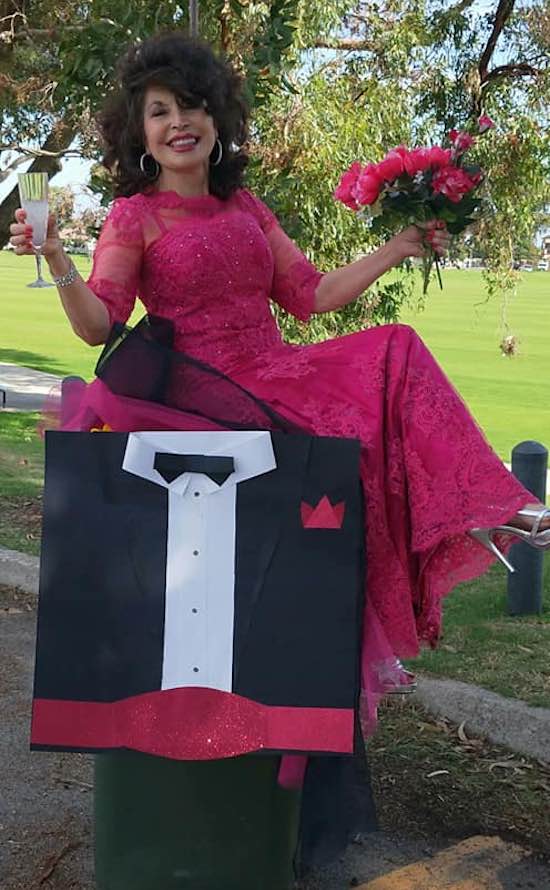
One Million People Find Laughter During Isolation By Posting Pictures of Costume-Themed Garbage Bin Outings

Photo by Zoe-Marie Masters
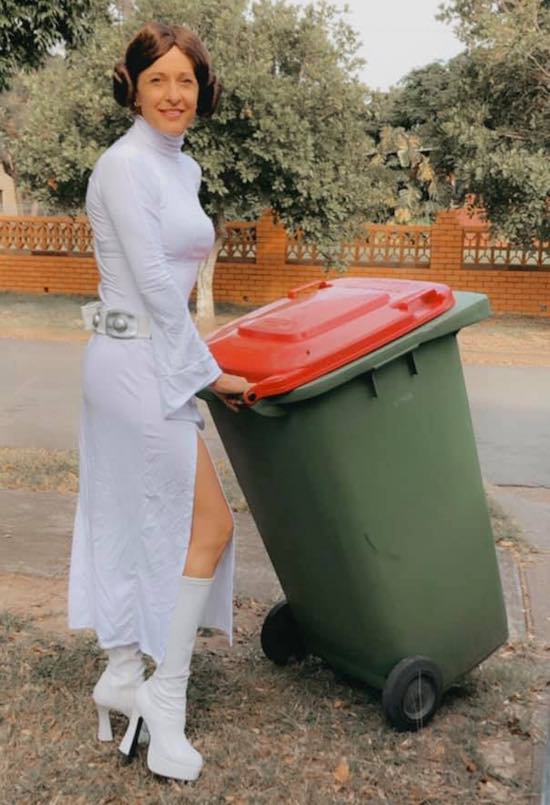
Photo by Merilyn Hinton

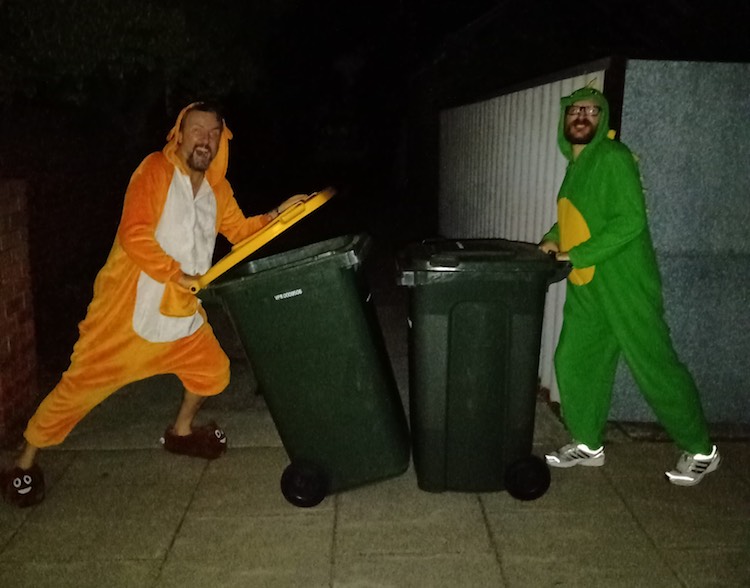
Although taking out the trash every week is usually considered a tedious chore, social media users around the world have found an unexpected new source of laughter, community, and entertainment in their garbage bins.


Photo by Thitidet Yos

Danielle Askew and her friends from Queensland, Australia are the masterminds behind the aptly-named Bin Isolation Outing Facebook group—a page dedicated to people posting pictures of themselves getting dressed up to take out their trash.


Photo by Katrina Atley

Askew was inspired to create the page after sharing a conversation with her friend about how she was now excited to take her trash can to the curb every day because it has been her only chance to go outside amidst the COVID-19 shutdowns.


Photo by Zoe-Marie Masters

Since her friend shared the sentiment, they made a pact to dress up for the occasion and post pictures of themselves to social media. They then created the Facebook page to share their outfits with their other friends in Hervey Bay—but within weeks of starting the group, it grew to include more than a million members from around the world.


“Missed out on her 80’s-themed party so my daughter took the bin out for her 21st birthday instead!” — Photo by Belinda Watson

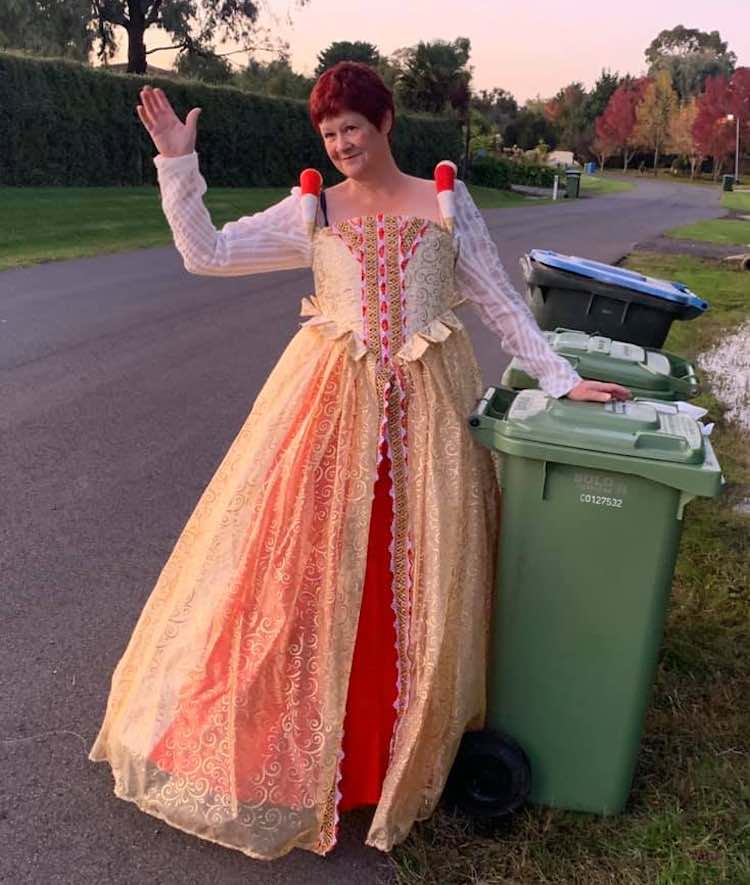
Some people use the group’s costume prompt to dress up for their birthdays in self-isolation; others use it as an excuse to dig their favorite Halloween costumes out of the attic—but regardless of the motivation, the page has become a community hotspot for creativity and support during the pandemic.


Photo by Pete Layton

“I have had a lot of people private message me, and also on the page, to say thank you so much,” Askew told ABC News about the influx of members. “They were quite down and this has made them smile and laugh. So [they say] ‘thank you for bringing a little bit of light into the chaotic world we are in at the moment’.”


Photo by Alix Holston

This is just one of many positive stories and updates that are coming out of the COVID-19 news coverage this week. For more uplifting coverage on the outbreaks, click here.

Multiply The Laughter By Sharing This Fun Story With Your Friends On Social Media…
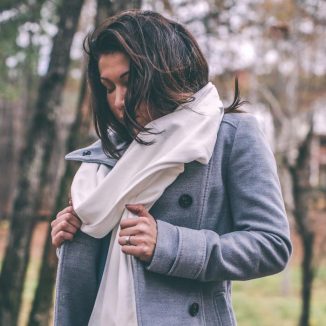
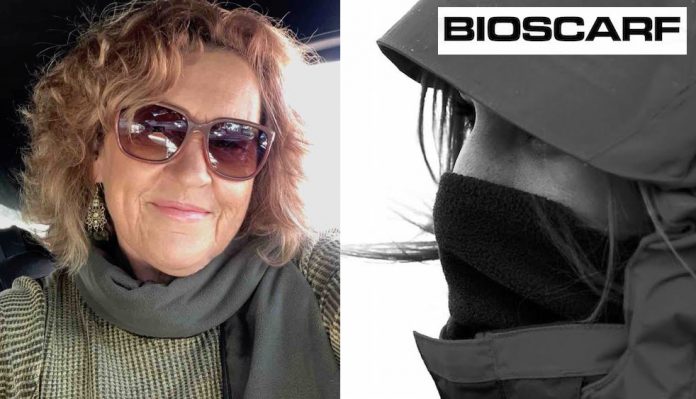
Washable N95 Scarf and Mask Filter 99% of Particles With Sustainable Solution for Personal Protection –Ships Free

When we first partnered with our friends at Bioscarf in 2017, the Southern California wildfires making breathing hazardous in Los Angeles, Ventura, and Santa Barbara counties. This scarf was the ideal solution to protect the wearer from dangerous particulate matter hanging in the air—and I got myself one (above), which I also used during the coronavirus pandemic. They now make comfortable masks, gaiters, and hoodies, too, all with incredible properties that allow for 50 washings, while still filtering the air at the N95 level or higher.

It was invented by an American couple after a business trip to China, when Carlton Solle became ill, most likely due to complications related to air pollution. As an alternative to wearing ugly, unsustainable disposable masks to protect themselves, they turned to fashion.

Back in Atlanta, his wife Hazel came up with the idea to design a product that would work both as a scarf and also a filter—and, in 2017, the company began sending free shipments to journalists who were out breathing the hazardous air while covering the fires—and to firefighters, too.

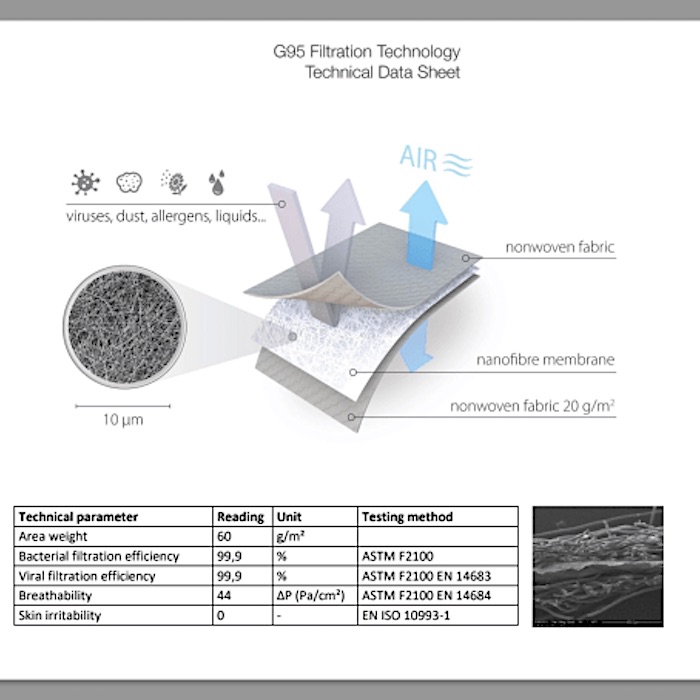
The Bioscarf might be considered a genius example of wearable technology because it filters dangerous levels of toxic particulates, but it uses no gadgets, processors, or batteries. And, the best part is their filtration technology can be washed up to 100 times without losing its N95 rating. (Free shipping and get a GNN code below…)

3 layers of protection in their debut model guarded against hazardous contaminants that pose a health risk—including, according to the company, many of the bacteria and germs that cause colds and viruses (frequent flyers, take note). With its U.S. rating of N95, the generously sized scarf (as well as their newer gator and face mask) is capable of blocking 99.75% of all particles 0.1 microns in size or larger—and 95% of all non-oil based airborne particles measuring 0.3 microns.

A “first of its kind”, these personal protective apparel items became available only online in olive, black, and white—made from sustainably constructed recycled materials. The plush polyester blend uses 100% post-consumer recycled PET water bottles, and customer satisfaction is guaranteed.

By November of 2017, at the time of the Thomas Fire, the new company has already donated more than a thousand scarves in the U.S. to people in fire zones and elsewhere, and to friends in China where approximately 1.6 million people die prematurely every year due to poor air quality.

Fast forward to 2020, when the COVID-19 pandemic began. I got in touch with Carlton and learned that they had added a variety of new products. Most notably, a line of cold weather gaiters, as well as summer scarves and gaiters made of hemp. They also added a pullover with built-in face mask, a hoodie which protects the entire upper body except the eyes, and a reusable, washable face mask, perfect for healthcare workers, which is less costly than the scarves or gaiters, retailing for just $29.

With the recent addition of a nano-fiber layer, these new products can be washed 50 times before they even begin to degrade in the slightest. They can be washed 100 times and still be rated the equivalent of an N95, because their filtration technology is, as Carlton told me, “like N95 on steroids”.

Similar masks are made for frontline workers, which you can buy on their website for $39. They include 1″ elastic bands in a specially designed strap system for secure fit and comfort all day—and they are reusable and washable up to 100 times, effectively replacing one million single-use disposable face masks. They feature a rugged exterior fabric that is water-resistant and anti-bacterial, too.

The company, G95, is currently shipping their products within 1-2 days for FREE—using USPS Priority Mail in the US—and they now ship international orders over $100 FREE via UPS.

Code for you: GNN20

If you enter the code GNN20 at checkout you will get a 20% discount any order over $100.

“Anyone who is seeking a fashionable and functional scarf or other clothing item to protect themselves–or loved ones, and is interested in helping to turn the tide on sicknesses around the world, should give the G95 Bioscarf a try,” Hazel Solle told GNN.

So now, besides being a perfect apparel piece for anyone who bicycles in the city, works around vehicles, regularly travels in airplanes or buses, or simply lives in a smoggy region, people can protect themselves from the COVID-19 virus.

One customer wrote a review in October 2020 saying, “This is one of the BEST investments I ever made! I have the Basic Mask. I never, ever thought I would need it for anything except the virus. However, there was a fire nearby in the mountains surrounding Mt. St. Helens and the air quality was the worst in the world! It rated a Hazard for almost a week. I wore this Amazing mask 24/7 inside my home for almost five days. (I am 71 and guided to stay inside). Every time I took it off to eat or drink water, I could smell smoke inside my home, even with the great air purifier running 24/7—I easily slept with it on!”

Another wrote, “These people rock with great customer service, too. Thanks so much for a Wonderful Product! It certainly worked for me.”

For more information, visit their FAQ page here. See more photos of the products on GNN’s Good Gifts page.

SHARE the Innovation with Friends Looking for Personal Protection… 

“The most wasted of all days is one without laughter.” – E.E. Cummings (watch our new Good News show for laughs)

Quote of the Day: “The most wasted of all days is one without laughter.” – E.E. Cummings (watch our new Good News show for laughs)

Photo: by Ivana Cajina, public domain, cropped

With a new inspirational quote every day, atop the perfect photo—collected and archived on our Quote of the Day page—why not bookmark GNN.org for a daily uplift?

Jewish Brothers Collect Yarmulkes to Make Face Masks For Houston’s Homeless

A pair of teens in Texas came up with a clever way to reverse the shortage of face masks—and help protect the homeless population in their hometown, at the same time.

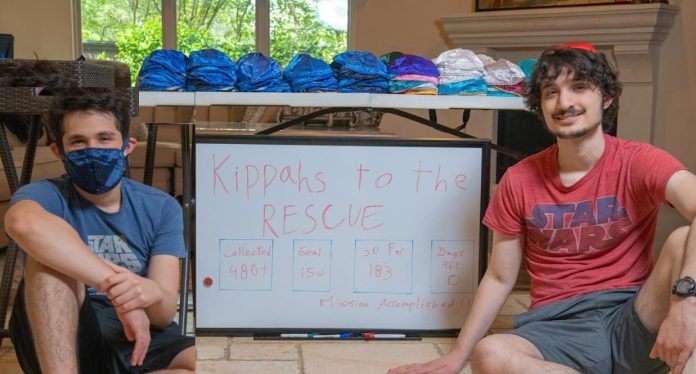
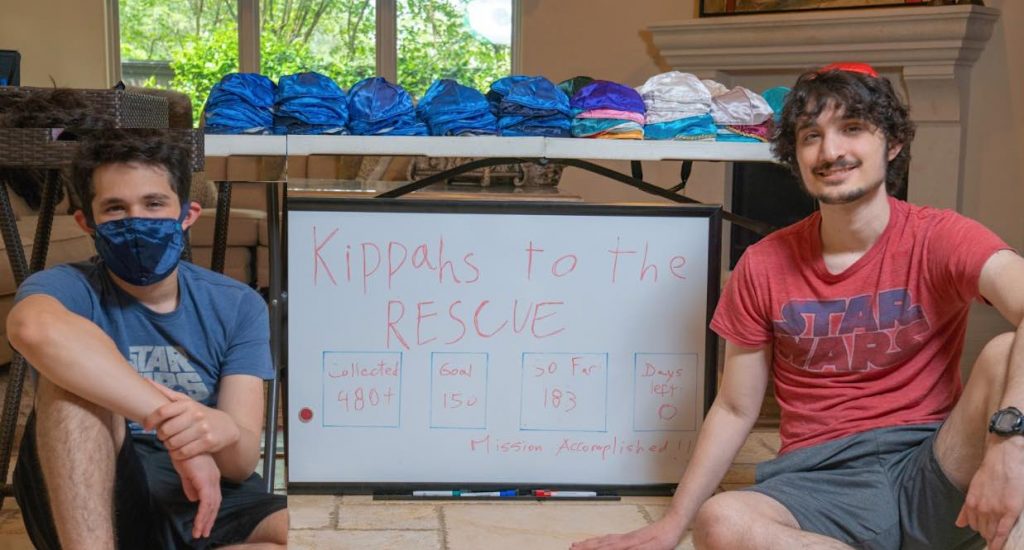
Matthew and Jeremy Jason had already been volunteering every Friday with an organization that feeds the hungry in downtown Houston. After the COVID-19 pandemic started, they came up with the idea of using the traditional skull caps worn during religious events and turning them into face masks.

The brothers have collected a lot of these caps on various special occasions over the years, like their coming-of-age Bar Mitzvahs.

“We decided to put them to good use,” Matthew told GNN.

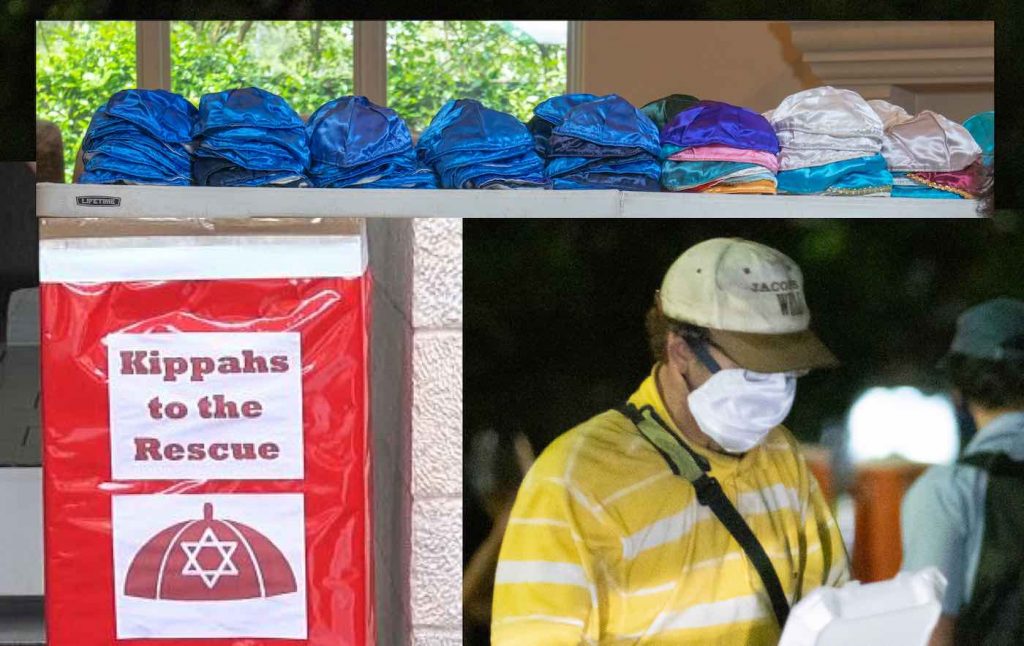
The youngest of three brothers who belong to the Brith Shalom congregation, he and his siblings asked their synagogue to help collect the kippahs (the Hebrew word for yarmulke), calling their campaign ‘Kippahs to the Rescue’.

“In less than a week we were able to collect enough of them to make 160 face masks,” said Matthew. “My parents, brothers and I worked very hard to sew elastic bands on them, and they were ready to be delivered by Friday.”

RELATED: Sikhs Around the World Are Sending Thousands of Donated Meals to Elderly and People in Self-Isolation

“It was so great to see how I was able to help out, and people were so appreciative.”

The Jewish congregation continues to donate the caps and, to date, the family has collected 693—and sewn 316 of them.

Homeless man walks away in Houston with food and a face mask–Kippahs To The Rescue

Matthew hopes that if people like the idea, they can do the same in their own communities. Just sew both ends of a six-inch elastic strips on each side to anchor the cap around the ears.

A high school sophomore at the Awty International School, Matthew has been ‘mensch’ for years. To honor his Bar Mitzvah, he launched Street Birthdays, which celebrates birthdays for homeless people—and it is still going strong. Once every month, he brings cakes and candles and sings Happy Birthday to all who were born in that month.

WATCH Jeremy’s fun video below…

SHARE This Great Idea With Your Community on Social Media…
In One Week, Both Sweden and Austria Celebrated the Closing of Their Last Coal Plants

Credit: TVA Cumberland Power Plant, CC license

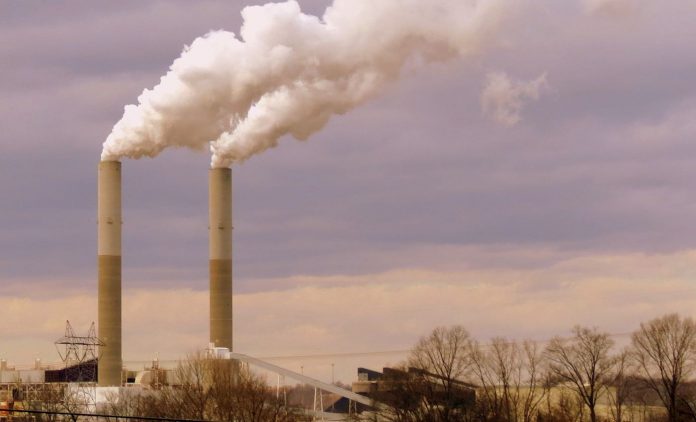
Conservationists are celebrating yet another environmental milestone as the last polluting coal-fired power plants in Austria and Sweden closed their doors.

Sweden’s original commitment to stop using coal was a target the country wanted to achieve by 2022, but the recent closure of Stockholm Exergi AB’s Värtaverket power plant means the nation will see their goal realized two years early.

According to a statement released earlier this month by Swedish Energy company Exergi, the plant was shut down following a mild winter in which neither boiler was required to operate in order to supplement the heating for 800,000 customers in the nation’s capital.

“This plant has provided the Stockholmers with heat and electricity since 1989, (but) today we know that we must stop using all fossil fuels, therefore the coal needs to be phased out and we do so several years before the original plan,” said Stockholm Exergi CEO Anders Egelrud in the statement.

LOOK: New Solar-Pavement Driveways Made of Plastic Bottles Can Power a Small Household

Just one day later, on the other side of the Baltic Sea, Austria saw the last coal-fired facility in its country shuttered, as the Mellach district heating plant in the city of Verbund closed.

The two countries became the second and third in Europe to have zero coal-powered electric plants, joining Belgium, which remarkably achieved its coal-free goal in 2016.

“With Sweden going coal-free in the same week as Austria, the downward trajectory of coal in Europe is clear,” said Kathrin Gutmann, campaign director for Europe Beyond Coal. “Against the backdrop of the serious health challenges we are currently facing, leaving coal behind in exchange for renewables is the right decision and will repay us in kind with improved health, climate protection and more resilient economies.”

RELATED: Impelled by Reactor Meltdown, Fukushima Japan Vows to Achieve 100% Renewable Energy Use

Seven more countries have made preparations to move on from coal by 2025, including France (2022), Slovakia (2023), Portugal (2023), the UK (2024), Ireland (2025) and Italy (2025), according to Europe Beyond Coal.

Natural market forces are driving coal prices up, as sellers of coal power and shares in coal plants must sell high to cover costs associated with the fall in demand.

According to statistics from Carbon Tracker, a UK-based think tank, 46% of coal plants in the EU ran at a financial loss in 2017, while in 2019, the price of operating a coal plant was almost 100% higher than equivalent renewable operations.

Power Up Their Positivity By Sharing Some Green News With Friends On Social Media — File photo by TVA Cumberland Power Plant, CC

New Alzheimer’s Nasal Spray Shown to Reduce Proteins Which Cause the Disease in Mice

A team of Japanese researchers have taken a small step towards creating a treatment method for the currently incurable and largely untreatable Alzheimer’s disease by successfully trialing a nasal spray option in mice.

The nasal spray was found to reduce dementia-like symptoms in mice while also reducing atrophied brain matter by blocking a special kind of protein that causes the disease.

Known as a “tau protein,” amalyoid-beta forms plaque around neurons in the part of the brain called the hippocampus, which serves many functions including short-term experiential memory storage.

RELATED: For First Time in History, AI Learns to Translate Silent Human Brain Activity into Text for Locked-In Syndrome Patients

Deep sleep is currently the only known onboard biological defense against these tau proteins. However, this is a process that occurs only during the first half of the solar night, and can be disrupted in some people, especially men.

The vaccine being studied stimulated the immune systems of the mice to produce antibodies that fought away the tau proteins—something that, so far, has been rare or impossible in trialed pharmaceuticals for humans.

When examined, the mice that had received the vaccine demonstrated more than double the amount of antibodies than those who had not. No side effects of any negative sort were recorded in the mice during or after the trial—a total of 8 months following vaccine administration.

CHECK OUT: First-of-its-Kind Blood Test Can Detect Over 50 Kinds of Cancer—Often Before Symptoms Even Show

“Much more research is necessary for the vaccine to be used in humans, but it is an accomplishment that can contribute to the development of a dementia cure,” wrote research team member Haruhisa Inoue, a professor at Kyoto University, in the corresponding paper published in Nature.

According to Inoue, Japan has about 3 million Alzheimer’s patients, while another report from the American Alzheimer’s Association suggests that more than 5 million Americans live with the disease.

As Inoue said, much more research is needed before anything like an effective treatment can be developed for humans, but the Kyoto paper is a good start towards that end.

Be Sure And Share The Breakthrough With Friends On Social Media…
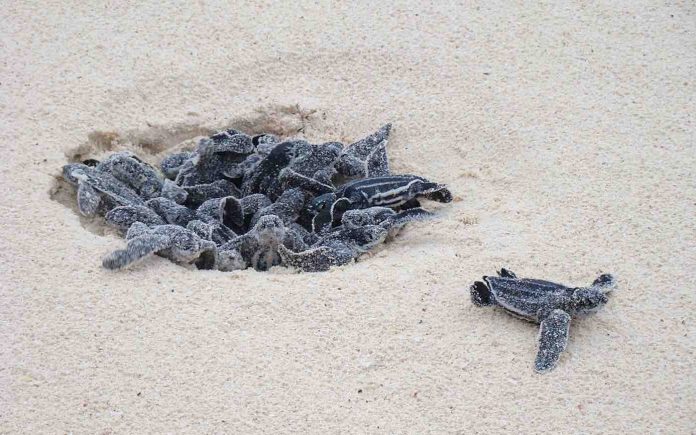
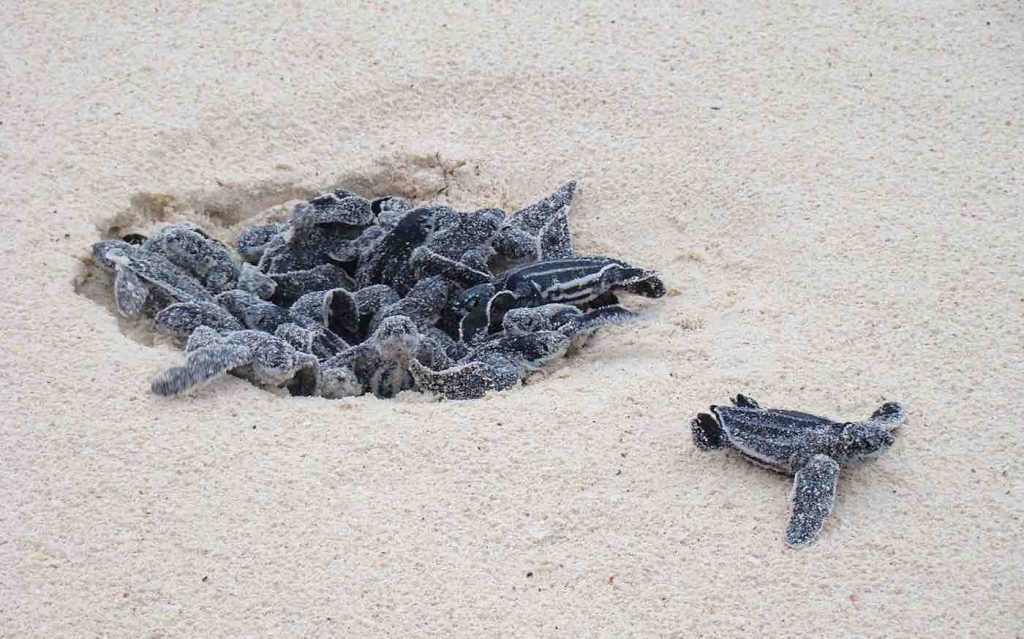
Beaches See Huge Increase in Leatherback Sea Turtle Nests After Travel Restrictions in Florida and Thailand

File photo by Elisa Peterson, CC license

From fish returning to the Venice canals to deer in the streets of London, many of the shelter-in-place orders and lockdowns resulting from the coronavirus spread have allowed for nature to come back in some of the least-likely places.

Thailand is the latest nation to make headlines from the phenomenon, after the Thai government placed a ban on international flights and a strong encouragement to stay at home.

Though the coronavirus has shut down Thailand’s tourism economy, a season of peace and salvation for rare leatherback sea turtles has emerged. Endangered in this area of Southeast Asia, they are nesting here for the first time in five years.

The largest of all living turtles, the leatherbacks have made 11 nests on Thai beaches this spring—more than at any time during the last two decades.

WATCH: ‘Fantastic Grandmas’ Spend Retirement Photographing Venomous Sea Snakes for Science

“This is a very good sign for us because turtles have a high risk of getting killed by fishing gear and humans disturbing the beach,” the director of the Phuket Marine Biological Centre told The Guardian.

Similar Good News in the Sunshine State

In Florida, too, the number of leatherback sea turtle nests have skyrocketed compared to last year.

File photo by Elisa Peterson, CC

Juno Beach is the most densely nested sea turtle beach in the entire world, with an estimated 21,000 nests last year from various species.

Only 2 weeks into the summer nesting season of 2020, staff at the Loggerhead Marine Life Center have found and marked 76 nesting sites for the leatherback—a “significant increase” over last year’s count along the 9 and ½ mile beach.

With no dogs or people walking over nests and exposing eggs, there’s a good chance the eggs will survive the 60 days until hatch day.

CHECK OUT: After 13 Years of Social Distancing, Giant Pandas Finally Mate During Peaceful COVID-19 Zoo Closures

“Our leatherbacks are coming in strong this year. We’re excited to see our turtles thrive in this environment,” Sarah Hirsch told West Palm Beach’s WPEC-TV news.

“Our world has changed, but these turtles have been doing this for millions of years and it’s just reassuring and gives us hope that the world is still going on.”

By the end of the nesting season, if the increased numbers continue, it could provide a valuable boost for the vulnerable species.

Multiply The Good News By Sharing It With Your Friends On Social Media…