















30 years ago today, the Chauvet-Pont-d’Arc Caves were discovered in southern France containing remarkable cave paintings that are roughly 32,000 years old, the earliest-known and best-preserved cave art and engravings in the world. The site, located on a limestone cliff above the former bed of the Ardèche River, was first explored a few months after an opening in the Chauvet Cave was discovered. In addition to the paintings of lions, deer, horses, and rhinoceros, other human evidence was discovered from the Paleolithic era, including fossilized remains, footprints, and markings from a variety of animals, some of which are now extinct. READ About the paintings and their discovery… (1995)
A Volunteer Team of Grandmas Dispense Street-side Wisdom to Those Who Need a Considerate Ear
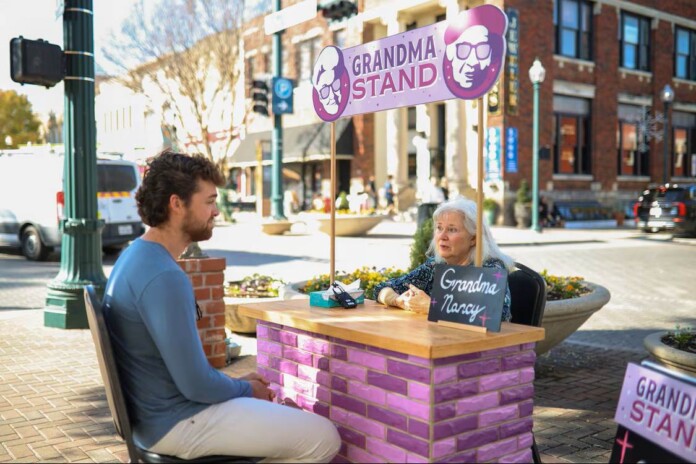
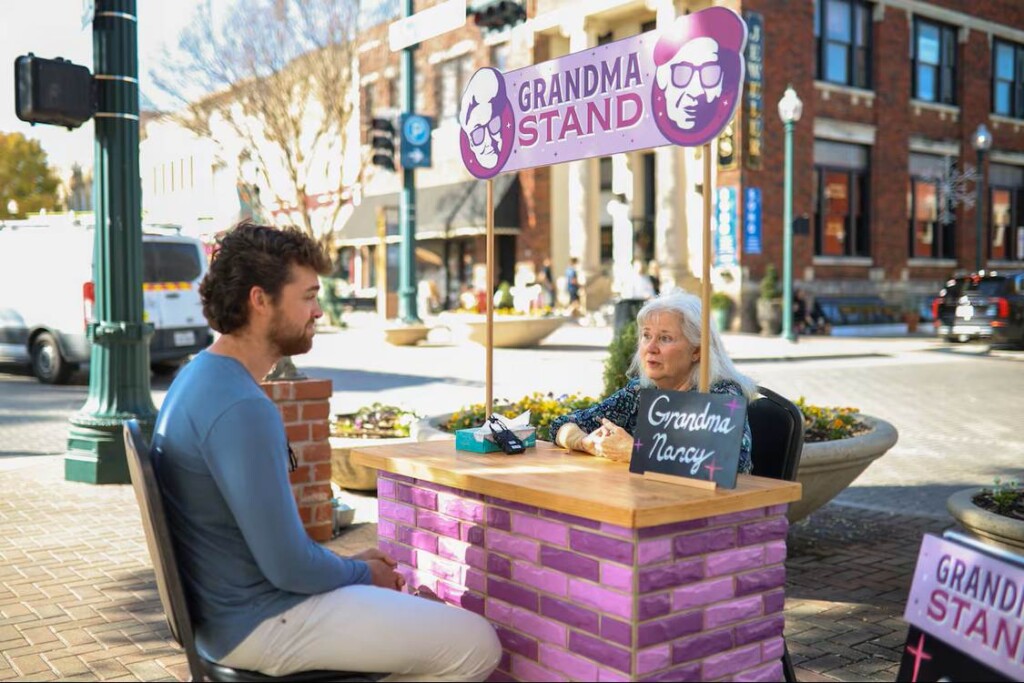
From Canada’s “As it Happens” comes a story by way of Texas of a “Grandma Stand” where volunteer elders offer to lend an ear to anyone beset by troubles.
Anyone can walk by the purple lemonade stand and sit down across from a real grandmother to chit-chat, ask advice, or just vent a little to someone who’s seen it all.
The idea was dreamt up by the New York City reporter Mike Matthews, who recommended a female coworker call his grandmother for a talk. The coworker, whom he described as a guarded Brooklyn hipster, admitted it was the “weirdest thing that anyone’s ever said,” to her.
Nevertheless, she called Matthews’ grandmother—95-year-old Eileen Wilkinson, and was so impacted by the connection after separating with her boyfriend of 5 years, that the two had chats every week for years.
The difference that Wilkinson’s empathy and years of wisdom made for Matthews’ coworker gave him the idea of opening a “Grandma Stand” on the streets of Brooklyn. His nan lived in Washington, so he left a cheap laptop with a video chat open and wrote a sign on the box that anyone who needed a bit of company could sit down and talk.
“I have no idea how many people she talked to through those years, but at least a thousand,” Matthews said. “She had never had any hesitancy caring and just being present with whoever sat down on that chair.”
Wilkinson passed away at the age of 102, but her legacy at that booth took on a life of its own.
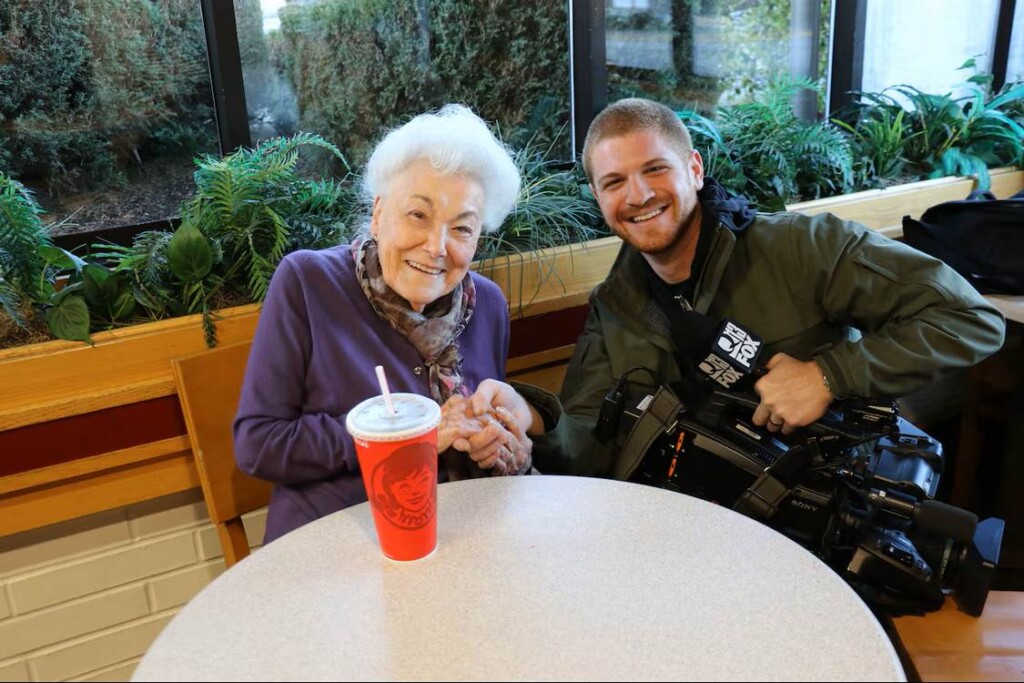
Now in McKinney, Texas, a team of volunteer grandmas rotate counselor roles behind the same style of purple lemonade stand that Matthews first used with his grandmother and laptop.
“I’m officially old now,” 71-year-old volunteer grandma Nancy McClendon told “As It Happens” host Nil Köksal. “What’s the use of being old if you can’t share from your life experiences?”
The Grandma Stand is not Matthews’ exclusive copyright, and instead is replicated by others around the US, and may soon jump north to Canada. This spot in McKinney is a holiday-time pop-up, and McClendon was recruited through a local senior center.
WISDOM OF OUR ELDERS: The World’s Oldest Human Gives Us the Best Advice, Before She Dies at 117 Years
On her first 150-minute shift, she spoke with a father of three who wanted parenting advice, a young married woman with a fear about losing connection with her husband over the long term, and a couple struggling with fertility issues.
She admits she didn’t have answers for everyone, but it felt good to listen, and felt good for the speaker to know there was someone listening—even if she was a stranger they’d never see again.
MORE STORIES LIKE THIS: Japanese ‘Rental Grandmother’ Service Provides Much-Needed and Much-Loved Purpose for Older Women
Western society has done a very effective job at cocooning individuals into little pods, enlivened through digital connection. A general understanding is emerging that this is no way for our species to live, social primates that we are.
“We kind of know in our gut that we’ve lost a lot of connection, and true face-to-face connection,” McClendon said. “Which I think is what people find so refreshing [about] the novelty of sitting down in that setting.”
SHARE This Story With Your Friends Who Love Their Grandmas…
‘Trashed Panda’ Story Raises $180,000 for Animal Shelter That Discovered it Drunk in the Bathroom


In early December, US social media airwaves got drunk off the hilarity of a Virginia raccoon that was discovered unconscious in a bathroom after breaking into a Richmond liquor store on what can only be described as a class A bender.
Hanover County Animal Protection revealed the story on Facebook after one of their officers was called to the scene to escort the raccoon off the premises.

Now, a fundraiser in honor of the event has raised over $180,000 for the shelter.
Known somewhat affectionately as “trash pandas” after their penchant for dumpster diving, it didn’t take George Carlin to reason that the raccoon caught in a drunk stupor was a “trashed panda.”
“On Saturday morning, Officer Martin responded to an unusual call at the Ashland ABC Store. Upon arrival, she discovered the ‘suspect’ had broken in, ransacked several shelves, and then… passed out in the bathroom,” Hanover County Animal Protection first wrote on Facebook on December 2nd.
“Officer Martin safely secured our masked bandit and transported him back to the shelter to sober up before questioning. After a few hours of sleep and zero signs of injury (other than maybe a hangover and poor life choices), he was safely released back to the wild, hopefully having learned that breaking and entering is not the answer.”
Two days later, Bonfire, a company that allows clients to upload their designs onto simple merchandise options like hoodies and tumblers, was offering a line of “trashed panda” merch, with all proceeds going towards the animal shelter in Hanover.
By December 5th, $100,000 had been raised.
Each shirt, hoodie, or coffee mug had a slightly artistic depiction of the collapsed raccoon in the photo taken by Officer Martin, next to an open liquor bottle and a hashtag for the animal shelter.
$100,000 eventually became $180,000, all of which will go to support the animals in their shelter and train their officers to respond to the next trashed panda, or any other animal in need of help or a counselor in the Lovers’ State.
SHARE This Ridiculous Raccoon And An Animal Shelter’s Fundraising Success…
Bostonians Wanted More Bike Lanes: Now They Have Them, and Traffic Is Down
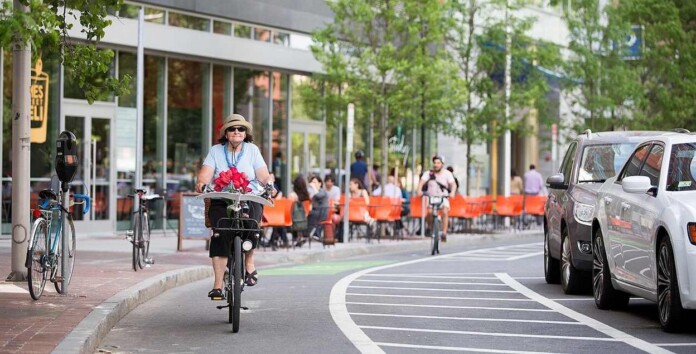
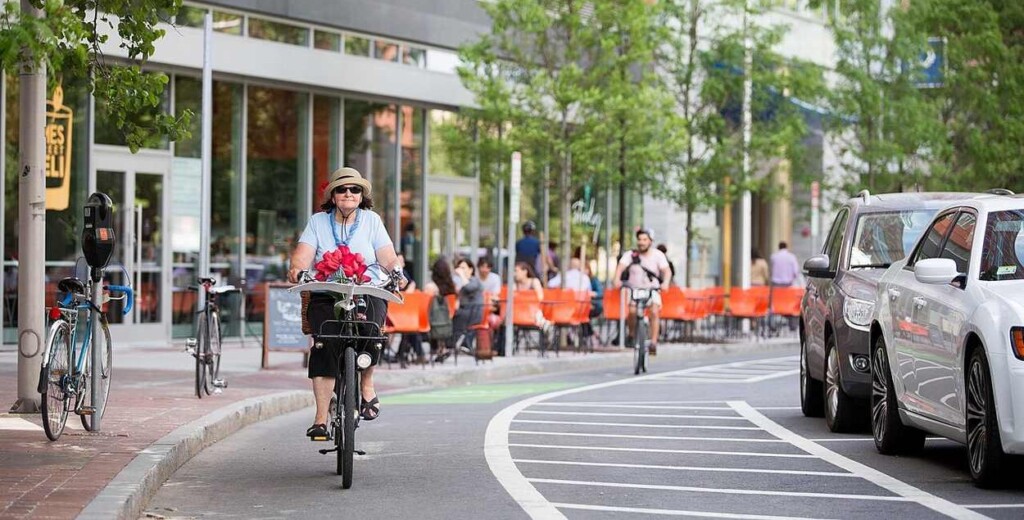
The Better Bike Lanes project in the metropolitan area of Boston has led to a substantial increase in bicycle trips and a modest decrease in the number of motor vehicles on the roads at any given time.
Taking place between 2023 and 2024, the changes were revealed in a report from the City of Boston.
It was part of the election platform of Mayor Michelle Wu to install protected bike lanes around the city to satisfy a perceived demand for better cycling infrastructure.
By the autumn of 2024, much of the infrastructure had been installed, including bike lanes, bikeways, and new road crossings. The city then conducted a study to see whether that demand was genuine.
In some areas the change was more modest, such as South Street in Brighton, which saw an increase of about 16 bikes per day—a 22% rise from before the bike lanes. In other places, the results have been dramatic.
On Bolyston Street in the Back Bay neighborhood, there has been an 83% rise in the number of observed bike trips per day, from 615 before the addition of the bike lanes to 1,127 after. Bolyston’s bike lane is blocked from inconsiderate motorists looking for parking spots with metal bollards.
Down town, on Milk Street, almost 200 more bikes were recorded on its new single-direction bike lane than before its construction, when bikes had to use the automobile lanes.
Western Avenue, at locations along its length both in Allston and Brighton, saw over 200 more bikes—an increase of 51% in average per-day bike traffic.
US TRANSPORTATION OPTIONS:
- First Flying Electric Ferry in US Will Shuttle Lake Tahoe Crowds With Zero Emissions
- Charlotte Cycling Thoroughfare to Finally Get Long-Awaited Bridge–and She’s A Beauty
- NYC Innovation Sees Century-Old Bridge Replaced – at $93M Under Budget, Without Stopping Trains
But how many of these cyclists were opting to leave their car in the garage and how many didn’t have a car to begin with? The data recorded a modest, 9% drop in the average traffic flows between September 2022 and September 2024 near Fairfield Street, and a 14% drop near Arlington Street.
Tiffany Cogell, executive director of the Boston Cyclist’s Union, told Mass Street Blog that the new bike lanes are “reducing crashes, improving predictability, and expanding mobility options without increasing congestion.”
“Protected bike infrastructure works,” she said. “This is exactly the kind of evidence-based policymaking our city needs.”
SHARE This Story With Your Friends Who Prefer 2 Wheels To 4…
Their Husbands Were Killed by Tigers. Now These Women Are Restoring the Big Cat’s Threatened Habitat


They are called “swami khejos,” translated to “Husband Eaters.”
In reality, it’s just a superstition, as it was the tigers of the Sundarbans forest that ate these husbands, not the women.
This unique region of eastern India/western Bangladesh contains the world’s largest mangrove forest, and the 200 or so Bengal tigers that live there inhabit a watery world that they thrive in, consuming a diet of fish and crabs while swimming several miles at a time in search of prey.
The translation above was provided to CNN by the environmentalist and editor Arun Krishnamurthy, who reported on the extraordinary story of how these “tiger widows” have teamed up with young conservationists to help protect and restore the mangrove swamps, and, inadvertently, the tigers who widowed them.
“The women are working towards a cause that has disrupted their own life,” Saurav Malhotra, a project leader at international nonprofit Conservation International, told CNN. “It’s about restoring dignity and building resilience for these women and for the broader community.”
It’s not known how many tiger widows there are in the Sundarbans region, where villagers make much of their subsistence livelihoods through fishing the deep mangroves. But what is known is that this massive ecosystem enshrined as a UNESCO Natural Heritage Site is in danger.
Mangrove forests play crucial roles in the stability of coastal ecosystems. Their network of aerial roots help dampen storm surges, and they take up salt in their tissues that allow for a brackish water quality that’s permissible to both freshwater and saltwater fish.
Deforestation, however, has the effect of taking bricks out of a wall: it’s compromising this great swampy wall’s integrity. Fewer trees means increasing salinity, which means fewer fish. It also means the strength of monsoon winds and waves is absorbed by smaller root systems, increasing the potential for flooded cropland and destroyed villages.
MORE MANGROVE NEWS: The Largest Landfill in Latin America has Been Turned into a Mangrove Forest
Restoring the mangroves allow the villagers of the region and the tigers to thrive. The social organization and youth rewilding movement I-Behind-the-Ink is working with these tiger widows in the Jharkhali region of the Sundarbans, along the Matla River to restore 240 acres of mangrove forests.
It’s no mean feat, and will require hundreds of thousands of trees, but villages in the area like Laskarpur and Vivekananda Palli are no longer protected by mangrove swamps. A single man-made embankment prevents floods from the ocean from destroying their homes. Time is, quite straightforwardly, of the essence.
CONSERVATION INDIAN-STYLE: 12-Year-old Girl Plants 150,000 Trees in India, Becoming a Reforestation Leader
Saplings tended lovingly by the villagers for the last six months are now being planted in front of the embankment in a location that was previously cleared for easier fishing. The idea is that with time, and with every hectare restored, salinity and storms will ease, fish populations will increase, and there will be more food both for humans and tigers.
That latter aspect should result in less human-tiger conflict, and fewer tiger widows.
SHARE This Extraordinary Tale Of Coexistence And Recovery In The Face Of Tragedy…
“Happiness is like a kiss. You must share it to enjoy it.” – Bernard Meltzer

Quote of the Day: “Happiness is like a kiss. You must share it to enjoy it.” – Bernard Meltzer
Image by: Getty Images for Unsplash+
With a new inspirational quote every day, atop the perfect photo—collected and archived on our Quote of the Day page—why not bookmark GNN.org for a daily uplift?

Good News in History, December 17

92 years ago today, the first American football championship game was played—on the diamond at Wrigley Field—between the Chicago Bears and the New York Giants. Called the Championship, it was nevertheless to be the precursor to the Super Bowl of the modern era. Home field advantage went to the Bears after registering a better record of 10-2-1 to the Giants’ 11-3, and it was the home team that eventually won with a score of 23 to 21. READ more about the game that became the Super Bowl… (1933)
Footage of River Otter Scurrying Through Lincoln–a Delightful Reward for Decades of Conservation Work

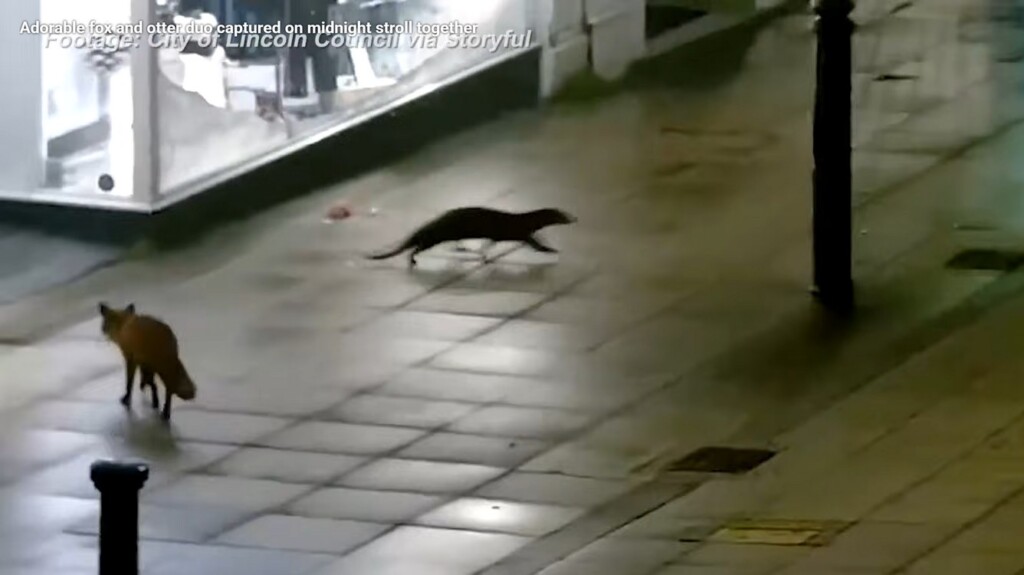
In the dreamy old city center of Lincoln, where Tudor and Victorian buildings stand bedecked in Christmas gaiety, CCTV footage revealed a wild sight one evening in November.
A red fox and a river otter were galivanting through the town—as near to a scene in a children’s books or a Disney film as could be imagined.
No one knows, writes Patrick Greenfield for the Guardian, how many river otters exist in England, but the unlikely security camera footage reveals that unlike 20 years ago, these charming riverine mammals are no longer rare.
The Nottinghamshire Wildlife Trust described their rapid return to the waterways of Britain as “remarkable.”
“Twenty years ago, they were almost nonexistent,” said the Trust’s head of nature recovery, Janice Bradley. “Then we saw them coming up the River Trent from other areas. Now, we’ve got records of otters in virtually every river and watercourse in the county. It’s remarkable.”
100 years on from the collapse of animal populations across the Industrialized world, the stories of decline often repeat themselves. For the river otter, it was two of the most familiar—the pollution of rivers from industrial dumping, and overhunting for their furs.
But with both practices largely gone, and thanks to a targeted reintroduction campaign in the eastern areas of Britain, there may be as many as 11,000 river otters in the country.
Scientists admit that’s speculation, but it’s difficult to monitor their numbers reliably.
While outright dumping is much less common than it was in the first-half of the 20th century, the otters face other risks of water contamination. PFAS, the so-called forever chemicals, and microplastics accumulate in the water, which accumulate in fish, and therefore accumulate in the otters.
GREAT OTTER STORIES:
- Baby Otter He Rescued Jumps Into His Boat Every Time She Sees Him After He Returned Her to the Wild (WATCH)
- Presumed Extinct: World’s Smallest Otter Found in Busy Nepal River After 186 Years without a Sighting
- Out-of-Control Invasive Crab Species Has Met its Match: Cute and Hungry Otters
- Once Locally Extinct, ‘Top Predator’ River Otter Flourishing Again in New Mexico
Because of this, and because of their return, conservationists say that the otter can act as a powerful and charismatic national symbol for river health and water quality control.
It’s nothing personal, but the face of a fish is just not as moving to people as that of an otter, and something like the video from Lincoln offers better PR for environmental protection measures than even the largest, most glittering game fish caught by an angler.
WATCH the galivanting below…
SHARE This Delightful Story And Hilarious Footage With Your Friends…
Antarctic Research Station Receives its Mail in a Shiny New Box–a Christmas Gift from King Charles

Imagine the charm of sifting through bills and junk mail in your mailbox and seeing the quirky script and colors of a handwritten Christmas card—now imagine you’re pulling it out from a box at one of the farthest point on Earth from any human civilization.
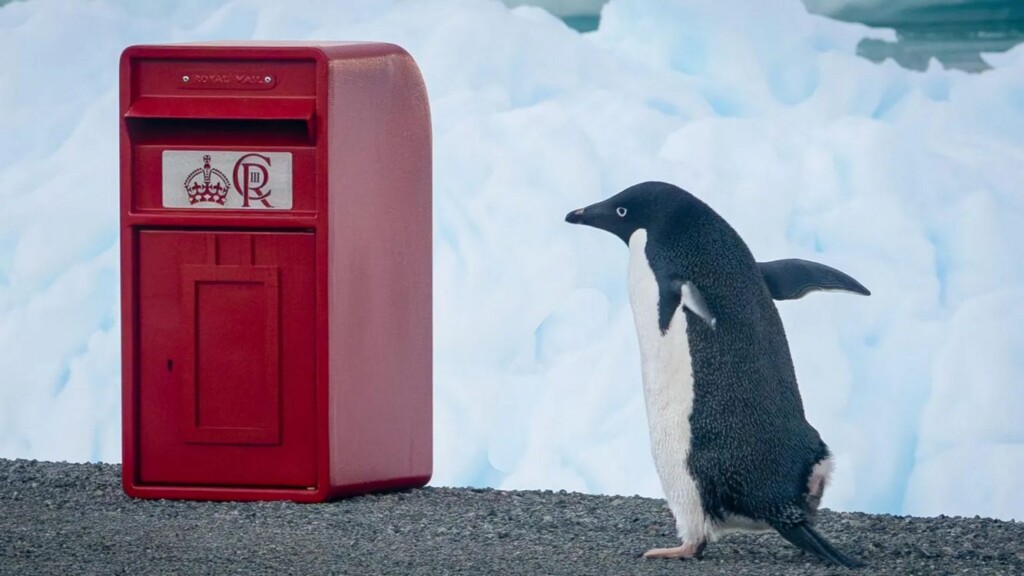
At the personal request of King Charles III, the Royal Mail has installed a traditional post box at the British Antarctic Survey’s (BAS) Rothera station, situated 1,155 miles south of the Falkland Islands.
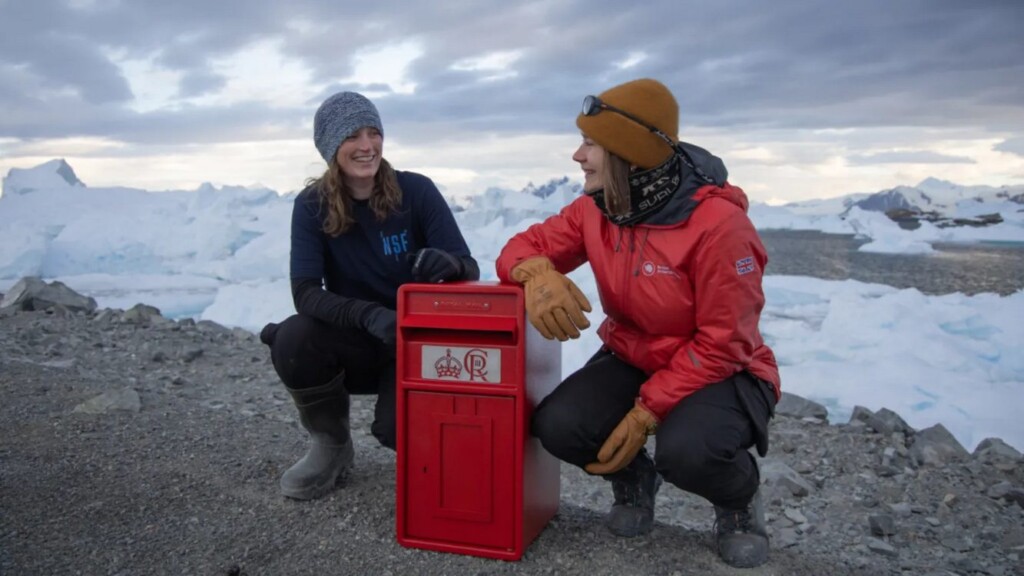
Here, members of the BAS live and work for months on end in cold and isolation, and as winter comes to an end in the Southern Hemisphere, King Charles asked that a mailbox be brought to the station along with the usual supplies.
It was delivered by the UK’s polar research vessel RRS Sir David Attenborough, and arrived in time for Christmas.
Though letter-writing has become rare in the digital age, there’s one time of the year where it hasn’t fallen out of fashion—Christmas—and that fact isn’t lost on those frigid scientists who work at Rothera, mostly on climate research.
“If you’re doing fieldwork for many months, the feeling of receiving a letter—an actual tangible, piece of paper with handwriting from friends and family—is such a lift,” said Kirsten Shaw, a station support assistant who runs the British Antarctic Territory Post Office.
“It’s a wonderful way to connect people that goes beyond what an email or text message can do.”
The box, featuring the King Charles III cypher, is one terminal node in a series of three jumps that see the mail get to and from this remote territory.
MORE LETTER-WRITING STORIES:
- Woman Received Thousands of Letters from Dad Growing Up, Now Anyone Can Request a ‘Letter from Dad’
- Handwriting Strengthens Brain Connections and Boosts Learning More Than Tapping on a Keyboard
- World’s Oldest Pen Pals Turn 100, After 84 Years of Transatlantic Letters–And Now They’re Meeting on Zoom
- Writer Starts a Pandemic Pen Pal Project – Now 7,000 People Are Mailing Joy to Strangers With Letters
With the other terminal in Oxford, mail is shunted back and forth with a polar vessel like the Attenborough, and with a BAS plane which lands in the Falkland island of Stanley.
Ms. Shaw then sees the mail distributed to various science bases and camps in British Antarctic territories.

It could be said that the Royal Mail ranks among the most romantic of all British institutions. Red mailboxes maintained—sometimes infrequently—by the Royal Mail can be found all over the former Commonwealth, and a letter posed therein will be taken anywhere in the Commonwealth.
SHARE This Lovely Uplifting Story With Your Friends Who Love A Good Letter…
Cutting-Edge Facility Generates Pure Water and Hydrogen Fuel from Seawater for Mere Pennies


One might call the first three weeks of operations for a new, state-of-the-art seawater desalination plant in coastal China a ‘watershed’ moment for the industry.
Long held back by fundamental difficulties in turning seawater into pure water, this new installation beats out previous flagship desalination plants in Saudi Arabia and California in terms of cost-effectiveness, while adding a new valuable output—green hydrogen fuel.
The plant is located in the city of Rizhao, literally meaning ‘sunshine.’ It’s one of China’s most renewably-powered cities, one in which all urban water heaters are powered by solar panels. It was ranked by the UN as one of the most habitable cities in the world in 2009.
According to South China Morning Post, reporting on the facility for a Hong Kong audience, for every 800 metric tons of seawater, the system delivers 118,877 gallons of pure fresh water, 192,000 standard cubic meters of green hydrogen fuel, and 350 metric tons of mineral-rich brine for marine chemical production.
That hydrogen is enough to power 50 city buses for around 4,600 zero emission-miles of routes each. The process of creating pure hydrogen fuel relies on electrolysis, which uses an electrical current to separate the oxygen atoms from the hydrogen atoms in water. If this process is done through renewable energy, then the result is ‘green’ hydrogen. If it’s powered by fossil fuels, it’s referred to in the industry as ‘grey’ hydrogen.
The Rizhao desalination and hydrogen facility creates green hydrogen by using the waste heat from a nearby steel foundry, making it not only green, but free—so long as China remains the steel manufacturing powerhouse that it is.
“This is not just about producing a canister of hydrogen; it opens up a new path for ‘extracting energy from the sea,’” Qin Jiangguang, a senior engineer at the Laoshan Laboratory, a marine research center in the large port city of Qingdao, told the Dazhong news outlet which first reported the story.
This usage of waste heat for hydrogen fuel is a focus of Chinese industrial policy, as not only does China boast extensive coastlines, but no shortage of industrial facilities along that coast which can be leveraged to power electrolysis on mass.
Beyond the hydrogen fuel, the cost per cubic meter—the unit used by most of the world to measure water consumption for billing purposes—is a measly US$0.28. This is half the price of the water produced from the Saudi Water Authority’s massive desalination plant, which produces 52-times the amount of fresh water as the Rizhao plant.
It’s a fraction of the cost of water from the Carlsbad Desalination Plant in California, which charges around $2.20 per cubic meter.
MORE SEAWATER ADVANCEMENTS: Hyper Efficient Solar-Powered Desalination System Requires No Extra Batteries to Purify Groundwater
Desalination is one of the most effective strategies to alleviate water scarcity, but existing processes consume massive amounts of energy, leaving a large carbon footprint.
Other problems plague the production of fresh water from the sea, including the necessity to de-scale membranes used in the reverse-osmosis desalination process with chemicals that are toxic to sea life. Furthermore, once the water is produced, the briny byproduct is so overly rich in salt that it has the effect of an ecological contaminant if released into the water.
SIMILAR INDUSTRIAL IMPLANTS: Waste from Copper Plant Is Heating a German Waterfront Without Emitting CO2
It needs to be disposed of properly, which involves specialized sites, treatment facilities, or trained staff which can all increase the cost of the final, fresh water product. According to SCMP, the Rizhao facility sells the brine as a product for chemical manufacturing.
Previously, these challenges have been overcome by Australian researchers who found a way to more-than-double the evaporation rate of seawater by introducing clay minerals into a solar-powered hydrogel implant that’s adaptable to the thousands of desalination plants worldwide.
SHARE This State Of The Art System Making Water And Fuel With Your Friends…
Christmas ‘Miracle’ for 6-Year-Old with Leukemia Who’s Now Thriving After T-cell Therapy Instead of Chemo

Christmas 2025 is better and brighter for one family whose daughter is on the mend from a previously untreatable form of childhood cancer.
Christmas 2024 saw then-5-year-old Bryn Ailinger isolated in a child cancer ward, having been diagnosed with precursor B-cell acute lymphoblastic leukemia which harbored a rare and aggressive mutation that rendered standard chemotherapies and surgeries ineffective.
“You think the worst immediately,” said Justin Ailinger, Bryn’s father. “I didn’t know if I was going to have a daughter by the end of the year.”
Bryn’s care team from the Roswell Park Oishei Children’s Pediatric Cancer and Blood Disorders Program then presented the family with the option of CAR T-cell cancer therapy.
Leukemia may have cost Bryn one Christmas, but thanks to this program, she gained many, many more.
“I look at her, and I see a miracle,” said Meghan Higman, MD, PhD, a pediatric oncologist at Roswell Park specializing in blood cancers. “That’s because this kid five years ago wouldn’t have been alive, and now she’s alive, thriving and just, wow.”
Dr. Higman and her Roswell Park colleagues recommend CAR T-cell therapy even for their youngest patients who can benefit—not only for its efficacy but also its safety compared to chemo.
“Chemotherapy is so toxic,” said Ajay Gupta, also a pediatric oncologist at Roswell Park. “We’re trying to make it so that patients have a better quality of life even after they’re done with treatment. And so I feel strongly that approaches that can change the immune system, like CAR T-cells, can actually do this without causing long-term side effects.”
CAR T-cell therapy involves extracting T cells, a type of immune cell, from a patient’s blood and then taking them into a specialized lab. From there, scientists engineer the cells to recognize and kill cancer cells. The cells are then duplicated by the millions and replaced in the patient’s body through an IV infusion.
The cells are processed in Roswell Park’s newly expanded Good Manufacturing Practice Engineering & Cell Manufacturing Facility (GEM), one of the largest facilities of its kind in the United States and a transformative advancement in cancer research and treatment.
“I hope for other children that have this mutation pop up that they’re able to collaborate with Dr. Higman and the others, and try these same therapies that were successful for Bryn,” Ailinger said. “I hope that she’s able to help save lives for other children as well that go through this.”
OTHER MIRACLE CANCER TREATMENTS: ‘Incredibly Encouraging’ Drug Trial Shrinks Tumors in Head and Neck Cancer Patients Within Six Weeks
The results of CAR T-cell therapy so far have been highly promising, with acute leukemia remaining undetectable in more than 80% of patients following their treatment.
As of now, CAR T-cell therapy is FDA-approved only for certain types of blood cancer, but Roswell Park is also working to expand the use of the treatment against other cancers — from rare types like sarcoma to the second most common cancer in kids, brain tumors.
GET INSPIRED: A 9-Year-Old Son Saves His Father from Leukemia by Donating Stem Cells
“Our next job is how can we get them into more solid tumors or into places that it’s hard to get to because the immune system doesn’t really get there as well as it should,” Higman said.
“Like the brain—chemo often doesn’t get there because of the way that the blood-brain barrier works. So what we really need to do is build more things to keep it around for everybody.”
SHARE In This Family’s Joy Of Having A Cancer-Free Kid Home For The Holidays…
“A good beginning makes a good end.” – Louis L’Amour

Quote of the Day: “A good beginning makes a good end.” – Louis L’Amour
Image by: Dale de Vera
With a new inspirational quote every day, atop the perfect photo—collected and archived on our Quote of the Day page—why not bookmark GNN.org for a daily uplift?

Good News in History, December 16

1,492 years ago today, Emperor Justinian I of Byzantium, did Europe’s posterity a great favor and ordered the compiling of all Roman juridical writings from the beginning of the Empire into 50 books. Preserved to this day thanks to monastic manuscripts and called the Digest or Pandects, it is simply one of Humanity’s most extraordinary legal extant legal texts because of both its immensity and totality. READ more about the Digest… (533)
CNN Hero of the Year Turns Vacant Lots on Chicago’s South Side into Flower Farms


Hope and opportunity are blossoming on the South Side of Chicago where a man and his wife have used flowers to help poor communities turn over a new leaf.
Running two nonprofits, Southside Blooms and Chicago Eco House, Quilen Blackwell and his wife Hannah Bonham are helping at-risk youth find opportunity while simultaneously cutting into the billions Americans spend every year importing cut flowers from the tropics.
Blackwell’s work earned him the CNN Hero of the Year Award at the 19th edition of the honor, organized by the cable news outlet with support from corporate sponsors. The award came with a $100,000 prize to support the Blackwell’s work.
Southside Blooms turns vacant lots on Chicago’s South Side into eco-friendly flower farms, employing local young people to grow, harvest, arrange, and sell flowers at his group’s nonprofit flower shop.
Why flowers? When Blackwell, a Wisconsin native, moved to Chicago to attend ministry school following a stint in the Peace Corps, he ended up in Englewood—that most notorious of burbs where some 40% of residents live in poverty.
An initial attempt at a social enterprise growing fruit and vegetables ran afoul of regulation, and came with challenges like dealing with toxins and metals in the soil while trying to secure purified water for irrigation. Back at the drawing board, Blackwell happened upon an eye-opening statistic: that more than 70% of cut flowers bought in the US are imported.
An example of how incredibly efficient the global economy can be, Blackwell believed that flowers might be the answer to reconnecting Englewood youth to nature, while simultaneously growing something meaningful in between boarded-up shops, condemned buildings, and empty lots.
“I said, ‘Wait a minute. Why are we importing flowers from other countries when we have all this land, all of this youth?” Blackwell narrated in an interview to CNN. “Maybe flowers are the answer.’”
By 2021, Chicago Eco House had already turned 6 vacant South Side lots into solar-powered farms, with the resulting flowers sold through Southside Blooms.
“This is my life,” Blackwell told Citizen Watch US at the time. “My wife is involved, my kids are involved, my wife Hannah is our lead florist. So after we harvest our flowers, they get processed at our flower shop and then we sell ’em all across the city.”
MORE STORIES LIKE THIS: Virginia Pals Save Flowers From the Landfill, Redeploying Them to Bring Joy
“A lot of the most beautiful flowers we grow do very well in adverse conditions, and that’s just like the people here.”
Southside Blooms currently employs 25 young people, CNN reported, primarily between the ages of 16 and 25, and will open a second location on the city’s west side this spring.
PREVIOUS CNN HEROES: CNN Hero: Man Helps Barbers Fill Their Shops with Books to Help Kids Find Excitement in Reading
“As long as they’re getting all of the ingredients they need to be successful, there’s nothing that they can’t do,” he said. “Our young people are blossoming and blooming every single day.”
Like any great leader, what Blackwell was keen to communicate holding the CNN Hero Award in his arms, was the strength and character of his team: his wife, and the young men and women who make the project possible.
WATCH Blackwell in action below…
Bring About A Bloom Of Positivity On Social Media By Sharing This Story…
Wireless Implant That ‘Speaks’ to the Brain with Light Paves Way To Potentially Restoring Lost Senses

Around the size of a postage stamp and thinner than a credit card, a wireless implant that “speaks” to the brain could help restore lost senses.
The device uses light to send information directly to the brain, bypassing the body’s natural sensory pathways in what scientists are hailing as a “leap” for neurobiology and bioelectronics.
The technology has immense potential for several therapeutic applications, according to a study published in the journal Nature Neuroscience.
The research team say these include providing sensory feedback for prosthetic limbs, delivering artificial stimuli for future vision or hearing prostheses, modulating pain perception without opioids or systemic drugs, enhancing rehabilitation after stroke or serious injury, and controlling robotic limbs with the brain.
In experiments, the publishing scientists—based at Northwestern University in Illinois—used the device’s tiny, patterned bursts of light to activate specific groups of neurons deep inside the brains of mice.
Even without touch, sight, or sound involved, the rodents received information to make decisions and successfully completed behavioral tasks. The mice quickly learned to interpret the patterns as meaningful signals, which they could recognize and use.
“Our brains are constantly turning electrical activity into experiences, and this technology gives us a way to tap into that process directly,” said Northwestern neurobiologist Professor Yevgenia Kozorovitskiy, who led the experimental work. “This platform lets us create entirely new signals and see how the brain learns to use them.”
It brings us just a little bit closer to restoring lost senses after injuries or disease while offering a window into the basic principles that allow us to perceive the world.”
The new study builds on previous work by Northwestern scientists in which they introduced the first fully implantable, programmable, wireless, battery-free device capable of controlling neurons with light.
The previous study used a single micro-LED probe to influence social behavior in mice, while the new study takes the research a step further by enabling richer, more flexible communication with the brain.
ALSO CHECK OUT: Incredible Internal Cochlear Implants on the Way as Massachusetts Engineers Overcame All Obstacles
“Developing this device required rethinking how to deliver patterned stimulation to the brain in a format that is both minimally invasive and fully implantable,” said Northwestern bioelectronics pioneer Professor John Rogers.
Going beyond the ability to activate and deactivate a single region of neurons, the new device features a programmable array of up to 64 micro-LEDs. With real-time control over each LED, scientists can send complex sequences to the brain that may resemble the distributed activity that occurs during natural sensations.
The research team explained that because real sensory experiences activate distributed cortical networks—not tiny, localized groups of neurons—the multi-region design mimics more natural patterns of brain activity.
MORE STORIES LIKE THIS: A Combination Implant and Augmented Reality Glasses Restores Reading Vision to Blind Eyes
“The number of patterns we can generate with various combinations of LEDs, frequency, intensity, and temporal sequence, is nearly infinite,” said study first author Dr. Mingzheng Wu.
Now that the team has shown the brain can interpret patterned stimulation as meaningful signals, they plan to test more complex patterns and explore how many distinct patterns the brain can learn.
SHARE This Impressive Advancement In Theoretical Bio-Electric Interfaces…
Town on the Banks of the Nile Turns Flooding into Fortune


In South Sudan, on the banks of the Nile, a flood of rare destructive power swept an already water-stressed city into poverty before acting as the catalyst for a transformative humanitarian success.
Development funding from the Netherlands and South Korea has made a big difference in the city of Bor, where tens of thousands of people used to have to walk several miles to borehole wells alongside the banks of the White Nile.
The water that was drawn up in yellow plastic jerry cans was filthy, often carrying disease, and was time-consuming to bring home.
Now, the Bor water treatment facility has given tens of thousands of of residents clean, reliable water through a 33-mile pipe network. The network supplies 28 community water kiosks, 704 households, 7 schools, and a hospital, totaling around 98,000 people.
It also takes a qualified team to maintain and administer—a much-needed opportunity for those who took the time to receive an education. Electricians, pump mechanics, plumbers and lab technicians not only maintain the service lines and machinery, they also test the water and service the connections to houses.
Accountants and commercial managers prepare the bills, statements, and consumption reports for the local consumers and the tax man. It costs about 3 cents to fill a water can from one of the kiosks, and about 80 cents per cubic yard of water delivered to the tap.
In 2020, Bor was hit by a particularly massive version of the Nile’s famous flood, displacing 380,000 people. It substantially degraded the already modest water supply. Disease festered, and thousands of labor/study hours were lost retrieving water from other places.
AFRICAN DEVELOPMENT NEWS: ‘Camel Milk Revolution’ Is Improving Nutrition in Somalia and Creating Jobs
“In 2020, the major flood emergency really eroded the infrastructure, including the water-supply system, and that left the community hugely vulnerable to waterborne diseases,” Thewodros Mulugeta, UNICEF’s chief of water, sanitation, and hygiene in South Sudan, told the Guardian, whose reporters visited the town.
GREAT AID STORIES: New Mosquito Nets Prevent Millions of Malaria Cases in Insecticide-Resistant Areas
“So the initial phase of the project started as a humanitarian, critical emergency response. Then there was a strategic shift to finding long-term, durable solutions to the water supply.”
This transformational project, that allows farmers to irrigate year-round and children to stay in class rather than return home to fetch water, cost a measly $5.4 million, or around $55.10 per person, a return which in the often bloated and inefficient aid sector would be considered an absolutely sterling result.
FLOOD Social Media With This Good Aid News From South Sudan…
30,000 Animals Rescued from Illegal Captivity in the Largest Wildlife Trafficking Raid in History
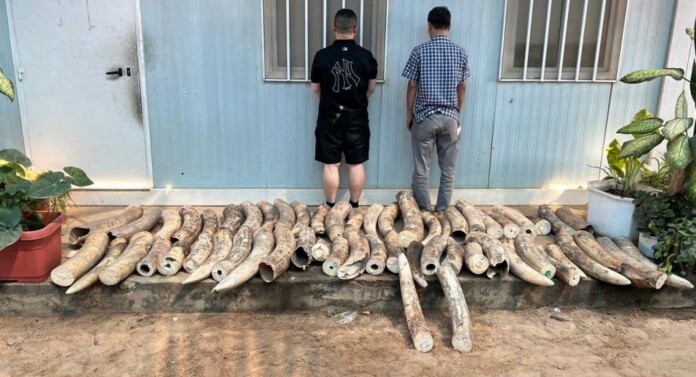
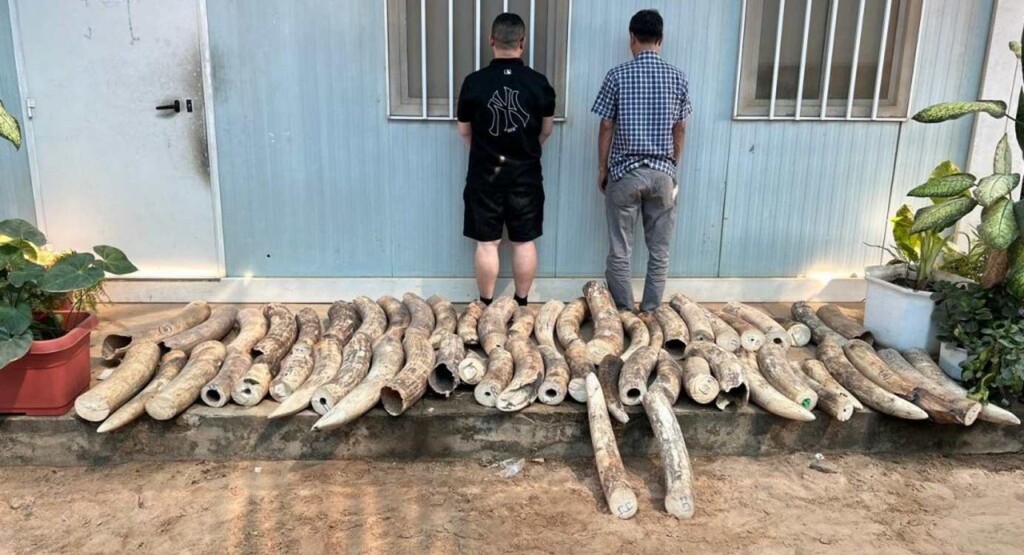
INTERPOL recently executed the largest-ever edition of its annual series of coordinated of raids to dismantle criminal shipments and networks of trafficked and poached wildlife.
Called Operation Thunder, some 30,000 live animals were seized in 4,620 raids across 134 countries, 30% more than last year.
INTERPOL identified 1,100 suspects and issued 69 notices of criminal activity to participating nations’ police forces.
Operation Thunder took place between September 15th and October 15th. It included law enforcement agencies like national police, customs, border security, and forestry and wildlife authorities.
In terms of live animals awaiting transfer or sale into illegal captivity, the operation rescued 6,160 birds, 2,040 terrapins, 1,150 reptiles, 208 primates, 49 pangolins, 10 big cats, and some 19,000 other species, including more infrequently trafficked mammals, fish, amphibians, and a notably larger number of arthropods (insects, arachnids, etc.)
Far larger in number and tonnage was the animal parts and derivates that were seized, such as shark fins, pangolin scales, elephant ivory, tortoise shell, and more.
Encouragingly though, in the largest-ever police bust of wildlife trafficking, merely 7 rhino horns were found amid over 100,000 seized objects, suggesting rhino poaching control is seeing success.
Indeed, large charismatic animals and their body parts are less often found in these annual raids than they used to be. At the same time, increases in exotic arthropods, as well as timber, show the flexibility of poachers. 14,000 tons of illegally logged tree timber were confiscated across the participating nations. This is believed to be as much as one-third of the entire illegal timber market.
STOPPING WILDLIFE CRIME:
- Trafficking in the Amazon Targeted in Historic 5-Country Police Raid Seizing $64 Million in Materials
- Nigerian Authorities Seize 2 Tons of Pangolin Scales and Arrest Key Broker in Major Wildlife Trafficking Bust
- 1,000 Endangered Animals Set to Return Home to Madagascar in Anti-Trafficking Victory
Months of preparation for Operation Thunder 2025 centered on the exchange of information, the sharing of actionable intelligence and the coordination of cross-border investigations among participating countries and regions, INTERPOL and the World Customs Organization.
Beyond the immediate arrests and seizures, the intelligence gathered during what is the 9th edition of Operation Thunder will help map global criminal networks. These insights will enable law enforcement agencies worldwide to refine their strategies, anticipate emerging criminal tactics and disrupt illicit supply chain activity, ensuring a sustained and effective response to transnational wildlife crime.
INTERPOL did not give estimates on the total valuation of the seizures, but the trafficked goods from just Tanzania exceeded half a million US dollars, suggesting that criminal networks would have lost 7, even 8-figure amounts in illicit revenues.
SHARE This Major Blow To Poachers And Their Clients With Your Friends…
“Mountains are Earth’s undecaying monuments.” – Nathaniel Hawthorne

Quote of the Day: “Mountains are Earth’s undecaying monuments.” – Nathaniel Hawthorne
Image by: Jerry Zhang
With a new inspirational quote every day, atop the perfect photo—collected and archived on our Quote of the Day page—why not bookmark GNN.org for a daily uplift?

Good News in History, December 15
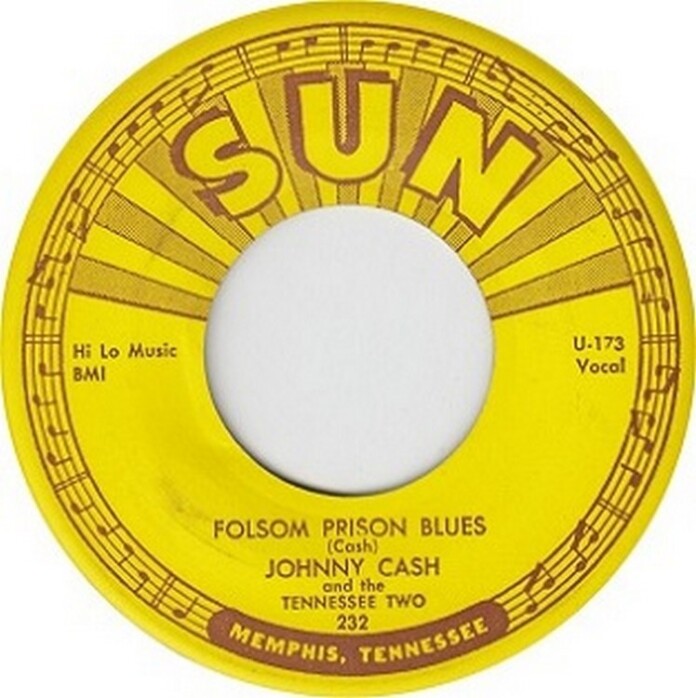
70 years ago today, American country star Johnny Cash released the single “Folsom Prison Blues.” The song combines elements from two popular folk styles that Cash used often in his songwriting, and was ranked 51 on Rolling Stone Magazine’s 100 Greatest Country Songs. Cash was serving in the military in Germany when he came up with the iconic line “I shot a man in Reno just to watch him die,” and admitted later he was trying to come up with the single most repugnant reason for murder he could think of. READ more about the famous song… (1955)
He Carries Shelter Dogs Around the City in a Backpack to Help Get them Adopted (WATCH)
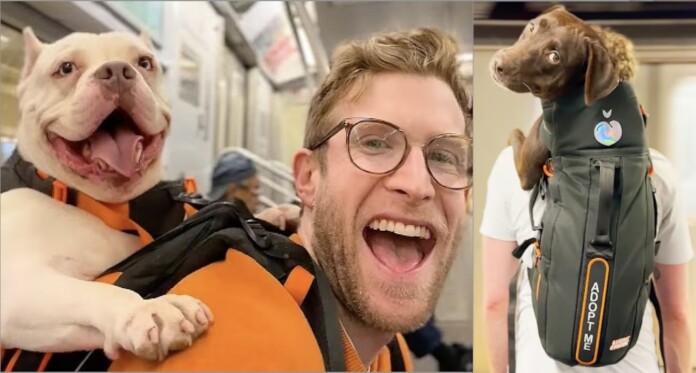
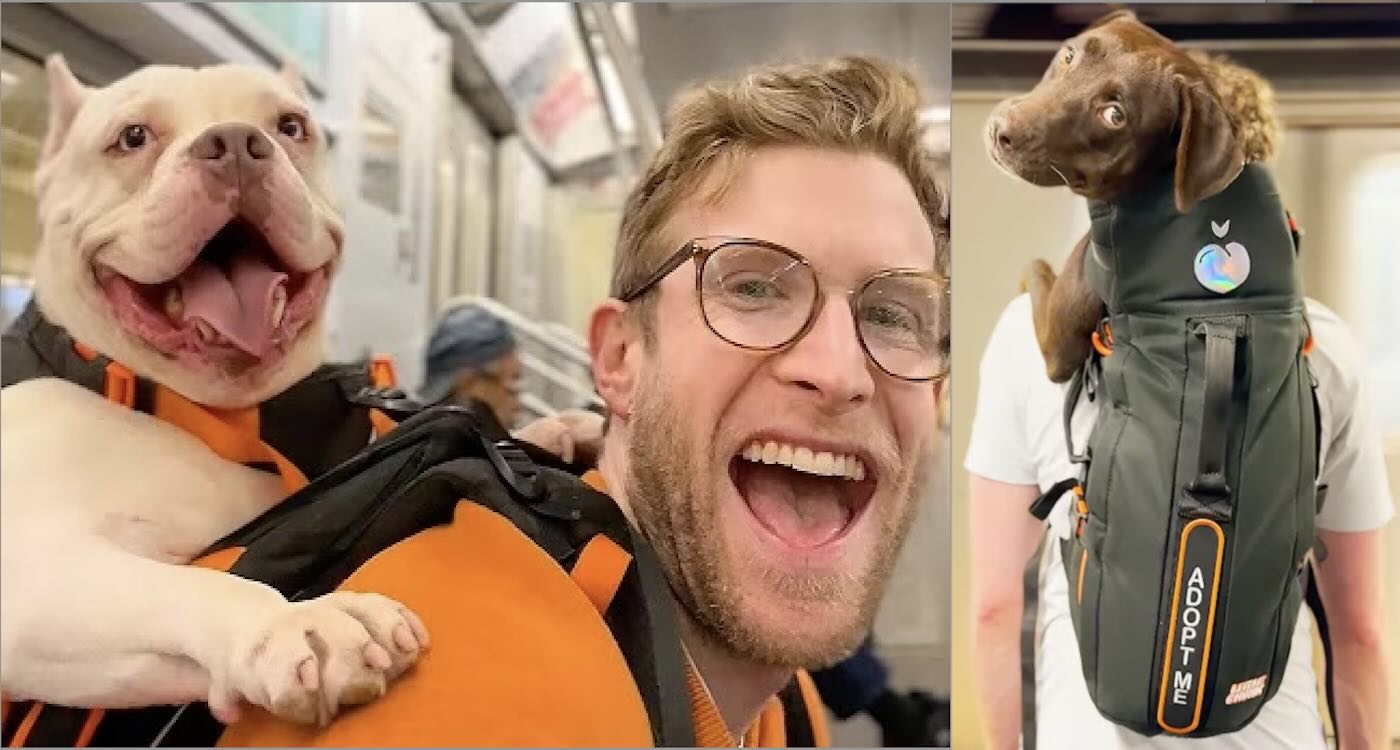
It all started with a Corgi in a backpack in a crowded subway car.
Bryan Reisberg noticed that his dog Maxine had a way of cheering people up, bringing some light into their lives during their daily commutes underground. Serious faces became smiles. Stress faded. Heavy loads got lighter.
It’s hard not to be happy when there’s a Corgi staring at you from inside a backpack.
Before long, Reisberg, a New York City resident, started posting videos of his urban adventures with Maxine on social media. Soon, his dog won over everyone on the web too, growing into a viral sensation with millions of views.
“She was known as ‘the dog in the backpack’ all over the world,” Bryan told the Washington Post. “It was crazy and totally unexpected.”
He ended up quitting his job to create a dog backpack brand, Little Chonk— and a friend encouraged Bryan to see if he could maybe help some homeless shelter dogs too.
So, he met with people at Best Friends Animal Society, and together, they came up with an idea. Every week, Bryan picks up a shelter dog and takes it into the city in a backpack that has an “Adopt Me” label attached to it.
He shoots videos with the dogs and adds his professional polish to turn the abandoned pets, many of whom have been in shelters for months, into social media superstars. At last count, his content had surpassed 75 million views.
“It’s such a morale boost for our team,” said Julie Castle, CEO of the Best Friends Animal Society. “When Bryan comes in and uses his channels to influence adoption, he’s a hero to these dogs and to our staff.”
11 dogs have been featured so far, with every one of them getting adopted, except for one plagued by an ongoing medical problem. But what’s even more impressive is that adoptions at the shelter have increased substantially. Castle said about 100 more dogs have been adopted than this same time last year. And the backpack is likely the reason why.
One of his recent videos on Instagram featured Bertha, a 6-year-old bulky white dog that rode piggyback, adding some 65-pounds to Bryan’s backpack.
Bertha strolled through Queens, rode on the subway, gave plenty of slobbery kisses, and seemed to capture hearts across both New York City and the internet.
“Well this lovely video should have potential adopters lined up around the block for Bertha,” one Instagram commenter wrote.
“What a beauty!” another person wrote. “Bertha, your happily ever after is coming.”
Indeed, Reisberg’s magic didn’t take long—and he shared the good news soon afterward:
MISS BERTHA WAS JUST ADOPTED BY A LOVELY FAMILY ON LONG ISLAND WITH A NICE BIG HOUSE!!!
“Perfect way to get the word out about the beautiful souls that are all alone and need love,” Instagram commenter azulbelles wrote, punctuating her response with pawprints.
“Your best friend is waiting for you and you don’t even realize it.”
GOOD DOGGIES:
• Dogs Rescued from ‘Squalid’ House are Being Retrained as Police Sniffer K-9s
• A Pile of Puppies Treatment Cheers Up Seriously Ill Kids with Bundles of Cozy JoY (LOOK)
• Tiny Disabled Puppy Found in Dumpster Gets New Home in Time for Christmas
“I cry happy love tears every time you do one of these amazing posts!” wrote shiloh muther runner. “My heart gets so warm!”
KEEP BERTHA AND HER FRIENDS RUNNING ACROSS the INTERNET By Sharing This on Your Social Media Feed…