











All News - Page 289 of 1719 - Good News Network
Home Blog Page 289

Mars Rover Discovers Evidence of Liquid Salt Water on the Red Planet For the First Time

The Zhurong rover - credit CNSA
The Zhurong rover – credit CNSA

The Chinese Zhurong Martian rover recently found evidence of salty liquid water droplets that indicate it may have had snow and frost as recently as 400,000 years ago.

To put that into perspective, scientists believe that Homo sapiens evolved around 300,000 years ago, meaning our earliest modern ancestors might have walked at the same time that water was flowing on Mars.

Though calculations have previously demonstrated that conditions for water are possible on Mars today, this is the first occasion in which evidence of liquid water has been found on our neighboring planet.

The study team found important morphological features on the dune surfaces such as crusts, cracks, granulation, polygonal ridges, and a strip-like trace. Salts in these dunes, which are estimated to be between 0.4 and 1.4 million years old, cause frost or snow to melt at low temperatures to form salty liquid water.

“We inferred that these dune surface characteristics were related to the involvement of liquid saline water formed by the subsequent melting of frost/snow falling on the salt-containing dune surfaces,” said Qin Xiaoguang, a geophysicist at the Chinese Academy of Sciences and first author of the new study.

The discovery was hailed by the IGG team as providing key observational evidence of liquid water at Martian low latitudes, where surface temperatures are relatively warmer and more suitable for life than at high latitudes.

MORE MARTIAN NEWS: 3,000 Orbiter Images Produce Unprecedented Atlas of Mars–Perfect for the Wall of a Bedroom or Classroom

The Zhurong rover, which is part of China’s Tianwen-1 Mars exploration mission, landed on Mars in 2021 at a landing site at the southern edge of the Utopia Planitia plain—the largest impact basin in our solar system.

It was the first time that a spacefaring nation’s inaugural mission to Mars contained an orbiter, lander, and rover, and all three succeeded in deployment.

OTHER CHINA NEWS: ‘Vast Canyon of Books’ Splits Open in Stunning New Public Library in China

Currently, Zhurong has yet to wake up from hibernation during the Martian winter, and the scientists believe that a layer of dust has coated the solar panels and prevented it from recharging—a common fate for Martian equipment, including most recently NASA’s Insight Lander.

“This is important for understanding the evolutionary history of the Martian climate, looking for a habitable environment and providing key clues for the future search for life,” said Dr. Qin.

SHARE This Historic Moment In Martian Discovery With Your Friends… 

“Age is not important unless you’re a cheese.” – Helen Hayes

Quote of the Day: “Age is not important unless you’re a cheese.” – Helen Hayes

Photo by: Max Nayman (Bologna, Italy)

With a new inspirational quote every day, atop the perfect photo—collected and archived on our Quotes page—why not bookmark GNN.org for a daily uplift?

Man Summits Highest Peaks of England, Scotland and Wales with Fridge on his Back For Mental Health–WATCH

Michael Copeland during his challenge - SWNS
Michael Copeland during his challenge – SWNS

A man who attempted to summit the highest mountains in England, Scotland, and Wales to raise money for charity has now completed the challenge—with a refrigerator strapped to his back.

The 38-year-old former soldier Michael Copeland conquered the three peaks challenge in just under 24 hours to raise money for the mental health charity Mind.

He started with the Scottish peak Ben Nevis at 6:54 AM last Saturday before scaling Scafell Pike in the Lake District, and then Snowdon in Wales with just 10 minutes to spare.

“The fridge represents the burden that mental health can have on us all,” said Copeland. “I’m a massive overthinker and always think I’m not good enough. I always want to be doing more.”

The daredevil had to overcome grueling weather conditions including heavy rain, snow, and 40mph winds. He ended up running downhill with the fridge from the summit of Snowdon to complete the challenge just in time.

“The whole challenge felt like a movie with the changing weather conditions… 30-40mph winds as we were going up Snowdon so it almost felt like a grown adult was trying to push me over,” he said.

Michael Copeland summiting Scafell Pike – SWNS

“Climbing Ben Nevis and Scafell Pike was okay as there wasn’t any wind however, when we got to the top of Ben Nevis we were met with 12 inches of snow and minus conditions.”

“I was running with the fridge on my back, it was banging against my back and it was very uncomfortable, but I couldn’t not finish it,” he said. “I felt like Forrest Gump.”

Copeland wasn’t always a mountain-goer. He took up the hobby during his country’s strict and total lockdowns as a means to help with his struggles against depression and anxiety.

Dedicated to the army, when he left after the birth of his second child, he said he found it difficult to reintegrate with society. He directed his discipline and physical fitness into a bodybuilding passion, which he continued for 10 years.

ALSO CHECK OUT: Hero Passerby Scales Building in China to Save Boy Who Fell Out Window Onto a Ledge

With gyms closing during lockdowns, he had to find another outlet for his energy and dedication. And, he’s impressing everyone now…

WATCH Michael’s Herculean hiking below… 

SHARE This Man’s Inspiring Battle For Mental Health With Your Friends…

See 40 Shooting Stars Per Hour Under the Aquariid Meteor Shower in May Night Sky

By Bill Dickinson, CC license

Three stargazing events in the month May stand out as the best chances to connect with the cosmos.

During the pre-dawn hours of May 7th, the Earth will pass through the Eta Aquariid Meteor Shower, when 40 meteors may be seen per hour, with those closest to the Equator seeing more than those closer to the poles.

The “radiant point,” that is, the place in the sky where the meteors seem to radiate from, will be the constellation Aquarius and will be hanging low in the southern sky (or northern sky if you’re in the Southern Hemisphere).

The morning of May 7th is predicted to be the peak, but the meteors can be seen several weeks either side of the peak.

The full moon of May will happen two nights before the meteor shower’s peak. On Cinco de Mayo, in Europe, Asia, Africa, and Australia/Oceania, there will be a penumbral lunar eclipse. For those in the US, UK, many islands in the Pacific, and the Kamchatka Peninsula, it will be too bright and sunny to see.

The Earth’s partial shadow—known in stargazing as the “penumbra,” will shade the full “Flower moon” or “Budding moon” a dusty brown color that’s usually not noticeable by the naked eye. However, the magnitude of this penumbral eclipse is well above the degree to which the human eye can see the changes.

The next such deep penumbral lunar eclipse will be in September 2042.

Valerie at Space Tourism Guide explains in her May stargazing chart that 2023 is a big year for “lunar occultations” or events when the moon as we see it passes in front of other objects.

She notes that, for example, a few people on Earth will be positioned correctly on the night of May 17th-18th to see the moon pass in front of Jupiter, the solar system’s largest planet.

For most of Earth, they will be seen making a close approach, just like the Moon will do with Saturn on the night of May 13th-14th.

SHARE This Stargazing Schedule With Your Friends… 

Parrots Kept as Pets Were Taught to Video Call Each Other—and They Loved It

Credit - Matthew Modoono - Northwestern
Credit – Matthew Modoono – Northwestern

Over 20 million parrots are kept as pets in American households, and a study wanted to see if these social birds would enjoy video calling each other just like humans.

The Birds of a Feather study recruited more than a dozen parrot owners and their birds, to see if parrot loneliness, a real danger to the birds’ mental health, could be improved through access to video calling.

It’s no word of a lie to say that platforms like Zoom, Skype, and Facetime saved lives during the strict lockdowns during COVID-19, but humans aren’t the only creatures capable of utilizing and benefiting from video calls to friends.

The study, organized by Northwestern University in collaboration with scientists from MIT and the University of Glasgow, taught the parrots to initiate video calls with other parrots by instructing them to ring a bell, and then touch the picture of another parrot on a tablet screen to start the call.

The owners were experienced parrot keepers who knew how to identify signs of fear, aggression, or disinterest with the video call, which might lead to damage to the cages or the birds.

In the first phase of the study, the 18 parrots initiated 212 video calls with a maximum allowed time of 5 minutes. Some dropped out of the study, leaving just 15 going into the second phase.

In the “open call” period that followed, the 15 birds made 147 video calls with each other over the next two months. The birds were also able to select which individual they wanted to call.

Not only did the birds initiate calls freely and seem to understand that a real fellow parrot was on the other end, but caretakers overwhelmingly reported the calls as positive experiences for their parrots, according to a statement from Northwestern.

Some caregivers watched their birds learn skills from their video friends, including foraging, new vocalizations, and even flying. Some wanted to show the other bird on the line their toys. “She came alive during the calls,” reported one caregiver.

A few significant findings emerged. The birds engaged in most calls for the maximum allowed time. They formed strong preferences—in the preliminary pilot study, Northwestern researcher Jennifer Cunha’s bird, Ellie, a Goffin’s cockatoo, became fast friends with a California-based African grey named Cookie. “It’s been over a year and they still talk,” Cunha told the univ. press.

MORE ANIMALS NEWS: New Research Shows Why Crows Are So Intelligent and Even Self-Aware—Just Like Us

Two older, weaker macaws also formed a fast friendship that carried on long after the end of the study, and would frequently call to each other, saying “Hi, hello, come here.”

Also, the birds that initiated the most calls were the birds that received the most requests to chat from other birds, a finding mirrored in humans.

The researchers caution that the findings don’t mean parrot owners should fire up a Zoom call and assume it will go well. The participant parrots had experienced handlers who had time to introduce the technology slowly and to carefully monitor their parrots’ reactions.

MORE BRILLIANT BIRDS: Male or Female, Old or Young, New Survey Show Parrots Can All Speak at the Same Level

As the study underscored, parrots are finicky about which fellow birds they will respond to—unmediated interactions could lead to fear, even violence, and property damage; larger parrots have beaks more than capable of cracking an iPad into pieces.

Still, it’s deeply moving to watch—in the documentary below—these brilliant birds feel a connection with new friends hundreds of miles away, especially knowing that a social life is key to a parrot’s health.

WATCH the 5-minute doc below… 

SHARE This Inspiring Study Of Animal Welfare With Your Flock… 

Life-Saving Breakthrough for Antibiotics Uses Shapeshifting Chemistry that Won 2022 Nobel Prize

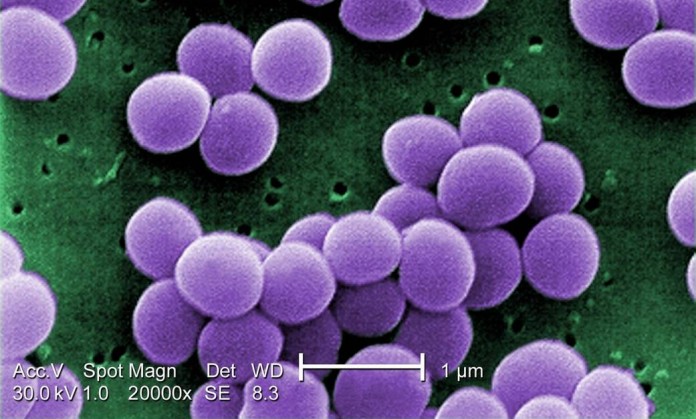
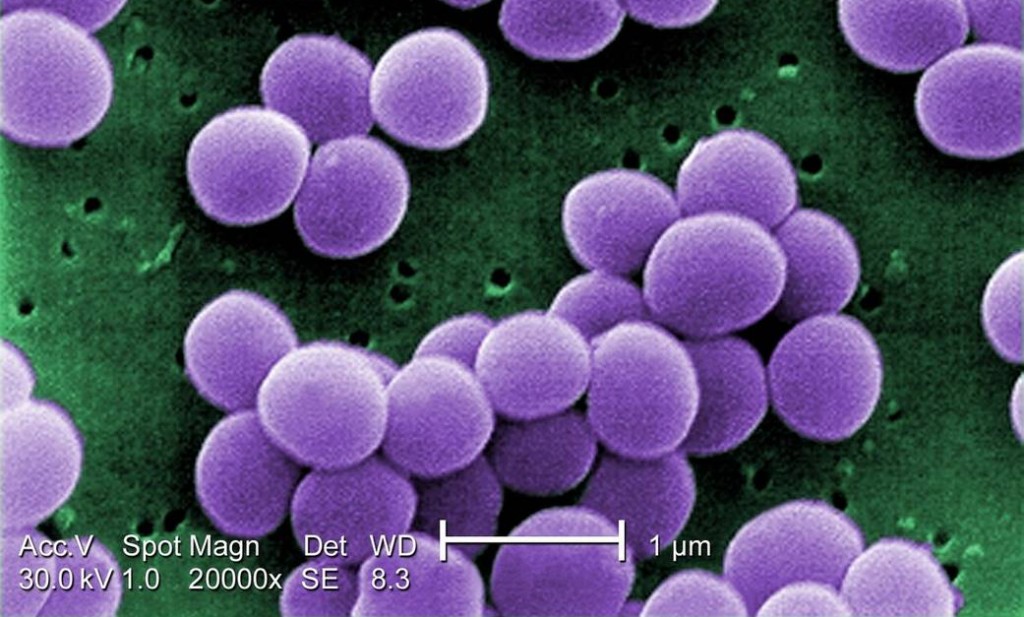
VRSA (Staphylococcus Aureus), a kind of medically-resistant infection, under a microscope
VRSA under a microscope

New shape-shifting antibiotics could fight deadly medically-resistant bacterial infections responsible for more than 1.2 million deaths worldwide every year, according to a new study.

The antibiotic can shape-shift by rearranging its atoms, using new “click” chemistry, a discovery that won the 2022 Nobel Prize.

The drug’s creator, Professor John Moses at Cold Spring Harbor Laboratory (CSHL), New York, found that bullvalene, a fluxional hydrocarbon molecule where atoms can swap positions to form around 1 million combinations, could be used as the molecular center of an antibiotic that would confer such shape-shifting abilities to the drug as well.

Bacterial infections like Vancomycin-Resistant Staphylococcus aureus (VRSA) have developed resistance to the potent antibiotic vancomycin, used to treat diseases from skin infections to meningitis.

“The reengineering of clinically approved antibiotics to evade resistance mechanisms offers a potential near-to short-term solution that takes advantage of established supply chains and clinical success,” Moses and his co-authors wrote in their demonstration paper in PNAS. 

Dr. Moses used new click chemistry—where chemical reactions can “click” molecules together reliably—to combine bullvalene with vancomycin.

MORE POTENTIAL CURES: Plant Toxins Fatal to Sugarcane Hailed as the ‘New Weapon’ Antibiotic in Fight Against Bacteria

Professor Moses created a new antibiotic with two vancomycin “warheads” and a fluctuating bullvalene center, before giving the drug to a VRSA-infected wax moth larvae, a common test dummy for antibiotics.

The shape-shifting antibiotic was significantly more effective than vancomycin at clearing the deadly infection, and the bacteria did not develop resistance to the drug.

MORE DRUG DEVELOPMENTS: These Flabby Gel Robots Could Deliver Life-Saving Drugs by Inching Along Using Changes in Temperature

Dr. Moses believes click chemistry can create a host of new shape-shifting drugs “key to our species’ survival.”

“It gives you certainty and the best chance you’ve got of making complex things,” said Moses. “If we can invent molecules that mean the difference between life and death. That’d be the greatest achievement ever.”

SHARE This Interesting Attempt To Roll Back Antibiotic Resistance… 

“Life without love is like a tree without blossoms or fruit.” – Khalil Gibran

Quote of the Day: “Life without love is like a tree without blossoms or fruit.” – Khalil Gibran

Photo by: saad mahmud

With a new inspirational quote every day, atop the perfect photo—collected and archived on our Quotes page—why not bookmark GNN.org for a daily uplift?

Freed After 28 Years of Wrongful Conviction, Man Meets Pen Pal Who Never Stopped Affirming His Innocence

Courtesy of Ginny Schrappen

Lamar Johnson served 28 years for a murder he didn’t commit—when he was finally released after years of work by an advocacy group, there was one person he knew he wanted to see first.

It was a pen pal who wrote to him faithfully through nearly all the years of his imprisonment and came to all his court proceedings, pleading for his release on the strongly-held belief he was innocent.

Rewinding 20-some years back, one day a letter arrived in the hands of a congregant of Mary, Mother of the Church in St. Louis County named Ginny Schrappen. It was a letter addressed from the Jefferson City Correctional Center, to whomever at the church decided to open it.

Schrappen described herself as being “blown away” by Johnson’s elegant longhand script, and she decided to reply; with small details at first, but to say hello to a human who was obviously intelligent.

That reply spawned a more-than-two-decade snail mail relationship, with each letter revealing more and more about one to the other.

Johnson was convicted in 1994 of the first-degree murder of 25-year-old Marcus Boyd, one of his best friends. He had a simple alibi—he was at his girlfriend’s house that night, but the sole witness identified him as one of the shooters.

Several years later, the true culprits confessed to the crime, but this did not amount to an overturning of Johnson’s sentence. It took years of advocacy from the Innocence Project, a non-profit that investigates shut cases to try and get innocent people released from prison.

Innocence Project wasn’t alone in Johson’s advocacy—Schrappen always wrote letters to him ahead of his court appeal dates saying she would be there for him—all despite being a mother of three and eventual grandmother of two.

MORE PEN PAL STORIES: World’s Oldest Pen Pals Turn 100, After 84 Years of Transatlantic Letters–And Now They’re Meeting on Zoom

Despite several failed appeals, Schrappen never stopped coming, and over the years of letter writing their relationship became more important—she visited him occasionally in prison, which created a feeling of joy she described to the Washington Post as sending her “almost out of my skin.”

The Innocence Project eventually got Johnson freed after 28 years of time served, and a GoFundMe set up in the aftermath has raised nearly $600,000 at the time of publishing to give the man a new start.

He now enjoys spending regular face-to-face time on equal footing with his long-time friend Schrappen, but isn’t angry about the course of his life.

MORE STORIES LIKE THIS: New Evidence Unearthed by Podcasters Frees 2 Men Wrongfully Imprisoned for 25 Years

MORE STORIES LIKE THIS: Thousands Have Donated $1.6 Million to Innocent Man Freed From Prison After 43-Year Wrongful Conviction

“If you hold onto anger, you’re just going to swap one prison for another,” Johnson told the Post. “As much as there was a lot of setbacks over the years, there is a lot to be happy and grateful for.”

“Reach out to somebody that might need a friend,” Schrappen said. “It could mean more than you know.”

SHARE This Inspiring Story Of Connection With Someone Inside…

Sweden’s First EV-Charging Road Will Power Electric Vehicles as They Drive

Provided by Electreon

The “E-20” highway stretch in Sweden will soon become the nation’s first functioning charging road to juice the batteries of heavy vehicles carrying freight around the nation.

E-20, (the E actually stands for Europe, rather than electric) runs between Hallsberg and Örebro in the middle of the country’s three major cities, Stockholm, Gothenburg, and Malmö.

Construction is slated to begin in 2025 along a whopping 21 kilometers of road (13 miles), but it hasn’t been decided which method of charging will be used. Previously-constructed charging roads in Europe have used methods that require outside equipment—overhead wires like a city tram line or undercarriage-mounted arms that attach to an electrified rail along the roadway.

These are highly impractical for regular motorists, who can neither reach the cables nor afford to mount a robotic arm on their car.

The last option, and the only sensible one for cars as well as trucks, is to build wireless charging infrastructure down the center of the lanes that send out an electromagnetic signal to a coil on the underside of the vehicle small enough to be fitted to a sedan or a tractor-trailer.

In any case, in order to conduct long-haul trucking in the larger European countries, there has to be sensible charging infrastructure to prevent the trucks from becoming overloaded with the battery packs necessary to drive long distances.

“If you are going to have only static charging full battery solution for heavy-duty vehicles, you will get vehicles with a huge amount of batteries that the vehicles need to carry,” said Jan Pettersson, Director of Strategic Development at Trafikverket, the Swedish transport administration.

MORE CHARGIN TECH: Not Science Fiction: Can We Charge EVs With Car-to-Car Mobile Recharging?

Euronews cited a recent study which found that 412 privately driven cars on parts of Swedish national and European roads could have their battery capacity reduced by more than 50% through a combination of access to electrified roads and  home charging.

Furthermore, only 25% of all roads would need to be electrified for the system to work.

GNN has closely followed charging road developments. In 2021, GNN reported that the Indiana Department of Transportation built a wireless charging road designed by the German firm Magment.

MORE FUTURE INFRASTRUCTURE: Switzerland’s Brilliant Plan For Underground Cargo Delivery Tunnels to Reduce Traffic is Now Underway

In Michigan a year later, Governor Gretchin Witmer announced a 1-mile stretch of road in Detroit would be electrifed—and she contracted the same company that built Sweden’s first wireless charging road pilot program on the Island city of Visby.

Germany, Israel, and Italy have all implemented similar projects.

SHARE Sweden’s Plans For The Future Of Roads On Social Media…

A Warthog, Hyena, and a Porcupine Walked into a Hole–and Decided to Live Together

Dupuis-Désormeaux et al - released
Dupuis-Désormeaux et al – released

So a porcupine, a hyena, and a warthog walk into a burrow…

No, it’s not the setup to a bad joke, but the abstract in a scientific paper published in the African Journal of Ecology which found they all were able to co-habit the burrow.

Despite the cramped confines of the dug-out den being flush with quills, teeth, and tusks, no blood was spilled on the pages of this rental agreement.

In fact, the scientists, who discovered this novel phenomenon while observing camera traps outside hyena dens in a wildlife preserve in Kenya, suggest that it was, in fact, a “healthy respect for the threats presented by their mutually formidable weaponry.”

Den-sharing isn’t completely novel, it has been observed among porcupines, pine martens, foxes, and badgers in the same hill-burrow complex in Italy in 2019.

However, this is the first time it’s been seen in African animals. In one of the hollows could be found up to, seven hyenas, three warthogs, and two porcupines, and in another, 11 hyenas, six warthogs, and two porcupines.

They shared the space for months, and would sometimes come and go within minutes of each other.

“Hyenas and porcupines are mostly nocturnal, and warthogs are mostly diurnal, so shared dens could be occupied on a ‘time-share’ basis,” researchers said, who stipulated however that there was evidence of all three staying in the burrow at the same time.

Dupuis-Désormeaux et al. – released

Though the scientists didn’t confirm their existence, potentially-separate chambers under the ground likely gave the trio much-needed space, making them more like neighbors than roommates.

The prevailing theory, according to lead author Marc Dupuis-Désormeaux et al, is that during the dry season, the very hard earth made it economical to utilize existing burrows rather than expend energy digging new ones. When the rains returned, the rental agreement seemed to have ended, and the members went their separate ways.

MORE ANIMAL NEWS: 65 Different Species of Animals Laugh, Says a New Study

Interestingly, the hyenas burrowing with porcupines and warthogs seemed to entirely refrain from hunting these species, while other hyenas in burrows not occupied by the other animals, continued to do so.

It’s certainly a line of inquiry that deserves more attention.

SHARE This Unlikely Time Share Agreement With Your Friends…

Automakers Are Bringing Back Buttons and Knobs as Touch Screens Become Scourge for Drivers

- Porsche released
– Porsche released

For the consumer who wants a simple dashboard of buttons and knobs inside their car, the kind that everyone used to have before the rise of touchscreens, a few automakers are turning back the calendar to the days of tactile controls after a steady eruption of consumer frustration.

As soon as smartphones became popular, the US Dept. of Transportation was publicizing information about the dangers of texting and driving. States also rapidly began passing laws that determined the fines for being caught texting and driving as well as slotting questions about the dangerous multitasking into driving exams.

Yet for all this, since 2010 automakers joined in unison in essentially mandating the use of iPads in our cars.

Despite what the name implies, a touchscreen relies entirely on the eyes to use owing to the lack of tactile feedback. As car makers began to take what was first just for the radio and nav tech and add more and more features, they became more and more dangerous to use in the car, while also becoming more and more necessary for anything other than a barebones driving experience.

Think this might be an overstatement?

The 2023 Porsche Cayenne pictured above came with a touchscreen dashboard, a touchscreen infotainment system as optional for the passenger seat as well, a touchscreen layout around the gear selector, and, if you can believe it, an optional set of touchscreens on the steering wheel itself.

Now, after mounting backlash against the touchscreens “spreading like rashes” across dashboards, Volkswagen and their subsidiary Porsche, along with Hyundai and Nissan, have all taken public stances about instrumenting the return of buttons and dials for a safer, more distraction-free cabin.

“We have used the physical buttons quite significantly the last few years,” said Sang Yup Lee, Head of Hyundai Design on the unveiling of the 2024 Hyundai Kona.

MORE TECHNOLOGY NEWS: EV Charging Answer: Quantum Technology Will Cut Time it Takes to Charge Electric Cars to Just 9 Seconds

“We will continue to have [physical dials],” he said, adding that when more autonomous driving is available, tablets will be necessary, “but until then, as I said, when it comes to driving it’s safest to have your eyes on the road and your hands on the wheel.”

Key to note is that neither General Motors nor Mercedes have any intention of backing away from the screens, with the latter actually going for 3 screens in a single cabin. General Motors meanwhile say their newer models will be incompatible with Apple Car Play and Android Auto—software that allow for a phone’s functions to be accessed on the car’s touch screen.

MORE CONSUMER NEWS: Flood of ‘Right to Repair’ Bills For Autos, Phones, and Tractors Equals DIY ‘Watershed Moment’

That will mean an entirely new learning process, which bodes ill for safety.

Consumer feedback works, and more moaning could potentially steer more auto firms towards making the right choice for safety—buttons and dials.

“Let us look for secret things somewhere in the world on the blue shores of silence.” – Pablo Neruda

Quote of the Day: “Let us look for secret things somewhere in the world on the blue shores of silence.” – Pablo Neruda

Photo by: Aaron Burden

With a new inspirational quote every day, atop the perfect photo—collected and archived on our Quotes page—why not bookmark GNN.org for a daily uplift?

105-Year-old WWII Veteran With No Surviving Relatives Receives 3,000 Birthday Cards

Ernest Horsfall with his birthday cards — SWNS

A World War II veteran with no surviving relatives celebrated his 105th birthday with more than 3,000 cards from kind-hearted strangers.

Ernest Horsfall, who has seen 27 Prime Ministers and five British monarchs in his lifetime, said he was ‘surprised and amazed’ at how many people wrote to him.

He was showered with cards from generous well-wishers after the Royal British Legion called for the brave ex-servicemen to be honored for his landmark birthday.

After opening all his cards, he said he was looking forward to spending time with his girlfriend Margaret, 63, who flew in from Iceland to be with him on his special day.

“I’m utterly surprised and amazed at the number of greeting cards that came my way,” he said from a seat in his home in Preston.

Ernest was born in Bradford, West Yorkshire, in 1918, three weeks after the Royal Air Force was formed.

He was married for 57 years and had a son and a sister, but they have both now passed away.

Ernest served in London during the Blitz before joining the Allied campaign in North Africa, then went to Italy to maintain Allied tanks, directing 23 Italian civilian mechanics.

RELATED: One of Britain’s Last D-Day Veterans Returns From France Completing His ‘Final Mission’ – and 68 Years of Charity

Ernest says he still has vivid memories of serving with the Army Ordnance Corps in London in 1940 and feels lucky to have survived the terrible conflict.

“There would be swarms of Nazi bombers flying overhead all night and I knew many people that were injured or worse,” he said. “On one occasion, our guard room was hit and six of my pals were killed, I was just lucky it wasn’t my duty that night.”

MORE VETERAN NEWS: Travel Agent Helps Aging Veteran Pilot Pals Go On Dream Boys’ Trip – Without Costing Them a Dime

Following his time as a sergeant in the British Army’s Royal Electrical and Mechanical Engineers between 1940 and 1946, he decided to take flying lessons at age 43 and was a private pilot for the next 50 years.

WWII veteran Ernest Horsfall reading his cards – SWNS

Ernest, who has met several prime ministers since leaving the armed forces, received a card from current Prime Minister Rishi Sunak congratulating him on reaching his 105th birthday.

Rachel Venables, membership engagement manager for the Royal British Legion, which launched the card appeal, said the sacrifices of servicemen like Ernest would “never be forgotten.”

MORE NEWS LIKE THIS: Captain Tom Moore’s Family Launches Online Bulletin Board Where Strangers Share Favorite Moments of Kindness

“The Second World War generation is inevitably diminishing, but occasions like this are an opportunity for the RBL to remind everyone that their service and sacrifice means something and will never be forgotten,” she said.

While they may be diminishing, this 105-year-old has some great advice to share with those who have many years left on the Earth.

“The secret to a long life is to keep living as happy as you can and keep a straight mind,” he said.

SHARE This Inspiring Birthday Story With Your Friends… 

MIRACLE MONDAY: Homeless Uncle Inspired Him to Reunite the Unhoused with Families Before it’s Too Late

Kevin Adler and dad at Mark's grave
Kevin Adler with his Dad at Mark’s grave
Written by Kevin F. Adler, Founder and CEO of Miracle Messages

Every person experiencing homelessness is someone’s child, or someone’s parent. And Mark was my uncle.

He was the most family-oriented member of my extended family. He was the guest of honor at Thanksgiving and Christmas. He remembered every birthday—like the year before he died at age 50, when he gave me an eagle bandana as a gift.

Mark also suffered from schizophrenia, and lived on-and-off the streets for 30 years.

In November 2013, for the first time since he died, I visited his gravesite in Santa Cruz, California. My dad and other uncle had chipped in for a plot of ground to call his own, refusing to have Mark’s memory forgotten.

This was poignant for me, and I wondered if there was anything I could do for the people still living on the streets whose lives are being forgotten.

Like Uncle Mark, many of them are suffering from mental illness. Some are drug addicted, some have disabilities, and many have problems, just like the rest of us. They’re down on their luck, just divorced, unemployed, in debt, or stricken with health issues.

What Mark inspired me to realize is that many people have families and people who miss them and love them.

I decided to do something about it.

Mark Adler

In December 2014, I started Miracle Messages, a nonprofit organization that helps people experiencing homelessness to rebuild their support systems, primarily through reunifying families who have lost touch—and the results have been, well, miraculous.

We also set up a phone-buddy program to pair up caring strangers who are willing to offer support by phone. Almost ten years later, we have thousands of volunteers.

We believe that an absence of relationships is an overlooked form of poverty that can often be deadly. As one of my unhoused friends put it 10 years ago, “I never realized I was homeless when I lost my housing—only when I lost my family and friends.”

LOOK: Father’s Day Miracle – Random Meeting With a Child Reunites Woman With Dad Who Abandoned Her

We are on a mission to ensure that no one goes through homelessness alone, and that no one in the general public (you or me) feels helpless to do something about the heartbreaking issue.

Ray with his Miracle Friend Jen – Miracle Messages

Each week, as part of a new column we are calling “Miracle Monday,” GNN will share a story about one of our homeless neighbors who was offered a heartwarming reunion or a loving connection, thanks to Miracle Messages.

You will hear about the incredible friendship between a young man on the streets in Los Angeles who was paired with a technology worker in the Middle East, through the Miracle Friends buddy program for weekly calls and text messages.

You will see powerful photos of a homeless middle-aged busker near San Francisco as he reunites for the first time with his mom after 67 years apart.

MIRACLE NEWS: Unique Nonprofit to Provide ‘Basic Income’ to California Homeless in 12-Month Study Funded by Google

And you will discover how a Black public school teacher and community advocate ended up at a shelter after facing a major health issue, but was able to get into stable housing through our basic income program.

Most of these remarkable stories are made possible by the good-hearted people who volunteer to help locate a long-lost loved one—or commit 20-30 minutes a week to have phone calls and text exchanges with an unhoused friend—helping to make miracles happen.

The issue of homelessness may seem intractable, so we’re excited to bring you weekly good news of healing and hope beginning next Monday. Stay tuned!

Miracle Messages is an award-winning 501(c)3 nonprofit that helps people experiencing homelessness rebuild their social support systems and financial security, primarily through family reunifications, a phone buddy program, and basic income pilots.

‘Hero’ 13-Year-old Grabs Steering Wheel and Stops School Bus After Driver Passes Out (Watch)

Warren Consolidated School District - released
Warren Consolidated School District – released

A 7th grader in Warren, Michigan is being hailed as a hero after his quick thinking averted a disaster aboard a school bus.

Lois E. Carter Middle Schooler Dillon Reeves hurried to grab the steering wheel and slam on the brakes as the bus was veering towards oncoming traffic, moments after the bus driver began feeling light-headed and lost consciousness.

Bus-mounted camera footage revealed the driver losing control, and Reeves jumping into action from a full five rows back, before shouting to his classmates to call 911 immediately.

Warren Consolidated Schools Superintendent Robert Livernois explained the situation in a news conference and said “I could not be prouder of his efforts.”

“He had the wherewithal to push it [the brake] slowly, likely in anticipation that the bus was full of passengers,” added Livernois, saying that it was “an extraordinary act of courage and maturity.”

After feeling lightheaded, the driver said on the intercom she was going to pull over for a moment, but never arrived at the pull-off area, and instead began to drift into the oncoming lane.

MORE HEROIC CHILDREN: Teen Hailed as Hero for Saving 3 Girls And an Officer After Vehicle Sinks in River

Dillon’s mother Ireta Reeves was understandably beaming with pride while her son was honored at the news conference.

“To do something like this, fills my heart, makes my heart skip a beat, to even watch that video again, I’m just… I can’t even express the proudness. I’m extremely proud of him.”

WATCH the story below… 

SHARE This “Little Hero” With Your Friends On Social Media… 

Instead of Demolishing its Tallest Building, Australia Holds Contest to ‘Upcycle a Skyscraper’ Saving Tons of CO2

The Quay Quarter Tower - released by 3XN
The Quay Quarter Tower – released by 3XN

In 2014, the Australian firm AMP Capital launched a bold and bizarre call to action to the architectural community of Sydney—replace their skyscraper headquarters without demolishing it.

They wanted their AMP Center, the once-tallest building in Sydney, to become the world’s first “upcycled skyscraper,” and the results were truly inspirational.

By grating a second tower onto the existing core of the AMP Center and not demolishing it, 12,000 tons of CO2 were saved which would have otherwise been created through the use of heavy machinery and the loss of carbon captured in the cement. 12,000 tons is equal to 3 years of the 49-story tower’s maximum energy consumption.

Built in the 1970s, the AMP Center wasn’t necessarily on its last legs, but wasn’t viable for the company any longer. But the firm was unwilling to commit to the massive costs of carbon and money when another option was available.

First though, sufficiently bold architects were needed for the project. Three firms teamed up, led by Danish architects 3XN, an Engineering company called Arup, and the Australian architects BVN.

“The tower was coming to the end of the end of its life, in terms of viability… but the structure and the ‘bones’ can actually last a lot longer,” said Fred Holt from 3XN in a video interview. “You can’t always retain everything. But if you can retain the structure—and that’s where the majority of your embodied carbon is—then you’re lowering your footprint.”

MORE ARCHITECTURE NEWS: When Architect Asks AI to Design Futuristic Skyscrapers It Proposed a Vertical Forest

At first it was unclear how much of the original structure would be saved. Beginning on the project, the team realized the original tower was actually about 4 meters shorter than the original drawings suggested.

Towers, it turns out, shrink—a result of the concrete spreading and settling. And it was only when construction began in 2018 that the architects could really get a sense of whether the concrete was as strong as their initial estimates, as well as where—and how much—extra weight could be placed.

The Quay Quarter Tower with a view over the harbor – released by 3XN

They installed hundreds of sensors to track the tiniest of movements to ensure that by aligning their new construction with the old one, there wouldn’t be any surprises waiting for them at key moments.

In short, the build was a huge success, and the architects boast that walking from the new construction into the old tower is an unnoticeable transition.

MORE SUSTAINABLE TOWERS: The New Green Building Revolution Uses Timber to Build ‘Plyscrapers’ That Save Tons of CO2

Five stacked units with sharp points twist up toward the sky, while an envelope covers both the new extension and the old tower such that no one could tell the difference. Office space was expanded from 4,500 to 9,000 personnel, and the lack of demolition saved AMP around AUD$150 million.

The Quay Quarter Tower, as it’s called, won World Building of the Year upon its opening late in 2022. 3XN hopes it serves as a case study for the future potential in upcycling towers.

WATCH the transformation below… 

SHARE This Unheard Of Upcycling With Your Carbon-Conscious Friends… 

“Willing to experience aloneness, I discover connection everywhere.” – Jennifer Welwood

Quote of the Day: “Willing to experience aloneness, I discover connection everywhere.” – Jennifer Welwood

Photo by: Umberto

With a new inspirational quote every day, atop the perfect photo—collected and archived on our Quotes page—why not bookmark GNN.org for a daily uplift?

This Gel Stops Brain Tumors After Surgery, Offering Hope for Glioblastoma Cancer Patients

Johns Hopkins / SWNS

Medication delivered by a novel gel cured 100% of mice with an aggressive brain cancer, a striking result that offers new hope for patients diagnosed with glioblastoma, one of the deadliest and most common brain tumors in humans.

“We think this hydrogel will be the future,” said study leader Professor Honggang Cui of Johns Hopkins University.

Cui’s team combined an anticancer drug and an antibody in a solution that self-assembles into a gel to fill the tiny grooves left after a brain tumor is surgically removed.

The gel can reach areas that surgery might miss and current drugs struggle to reach to kill lingering cancer cells and suppress tumor growth.

The gel also seems to trigger an immune response that a mouse’s body struggles to activate on its own when fighting glioblastoma.

When the researchers re-challenged surviving mice with a new glioblastoma tumor, their immune systems alone beat the cancer without additional medication. The gel appears to not only fend off cancer but help rewire the immune system to discourage recurrence with immunological memory, researchers said.

CHECK OUT: Vaccine that Could Cure and Even Prevent Brain Cancer Developed by Scientists

Still, surgery is essential for this approach, the researchers said. Applying the gel directly in the brain without surgical removal of the tumor resulted in just a 50% survival rate.

“The surgery likely alleviates some of that pressure and allows more time for the gel to activate the immune system to fight the cancer cells,” Prof. Cui said.

The gel solution consists of nano-sized filaments made with paclitaxel, an FDA-approved drug for breast, lung, and other cancers. The filaments provided a vehicle to deliver the antibody called aCD47. By blanketing the tumor cavity evenly, the gel releases medication steadily over several weeks, and its active ingredients remain close to the injection site.

By using that specific antibody, the team is trying to overcome one of the toughest hurdles in glioblastoma research. It targets macrophages, a type of cell that sometimes supports immunity but other times protects cancer cells, allowing aggressive tumor growth.

MORE WINS: New Brain Cancer Immunotherapy Shows Promise in Human Trial – Most Patients Saw No Tumor Growth

The results are published in Proceedings of the National Academy of Sciences.

One of the go-to therapies for glioblastoma is a wafer co-developed by a team of researchers at Johns Hopkins and the Massachusetts Institute of Technology in the 1990s, commercially known as Gliadel. It is an FDA-approved, biodegradable polymer that also delivers medication into the brain after surgical tumor removal.

Gliadel showed significant survival rates in laboratory experiments, but the results achieved with the new gel are some of the most impressive the Johns Hopkins team has seen, said Betty Tyler, a co-author and associate professor of neurosurgery at the Johns Hopkins School of Medicine who played a pivotal role in the development of Gliadel.

“We don’t usually see 100% survival in mouse models of this disease,” Tyler said. “Thinking that there is potential for this new hydrogel combination to change that survival curve for glioblastoma patients is very exciting.”

HEARTWARMING: Mom Wins Lottery with Ticket She Bought Celebrating Daughter’s Victory Over Cancer

The new gel offers hope for future glioblastoma treatment because it integrates anticancer drugs and antibodies, a combination of therapies researchers say is difficult to administer simultaneously because of the molecular composition of the ingredients.

“The gel is implanted at the time of tumor resection, which makes it work really well,” Tyler said.

The challenge now is to translate the gel’s results in the lab into therapies with substantial clinical impacts.

DON’T FORGET TO SHARE THE HOPE ON SOCIAL MEDIA….

Lager Beer, the World’s Favorite, was Invented By Accident 400 Years Ago When 2 Yeasts Walked into a Bar – Study

lucas Oliveira
lucas Oliveira

Lager is the world’s most popular beer, and new research shows it was invented by accident more than 400 years ago in Bavaria.

The yeast that is currently used to brew cold beer originated in Munich, at the court of Maximilian the Great, after two different yeasts came into contact and mated.

Their coupling created the new species Saccharomyces pastorianus, which works at a much slower rate and at cooler temperatures in caves and cellars.

For thousands of years, all beers were fermented with the particular strain named Saccharomyces cerevisiae. It ferments warm and relatively quickly – producing what we refer to as ale. Evidence of fermented beverages from China date back at least 7,000 years ago, and from Israel up to 13,000 years ago.

In a new study, a microbiologist at the Technical University of Munich explained that lager uses S. pastorianus, which is responsible for the production of bottom-fermented lagers.

“It is a hybrid that arose from the mating of the top-fermenting ale yeast Saccharomyces cerevisiae and the cold-tolerant Saccharomyces eubayanus around the start of the 17th century,” said lead author Dr. Mathias Hutzler.

RELATED: A Beer A Day (Even Non-Alcoholic) Seems to Keep the Doctor Away

For their study published in FEMS Yeast Research, the team combined documents with evolutionary and genetic data to trace the beverage’s origins to the Munich brewery of the Duke of Bavaria in 1602.

The mingling

They found S. cerevisiae (the most common yeast used in European brewing at the time, which produced ale) had contaminated a batch of beer brewed with the wild variant S. eubayanus at a wheat brewery in the small town of Schwarzach in southern Germany.

The paler beers that today are the most popular in the world are the lagers, like Heineken, Miller, and Corona—and researchers sought to understand the historical shift from ale to lager in Europe.

The mystery of the lager yeast’s parentage was solved in 2011, when S. eubayanus was discovered in the Patagonian Andes in Argentina.

The new study shows S. pastorianus developed in three stages. First, the yeast strain S. cerevisiae came to Munich from Bohemia, where brewers had made wheat beer since at least the 14th century—it’s the same species that is still used today to make ale-style beer, wine, and bread.

Then, in a Munich brewery in 1602, it mated with S, eubayanus, which was also involved in making beer, giving rise to S. pastorianus.

LOOK: Zac Efron Bonds with 81-Year-Old Hero Who Inspired His New Film, ‘The Greatest Beer Run Ever’

The new species of yeast was distributed around Munich breweries first, and then throughout Europe and the world. Lager now accounts for approximately 90 percent of the beer consumed annually.

According to Dr. Hutzler, no one had figured out how S. pastorianus came about, until now.

LIFT YOUR GLASS–By Sharing This Discovery With Beer-Lovers on Social Media…

Guy on Pub Crawl Dressed as Gandalf Bumps into ‘Real’ Ian McKellen For Best Birthday Surprise Ever

Ben Coyles with Sir Ian McKellen – SWNS

A man celebrating his birthday dressed as Gandalf from Lord of the Rings was on a pub crawl when he suddenly bumped into Sir Ian McKellen.

Tolkien super-fan Ben Coyles was out marking his 22nd birthday when he ran into the iconic British actor who played the part.

McKellen, who portrayed Gandalf the wizard in the blockbuster film trilogy, The Lord of the Rings (and The Hobbit), was in the English city of Bristol for a stage role.

Ben was walking to the next celebratory bar with a group of friends on April 13 when they turned onto Corn Street and saw the Oscar-nominated man himself.

Almost in shock, Ben’s friends managed to take a couple photos for him featuring his hero.

“We had no idea he would be there,” said Felix Spencer. “We were on our penultimate pub when someone comes up and asks if we would like our Gandalf to meet the real Gandalf.

“So I turn around and assume it’s going to be someone pulling my leg but when I turn round Sir Ian McKellen is right there.

A few of Ben’s friends knew he was in town—performing in Mother Goose at the Bristol Hippodrome on April 14th with comedian John Bishop—but they never imagined bumping into him.

Ben Coyles with Sir Ian McKellen – SWNS

“So, it was really bizarre,” said Ben, a music student at the University of Bristol. “I didn’t recognize him immediately, then I was like ‘OH MY GOD, IT’S SIR IAN MCKELLEN!’

“Everybody said ‘what on earth is going on?!’

“He asked me how old I was, and said ‘happy birthday’, and shook my hand.

“I was flabbergasted, I had no idea what to do or say.

“We had zero idea that he was walking down that street.

“He’s a really lovely bloke, an excellent guy, nice, down to earth and humble and I’d like to buy him a drink.

RELATED: ‘Lord of the Rings’ Cast is Crowdfunding to Buy J.R.R. Tolkien’s Home And Dedicate it to Fans

“If I was 10-20 meters ahead of him it wouldn’t have happened—the planets aligned.”

SEND Some Whimsy to Wizarding Fans on Social Media–SHARE the Moment…