It’s not your typical proposal, but in a year that’s been anything but normal, one English gent found the perfect way to ask his girlfriend to marry him… with a pizza.
SWNS
Loved up 27-year-old Walter Marano had planned to pop the question to his partner of five years, Sophia Florio in Italy.
But their holiday was canceled due to the coronavirus pandemic, so he decided to bring a taste of Italy to them instead.
He arranged a romantic meal at a restaurant in Fitzrovia, London, where waiters brought out heart-shaped pizzas.
They had the words “will you marry me?” written across them in crust and were presented to his girlfriend.
Walter pulled out the ring from his pocket and Sophia said yes before standing up to give him a kiss.
The other diners of course burst into cheers for the couple before they tucked into their meal.
“I love pizza–so it was the perfect proposal,” Sophia said. “It was a complete surprise. I had no idea it was coming… I can’t wait to spend the rest of my life with Walter.”
Sophia says she had not suspected a thing a thing when Walter promised a weekend getaway to London.
At the restaurant “it was beautiful and felt like we were actually in Italy,” Sophia said. “It was the best feeling ever,” she added.
SWNS
“Even with an audience it was very intimate and romantic.”
The love-up pair are planning to tie the knot in Italy in 2022, and are excited for the process of checking out venues.
The couple have been together for five years and Sophia is known for being fussy.
Last week SOURCE Global announced their third successful collaboration with Conservation International, which is delivering sustainable, clean drinking water to the Indigenous peoples of Palawan in the Philippines.
SOURCE Global
The array of SOURCE Hydropanels will create more than 40,000 liters of renewable drinking water each year, powered only by sunshine, while offseting more than two million plastic water bottles.
“Remote locations—otherwise nearly impossible to serve—are where SOURCE Hydropanels shine; and this Palawan indigenous community now has renewable, cost-efficient, and clean drinking water that will improve their lives,” said Cody Friesen, Founder and CEO of SOURCE.
Headquartered in Scottsdale, Arizona, the company’s partnership with Conservation International has delivering water in two other hard-to-reach locales—in Bahia Hondita, Colombia and Atauro Island in Timor Leste.
The global nonprofit climate-tech accelerator Elemental Excelerator funded the grant supporting the global partnership’s efforts, and both the US Embassy, Manila, and the Philippines government were instrumental in expediting the installation.
(Find out more about how the panels work in a recent GNN story from Arizona about Navajo households getting the same technology from Zero Mass Water that produces 4-10 liters of water each day.)
The Iraan, Rizal, community of Binta’t Karis is approximately a five hour drive from the nearest major city, and located in the protected area of Mount Mantalingahan, the highest point on the Philippines’ fifth largest island. The area has limited water infrastructure, most of which is powered by gravity to reach communities at the base of the mountains.
This does not serve the Binta’t Karis, who live at a higher elevation. Now, 100 families and students at Binta’t Karis Elementary School will have access to safe, potable water for drinking, cooking and sanitation.
“The lack of a reliable and clean water source, and the sicknesses this caused, has troubled this school and their community greatly over the years. Now, there won’t be worry about where they can get drinking water as there is an accessible and consistently available source of clean water,” said Ma. Pearl Lagrada, community administrator.
The project complements Conservation International’s long standing partnership with the Philippines government to implement sustainable solutions with the highest potential for positive impacts on Palawan’s highland communities, their rich biodiversity, and for our global climate. In 2016, the group helped create the integrated management plan of Palawan’s Mount Mantalingahan Protected Landscape (MMPL) and supported the establishment of the nation’s first conservation trust fund to ensure long-term financing for the sustainable landscape.
The actor and producer Tyler Perry is being recognized next month for his trailblazing work in entertainment, unwavering commitment to supporting charities, and for “inspiring empathy and progress for humankind.”
NBC Universal
The renown philanthropist will be honored with “The People’s Champion of 2020” award at the E! People’s Choice Awards, which will be broadcast on Sunday evening, November 15.
“In a year of unrest and uncertainty, Tyler Perry proved a natural leader,” reads an E! News statement. “From his pioneering efforts in successfully, and safely, restarting production and creating jobs at Tyler Perry Studios, to personally supporting charities and families in need, he continuously inspires hope in people.”
Tyler Perry has made history on multiple accounts, from opening the largest privately owned motion-picture studio in the U.S. to receiving a slew of prestigious accolades for his work. In 2020, Tyler once again made history by becoming one of the first filmmakers to safely resume filmmaking amid the COVID-19 pandemic by creating “Camp Quarantine” on the Tyler Perry Studios lot in Atlanta, GA, and was named one of TIME’s 100 Most Influential People of 2020.
After making history becoming the first African-American to own a major film studio outright, opening Tyler Perry Studios last year, he announced plans to build a shelter for disadvantaged youth and homeless women to be located on the new 330-acre film studio property in Atlanta, Georgia.
With box office successes like his long-running Madea film series, Perry became the richest man in Hollywood, and has produced 22 feature films and over 1,275 episodes of television.
Perry’s generosity has also reached blockbuster status, stemming from his Christian faith. He has been intimately involved and donated generously to civil rights and human rights causes. Perry also strongly supports charities serving the homeless, including Feeding America, Global Medical Relief Fund, and Covenant House, among others.
During the Christmas season of 2018, he paid off $430,000 of layaway items at Walmart, and tried to do the good deed anonymously, but later was outed as the ‘Secret Santa’.
This year, amidst the coronavirus pandemic, he supported his local community by picking up the tab for all groceries purchased during senior shopping hour at 73 supermarkets. He also purchased grocery store gift cards for police to hand out to Atlanta communities in-need.
Quote of the Day: “Nothing is so much to be feared as fear.” – Henry David Thoreau
Photo: by JOHN TOWNER
With a new inspirational quote every day, atop the perfect photo—collected and archived on our Quote of the Day page—why not bookmark GNN.org for a daily uplift?
The 2020 Nobel Peace Prize has been awarded to the world’s largest humanitarian organization that feeds the hungry.
The World Food Program (WFP) won the award “for its efforts to combat hunger and bettering conditions for peace in conflict-affected areas by seeking to prevent the use of hunger as a weapon.”
In 2019, the United Nations’ WFP provided assistance to close to 100 million people in 88 countries who are victims of acute food insecurity and hunger—most of whom suffered because of war and armed conflict.
In the face of the coronavirus pandemic, the World Food Program has demonstrated an impressive ability to intensify its efforts. As the organization itself has stated, “Until the day we have a medical vaccine, food is the best vaccine against chaos.”
The Norwegian Nobel Committee wishes to emphasize that providing assistance to increase food security not only prevents hunger, but can also help to improve prospects for stability and peace. The WFP has taken the lead in combining humanitarian work with peace efforts through pioneering projects in South America, Africa, and Asia.
WFP Africa, South Sudan
The nonprofit was an active participant in the diplomatic process that culminated in May 2018 in the UN Security Council’s unanimous adoption of Resolution 2417, which for the first time explicitly addressed the link between conflict and hunger and urged Member States to help ensure that food assistance reaches those in need, and condemned the use of starvation as a method of warfare.
With this year’s award, the Norwegian Nobel Committee wishes to “turn the eyes of the world towards… advancing the fraternity of nations referred to in Alfred Nobel’s will. As the UN’s largest specialized agency, the WFP is a modern version of the peace congresses that the Nobel Peace Prize is intended to promote.”
“The work of the World Food Program to the benefit of humankind is an endeavor that all the nations of the world should be able to endorse and support.”
Dementia sufferers at a nursing home who cannot see relatives were “overjoyed” by a morale-boosting visit from a miniature horse.
SWNS
Residents at Rosevale Care Home in York, England, always “benefit greatly” from pet therapy, which allows them to interact with animals.
Sarah Fearn, lifestyle and activities co-ordinator at the home, said many residents who normally spend most of the day in their rooms were eagerly interacting with others when they got the chance to stroke a pony.
SWNS
“Different pets come every month into the care home,” said Sarah. It brings back memories and allows the residents—90 percent of whom suffer from dementia—”to express themselves in ways they probably wouldn’t otherwise.”
SWNS
“We had a lady who was really upset ten minutes before, she was crying, we took the horse to her and within minutes she was so happy. Even the residents who are quiet and don’t mingle, they talked to the other people. It was really lovely.
The miniature horse, a ten-year-old male named Monet, spent around an hour on the grounds.
SWNS
The home has not had a single COVID-19 case throughout the pandemic, but that is due to residents only being able to see families through a glass screen in the garden and visits have been restricted.
A twice-a-week routine of high-intensity interval training shows a marked effect on fitness and overall wellbeing in people over 70, according to a new study.
Regular cardio sessions centered around short bursts of intense workouts, broken up by brief rest periods, can help us stay healthier for longer, according to researchers at the Norwegian University of Science and Technology.
When the 5 year study began in 2012, researchers called it Generation 100, and randomly divided healthy participants into three different training groups.
One group was assigned to high-intensity interval training (HIIT) using the 4X4 method twice a week—doing 4 minutes of 85-95% maximum heart rate aerobic exercise and 4 minutes of 60% maximum heart rate for 4 rounds. Group two was instructed to train at a steady, moderate intensity for 50 minutes. The participants could choose whether they wanted to train on their own or participate in group training with instructors.
The third group, the control group, was advised to exercise according to the Norwegian health authorities’ recommendations. This group was not offered organized training under the auspices of Generation 100, but was called in for regular health checks and fitness assessments.
“First of all, I have to say that exercise in general seems to be good for the health of the elderly. And our study results show that on top of that, training regularly at high intensity has an extra positive effect,” says Dorthe Stensvold, a professor in the university’s Cardiac Exercise Research Group.
“Both physical and mental quality of life were better in the high-intensity group after five years than in the other two groups. High-intensity interval training also had the greatest positive effect on fitness,” according to Stensvold.
But does this kind of exercise prolong life to a greater extent than moderate exercise?
It would seem so. “In the interval training group, 3% of the participants had died after five years. The percentage was 6% in the moderate group. The difference is not statistically significant, but the trend is so clear that we believe the results give good reason to recommend high-intensity training for the elderly,” Stensvold explains.
The study also found that age has the least effect on fitness level for people who exercise regularly at high intensity. This group had a drop in fitness of 5% over ten years. By comparison, fitness levels dropped by 9% individuals who exercised regularly but not at high intensity. Those who were physically inactive lost as much as 16% of their physical conditioning over ten years.
Quote of the Day: “The talent for being happy is appreciating and liking what you have, instead of what you don’t have.” – Woody Allen
Photo: by Andy Li
With a new inspirational quote every day, atop the perfect photo—collected and archived on our Quote of the Day page—why not bookmark GNN.org for a daily uplift?
Researchers may have discovered a safe new way to manage blood sugar non-invasively.
Exposing diabetic mice to a combination of static electric and magnetic fields for a few hours per day normalizes blood sugar and insulin resistance, researchers at the University of Iowa have found.
Diabetesmagazijn.nl
The unexpected and surprising discovery raises the possibility of using electromagnetic fields (EMFs) as a remote control to manage type 2 diabetes.
According to a statement from the university, the effects of exposure to electromagnetic fields (EMFs) in diabetic mice have been “long-lasting, opening the possibility of an EMF therapy that can be applied during sleep to manage diabetes all day.”
EMFs, it’s been indicated by the new study, alter the balance of oxidants and antioxidants in the liver, improving the body’s response to insulin. This effect is mediated by small reactive molecules that seem to function as “magnetic antennae.”
The initial finding–published in Cell Metabolism on October 6–was pure serendipity. Sunny Huang, Calvin Carter’s co-lead author and an MD/PhD student interested in metabolism and diabetes, needed to practice taking blood from mice and measuring blood sugar levels.
Carter offered to let her borrow some of the mice he was using to study the effect of EMFs on brain and behavior in the animals.
“It was really odd because normally these animals have high blood sugar and type 2 diabetes, but all of the animals exposed to EMFs showed normal blood sugar levels,” Huang says. “I told Calvin, ‘There’s something weird going on here.'”
The finding that these mice had normal blood sugar levels after EMF exposure was doubly strange because the mice had a genetic modification which made them diabetic.
“That’s what sparked this project,” Carter confirms. “Early on, we recognized that if the findings held up, they could have a major impact on diabetes care.”
The findings held up. Carter and Huang, working with senior author Val Sheffield and diabetes expert Dale Abel, found that the combined wireless application of static magnetic and electric fields modulates blood sugar in three different mouse models of type 2 diabetes. The team also showed that exposure to such fields, approximately 100 times that of the Earth’s, during sleep, reversed insulin resistance within three days of treatment.
EMFs and Redox Biology
EMFs are everywhere; telecommunications, navigation, and mobile devices all use them to function. EMFs are also used in medicine, in MRIs and EEGs, for example.
However, very little is known about how they affect biology. On their hunt for clues to understand the mechanisms underlying the biological effects of EMFs on blood sugar and insulin sensitivity, Carter and Huang reviewed literature from the 1970s investigating bird migration.
They found that many animals sense the Earth’s electromagnetic field and use it to orient themselves as well as for navigation.
“This literature pointed to a quantum biological phenomenon whereby EMFs may interact with specific molecules. There are molecules in our bodies that are thought to act like tiny magnetic antenna, enabling a biological response to EMFs,” Carter says. “Some of these molecules are oxidants, which are studied in redox biology, an area of research that deals with the behavior of electrons and reactive molecules that govern cellular metabolism.”
In addition to the mouse studies, the researchers also treated human liver cells with EMFs for six hours and showed that a surrogate marker for insulin sensitivity improved significantly, suggesting that the EMFs may also produce the same anti-diabetic effect in humans.
Carter and Huang are energized by the possibility of translating the findings to human patients with type 2 diabetes.
In terms of safety, the World Health Organization considers low energy EMFs safe for human health. The UI study also found no evidence of any adverse side effects in mice.
The team’s ultimate goal is to move into clinical trials with patients to translate the technology into a new class of therapies.
Heart-warming footage shows the incredible bond between a pair of dogs and their family’s horse—with the doggies always clamoring to take the pony for walks.
SWNS
Nine-year-old miniature horse Bon Jovi, nicknamed Bonnie, was rescued from an abusive home and adopted by Jessica Chemin four years ago.
Bonnie now lives with Jessica and her two French bulldogs, Lola and Nacho, at their home in Cape Town, South Africa.
The animals have become the closest of friends and spend their days playing together and enjoying each other’s company.
Jessica filmed the first time the sweet pooches took hold of Bonnie’s reigns and began leading him outside for a walk.
21-year-old Jessica, who is in her final year of studying organizational psychology at the University of Cape Town said, “He was named after Bon Jovi because of his wild nature, but after living with us he has calmed down so much and become such a ‘homebody’.
“We often find him sneaking into the house because he knows where the snack drawer in the kitchen is.”
“I couldn’t believe it when I saw Lola and Nacho taking Bonnie for a walk. It really has taken their relationship to the next level as now whenever they see the lead rein being clipped onto Bonnie’s halter, they both want to lead him up to the stables.
Of her menagerie of animals, she noted, “They all get on so well. I will often find Lola and Nacho down in the garden, lying on the grass while Bonnie grazes nearby. The three of them really seem to have the sweetest kinship and seeing their friendship makes my heart so full.”
(WATCH the awesome trio in the SWNS video below.)
SHARE The Fun And Pass The Story On To Friends Via Social Media…
“Eat your spinach,” is a common refrain in childhood, but the green vegetable, chock full of nutrients, doesn’t just provide energy in humans. It also has the potential to help power fuel cells, according to a new study.
Louis Hansel
In a statement, researchers at the American University’s (AU) Department of Chemistry explained that spinach, when converted from its leafy, edible form into carbon nanosheets, acts as a catalyst for an oxygen reduction reaction in fuel cells and metal-air batteries.
An oxygen reduction reaction is one of two reactions in fuel cells and metal-air batteries and is usually the slower one that limits the energy output of these devices.
Researchers have long known that certain carbon materials can catalyze the reaction. But those carbon-based catalysts don’t always perform as good or better than the traditional platinum-based catalysts.
The AU researchers wanted to find an inexpensive and less toxic preparation method for an efficient catalyst by using readily available natural resources. They tackled this challenge by using spinach.
“This work suggests that sustainable catalysts can be made for an oxygen reduction reaction from natural resources,” said Prof. Shouzhong Zou, chemistry professor at AU and the paper’s lead author.
“The method we tested can produce highly active, carbon-based catalysts from spinach, which is a renewable biomass. In fact, we believe it outperforms commercial platinum catalysts in both activity and stability.”
Catalysts accelerate an oxygen reduction reaction to produce sufficient current and create energy.
Among the practical applications for the research are fuel cells and metal-air batteries, which power electric vehicles and types of military gear.
Researchers are making progress in the lab and in prototypes with catalysts derived from plants or plant products such as cattail grass or rice.
Zou’s work is the first demonstration using spinach as a material for preparing oxygen reduction reaction-catalysts.
Spinach is a good candidate for this work because it survives in low temperatures, is abundant and easy to grow, and is rich in iron and nitrogen that are essential for this type of catalyst.
To create the nanosheets, the researchers put the spinach through a multi-step process that included both low- and high-tech methods, including washing, juicing and freeze-drying the spinach, manually grinding it into a fine powder with a mortar and pestle, and “doping” the resulting carbon nanosheet with extra nitrogen to improve its performance.
The next step for the researchers is to put the catalysts from the lab simulation into prototype devices, such as hydrogen fuel cells, to see how they perform and to develop catalysts from other plants.
Who knew Popeye could have the potential answer to our battery needs? We’re excited to see what happens next as part of this groundbreaking research.
Pass This Fascinating Story On To Friends Via Social Media…
Quote of the Day: “To all mankind, May we never find heart and mind so empty that we cannot fill them with love and warmth.” – Star Trek, Dr. Adams
Photo: by Helena Lopes
With a new inspirational quote every day, atop the perfect photo—collected and archived on our Quote of the Day page—why not bookmark GNN.org for a daily uplift?
Meet the adorable French bulldog dressing up as a different famous character every day in October for a Halloween series.
Toad has already appeared as Sebastian from “The Little Mermaid,” Elton John, MC Hammer, Napoleon Dynamite, and Dwight Shrute from “The Office.”
SWNS
“My favorite one is LaFawnduh from Napoleon Dynamite,” said Toad’s 30-year-old owner Amy Herrington.
“The way he looked down in the photo really captured Kip from the movie.
“We use sily characters from our favorite movies,” Amy, an attorney from Dallas, Texas, said, explaining that a lot of the clothes for the cute pup are kids’ clothing.
Toad has been part of the family since February, “right before lockdown happened.
“We got into making a fun little page while we stuck inside, trying the TikTok thing and Instagram. My husband isn’t as into it as me, but it takes two people. Someone has to hold onto a treat while we take the photos.”
Despite already having taken dozens of photos of Toad, Amy says she’s yet to run out of great costume ideas.
“We’re gonna do Willy Nelson. We also have a blonde wig, so we’re thinking of doing Regina George from “Mean Girls.” We also want to dress Toad up as Mrs Doubtfire, a garden gnome, and a Chia pet.
“My husband likes “Lord of the Rings,” so maybe we’ll dress Toad up as Frodo as well.”
As a result of Amy’s costuming and Toad’s modeling expertise, Toad’s fledgling Instagram page has already garnered over 13,000 followers.
You can check out the fun page, and look out for that upcoming Regina George image, @Goodboy.toad.
It’s a little bit funny… but doesn’t Elton John look a little different these days?
Under the sea is the right place to be for the Little Mermaid’s best friend Sebastian.
What’s for dinner, pup?
Heck yes, it’s Napoleon Dynamite.
SHARE Toad’s Pawsome Outfit Changes With Your Friends on Social Media…
At a time when food production is one of the biggest climate culprits, we need to seek out new food sources which can nourish us and, at the same time, not overburden the planet.
Peter Castleton, CC license
More and more people are opting to become vegetarians or, even more radically, vegans.
However, the large majority of people find it difficult to entirely shelve meat in the name of preventing climate change, according to Professor Ole G. Mouritsen of the University of Copenhagen’s Department of Food Science.
In a statement published by the university, he said, “Many people simply crave the umami flavor that is, for example, found in meat. Therefore, it may be more realistic to consider a flexitarian diet, where one consumes small quantities of animal products, such as meat, eggs and milk, alongside vegetables. However, one can also begin thinking about alternatives to the juicy steak–of which there are many,” he says.
In a new meta-study, Professor Mouritsen and PhD student Charlotte Vinther, his colleague at the Department of Food Science have presente alternative sources for protein and healthy fatty acids, while giving their take on what a sustainable diet of the future might look like.
Hello sand lance, gobi and sprat
Among other things, the researchers recommend that we look to the sea for foods of the future.
More specifically, we need to get to the bottom of ours oceans, where species typically associated with being by-catch and industrial fish live. These species emit far less CO2 than beef, pork, and chicken.
“The climate-friendly bycatch fish currently used for pig feed or fish oil live near the bottom of the ocean. They include: sand lance, a fish which digs into the sandy bottom to lay eggs; sprat, a relative of herring which is widespread in Danish waters; and the black-mouthed gobi, another small, but tasty and overlooked fish,” explains Mouritsen.
Sprat alone could satisfy 20 percent of Denmark’s protein needs, for example. And by fishing for sprat, we can avoid the over-exploitation of more well-known fish species such as cod, plaice, and salmon, explains the professor.
À la carte algae, squid, and seaweed
Brian Yurasits
Seaweed and algae are also an overlooked and extremely climate-friendly food source.
However, only 500 of 10,000 species are currently exploited and recognized as food–despite the fact that marine algae are packed with incredibly healthy nutrients and vitamins.
Similarly, cephalopods are only fished to a small extent, with 30 out of approximately 800 species being used for food globally.
“Among other things, this has much to do with our culture and traditions. Food consumption habits take time to change. We have been eating and preparing meat for more than a million years. So even though seaweed, squid and mollusks contain important fatty acids and vitamins, and can taste great, we remain reluctant to count these species among our food sources,” says Ole G. Mouritsen.
New technology could lend vegetables the umami taste of meat
One possible explanation for the fact that we find it difficult to green our diet is that we have an innate preference for sweetness and foods with an umami flavor. According to the professor:
“Sweetness signals calories and survival to the brain, and umami signals that we are consuming something good for our muscles. However, many seafoods, marine algae, and vegetables have the potential to taste great, and that’s something that we can use technology to help develop.”
For example, by fermenting or adding enzymes to vegetables, sweet and umami tastes can be brought out, says Ole G. Mouritsen.
“Several Asian food producers have something called ‘shio-koji’, which can also be made at home. Koji is a salty solution of dead microscopic fungi with active enzymes. By adding it to sliced broccoli and putting them in the fridge for a few hours, you’ll be able to taste more sweetness and umami in the pieces of vegetable,” he says, concluding:
“It is essential that we continue to communicate these new opportunities to eat sustainably. By doing so, we will gradually effectuate change upon our eating habits and traditions. We hope that this study plays a part.”
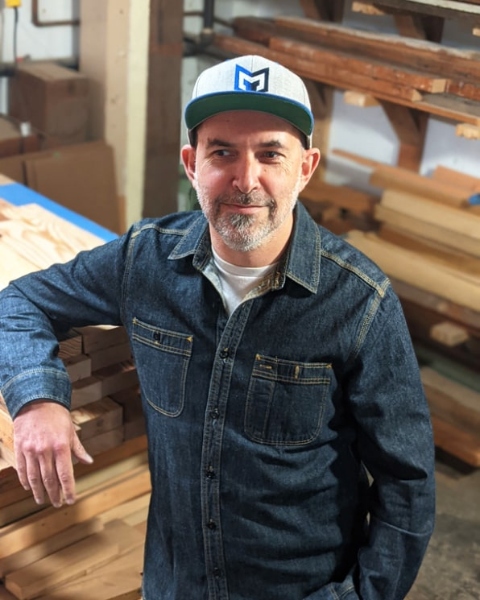
What started as a DIY project to consolidate his children’s school clutter has taken on a life of its own.
As a building inspector with two decades of carpentry experience, all it took for Mitchell Couch to throw together a couple of inexpensive wooden desks where his kids could stash their stuff was a quick trip to the hardware store and about $50 in supplies.
When Couch posted his creations to social media, he was inundated with requests from parents for blueprints to help them replicate the desks for their own at-home learners.
Due to new COVID-19 protocols, many school districts have swapped out traditional classroom teaching for distance learning or hybrid programs. With more kids learning from home than ever before, providing optimal learning environments has proved challenging.
It turns out that in addition to having a tidier household, being able to compartmentalize school from other activities actually enhances the distance learning experience for kids.
“We heard from teachers that the kids who have their own space to learn do so much better with distance learning,” Couch told CNN, recalling what he’d taken away from a parent-teacher conference. “It’s so much easier to separate home and school life that way. When you’re done with school, you can leave the desk and come eat at the kitchen table.”
With that in mind, Couch put together a DIY tutorial for his YouTube channel detailing the materials required and step-by-step instructions on how to build the desks.
The video was an overnight sensation. “It went crazy,” Couch told FOX26. “I had 200 messages the following morning.”
Among the video’s impressed viewers were family friends Karin and David McKinney who own and operate the local Lemoore California Grocery Outlet. After seeing the tutorial, the couple was inspired to take things to the next level by helping out kids in their own community dealing with the difficulties of distance learning.
“They’re home. They’re struggling,” McKinney told FOX26. “We thought, just a place for them to be, a spot for them to have to do their work would be beneficial.”
The McKinneys made Couch an offer he couldn’t refuse: They’d pick up the cost of supplies if he would agree to build 35 student desks.
Couch signed on for the project enthusiastically. The rest of his family has gotten into the act as well. Couch’s wife, Janessa, has sanding duty, and his kids join the “assembly line” whenever they can.
So far, “The Couch Factory” has built and assembled 40 desks.
With requests continuing to pour in, Janessa set up a GoFundMe page to deal with the overflow in hopes of keeping the momentum going.
While the desks are certainly appreciated by the families that receive them, Couch’s true motivation in building them is to reinforce a sense of neighborhood unity. “I’m hoping [people] look closer at their community and realize the most positive change happens in your community,” he said. “It can be making desks or even helping a neighbor across the street with their yard.”
We doubt Mr. Rogers could have said it better himself.
SHARE The Good News With Your Friends on Social Media…
Rock and roll legend Dave Grohl has spent weeks in lockdown engaged in an epic virtual music battle with a 10-year-old girl.
Now, Nandi Bushell has upped the game, penning an original tune for the Foo Fighters’ frontman. Its title? “Rock and Grohl.”
Nandi Bushell/YouTube
The English phenom kicked off the drum battle back in August when she challenged Dave to match her performance of his hit song Everlong. Grohl then answered back with his rendition of a song by Them Crooked Vultures.
Nandi matched Grohl’s beats expertly, and he had to concede, “You got me.”
But, Dave warned Nandi, “Buckle up, ‘coz I have something special in mind…”
That special something was an original song written and performed just for her. In his homemade video for his new friend, Dave even had his young daughters, nicknamed The Grohlettes, doing backing vocals.
The ball’s been in Nandi’s court for a few weeks now—and she’s finally come back with her own rocking tune.
Turns out, not only can Nandi hit the skins as well as the former drummer for Nirvana, she’s pretty nifty at writing lyrics and melodies too.
In her music video, just like Dave, she is singing and also displaying talent as a multi-instrumentalist—playing the electric guitar, bass, and keyboard.
Her soaring lyrics proclaim: “Rock ‘n’ roll’s my love / rock ‘n’ roll’s my soul / rock ‘n’ roll will help me change the world.”
Nandi tells Dave, “I hope you love my song as much as I love your song for me! Whoever wins this round, it’s been an honor to battle you. The Rock Gods of old are happy!”
Grohl’s response? “I’m down, BUT I’M NOT OUT. Your epic song will definitely be hard to beat, but I think I know just what to do…”
We’ll be sure to update you when round three begins.
(WATCH Nandi’s awesome music video below.)
SHARE With The Musicians in Your Life on Social Media…

COVID-19 has had an impact on pretty much every aspect of our lives—how we work, how we play, how we shop, and especially how we travel.
When 27-year-old University of Denver grad student Brittney Woodrum realized she was going to shelve her globetrotting plans at least temporarily, the Kentucky native decided to put the time to good use.
Brittney Woodrum
Woodrum—who goes by the nickname “Bert”—is working toward her Master’s degree in humanitarian assistance after focusing on nonprofit administration and Spanish as an undergrad at the University of Kentucky.
Fittingly, she has a long history of working with nonprofit NGOs to help at-risk and marginalized populations under her belt.
She cites her experience living at a Buddhist nunnery in Myanmar while helping to launch a language program with shaping her worldview. “The nuns taught me a lot about the idea of ‘impermanence,’” Woodrum explained. “With a desire to learn more, I eagerly dove into their way of life, shaving my hair and donating nearly everything I owned… These women had nothing compared to [the] life I was used to, yet their lives were overflowing with joy and purpose.”
In addition to her humanitarian efforts, Woodrum is an avid outdoorswoman and hiker. Faced with enforced time off, she started looking for an organization to hook up with that would allow her to combine the two passions.
ShelterBox was the perfect solution. “No one should have to worry about where their shelter will come from, and that’s why I was really struck by ShelterBox’s mission,” she said.
Brittney Woodrum
Known for its trademark turquoise box filled with essential relief items, ShelterBox is “a global organization made up of people who believe in shelter as a human right, [and] that shelter from the chaos of disaster and conflict is vital.”
Colorado’s “Fourteeners,” a total of 58 peaks with elevations of 14,000 feet or more, are considered some of the toughest climbing destinations in North America.
For her challenge, Woodrum planned to take on all of them, one at a time, with the goal of raising funding and awareness for families who’d lost everything as a result of the global pandemic.
With her Fourteeners Project in place, Woodrum hit the ground climbing—always with her trusty 14-pound blue box on her back.
Because the process went so quickly from idea to implementation, she really didn’t think she’d be collecting more than a few thousand dollars for the cause, but she was in for a very pleasant surprise.
It took Woodrum 78 days, but after summiting her last peak—Crestone Needle in the Sangre de Cristo Range—on September 26, she’d raised nearly $85,0000.
“Word seemed to spread very quickly and a lot of people were equally impassioned by ShelterBox’s mission and what I was doing,” she told CNN. “I have an immense amount of gratitude to everyone who came out to support me both virtually and physically.”
While the extended outdoor sojourn took its toll—Woodrum spent some nights camping out in her car and avoided grocery shopping as much as possible—at the end of the day, she couldn’t have asked for a better outcome.
With her mission accomplished, Woodrum plans to take a little well-deserved downtime, but she doesn’t plan to rest on her laurels for very long. “I feel very privileged with everything I have ever had…” she told The Aspen Times. “The best thing I can do with my life is [to] pay some of that forward and help others who by no fault of their own have had the worst day or year of their life.”
PASS On The Adventures And Share This Story With Your Friends…
Quote of the Day: “When you are loved, you can do anything in creation.” – Paulo Coelho, The Alchemist
Photo: by Matheus Ferrero
With a new inspirational quote every day, atop the perfect photo—collected and archived on our Quote of the Day page—why not bookmark GNN.org for a daily uplift?
Including a few plants in a bare front yard could reduce your stress levels as much as eight weekly mindfulness sessions.
Noah Buscher
These are the findings from new research by the Department of Landscape Architecture in collaboration with the UK’s Royal Horticultural Society (RHS).
The researchers, at the Universities of Sheffield, Westminster, and Virginia, found that a greener front yard can also make you feel happier, more relaxed, and closer to nature.
The four-year scientific research project added ornamental plants to previously bare front gardens in economically deprived streets of Greater Manchester, England.
According to a statement from the researchers, 42 residents received: 1 tree (juniper or snowy mespilus), 1 shrub (azalea), 1 climber (clematis), sub-shrubs (lavender, rosemary), bulbs (daffodils, crocuses, snowdrops), and bedding plants (petunia, viola) to fill two containers. The experimental design included a control group who received the plants one year later.
By measuring the residents’ concentrations of cortisol hormone before and after the plants were added, the research team were able to see if the greenery had any impact on stress levels.
Cortisol levels change across the day. In healthy diurnal patterns, levels peak in the early morning shortly after awakening and drop to the lowest concentration at night.
Steeper daily declines indicate more effective regulation of circadian and hormonal mechanisms, which is a likely consequence of reduced stress.
Before the experiment, only 24% of residents had healthy cortisol patterns. Over the course of the year following the plantings, this increased to 53% of residents having healthy cortisol patterns.
Perceived stress levels decreased by 6% after the introduction of the plants.
Over half (52%) of the residents said their front yard helped them be happier, 40% said it helped them be more relaxed, and over one in four (26%) said it helped them be closer to nature.
Dr Lauriane Suyin Chalmin-Pui, who conducted the research as part of her PhD and who is now an RHS Wellbeing Fellow, said: “We can now further evidence the vital need to incorporate plants into our front gardens and domestic spaces. This will require a change in the way we strategise, design, plan and build our living spaces.
“The stress reduction data is startling, in that we found such a significant response with just a relatively small number of plants. Now we know that access to even a tiny patch of nature has beneficial effects for our health.
“Since I started this research, it’s been fascinating to see how adding plants to front gardens really did have a transformative effect on residents’ lives. Residents suffering from loneliness and other mental health issues found it especially uplifting and motivational.”
Professor Alistair Griffiths added, “With so many millions more people gardening after discovering a passion to grow during lockdown, the RHS hopes this research inspires more people to plant a few plants, from containers and window boxes to hedges and trees, in their street-side outside spaces.
“Today life is even more stressful for so many, meaning the results of this experiment are more important than ever… Together we should all try to make a positive difference one plant at a time.”
PLANT The Good News And Share It With Your Friends On Social Media…

Shakespeare said, “All the world’s a stage and all the men and women merely players,” but now it seems, dogs are determined to get into that act as well—or at least that was the case for one homeless pooch in the Turkish city of Izmit.
İZMIT BELEDIYESI
When the canny hound made his unscripted entrance during an outdoor performance being given by a local theatrical troupe, he wasn’t looking for applause. It seems that Numan Ertuğrul Uzunsoy’s portrayal of an injured man was so realistic, the dog believed the actor was actually hurt and in need of comfort.
As Uzunsoy lay on the ground feigning a fall from a horse, the dog came up to him and gently began to nuzzle his face and neck. It took a few seconds for Uzunsoy to realize what was happening.
“I felt warmth on my face. First, I thought my costar was approaching me,” Uzunsoy told the Dodo. “I was very happy when I felt the dog’s kisses… I was very touched. He was like an angel who wanted to help me. It was a very emotional moment for me. I was not expecting it.”

While the audience and cast members were obviously amused by the ad-libbing pup and didn’t mind the interruption, after a few moments, the dog was led offstage. Uzunsoy resumed his character and the show went on.
The local stray did not wait around to take his curtain call. However, since the good samaritan shepherd is known to frequent the area where the performance took place, Uzunsoy hopes to be reunited with his unintentional costar in the near future.
Dog-loving Uzunsoy is so determined to find the sweet-natured pup, he plans to keep coming back until’s he’s found his heart- and scene-stealing four-legged friend. Once he does, Uzunsoy’s vowed to make sure this very good boy lands a starring role in a “furever” home of his own.
(WATCH the adorable moment on Facebook below.)
SHARE This Pawsome Story With Your Pals on Social Media…