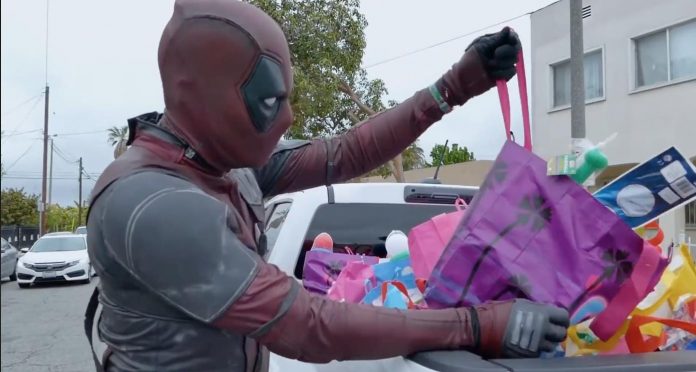
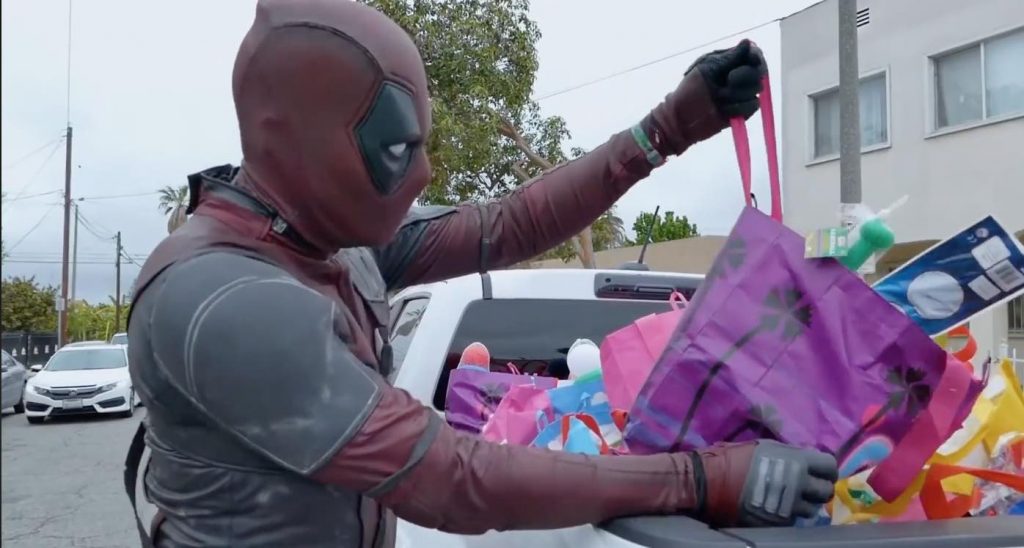
Super powers like x-ray vision, the strength of a locomotive, or the ability to fly may be uplifting in a Marvel movie, but what better skill could uplift a victim in the real world than bringing smiles to children who are desperately ill?
That’s how one man in a Spiderman costume fulfills his mission at children’s hospitals all across America—and with his visits to Alaska and Hawaii last September, he has now played that role in all 50 states.
It’s all part of the fun for Yuri Williams and his Long Beach, California non-profit, A Future Super Hero and Friends, which not only counts hospitals as its turf, but any underserved community. Yuri has organized blood drives, toy drives, and movie nights—all while donning Superhero costumes, and a heart of gold.
“They don’t even call me by my real name anymore, it’s just Spidey or Spider-Man,” the man behind the mask told Hawaii News Now.
Yuri decided to conjure smiles for suffering children as a result of his own healing journey. The idea—to be a hero for those in the frightening grip of a serious illness—came about during his long bout of grief due to his mother’s battle with cancer.
He decided that the best way to deal with his sadness was service to others—and he has since touched the lives of tens of thousands of people.
His surprise visits give the patients, who are sometimes in a dark place emotionally, the ability to be happy again and let down their guard.
Yuri Williams – Facebook video
In addition to his inspiring work with children, Yuri also actively visits homeless camps to hand out food and clothing. He has started a fundraiser on Patreon, to serve even more people, by “providing art programs and other services for the houseless, disabled, elderly, ill, children, veterans, and anyone in need.”
In a powerful video on Facebook, Yuri described the life-changing emotions he experiences—no matter which costume he dons. “I live for this. When I have to do something the next day, I can’t sleep because I’m just excited to be helping people. It’s an adrenaline rush.”
And when this ‘caped crusader’ of hope sees the children perk up in those hospital beds, he knows he’s done a good day’s work. “I feel like a real superhero.”
WATCH the heartwarming video…
Rescue Your Social Media Feed—SHARE The Super-Good Deeds With Friends…
Across the West, it’s pretty normal for people to find olympic and major sporting events available to both men and women—with some female competitions like the UFC Women’s divisions, the tennis “Grand Slams” or the FIFA Women’s World Cup attracting just as much interest as their male equivalent.
But for female cyclists, the most prestigious of all competitions—the Tour de France—has for 100 years been open only to male competitors, with the only female equivalent, the “course d’un jour” being a much more modest event.
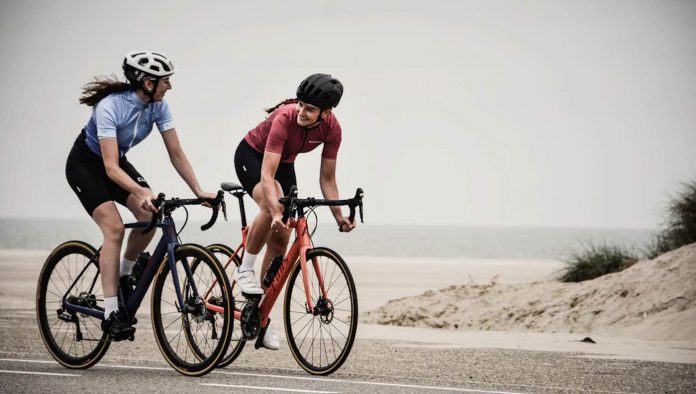
This year, however, as the actual Tour de France begins in Nice, France, after having been delayed due to Covid-19, a virtual version that will allow female competitors to ride a stationary bike on a Virtual Reality route of the actual race, will have just concluded under shadows of the Arc de Triomphe in Paris.
The online virtual bike training platform Zwift, together with Tour organizers Amaury Sports Organization (ASO), have designed a course where the elite female riders will be spread across 40 teams to complete 6-hour-stages over the course of three weekends.
The race will feature world-class cyclists like Marianne Vos from the Netherlands, and the USA’s world time-trial champion Chloe Dygert. Cycling enthusiasts across 130 countries now have the opportunity to watch together online as the virtual avatars of the riders compete in the famous race, throughout the weeks with Stage 6 ending July 19. Stage 3 will be run tomorrow, July 11.
The ASO has already committed to a full, rubber-on-road, 3-week women’s Tour de France by 2022, and next year they plan to expand the virtual competition to consist of stages mirroring the entire real-world race.
Zwift CEO Eric Min told the Telegraph that “ASO has already made a commitment for a women’s race as early as 2022 and we see this [virtual race] as an opportunity to accelerate that journey.”
WATCH some highlights from the mountainous Stage 3 via Zwift…
SHARE the Opportunity With Your Mighty Cycling Friends on Social Media…
Quote of the Day: “You will find peace not by trying to escape your problems, but by confronting them courageously.” – J. Donald Walters
Photo: by Kids For Peace
With a new inspirational quote every day, atop the perfect photo—collected and archived on our Quote of the Day page—why not bookmark GNN.org for a daily uplift?
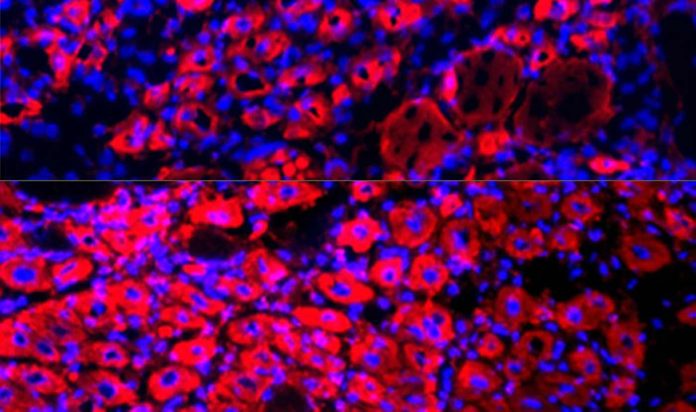
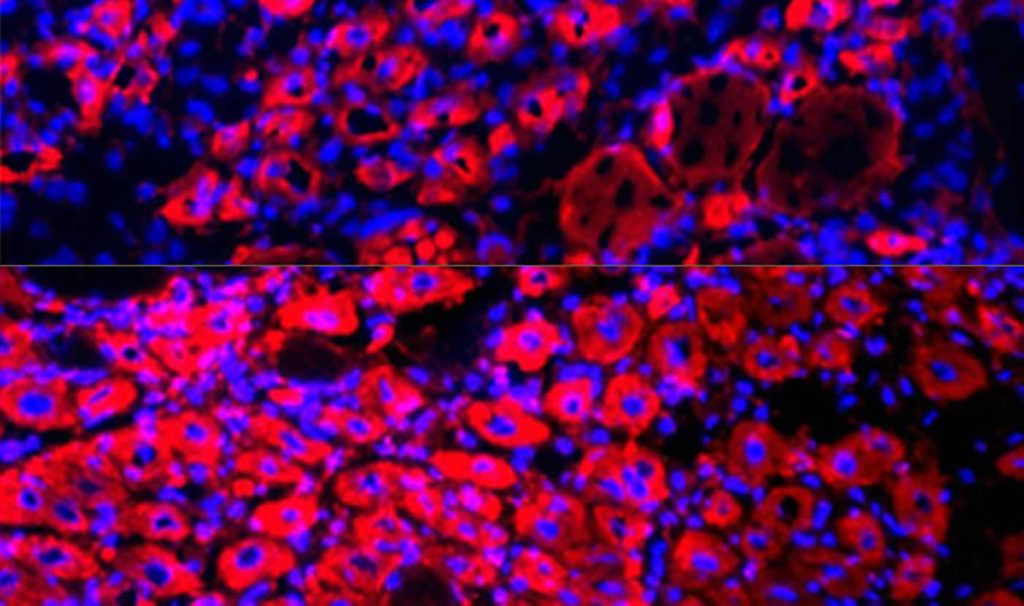
Older mice grew significantly more new muscle fibers, shown as pink “donut” shapes, after undergoing a procedure that effectively diluted the proteins in their blood plasma (bottom) than they did before they underwent the procedure (top). Photo courtesy of Irina Conboy.
In 2005, University of California–Berkeley researchers made the surprising discovery that when young and old mice share blood and organs, rejuvenated tissues can reverse the signs of aging in the old mice. The finding sparked a flurry of research into whether a youngster’s blood might contain special proteins or molecules that could serve as a sort of “fountain of youth” for mice and humans alike.
But a new study by the same team shows that similar age-reversing effects can be achieved by simply diluting the blood plasma of old mice—no young blood needed.
In the study, the team found that replacing half of the blood plasma of old mice with a mixture of saline and albumin—where the albumin simply replaces protein that was lost when the original blood plasma was removed—has the same or stronger rejuvenation effects on the brain, liver and muscle than pairing with young mice or young blood exchange. Performing the same procedure on young mice had no detrimental effects on their health.
This discovery shifts the dominant model of rejuvenation away from young blood and toward the benefits of removing age-elevated, and potentially harmful, factors in old blood.
“There are two main interpretations of our original experiments: The first is that, in the mouse joining experiments, rejuvenation was due to young blood and young proteins or factors that become diminished with aging, but an equally possible alternative is that, with age, you have an elevation of certain proteins in the blood that become detrimental, and these were removed or neutralized by the young partners,” said Irina Conboy, a professor of bioengineering at UC Berkeley who is the first author of the 2005 mouse-joining paper and senior author of the new study.
“As our science shows, the second interpretation turns out to be correct,” she added. “Young blood or factors are not needed for the rejuvenating effect; dilution of old blood is sufficient.”
In humans, the composition of blood plasma can be altered in a clinical procedure called therapeutic plasma exchange, or plasmapheresis, which is currently FDA-approved in the U.S. for treating a variety of autoimmune diseases. The research team is currently finalizing clinical trials to determine if a modified plasma exchange in humans could be used to improve the overall health of older people and to treat age-associated diseases that include muscle wasting, neuro-degeneration, Type 2 diabetes, and immune deregulation.
“I think it will take some time for people to really give up the idea that that young plasma contains rejuvenation molecules, or silver bullets, for aging,” said Dobri Kiprov, a medical director of Apheresis Care Group and a co-author of the paper. “I hope our results open the door for further research into using plasma exchange—not just for aging, but also for immunomodulation.”
Older mice grew significantly more new muscle fibers, shown as pink “donut” shapes, after undergoing a procedure that effectively diluted the proteins in their blood plasma (bottom) than they did before they underwent the procedure (top). Photo courtesy of Irina Conboy.
A molecular ‘reset’ button
In the early 2000s, Conboy and her husband and research partner Michael Conboy, a senior researcher and lecturer in the Department of Bioengineering at UC Berkeley and co-author of the new study, had a hunch that our body’s ability to regenerate damaged tissue remains with us into old age in the form of stem cells, but that somehow these cells get turned off through changes in our biochemistry as we age.
“We had the idea that aging might be really more dynamic than people think,” Conboy said. “We thought that it could be caused by transient and very reversible declines in regeneration, such that, even if somebody is very old, the capacity to build new tissues in organs could be restored to young levels by basically replacing the broken cells and tissues with healthy ones, and that this capacity is regulated through specific chemicals which change with age in ways that become counterproductive.”
After the Conboys published their groundbreaking 2005 work, showing that making conjoined twins from the old mouse and a young mouse reversed many signs of aging in the older mouse, many researchers seized on the idea that specific proteins in young blood could be the key to unlocking the body’s latent regeneration abilities.
However, in the original report, and in a more recent study, when blood was exchanged between young and old animals without physically joining them, young animals showed signs of aging. These results indicated that that young blood circulating through young veins could not compete with old blood.
As a result, the Conboys pursued the idea that a buildup of certain proteins with age is the main inhibitor of tissue maintenance and repair, and that diluting these proteins with blood exchange could also be the mechanism behind the original results. If true, this would suggest an alternative, safer path to successful clinical intervention: Instead of adding proteins from young blood, which could do harm to a patient, the dilution of age-elevated proteins could be therapeutic, while also allowing for the increase of young proteins by removing factors that could suppress them.
To test this hypothesis, the Conboys and their colleagues came up with the idea of performing “neutral” blood exchange. Instead of exchanging the blood of a mouse with that of a younger or an older animal, they would simply dilute the blood plasma by swapping out part of the animal’s blood plasma with a solution containing plasma’s most basic ingredients: saline and a protein called albumin. The albumin included in the solution simply replenished this abundant protein, which is needed for overall biophysical and biochemical blood health and was lost when half the plasma was removed.
“We thought, ‘What if we had some neutral age blood, some blood that was not young or not old?’” said Michael Conboy. “We’ll do the exchange with that, and see if it still improves the old animal. That would mean that by diluting the bad stuff in the old blood, it made the animal better. And if the young animal got worse, then that would mean that that diluting the good stuff in the young animal made the young animal worse.”
After finding that the neutral blood exchange significantly improved the health of old mice, the team conducted a proteomic analysis of the blood plasma of the animals to find out how the proteins in their blood changed following the procedure. The researchers performed a similar analysis on blood plasma from humans who had undergone therapeutic plasma exchange.
They found that the plasma exchange process acts almost like a molecular reset button, lowering the concentrations of a number of pro-inflammatory proteins that become elevated with age, while allowing more beneficial proteins, like those that promote vascularization, to rebound in large numbers.
“A few of these proteins are of particular interest, and in the future, we may look at them as additional therapeutic and drug candidates,” Conboy said. “But I would warn against silver bullets. It is very unlikely that aging could be reversed by changes in any one protein. In our experiment, we found that we can do one procedure that is relatively simple and FDA-approved, yet it simultaneously changed levels of numerous proteins in the right direction.”
Therapeutic plasma exchange in humans lasts about two to three hours and comes with no or mild side effects, said Kiprov, who uses the procedure in his clinical practice. The research team is about to conduct clinical trials to better understand how therapeutic blood exchange might best be applied to treating human ailments of aging.
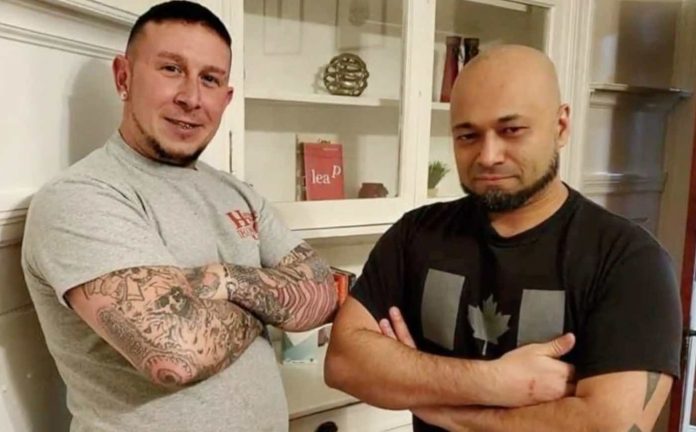
Army veteran Christopher Buckley used to be a national security leader for the Ku Klux Klan—but now he is using his time to spread compassion and racial understanding.
Buckley says that he first developed racist attitudes because of his rough childhood in Cleveland, Ohio. After joining the Army and serving overseas in Afghanistan and Iraq for 13 years, he began hating Muslims as well.
Upon returning home to Walker County, Georgia, he became an honored official in the Georgia White Knights chapter of the KKK.
Thankfully, after he befriended a man named Arno Michaels in 2016, his passion for white nationalism came to an end.
Arno Michaels was a former member of one of the largest racist skinhead organizations in America. He managed to unlearn his hateful tendencies, and now volunteers for Parents 4 Peace—a nonprofit dedicated to protecting youngsters from racist ideologies and helping white nationalists to let go of their dangerous stereotypes.
Thanks to his friendship with Michaels, Buckley left the KKK and began exposing himself to Black, Muslim, and refugee communities.
Their compassion towards Buckley spurred him to become a volunteer with Parents 4 Peace—and he now spends his time helping youth and adults find the exact same transformation that he found in empathy and kindness.
(WATCH the moving WTVC interview below) – Feature photo by Chris Buckley
Be Sure And Share This Inspiring Story Of Transformation With Your Friends On Social Media…
Short of creating a new police department consisting of ‘Oscar the Grouch’ and his friends, Vermont has done almost everything it can to eliminate food waste ending up in state landfills.
A new piece of legislature called the Food Waste Ban prohibits the disposal of compostable food waste like egg shells, coffee grounds, old bread, and fruit skins. While it’s obviously difficult to enforce such a ban, Vermont is the first state to enact such a law, and state officials see it as an opportunity to spread awareness—and they’re hoping for voluntary compliance from Vermont’s environmentally-conscious citizens.
It’s one objective of the state’s overall plan to cut 50% of all trash that ends up in landfills, diverting it instead to facilities where it can be reused, recycled, or composted. With only 36% of that target reached, it is believed the goal can only become a reality if food waste is widely addressed.
Every five years, Vermont state officials take a survey of what’s being thrown out. The most recent survey found that around 20% of household waste is food scraps which could be composted into fertilizer for the state’s fields and farms.
Along with missing out on an opportunity for high quality compost, food waste which ends up in state and county landfills produces methane as it decomposes. While methane only survives in the atmosphere for about 10-12 years compared to potentially thousands of years the way CO2 does, the former is up to 32-times stronger when it comes to intensifying the sun’s rays and creating the conditions for accelerated global climate change.
“People say, ‘What does this mean with a food waste ban? [Are] people going to be out there looking in my garbage for my apple cores?’” says Josh Kelly, materials management section chief with the Vermont Agency of Natural Resources.
Speaking to Fast Company, Kelly explains that the state will not be policing people’s roadside garbage. The ban is more a plan to take advantage of the already widespread act of private composting, to push through investments in private and public composting infrastructure, and allow businesses that handle drop-off or curbside pick up of compost to buy more equipment and build more facilities.
Vermont is also supporting its composters by releasing detailed guides and information on what can be recycled—and what should be composted. They are also providing support for food rescue programs that help divert edible food to people in need.
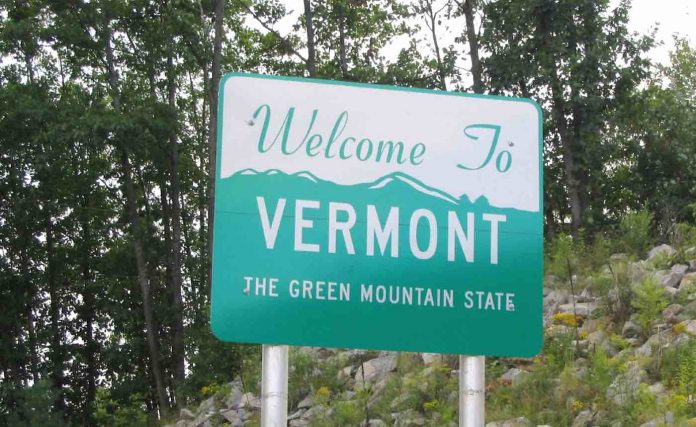
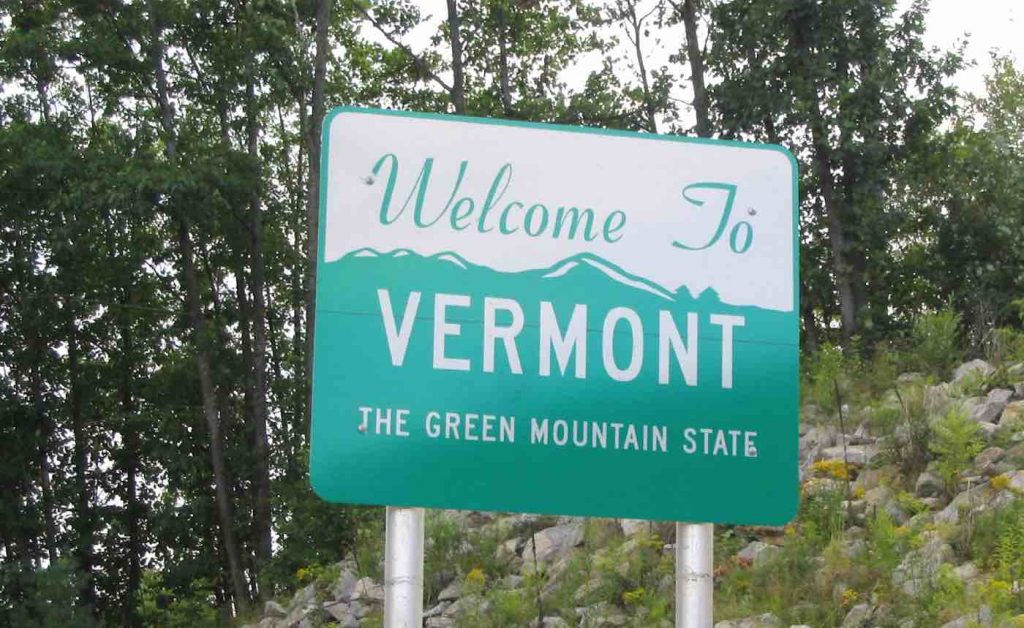
File photo by Ken Lund, CC
It’s not perfect, but Kelly believes it’s a good ‘next-step’ to help The Green Mountain State reach its goal of cutting landfill waste in half.
Be Sure And Share The Eco News With Your Friends On Social Media…
7 students renting an apartment together were each left stunned and overwhelmed with kindness when they had to move out and deal with their landlord over the security deposit.
They had lived in their Leeds, England apartment for three years, and when it came time for the landlord to say goodbye, he not only returned their deposits, he added a 20 percent bonus—and strangers far and wide were applauding the kindness.
Maisie, a 22-year old psychology student at the University of Leeds, posted a screenshot on Twitter sharing the text message that her landlord, John, sent to all his departing tenants. The caption read, “A nice student landlord!!! Love you John,” and it received a whopping 265,000 likes.
The text from John read, “As a thank you, I have added a small bonus of £50 to each of your deposits making it £300 and now the shops are opening again I hope you’ll be able to buy yourself something nice.” He added, “You have all been excellent tenants.”
Speaking to LeedsLive WS, John said: “I wish them well in the future. If they carry on how they did in my house they will be fine people.”
The students have all recently graduated, and will be going their separate ways.
Maisie, who is originally from Manchester, also said “We lived at the house for three years and it was really nice, we never had any problems if we did John did everything he could to fix it.
Quote of the Day: “The only limit to our realization of tomorrow will be our doubts of today. Let us move forward with strong and active faith.” – Franklin D. Roosevelt
Photo: by Diana Simumpande, public domain – cropped
With a new inspirational quote every day, atop the perfect photo—collected and archived on our Quote of the Day page—why not bookmark GNN.org for a daily uplift?
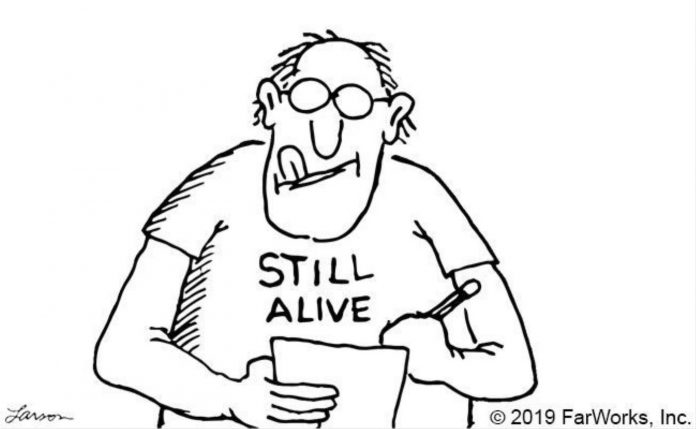
If you ever took pleasure in perusing the funny pages of a newspaper, you may have decided that Gary Larson’s legendary cartoon The Far Side was your favorite.
Over the course of his 15-year career, Larson’s iconic single-panel comics, which featured wacky views of life often through the eyes of animals, were published in more than 1,900 newspapers, forever solidifying him as a beloved addition to the funny pages prior to his retirement in 1995.
Now, Far Side fans are rejoicing after Larson published his first cartoon in 25 years.
Although the artwork is slightly different from the familiar sketch style that Larson used for his newspaper strips, he’s been adding fresh and colorful content to the “New Stuff” section of his website for The Far Sidecomics.
According to an open letter he published to the site earlier this week, the new content is thanks to the artist’s recent exposure to digital illustration.
“I don’t want to mislead anyone here,” wrote Larson. “This corner of the website … is not a resurrection of The Far Side daily cartoons. (Well, not exactly, anyway—like the proverbial tiger and its stripes, I’m pretty much stuck with my sense of humor. Aren’t we all?)
“Despite my retirement, I still had intermittent connections to cartooning, including my wife’s and my personal Christmas card. Once a year, I’d sit myself down to take on Santa, and every year it began with the same ritual: me cursing at, and then cleaning out, my clogged pen.
“So a few years ago—finally fed up with my once-loyal but now reliably traitorous pen—I decided to try a digital tablet. I knew nothing about these devices but hoped it would just get me through my annual Christmas card ordeal. I got one, fired it up, and lo and behold, something totally unexpected happened: within moments, I was having fun drawing again.
“I was stunned at all the tools the thing offered, all the creative potential it contained. I simply had no idea how far these things had evolved. Perhaps fittingly, the first thing I drew was a caveman,” he concluded. “The ‘New Stuff’ that you’ll see here is the result of my journey into the world of digital art.”
Since announcing the news on his website this week, Larson has posted three new comics depicting an urbanite hailing a “taxi-dermist” cab, a team of alien hunters discussing their “probe and release” tactics for humans, and a family of bears politely sitting down to a dinner of Cub Scouts.
Feature photo by Gary Larson – The Far Side
Be Sure And Pass On The Laughs To Your Friends By Sharing This To Social Media…
An endearing new movement for neighborly kindness is putting a benevolent twist on the game of “Ding Dong Ditch-it.”
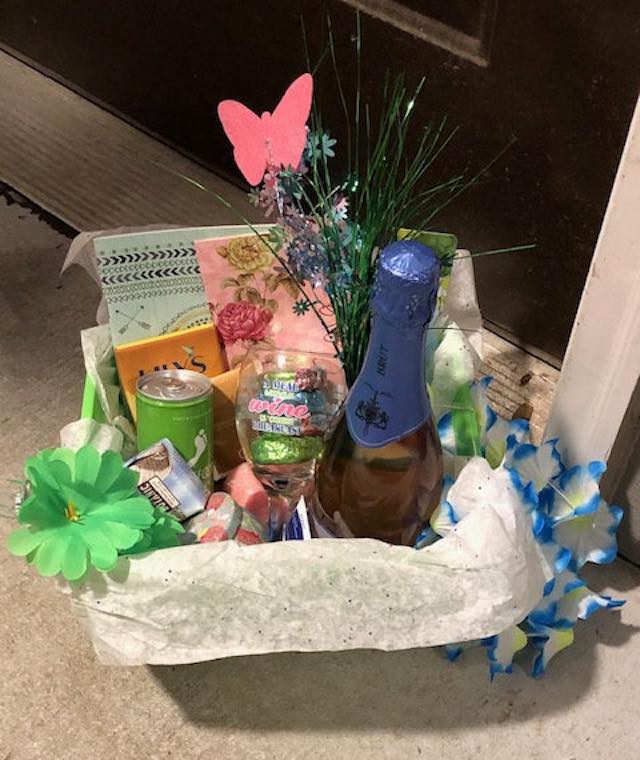
As a means of cheering up American communities during the COVID-19 outbreaks, mysterious groups of do-gooders known as “Wine Fairies” have been leaving booze and treats on people’s doorsteps.
The first Sisterhood of the Traveling Wine Facebook group was founded by a mom who wanted to spread joy by leaving bottles of wine on the doorsteps of strangers, friends, and neighbors.
Hundreds of other “Wine Fairy” Facebook groups with as many as 78,000 members have now appeared across the country as COVID-19 continues to keep everyone six feet apart.
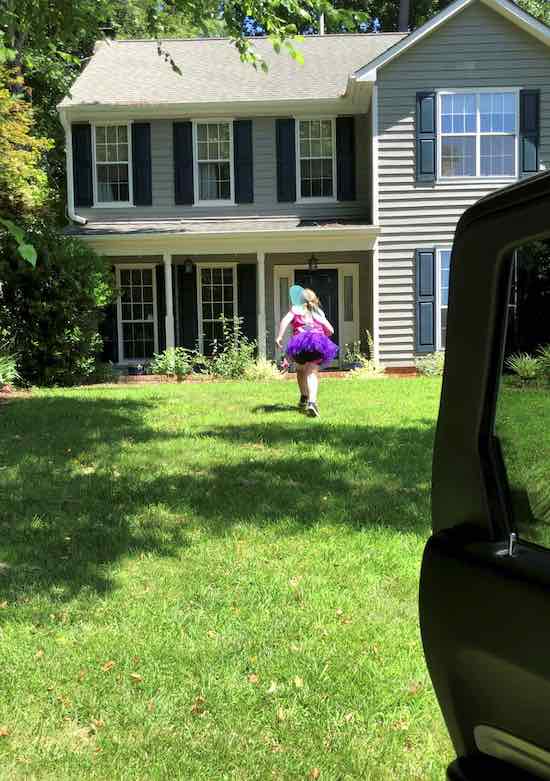
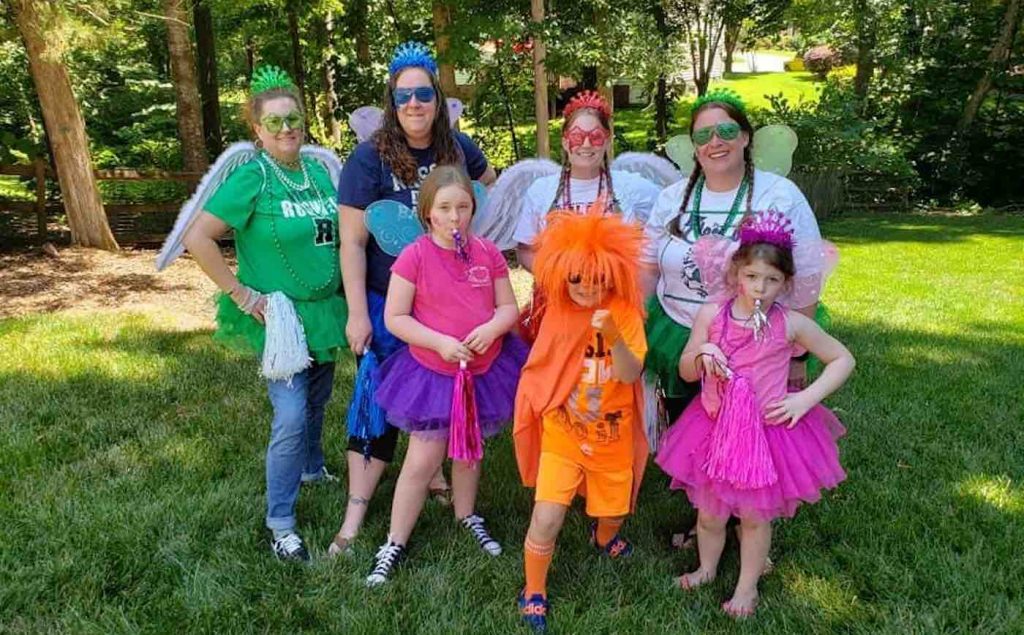
The fairies collect the addresses of wine lovers in their communities and ask which varieties of wine they would prefer to receive. The members—dressed in wings, tutus, and magic wands—then tiptoe to people’s doors, place their gifts on the stoops, ring the bells, and run for cover.
“It’s all about bringing others happiness and making new relationships,” said 40-year-old Cara Rindell (pictured, above), who brought the movement to her home in Raleigh. “It starts off as a random act of kindness to a stranger and becomes a friendship with the neighbor you didn’t know you had.”
A Wine Fairy package – SWNS
Her North Carolina chapter of the group now touts over 51,000 members and has an additional 3,000 on the waiting list.
“It was supposed to be just the Raleigh area, but now we are in ten states, hoping to eventually launch into all 50 states,” said Rindell. “It is called the Sisterhood of the Traveling Wine, but the group is co-ed and it isn’t just about wine. We want to eventually include children all the way up to grandparents.”
Rindell is now expanding and creating alternative versions of this gift-giving group, including the “Brotherhood of Booze and Beer” and a nonalcoholic version for kids.
After the pandemic, she hopes to expand the idea to larger, in-person social gatherings.
SWNS
“Cruise lines are reaching out to me, about even having a cruise for the sisterhood,” said Rindell. “This group started during COVID, but it’s not going to stop after COVID. I think we always need to be spreading kindness and cheer.”
Spread The Good News Amongst Your Friends By Sharing This To Social Media…
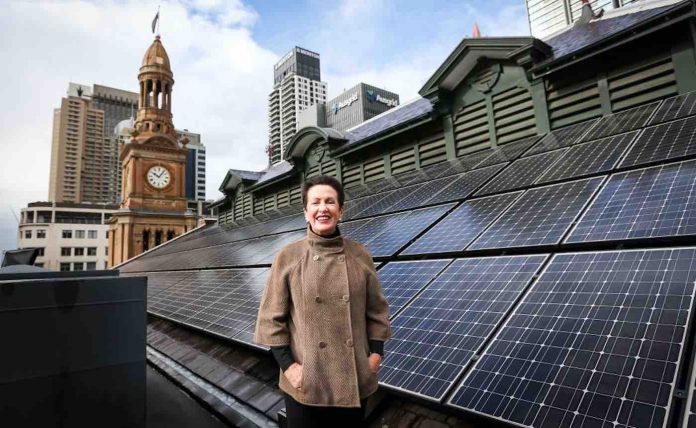
In the middle of Australia’s largest city the downtown business borough is now officially powered by 100% green energy thanks to the “largest standalone renewables agreement for an Australian council to date.”
The City of Sydney, which is home to a quarter-million people, has begun sourcing all of its energy from two solar farms and the largest wind farm in all of New South Wales.
The transition was facilitated through a power purchase agreement (PPA) with electricity retailer Flow Power. Although the historic deal costs AU$60 million, the initiative is expected to save AU$500,000 every year, according to Euronews.
The initiative is also expected to purge roughly 20,000 tons of CO2 from the city’s carbon footprint—roughly 70% of its total output—before 2024, which is several years earlier than its original goal.
“Cities are responsible for 70% of greenhouse gas emissions worldwide, so it is critical that we take effective and evidence-based climate actions,” said Sydney Mayor Clover Moore.
“The City of Sydney became carbon neutral in 2007, and were the first government in Australia to be certified carbon neutral in 2011,” she added. “This ground-breaking $60 million renewable electricity deal will also save our ratepayers money and support regional jobs in wind and solar farms in Glen Innes, Wagga Wagga, and the Shoalhaven.”
Seventy per cent of the world’s emissions are generated from cities, so the action city governments take is absolutely critical. https://t.co/fatMzgPATd
The thin, slippery layer of cartilage between the bones in the knee is magical stuff: strong enough to withstand a person’s weight, but supple enough to cushion the joint during impact from decades of use.
That combination of soft-yet-strong has been hard to reproduce in the lab—but now, Duke University researchers say they’ve created an experimental gel that’s the first to match the strength and durability of the real thing.
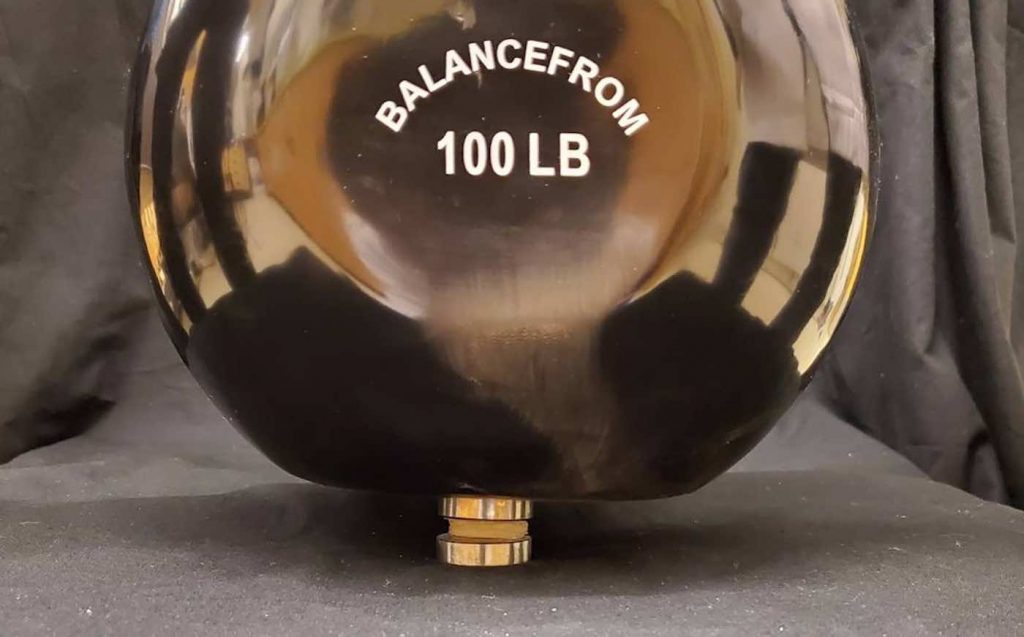
The material may look like a distant cousin of Jell-O—which it is—but it’s incredibly strong. Although 60% water, a single quarter-sized disc can bear the weight of a 100-pound kettlebell without tearing or losing its shape.
Developers say it’s the first hydrogel—materials made of water-absorbing polymers—capable of withstanding tugging and heavy loads equally as well as human cartilage, without wearing out over time.
Led by Duke chemistry and materials scientists Ben Wiley and Ken Gall, the research could one day lead to an alternative for the 600,000 patients seeking knee replacement surgeries the U.S. every year.
A smooth rubbery tissue that covers the ends of bones and enables them to glide smoothly against each other, cartilage helps absorb a huge amount of force with every step—typically between two and three times your body weight.
However, cartilage has only a limited ability to heal and repair itself. Once worn by age, overuse, or trauma, it’s difficult to treat, says Gall, a professor of mechanical engineering and materials science at Duke.
Duke researchers have developed the first gel-based synthetic cartilage with the strength of the real thing. A quarter-sized disc of the material can withstand the weight of a 100-pound kettlebell without tearing or losing its shape. Photo by Feichen Yang.
For patients who want to avoid or postpone a knee replacement that may only last 20 years, artificial cartilage can help. Hydrogels have been explored for use as a cartilage substitute since the 1970s and are used in soft contact lenses and disposable diapers. Researchers are attracted to these materials because of their slippery, shock-absorbing properties and because they don’t harm nearby cells. But until now they’ve proven too weak to be used in load-bearing joints like the knee.
The Duke team set out to change that. “We set out to make the first hydrogel that has the mechanical properties of cartilage,” said Wiley, a chemistry professor at Duke.
The new hydrogel consists of two intertwined polymer networks: one made of stretchy spaghetti-like strands and the other more rigid and basketlike, with negative charges along their length. These are reinforced with a third ingredient, a meshwork of cellulose fibers.
When the gel is stretched, the cellulose fibers resist pulling and help hold the material together. And when it is squeezed, the negative charges along the rigid polymer chains repel each other and stick to water, helping it spring back to its original shape.
“Only this combination of all three components is both flexible and stiff and therefore strong,” said co-author Feichen Yang, who earned a chemistry PhD in Wiley’s lab.
When the researchers compared the resulting material to other hydrogels, theirs was the only one that was as strong as cartilage under both squishing and stretching.
In one experiment, the team subjected it to 100,000 cycles of repeat pulling, and the material held up just as well as porous titanium used for bone implants, “which exceeded our initial expectations,” said co-author William Koshut, a PhD student in the Gall lab.
They also rubbed the new material against natural cartilage a million times. They found that its smooth, slippery self-lubricating surface is as wear-resistant as the real thing and four times more wear-resistant than synthetic cartilage implants currently FDA-approved for use in the big toe.
Moving the material from the lab to the clinic would take another three years at least, Wiley said. Initial safety tests suggest the material is nontoxic to lab-grown cells. The next step is to design an implant that they can test in sheep.
But the team says eventually the research could offer new options for people with knee pain, and get them back to doing the things they love without the long recovery times and limited lifetime associated with cartilage repair or knee replacement surgery.
Quote of the Day: “The purpose of art is washing the dust of daily life off our souls.” – Pablo Picasso
Photo: by Hayes Potter, public domain – cropped
With a new inspirational quote every day, atop the perfect photo—collected and archived on our Quote of the Day page—why not bookmark GNN.org for a daily uplift?
He collapsed getting out of the car. He lay on the ground and wouldn’t move, just staring in front of him.
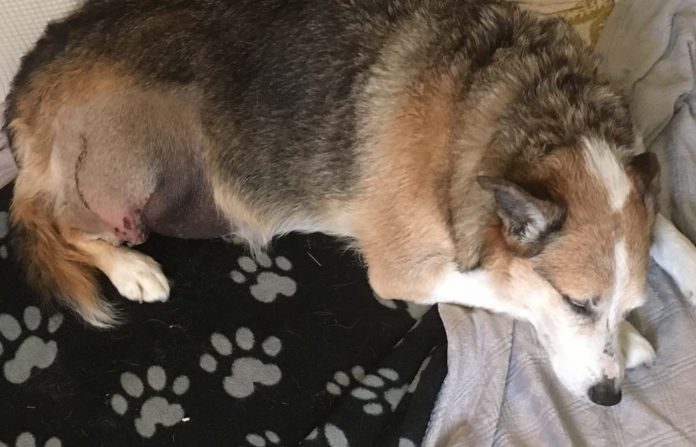
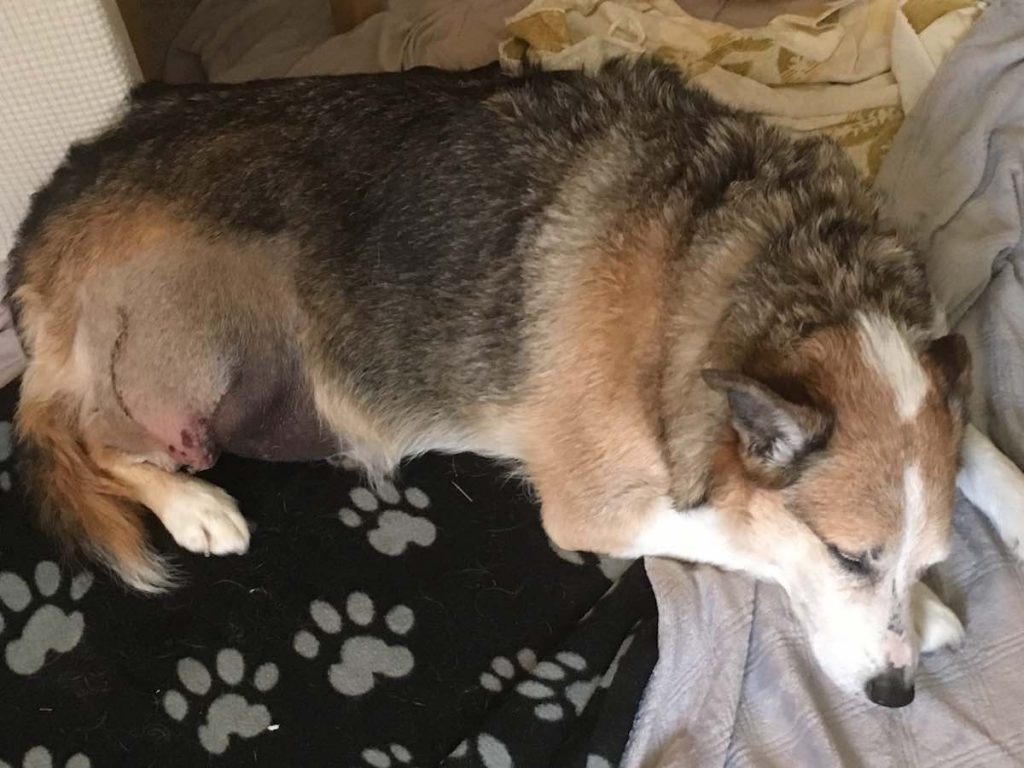
My collie, Nunuk, had just had surgery to remove two tumors on his hind leg, and his leg gave way as he walked the two steps down from the car.
At 65 pounds and with with two fresh 5-inch long incisions, it was clearly impossible for me to lift safely on my own. And there was nobody home and nobody coming home to help, a decided down-side of living alone.
Finding a warm blanket to cover Nunuk, I sat next to him hoping he would recover enough to walk the few steps into the house. With no improvement after 20 minutes, an emergency vet helpline suggested giving him additional painkillers. While waiting for those to take effect, I texted the neighbor to please not drive by for a little while, as Nunuk is a guard dog by nature and it was vital to keep him quiet.
We sat quietly, waiting for those painkillers to take effect. Hoping against hope they would work and he would be able to walk inside, in truth I felt unsure and worried.
Nunuk resting
And then, out of the silence of the early evening, my neighbor and his wife wordlessly appeared. With a bare minimum of words, we quickly formed a plan to scootch the blanket under the dog, each person taking one or two corners, and then carry him inside. The usually-reactive Nunuk did not protest beyond a few quizzical looks, and within seconds he was inside, warm and safe.
The neighbors disappeared as silently and wordlessly as they had appeared. It was as if two angels had appeared, completed their good deed for a being in great need, and then vanished.
Nunuk did not move for three hours, and then took only two staggering steps to his sleeping place.
I can only count my lucky stars that those two angels appeared in that hour of need. It was a beautiful reminder of the threads of connection that weave together a community, a neighborhood, and individuals.
An Indian architect has developed a revolutionary new way to serve the housing needs of a population, while also fighting air pollution.
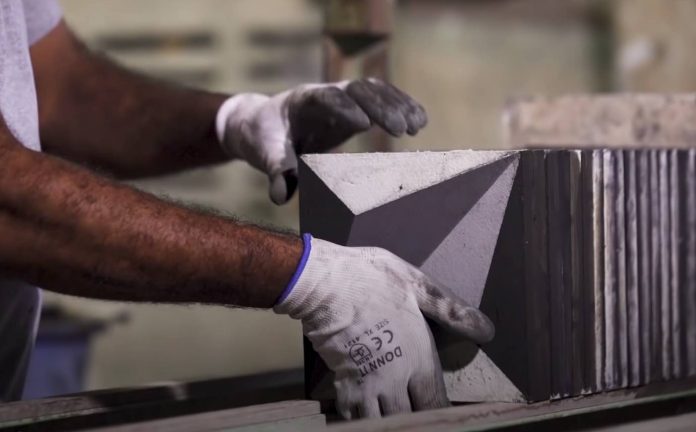
Tejas Sidnal is the mastermind behind Carbon Craft Design: a Mumbai-based startup that specializes in capturing carbon emissions from the air and turning it into stylish tile.
Using a device called the AIR-INK, the company is able to draw CO2 out of the polluted city air, combine it with a mixture of marble chips and powder, and then press it into elegantly-designed tiles.
Since Sidnal says that India is in need of maintaining the world’s third largest housing industry, his sustainable tile recipe can help meet the industry demand for building materials in an eco-friendly way.
It has been ten years since NASA launched a specialized satellite to film the surface of the sun—and they have now released a gorgeous time-lapse video of its solar movements over the course of the decade.
The Solar Dynamic Observatory (SDO) has been taking high-resolution photographs of the sun every 0.75 seconds since it was launched into Earth’s orbit back in June 2010.
To date, the SDO has amassed more than 425 million pictures of the sun in 10 different wavelengths of light, totaling up to 20 million gigabytes of photos.
So as a means of celebrating the SDO’s 10th anniversary at the end of June, NASA selected 87,000 of the satellite’s photos and condensed them into a time lapse view of the sun’s surface, with each second of the video represents one day on Earth.
According to the NASA video caption, all of the photos were “taken at a wavelength of 17.1 nanometers, which is an extreme ultraviolet wavelength that shows the sun’s outermost atmospheric layer—the corona.”
“Compiling one photo every hour, the movie condenses a decade of the Sun into 61 minutes,” the caption continues. “While SDO has kept an unblinking eye pointed towards the Sun, there have been a few moments it missed. The dark frames in the video are caused by Earth or the Moon eclipsing SDO as they pass between the spacecraft and the Sun. A longer blackout in 2016 was caused by a temporary issue with the AIA instrument that was successfully resolved after a week. The images where the Sun is off-center were observed when SDO was calibrating its instruments.”
“SDO and other NASA missions will continue to watch our Sun in the years to come, providing further insights about our place in space and information to keep our astronauts and assets safe.”
(WATCH the time-lapse video below)
Shine A Light On The Positivity Of Science By Sharing This With Your Friends On Social Media…
Shout out to this @Morrisons security man keeping this good boy dry. He said ‘well you never know how dogs feel about the rain’ pic.twitter.com/B9CPWI7u5Q
This supermarket security guard in Scotland seems to be no stranger to the Peanuts cartoon line, “Happiness is a warm puppy.”
Ethan Dearman, who patrols the parking lot of the Morrison’s grocery store in Giffnock, is being hailed as an ‘everyday hero’ after he was photographed holding an umbrella over a dog’s head in the rain.
Since the sweet moment was captured and posted to social media by 25-year-old Mel Gracie last week, it has racked up thousands of Twitter responses applauding Dearman for his kindness.
When Dearman was asked about the umbrella, he simply told Gracie: “You never know how dogs feels about the rain.”
This is apparently not the first time that Dearman has taken the time to show some love to his canine friends. After the photo was posted to social media, the dog’s owner came forward to identify the dog as Freddie and praised Dearman for his enduring kindness towards him and his family.
“Thanks to security man [Ethan Dearman] for putting the umbrella over Freddie when it started to rain!” tweeted Freddie’s owner David Cherry. “So kind! He’s always so nice to my brother Stuart, my dad, and our Freddie!”
Thanks to security man @dearmanethan for putting the umbrella over Freddie when it started to rain! So kind! He’s always so nice to my brother Stuart, my Dad and our Freddie!Here’s Freddie when he was a puppy! pic.twitter.com/TJuX41ozFE
Quote of the Day: “I can end up just totally wacky, because I’ve made mountains out of molehills. With meditation, I can keep them as molehills.” – Ringo Starr (turns 80 today)
Photo: by Zoltan Tasi, public domain
With a new inspirational quote every day, atop the perfect photo—collected and archived on our Quote of the Day page—why not bookmark GNN.org for a daily uplift?
As reported in an eye-opening new research paper, scientists have created tiny human livers out of human skin cells before successfully transplanting them into rats.
“What we are planning to do is to start making mini human organs that are universal,” explained the paper’s co-author, Alejandro Soto-Gutiérrez, from the University of Pittsburgh.”That would change the paradigm of transplants”.
The science-fiction-like procedure was done by taking adult skin cells and genetically altering certain genes and transcription factors to create what are known as “pluripotent stem cells.”
It starts with human skin cells called fibroblasts, in 2006 the pioneering field of genetic-editing led scientists to discover that they can simply take any cell from a living adult and turn it into a pluripotent stem cell.
“Pluri,” meaning plurality, indicates its ability to carry the genetic code of all organ types, which is how they can become liver cells.
According to the Mayo Clinic, the number of people on current waiting lists for liver transplants far exceeds the number of available liver donors. The cost is just as high: the medical journal Inversereports the average cost of a transplant, accounting for the entire procedure, is about $812,000.
New technologies always reduce the cost of existing products (remember how expensive flat screen televisions were?) and a new paradigm of made-to-order fabrication of organs would likely fulfill all the demand for transplants while lowering the cost at the same time.
As fascinating as it is a little unsettling, the science took a decade to perfect, but is far still from human trials. The tiny organs from human cells continued working normally after they were transplanted into rats bred to have suppressed immune systems – otherwise the body would reject the foreign organ.
The method and associated technology could produce part-time liver grafts, that could prolong the lives of people waiting on the transplant list.
“The long-term goal is to create organs that can replace organ donation, but in the near future, I see this as a bridge to transplant,” Soto-Gutiérrez told Inverse. “For instance, in acute liver failure, you might just need a hepatic boost for a while, instead of a whole new liver.”
(File photo by OPCW Laboratory in Rijswijk, CC license)
YOUR Friends May Be On The Waiting List For Good News—Share on Social Media…
When a category 5 hurricane makes landfall, few things borne of our civilization can resist the power of the winds and surging, violent waves.
Yet the tiny nation of Dominica—which is even smaller than its neighbor Dominican Republic—is on course to hurricane-proof its country after being devastated by Hurricane Maria.
The cat. 5 that struck the island two years ago, destroyed 226% of the country’s GDP and 90% of the structures.
Describing the project as creating the first “climate resilient” nation, Prime Minister Roosevelt Skerrit addressed the UN general assembly in the aftermath of Maria’s landfall, asking for the funds to create such a nation—one that cannot only resist powerful storms physically, but also economically and spiritually.
“In the past, we would prepare for one heavy storm a year. Now, thousands of storms form on a breeze in the mid-Atlantic and line up to pound us with maximum force and fury,” he said to the UN.
Skerrit’s plan is to create cities of hurricane-proof structures that won’t leave mountains of debris behind after storms.
“The challenges are not just related to infrastructure. Resilience in our view is how vulnerable you are in the first place,” Pepe Bardouille told National Geographic.
That’s why they are starting with the building codes.
By Hugh Fiske, CC license
A CREAD to live by
Bardouille is CEO of the government’s Climate Resilience Execution Agency of Dominica (CREAD), and he believes that building a climate-resilient nation starts with every person considering how the planning decisions they make will hold up under winds higher than 150 mph.
CREAD has been charged with establishing uniform building codes, geothermal energy plants, a hurricane-proof hospital and healthcare system, and improving public transit.
“How to keep a society and economy in a small country with a limited tax base and a huge number of climactic challenges running on a shoestring. Those are the challenges,” Bardouille says.
But the Prime Minister’s vision also includes a prosperous ecotourism industry that could replenish the state’s coffers before and after storms deplete them.
There is one landfill on Dominica, and it’s nearly full. Cleaning up plastic waste and switching to biodegradable items like bottles, food packaging, and more will be key to CREAD’s strategy of helping the country look nicer for travelers. Plastic trash is whipped around in powerful storms and scattered hither and yon, despoiling the natural beauty of the country.
In 2018, GNN reported that Skerrit had enacted a ban on plastic and other debris such as single-use straws, and Styrofoam food items to try and aid in creating the image of a pristine Caribbean island that will attract tourists with deeper pockets. The following year, the Climate Resilience Act went into full force, and gave birth to CREAD.
The economy has since grown by 9 percent. Tourists are back on the beaches, and children are back in the classrooms. A new state-of-the-art hospital opened in August of 2019, while construction around the island has created five hundred new homes with another 1,000 on the way.
Described as “The Nature Island”, tropical rainforests filled with colorful birds encircle volcanoes looming above coral reefs and beaches of white, brown, and even black sands—things which typify Dominica as not just a place for margaritas and sunny days in a resort, but adventure and exploration.
As with so many countries, Dominica represents a great place for a vacation—and a vacation represents a way to directly and effectively support the climate-resilient economy.














 Super powers like x-ray vision, the strength of a locomotive, or the ability to fly may be uplifting in a Marvel movie, but what better skill could uplift a victim in the real world than bringing smiles to children who are desperately ill?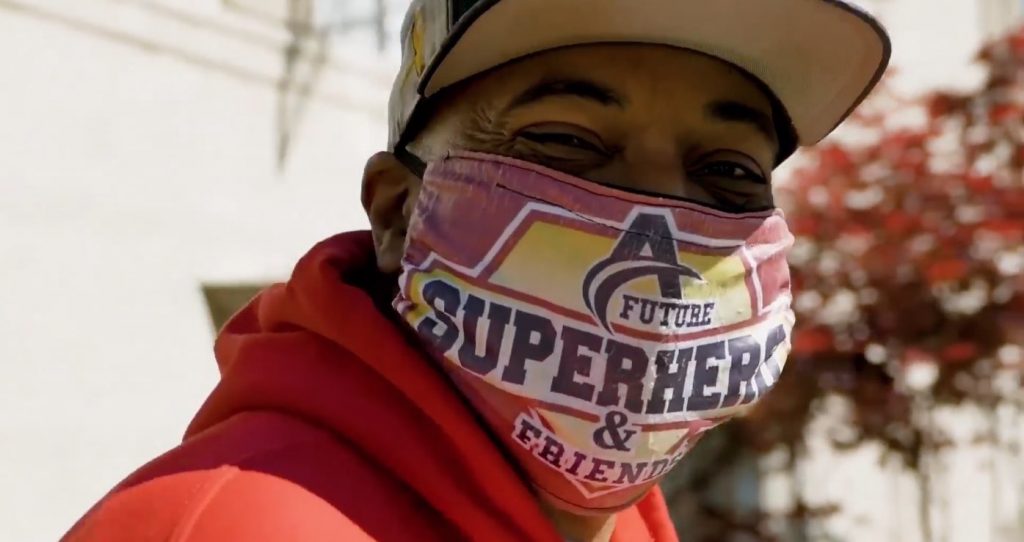




 An endearing new movement for neighborly kindness is putting a benevolent twist on the game of “Ding Dong Ditch-it.”