













An English mayor-turned-detective solved the case of a thief who was looting $9,000 worth of historic capstones from a 300-year-old stone village wall—and he used a hi-tech tracker and a little trickery.
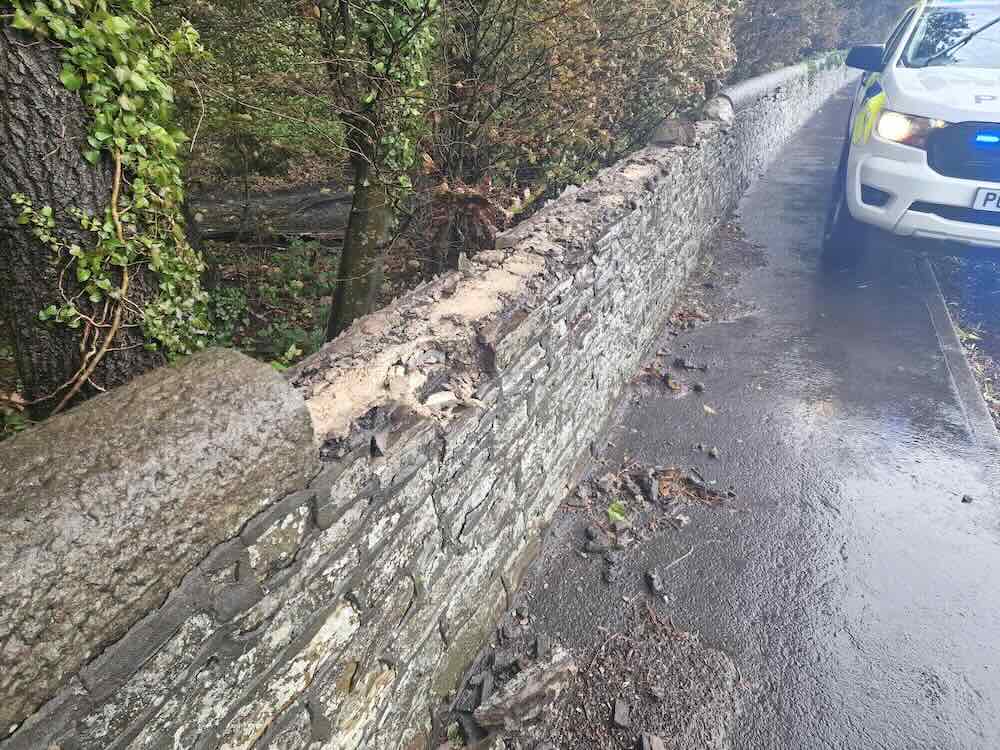
Around 30 stones went missing over a period of months from an 18th-century wall along a half-mile stretch of road leading into Rufford, Lancashire.
Lancashire Police said they were unable to help as the area had no CCTV coverage or “forensic opportunities”.
So Councillor Matt Smith and other locals decided to take matters into their own hands.
Instead of tolerating the loss, he placed an Apple AirTag inside one of the remaining stones which was already loose, hoping it would be stolen, with the GPS tracker revealing the perpetrator’s location.
“The audacity of him to steal from the community for his own personal gain,” said the 43-year-old local official. “That isn’t what we stand for.”
Worried locals noticed the wall was first attacked and stones were taken in May, with two further raids taking place in June and October.
Matt and other residents first put up signs saying “Smile, you’re on camera”, but that didn’t deter the criminal. They also thought about installing their own CCTV cameras, but it was “too expensive” for the small hamlet.
After the third attack in early October, Matt, who’s also a landscaping contractor (M.Smith Gardens & Landscapes), planted the tracker.
Within weeks, he woke up to find notifications on his phone revealing the stone had been moved overnight. He then contacted the police, passing on the whereabouts.
After the stones were found in his backyard, a 41-year-old Manchester man was arrested and sentenced.
On the scene police found a substantial number of coping stones from the vandalized wall, reportedly worth around £7,000 / $9,300—but Matt claims dozens of others were also found from across the country, making the estimated total value of up to £40,000.
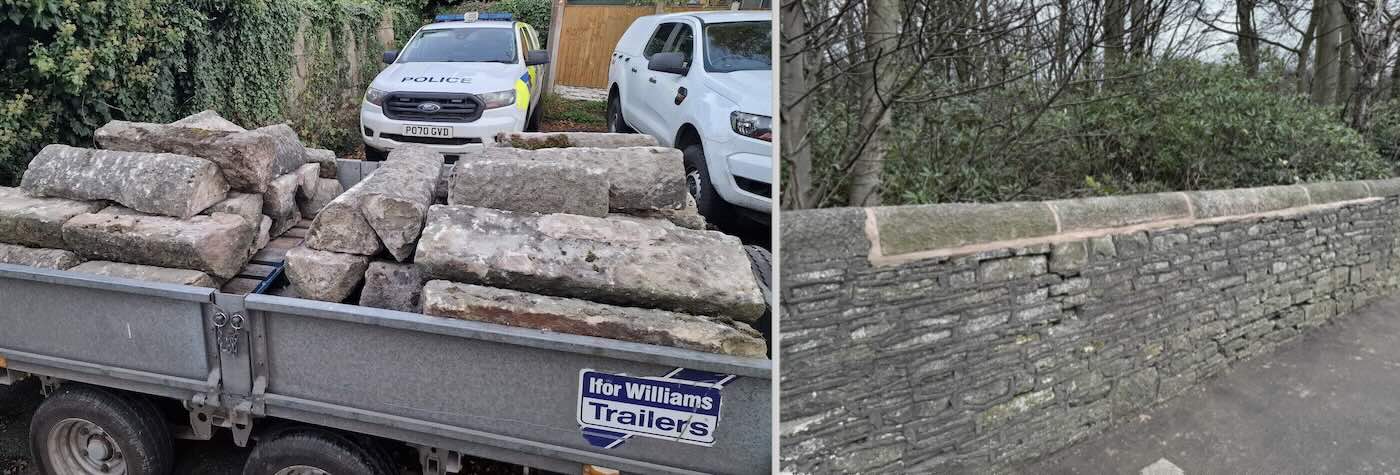
Matt said it was very satisfying that the man was “brought to justice”, and the community’s effort was well “worth it”.
The wall is thought to have been built around 1730 for the historic Grade II-listed Rufford New Hall, which was later converted into a hospital in the 1900s, and later into apartments.
“It was a great feeling to know we had found the man responsible. I’m glad we stood up, and didn’t just tolerate it.”
Mark Harrison, Head of Heritage Crime at Historic England said, “The successful return of these historic coping stones demonstrates the important contribution that local communities and the police can make to safeguard our heritage.
“Traditional stone walls are an intrinsic part of the Lancashire landscape and their protection helps to maintain its distinctive character for future generations.”
SEND THE TIP TO COMMUNITIES By Sharing the Story on Social Media…