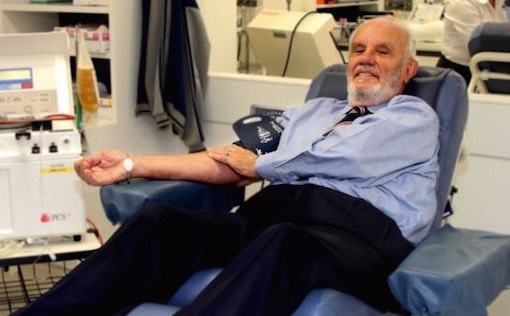
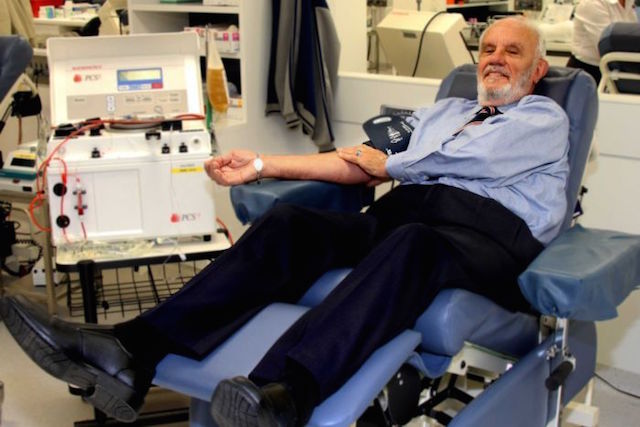
One man who was willing to share his blood has saved the lives of more than two million babies.
With his weekly donations to the Australian Red Cross for over 60 years, 78-year-old James Harrison has more than repaid a debt he felt he owed, and earned the nickname “The Man with the Golden Arm.”
In the 1960s, thousands of newborns in Australia were born with rhesus disease — a condition where the mother’s blood actually attacks the blood in the baby she’s carrying.
It was discovered that Harrison’s blood carries a rare antibody that can prevent the disease and scientists worked with him to create an injectable drug called Anti-D. The Red Cross claims Harrison’s contributions have saved the lives of 2.4 million babies — including his own grandson’s.
Researchers never would have found Harrison if he hadn’t started donating blood when he turned 18-years-old. Harrison, who lives in Australia’s Central Coast, started donating blood because donors had saved his life four years earlier when he needed 27 pints during lung surgery.
Tomorrow will mark James Harrison’s 1,106th donation, which was celebrated yesterday on World Blood Donor Day.
(READ more at ABC News) Photo: Red Cross – Story tip: Ossie Sharon
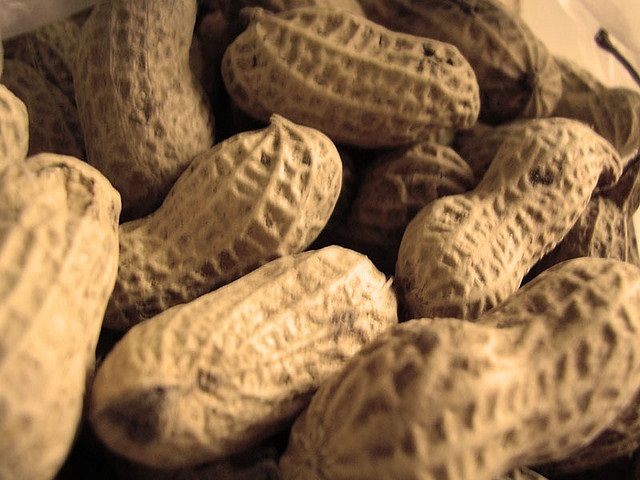
Nuts and peanuts may protect against several major causes of death, according to a study that began in 1986 involving 120,000 Dutch adults.
A paper published last week in the International Journal of Epidemiology found that people who eat at least 10 grams of nuts or peanuts daily have a lower risk of dying from a range of serious illnesses.
The reduction in mortality was strongest for respiratory disease, neurodegenerative disease, and diabetes, followed by cancer and cardiovascular diseases, according to researchers from Maastricht University in the Netherlands.
“It was remarkable that substantially lower mortality was already observed at consumption levels of 15 grams of nuts or peanuts on average per day,” said epidemiologist Professor Piet van den Brandt, the project leader. The small amount is equivalent to about half a handful.
“A higher intake was not associated with further reduction in mortality risk,” researchers said.
Peanuts and tree nuts each contain various compounds, such as monounsaturated and polyunsaturated fatty acids, vitamins, fiber and antioxidants, that could possibly contribute to lower death rates, researchers said.
However, no association was found between peanut butter intake and mortality risk. Peanut butter also contains added components like salt, vegetable oils and possible trans fatty acids. Researchers say the adverse health effects of salt and trans fats could inhibit the protective effects of peanuts.
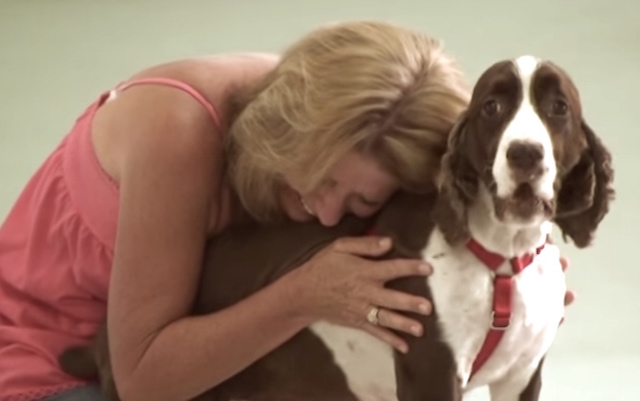
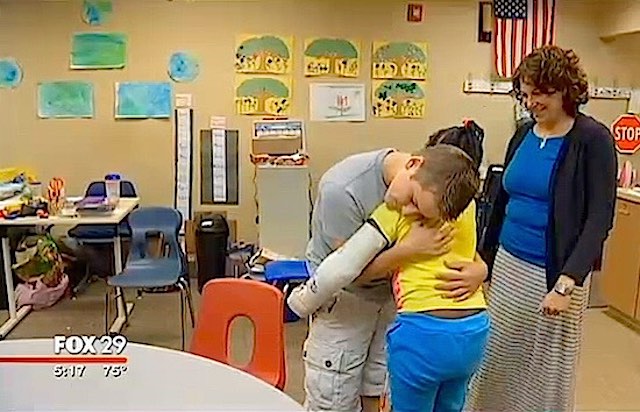
In utter amazement, a woman broke into tears when she was reunited with her dog Sammi. The once-paralyzed pooch actually walked up to her — then ran — to the therapists who rehabilitated him after surgery.
The California Animal Rehabilitation group in Santa Monica, CARE, got him back on his feet – and talked about how the pup didn’t want to lay down anymore.
The heartwarming 2008 video just resurfaced, but we are sharing now with Good News Network fans because scenes like these never get old.
(WATCH the video from CARE below) Photo: CARE video
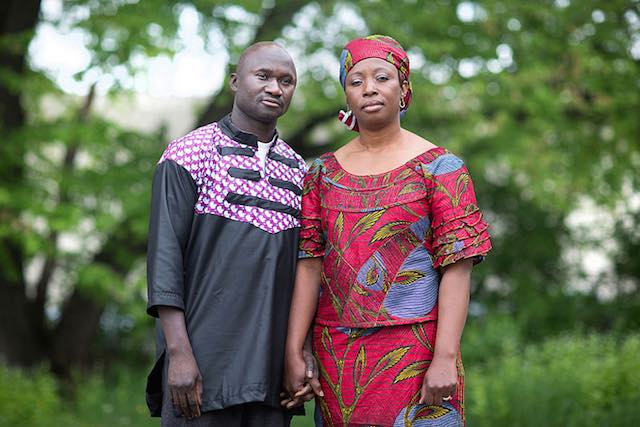
A little boy’s big dream is becoming reality, thanks to his parents and a journal found after his tragic death.
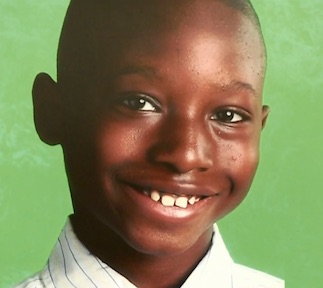
10-year-old Mohamed Fofana was killed in a landslide in 2013 during a school field trip, when part of a Mississippi River bluff collapsed at a park in Lilydale, Minnesota.
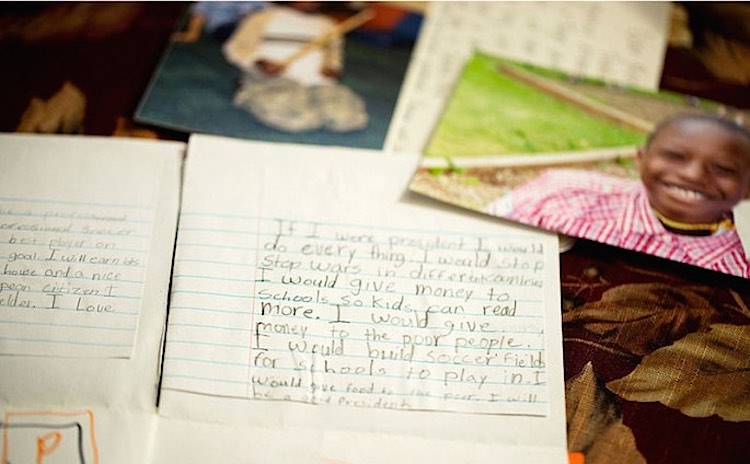
Mohamed’s mother, Madosu Kanneh, later discovered his journal, and a touching entry he had written about what he would do if he were the President:
“I would do everything. I would give money so school kids can read. And I would give money to the poor people. I would build soccer fields for schools to play in.”
“It was very heartbreaking for me,” Kanneh told KARE-11 News. “I called my husband, and I showed him this book. I said, ‘We have to work to make his dream come true.’”
Mohamed’s parents say the boy was inspired by a trip to his father’s hometown in Guinea, where he witnessed kids his age, far less fortunate – playing soccer without clothes or shoes. Inspired by his wish, his parents vowed to make something positive of their son’s death.
After receiving a settlement from the landslide tragedy, they are using their share to build a new school in Suiguiri, a small mining town in the Republic of Guinea.
The town currently has no school, so parents must send their children away if they want them educated. Below is an artist’s rendering of the new campus, for which Mohamed’s father broke ground last month and placed the first stone.
Since the family’s settlement won’t cover all the costs, they’ve set up a crowdsourcing page to raise contributions to help further fund the school in hopes that classes will start next year. More than $9,300 has been raised toward their goal of $3o,000.
The school grounds will include a library, a basketball court, and a soccer field — just as Mohamed dreamed.
(WATCH the video from KARE-11 below, or READ and Listen to the story at MPR News)
MULTIPLY the Good – Share the story, so others might help…
When a neighbor’s expensive wheelchair was stolen, Ryan Czech wanted to help — but how much of a difference can an eighth-grader make? It turns out, he was able to buy her a new chair within a single day.
His 10-year-old neighbor, Jerylyn, has Cerebral Palsy and needs a stroller-style wheelchair to get around. They’re expensive — more than $2,300.
Ryan’s mother helped him set up a GoFundMe page to raise the money and in just 24 hours, his page had raised more than enough — a total of $2,763 before the campaign was closed.
“We met our goal and Jerylyn will get her new orange wheelchair/stroller,” Czech posted on the fundraising page. “We can’t wait. Thank you again from the bottom of our hearts.”
(WATCH the WTXF News video below) — Photo: WTFX video
Raise the spirits of your friends and followers, share this story…
Looks CAN be deceiving, as you’ll see in this video, reportedly shot at Yorktown High School in New York, when a bookish nerd instantly became a high-school hero with all the right moves.
After some smooth and confident steps, one boy seems to win the dance-off in the school’s cafeteria, until an unassuming teenager in glasses wows the crowd, sending the room into a shocked frenzy.
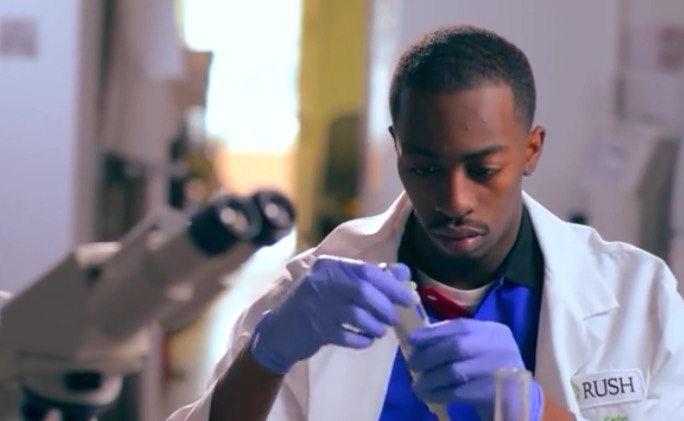
A 19-year-old Chicago teen who is very passionate about cancer research has already achieved success in a lab that might go a long way toward a vaccine for colon cancer.
While working at a Rush University lab while still in high school, Kevin created tests with an experimental colon cancer vaccine that proved 100 percent effective in tests on young mice.
“My friends, family members have died from cancer,” Stonewall, who is a rising freshman at the University of Wisconsin said in an Intel video. “A lot of people are impacted by cancer. So I felt it was my role to step up and do something about it.”
The results of his research were presented at the national meeting for the Society for ImmunoTherapy of Cancer in Washington, D.C., and he is listed as lead author.
A family from Columbus, Ohio set out to show the world that people can do anything, even despite their greatest obstacles.
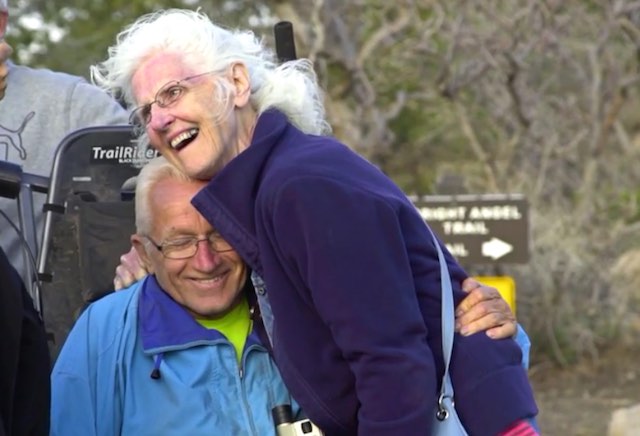
Bob Headings last hiked to the bottom of the Grand Canyon eleven years ago, one year before he fell off a ladder and became paralyzed from the waist down.
Even after the 2005 accident, Bob was a role model of perseverance and positive thinking for his three grown sons and 8 grandsons.
“When the kids say they can’t do something,” said Bob’s son, “I always tell them, ‘Go call grandpa and see what he says about CAN’T.’”
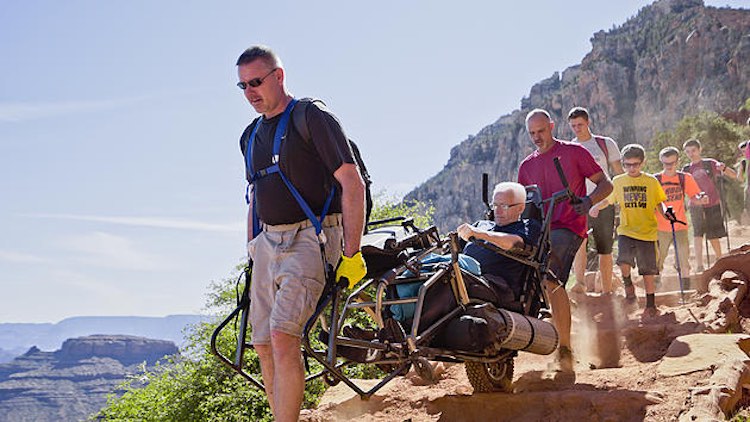
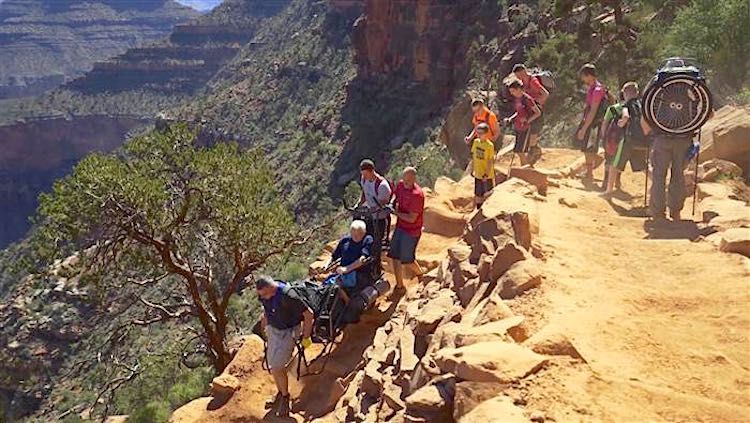
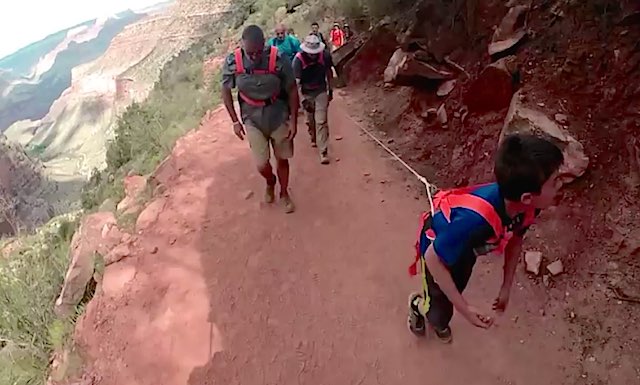
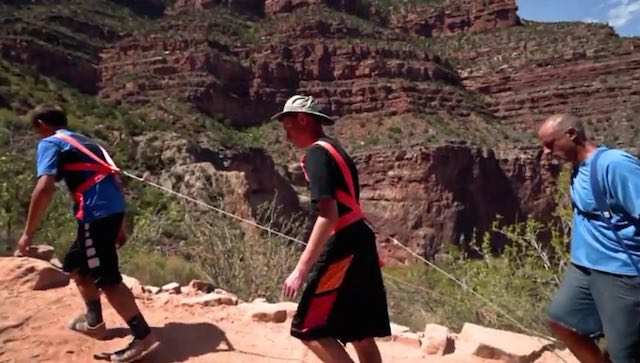
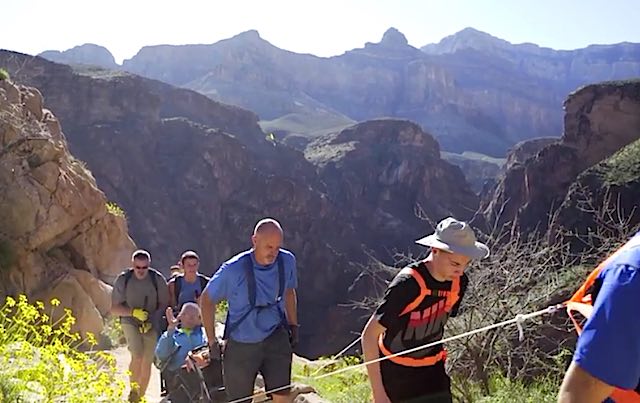
To personify that spirit of never giving up, and just in time for Father’s Day, Bob’s son, Randy, came up with the idea of a very ‘grand’ family outing. They set out to hike all the way down the Grand Canyon, 7.4 miles over rocky trails, and all the way back, towing their paralyzed father.
“It just seemed like a way for us as a family to give back to Dad,” Randy said. “A little payback to him for the investment that he put into us.”
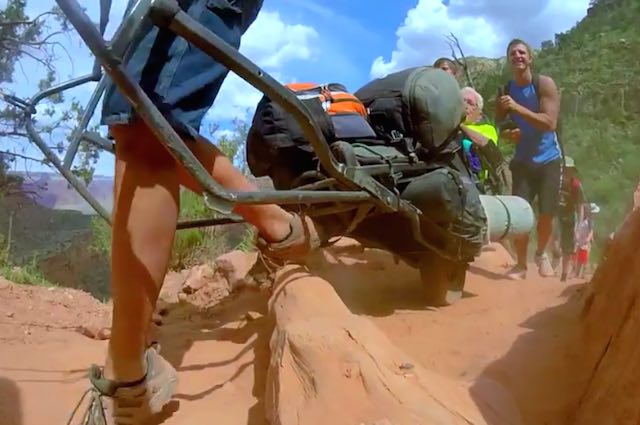
For the grandsons, it would be a lesson in endurance. The 240-pound one-wheeled Trail Rider, with long handles on the front and back had to be lifted over weathered logs more than 3,000 times.
“I think it’s something they’ll never forget,” said one of the parents.
“I kept looking back and just thinking, ‘There is no way we are going back up that,” recalls grandson Tyler Headings.
Filmmaker John Honaker, whose video company helps set up elaborate marriage proposals for people in the Columbus area, documented the trek after getting a call from the family.
Several canyon park rangers who were consulted about the hike, thought that because Bob’s transporting device used a wheel, the journey down would be really easy. In reality, Honaker said it was a huge surprise that some of the logs were two feet off the ground and once they’d lifted the chair, loaded with food and water, to clear the log, there’d be another one five or six feet away.
“In my mind it was an epic film,” Honaker told the Good News Network, “and one that I was so unprepared for.”
They had planned for one rest day at the bottom, but Honaker said the relentless Headings family “trying to give granddad that awesome experience,” would not rest. They hiked two miles down the Colorado river that day just so he could enjoy the scenery.shopp
“I didn’t think we should hike the bridge trail on our day off,” recalls Honaker. “We knew that the way down was extremely hard and it took everything we had.”
So, when badgered for his opinion, he reluctantly told them, “Honestly, it’s going to take us two days to get back up.”
After that, he could see the determination in the men to do the climb in only one. “When we set off at 6:45 that next morning, they were booking it.”
They chose the 10-mile-long Bright Angel Trail. Honaker wrote on his website, “It was inspiring to look back and see how much ground you covered, but it seemed impossible to have to keep going up. It was like it never ended.”
Hikers along the way, particularly on the journey back up – ascending the 4380-foot elevation – were brought to tears by the spectacle of dedication displayed by the 11 family members.
When Honaker climbed ahead to get some overhead shots he heard from above distant cheering. “At first I thought it was just the family (the wives waiting at the top), but it was too loud to be just them.
“All the hikers who had passed us, a whole bunch of people, were assembled and shouting encouragement.”
The 12 men and boys had been taking frequent breaks because they were so tired, but when they heard those cheers from above, they found new energy for the last mile and didn’t stop until they reached the top.
I Can’t Believe We Just Did That was chosen as the name for the 40-minute documentary.
WATCH the 5-minute video below… (Photos courtesy of John Honaker)
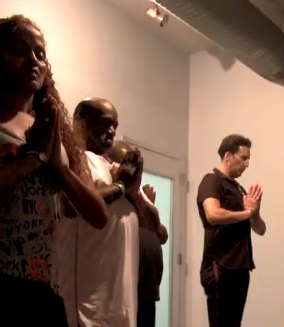
You may not know this, but a great deal of yoga is about breaking free of the stereotypes and compartments that you have agreed to fit into. Does that sound intense?
It kind of is.
Yesterday, I watched this great TED Talk with Natalia Khosla discussing how our perception of gender roles displayed through body language will determine whether a woman is a b*tch or whether a man is weak.
This is damaging to both genders and is holding back our society from bringing out the very best in collaboration, leadership, compassion, and innovation from people that have undiscovered talents and qualities, despite their gender.
This TED Talk got my wheels turning about the deeper work of a yoga practice.
At the root of yoga we are guided to contemplate one of the most profound philosophical questions known to man…
“Who am I?”
This question is in almost every spiritual text as a practice of self-actualization and discovery. Asking “who am I” begins a process of peeling away the layers of a lifetime of stacking identities and mannerisms needed to fit into society. As you peel away the layers, your true essence can be revealed.
Throughout the questioning process we can unlock and release identities and stereotypes that we’ve been trying to fit into for years, but have never really felt right.
Imagine freeing yourself from years of pain and suffering from trying to be something that you aren’t. Imagine stepping into your fullest potential with the confidence created from loving your truest self. Imagine being comfortable in your skin without ever comparing yourself to anyone else.
This is all possible and it starts with one simple question…
Who am I?
You are never too old, too young, too busy, too cool, too big, too small, or too spiritually mature to ask this question. You are ready right now.
Take a 10 minute workout for your spirit. Grab a timer, paper and pen. At the top of the paper write, “Who am I?” Start your 10 minute timer.
Answer the question for 10 minutes. At first, you will usually get the superficial answers such as your name, gender, skin color, graduate degree, career, etc. Write these down and then continue to go deeper and deeper and deeper.
This could feel like the longest 10 minutes of your life. If you get stuck, ask the question again, “Who am I?” and write the first word that comes up.
After 10 minutes – stop. Sit back, take a deep breath, and detach from the exercise.
Everything that you wrote down is how you identify yourself. These are the compartments and stereotypes that you have agreed to fit into. They may define part of who you are, but they still aren’t who you are.
Deepak Chopra believes that we should start every day with this question, perhaps to open ourselves up to more possibilities and begin to break unconscious patterns that are holding back our interconnected greatness.
Doing this work is taking yoga off of your mat and into every aspect of your life. Now is your time to be yoga, love openly, and express freely.
Thank you for reading and for doing your inner work to make our collective world a better place.
Having Asperger’s meant he didn’t know how to talk to people and had trouble making friends. He had difficulties understanding the nuances in body language and was overly sensitive to loud noises.
But on Monday at the Marysville Arts and Technology High School in Washington State, Chance Mair graduated with the 50 seniors in his class, as the class valedictorian.
In his valedictorian address–a momentous occasion for a student who was diagnosed with Asperger’s syndrome at an early age–he said:
Wherever our individual paths take us, there will be challenges. There will be people and circumstances that say, ‘No we can’t.’ It’s up to us to decide whether or not we listen to them.
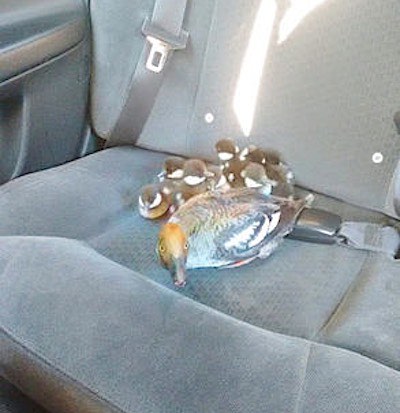
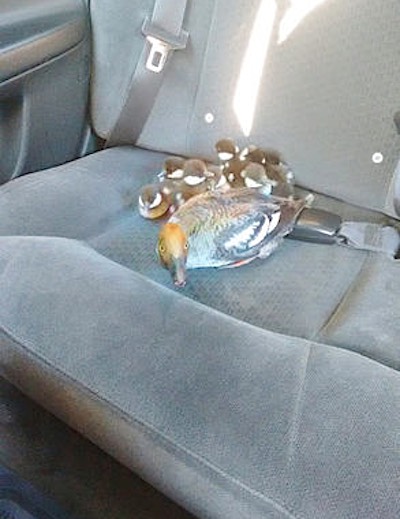
A Yellow Cab driver in Calgary, Canada is being praised for saving a mama and her nine ducklings stranded on a busy stretch of road, “corralling them into the back of his cab and shepherding them to safety at the nearby Bow River,” reports the Calgary Sun.
“The ducks had nowhere to go in the construction confusion,” said Urga Adunga, “so I decided to scoop them up and put them in my cab.”
Adunga said the mother duck sat quietly during the short trip, but wasn’t too keen on getting out.
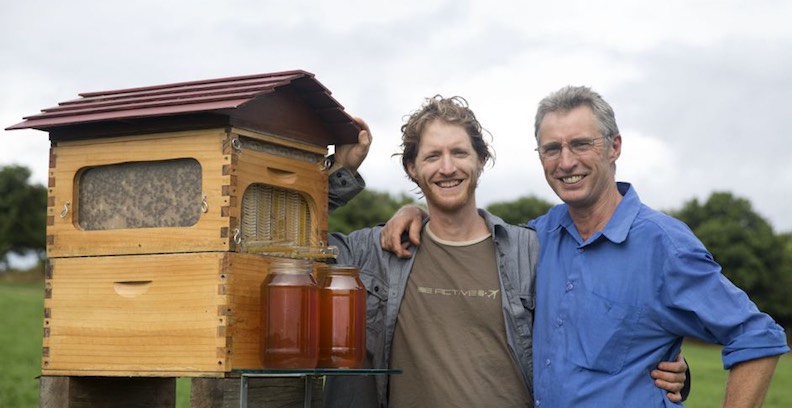
Ontario is making life sweeter for honey bees. The Canadian province will become the first jurisdiction in North America to limit bee-killing neonicotinoid pesticides starting July 1.
Neonicotinoids, a class of insecticides used on nearly all corn seeds planted in the province, have been linked to disorders in bees, birds, butterflies and other pollinators, which disrupt their abilities to navigate and reproduce. While companies that make neonicotinoids claim they’re safe, beekeepers have lost up to 58 percent of their bees in recent Ontario winters.
Organizations representing both beekeepers and farmers worked with the provincial government to craft regulations to protect pollinators, which play a crucial role in our food supply.
Under Ontario’s news rules, farmers will only be allowed to use pesticide-coated seeds on half their acreage in the 2016 planting season. And in 2017, farmers will have to prove they have pests before they can plant any of the seeds. That is expected to reduce the number of acres planted with the neonicotinoid-coated seeds by 80%.
“Farmers care about the health of pollinators. That’s why the Ontario Federation of Agriculture has worked closely with the Government of Ontario to have these new regulatory requirements work for the province’s farmers,” said Don McCabe the group’s president.
“Assuming Ontario hits its target of an 80% reduction by 2017, this will be the most important pollinator-protection policy on the continent – and a major contributor to food security,” said a statement by officials from the Canadian Association of Physicians for the Environment.
The European Commission in 2013 banned the use of three neonicotinoids on flowering plants after the European Food Safety Authority found that exposure to the chemicals created “high acute risks” to bees.
Meanwhile, the US Environmental Protection Agency is reviewing use of the pesticides after President Obama last year established a national Pollinator Health Task Force to study the causes of colony collapse disorder. Pesticides, varroa mites, viruses, and fungi all appear to contributors to the widespread death of bees. Until the study is completed, the EPA said in March, it was unlikely to approve new uses for the class of pesticides.
Other governments aren’t waiting for definitive studies. In April, the City Council of Portland unanimously approved a ban on the use of neonicotinoid insecticides on city-owned property effective immediately.
Some nail technicians in California are breathing easier, thanks to a project dedicated to clearing the air in popular “mani-pedi” salons.
The California Healthy Nail Salon Collaborative is working to offer incentives for owners who provide protections from toxic chemicals that tend to hover over acrylics and polish removers.
So far 55 salons have joined up.
Owners are recognized by the group with awards if they do things like install a ventilator and require techs to wear gloves and coats.
Lan Anh “Leann” Truong, owns a spa in Alameda, California. She was one of the first to join the collaborative.
“Before, we do the acrylic nails, artificial nails, we don’t have a machine like this,” she told PRI.
Now she has a big, black ventilator which clashes with her serene décor. But she doesn’t care about that.
The machine vacuums up the harmful particles that can get into people’s lungs. She sometimes even uses lemons, instead of hazardous liquids, to clean customers’ nails.
The California collaborative provides training and education for salon owners who want to keep employees from developing throat, nose or eye problems.
This month the US Environmental Protection Agency also got on board, committing to help implement some of the group’s practices.
Whether it’s fixing broken sanitation systems and rural wells, or diagnosing heart conditions, the winners of the 2015 Wireless Innovation Project are using mobile phone technology in extraordinary ways to help address the critical challenges facing developing countries.
Vodafone Foundation Americas yesterday presented $600,000 to the competition’s three winning tech teams to help them tackle the issues of sanitation, health, and access to clean water.
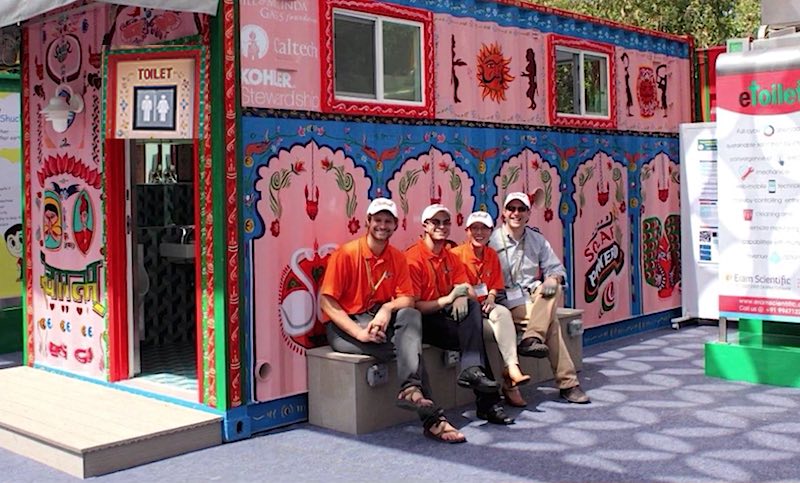
The Caltech Sanitation Project took home first prize and $300,000, for their efforts to develop a mobile-based, self-diagnosing tool for local communities to operate an efficient wastewater management system. In particular, it helps them to fix the machines locally whenever they break down.
From the California Institute of Technology in Pasadena, Professor Michael Hoffmann led the team consisting of Ph.D. candidates, Clement Cid and Cody Finke. “We noticed that technology currently being tested in India and other non-sewered sanitation technologies had been breaking. However, there is not enough skilled labor in developing countries to fix these technologies,” said Cid. “We realized that implementing new sanitation technologies at a global scale would be impossible with the current lack of system for maintenance.”
Their plan is to use the prize money to build and test prototypes in the field, first on the solar toilet installed on Caltech campus, and then in the prototypes installed in India and China. The project previously won the Gates Foundation’s Reinvent The Toilet Challenge in 2012 and continues to receive support from that Foundation for the development of their wastewater treatment system.
Second place and $200,000 went to a group hoping to create and implement a more sustainable clean-water management system for a number of communities. A recent study by the Rural Water Supply Network found that thirty-seven percent of sub-saharan African wells had failed in 2007, accounting for between $1.2 and $1.6 billion of wasted investment,
WellDone Mobile International Director Austin McGee and its CTO, Tim Burke, saw a lot of potential in the possibility of a remote monitoring technology that could provide much-needed visibility and accountability within the rural water space. WellDone spent five years, from 2007-2012, conducting fundraising and outreach for the construction of well projects in sub-saharan Africa under the name WellDone Mobile Monitor. “During our first pilot we actually brought a 3D printer to rural Tanzania to perform rapid prototyping and needs analysis within the local communities,” said McGee. “Data alone is not enough, it needs to actually go somewhere useful so that it effect positive change and increase access to clean water for the world’s poorest people.”
The prize money will be used to help the team scale up their engineering capacity and provide more communities with a well-tested product that can last for at least a decade. Ideally, they’ll be able to turn their venture in a full-time sustainable business.
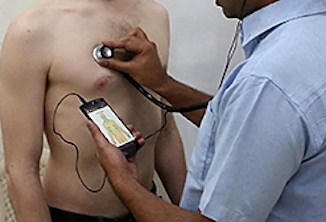
Last but not least, Mobile Stethoscope Diagnostics took home $100,000 and a third place title. The organization, known as D-lab, is the only research lab at MIT that is exclusively dedicated to frugal design and technology development for international development. “There are only about a dozen pulmonary testing labs available for the entire one billion people living in India, not to mention a severe shortage of trained pulmonologists, so people are always looking for better tools,” said Rich Fletcher, the Research Scientist at MIT who developed the project along with fellow RA Daniel Chamberlain.
The prize money will be used to fund a clinical study in India, which will be the world’s first comprehensive study of a mobile platform for diagnosing pulmonary disease.
HEAR from the teams in the video below… Photo credit: Seva Sustainable Sanitation, Calif Institute of Technology
The number of homeless people in Houston, Texas, has been cut almost in half over the past four years, as the city’s homeless advocates push to bring the number to zero.
“We have truly gone from managing homelessness to ending homelessness,” said Marilyn Brown, CEO of the Coalition for the Homeless of Houston/Harris County in a statement. “We are just getting our second wind.”
Houston has taken sweeping steps to alleviate the condition, including a new plan in 2012 that added more than 250 new available housing units. More than 1,000 additional units are planned, and the number of homeless shelters has increased. The efforts have delivered housing to more than 3,600 homeless veterans.
The Coalition reported the number of homeless folks dropped from 8,538 in 2011 to 4,609 this year — a 46% decrease.
The city wants to end all chronic homelessness by the end of 2015 – defined as being without a home for a year or without housing four times in three years, often coupled with a disability.
City leaders also believe they are within reach of ending youth and family homelessness in Houston by 2020.
(READ more at Essence) – Photo by Katie Haugland, CC
Bring this story home to your friends and followers…
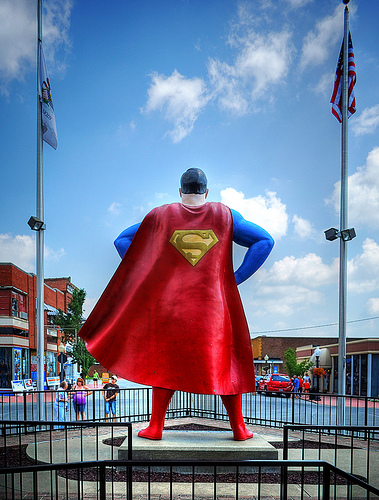
The good citizens of Metropolis this week are celebrating that champion of “truth, justice and the American way” — Superman – because DC Comics designated the Illinois locale as the hometown of the Man of Steel.
Their 43rd annual, four-day “Superman Celebration” started Thursday, June 11, and features a costume contest, film festival, and superhero tug-of-war pitting Superman fans against Batman fans. Adding to the fun, participants eat gelatin made to look like Superman’s weakness, Kryptonite.
In 1972, city leaders convinced DC comics to declare Metropolis the “Hometown of Superman.” Since then, this real-life Metropolis, which looks as tiny as Superman’s boyhood town of Smallville, swells in population from 6,500 to nearly 50,000 every year during the festival.
The town has erected a statue to honor their homeboy (pictured, right and above) and opened a museum that displays props from his movies and the TV series, and has collected just about every Superman toy ever produced.
While Superman’s alter ego, Clark Kent, and his love interest, Lois Lane, work for the Daily Planet, the Metropolis newspaper is the weekly Planet – and in the 1990s, had both a Lois and Clark on their small staff.
A volunteer on beach patrol who was looking for sea turtles, instead found a bag of money — and launched a week-long search to find its owner.
Meanwhile, a homeless man who’d received an inheritance from a relative, was hoping to use the cash to return home to friends and family in Pennsylvania.
The bag, discovered at a Florida bus stop bench, only contained half of his inheritance. A deputy sheriff spotted the other bag and together they contained nearly $10,000.
Police believed it belonged to the same person, but finding him would take some detective work.
A receipt in one of the bags led them to a shopping mall. Security camera footage from one of the stores gave them a picture of who they were looking for — a homeless man police identified as “Joe.” But after days of searching, Detective Danny Mursell still couldn’t find him.
A week after the money was lost, and while Mursell was working on something else, he just happened to spot Joe drinking coffee and reunited him with his traveling money.
(WATCH the video below from WFOR News) – Photo by 401(K) 2013, CC
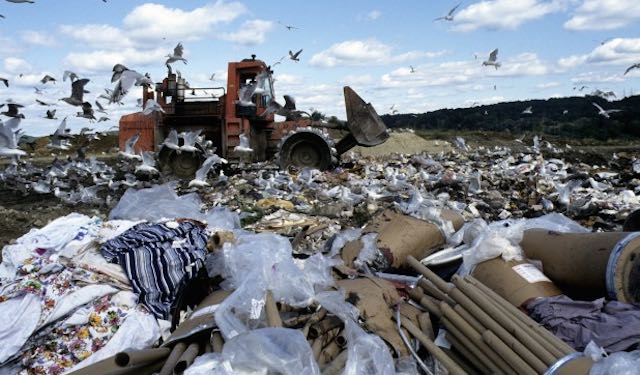
How can we possibly move to a “Zero Waste” society when, worldwide, we are currently dumping hundreds of millions of tons into landfills every year?
A few places can give us hope that maybe the goal is not so far out of reach.
On three different continents, special measures are being implemented to bring us one step closer to living on a no-waste planet.
San Francisco, California
San Francisco has promised to divert 100% of its waste from landfills by 2020.
Thanks to policies that create a culture of recycling and composting, including bonus incentives for residents who skip waste collection days, the city has the highest diversion rate of any major city in North America, with 80% of its trash being recycled, according to SF Environment.
The city uses a 3-bin system, where homeowners and businesses separate their waste into blue bins for recyclables, green bins for compostables, and black bins for landfill-bound material.
Sweden (Cities Big and Small)
Sweden’s approach to zero waste is a bit different– but has become the most successful example in the world.
The country uses trash for fuel, burning about 2 million tons of garbage each year in waste-to-energy plants. These plants, while heating the nation, have also managed to cut their emissions by 99% since 1985, according to officials at Swedish Waste Management.
Less than 1% of Sweden’s household garbage ends up in landfills today. In fact, Sweden has become so efficient at recycling and reducing waste that they’re actually importing garbage from neighboring countries to supply their fuel needs.
Buenos Aires, Argentina
Recycling works in Buenos Aires because of the cartoneros, or waste pickers, who sort through trash in the streets. In the last decade, these impoverished workers have organized into cooperatives and are now working in city-built warehouses where the conditions are clean and safe – much like the waste pickers in Bangalore, India.
Despite some setbacks, the city is once again on track to meet its target goals of diverting 75% of waste from landfills by 2017 and 100% by 2020, according to an online report by Citiscope.
Capannori, Italy
A small town in Italy is leading the way in Europe’s continent-wide, zero-waste initiative. Back in 1997, local activists proposed a tax that would be waived for residents who could reduce their non-recyclable waste.
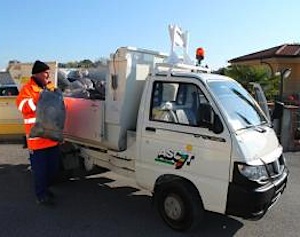
By 2010, other rural villages in Tuscany had followed Capannori’s lead by instituting a new ‘Pay as You Throw’ waste tax, where people were given garbage bags with codes on them to track each household’s waste production. According to Zero Waste Europe, the new fee prompted recycling rates to reach up to 90%.
Capannori officials expect to attain their goal of zero-waste by 2020. The original model for their effort? San Francisco.
(READ more at Fast Company) – Photo (top) United Nations, epSos.de, CRI Video (CC)
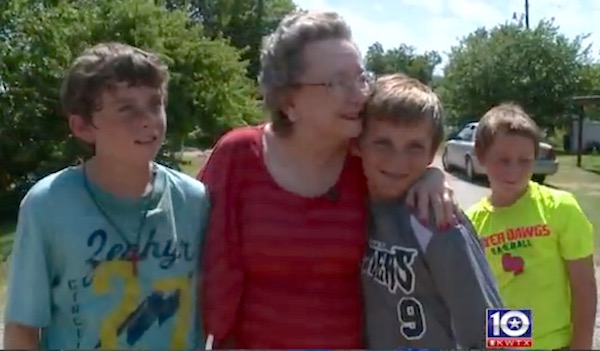
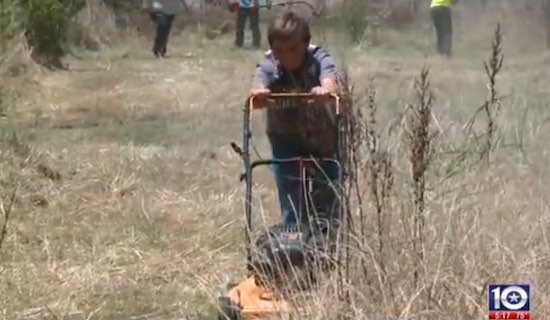
Four brothers loaded up their mowers to help a stranger after hearing about an elderly woman who was in trouble with the law because her grass was too high.
It was a sweltering hot Texas day, but that didn’t deter the four Reynolds boys from pushing mowers through waist high grass over more than an acre of property she owns in Riesel.
“We haven’t met her yet but she’s 75 years old and she needs some help mowing,” Blaine Reynolds told KWTX News. “That’s the least we could do.”
“I really wouldn’t want her coming out here and doing it or paying someone else to when we could have just done if for free,” Brandon Reynolds added.
When Gerry Suttle saw what they’d done she was speechless, and hugged their sweaty frames with thanks.
A warrant had been issued for her arrest after she failed to appear in court for violating the law that restricts grass to 18 inches high. She said she never received the summons to appear and will be trying to reverse the warrant.
We think these boys should be issued a citation, too, for outstanding community service.
When small talk accidentally brought up a family tragedy, a waitress touched the hearts of her customers who later spread the news about her good deed.
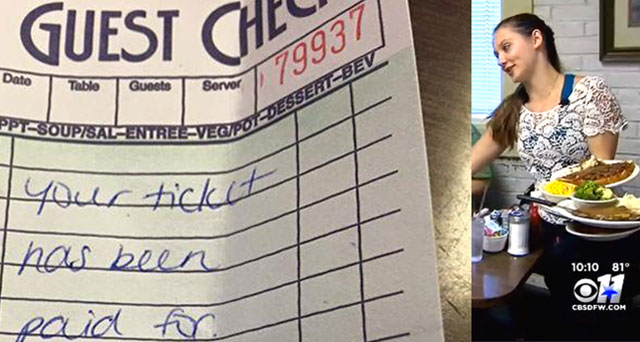
Waitress Kayla Lane recognized two regular customers of the West Side Cafe in Fort Worth, Texas, and asked them about their newborn daughter. The couple told her their baby passed away at just nine-days-old.
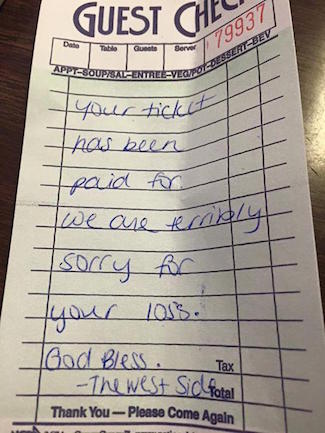
Lane felt terrible, and at the end of the meal, handed them a note that read: “Your ticket has been paid for. We are terribly sorry for your loss. God Bless. – The West Side.”
Even though she told Shaun and Debbie Riddle the restaurant had paid for their meal, it was Lane, herself, who picked up the check.
It was a simple act, but the Riddles say it touched them deeply in a time of grief.
It’s touched other people, too. Debbie Riddle posted the story to her Facebook page and it’s been shared more than 10,000 times.