











Quote of the Day: “The pen is the tongue of the mind.” – Horace
Photo by: Aaron Burden
With a new inspirational quote every day, atop the perfect photo—collected and archived on our Quote of the Day page—why not bookmark GNN.org for a daily uplift?




Quote of the Day: “The pen is the tongue of the mind.” – Horace
Photo by: Aaron Burden
With a new inspirational quote every day, atop the perfect photo—collected and archived on our Quote of the Day page—why not bookmark GNN.org for a daily uplift?

40 years ago today, treasure hunter Mel Fisher and his crew discovered part of the 1622 Spanish galleon wreck, the Nuestra Señora de Atocha, 40 miles off Key West, including an estimated $450 million motherlode that included 40 tons of gold and silver, 114,000 Spanish silver coins known as “pieces of eight”, Colombian emeralds, gold and silver artifacts, and 1000 silver ingots. READ more from on this day… (1985)


Last week, the nation’s largest nonprofit focused exclusively on senior dogs announced it is awarding a record-breaking $1.57 million in grants to 119 animal welfare groups in United States.
“If 50 is the new 30 for humans, why not for our older best friends?” asked the director of the Grey Muzzle Organization.
“Senior dogs have so much life to live, and love to give, yet they’re often the last to be adopted and the first at risk when shelters run out of space,” said Denise Fleck.
The grant recipients in 33 states can now fund medical and dental care, adoptions, foster and hospice programs, and the resources that keep senior dogs in the homes they love.
Most senior dogs entering animal shelters are in need of medical attention. Now, dogs like Maya will find love and a soft landing, thanks to Grey Muzzle.
For 10 years, Maya (pictured, above) was bred repeatedly, and confined in a cramped pen. Finally rescued, but at risk of euthanasia due to overcrowded shelters, she was saved by a pet sanctuary in Arizona, thanks to this nonprofit’s funding for aging dogs.
“I am so excited that her story is getting out there to help raise awareness about senior dogs,” says Caroline Mirtich, Maya’s new mom.
Since 2008, The Grey Muzzle has provided $7.3 million in grants to support senior dogs across the U.S.

Two of the grant recipients this year are The Golden Bark Foundation that rescues senior dogs in Utah, and Czar’s Promise, founded in honor of a Great Pyrenees, to help families facing a pet cancer diagnosis.
Founded in 2022 and run entirely by volunteers, The Golden Bark provides safe, loving foster homes where dogs can heal and enjoy comfort in their final chapter. Their grant from The Grey Muzzle will support its dental care program—their largest medical expense—because 80% of their elder dogs suffer from painful dental disease.
The new funding will enable the group to place more senior dogs into loving retirement homes.
DOGGIE HEROES:
• Missing Toddler Who Walked 7 Miles Alone Through Wilderness Led to Safety by Rancher’s Dog
• How Valerie the Weiner Dog Survived 18 Months in the Australian Bush to Make it Home
In another example, Czar’s Promise has funded care for hundreds of dogs with cancer that reside in Wisconsin and nearby states. The Grey Muzzle is funding chemotherapy and radiation for these dogs aged 7 and older, helping to extend precious time with the families they cherish.
See a complete list of Grey Muzzle’s 2025-26 grantees on their website.
SUPPORT THE PAWESOME SENIORS By Sharing This on Social Media…


The video is harrowing.
Smoke was billowing outside a Paris apartment window. Fire was raging inside. Two adults and four children were trapped.
Fousseynou Cissé never hesitated once he saw them —even though the only escape route was a narrow ledge 65 feet in the air. (Watch the video below…)
The 39-year-old who works as a receptionist at a secondary school, stepped out onto the ledge from an adjacent apartment, moving within an arm’s length of the blazing apartment window.
From there, a mother passed a tiny baby in a diaper to Mr. Cisse on the ledge, who then handed the baby to a friend inside the neighboring apartment, safely away from the fire.
A similar scene repeated as Cisse helped five more people move across the ledge before he himself climbed to safety.
A spectator recorded the whole thing and posted it online. And it didn’t take long for Cisse’s heroism to go viral on French TV and social media…
French President Emmanuel Macron invited Mr. Cissé to be a guest of honor at France’s Bastille Day parade last week, and Paris Police Chief Laurent Nuñez made plans to award the hero with a ceremonial medal for his courage and devotion.
MORE NEWS FROM FRANCE: Archaeologists Stumble Onto Sprawling Ancient Roman Villa During Construction of a Road in France
The entire city declared him a hero – and yet Cisse still found room for humility.
“I went on instinct,” he said in an article by the Washington Post. “It’s the heart telling you, ‘No, you have to go.’”
Once the smoke subsided and the facts emerged, Cisse’s brave deed became even more clear. According to news reports, Cisse is an immigrant who has not yet earned French citizenship, but owns a residency permit that allows him to work. The baby he rescued was reportedly just a month old. Another child was only one.
In all, six lives were saved (four children and two adults) thanks to the courage that sent Cisse out onto the ledge 65-feet above ground, with fire raging just next door.
ALSO WATCH THIS: Hero Tells Mom on Burning 3rd Floor: ‘Drop the baby, I am going to catch her’
“I was facing a void from the sixth floor where I could fall,” Cisse told the Washington Post. “It wasn’t easy, so afterward, given the seriousness [of the situation], I felt happy. Saving a life, even if it’s just one person, but especially several people at the same time, is something magnificent.”
SHARE THIS STORY WITH ONE OF YOUR OWN HEROES ON SOCIAL MEDIA…


In a development that could reduce the emissions that exacerbate humanity’s climate crisis, an international team of engineers may have created the whitest coating yet—with the help of artificial intelligence.
Their new thermal coating could reduce energy bills significantly by keeping buildings cooler, according to research from the University of Texas-Austin, National University of Singapore, Shanghai Jiao Tong University, and Umea University in Sweden.
Their AI approach for creating complex materials that are ‘three-dimensional thermal meta-emitters’ resulted in 1,500 different materials that can selectively emit heat at various levels and in different manners—making them ideal for energy efficiency through more precise cooling and heating.
“Our machine learning framework represents a significant leap forward in the design of thermal meta-emitters,” said Professor Yuebing Zheng, in the Texas school’s mechanical engineering department, and co-leader of the study published in Nature.
“By automating the process, we can create materials with superior performance that were previously unimaginable.”
The team fabricated four materials and verified the effectiveness of one of the materials by applying it to a model house, and comparing its cooling effect to commercial paints.
After a four-hour midday exposure to direct sunlight, the meta-emitter-coated building roof came in between 5 and 20 degrees Celsius cooler, on average, (between 9° and 36° Fahrenheit cooler) than the ones with white and gray paints, respectively.
The researchers estimated that this level of cooling could save the equivalent of 15,800 kilowatts per year in an apartment building in a hot climate like Rio de Janeiro or Bangkok. A typical air conditioning unit uses about 1,500 kilowatts annually.
A RACE TO COOL THE WORLD:
• This Paint is So White it Reflects Heat So Humans Don’t Need as Much Cooling
• Coating Buildings With Perdue University Paint May Cool Them and Reduce the Need for AC
However, the applications go beyond improving energy efficiency in homes and offices. Using the machine learning framework, the researchers developed seven classes of meta-emitters, each with different strengths and applications.
Thermal meta-emitters could be deployed to mitigate the urban heat island effect—which is due to a lack of vegetation and high levels of concrete—by reflecting sunlight and emitting heat in specific wavelengths.
In outer space, these materials could be useful in space to manage a spacecraft’s temperature by reflecting solar radiation and emitting heat efficiently.
ASPHALT ANSWER: Innovative Paint Cools Down the School Playground By 12 Degrees: ‘I don’t feel like I’m in an oven’
Beyond the applications in this research, thermal meta-emitters could become a part of many things we use daily. Integrating them into textiles and fabrics could improve cooling technology in clothing and outdoor equipment. Wrapping cars with them and embedding them into interior materials could reduce the heat that builds up when they sit in the sun.
The painstaking traditional process of designing these materials has held them back from mainstream adoption, due to their three-dimensional complexity, limiting the outcomes to simple geometries such as thin-film stacks—with the performance coming in short on some measures.
“Traditionally, designing these materials has been slow and labor-intensive, relying on trial-and-error methods,” said Zheng in a media release. “This approach often leads to suboptimal designs and limits the ability to create materials with the necessary properties to be effective.”
“Machine learning may not be the solution to everything, but the unique spectral requirements of thermal management make it particularly suitable for designing high-performance thermal emitters,” said Kan Yao, a co-author of this work and a research fellow in Zheng’s group.
INSPIRE THE NEXT GEN OF ENGINEERS By Sharing This on Social Media…

Our partner Rob Brezsny, who has a new book out, Astrology Is Real: Revelations from My Life as an Oracle, provides his weekly wisdom to enlighten our thinking and motivate our mood. Rob’s Free Will Astrology, is a syndicated weekly column appearing in over a hundred publications. He is also the author of Pronoia Is the Antidote for Paranoia: How All of Creation Is Conspiring To Shower You with Blessings. (A free preview of the book is available here.)
Here is your weekly horoscope…

FREE WILL ASTROLOGY – Week of July 19, 2025
Copyright by Rob Brezsny, FreeWillAstrology.com

CANCER (June 21-July 22):
Ancient beekeepers in Anatolia carved hives directly into rock faces, coaxing honey from the cliffs. This practice was designed to protect bees from harsh weather and predators while maximizing honey production. The bees adapted well to their unusual homes. I suspect, Cancerian, that in the coming weeks, your sweetness and bounty may also thrive in unlikely structures. It could take a minute or two for you to adjust, but that won’t be a problem. Your nectar-making instincts will guide you. So I advise you not to wait for the perfect container before beginning your work. Make honey in the best available setting.

LEO (July 23-Aug. 22):
I laughed until I sobbed as you earnestly played the game of love even after the rules had changed. I sighed till I panted as you dredged up a new problem to avoid fixing an overripe hassle. I rolled my eyes until I got dizzy as you tried to figure out the differences between stifling self-control and emancipating self-control. But all that’s in the past, right, Leo? Now I’m preparing to cheer until my voice is raspy as you trade in a dried-up old obsession in favor of a sweet, fresh, productive passion—and outgrow all the fruitless nuisances.

VIRGO (Aug. 23-Sept. 22):
The ancient scribes of Mesopotamia etched records onto clay tablets with styluses, pressing wedge-shaped marks into wet earth. Once baked, these tablets endured for thousands of years. Some are still readable today. In my astrological assessment, Virgo, you are undergoing a metaphorically comparable process. Messages and expressions that are forming within you are meant to last. They may not win you immediate attention and applause. But you already suspect how crucial they will be to both your own future and the destinies of those you care for. Be bold, decisive, and precise as you choose your words.

LIBRA (Sept. 23-Oct. 22):
Is there any aspect of your life or character that is still unripe even though it is critical to your life-long journey? Have you held on to your amateur status or remained a bit dilettantish beyond the time when you might have progressed to the next highest level? Are you still a casual dabbler in a field where you could ultimately become masterful? If you answered yes to these queries, now is a perfect moment to kick yourself in the butt and leap to the next level. Waiting around for fate to kick your butt would be a mistake.

SCORPIO (Oct. 23-Nov. 21):
Many astrologers rightfully say that Virgo is the most detail-oriented, meticulous sign. I think you Scorpios may be the most methodical and thorough of all the signs, which means that you, too, can be meticulous and detail-oriented. A prime example is the Scorpio sculptor Auguste Rodin (1840–1917). Eventually, his work became world-renowned, but his career developed gradually because of his painstaking patience and scrupulous devotion to excellence. I propose we make him your role model for now. Inspired by him, resist pressure for immediate results. Trust in the slow, steady refinement process.

SAGITTARIUS (Nov. 22-Dec. 21):
Here are half of your words of power for the coming days: windfall, godsend, and boon. The other half are potion, remedy, and healing agent. If you’re lucky, and I think you will be, those terms will blend and overlap. The blessings that come your way will be in the form of cures and fixes. I’m being understated here so as to not sound too wildly excited about your immediate future. But I suspect you will wrangle at least one amazing victory over hardship. Your chances of a semi-miraculous visitation by a benevolent intervention are as high as they have ever been.

CAPRICORN (Dec. 22-Jan. 19):
The ancient Chinese character for “listening” contains symbols for ears, eyes, and heart. I interpret this to signify that it’s not enough to seek the truth with just one of your faculties. They must all be engaged and working together to get the full story. You are wise to survey the world with your whole being. Keep these meditations in mind during the coming weeks, Capricorn. Your natural inclination is to be practical, take action, and get things done. But for now, your main superpower will be listening to everything. So my advice is to listen with your skin. Listen with your breath. Listen with your gut. Let your attention be so complete that the world softens and speaks to you about what you really need to know.
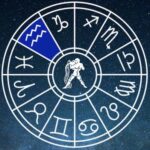
AQUARIUS (Jan. 20-Feb. 18):
If you would like to glide into rapt alignment with astrological rhythms, give gifts to your two closest allies. These offerings should inspire their ambitions, not indulge their cravings to be comfortable. They shouldn’t be practical necessities or consumer fetishes, but rather provocative tools or adult toys. Ideally, they will be imaginative boons that your beloved companions have been shy about asking for or intriguing prods that will help beautify their self-image. Show them you love both the person they are now and the person they are becoming.

PISCES (Feb. 19-March 20):
Piscean photographer Ansel Adams is so renowned that he’s in the International Photography Hall of Fame. We know the moment that his lifelong passion erupted. At age 14, his family gave him a simple camera and took him to Yosemite National Park in California. “The splendor of Yosemite burst upon us, and it was glorious,” he wrote later. “One wonder after another descended upon us. A new era began for me.” In the coming months, I foresee you encountering a comparable turning point, Pisces—a magical interlude awakening you to a marvel that will become an enduring presence in your life. Be alert for it. Better yet, declare your intention to shape events to ensure it happens and you’re ready for it.

ARIES (March 21-April 19):
For the Dagara people of Burkina Faso, the element of fire has profound cultural meanings. It’s a symbol of innovation and inspiration. It’s a mediator between the physical and spiritual worlds and a conduit for communication with the ancestors. Through rituals, fire is a purifying and renewing force that helps people reconnect with their purpose, heal relationships, and catalyze positive change in the community. In the coming weeks, Aries, I hope you will be deeply aligned with all these symbolic meanings. What are you ready to ignite for the sake of nurturing and care? What truths need light and heat? What future visions would benefit from surges of luminosity?

TAURUS (April 20-May 20):
In the Nahuatl language spoken by Indigenous Mexicans, the word nepantla describes an in-between space. It’s a liminal threshold where a transition is in process. The old ways have fallen away, but the new ways are not yet fully formed. It’s unsettling and perhaps confusing, yet seeded with the potential for creative change. I suspect you are now in a state resembling nepantla, Taurus. Please understand that this isn’t a crisis. It’s a chrysalis. Any discomfort you feel is not a sign of failure, but a harbinger of the wisdom and power that will come by molting the identity you have outgrown. I hope you will honor the rawness and speak tenderly to yourself. You are not lost; you are mid-ritual.

GEMINI (May 21-June 20):
The sea slug Elysia chlorotica is a small, unassuming creature that performs a remarkable feat: It eats algae and steals its chloroplasts, then incorporates them into its own body. For weeks afterward, the slug photosynthesizes sunlight like a plant. I believe, Gemini, that you are doing a metaphorical version of this biological borrowing. Some useful influence or presence you have absorbed from another is integrating into your deeper systems. You’re making it your own now. This isn’t theft, but creative borrowing. You’re not copying; you’re synthesizing and synergizing.
WANT MORE? Listen to Rob’s EXPANDED AUDIO HOROSCOPES, 4-5 minute meditations on the current state of your destiny — or subscribe to his unique daily text message service at: RealAstrology.com
SHARE The Wisdom With Friends Who Are Stars in Your Life on Social Media…

Quote of the Day: “People are trapped in history and history is trapped in them.” – James Baldwin
Photo by: kevin turcios
With a new inspirational quote every day, atop the perfect photo—collected and archived on our Quote of the Day page—why not bookmark GNN.org for a daily uplift?


On this day 153 years ago, records reveal that the first Men’s Singles championship was played at the All England Lawn Tennis Club at Wimbledon. It would eventually become the world’s most celebrated tennis championship, known as one of the four “Grand Slams” in the international season. A 27-year-old named Spencer Gore was the first lawn tennis champion in England, beating William Marshall 6-1, 6-2, 6-2. READ a little more… (1877)


Power tools, cars, heavy machinery, office supplies, schools supplies—even land, there’s all kinds of things on the virtual auction block of Municibid.
This ‘eBay for government,’ is allowing state, county, and municipal governments to sell off valuable assets and supplies to reduce waste and invest back into the community.
All proceeds made on Municibid sales go back into the government’s operating budgets, ensuring tax dollars remain hard at work, and unnecessary waste remains out of the landfills.
Currently some 7,000 government entities at various levels use Municibid to sell off surplus—much of it the kinds of things you’d imagine a government to have, like cars, snow plows, desks, and land, but CEO and Founder Greg Berry says he’s seen electric guitars, jewelry, and sailboats.
Berry, a former councilman in Pottstown, Pennsylvania, said that the process of closed bidding at city hall for surplus government items was intimidating and far from fair in either direction.
“No one knew what the governments were selling, and if they did, the process was super inconvenient and intimidating and just wasn’t very easy,” Berry told CBS Pittsburgh.
CBS’ Meghan Schiller said she learned it was a popular place for parents to find their children’s first car, as old Ford police vehicles are often sold for cut rates because of how much time the engine has idled.
While mostly concentrated on the Mid-Atlantic coastline, government agencies in 17 states have so far signed up to use Municibid.
“We have realized hundreds of thousands of dollars funneled back into the District’s operating budgets, have saved thousands on hauling (dumping) fees, and have kept tons of surplus out of the landfills!” said Beth Showalter the Secretary of the Treasury for Upper Bern Township in Barks County, PA.
CHECK It Out Online And Share It With Your Friends Who Love A Bargain…


The Prince of Darkness made his official curtain call recently with a benefit concert for Parkinson’s research and children’s hospitals that raised a staggering $190 million.
Featuring a star-studded lineup of heavy metal greats, and culminating in Black Sabbath’s final performance, the concert was livestreamed by millions around the world after tickets for the Birmingham show sold out in just 16 minutes.
Rage Against the Machine’s guitarist Tom Morello served as the music director for an event he hoped would be remembered for all time. The mountain of proceeds went to Cure Parkinson’s (which Osbourne, 76, suffers from), Birmingham Children’s Hospital, and Acorn Children’s Hospice.
Following performances from heavy metal stars Mastodon, Anthrax, Lamb of God, Alice in Chains, Pantera, Tool, Slayer, Guns N’ Roses, Metallica, and two different supergroups composed by Morello that included members of Aerosmith, Judas Priest, Blink 182, Red Hot Chili Peppers, Soundgarden (and many others), Black Sabbath took the stage with the Parkinson’s-stricken Osbourne seated on a black throne.
It was the first time since 2005 that the original line-up of the band (Osbourne, Tony Iommi, Geezer Butler, and Bill Ward) had performed together live.
“THANKYOU @ozzyosbourne for trusting me to be the Musical Director of the ‘Back to the Beginning’ show,” Morello shared on his Instagram post. “It was over a year of hard work but heavy metal was the music that made me love music and it was a labor of love.”
Osbourne was likewise retrospective and sentimental in his thoughts about the show.
“It’s my time to go back to the beginning … time for me to give back to the place where I was born,” Osbourne said in a statement when announcing the show in February. “How blessed am I to do it with the help of people whom I love.”
HEAVY METAL HEADLINES:
Despite the Parkinson’s, Osbourne sang a 9-song set, rising from beneath the stage upon a bat-shaped throne, fully embodying his moniker as the Prince of Darkness.
“It’s so good to be on this f—ing stage, you have no idea,” the legendary rocker said at the onset, according to Variety. “Let the madness begin!”
SHARE The Story Of The Curtain Call Of This Legendary, Pioneering Musician…


In 1966, the Beatles perched in the boughs of a giant cedar for the music video of their song, Rain.
Now, the tree has another claim to fame—a finalist in the UK’s Tree of the Year Contest.
Rightly nominated under this year’s theme of being “Rooted in Culture,” the Beatles’ Lebanese Cedar in Chiswick House and Gardens was planted in 1720. Queen Victoria, the Tsar of Russia, and the Shah of Persia have been among the admirers to predate the Fab Four.
The cedar’s vast boughs swoop down to brush the ground, creating an interesting spot for the band to sit and play their guitars on Rain. This shot was also used as the cover for their Nowhere Man EP.
Woodland Trust, which organizes the annual competition, uses cultural references from as far back as the 16th century, to as recently as a 2011 Radiohead album.
In a nod to the 16th century, it’s Bradgate Park’s oldest oak, a gnarled ancient whose crown was allegedly pruned in mourning of Lady Jane Grey, the infamous “9 Days Queen”, who was beheaded as an imposter by Mary I.
In the case of Radiohead, it’s a tree named ‘King of Limbs’ found in Wiltshire, England’s Savernake Forest.
Estimated to be over 1,000 years old, the branches of this mammoth tree were regularly cut back to encourage new growth, resulting in several huge digits extending in different directions. Radiohead’s Thom Yorke named an album, King of Limbs, in the tree’s honor.
Readers can see all 10 of the nominations on the Woodland Trust website.
Concluding just in advance of the UK Tree of the Year, voting for which begins today, the European Tree of the Year saw a remarkable turn of events: a Polish color-phase beech tree has taken the leafy continental crown for the 2nd year running.
LAST YEAR’S WINNERS:
Last year’s winner was called the “Heart of the Garden” but this year, it’s the “Heart of the Hills” of Dalkowskie. Two years, two beeches, two hearts, two champions, but one incredible arboreal country.

It took first place with 9-times as many votes as the UK’s entry—the Spinnish Oak, winner of the UK Tree of the Year from 2024.
The Polish beech tree grows in the historical park in the city of Dalków. For the local community, the tree is seen as ‘a heart that unites,’ and tourists make wishes by throwing peanuts into a hole in the tree, believing it will make their dreams come true.
SHARE These Incredible Trees And Their Stories With Your Friends On Social Media…


What happened when a wildcat and a small mammal met in the park? Dinner!
This joke isn’t only terrible, it’s actually wrong. Scientists camera trapping in the Amazon revealed an extraordinary behavioral trend between a wildcat species called the ocelot and an opossum.
Multiple video clips showed the two animals walking about “like old friends” the scientists mused.
The video was captured by a team of scientists from Germany and Peru working at the Cocha Cashu Biological Station in Peru’s Manu National Park. They had intended to study the behavior of birds, but in reviewing their footage they witnessed the predatory feline walking at a relaxed pace behind a common opossum, and knew they had to change focus.
After walking out of shot along a trail, they both returned 2 minutes later in the same order but heading in the opposite direction.
The scientists had to know more. They began soliciting their fellow researchers and soon it became clear that this wasn’t a one-off event. Published in the journal Ecosphere, the scientists report 4 separate recorded instances of this behavior.
Ocelots are well-known to prey on opossums, but each of the four events took place in a different region of the Peruvian Amazon, guaranteeing that it isn’t the same two animals. Additionally, the instances span 2019 to 2023.
In the third known instance, recorded in 2022 at the El Gato Concession in the state of Madre de Dios, the ocelot and opossum were captured not only walking together, but also interacting. It seems the ocelot might have pounced on the opossum, but prior to that interaction the opossum displayed no indication of wariness towards its strange acquaintance.
“Even though we still do not know if this is the case, we could be witnessing the South American counterpart to the well-known partnership between coyotes and badgers in North America,” explains Dr. Isabel Damas-Moreira, behavioral ecologist at the Faculty of Biology at Bielefeld University, Germany, and senior author of the study.
Such cooperations are particularly fascinating, “because they can show that these relationships can develop even between unrelated species.”
ALSO CHECK OUT: Rare Colocolo Cat Captured on Trail Cam in Chile Sauntering up as if on a Catwalk (Watch)
Using additional experiments in the wild, they also found that opossums have a clear attraction to the scent of ocelots, on which they often rub themselves against, ignoring other scent samples, such as those of pumas. This suggests a deliberate attraction to ocelots.
What could explain this association?
MORE ANIMAL FRIENDSHIPS: Tiger and Boar Call a Truce After Falling into Well and Waiting for Rescuers
Damas-Moreira and her team involved in the discovery have two hypotheses. The first is that the ocelot, which could simply make a meal of the arboreal marsupial, benefits in some way from the latter’s foraging behavior. The second is that the ocelot, which hunts at night, benefits from a potential blending between its natural scent and that of the opossum, fooling potential prey.
“This discovery was accidental. It reminds us how important it is to observe closely – because nature is often more complex than we think” says Damas-Moreira in a statement from her university.
WATCH the video below…
SHARE This Outrageous Partnership Down In The Amazon Rainforest…

Quote of the Day: “Education is a progressive discovery of our own ignorance.” – Will Durant
Photo by: Lucrezia Carnelos @ciabattespugnose (cropped)
With a new inspirational quote every day, atop the perfect photo—collected and archived on our Quote of the Day page—why not bookmark GNN.org for a daily uplift?


57 years ago today, the Intel Corporation was founded in Mountain View, California. One of the largest manufacturers of computer hardware, Intel was a key component of the rise of Silicon Valley as a high-tech center, as well as a pioneer of random access memory and microprocessors. It was one of the first companies listed on Nasdaq, and is today the third largest semiconductor producer in the world by revenue. READ more about this American tech powerhouse… (1968)
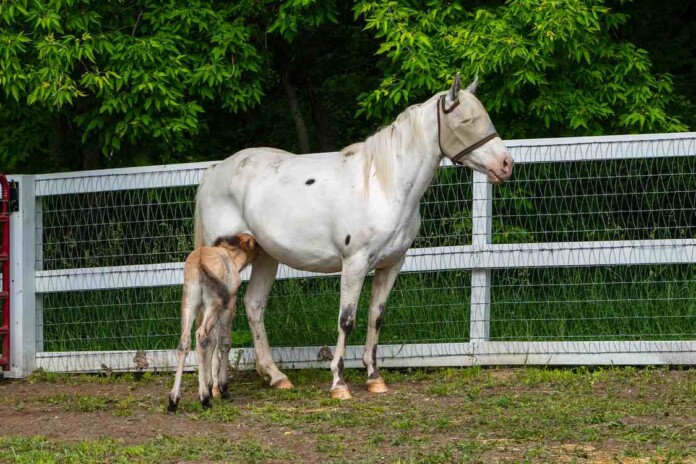

A story of resilience and maternal instinct comes now from Minnesota, where a foal belonging to Asia’s last remaining wild horse species is thriving thanks to an unexpected hero: a domesticated horse named Alice.
Having lost her own offspring, Alice decided to put Marat, the months old Przewalski’s horse foal, between her heart and her hooves.
Born May 17th at the Minnesota Zoo, the male foal is the result of a decades-long commitment to saving the endangered Przewalski’s horse, which over the last 15 years has progressed remarkably well.
Just days after his birth, the foal became critically ill and was transferred to the University of Minnesota’s Veterinary Medical Center. While he made a full recovery, the temporary separation led his mother, Nady, to reject him—a behavior not uncommon among wild horses after separation.
Enter Alice, a gentle Pony of the Americas mare from Brush Poppin Ranch in southeastern Minnesota. Just days earlier, Alice had lost her own newborn filly. Her owners, Sylvia and Jeff Passow, hoped her nurturing temperament and milk supply might help another foal in need.
Within hours of hearing about the orphaned wild foal, the Passows made the drive to the Minnesota Zoo. From their first meeting, Alice accepted Marat as her own, nuzzling him gently and allowing him to nurse. The two have formed a heartwarming bond, and Alice will remain by his side for the next several months as he continues to grow.
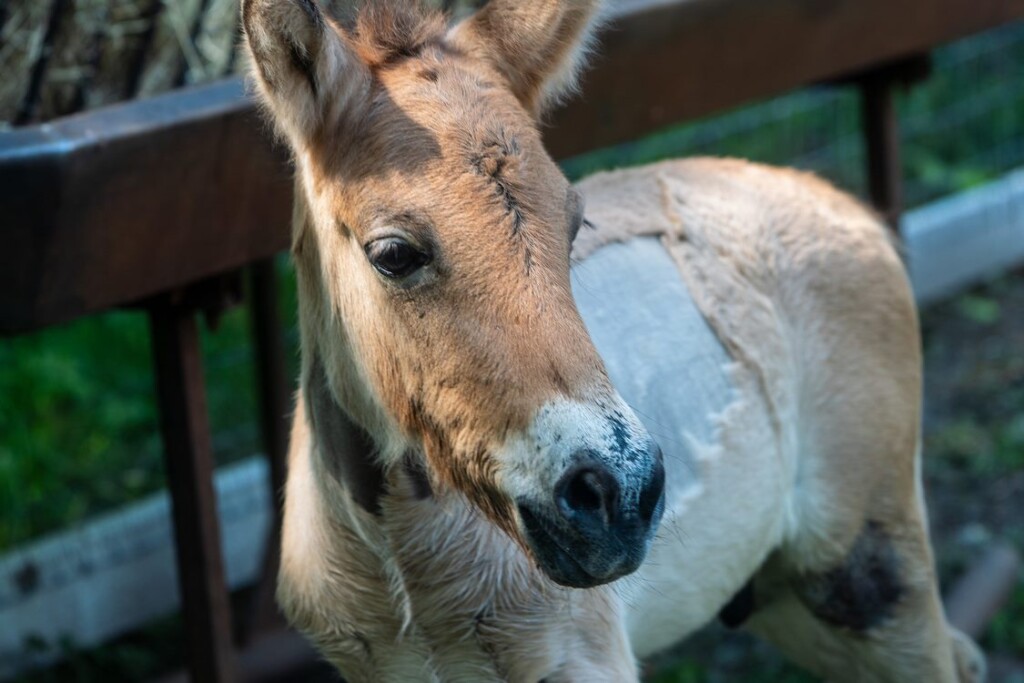
“This is the kind of story that reminds us of what conservation is all about: collaboration, compassion, and hope,” said Randy Kochevar, Chief Animal Care, Health, Conservation and Behavior Officer at the Minnesota Zoo. “Thanks to the Passows’ generosity and Alice’s instinct, this endangered foal now has a second chance.”
Przewalski’s horses are the world’s last truly wild horse species, never domesticated and genetically distinct from other horses. Once declared extinct in the wild by the 1960s, the species survived only through a small number of individuals in zoos.
Through decades of careful breeding, international cooperation, and scientific breakthroughs, including recent genetic research and cloning efforts, populations have been reestablished on the steppes of Mongolia and China. Fewer than 2,000 Przewalski’s horses exist today, making each foal born in human care critical to the species’ survival.
The Minnesota Zoo has long played a leading role in this global effort. Since opening in 1978, the Zoo has welcomed more than 50 foals as part of the Association of Zoos and Aquariums’ Species Survival Plan (SSP), which coordinates breeding to maintain genetic diversity.
In 2024, the Zoo contributed to a landmark genetic study aimed at strengthening future conservation efforts for the species.
Along with Mongolia and China, this year GNN reported that 150 animals have been transported to the steppes of Kazakhstan, another of the horse’s former pastures. Released at the Altyn Dala Reserve in Kazakhstan’s Kostanay region, it’s hoped they will naturally breed and spread out, eventually becoming prey for the Turanian tiger, an extinct local subspecies Kazakhstan is also attempting to reintroduce.
SHARE This Heart-Nuzzling Story Of Adoption And Mothering…

For the first time in over a century, Parisians are swimming in their own river again following a cleanup effort that ran over $1.5 billion.
PARIS EST MAGIQUE ! 🫶🏻🇫🇷#ParisJeTaime #Seine pic.twitter.com/9AvaKnYeoS
— Clément Beaune (@CBeaune) July 12, 2025
Currently open to 1,000 bathers daily in three different cordoned swimming locations for free, Parisians are flocking to enjoy their river the way their great-grandparents once did.
Excitement that pollution in the Seine river would be low enough to allow for healthy swimming grew and grew in the years and months leading up to the Summer Olympics in Paris in 2024, when it was supposed to be used for the triathlon event.
Both Paris mayor Anne Hidalgo and French President Emanual Macron promised to take a dip in the Seine in July before the Games’ opening, and while the former did, the latter was officially unable to because of campaign commitments, though critics accused him of fearing that pollution remained.
In 2023, GNN reported on the progress made by the $2.3 billion project that started shortly after Paris was awarded the Games. By 2018 the city had already passed a law which mandated the Seine’s many houseboats had to moor by sewage access. They had been dumping right into the river before.
More than half-a-billion euros was earmarked for huge storage basins and other public works that will reduce the need to let bacteria-laden water spill out into the Seine when it rains, while other government money is going to improve sewage treatment plants along the banks and at the tributary of the Marne.
One storage facility located near Paris’ Austerlitz train station can hold 20 Olympic swimming pools of dirty water from being spat raw into the river.
Following the Games, some of the athletes who swam in the Seine got sick, and the river as well as the government became easy targets for finger pointing.
NEWS FROM PARIS: First Ever Cheese Museum Opens in Paris: ‘It’s Gouda Brie a Delicious Visit’
In February of this year, the Guardian reported that water samples contained the DNA of rare mussels sensitive to pollution and thought to be on the point of extinction in France, indicating that efforts were paying off, if a little late.
The thick shelled river mussel, the black river mussel, and the depressed river mussel are all considered near-extinct, and the researchers sampling the Seine for DNA hadn’t even been looking for them; they were expecting fish, which they also found at 10-times the density and diversity of a study done in 1960.
CLEANING UP RIVERS: China Achieves ‘Excellent’ Water Quality in 90% of Rivers and Lakes, Now Looks to Improve Whole Ecosystems
Then, in early July as a heat-wave gripped Europe, the Seine was declared open for swimming. A much needed way to cool off that happens to be carbon-neutral, it’s believed the Seine swimming spots will become chief attractions inside the city and beyond, where another 10 such spots, cordoned off to protect swimmers from boat traffic, are planned to open.
Lifeguards, changing facilities, and showers are all present at the bathing spots, and now, despite whatever else he has going on, Macron can have no excuse from taking that dip.
SHARE This Great News From Paris, Like The Return Of An Old Friend…
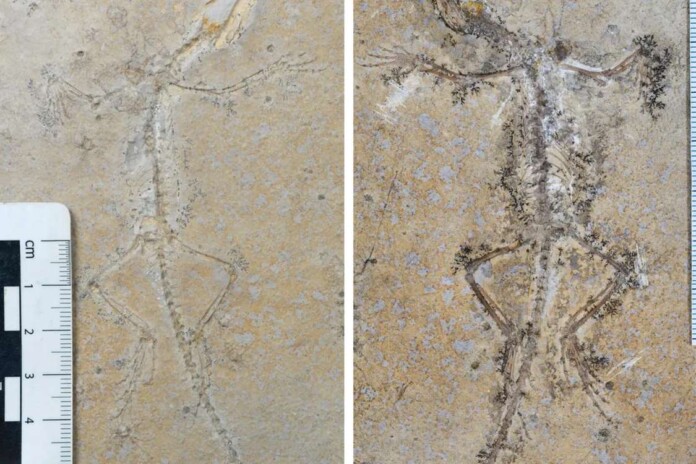
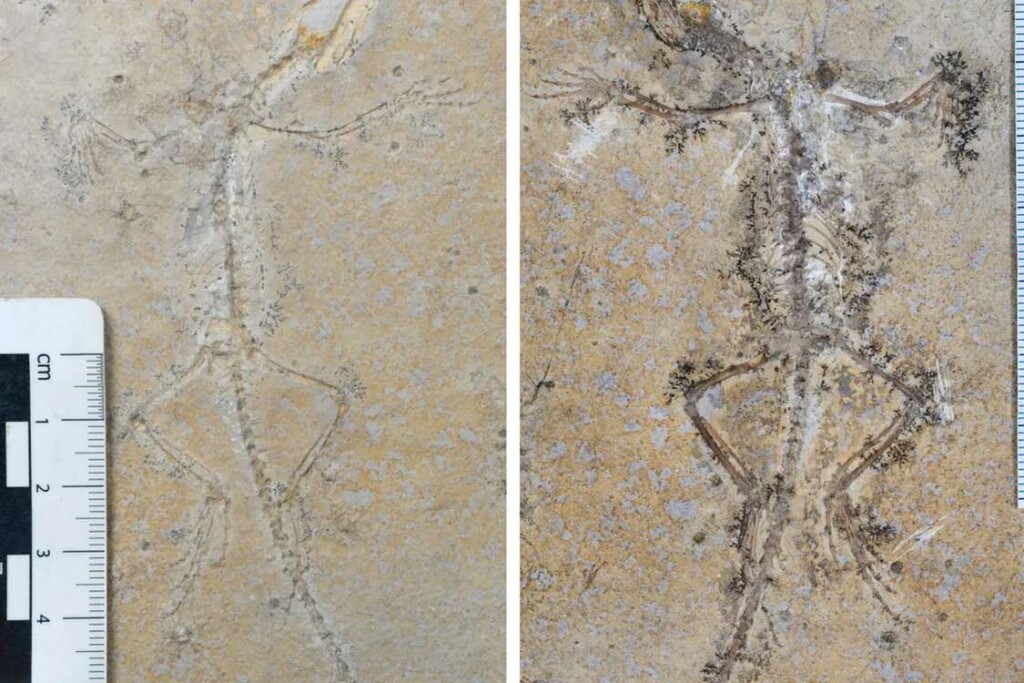
The story of how Sphenodraco scandentis came to be known is one for the ages: involving lies and deceit, and the well-trained eye of a brilliant paleontology student.
Ph.D. student Victor Beccari couldn’t shake the feeling he had seen the fossil before: it was a slab of rock containing the impression of a Jurassic-period reptile housed at the London Natural History Museum.
It was during the same visit that he realized where—at the Senckenberg Nat. History Museum in Frankfurt.
Beccari followed his instincts and confirmed that each museum contained a half of the whole: one had the fossil, and the other the imprint it made on the prehistoric sediment.
“It seems that someone in the 1930s decided to double their profit by selling both halves separately,” Beccari says in a museum statement. “As they didn’t tell either buyer that there was another half, the connection between the two fossils had been lost until now.”
“These kinds of fossils are normally preserved flat, so when they’re split open you often get the skeleton in one half and the impression of the skeleton in the other.”
When the two halves were reunited, something more was revealed other than intergenerational deception and buyer’s remorse—neither museum had identified it correctly.
Previously labeled Homoeosaurus maximiliani, it’s actually a new species of ancient lizard that dwelt among the trees. Sphenodraco scandentis, as the specimen has been renamed, is the earliest known member of the order Rhynchocephalia to have lived in trees.
These ancient lizard-like reptiles are actually not true lizards, but a third major reptile order alongside snakes and lizards. There is a living member of this order today, called the tuatara, that lives in New Zealand.
Beccari’s subsequent work on S. scandentis shows that it had a short body, long limbs, and long forefingers, similar to draco gliding lizards today. It strongly suggests an arboreal lifestyle, and would be the oldest rhynchocephalian known to live in the trees.
One of the key places on Earth for studying rhynchocephalians is an area of German rocks known as the Solnhofen Limestone. During the Late Jurassic, this region would have been a chain of islands across a subtropical sea, and it just so happens that it was where the Senckenberg Museum’s specimen came from.
Although the fossils are well-preserved, they’ve not all been studied in detail. Many of the historic descriptions of rhynchocephalians are somewhat vague, focusing on characteristics that are fairly broad across a variety of animals.
MORE ANCIENT REPTILES: Fascinating Species of 200 Million-Year-old Flying Reptile Discovered in Britain
“I think we’re really underestimating the diversity of these animals,” Beccari said. “In a lot of cases, fossils coming from the same place that look somewhat similar get lumped together. So, everything with longer limbs was called Homoeosaurus and everything with shorter limbs was Kallimodon.”
“The closer you look at how these animals have been studied in the past, the more you appreciate that the species aren’t that well-defined. We know that modern islands can have hundreds of species of reptiles, so there’s no reason that ancient islands didn’t too.”
“I’m going back over existing fossils to look for signs that other currently accepted species might cover multiple rhynchocephalians. There are also still a number of undescribed specimens that may also represent new species as well.”
ALSO CHECK OUT: Exquisite New Fossil Shows Scientists How Much More Ferocious Australia’s Crocs Once Were
“It goes to show just how important museum collections are to understanding ancient diversity. Even though many of these fossils were discovered almost two centuries ago, there’s still a lot they can teach us.”
GNN recently reported on other instances like this: a new tyrannosaurid that had sat in a museum drawer for 50 years, and a small, riverside dinosaur that had been poorly described for 150 years.
SHARE The Story Of This Young Man’s Brilliant Discovery With Your Friends…
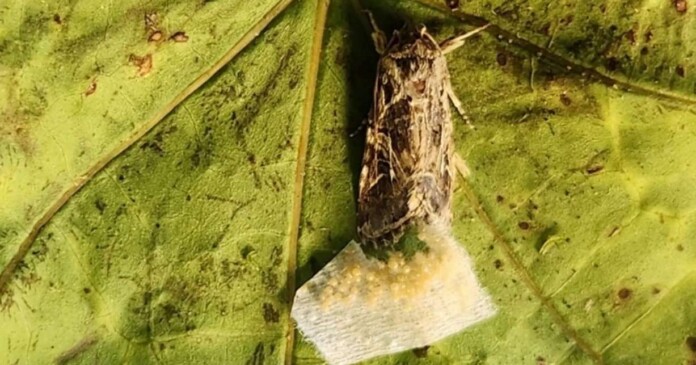
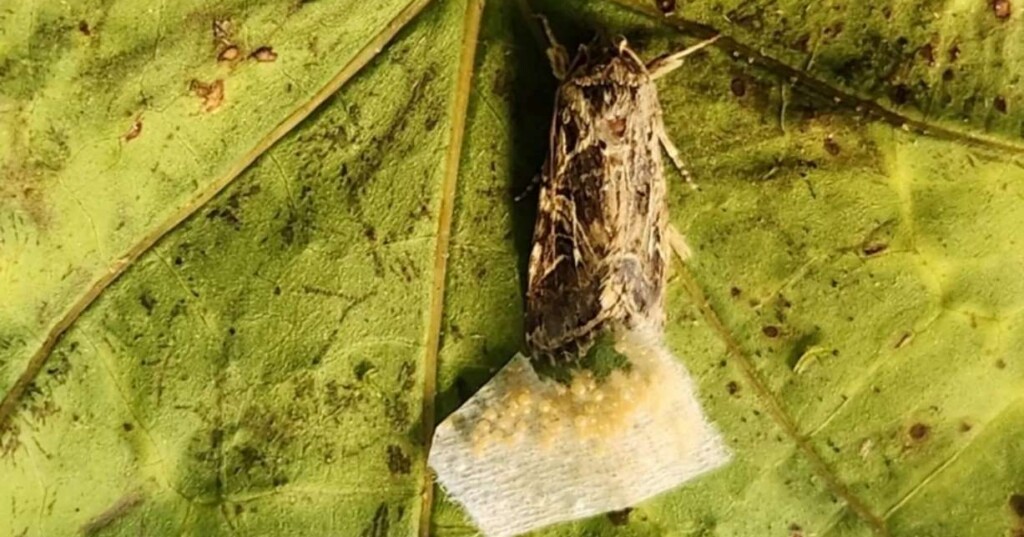
Scientists have found that plants make a series of sounds that indicate they are under duress, and that certain animals have evolved to hear these and react to them.
Described as a “vast, unexplored field,” the phytoacoustics are inaudible to the human hear, but adjusted to frequencies that we can hear, the sounds are not unlike the popping of corn in a pan.
A genus of moths is known to lay its eggs on the leaves of the tomato vine so that the larvae have a ready food source when they emerge. Scientists at Tel Aviv University performed a series of trials to see if these moths would lay their eggs on plants which were sounding off that they were dehydrated or stressed in some way.
The hypothesis would be that if moths could hear the sound, they may choose to avoid laying their eggs on the ‘screaming’ plants, as a stressed plant would produce fewer or inferior tomatoes, resulting in weaker, less-nourished larvae.
The result was exactly that. When controlled for visual indicators on the leaves and fruit, moths reliably chose to lay eggs on the silent plants over the sounding ones.
“This is the first demonstration ever of an animal responding to sounds produced by a plant,” said Professor Yossi Yovel of Tel Aviv University who co-led the project. “This is a vast, unexplored field—an entire world waiting to be discovered.”
Dr. Yovel has made other foundational discoveries in plant signaling, including that stressed plants emit airborne sounds that can be recorded from a distance and classified, and another that showed plants ‘hear’ the sounds of pollinators nearby and rapidly increase the sugar concentration in their nectar.
On the back of this most recent paper, he plans to extend his research to make a catalogue of sounds from different plants, and begin to see how many, if any, animals are reacting to them.
“This is speculation at this stage, but it could be that all sorts of animals will make decisions based on the sounds they hear from plants, such as whether to pollinate or hide inside them or eat the plant,” said Dr. Yovel according to the BBC.
THE PLANT-POLLINATOR RELATIONSHIP: Bees Actually Bite Plants to Make Them Flower Early – Surprising Scientists
With all this talk about screaming plants and listening plants, the authors stressed that plants are not sentient as we understand it. The sounds are made by changes in the physical structure of leaves, not by compression and manipulation of air, the beating of extremities against other body parts, or any other vocalizations that we know of in the animal kingdom.
Others are slightly more convinced, however, such as forester and author Peter Wohlleben, who is eager to see when scientists can devise a computer which detects through pheromones what trees are ‘talking’ about. His work indicates this is a primary means of tree communication.
MORE PLANT AWARENESS STORIES: Plants Respond to Touch Sending Different Signals Through Their Cells, Shows New Study
Whether or not science is on the cusp of elaborating plant ‘intelligence,’ it’s undeniable that there is a virtually universal plant ‘awareness’ which if we’re honest, isn’t always an inferior quality to intelligence.
BBC was able to receive some of the recorded sounds of the plants, which can be listened to on their website.
SHARE The Depths Of Plant Awareness With Your Friends…

Quote of the Day: “We sit in the mud… and reach for the stars.” – Ivan Turgenev
Photo by: Ryan Jacobson
With a new inspirational quote every day, atop the perfect photo—collected and archived on our Quote of the Day page—why not bookmark GNN.org for a daily uplift?


70 years ago today, Disneyland was dedicated and opened in Anaheim, California. It is the most visited theme park in world history with 757 million visits since it opened as of December 2021. In 2022, the park had approximately 16.9 million visits, making it the second most visited amusement park in the world that year, behind only Magic Kingdom, the very park it inspired. READ more… (1955)