














All News - Page 56 of 1689 - Good News Network
Home Blog Page 56

100-year Dispute Finally Settles Looting of Last German Emperor–by Building New Museum Collection

Georg Friedrich, Prince of Prussia - credit Oliver Mark CC 4.0. BY-SA
Georg Friedrich, Prince of Prussia – credit © Oliver Mark CC 4.0. BY-SA

The destiny of a large collection of property and art belonging to the family of the last German emperor has finally been decided after 100 years of uncertainty that persisted throughout some of the largest events in 20th-century Europe.

The story centers around the Hohenzollerns, the royal family of Prussia that included Kaiser Wilhelm II who ruled the newly-united Germany during the First World War.

The long-ruling family, whose ancestry can be traced by to the 11th century, had many royal properties such as castles and palaces, as well as collections of furnishings, artworks, and archival materials, seized at various points throughout the decades.

The great-great grandson of Wilhelm II, Prince Georg Friedrich Ferdinand of Prussia, began a legal campaign in 2014 to reclaim some of this stolen property. Cases were brought and lost, appealed, and debated, all while hoovering up money on both sides of the court aisle.

Then, in 2023, Prince Georg abandoned all the lawsuits, and a decision was made with states of Berlin and Brandenburg to settle the matter out of court. Now in May, the House of Hohenzollern and the Culture Ministry have announced the establishment of a new nonprofit foundation that will manage the cultural heritage of the family for the benefit of the German people.

3,000 works of art and 19th-century artifacts formerly owned by the family will be held in the collections of museums run by the Prussian Palaces and Gardens Foundation and the Prussian Cultural Heritage Foundation, as well as the German Historical Museum, to be managed by a 9-member board that includes 3 representatives of the family called the Hohenzollern Art Property Foundation.

Culture Minister Wolfram Weimer called the agreement “an enormous success for Germany’s heritage and for art audiences.”

“For 100 years, there was perpetual uncertainty about objects that are central to the history of art and collecting by Prussia—and therefore, to German history. With this agreement we have ended a conflict that has cost both sides time, money and energy over many years.”

An uncertain history, a hopeful future

In 2023 when Prince Georg announced he was abandoning litigation, he hoped that dropping the claim would “open the way for an unencumbered historical debate on the role of my family in the 20th century following the end of the monarchy.”

The “role” he refers to was the sticking point underpinning the whole 100-year dispute.

The story begins with the Treaty of Versailles which saw WWI end in the unconditional surrender of Germany. The Kaiser was to abdicate, and the monarchy to be abolished. He exiled himself to neutral Netherlands, while some 70 estates, palaces, and castles, some of which date back as far as the 13th century, gradually were transferred to ownership of the German states.

As the Weimar Republik crumbled under the weight of hyperinflation and civil unrest, the National Socialists rose to power, and with them rose the idea in the former Kaiser that Hitler may consider restoring the monarchy.

ARTS IN GERMANY: Exquisitely Preserved 1,000-yo Gaming Pieces Found in German Castle Offer Snapshot of Medieval Pastimes

Fast forward to the end of the Third Reich, and the lands and territory formerly belonging to the Hohenzollerns fell under the control of the Soviets, and disappeared behind the Iron Curtain. Fast forward again to the end of the Soviet Union and the reunification of Germany, and Wilhelm II’s descendants immediately began petitioning to have the property confiscated by the Soviets returned to them.

This is when a key part of the dispute arose. Post-WWII German law stated that any person, family, or organization who aided and abetted the Nazis and sought restitution claims against former East Germany would have the claims dismissed as a penalty for that support.

Since approximately 1994, the German state governments and the Hohenzollerns have been in debate, aided by academics, about just how far Wilhelm II’s support for Hitler went, whether it was genuine or feigned, and whether it was substantive or not.

MORE ROYAL SCUTTLEBUG: Crowns and Scepters Discovered Hidden Inside the Walls Beneath a Lithuanian Cathedral

Reports from DW suggest that the debate was more or less divided between four prominent German historians, with two arguing that it may or may not have been genuine, but even if it had been, it wasn’t substantial, and two arguing that it did have a measurable impact on Hitler’s ambitions, and was significantly genuine.

Prince Georg in the case of the dispute has argued that it is nonsensical to deny the property claims of all Hohenzollerns based on the actions of one member, exiled in another country, and largely powerless to influence events back home: that in other words, the sins of the father should not be borne by the son.

“Anyone who panders to right-wing extremism cannot be a tradition-setter for our house,” Prince George said of his ancestor.

SHARE This Long-Running Art Dispute And Fascinating History With Your Friends…

Four-year-old Credited with Saving Her Teacher’s Life at Tennessee Daycare

The lifesaver, Kyndal Bradley - credit, family photo
The lifesaver, Kyndal Bradley – credit, family photo

4-year-old Kyndal Bradley knows how to use a phone to call her mother, but how to call 911, or even when to do so, has not been talked about.

So imagine the surprise of her mother and the teaching staff at a Tennessee daycare when, during a medical emergency, it was Kyndal who took action.

Witnesses say that the teacher at the daycare in Clarksville collapsed and suffered a seizure. She had been the only adult in the room, and while the rest of the class stood there confused, Kyndal ran to get help.

“I told the teacher,” Kyndal told local news. “I said the other teacher; she was sick”.

Paramedics on scene found out that the teacher had stopped breathing twice, and rushed her to the hospital where WSMV reports she is recovering.

Shortly after, the staff at the daycare arrived at the door of Taylor Moore, Kyndal’s mother for a deserved bit of show (off) and tell.

CHILDREN BEYOND THEIR YEARS:

“They were like, ‘She’s our hero for the day,’ and I’m kind of looking like, what happened?” said Moore. “If she hadn’t have gone and got the assistance, this story could have gone a totally different way.”

“I never thought to introduce what to do if an emergency arises, so it was a shock to me to see that she knew exactly what to do in a situation like that,” Moore told WSMV over a videocall, with Kyndal in her arms smiling from ear to ear.

WATCH the story below… 

SHARE This Excellent Young Woman’s Quick Thinking With Your Friends… 

“A perfect summer day is when the sun is shining, the breeze is blowing, the birds are singing—and the lawn mower is broken.” – James Dent

Kateryna Hliznitsova for Unsplash+

Quote of the Day:  “A perfect summer day is when the sun is shining, the breeze is blowing, the birds are singing—and the lawn mower is broken.” – James Dent

Photo by: Kateryna Hliznitsova for Unsplash+

With a new inspirational quote every day, atop the perfect photo—collected and archived on our Quote of the Day page—why not bookmark GNN.org for a daily uplift?

Kateryna Hliznitsova for Unsplash+

Good News in History, June 23

Banff National Park, one of Canada's true jewels - CC license.

138 years ago today, The Rocky Mountains Park Act passed Canadian parliament, establishing Banff National Park, the nation’s largest and most famous park. It was modeled on the law that created Yellowstone National Park south of the border just a few years before. Before, there had been a small preserve of 26 square miles that included hot springs. The park was expanded under the law to 674 km2 (260 sq mi) and named Rocky Mountains Park. READ more about its history… (1887)

Firefighters Lift 700-Pound Boulder to Rescue Man Pinned Face-Down in Frigid Alaska Creek

Kell Morris rescue by Jason Harrington / Seward Fire Department
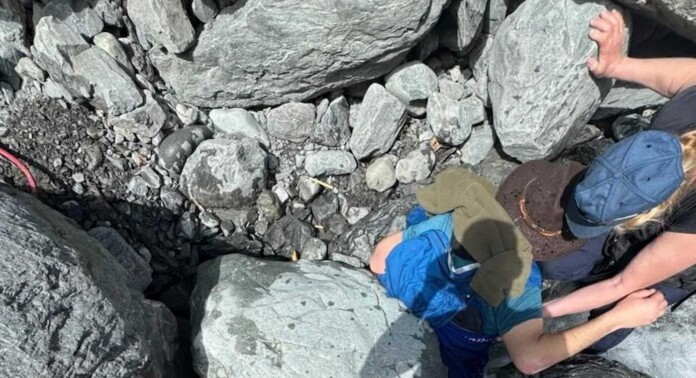
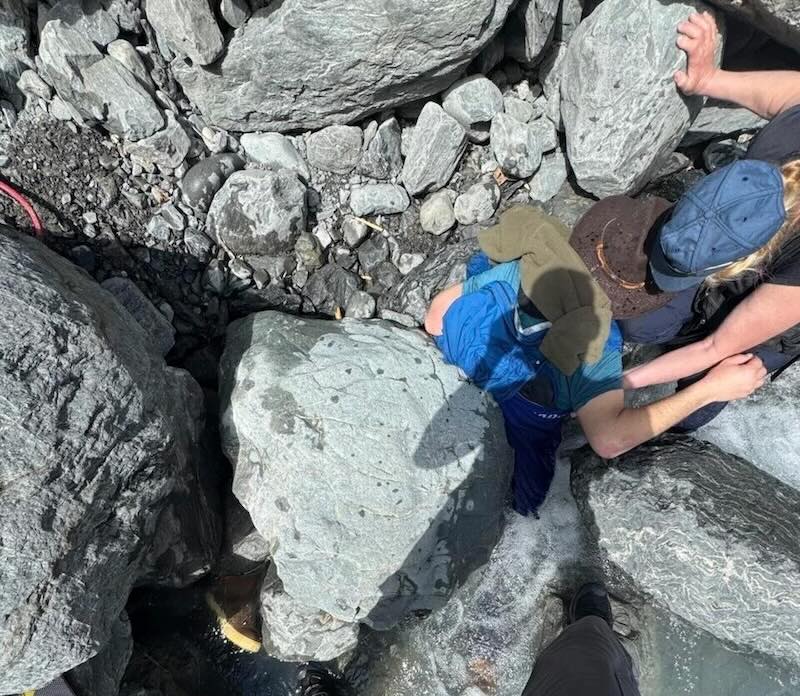
Rescue of Kell Morris (in brown hat) Credit: Jason Harrington / Seward Fire Department – released

Rescuers described it as an avalanche of boulders—and Kell Morris was lucky to have survived it.

The 61-year-old was hiking with his wife in the Alaskan wilderness south of Anchorage last month, when a single step sent a succession of rocks crashing down the terrain.

Morris fell with them and, when he landed, he was pinned face down in an icy creek by a 700-pound boulder.

“It all came loose… and I was sliding with it,” Morris told KTUU News in Alaska. “Then it was a blur. I went tumbling. ”

“I could hear the noise that large rocks make as they’re rolling over each other. I landed face-down in the river, and then I felt the rock hit me in the back and pin me down.”

Morris’s left leg and hip were pinned tightly to the rocks, but his shoulders were still above the frigid water. Other rocks kept him from getting flattened by the huge boulder, so he still had a chance.

His wife, Joanna Roop, a retired Alaska State Trooper, immediately sprung into action, running to find a cell phone signal about 300 yards away to call 911—and emergency crews used GPS coordinates to organize a rescue attempt.

Fortunately, volunteer firefighter Sam Paperman happened to be working his tourism job in a nearby helicopter and diverted to the scene after the rescue call came in. More responders arrived a few moments later—and they were just in time.

The water level continued to rise in the creek, which was fed by glacier ice fields. Morris’s speech was slurring and he was fading in and out of consciousness as hypothermia set in. His wife continued to hold his head above water.

Emergency crews inflated two airbags typically used for vehicle extractions to help lift the boulder off of Morris, according to a media statement from the Seward Fire Department.

And then, it was time for teamwork.

“It just became an all-hands, brute force of ‘One, two, three, push,’” Seward Fire Chief Clinton Crites said in a quote from CBS News.

“Seven guys were able to lift it enough to pull the victim out.”

STRANGER RESCUE: Dramatic Video Shows Strangers Desperately Fight to Remove Man from Car Engulfed in Flames–And Succeed

Morris spent two days in a hospital for observation, but thanks to the quick actions of his wife, a whole bunch of good fortune, and the efforts of dedicated rescue workers, he pretty much walked away from the 700-pound boulder battle relatively unscathed.

“Every star was aligned,” said Chief Crites, citing the good weather, number of rescuers, cellular service, and the private helicopter tour company that was willing to help.

OCEAN CREATURE KINDNESSStruggling Manatee Was Close to Dying but Florida Deputy Held it Afloat for 2 Hours

“You couldn’t have made the stars align any better for this guy.”

HAIL THESE FIREFIGHTERS By Sharing the Rescue on Social Media…

Tiny Robots Can Help Fix Leaky Old Water Pipes Without Having to Dig Up Roads

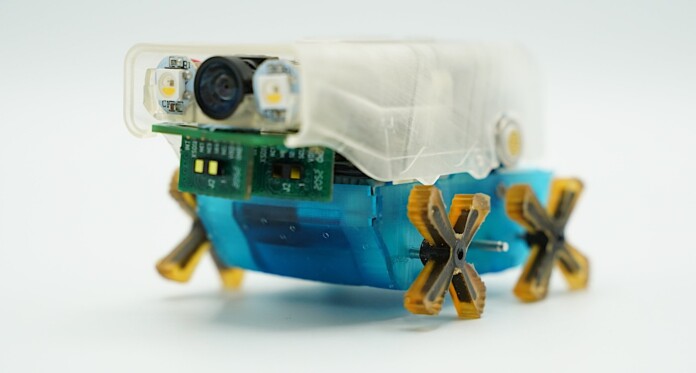
Miniature machines called Pipebots can explore and repair water pipe leaks without digging -Credit: University of Sheffield / SWNS

Tiny robots could help fix leaky water pipes without having to dig up roads and sidewalks, thanks to a British team.

The miniature machines called ‘Pipebots’ are the same size as a toy car and can track down leaks underground. They can also identify potential issues before they even become a problem.

University researchers say the Pipebots could revolutionize how water infrastructure is managed and help save some of the nearly 800 million gallons of water lost through leaky pipes every day in England and Wales.

The UK’s aging water network dates back to the Victorian era and totals more than 215,000 miles in length. Roadwork to repair utilities cost the UK economy at least $5.4 billion per year (£4 billion) and cause disruption to businesses and residents.

The Pipebot’s inventors from the University of Sheffield’s mechanical, aerospace, and civil engineering schools—working with colleagues at the universities of Birmingham, Bristol and Leeds—have developed a range of miniature robots with new sensors that can travel through pipes and automatically check for defects.

The smallest robot measures just 1.5 inches wide (40mm). They are equipped with tiny, high-spec acoustic sensors and cameras, which enable them to navigate and detect faults freely. (See the video below…)

Local engineers can lower the Pipebots directly through a hydrant so they can then explore the area, scan for faults, and relay data back to the workers above.

The researchers say the Pipebots are “intelligent” and will avoid any restricted areas, such as customer connections. They are equipped with all-terrain legs which enable them to navigate through any difficult paths they might encounter while underground.

They can also “talk” to each other within a short range, so they can work together to carry out tasks and problem solve.

“Leaky water pipes are one of the biggest issues facing the water industry, not just here in the UK, but also globally as companies and governments grapple with aging infrastructure,” said program director Professor Kirill Horoshenkov.

“Whilst pipe inspection technologies have improved, it is still incredibly difficult to monitor the condition of water pipes and find leaks in these vast networks, especially when the leaks are small.

Beyond water pipes, the bots are capable of operating in other environments, like sewer lines, gas pipes, and dangerous sites that are inaccessible to humans.

WATCH the University video below—and keep reading to learn what the robots are doing…


ALSO MOVING THRU WATER:
Hyper Efficient Solar-Powered Desalination System Requires No Extra Batteries to Purify Groundwater

With the help of funding from the Office for Water Services (OFWAT), the Sheffield researchers are working on three projects with partners from the water industry and local authorities across the UK to adapt the bots to meet specific industry needs. The work includes:

  1. Pipebot Patrol – a project to develop, build, and test an autonomous sewer robot that lives in the sewer, constantly inspecting and raising alerts to the precise location of blockages, as they are beginning to form.
  2. Pipebots for Raising Mains involves developing technology for condition assessment inspections in live rising wastewater mains, which will enable rehabilitation works to be planned and prioritized, reducing the risk of failure leading to pollution.
  3. No Dig Leak Repair – the third project is developing ways to repair leaks from within live water mains, without disruptive excavations or interruptions to water supplies.

GENIUS ENGINEERING: This Undersea Tunnel Marvel is Set to Break 5 Records and Shave Hours Off Travel Times in Europe

The Sheffield team is also working on a project funded by the European Union—Pipeon—to develop advanced robotic and AI technology for autonomous sewer inspection and maintenance.

“The Pipebots project is a great example of the importance of collaboration between universities and industry,” said Prof. Horoshenkov. “Partners from industry are helping us to make it relevant to the end-user needs.”

SHARE THEIR COOL SOLUTION With Robotic Fans on Social Media…

Dozens of Free Summer Camps Opened By Paul Newman Give Sick Kids and Their Families ‘Serious Fun’

June marks the start of summer camps opening their doors to kids who want fun in the wild—and for children with an illness or disability, there’s a camp that provides ‘serious fun’ for those who need it most.

The legendary actor Paul Newman started it all with a single summer camp for sick kids back in 1988.

He called it the “Hole in the Wall” camp, a reference to the sharpshooting gang from his iconic Oscar-winning film Butch Cassidy and the Sundance Kid.

He wanted to provide an escape for children facing serious illnesses—but one that would include their parents and siblings too—where, as Paul liked to say, families could “kick back, and raise a little hell.”

Most important of all, everything was always free.

Since then, the camps have gained a new name—SeriousFun—and have grown into a network of 30 camps across the world. In all, they have provided two million incredible experiences for kids facing medical challenges in 19 different countries.

Paul Newman with his daughter Clea – Credit: Serious Fun

Each of the 30 SeriousFun camps is fully equipped for pediatric care, with a staff that administers medication in a manner that doesn’t disrupt the fun. Camp activities include boating and swimming—but also high-end excitement like high-ropes courses and zip lines. (See the video at the bottom.) Best of all, kids love it…

“You automatically click (with everyone) because you have something in common. You’re not alone in this,” said Alex, a child with Sickle Cell Disease that has attended the SeriousFun Flying Horse Farms Camp in Ohio. “It puts a smile on so many people’s faces. It makes them feel connected. It definitely is the highlight of my year, every year.”

Clea Newman—the youngest daughter of Paul and his wife of 50 years, actress Joanne Woodward—has dedicated the last 12 years of her life to the beloved organization, working enthusiastically to continue her father’s legacy.

MORE CELEBRITY HEROES: Michael Jordan Opens Another Health Clinic in Home State of North Carolina–Four Clinics Now Serve the Uninsured

Clea Newman – Credit: Serious Fun

“I am so passionate about this work. Our kids and our families are just the most extraordinary people. I learn from them every day, so it’s a gift,” Clea said.

“My father believed in the importance of giving back. He always said we are committed to giving these children one hundred percent… and, in return, the joy of these kids gives back one thousand percent to everyone who works with and supports them.”

All those efforts are paying off for the kids, too. According to surveys conducted by SeriousFun, more than 80% of campers reported that their experience played a role in the development of lasting traits that they use in their everyday adolescent and adult lives. These attributes include a willingness to try new things, self-confidence, perseverance, empathy, compassion, and an appreciation for diversity.

CHECK OUT: Eddie Vedder’s Quest to Help Cure a Rare Disease Subject of New Documentary

Other benefits for families may be too great to even measure.

“It’s brought the family unit back together,” a parent at the SeriousFun camp at Barretstown in Ireland said.

“It was bringing back an element of fun that had been missing for a long time because all we’d been used to was going in and out of hospitals. It helped heal the kids’ souls. It helped us find that new normal… it’s all about maximum fun in minimum time.”

Proceeds from the Newman’s Own food brand partially fund the camp (along with corporate and private donations), so the next time you’re shopping for frozen pizza, pasta sauce, salad dressing, lemonade, or popcorn, look for Paul’s face and the slogan ‘All profits to charity’. (You can buy their products in the grocery store or on Amazon.)

Now you know you’ll always be supporting a seriously fun charity. Check out the heartwarming camp in the video below…

SHARE THIS GREAT NEWS WITH FAMILIES Worldwide By Sharing on Social Media…

War Hero Codebreaker Alan Turing’s Papers Found in Loft And Saved From Shredder to Fetch Record $625,000

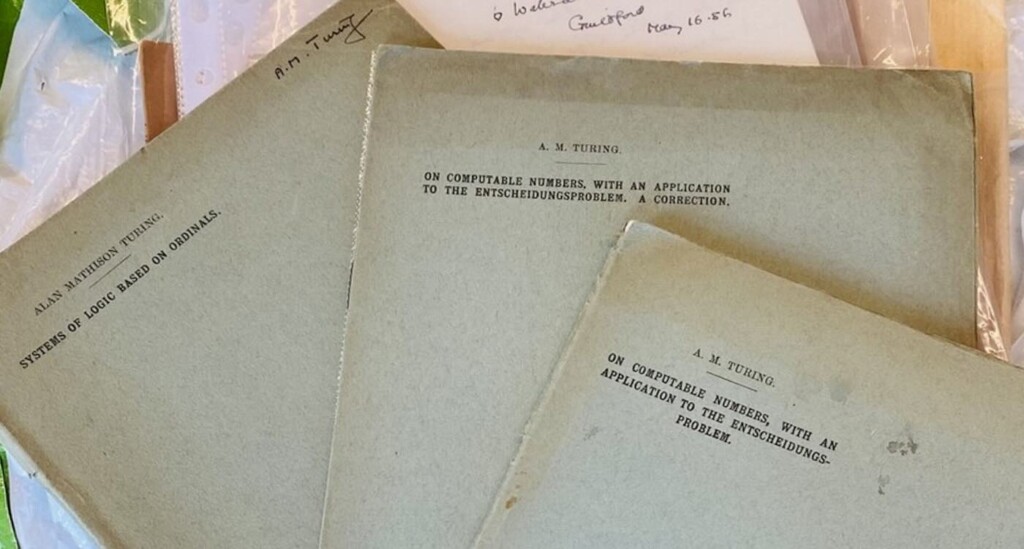
Alan Turing Papers Found in Loft – Rare Book Auctions / SWNS

A treasure trove of scientific papers by codebreaking war hero Alan Turing have fetched over a half million dollars at auction after being found in a loft and nearly shredded.

The incredible archive of important works by the British mathematical genius was discovered gathering dust at a property in London after it was gifted to Turing’s best friend. The papers, including letters from Alan’s mother, were saved at the last minute when their significance was recognized during a family event.

Turing’s work laid the foundation for artificial intelligence and modern computer science. During World War II, Turing played a critical role in breaking the Nazi’s Enigma code, giving the Allies an advantage that helped win the war in Europe.

The cache, which was auctioned this week, included his personal signed copy of Turing’s 1938 PhD dissertation, ‘Systems of Logic Based on Ordinals’ (sold for $150,000).

Also featured was his paper ‘On Computable Numbers’ also known as ‘Turing’s Proof’ which introduced the world to the idea of a universal computing machine in 1936. Described as the first programming manual of the computer age, it fetched a staggering $280,000—4 to 5 times the auction guide price.

Auctioneer Charles Hanson said some of the items were among the “most important” he’s ever sold.

“To think these precious papers could’ve been lost to the shredder – and now they will go on to educate and inspire generations,” said the employee of Rare Book Auctions.

“Turing was a man ahead of his time, and through these pages, he lives on.”

Alan Turing on £50 English note concept – Credit: Bank of England (CC license)

“His life, his brilliance, and his contribution to modern computing… How does one even begin to place a value on such a legacy?

The papers, known as ‘offprints’, had originally been gifted by Turing’s mother Ethel to her son’s friend and fellow mathematician Norman Routledge. They were produced in very small numbers and distributed within academia, making them “incredibly scarce”.

“When he died in 2013, two of his sisters had the unenviable task of sorting through and emptying the contents (of the house he owned),” said one of Routledge’s nieces.

“There were lots of personal papers which one sister carted away and stored in her loft. The papers lay dormant until she moved into a care home almost a decade later.

“Her daughters came across the papers and considered shredding everything. Fortunately, they checked with Norman’s nieces and nephews.

VERY COOL: Mathematicians Discover Elusive ‘Einstein’ Shape: ‘The Miracle that Disrupts Order’

One of the cousins felt the Turing papers might be of interest to collectors.

Despite helping to shorten the war by around four years, Mr. Turing was prosecuted by Britain in 1952 for being gay. He died from cyanide poisoning two years later at age 41 and the government pardoned him and apologized in 2011.

An Oscar-nominated film starring Benedict Cumberbatch, The Imitation Game, depicted his story in 2014, and won Mr. Turing many new fans.

MATH WHIZ KIDS: High Schoolers Who Found ‘Impossible’ Proof of Pythagorean Theorem Discover 9 More Solutions to it

“Alan Turing changed the world through his ideas, and thanks to a twist of fate his voice continues to resonate, informing the present and shaping the future,” said auctioneer Hanson.

“It’s a once-in-a-lifetime discovery—not just for collectors, but for the sake of preserving the story of one of the greatest minds in history.

SHARE THE GOOD NEWS With Math Lovers on Social Media…

“Life in abundance comes only through great love.” – Elbert Hubbard

Quote of the Day: “Life in abundance comes only through great love.” – Elbert Hubbard

Photo by: Victor Rodriguez

With a new inspirational quote every day, atop the perfect photo—collected and archived on our Quote of the Day page—why not bookmark GNN.org for a daily uplift?

Good News in History, June 22

Louis stalks Schmelling - fair use

87 years ago today, Joe Louis knocked out Max Schmeling in a re-match of perhaps the most famous fight series in history. It completely transcended the sport, as taking place in the months leading up to the Second World War, the fight between a black man born in Alabama versus a white German became a test on the highest stage for Hitler’s vision of Aryan supremacy. READ all about it… (1938)

Compound in Rosemary and Sage was Turned into Alzheimer’s Treatment That Boosted Memory and Cut Amayloid

Curated Lifestyle for Unsplash+

The herb rosemary has long been linked with memory, so it’s fitting that researchers would study a compound found in rosemary and sage for its impact on Alzheimer’s disease, especially the inflammation that often leads to cognitive decline.

Carnosic acid is already an antioxidant and anti-inflammatory compound that works by activating enzymes that make up the body’s natural defense system. While pure carnosic acid is too unstable to be used as a drug, scientists at Scripps Research have now synthesized a stable form called diAcCA—which is fully converted to carnosic acid in the gut before being absorbed into the bloodstream.

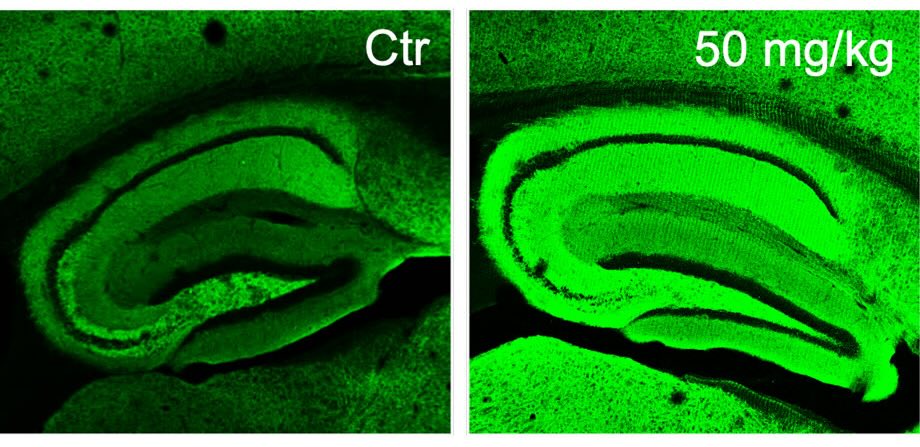
The research, published this year in Antioxidants, showed that when diAcCA was used to treat mouse models of Alzheimer’s disease, it led to enhanced memory and synapse density (more connections between nerve cells in the brain).

Because the decline of neuronal synapses is closely correlated to dementia in Alzheimer’s disease, this approach could counteract the progression of cognitive decline. It also reduced key disease biomarkers, including amyloid-β and phosphorylated-tau proteins.

Analysis of tissue samples showed the drug also markedly cut inflammation in the brain. This unique drug is activated by the very inflammation that it then combats and thus is only active in areas of the brain undergoing inflammatory damage.

This selectivity limits the potential side effects of carnosic acid, which is on the US Food and Drug Administration’s “generally regarded as safe” (GRAS) list, easing the way for clinical trials.

“By combating inflammation and oxidative stress with this diAcCA compound, we actually increased the number of synapses in the brain,” says senior author professor Stuart Lipton, MD, PhD, at Scripps Research and a clinical neurologist in La Jolla, California.

“We also took down other misfolded or aggregated proteins such as phosphorylated-tau and amyloid-β, which are thought to trigger Alzheimer’s disease and serve as biomarkers of the disease process.”

Alzheimer’s-like mouse brain (left) compared to more intense green color (right) showing neuron synapses that underlie learning and memory after treatment – Credit Scripps Research

CHECK OUT: Never Too Late to Start Eating the MIND Diet That May Prevent Dementia: New Study of 90,000 People

Lipton’s team previously determined that carnosic acid crosses the blood-brain barrier and activates a pathway that turns on antioxidant and anti-inflammatory genes. But the compound itself oxidizes easily, making it unsuitable as a drug because of its short shelf-life.

In this new study, supported by funding from the National Institutes of Health, Lipton and co-author Phil Baran, PhD, a chair in the Department of Chemistry at Scripps Research, synthesized a range of carnosic acid derivatives and selected diAcCA as the best candidate because of its stability, bioavailability, and other drug-like properties.

Lipton’s group then treated mouse models with the compound over the course of three months. The group examined the mice by testing their spatial learning and memory in behavioral tests and then analyzing brain tissue under the microscope.

“We did multiple different tests of memory, and they were all improved with the drug,” Lipton says. “And it didn’t just slow down the decline; it improved virtually back to normal.” Analysis of tissues also showed increased neuronal synaptic density and decreased formation of phosphorylated-tau aggregates and amyloid-β plaques.

HEALING KITCHEN: Keep Out Your Christmas Spices – They’re Powerful Antioxidants Known as ‘Nutraceuticals’

The mice tolerated diAcCA well. In toxicity studies, the compound even soothed baseline inflammation in the esophagus and stomach as it was converted to carnosic acid.

The group also found that the mice took up about 20% more carnosic acid after ingesting diAcCA than they did after taking plain carnosic acid because diAcCA makes more available in the blood stream than if you took the compound itself.

CATERPILLAR VS CANCER: Caterpillar Fungus Used in Chinese Medicine Slows the Growth of Cancer Cells, Shows New Study

Lipton sees a potential for diAcCA to work in tandem with Alzheimer’s treatments currently on the market. Not only could the drug work on its own by combating inflammation, but “it could make existing amyloid antibody treatments work better by taking away or limiting their side effects” such as a form of brain swelling or bleeding known as ARIA-E and ARIA-H, he says.

PLEASE NOTE: Eating Pomegranates Can Help Alzheimer’s Patients Alleviate Symptoms, Study Says

Lipton hopes diAcCA can be fast-tracked through clinical trials because of its safety profile. He thinks it could also be explored as a treatment for other disorders marked by inflammation, such as type 2 diabetes, heart disease, and other forms of neuro-degeneration such as Parkinson’s disease.

SHARE THIS BRAIN FOOD With Aging Friends On Social Media…

Banning Plastic Bags Really Works: Shoreline Litter is Slashed by Almost Half Where Policies in Place

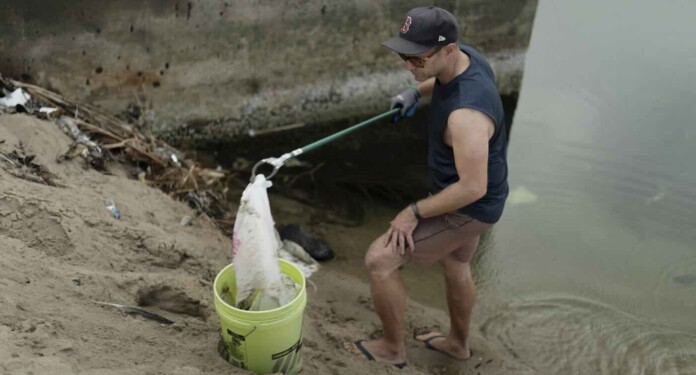
Ocean Conservancy volunteer removes plastic bag from Venice Beach in Los Angeles – Credit: Val Vega for Ocean Conservancy

New research shows that shoreline litter has been slashed by almost half since plastic bag bans around the U.S. have gone into effect.

The introduction of fees or bans has led to a 47% drop in litter along the coastlines and beaches, say scientists from two universities.

And the decrease rose in magnitude over time—with no evidence of the rates returning to previous levels.

More than 100 countries have now introduced bans or fees for plastic bags, which are among the worst culprits of plastic pollution in the ocean, entangling birds and marine life and breaking down into harmful microplastics.

But what effect those policies were having on the amount of plastic litter in the marine environment had not been fully evaluated until a new study published in the journal Science analyzed the effectiveness of bans across the United States.

The researchers from the University of Delaware and Columbia University found that the fees or bans led to a 25% to 47% decrease in plastic bags as a share of total items collected in shoreline litter-picks compared to areas without such policies.

Study co-author Professor Kimberly Oremus got the idea for the study when she learned that volunteers at coastal beach clean-ups in Delaware were using an app called Clean Swell to track the litter collected.

The figures go into the Ocean Conservancy’s Trash Information and Data for Education and Solutions (TIDES) database, which keeps crowdsourced records from thousands of clean-ups around the world each year.

“When we found the database that had information on different shoreline clean-ups, we realized we could look at the composition of litter before and after a policy to see what effect it had,” said Prof. Oremus, from Delaware’s School of Marine Science and Policy.

The team compiled over 600 policies for 2007-2023, with a lot of variation in their scope and geographic scale.

“A lot of the previous economics literature on plastic bag policies has used checkout data at the store level, explained study lead author Dr. Anna Papp of Columbia University. “So we were excited to add to that a direct measurement of plastic litter on these shorelines.”

The research team looked at tens of thousands of shoreline clean-ups and hundreds of local policies to determine how the legislation worked in terms of reducing plastic litter in the environment.

SAME SUCCESS IN EUROPE: Beach Litter Falls by 30-45% Across European Beaches In Last Deacade, Report Shows

The researchers focused on the United States because it has no federal plastic bag policy, allowing them to compare the effects of different types of policies at the town, county and state level within a single country.

While it might not seem surprising that banning or taxing plastic bags would reduce litter, Prof. Oremus says the results were more robust than she had expected.

“It’s great to see a policy that works in such a clearly measurable way.”

INSPIRING! Man With Unyielding Depression Starts Picking Up Litter–And Helps Clear 13 Tons of Trash with Family and Strangers

Dr. Papp was surprised to find that around one-in-three Americans are living in an area with some sort of plastic bag policy in place.

The study also found that some legislation seemed to be more effective than others in reducing plastic litter.

They discovered more robust impacts from state level policies compared to town-level policies, with fees appearing to reduce litter even more than bans, though more research is needed to understand why.

Another finding was that the bag bans and fees were most effective in places where the plastic bag litter problem was more severe to begin with.

CHECK OUT MORE SUCCESS: Ocean CleanUp Launches Huge System in Pacific Garbage Patch to Clean a Football Field Every 5 Seconds

With the United Nations Environment Program announcing that the next round of negotiations on an international plastic treaty will happen in August this year, the researchers said their study highlights the opportunity for a more comprehensive approach to the problem.

“Ours is the first large-scale study to use hundreds of policies and tens of thousands of clean-ups to look at their effects,” said Papp. “Overall, our findings do show that plastic bag policies are broadly effective in limiting litter along shorelines.”

COMBAT BAD NEWS By Sharing the Success on Social Media…

Your Weekly Horoscope – ‘Free Will Astrology’ by Rob Brezsny

Our partner Rob Brezsny, who has a new book out, Astrology Is Real: Revelations from My Life as an Oracle, provides his weekly wisdom to enlighten our thinking and motivate our mood. Rob’s Free Will Astrology, is a syndicated weekly column appearing in over a hundred publications. He is also the author of Pronoia Is the Antidote for Paranoia: How All of Creation Is Conspiring To Shower You with Blessings. (A free preview of the book is available here.)

Here is your weekly horoscope…

FREE WILL ASTROLOGY – Week of June 21, 2025
Copyright by Rob Brezsny, FreeWillAstrology.com

CANCER (June 21-July 22):
Tides don’t ask for permission. They ebb and flow in accordance with an ancient gravitational intelligence that obeys its own elegant laws. Entire ecosystems rely on their steady cyclical rhythms. You, too, harbor tidal forces, Cancerian. They are partially synced up with the earth’s rivers, lakes, and seas, and are partially under the sway of your deep emotional power. It’s always crucial for you to be intimately aware of your tides’ flows and patterns, but even more than usual right now. I hope you will trust their timing and harness their tremendous energy.

LEO (July 23-Aug. 22):
Some jewelers practice an ancient Korean art called keum-boo, in which they fuse pure gold to silver by heat and pressure. The result is gold that seems to bloom from within silver’s body, not just be juxtaposed on top of it. Let’s make this your metaphor for the coming weeks, Leo. I believe you will have the skill to blend two beautiful and valuable things into an asset that has the beauty and value of both—plus an extra added synergy of valuable beauty. The only problem that could possibly derail your unprecedented accomplishment might be your worry that you don’t have the power to do that. Expunge that worry, please.

VIRGO (Aug. 23-Sept. 22):
Some Indigenous cultures keep track of time not by clocks but by natural events: “the moon when the salmon return,” “the season when shadows shorten,” “the return of the rain birds.” I encourage you to try that approach, Virgo. Your customary rigor will benefit from blending with an influx of more intuitive choices. You will be wise to explore the joys of organic timing. So just for now, I invite you to tune out the relentless tick-tock. Listen instead for the hush before a threshold cracks open. Meditate on the ancient Greek concept of kairos: the prime moment to act or a potential turning point that’s ripe for activation.

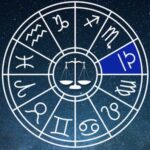
LIBRA (Sept. 23-Oct. 22):
Botanists speak of “serotiny,” a plant’s ability to delay seed release until the environment is just right. Some pinecones, for instance, only open after a fire. What part of you has been patiently waiting, Libra? What latent brilliance has not been ready to emerge until now? The coming weeks will offer catalytic conditions—perhaps heat, perhaps disruption, perhaps joy—that will be exactly what’s needed to unleash the fertile potency. Have faith that your seeds will draw on their own wild intelligence.

SCORPIO (Oct. 23-Nov. 21):
One of your superpowers is your skill at detecting what’s unfolding beneath the surfaces. It’s almost like you have X-ray vision. Your ability to detect hidden agendas, buried secrets, and underground growth is profound. But in the coming weeks, I urge you to redirect your attention. You will generate good fortune for yourself if you turn your gaze to what lies at the horizon and just beyond. Can you sense the possibilities percolating at the edges of your known world? Can you sync up your intuitions with the future’s promises? Educated guesses will be indistinguishable from true prophecies.

SAGITTARIUS (Nov. 22-Dec. 21):
Sagittarius-born Wassily Kandinsky (1866–1944) got a degree in law and economics and began a career teaching those subjects at the university level. But at age 30, he had a conversion experience. It was triggered when he saw a thrilling exhibit of French Impressionist painters and heard an enthralling opera by Richard Wagner. Soon he flung himself into a study of art, embarking on an influential career that spanned decades. I am predicting that you will encounter inspirations of that caliber, Sagittarius. They may not motivate you as drastically as Kandinsky’s provocations, but they could revitalize your life forever.

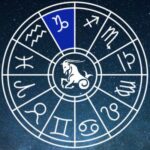
CAPRICORN (Dec. 22-Jan. 19):
The ancient Egyptians revered the River Nile’s annual flooding, which brought both disruption and renewal. It washed away old plant matter and debris and deposited fertile silt that nourished new growth. In the coming weeks, Capricorn, I suspect you will experience a metaphorical flood: a surge of new ideas, opportunities, and feelings that temporarily unsettle your routines. Rather than focusing on the inconvenience, I suggest you celebrate the richness this influx will bring. The flow will ultimately uplift you, even if it seems messy at first.

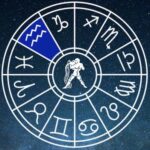
AQUARIUS (Jan. 20-Feb. 18):
Medieval stonemasons worked not just in service to the immediate structures they made. They imagined eternity, laying foundation blocks in cathedrals they knew they would never live to see completed. I think you are being invited to do similar work, Aquarius: soulful construction whose fruits may not ripen for a while. A provocative conversation you have soon may echo for years. A good habit you instill could become a key inheritance for your older self. So think long, wide, and slow, dear Aquarius. Not everything must produce visible worth this season. Your prime offerings may be seeds for the future. Attend to them with reverence.

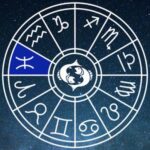
PISCES (Feb. 19-March 20):
In the frigid parts of planet Earth, some glaciers sing. As they shift and crack and melt, they emit tones: groans, pulses, crackles, and whooshes. I believe your soul will have a similar inclination in the coming weeks, Pisces: to express mysterious music as it shifts and thaws. Some old logjam or stuck place is breaking open within you, and that’s a very good thing. Don’t ignore or neglect this momentous offering. And don’t try to translate it into logical words too quickly. What story does your trembling tell? Let the deep, restless movements of your psyche resound.

ARIES (March 21-April 19):
Aries writer Joseph Campbell was a world-renowned mythologist. His theories about the classic hero archetype have inspired many writers and filmmakers, including Star Wars creator George Lucas. As a young man, Campbell crafted the blueprint for his influential work during a five-year period when he lived in a rustic shack and read books for nine hours a day. He was supremely dedicated and focused. I recommend that you consider a similar foundation-building project, Aries. The coming months will be an excellent time for you to establish the groundwork for whatever it is you want to do for the rest of your long life.

TAURUS (April 20-May 20):
In Japan, komorebi refers to the dappled sunlight that streams through tree leaves. It names a subtle, ephemeral beauty that busy people might be oblivious to. Not you, I hope, Taurus! In the coming weeks, I invite you to draw on komorebi as an inspirational metaphor. Tune in to the soft illumination glimmering in the background. Be alert for flickers and flashes that reveal useful clues. Trust in the indirect path, the sideways glance, the half-remembered dream, and the overheard conversation. Anything blatant and loud is probably not relevant to your interests. PS: Be keen to notice what’s not being said.

GEMINI (May 21-June 20):
In Finnish folklore, the Sampo is a magic artifact that generates unending wealth and good fortune. Here’s the catch: It can’t be hoarded. Its power only works when shared, passed around, or made communal. I believe you are close to acquiring a less potent but still wonderful equivalent of a Sampo, Gemini. It may be an idea, a project, or a way of living that radiates generosity and sustainable joy. But remember that it doesn’t thrive in isolation. It’s not a treasure to be stored up and saved for later. Share the wealth.

WANT MORE? Listen to Rob’s EXPANDED AUDIO HOROSCOPES, 4-5 minute meditations on the current state of your destiny — or subscribe to his unique daily text message service at: RealAstrology.com

(Zodiac images by Numerologysign.com, CC license)

SHARE The Wisdom With Friends Who Are Stars in Your Life on Social Media…

Captain Cook’s Ship ‘Endeavour’ Finally Located After 250 Years Sunken off Coast of Rhode Island

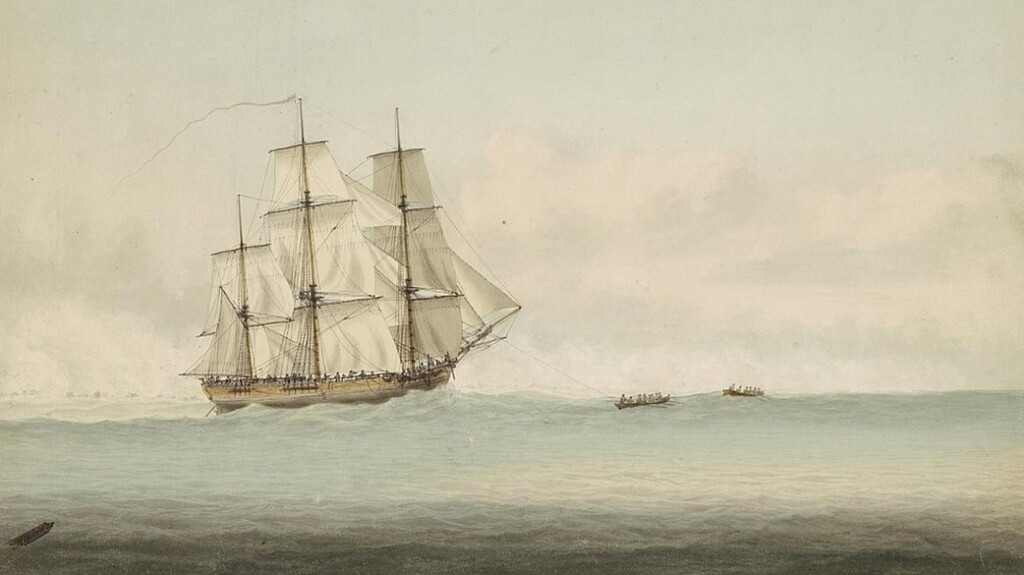
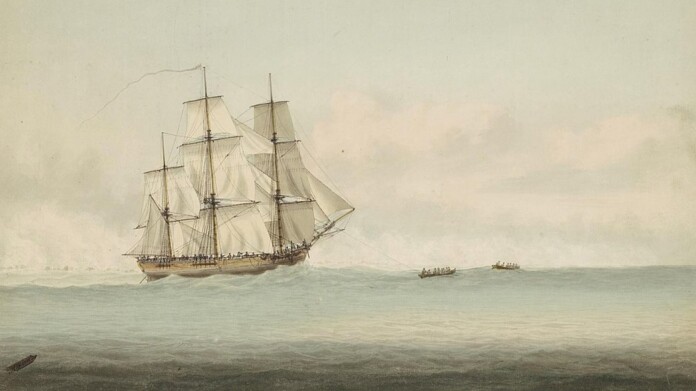
Endeavor by Samuel Atkins (1760-1810) at the National Library of Australia, public domain

There’s an old saying in science that substantial claims require substantial evidence, and a team of maritime archaeologists believe they have enough to state definitely: the wreck of one of the most famous ships ever sailed, HMS Endeavor, has been found.

Piloted by Captain James Cook throughout his first voyage to Australasia and the South Pacific, the wreck has been confirmed to be RI 2349, a previously-unexamined vessel off the coast of Rhode Island.

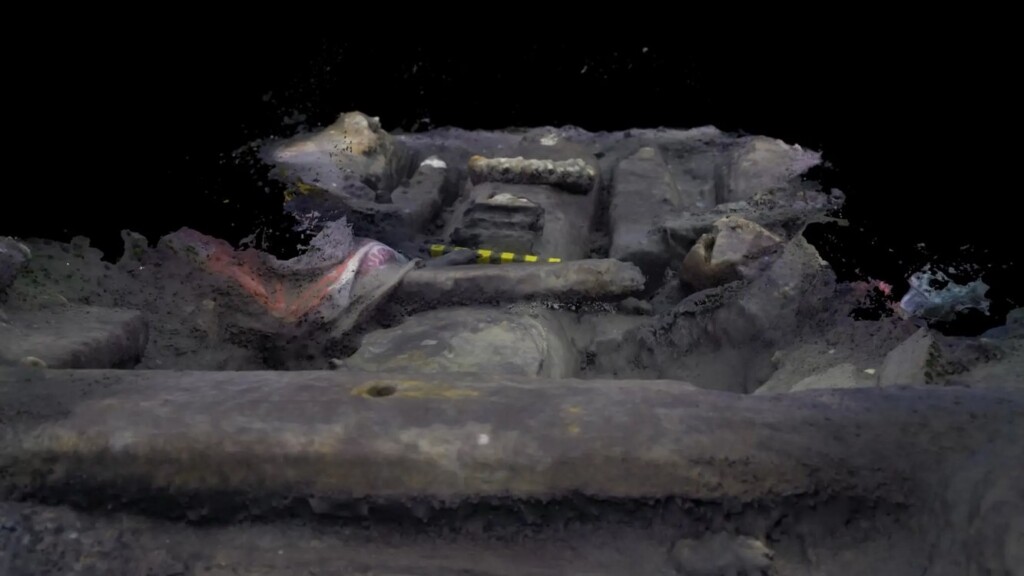
A 3D scan of the wreckage of Endeavor – credit, ANMM

The effort to find Endeavor was started in the closing years of the 20th century by the Australian National Maritime Museum, and the recent report released on RI 2349 was called by its director as the “definitive statement” on the 25-year hunt.

“This final report is the culmination of 25 years of detailed and meticulous archaeological study on this important vessel,” said museum director Daryl Karp.

One of the most controversial figures in British imperial history, none can say that Capt. Cook wasn’t an extraordinary man. As a navigator, leader, and explorer, few in the nation’s long history could ever hope to match the accomplishments he made between 1768 and 1779.

In just his first voyage with Endeavor, he charted the coastline of eastern Australia, circumnavigating both New Zealand islands and placing on the map the positions of several inhabited islands in the Society group and French Polynesia, claiming them all for Great Britain.

And there lies the controversy, for as much as Cook could be an inspirational figure for explorers and navigators, his colonializing influence, particularly with regards to Hawaii, changed the destiny of Oceania forever.

On his third voyage around the Pacific, Cook was killed in Hawaii during a dispute with the natives, and Endeavor was recommissioned as a military transport ship. Sold to the shipping firm Mather & Co., and then renamed the Lord Sandwich it was scuttled during the American Revolutionary War.

UNDERWATER ARCHAEOLOGY: Divers Recover Ancient Shipwreck Amazingly Preserved for 2,600 Years Beneath Spanish Waters

That meant it must have been somewhere in American waters, and after a quarter century of search and study, was eventually identified to be the wreck near Rhode Island.

“The stem scarf is identical, absolutely identical,” said archaeologist Kieran Hosty who, along with the rest of her team, relied on dockyard surveys and other documentation of Endeavor to confirm the wreck’s true identity.

“The timbers are British timbers. The size of all the timber scantlings are almost identical to Endeavour, and I’m talking within millimeters—not inches, but millimeters.”

MORE FAMOUS WRECKS: Shipwreck Near Kenya May Be from Vasco da Gama’s Final Voyage and Would Be ‘Archaeological Stardust’

Unlike the recent discovery of Earnest Shackleton’s Endurance, under the Antarctic Ocean, where maritime archaeologists were literally able to see the word written on the stern, there was likely never going to be something as significant to identify Endeavor because it had already been recommissioned by the time it sunk.

“You’ll never find a sign saying ‘Cook was here,’” said Hosty. “We’ve got a whole series of things pointing to RI 2394 as being … Endeavor. And so far, we found lots of things that tick the box for it to be Endeavour and nothing on the site which says it’s not.”

SHARE This News Of An Amazing Historical Relic Discovered Underwater… 

“June has never looked more beautiful than she does now, unadorned and honest, vulnerable yet invincible.” – Marie Lu (Celebrate summer solstice!)

Quote of the Day: “June has never looked more beautiful than she does now, unadorned and honest, vulnerable yet invincible.” – Marie Lu (Celebrate summer solstice!)

Photo by: takahiro taguchi

With a new inspirational quote every day, atop the perfect photo—collected and archived on our Quote of the Day page—why not bookmark GNN.org for a daily uplift?

Good News in History, June 21

Happy 44th Birthday to Brandon Flowers, the brilliant singer-songwriter who joined a new band called The Killers after answering a newspaper ad. The band released five consecutive chart-topping studio albums between 2003 and 2017, selling over 22 million records worldwide. The keyboardist, who is a devout Mormon, said growing up in Las Vegas—Sin City—helped prepare him for the world of rock and roll. READ more… (1981)

Jockey Being Dragged Across Track Holds Onto Reins to Protect Horse and Humans–And She Won the Next Race (WATCH)

When her racehorse took off last Friday, threatening injury to itself and spectators, harness racer Crystal Hackett remembered the adage that was instilled at a young age.

“Hang on as tight as you can, for as long as you can—as long as no one’s going to get hurt,” the 21-year-old who suffered only scrapes and bruises told Radio New Zealand.

Ms. Hackett’s horse, Buddy Guy, had just won the eighth race of the evening lineup at Alexandra Park in New Zealand, but it got spooked a moment later and took off—tipping Hackett from the two-wheeled sulky that trails behind horses in harness racing.

Hackett was dragged by the horse through the infield for several chaotic seconds, but she refused to let go of the reins.

If she had, the sulky could have easily gotten tangled up with the horse or even the fence. Buddy could have suffered a fatal injury to its legs and spectators could have been in danger too.

But Hackett’s determination prevented all that. Buddy Guy eventually slowed down and was corralled by race workers. Everyone involved avoided injury—even Hackett.


“I was a bit stiff the next day,” Hackett told Radio New Zealand. “I had a few aches and pains, but you just get moving and they’ve gone away now.

OTHER HAPPY HORSE ENDINGS:
Missing Horse Reunited With its Family After ‘Crazy Journey’
She Rescues Wild Mustangs That Are Rounded-Up and Reunites Their Herds on Her Ranch

The wild video of the ordeal has circulated on social media, firmly securing the young woman’s status as a harness-racing hero.

Even more legendary, Crystal Hackett walked over to another horse and flat out won the next race.

SHARE HER GRIT And Compassion With Horse-Lovers on Social Media…

Boyfriend Urges Hospital Visit, Saving Her from Oncoming Stroke–and Took Her to Prom Days Later

Katie Rangel at prom, just weeks after suffering a stroke - credit, family photo, released
Katie Rangel at prom, just weeks after suffering a stroke – credit, family photo, released

In northeast Texas, a teen survived an “incredibly rare” stroke to be walked to prom two weeks later by the man who insisted she go to the hospital.

Name an 18-year-old softball player who could have interpreted fatigue, a numb leg, and dizziness as an impending stroke.

Katie Rangel was with her boyfriend at the time, and while his worries didn’t extend that far, he firmly suggested that she go to the hospital.

“He was just saying, ‘Should I call 911?'” Rangel told CBS News. “I just remember going into the ambulance and then I think I just kind of blacked out.”

Inside that ambulance, paramedics treated Rangel for a seizure before arriving at Baylor Scott & White Medical Center, in Grapevine. There, physicians concluded that the teen was suffering from a stroke.

It turned out that Rangel had a hole in her heart, through which a blood clot that had formed in her leg traveled up to the left side of her brain. Interventional Radiologist Dr. Abdul R. Quadeer, who was part of the team in the ER that treated Rangel, said it was “lucky” she recovered.

STROKE SAVIORS: Englishwoman Wakes Up From Stroke Speaking Italian With an Accent–And She’s Never Even Been to the Country

“Luckily, she came to the ER because if she didn’t come to us, she’d probably be disabled right now,” Dr. Quadeer told CBS, before displaying an image of Rangel’s brain with the clot and without the clot. Luckily, he added, it came right out and normal brain function returned quite quickly.

Discharged from the hospital, Rangel and her boyfriend went to prom exactly as she had planned before the stroke. In her interview with CBS News, it’s clear she understood the gravity of the event and the consequences she managed to swerve.

MORE STORIES LIKE THIS: Nurses and Doctors Surprise Senior With Graduation Gala When She’s Too Sick to Attend High School Ceremony–WATCH

“I was on the dance floor almost the whole night and it was really fun,” she said.

Having graduated, Rangel has decided to pursue a career in nursing, inspired, she says, by the kindness and consideration of those who cared for her.

WATCH the story below from CBS News… 
SHARE This Story With Your Friends On Social Media… 
Thousands of Previously Unseen Colors Captured in the Sculptor Galaxy by ESO’s VLT – Very Large Telescope

Thousands of previously unseen colors captured in the Sculptor Galaxy by ESO’s VLT – Very Large Telescope / ESO

This image of the Sculptor Galaxy was stitched together with 100 exposures over 50 hours of observations to make a never-before-seen visual, 65,000 light years from side to side.

Using the European Southern Observatory’s Very Large Telescope (ESO’s VLT), astronomers observed this nearby galaxy in thousands of colors simultaneously. By capturing vast amounts of data at every single location, they created a galaxy-wide snapshot of the lives of stars within Sculptor.

The Sculptor Galaxy’s ionized gases highlighted by ESO’s VLT – Very Large Telescope ESO

Researcher at the ESO, Enrico Congiu, who led a new Astronomy & Astrophysics study on Sculptor, reminds us that even though we’ve been looking at and studying galaxies in detail for almost a century, they are still incredibly complex objects that we “struggle” to understand.

Located 1.1 million light years from Earth, the vast Sculptor Galaxy contains around 500 nebulae, or star-forming regions rich in gas and dust. Putting some context on that number, we generally detect around 100 nebulae with previous methods for observing galaxies.

These areas emit light in many different colors, and the science of spectroscopy can use these colors to clue scientists in on the age, activity, and even motion of the stars therein.

To use the second image as an example, specific wavelengths of light are released by hydrogen, nitrogen, sulfur and oxygen and show up as different colors. These elements exist in gas form all over the galaxy, but the mechanisms causing this gas to glow can vary throughout.

GREAT ASTRONOMY IMAGES:

The pink light represents gas excited by the radiation of newborn stars, while the cone of whiter light at the centre is caused by an outflow of gas from the black hole at the galaxy’s core.

Captured by the spectrograph instrument at the ESO’s Very Large Telescope array across the Southern Hemisphere, Sculptor sits at a sweet spot where it’s close enough to Earth to be seen in very precise detail but far enough away that the study authors could fit the whole thing in a single image.

“We can zoom in to study individual regions where stars form at nearly the scale of individual stars, but we can also zoom out to study the galaxy as a whole,” said co-author Kathryn Kreckel from Heidelberg University, Germany.

SHARE This Great Observation With Your Friends On Social Media… 

“The greater our knowledge increases the more our ignorance unfolds.” – John F. Kennedy

Quote of the Day: “The greater our knowledge increases the more our ignorance unfolds.” – John F. Kennedy

Photo by: Mitesh Chaudhari

With a new inspirational quote every day, atop the perfect photo—collected and archived on our Quote of the Day page—why not bookmark GNN.org for a daily uplift?