












All News - Page 562 of 1734 - Good News Network
Home Blog Page 562

Generous Americans Are Actually Giving More To Charities Through The Pandemic, Surveys Say

Toa Heftiba

It looks like the frequency of charitable giving by individuals in the US is continuing—and even increasing—during the economic uncertainty of the coronavirus pandemic.

The report from Lending Tree reported that about two-thirds of respondents said they had not changed their charitable giving habits from previous years—with 34% donating more than once within the last year.

The report also uncovered increases in forms of giving which aren’t usually recorded due to the inability to write them off on income taxes. These included donating to a local relief fund (13%) and sending money to a loved one who was laid off (12%).

56% said they make recurring donations, meaning they donate to the same charity or organization once a month or more often.

The generosity was impressive when it involved people they knew personally who are affected by the lockdowns: “Some consumers (30%) continue to pay for services they can’t use due to social distancing guidelines, like housekeeping and babysitting.”

RELATED: Charitable Donors in U.S. Give Record Amount, As Support Surges in First 6 Months of 2020

There was a lot of public debate before the first U.S. stimulus package was passed about whether people who had monetary means or property would—upon recognizing the gravity of the financial blow the country was about to receive—continue to support people who relied on them for their livelihoods.

The survey shows that many did indeed choose to make sure person-to-person service providers did not fall on hard times.

The CARES Act, the first COVID-19 stimulus package, encouraged donations by allowing regular household earners to write-off anything larger than $300 from their income tax total without requiring them to go through the process of itemizing their deductions.

Heavy duty giving – up a whopping 667%

While personal charity is a great marker to judge how charitable a society is, it’s equally amazing to note that large-scale corporate giving actually increased during 2020.

In June, Fidelity Charitable, the largest organizer of donor-advised funds (DAFs)—a kind of charitable savings account—reported that these funds have donated $3.4 billion in 2020, a 28% increase in giving in the first six months, over the same period over the previous year.

Together the donors directed a whopping 667% increase in their grants to food banks and other food assistance programs across the States.

In June, Good News Network reported that Schwab Charitable alone saw a 46% increase in DAF grants, totaling $1.7 billion across 330,000 separate grants, it was the most generous period of giving recorded in the history of one of America’s largest philanthropic funds.

POPULAR: Sean Penn’s Nonprofit Relieves Burden of Firefighters By Administering COVID Testing in 10 U.S. Cities For Free

“The last six months have been incredibly challenging, and I am truly inspired to see donors utilize their donor-advised funds to help communities and nonprofits impacted by health, economic, and social crises,” says Kim Laughton, President of Schwab Charitable.

Washington Examiner also reported on a statistic that found DAFs managed in 32 different community foundations in 21 different states “reported an 80 percent increase in donations… from March to May, compared with the same period last year.”

This is a heartening reminder once again that the United States has some very generous citizens, despite COVID-19 concerns.

Need more positive stories and updates coming out of the COVID-19 challenge? For more uplifting coverage, click here.

GIVING Your Friends Some Good News on Social Media Could Contribute to Their Well-Being…
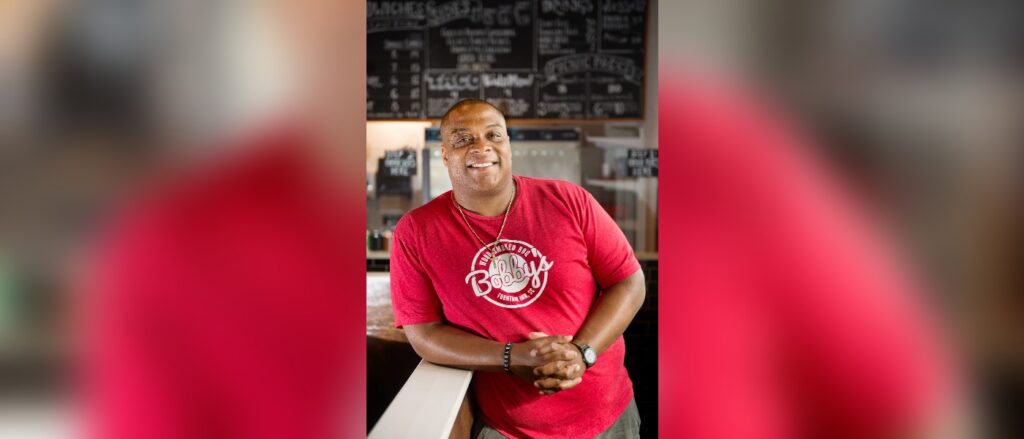
To Honor His Late Father, Man Learns To Cook on YouTube—Now He Owns A Thriving Restaurant

Credit: Tay Nelson of Bobby’s BBQ

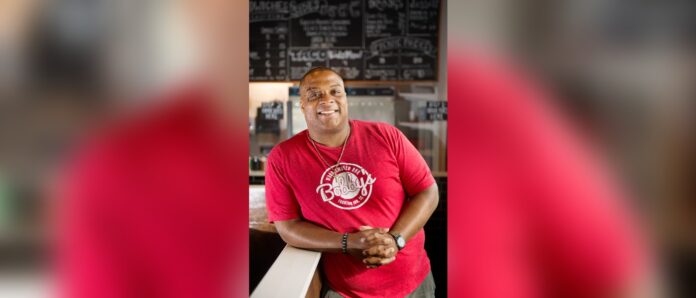
A man in South Carolina learned how to cook by watching YouTube videos, and now he’s gone on to open a restaurant that has employed 60 people. 

Octavius “Tay” Nelson grew up washing dishes in restaurants where his father served as cook. He always saw the joy that his dad’s food brought to so many people outside their family. 

After his father and brother passed away, Nelson wanted to honor their memory by engaging in that shared passion for food. The problem? Nelson didn’t know how to cook.

Turning to YouTube, he watched endless “how to” videos to gain kitchen skills. 

“I watched every video I could find,” Octavius tells GNN. In that way, he says, I “learned everything from how to cook different types of meat to business-related tips on how to run a restaurant.”

RELATED: This Sweet Family-Style Restaurant Has No Prices, and Feeds Anyone in Alabama –WATCH

At home in Fountain Inn, South Carolina, Nelson eventually launched a line of all-natural seasonings inspired by his father’s recipes, but his ultimate dream was to open a restaurant. So he turned back to YouTube to search everything he needed to know about running a food business. 

Through using the skills he learned on YouTube, Nelson started a catering business. He finally made his dream of opening a restaurant come true in 2018. 

Bobby’s BBQ, named after his father and brother, has provided dozens of jobs for his community, and more than 35,000 people have come to taste his barbecue rubbed with the house-made seasonings. 

LOOK: When Young Waffle House Worker Was Left Alone to Run Entire Restaurant, Empathetic Customers Jump In to Help

”We are incredibly grateful that we’ve managed to keep our doors open through this pandemic, so we can continue to have a positive impact on our community, as well as keeping our staff employed.”

(WATCH Bobby’s amazing story in the video below.) 

DELIVER The Delicious Inspiration to Hungry Friends On Social Media…

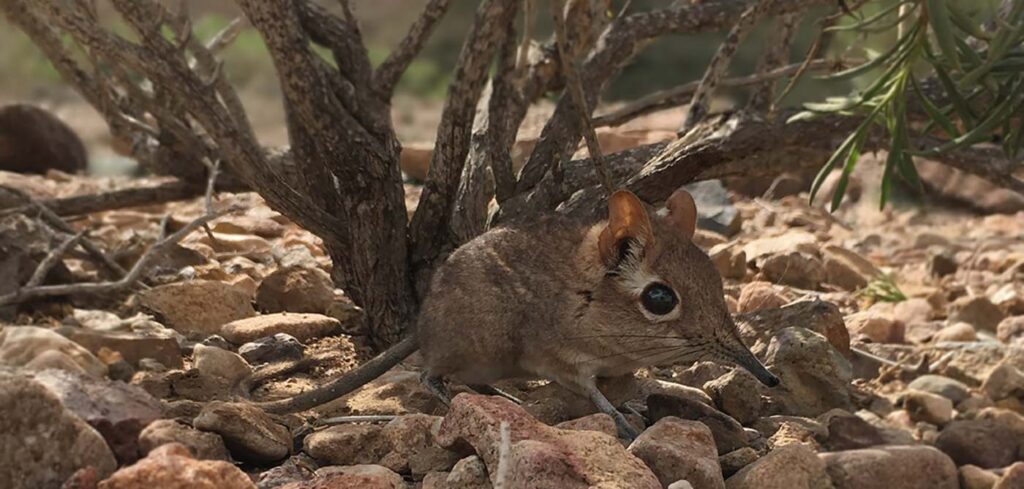
Tiny Elephant Shrew Rediscovered in Africa After 50 Years–And All it Took Was Coconut and Peanut Butter as Bait

Credit: Steven Heritage at Global Wildlife

Joining a number of high-profile species rediscoveries in the last two years, a tiny elephant shrew—also known as the Somali sengi—has been found to still be with us, and in quite healthy numbers too.

Credit: Steven Heritage at Global Wildlife

Despite not being documented by researchers since 1968, the sengi, a tiny big-eyed mouse with a long tail and a trunk-like nose that’s native to Somalia, was rediscovered living in well-preserved habitat in neighboring Djibouti, and in relatively-stable populations.

An expedition beginning in 2019 looked to utilize local knowledge about the sengi from the people of Djibouti who said it was still there. Sure enough, it took only one trap filled with coconut, peanut butter and yeast to find the little guy.

“It was amazing,” Steven Heritage, a research scientist at Duke University in the US, told the Guardian. “When we opened the first trap and saw the little tuft of hair on the tip of its tail, we just looked at one another and couldn’t believe it. A number of small mammal surveys since the 1970s did not find the Somali sengi in Djibouti—it was serendipitous that it happened so quickly for us.”

RELATED: Large Blue Butterflies Were Extinct in England, But Now Those Beauties Are Back After 50 Years

A distant relative of goliaths like the manatee and elephant, this tiny incarnation of trunked-mammals races around, vacuuming up ants with its nose in much the same way as the aardvark.

Correcting The Record

One of the least understood members of the 20 species-strong elephant shrew genus, the sengi lives in habitat that is unsuitable to most human activities, allowing it to remain relatively undisturbed and secure.

“Usually when we rediscover lost species, we find just one or two individuals and have to act quickly to try to prevent their imminent extinction,” said Robin Moore, of the Global Wildlife Conservation (GWC) group, who had placed the Somali sengi on their 25-Most Wanted List of missing species.

According to the Guardian, the team set out 1,000 traps and caught 12 of the little shrews while obtaining the first video and photographic documentation of the animal for science.

Along with rediscovering the species, the team gathered DNA samples which later revealed the Somali sengi to be more closely related to sengis in other corners of the continent like Morocco and South Africa.

This finding has suggested that the Somali sengi needs to be placed in a new genus—moving from Elephantulus to Galegeeska.

MORE DISCOVERIES: World’s Rarest Wading Bird is Making a Comeback as Its Population Rises By 30%

Like all great discoveries in science, the questions answered are only equal to the new mysteries presented, but the researchers’ work has highlighted Djibouti as a biodiverse nation worthy of scientific study. With any luck, perhaps more discoveries are waiting to be made among its desert and salt lakes.

SHARE The Good News From Africa With Your Friends On Social Media…

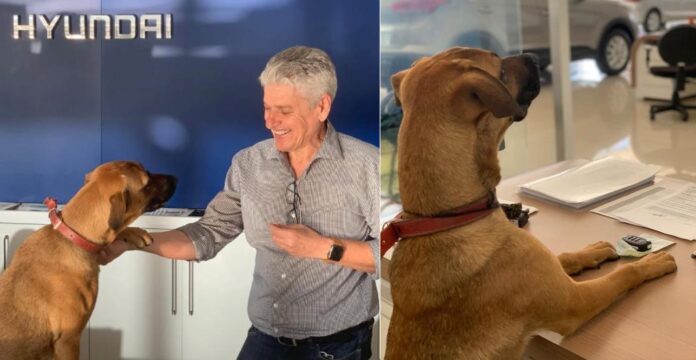
When A Loving Brazilian Street Dog Kept Visiting A Car Dealership, They Finally Hired Him as a Salesman

Instagram

What do you do when a stray dog shows up at your car dealership day after day? You give him a job, of course. Or at least, that’s what you do if you’re Emerson Mariano, a Hyundai Prime branch manager in Brazil.

Instagram

Mariano and his staff had taken a shine to a member of Brazil’s roving dog contingent who’d gotten in the habit of making regular visits. One rainy night the steadfast stray was invited to come in from the streets.

Related: Lost Puppy Tracks Down His Vet’s Office And Finds Help Getting Home

Little did the drenched pooch realize as he munched an impromptu meal, he’d found his “furever” home. But as far as the management was concerned, throwing the dog a lifeline instead of merely tossing him a bone only made sense.

“The company has always been pet friendly,” Mariano told Top Motors Brazil. “We decided to embrace this idea in practice too,” he said, citing the need for both heightened awareness and positive intervention to help curb Brazil’s growing population of abandoned animals.

After his adoption, the newly christened Tucson Prime was given the title of “Official Meeter & Greeter.” The staff says his “caring and docile nature” made him a natural for the role, but the persistent pup has already set his sights on climbing the corporate ladder.

In addition to his concierge duties, Tucson Prime is honing his marketing skills with regular posts to his “very own” Instagram account. While his musings have made him something of an Internet sensation, the handsome hound remains doggedly humble.

“Where I came from,” the doggo blogger reports, “I didn’t have this technology. Me and my humans are still trying to find a way to deal with so much love and affection.” (While he and his crew haven’t worked out all the deets, the caring canine is determined to answer all of his fan mail.)

More Pawsome News: A Big Thank-You to Some ‘Angel’ Neighbors Who Wordlessly Assisted a Helpless Dog In Need

We’ll bet with such a tail-waggingly happy ending, this is one shaggy dog story that’s sure to get a lot of mileage.

WOOF Your Excitement Over This Pup’s New Job By Sharing On Social Media…

“One of the keys to happiness is a bad memory.” – Rita Mae Brown

Quote of the Day: “One of the keys to happiness is a bad memory.” – Rita Mae Brown

Photo: by Matthew T Rader

With a new inspirational quote every day, atop the perfect photo—collected and archived on our Quote of the Day page—why not bookmark GNN.org for a daily uplift?


If You Can’t Muster a Real Smile, Researchers Suggest You ‘Fake it till you make it’

Credit: Cherie Joyful

‘Fake it till you make it’ is an aphorism that suggests that by imitating confidence or an optimistic mindset, a person can realize those qualities in their real life.

A new study from researchers at the University of South Australia have confirmed that the very act of smiling by simply moving your facial muscles, can actually trick your mind into being more positive.

The study, published in Experimental Psychology, evaluated the impact of a covert smile on perception of face and body expressions. In both scenarios, a smile was induced by participants holding a pen between their teeth, forcing their facial muscles to replicate the movement of a smile.

Credit: Cherie Joyful

The results found that facial muscular activity generates more positive emotions.

Lead researcher and human and artificial cognition expert, UniSA’s Dr Fernando Marmolejo-Ramos says the finding has important insights for mental health.

“When your muscles say you’re happy, you’re more likely to see the world around you in a positive way,” Dr Marmolejo-Ramos says.

RELATED: Why Smiling Is Good for You

“In our research we found that when you forcefully practice smiling, it stimulates the amygdala—the emotional centre of the brain—which releases neurotransmitters to encourage an emotionally positive state.

“For mental health, this has interesting implications. If we can trick the brain into perceiving stimuli as ‘happy’, then we can potentially use this mechanism to help boost mental health.”

The study replicated findings from an older ‘covert’ smile experiment by evaluating how people interpret a range of facial expressions (spanning from frowns to smiles) using the pen-in-teeth mechanism. It then extended this using point-light motion images (spanning from sad walking videos to happy walking videos) as the visual stimuli.

Dr Marmolejo-Ramos says there is a strong link between action and perception.

“In a nutshell, perceptual and motor systems are intertwined when we emotionally process stimuli,” Dr Marmolejo-Ramos says.

“A ‘fake it ’til you make it’ approach could have more credit than we expect.”

WATCH: Toddler Pals Running to Hug Each Other on the Street Might Be the Sweetest Thing You’ll All Week

Credit: Sarah Jamerson

So how about it? Maybe it’s time for all of us, no matter how we’re feeling, to get our grin on.

There’s Nothing Fake About This News, Share it With Your Friends…

If Children Wear This Type of Contact Lens It Can Stave Off Worsening Eyesight, Researchers Say

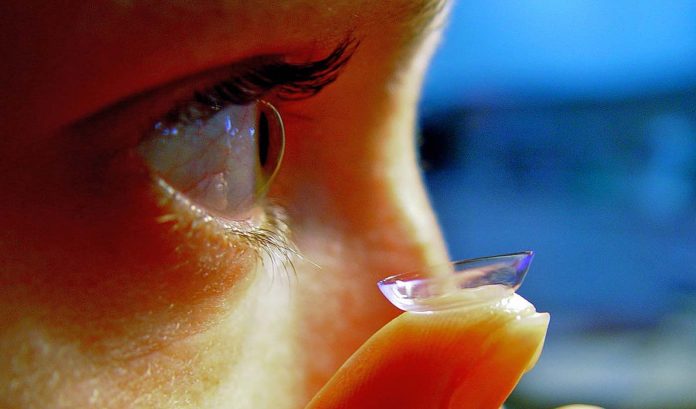
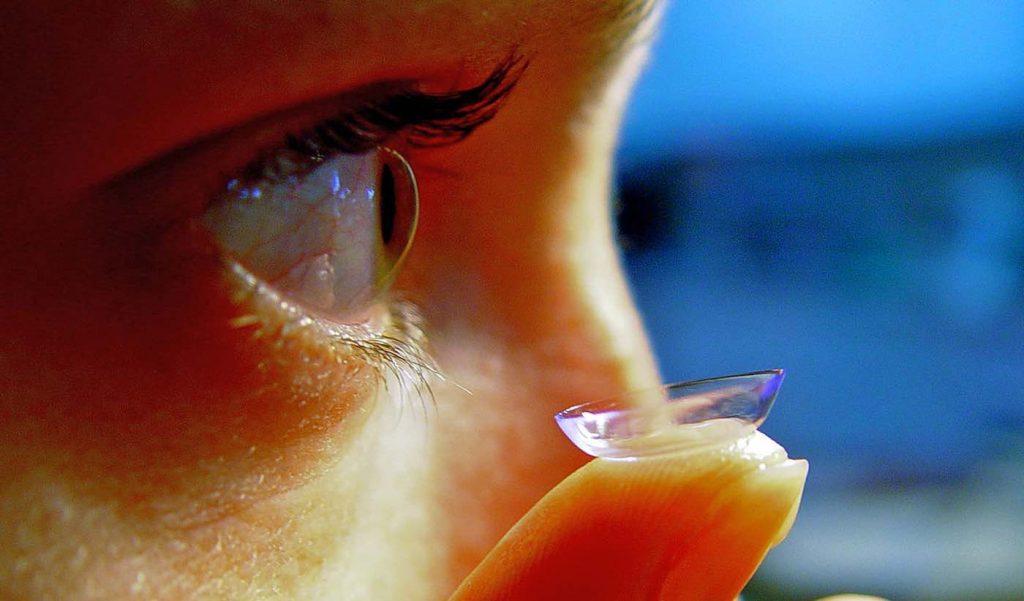
Representative photo by איתן טל, CC

Wearing certain contact lenses could reduce by 50% worsening eyesight in children, suggests a new study.

Multifocal contact lenses, typically used by adults over the age of 40, were found to curb the advancement of myopia in children as young as seven—by nearly 50 percent.

File photo by איתן טל, CC

There has been an increase in the condition of myopia among children, linked to surging screen time and shrinking outdoor time during early eye development.

Myopia, or nearsightedness, is linked to the onset of eye diseases in later life, but opticians have questioned prescribing contact lenses for young children given safety fears.

The study’s findings have helped to allay such concerns and the researchers now suggest that lenses could become a legitimate treatment option for mitigating myopia.

The condition occurs when a child’s developing eyes grow too long, from front to back. Instead of focusing images on the retina—the light-sensitive tissue in the back of the eye—images of distant objects are focused at a point in front of the retina.

As a result, people with myopia have good near vision but poor distance vision, the team explained.

Regular single vision prescription glasses and contact lenses are used to correct myopic vision, but fail to treat the underlying problem.

RELATED: New Contact Lenses May Soon Allow Diabetics to Monitor Glucose Levels With Just the Blinks of Their Eyes

Hopeful Findings

The study, published in the Journal of the American Medical Association, found that multifocal contact lenses correct myopic vision in children while simultaneously slowing myopia progression by slowing eye growth.

Study author Dr Jeffrey Walline, at the Ohio State University College of Optometry, said, “It is especially good news to know that children as young as seven achieved optimal visual acuity and got used to wearing multifocal lenses much the way they would a single vision contact lens.

“It’s not a problem to fit younger kids in contact lenses. It’s a safe practice.”

Dr David Berntsen, who led the study at the University of Houston, said multifocal lenses slowed myopia progression by about 43 percent over three years, compared with single vision lenses.

MORE HEALTH NEWS: Eye Drops May Promise a Stunning Alternative to Cataract Surgery

He added, “Greater amounts of myopia and longer eyes are associated with increased prevalence of eye conditions that can lead to visual impairment.

“Our study shows that eye care practitioners should fit children with high-add power multifocal contact lenses in order to maximize myopia control and the slowing of eye growth.”


Credit: SWNS


Myopia cases has surged over the past five decades. In 1971, a quarter of Americans were myopic, compared to a third in 2004.

There are currently no tests to identify which individuals with myopia will progress to high myopia, but the younger a child is affected, and left without intervention, the more opportunity their myopia has to progress.

CHECK OUT: Neurobiologists Actually Managed to Reverse Stroke Damage Using Human Skin Cells

A follow-up study is now underway to see if the benefits remain when children stop wearing the lenses.

This Is Clearly A Breakthrough Worth Sharing! Pass It On…

Video Game Industry Is Nudging 250 Million Gamers To Protect The Planet

Some of the world’s largest mobile video game developers have formed an alliance to raise awareness about renewable energy and the climate crisis through the UN’s “Playing For the Planet” initiative.

Credit: United Nations, YouTube

Consisting of around 11 companies, including the console producers Sony and Microsoft, and 25 design studios with mobile games played by 900 million active users, Playing For the Planet seeks to leverage a huge number of eyes and ears towards the goal of combatting not just evildoers in a game, but unmitigated climate change in the real world.

To this end, mobile gaming studios teamed up in spring 2020 to host the first ever Green Mobile Game Jam, which brought the best minds in an extremely competitive business together to come up with educational solutions for spreading awareness about the climate crisis.

“We are excited to see the gaming industry throw its weight behind global efforts to reverse the climate crisis,” said Inger Andersen Executive Director of UN Environment Program. “The climate emergency needs all hands on deck. In reaching out to 250 million gamers, we hope to inspire audiences to take action.”

RELATED: Video Game-Streaming Grandma is Making Profound Impact on the Lives of Strangers Across the Internet

Some of the mobile game ideas have already been integrated, and the rest will go live by early 2021 or sooner.

Organizers hope that, by next year, additional companies will join in the jam, potentially reaching up to a billion gamers.

Green Mobile Game Jam

Different developers all had their own ideas on how to encourage initiatives like tree-planting and habitat restoration, on how to educate users on renewable energy and the environmental impact of climate change, and the Green Mobile Game Jam from the Playing For the Planet initiative saw the immense creativity of the mobile video gaming world on full display.

POPULAR: Dad Creates Free Minecraft Server Specifically Dedicated to Kids With Autism

Some developers added special unique stages and levels of gameplay featuring world regions that are most-affected by the climate crisis: including Bali in Indonesia and the Amazon rainforest, while others added playable storylines that allow users to experience a parallel story involving greenhouse gas emissions and the warming of the earth.

Others ran in-game fundraisers that would plant trees or support animal conservation projects. Contributing in the game would earn the player special rewards. Creative Mobile—who won an award for fastest implementation of a solution in their game ZooCraft—used this method to contribute $14,000 dollars to the Wolf Conservation Center.

“We felt compelled to act when invited to participate; climate change will ultimately affect us all and is simply too important to ignore,” says Alex Rigby, Chief Creative Officer of Playdemic, the studio which was voted as the winner of the Green Mobile Game Jam.

“And we’re in a position to help; the ubiquity of mobile games represent an unusually effective way to communicate to people across the whole of society.”

MORE GAMING Good: Video Gamers Join the Race to Produce COVID-19 Drugs With Innovative Citizen-Science Project

Playdemic used their Golf Clash game as a platform to attempt to feature honest, neutral messaging about climate change and easy commitments users could make to help the climate crisis.

Console Gaming Joins In The Fun

Launched in September 2019 at the UN Headquarters in New York during the UN Secretary-General’s Climate Action Summit, it wasn’t just the mobile gaming industry that pledged to throw their power behind the climate crisis.

From the holy trinity of console gaming, Sony’s introduction of energy efficient technology and suspended low-power mode for next-generation Playstations puts the company on track to save 29 million tons of carbon dioxide by 2030.

Another member of the console-gaming power trio pledged to engage gamers in sustainability efforts in real life through the Minecraft ‘Build a Better World’ initiative, which saw Microsoft players take more than twenty million in-game actions.

CHECK OUT: Want to Get Your Creative Juices Flowing? This New Study Says You Could Try Playing Minecraft

Minecraft is an open-world game that allows you to build things with blocks. Users can build anything, from a house to a skyscraper, even portals to the underworld, and one gamer famously created a 1:1 scale model of the entire planet in Minecraft—making it the perfect electronic space for sustainability messaging.

Together, mobile and console gaming has as broad a user base as professional sports, but with a much younger average audience, representing an enormous opportunity to inspire change in the next generation.

LEVEL UP Your Social Media Feed By Sharing This With Your Friends…

Lifelike Robotic Pets Bring Joy And Serenity To Seniors, Combatting Stress And Loneliness

Credit: Hasbro/YouTube

Lifelike ‘companion animals’ are now offering the elderly all the feel-good perks of pet ownership, but without the drawbacks.

According to research, pet therapy has numerous benefits that run the gamut from helping alleviate anxiety and loneliness, to lowering blood pressure and cortisol levels, to fostering enhanced social interaction.

Credit: Hasbro/YouTube

“The simple act of petting animals releases an automatic relaxation response,” a report from UCLA Health reveals. “Humans interacting with animals have found that petting the animal promoted the release of serotonin, prolactin, and oxytocin—all hormones that can play a part in elevating moods.”

Unfortunately, the practicalities of pet ownership: feeding, grooming, and vet visits—not to mention cleaning up the occasional “Oops!”—all too often limits seniors, especially those in assisted living, from having a fluffy friend to call their own. But now, thanks to a novel breed of robotic puppies and kitties, many seniors are getting a “new leash on life.”

WATCH: Watch Mom With Dementia React To Being Given Robotic Cat

The leader of the pack when it comes to robotic companion animals is Joy For All Companion Pets. This line of “adoptable” animatronic fur babies from manufacturer Ageless Innovation was specifically created by a group of former Hasbro toy designers with seniors in mind.

“We have technology that allows you to respond to touch and sound and light in different ways,” Ageless Innovation CEO Ted Fischer told CNN. “That’s part of the magic of a companion pet.”

In addition to providing companionship, robot pets have shown amazing promise for improving the quality of life for Alzheimer’s and dementia patients.

RELATED: Disabled Workers Can Fulfill Their Love of Catering by Controlling Restaurant Robots From Home

In a CBS Health Watch interview filmed at the Memory Care Unit at the Hebrew Home in Riverdale, New York, spokesperson Mary Farkas explained their cadre of resident robotic pets are often used to soothe agitated dementia sufferers rather than resorting to drugs. “These animals are a wonderful way, a nonpharmacologic approach to offer comfort and a sense of calm,” she said.

Decreased meds and a calming influence are definite checks in the plus column, but the benefits don’t stop there. Often offering a dose of much-needed role reversal, robotic pets also boost seniors’ self-esteem. “[They] provide an opportunity for the resident to be in the role of the nurturer and the caregiver,” Hebrew Home CEO Daniel Rheingold told CBS.

So, are robotic pets the “purrfect” solution for seniors suffering unrequited puppy love or crushing on kitty in a cat-free zone? Signs point to “Woof!”

WATCH the story from CBS…

SHARE This Pawsome Story Of Hope With Your Friends On Social Media

Predators Have a Soft Side: Grey Reef Sharks Found To Form Long-Lasting ‘Friendships’ Says Study

Credit: Kydd Pollock

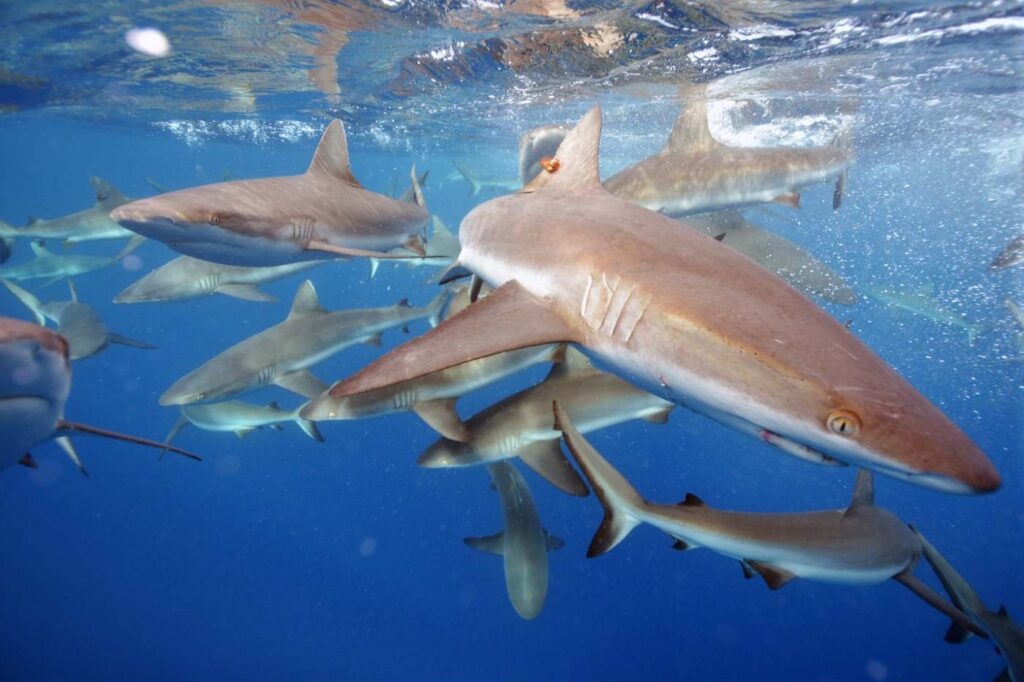
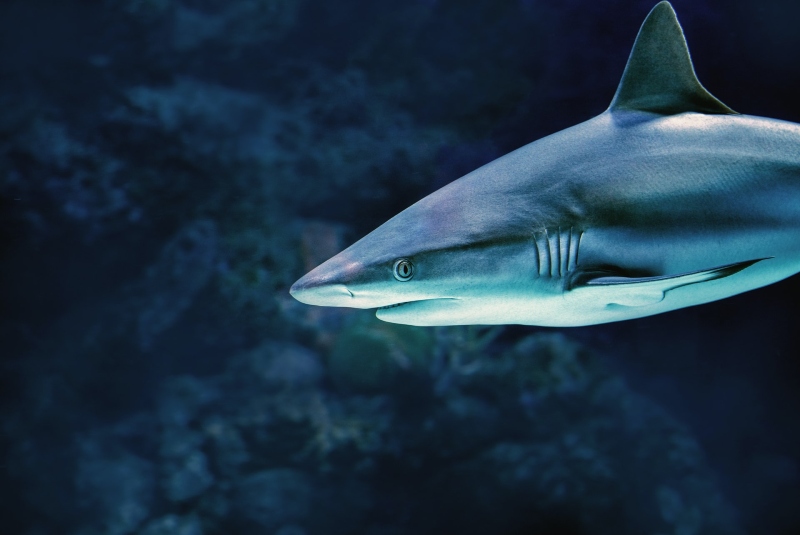
A team of Florida scientists have recently discovered that grey reef sharks form long-lasting relationships with each other that straddle the line between friendships and business partners.

Credit: Kydd Pollock

“We don’t think of sharks as social animals, but they do have social groups,” says Yannis Papastamatiou, who was involved with the study.

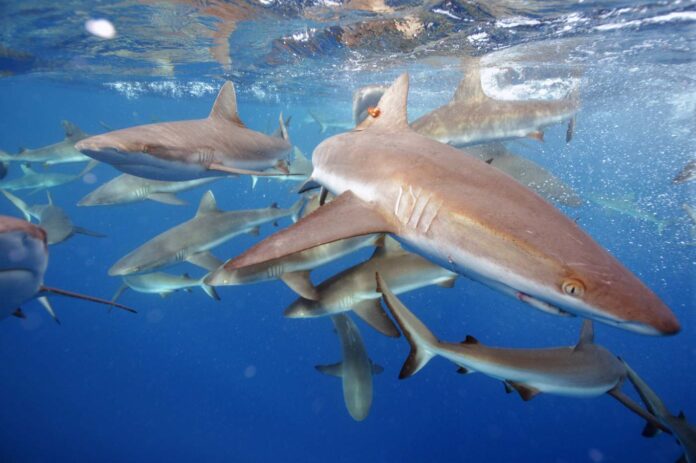
Averaging six feet, or two meters in length, the large-eyed sharks of the Pacific and Indian oceans may be aggressive nocturnal predators, but apparently they have a soft side.

Scientists found that the social groups of the sharks were remarkably stable, with the same individuals remaining in their cliques of around 20 animals for years—while rarely ever switching associations despite the presence of almost 8,000 sharks which frequented the reefs surrounding the atoll.

RELATED: Scientists ‘Blown Away’ By Discovery of Longest Animal Ever Recorded—And It’s Quite Beautiful

Around the Palmyra Atoll, a remote island 1,000 miles from Hawaii, researchers from Florida International University in Miami, tagged 41 grey reef sharks with acoustic transmitters that emit a unique sound picked up by a perimeter of receiving devices stationed around the island.

For four years, anytime a tagged shark would come within 300 meters of the receivers, their identity would be logged in a database.

Their findings were published this week in Proceedings of the Royal Society B.

The remarkable discovery leaves many questions unanswered, for example how the sharks identify each other, and what the purpose of their social groups are.

The Mafia Of The Sharks

Credit: David Clode

They is no proof that the sharks have any emotional bond with each other, so Papastamatiou, speaking with the New Scientist, was unsurprisingly reluctant to refer to the sharks as friends.

He and his colleagues opted to call them “associates,” which is maybe a little more mafioso, but considering how grey reef sharks often use their aggression to bully larger sharks, maybe it’s for the best.

MORE SHARK NEWS: Watch a Family of Divers Rescue a Whale Shark With Rope Wrapped Around Its Body

One hypothesis as to the purpose of these “associations” is that they are loosely organized hunting units. Since the sharks hunt at night beyond the reach of the receivers, there wasn’t any evidence that deliberate cooperation was occurring in the dark ocean beyond the view of the research team’s devices.

However, it may be a sort of poaching strategy, whereby if the shark to attack first loses out, his “associates” have an opportunity to follow up. This might even-out the success rate for all the members of a group over a long enough time span, increasing their overall survival rate.

This discovery makes grey reef sharks one fascinating fish. They display a collection of highly unusual behaviors in the shark world, including performing threat displays, and now, as scientists have just found out, social congregation.

LOOK: Man Strikes Up Friendship With Owl Family After They Discover Mutual Love of Television

SHARE This Unusual Discovery Of Long-Lasting Shark Bonds With Your Social Media Friends…

“Now, if you want me to get out of the world, you had better get the women votin’ soon. I shan’t go till I can do that.” – Sojourner Truth (19th Amendment is 100 years old)

Quote of the Day: “Now, if you want me to get out of the world, you had better get the women votin’ soon. I shan’t go till I can do that.” – Sojourner Truth (19th Amendment is 100 years old)

Photo: Sojourner Truth, Library of Congress

With a new inspirational quote every day, atop the perfect photo—collected and archived on our Quote of the Day page—why not bookmark GNN.org for a daily uplift?

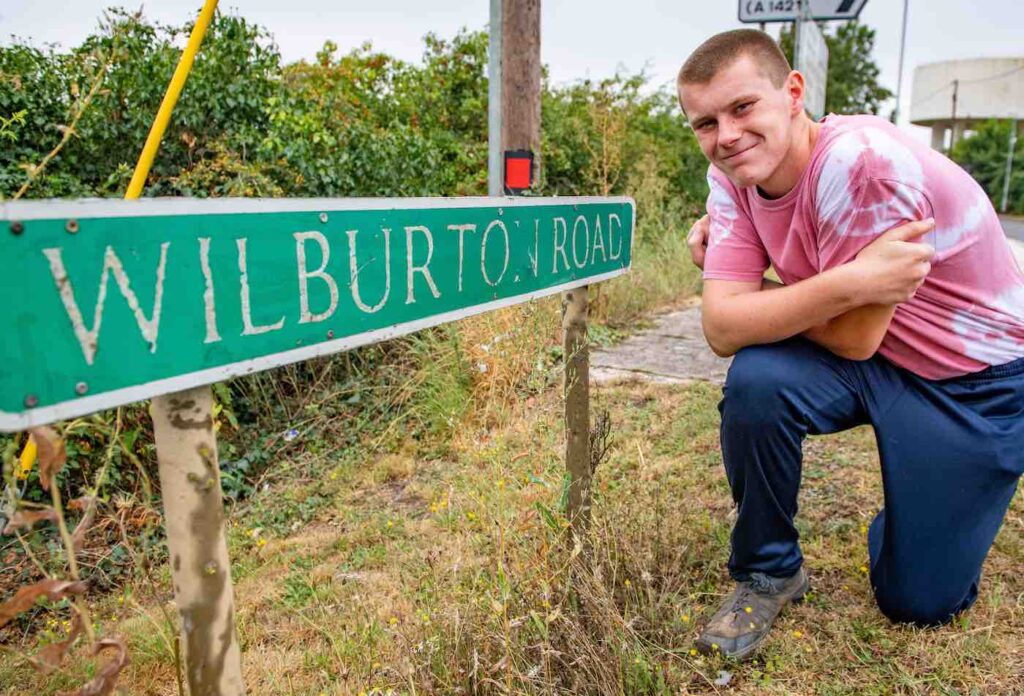
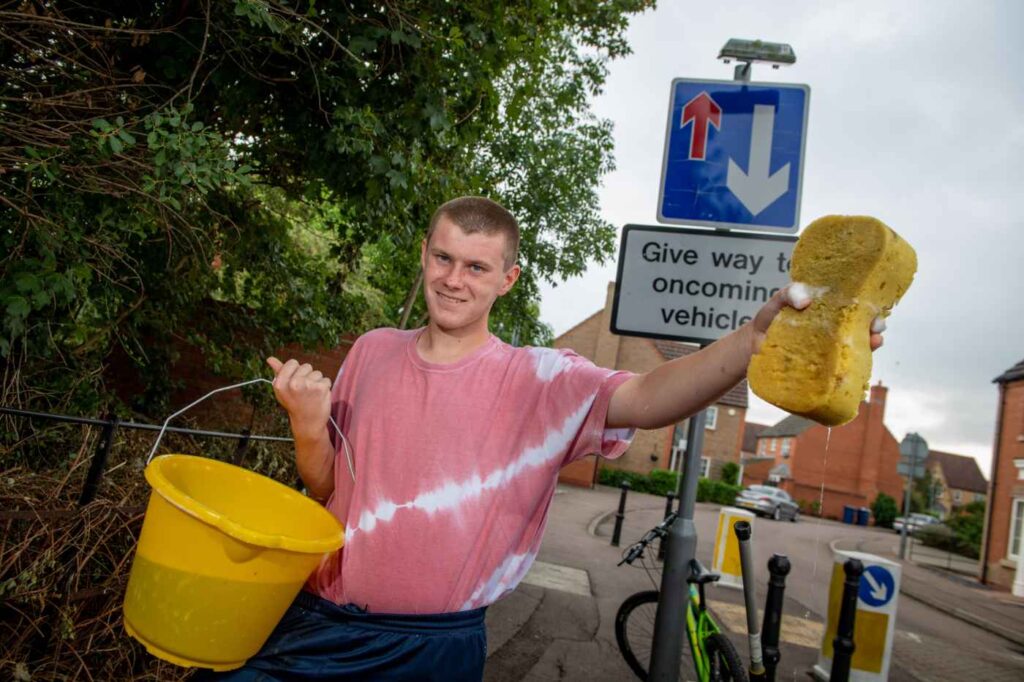
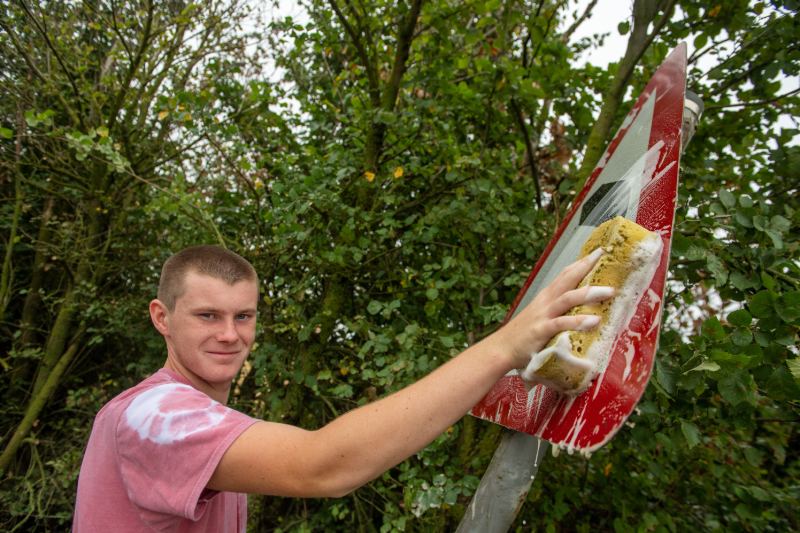
Selfless Teen is Local Hero After Daily Trips During Lockdown To Clean Dirty Road Signs And Cut Back Town’s Hedges

Joseph Beer - SWNS

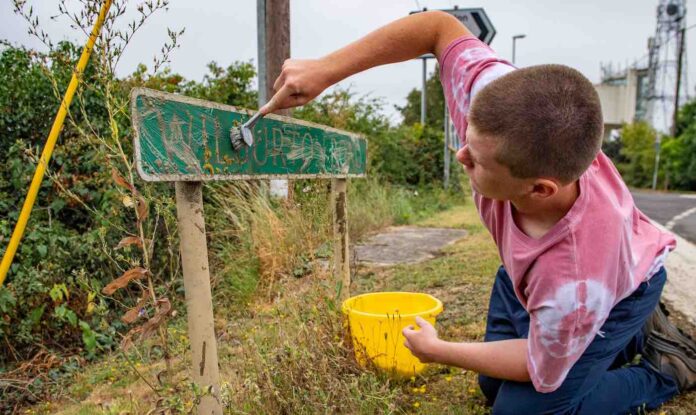
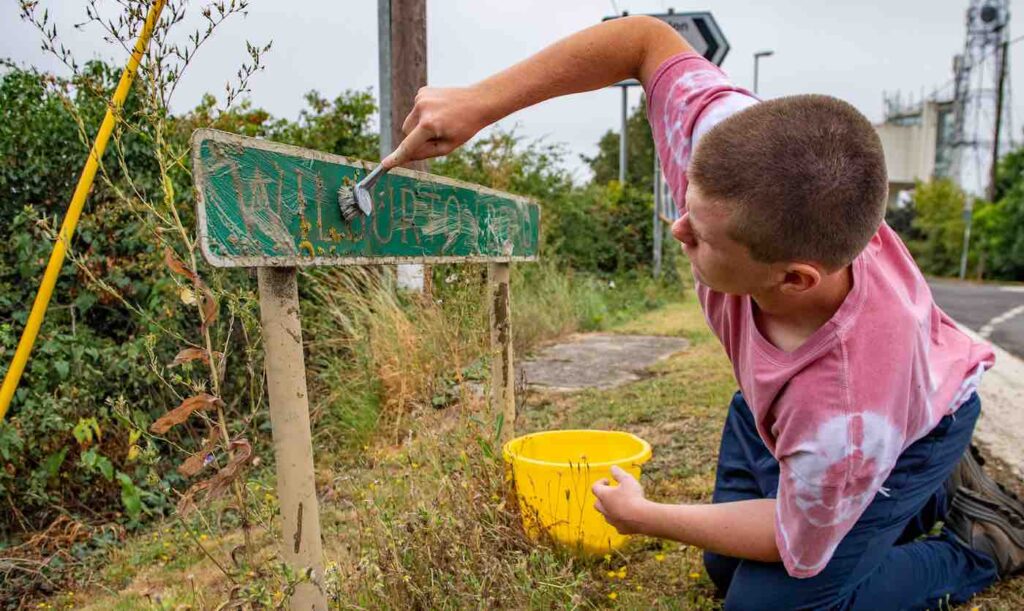
A teenage boy annoyed by road signs left dirty and hedges overgrown during lockdown has become a local hero after going on a mission to clean them all up.

Joseph Beer – SWNS

Joseph Beer noticed dozens of neglected street signs and hedgerows while out on his daily walks with his mom Lisa, 52.

The 15-year-old soon decided he wanted to clean up the streets. With the help of dad, he rigged up a trailer to fix to the back of his bike, and started peddling around the streets near his house.

Almost every day, Joseph, from Chatteris in Cambridgeshire, England, has headed off to do more tidying up. 

The youth, who has autism and ADHD, has scrubbed street signs that have been left almost unreadable due to moss growing over them. In other places, hedges have become hazards, left to grow until they almost completely obscure road directional signs from view.

POPULARMan Hailed for Devoting His Daily Walks During Lockdown to Cleaning Up Neglected Headstones

Credit: SWNS

Joseph’s efforts have not gone unnoticed by the people of Chatteris and surrounding towns—particularly a driving instructor who got in touch to thank him for uncovering hidden road signs.

One kindly neighbor, who Joseph’s family did not even know, was so impressed by his clean-up of the town, that she set up a GoFundMe page to reward him.

The fundraising campaign, which has now ended, raised almost £1,000 in donations.

RELATED: Two South African Women Take On Mission to Tackle Plastic Along One of Worst Rivers For Ocean-Bound Pollution

A Sense Of Purpose

Joseph’s mom Lisa says that her son has been working “really hard” almost every day of lockdown.

Credit: SWNS

“We are absolutely blown away with everything he’s done. His dad and I are so proud.

“He comes back absolutely filthy, and still carrying the bucket of water, which by the end of the day has turned black from all the cleaning he’s done.

“Then he’ll hop in the shower and get ready to do it all again the next day.”

He started sharing photos on his Facebook, too, and reports, “I’ve found it really satisfying to look at the ‘before’ and ‘after’ pictures, and see the obvious improvements I’ve made to my hometown.”

MORE LIKE THIS: How 550 Volunteers Transformed a Filthy, Waste-filled Train Station in India

His mother says he’s got an “incredible heart,” and now he wants to share the money that was raised for him. Joseph is donating to the local food bank, “for families who are struggling to feed themselves at the moment”.

Credit: SWNS

The teen, who usually boards at a residential, therapeutic school during the week, had been in need of routine since the school closed in March—and he found it with the cleaning project.

“Every day he wanted to find something new and challenging to take on. He had lots and lots of energy, and he wanted to put it to practical use.

ALSO: Teen Who Cleaned Up City for 10 Hours After Protest Receives Car and Scholarship as a ‘Thank You’

Now he points out all the things that needed cleaning or improving.

“He is noticing new things every day when we go out—so he’s still going.”

ADD Some Sparkle to Your Social Media Feed By Sharing With Your Friends… 

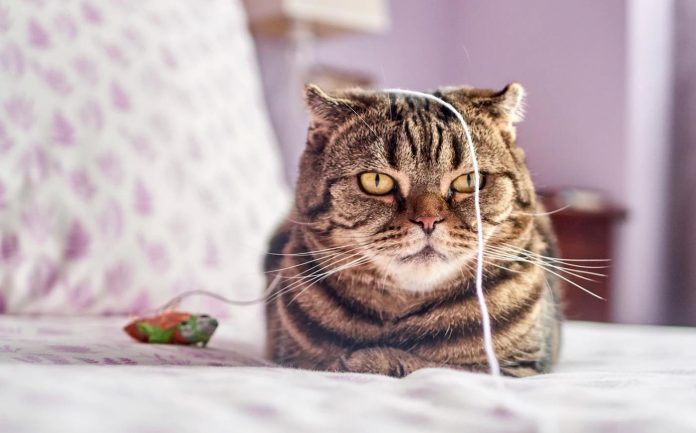
Most Americans With Cats Say They Couldn’t Have Gotten Through Lockdown Without Their Feline Friend

Photo credit: Juan Gomez

Three-quarters of Americans with cats couldn’t have gotten through the quarantine without their pet, according to a new survey.

The poll of 2,000 cat owners (57% of whom also have a dog) looked at the various benefits provided by our furry friends during the pandemic, and how they helped us through.

Pets were found to ease feelings of anxiety. 57% said having a pet made them feel less alone, and 49% said it helped them feel less anxious.

Those weren’t the only benefits though — 41% said being with their pet gave them someone to talk to, and 35% said their pet brought a feeling of positivity to their days.

Conducted by OnePoll on behalf of Royal Canin following International Cat Day Aug. 8, the survey also found quarantine was an opportunity for respondents to learn more about their feline friends.

Two-thirds (66%) of cat owners surveyed learned or noticed something new about their pet, and three out of four respondents became closer to their kitty as a result of the quarantine.

RELATED: Myth-Busting Study Says Cats Form Emotional Attachments to Their Owners Just Like Dogs and Babies

Being cooped-up indoors gave respondents time to uncover a new spot their cat enjoys hiding in (64%), notice a new behavior (57%) and discover a new food their pet likes (55%).

But our pets, like many of us, may be ready for things to return to normal! The survey found 73% of those surveyed said their cat seems to be ready for some space.

“Although many cats are enjoying the attention from their owners being at home, most cats are independent and do a good job of structuring their day themselves,” said Laura Pletz, DVM, Scientific Services Manager, Royal Canin. “Owners should make gradual changes to help reduce stress and ease the transition back to ‘normal’ life.”

LOOK: Photographer Builds Adorable Tiny Log Cabins in His Backyard to Keep Mouse Families Safe From Cats

With all the things our pets do for us — during quarantine and beyond — it’s no wonder that respondents want to return the favor.

Eighty-six percent of respondents agreed that they want to take care of their pet because their pet takes care of them.

BENEFITS OF HAVING A PET DURING THE QUARANTINE
Helped them to feel less alone 57%
Helped them to feel less anxious 49%
Playing with their pet helped encourage them to move around my space 47%
Gave them someone to talk to 41%
Helped give them a schedule throughout the day 39%
Brought a feeling of positivity into my day 35%

And, another silver lining of the pandemic: 66% plan to improve how they care for their pets since COVID-19.

SHARE The Cat-Love With Friends On Social Media…

Police Officer Pulls Man From Wheelchair Stuck On Tracks Within Seconds Of Speeding Train – WATCH

In California last week, a local police officer became a hero when she pulled a man stuck in his wheelchair from the tracks within seconds of a train barreling past.

Her body camera footage shows the tense moments leading up to the rescue. 

On the morning of August 8th, at around 8:44am, Officer Erika Urrea jumped out of her patrol car when she saw what was about to happen. The railroad crossing arms were coming down. A train was approaching.

She ran over and, after the wheelchair wouldn’t budge, pulled the anonymous man from his chair. They both fell back onto the ground and were safe, just moments before they would have been hit. 

RELATED: Man Finally Rescued After Spending 20 Days in Alaskan Wilderness Following Cabin Fire

The man, 66, suffered a leg injury, but was immediately tended to by Urrea and her colleague, Officer Delgado, who had arrived at the scene to help. 

The team at Lodi Police Department wrote of the daring events on Facebook, “Officer Urrea risked her own life to save another and her actions prevented a tragedy today. We are extremely proud of her heroism.”

(WATCH the body camera footage of Officer Urrea’s brave rescue below.) 

Share The Heroic Video With Your Friends on Social Media…

Nigerian Entrepreneur Invents Giant Solar-Powered Refrigerators That Cut Spoilage to Help Farmers Earn 25% More

One of the great inventions in human history, refrigeration is being brought to rural fish and produce markets in Nigeria through an entrepreneur’s invention of 100% solar-powered walk-in cold storage rooms.

ColdHubs

Nnaemeka C. Ikegwuonu has been showered with awards for his pioneering ColdHubs, which use transformative technology that, like all great innovations, tackles several problems at once.

Around 6,000 tons of fish are harvested every day on the rural Nigeria side of the Niger Delta, but due to the tropical climate only 2,000 tons of fish are sold fresh. The story is the same for fruits and vegetables, which on average can survive a maximum of only two days in the West African nation’s heat and humidity.

Designed specifically for off-grid areas, ColdHubs employ rooftop solar panels to generate enough electricity to power the units in all weather conditions, while providing reliable 24/7 autonomous refrigeration. This cuts down on spoilage, but also leads to much higher profits.

A bag of fresh bonga fish should in theory fetch between $20 and $40, but without storage facilities, fishermen either sell the same bag for much less to avoid spoilage, or they smoke or dry the fish and sell it days later—while accepting much less due to the higher value and demand that fresh fish commands.

RELATED: This New German Car is Covered With Solar Panels and Charges As It Drives

ColdHubs currently serves 3,517 farmers and fishermen. The company has so far installed 24 Hubs, saving over 20,000 tons of food from spoilage, and employing 48 women to service the refrigerators. At a rental cost of $1 a day on a pay-as-you-go subscription model, users can increase their income by being able to sell more fresh food.

An entrepreneur for the moment

Once an agricultural radio host, Ikegwuonu grew up on a farm and understood that food spoilage was a major impediment to farmers’ livelihoods.

ColdHub fridges can extend the life of fruits and vegetables from two to 21 days. This increases vendor and farmer profits by 25% on average, says the company. It also increases entrepreneurial energy among the users, as literal days of their life are freed up from having to spend time buying, sourcing, shipping, or throwing away extra produce.

ColdHubs

Ikegwuonu won the 2020 Waislitz Global Citizen Disruptor Award and its $50,000 cash prize, which he says he will use “to build two ColdHubs in two fruit and vegetable markets, saving 3,285 tons of food from spoilage yearly, increase the income of 200 users, and create four new jobs for women.”

MORE LIKE THIS: Ghanaian Shoemaker Invents Solar-Powered Hand-washing Basin During Lockdown to Encourage Sanitary Habits

And there’s more than money to the equation.

Ikegwuonu told Global Citizen., “Tackling food spoilage is important because, according to the International Food Policy Research Institute (IFPRI), it is estimated that a 10% reduction in global food loss will result in an 11% decrease in hunger, and a 4% decrease in child malnutrition worldwide.”

“In Nigeria, a 35% reduction in post-harvest tomato loss alone would [impact] vitamin A deficiency for up to 1.1 million children per day,” he added.

It’s a classic economic case of ‘what is seen and what is unseen.’ And Ikegwuonu, Nigeria, and even the world, might never understand how much entrepreneurial, educational, or economic advances could arise from ColdHubs’ presence in the country.

SHARE the Inspiring Ingenuity on Social Media…

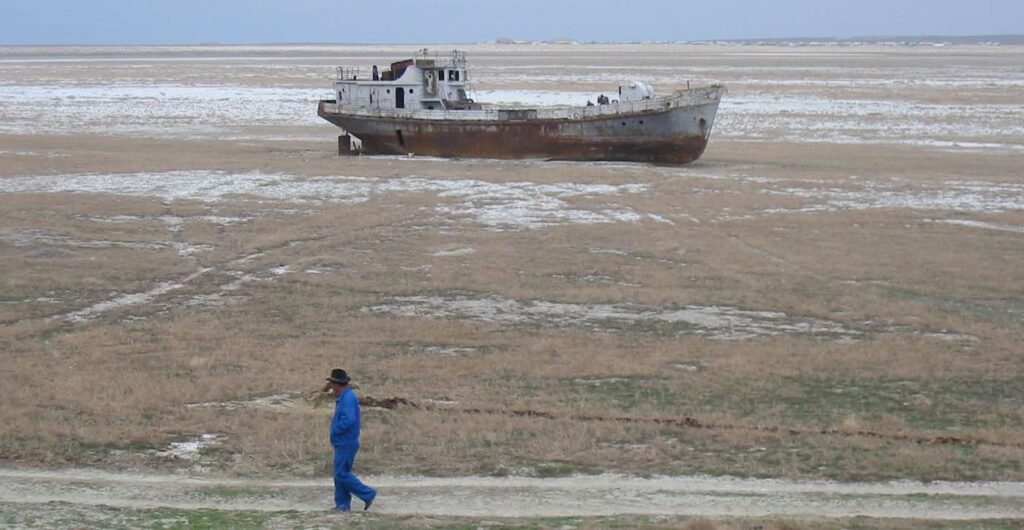
Once Left For Dead, The Aral Sea Is Now Brimming With Life Thanks to Global Collaboration

Kissing the borders of Uzbekistan and Kazakhstan, the North Aral Sea is experiencing an ecological resurgence following a long period of decline.


In 2005, a $86 million project from the World Bank made repairs to dykes and paid for the construction of an eight-mile dam.

This project raised water levels of the sea by 11-feet in just seven months—going far beyond scientists’ hopes of a rise over three years.

The Kokaral Dam’s erection south of the Syr Darya River has proven to be the catalyst in an incredible resurgence of local fish stocks. Beyond this great news for local fishing communities, the sea’s recovery has also led to a reduction in local disease rates from formerly-contaminated drinking water.

Once the fourth-largest freshwater lake on Earth, starting in the 1960s the Aral Sea shrank dramatically after the rivers that fed it were diverted by Soviet irrigation projects—so much that it split into the North and South Aral Seas.

When this happened, increased salinity in the water led to the die-off of several fish species like bream and perch, leaving the resilient flounder as the only animal capable of dealing with the high salt content.

More Good News: Two Sturgeons Found in Georgia River Delight Conservations Who Feared Prehistoric Fish to Be Extinct in Europe

Fishing for hope

Between 1957 and 1987, fish harvests fell from 48,000 per year to zero. Now, since the Kokaral dam was built, levels of salt have returned to normal. As a result, fish stocks have exploded back to life.

National Geographic reports that in 2018, catch limits were set at a generous 8,200 tons: a 600% increase from 2006.

Many of the surrounding communities depend on fishing for their livelihoods, and for Askar Zhumashev, 42, a supervisor at Kambala Balyk Processing Plant, he has seen the recovery firsthand in the inland town of Aralsk, where he and his team process roughly 500 tons of fish a year.

“When I was born, the sea was already gone,” Zhumashev told National Geographic. “I went to the Aral Sea for the first time only two years ago. My parents used to tell me that the boats would come in and out every day from the old port.”

Related: Two South African Women Take On Mission to Tackle Plastic Along One of Worst Rivers For Ocean-Bound Pollution

The World Bank followed up with an effort to restore delta and wetland habitats on the Uzbekistan part of the Aral Sea through the Drainage, Irrigation and Wetlands Project.

The project is based on a successful pilot program that saw the restoration of the 100,000 acre (40,000 hectare) Lake Sudochi elsewhere in the region.

LOOK: Satellites Reveal There Are 20% More Emperor Penguin Colonies in Antarctica Than Previously Thought

Not only do fisheries benefit from improved wetland and delta habitat. Ranching and farming improves as well. Since the project began, river and delta salinity has returned to normal, allowing local farmers to irrigate their crops.

That’s good news for local communities. And the world. As Kristopher White, a professor at KIMEP University, put it, the success of the Aral Sea project just goes to show, “Anthropogenic ecological damage can be reversed by human intervention.”

Share This Hopeful Environmental News With Your Friends On Social Media…

“Sweet is the memory of distant friends! Like the mellow rays of the departing sun, it falls tenderly, yet sadly, on the heart.” – Washington Irving

Quote of the Day: “Sweet is the memory of distant friends! Like the mellow rays of the departing sun, it falls tenderly, yet sadly, on the heart.” – Washington Irving

Photo: by Joshua Earle 

With a new inspirational quote every day, atop the perfect photo—collected and archived on our Quote of the Day page—why not bookmark GNN.org for a daily uplift?

Good Samaritans Shock Stranger in a Parking Lot Offering to Transport Their Appliance When it Doesn’t Fit

good Samaritans with their truck in NY

If you come across these “Guardian Angels” in Ogdensburg, New York, please extend to them “A Thousand Thanks” from me.

Imagine this. In the midst of a global pandemic, and under a continental heat dome, I decided it was finally time to replace my inoperable propane grill. My friend in her roomy Forester, and I in my tiny Prius C headed to the local big box store to buy a shiny new on-sale model. She parked in front of the line of grills, I ran into the store, bought the grill and within 10 minutes a couple employees were ready to load it into my friend’s Suburu.

44x 45 inches. No matter how often, or which way the saleswomen measured it, the Forester offered 1” less breadth than needed.

While considering swapping the ready-to-go grill for the boxed need-to-put-together grill, I calculated the expected assembly time, and quickly realized that my self-initiated progress would probably develop along the same timeline as a Covid vaccine.

Other options were percolating but…

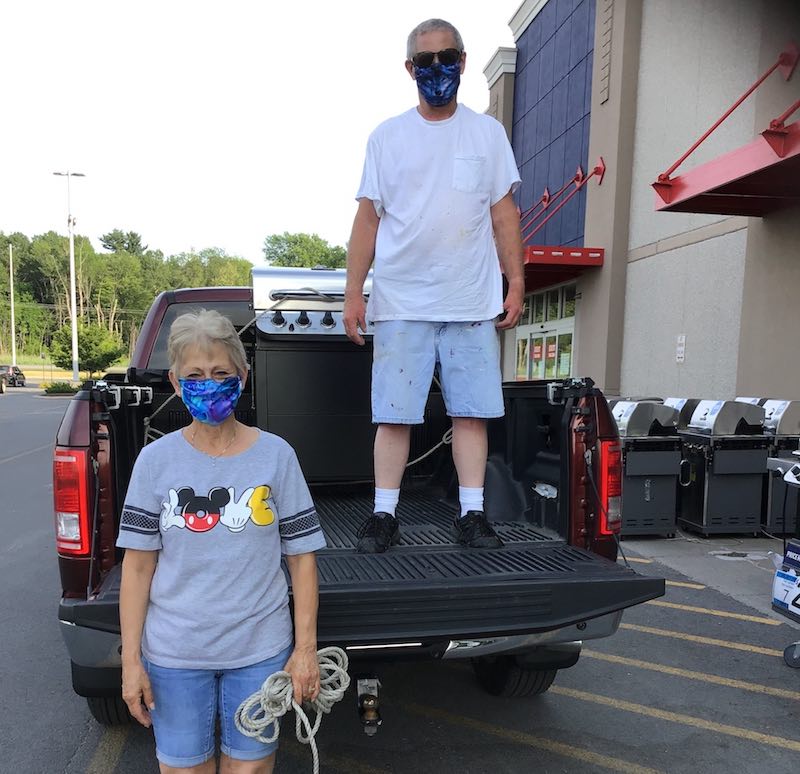
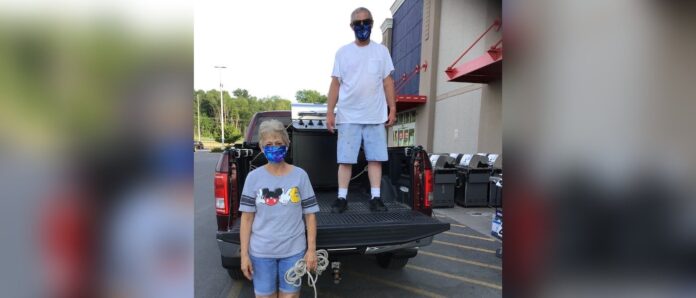
Seconds later, a masked couple in a HUGE pickup truck parked behind us, jumped out, and volunteered, “looks like you can’t fit it in your car. We’ll take it to your house.”

Grateful but not knowing them, and knowing my house was over 15 miles away, I thanked them anyway, but told them how far away their trip would be. They looked at each other, shrugged their shoulders and said, ”That’s OK…we don’t have anything else to do!”

RELATED: Disheartened by News Reports, Café Owner Withdraws $10,000 in Cash to Give Away to Unemployed Strangers

John and Avis Thompson

Astonished, I asked, “What are you, my Guardian Angels? Who ARE you?”

Introductions were made as the gentleman and the two sales ladies hoisted the grill into the back of the truck, then off we went to my house, with the Subaru leading the way for the “angels”, and my Prius C bringing up the rear, watching my new grill ride securely toward its new home.

As we unloaded, I tried to give them a monetary token of my appreciation but they refused. Flatly! “It wouldn’t be a good deed if we took money”, they both argued.

LOOK: Watch Thoughtful Duck Retrieve Boy’s Sandal After it Had Fallen into a Muddy Ditch

I strongly disagree; it truly IS “the thought that counts”. In the midst of vile, vitriolic words and inflammatory actions attacking from all directions, and in this extended isolation, to have this gracious deed received from complete strangers, is a thankful reminder that altruism and goodness is not a lost value in the US.

As I write this from my home on the St. Lawrence River—with our beautiful 1000 Islands—I wanted to launch a thousand ships of thanks to John and Avis Thompson.

SHARE This Good Old-Fashioned Kindness To Brighten Someone’s Day…

Scientists Hack Photosynthesis to Make Crops Produce More, But With Less Water

RIPE scientists – Youtube

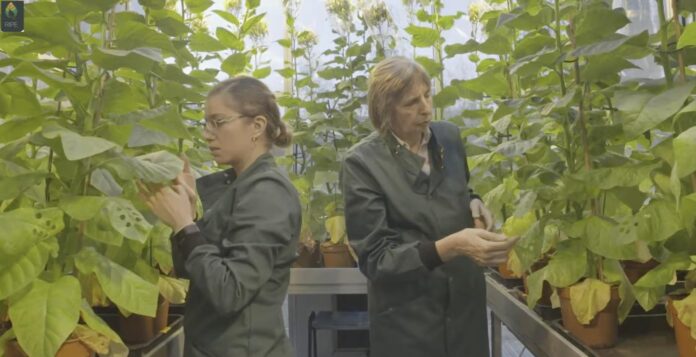
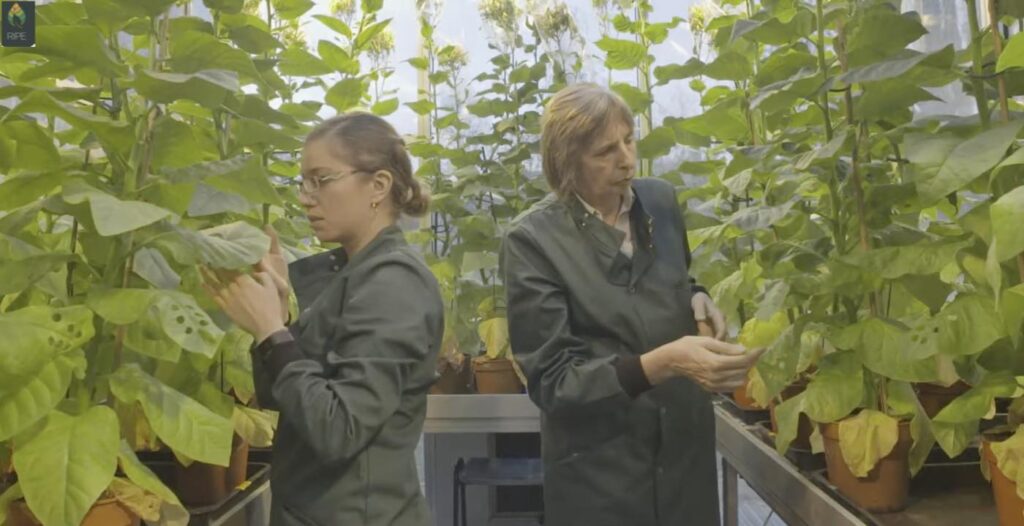
A team of researchers are managing to tweak the system of photosynthesis in plants to help them conserve water and increase food yields—and, they are simply adding natural proteins and enzymes to the process.

A University of Illinois-led collaboration called RIPE, Realizing Increased Photosynthetic Efficiency, is working to help plants become heartier in a world where the frequency and severity of droughts may require them to be more resilient—particularly for humans needing to stave off starvation.

All children in school learn about photosynthesis—the process by which plants use light to convert carbon dioxide into energy—and RIPE is breaking down each step in the natural solar-powered assembly line to see whether or not various systems can be improved.

Previous discoveries, along with their recent study, suggest that hacking into a few key photosynthetic processes could improve plant yields by more than 50%.

“Like a factory line, plants are only as fast as their slowest machines,” said Patricia Lopez-Calcagno, a postdoctoral researcher at partner school University of Essex, who led this most recent project for RIPE. “We have identified some steps that are slower, and what we’re doing is enabling these plants to build more machines to speed up these slower steps in photosynthesis.”

RELATED: Topping Soil With Rock Dust Could Suck Billions of Tons of CO2 From the Air and Increase Crop Nutrients – Study

Inside the plant’s assembly line

Addressing the first of RIPEs goals, increasing yield, the researchers targeted plastocyanin, a protein that works on a schedule shuttling electrons into parts of the photosynthesis process. RIPE found that plastocyanin has an affinity for another protein, and like a transit bus disrupting its timetable by waiting too long at one stop, it slows down the electron-transfer process.

Adding cytochrome c6, a protein found in algae which has a similar function but that is more efficient, allowed plants to increase their yield by 27%. Furthermore, because cytochrome c6 requires iron to work while plastocyanin requires copper, any imbalances in soil mineral content can be worked around by plants opting to rely on one shuttling protein more than the other.

RIPE scientists – Youtube

The next place that needed work was the plant’s Calvin-Benson Cycle, wherein carbon dioxide is fixed into sugars which feed the plant. Increasing the amount of a key enzyme in the process by bringing in cellular machinery from cyanobacteria, another species of plant, was found to better the ratio of biomass produced per unit of water expended, making them more efficient with the water they received.

POPULAR: Scientists Use Recycled Sewage Water to Grow 500-Acre Forest in the Middle of Egyptian Desert

This is vital, because research suggests that climate change could be increasing the frequency and severity of droughts in crop-rich regions like the Sahel, or California.

“This study provides the exciting opportunity to potentially combine three confirmed and independent methods of achieving 20 percent increases in crop productivity,” said RIPE Director Stephen Long, University Chair of Crop Sciences and Plant Biology at the University of Illinois.

“Our modeling suggests that stacking this breakthrough with two previous discoveries from the RIPE project could result in additive yield gains totaling as much as 50 to 60 percent in food crops.”

LOOK: Man Succeeds Where Government Fails: He Planted a Forest in the Middle of a Cold Desert

With help from scientists all over the world, including China and Australia, RIPE is testing to see if these three changes in plants’ factory settings can work together to produce the higher yields—starting with tobacco because it’s easy to grow, engineer, and test, and eventually moving to widely-used stables like maize, cassava, and soybean.

WATCH the video from RIPE…

PLANT Some Hope With Your Friends By Sharing on Social Media…

This Police Dog Had The Most Successful First Shift Ever—Finding a Missing Mom And Her 1-Year-old in Remote Ravine

First days in a new job are often nerve-wracking. There’s so much to learn—and a new boss to impress.

One Welsh police dog just knocked his first day out of the park when he located a missing mother and baby on his very first shift.

Newly licensed, Max reported for duty with the Dyfed-Powys Police, with his handler PC Peter Lloyd, and promptly tracked down a woman who had spent a night in a remote location in Powys, Wales with her young child.

The two-year-old mixed German Shepherd swiftly put his training into action during his first operational shift, covering a significant distance to find the mom and child.

RELATED: Retriever Has Been Helping Owner Collect Hundreds of Pounds of Trash From Beach Since She Was a Pup

He was called into duty at just before midday on Saturday, August 1, when the force received a call reporting the woman missing and immediately launched a search to find her and her one-year-old.

Officer Peter Lloyd and police dog Max, Photo by Dyfed-Powys Police

“The woman had not been seen or spoken to for two days, which was out of character, and her phone wasn’t working, so naturally concern for her safety was high,” said Inspector Jonathan Rees-Jones in a statement.

“Thanks to excellent work between teams, the woman’s car was quickly found on a mountain road. Although this gave officers a location to search from, there was still a vast area to cover given the amount of time she had been missing.

The Search Continues

“This is where PD Max’s tracking skills really came into play. Despite only recently becoming licensed, and on his first operational shift, he immediately commenced an open area search.”

MORE LIKE THIS: Pit Bull Hailed As a Hero After Reportedly Fighting Off a Shark to Save Its Owner

With support from Brecon Mountain Rescue Team and an NPAS helicopter, along with advice from a search expert, additional units were deployed to assist in searching the area which included a small reservoir and woodland.

Max and Lloyd covered a significant distance, and at around 1:30pm, guided by the canine’s nose, the officer spotted the missing woman, waving for help, near a steep ravine on the mountainside.

“After an hour-and-a-half of searching, the mom and baby were found…safe, but cold,” said Rees-Jones.

The two were checked out by paramedics and made a complete recovery.

LOOK: Minnesota Woman ReunitedWith Long-Lost Dog After It Was Featured on Florida Beer Advertisement

“This was a fantastic coordinated and determined team effort from everyone involved, (but) I must give a special mention to PC Pete Lloyd and Max, who on their very first day since completing their training together covered a significant amount of mileage in the search, eventually locating them safe.”

BARK Your Approval of This Good Dog, And Share His News With Your Friends On Social Media…