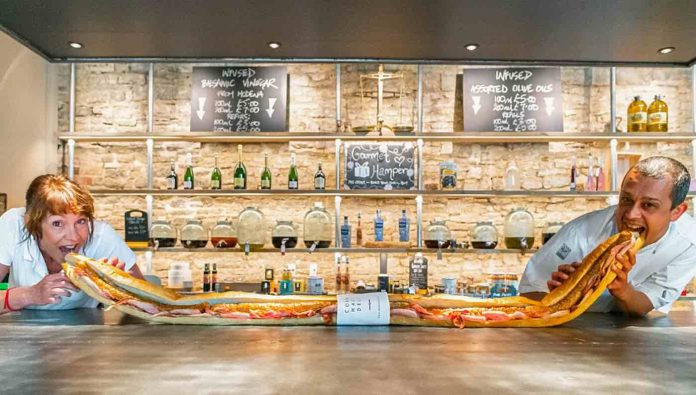
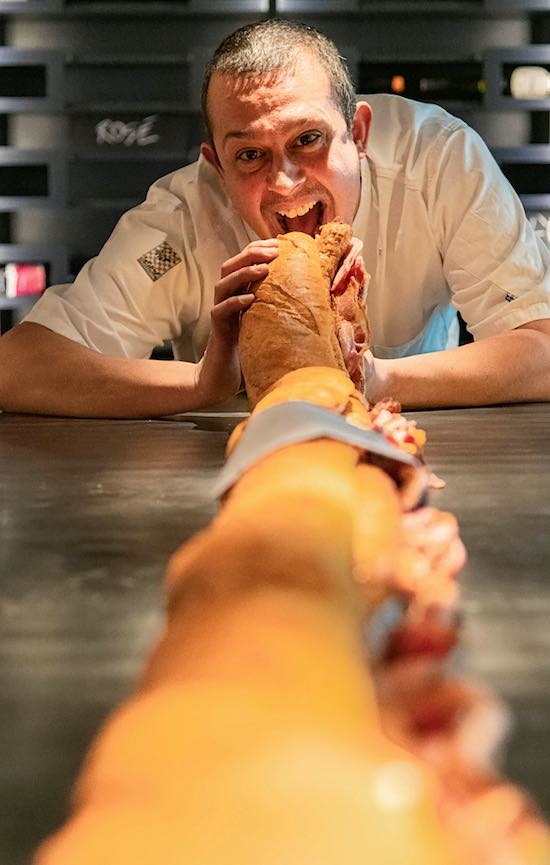
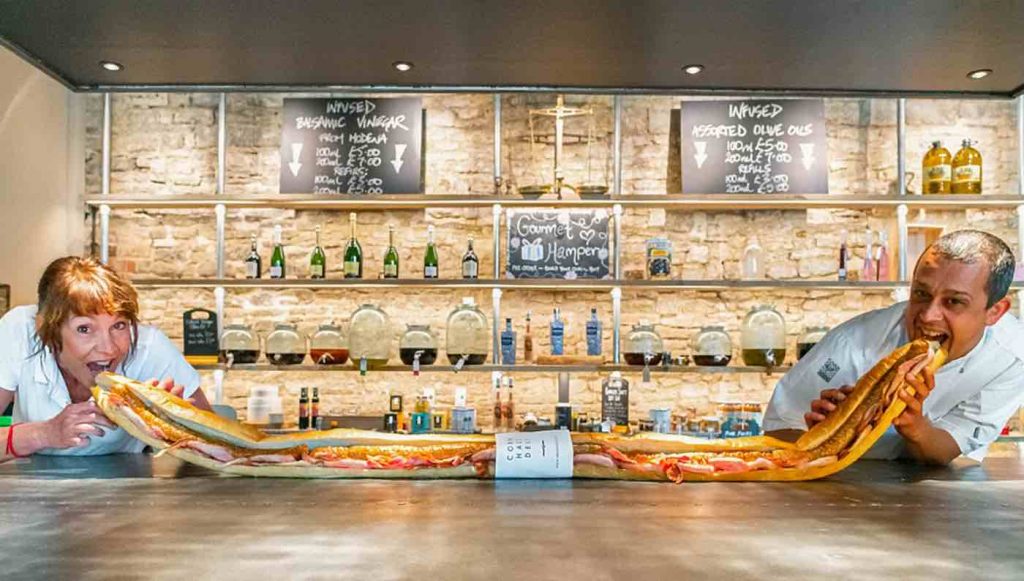
This savvy English chef has come up with a unique lunch special for people who may be reluctant about returning to work: a ginormous socially-distanced sandwich.
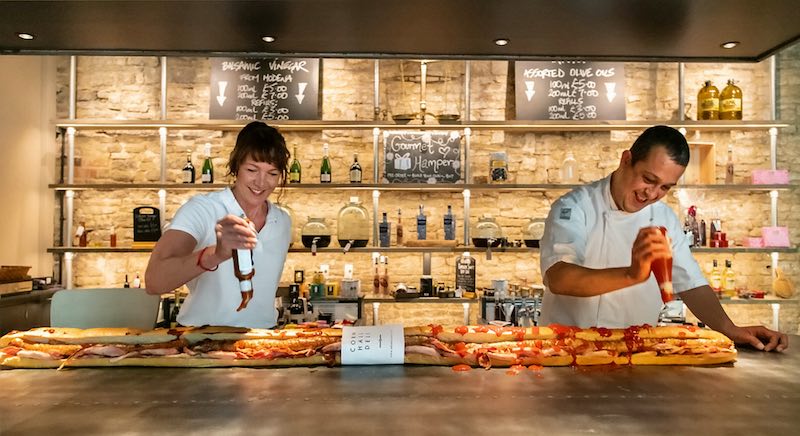
Measuring in at 6.5 feet (2 meters) long, the massive bacon and sausage baguette is now being sold for £20 since it was dreamt into existence by chef Ethan Rodgers earlier this week.
The “Back to Work Baguette” sandwich was created with the help of a butcher, bakery, deli, and restaurant in Cirencester, Gloucestershire.
The sarnie is meant for two people who want to share lunch while still following social distancing guidelines.
Staff at Corn Hall Deli with the massive sandwich — SWNS
“We have been asked a lot since measures started to ease about sandwiches and take away and we were able to do take away coffees,” said Rodgers. “[But] this is a fun example of what we are doing here.
“The hospitality industry will be the last to reopen, with talk of July, so we have had to diversify,” he added. “We are doing a grocery delivery service for the remote villages, my chef team are making ready meals and pastries that are available from the restaurant and deli every day.”
Until the social restrictions are actually lifted, Rodgers has been happy to share the “Back to Work Baguette” sandwich with the staffers at Cam Butchers, Halls Bakery, Corn Hall Deli, and MBB Brasserie who made it happen.
Regardless of whether the restaurant’s patrons will actually order the monster sandwich in the future, we’re simply happy to applaud the chef for his creativity.
Need more positive stories and updates coming out of the COVID-19 challenge? For more uplifting coverage, click here.
Staff at Corn Hall Deli with the massive sandwich — SWNS
Serve Up Some Positivity To Your Friends By Sharing This Amusing Story To Social Media…
Earlier today, the world’s largest all-electric commercial aircraft successfully completed its first test flight—and it is being hailed as a significant milestone in disrupting the transportation industry and accelerating the electric aviation revolution.
The all-electric Cessna Grand Caravan 208B was designed by electric aviation company magniX in partnership with AeroTEC, a leading independent company focused on aerospace testing, engineering and certification.
The successful flight of the 9-passenger eCaravan, magnified by a 750-horsepower (560 kW) magni500 propulsion system, took place at the AeroTEC Flight Test Center at the Grant County International Airport (KMWH) in Moses Lake, Washington this morning.
“The iconic Caravan has been a workhorse of industry moving people and transporting goods on short routes for decades,” said magnix CEO Roei Ganzarski. “This first flight of the eCaravan is yet another step on the road to operating these middle-mile aircraft at a fraction of the cost, with zero emissions, from and to smaller airports. These electric commercial aircraft will enable the offering of flying services of people and packages in a way previously not possible.”
Although the eCaravan is being hailed as the largest all-electric commercial aircraft, magniX was also responsible for launching the world’s first all-electric commercial aircraft back in December 2019.
Now, the flying of the eCaravan serves as another critical step in the certification and approval process of the magni500 propulsion system, enabling future conversions of additional aircraft to magniX’s all-electric propulsion technology.
Photo by magniX
“I’m proud of the pioneering work performed by our engineers, technicians and flight test team,” said Lee Human, President and CEO of AeroTEC. “There’s no roadmap for testing and certifying electric aircraft—this is a new frontier and AeroTEC is on the front lines developing the processes and best practices that will pave the way for electric aviation.”
The historic flight was captured via livestream and watched by social media users around the world.
(WATCH the livestreamed flight footage below)
Fly This Exciting News Over To Your Friends By Sharing It To Social Media…
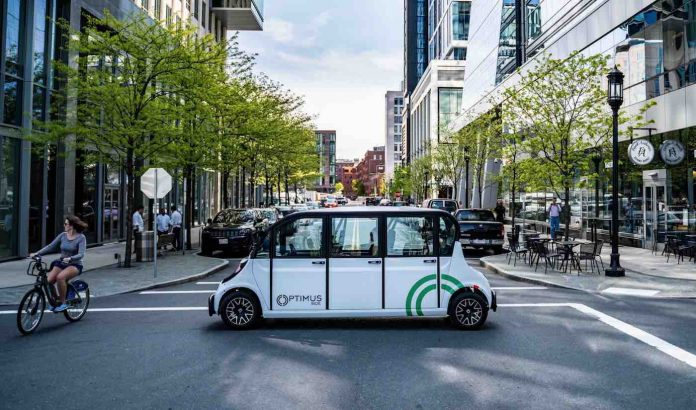
In what is being hailed “the ultimate form of social distancing”, a trio of autonomous cars are set to begin delivering thousands of meals to families suffering from food insecurity in Washington DC.
Optimus Ride, a startup that specializes in developing driverless vehicles for urban transportation, has announced that they will be deploying three of their cars for contactless grocery deliveries to low-income households in Southeast DC.
The initiative, which is being spearheaded by real estate company Brookfield Properties, is expected to deliver 5,000 meals every week. The meals are being doled out in the form of “One-Week Boxes” containing enough nutritious ready-made meals and ingredients to feed an adult three times a day for seven days at a time.
According to Venture Beat, the meals are being sent to at-risk recipients identified by homelessness nonprofit Pathways to Housing and to the local Van Ness Elementary School.
Although the cars will require disinfection in between each use, the project is expected to decrease the risk of COVID-19 transmission.
Prior to the onset of the pandemic, Optimus Ride had been developing their autonomous vehicle operations in The Yards neighborhood of DC with the aim of one day offering transportation services to the residents—but until the outbreaks subside, the startup has been using their driverless cars to deliver essential items to communities with high risk of infection.
“Our strategy has proven to be highly tractable, as Optimus Ride is one of the first commercially operational self-driving technology companies in the world, with deployments in Maryland, California, Virginia, and New York,” reads an Optimus Ride blog post. “While our initial focus has been on moving passengers, we also developed an initial pilot for self-driving delivery of pharmaceuticals. Our goal at the time was to identify efficiency opportunities during off-peak hours, but in doing so we found a strong and positive response, particularly from our senior community members.
“Along with many other companies and institutions, we have been closely monitoring the pandemic from its early days through its global spread. In keeping with guidance from health and state officials, we transitioned the company from optional work-from-home to mandatory. On Monday, March 15th, we mutually decided with our partners to pause passenger operations in all of our sites … It was the responsible thing to do considering the situation.
“After pausing operations at … [a California nursing home], we received an urgent request from their management to assist with evening meal delivery as residents were no longer allowed to congregate in the dining hall. Our team sprang into action, and after some rapid planning, preparation and taking all possible precautions, we adapted our services for meal delivery. On that evening we delivered 46 meals, and since then have continued delivering 50-80 meals per day.
“It is responses like these that have made our team feel our work is more meaningful than ever, and we will continue with our meal deliveries for [the nursing home] while the situation is still ongoing.”
Need more positive stories and updates coming out of the COVID-19 challenge? For more uplifting coverage, click here.
Drive Your Friends To The Good News By Sharing This Exciting Story To Social Media…
This 6-year-old pup has proven that anything is possible if you put your mind to it—or in this case, your mouth.
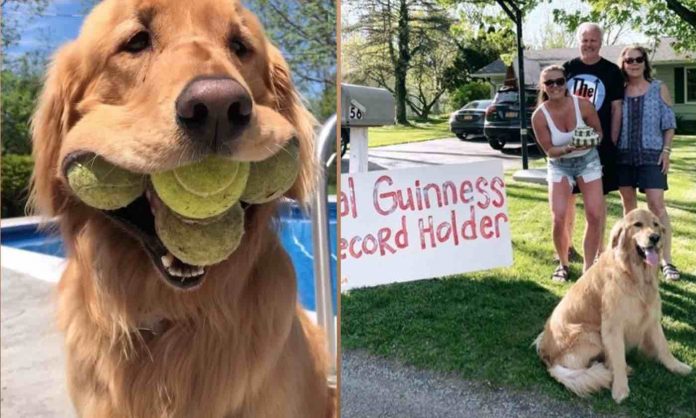
Earlier this week, Finley the Golden Retriever broke the Guinness World Record for the most tennis balls held in a dog’s mouth at one time.
According to his human companion Erin Molloy, Finley has been picking up tennis balls since he was just 2 years old—and after honing his craft for much of his young canine life, he eventually succeeded in working his way up to carrying six tennis balls at a time.
Back in 2018, Molloy created an Instagram account to share her pup’s talent with the world. In addition to racking up more than 36,000 followers, Molloy discovered that the Guinness World Record for dogs carrying tennis balls in their mouthes was held by a canine who was recorded holding just five tennis balls.
Determined to solidify her dog’s place in history, Molloy spent months gathering together the necessary evidence to prove that Finley broke the record. She told the Democrat and Chronicle that she had even gone to far to measure the size of each tennis ball and collect witness statements from her neighbors in Canandaigua, New York.
After a year of hard work, Finley was finally confirmed as the world record holder this week—and social media users have hailed the accomplishment as a welcomed break from the torrential stream of pandemic news updates.
“It’s lifting people’s spirits more than we had ever expected or hoped for, which is really fulfilling,” Molloy told the news outlet. “And it’s really rewarding knowing that something as simple as a good boy is making people smile all over the world.”
Local Muslims asked if they can use the car park for prayers in order to maintain distancing per regulations. And Ikea said yes pic.twitter.com/6EDLmjkY9I
An IKEA outlet in Germany is being praised for opening up its parking lot to local Islamic communities so they could celebrate the end of Ramadan while still respecting social distancing guidelines.
Although the nation suspended religious services back in March as a means of curbing the COVID-19 outbreaks, they recently started allowing worshippers to gather in groups of up to 50 people at a time.
These restrictions have prevented many Muslim communities from attending prayer services during the holy month of Ramadan. This weekend in particular was Eid al-Fitr, the holiday marking the end of the month of fasting.
So as a means of bringing his community together for the traditional Eid prayers and celebration, Kadir Terzi—who is the chairman of the Ditib Wetzlar mosque near Frankfurt—approached the management of a local IKEA and asked if they could host their service in the parking lot.
Although Terzi told BBC that he had not been anticipating much success with the proposition, “the store manager didn’t hesitate for a second and said ‘yes, you can pray’.”
“I was surprised and happy at the same time,” Terzi concluded.
Terzi then posted an open invitation to the service on social media and reminded attendees to wear face masks, leave their children at home, and maintain at least six feet of social distance.
More than 800 Muslims ended up attending the prayers—and the photos of the event are breathtaking.
“It was a completely different Ramadan month, without contacts, without visits and without breaking the fast together,” Terzi told the news outlet. “[So] the closing prayer with all Muslims in Wetzlar was like a reward for us.”
Need more positive stories and updates coming out of the COVID-19 challenge? For more uplifting coverage, click here.
(WATCH the video below)
Multiply The Good News By Sharing It With Your Friends On Social Media…
Quote of the Day: “If you are distressed by anything external, the pain is not due to the thing itself but to your own estimate of it; and this you have the power to revoke at any moment.” – Marcus Aurelius
Photo: copyright MCC
With a new inspirational quote every day, atop the perfect photo—collected and archived on our Quote of the Day page—why not bookmark GNN.org for a daily uplift?
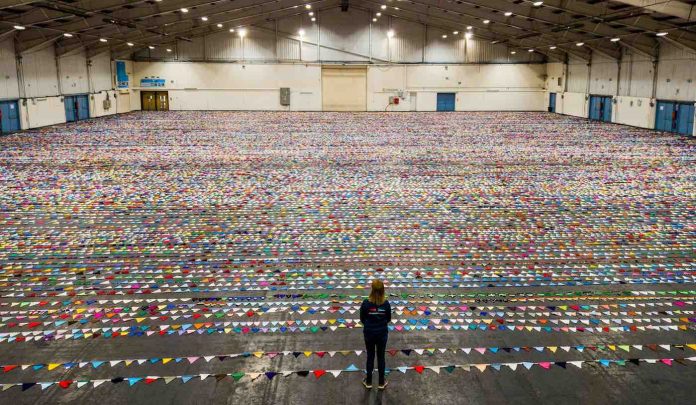
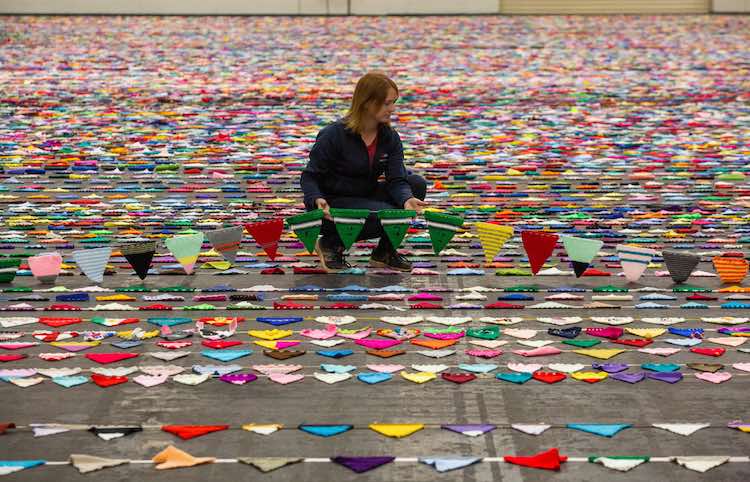
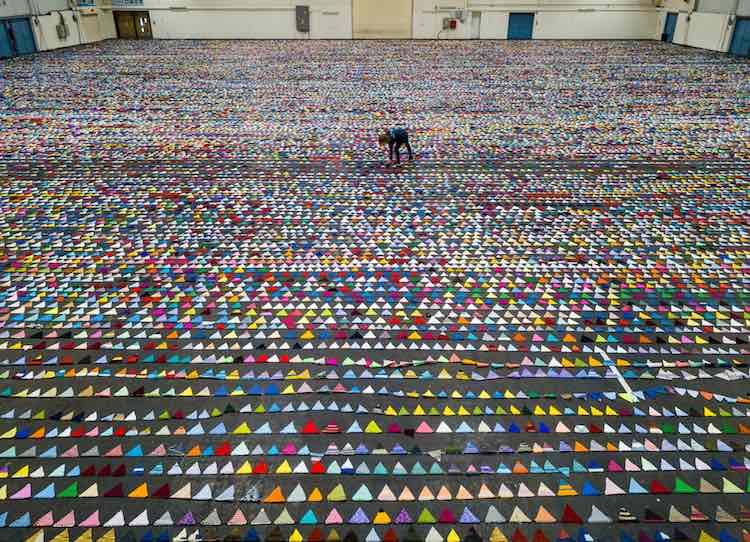
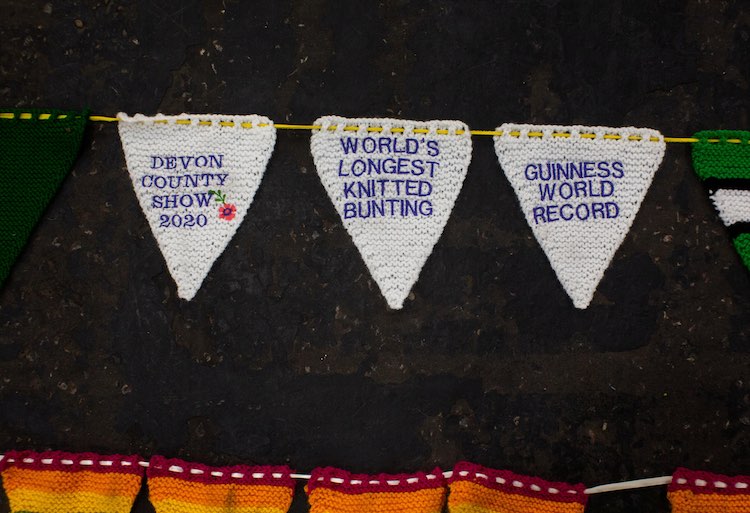
Needleworkers and craft enthusiasts from all over the world have used their time in quarantine to help break the world record for the longest “bunting”—a form of decorative stringed flags popular in the UK.
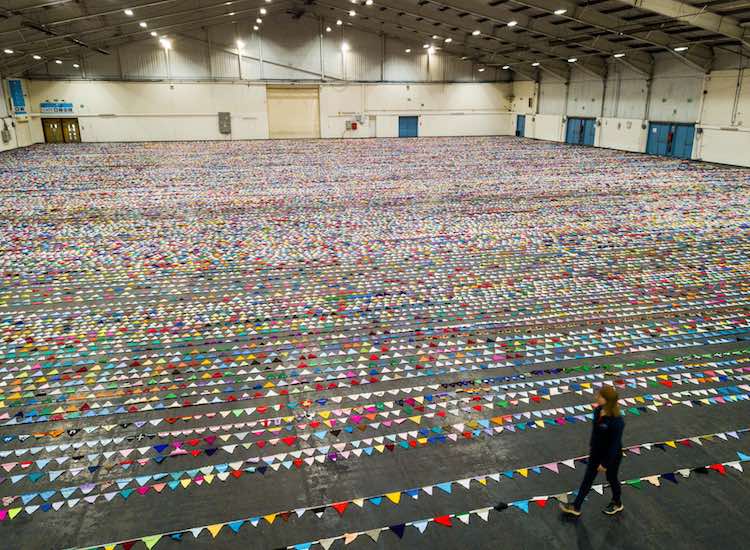
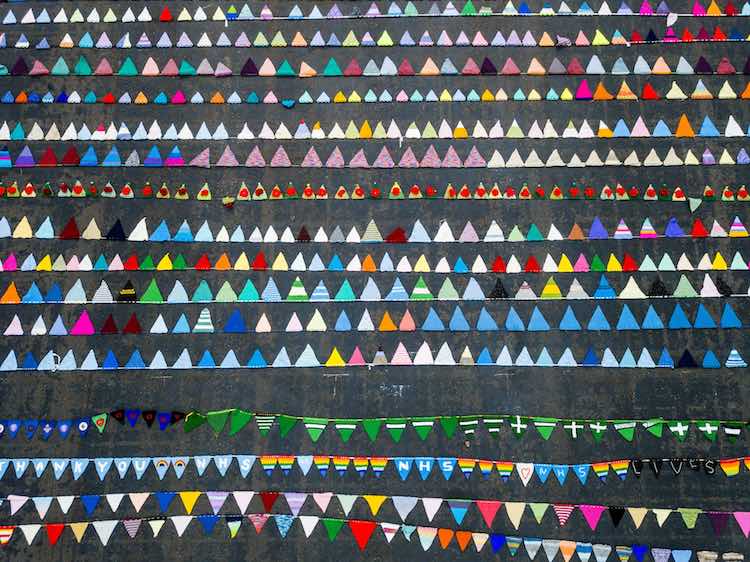
The record-breaking swath of bunting—which is depicted in these stunning aerial drone photos—is made of 79,001 flags stretching 9 miles long (14.27 kilometers). All of the knitted flags were submitted to the project by contributors from around the globe.
The bunting measures almost double the existing Guinness World Record, which was held by Upton House with 31,119 flags at 4.6 miles (7.5 kilometers) in length.
SWNS
The flags were brought together by staff at the Devon County Show, which was due to be held this week, but was cancelled due to the novel coronavirus outbreaks. The continuous line of bunting was laid out over two days with each pennant no more than two inches apart, covering the 4,590-square-meter floor space of Westpoint Area in Exeter, Devon.
Deborah Custance Baker, who is chief steward for crafts and gardens at the Devon County Show, came up with the idea and lodged the attempt with Guinness World Records.
“The crafts and garden marquee is one of the most popular sections at Devon County Show and all of our stewards and visitors are really hands-on,” said Baker. “Every challenge we’ve set them so far they’ve not only succeeded in achieving, but have blown our expectations out of the water. The bunting is no exception.”
SWNS
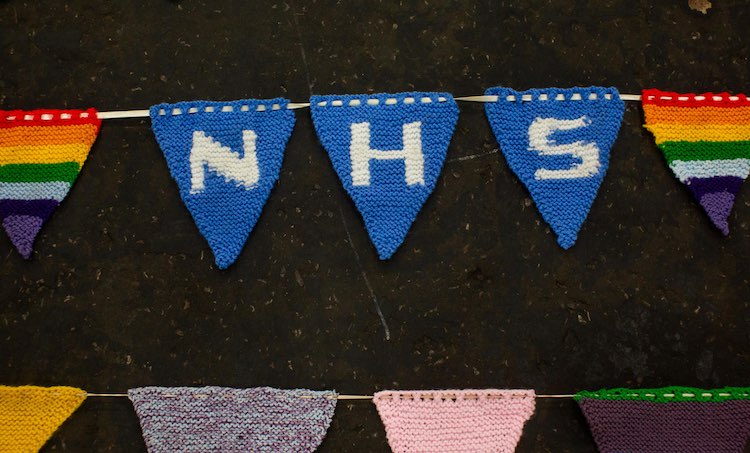
While some of the fancier flags were decorated with flowers and patterns, many of the little triangles depict encouraging messages for the NHS.
“We do know that this is partly to do with lockdown,” says Baker. “Many of our contributors have commented on how knitting has really helped them through this difficult period of self-isolation by giving them a sense of purpose.
“Several who had committed to making just a few suddenly found they had both the time and inclination to double, even triple their original pledges.
“We cannot believe people’s dedication and commitment to the task. We thought we might just beat the existing record but doubling it is a truly astonishing feat.”
SWNS
“We originally wanted to do the stringing and measuring at Exeter Cathedral with as many contributors who wanted to help as possible,” she continued. “As it was, we weren’t able to do this. I’ve had to have all the bunting delivered to me at home, and I’ve literally been drowning in it, and done all the stringing myself.
“Westpoint seemed like a great alternative to measure the record. It’s an enormous, covered event venue, which due to the pandemic, is currently not in use and has enabled us to lay out the bunting, which has taken a full two days, whilst remaining compliant with social distancing regulations.”
SWNS
Now that the bunting has been measured, all the documentation will be submitted to Guinness World Records and verified before the record can be made official.
“The local community will be invited to see the record-breaking bunting in its full glory on designated evenings throughout the summer.
“They will be offered the opportunity to purchase sections of the bunting to help raise funds for the Devon County Show’s charity of the year, farming charity The Addington Fund. The bunting will also be donated to local causes.”
SWNS
Festoon Your News Feed With This Fantastic Achievement By Sharing It With Your Friends On Social Media…
While many seniors have been forced to wait out the COVID-19 outbreaks in isolation, these retirees have managed to find connection and comfort through the airwaves.
Radio Recliner is an online pirate radio station that is hosted exclusively by elderly DJs from assisted living communities across the United States.
The project was launched by marketing firm Luckie back in April as a means of keeping lonely seniors entertained and optimistic during the pandemic.
The company only planned on airing new 60-minute shows every day for one month—but since the station has garnered more and more listeners, Radio Recliner has also attracted a team of 18 senior DJs to continue recording new segments.
In addition to new shows being aired every day at noon, the station now streams a continuous loop of old content to keep its fanbase entertained. On the Radio Recliner website, listeners can also submit song requests and ask the hosts to broadcast audio messages and shoutouts to friends and family members.
“For this generation, radio was the original social media,” Luckie chief creative officer Mitch Bennett told The Tennessean. “Dedicating a song to someone you love, and having them hear it along with everyone else, is a special way of connecting. It’s a great time to bring that feeling back.”
Need more positive stories and updates coming out of the COVID-19 challenge? For more uplifting coverage, click here.
(WATCH the news coverage below)
Help Your Friends Hear About The Good News By Sharing This Awesome Story To Social Media…
Scientists have finally succeeded in recording the various calls, buzzes, clicks, and whistles of the creature affectionately dubbed the “unicorn of the ocean”: narwhals.
The recordings help scientists better understand the soundscape of Arctic glacial fjords and provide valuable insight into the behavior of these shy and mysterious creatures, according to the researchers.
Narwhals are difficult to study because they are notoriously shy and skittish and spend most of their time deep in the freezing Arctic Ocean. They tend to summer in glacial fjords around Greenland and Canada, but scientists often have trouble getting close enough to study them. Glacier fronts can be dangerous and hard to access, and the animals tend to swim off when approached by motorized boats.
Luckily for the researchers, Inuit hunters familiar with the mysterious cetaceans are capable of getting close to the animals without disturbing them.
In July 2019, researchers accompanied several Inuit whale hunting expeditions in Northwest Greenland to study the narwhals that summer there in more detail. Using underwater microphones attached to small boats, the researchers captured narwhal social calls and foraging sounds, getting as close as 25 meters (82 feet) to the elusive cetaceans.
The recordings help the researchers provide a baseline of the kinds of sounds that permeate the narwhals’ pristine habitat. In combination with sightings, they also show narwhals get closer to glacier ice than previously thought for this area and the animals do forage for food in summer, contrary to some previous findings. The researchers’ findings were published this week in AGU’s Journal of Geophysical Research: Oceans.
“Their world is the soundscape of this glacial fjord,” said Evgeny Podolskiy, a geophysicist at Hokkaido University in Japan and lead author of the new study. “There are many questions we can answer by listening to glacier fjords in general.”
Researchers and Inuit hunters approach Bowdoin Glacier in northwest Greenland. Photo by Evgeny Podolskiy.
Getting close
Podolskiy and his colleagues had been working in Greenland fjords for several years, studying the sounds made by melting glaciers. Coincidentally, a population of narwhals summers in the fjords they were studying, and Podolskiy saw an opportunity to study the wily creatures.
“I realized working in the area and not paying attention to the elephant in the room—the key endemic legendary Arctic unicorn just flowing around our glacier—was a big mistake,” he said.
The researchers tagged along on several Inuit hunting expeditions departing from the village of Qaanaaq, placing microphones underwater and recording the baseline sounds of the fjord.
They captured several types of sounds made by narwhals, including social calls—or whistles—and clicks used for echolocation, the biological sonar used by dolphins, bats, some whales and other animals to navigate and find food.
The closer narwhals get to their food, the faster they click, until the noise becomes a buzz not unlike that of a chainsaw. This terminal buzz helps the narwhals pinpoint the location of their prey.
“If you approach and target these fast fish, you better know precisely where they are; you need to gather this information more frequently,” Podolskiy said.
Few studies have documented narwhals feeding in the summertime. Because the microphones picked up terminal buzz, a sound associated with finding food, the new study provides further evidence that narwhals do forage in summer.
Surprisingly, the researchers found narwhals come roughly within 1 kilometer (half a mile) of a glacier calving front, despite the fact that these areas are some of the noisiest places in the ocean and calving icebergs can be dangerous.
“There is so much cracking due to ice fracturing and bubbles melting out… it’s like a fizzy drink underwater,” Podolskiy said. “It seems we are dealing with animals living in one of the most noisy environments without having much trouble with that.”
In a historic milestone for the LGBTQ community, Costa Rica just hosted the first legally recognized same-sex wedding ceremony in Central America.
Alexandra Quiros and Dunia Araya were the first couple to tie the knot after their wedding was officiated just as Costa Rica’s legislation for allowing same-sex marriage passed into effect at the stroke of midnight.
According to BBC, the ceremony was aired on national television following a 3-hour broadcast on the importance of marriage equality.
The nation’s constitutional court first ordered parliament to strike down their laws against same-sex marriage back in August 2018 after ruling that the ban was unconstitutional.
Thanks to the newly-passed legislation, Costa Rica has joined the ranks of other South American countries—such as Argentina, Brazil, Colombia, Ecuador, and Uruguay—which have granted equal marriage rights to LGBTQ couples.
“Costa Rica officially recognizes equal marriage,” tweeted Costa Rican President Carlos Alvarado. “Today we celebrate freedom, equality and democratic institutions. May empathy and love be the compass that allows us to get ahead and build a country where all people fit.”
(WATCH the news coverage below) – Feature photo by AFP
Multiply The Love By Sharing This Historic News With Your Friends On Social Media…
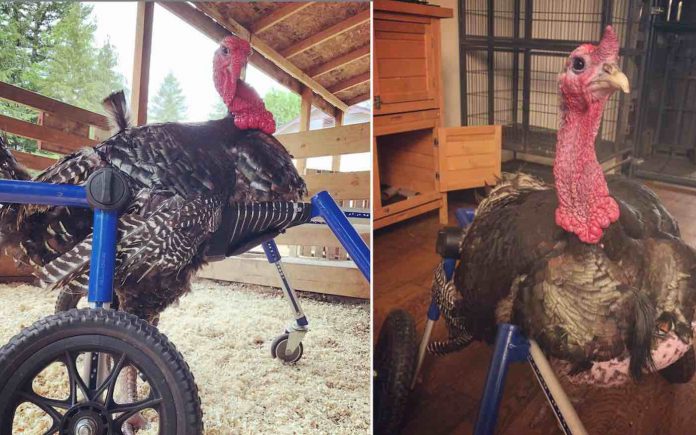
This 60-pound bird has been given a second lease on life after his caretakers came up with an innovative solution for putting him on the road to recovery.
Bill the turkey is just one of the many residents at the Odd Man Inn animal rescue in Washougal, Washington, which is home to a number of goats, pigs, rabbits, and chickens.
After Bill was admitted to the nonprofit sanctuary from a feed farm, an infected cut on his right leg left him unable to walk without causing further injury to his foot. Although his caretakers managed to get his foot taken care of by a veterinarian, they quickly realized how difficult it was to flip the turkey over to change his bandages.
Not only that, the veterinarian said the turkey would need to lose weight if he ever wanted to walk on his right leg again.
Rather than give up on their feathered friend’s health, the Odd Man rescuers modified a Walkin’ Wheels canine wheelchair to fit Bill’s paunch.
The farmers fitted the wheelchair with a sling made out of a maternity girdle to support Bill’s weight while he gets his daily exercise. This has also allowed his caretakers to change his bandages without breaking a sweat.
Since Bill began using the wheelchair for his daily physical therapy sessions last week, he has slowly but steadily regained his ability to walk unassisted—and his rescuers are thrilled.
“Bill loves it!” wrote the Walkin’ Wheels Instagram page. “He uses his wheelchair several times a day and his caregivers say he’s totally relaxed and building enough strength that he’s even able to get around on his own a bit!”
Although the contraption is being hailed as the first turkey wheelchair, it is not the first wheelchair for animals. Over the course of the last few years, this lame tortoise made national headlines after being fitted with a LEGO scooter; this devoted pet owner managed to save his goldfish with a makeshift life jacket; and this Romanian animal shelter has been making wheelchairs for paraplegic dogs.
(WATCH the sweet footage of Bill in the video below)
Fly This Sweet Story Of Recovery Over To Your Friends By Sharing It To Social Media…
Quote of the Day: “If you understand each other you will be kind to each other. Knowing a man well never leads to hate and almost always leads to love.” – John Steinbeck
Photo: by kilarov zaneit, public domain
With a new inspirational quote every day, atop the perfect photo—collected and archived on our Quote of the Day page—why not bookmark GNN.org for a daily uplift?
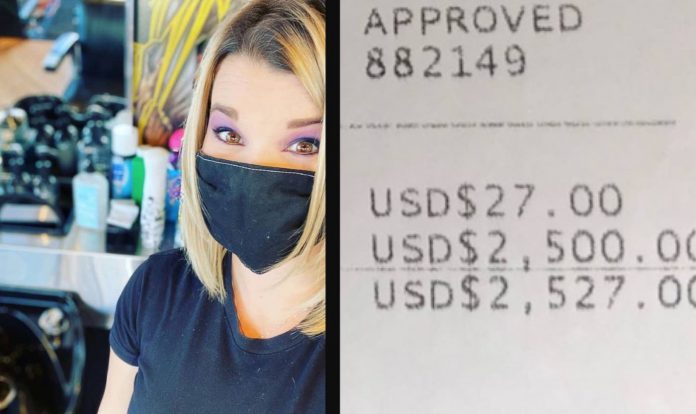
A 32-year-old hair stylist was left crying tears of joy after a walk-in customer surprised her and her co-workers with a hefty tip for their services.
Illsia Novotny, a stylist at Floyd’s Barbershop at the University of Denver, has been struggling to make ends meet since the salon closed amidst the novel coronavirus lockdowns two months ago.
Although her regular customers had been sending her Venmo payments to support her during the closures, the single mother had been forced to negotiate special arrangements for the rent and utility bills at her home in Aurora, Colorado.
Since the barbershop recently reopened to the public with strict sanitary and social distancing guidelines in place, Novotny was finally able to return to work earlier this month.
She had just been finishing up a busy Saturday shift last week when a man walked in for a haircut. As Novotny trimmed his hair, they chatted about baseball, Colorado, and the difficulties of making it through the quarantine. After Novotny finished the job and started sweeping up the floors, the man settled his bill with the receptionist—but before he left the store, he made a puzzling parting comment.
“Just so you know,” he told her, “it’s not a mistake.”
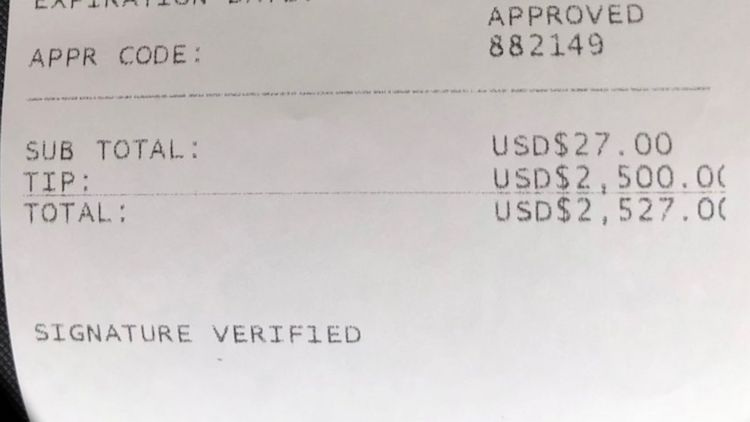
Minutes later, the salon’s tearful receptionist ran over to her station and told her that the man had tipped her $2,500. Not only that, he had given $500 to the receptionist, $1,000 to the general manager, and $1,800 to be divided amongst the shop’s 18 employees.
Photo by Floyd’s Barbershop
Altogether, he left $5,800 in tips.
“I cried,” Novotny told The Denver Post. “I’m a single mother. It’s been rough the last few months not knowing what’s going to happen, not knowing when we might reopen so I could go back to work.”
Floyd’s Barbershop has since shared the heartwarming story with national news outlets and social media pages as a means of showing their gratitude to the anonymous benefactor.
“The support we’ve seen since being able to reopen some of our shops where regulations allow has been astounding. This is just one great story from one of our Denver shops,” wrote the shop’s Facebook page. “Thank you to our communities for supporting us during this time.”
Need more positive stories and updates coming out of the COVID-19 challenge? For more uplifting coverage, click here.
Clean Up Negativity By Sharing This Inspiring Story With Your Friends On Social Media…
Since the novel coronavirus shutdowns have canceled thousands of graduation ceremonies across the country, these devoted Ohio bus drivers went above and beyond the call of duty to honor their senior high school students.
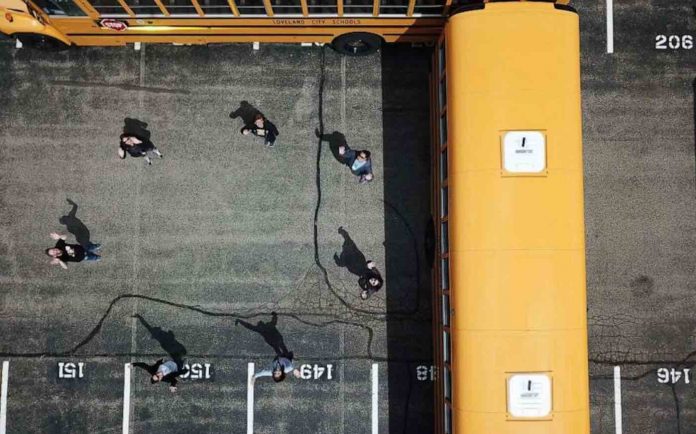
In a heartfelt display of love and affection, the Loveland High School’s transportation department arranged 22 of their buses to spell out “2020” when viewed from above.
Jim Barrett, the school’s art and photography teacher, then used an aerial drone to capture footage of the bus drivers waving up at the camera from in between the buses.
The school later published it to social media as a means of paying homage to the 392 graduating students, many of whom the drivers have known since grade school.
“Some of us have been around long enough to transport these kids since kindergarten, and some of us have only been working with the district for a few years, but the one thing we all have in common is the love for our students,” said Loveland bus driver Jennifer Bloom Bowman. “This is a huge accomplishment and anyway we can show them some love, we will do it. So here’s to the Class of 2020. Your bus drivers are proud of all of you.”
Since the footage was uploaded to Facebook last week, it has been viewed thousands of times—but the bus drivers are simply happy to support the Class of 2020.
“The love for our students is unconditional and each one will always hold a special place in our hearts,” added bus driver Michele Winter. “Every story, every hug, every laugh and every tear with them are memories and sometimes even lessons. To the kids of the past, the present and the future, this is for you!”
Need more positive stories and updates coming out of the COVID-19 challenge? For more uplifting coverage, click here.
(WATCH the heartwarming video below) – Photo by Jim Barrett
Be Sure And Share This Sweet Story Of Community Kindness With Your Friends On Social Media…
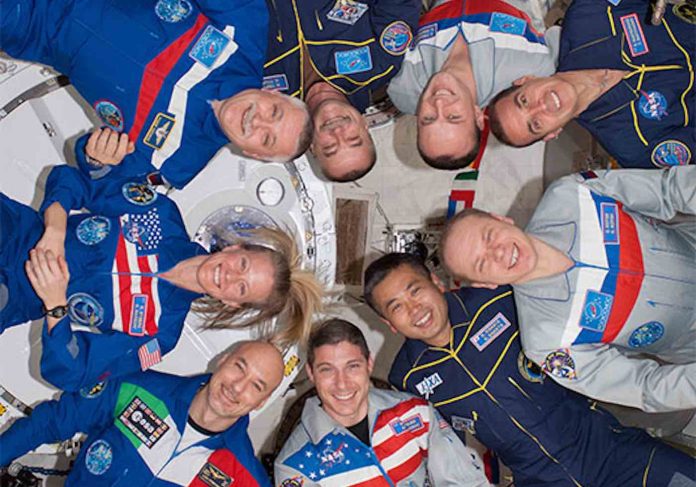
NASA, along with a number of partnering space agencies from around the world, have announced a new set of international agreements that will help to govern a “safe, peaceful, and prosperous future” of space exploration.
The recently-released “Artemis Accords” are the latest development of the Artemis Program, through which the agency vows to send the first woman—and next man—to the moon by 2024.
NASA hopes that the Accords will better allow it to work with international partners to conduct a human mission to Mars as well.
“It’s a new dawn for space exploration!” NASA administrator Jim Bridenstine wrote on Twitter last week. “Today, I’m honored to announce the Artemis Accords agreements—establishing a shared vision and set of principles for all international partners that join in humanity’s return to the Moon. We go, together.”
The core values enshrined in the Accords expand upon the Outer Space Treaty of 1967. They include the principle that space exploration should be done for peaceful purposes, that the U.S. and its partner nations must be transparent in their practices, and they should strive to build interoperable systems to information that can be exchanged and shared between nations.
The program also aims to protect historic sites and artifacts beyond the bounds of our planet, in much the same way that heritage sites on earth are protected by law. These include the artifacts left behind during the moon landings of the Apollo program of 1969-1972.
It’s a new dawn for space exploration! Today I’m honored to announce the #Artemis Accords agreements — establishing a shared vision and set of principles for all international partners that join in humanity’s return to the Moon. We go, together: https://t.co/MnnskOqSbUpic.twitter.com/aA3jJbzXv2
“International space agencies that join NASA in the Artemis program will do so by executing bilateral Artemis Accords agreements, which will describe a shared vision for principles, grounded in the Outer Space Treaty of 1967, to create a safe and transparent environment, which facilitates exploration, science and commercial activities for all of humanity to enjoy,” NASA said in a statement.
International partners that have signed on to the Accords include the Canadian Space Agency, European Space Agency, the Russian Space Agency (Roscosmos) and the Japan Aerospace Exploration Agency, according to CNN.
The Accords mark one of the most significant accomplishments thus far of the largest Artemis program, announced in 2019. The program involves the Orion spacecraft, Gateway and Space Launch Rocket System (SLS). The SLS rocket will be used to send Orion, with astronauts and large cargo on board, to the moon.
Unlike previous spacecraft which only supported short-term missions, the Orion will dock at the Gateway, described by CNN as “a spaceship that will go into orbit around the moon and be used as a lunar outpost. About 250,000 miles from Earth, the Gateway will allow easier access to the entire surface of the moon and potentially deep space exploration.”
Photo by NASA
Be Sure And Share This Exciting Story Of International Cooperation With Your Friends On Social Media…
One of the world’s most beloved suppliers of children’s art supplies has just unveiled a new initiative for promoting an “inclusive world for children of all ages, races, cultures and ethnicities.”
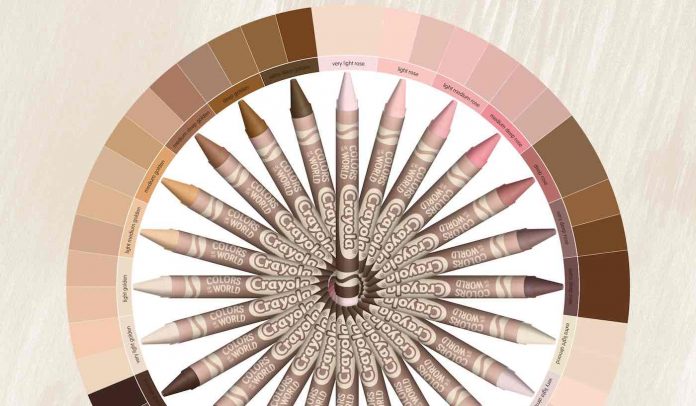
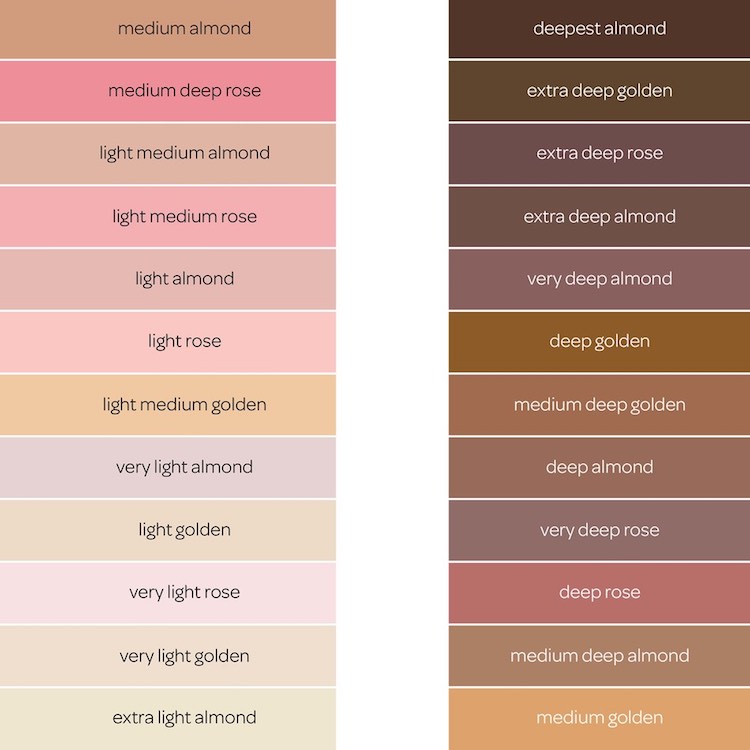
Earlier this week, Crayola launched a new pack of specially formulated “Colors of the World” crayons designed to mirror and represent over 40 global skin tones across the world.
Crayola released the crayon pack on May 21st—the United Nation’s World Day for Cultural Diversity for Dialogue and Development—in hopes that the project would allow children to “creatively and accurately color themselves into the world they see around them.”
“With the world growing more diverse than ever before, Crayola hopes our new Colors of the World crayons will increase representation and foster a greater sense of belonging and acceptance,” said Crayola CEO Rich Wuerthele in a press release. “We want the new Colors of the World crayons to advance inclusion within creativity and impact how kids express themselves.”
In addition to conducting rigorous consumer testing on developing the crayon colors to reflect an accurate and inclusive skin tone palette, Crayola also partnered with Victor Casale for the project.
Casale, formerly Chief Chemist and Managing Director, R&D of MAC cosmetics and co-founder and Chief Innovation Officer of Cover FX and currently CEO of MOB Beauty, possesses over 30 years of experience in creating foundation colors for global skin tones.
Photo by Crayola
“I have spent my life trying to create truly global shade palettes because I know what it’s like to be with a person who has finally found their exact match. They feel included and recognized, and I am hoping every child who uses these crayons and finds their shade will have that feeling,” says Casale. “Growing up, I remember mixing the pink and dark brown crayons to try and make my shade, so I was thrilled when Crayola asked for my help to create the Colors of the World crayons.”
For more than eight months, Crayola’s research, development and marketing teams collaborated with Casale to bring the Colors of the World crayons to life, modeling his scientific process for developing inclusive foundation shades.
Together, Casale and Crayola systematically created crayon colors that step down from light to deep shades across rose, almond and golden undertones, resulting in a 24 global shade palette that authentically reflects the full spectrum of human complexions.
“What intrigued Crayola about Victor was not only his extensive experience in creating shades that capture the natural beauty of every skin tone, but his abiding passion and commitment nurturing inclusion and representation,” says Mimi Dixon, Manager Brand Equity and Activation at Crayola. “His expertise, candor and guidance throughout the development process was invaluable and brings an enhanced level of credibility and authenticity to the Colors of the World product.”
Photo by Crayola
The crayon packs feature side panels that serve as color references while each crayon is wrapped in a gradient skin tone label with the color name in English, Spanish, and French. Additionally, each crayon has been assigned a realistic color name—such as Light Golden, Deep Almond and Medium Deep Rose—all to help kids easily find the shade they identify as their own.
Crayola Colors of the World crayons come in a 24- and 32-count pack and will begin to hit shelves in July for the back to school season.
(WATCH the Crayola video below)
Color Your News Feed With Positivity By Sharing The Good News To Social Media…
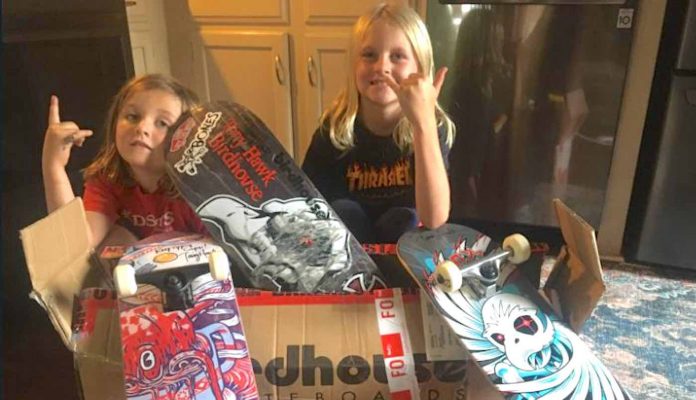
This little boy got to exchange gifts with his skateboarding hero after a compassionate FedEx driver went above and beyond the call of duty to make it happen.
Delivery driver Mikail Farrar had been driving through Suwanee, Georgia on his daily route last week when he saw a youngster chasing after his mail truck.
6-year-old Cooper Morgan had flagged Farrar down so he could ask him to deliver a gift to his skateboarding idol: Tony Hawk.
The gift was a worn-out skateboard deck that had Tony Hawke’s name written in black marker on one end of the board and Cooper’s name written on the other. Although the board was not properly packaged or addressed, the youngster told Farrar: “Get this to Tony Hawk from me. Tell him it’s from Cooper.”
Farrar did not want to disappoint Cooper; so he took a chance on the internet and posted a video to his Tik Tok channel explaining his predicament. A few hours after uploading the post, he checked his phone and was stunned to see a flood of notifications from social media users tagging Tony Hawk and praising Farrar for the adorable gesture.
Not only that, Hawk uploaded a video response to Farrar on his channel—which was the pro skater’s first Tik Tok video in two years.
Hawk thanked Farrar for connecting him with his young fans and sent a private message with his home address so Farrar could mail the skateboard. Hawk also said he would be mailing several new skateboards over to Cooper and his family in return.
Cooper and his 9-year-old brother Tucker are both avid skateboarders because of their father Robby Morgan, who started skating with his own younger brother when they were children—so when he and his kids received a package containing three new skateboards from Hawk earlier this week, they were floored.
“We both idolized Tony Hawk. A lot of kids got into skateboarding because of him. So this is a childhood dream of mine,” Morgan told CNN. “Seeing the look of joy on their faces when they saw the video, and then when they got the package this morning, it’s been surreal.”
Farrar later published a video to his channel of Cooper and Tucker thanking Hawk for the gift. The delivery driver also made sure to thank the pro skater for helping to coordinate such a sweet exchange.
“I had low expectations. I was hopeful, but I just thought that celebrities went swimming in their money and looked in the mirror all day,” Farrar told CNN. “I don’t know what they do, but not Tony Hawk. He’s a special guy.”
Quote of the Day: “Nothing is more important than reconnecting with your bliss.” – Deepak Chopra
Photo: by Melissa Askew, public domain
With a new inspirational quote every day, atop the perfect photo—collected and archived on our Quote of the Day page—why not bookmark GNN.org for a daily uplift?
The Victory Family Church in Norman, Oklahoma used a Zoom call to record “Don’t Worry Be Happy”, using only kitchen appliances, utensils, and voices.
Colten Dean is the church’s audio director and told GNN that members of the congregation regularly get creative with what they call “Jams”, thinking of creative ways to use unconventional instruments to put a song together.
“Usually these would be during our regular church services, but during quarantine we thought it would be fun to find a way to do one while everyone was stuck at home.”
The church’s pastor suggested one idea that most of the team really liked—the idea of using kitchen utensils.
“Many people have been cooking at home a lot more recently… Someone tossed out the song Don’t Worry Be Happy, and it immediately just made sense; I think we really just wanted to do something positive and uplifting for everyone,” says Colten.
“Once the idea started coming together, we quickly realized that it was just a great representation of all the different people in our community, and how we’re all in this together.”
And, you don’t need to be a cook—or belong to a church—to appreciate their masterful artistry.
Help Your Friends Be Happy By Sharing This Sweet Clip To Social Media…
File photo by Zero Emission Resource Organization, CC
File photo by Zero Emission Resource Organization, CC
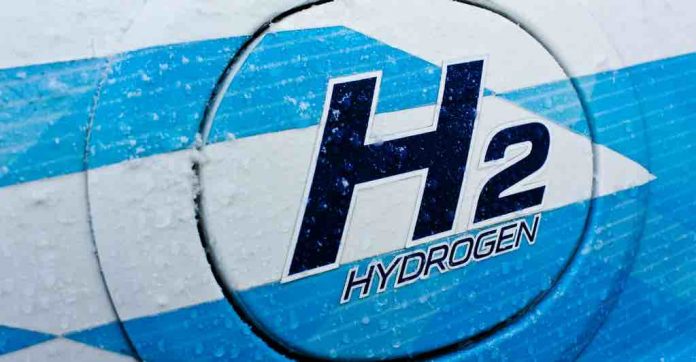
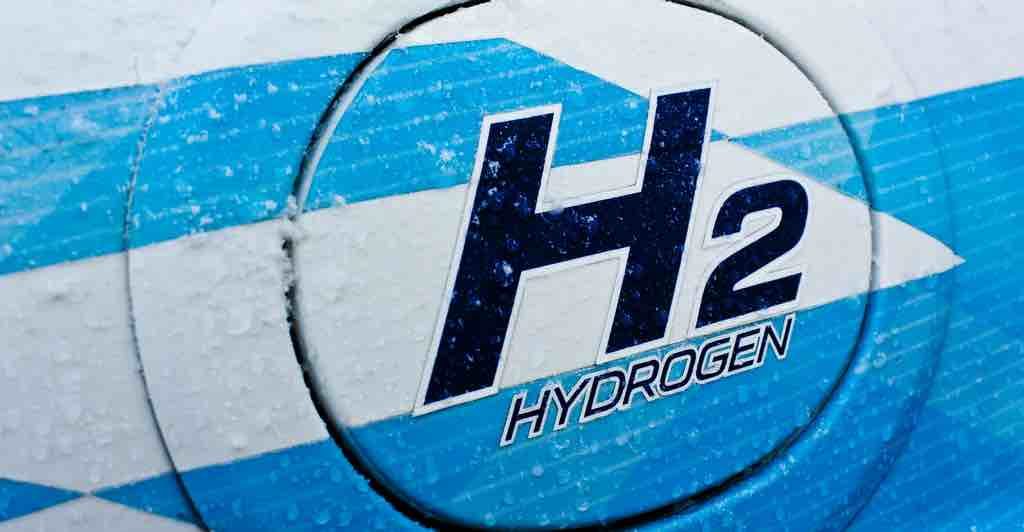
California will soon be the home of the largest trash-to-hydrogen power plant in the world.
Similarly to the iconic scene at the end of the Back to the Future film, scientists will be using trash such used paper, old tires, textiles, and plastic to produce the cheapest and greenest hydrogen energy on Earth.
Super-green Hydro (SGH2) is launching the plant in partnership with the city of Lancaster, which will start processing 42,000 tons of solid waste into hydrogen energy around the start of 2021.
“We are the only company in the world delivering green hydrogen that is cost-competitive with the cheapest, dirtiest hydrogen made from coal and gas, and much less expensive than other green hydrogen,” says SGH2 CEO Dr. Robert Do. “Our technology can scale quickly and produce fuel 24/7, year-round.”
Operating 24 hours a day for 7 days a week, the Lancaster plant will produce 24,000 pounds (11,000 kilograms) of hydrogen per day. According to SGH2, this makes them 3 times bigger than any other hydrogen energy plant, a source which they describe as being the “missing link” to a decarbonized world.
Greener than green hydrogen
SGH2 have created a system whereby oxygen-rich gas is fed into a chamber containing a plasma torch that heats the inserted trash component past 3,500 degrees Celsius. This rapid change of state—from solid, to liquid, to gas, and finally to plasma—separates the hydrogen atoms from hydrocarbon molecules which is then used for energy. The high heat also removes any tar or particulates that can sometimes be produced as byproducts.
Lawrence Berkeley National Lab performed a lifecycle carbon analysis of the hydrogen produced this way and found that for every ton of hydrogen produced, the technology mitigated 23 to 31 tons of carbon dioxide.
“That’s 13 to 19 tons more carbon dioxide avoided than other green hydrogen processes, which rely on electrolysis and renewable energy,” reads the SGH2 website.
Originally designed to deal with medical waste, SGH2’s plasma technology can be used to reduce waste of most kinds—anything that is a problem for landfills while also containing hydrogen atoms is fair game.
“Our process extracts all carbon from the waste … removes all particulates and acid gases, and produces no toxins or pollution. The end result is high purity hydrogen and a small amount of biogenic carbon dioxide, which is not additive to greenhouse gas emissions,” reads the SGH2 website.
As a result production costs (based on current US costs) are projected to be $2 per 2 pounds of green hydrogen. Brown hydrogen, the cheapest form of hydrogen that accounts for about 30% of all hydrogen energy, is produced from a process of coal gasification at about the same cost, though it varies depending on the country.
Finally, the design of the technology allows it to be scalable to any size operation while using less land and requiring less capital to build than the current green hydrogen plants relying on wind farms or solar panels to generate power for electrolysis.
(WATCH the SGH2 video below)
Power Up With Positivity By Sharing The Good News With Your Friends On Social Media…