All News - Page 599 of 1736 - Good News Network
Home Blog Page 599

Irish Researchers Have Developed Hospital Robot That Uses UV Light to Kill Viruses, Bacteria, and Germs

Akara Robotics-Twitter

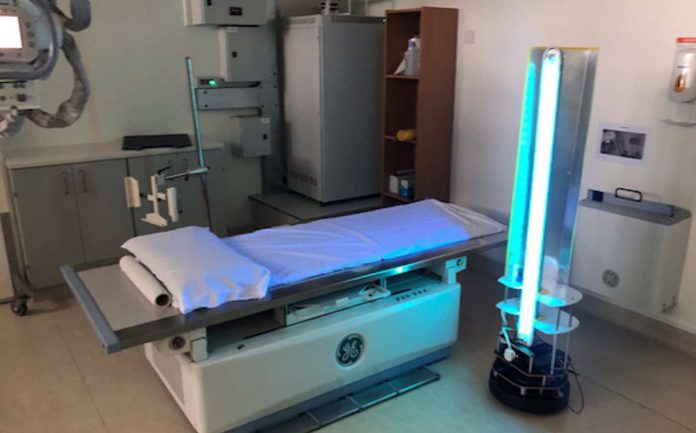
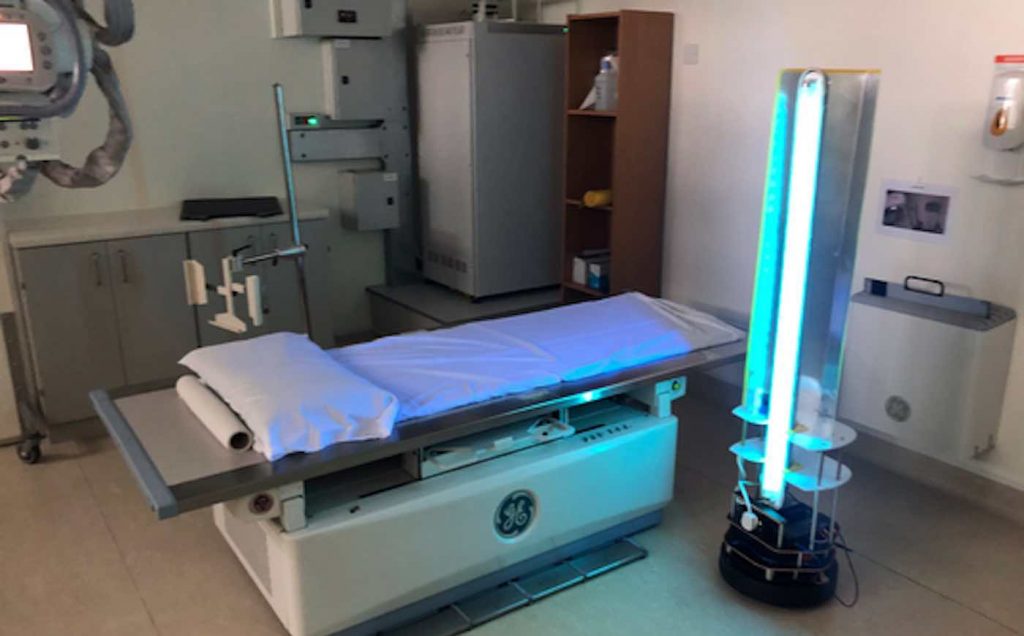
Completely circumnavigating the problem of supply shortages of things like hand sanitizer, Akara Robotics, founded at Trinity College, Ireland, has developed a robot that emits ultraviolet irradiated light to kill viruses, bacteria, and other harmful germs from hospital floors and other surfaces.

Sweetly named Robot Violet, it is clinically proven to kill viruses—and can sanitize an entire hospital room in half the time it would take to do the same task using conventional “deep cleaning” approaches.

CHECK OUT: Researchers Have Found a Way to Sterilize and Reuse Face Masks During Pandemic

The long tubular light looks like one you might see in a warehouse or factory, but it floats around the room as if a Jedi lightsaber were mounted on a Roomba vacuum cleaner.

Violet’s powers come from UVC rays shot at very short wavelengths. These breakdown the DNA in microbes and stop them from being able to replicate and can arrest the spread of germs, ideally including COVID-19, though they are still awaiting test results for the now-infamous virus to see if the robot can officially be relied upon to remove it.

Many surfaces, especially those on various hospital equipment, need to be washed by hand. Inventor Connor McGinn says his robot would greatly enhance this cleaning process, allowing hospitals that are swamped with patients to clean rooms and equipment without any human being present.

Akara Robotics-Twitter

“This system could reduce dependency on the use of chemical-based solutions, which may be effective but requires rooms to be vacated for several hours during sterilization, making them impractical for many parts of the hospital,” McGinn said on Twitter.

While UV rays are damaging to humans, so they cannot be used to sterilize hands or other areas of skin, an onboard AI system automatically shuts off Violet’s light if it detects that someone has moved in front of it.

RELATED: FDA Okays Historic Blood Treatment for COVID; Clinical Trials to Use Antibodies From Recovered Patients

The petite startup of only 7 people, hope to produce 50 units in the coming weeks—with their first robot possibly ready for duty by Easter.


If estimations about the upcoming COVID-19 curve are accurate, hospitals will need all the innovations like this—and this efficient new respirator invented by James Dyson—to help “flatten the curve” and prevent the spread of COVID-19 within hospital settings.

“We are very happy with the progress we are making,” McGinn told the Irish Times.

This is just one of many positive stories and updates that are coming out of the COVID-19 news coverage this week. For more uplifting coverage on the outbreaks, click here.

CLEAN UP Your Negative News Feed — SHARE the Irish Innovation on Social Media…

This Neighborhood Has Been Staying Connected During Social Distancing With Creative ‘I Spy’ Game

Photo by Shannon Garvey

This story written by Megan Hall is one of the many heartwarming stories that have been submitted by our devoted readers; if you would like to write your own good news article, click here.

The first surge of rapid response to the COVID-19 pandemic has receded and left necessary social distancing, self-isolation, and quarantine in its wake, with no definite end date in sight. Millions are now facing the effects of loneliness, cabin fever, life in too-close quarters, and asking how they can still find community when told to stay apart.

One neighborhood is responding in a creative and uplifting way: an interactive game of “I Spy” in which people of any age can participate.

Emily Nelson, a resident of the Sunnymede neighborhood in South Bend, Indiana, created this game for St. Patrick’s Day using the neighborhood association’s Facebook group.

LOOK: Mystery Mom Has Been Leaving Out Free Bagged Lunches ‘Made With Love’ for Anyone Who May Need Them

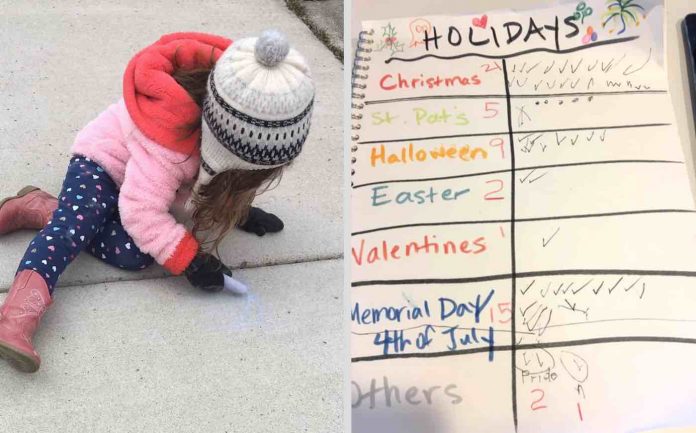
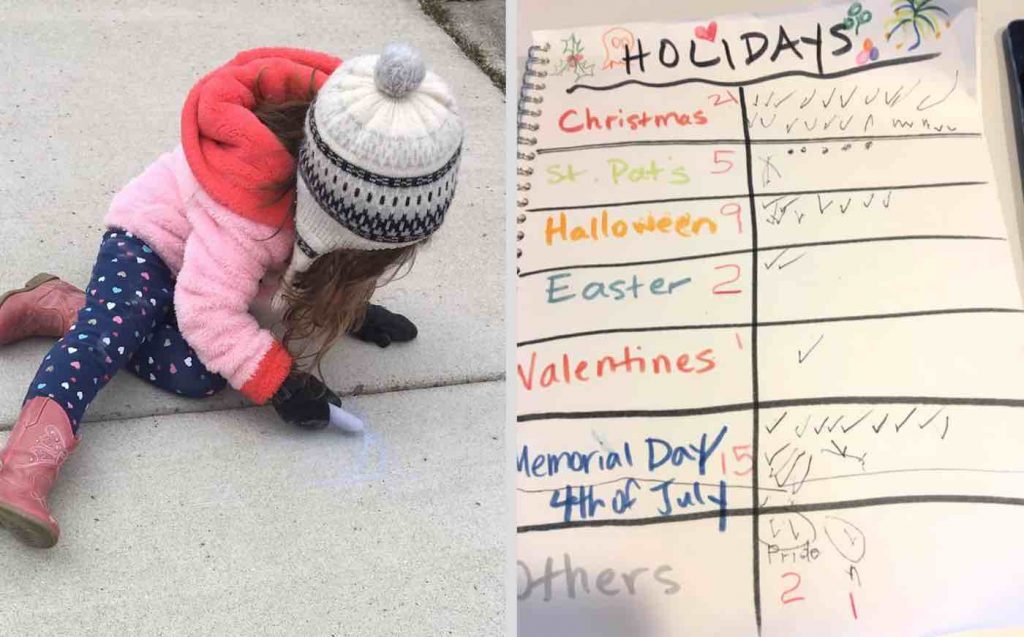
She asked residents to tape paper shamrocks to their front windows or draw them in chalk on their driveways—anything that would be visible to kids walking by on the sidewalk—for a shamrock scavenger hunt. Neighborhood kids could tally up how many they spied and post to the Facebook group.

The neighborhood response was tremendous, so Nelson drew up a calendar through mid-April with other themed days, including Disney characters, Mario, hearts for health workers, dinosaurs, and a bunny hunt. To make the outings even more fun, Nelson encouraged the walkers to embrace the themes by dressing in costume.

For any neighbors who didn’t have themed objects, decorations, or chalk to use, another neighborhood resident put together packets of coloring sheets that she could drop off in mail slots as requested.

Photo by Shannon Garvey

Participation has been high. According to Nelson, she and her family saw more than 28 Disney characters posted around the neighborhood on the most recent day, March 21st, including princess dolls and a King Louie from Junglebook.

Even the mailman, according to one resident, took notice and asked about the sudden appearance of Disney items in windows.

LOOK: Isolated Art Lovers Are Recreating Masterpieces Using Everyday Objects—and the Results Are Amazing

Kids are not the only ones who have been excited; neighbor Carolyn Evans wrote to Nelson on the Facebook page, saying “We had a blast looking for characters today! What a fun thing for all of us to do! THANK YOU for putting this in motion and THANK YOU to all of our neighbors who are participating!”

Visiting on front porches, chatting on sidewalks, and playing impromptu football games in the nearby school’s baseball field are some of the usual ways this neighborhood stays close. Now thanks to Nelson’s “I Spy” hunts, grateful community members are a little closer to finding new ways to stay in touch.

Photo by Megan Hall

This is just one of many positive stories and updates that are coming out of the COVID-19 news coverage this week. For more uplifting coverage on the outbreaks, click here.

Help Your Friends Spy This Sweet Story By Sharing It To Social Media…

“My mission in life is not merely to survive, but to thrive; and to do so with passion, compassion, humor, and style.” – Maya Angelou

Quote of the Day: “My mission in life is not merely to survive, but to thrive; and to do so with some passion, some compassion, some humor, and some style.” – Maya Angelou (born on this day)

Photo: by Kirschner Amao – public domain

With a new inspirational quote every day, atop the perfect photo—collected and archived on our Quote of the Day page—why not bookmark GNN.org for a daily uplift?

Quarantined Dad’s Endearing Video Shows What It’s Like Working From Home With a Toddler

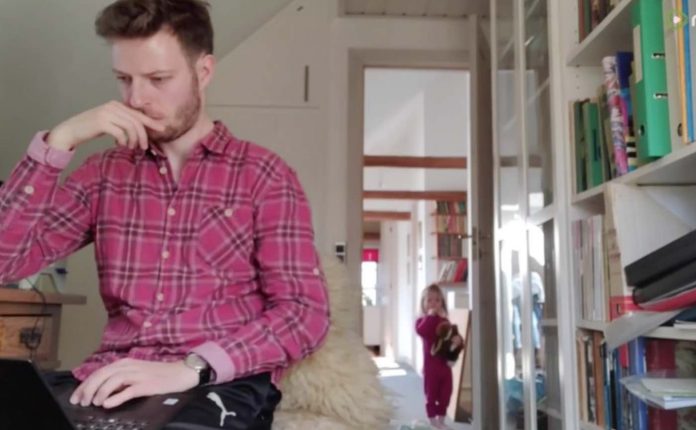
As millions of adult employees around the world start working from home during the COVID-19 shutdowns, this devoted dad took an adorable video of his average social distancing day on the job—and the resulting footage is pretty darn sweet.

(WATCH the video below)

Be Sure And Share The Cute Clip With Your Friends On Social Media…

Online Conference April 14-16 Using Covid-19 Crisis to Fix the World

“I cannot think of another time in the last million years when our species has been united against a common enemy,” said David Sinclair, Harvard Medical School genetics professor, in an interview with Peter Diamandis.

We are all stuck at home. We can either stay huddled in fear or use this as an activation moment.

Instead of watching an endless stream of great TV, a team from the OpenExO ecosystem is spending their time engaging with thought leaders from around the world to problem-solve for a better future.

“If we don’t transform now, our leaders will take us back to where we were and unprepared for the next global pandemic—not to mention climate change” and other pressing problems, says Kent Langley, Co-founder of the ExO Foundation, which is launching the ExO World Summit, April 14-16.

Guided by Paul Romer’s reminder that “a crisis is a terrible thing to waste”,  147 partners who are committed to the greater good with the aim of harnessing emerging technologies will converge online to develop ideas for transforming our global institutions.

Silicon Valley strategist and entrepreneur, Salim Ismail, author of the bestselling book Exponential Organizations, came up with the idea for the ExO World Summit. “Let’s convene our global leadership and reinvent it,” he asserted. “I don’t think of this as an opportunity—I think it’s an obligation.”

And, true to the group’s altruistic goals, all the proceeds from the event will go towards funding the programs that are developed.

ExO World will feature speakers like Peter Diamandis, Jason Silva, United Nations President Maria Fernanda, Former Mexico President Vicente Fox, Dr. Daniel Kraft, Andres Roemer, X-Prize CEO Anousheh Ansari, Steven Kotler, Salim Ismail, and more.

With a capacity of 100,000 attendees, the digital conference will feature an entirely virtual main stage, expo booths, networking zone, individual session/panel rooms, digital entertainment, and contributions from celebrities and heads of state. After each main session, breakout sessions will host dynamic conversations in many languages and topics, and a digital goodie bag will be presented to each attendee.

Teaming up with Singularity University and the 4000 members of OpenExO, are partners like the X Prize Foundation, Abundance360, Vortex, HighVibe, Rokk3r, Fastrack Institute and others.

Before Covid-19, events like this would usually cost thousands of dollars per person. The price for ExO World Transformation Summit has been set at below $200 to allow many more voices to the conversation. (And, all proceeds from the event will go towards initiatives that arise within it.)

GNN co-owner Anthony Samadani has secured a special rate for a limited number of tickets just for our viewers who want access to the entire three days of keynotes, sessions, and networking—and the opportunity to generate your own good news.

SHARE With Your Friends And Family… (Photo by Alice Popkorn, CC license)

Free Market Forces Will Obliterate Global Coal Reliance Within 10 Years, Says Study

Contrary to the image of greedy fossil fuel billionaires lobbying politicians for favors, it is now the free market, not world governments, that are doing the most to advance the use of clean renewable energy.

In the most basic sense, it is no longer a lucrative business path to invest in carbon emission-heavy sources. Today, investing in coal projects is more expensive—across all world energy markets—than renewables. In as little as 10 years, it will be cheaper to build renewables than to run coal power resources, much less build new ones.

How much more expensive? Right now, the report estimates that the cost of operating and investing in coal—not in Europe, but in the U.S., India, and China—is about 50% more expensive than renewables. By 2030, that number doubles to 100% assuming market forces remain constant rather than intensify, which they are likely to do.

LOOK: Toronto Garbage Trucks Will Soon Be Powered by Biogas From the Very Food Scraps That They Collect

“The market is driving the low-carbon energy transition, but governments aren’t listening,” writes Matt Gray, co-head of power and utilities for Carbon Tracker, and co-author of a new global economic report about coal investments entitled “How to Waste Half a Trillion Dollars.”

“Renewables are outcompeting coal around the world and proposed coal investments risk becoming stranded assets which could lock in high-cost coal power for decades.”

Indeed, the number of countries in which it is cheaper in invest and operate renewable energy assets could make someone optimistic about the future since most underdeveloped Asian energy markets, as well as the three biggest coal consumers on earth, would all save money switching to renewables, according to this helpful infographic from the report.

However, many of these countries still have nationally-planned coal power projects either in early investment stages, or already in production.

MORE: Construction Begins On First Ever Commercial Plastics-to-Fuel Factory in the US

As repeatedly demonstrated by the national debt of the US government, a stranded asset is manageable for most nations, but insufferable for a private firm that is unable to borrow more dollars every year than they invest.

It is an economic term for an asset—like a coal plant—which will cease to generate returns even before the end of its economic life. These carbon-heavy facilities not only have a slow rate of return and open the door for market competition from renewables, they also are becoming more expensive to invest in, build, and operate, than they are to make returns for those investors.

That is partially why free market economic forces are working where many governments are failing; it costs a lot of money to build electricity-generating resources, and since banks and financial institutions are the largest funders of energy projects, they simply aren’t willing to finance coal power projects, choosing instead to invest in solar and wind resources.

Vietnam: a Greenhouse Government

The government of Vietnam is currently considering backing away from 15 gigawatts of proposed coal power as financial constraints make it a harder to build new plants, which it wants to do in order to increase economic development.

The proposed projects would allocate 50% of energy production to coal-fired plants, but an end to the deal would see it drop to 37%, with others like hydroelectric and gas remaining stable, and renewable energy swooping in to cheaply meet the demand and fill the gap in supply.

Much of the nation’s energy projects are funded by investors in other coal-fired East Asian nations like Japan and South Korea, as well as powerhouse lender Singapore. After a recent aligning of principles with EU nations to restrict coal financing, however, many coal projects in Vietnam will be left stagnating with the government’s only options being to either finish the projects with taxpayer money or listen to market forces and move into cleaner energy production.

CHECK OUT: Instead of Burning Coal, New Fuel Emits Zero Harmful Emissions—and It’s Made From Sewage

On the other hand, private sector giants like Sir Christopher Hohn, who is the billionaire hedge fund manager and co-founder of the Children’s Investment Fund Foundation (CIFF), threatened to sue British banks Barclays, Standard Chartered, and HSBC over the financing of new coal projects.

“Coal is the single largest source of greenhouse gas emissions globally and the risks of its continued use in the power sector are not being adequately addressed by regulators and the financial system,” he said in a statement on the CIFF website.

Irresistible Market Forces

A high price of carbon and significant investment in renewable energy has created a very unfriendly market for coal in the EU, while “How to Waste Half a Trillion Dollars” finds that today, even big coal consumers like China, India, and the U.S. are on the right path and “not far behind” the EU in terms of renewable energy investments.

“The report finds that market forces will drive coal power out of existence in deregulated markets, where renewable energy developers will take advantage of the growing price gap,” reads the report summary on Carbon Tracker’s website. Across the world, 6,700 coal plants produce 2,045 gigawatts of energy, and another 1,000 or so accounting for another 500gw are in early stages of production or investment.

As the cost of investment, production, and operation of coal plants continues to increase as market forces push investors further and further towards renewables, hundreds of billions of dollars in energy markets the world over will become available at a lower cost, and coal could become twice as expensive, and begin to rapidly vanish—even in large coal-consuming countries like China and India, within just 20 years.

CHECK OUT: After Five Years of Drought, Kenyan Region Finally Gets Clean Water Thanks to Solar-Powered Saltwater Plant

A report from Reuters found that coal power generation fell worldwide by 3% in 2019, while wind and solar power contributed 270 more terawatts, or an additional 15%, to grids. The research went on to illustrate how this growth would be needed every year for 15 years in order to meet the Paris Agreement targets. The power generation would have to continue to fall from 3% to 11% to prevent 1.5 degrees celsius of warming—the rough estimate of wiggle room needed to avoid the worst effects of global climate change.

Money talks—and if coal production will rise from from 50% to 100% in the U.S., India, and 60% to 100% in China, in just ten years, it means that far from unlimited growth targets being met for investors, coal barons will have to cope with a 5% yearly rise in capital requirements, as well as any future blows coal might be forced to absorb such as carbon taxes, coal embargoes, and other brutish legislative measures.

Power Up With Positivity By Sharing The Good News With Your Friends On Social Media…

Hourly Workers at Largest Grocery Chain in US Are All Getting ‘Hero Bonuses’ for Their Service Amid COVID-19

As a means of thanking their employees for their essential work during the COVID-19 outbreaks, one of the largest grocery store chains in America is offering a “hero bonus” to all of their hourly workers.

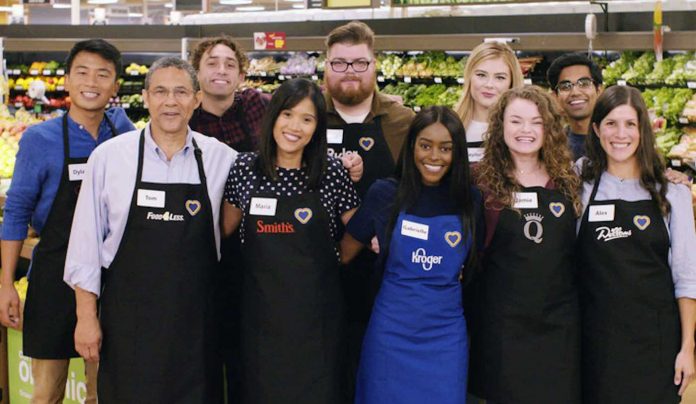
Kroger, which is the United States’ largest supermarket by revenue and the second-largest general retailer, announced this week that they would be giving all hourly frontline grocery, supply chain, manufacturing, pharmacy, and call center associates a temporary raise of $2 premium above their standard base rate of pay.

The bonus will be applied to hours worked from March 29th through April 18th. The premium will also be disbursed weekly to ensure associates have access to additional cash.

“Our associates have displayed the true actions of a hero, working tirelessly on the frontlines to ensure everyone has access to affordable, fresh food and essentials during this national emergency,” said Rodney McMullen, Kroger’s chairman and CEO. “The Hero Bonus is just one more way we continue to convey our thanks and gratitude not only to our existing associates but also to the more than 30,000 new hires who have joined in the past two weeks and those who will soon join the Kroger Family of Companies.”

RELATED: Kroger Donates $500,000 Facility to Rival Grocery Store So Community Won’t Be Left Without a Supermarket

This is not the company’s first gesture of gratitude towards its workers; in addition to publishing new sanitation guidelines and shoring up employee benefits for the duration of the coronavirus crisis, Kroger announced on March 21st that they would be giving their employees a one-time “appreciation bonus” of $300 to every full-time associate and $150 to every part-time associate.

“Recently, we announced an appreciation bonus for our hourly frontline associates. This gesture was to thank our associates for everything they have done during the past few weeks,” said Tim Massa, Kroger’s senior vice president and chief people officer. “However, we recognize that this crisis is far from over, and after reflecting on associate feedback and working together with our union partners, we want to further acknowledge our terrific team for their hard work to date as well as the work yet to come.”

This is just one of many positive stories and updates that are coming out of the COVID-19 news coverage this week. For more uplifting coverage on the outbreaks, click here.

Multiply The Good By Be Sharing The Heartening News With Your Friends On Social Media…

On Her 86th Birthday, Check Out the Jane Goodall Documentary Trailer We Can All Use Right Now: ‘The Hope’

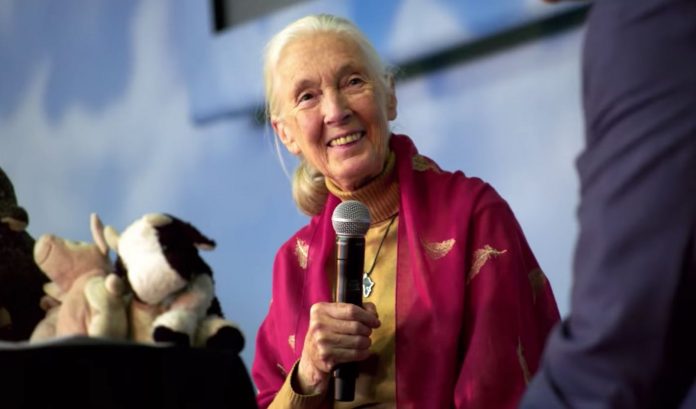
This week, National Geographic released the trailer for a new documentary about the incredible life of scientist and activist Jane Goodall—and it is already shaping up to be a much-needed lesson in global optimism.

The 2-hour documentary Jane Goodall: The Hope is set to premiere on Nat Geo, Nat Geo WILD and Nat Geo Mundo on Earth Day (April 22nd).

The invigorating trailer offers a glimpse at how the film will celebrate the 60-year career of the activist and how she is still working tirelessly to promote a message of hope for the earth.

RELATED: Adults Are Describing Their Reactions to the New Mr. Rogers Documentary—And It’s Incredibly Sweet

“At age 26, Jane Goodall’s discovery that chimpanzees make and use tools shook the foundations of modern science and redefined the relationship between humans and the rest of the animal kingdom,” reads the trailer summary. “In 1977, she founded the Jane Goodall Institute to inspire hope through action around the world and for generations to come.

“Today, Jane is an author, advocate and public speaker, traveling an average 300 days per year sharing her reasons for hope and message that we can each make a difference to create a better world for all, every single day.”

If you need any other reason to celebrate the conservationist’s achievements, today (April 3rd) is also her 86th birthday.

(WATCH the heartening trailer below)

Preserve The Positivity By Sharing This With Your Friends On Social Media…

When Student Was Having Trouble With Math Homework, Teacher Gave Her Private Lesson From Her Front Door

A middle school teacher from South Dakota is being praised for going above and beyond the call of duty to help one of his students with her math homework—all while respecting social distancing guidelines.

Last week, 12-year-old Rylee Anderson had been having trouble understanding how to graph and algebraic function. In addition to her school being closed amidst the coronavirus shutdowns, her parents weren’t home to help her with the equations—and her mom has apparently had a history of getting the algebra questions wrong anyway.

After Rylee emailed her math teacher Chris Waba for help, he responded with some written instructions on how to do the equations—but he could tell that she was still having trouble with the homework.

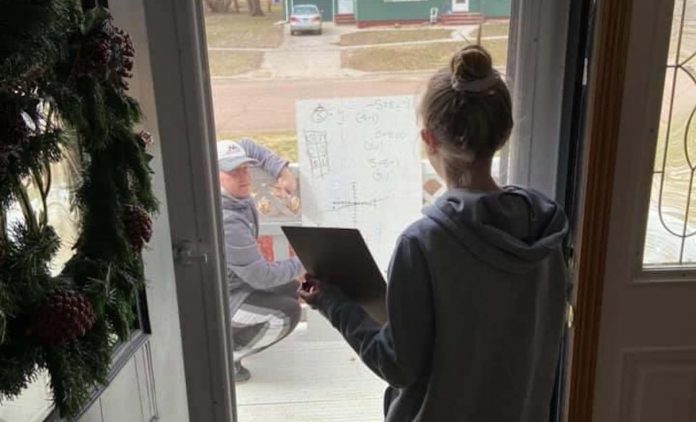
Since Waba knew that his student lived just down the street from his house in Madison, he grabbed a whiteboard and marched over to her front door so he could illustrate his points from the outside of the glass.

RELATED: Maryland Teens Go On Grocery Store Runs for Seniors and Vulnerable Neighbors Amid COVID-19 Fears

He then spent the next ten minutes giving a one-on-one math lesson to Rylee as she took notes from inside her home.

“I’m a better communicator face-to-face than [on] the telephone and I think students learn better that way,” Waba, who has been a math teacher for 27 years, told CNN. “Teachers all across the nation have been thrown into a situation like this. I think we’re all more comfortable being in front of our classes and that’s where we’d rather be.”

When it seemed like Rylee finally grasped the concept, Waba bid her adieu and headed home. Before he left, however, Rylee’s father Josh Anderson snapped a photo of the heartwarming interaction and posted it to Twitter.

WATCH: Love in the Time of Corona—NYC Man is Now Dating His Neighbor After He Creatively Woos Her in Quarantine

Although thousands of social media users have praised Waba for his dedication, he later insisted it was just part of the job.

“That’s what teachers are looking for, those smiles,” Waba told the news outlet. “That’s the joy of being a teacher and that’s what we do it for.”

This is just one of many positive stories and updates that are coming out of the COVID-19 news coverage this week. For more uplifting coverage on the outbreaks, click here.

Be Sure And Share This Sweet Story Of Kindness With Your Friends On Social Media…

Interview with the Amazing Emmanuel Kelly, Plus the Top Good News of the Week (Ep.#6) – GNN Podcast

Photo taken pre-pandemic

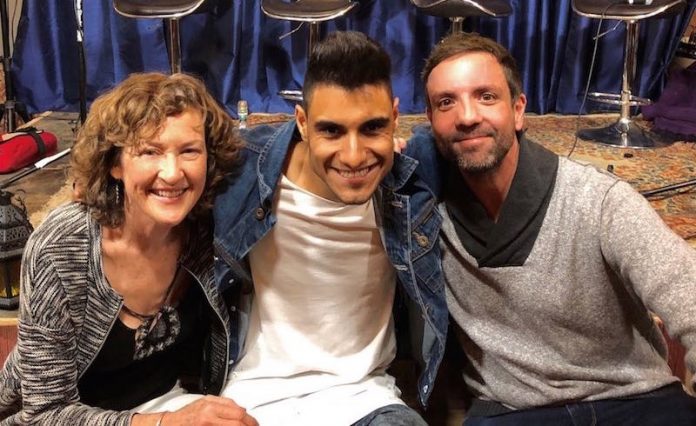
We’ve got all the inspiring good news of the day, plus our guest, Emmanuel Kelly, the Australian singer whose new video ‘Never Alone’ featuring Chris Martin, Claude Van Damme, and gobs of celebrities, drops on Monday. His amazing story of being left to die in a shoebox as a baby in war-torn Iraq and rescue by a blonde angel is the stuff of Hollywood films. Listen to his story (and follow him on Facebook), and also hear Geri discuss the option of ‘unschooling’ your kids at home—if homeschooling isn’t working out…

LISTEN and Subscribe to the show on iTunes—or Podbean, or on Spotify.

EMAIL us to be on the show or share good news: [email protected]

SUBSCRIBE to the Good News Morning Jolt email: gnn.to/jolt

“Why is patience so important? Because it makes us pay attention.” – Paulo Coelho

Brian Mann

Quote of the Day: “Why is patience so important? Because it makes us pay attention.” – Paulo Coelho

Photo: by Brian Mann – public domain, cropped

With a new inspirational quote every day, atop the perfect photo—collected and archived on our Quote of the Day page—why not bookmark GNN.org for a daily uplift?

Isolated Art Lovers Are Recreating Masterpieces Using Everyday Objects—and the Results Are Amazing


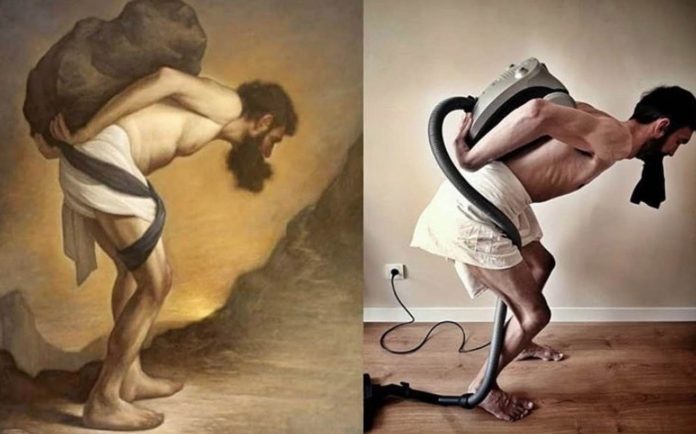
As people continue to find creative ways of coping with their boredom during the novel coronavirus quarantines, several social media pages have challenged art lovers to recreate famous masterpieces using just three objects from around their house—and the results are pretty hilarious.


The Los Angeles-based J. Paul Getty Museum recently asked their Twitter followers to select their favorite artwork, find three things lying around their house, and recreate the artwork with those items.


Since issuing the artistic challenge last week, the museum’s Twitter inbox has reportedly been “flooded” with amusing recreations.


“Our audience told us loud and clear that they wanted to see beautiful artworks, learn more about art from home, and find delight on social media,” Getty Museum social media manager Sarah Waldorf told Yahoo Lifestyle. “We wanted to offer up a creative challenge to find refuge from the uncertain state of the world and to spark excitement to get creative—no extra materials required.”


The social media challenge was reportedly inspired by the Dutch Instagram page Tussenkunstenquarantaine, which translates to “between art and quarantine”.


Amsterdam-based woman Anneloes Officier and her roommates were reportedly inspired to launch the account after they recreated Vermeer’s Girl With a Pearl Earring out of quarantined boredom.


In a matter of just a few short weeks, their account has been flooded with more than 400 recreations—some of which are actually pretty incredible.


Are you still craving for your fix of cultural enrichment during the current social distancing climate? Well, you can also now embark on virtual tours of more than 2,500 museums and galleries from the comfort of your own home.

If you’re still searching for additional sources of entertainment in quarantine, we’ve also put together a list of awesome animal livestreams and productive activities that you can do from home.

Share A Laugh With Your Friends By Sharing This To Social Media…

NBA Players Recovered From COVID-19 Are Donating Plasma to Clinical Trials Helping Sick Patients

A number of NBA players who have recovered from COVID-19 are now becoming role models for a new national healthcare initiative to treat patients who are still sick with an experimental therapy.

Just days after the US Food and Drug Administration (FDA) approved testing of “convalescent plasma treatment”, physicians at the Methodist Hospital in Houston, Texas became the first in the nation to test the therapy on a small group of COVID-19 patients this week.

The treatment involves drawing blood plasma out of an individual who has built up an immunity to the virus as a result of their recovery. The plasma—which is chocked full of healthy antibodies that have grown to fight the virus—is then injected into a sick patient so the antibodies can theoretically attack the virus for its new host.

RELATED: After the UK Told James Dyson It Needed 10,000 Ventilators, He Invented One in Just 10 Days—And is Donating 5,000

Since hospitals across the country are now searching for recovered COVID-19 patients to donate blood plasma, several NBA players are now cooperating with the National COVID-19 Convalescent Plasma Project (CCPP19) to volunteer as donors.

Dr. Michael Joyner, who is a member of the project’s leadership team, told ABC News that four basketball players are participating in the program. Although three of the players have not yet been identified, Boston Celtics guard Marcus Smart confirmed to the news outlet through his agent that he is donating blood plasma after he was declared coronavirus-free by the Massachusetts Department of Health this week.

Not only is Joyner applauding Smart’s efforts as a role model for other recovering COVID-19 patients, he says that athletes who donate blood plasma are likely to be ideal candidates for the experimental treatment.


“These are big men with blood volumes, and as a result [they] have a lot of plasma volume,” Joyner told ABC News. “Frequently people who are physically trained also have an increase in their plasma volume from what you would expect from them just being regular-sized guys … We believe [the treatment] can be disease-modifying and reduce duration and severity in some patients.”

The NBA has also donated $100,000 to the CCPP19 project. If you would like to learn more about the healthcare project—or if you would like to donate blood plasma to a participating hospital near you—be sure and check out the CCPP19 website.

This is just one of many positive stories and updates that are coming out of the COVID-19 news coverage this week. For more uplifting coverage on the outbreaks, click here.

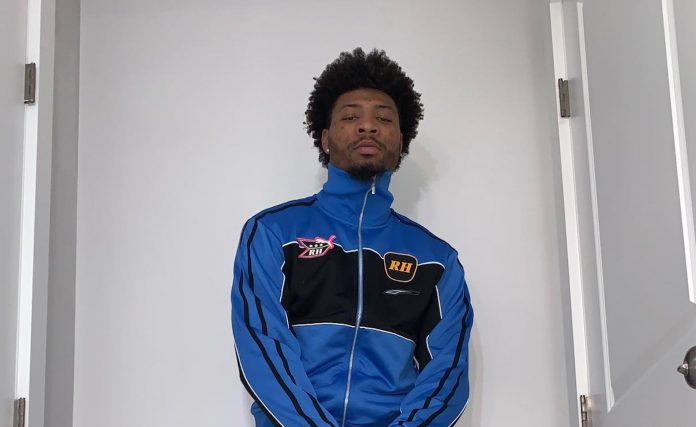
(WATCH the news coverage below) – Feature photo by Marcus Smart

Multiply The Good By Sharing The Exciting News With Your Friends On Social Media…
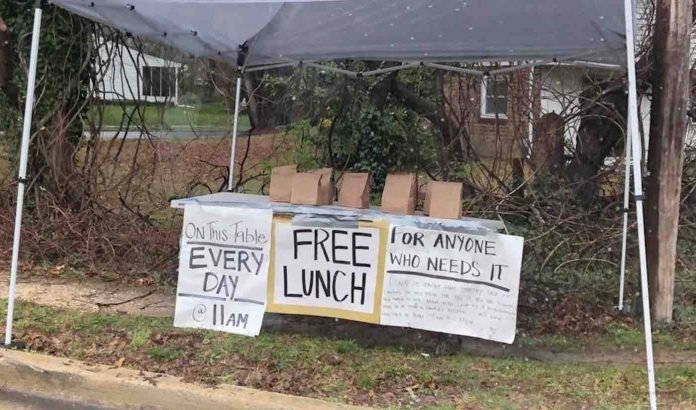
Mystery Mom Has Been Leaving Out Free Bagged Lunches ‘Made With Love’ for Anyone Who May Need Them

An anonymous Maryland mother is being hailed for leaving out hundreds of bagged lunches for her community during the novel coronavirus shutdowns.

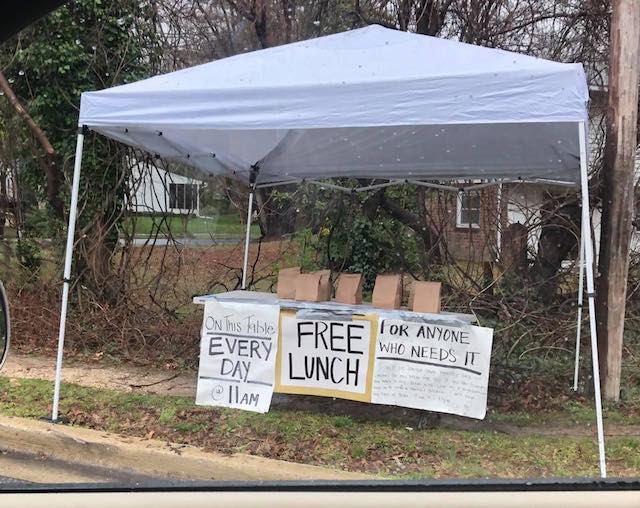
The unidentified do-gooder has been leaving the healthy meals on a tent-sheltered table at a busy intersection in Severna Park. Hanging from the table is a sign that reads: “For anyone who needs it … I will be leaving some healthy sack lunches on this table for you if you are hungry and need to eat. Made with love by a neighborhood mom in a clean and sanitized kitchen.”

The table has reportedly been stocked with free lunches between 11AM and 1:30PM every day for a number of weeks.

For Kimberly Gussow, a mother-of-two who has been scrimping and saving to make ends meet as she works from home, the lunches have been a much-appreciated gesture of kindness for her kids during the quarantine.

RELATED: Disheartened by News Reports, Café Owner Withdraws $10,000 in Cash to Give Away to Unemployed Strangers

“This makes me embrace my community even more. I’m proud to live here,” Gussow told ABC News. “It’s great to show our kids that there is good in our world. It’s not just about ourselves, it needs to be about others too.”

The table even caught the eye of state Delegate Nic Kipke, who praised the labor of love on his Facebook page, saying: “Things like this really lifts my spirits! It’s great to see so many in our community doing so much to care for others during this stressful time.”

This is just one of many positive stories and updates that are coming out of the COVID-19 news coverage this week. For more uplifting coverage on the outbreaks, click here.

Photo by Delegate Nic Kipke

Be Sure And Share This Sweet Story Of Kindness With Your Friends On Social Media…

‘Landmark’ Study Lays Road Map for Exactly How We Can Restore Oceans to Former Glory in Just One Generation

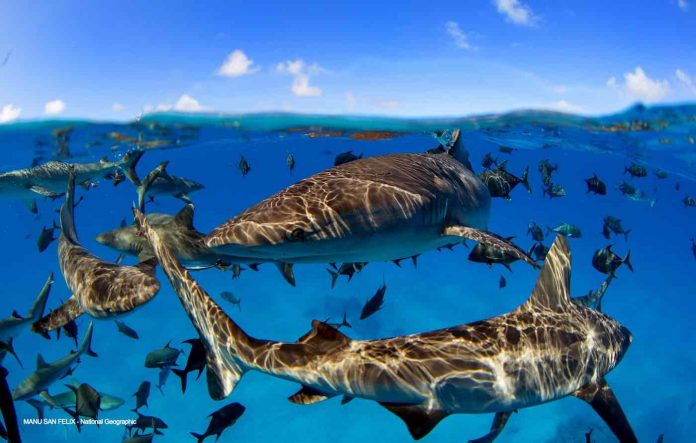
Photo by King Abdullah University of Science and Technology

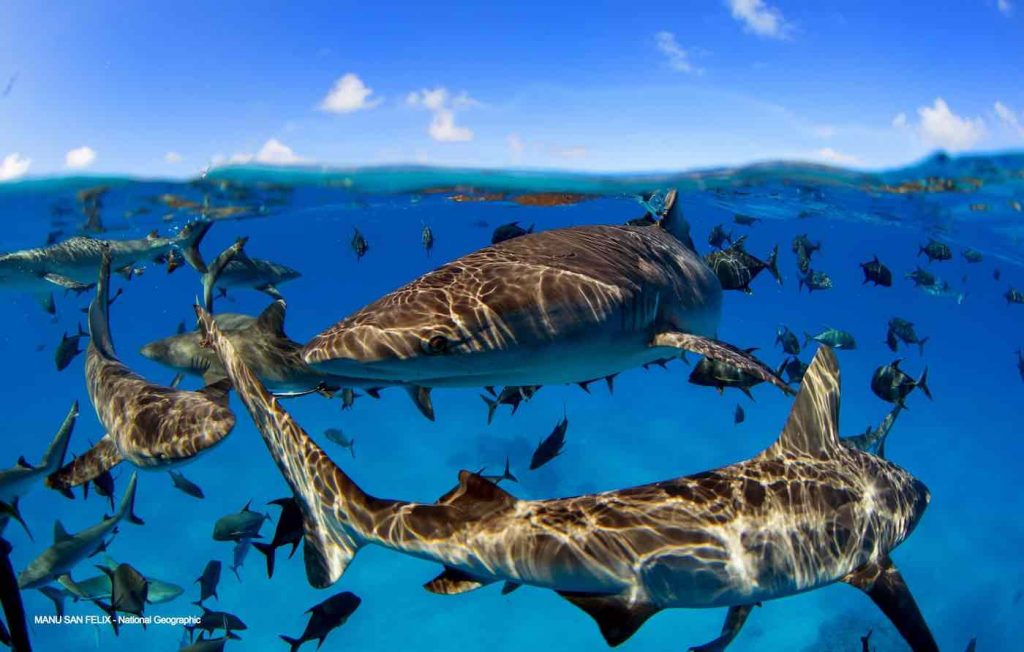
A “landmark” new international study has laid out a trailblazing road map for restoring marine ecosystems to healthy levels—and if accomplished, the world’s oceans could recover to their former glory by 2050.

The study, which involved some of the world’s leading marine scientists working across four continents, in 10 countries and from 16 universities, uses evidence from successful conservation interventions around the globe to recommend crucial steps the international community can take to restore the abundance of marine life.

Edge of extinction

Successful conservation projects highlighted by the research include the recent surge in numbers of humpback whales following the end of commercial hunting in the Southwest Atlantic which brought the species to the edge of extinction.

The researchers found that while human activity has often had a devastating impact on the marine environment, there is evidence that sea life is remarkably resilient. While there were steep losses in marine biodiversity throughout the 20th century, population losses have slowed and in some places bounced back in the first two decades of the 21st century.

RELATED: For First Time Ever, Scientists Identify How Many Trees to Plant and Where to Plant Them to Stop Climate Crisis

Co-author of the study, Professor Callum Roberts from the Department of Environment and Geography at the University of York, said: “The success of many marine conservation projects in recent years illustrates how we can make a real difference to life in our oceans if we apply the lessons learnt from them at scale and with urgency.

“Over-fishing and climate change are tightening their grip, but there is hope in the science of restoration. We now have the skills and expertise to be able to restore vital marine habitats such as oyster reefs, mangrove swamps and salt marshes—which keep our seas clean, our coasts protected and provide food to support entire ecosystems.”

“Science gives us reason to be optimistic about the future of our oceans,” Roberts added.

Climate change

The review states that the recovery rate of marine life can be accelerated to achieve substantial recovery within two to three decades for most components of marine ecosystems, if climate change is tackled and efficient interventions are deployed at large scale.

MORE: One Million ‘Wonder Plant’ Seedlings Are Planted in Wales to Fight Climate Crisis—and Create Healthy Seas

The researchers have identified nine components integral to rebuilding marine life, saltmarshes, mangroves, seagrass, coral reefs, kelp, oyster reefs, fisheries, megafauna and the deep-sea.

The report identifies specific actions within the broad themes of protecting species, harvesting wisely, protecting spaces, restoring habitats, reducing pollution, and the mitigation of climate change.

The actions recommended include identified opportunities, benefits, possible roadblocks and remedial actions. They provide a tangible road map to deliver a healthy ocean providing huge benefits for people and planet.

CHECK OUT: Whales Feces Represent One of the Greatest Allies Against Climate Change—Even More Than Trees

The report states that success largely depends upon the support of a committed, resilient global partnership of governments and societies aligned with this goal. It will also require a substantial commitment of financial resources, but the new study reveals that the ecological, economic and social gains from rebuilding marine life will be far-reaching.

“We are at a point where we can choose between a legacy of a resilient and vibrant ocean or an irreversibly disrupted ocean,” said Carlos Duarte, lead author of the study and KAUST professor of marine science.

“Our study documents recovery of marine populations, habitats and ecosystems following past conservation interventions [and] it provides specific, evidence-based recommendations to scale proven solutions globally,” Duarte added.

Reprinted from University of York

Photo by King Abdullah University of Science and Technology

It’s Not Hard To Sea That You Should Share The Exciting News With Your Friends On Social Media…

This Diligent Dog Has Been Delivering Groceries, Meals, and Mail to Senior Neighbor in Quarantine

This sweet golden retriever is showing that dogs aren’t just man’s best friend—they’re also man’s best neighbor, too.

71-year-old Renee Hellman is just one of many Colorado residents who have isolated themselves in their homes for fear of risking exposure to the novel coronavirus. Since Hellman is also particularly vulnerable to the virus because of her chronic obstructive pulmonary disease, she has been quarantined inside her home in Manitou Springs for more than three weeks.

Hellman’s neighbor of 10 years, Karen Eveleth, knew that she wanted to do something to help her senior neighbor in quarantine—but she didn’t know how to offer any assistance without potentially endangering Hellman.

In a stroke of genius, Eveleth then taught her pet dog Sundance how to deliver groceries to Hellman’s door.

WATCH: Love in the Time of Corona—NYC Man is Now Dating His Neighbor After He Creatively Woos Her in Quarantine

Not only has Sundance been delivering food and meals to Hellman, he has also been retrieving her mail from the postal box.

“I make meals for her also and Sundance brings back the empty bowls,” Eveleth told CNN. “He is a humble hero. When he hears something drops, he knows I’ve got to get that for mom because I have a bad back. He also gets the mail. I have the carrier leave the box open. Sunny has two siblings, but delivery and pick up is not in their DNA.”

With Sundance’s daily visits to cheer her up in isolation, Hellman is calling the golden retriever her “humble hero”.

This is just one of many positive stories and updates that are coming out of the COVID-19 news coverage this week. For more uplifting coverage on the outbreaks, click here.

(WATCH the news coverage below) – Photo by KCAU

Be Sure And Share This Pawesome Story With Your Friends On Social Media…

“Take a limitation and turn it into an opportunity. Take an opportunity and turn it into an adventure by dreaming BIG!” – Jo Franz

Ian Stauffer

Quote of the Day: “Take a limitation and turn it into an opportunity. Take an opportunity and turn it into an adventure by dreaming BIG!” – Jo Franz

Photo: by Ian Stauffer – public domain

With a new inspirational quote every day, atop the perfect photo—collected and archived on our Quote of the Day page—why not bookmark GNN.org for a daily uplift?

Doctor Left Crying After Officer Pulls Her Over For Speeding But Gives Her Face Masks Instead of a Ticket

Photo by Minnesota State Patrol
Dr. Sarosh Ashraf Janjua

When a Minnesota state trooper pulled over Dr. Sarosh Ashraf Janjua for driving above the speed limit in her car last week, she assumed she was going to be ticketed for the offense.

Upon handing the policeman her Massachusetts driver’s license, Janjua explained how she flies out to Minnesota from Boston once a month in order to do cardiology work at the local hospitals.

“He went back to his patrol car to look up my license, and when he returned, quite firmly told me it was very irresponsible of me to be speeding, especially since I would not only take up resources if I got into an accident, but would also not be in a position to help patients,” 37-year-old Janjua later recounted on Facebook.

“Feeling thoroughly chastised, I waited for him to write me a ticket. Instead, he told me he was going to let me off with a warning. As I sputtered to apologize and say thank you, he reached in to hand me what I assumed was my license back.”

RELATED: ‘Unbelievable Act of Kindness’: Customer Left $2,500 Tip for Restaurant Staffers Before They Closed Up Shop

To her surprise, the officer handed her five new N95 masks from his own personal state-supplied stash.

“I burst into tears. And though it may just have been the cold wind, I think he teared up a little as well, before wishing me well and walking away,” she continued. “Like all healthcare workers and emergency responders around the world, I have felt afraid of not having adequate protective equipment, and in my darkest moments, have worried about what would happen if I fell sick far from home.

“This complete stranger, who owed me nothing and is more on the front lines than I am, shared his precious masks with me, without my even asking,” she added. “The veil of civilization may be thin, but … we are going to be ok.”

MORE: Restaurant Flooded With Business After Launching an ‘Adopt a Doc or Nurse’ Catering Service

The state trooper, who was later identified as Brian J. Schwartz, says that he was simply hoping to support a hardworking healthcare professional combatting the novel coronavirus outbreaks in Duluth.

“Thank you to Sarosh for her hard work and dedication,” wrote the state trooper’s Facebook page. “Troopers are working hard during the pandemic and are thinking about all the first responders who are caring for Minnesotans during this critical time.”

This is just one of many positive stories and updates that are coming out of the COVID-19 news coverage this week. For more uplifting coverage on the outbreaks, click here.

Photo by Minnesota State Patrol

Be Sure And Share The Inspiring Story Of Kindness With Your Friends On Social Media…

Russia Sends Cargo Plane of Medical Supplies to US: ‘There is no alternative to working together’


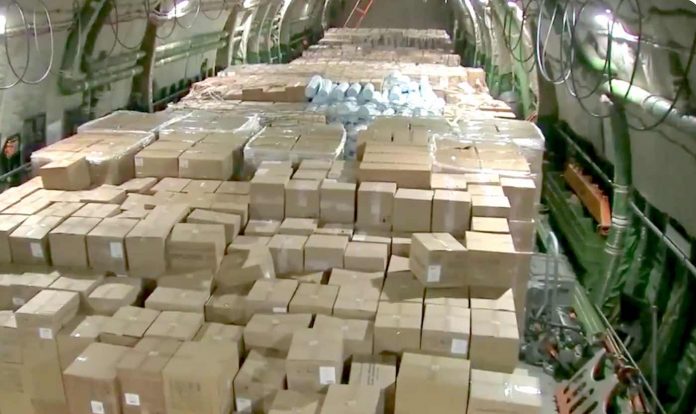
The Russian government has reportedly deployed their largest cargo plane filled with medical supplies bound for the United States as a means of helping curb national shortages amidst the COVID-19 outbreaks.

According to Reuters, the AN-124 Russian plane carrying face masks, medical gowns, and hospital equipment left Moscow yesterday evening.

Although the gesture of assistance has generated mixed political feedback as a result of ongoing strains between Russia and the US these last few years, the Russian Embassy in Washington, D.C. quoted the Russian president’s press secretary Dmitry Peskov saying: “Being aware of the serious epidemiological situation in America, the Russian side offered medical equipment and protective gear as assistance.

“Importantly, when offering assistance to the American colleagues, President Putin is guided by the following consideration: when US manufacturers of medical equipment gain momentum they will be able to reciprocate if need be,” he continued. “Now, when the current situation affects each and every one and can be characterized as global, there is no alternative to working together in the spirit of partnership and mutual help.”

RELATED: Chinese Company Ships Crates of Masks to Italy Covered in Italian Poetry: We Are ‘Leaves of the Same Tree

This is not the first time Russia has sent supplies to the U.S. during times of emergency. They were one of the first countries to offer assistance in the wake of Hurricane Katrina, sending multiple jets with special evacuation gear, medical equipment, a water-cleansing system, a rescue helicopter, and six tons of drinking water.

The U.S. has received other international aid shipments during the novel coronavirus pandemic; Taiwan reportedly donated 100,000 masks to America’s shores earlier this month. Furthermore, European Union member nations have been exchanging a number of supplies and services between countries in need over the course of the last month.

This is just one of many positive stories and updates that are coming out of the COVID-19 news coverage this week. For more uplifting coverage on the outbreaks, click here.

Share The Uplifting Diplomacy With Your Friends On Social Media…

New COVID-19 ‘Citizen Science’ Project Lets Any Adult with a Smartphone Help Fight Coronavirus

To help fight the novel coronavirus now plaguing humanity, a new initiative by UC San Francisco physician-scientists, dubbed COVID-19 Citizen Science (CCS), will allow anyone in the world age 18 or over to become a citizen scientist advancing understanding of the disease.

The spread of coronavirus that causes COVID-19 has varied across individuals and regions, and the factors that determine how it affects individuals and populations are not well understood. A critical mass of CCS participants uploading information though the app, launched on March 26th could help data-crunching researchers gain insight into how the virus is spreading and identify ways to predict and reduce the number of new infections, according to Gregory Marcus, professor in the Department of Medicine at UCSF and a co-leader of CCS.

Based around a smartphone app, information on the study can be accessed via the Eureka signup website (if prompted, enter the study key: covid) or by texting “COVID” to 41411.

Marcus said the researchers’ hope is for the new study to “go viral”—in a good way—with a goal to ultimately enroll more than 1 million individuals around the world.

RELATED: From Italy to Seattle, Reports Find Social Restrictions Are Working to Curb New COVID-19 Cases

“We are asking each participant to share the link to recruit at least five others,” Marcus said. “We want to demonstrate that the number of people signing up for this scientific study and contributing their data can increase exponentially, faster than the disease itself.” To illustrate this hoped-for exponential growth, the researchers plan to create and share a data visualization that maps enrollment in CCS in real time, which Marcus hopes will show study participation outpacing the global spread of the virus.

With widespread social distancing in place, and with quarantine and isolation for some, public health studies can be challenging, Marcus said—but all that’s needed to join CCS is the link and a smartphone to download the mobile phone-based app. Once enrolled, participants will be asked to complete an initial 10- to 15-minute survey about their health and daily habits. Follow-up questions, delivered by push notification or text message on an ongoing basis, are expected to require five to 15 minutes per week.

Participants will be also given the option of providing nearly continuous geolocation (GPS) data, and soon, additional data from Fitbit or other Bluetooth-enabled biomonitoring devices, including blood pressure, weight, blood oxygen levels, body temperature, exercise and sleep.

CHECK OUT: After the UK Told James Dyson It Needed 10,000 Ventilators, He Invented One in Just 10 Days—And is Donating 5,000

In the long term, the collective participation of committed individuals in CCS will help identify behaviors, influences and factors that increase or decrease the risk of infection or that affect outcomes after infection, Marcus said. The greater the number of participants, the greater the likelihood of statistically valid findings emerging from the study.

CCS springs from a project called the Health eHeart Study which Marcus launched in 2013 to harness online and mobile advances in order to collect and analyze cardiovascular information from study participants, using not only surveys, but also smartphone apps, portable blood pressure cuffs and electrocardiogram smartphone cases.

The experience gained through Health eHeart helped the UCSF team compete successfully when the National Institutes of Health sought to establish a national center for mobile health research. The result is Eureka, a mobile-app-focused health research platform that offers personnel and infrastructure, including cloud-based databases that can handle very dense data from millions of participants, to enable researchers to get studies up and running quickly.

MORE: Researchers Have Found a Way to Sterilize and Reuse Face Masks During Pandemic

Having already hosted 28 studies by various research teams on Eureka, the UCSF researchers decided to launch CCS on the platform. To stretch beyond cardiology-focused research they enlisted UCSF colleagues from a variety of medical and research specialties to contribute ideas about survey questions and study parameters.

“We are like a company that during wartime switches from making cars to making tanks,” Marcus said.

Health eHeart already has nearly 250,000 participants, and spans more than 80 countries worldwide. They are accustomed to taking part in research, sharing personal medical information and being pinged with questions, and they all have been asked to be among the first to join the new CCS project, and to invite others.

LOOK: JOANN Stores are Handing Out Free Fabric Supplies at Curbside to Anyone Sewing Face Masks at Home

With cell phones become essentially ubiquitous only in recent years, it is still early days for mobile health studies, Marcus said, but CCS has the potential to be the largest-ever prospective epidemiological study of infectious disease, perhaps of any disease. In prospective studies information is collected in real time, instead of relying solely on retrospective memory and other information that can be gathered about past events. In general, prospective studies are considered more likely than retrospective studies to correctly identify associations between variables and risks.

“Social distancing keeps many protected,” Marcus said, “but joining together to contribute data will help us beat this thing.”

Reprinted from the University of California San Francisco

Multiply The Good News By Sharing This With Your Friends On Social Media…