











All News - Page 3 of 1714 - Good News Network
Home Blog Page 3

Watch 78-Year-old Lady Jump From Rock Cliff on 300-foot Rope Swing in Utah, ‘What a Legend!’ 

Barbara jumps with Moab Swingers in Utah - SWNS
Barbara jumps with Moab Swingers in Utah – SWNS

A 78-year-old woman became a daredevil last week when she decided to go ‘rope swinging’ for the first time.

Barbara took the plunge at what operators are calling the longest rope swing in the US—hung between two 500-foot rock cliffs in the desert of Moab, Utah.

Andy Lewis, co-founder of Moab Swingers, shot a video of the heart-stopping moment, with Barbara saying she’s “never done anything like this before”.

The footage below shows Barbara leaping off the cliff’s edge and swinging like a giant pendulum, before being hauled back to the top of the red rocks.

“I was fully inspired,” said Andy. “To be able to do what she was doing at 78— what a legend!”

“She loved every second of it.

“We really try to design the swing so anyone can use it, including elderly people, children and those with disabilities.

“So it’s great seeing it taken full advantage of,” he concluded.

WATCH THE VIDEO BELOW… And, Check Out More Adventuring Seniors:
Grandma Who Learned to Swim at 59 Just Became Oldest Ever Female Ironman Finisher
80-yo Retired Teacher Bests Disease and Injury to Become Oldest Female Hiker to Finish Appalachian Trail

PLAN A LITTLE EXCITEMENT When You Share This With Friends on Social Media…

Everyone’s Liver is Only 3 Years-old, Thus WWII Vet Becomes Oldest Organ Donor in US History at 100

Dale Steele with wife Doris – Courtesy of Live On Nebraska

Two hours after Dale Steele passed away, his son received a call.

The circle of life was spinning and Dale’s legacy would soon live on. Even at 100 years old, his liver was 100% healthy and he could donate it.

“How could that even be?” his son, Roger, wondered.

Officials from the organ donation nonprofit Live On Nebraska explained it to Steele’s children: the way the liver constantly replaces cells and regenerates makes its ‘functional age’ usually less than three years old.

His liver was successfully transplanted into a grateful patient just one day after his death. And at 100 years old, the procedure made Dale the oldest organ donor in U.S. history.

“One of the myths we hear out in the community often, is that ‘I’m too old to be an organ donor. I might not be healthy enough to be a donor.’ And I think a case like this truly proves that there is no age limit,” Kyle Herber, president and CEO of Live On Nebraska told Nebraska Public Media.

AMAZING 100-YEAR-OLDS:
100-Year-old Grandma Sets Guinness World Record as a Powerlifter, and Continues Winning Trophies (WATCH)
Spritely 100-Year-old Pianist Still Wows NYC Diners Without Missing a Beat

Dale was born near Ainsworth, Nebraska in 1925 and served in Europe during World War II. After that, the cattle rancher returned home and met his wife Doris, who he was married to for 72 years. Dale remained active throughout his life by raising cattle, working at a farming co-op, and selling irrigation and grain handling equipment.

“If he could help people, he would. But he wasn’t showy about it,” said Roger. “He had a strong body that was able to carry him through his 100th birthday. I think that came from hard work.”

So, as Dale’s life was nearing its end in February, the organ donor group inquired about his organs. The answer was an easy one.

“We consented without any hesitation,” Roger said. “We thought, this is the kind of thing—if he were able to be asked, he’d agree to.”

“I just know his response would be, ‘Well, if I can help somebody else, fine.”

PAYING IT FORWARD TO ORGAN DONORS:  Double Lung Transplant Recipient Helps Students Make Comfort Blankets for Organ Donor Families

According to Herber, more than 100,000 patients in the U.S. are waiting for a life-saving organ transplant, including nearly 400 in Nebraska alone. And it’s estimated that approximately 17 people die every day while waiting for a transplant.

Dale was able to save at least one of them.

“This is a story about a life of service that didn’t end at death,” Herber told Live On Nebraska. “Mr. Steele lived a full century giving to others, and through (organ) donation, that generosity continues in a way that will impact lives for years to come.”

WATCH the video below…

HELP DALE’S STORY REACH PROSPECTIVE DONORS By Sharing it on Social Media…

North America’s Largest Wildlife Overpass Opens for Animals to Safely Cross in Colorado

Greenland Wildlife Overpass over I-25 –Credit: Colorado Department of Transportation

Moose, elk, black bears, and mountain lions are now able to cross six lanes of interstate highway traffic along I-25 near Larkspur, Colorado, thanks to the opening of North America’s largest wildlife overpass.

The Colorado Department of Transportation completed construction of the structure in Douglas County in December, by covering the overpass surface with dirt and vegetation.

Completed in less than a year—ahead of schedule, and on budget— the Greenland overpass was specifically designed to provide safe passage for elk and pronghorn, which need more space.

It connects 39,000 acres of habitat on both sides of the 6-lane highway between Larkspur and Monument, and completes a system of smaller overpasses and underpasses constructed to improve safety along the 18 mile stretch near Castle Rock. (Watch a video below…)

Prior to the system being built, there was an average of one wildlife-vehicle crash per day in the fall and spring, when wildlife is most active.

The state’s research shows that the five underpasses are successfully being used by both large and small mammals.

“The I-25 Greenland overpass is a momentous feat,” said Governor Jared Polis. “Colorado is leading the way in reducing wildlife-vehicle collisions, and protecting critical habitat for generations to come.”

CHECK OUT: ‘It’s working!’ From Bobcats to Bears, Utah’s First Wildlife Bridge is a Hit–And There’s Video to Prove it

Greenland Wildlife Overpass – Credit: Colorado Department of Transportation

Transportation Director Shoshana Lew said the wildlife crossing system, called the I-25 South Gap Project, is expected to reduce wildlife-vehicle crashes by 90%.

Measuring 200 feet wide and 209 feet long, it covers 41,800 square feet (3,900 sq meters), making it the single largest bridge structure for wildlife in North America—and one of the largest in the world.

76 girders hold up the bridge deck, allowing big game animals such as moose, bear, mountain lions, elk, mule deer and pronghorn to pass, while 100,000 vehicles travel daily below.

“After more than nine years of planning and work, Colorado Parks and Wildlife is excited,” said Wildlife Manager Matt Martinez. “We look forward to deer, elk, bears, mountain lions and many other species safely crossing I-25, once a major barrier to migration and wildlife movements.”

MORE GRRREAT NEWS: World’s Biggest Wildlife Crossing Will Protect Animals From Drivers on the 101 in Los Angeles

Funding and expertise for the project came from a multi-agency public-private partnership, including the Federal Highway Administration. However, a federal grant award called the Wildlife Crossings Pilot Program, provided the bulk of the construction cost, which ended up being $15 million.

WATCH a video from the local CBS station…

SHARE THE GOOD NEWS With Wildlife Lovers On Social Media…

April Fools Horoscope – ‘Free Will Astrology’ by Rob Brezsny

Our partner Rob Brezsny, who has a new book out, Astrology Is Real: Revelations from My Life as an Oracle, provides his weekly wisdom to enlighten our thinking and motivate our mood. Rob’s Free Will Astrology, is a syndicated weekly column appearing in over a hundred publications. He is also the author of Pronoia Is the Antidote for Paranoia: How All of Creation Is Conspiring To Shower You with Blessings. (A free preview of the book is available here.)

Here is your weekly horoscope…

FREE WILL ASTROLOGY – Week of March 28, 2026
Copyright by Rob Brezsny, FreeWillAstrology.com

ARIES (March 21-April 19):
Aries poet Maya Angelou proclaimed, “There is no greater agony than bearing an untold story inside you.” In that spirit, Aries, I urge you to tell everyone everything—all your secret thoughts, hidden feelings, and private opinions. Post your diary online! Confess your fantasies to strangers! Share your unfiltered inner monologue with authority figures! APRIL FOOL! I lied. Angelou urged us to bravely communicate our authentic truths, but not to overshare or be careless about observing good boundaries. Here’s the deep wisdom: Express thoughts and feelings that make you feel real and whole, but be discerning about when, where, and to whom.

TAURUS (April 20-May 20):
Taurus writer Charlotte Brontë said, “I would always rather be happy than dignified.” Given your current astrological potentials, I think you should tattoo her motto across your forehead so everyone knows you’re committed to pleasure over propriety. Burn your dressy clothes! Quit doing boring duties! Dance naked in the woods! APRIL FOOL! I don’t really think you should tattoo your forehead or dance naked in public. But Brontë’s sentiment is sound: In the coming weeks, if forced to choose between joy and respectability, pick joy every time. Just do it with a modicum of common sense.

GEMINI (May 21-June 20):
Gemini actress Marilyn Monroe said, “A wise girl knows her limits. A smart girl know that she has none.” I propose we expand that counsel to include all genders. And I especially recommend this approach to you right now. It’s time to shed, ignore, and surpass ALL your so-called limits. Be as wild and free and uninhibited as you dare. APRIL FOOL! I worry that it’s irresponsible to give you such utter carte blanche. Would you consider honoring one or two limits that prevent you from indulging in crazy and extreme behavior? Otherwise, be wild and free and uninhibited!

CANCER (June 21-July 22):
Psychologist Carl Jung wrote extensively about the importance of embracing our shadows: the dark, problematic aspects of ourselves we would rather not acknowledge. In the coming weeks, I recommend that you stop hiding that weird stuff! Throw a coming-out-of-the-closet party for all the questionable parts of you. Let your inner monsters run wild! APRIL FOOL! Please don’t do that. What Jung actually advocated was recognizing and integrating your shadow, not being ruled by it. So yes, explore your moody, unruly impulses, but with consciousness, kindness, and containment, not reckless expression.

LEO (July 23-Aug. 22):
Leo author James Baldwin observed, “Not everything that is faced can be changed, but nothing can be changed until it is faced.” With that in mind, I advise you to spend the next two weeks obsessively staring at every dilemma in your life. Don’t look away! Don’t take breaks! Just face every dilemma constantly until you’re overwhelmed! APRIL FOOL! Baldwin’s insight is brilliant, but it doesn’t require masochistic endurance. Here’s the truth: Yes, you should courageously acknowledge what needs attention, but do so with care and discernment. And then actually work on changing it! Awareness is the beginning, not the entire process.

VIRGO (Aug. 23-Sept. 22):
Virgo author Agatha Christie wrote 66 detective novels in which she meticulously planned every plot twist. I think you should apply her approach to your daily life: Script every conversation! Anticipate every contingency! Control every variable! Leave nothing to chance! APRIL FOOL! Christie’s obsessive planning worked for fiction, but life requires improvisation. For you, the coming weeks favor spontaneity and flexibility. So make rough plans, sure, but stay loose enough to experiment with whatever emerges. Over-control would diminish the magic.

LIBRA (Sept. 23-Oct. 22):
My favorite Libran writer didn’t capitalize her name: bell hooks. I recommend you stage a similar rebellion against all rules and structures. Ignore social conventions! Flout traffic laws! Pay your taxes with paintings and poems you’ve created! APRIL FOOL! I was exaggerating. I do love hooks’ charming revolt, but it would be counterproductive for you to randomly break *all* the rules of daily life. Instead, be judicious and selective as you question conventions thoughtfully and only violate those that genuinely deserve to be spurned. Be a strategic rebel, not a chaotic one.

SCORPIO (Oct. 23-Nov. 21):
Scorpio poet Sylvia Plath wrote this passage in her journal: “I desire the things which will destroy me in the end.” I think you should consider embracing her approach—for the sheer, exotic thrill of it! Pursue interesting chaos! If it might unravel you, welcome it passionately! The more unruly, the better! APRIL FOOL! I lied. Plath was describing her struggle with depression, not offering us advice. Here’s what I think you should actually do: Examine which of your yearnings serve your evolution and which ones undermine it. Fully embrace the fact that intensity is one of your greatest gifts, but channel that intensity into experiences that build you up, not tear you down. Choose ardent aliveness over fervent destruction.

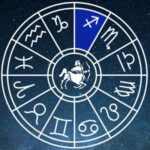
SAGITTARIUS (Nov. 22-Dec. 21):
Sagittarian philosopher Baruch Spinoza spent years alone in his room developing his radical ideas about God and nature. I recommend total isolation for you, too. In accordance with astrological omens, avoid human contact! Put your relationships on hold while you contemplate the infinite! APRIL FOOL! I totally lied. Spinoza’s solitude served his unique genius, but a similar approach won’t work for you—especially now. Here’s what I really think you require in the coming weeks: periods of meditative alone time balanced by intervals of rich connection with interesting humans. You need to commune with both your deep inner sources and nurturing alliances.

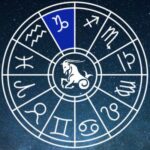
CAPRICORN (Dec. 22-Jan. 19):
Capricorn astrologer Linda Goodman wrote that your sign’s “ambition is boundless” and that most Capricorns dream of ruling the world. In accordance with astrological omens, I urge you to indulge this attribute. Launch a campaign for global domination! Start with your neighborhood and work your way up to more and more conquests! APRIL FOOL! The truth is, world domination is exhausting and impractical. What Goodman was referring to is your gift for structure and leadership. Use your organizational genius to improve your corner of the world, not tyrannize it. Think stewardship, not empire.

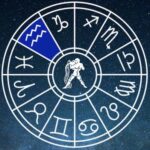
AQUARIUS (Jan. 20-Feb. 18):
Aquarian inventor Thomas Edison said, “I have not failed. I’ve just found 10,000 ways that won’t work.” In the spirit, I recommend that you falter spectacularly in the coming weeks. The more blunders and bungles, the better! Engage in a holy quest to seek as many fizzles and misfires as possible! Make Edison look like an amateur! APRIL FOOL! I lied. Edison wasn’t deliberately courting snafus, of course. His approach was similar to that of many creative artists: driven by exploratory persistence that capitalizes on mistakes and hassles. Here’s your real guidance, Aquarius: Experiment boldly, yes, and don’t fear stumbles and bumbles. But learn from each one and adjust your approach. The goal is eventual success that’s informed by humility and resiliency.

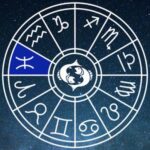
PISCES (Feb. 19-March 20):
Piscean physicist Albert Einstein said, “Logic will get you from A to B. Imagination will take you everywhere.” In the spirit of his genius, I recommend that you abandon logic completely! Never think rationally again! Make all decisions based on fantasy and feelings! APRIL FOOL! Einstein was advocating for the creative power of imagination, not the abandonment of reason. What you truly need is a marriage of visionary thinking and practical logic. Ask your imagination to show you possibilities, then call on lucid logic to help you manifest them.

WANT MORE? Listen to Rob’s EXPANDED AUDIO HOROSCOPES, 4-5 minute meditations on the current state of your destiny — or subscribe to his unique daily text message service at: RealAstrology.com

(Zodiac images by Numerologysign.com, CC license)

SHARE The Wisdom With Friends Who Are Stars in Your Life on Social Media…
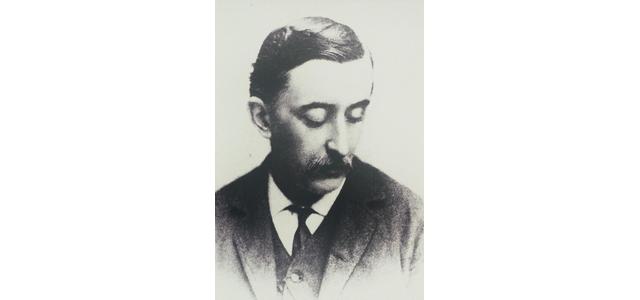
“Time passes irrevocably.” – Virgil

Credit: Jeremy Bishop

Quote of the Day: “Time passes irrevocably.” – Virgil

Photo by: Jeremy Bishop

With a new inspirational quote every day, atop the perfect photo—collected and archived on our Quote of the Day page—why not bookmark GNN.org for a daily uplift?

Credit: Jeremy Bishop

Good News in History, March 28

Henri Fabre on his Hydravion - public domain

116 years ago today, Henri Fabre became the first man to fly a seaplane. Called the Fabre Hydravion, it was the first craft ever to take off from water under its own power. Powered by a French-made Gnome Omega rotary engine driving a two-bladed Chauvière propeller, it successfully took off and flew for a distance of about 500 metres (1,600 ft) and landed on the water in Bouches-du-Rhône. READ more about this pioneering aviator and his invention… (1910)
Animals are Streaming into 400 Children’s Hospitals From San Diego Zoo’s Dedicated 24-hour Channel

Credit: San Diego Zoo, supplied
Credit San Diego Zoo, supplied

For most kids, you can’t beat a trip to the zoo.

And for those unfortunate kids whose immune systems are too weak to endure such an excursion, they now have the chance to experience it from their hospital beds.

That’s thanks to a clever partnership involving the San Diego Zoo’s 24/7 streaming service, one that brings the sights and sounds, if not the smells, of the zoo directly to them.

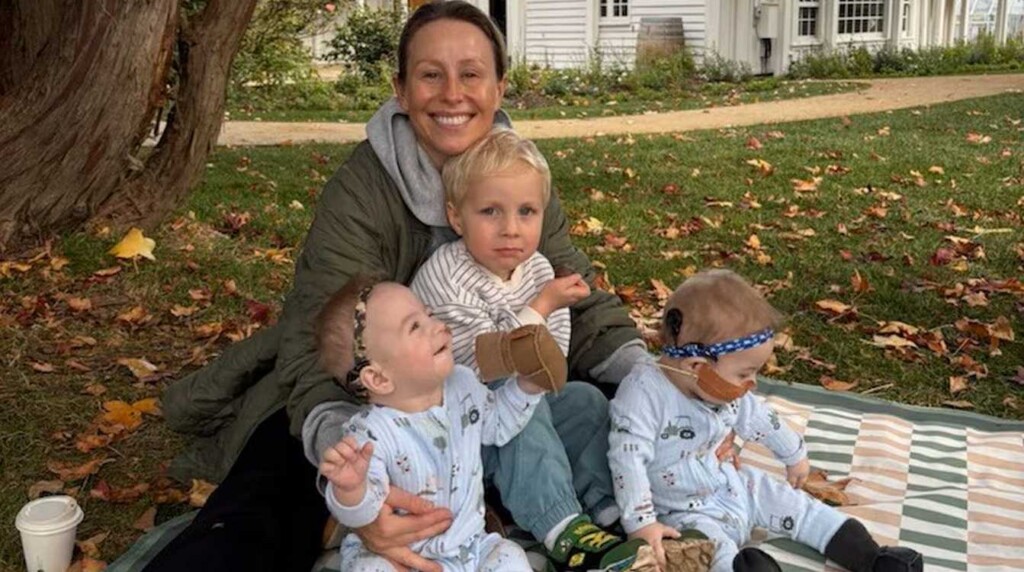
The San Diego Zoo Wildlife Alliance’s Wildlife Explorers Channel streams around-the-clock animal encounters and educational programming in hospitals, bringing the joy of the zoo into patient rooms.

What started locally at Rady Children’s Hospital and the Ronald McDonald House Charities of San Diego has grown into a global network now reaching more than 400 hospitals and medical facilities across 48 states and 12 countries besides, with an estimated 25 million viewers annually.

The channel features wildlife filming from across the globe, but also close encounters and presentations with the zoo’s animals, 24/7 wildlife cameras in the zoo enclosures, and other tailormade educational programming.

“Many of our patients have weakened immune systems, so they’re unable to go to places like the zoo and the channel has brought the zoo to them,” said Margaret Fitzgerald, Manager of the Hematology and Oncology Unit at Rady Children’s Hospital.

MAKING KIDS SMILE: Firefighters Rappel Down the Windows of Children’s Cancer Hospital in Unforgettable Christmas Surprise

“It has had a huge impact, on our patients. I do recall one time there was a little girl who was about 3 and her mom had to go to work, and she was sad because her mom had to go, but then we turned on the zoo channel and she just lit up!”

The program has also expanded beyond hospitals to senior centers and clinics, and in 2023, tablets preloaded with the channel’s content were delivered to a children’s hospital and school in Ukraine, further expanding access globally.

SHARE This Really Great Way To Brighten A Sick Child’s Afternoon… 

Virunga National Park Sees Hundreds of Elephants Return and Rare Gorilla Twins Born During Hopeful Year

Courtesy of Anthony Caere via Virunga National Park - cropped
Elephants move back into Virunga National Park – Credit: courtesy of Anthony Caere / Virunga National Park

Things are looking up in DR Congo’s Virunga Mountains, where recently scores of elephants have been returning across the border following a reduction in militia violence.

Also this spring, there have been 9 healthy births recorded among the mountain gorillas, including rare twins which a ranger officer called “a very encouraging sign.”

The twins born to the Bageni group female – credit, courtesy of Virunga National Park

On the elephants, there was once thousands of African bush elephants that roamed freely between Virunga National Park in Congo and Queen Elizabeth National Park in Uganda.

But since mountains, jungles, and borderlands are some of the most commonly-utilized areas for violent rebel groups around the world, and since Virunga consists of all three, the area has suffered from DR Congo’s decades-long violent insurgency which poached the elephants to sustain themselves.

In recent years, however, 480 elephants from the Ugandan side have been documented traveling back into Virunga, bringing with them the natural ecosystem engineering that only the world’s largest terrestrial animal can do.

“For years I haven’t seen any animals when I flew over this area—just rebels,” said Anthony Caere, a Belgian anti-poaching helicopter pilot at Virunga National Park.

“Now not only are we seeing the elephants, which is an unbelievable sight from above, but we’re noticing the impact of such a big herd on the park. They’re restoring everything back to what it was 50 years ago and doing so much faster than we could have imagined. If the elephants continue to stay here in these numbers, this place will look totally different in just a few years.”

In particular, the elephants’ massive bulk and massive appetites are cutting trails through the forest, scything back invasive shrubs, and expanding clearings. The area is beginning to look like a “forested savannah” again, and there have been sightings of buffalo, Ugandan kob, warthogs, topi, and even a pair of lions.

MORE AFRICAN PARKS: Wildlife Poachers to Be Targeted Using State of the Art AI Listening Technology

Virunga is the oldest national park on the continent, and plays host to extraordinary biodiversity. Receiving millions in aid money from Re:Wild, Global Wildlife Conservation, the EU, and other organizations including from a fund established by Hollywood A-lister Leonardo DiCaprio, it has been able to successfully scale back poaching and implement development programs to try and steer impoverished locals away from illegal agriculture, poaching, or militia life.

It’s not only elephants that have benefitted from this stability, but the area’s famous mountain gorillas. A female in the largest gorilla family group in the park, the 59-member-strong Bageni family, was recently observed to have given birth to twins, who are now two months old.

WILDLIFE IN CONFLICT ZONES: Critically-Endangered West African Lion Going from Strength to Strength in Niokolo Koba, Senegal

Jacques Katutu, head of gorilla monitoring, said they are developing well, and that their mother is managing the demands of two babies, which is uncommon among gorillas.

“The five births recorded since the start of 2026, including twins in the Bageni family, are a very encouraging sign,” Mr. Katutu said in a statement. “Behind every confirmed birth is the patient and dedicated work of our community trackers. Present in the field every day, often under challenging conditions, they are the first to witness these extraordinary moments.”

SHARE These Encouraging Signs Of Recovery In An Embattled African Park…

24 New Species Including a New Family of Amphipods Identified in Deep Sea Survey

Collage of the 24 new Amphipod species identified in Clarion-Clipperton Zone - credit, National Oceanographic Center, Southampton
Collage of the 24 new Amphipod species identified in Clarion-Clipperton Zone – credit, National Oceanographic Center, Southampton

A recent international survey of a deep sea zone near Mexico turned up 24 species of shrimp-like animals called amphipods, including a whole new taxonomic family, called Mirabestiidae.

The survey took place in the Clarion-Clipperton Zone (CCZ) between Hawaii and Mexico, where a fractious seabed can range in depth from 10,000 to 20,000 feet.

Over 10,000 species of amphipods have been described by science, yet they’re such a diverse order of animals, an expedition such as this can still scoop out handfuls of new ones—and in all different colors too.

“To find a new superfamily is incredibly exciting, and very rarely happens so this is a discovery we will all remember,” said Dr. Tammy Horton of the UK’s National Oceanographic Center (NOC) in Southampton.

“With more than 90% of species in the CCZ still unnamed, each species described is a vital step towards improving our understanding of this fascinating ecosystem.”

The NOC was joined by partners and aspiring scientists from all across Europe, as well as New Zealand and Canada, for a weeks-long taxonomy workshop organized at the University of Lodz, Poland, led by Dr. Anna Jażdżewska.

Location of the Clarion Clipperton Zone – credit USGS

The expedition and workshop were organized under the International Seabed Authority’s Sustainable Seabed Knowledge Initiative (SSKI) which aims to describe 1,000 new species by the end of the decade in order to possess a better understanding of deep-seabed biodiversity when making decisions about deep-sea mining.

“The team’s findings provide information that is crucial for future conservation and policy decisions, and it highlights how important it is for this work to continue,” Dr. Jażdżewska said in a statement.

Stretching 1.7 million square miles across the eastern Pacific Ocean, the CCZ was discovered by the Scripps Institution of Oceanography in 1954. It’s been an extremely well-surveyed area of the deep seabed, though that in itself isn’t saying much, and indeed 42% of all known deep sea species were first described in the CCZ.

The expedition uncovered a new family, called Mirabestiidae, and even a new superfamily Mirabestioidea, revealing completely new evolutionary branches. Two new genera were also discovered: Mirabestia and Pseudolepechinella. 

DEEP SEA SCIENCE: Bizarre Deep-Sea Creature – a ‘Death Ball’ Sponge – Discovered in One of the Most Remote Corners of the Planet

For readers who lack a mental flowchart of taxonomy hierarchies, one famous family from above sea level is Felidae, containing all cats wild and domestic. Felidae is nested inside of the superorder Feliformia, which in addition to all the cats, contains civets, hyena, mongoose, and the curious fossa of Madagascar.

Two genera nested inside the family Felidae are Panthera, containing the tiger and the lion, and Lynx.

MORE STORIES LIKE THIS: New Caledonia Bans ‘Dangerous’ Seabed Mining for Half a Century in the South Pacific

In the CCZ, students and professors alike reveled in pulling up one new species after another, before taking them back to a frigid Poland for analysis.

Creatures were named in honor of both Horton and Jażdżewska, the organizers of the expedition and workshop, while others named species after relatives, impressions from the experience, and even a video game character that one of the amphipods resembled.

SHARE This Bonanza Discovery Deep Under The Sea With Your Friends… 

New Drug Could Change Lives of Kids with Resistant Epilepsy, Patient Trials Concluded

Great Ormond Street Hospital in London - credit, Fast Track Images, CC BY-SA 2.0.
Great Ormond Street Hospital in London – credit, Fast Track Images, CC BY-SA 2.0.

A phase 2 clinical trial in England has demonstrated smashing success in improving the conditions of children with a rare form of treatment-resistant epilepsy called Dravet syndrome.

Believed to affect 3,000 children in England, it’s just one out of hundreds of forms of genetic epilepsy that have no pharmacological options.

Scientists not involved with the study said the success of the drug, called Zorevunersen, shows that pharmaceuticals can work to improve the lives of patients with these epilepsies, giving it a chance to spur innovation toward other treatments and cures.

The trial involved 81 children between the ages of 2 and 18 that suffered up to 18 seizures a month resulting from Dravet syndrome. Zorevunersen was given in 3 doses at Great Ormond Street Hospital, where the trial was co-organized by University College London.

After 1 dose, monthly seizures were reduced by 50%. After 3 doses, that improved to 80%. The drug was well-tolerated by all 81 patients, with no significant side effects reported.

Additionally, this reduction in seizures led to real improvements in life quality for the patients. Being children, it led to improved development outcomes, particularly with motor skills and communication. It also improved their markers for “coping” with Dravet syndrome.

The trail was led by Helen Cross, director and professor of childhood epilepsy at the UCL Institute of Child Health, and consultant pediatric neurologist at Great Ormond.

INSPIRING CHILDRENS MEDICINE: There Was No Treatment for His Son’s Rare Disease, so Dad Moves Mountains to Make One for Kids Worldwide

“I regularly see patients with hard-to-treat genetic epilepsies, who can have multiple seizures a week,” said Professor Cross. “Many are unable to do anything independently for themselves; they require around the clock care and are at high risk of sudden expected death in epilepsy.”

She’s hopeful that Zorevunersen “could help children with Dravet syndrome lead much healthier and happier lives,” and in pursuit of that end, is organizing a phase 3 trail that will study the drug over a much longer period of time to control for potentially serious side effects.

BREAKTHROUGH DRUGS: Severe Shaking in Parkinson’s Patient Calms Down in Just 6 Days With New Drug –Watch the Transformation

“There are now over 800 genetic epilepsies that need therapeutics similar to Zorevunersen,” the uninvolved Dr. Alfredo Gonzalez-Sulser from the Institute for Neuroscience and Cardiovascular Research, University of Edinburgh, told the Guardian.

“This sets a clear path to achieve effective interventions for these severe life-altering diseases for both patients and carers.”

SHARE This Super-Inspiring Success In Fighting Children’s Epilepsy… 

“The usefulness of a cup is in its emptiness.” – Lao Tzu

Credit: Sixteen Miles Out

Quote of the Day: “The usefulness of a cup is in its emptiness.” – Lao Tzu (Laozi), in the Tao Te Ching

Photo by: Sixteen Miles Out

With a new inspirational quote every day, atop the perfect photo—collected and archived on our Quote of the Day page—why not bookmark GNN.org for a daily uplift?

Credit: Sixteen Miles Out

Good News in History, March 27

The Rosetta Stone - credit: CC 2.0. Hans Hillewaert

2,222 years ago today, the Decree of Memphis, proclaiming the rule of the King of Ptolemaic Egypt, Ptolemy V, was carved in three languages on black sandstone blocks around the kingdom. The top two scripts were Egyptian hieroglyphics and Demotic, but the bottom third was ancient Greek. The block today is known as the “Rosetta Stone” and was instrumental to scholarly efforts to translate Egyptian hieroglyphics on the walls and sides of countless temples, coffins, and other objects, opening fully the window onto the great civilization’s long history. READ more about this famous object… (196 BCE)

Tiny 28-Inch Pony Is Now thriving After Being so Sick He Couldn’t Stand

Pickle the Shetland Pony (before and after) at Penny Farm Rescue and Rehoming Center – SWNS

From central England comes the feel good story of a tiny pony rescued from disease whose  winning and warming hearts of visitors at the rescue center where he was nursed back to health.

Last March, Pickle the 9-month-old Shetland Pony was found critically ill after the nonprofit World Horse Welfare responded to an animal welfare call.

Pickle was then so weak, he could barely stand and hardly breathe, and later tests revealed he was suffering from several diseases, including strangles, equine flu, and salmonella.

Charlotte Melvin works as a field officer at World Horse Welfare, and she was part of the team that first encountered Pickle in his sorry state.

“He very nearly didn’t make it, but eventually turned a corner and started to recover,” she told the country’s Southwest News Service. “The team worked so hard to nurse him back to health and his vet said she’s never known a pony to test positive for salmonella as many times as he did.”

According to other team members, he was so small when he was first found that one person was able to carry him to the horse trailer on their own.

Pickle was then taken for ‘immediate and intensive’ treatment at a private holding yard, where he was nursed back to health.

All grown up to a mighty 28-inches tall, Pickle is winning the hearts of visitors at Penny Farm Rescue and Rehoming Center where he is living until a permanent home can be found.

Tiny Pickle the Shetland Pony standing beside the largest horse at Penny Farm Rescue and Rehoming Center – Credit: William Lailey / SWNS

After completing a two-week quarantine period, the 114-pound pony, was able to join the other horses and ponies in the main yard at Penny Farm where he immediately began to charm everyone and everything around him.

“I went and collected him with one of my colleagues and it was just incredible to see how bright he’d become,” Melvin said. “The contrast from that tiny foal who was too weak to stand and could barely breathe was extraordinary.”

MORE ANIMAL RESCUES: Farmers’ Kids Cuddle Up with New Born Calf on the Couch After She Nearly Froze Outside

“At a year old, Pickle is still only a teeny seven ‘hands’ high (28 inches) so it’s no surprise that our visitors fall in love with him as soon as they set eyes on him,” said Adam Cummins, Penny Farm Center Manager.

“There’s going to be a long list of people wanting to rehome him when he’s ready, but that’s a long way off yet. For now, he’s enjoying being a happy young pony playing with his friends—he’s got a lot of fun to catch up on after being so ill at such a young age.”

Pickle has since made a best friend in his stablemate, a pony called Cheddar, with whom he enjoys grazing and playing in the field.

WHO DOESN’T LIKE TINY FARM ANIMALS: Tiny Goat Triplet Shunned at Birth is Now Thriving After Two Sheepdogs Adopt Her and Teach Her to Be a Collie

Pickle is so tiny that the Penny Farm team struggled to find a bridle small enough for him, but World Horse Welfare’s corporate partners LeMieux kindly stepped in, supplying him with a customized piece.

Staff at the farm have said Pickle will be available for transfer for permanent pastures once he’s completed his rehabilitation, which will be later this year.

SHARE This Nice Story Of A Pony On The Edge Of Death Getting A Second Chance…

Scientists Were Wrong About How Fast Solar Panels Degrade – They May Last Twice as Long

A solar park in Brandenburg, where the study took place - credit, A Savin FAL License
A solar park in Brandenburg, where the study took place – credit, A Savin FAL License

A huge scientific survey of over 1 million German solar installations has revealed a surprising statistic: their potential to degrade year by year has been significantly exaggerated.

Previous models have overestimated the rate of degradation in a solar installation’s ability to generate power by between 20% to 50% according to this new survey.

“Back of the envelope,” the authors admit, “the estimated cost of degradation would decrease, compared to previous findings, by about €638 million per year to maintain installed capacity in 2040.”

Germany has been steaming forward with green energy installation for 20 years. Having decommissioned many of its coal power plants, and controversially eliminated its entire nuclear fleet as well, the country has installed some 60 gigawatts just of solar capacity since 2006.

A common criticism of solar is that photovoltaic panels—like all electrical hardware—lose efficiency over time, and, being exposed to the elements 365 days a year, frost, heat, wind, and dust beat them down such that the power you expected to receive when you built the solar installation isn’t what you are receiving a decade after.

The survey, conducted by scientists from Brandenburg University of Technology alongside a collaborator from University College London, involved around 1.25 million large and small solar installations across Germany, totaling 34 gigawatts of capacity. At 16 years, the study period was longer than any other examination, while the study period accounted for newer generations of solar panels.

The authors found annual degradation rates of 0.52–0.61%, roughly half the average reported in prior studies, which also had limitations of smaller sample sizes (the largest other survey of this kind was with 4,200 installations) and shorter study durations averaging between 2 and 7 years.

Other key findings support the value of large-scale solar installations. Degradation rates slow as the PV panels age. In other words, new PV panels lose capacity faster than older ones. Additionally, larger installations like solar farms degrade slower than smaller ones like rooftop arrays.

“That is important because it suggests that utility-scale PV cannot simply be treated as a scaled-up version of rooftop solar,” said lead author Peitro Melo, speaking with PV Magazine. “Reliability and maintenance strategies have a measurably different impact on outcomes.”

PV POSITIVITY: Planned Expansion to Take Latin America’s Largest Solar Plant Beyond 1 Gigawatt Capacity

Frost, extreme heat, and air pollution affect PV panels differently at different stages of their lifespan. Extreme heat tends to reduce the efficiency of older panels more than newer ones, even though for frost and air pollution, it’s the opposite.

“This is a positive result for the solar industry, from households who have bought systems up to investors in megaprojects. Lower degradation means greater output and revenue over a project’s lifetime.”

GERMAN NEWS: 

Another way to summarize the team’s findings is that this new and more accurately-estimated degradation rate for PV systems translates to a 4.8% reduction in the levelized cost of electricity from solar panels. This means that, in order to maintain nameplate power production across the entire German fleet, 2.3 gigawatts of PV panels would have to be installed every year, while under previous assumptions, replacement rates have reached as high as 4.5 gigawatts.

SHARE This Positive Revaluation Of The Power Of Solar Panels… 

Diver Finds Crusader Sword in the Same Place He Found a Crusader Sword 5 Years Ago

- credit, Yoav Bornstein, University of Haifa, released
– credit, Yoav Bornstein, University of Haifa, released

In 2021 GNN reported that a man diving off the Israeli coast discovered a sword from the Crusader period.

All locked up in shells and sand, it looked like it could have been forged in mythical Atlantis, and even half-buried on the seabed, diver Shlomi Katzin couldn’t have mistaken its shape.

Now, incredibly, Katzin has found another sword—equally barnacled—while swimming not far from where he found the first one. Quite the thrust of luck.

The sword, which is believed to date back to the 12th century, was transferred to the Israel Antiquities Authority (IAA) and to researchers from the Department of Maritime Civilizations at the University of Haifa, where Katzin is a student of maritime archeology.

Once there, the experts hoping to examine it got the idea to use a CT scanner at a nearby hospital. With it, they could directly image what remained of the sword beneath the barnacles without risking damage to the artifact.

The scan results found that little of the iron blade still existed, and that it likely wasn’t produced in the Levant—but rather in Europe, making it and the sword from 2021 all but certain to have belonged to soldiers on campaign in the Holy Hand, perhaps during one of the Crusades.

Launched between the 10th and 13th centuries, Europeans made three ultimately-unsuccessful attempts to capture the Holy Land from the Arabs who controlled it.

– released by Nir Distelfeld/Israel Antiquities Authority

Katzin was swimming in an area known to contain historic shipwrecks when he spotted a group of people with metal detectors. Thinking them to be looters, he chased with away and happened to notice the sword at the same time, sticking vertically out of the sand.

SWORDS IN UNLIKELY PLACES: 1,000-year-old Viking Sword Fished out of an Oxfordshire River with a Magnet

He then contacted Professor Debbie Zwickel at Haifa Univ. who got special permission from the IAA to remove the sword to prevent looting or further damage from the environment.

“This is an extremely rare find that sheds light on the Crusader presence on the country’s coasts,” Professor Zwickel said.

ALSO CHECK OUT: Finding Any Sword is a Treasure But Four is ‘A Dream’ – We Rubbed Our Eyes

“Only a handful of similar swords from the Crusader period are known in Israel to date, and this discovery contributes greatly to our understanding of the use of naval anchorages and the lives of warriors during this period.”

Smithsonian Magazine reported in 2021 that while the Muslim armies during the time of the Crusades built fortifications on the coasts, only the Europeans were known to have traveled by sea.

SHARE This Man’s Wild Luck To Find Two Swords In The Same Place…

Marine National Park Bigger Than Texas Created by Departing Chilean President Around Pacific Islands

A fisherman holding two Juan Fernandez spiny lobsters - CC 3.0. Serpantus (wikicommons)
A fisherman holding two Juan Fernandez spiny lobsters – CC 3.0. Serpantus (wikicommons)

Just days before he left office, former Chilean President Gabriel Boric signed into law protections for the remote Juan Fernández Archipelago and a gargantuan swath of the surrounding sea.

The protections connect the archipelago with the existing Nazca-Desventuradas marine parks, and total 386,000 square miles, an area the size of Venezuela amounting to 50% of Chile’s territorial waters.

This huge marine protected area, home to whales, dolphins, turtles, spiny lobsters, octopus, a vast underwater mountain chain, sea turtles, numerous sea birds, and the Juan Fernández fur seal, is now the third-largest piece of conserved seascape in the world.

Under several administrations, Chile has been a strong supporter of the Kunming-Montreal Global Biodiversity Framework since its inception. Around 180,000 square miles of ocean was already protected in this area, and the islanders of Juan Fernández joined with national and international NGOs to campaign for broader protections.

“This commitment reflects the heart of our community,” stated Pablo Manríquez Angulo, mayor of the archipelago’s Robinson Crusoe Island. “Expanding marine protections is not only about conserving biodiversity, it’s about safeguarding our culture, our traditions, and the future of our children.”

THE LARGEST NEW MARINE PARKS: 

In 11th of March this year, Boric left office suffering from consistent low approval ratings throughout his tenure. The creation of the new united marine park around Juan Fernández Archipelago is a strong political legacy to leave behind.

“The community of Juan Fernández, President Gabriel Boric and the Chilean government are to be hugely congratulated for this legal designation,” said Dan Crockett, Executive Director of Blue Marine Foundation, who helped advance the new park protections.

“As the world advances towards 2030, fully protected areas of this scale are critically important.”

SHARE This Enormous New Marine Reserve Around Chile’s Pacific Islands… 

“The well-being and hopes of the peoples of the world can never be served until peace—as well as freedom, honor and self-respect—is secure.” – Ralph Bunche

Credit: Curated Lifestyle for Unsplash+

Quote of the Day: “The well-being and hopes of the peoples of the world can never be served until peace—as well as freedom, honor and self-respect—is secure.” – Ralph Bunche, Nobel Peace Prize-winning diplomat

Photo by: Curated Lifestyle for Unsplash+

With a new inspirational quote every day, atop the perfect photo—collected and archived on our Quote of the Day page—why not bookmark GNN.org for a daily uplift?

Credit: Curated Lifestyle for Unsplash+

Good News in History, March 26

The Biological Weapons Convention document

51 years ago today, the Biological Weapons Convention, (BWC) entered into force. It’s considered to have established a strong global norm against biological weapons reflected in the treaty’s preamble, which states that the use of biological weapons would be “repugnant to the conscience of mankind.” It is also demonstrated by the fact that not a single state today declares to possess or seek biological weapons, or asserts that their use in war is legitimate, and today, only Israel, Chad, Eritrea, and 5 small island nations have not signed the agreement. READ more about the BWC… (1979)

First Quantum Battery Prototype Marks Big Step for Technology Expected to Change the World

The prototype quantum battery - credit, CSIRO
The prototype quantum battery – credit, CSIRO

Australian researchers have developed and tested the world’s first quantum battery.

Their prototype is far from anything that will be a perspective power source in an EV or storage facility, but the experiment revealed some important directions for future research.

A theoretical concept since 2013, the prototype was charged wirelessly with a laser, one of the special properties that quantum mechanics in battery technology promises if it can be properly understood and harnessed.

Lead researcher Dr. James Quach of CSIRO, Australia’s national science agency which led the study on the device, said it’s the first quantum battery ever made that performs a full charge-discharge cycle.

Dr. Quach explained that in society today, the larger the battery, the longer the charge time.

“That’s why your mobile phone takes about 30 minutes to charge and your electric car takes overnight to charge,” he said, adding that in contrast, “quantum batteries have this really peculiar property where the larger they are, the less time they take to charge.”

Less time really is an almost worthless descriptor in this case, because the prototype created by CSIRO was fully charged within a few quadrillionths of a second.

The problem is that the discharge rate was a few nanoseconds, which despite being 6 orders of magnitude longer, could be of no use to anyone now. Quach provided some interesting relative comparisons to help mere mortals conceptualize why this could be a world-changing innovation if improved.

THE QUANTUM REVOLUTION: In German Breakthrough Quantum Communications Sent Across the Nation Using Existing Telecom Infrastructure

If it takes 30 minutes to fully charge a mobile phone, and it too had a discharge rate equal to 6 orders of magnitude, that means it wouldn’t need to be recharged even after a decade of use.

“What we need to do next is… to increase the storage time,” Quach said, touching on this point. “You want your battery to hold charge longer than a few nanoseconds if you want to be able to talk to someone on a mobile phone.”

Additionally, the prototype doesn’t hold enough voltage to power anything substantial.

BETTER BATTERIES: Samsung’s 600-Mile-Range Batteries That Charge in 9 Minutes Ready for Production/Sale Next Year

While this might all sound rather pointless, another, non-involved expert in the development of quantum batteries, University of Queensland Professor Andrew White, told the Guardian that the experiment was a huge success in getting the technology off the drawing board and into the real world for the first time.

People would be far more likely to adopt EVs if they could be fully-charged in few seconds, even if their range was severely reduced.

SHARE This Truly Impressive Science Experiment With Your Friends…

Teen Lifesaver Awarded One of Scouting’s Highest Honors After Harrowing Whitewater Rescue

Devon Champenoy (left) holding the Boy Scouts Honor Medal with the scout leader whose life he saved - credit, supplied to GNN
Devon Champenoy (left) holding the Boy Scouts Honor Medal with the scout leader whose life he saved – credit, supplied to GNN

A teenage Texan has earned a commendation given fewer than 300 times in the history of the Boy Scouts after saving his scout leader from drowning in rapids.

Devon Champenoy was one of several teen scouts from Houston rafting down class 3 rapids at a summer camp in Georgia’s Blue Ridge Mountains.

Scout leader David Lemley was at the stern, and on a particularly rough patch, lost his balance and fell into the water. Climbing back in, he can be heard in a video from his helmet camera laughing and saying how fun it was in the hot summer day.

When further down the river Lemley fell in again, however, fun was the farthest thing from his mind.

His foot was stuck under the seat of the raft while his head and torso were underwater. Splayed out across the side of the raft, unable to move, his opportunities to breathe came only when the water level happened to be low enough that his head emerged.

Meanwhile, his helmet bought him vital time as his head bounced off rocks as the raft surged down river.

Taking a deep breath and steadying himself, Champenoy, just 13 years old at the time, clambered across and released Lemley’s foot before kayakers helped complete the rescue.

“I have no doubt that if Devon hadn’t released my foot I was going to die,” Lemley told KHOU 11 News.

“It took a while for me to take in the fact that this happened and I saved a life,” Champenoy said in the same interview, admitting he just acted on instinct.

Lemley’s foot had been broken in the ordeal, and Champenoy had to take the role of pilot as there were still 20 minutes of rapids to get through. He kept everyone calm and focused until the job was finished.

The Honor Medal plaque his mother plans to hang in the living room – credit, supplied to GNN

When all was said and done, Devon, having been recommended by his Scout Leader, was awarded the Honor Medal with Crossed Palms for unusual heroism demonstrated in the course of saving a life. Fewer than 300 of these medals have been awarded in the more than 100-year history of the Boy Scouts of America.

MORE TEEN LIFESAVERS:

It came with a special recognition from Texas Governor Greg Abbot as well.

Now 15, Champenoy is attempting to become an Eagle Scout, and KHOU 11 had to remark that they felt it would be a breeze for the young hero.

WATCH the story below from KHOU 11… 

SHARE This Young Man’s Quick-Thinking To Save The Life Of His Scout Leader…