All News - Page 479 of 1735 - Good News Network
Home Blog Page 479

Seniors Are Now Texting Grandchildren After Learning Skill in Lockdown – And 1/3 Like it More Than Calling

Photo by Jana Sabeth

One silver lining of the pandemic for silver seniors, is that texting and social media provide a lot of joy, now that they’ve learned the easy method for bonding with their grandkids.

Sharon McCutcheon

According to a new poll, Americans over 65 have finally mastered the art of texting—and 33 percent of them now prefer texting to phone calls.

The survey also revealed that their favorite emoji was the heart, which tied with the happy face, with 43% using those the most. Other popular senior emoji favorites included the beer mug and assorted animals.

One in 10 respondents even surpassed emoji use and now send GIFs as a fun way to stay in touch with their grandchildren.

The pandemic prompted one in three seniors to learn how to use social media. And, nearly one in five (17%) were introduced to Netflix by their kids or grandkids.

Conducted by OnePoll on behalf of Comfort Keepers, the results found that while people are thankful tech has kept them connected, nothing beats an in-person visit.

55% of seniors prioritized seeing family the most, compared to a similar study conducted in 2020 that found dining at a restaurant topped the post-pandemic to-do list.

Lockdown restrictions, it seemed, did result in more appreciation for connecting with family.

It also seems the pandemic will have a long-term impact on respondents’ day-to-day lives, with four out of 10 saying they learned how to “stop and smell the roses.”

And what a heartwarming reason to embrace texting: their grandkids.

PLACE This on Social Media to Show You Know How! (LOL)… Featured photo by Jana Sabeth

COVID Cases and Hospitalizations Are Plummeting Toward Zero in Most of the U.S.

After 15 months of watching the pandemic spread, there is much good news on the U.S. COVID front in June 2021.

Inside most states, the government is reporting the death rate for known COVID-19 cases is 0.1%, or less.

The reason to celebrate doesn’t end there, as most statistics paint a picture of a virus now under control.

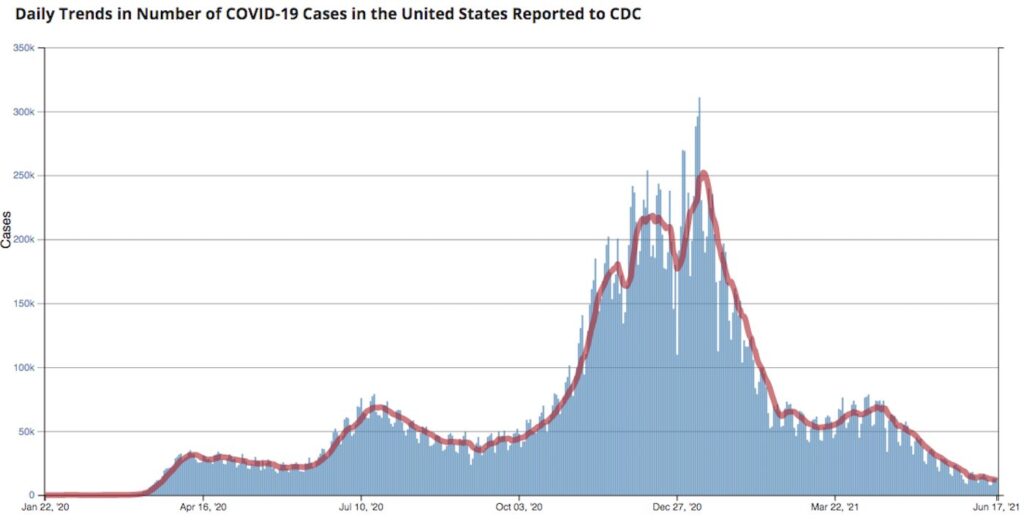
As of June 17, the 7-day moving average of reported cases was down this year by 94% from the peak in January—tumbling from more than a quarter million new cases per day to now just 14,000 cases (down 6% from the previous week).

The 7-day average of COVID-related hospitalizations continues to plummet, too. It was down 13% this week compared to the previous 7 days—and has decreased every day since April 19th.

This is all according to the CDC. The Washington Post had more good news to report.

Daily reported cases nationwide this week fell 23.7%, while daily deaths fell 31.6% and hospitalizations dropped 8.8%.

Only 5 states have a daily death toll per 100k inhabitants higher than 0.1%. Eleven states have 0%.

RELATED: People Are Optimistic the End of the Pandemic is Near—And They’ve Laid the Groundwork For a Better Future

One of the most shocking statistics brings sweet relief to hospitals. 13 patients per 100,000 residents in Washington D.C. represents the highest concentration of hospitalized COVID patients in any state.

The highest concentration of patients in intensive care units per 100,000 residents in any state is 3—and 5 states have zero.

Now that’s the kind of “COVID Tracker” a person could look forward to every day.

MORE: Pandemic May Have Created a Generation of Schoolchildren More Interested in STEM Careers Than Ever

SPREAD the Positivity to Your Family and Friends on Social Media…

Invading Rats Were Finally Eradicated on 2 Galapagos Islands Thanks to Drone Partnership

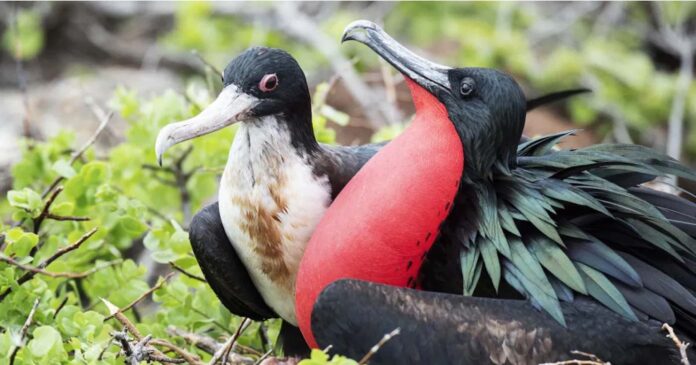
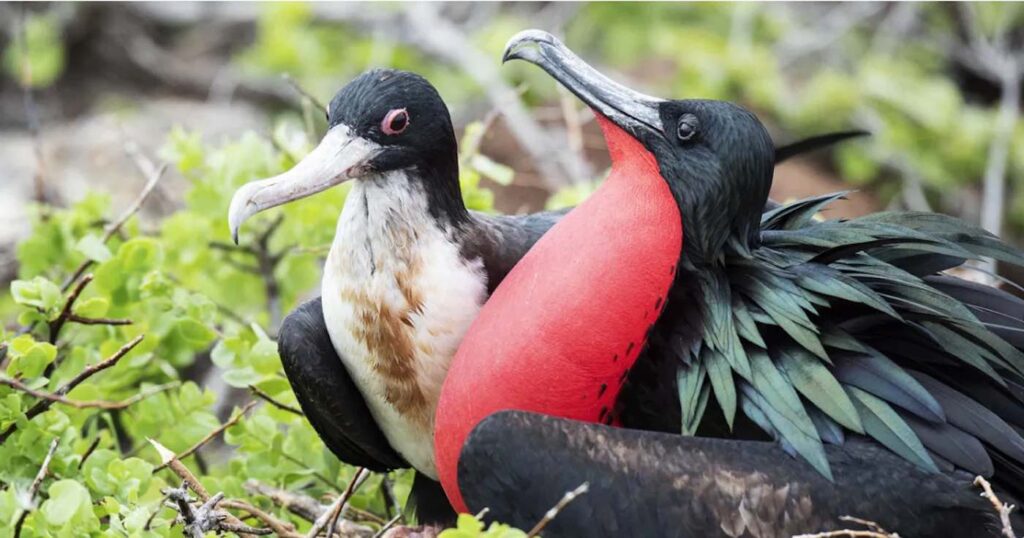
Magnificent frigate birds nesting on Seymour Norte Island - Island Conservation, released.
Island Conservation

Two years after a rodent eradication program began on two Galapagos Islands, conservations are excited to finally declare the lands rat-free—and drones, for the first time, contributed to the big success.

The actions carried out over the last two years on Seymour Norte and Mosquera islands will now ensure that native biodiversity on the island ecosystems can return to normal.

Seymour Norte, for instance, hosts one of the largest populations of magnificent frigatebirds (pictured), whose eggs and babies became constant prey to the two rat species that had run amok since arriving with ships in the 1800s and early 1900s.

In January 2019, Galapagos National Park officials together with the nonprofit group Island Conservation worked with drone pilots from Envicto Technologies in a groundbreaking effort to eliminate the black rat and the Norwegian rat from both islands.

RELATED: Island Overrun With Rats Completely Recovers in Only 11 Years After Ecosystem Had Been Decimated

How they did it

The drone was equipped with a dispersal bucket and followed GPS-guided transects to distribute a “conservation bait” manufactured by Bell Laboratories all across the island. Following initial implementation, bait was placed in stations along the coastline, ensuring no rodents re-invaded the island.

“After two years of waiting, this project has given the expected results, according to the planning and according to the highest protocols for these cases,” said Danny Rueda, director of the Galapagos National Park this week. “Galapagos, once again, is a benchmark in terms of the protection of this globally important ecosystem.”

POPULAR: Shelter Offers “Unadoptable” Feral Cats to Hunt Rats —With Big Success

As a long-term preventive measure, a biosecurity barrier consisting of 289 bait stations will remain installed to prevent a re-invasion of rodents from Santa Cruz or Baltra, but still keep it safe for tourists to walk the trails.

Advanced drone technology

Seymour Norte and Mosquera Islands were the first instances of a drone being used to eradicate invasive vertebrates from an island, serving as a proof-of-concept, according to a Island Conservation.

In 2021, similar projects on three island groups across the Pacific will be implemented using drones—particularly on small islets, where it is not feasible to conduct a hand-based project, as was done on three islets in the Tetiaroa Atoll where bait was dispersed by humans.

Drones will be used on Kamaka Island in the Southeast region of French Polynesia soon, benefitting at-risk seabirds like the endangered Polynesian Storm-petrel.

Invasive vertebrate species are a leading cause of extinction on islands, contributing to 86% of recorded extinctions, but efforts to combat them—with over 1,200 invasive mammal eradications attempted on islands worldwide—have shown an 85% success rate.

RELATED: This Rat Sniffs Out Landmines–And Has Just Won A Gold Medal For His Life-Saving Work

Free of the rodents, endemic and native plants and animals on these Galapagos islands will be able to fulfill their ecological roles, guaranteeing the hatching of nests and survival of birds and reptiles, including Galapagos Land Iguanas, Blue-footed Boobies, Swallowed-tailed Gulls (the only nocturnal gull on the planet, and the vulnerable Lava Gull, one of the rarest gull species on Earth.

SPREAD This Great News to Animal Lovers on Social Media…

Five Million Years of Climate Change Found Preserved in One Location

Jonas Satkauskas / satkauskas.com (CC license)

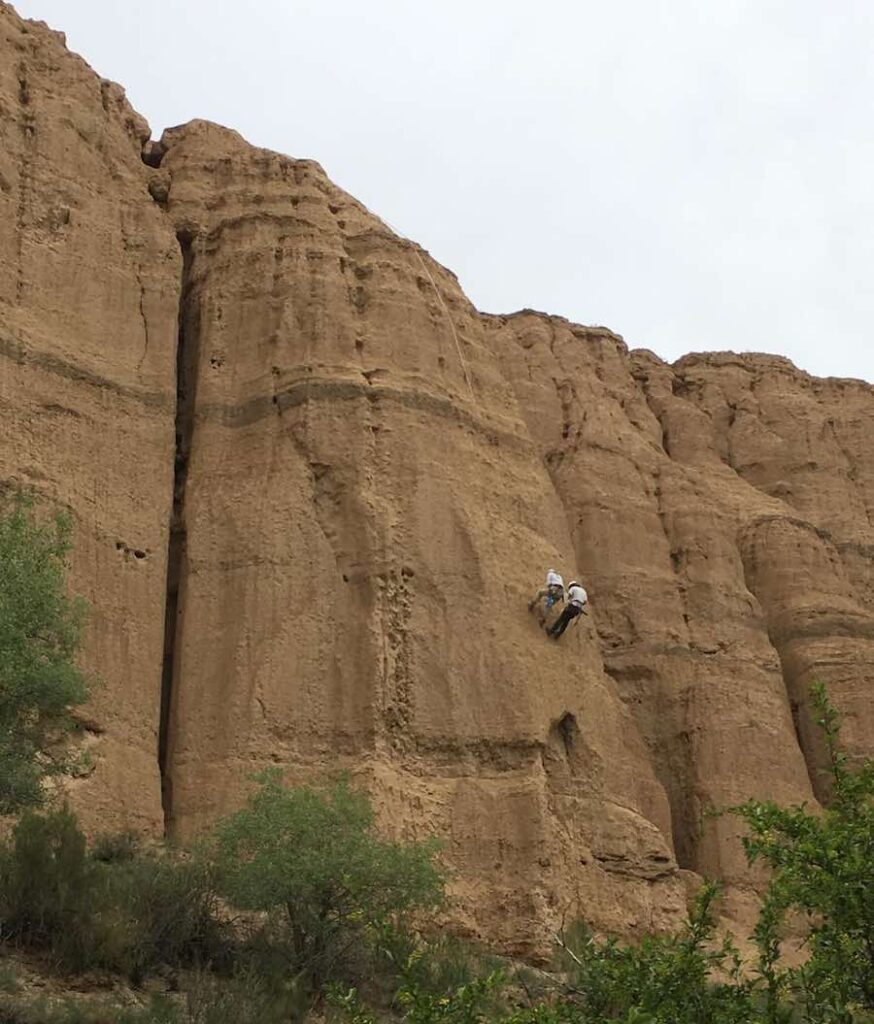
Information preserved within a sedimentary cliff over 260 feet tall is providing the missing link for understanding changes in global climate over the past five million years.

Jonas Satkauskas / satkauskas.com (CC license)

An international team of researchers, led by the Max Planck Institute for Chemistry in Germany, has now succeeded in reconstructing changes in rainfall and its effects by studying Charyn Canyon in southeast Kazakhstan in Central Asia.

“The 80-meter-thick sedimentary sequence we found provides us with a virtually continuous record of five million years of climate change. This is a very rare occurrence on land,” explained paleo researcher Charlotte Prud’homme.

The alternating dust and soil layers provide the first reliable evidence, in one place, of long-term interactions between major climate systems on the Eurasian continent.

“Over the past five million years, the land surfaces of Eurasia appear to have more actively contributed to the land-atmosphere-ocean water-cycle than previously acknowledged. The sediments preserved at Charyn Canyon acted as a litmus test for the influx of freshwater into the Arctic Ocean, stimulating the transport of moist air masses from the North Atlantic back onto land via westerly air flows,” corresponding author Prud’homme says.

RELATED: Scientist Thinks He Finally Knows Why People Hear Sounds Coming From the Northern Lights

Providing good analogy for today’s high carbon atmosphere

The researchers focused their investigation on the Pliocene period five to 2.6 million years ago, which represents the best analogue for the climatic conditions of the Anthropocene: this geologic time period was the last time concentration of carbon dioxide in the atmosphere was comparable to today, around 400 parts per million (ppm).

“That’s why our insights from the Charyn Canyon sediments are so essential for understanding future climate,” Prud’homme says.

Until now, little has been known about the role Central Asia plays in global climate evolution past and present. Earth’s climate evolution over the past five million years has been understood mainly from the perspective of marine mechanisms. In contrast, the significance of climate feedbacks that originated on land – rather than in the oceans, lakes or ice cores – has remained largely unexplored. The international research team has filled this gap with their field research in Charyn Canyon.

LOOK: Photographer Captures Exact Moment of Beauty When Lightning Strikes Erupting Volcano

The geographical location of the study site in the middle of Central Asia was of key importance to the team.

“We needed to find a place that was inland and as far away from the ocean as possible,” explained Kathryn Fitzsimmons, of the Terrestrial Paleoclimate Reconstruction Research Group at the Max Planck Institute for Chemistry. “We could hardly find a more continental situation than at Charyn Canyon in southeastern Kazakhstan.” The semi-arid climate of the canyon, and its landscape, were shaped by the interaction between the mid-latitude westerlies and the high-latitude polar fronts, and by sediment transported from the nearby Tien Shan mountains, making it ideal for studying long-term land-climate feedback mechanisms.

Charlotte Prud’homme collects soil samples in Charyn Canyon, Kazakhstan – MAX PLANCK INSTITUTE

The researchers examined the 80-meter-thick sedimentary succession and sampled by abseil to ensure continuous coverage of the record. By measuring the relative concentrations of isotopes within soil carbonates, they reconstructed the changing availability of moisture in the soil through time. A combination of paleomagnetic analyses and absolute uranium-lead dating of soil carbonates established the age and accumulation rates of the sediment record. The soil samples revealed a region characterized by ever-increasing aridity over the last five million years. In the early Pliocene, the soil was significantly wetter than in subsequent epochs or than today’s climate. This process of aridification was not linear, however; it was interrupted by short-term climate fluctuations which provide insights into the interaction between the mid-latitude westerly winds and the Siberian high-pressure system.

RELATED: First Farmer in the US to Sequester Carbon for Cash in Private Marketplace Earns $115,000 For His Planting Strategy

“We’re confident that the changes in soil moisture we found at our site can also be used as a proxy for Siberian river activity further north.”

One particular phase where this link is important stands out: a sustained period of wet conditions at Charyn Canyon just prior to the first major global glaciation around 3.3 million years ago. It is likely that these wet conditions extended to the Siberian rivers to the north, whose outflow of fresh water to the Arctic ocean may have breached a tipping point for widespread increased sea ice formation.

Their results have now been published in the scientific journal Communications Earth and Environment, a terrestrial climate archive for five million years that provides a valuable basis for future climate models.

Prud’homme literally said, “We have opened a door.”

RAPPEL This Story Over to Eco-Friends on Social Media…

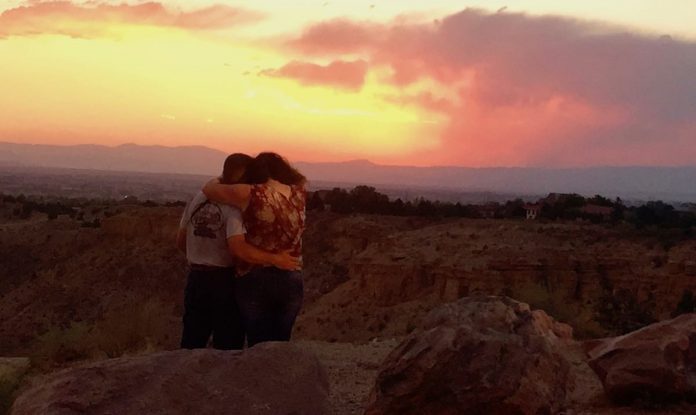
“One of the most satisfying experiences is just fully to appreciate an individual in the same way I appreciate a sunset.” – Carl Rogers

Quote of the Day: “One of the most satisfying experiences is just fully to appreciate an individual in the same way I appreciate a sunset.” – Carl Rogers, psychologist

Photo: GWC

With a new inspirational quote every day, atop the perfect photo—collected and archived on our Quote of the Day page—why not bookmark GNN.org for a daily uplift?


Man Goes on 2000-Mile Quest to Mine His Own Diamonds for Engagement Ring—and Finds a 2.2 Carat Beauty

Crater of Diamonds State Park

For years, this 26-year-old had been dreaming of finding his own precious gems to create a special engagement ring for his future spouse—something one-of-a-kind.

After a coworker told him that he could actually mine for diamonds in a state park in Arkansas, he hatched a plan to go on a cross-country road trip to Crater of Diamonds State Park.

Christian Liden even made some mining tools to take on the trip and watched many YouTube videos about how to find gemstones in the park—and he did everything in secret so his girlfriend wouldn’t find out.

Accompanied by a longtime buddy, he left Poulsbo, Washington on May 1. Along the way they tested their equipment at a Montana sapphire mine, before arriving at the Arkansas diamond site six days later.

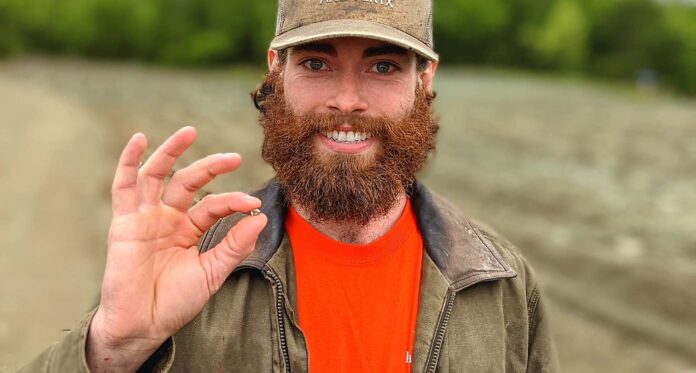
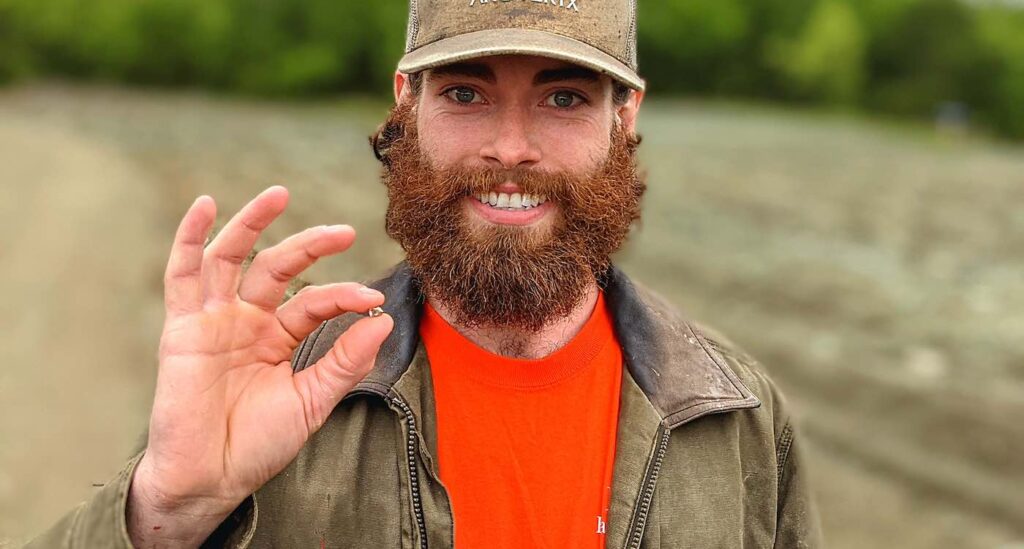
On his third day of full-time mining in the 37-acre diamond search zone at Crater of Diamonds, Liden was wet sifting when he spotted it.

He immediately knew it was the prize that he had traveled more than 2,000 miles for—the gemstone to adorn the engagement ring he would present to his girlfriend, Desirae, after two years of dating.

Crater of Diamonds State Park

“I saw it shining as soon as I turned the screen over and immediately knew it was a diamond. I was shaking so bad, I asked my buddy to grab it out of the gravel for me!”

Liden placed the gem in a plastic bag and carried it to the park’s Diamond Discovery Center, where staff confirmed he had found a large yellow diamond.

WATCH: Penguin in Antarctica Leaps into Passing Tourist Boat – Enjoys the Respite

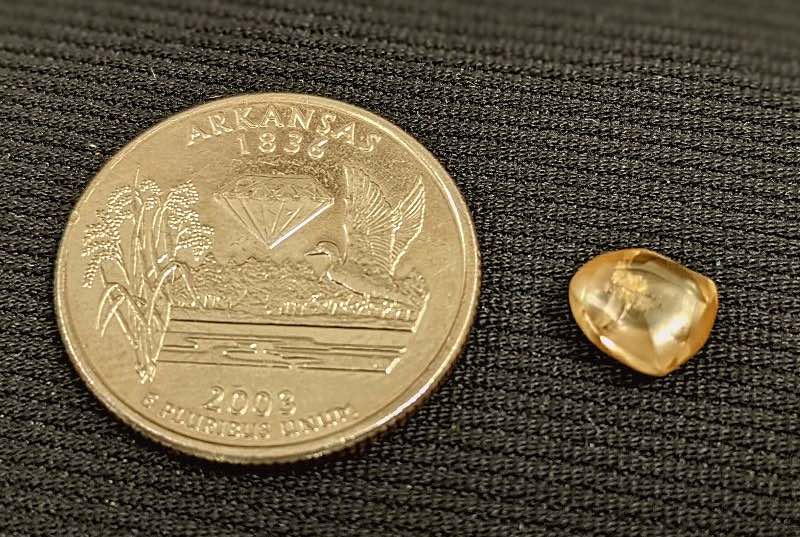
Weighing 2.20 carats, Liden’s diamond is the largest found at the park since last October, when a visitor from Fayetteville discovered a 4.49-carat yellow diamond.

According to Assistant Superintendent Dru Edmonds, “Mr. Liden’s diamond is light yellow, with a triangular shape and a sparkling, metallic luster. Like most diamonds from the park, it contains a few inclusions, making it one-of-a-kind.”

“As beautiful as this diamond is, I think the best part is the story behind it,” Edmonds continued. “Since the eighth grade, Mr. Liden has dreamed of creating a special ring for his future wife, with stones and gold he mined, himself. And now he can make that dream come true.”

Liden told the staff he had already successfully mined enough gold to have a sufficient amount for the ring band—and now his quest was complete.

POPULAR: See How a Teacher Broke the World Record for Largest Single Drawing Made By One Person

“I was just hoping to find a couple smaller stones and had planned to buy a center stone later, but that won’t be needed now!”

Liden plans to mine for opals in Nevada before returning home and wants to design an engagement ring alongside his bride-to-be using all the gemstones collected from his cross-country mining quest.

Finders of large Crater diamonds often choose to name their gems. Liden named his the Washington Sunshine, “because it’s got a nice, light yellow color, just like sunlight in Washington.”

The Washington Sunshine, shown next to a quarter. The Arkansas state quarter features a large diamond, which represents Crater of Diamonds State Park.

Edmonds says an average of one to two diamonds are found by park visitors every day. In total, over 75,000 diamonds have been unearthed at the Crater of Diamonds since the first precious stones were discovered in 1906 by John Huddleston, a farmer who owned the land long before it became an Arkansas State Park in 1972.

The largest diamond ever found in the U.S. was unearthed here in 1924 during an early mining operation. Named the Uncle Sam, the white diamond with a pink cast weighed over 40 carats and was purchased by a private collector for $150,000 in 1971. Another well-known diamond, found by a local Murfreesboro resident in 1990, is on display at the park’s visitor center—a 3.03-carat white gem graded as ideal cut, D-colorless, and flawless.

CHECK OUT: World’s Largest Air Purifier Transforms Chinese Smog into Actual Diamonds

Diamonds come in all colors of the rainbow, but the three most common colors at the Crater site are white, brown, and yellow, in that order.

Last year, before the second wave of the coronavirus pandemic hit, the second-largest brown diamond ever found at the Arkansas park was uncovered—weighing in at over 9-carats. Admission to the park’s diamond search area is currently limited to 1,500 tickets per day, and many are sold online at CraterofDiamondsStatePark.com.

THIS is a Proven Gem For Sharing on Social Media To Tell Friends About the Park…

One-legged Woman is a World Class Salsa Dancer and Inspiration to All (WATCH)

A salsa dancer in Venezuela has become a YouTube sensation and an inspiration to differently-abled people everywhere.

After losing a limb in an accident five years ago, Andreyna Hernandez returned to the very spot of the tragedy to show that she’s still got the moves.

In a video that went viral, she sways gracefully with her partner, Robert Terán, at a Social Dance festival, the Salsa Casino.

Terán is her life partner and director of the dance academy FeedBack Latino.

Andreyna wrote on Instagram, “Observing the happiness and motivation of people when seeing a person in my condition dance, and much more considering that just in that area was where that tree was that was… that caused the loss of my lower left limb.”

POPULAR: Toddler Without Hands Gets a Puppy Without Paw: It’s Fate and ‘A Beautiful Thing’

“This loss was not an impediment at all. from the first moment I discovered that I could dance again. nothing stopped me. I’ll keep doing what I like until the end of time!” she exclaimed

Bust a Move to Share This Inspiring Story With Friends on Social Media…

This Week’s Inspiring Horoscopes From Rob Brezsny’s ‘Free Will Astrology’

Our partner Rob Brezsny provides his weekly wisdom to enlighten our thinking and motivate our mood. Rob’s Free Will Astrology, is a syndicated weekly column appearing in over a hundred publications. He is also the author of Pronoia Is the Antidote for Paranoia: How All of Creation Is Conspiring To Shower You with Blessings. (A free preview of the book is available here.)

Here is your weekly horoscope…

FREE WILL ASTROLOGY – Week beginning June 17, 2021
Copyright by Rob Brezsny, FreeWillAstrology.com

GEMINI (May 21-June 20):
“I remember wishing I could be boiled like water and made pure again,” writes poet Jeffrey McDaniel. Judging from the current astrological omens, Gemini, I think you could be made reasonably pure again without having to endure an ordeal like being boiled like water. Do you have ideas about how to proceed? Here are mine: 1. Spend 15 minutes alone. With your eyes closed, sitting in a comfortable chair, forgive everyone who has hurt you. Do the best you can. Perfection isn’t necessary. 2. Spend another 15 minutes alone, same deal. Forgive yourself of everything you’ve done that you think of as errors. Perfection isn’t required. 3. Spend another 15 minutes alone. Imagine what it would be like to unconditionally love yourself exactly as you are. 4. Spend another 15 minutes alone. Remember ten amazing moments that you enjoyed between ages five and 13.

CANCER (June 21-July 22):
On June 23, 1940, Wilma Rudolph was born prematurely to a family that already had 19 other children. During her childhood, she suffered from pneumonia, scarlet fever, polio, and infant paralysis. The latter two diseases damaged her left leg, and she wore a brace until she was 12 years old. Nevertheless, by the time she was in high school, she had become a very good athlete. Eventually she competed in the Olympics, where she won four medals and earned the title “the fastest woman in history.” I propose that we name her your official role model for the rest of 2021. May she inspire you to overcome and transcend your own personal adversity.

LEO (July 23-Aug. 22):
Leo-born P. L. Travers wrote the children’s books about Mary Poppins, a nanny with magical powers. She was thoroughly familiar with folklore, ancient myths, and the occult. The character of Mary Poppins, Travers said, was a version of the Mother Goddess. But in her writing process, she drew inspiration mainly from what she thought of as the vast dark nothingness. She wrote, “I’ve become convinced that the great treasure to possess is the unknown.” To generate her tales, she listened to silence and emptiness. I recommend you emulate her approach as you create the next chapter of your life story.

VIRGO (Aug. 23-Sept. 22):
Virgo poet Melissa Broder writes, “Romantic obsession is my first language. I live in a world of fantasies, infatuations and love poems.” I wouldn’t normally authorize you to share her perspective, but I will now. The astrological omens suggest you have something important to learn from being more enamored and adoring than usual. If you say YES to the deluge of yearning, you’ll gain access to a type of power that will prove very useful to you in the coming months.

LIBRA (Sept. 23-Oct. 22):
Libran author Oscar Wilde disproved the misconception that Libras are wishy-washy, overly eager to compromise, and inclined to overthink everything. His writing had wit and flair, and his life was vivid and daring. He wrote, “There are moments when one has to choose between living one’s own life, fully, entirely, completely—or dragging out some false, shallow, degrading existence that the world in its hypocrisy demands.” I suspect that one of those pivotal moments will soon be coming up for you. Be Wilde-like!

SCORPIO (Oct. 23-Nov. 21):
Philosopher Simone Weil wrote, “Only the light that falls continually from the sky gives a tree the energy to push powerful roots into the earth. The tree is actually rooted in the sky.” As you bolster your foundations in the coming months, as you deepen your roots, I hope you keep Weil’s brilliant observation in mind. Like a tree, the nourishment that will help you grow the stamina and strength and structure you need will come as you turn to the brightest, warmest, highest sources of inspiration.

SAGITTARIUS (Nov. 22-Dec. 21):
To be in groovy alignment with cosmic rhythms, you won’t merely walk, and you certainly won’t trudge. Rather you will saunter and ramble and promenade. You will strut and rove and prowl. Likewise, you won’t just talk, and you certainly won’t mutter or grumble. Instead you will banter, rhapsodize, improvise, beguile, and lyricize. Catch my drift? You won’t simply laugh, but will chortle, cackle, and guffaw. In other words, Sagittarius, you are authorized to imbue everything you do with style, panache, and imagination.

CAPRICORN (Dec. 22-Jan. 19):
Congratulations on being such a duty-bound, no-nonsense adult. May you continue to ply your dogged persistence and beast-of-burden attitude as long as it gets important tasks done, helps you feel useful, and doesn’t make you sick. But if you do get tempted to depart from the sacrificial path anytime soon, please know that you will not offend any gods or demons. Nor will you incur a karmic debt. In fact, I believe you have cosmic clearance to dabble with lightheartedness for a while. You should feel free to experiment with fun and games that appeal to your sense of wonder.

AQUARIUS (Jan. 20-Feb. 18):
“I can barely conceive of a type of beauty in which there is no melancholy,” wrote poet Charles Baudelaire. What?! That makes no sense. I’m aware of millions of beautiful things that aren’t tinctured with melancholy. California’s Mount Shasta in the late spring twilight, for example. New York City’s Guggenheim Museum, a gorgeous gleaming building designed by genius architect Frank Lloyd Wright. The Marmore waterfalls in central Italy. The gardens of painter Claude Monet in Normandy, France. I mention this, Aquarius, because I expect life to bring you a flood of non-melancholic beauty in the coming days. Take advantage of this grace to replenish your trust in life.

PISCES (Feb. 19-March 20):
Piscean author César Aira praises the value of escaping one’s memories. He writes, “Forgetting is like a great alchemy free of secrets, transforming everything to the present.” I’d love to see you enjoy alchemy like that in the coming weeks, dear Pisces. It’s a favorable time to lose at least some of the inhibitions and limitations you think you have to accept because of what happened in the past. As Aira says, forgetting “makes our lives into a visible and tangible thing we hold in our hands, with no folds left hidden in the past.”

ARIES (March 21-April 19):
Aries playwright Tennessee Williams was honest about the trickery he engaged in as he composed his entertaining masterpieces. “I don’t want realism,” he exclaimed. “I want magic! Yes, yes, magic! I try to give that to people.” I fully support you, Aries, if you would like to make that your goal in the next three weeks. In my astrological opinion, you and the people in your life have more than a mild need for magic. Your ability to thrive depends on you all getting big doses of magic.

TAURUS (April 20-May 20):
On my wall is a poster that says, “Avoid the Tragic Magic Triad: taking things too personally, taking things too seriously, and taking things too literally.” The motto refers to trivial and transitory issues, like the new dent made in my car by a hit-and-run driver in the Whole Foods parking lot, or the bad review of my book on Amazon.com, or the $18 that a certain Etsy seller cheated me out of, or the joke about the size of my nose that some supposed friend made on Twitter. According to my reading of astrological omens, Taurus, you would benefit right now from meditating on things like these that you take too seriously, personally, and literally. Here’s Don Miguel Ruiz: “There is a huge amount of freedom that comes to you when you take nothing personally.”

WANT MORE? Listen to Rob’s EXPANDED AUDIO HOROSCOPES, 4-5 minute meditations on the current state of your destiny — or subscribe to his unique daily text message service at: RealAstrology.com

(Zodiac images by Numerologysign.com, CC license)

SHARE The Wisdom With Friends Who Are Stars in Your Life on Social Media…

Charitable Giving in the U.S. Rose 5.1% Last Year to a Record High of $471 Billion in 2020

Americans responded to the COVID-19 pandemic in extraordinary ways, helping to relieve the suffering of neighbors by donating a record amount to charities in 2020.

Total charitable giving grew 5.1% over 2019, as individuals, bequests, foundations, and corporations funneled an estimated $471.44 billion to U.S. charities, according to the Annual Report on Philanthropy, released this week by Giving USA, the longest-running and most comprehensive report on the sources and uses of charitable giving in America.

“Unprecedented developments in 2020 created widespread need and significantly increased the demand upon nonprofit organizations,” said Laura MacDonald, CFRE, chair of Giving USA Foundation. “Remarkably, generous giving coupled with the stock market turnaround in the final months of the year boosted contributions. As a result, 2020 is the highest year of charitable giving on record.”

“Growth in the S&P 500 in recent years and the market recovery in 2020 positioned foundations to respond to the year’s challenges, with the result that giving by foundations reached its largest-ever share of total giving, at 19 percent,” said Amir Pasic, Ph.D., the Eugene R. Tempel Dean of the Lilly Family School of Philanthropy, which conducted the research for the Giving Institute’s report.

RELATED: 7 in 10 Americans Agree That 2020 Made Them a Better Person – Here’s How

By the end of 2020, the S&P 500, which is closely related to giving, grew 16.3%, and personal income, a factor that is significantly linked to individual giving, grew 6.1%. Giving by foundations skyrocketed, and giving by individuals and bequests also showed growth.

“As we have seen in earlier years that included national crises or economic recessions, donors responded to urgent needs, and large-scale gifts as well as giving to COVID-19 relief and the racial justice movement helped drive the growth in individual and total charitable giving in 2020,” said Una Osili, Ph.D., associate dean for research and international programs at the Lilly Family School of Philanthropy.

“Nonprofit leaders and fundraising professionals played a role with significant innovation in fundraising methods and donor outreach in order to raise greater financial support under difficult circumstances. In addition, we saw a wide range of more informal philanthropic responses by individuals in 2020, including mutual aid efforts and person-to-person giving.”

RELATED: Some Generous Apes May Help Explain The Evolution Of Human Kindness

Highlights and Numbers for 2020 Charitable Giving by Source:

• Giving by individuals totaled an estimated $324.10 billion, rising 2.2% in 2020 (an increase of 1.0%, adjusted for inflation). Giving by individuals achieved its highest total dollar amount to date, adjusted for inflation.

• Giving by foundations increased 17.0%, to an estimated $88.55 billion (a growth rate of 15.6%, adjusted for inflation), reaching its highest-ever dollar amount. Giving by foundations, which has grown in nine of the last 10 years, represented 19% of total giving in 2020, its largest share on record.

• Giving by bequest was an estimated $41.19 billion in 2020, and grew 10.3% from 2019 (an increase of 9.0%, adjusted for inflation). Giving by bequest often fluctuates substantially from year to year.

“Human services organizations, which include charities that respond to hunger and basic needs, and public-society benefit organizations—which include United Ways and many organizations that focus on community development and civil rights—experienced strong growth,” said Josh Birkholz, vice-chair of Giving USA Foundation. “Those are the types of charities that might come to mind first when thinking about giving to meet the needs that arose in 2020.”

LOOK: Shaq Helps Pay For Stranger’s Engagement Ring: ‘I’m just trying to make people smile’

Highlights and Numbers for 2020 Charitable Giving to Recipients:

• Giving to human services increased by an estimated 9.7% in 2020, totaling $65.14 billion.

• Giving to foundations is estimated to have increased by 2.0% to $58.17 billion. Adjusted for inflation, giving to foundations was flat at 0.8% growth.

• Giving to public-society benefit organizations increased an estimated 15.7% to $48.00 billion. Adjusted for inflation, giving to public-society benefit organizations grew 14.3%. This category includes a wide range of charitable organizations, including national donor-advised funds, United Ways and civil rights organizations.

POPULAR: Returning the Love, Frat Brothers Pay Off Mortgage For Their House Cook 30 Years Later

• Giving to environmental and animal organizations is estimated to have increased 11.6% to $16.14 billion. Adjusted for inflation, donations to the environment/animals subsector increased 10.3%.

• Giving to individuals is estimated to have grown 12.8% (11.5% in inflation-adjusted dollars) between 2019 and 2020, to $16.22 billion. The bulk of these donations are in-kind gifts of medications to patients in need, made through the patient assistance programs of pharmaceutical companies’ operating foundations.

SHARE The Generosity of Americans on Social Media to Affirm the Good… 

“The grand essentials to happiness in this life are something to do, something to love, and something to hope for.” – George Washington Burnap

Quote of the Day: “The grand essentials to happiness in this life are something to do, something to love, and something to hope for.” – George Washington Burnap, The Sphere and Duties of Woman

Photo: by Patti Black

With a new inspirational quote every day, atop the perfect photo—collected and archived on our Quote of the Day page—why not bookmark GNN.org for a daily uplift?


Midwestern Dad Breaks 31-Year World Record For 1.5 Million Push Ups – All For Charity

Tunnel to Towers Foundation

For one Wisconsin father of three, being 45 years old “and not getting any younger” hasn’t stopped him from performing 3,000 pushups while competing in a marathon; dashing off 5,000 more during a 31-mile trail race, and (hopefully) scoring a new world record for completing a whopping 1.5 million-plus pushups over the course of a single year.

When social worker Nate Carroll launched his mission on June 14, 2020—Flag Day—his motivation was two-fold. First, he hoped to teach his children a lesson in the power of perseverance by offering them an example in real-time.

“[I wanted to] demonstrate to my kids what goals that seem impossible look like when they are broken down into daily manageable chunks,” he told FOX News.

But in addition to being a positive role model for his children, Carroll was also committed to raising money for a cause in which he truly believes: the Tunnel to Towers Foundation, an organization dedicated to easing financial burdens for the families of fallen first responders.

With a full-time job and shared parental custody, finding the time during his busy schedule to clock thousands of push-ups per day was one of Carroll’s biggest challenges.

“To set aside time to do 4,000 push-ups is impossible,” he told the Wisconsin State Journal. “You have to really make it a priority and be willing to commit to it and embrace the fact that you have to weave that into your day.”

And weave it in he did—at work, at home, and even while doing chores. Whenever an opportunity presented itself, he’d drop and give it his all.

On June 6th, Carroll completed the countdown to his record-breaking goal with a special 50-yard line halftime ceremony during the 48th annual Fun City Bowl at MetLife Stadium in East Rutherford, New Jersey.

“It was an honor to set a new world record here in New York in front of members of the [New York Police Department, New York Fire Department and Port Authority Police Department] and other first responders,” Carroll said in a statement issued by the Tunnels to Towers Foundation. “I want this record to pay tribute to the sacrifice made by so many heroes that tragic day.”

Even though he’d already surpassed the previous pushup record, Carroll continued to top off his tally as the final week of the competition year ticked down.

In order to claim a new Guinness World Record—ousting the current titleholder after an almost 32-year run—Carroll has been diligently documenting his accomplishments both in a logbook and with time-lapse video throughout his year-long odyssey.

Tunnel to Towers Foundation

While he’s waiting for Guinness to verify the win, he hasn’t lost sight of his original inspiration.

MORE: First U.S. Woman to Walk in Space Just Traveled to the Ocean’s Deepest Depth

“Set a goal, and get after it,” he told Fox News. “Make it who you are, not something you do. That way, when it gets hard and life throws obstacles in your way and offers you convenient excuses to stop or says it’s too difficult, you find a way to endure and persevere and keep after it. Winning those mini-battles each day builds strength and shapes one’s perspective of what is possible.”

RELATED: See How a Teacher Broke the World Record for Largest Single Drawing Made By One Person

Symbolizing that with dedication and fortitude, that which falls can rise again, a pushup may well be the perfect metaphor for all this amazing super-dad has achieved.

(WATCH the Tunnels to Towers Foundation video below.)

SHARE This Momentous Feat With Friends on Social Media…

That Song Stuck in Your Head is Helping the Brain With Long-Term Memory

If you have watched TV since the 1990s, the sitcom theme song I’ll Be There for You has likely been stuck in your head at one point or another.

New research from UC Davis suggests these experiences are more than a passing nuisance—they play an important role in helping memories form, not only for the song, but also related life events like hanging out with friends—or watching other people hang with their friends on the ’90s television show, Friends.

“Scientists have known for some time that music evokes autobiographical memories, and that those are among the emotional experiences with music that people cherish most,” said Petr Janata, UC Davis professor of psychology and co-author on a new study.

“What hasn’t been understood to date is how those memories form in the first place and how they become so durable, such that just hearing a bit of a song can trigger vivid remembering,” said Janata.

The paper, “Spontaneous Mental Replay of Music Improves Memory for Incidentally Associated Event Knowledge,” was published online in the Journal of Experimental Psychology.

This new research offers an initial glimpse into these mechanisms and, somewhat surprisingly, finds that the songs that get stuck in your head help that process of strengthening memories as they first form, the authors said.

Thus, this is the first research to link two of the most common phenomena people experience with music—earworms (having a song stuck in your head) and music-evoked remembering.

For their latest study, the researchers worked with 25 to 31 different people in each of three experiments, over three different days, spaced weeks apart.

Subjects first listened to unfamiliar music, and then, a week later, listened to the music again, this time paired with likewise unfamiliar movie clips. In one instance, movies were played without music.

The research subjects, all UC Davis undergraduate and graduate students, were subsequently asked to remember as many details as they could from each movie as the music played. They were also quizzed about their recollection of the associated tunes and how often they experienced each of the tunes as an earworm. None of them had formal music training.

The more the tune played, the more accurate the memory.

MORE: Positive Outlook Predicts Less Memory Decline, Says New Research

The results: the more often a tune played in a person’s head, the more accurate the memory for the tune became and, critically, the more details the person remembered from the specific section of the movie with which the tune was paired.

With only one week between when they saw the movie, and when they were asked to remember as many details from the movie as they could while listening to the movie soundtrack, the effect of repeatedly experiencing a tune from the soundtrack as an earworm resulted in near-perfect retention of the movie details.

These people’s memories, in fact, were as good as when they had first seen the movie. Additionally, most subjects were able to report what they were typically doing when their earworms occurred, and none of them mentioned the associated movies coming to mind at those times.

“Our paper shows that even if you are playing that song in your mind and not pulling up details of memories explicitly, that is still going to help solidify those memories,” Janata said.

“We typically think of earworms as random nuisance beyond our control, but our results show that earworms are a naturally occurring memory process that helps preserve recent experiences in long-term memory,” Kubit said.

RELATED: 8 in 10 Americans Say Positive Memories Have Been a ‘Lifeline’ During the Pandemic

Future help for memory loss?

The authors said they hope the research, which is ongoing, could eventually lead to the development of nonpharmaceutical, music-based interventions to help people suffering from dementia and other neurological disorders to better remember events, people and daily tasks.

Source: University of California – Davis

PLAY This Fascinating Research in Your Friends’ News Feeds…

This Self-Healing Cement Automatically Fills Any Cracks That Form, To Save Energy and Money

Worcester Polytechnic Institute

How much easier would our lives be if, like our bodies, our possessions could regenerate their own material to fix any damages they sustained?

Well, thanks to some very clever folks in England, concrete could be made self-regenerating by the addition of a simple enzyme found in our blood—repairing cracks in the sidewalk, roads, or buildings—saving tons of CO2, as well as millions in dollars, labor hours, and traffic slowdowns.

Recent estimates put the global concrete supply chain at 8% of the world’s greenhouse gas emissions, more than three-times that generated from the airline industry. One of the most prevalent human materials also requires the largest supporting infrastructure, from mining, to mixing, to moving, to laying and repairing, it’s a massive effort.

Worcester Polytechnic Institute led a project into looking at concrete that repairs itself, which has been hypothesized as possible since the mid-’90s, and which was recently confirmed as possible with bacteria in 2015.

MORE: The House That Hemp Built: Moldproof, Fireproof and Eco-Friendly

Like earlier researchers, the team at Worcester, led by Nima Rahbar, used an enzyme found in red blood cells called “carbonic anhydrase,” at the suggestion of a biochemist collaborator of theirs.

Worcester Polytechnic Institute

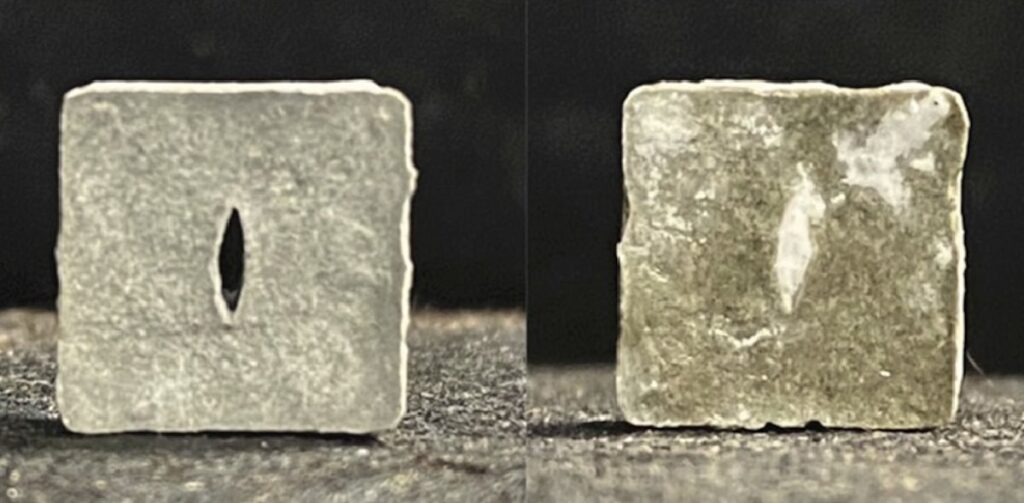
The anhydrase is responsible for moving CO2 from our cells to our blood vessels as quick as our breathing, and when added to concrete powder, it actually uses CO2 from the air to create calcium carbonate crystals. A millimeter crack can be filled in after just several hours, preventing larger cracks from forming. Anhydrase was among the reasons the bacteria was able to repair concrete.

Another method is adding carbonic anhydrase to water and calcium together in a spray and applying it to a concrete crack. If CO2 is then blown over the crack, like Wolverine from X-Men it will seal itself in just minutes, while if it simply uses the CO2 in the air it will take longer.

Astute readers will recognize that this technology also sucks some CO2 out of the environment, which along with extending the lifespan of the concrete four-fold, allows it to become a carbon jailer as well.

RELATED: Ancient Roman Concrete Reveals Secret to Cutting Carbon Emissions

A peer-reviewed study demonstrated the technology’s effectiveness, which Rahbar hopes will lead a startup somewhere to develop a commercial version to bring to market.

“This is not going to cost much,” Rahbar told Fast Company. “But overall, the system requires some incentive.”

BUILD Positivity in Your Friends’ Lives—Share the Results of This Research…

Eco-Warrior Makes Toys, Mosquito Repellent, and More With Recycled Cigarette Butts – The Most Littered Item

YouTube/TN Video
YouTube/TN Video

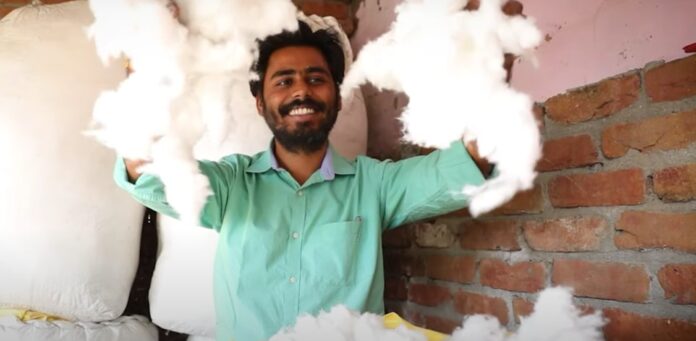
An eco-warrior has made an impressive amount of money by making toys, keyrings, mosquito repellents, and organic compost from old cigarette butts.

26-year-old Naman Gupta was inspired when he saw a huge pile of cigarettes left after a party, and wondered how many were dumped across the world on a daily basis.

So now he runs a company which installs bins in cities to collect butts, which are then recycled and made into anything from cushions to key rings.

Best of all, he says his company has made over one million dollars since 2016, and he has recycled 300,000,000 cigarette butts—the equivalent of 100,000kg.

Naman, from Uttar Pradesh in India, said: “There was a misconception that it must be made out of cotton, so not everybody notices the problem that it is actually plastic.

“There were no laws or companies who were recycling or managing this kind of waste, it was a completely new concept in India.

“I am passionate, it’s not just about the money, we are doing it to service society and tackle the problem society has and provide the solution.”

Naman was in his third year at Delhi University studying commerce when he decided he wanted to start the first cigarette recycling company in India—CODE Effort.

The then 21-year-old found cigarettes are the most littered object in the world, and the plastic in the filter takes up to 12 years to degrade.

It also forms microplastics in the process, which can inhibit plant growth in soil, and are highly toxic to aquatic life.

Company founder Naman receives up to 6,000kgs of cigarettes every month, which are deposited into waste receptacles called VBins outside street vendors and paan shops.

The vendors receive a fee per kilo of butts they collect.

His factory workers split the butts into three parts—the filter, paper, and leftover tobacco.

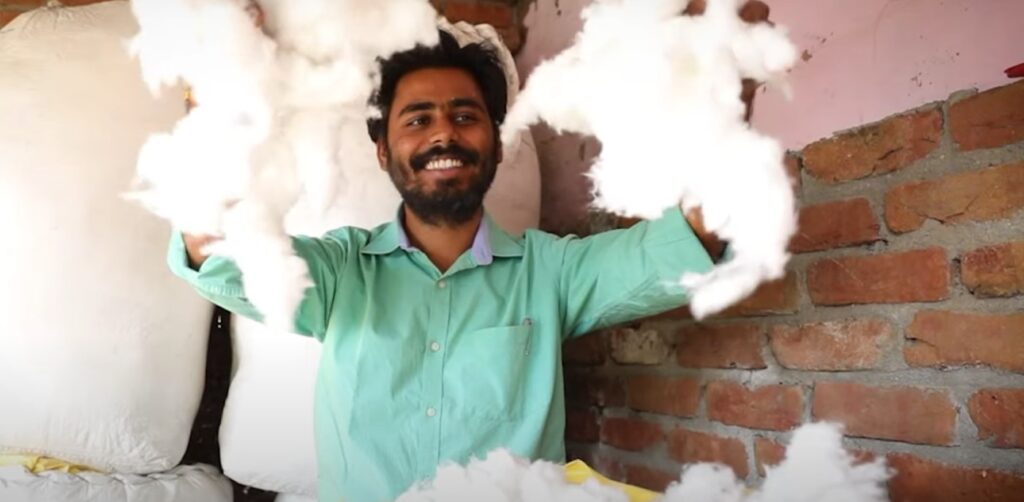
The filter—made of a plastic called cellulose acetate—is shredded, chemically treated for 24 hours, and then made into stuffing for cushions, soft toys, and squishy keyrings.

The paper and tobacco are turned into compost which is sold to farmers and growers, or domestic mosquito repellents.

The waste water produced in the process is also re-used, and fabrics used to make the plushies are sourced from local suppliers.

CODE Effort, which stands for Conserving Our Depleting Environment, is currently looking into using cigarette filters to create air purifiers to tackle air pollution.

MORE: Nigerian Homes Built From Thousands of Plastic Bottles –12x Stronger Than Brick And Earthquake Strong

Smoking in India is such a taboo that he doesn’t always receive support, even with an environmentally-friendly initiative.

Naman said: “There were a lot of critics—the problem of waste as a whole is an underrated topic, not everyone is very keen in discussing climate change and waste management.

“I believe and have faith in God that if you are serving society he will help us overcome all the hurdles and take us to success.”

RELATED: She Spent Her Vacation Picking Up Trash Across the U.S., and Strangers Chipped in With Help and Gas

The entrepreneur hopes to encourage people to curb their consumption of cigarettes as well as dispose of them wisely.

He said: “Our business model is on a mission to eradicate cigarette waste in our society in an environmentally-friendly manner.

READ: New Shipping Material Made From Popcorn Can Replace Styrofoam ‘Peanuts’

“Personally I don’t mind if somebody is smoking, that is their choice, but if they are disposing of it inappropriately then I am a bit concerned and I want to change their habit slowly.

“I want to encourage people to quit smoking and switch to better habits because then the problem of cigarette butts will automatically solved.”

(WATCH the TN Video story about Naman’s work below.)

PICK UP the Good News and Share It With Pals on Social Media…
Circus Turns Over Last Four Performing Bears to Animal Sanctuary That Has Holistic Natural Environment

The career in the limelight is over for a quartet of performing bears after a Vietnam circus agreed to hand them over to a sanctuary.

Animals Asia

Animals Asia had already campaigned for the release of two show bears, Sugar and Spice, named for their fiery personalities, and now the last 4 Asiatic black bears from the same circus—Ginger, Chili, Pepper, and Saffron—have arrived at their sanctuary to reunite the “Spice Girls” in a holistic, wild environment where they can return to their natural state.

It’s being described as a change in attitudes in Vietnam, where animal rights aren’t typically prevalent. The Spice Girls were all voluntarily turned over as the circus admits that it is unethical to continue using bears for performance.

The bears arrived at the organization’s sanctuary in Tam Dao on Tuesday, June 15th. On their arrival, an expert team of vets and bear experts greeted them and did their preliminary health checks.

MORE: Last Performing Circus Elephant of Chile is Rescued and Moved to New Sanctuary to Live Out Her Golden Years

“For the first time in years, these four beautiful bears will have access to wide, open spaces and feel lush, fresh grass beneath their paws,” said Heidi Quine, Bear and Vet Team Director at the Animals Asia’s Vietnam sanctuary. “They will be able to express natural behaviors like climbing, foraging for food, digging in the dirt, and playing with their new friends.”

Animals Asia has been lobbying for the end of performing animals in zoos and circuses in Vietnam since 2014. Their campaign informed a decision from the Ministry of Culture that instructed circuses on ending the use of animals in performances. 15 of which have already done so, while many more are phasing them out, swelling the numbers of bears in the sanctuary to 186.

RELATED: Denmark Buys Country’s Last Remaining Circus Elephants for $1.6 Million So They Can Retire

“This is a direct result of our tenacious yet collaborative approach to working with authorities and communities,” said Tuan Bendixsen, Animals Asia’s Vietnam Director. “As we have seen time and time again, the only cure for so many of the things we want to change in the world, is kindness.”

(WATCH the video of the rescue below…)

Be Sure And Share The Inspiring Story With Your Friends On Social Media…
“The desire to reach for the stars is ambitious. The desire to reach hearts is wise.” – Maya Angelou

Credit: Bas Glaap

Quote of the Day: “The desire to reach for the stars is ambitious. The desire to reach hearts is wise.” – Maya Angelou

Photo: by Bas Glaap

With a new inspirational quote every day, atop the perfect photo—collected and archived on our Quote of the Day page—why not bookmark GNN.org for a daily uplift?


Instead of Skipping Graduation to Work at Waffle House, His Boss and Co-Workers Cooked up Miracles to Get Him There

Cedric Hampton

As we all know, the best-laid plans of mice and men often go awry—and sometimes those of high school seniors do as well.

Timothy Harrison of Center Point, Alabama planned to attend his high school graduation. He’d even cleared it with his boss to take time off. But when the day of the ceremony dawned, Harrison found himself stranded.

The event was being held an hour away from home. With his family members working and no one able to drive him there, much to the surprise of his manager, Cedric Hampton, Harrison showed up for his regular 7 a.m. shift at the local Waffle House.

Once Hampton heard the details of Harrison’s dilemma—not only didn’t he have a way to get to the graduation, but he’d missed out on picking up his ticket, cap, and gown—the quick-thinking manager immediately marshaled his Waffle House troops for action.

“I could see in his eyes that he really wanted to go, and I was going to get him there no matter what,” Hampton told The Washington Post. “No kid should miss their high school graduation.”

After being ferried to school to retrieve his cap and gown, back at the Waffle House, the elated senior was outfitted in a brand-new ensemble picked up and paid for by his coworkers (with a little help from some generous restaurant patrons).

“We decided we were going to step in and take care of everything for him so he could really celebrate this day. A couple customers contributed as well,” Hampton told the Post. “Within a few hours, we were able to get everything taken care of.”

Harrison was now properly attired, but they still had to get him to the three o’clock ceremony on time. It was a close call, but thanks to Hampton, the soon-to-be graduate just made it. While his co-workers weren’t able to accompany the young man inside, they couldn’t have been prouder of him.

“When I sat down in that auditorium it was the best moment of my life,” Harrison told WBRC News. “This is a memory I will cherish forever… I’m going to tell my kids about this.”

MORE: Teacher Swaps Shoes With Student To Save Him From Missing His Graduation Ceremony

Harrison, who’s only been at his job a little over a month, nonetheless now considers his Waffle House posse like kin and credits his “work-family” patriarch Hampton for stepping in, stepping up, and being willing to go the extra mile for him.

“The old saying goes it takes a village to raise a baby,” Hampton told WBRC. “I’m just happy to be a part of that village.”

Once word of the day’s events made the local news, Harrison’s village got a whole lot bigger. Since the WBRC story aired, he was offered a full scholarship at Birmingham’s Lawson State Community College.

RELATED: ‘Humble Bus Driver’ Uses Lockdown and Constant Nudges From Students to Finally Get College Degree

It was only fitting that when Harrison recently toured the college campus, Hampton was by his side. “I am his full-time mentor,” Hampton told the Post. “I feel really good about what’s about to happen next for him, and I’ll always be there along the way.”

Life may not offer any guarantees, but at least Timothy Harrison knows that should his best-laid plans ever go awry again, he’s got a village in his corner to help him get things back on track—and it doesn’t get any better than that.

SHARE This Sweet Story With Friends on Social Media…
Giant Rhinoceros Skeleton Found in China – One of the Largest Land Mammals Ever (Look)

Tao Deng
Tao Deng

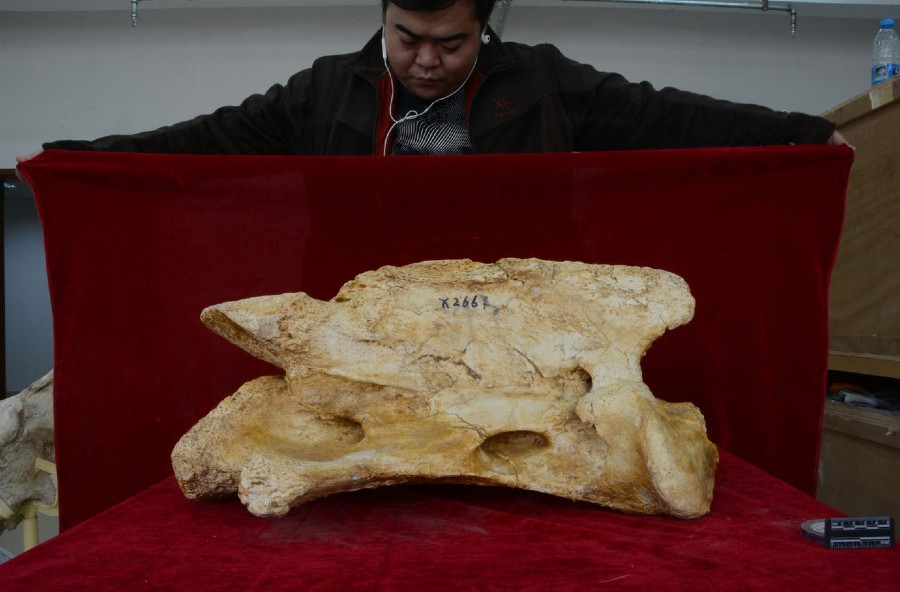
In the land of endless fossils—aka North China—a new species of giant rhinoceros has been discovered in Gansu Province that ranks among the largest terrestrial mammals to ever walk the Earth.

Belonging to an extinct genus called Paraceratherium, which means “near the hornless beast,” the new species displays some different characteristics and carries with it a potential migratory pattern that may help to explain modern mammalian distribution.

The giant rhino is known to be one of the largest land mammals that ever lived. It has primarily been found in Asia, but its evolutionary relationships remain unclear.

Tao Deng and colleagues recovered skeletal remains of a new species of giant rhino dubbed Paraceratherium linxiaense, named for the Linxia Basin in northwestern China where it was found.

“The fossils were prepared [for study] by three professional technicians under [our] supervision from December 2016 to February 2017,” Dr. Deng told GNN. “When the perfect specimens appeared in our sight, their huge size and good completeness [gave us] a great surprise.”

Deng and his colleagues had been working in the Linxia Basin since the 1980s, but have only found fragments of giant rhino remains.

Tao Deng

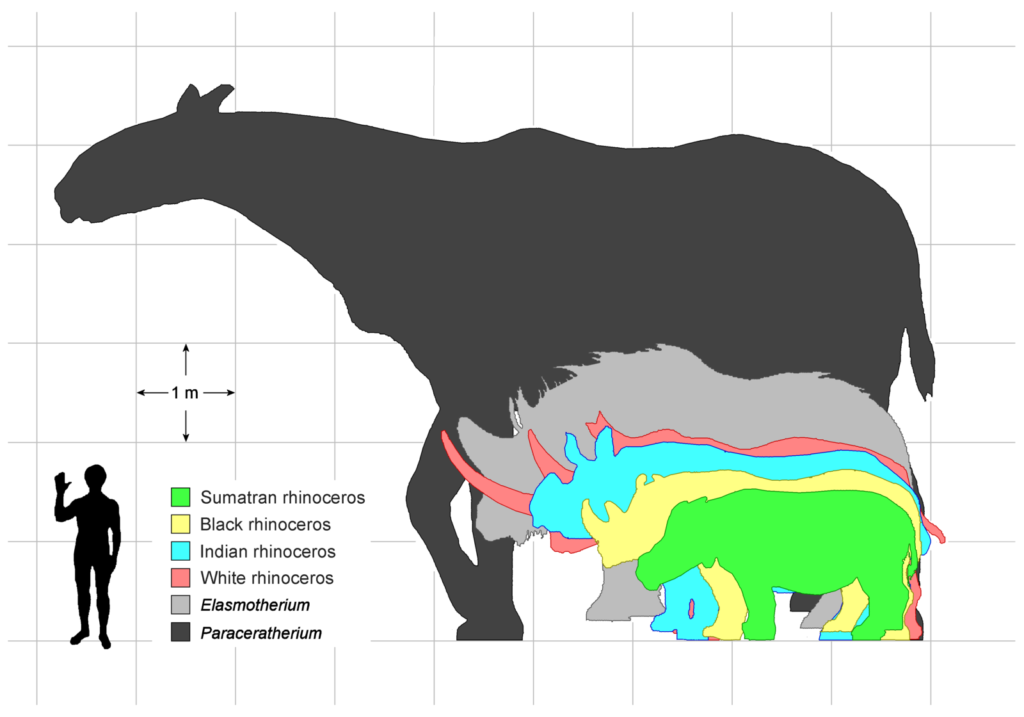
At the shoulder, paraceratherium would have stood 15.7 feet tall, weighing from 15 up to 20 tons, more than the largest African elephant ever recorded.

It had a long neck, contributing to its 23 feet in length, that would have supported a skull that itself was as long as a large child.

MORE: Ancient Chicken Laid An Egg That Lasted 1,000 Years Without Being Broken

Skulls reveal the creature had a trunk, and two tusk-like incisors, but likely no horn despite the fact that genetics have placed it in the rhinoceros family.

Despite its heft, paraceratherium lasted only about 11 million years, far less than other rhinoceros progenitors like Elasmotherium.

The authors’ analyses place this species in a group with another closely related giant rhino species called paraceratherium lepidum, which together have a close relationship with the giant rhinos of Pakistan.

These findings raise the possibility that the giant rhino could have passed through the Tibetan region before it became the elevated plateau it is today.

DagdaMor, CC license

From there, it may have reached the Indian-Pakistani subcontinent in the Oligocene epoch (between 28 and 23 million years ago), where other giant rhino specimens have been found, and where modern rhinos until recently still lived.

RELATED: Astounding Fossil Discovery in California After Man Looks Closely at Petrified Tree And Finds Bones of Great Beasts

This overland route could inform paleontologists of other potential mammal discoveries that, like paraceratherium, passed over the Asian continent during the Oligocene.

SHARE This Giant Discovery With Friends on Social Media…
‘Miraculous’ Mosquito Hack Cuts Dengue Disease Rate by 77%

Jimmy Chan

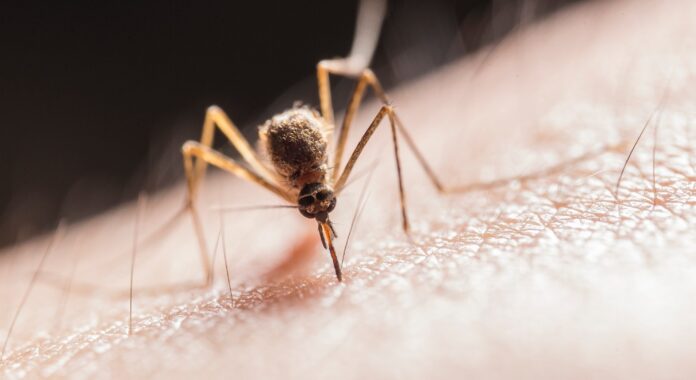
Just as mosquitoes and the diseases they carry plague tropical societies, the harnessing of the mosquito society’s own plague, Wolbachia bacteria, is helping Indonesia combat Dengue fever.

Scientists creating an epidemic of wolbachia among mosquitoes in Indonesia dropped rates of infection of Dengue by 77%, opening up new doors in the potential control of mosquito-borne epidemics.

Sometimes called “break-bone fever” due to the intense joint and muscle pain resulting from infection, Dengue, principally spread through the West Nile mosquito aedes aegypti,  can put a human out of action for a month.

Spread throughout the world along trade routes out of Asia since the 2nd century BCE, there are now between 100 to 400 million infections worldwide every year.

MORE: Breakthrough For Kenyan Scientists Who Discover Natural Microbe That Completely Stops Malaria in Mosquitoes

The city of Yogyakarta in Indonesia was the site of a trial by the World Mosquito Program to see if perhaps Dengue could be controlled by using a species of bacteria often found lodged within a. aegypti. Wolbachia is perhaps the most common reproductive parasite that exists in the biosphere, and between 25% and 70% of all insect species carry it.

World Mosquito Programme

The logic is that this “miraculous” bacteria lives in the mosquito exactly where Dengue is trying to go, while also competing for resources like food. The theory is that wolbachia would out-compete and prevent Dengue from replicating.

It wasn’t a long shot as wolbachia was also used to prevent the spread of Zika virus in Brazil in 2016.

RELATED: Landmark Malaria Vaccine is 77% Effective, Tackling One of World’s Biggest Killers of Young Children

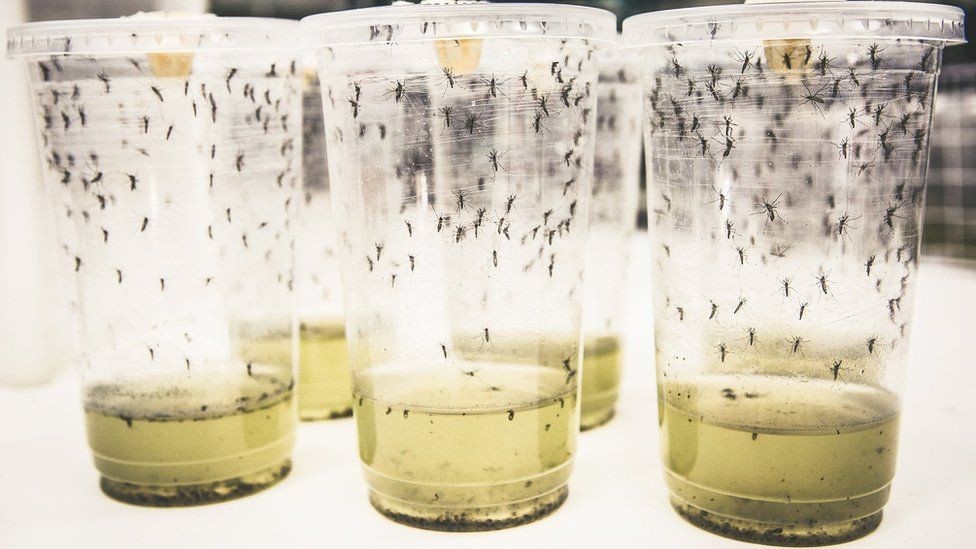
Five million mosquito eggs were infected with wolbachia, and were left in buckets of water around the city over the course of 9 months to build up a consistent population of infected mozzies.

The results were vaccine-level successes, with spread of all four varieties of Dengue reduced by 77%, and the hospitalization rate by 86%, in 12 geographical zones of Yogyakarta where they were deployed compared to 12 other zones in which they were not.

Director of Impact Assessment at the World Mosquito Program described the results as “groundbreaking,” adding “we think it can have an even greater impact when it is deployed at scale in large cities around the world, where dengue is a huge public health problem.”

BUZZ This Hopeful Development Over to Pals—Share This Story…
Ryan Reynolds and ‘It’s Always Sunny’ Star Buy Bad English Football Team to Turn it Around – Now an FX Series

Twitter/@VancityReynolds

What’s better than two likeable, excitable, Hollywood stars handing out perhaps far too much money to get into a business enterprise they know nothing about?

As Hollywood duo Ryan Reynolds and Rob McElhenney embark on their new journey as owners of an English football club, someone clearly thought the same, because the venture is now the focus of a new FX documentary. 

Josh St. Clair, writing for Men’s Health, documents the exchange that launched this bizarre venture—with DMs being exchanged between the two stars on Instagram for months without them ever meeting.

“The text buddies wondered whether they should buy a European football club. Then, Reynolds and McElhenney went ahead and actually bought a European football club. What do they know about running a football club? Reynolds: “We don’t know anything about running a football club.”

But, truly, this is a win – win – win for the town, the club, and television viewers. But first some backstory.

Despite sitting in the 5th tier of the English Football League, Wrexham A.F.C. in Wales has a proud footballing history. Founded in the mid 1800s, the ‘Red Dragons’ are one of the oldest clubs in the country, and have produced several prodigious players including Hall of Fame striker, Welsh icon, and 5-time title winner with Liverpool, Ian Rush.

For Americans, the 5th tier might be comparable to single-A baseball, but a step below that. With a pyramid of 8 levels, the bottom three tiers are sometimes occupied by official football squads of military units, or community-led clubs that literally train in backyards.

LOOK: Ryan Reynolds Schemes With Dumped Teen After She Posts Hilarious Prom Photos

It would be a big test for the newly formed ‘RR McReynolds Company LLC’ to turn the Wrexham ship around, but far from being led by Deadpool and ‘Mac’ from It’s Always Sunny in Philadelphia, Reynolds and McElhenny are taking the project very seriously.

From farce to football

After losing $1.1 million (£740,000) during the 2019/20 season, and after their aging stadium seating was declared unsafe, the club was in a bad way at the start of the COVID season of 2020/21. With fans unable to attend games, the principal methods of income for lower-league football teams was gone.

Reynolds and McElhenney , who will be referred to by their business moniker, “McReynolds,” got straight to work with ambitious plans, starting with the decision not to renew the contract of the first team staff and head coach Dean Keates, after he failed to reach the playoffs this season, a single-elimination that determines which clubs get “promoted” to the next highest tier.

“We are committed to returning the club to the EFL (English Football League, aka the top four divisions) at the earliest opportunity and feel that a change of manager will provide us with the best chance of achieving that objective,” the owners stated, sounding much more like real owners than Yanks unfamiliar with the concept of “points” and “promotions.”

MORE: Leonardo DiCaprio Announces a $43 Million Pledge to Save the Galápagos Islands

In an epoch of the ‘Beautiful Game’ where every season features rumors of a massive Chinese or Saudi takeover of a club somewhere in Europe, the local Wrexham supporters must have been shocked that the Hollywood duo were taking control of their club, but delighted to hear that a reported $2 million would be invested as a means of getting the club back into the EFL.

The $2 million will go towards refurbishing their 5,000-seat main stand in their home field of Racecourse Ground, developing a new 22-acre training facility, and signing new players.

McReynolds also appointed Les Reed, a former technical director of the English Football Association, as an advisor to football strategy and operations.

“We have recruited Les Reed as an adviser to create a football strategy for the club that will deliver the sustainable model we committed to create,” McReynolds said in a statement. “The search for a new manager/head coach is a fundamental part of the strategy and is our immediate priority.”

RELATED: Shaq Helps Pay For Stranger’s Engagement Ring: ‘I’m just trying to make people smile’

The pair then hired on a trio of Wrexham Supporter’s Trust members as Vice Presidents, to ensure any decisions made reflect the fans’ preferences, and to create a strong attachment to community.

“The resources, both physical and human, will be provided where possible to help achieve our goal of achieving promotion at the earliest possible opportunity,” they said.

“Our goal is to grow the team, return it to the EFL in front of increased attendances at an improved stadium, while making a positive difference to the wider community in Wrexham.

The new docu-series Welcome to Wrexham has no present release date, but the Hollywood bros made an amusing promotional trailer with powerful ending… [WARNING: May contain language that you find offensive.]

PASS on the Good News to Friends, Share This Story…