











All News - Page 565 of 1734 - Good News Network
Home Blog Page 565

89% of People Think Happiness Can Be Controlled – And They Are Much Happier For It

Ed Yourdon, CC license

How far can the self-belief that you make your own happiness carry you, creating conditions for a self-fulfilling prophecy? A new study shows there is a happy correlation.

A new survey of 1,155 respondents found that 89% of people think that their happiness can be controlled—and these people are 32% happier than those who don’t think that happiness can be controlled.

The average happiness rating given by participants who think happiness is controllable is 7.39. In contrast, the average happiness rating of people who think happiness is out of their control is 5.61.

Even taking into account the so-called self-serving bias, which is the common habit of a person taking credit for positive events or outcomes, but blaming outside factors for negative events, the author believes the research is noteworthy.

“I didn’t expect such a big difference in happiness ratings between the people who think happiness can be controlled and those who don’t,” Hugo Huyer, the study’s author, told GNN. “In social science, a lot of correlations are far less clear, as results are often influenced by factors that cannot be excluded in a study.”

“However, the study is consistent with others in the field and hints at the fact that the happiest people have learned that some aspects of our lives are within our control. By focusing on these areas, you are more inclined to feel happy.”

RELATED: UC Berkeley is Offering Up Their Popular ‘Science of Happiness’ Course for Free Online

Less happy people were less likely to feel in control of happiness

Respondents were asked, ‘Is happiness something that you can control?’ and
‘If you look back at the last year of your life, how would you rate your happiness on a scale from 1 to 10?’

They were grouped into three categories based on how high they rated their happiness. People with low happiness ratings (6 or lower) are 5 times more likely to feel like happiness is out of their control compared to people with high (9 or 10) happiness ratings (20.33% versus 4.29%).

Digging into the demographic questions, the study examined ranging from gender to employment status.

There was no difference between genders. Both male and female respondents showed the same results. 89% of people think that happiness is controllable.

POPULAR: How to Follow Negative News Without Getting Depressed
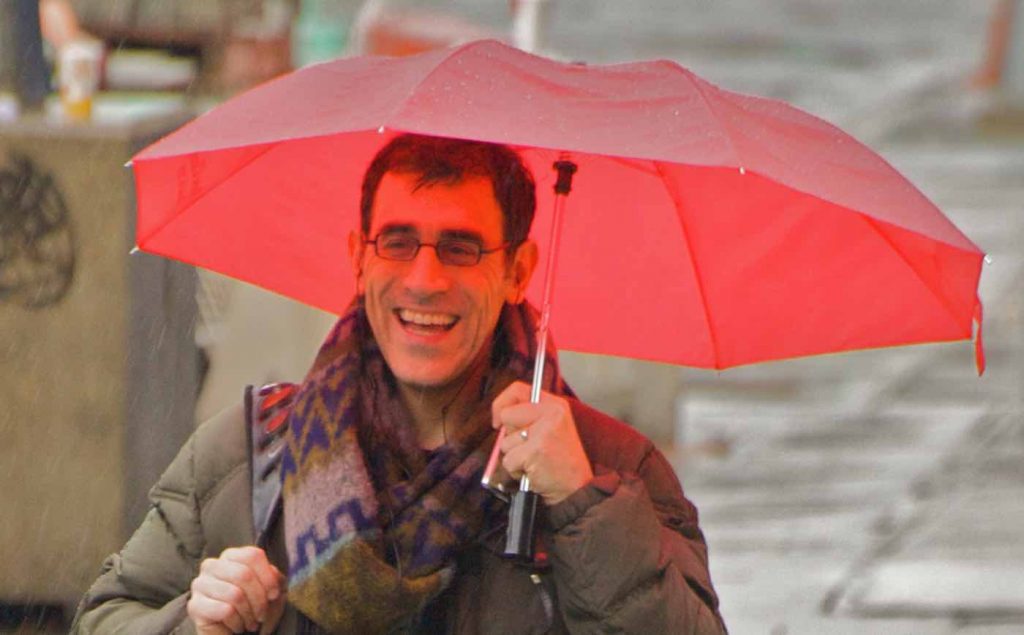
Ed Yourdon, CC license

A self-described “data junkie” and “happiness tracker” for over 6 years, Huyer and his team of researchers in the Netherland say their study showed that people with a higher educational background are more likely to feel like happiness can be controlled. Interestingly though, it’s the students that are least likely to feel like happiness can be controlled, when compared to other employment statuses of our respondents. The study shows that part-time and full-time employees are most likely to feel like happiness can be controlled.

Based on the analysis, when transitioning from being a college student to being employed, you can expect to feel more in control of happiness (on average, from 75% to 90%).

Control over happiness changes as you age

Age seems to have a significant influence on the average respondent. The amount of control we have over our happiness decreases in our mid-life and increases as we grow older again.

One interesting finding is that age plays a significant role. In well-researched studies on happiness vs age, researchers have found a “U-curve” in our happiness, showing that happiness decreases from age 18 and reaches peak unhappiness at approximately age 47. From there, the happiness levels gradually increase again. This has been confirmed around the world.

CHECK OUT: These Are The Best Things About Aging, as Voted By People Over 50

Similar to this “U-curve” in happiness, our feelings of control over happiness tend to reach a negative peak during our midlife, according to this study. Since actual happiness and control over happiness is correlated, it is logical that our mid-lives align with a feeling of lower control over happiness.

The good news is that feelings of control over happiness increase at an older age again, so in mid-life we can expect a trend toward happiness in the future.

Need more self-help articles that could help you feel in control? Check out our large collection of articles on how to be happier on GNN.

WANT TO Steer Your Friends Toward Happiness? SHARE This on Social Media…

“Normality is a paved road. It’s comfortable to walk, but no flowers grow on it.” – Vincent Van Gogh

Quote of the Day: “Normality is a paved road. It’s comfortable to walk, but no flowers grow on it.” – Vincent Van Gogh

Photo: by Mohammed lak

With a new inspirational quote every day, atop the perfect photo—collected and archived on our Quote of the Day page—why not bookmark GNN.org for a daily uplift?


New Mexico Girl Wins $250,000 Top Prize in Teen Science Fair For Inventing Tool That Could Prevent Starvation in Africa

The nation’s oldest and most prestigious STEM competition for high school seniors just awarded more than $1.8 million to ten finalists who exhibited exceptional problem-solving abilities and scientific leadership.

For the first time in its 78-year history, the Regeneron Science Talent Search competition (formerly the Westinghouse Science Talent Search) took place virtually, but that didn’t quell the excitement as the top winners were announced—and Lillian Kay Petersen of Los Alamos, New Mexico won a quarter million dollars.

The 17-year-old invented a simple tool for predicting harvests early in the growing season, which helps to improve food distribution planning and offers a promising resource to aid groups working on global food insecurity.

RELATED: 3D-Printing Teen Makes Hundreds of Ingenious Devices to Alleviate Ear Pain for Healthcare Workers

Lillian first validated her tool, which analyzes daily satellite imagery using accepted measures of vegetation health, on known domestic crop data. She then tested it for countries in Africa and successfully predicted harvests with terrific accuracy when compared with reported yields.

She was motivated to do research in this field after her parents adopted children who faced food insecurity and, later, she read about Ethiopia where a famine had affected millions of people leading to developmental learning problems in children.

The moment the winner was announced – Regeneron Science Talent Search

Second place and $175,000 went to Jagdeep Bhatia, 18, of Green Brook, New Jersey for developing two fast and simple machine learning algorithms for computer programs that are attempting to learn new concepts under the tutelage of an instructor, either a computer or human. His algorithms do not only ask random questions but, like a savvy detective, ask just the right ones. His AI algorithms could help train robots and other automated devices faster and easier.

RELATED: Homeschooled 12-Year-old Boy Designs COVID-19 Protection Device – The Safe Touch Pro

Third place and $150,000 went to Brendan Crotty, 18, of Muskogee, Oklahoma for his project where he designed and built an efficient hybrid gas burner that could help reduce the ecological impact of industries like power generation and materials manufacturing. His specialized burner system operates at higher temperatures than current industrial burners yet emits 19 percent less polluting nitrogen dioxide gas. To build his model, Brendan had to become proficient in computer design software, metal casting and machining.

“Congratulations to the Regeneron Science Talent Search 2020 winners,” said Maya Ajmera, President of the Society for Science & the Public, which runs the contest, and 1985 Science Talent Search alumna.

WATCH: 17-Year-old Hero Catches a Falling Toddler Who Fell Out of a Second-Story Window

“Students like Lillian Petersen are the stewards of our future. The current pandemic has made it clear how important science is to our wellbeing. With these finalists at the forefront of scientific and engineering discovery, I know we are in good hands. They will be solving the world’s most intractable problems.”

WATCH the video below, and LEARN about all the teen finalists on their website.

CHEER On the Winners By Sharing Their Accomplishments on Social Media…

Scientist’s Dream Was to Visit the Moon – After His Death, He Finally Made It There

An illustration of a couple holding hands in space
Image by Great Big Story

Once upon a time, a couple fell in love while sharing a passion for space.

Eugene and Carolyn Shoemaker met at a wedding in 1950, and after a year of sending each other long-distance letters, the loved-up pair got married.

A decade later, President John F. Kennedy announced that the nation would be sending a man to the moon, and Eugene was thrilled. As a geologist who specialized in studying craters—he had a promising chance of joining the NASA mission.

Then after a series of medical tests to examine his fitness, they learned that Shoemaker had Addison’s disease, an uncommon disorder that affects the adrenal glands. There was no possibility of him reaching the moon now.

WATCH: Listen to What These Couples From Around the World Have to Say About Being Married for More Than 30 Years

The news was one of the greatest disappointments of Shoemaker’s life, Carolyn told Great Big Story. He “felt like his goal had suddenly disappeared.”

Still, Eugene’s life was full of big achievements. He dedicated himself to training astronauts like Neil Armstrong for their space expeditions. He combined the study of geology and astronomy, helping create the field of planetary science. He co-discovered a comet—Shoemaker-Levy 9—alongside his scientist wife and the astronomer David Levy.

Shoemaker’s life came to a sudden end in a car crash in 1997, while in Australia exploring a meteor crash site with his wife. Exploring craters like this one had always been a favorite passion for Eugene.

RELATED: School Bus Driver Who Transported Generations of Students Laid to Rest in Decorated Casket He Always Wanted

While she recovered in the hospital, Carolyn received an unexpected call from NASA. Would she be interested in having some of Eugene’s ashes join the Lunar Prospector mission to the moon?

She thought that would be wonderful.

The Prospector headed for the moon the following year and the most amazing thing happened: When the mission was finished, the unmanned vehicle ran out of fuel and crashed into the moon’s South Pole, creating a crater where Shoemaker’s ashes remain today.

You could say it was an accident made in heaven.

(Watch the video from our partners at Great Big Story below…)

SHARE This Out-Of-This-World Story With Your Friends On Social Media…

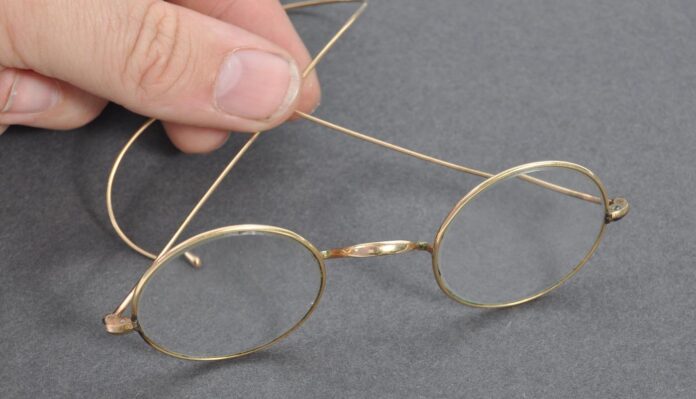
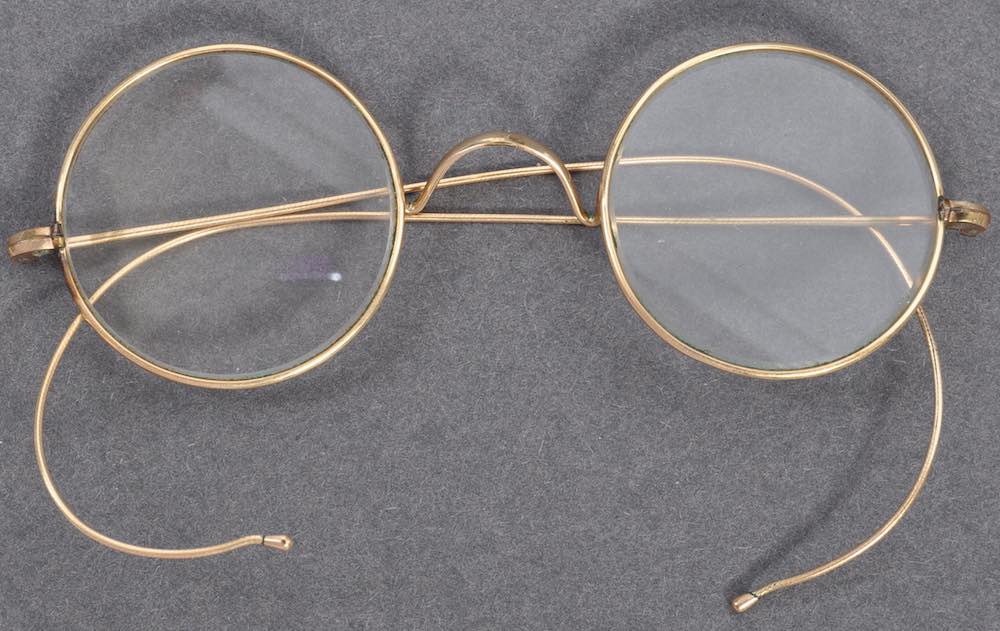
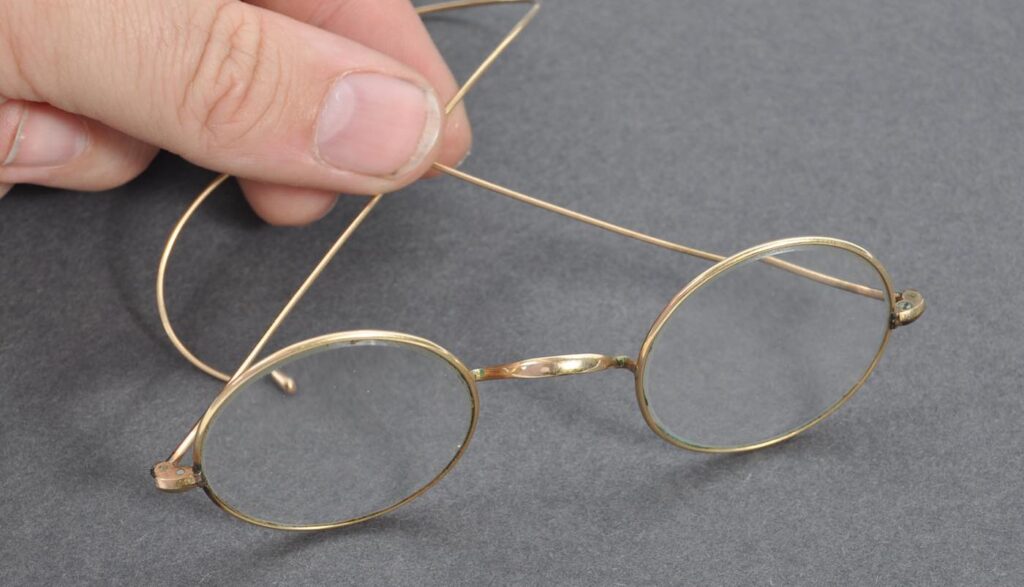
Spectacles Belonging to Gandhi Were Mailed to an Auction House–With Owner Having No Idea of Their Value

A pair of spectacles belonging to Gandhi set to fetch thousands of pounds at auction. See SWNS story SWBRghandi; The gold-coloured glasses were gifted to the current owner's uncle by the famous leader during a trip to South Africa in the 1920s. The rare item was then passed down through generations before ending up in the letterbox of an auction house in Bristol. A sale price has now been set at between £10,000 and £15,000 for the spectacles - although it is thought that they could eventually go for much more. Gandhi - named as 'Man of the Year' by the magazine Time in 1930 - was a lawyer, political activist and ambassador for peace. He led the campaign for Indian independence from the rule of Britain in the 20th century by using non-violent resistance. He developed a distinctive look in later life which many may recognise him by - which included the iconic glasses. Andrew Stowe, from East Bristol Auctions, said: "We came in one morning, and there, poking rather precariously out of our letter box, was a small envelope.

A pair of spectacles belonging to Mahatma Gandhi are expected to fetch thousands at auction, after the owner mailed them in an envelope to the auctioneers, hoping to get a few bucks.

The gold-colored glasses were gifted to the current owner’s uncle by the famous leader during a trip to South Africa in the 1920s.

The rare item was then passed down through generations before ending up in the mailbox of an auction house in Bristol, England.

A sale price has now been set at between £10,000 and £15,000 for the spectacles—although it is thought that they could eventually go for much more.

Gandhi, named ‘Man of the Year’ by Time magazine in 1930, was a lawyer and activist whose non-violent campaign successfully freed India from British rule.

Much like John Lennon, he developed a distinctive look in later life, which always included the iconic glasses.

Andrew Stowe, from East Bristol Auctions, said, “We came in one morning, and there, poking rather precariously out of our letter box, was a small envelope.

“In the envelope was the pair of spectacles, along with note which read, ‘These were Gandhi’s glasses,’ and a phone number for the owner.

RELATED: When Tribe Objects to Auction of Sacred Pipe, Anonymous Buyer Pays Double So it Can Be Returned

“It was the most bizarre five minutes of my career! A telephone call later and we learned the full story and set about our research.

“Once we dug a little deeper, we realized these glasses were find of huge historical importance.

“Gandhi is an iconic figure in world history. When one thinks of him you conjure up the image of his shawl, his sandals and, of course, his glasses.”

ghandi

Andrew added that Gandhi was known to give away his personal possessions to those who helped him.

RELATED: Charles Barkley is Auctioning Off His Award ‘Clutter’ to Fund Affordable Housing in His Hometown

“The uncle in question worked for British Petroleum at the time, and the family legend was that he had helped Gandhi in some way during his visit and in return for the favor, he was gifted these glasses.

“It’s just the most incredible story, because the owner had no idea of their value, and would’ve been quite happy to receive fifty pounds for them I’m sure!

“When I told him of the valuation, the line went quiet for a moment—he was rather surprised.

SWNS

“It’s one of those moments we all dream of—discovering something we’ve owned for years is worth thousands of pounds.

POPULAR: Farmers Stay Silent During Auction So Young Man Can Win the Bid on His Long-Lost Family Farm

“It’s always a complete joy to make these discoveries.”

Lots relating to Gandhi have fetched a lot of money at auction, with a small shawl worn by him selling in 2013 for £40,000. A pair of well-worn sandals sold in the same year for £13,000.

The glasses are due to go under the hammer during the East Bristol Auctions’ specialist ‘Military & History Auction’ taking place online at 10am on August 21.

WATCH: Man Living in a Shack is Saved By His ‘Worthless’ Blanket That Spurs $1.5 Million Bidding War

MAKE A BID to Cheer Up Friends By Sharing The Surprising Stories on Social Media…

Old Toy Horse Left in Trash Becomes Local Celebrity, With Villagers Moving it Daily From Home to Home

SWNS

An old stuffed toy horse left out on the pavement for trash pick-up went on to a life of celebrity, after residents of a small village in Norfolk, England adopted him as their face-mask-wearing mascot.

It all started about a week ago when a gentleman in Hethersett who had recently lost his wife, was cleaning out his house and the horse was one of the things he was throwing away.

It is believed that some children picked him up and played with him, leaving him on a grassy knoll—the rest of the story is filled with the kind of whimsy we all need in this time of restricted community.

At first, a lady posted on a local Facebook page asking if anybody had lost him, and obviously a lot of comments with horse-y puns ensued.

“The next thing we knew, he got put outside someone’s door, and she took him in and named him Derek Trotter,” said resident Kim Rout—a reference to the character from an 80s TV sitcom Only Fools and Horses.

Derek has since trotted from home to home, with villagers keeping track of his whereabouts on a Facebook group that Kim set up called Derek Trotter the Globetrotting Pony.

All photos by SWNS

The Facebook group, which has gained nearly 400 followers, has been a hilarious addition to people’s day.

“A couple of days later, there was Rodney left at a bus stop, waiting for a bus.”

People have been sharing photos of him appearing on their doorsteps, or ‘grazing’ on grass and flowers in their gardens.

LOOK: What’s in Their Pockets? An Adorable Look at What Children Around the World Carry As Treasure

Derek has been taken out on ‘walks’ with some residents, and he has even gained a horsey friend, with the mysterious emergence of a smaller toy horse, which has been named Rodney, and now travels around beside Derek.

SWNS

Kim, who has a 15-year-old son, said, “It feels like it’s come at just the right time, what with everyone having been in lockdown.

“It’s really brightened up the village. People have told me that they sit and wait for posts on the Facebook page, to see where the boys have been and what they’ve been up to.

“They’ll spend the night with somebody, and then get passed on further down the road, or to somebody in the Facebook group.”

RELATED: Monty Python ‘Silly Walk’ Signs Around the World Are Encouraging Pedestrians to Laugh in the Face of COVID

SWNS

Derek and Rodney have also been on the occasional excursion out of the village.

This week, Kim drove them five miles to Wymondham, where they had a paddle at the edge of a river, and tried their hoofs at ‘abseiling’ from the top of a wooden observation tower.

And Sharon Watts, 52, who runs the local village Brownies group, said Derek and Rodney have made two visits to the group, and have proven themselves to be very popular among the girls.

POPULAR: Comedian Asks Twitter to Change Movie Titles Into Quarantine Editions and the List is Hilarious

“Derek and Rodney joined in with the meetings and even got given a Brownies uniform – although we don’t usually allow boys in!”

Kim said she hopes the two horses will end up being passed further afield than Hethersett once they have “exhausted” their adventures.

SWNS

“We’d like to see how far their new celebrity status can reach.”

LOOK: Isolated Art Lovers Are Recreating Masterpieces Using Everyday Objects—and the Results Are Amazing

SEND Derek on a Journey Around the World By Sharing on Social Media…

“Even in a time of elephantine vanity and greed, one never has to look far to see the campfires of gentle people.” – Garrison Keillor (turns 78 today)

Quote of the Day: “Even in a time of elephantine vanity and greed, one never has to look far to see the campfires of gentle people.” – Garrison Keillor (turns 78 today)

Photo: by Tanner Larson

With a new inspirational quote every day, atop the perfect photo—collected and archived on our Quote of the Day page—why not bookmark GNN.org for a daily uplift?


New Transparent Spray-on Coating For Windows Can Block Heat And Conduct Electricity For Cheap Smart Solution

RMIT University

After the Empire State Building in New York reported installing smart glass windows, they cut energy usage by $2.4 million and their carbon emissions by 4,000 metric tons, but smart windows are costly.

That’s why news of a new transparent spray-on coating that is much more cost-effective—while providing similar performance—is worth shouting from the tops of skyscrapers.

The simple method for adding a clear coating to existing windows to block heat and  also conduct electricity could radically cut the cost of energy-saving smart windows and heat-repelling glass.

The spray-on coatings developed by researchers at RMIT University in Melbourne, Australia, are ultra-thin, and rival the performance of current industry standards for transparent electrodes.

Transparent electrodes combine the best properties of glass and metals in a single component, which is a highly conductive clear coating that allows visible light through. Those coatings—key components of smart windows, touchscreen displays, LED lighting and solar panels—are currently made through time-consuming processes that rely on expensive raw materials.

The new spray-on method is fast, scalable and based on cheaper materials that are readily available. The method could simplify the fabrication of smart windows, which can be both energy-saving and dimmable, as well as low-emissivity glass, where a conventional glass panel is coated with a special layer to minimize ultraviolet and infrared light.

RELATED: World’s Biggest Liquid Air Battery – ‘The Climate Emission Killer’ – is Now Under Construction in England

Lead investigator Dr Enrico Della Gaspera said the pioneering approach could be used to substantially bring down the cost of energy-saving windows and potentially make them a standard part of new builds and retrofits.

“Smart windows and low-E glass can help regulate temperatures inside a building, delivering major environmental benefits and financial savings, but they remain expensive and challenging to manufacture,” said Della Gaspera, a senior lecturer and Australian Research Council DECRA Fellow at RMIT.

RMIT University

“The ultimate aim is to make smart windows much more widely accessible, cutting energy costs and reducing the carbon footprint of new and retrofitted buildings.”

The new method can also be precisely optimized to produce coatings tailored to the transparency and conductivity requirements of the many different applications of transparent electrodes.

How the tech works

The standard approach for manufacturing transparent electrodes is based on indium, a rare and expensive element, and vacuum deposition methods, which are bulky, slow and costly. This makes transparent electrodes a major cost in the production of any optoelectronic device.

In the new study, published August 5 in Advanced Materials Interfaces, researchers in RMIT’s School of Science made transparent electrodes using the far cheaper material tin oxide, spiked with a special combination of chemicals to enhance conductivity and transparency.

RELATED: Not Only Does New Solar Chimney Design Cut Energy Costs By 50%, It Can Also Save Lives During a Fire

The ultra-thin transparent coatings, which are over 100 times thinner than a human hair, only allow visible light through, while blocking both harmful UV light and heat in the form of infrared radiation.

The scientists used a process called “ultrasonic spray pyrolysis” to fabricate smooth, uniform coatings of high optical and electrical quality.

A precursor solution is nebulized, using commercially available technology to create a fine spray mist that forms ultra-small and uniformly-sized droplets. This solution is sprayed on a heated support layer, such as glass.

When the solution hits the hot layer a chemical reaction is triggered, decomposing the precursor into a solid residue that is deposited as an ultra-thin coating. All the by-products of the reaction are eliminated as vapors, leaving a pure coating with the desired composition.

Global demand for smart glazing

The global market size for smart glass and smart windows is expected to reach $6.9 billion by 2022, while the global low-E glass market is set to reach an estimated $39.4 billion by 2024.

POPULAR: These New Solar-Pavement Driveways Made of Plastic Bottles Can Power the Average Household

Eureka Tower in Melbourne features a dramatic use of smart glass in its “Edge” tourist attraction, a glass cube that projects 3m out of the building and suspends visitors 300m over the city. The glass is opaque as the cube moves out over the edge of the building and becomes clear once fully extended.

First author Jaewon Kim, a PhD researcher in Applied Chemistry at RMIT, said the next steps in the research were developing precursors that will decompose at lower temperatures, allowing the coatings to be deposited on plastics and used in flexible electronics, as well as producing larger prototypes by scaling up the deposition.

“The spray coater we use can be automatically controlled and programmed, so fabricating bigger proof-of-concept panels will be relatively simple,” he said.

SOURCE: RMIT University 

IT’S CLEAR Why This is a Breakthrough Worth Sharing on Social Media…

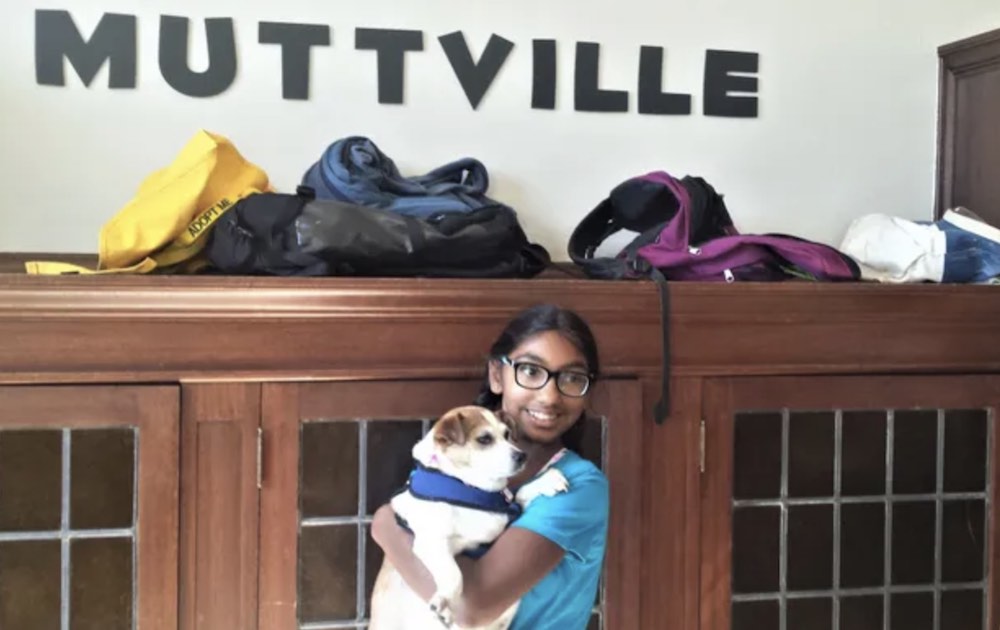
Teen Abandoned at Birth Now Raises Money to Give Senior Dogs the Love She Found With a Forever Home

Abandoned in a basket on a college campus in India as an infant, Meena Kumar knows what it’s like to need a little love. That’s why she’s drawn to the pups that are most often overlooked—senior dogs living out their golden years in animal shelters.

Snuggling with four-legged seniors became her passion, and that dedication is helping to support second-chances for dozens of dogs, even after being told she was too young to volunteer.

“More people should adopt senior dogs,” she told CNN. “They give you the same unconditional love as any other dog.”

The 14-year-old’s love for canines began when she was no taller than a Schnauzer.

She spent a year in an Indian orphanage, before being adopted by a couple in Mumbai. As a two-year-old, she lovingly spent hours caring for newborn pups in her family’s apartment.

“My parents were worried about how to keep me amused in a small place,” she told TODAY. “Thankfully, a dog had laid a litter of puppies, and I used to spend hours every day watching and playing with them.”

RELATED: 13-Year-old Has Been Sewing Hundreds of Bowties to Help Shelter Pets Get Adopted

Kumar’s doggie dedication continued when she was brought to San Jose, California, where she insisted the family make regular visits to the Humane Society. When she was eight, they adopted Bambie, a mixed-breed pooch that she spent hours training to do tricks.

Two years ago, as she was walking Bambie, she met a neighbor who had adopted through Muttville Senior Dog Rescue. She told Kumar about the nonprofit’s cage-free rescue operation that gives senior dogs a “second chance at life.” The organization rescues about 1,000 dogs per year and runs mostly through the help of volunteers.

“I know what it feels like to be left behind,” Kumar thought. “The dogs may be senior and old, but they’re so friendly and cute. They’re the most gentle and loyal creatures.”

Photos courtesy of Pet Fairy Services

She enjoyed visiting the aging dogs at the rescue, but because she was 12 at the time, Kumar was five years too young to volunteer.

The zealous girl wouldn’t let ageist rules stop her. Instead, she decided to raise money for them, because, “You’re never to young to start a business,” she said with a smile.

RELATED: This Pizzeria Has Been Attaching Photos of Adoptable Shelter Animals to Their Delivery Boxes

She launched a petsitting business called Pet Fairy Services—and it took off. With rates of $35 per day, Kumar raised an impressive $7,000 in two years—and she donated it all to Muttville. A matching grant through Intel, where her dad works, meant her donation ended up topping $14,000.

Even though the coronavirus pandemic has slowed things down for many nonprofits, the popularity of fostering and adopting dogs has skyrocketed.

“It feels great to know that I’ve saved many dogs’ lives and given them another chance to enjoy life for their last years of living,” she told TODAY. “I feel like all dogs should get a forever home just like I did.”

SWNS

LOOK: 6-Legged Puppy Given the Perfect Forever Home After She Was Adopted By Bullied Boy

SEND This Pawesome Story to Your Dog Loving Friends on Social Media…

Britain to Roll Out Five Million Coronavirus Tests That Get Results in 90 Minutes

Millions of “ground-breaking” rapid coronavirus tests will be rolled out to hospitals, care homes and labs across the UK to increase testing capacity ahead of winter. The tests will enable clinicians and the NHS to quickly test and trace to stop any future spread of the virus.

A recent study suggests measures already taken to limit transmission in care homes and hospitals had been working effectively through early July, with continued reduction of the virus, even while some restrictions were eased in May and June.

The two new tests—both able to detect the virus in just 90 minutes—will be made available to NHS hospitals, care homes and labs. The 2 tests will be able to detect both COVID-19 and other winter viruses such as flu and respiratory syncytial virus (RSV), yet do not require a trained health professional to operate—meaning they can be rolled out in more non-clinical settings.

“The fact these tests can detect flu as well as COVID-19 will be hugely beneficial as we head into winter, so patients can follow the right advice to protect themselves and others,” said Health Secretary Matt Hancock in an August 3 statement.

RELATED: Single Dose of Covid-19 Vaccine Proved Successful in Pre-Clinical Study, Human Safety Trials Begin

Almost a half million LamPORE swab tests will be available across adult care settings and laboratories starting next week, supplied by Oxford Nanopore. The new test will be able to process swab and saliva samples to detect the presence of COVID-19 in 60 to 90 minutes.

The second test uses DNA to detect the virus, with 5,000 DNA machines supplied by the maker, DnaNudge, being rolled out next month to NHS hospitals allowing 5.8 million tests in the coming months.

The machines will analyze DNA from nose swabs, providing a positive or negative result for COVID-19 in 90 minutes, at the point of care. The machines will process up to 15 tests on the spot each day without the need for a laboratory.

MORE: Possible ‘Breakthrough’ Coronavirus Treatment With Natural Protein Cuts Risk of Death and Serious Symptoms by 79%

The DNA COVID-19 test machines are currently operating in 8 London hospitals—and are located in cancer wards and maternity wards to protect those most at risk.

The LamPORE test has the same sensitivity as the widely used PCR swab test, but can be used to process swabs in labs, as well as on-location through ‘pop up’ labs. The desktop GridION machine can process up to 15,000 tests a day, or the palm-sized MinION can process up to 2,000 tests a day for deployment in a near-community ‘pop-up’ lab, according to the Health Ministry.

Need more positive stories and updates coming out of the COVID-19 challenge? For more uplifting coverage, click here.

SHARE The Testing News With Your Friends on Social Media…

When Hunger Intensifies in Pennsylvania, the Soup Brigade Mobilizes

COURTESY JULIE SNARSKI

This is one of 50 finalists in the Reader’s Digest “50 Nicest Places in America” contest for 2020. A crowd-sourced effort to uncover places in all 50 states where kindness and generosity are reigning supreme amidst a climate of coronavirus and cultural upheaval, you can now vote for your favorite ‘Nicest Place’ by visiting the Reader’s Digest website

COURTESY JULIE SNARSKI

When New Yorker Julie Snarski first moved to the picturesque community on the Delaware River, she felt like she had wandered onto a television set. From Yardley’s charming downtown, with buildings dating back to the 18th century, to St. Andrew’s Parish, the beautiful Episcopal church next to a tree-lined pond and historic graveyard, it’s easy to see why Snarski had trouble believing the town near Trenton, New Jersey was real.

Not only is Yardley, Pennsylvania real—it’s really kind, too, and its been named one of America’s 50 Nicest Places by Reader’s Digest.

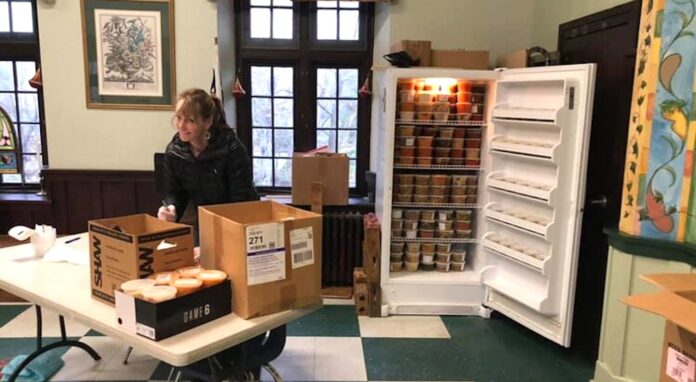
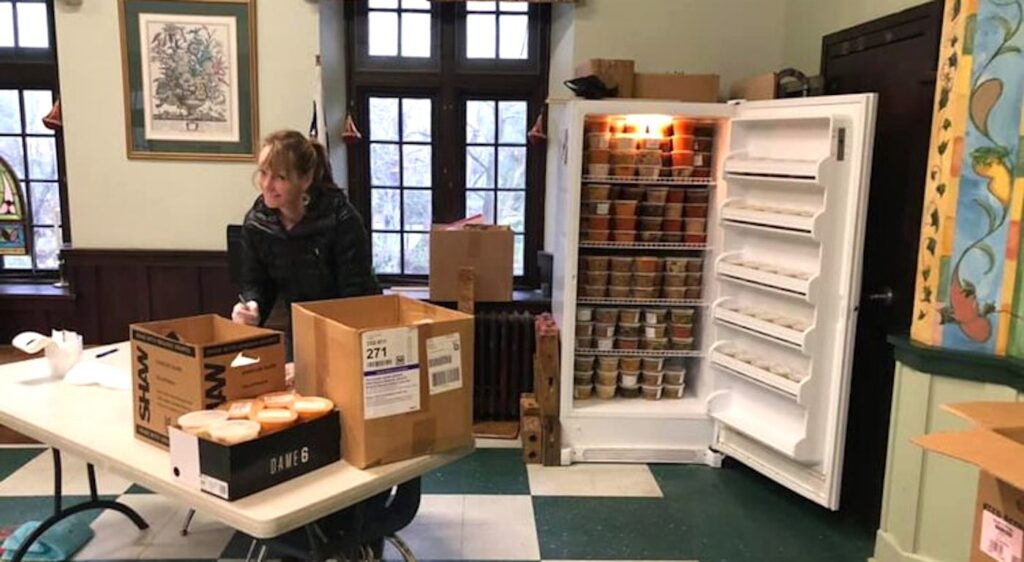
For nearly four decades, on the third Sunday of every month, St. Andrew’s parishioners have been meeting in the church parish house and assembling meals for elderly and shut-in residents of the five-county Philadelphia area.

The coronavirus ended their proud 37-year streak. But church members figured out a way to continue their essential service, just as the need skyrocketed.

RELATED: Washington Man Rescues 2.4 Million Pounds of Farmers’ Crops Going to Waste, Gets Them to Food Banks Across State

Caring for Friends, the organization that distributes the meals, came up with the idea for the parishioners to make meals in their homes. They enlisted neighbors to help, and pretty soon the volunteers were cranking out 1,000 meals and 400 containers of soup each week—almost ten times more food than before.

“I’ve been impressed how this seed of an idea has taken root,” says Snarski, who nominated Yardley as the Nicest Place in America.

“There was all of this passion and energy around feeding people and food justice, so we thought, What else could we do?,” says the Reverend Hilary Greer. “We got inspired after learning that 40 percent of America’s produce in World War II came from victory gardens in backyards and at churches. I thought, What if we did that here?”

MORE: Chef Andrés’ Charity is Injecting $50 Million into Restaurants By Paying Them to Feed the Hungry

They couldn’t come together to plant a community garden in one place, so they created a community garden throughout the community. Anybody who wanted to join in came to
St. Andrew’s to pick up seedlings to plant at home. As the tomatoes, cucumbers, beans, and basil came in, the home gardeners brought the bounty to the church to be distributed to area food banks including the Bucks County Housing Group and the Interfaith Food Alliance, also located in Bucks County.

St. Andrew’s is also educating its largely White parish and community about racism, with training and discussion sessions every Sunday after church via Zoom. (The training and discussion sessions will occur every Sunday via Zoom in July.)

“We’re a White, wealthy suburb,” Rev. Greer says. “We need to learn all of the ways that racial injustice fuels criminal injustice, and injustice in the educational system. Until people get how all this is interconnected, they’re never going to understand why all of this is happening.

ALSO: School’s Food Drive to Help Those Affected By Looting in Minneapolis Turns Into Tsunami of Grocery Bags Deliveries

“We’re going to have conversations that go places that are uncomfortable, it’s how we grow. We will show up to listen, and bring our whole selves to the conversation. We will be in it for the long haul,” says Rev. Greer, “not just while the protests are happening.”

Need more positive stories and updates coming out of the COVID-19 challenge? For more uplifting coverage, click here.

GIVE Your Friends ‘Some More’ Good News Porridge on Social Media…

“When the unthinkable happens, the lighthouse is hope. Once we choose hope, everything is possible.” – Christopher Reeve

Quote of the Day: “When the unthinkable happens, the lighthouse is hope. Once we choose hope, everything is possible.” – Christopher Reeve

Photo: Cape Elizabeth, Maine, by Keith Luke

With a new inspirational quote every day, atop the perfect photo—collected and archived on our Quote of the Day page—why not bookmark GNN.org for a daily uplift?


The Homeless In Oxford Won’t Need to Go Back to Sleeping Outside, Even if Pandemic Ends This Year

The Oxford City Council has secured 124 rooms of interim housing for the next year, ensuring there will be no need to return to the streets for former homeless folks that are currently housed in hotels and student blocks.

The council announced last week it had reached an agreement with A2Dominion, which provides student housing, to lease its Canterbury House until July 2021. It has also extended its current lease on the youth hostel run by the nonprofit YHA until the end of March.

In March, the government issued an ‘everyone inside’ direction for local English councils to provide emergency housing for rough sleepers and vulnerable homeless people to prevent the spread of coronavirus—and to date, there have been no confirmed cases of the virus among homeless people in Oxford.

The council has been working closely with the Ministry of Housing, Communities and Local Government to deliver interim accommodation and has applied for funding from the £105 million pot unveiled last month.

RELATED: City in Alaska is Housing its Homeless – Which Makes It Possibly The ‘Nicest Place’ in America

“The lockdown period gave us a unique opportunity to engage with people in emergency accommodation. For many of them, the certainty of a safe bed gave the bit of stability they needed to start having conversations about leaving the streets behind for good. We’ve already helped 76 people to move on into more sustainable housing, and this is something we want to keep doing,” said Councillor Mike Rowley in a statement on July 30.

Canterbury House and the YHA provide 76 and 42 rooms of self-contained accommodation respectively. A further six rooms are available in a block already leased from University College for people displaying symptoms of coronavirus, which so far, has not been needed.

Interim housing is a bridge between emergency lockdown arrangements and more sustainable housing. The acquisition of Canterbury House and extension of the YHA lease mean the council will be able to maintain accommodation for people housed during lockdown as existing agreements with hotels and colleges come to an end this month.

POPULAR: Hotel Stays Open During Lockdowns to House Homeless Locals; And They’re Repaying the Favor With Odd Jobs

It will also allow the council to provide accommodation and support for people who become homeless over the coming months. This will include winter beds that were provided in shared spaces before the pandemic.

A total of 203 people have been housed in hotel and student rooms in Oxford over the past four months. Of these, 76 have been supported into more permanent housing and this includes a number of people who had been sleeping rough on a long term basis. Consolidating the current patchwork of hotel and student rooms into two main locations will make it easier to provide intensive personal support that helps more people off the streets for good.

St Mungo’s will continue to manage this interim housing from these two locations in addition to the outreach, assessment and support services it currently provides for the council.

MORE: People Are Installing Portable Hand-Washing Sinks for the Homeless in Cities Across the US

Converting Canterbury House from student accommodation to interim housing will require planning permission for a temporary change of use. The council is arranging the consultation necessary to facilitate a planning application. It is also working with Thames Valley Police and other partners on plans to inform local residents about the change of use and give them an opportunity to express their views.

“We believe that nobody should have to sleep rough in Oxford and I’d like to thank Oxford Brookes University, A2Dominion, the YHA, University College and St Mungo’s for helping us to provide the interim accommodation that could make our ambition a reality,” added Rowley.

Luke Hall MP, Minister for Rough Sleeping and Housing, said: “We now have a real opportunity to ensure that as many people as possible do not return to a life on the streets. Nationally, we are delivering 6,000 longer-term, safe homes for former rough sleepers. Together with our Rough Sleeping Initiative this amounts to over £500m funding to help break the cycle of homelessness and end rough sleeping for good.”

ALSO: Canadian Government Buys Hotels to House Homeless People—And Also Rehire Workers

Need more positive stories and updates coming out of the COVID-19 challenge? For more uplifting coverage, click here.

GIVE This Good News A Home — Share With Friends on Social Media… (File photo by Karim Corban, CC license)

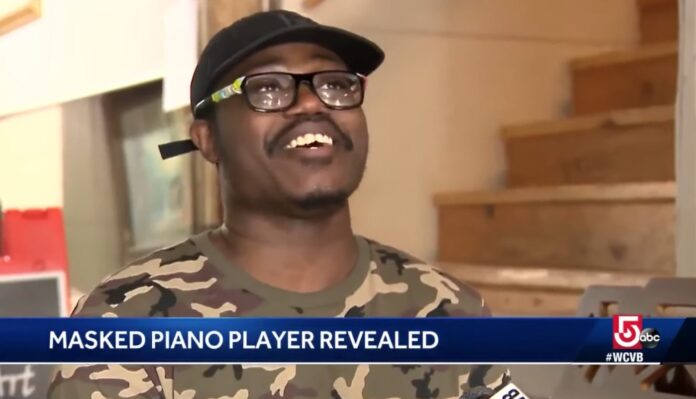
Antique Store Owner Gives Student Free $3,000 Piano After He Delighted Customers With ‘Don’t Stop Believin’

This Boston college student was shocked to learn that his spontaneous performance on an antique store piano had won the hearts of music lovers across the country—and he was even more surprised to be gifted with a piano in return.

23-year-old John Capron had been browsing the ReMARKable Cleanouts antique store in Norwood, Massachusetts with his girlfriend last month when he found an old $200 Whitney piano for sale.

After asking the sales associate for permission, the self-taught piano player sat down to play a heartfelt rendition of “Don’t Stop Believin’” by Journey.

As delighted customers gathered together to listen, the sales associate filmed a video of the improptu singalong and posted it to the store’s Facebook page.

RELATED: No One Came to Student’s Graduation—So His Teacher Took Him Out to Dinner and Bought Him a Car

The video quickly racked up thousands of views. Since Capron was wearing a face mask for the performance, national news outlets began searching for the identity of the masked piano player.

After Capron identified himself to ReMARKable Cleanouts, store owner Mark Waters offered to give him the Whitney for free—but then Waters changed his mind. Instead, he decided to surprise Capron with the $3,000 Steinway and Sons piano that had been sitting in the back of the store.

When Waters finally unveiled the gift to Capron, the college student promptly burst into tears.

LISTEN: Watch Opera Singer Unexpectedly Join Student Recording National Anthem in the Park for Her Commencement

“To see him cry made me cry,” Waters told WCVB. “It’s just going to sit here, so if you can bring it into somebody else’s life and bring it back to life, then God bless America, you know what I mean? That’s what life’s about! I wish I could do this every day!”

Capron says that the Steinway will be the first piano that he has ever owned for himself—although he is now searching for helpers to get the piano into his fourth-floor apartment in Mattapan.

(WATCH the news coverage below) – Feature photo by WCVB

Multiply The Positivity By Sharing This Sweet Story With Your Friends On Social Media…

This Inexpensive New Smart Mask Can Amplify the Speaker’s Voice and Translate Speech into 8 Languages

Photo by Donut Robotics

A Japanese robotics company has developed a smart mask that can amplify voices, transcribe dictation, and translate speech into eight different languages—and they will be available to the public as soon as September.

The C-Mask was designed by Japanese tech startup Donut Robotics to improve communication between airline workers and supermarket employees during the COVID-19 pandemic.

The mask, which is Bluetooth-connected to the user’s phone, is capable of translating Japanese into Chinese, Korean, Vietnamese, Indonesian, English, Spanish, and French.

The company originally developed their AI-based translation technology for their “Cinnamon” robot to assist international travelers at the airport. Since most of the nation’s airports were forced to close after the coronavirus outbreaks, the company applied their software to masks so that industry workers and healthcare providers could speak more clearly from behind protective glass barriers and face coverings.

LOOK: 9-Year-Old Kenyan Boy is Honored for Inventing Handwashing Machine That Prevents COVID-19 Spread

To fund the production of their invention, Donut Robotics launched a crowdsourcing campaign on Japanese fundraising website Fundinno back in June. According to CNN, the company managed to raise 28 million yen ($265,000) in just 37 minutes.

After concluding another successful round of crowdfunding in July, Donut Robotics says their first 5,000 to 10,000 masks will be distributed across Japan in December. Each of the masks is expected to cost between $40 to $50.

That being said, the company also hopes to expand their distribution overseas to the UK and US by April 2021.

(WATCH the Reuters interview below)

Protect Your Friends From Negativity By Sharing This Cool Story To Social Media…

Super Bowl-Winning Athlete Opts Out of 2020 NFL Season So He Can Continue Working on COVID-19 Frontlines

It has not even been one year since Laurent Duvernay-Tardif, the offensive lineman for the Kansas City Chiefs, was celebrating the team’s Super Bowl victory over the San Francisco 49ers—but now, the football star is opting out of the upcoming NFL season.

Since Duvernay-Tardif is a medical school graduate from McGill University in Montréal, he has been working on the frontlines of the COVID-19 outbreaks at a long-term care facility in Canada.

Rather than returning to “play the sport he loves,” Duvernay-Tardif says he will continue assisting as an orderly until the novel coronavirus is controlled.

The 29-year-old athlete published an open letter to his social media followers last week announcing his absence from the 2020 football season.

RELATED: Chiefs Player Celebrates Super Bowl Win By Covering the Adoption Fees for 109 Shelter Animals

“Given the worldwide sanitary crisis we are currently experiencing, the NFL and NFLPA have agreed to significant health and safety protocols to protect the players,” wrote Duvernay-Tardif. “There is no doubt in my mind the Chiefs’ medical staff have put together a strong plan to minimize the health risks associated with COVID-19, but some risks will remain.

“This is one of the most difficult decisions I have had to make in my life, but I must follow my convictions and do what I believe is right for me personally,” he continued. “That is why I have decided to take the Opt Out Option negotiated by the League and the NFLPA and officially opt out of the 2020 NFL season.”


According to ESPN, the “Opt Out Option” for the 2020 NFL season will offer $350,000 and an accrued NFL season to players who are considered high risk for COVID-19 while players who are not considered high risk can earn $150,000 for opting out. The sports news website goes on to say that Duvernay-Tardif was scheduled to make $2.75 million this season.

“Being at the frontline during this offseason has given me a different perspective on this pandemic and the stress it puts on individuals and our healthcare system,” he wrote. “I cannot allow myself to potentially transmit the virus in our communities simply to play the sport that I love. If I am to take risks, I will do it caring for patients.

“I want to thank everyone in the Kansas City Chiefs organization for their support and understanding,” concluded Tardif.

Score Big Amongst Your Friends By Sharing This Inspiring Story To Social Media…

“When you have exhausted all possibilities, remember this: you haven’t.” – Thomas Edison

Quote of the Day: “When you have exhausted all possibilities, remember this: you haven’t.” – Thomas Edison

Photo: by Zoltan Tasi

With a new inspirational quote every day, atop the perfect photo—collected and archived on our Quote of the Day page—why not bookmark GNN.org for a daily uplift?


Homeboy Wins $2.5 Million Dollar Hilton Humanitarian Prize on the 25th Anniversary of Annual Award

The gang-intervention heroes at Homeboy Industries have just been chosen as winners of the 2020 Humanitarian Prize from the Hilton Foundation, and will receive $2.5 million in unrestricted funding.

As the world’s largest annual humanitarian award, the Prize is presented to a nonprofit organization judged to have made extraordinary contributions toward alleviating human suffering.

Homeboy Industries is a unique place where former gang members are able to experience healing from their violent pasts within the context of kinship. It is a place of hope where work therapy, mentorship, education, tattoo removal and many other vital re-entry services are offered so people can have a second chance at life.

“We used to be worst enemies on the streets and now we’re family at Homeboys,” said one Homeboy trainee.

Founded in 1988 by Father Gregory Boyle, Homeboy was formed with the goal of improving the lives of former gang members in East Los Angeles. At that time, Fr. Boyle was a pastor of the Dolores Mission Church, the most impoverished Catholic parish in the city, alongside, two of the largest public housing projects in the country. They also had the highest concentration of gang activity in the country.

While law enforcement tactics of suppression and criminal justice policies of mass incarceration were the prevailing means to deal with gang violence, Fr. Boyle saw young people who deserved a chance and worked to change the way the world views them.

RELATED: Rival Gangs in Cape Town Agreed to An Unprecedented Truce—and Together Bring Food to the Poor

Today, Homeboy Industries has evolved into the world’s largest gang intervention, rehab and re-entry program, and is dedicated to providing hope, training and support to individuals, which in turn makes a positive impact in those individuals’ families and communities. Their re-entry program focuses on helping participants heal from complex trauma through the delivery of wraparound social services rooted in a culture of kinship and tenderness.

Importantly, the program builds work readiness skills for participants through employment opportunities in nine social enterprises which it owns and operates, including a bakery, tailor services, and print shop.

POPULAR: Kentucky Tattoo Parlor is Creatively Covering Up Hate Tattoos For Free

Edwin Ramos, Homeboy Trainee (left) and Jermaine Smith, Homeboy Navigator (right)

“All of us at Homeboy Industries are profoundly humbled by the Hilton Foundation’s recognition,” Homeboy Industries Founder Fr. Gregory Boyle, S.J. said. “Their validation of our work of 32 years strengthens our resolve… (and) helps us all to move past ‘survival of the fittest’ and allow the thriving of the nurtured.”

The invaluable support that Homeboy Industries has received from both Los Angeles and California State government officials has been instrumental to the success and survival of Homeboy Industries and its community.

CHECK OUT: Hundreds of Volunteers Have Prevented Violence By Helping 350,000 People in Sudan and Congo Make Personal Peace

“Homeboy Industries is in the business of second chances, helping thousands of Angelenos—including survivors of mass incarceration and systemic racism—find meaningful healing, job training, and community,” said Mayor Eric Garcetti.

The president and CEO of the Hilton Foundation, Peter Laugharn, says, “With the intention of ending the socio-economic inequities that impact communities, (this is) a tremendous example of ground-breaking humanitarian work right here in Los Angeles. Its community-led approach has spawned and supported a global network of over 300 organizations.”

To date, the Hilton Foundation has awarded $36.5 million to recipients of the Prize. Homeboy Industries joins the roster of 24 Prize Laureates, including METAdrasi, SHOFCO, icddr,b and The Task Force for Global Health.

ALSO: Charitable Donors in U.S. Give Record Amount, As Support Surges in First 6 Months of 2020

SHARE the Good News With Global Homeboy Fans On Social Media…

New Study Says Infrared Lasers Destroy Harmful Plaques in Alzheimer’s Brains

A notable characteristic of several well-known neurodegenerative diseases—such as Alzheimer’s and Parkinson’s—is the formation of harmful plaques that contain aggregates of amyloid proteins, also known as fibrils. Unfortunately, even after decades of research, getting rid of these plaques has remained a herculean challenge, so treatments for these patients have not been very effective.

Now, scientists are revealing the results from experiments that show how resonance with an infrared laser, when it is tuned to a specific frequency, actually causes amyloid fibrils to disintegrate from the inside out.

Their findings open doors to new therapeutic possibilities for amyloid plaque-related brain diseases that have thus far been incurable.

In recent years, instead of going down the chemical route using drugs, some scientists have turned to alternative approaches, such as ultrasound, to destroy amyloid fibrils and halt the progression of Alzheimer’s disease.

RELATED: Possible Breakthrough in Alzheimer’s Research: ‘Love Drug’ Oxytocin Found to Reverse Damage in Mice Brains

Now, a research team led by Dr Takayasu Kawasaki (IR-FEL Research Center, Tokyo University of Science, Japan) and Dr Phuong H. Nguyen (Centre National de la Recherche Scientifique, France), including other researchers from the Aichi Synchrotron Radiation Center and the Synchrotron Radiation Research Center, Nagoya University, Japan, has used novel methods to show how infrared-laser irradiation can destroy amyloid fibrils.

In their study, published in Journal of Physical Chemistry B, the scientists present the results of laser experiments and molecular dynamics simulations. This two-pronged attack on the problem was necessary because of the inherent limitations of each approach, as Dr Kawasaki explains:

MORE: New Alzheimer’s Nasal Spray Shown to Reduce Proteins Which Cause the Disease in Mice

“While laser experiments coupled with various microscopy methods can provide information about the morphology and structural evolution of amyloid fibrils after laser irradiation, these experiments have limited spatial and temporal resolutions, thus preventing a full understanding of the underlying molecular mechanisms. On the other hand, though this information can be obtained from molecular simulations, the laser intensity and irradiation time used in simulations are very different from those used in actual experiments. It is therefore important to determine whether the process of laser-induced fibril dissociation obtained through experiments and simulations is similar.”

The scientists used a portion of a yeast protein that is known to form amyloid fibrils on its own. In their laser experiments, they tuned the frequency of an infrared laser beam to that of the “amide I band” of the fibril, creating resonance. Scanning electron microscopy images confirmed that the amyloid fibrils disassembled upon laser irradiation at the resonance frequency, and a combination of spectroscopy techniques revealed details about the final structure after fibril dissociation.

RELATED: Plant Compounds Used to Successfully Treat Alzheimer’s in Mice Now Shown to Prevent Other Effects of Aging

For the simulations, the researchers employed a technique that a few members of the current team had previously developed, called “nonequilibrium molecular dynamics (NEMD) simulations.” Its results corroborated those of the experiment and additionally clarified the entire amyloid dissociation process down to very specific details. Through the simulations, the scientists observed that the process begins at the core of the fibril where the resonance breaks intermolecular hydrogen bonds and thus separates the proteins in the aggregate. The disruption to this structure then spreads outward to the extremities of the fibril.

Together, the experiment and simulation make a good case for a novel treatment possibility for neurodegenerative disorders. Dr Kawasaki remarks, “In view of the inability of existing drugs to slow or reverse the cognitive impairment in Alzheimer’s disease, developing non-pharmaceutical approaches is very desirable. The ability to use infrared lasers to dissociate amyloid fibrils opens up a promising approach.”

The team’s long-term goal is to establish a framework combining laser experiments with NEMD simulations to study the process of fibril dissociation in even more detail, and new works are already underway.

ALSO: For the First Time, Scientists Have Reversed Dementia in Mice With Drug That Reduces Brain Inflammation

All these efforts will hopefully light a beacon of hope for those dealing with Alzheimer’s or other neurodegenerative diseases.

Source: Tokyo University of Science (File photo by ThisisEngineering)

FOCUS Your Friends Like a Laser On Hope – Share On Social Media…

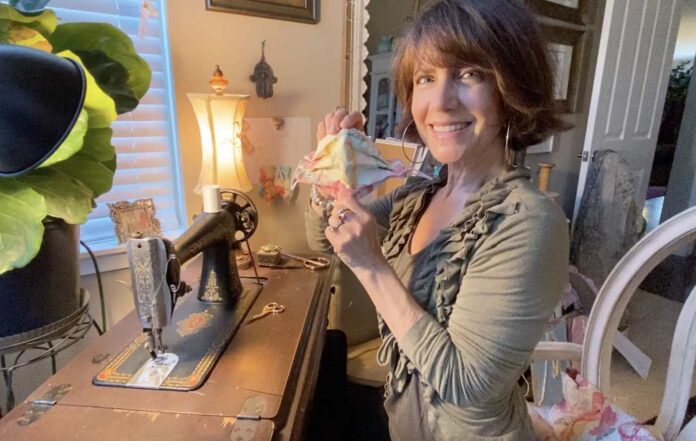
Couple Restores 100-Year-Old Sewing Machine–And Learns To Sew–So They Can Donate Face Masks to the Needy

Giselle Williams didn’t know how to sew. But she did have a family heirloom sitting around the house—her great-great-grandmother’s Singer sewing machine—and wondered if it could be put to use to help others during the pandemic.
It all began when the COVID-19 pandemic brought Giselle’s Colorado hairstyling business to a halt in Arvada. She noticed the growing army of sequestered mask-makers and decided to put her free time to good use—but she never learned how to sew and thought she didn’t have a sewing machine.

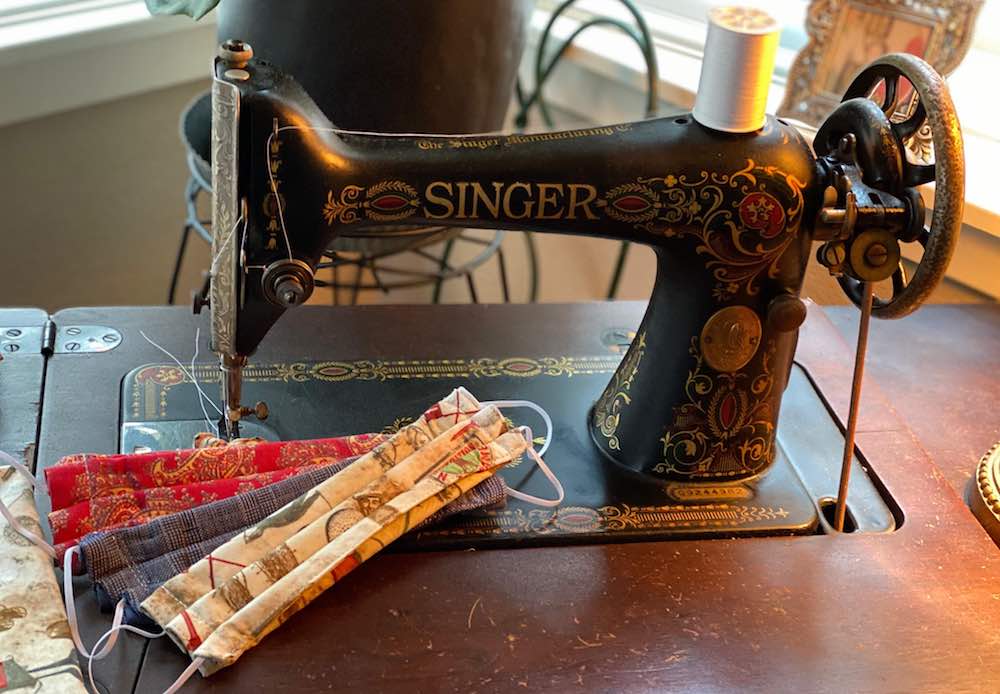
That’s when she remembered the 100-year-old treadle machine. It is so old that it doesn’t even use electricity. Instead, the 1922 Singer Model 66 “Red Eye” is powered mechanically by a foot pedal pushed up and down by the operator’s foot. It was being used as a piece of decorative furniture in her guest room.

After decades spent idle, it definitely needed some work, so Giselle’s husband Darin set his mind to restoring it. After many YouTube videos, a good cleaning, fresh lubrication, and a new leather drive belt, the couple had a functioning sewing machine. Then Darin got to work teaching Giselle to sew.

As young boy, Darin spent summers with his grandmother who was a seamstress and learned to sew by sewing hand puppets with her fabric scraps. He used his skills and taught Giselle how to thread the machine, wind the bobbin, and sew a straight stitch.

RELATED: This Nurse Didn’t Just Create a Replacement N95 Mask – Hers Filters More

“I haven’t used a sewing machine since my grandmother taught me back in the 1970s,” Darin said. “I looked at this old thing and thought, ‘Well, it’s fundamentally probably the same.’”

Indeed it was. (See the video below…)

Together, the couple found a face mask pattern and purchased fabric to begin prototyping. They also received donated fabric from friends, family and neighbors to support the effort. After a few days practicing, the team officially began their mask-making operation. Their first requests came from local healthcare providers and a distillery that was producing hand sanitizer for first responders.

Since those first weeks, the team has ramped up production and has provided more than 450 masks to churches, restaurants and businesses across Colorado. They have received requests from frontline workers as far away as Japan and Thailand. Currently, the team is at work producing another 50-75 masks to be sold at-cost at the Fetch Markets at Stanley Marketplace in Aurora, Colorado.

RELATED: Shoemaker Invents Solar-Powered Hand-washing Basin During Lockdown to Encourage Sanitary Habits

Since hearing about the couple, the Veterans of Foreign Wars (VFW) has recognized the service of Darin Williams, a U.S. Air Force veteran, and chose him to serve as a spokesperson for the VFW’s #StillServing campaign, which is asking America’s veterans and their friends to share ways in which the vets are still serving their communities even after leaving active duty.

We know Giselle’s great-great-grandmother would be proud—and an active-duty member of their team devoted making masks for frontline medical workers and essential employees around the world.

Need more positive stories and updates coming out of the COVID-19 challenge? For more uplifting coverage, click here.

SHARE The Oldest Story in the Book—Being Kind—With Friends On Social Medai…