All News - Page 577 of 1735 - Good News Network
Home Blog Page 577

“At last it dawned on me that these obstacles were my life.” – Father Alfred D’Souza

Quote of the Day: “At last it dawned on me that these obstacles were my life.” – Father Alfred D’Souza

Photo: by Ed 259, public domain, cropped

With a new inspirational quote every day, atop the perfect photo—collected and archived on our Quote of the Day page—why not bookmark GNN.org for a daily uplift?


People Try to Do Right by Each Other—No Matter the Motivation, Says New Scientific Study

Toa Heftiba

People want to help each other, even when it costs them something and even when the motivations to help don’t always align, a new study suggests.

In research published earlier this month in the journal Science Advances, sociologists found that people overwhelmingly chose to be generous to others—even to strangers, and even when it seems one motivation to help might crowd out another.

It is the first study to examine how all the established motivations to be generous interact with one another.

“We wanted to do an exhaustive study to see what the effects of those motivations would be when combined—because they are combined in the real world, where people are making choices about how generous or kind to be with one another,” said David Melamed, lead author of the study and an associate professor of sociology at The Ohio State University.

RELATED: Johns Hopkins is Offering Free Online Course in Psychological First Aid

The study involved more than 700 people, and was designed to help researchers understand prosocial behavior.

“It means doing something for someone else at a cost to yourself,” Melamed said. “So one example would be paying for the person behind you’s order at the coffee shop. Or right now, wearing your mask in public. It’s a cost to you; it’s uncomfortable. But you contribute to the public good by wearing it and not spreading the virus.”

Scientists previously had determined that four motivators influenced people to behave in a way that benefited other people.

MORE: How to Be Happier During COVID—Decades of Science Shows That Gratitude, Love, and Connection Can Save Your Life

One: The recipient of a kindness is inclined to do something nice for the giver in return. Two: A person is motivated to do something nice to someone that she saw be generous to a third person. Three: A person is likely to do good in the presence of people in their network who might reward their generosity. And four: A person is likely to “pay it forward” to someone else if someone has done something nice for her.

Those four motivators had all been studied isolated from one another, and some had been studied as a pair—but until this experiment, scientists had not conducted a comprehensive study about how the four motivators might affect one another in the real world, where the motivation to be kind to others might be influenced by multiple factors.

“In the real world, the conditions under which people are nice to each other are not isolated—people are embedded in their networks, and they’re going about their daily lives and coming into contact with things that will affect their decisions,” Melamed said. “And these experiments show that all the motivations work. If you want to maximize prosocial behavior, it was a really great thing to see.”

CHECK OUT: The Science of Kindness—Biology Proves How We Are All Connected

For this study, which was done online, participants had to decide how much of a 10-point endowment to give to other people. The points had monetary value to the participants; giving cost them something.

Then the researchers created different scenarios that combined one or all four of the potential motivators for giving.

Melamed said that prior to the experiment, he thought the motivations for kindness might crowd one another out. For example, a person may be less apt to indirectly reward another’s generosity toward a third person when he is focused on directly giving back help that he received.

LOOK: Doing Something Nice For Others Can Immediately Relieve Sensations of Physical and Mental Pain, Says New Study

“People have a self-bias,” he said. “If you do something nice for me, I may weigh that more than if I see you do something nice for someone else—but we found that all the motivators still show up as predictors of how much a person is willing to give to someone else, regardless of how the differing motivators are combined.”

This research helps us understand the remarkable quantity and diversity of prosocial behavior we see in humans, Melamed said.

“From an evolutionary perspective, it’s kind of perplexing that it even exists, because you’re decreasing your own fitness on behalf of others,” Melamed said. “And yet, we see it in bees and ants, and humans and throughout all of nature.”

Reprinted from Ohio State University file photo by Toa Heftiba

Restore Your Friends’ Faith In Humanity By Sharing This Inspiring Research To Social Media…

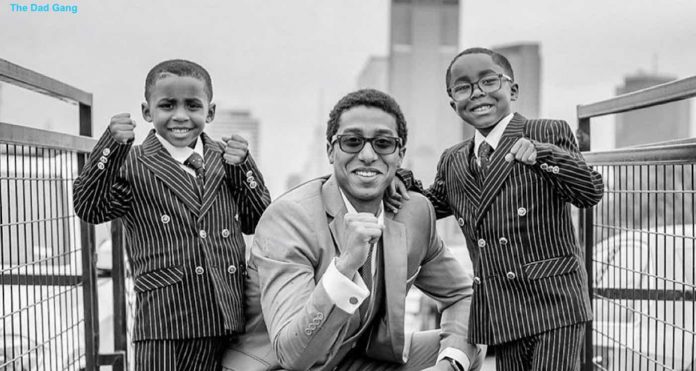
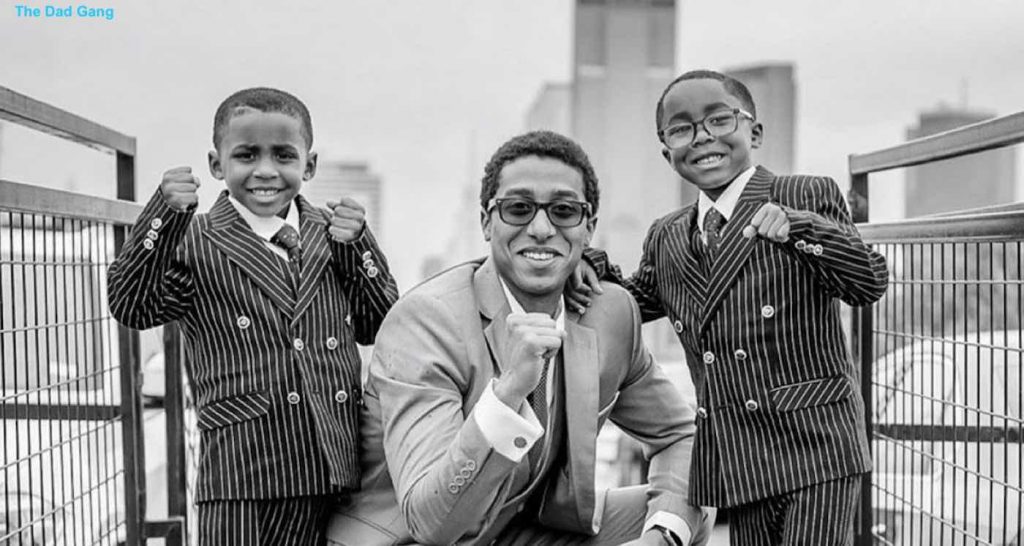
‘The Dad Gang’ is Celebrating Black Fatherhood and Breaking Stereotypes – From NY to DC

The Dad Gang on Instagram

Four years ago, a woman approached a black father who was shopping at the grocery store with his kids. She commended him for “sticking around,” and doing right by his children. Now, he and his “Dad Gang” are marching in Washington D.C. in an effort to challenge such racial stereotypes.

Sean Williams says that moment in the grocery store—in a mostly-white Long Island neighborhood—was not unique, and many of his friends have experienced similar situations. The encounter led him to launch an organization of solidarity for Black dads with a mission to change the way people view Black fatherhood.

According to the CDC, African-American fathers who live with their children are more active than other groups in terms of changing diapers and bathing and dressing their kids. Sean wants these positive qualities of black fatherhood to become more well-known and more celebrated in the culture.

“The Dad Gang” has evolved into a community of socially-conscious allies whose motto, ‘We are dad goals,’ sums up the purpose of the group’s events: to enjoy their time together, while setting “the new standard of what black fatherhood looks like worldwide.”

Thanks to The Dad Gang, it was not just an ordinary Father’s Day weekend in the nation’s capital. Hundreds gathered with Sean and his group at the National Museum of African American History and Culture to celebrate their families and bust racial stereotypes.

The Dad Gang on Instagram

WATCH: Man Who Grew Up Without a Dad Supports Youth With ‘Dad, How Do I?’ YouTube Channel

Sheila Roberts of Tampa, FL was in D.C. visiting her father. When she heard about the event at the museum, she couldn’t think of a better way to celebrate his big day.

“Black fathers don’t get the credit they deserve,” She told the Washington Post. “I’m here to dispel the myth and stereotype.”

The group also stood in solidarity with those protesting the death of George Floyd in recent weeks. Edward Smith, COO of The Dad Gang, told ABC that Floyd’s daughter, although she lost her father to racial injustice, she also “gained a million more” dads who cared about her.

POPULAR: When Black Man Was Afraid to Walk in His Upscale Community, 75 Neighbors Walked With Him

They might have been hearkening back to memories of the ‘Million Man March’ 25 years ago, when nearly a million Black men and family members came to the National Mall to pledge to be better fathers and lift up their communities.

The Dad Gang has positioned themselves at the next level of the national conversation. #DadGoals include inspiring people with photos and videos on social media, like on Instagram here, about the joy and reality of black fatherhood and family life. You can support their mission here.

WATCH a video from ABC…

SPREAD the Love With Dads on Social Media By Sharing the Inspiring Story…

First Sickle Cell Patient Treated with CRISPR Gene Editing is Now Thriving One Year Later, And Able to Care For Her Kids

sickle-cell-anemea-cc-Libertas-Academica-foter.jpg

The first patient to be treated for Sickle Cell Disease with the revolutionary gene-editing program CRISPER had a transfusion of billions of modified cells last year, and now a year later her treatment is still working perfectly.

Before Victoria Gray underwent the treatment in mid-2019 she had been experiencing frequent bouts of physical pain. Patients like her are often forced to get blood transfusions—an average of seven per year in Gray’s case—in order to ensure that their body has enough healthy red blood cells to carry oxygen throughout the body.

But now, alleviation of almost all of her symptoms has allowed her to stay out of Mississippi hospitals and support her three kids while her husband, a national guardsman, was temporarily deployed out of town.

The era of COVID-19 is hardly the time to be popping into a hospital for a blood transfusion, so the improvement for Gray has been substantial—and feels like “a miracle”.

“Since my treatment I’ve been able to do everything for myself, everything for my kids,” she told NPR. “And it’s been a joy not only for me but for the people around me.”

RELATED: World’s Second Person Cured of HIV: 40-Year-old Man is Confirmed to Be 30 Months Virus-Free

An artifact of the strange genetic history of humanity, sickle-cell genes evolved in Africans as a strong defense against malaria, but they can also increase the chance of dying relatively young from the blood disorder.

However, her case, along with those of two others who were treated in the same way, is producing only good news a year later. Dr. Haydar Frangoul of the Sarah Cannon Research Institute in Nashville, Tennessee, who is treating Gray, described it as “extremely thrilling to see and extremely exciting.”

Frangoul and other scientists using CRISPER presented the results of their latest testing of the three cases to the European Hematology Association on June 12th. The two other subjects had a related condition, beta thalassemia, and were treated in Germany with a similar method and have now been able to live without blood transfusions for 15 months.

RELATED: After Her Years of Research, a Cambridge Scientist Could Be on the Verge of Curing Multiple Sclerosis

“I think this is a huge leap for the medical field,” Frangoul told NPR in an interview, asserting that Gray will be, hopefully, the first of many thousands more of patients who will be able to see things they never imagined possible.

“High school graduations, college graduations, weddings, grandkids — I thought I wouldn’t see none of that,” Gray said.

SHARE the Good News on Social Media… (Photo by Libertas Academica, CC license on Foter)

Sean Penn’s Nonprofit Relieves Burden of Firefighters By Administering COVID Testing in 10 U.S. Cities For Free

CORE website

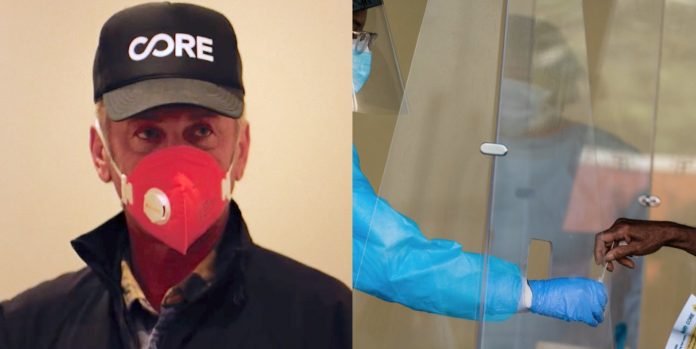
It’s been ten years since Hollywood A-lister and philanthropist Sean Penn mobilized a huge team of volunteers to rebuild Haiti after an earthquake claimed 250,000 lives. His nonprofit, CORE, is still there today, with 150 people working with local communities.

Now his own country needs help, and CORE—formerly J/P Haitian Relief—has stepped in to do the valuable work of testing for COVID-19, free of charge, in communities across the country.

They’ve already completed 530,000 tests, and maybe just as importantly, freed up firefighters to get back to their regular duties.

After he learned that the testing stations were being manned by firefighters in Los Angeles, Penn says CORE was able to leverage “existing infrastructure” and send in trained volunteers to practically take over the city’s testing program.

LA Mayor Eric Garcetti told Penn they could use the help, and Governor Gavin Newsom was on-board, so the firefighters were relieved—and the operation was soon expanded to other cities in California.

WATCH: Cast of ‘Parks and Rec’ Raises $3M for COVID Relief After Reuniting for Quarantine Episode

“The Los Angeles fire department had already set up several of these [testing] sites, but they were populated by firefighters, meaning that those firefighters would not be available to do their traditional duty,” Penn told Tonight Show Host Jimmy Fallon by video. “There was about 25 firefighters operating those sites, now the sites are manned by between 25 and 70 CORE staff [per site].”

CORE website

CORE is also providing free testing in the California cities of Bakersfield, Oakland, and Napa, and now has expanded to Atlanta, Georgia, New York City, New Orleans, Detroit Chicago, and the Nation of the Navajo.

A longtime Liberal activist, Penn told Fallon that he is not only ‘pro-test’, he is ‘pro-protest’, and has set up a mobile coronavirus testing station for protesters in Washington D.C.

“I’ve got a lot of superheroes working with me,” crowed Penn.

RELATED: Dogs Trained to Sniff Out COVID-19 Score Near-Perfect in Diagnosis of Human Sweat Samples

Explaining his enduring penchant for civic volunteer and nonprofit assistance work, Penn told Fallon that he acquired the spirit and sense of civic duty from his father—a spirit which he says he aspires to every day.

CORE is 501(c)3 organization, so all donations are tax-deductible in the U.S. You can donate to Penn’s work, or get information on how to volunteer with CORE on its website.

WATCH Sean talk about how young people have a great opportunity today…

Need more positive stories and updates coming out of the COVID-19 challenge? For more uplifting coverage, click here.

SHARE The Inspiring Work With Your Friends on Social Media…

“There’s nothing more attractive than someone who seems to live effortlessly.” – Taylor Swift (talking about Carly Simon, who turns 75 today)

Quote of the Day: “There’s nothing more attractive than someone who seems to live effortlessly.” – Taylor Swift (about Carly Simon, who turns 75 today)

Photo: by Bram Cymet, CC license

With a new inspirational quote every day, atop the perfect photo—collected and archived on our Quote of the Day page—why not bookmark GNN.org for a daily uplift?


Startup Global-PPE Delivers Essential Protective Gear to Native American Reservations

A healthcare startup committed to securing personal protective equipment (PPE) supplies for underserved communities, is working with Native American communities to close the shortfalls of gear that could combat the spread of COVID-19.

Global-PPE is aiding Partnership with Native Americans, a Native-led, Native-serving nonprofit that works in remote and impoverished reservations, to distribute 10,000 surgical masks to numerous tribes in the Southwest and Northern Plains regions.

“Donations are critical right now and the generous donation of masks from Global-PPE will further us in doing all we can to ensure Native Americans are not left behind in this pandemic,” said Joshua Arce, president and CEO of PWNA.

RELATED: South Korea Sends 10K Masks to Navajo Nation to Honor Their Service as ‘Code Talkers’ During Korean War

The COVID-19 pandemic has led to severe shortages of PPE equipment across the US, and Global-PPE was started to address this widespread problem and make sure critically needed medical supplies are available to those who need it, including underserved communities.

“COVID-19 continues to disproportionately put the health and lives of people of color and people in underserved communities at grave risk,” said Sanjay Puri, CEO of Global-PPE, which is based in Reston, Virginia. “Our support of PWNA is just the beginning of our commitment to the health and well-being of those in disadvantaged communities.”

Native American communities remain at a higher risk of contracting the coronavirus due to multiple factors, including overcrowded housing on the reservations as well as high rates of preexisting health conditions such as diabetes, kidney disease and respiratory illness.

POPULAR: Irish People Are Repaying Debt of Gratitude to Suffering Native Americans 170 Years After Potato Famine

(Photo by SJ Objio)

Need more positive stories and updates coming out of the COVID-19 challenge? For more uplifting coverage, click here.

SPREAD the Good News By Sharing With Your Friends on Social Media…

Senior Home in Brazil Creates ‘Hug Tunnel’ So Visitors Can Embrace Their Loved Ones

The COVID-19 pandemic has been especially hard on elderly people, who have been advised to strictly adhere to stay-at-home orders and social distancing guidelines.

For those living in care facilities, this has meant that friends and loved ones cannot even visit them in person.

But, a care home in Brazil has come up with a creative solution, allowing seniors to connect with their loved ones while still keeping them safe from infection.

For 28 seniors living in isolation since March 17 at the Três Figueiras home in Rio Grande do Sul in Brazil, Mother’s Day came and went without any visitors—and the loving staff noticed that spirits were at an all-time low.

“We noticed that our senior residents were feeling sad,” Rubia Santos, the care home’s administrator told CNN. “We thought they would be much happier if we found a way for them to hug their relatives.”

So they put their heads together and created the ‘hug tunnel.’

All photos courtesy of Três Figueiras

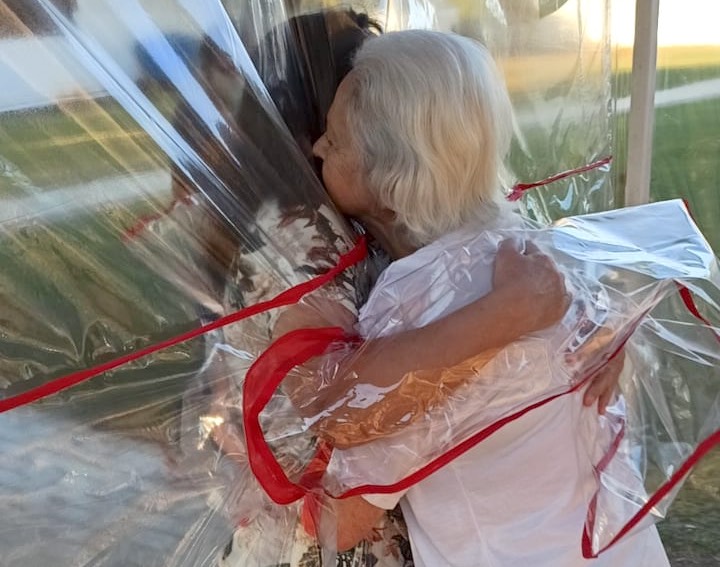
Made of thick plastic sheeting, the hug tunnel has arm holes for visitors and residents to wrap their arms around the person standing on the other side.

All photos courtesy of Três Figueiras

The plastic has arm holes at three different heights to accommodate children and those in wheelchairs.

It gives people the opportunity to feel the warmth of human contact without risking coming into contact with the coronavirus.

To keep it extra safe for the residents, the staff at Três Figueiras makes sure the plastic is disinfected in between visits, which are all scheduled in advance. And visitors also have their temperatures checked and are asked to use hand sanitizer beforehand.

Courtesy of Três Figueiras

The idea came from a viral video showing a woman in the US hugging her mother using a plastic curtain with arm enclosures in the backyard.

It is catching fire around the world, connecting elderly folks with their loved ones in the most heartwarming way. In the video below, a woman in Illinois gets to hug her eager great-grandchildren, with the words HUG TIME decorating the plastic.

Rubia says the residents’ faces light up with joy due to these visits. “If anyone out there runs a senior living home or facility, I recommend you do this.”

“It is so gratifying to see them hugging each other and so important.”

Can’t get enough of this? Check out this touching story from the UK, where a man created a similar “cuddle curtain” when he needed a hug from his grandmother, who is overjoyed

GIVE This Idea a Hug—And Multiply the Good By Sharing it on Social Media…

Trailblazing Gardener Discovers How to Grow Vegetables in Winter—Now He’s Helping Others Do It Too

An Austrian farmer has experienced a trailblazing “eureka moment” on how to grow vegetables throughout the winter—and he is now teaching his technique to other European gardening communities as well.

According to a recent interview with Reasons to Be Cheerful, horticulturist Wolfgang Palme says he accidentally discovered his “winter farming” technique after a batch of his Asian lettuce was left undamaged by an early frost in the vegetable fields behind his house in Lower Austria.

The temperature had dropped to -11º Celsius (12º Fahrenheit), and although the crop is generally frost-resistant to temperatures of -3 or so, the lettuce—and Palme’s other vegetables—had survived the cold.

Palme, who is head of the Research Institute of Horticulture in Austria, was puzzled by the agricultural phenomenon. Upon doing some digging on why his vegetables may have survived the cold snap, the horticulturist found that the existing scientific literature on the frost-hardiness of Central European vegetables was just wrong… so he started to make it right.

LOOK: Britain’s Best Gardening Couple Outdo Themselves With Spring Spectacular After Spending Lockdown Tending Their Oasis

The result is that Zinsenhof, the experimental farm where Palme conducts his research, now grows lettuce, spinach, scallions, red radishes, purslane, lacinato kale, turnips, carrots, celery, herbs, and pea sprouts throughout the winter.

These vegetables are all part of a crop of more than 70 species which Palme has learned to cultivate in the winter.

For the most part, Palme’s technique involves combining the use of unheated plastic tunnels under the produce and heating the ground with manure. He has also been experimenting with planting his crops at varying times of the year, his reasoning being that if he plants seeds too late, their roots wont be strong enough to last winter; if they are planted too early in the year, the plants will fruit too quickly.

MORE: After Watching Brother Give Up on Gardening, Man Designs Tabletop Gardens for People in Wheelchairs

According to Palme’s gardening guide published by Reasons to Be Cheerful, you can grow iceberg lettuce throughout winter temperatures of between 0 and 8 degrees Celsius if you sow your seeds at the beginning of August, plant at the end of the month, and harvest the crop between November and January.

Since Palme is now passionate in using his research to impact society at large, he now holds winter gardening classes in Augarten Park, Vienna where attendees can manage their own vegetable beds. He also works with commercial and small-time farmers with the hopes of helping them to exploit the year-long potential of their fields.

CHECK OUT: School Gives Students Credit for Physical Education Class When They Do Yard Work for Seniors and the Disabled

Not only do his teachings help farmers to exponentially improve their crop yields, it also helps reduce the greenhouse gas emissions generated by the demand for imported vegetables flown in from tropical climates, which is roughly 15 times the cost of growing domestically.

“In a cold winter night, a heated greenhouse of 1.5 acres causes as much CO2 equivalent as a detached house in a whole year,” says Palme. “Mankind can no longer afford this.”

Photo by Wolfgang Palme

Plant Some Positivity Amongst Your Friends By Sharing The Good News With Your Friends On Social Media…

Teen Invents Wristband That Could Curb Infection by Warning Users Against Touching Their Face

SWNS
SWNS

This teenage entrepreneur is responsible for inventing a simple, yet brilliant way to help curb coronavirus infections.

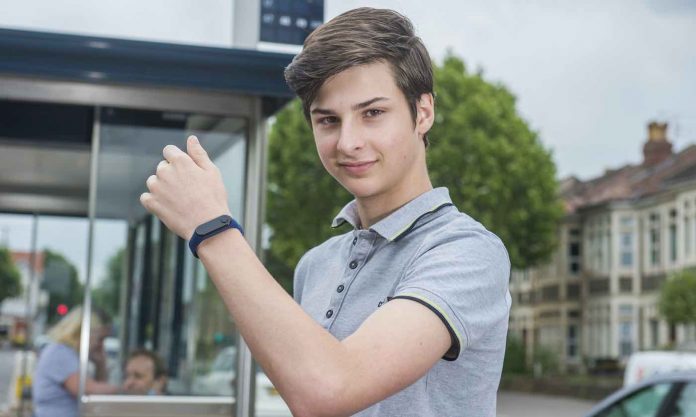
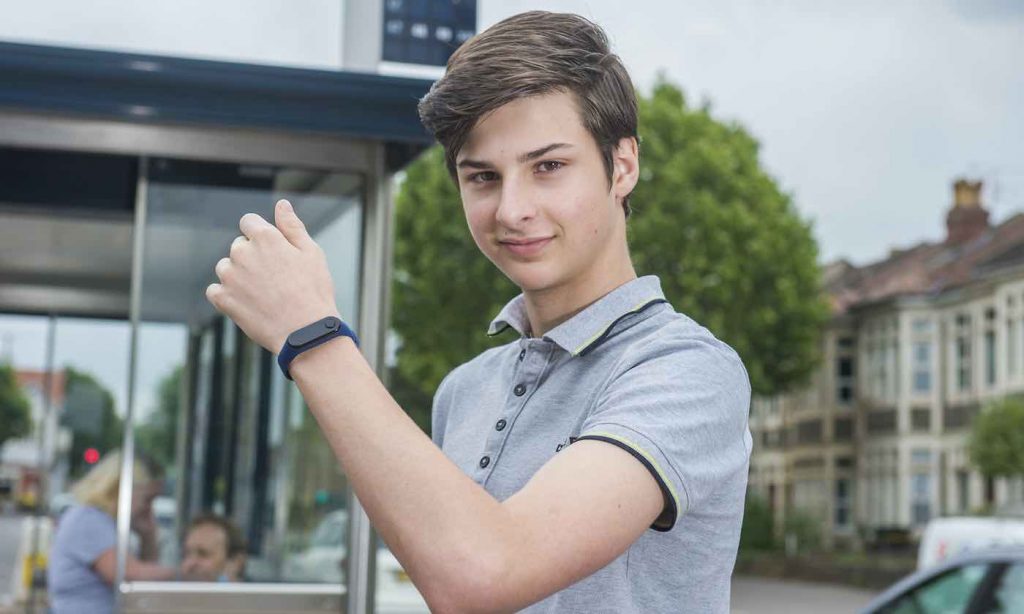
15-year-old Max Melia designed and developed a wearable wristband which alerts users whenever they are about to touch their face

He first came up with the brilliant idea two years ago as a means of reducing the spread of the cold and flu. After both of Max’s parents contracted COVID-19 four months ago, however, he threw all his efforts into developing a working prototype.

LOOK: 3D-Printing Teen Makes Hundreds of Ingenious Devices to Alleviate Ear Pain for Healthcare Workers

“Watching this pandemic unfold on the news, it was clear the devastating effect it was having on people lives’ across the world,” says Max. “However, it wasn’t until I saw the severity of the virus first-hand, when my parents both contracted COVID-19, did I truly appreciate just what we were dealing with.”

The tech-savvy English teen has since produced the VybPro, which warns users whenever they are about to subconsciously touch their face.

The gesture has been recognized as one of the key ways that coronavirus can be transmitted, making it a potentially live-saving invention.

SWNS

Worn on both wrists, the intelligent device is expected to retail for £89 ($112) with the patent currently pending.

It uses position-sending technology algorithms to distinguish between predicted face touching and other hand motions. A vibration on the device then alerts the user to hand gestures that are dangerously near the face.

“We came up with the concept a few years ago when my family was repeatedly catching cold and flu viruses from traveling in and out of London and I could see how easy it was to pick up germs—especially from using public transport,” said Max.

MORE: This Nurse Didn’t Just Create a Replacement N95 Mask – Hers Filters More

“It was only when the World Health Organization began urging people to avoid touching their eyes, nose and face to stop the spread of the virus from contaminated surfaces, did I realize that it could make a real difference in slowing the transmission of coronavirus.”

Max, who is from Bristol, launched a £60,000 ($75,000) crowdfunding campaign on Kickstarter earlier this week to further his project and turn the prototype into a public reality.

“The main priority of this project is not to make money, but to get it onto the wrists of those it can help keep safe,” he added. “Any profits made from early sales via the crowdfunding site will be reinvested into providing free devices to organizations that help people such as NHS staff and nursing homes.

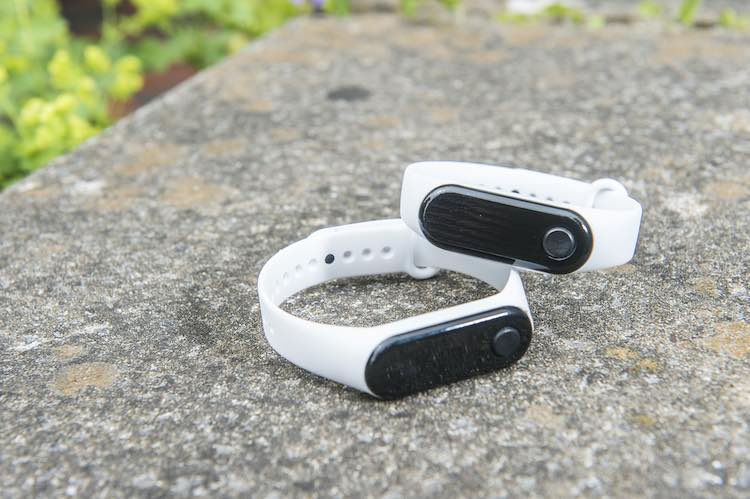
VybPro wristbands. SWNS.

“I believe that this device can make a real difference in the fight against coronavirus and I’m determined to do all that I can to bring it to market.

“I really hope that the general public can see the potential and are inspired to get behind the campaign to fund the next stage of the development.

LOOK: Scuba Diving Group Swamped With Orders for Its Face Masks Made From Recycled Ocean Plastic

Available in a choice of two colors, VybPro is rechargeable, splash-resistant, and made from waterproof silicon. It can also easily be turned off when eating and drinking.

For more information on the device, you can either visit the VybPro website or the Kickstarter crowdfunding page.

SWNS

Need more positive stories and updates coming out of the COVID-19 challenge? For more uplifting coverage, click here.

Protect Your Friends From Negativity By Sharing This Cool Story To Social Media…

“It is almost impossible to throw dirt on someone without getting a little on yourself.” – Dear Abby

Quote of the Day: “It is almost impossible to throw dirt on someone without getting a little on yourself.” – Abigail Van Buren, ‘Dear Abby’

Photo: by Luz Fuertes, public domain

With a new inspirational quote every day, atop the perfect photo—collected and archived on our Quote of the Day page—why not bookmark GNN.org for a daily uplift?


Engineers Developed a Way to Convert Harmful CO2 Emissions into Chemical Building Blocks For Fuel

Swedish plant by Petter Rudwall

Making catalysts to convert waste carbon dioxide into useful industrial products has been expensive and complicated – until now. Australian engineers have shown it’s as easy as playing with Lego.

Chemical engineers from UNSW Sydney have developed new technology that helps convert harmful carbon dioxide emissions into chemical building blocks to make useful industrial products like fuel and plastics.

And if adopted on a large scale, the process could give the world breathing space as it transitions towards a green economy.

In a paper published today in the journal Advanced Energy Materials, Dr Rahman Daiyan and Dr Emma Lovell from UNSW’s School of Chemical Engineering detail a way of creating nanoparticles that promote conversion of waste carbon dioxide into useful industrial components.

The researchers, who carried out their work in the Particles and Catalysis Research Laboratory led by Scientia Professor Rose Amal, show that by making zinc oxide at very high temperatures using a technique called flame spray pyrolysis (FSP), they can create nanoparticles which act as the catalyst for turning carbon dioxide into ‘syngas’ – a mix of hydrogen and carbon monoxide used in the manufacture of industrial products. The researchers say this method is cheaper and more scalable to the requirements of heavy industry than what is available today.

Open flame

“We used an open flame, which burns at 2000 degrees, to create nanoparticles of zinc oxide that can then be used to convert CO2, using electricity, into syngas,” says Dr Lovell.

“Syngas is often considered the chemical equivalent of Lego because the two building blocks – hydrogen and carbon monoxide – can be used in different ratios to make things like synthetic diesel, methanol, alcohol or plastics, which are very important industrial precursors.

“So essentially what we’re doing is converting CO2 into these precursors that can be used to make all these vital industrial chemicals.”

RELATED: MIT Engineers Unveil ‘Revolutionary’ Carbon Capture Tech to Absorb CO2 Using ‘Significantly’ Less Energy and Money

Petter Rudwall

Closing the loop

In an industrial setting, an electrolyser containing the FSP-produced zinc oxide particles could be used to convert the waste CO2 into useful permutations of syngas, says Dr Daiyan.

“Waste CO2 from say, a power plant or cement factory, can be passed through this electrolyser, and inside we have our flame-sprayed zinc oxide material in the form of an electrode. When we pass the waste CO2 in, it is processed using electricity and is released from an outlet as syngas in a mix of CO and hydrogen,” he says.

The researchers say in effect, they are closing the carbon loop in industrial processes that create harmful greenhouse gases. And by making small adjustments to the way the nanoparticles are burned by the FSP technique, they can determine the eventual mix of the syngas building blocks produced by the carbon dioxide conversion.

MORE: Newly-Discovered Bacteria That Gobbles Up Pollutants Could Have a ‘Big Impact on Climate Change’

“At the moment you generate syngas by using natural gas – so from fossil fuels,” Dr Daiyan says. “But we’re using waste carbon dioxide and then converting it to syngas in a ratio depending on which industry you want to use it in.”

For example, a one to one ratio between the carbon monoxide and hydrogen lends itself to syngas that can be used as fuel. But a ratio of four parts carbon monoxide and one part hydrogen is suitable for the creation of plastics, Dr Daiyan says.

Cheap and accessible

In choosing zinc oxide as their catalyst, the researchers have ensured that their solution has remained a cheaper alternative to what has been previously attempted in this space.

“Past attempts have used expensive materials such as palladium, but this is the first instance where a very cheap and abundant material, mined locally in Australia, has been successfully applied to the problem of waste carbon dioxide conversion,” Dr Daiyan says.

Dr Lovell adds that what also makes this method appealing is using the FSP flame system to create and control these valuable materials.

RELATED: This Icelandic Facility is Capturing CO2 Emissions So They Can Turn It All into Stone

“It means it can be used industrially, it can be scaled, it’s super quick to make the materials and very effective,” she says.

“We don’t need to worry about complicated synthesis techniques that use really expensive metals and precursors – we can burn it and in 10 minutes have these particles ready to go. And by controlling how we burn it, we can control those ratios of desired syngas building blocks.”

Scaling up

While the duo have already built an electrolyser that has been tested with waste CO2 gas that contains contaminants, scaling the technology up to the point where it could convert all of the waste carbon dioxide emitted by a power plant is still a way down the track.

“The idea is that we can take a point source of CO2, such as a coal fired power plant, a gas power plant, or even a natural gas mine where you liberate a huge amount of pure CO2 and we can essentially retrofit this technology at the back end of these plants. Then you could capture that produced CO2 and convert it into something that is hugely valuable to industry,” says Dr Lovell.

POPULAR: Construction Begins On First Ever Commercial Plastics-to-Fuel Factory in the US

The group’s next project will be to test their nanomaterials in a flue gas setting to ensure they are tolerant to the harsh conditions and other chemicals found in industrial waste gas.

– Originally published by UNSW-Sydney Newsroom

SHARE the Energy Innovation With Friends on Social Media… 

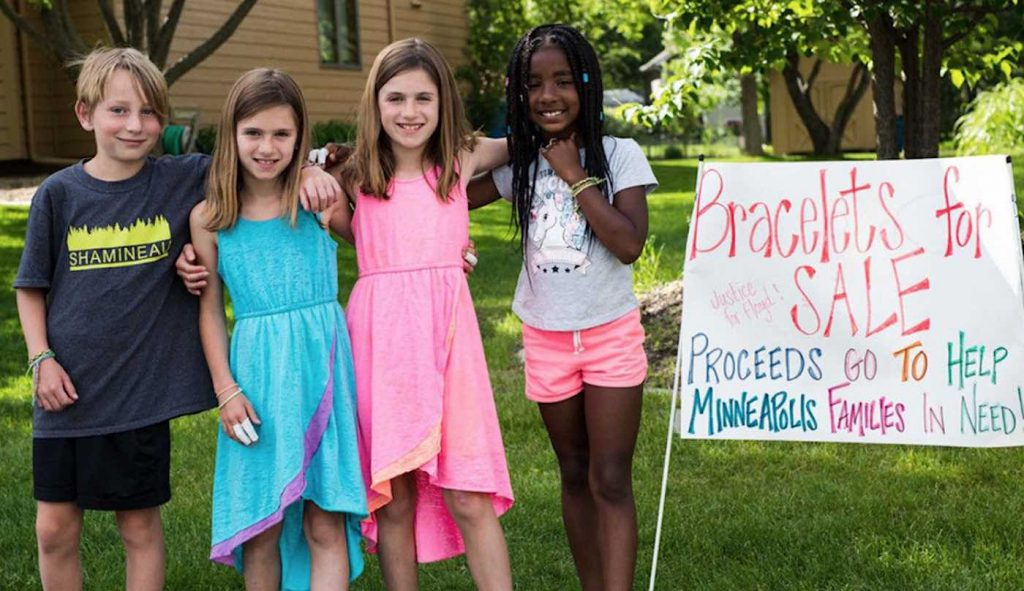
9-Year-Old and Friends Have Raised $100,000 for African American Businesses Selling Homemade Bracelets

Some unlikely heroes in Minneapolis have raised $100,000 to support black-owned businesses and neighborhoods—and they’re only 9-years-old.

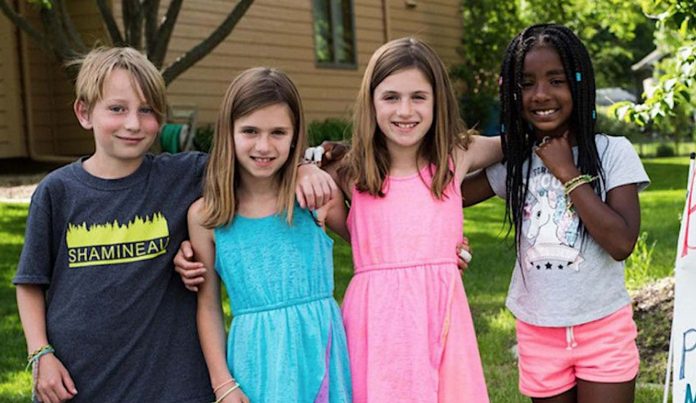
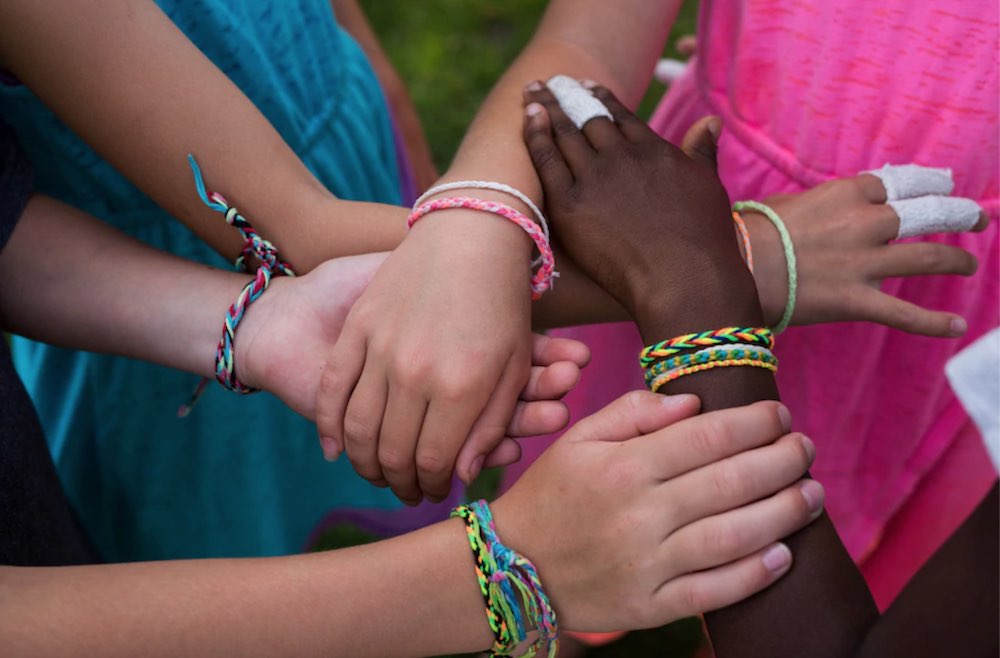
It all started one day when Kamryn Johnson and five of her friends were bored. So, in order to have a little bit of fun, they had the bright idea to sell some bracelets. Rather than just keep the money for themselves, Kamryn’s mom suggested it would be nice to do something positive for others—and the kids agreed. “Kamryn & Friends: Bracelets for Unity and Justice” was born.

The kiddos hoped to make a small impact with their enterprise, but since May 30, these altruistic children have managed to raise almost $100,000.

Just in time for Father’s Day in the U.S., Kamryn’s dad is super proud.

“She made over $800 the first day,” her dad, former NFL player Ron Johnson, told WCCO News. “She has blisters on her fingers now; she’s been working hard.”

Small business owners in Minneapolis have been hit hard in recent months. First, the coronavirus pandemic shut them down for more than a month. Then, violence following the death of George Floyd resulted in damage and looting. The money raised by Kamryn and her friends will deliver welcome aid to those trying to get back on their feet.

RELATED: Homeschooled 12-Year-old Boy Designs COVID-19 Protection Device – The Safe Touch Pro

Even though the bracelets cost $5, people have paid $20, $50, even $100 to support the cause. In addition to selling bracelets—each woven with different colors—they have collected online donations on a GoFundMe campaign that has tallied $46,000.

By Jamie Stoia

A portion of the money raised will go towards providing food and household supplies to those in need. Beneficiaries include the Sanctuary Covenant Church’s food drive, and the Kyle Rudolph food and supply Drive.

WATCH: Here’s a #TBT Video of a Toddler Hugging Strangers to Keep You Company During Social Distancing

What Ron is most proud of, though, lies beyond the world of good his daughter and her friends have done for local businesses and charities. They’ve managed to get people talking about things that matter.

“Day after day, we’re having impactful conversations with so many people,” Ron told CNN. “So many of our community members have come by to drop off supplies, or just talk about things like racism and injustice, stuff that we don’t talk about very often,” Ron said.

By Jamie Stoia

It just goes to show that, even in times of adversity, we can all make an impact and do our part to create a better world—and children can be the exceptional example.

POPULAR: 7-Year-old Hosts Adorable Mini-Prom for Babysitter Whose Event Was Cancelled

“When I’m older, I want to help people in need,” Kamryn said, “Just like I’m doing now.”

MULTIPLY the Good By Sharing the Story on Social Media…

New Senate Police Reform Bill Looks to Increase Accountability and Promote De-Escalation Training to ‘Rebuild Lost Trust’

Senate Republicans have introduced a large bill of police reform called the JUSTICE Act  that includes measures to improve reporting, increase penalties for officers falsifying police reports, offer funding for additional training programs in de-escalation and non-violent policing, and to create a new Criminal Justice Commission that will continually make recommendations on how to reform every level of the criminal justice system with the citizen’s safety and rights as the central consideration.

In the wake of everything that’s happened since George Floyd was killed in Minneapolis, Minnesota, state and now federal legislatures have been listening to the petitions of millions of Americans asking for more police accountability, less violence in policing, fewer laws which create discriminatory policing, and more.

Good News Network has already reported on the introduction and passage of laws in both Colorado and in Kentucky that increase police accountability, and ban “no-knock” police warrants, respectively.

At the federal level, House Libertarian Justin Amash has introduced, along with Democratic support, a bill that would roll back the doctrine of qualified immunity, which makes it extremely difficult for a private citizen to bring a police officer up on charges for rights violations.

The JUSTICE Act goes quite a bit further than that, albeit in a different direction. Created by African American Senator Tim Scott (R-SC) and 46 other co-sponsors from the right side of the isle, the JUSTICE Act is a large piece of police reform with an aim to “improve and reform policing practices, accountability and transparency”.

“Now is the time for reform,” Senator Scott said on his website. “The murder of George Floyd and its aftermath made clear from sea to shining sea that action must be taken to rebuild lost trust between communities of color and law enforcement.”

RELATED: Chattanooga Police Updates Policy to Require Officers to Intervene in Cases of Brutality and Report It

“The JUSTICE Act takes smart, commonsense steps to address these issues, from ending the use of chokeholds and increasing the use of body worn cameras, to providing resources for police departments to better train officers and make stronger hiring decisions.”

With several measures involving the reporting and hiring of police officers, it also includes funding stipulations and penalties for certain police tactics that have drawn significant criticism since the killing of George Floyd, including choke holds, which are described in the “Sense of Congress” section as extremely dangerous.

Here are some other major articles in the JUSTICE Act.

Hiring and training

One criticism of police accountability since the protests over George Floyd’s death began has been departments’ reluctance to fire officers involved in deadly use-of-force situations with citizens, particularly as it related to the killing of Breonna Taylor or Tamir Rice, where in both cases the officers that did the shooting are still policing, or in other cases where officers are re-hired in other departments.

RELATED: New Proposed Legislation in US House Would End Police Doctrine of ‘Qualified Immunity’

To this end the JUSTICE Act has several responses. The first is for the commission of a government database that is publicly-accessible containing the disciplinary record or internal investigation record regarding any law enforcement officer, to be held no less than 30 years, and to be accessed and consulted before a hiring decision is made.

As many other articles in the bill state, any government, state, local, or Native American tribe that receives policing funding from the federal government will be ineligible to receive further funds if the creation of such a database be postponed or ignored.

Large swaths of the bill also involve officer training. Many protesters have objected to the use of deadly or excessive force by officers, and the JUSTICE Act aims to address this by establishing the following:

The new National Criminal Justice Commission

Title 7 of the bill states: “It is in the interest of the United States to establish a commission to undertake a comprehensive review of the criminal justice system,” noting that “there has not been a comprehensive study since the President’s Commission on Law Enforcement and Administration of Justice was established in 1965.”

POPULAR: Young Man Rebuilding His Life Receives Guidance and Friendship From the Very Cop Who Arrested Him

Therefore if passed, the JUSTICE Act would see the creation of a National Criminal Justice Commission that would “undertake a comprehensive review of all areas of the criminal justice system, including the criminal justice costs, practices, and policies of the Federal, State, local, and Tribal governments.”

“Not later than 18 months after the date of the first meeting of the Commission, the Commission shall submit to the President and Congress recommendations for changes in Federal oversight, policies, practices, and laws designed to prevent, deter, and reduce crime and violence, reduce recidivism, improve cost-effectiveness, and ensure the interests of justice at every step of the criminal justice system,” reads subsection b.

All information and recommendations would be made publicly available, and if a quorum is present at the time of reporting, recommendations can be immediately voted on.

This commission will conduct public town-hall style hearings from citizens across the country, and if the Commission is tasked with recommending changes to laws as a means to “to prevent, deter, and reduce crime and violence, reduce recidivism, improve cost-effectiveness,” there is a chance such a commission could be deeply persuaded by the stories of those most-affected by violent or unjust policing.

This mechanism might allow citizens to cause the roll back of policing protocols and legal precedents that make it very difficult for police officers to face legal repercussions for violent, unlawful, or discriminatory conduct, such as the qualified immunity doctrine, any states’ versions of an officer’s bill of rights, or civil asset forfeiture (like they did in Connecticut 3 years ago), and more.

RELATED: Bank of America Pledges $1 Billion to Fight Racial Inequality; Apple, Facebook, Verizon Give $10M Each

While not outrightly banning many of the things which protesters, angry about the killings of black men and women in America, most want to see banned, such as the court precedent for qualified immunity, the JUSTICE Act would go a long way to providing a base upon which better relationships between police and communities could be established.

Voice Your Support By Sharing This News With Friends on Social Media…

“Hate has caused a lot of problems in the world, but has not solved one yet.” – Maya Angelou

Quote of the Day: “Hate, it has caused a lot of problems in the world, but has not solved one yet.” – Maya Angelou

Photo: by Uriel Soberanes, public domain

With a new inspirational quote every day, atop the perfect photo—collected and archived on our Quote of the Day page—why not bookmark GNN.org for a daily uplift?


Watch Opera Singer Unexpectedly Join Student Recording National Anthem in The Park for Her Commencement

PSU

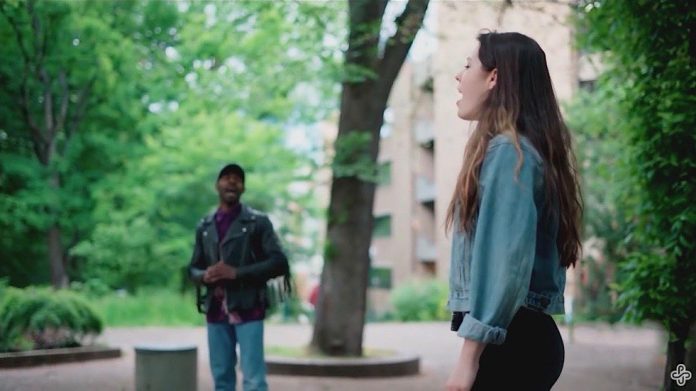
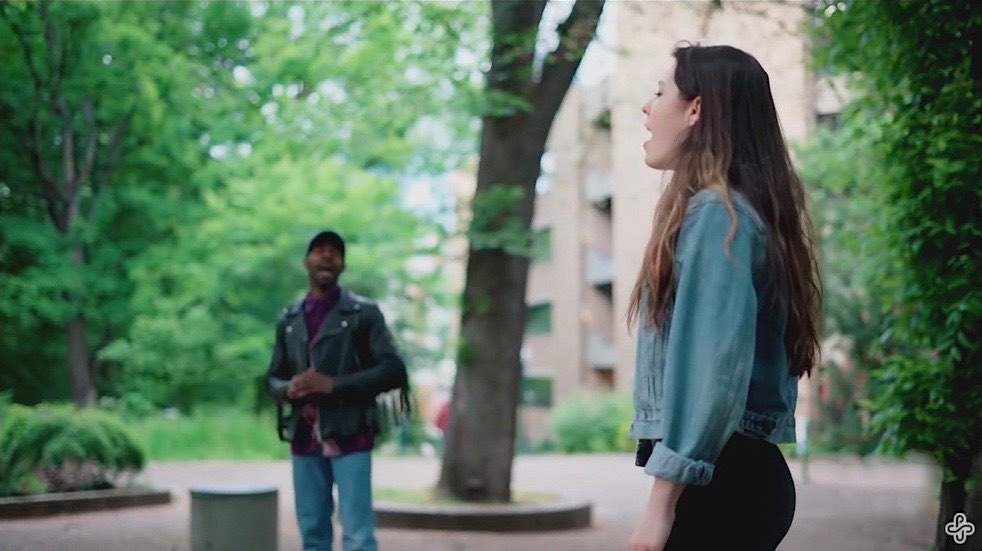
A commencement recording of the national anthem became so much better than a social-distancing performance when a man wandering by decided to join in with magnificent harmonies.

Portland State University graduate Madisen Hallberg was being recorded in a public city park that runs through the campus, after the school’s decision to hold a virtual ceremony on June 14.

Suddenly, while the video crew was recording her rendition of The Star Spangled Banner, the Oregon opera singer Emmanuel Henreid happened to walk by.

The classically trained singer who performs with the Portland Opera wanted to join in. It was completely serendipitous and, as you can see by the video, totally beautiful.

“Once he started singing I immediately relaxed into the sound of his voice,” Hallberg told GNN. “His voice was so good, and I realized I was getting the chance to sing with a super talented musician!”

PSU

Henreid, who goes by Onry, has been singing at Black Lives Matter protests trying to keep his instrument in shape as all local musical venues have been closed—and his dates with the opera company cancelled.

RELATED: Quarantine Reunites 160 Former Disneyland Cast Members to Recreate the Iconic Parade At Home–And it’s Joyous!

Hallberg was thrilled that his quest for singing in the streets landed him in her video.

“I saw it as a total blessing—and getting the chance to do that felt truly special during this time of the virus where we as musicians are often isolated.”

“I was totally surprised that someone would have the courage to just walk up and ask, but that’s something that I admire about him.”

MORE: Opera Singers Have Been Hosting Weekly Concerts in Their Driveway to Bring Neighborhood Together

“Looking back, I’m so glad that people are touched by what happened,” she added. “I think it’s important to spread positivity and hope for the future, and I think that’s what two people coming together to sing the anthem can do.”

WATCH Onry wander in the video about half way through…

Need more positive stories and updates coming out of the COVID-19 challenge? For more uplifting coverage, click here.

PROUDLY Hail This Performance By Sharing The Beauty on Social Media…

Coronavirus Breakthrough: Cheap and Widely Used Drug Found to Cut Deaths by One-Third

Prevention has been the name of the game in the coronavirus pandemic thus far. Testing has saved many lives, but there have been no known life-saving treatments for those with respiratory complications from the virus—until now.

Researchers at Oxford University in the UK announced last week that a low-dose steroid treatment—which costs about $6 per dose and is widely available—can reduce the risk of death by one-third for patients on ventilators, and by one-fifth for those on oxygen.

“It’s a major breakthrough,” the chief investigator, Professor of Emerging Infectious Diseases Peter Horby, told the BBC. “This is the only drug so far that has been shown to reduce mortality—and it reduces it significantly.”

Doctors typically use the drug, called dexamethasone, to reduce inflammation in their patients. It is an effective treatment for a wide range of conditions, including asthma, arthritis, and even some skin problems. It seems to help coronavirus patients by reducing the damage of cytokine storms, a condition where the immune system goes into overdrive and attacks healthy tissue as it tries to fight the virus.

POPULAR: Dogs Trained to Sniff Out COVID-19 Score Near-Perfect in Diagnosis of Human Sweat Samples

“It is fantastic that the first treatment demonstrated to reduce mortality is one that is instantly available and affordable worldwide,” wrote Prof. Martin Landry, another lead researcher, in a press release.

Called the RECOVERY trial (Randomized Evaluation of COVid-19 thERapY), the study, which involved 175 hospitals across the whole of the UK, found no outstanding adverse events from the 10-day treatment given to 2104 patients in the randomized trial of over 6400 infected patients, investigators said.

“This treatment can be given to pretty much anyone—and can be used immediately to save lives worldwide,” says Horby.

RELATED: New Zealand Has Eradicated COVID-19 – ‘Crushing’ the Virus to End Social Distancing

There was no benefit among those patients who tested positive for the coronavirus, but did not require respiratory support.

This life-saving breakthrough is just the latest good medical news for those who are suffering from COVID-19. The antiviral drug remdesivir has also recently been shown to reduce the duration of symptoms from 15 to 11 days.

Need more positive stories and updates coming out of the COVID-19 challenge? For more uplifting coverage, click here.

SHARE This Life-Saving News Widely on Social Media…

‘Extinct’ Harlequin Toad Rediscovered; Such Survivors Are Bringing Hope That Amphibian Apocalypse is Abating

By Melissa Costales

A researcher from New Brunswick has rediscovered a species of harlequin toad presumed extinct, and the details of the discovery offer hope not just for the species, but for the entire atelopus genus, which was nearly wiped out by the amphibian epidemic.

Caused by bacteria, the fungal disease chytridiomycosis has wreaked havoc on amphibians worldwide, with harlequin toads (atelopus) proving particularly susceptible.

However Canadian herpetologist Melissa Costales’s sighting of the Mindo harlequin toad (atelopus mindoensis) in Ecuador could mean the epidemic of chytrid may be subsiding; evidence supporting an already established and hopeful hypothesis.

“The fact that it has reappeared after 30 years is possibly because they have become resistant to [chytrid],” Costales, who recently published a study on the discovery in the journal Herpetological Notes, told Nat Geo.

13 of the 25 species of harlequin toads in Ecuador, the second most populous country for the species, have gone unseen by scientists since the 1980s—the Mindo toad is one of them.

RELATED: Conservationists Swoop in to Save Last of Known Endangered Frog Species Just in the Nick of Time

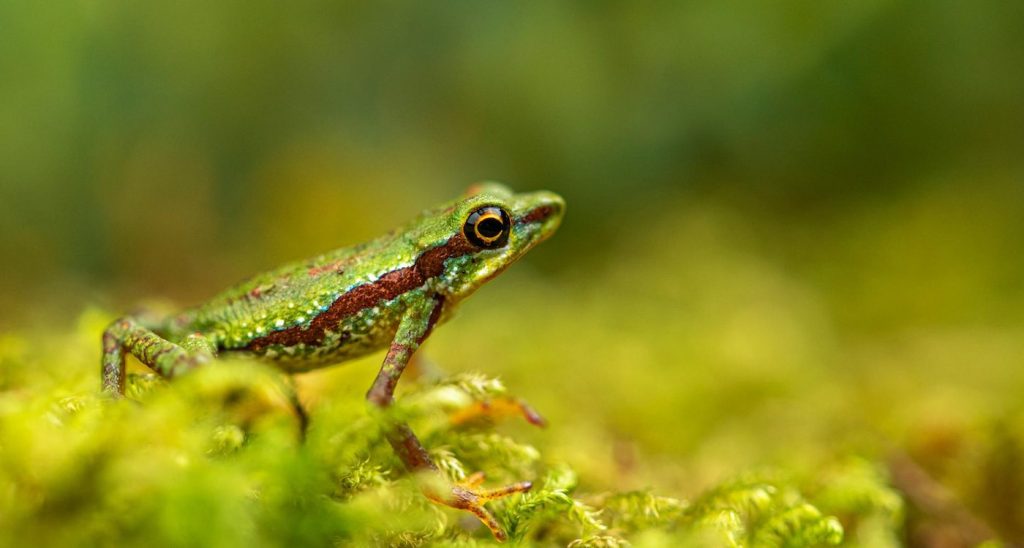
Green with a web-like design on its back, the color of spilled-wine, the Mindo toad has a white-yellow belly and jet black eyes encircled with shimmering gold irises.

By Melissa Costales

10 of the 25 species are classified as Critically Endangered (possibly extinct, like the mindo), with another 14 Critically Endangered, on IUCN red list from the International Union for Conservation of Nature.

Back from the dead

The exciting discovery of the Mindo is also the ninth such reappearance of a harlequin toad species seemingly coming back the dead, so to speak, since 2003. Furthermore, since making the discovery last August, subsequent returns by her and her team to the Ecuadorian reserve (unnamed to protect the animals) yielded 5-times more toad sightings, including juvenile toads, suggesting they are reproducing.

Still further, chytrid is known to be present in the area, suggesting the toads had either evolved a defense against the chytrid spores, or simply gotten lucky and never came in contact with it.

WATCH: Cat Gently Petting Tiny Frog is the Serene Moment You Need Today

Cori Richards-Zawacki, a herpetologist speaking with National Geographic on the matter, said Ms. Costales‘ discovery should signal biologists to exercise greater caution when declaring a species extinct or possibly extinct, as it can have conservation ramifications.

“It’s hard to get funding to survey for endangered species, but near impossible to get funding to survey for extinct species,” she said in an email.

Costales and the Zoology Museum of the University San Francisco de Quito, Ecuador, have since started to put together a monitoring program for the Mindo harlequin toad, and in the future, Costales hopes to buy land in the reserve near where the healthy Mindo toad was found.

WATCH the toad in action…

HOP This Great Story Over to Your Friends on Social Media…

“A day at the beach is never lost time. When the warm grains of sand touch our hearts, we know we’re in the right place.” – SurferToday.com

Quote of the Day: “A day at the beach is never lost time. When the warm grains of sand touch our hearts, we know we’re in the right place.” – SurferToday.com

Photo: by Scott Webb, public domain

With a new inspirational quote every day, atop the perfect photo—collected and archived on our Quote of the Day page—why not bookmark GNN.org for a daily uplift?


Cher Sheds Tears of Joy as Pakistan’s ‘Loneliest Elephant’ Wins Bid For Freedom

Friends of Islamabad-Zoo Facebook Page

An elephant at the Murghazar Zoo in Islamabad, is set to be freed thanks to a May 21 ruling by the Pakistan High Court.

Pop icon Cher, who advocated for four years on his behalf, calling him “the world’s loneliest elephant”, is celebrating the news.

“THIS IS ONE OF THE GREATEST MOMENTS OF MY LIFE,” she tweeted.

Since at least 2016, animal rights groups have worked tirelessly for the release of Kaavan, a 33-year old Asian elephant from Sri Lanka, whose only playmate died eight years ago in the zoo.

To facilitate the court’s ruling, Pakistan’s Islamabad Wildlife Management Board (IWMB) is working to—at last—find him a “suitable sanctuary”.

RELATED: Denmark Buys Country’s Last Remaining Circus Elephants for $1.6 Million So They Can Retire

“The pain and suffering of Kaavan must come to an end by relocating him to an appropriate elephant sanctuary,” the court wrote in its ruling.

The world was mobilized into action, sending petitions to the Pakistani government, after photos showed the elephant living in terrible conditions, sometimes chained.

Friends of Islamabad-Zoo Facebook Page

The IWMB has assembled an eight-member committee to arrange the relocation of Kaavan. Members include WWF senior director Rab Nawaz, biodiversity specialist Z.B. Mirza, an Islamabad Zoo veterinary officer, IUCN’s Nilanga Jaysinghe, and co-founder of Save the Elephant Foundation Derek Thompsan, according to a June 6 report by Gulf News.

MORE GOOD NEWS: African Elephant Poaching Has Fallen By More Than 50% Over the Course of the Last 6 Years

The court had also directed that all the other remaining animals be moved to temporary sanctuaries within 60 days—including brown bears, lions and birds—while the zoo improves its standards, reported Al Jazerra.

Kaavan first came to Pakistan at the age of 1, as a gift for the country’s leader at the time. Since his companion Saheli died in 2012, he has not been able to enjoy the company of other elephants. His release will give him the opportunity to live out his life among a social group of his peers.

WATCH: Orphan Elephant Conquer His Fear of Water With Help From His Loving Human

Cher sent one of her representatives to the zoo in 2016 to advocate for Kaavan. That same year, she also advocated for human rights by delivering water to Flint, Michigan, during its drinking water crisis.

The pop star is incredibly thankful that hers and others’ efforts have paid off. “It’s so emotional for us that I have to sit down,” she wrote.

SHARE Kaavan’s Great News With Animal-Loving Friends on Social Media…